The Impact of Air Pollution and Obesity on Cognitive Decline and Risk of Alzheimer’s Disease




Abstract
1. Introduction
2. Materials and Methods
Search Strategy and Selection Criteria
3. Obesity and Metabolic Dysregulation Induced by PM2.5 Exposure
3.1. Epidemiological Evidence for PM2.5-Induced Obesity
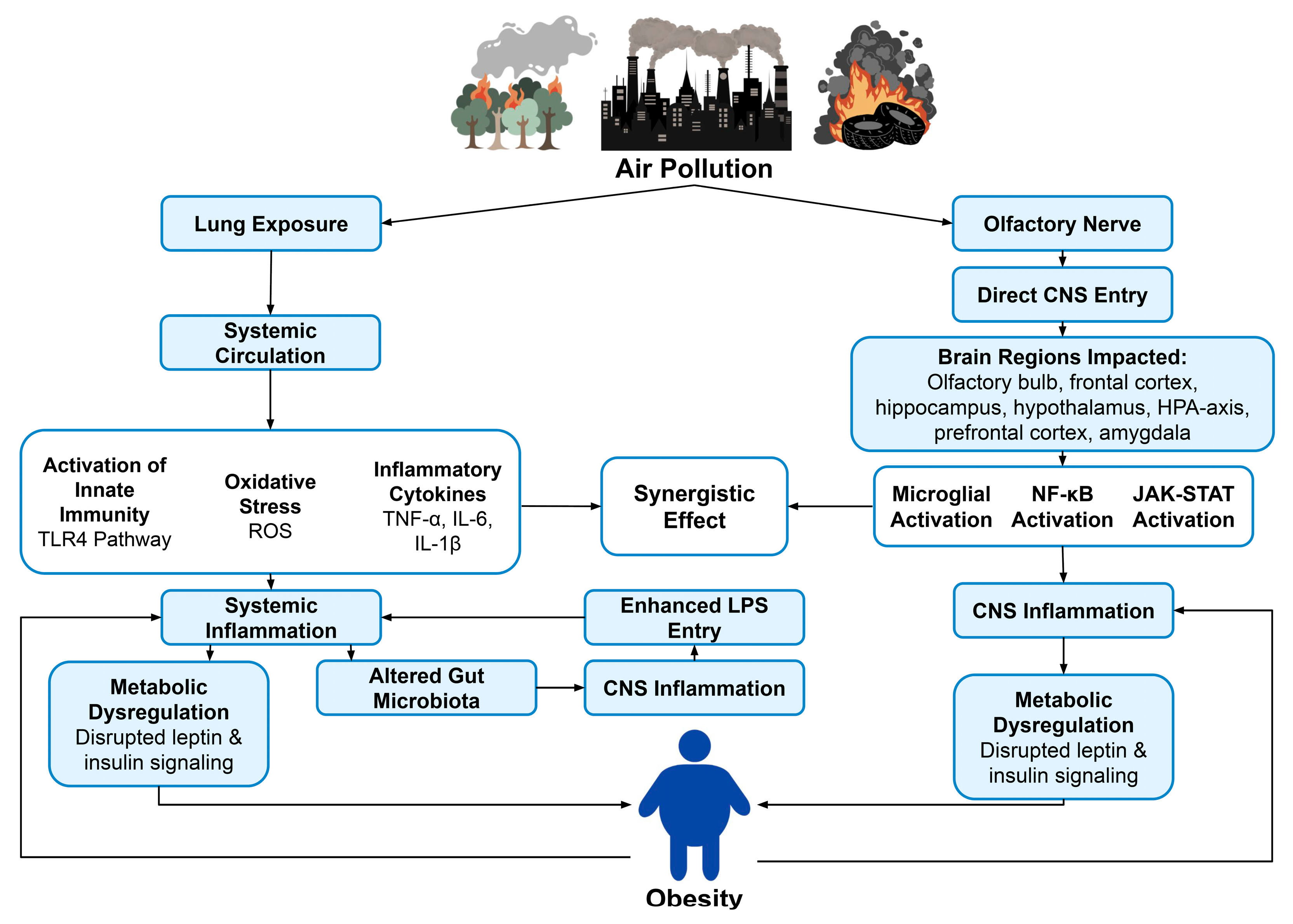
3.2. Mechanisms: Air Pollution, Obesity, Inflammation, and Metabolic Dysfunction
4. Neurotoxic Effects of Air Pollution and Impact on Cognitive Decline
Impact on Brain Health
5. Impact on Mental Health
5.1. Mental Health and Air Pollution
5.2. Obesity and Mental Health
5.3. Air Pollution, Stress, and the Hypothalamic–Pituitary–Adrenal (HPA) Axis
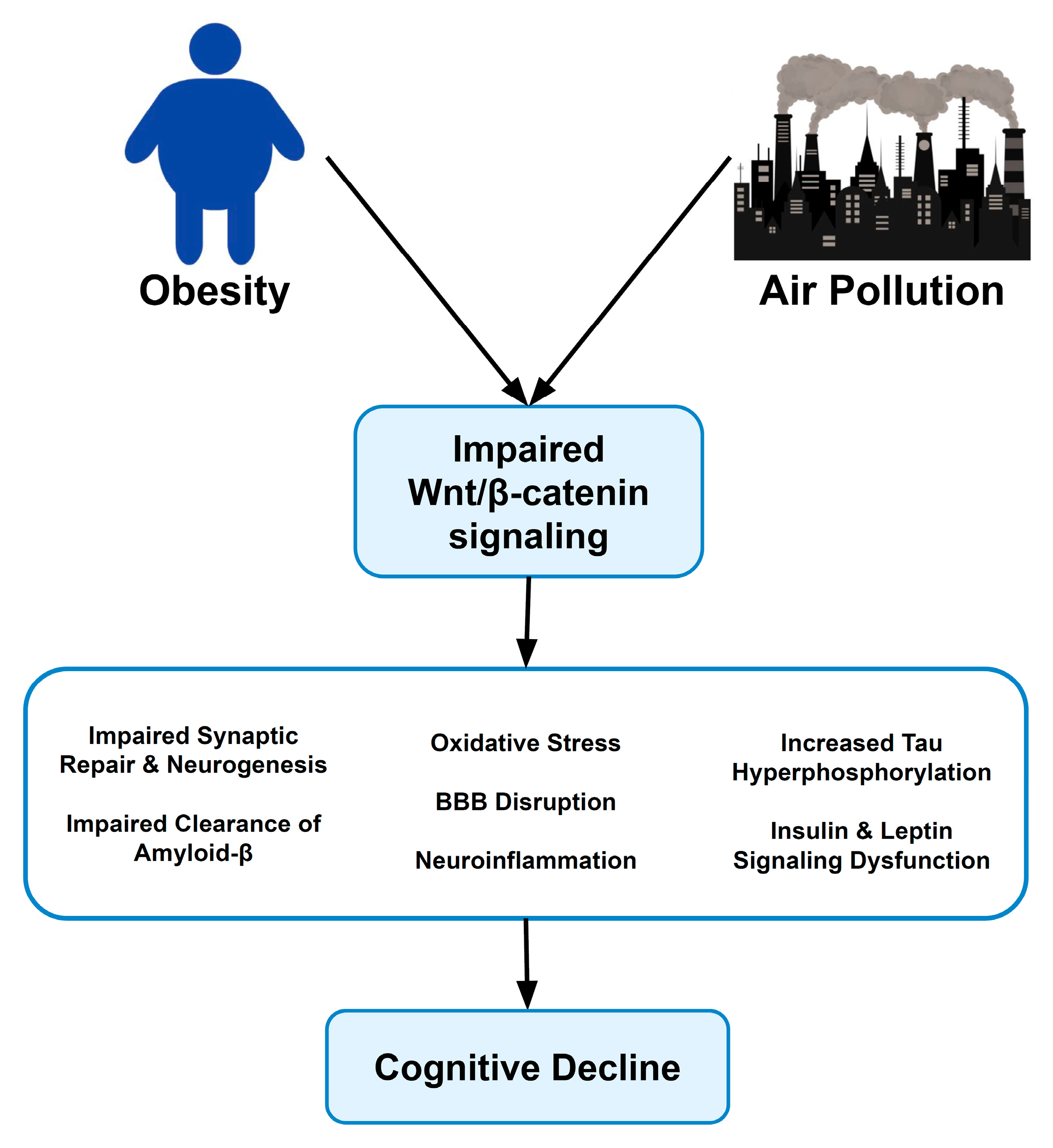
6. Role of Wnt/β-Catenin Signaling in Air Pollution and Obesity-Induced Neurodegeneration
Therapeutic Potential of Targeting Wnt Signaling
7. Integration of Mechanisms: Interplay Between Air Pollution Exposure, Obesity, Inflammation, and Wnt Signaling in AD Risk
Translational Implications and Future Directions
8. Discussion
Limitations
Author Contributions
Funding
Institutional Review Board Statement
Informed Consent Statement
Data Availability Statement
Acknowledgments
Conflicts of Interest
Abbreviations
| 5-HT | 5-hydroxytryptamine (serotonin) |
| Aβ | Amyloid-beta |
| AD | Alzheimer’s disease |
| APOE4 | Apolipoprotein E4 |
| BBB | Blood–brain barrier |
| CNS | Central nervous system |
| CO | Carbon monoxide |
| COX-2 | Cyclooxygenase-2 |
| DEP | Diesel exhaust particles |
| DKK1 | Dickkopf-related protein 1 |
| Dvl3 | Disheveled segment polarity protein 3 |
| FABP4 | Fatty acid binding protein 4 |
| GSK-3β | Glycogen synthase kinase 3 beta |
| HFD | High-fat diet |
| HPA | Hypothalamic–pituitary–adrenal |
| IDE | Insulin-degrading enzyme |
| IL-1β | Interleukin-1 beta |
| IL-6 | Interleukin-6 |
| JAK | Janus kinase |
| JNK | c-Jun N-terminal kinase |
| KYN | Kynurenine |
| KYNA | Kynurenic acid |
| KO | Knockout |
| LPS | Lipopolysaccharide |
| MAPK | Mitogen-activated protein kinase |
| MyD88 | Myeloid differentiation primary response 88 |
| NO2 | Nitrogen dioxide |
| NF-κB | Nuclear factor kappa B |
| PM | Particulate matter |
| PM2.5 | Particulate matter ≤ 2.5 µm |
| PM10 | Particulate matter ≤ 10 µm |
| ROS | Reactive oxygen species |
| SASP | Senescence-associated secretory phenotype |
| SFAs | Saturated fatty acids |
| SOCS3 | Suppressor of cytokine signaling 3 |
| Sox6 | SRY-box transcription factor 6 |
| SPMI | Serious and persistent mental illness |
| STAT | Signal transducer and activator of transcription |
| TLR4 | Toll-like receptor 4 |
| TNF-α | Tumor necrosis factor alpha |
| TRP | Tryptophan |
References
- Grande, G.; Ljungman, P.L.S.; Eneroth, K.; Bellander, T.; Rizzuto, D. Association Between Cardiovascular Disease and Long-Term Exposure to Air Pollution with the Risk of Dementia. JAMA Neurol. 2020, 77, 801. [Google Scholar] [CrossRef]
- Furlong, M.A.; Klimentidis, Y.C. Associations of Air Pollution with Obesity and Body Fat Percentage, and Modification by Polygenic Risk Score for BMI in the UK Biobank. Environ. Res. 2020, 185, 109364. [Google Scholar] [CrossRef]
- Yu, M.; Xie, J.; Liu, Y. How Air Pollution Influences the Difference between Overweight and Obesity: A Comprehensive Analysis of Direct and Indirect Correlations. Front. Public Health 2024, 12, 1403197. [Google Scholar] [CrossRef]
- Andersson, J.; Oudin, A.; Sundström, A.; Forsberg, B.; Adolfsson, R.; Nordin, M. Road Traffic Noise, Air Pollution, and Risk of Dementia—Results from the Betula Project. Environ. Res. 2018, 166, 334–339. [Google Scholar] [CrossRef]
- Yan, W.; Yun, Y.; Ku, T.; Li, G.; Sang, N. NO2 Inhalation Promotes Alzheimer’s Disease-like Progression: Cyclooxygenase-2-Derived Prostaglandin E2 Modulation and Monoacylglycerol Lipase Inhibition-Targeted Medication. Sci. Rep. 2016, 6, 22429. [Google Scholar] [CrossRef]
- Jung, C.-R.; Lin, Y.-T.; Hwang, B.-F. Ozone, Particulate Matter, and Newly Diagnosed Alzheimer’s Disease: A Population-Based Cohort Study in Taiwan. J. Alzheimer’s Dis. 2015, 44, 573–584. [Google Scholar] [CrossRef] [PubMed]
- Guillemot-Legris, O.; Muccioli, G.G. Obesity-Induced Neuroinflammation: Beyond the Hypothalamus. Trends Neurosci. 2017, 40, 237–253. [Google Scholar] [CrossRef] [PubMed]
- Thaler, J.P.; Schwartz, M.W. Minireview: Inflammation and Obesity Pathogenesis: The Hypothalamus Heats Up. Endocrinology 2010, 151, 4109–4115. [Google Scholar] [CrossRef] [PubMed]
- So, S.W.; Nixon, J.P.; Bernlohr, D.A.; Butterick, T.A. RNAseq Analysis of FABP4 Knockout Mouse Hippocampal Transcriptome Suggests a Role for WNT/β-Catenin in Preventing Obesity-Induced Cognitive Impairment. Int. J. Mol. Sci. 2023, 24, 3381. [Google Scholar] [CrossRef]
- Arnold, S.E.; Arvanitakis, Z.; Macauley-Rambach, S.L.; Koenig, A.M.; Wang, H.-Y.; Ahima, R.S.; Craft, S.; Gandy, S.; Buettner, C.; Stoeckel, L.E.; et al. Brain Insulin Resistance in Type 2 Diabetes and Alzheimer Disease: Concepts and Conundrums. Nat. Rev. Neurol. 2018, 14, 168–181. [Google Scholar] [CrossRef]
- Butterfield, D.A.; Halliwell, B. Oxidative Stress, Dysfunctional Glucose Metabolism and Alzheimer Disease. Nat. Rev. Neurosci. 2019, 20, 148–160. [Google Scholar] [CrossRef]
- Calderón-Garcidueñas, L.; Solt, A.C.; Henríquez-Roldán, C.; Torres-Jardón, R.; Nuse, B.; Herritt, L.; Villarreal-Calderón, R.; Osnaya, N.; Stone, I.; García, R.; et al. Long-Term Air Pollution Exposure Is Associated with Neuroinflammation, an Altered Innate Immune Response, Disruption of the Blood-Brain Barrier, Ultrafine Particulate Deposition, and Accumulation of Amyloid β-42 and α-Synuclein in Children and Young Adults. Toxicol. Pathol. 2008, 36, 289–310. [Google Scholar] [CrossRef]
- Miller, A.A.; Spencer, S.J. Obesity and Neuroinflammation: A Pathway to Cognitive Impairment. Brain Behav. Immun. 2014, 42, 10–21. [Google Scholar] [CrossRef] [PubMed]
- Block, M.L.; Calderón-Garcidueñas, L. Air Pollution: Mechanisms of Neuroinflammation and CNS Disease. Trends Neurosci. 2009, 32, 506–516. [Google Scholar] [CrossRef]
- Carey, I.M.; Anderson, H.R.; Atkinson, R.W.; Beevers, S.D.; Cook, D.G.; Strachan, D.P.; Dajnak, D.; Gulliver, J.; Kelly, F.J. Are Noise and Air Pollution Related to the Incidence of Dementia? A Cohort Study in London, England. BMJ Open 2018, 8, e022404. [Google Scholar] [CrossRef]
- Levesque, S.; Surace, M.J.; McDonald, J.; Block, M.L. Air Pollution & the Brain: Subchronic Diesel Exhaust Exposure Causes Neuroinflammation and Elevates Early Markers of Neurodegenerative Disease. J. Neuroinflamm. 2011, 8, 105. [Google Scholar] [CrossRef]
- Jeong, S.; Yun, S.B.; Park, S.Y.; Mun, S. Understanding Cross-Data Dynamics of Individual and Social/Environmental Factors through a Public Health Lens: Explainable Machine Learning Approaches. Front. Public Health 2023, 11, 1257861. [Google Scholar] [CrossRef] [PubMed]
- Luppino, F.S.; de Wit, L.M.; Bouvy, P.F.; Stijnen, T.; Cuijpers, P.; Penninx, B.W.J.H.; Zitman, F.G. Overweight, Obesity, and Depression: A Systematic Review and Meta-Analysis of Longitudinal Studies. Arch. Gen. Psychiatry 2010, 67, 220–229. [Google Scholar] [CrossRef] [PubMed]
- Gätjens, I.; Hasler, M.; di Giuseppe, R.; Bosy-Westphal, A.; Plachta-Danielzik, S. Family and Lifestyle Factors Mediate the Relationship between Socioeconomic Status and Fat Mass in Children and Adolescents. Obes. Facts 2020, 13, 596–607. [Google Scholar] [CrossRef]
- Coogan, P.F.; Delp, L.; Hicks, J.N.; Hill-Jarrett, T.G.; Ortiz, K.; James, B.D.; Bailey, Z.; Barnes, L.L.; Rosenberg, L. Neighborhood Disadvantage and the Incidence of Dementia in US Black Women. Alzheimer’s Dement. J. Alzheimer’s Assoc. 2025, 21, e70125. [Google Scholar] [CrossRef]
- Klee, M.; Leist, A.K.; Veldsman, M.; Ranson, J.M.; Llewellyn, D.J. Socioeconomic Deprivation, Genetic Risk, and Incident Dementia. Am. J. Prev. Med. 2023, 64, 621–630. [Google Scholar] [CrossRef]
- Calderón-Garcidueñas, L.; Torres-Jardón, R.; Kulesza, R.J.; Park, S.B.; D’Angiulli, A. Air pollution and detrimental effects on children’s brain. The need for a multidisciplinary approach to the issue complexity and challenges. Front. Hum. Neurosci. 2014, 8, 613. [Google Scholar] [CrossRef] [PubMed] [PubMed Central]
- Mathiarasan, S.; Hüls, A. Impact of Environmental Injustice on Children’s Health-Interaction between Air Pollution and Socioeconomic Status. Int. J. Environ. Res. Public Health 2021, 18, 795. [Google Scholar] [CrossRef]
- Sharma, P.; Elliott, B.D.; Nelson, R.J. Effects of Air and Light Pollution on Brain and Behavioral Function: Potential Synergy. Neurosci. Biobehav. Rev. 2025, 176, 106293. [Google Scholar] [CrossRef] [PubMed]
- Campolim, C.M.; Weissmann, L.; Ferreira, C.K.D.O.; Zordão, O.P.; Dornellas, A.P.S.; De Castro, G.; Zanotto, T.M.; Boico, V.F.; Quaresma, P.G.F.; Lima, R.P.A.; et al. Short-Term Exposure to Air Pollution (PM2.5) Induces Hypothalamic Inflammation, and Long-Term Leads to Leptin Resistance and Obesity via Tlr4/Ikbke in Mice. Sci. Rep. 2020, 10, 10160. [Google Scholar] [CrossRef] [PubMed]
- Dai, A.; Liu, X.; Chen, Y.; Wang, Y.; Qi, H.; Zeng, Y.; Li, J. Co-Exposure to Ozone and Polystyrene Nanoplastic Exacerbates Cognitive Impairment and Anxiety-like Behavior by Regulating Neuronal Pyroptosis in Mice. Environ. Int. 2025, 199, 109501. [Google Scholar] [CrossRef] [PubMed]
- Campolim, C.M.; Schimenes, B.C.; Veras, M.M.; Kim, Y.-B.; Prada, P.O. Air Pollution Accelerates the Development of Obesity and Alzheimer’s Disease: The Role of Leptin and Inflammation—A Mini-Review. Front. Immunol. 2024, 15, 1401800. [Google Scholar] [CrossRef]
- Campbell, A.; Oldham, M.; Becaria, A.; Bondy, S.C.; Meacher, D.; Sioutas, C.; Misra, C.; Mendez, L.B.; Kleinman, M. Particulate Matter in Polluted Air May Increase Biomarkers of Inflammation in Mouse Brain. Neurotoxicology 2005, 26, 133–140. [Google Scholar] [CrossRef]
- Inestrosa, N.C.; Varela-Nallar, L. Wnt Signaling in the Nervous System and in Alzheimer’s Disease. J. Mol. Cell Biol. 2014, 6, 64–74. [Google Scholar] [CrossRef]
- Jia, L.; Piña-Crespo, J.; Li, Y. Restoring Wnt/β-Catenin Signaling Is a Promising Therapeutic Strategy for Alzheimer’s Disease. Mol. Brain 2019, 12, 104. [Google Scholar] [CrossRef]
- Cai, D. Neuroinflammation and Neurodegeneration in Overnutrition-Induced Diseases. Trends Endocrinol. Metab. 2013, 24, 40–47. [Google Scholar] [CrossRef]
- Kang, N.; Chen, G.; Tu, R.; Liao, W.; Liu, X.; Dong, X.; Li, R.; Pan, M.; Yin, S.; Hu, K.; et al. Adverse Associations of Different Obesity Measures and the Interactions with Long-Term Exposure to Air Pollutants with Prevalent Type 2 Diabetes Mellitus: The Henan Rural Cohort Study. Environ. Res. 2022, 207, 112640. [Google Scholar] [CrossRef]
- Chen, J.-C.; Schwartz, J. Metabolic Syndrome and Inflammatory Responses to Long-Term Particulate Air Pollutants. Environ. Health Perspect. 2008, 116, 612–617. [Google Scholar] [CrossRef]
- Xu, X.; Yavar, Z.; Verdin, M.; Ying, Z.; Mihai, G.; Kampfrath, T.; Wang, A.; Zhong, M.; Lippmann, M.; Chen, L.-C.; et al. Effect of Early Particulate Air Pollution Exposure on Obesity in Mice: Role of P47phox. Arterioscler. Thromb. Vasc. Biol. 2010, 30, 2518–2527. [Google Scholar] [CrossRef]
- Liu, C.; Xu, X.; Bai, Y.; Wang, T.-Y.; Rao, X.; Wang, A.; Sun, L.; Ying, Z.; Gushchina, L.; Maiseyeu, A.; et al. Air Pollution–Mediated Susceptibility to Inflammation and Insulin Resistance: Influence of CCR2 Pathways in Mice. Environ. Health Perspect. 2014, 122, 17–26. [Google Scholar] [CrossRef]
- Alderete, T.L.; Jones, R.B.; Chen, Z.; Kim, J.S.; Habre, R.; Lurmann, F.; Gilliland, F.D.; Goran, M.I. Exposure to Traffic-Related Air Pollution and the Composition of the Gut Microbiota in Overweight and Obese Adolescents. Environ. Res. 2018, 161, 472–478. [Google Scholar] [CrossRef]
- Milani, C.; Corsetto, P.A.; Farina, F.; Botto, L.; Lonati, E.; Massimino, L.; Rizzo, A.M.; Bulbarelli, A.; Palestini, P. Early Evidence of Stress in Immortalized Neurons Exposed to Diesel Particles: The Role of Lipid Reshaping behind Oxidative Stress and Inflammation. Toxicology 2018, 409, 63–72. [Google Scholar] [CrossRef] [PubMed]
- Miller, J.G.; Gillette, J.S.; Kircanski, K.; LeMoult, J.; Gotlib, I.H. Air Pollution Is Associated with Elevated HPA-Axis Response to Stress in Anxious Adolescent Girls. Compr. Psychoneuroendocrinol. 2020, 4, 100015. [Google Scholar] [CrossRef]
- Wong, C.-S.; Lin, Y.-C.; Hong, L.-Y.; Chen, T.-T.; Ma, H.-P.; Hsu, Y.-H.; Tsai, S.-H.; Lin, Y.-F.; Wu, M.-Y. Increased Long-Term Risk of Dementia in Patients with Carbon Monoxide Poisoning: A Population-Based Study. Medicine 2016, 95, e2549. [Google Scholar] [CrossRef] [PubMed]
- Chang, K.-H.; Chang, M.-Y.; Muo, C.-H.; Wu, T.-N.; Chen, C.-Y.; Kao, C.-H. Increased Risk of Dementia in Patients Exposed to Nitrogen Dioxide and Carbon Monoxide: A Population-Based Retrospective Cohort Study. PLoS ONE 2014, 9, e103078. [Google Scholar] [CrossRef] [PubMed]
- Pope, C.A.; Bhatnagar, A.; McCracken, J.P.; Abplanalp, W.; Conklin, D.J.; O’Toole, T. Exposure to Fine Particulate Air Pollution Is Associated with Endothelial Injury and Systemic Inflammation. Circ. Res. 2016, 119, 1204–1214. [Google Scholar] [CrossRef]
- Antonini, J.M.; Sriram, K.; Benkovic, S.A.; Roberts, J.R.; Stone, S.; Chen, B.T.; Schwegler-Berry, D.; Jefferson, A.M.; Billig, B.K.; Felton, C.M.; et al. Mild Steel Welding Fume Causes Manganese Accumulation and Subtle Neuroinflammatory Changes but Not Overt Neuronal Damage in Discrete Brain Regions of Rats after Short-Term Inhalation Exposure. NeuroToxicology 2009, 30, 915–925. [Google Scholar] [CrossRef]
- Lodovici, M.; Bigagli, E. Oxidative Stress and Air Pollution Exposure. J. Toxicol. 2011, 2011, 487074. [Google Scholar] [CrossRef]
- U.S.C. Title 42—The Public Health and Welfare. Available online: https://www.govinfo.gov/content/pkg/USCODE-2013-title42/html/USCODE-2013-title42-chap85-subchapI-partC-subparti-sec7473.htm (accessed on 23 October 2025).
- Hernández-Zimbrón, L.F.; Rivas-Arancibia, S. Oxidative Stress Caused by Ozone Exposure Induces β-Amyloid 1–42 Overproduction and Mitochondrial Accumulation by Activating the Amyloidogenic Pathway. Neuroscience 2015, 304, 340–348. [Google Scholar] [CrossRef] [PubMed]
- Strine, T.W.; Mokdad, A.H.; Balluz, L.S.; Gonzalez, O.; Crider, R.; Berry, J.T.; Kroenke, K. Depression and Anxiety in the United States: Findings From the 2006 Behavioral Risk Factor Surveillance System. Psychiatr. Serv. 2008, 59, 1383–1390. [Google Scholar] [CrossRef]
- Braithwaite, I.; Zhang, S.; Kirkbride, J.B.; Osborn, D.P.J.; Hayes, J.F. Air Pollution (Particulate Matter) Exposure and Associations with Depression, Anxiety, Bipolar, Psychosis and Suicide Risk: A Systematic Review and Meta-Analysis. Environ. Health Perspect. 2019, 127, 126002. [Google Scholar] [CrossRef] [PubMed]
- Zundel, C.G.; Ryan, P.; Brokamp, C.; Heeter, A.; Huang, Y.; Strawn, J.R.; Marusak, H.A. Air Pollution, Depressive and Anxiety Disorders, and Brain Effects: A Systematic Review. Neurotoxicology 2022, 93, 272–300. [Google Scholar] [CrossRef]
- Köhler, C.A.; Freitas, T.H.; Maes, M.; De Andrade, N.Q.; Liu, C.S.; Fernandes, B.S.; Stubbs, B.; Solmi, M.; Veronese, N.; Herrmann, N.; et al. Peripheral Cytokine and Chemokine Alterations in Depression: A Meta-analysis of 82 Studies. Acta Psychiatr. Scand. 2017, 135, 373–387. [Google Scholar] [CrossRef]
- Cussotto, S.; Delgado, I.; Anesi, A.; Dexpert, S.; Aubert, A.; Beau, C.; Forestier, D.; Ledaguenel, P.; Magne, E.; Mattivi, F.; et al. Tryptophan Metabolic Pathways Are Altered in Obesity and Are Associated with Systemic Inflammation. Front. Immunol. 2020, 11, 557. [Google Scholar] [CrossRef] [PubMed]
- Yin, Y.; Ju, T.; Zeng, D.; Duan, F.; Zhu, Y.; Liu, J.; Li, Y.; Lu, W. “Inflamed” Depression: A Review of the Interactions between Depression and Inflammation and Current Anti-Inflammatory Strategies for Depression. Pharmacol. Res. 2024, 207, 107322. [Google Scholar] [CrossRef]
- Galler, A.; Thönnes, A.; Joas, J.; Joisten, C.; Körner, A.; Reinehr, T.; Röbl, M.; Schauerte, G.; Siegfried, W.; Weghuber, D.; et al. Clinical Characteristics and Outcomes of Children, Adolescents and Young Adults with Overweight or Obesity and Mental Health Disorders. Int. J. Obes. 2024, 48, 423–432. [Google Scholar] [CrossRef]
- Godina-Flores, N.L.; Gutierrez-Gómez, Y.Y.; García-Botello, M.; López-Cruz, L.; Moreno-García, C.F.; Aceves-Martins, M. Obesity and Its Association with Mental Health among Mexican Children and Adolescents: Systematic Review. Nutr. Rev. 2023, 81, 658–669. [Google Scholar] [CrossRef]
- Nielsen, J.; Skadhede, S.; Correll, C.U. Antipsychotics Associated with the Development of Type 2 Diabetes in Antipsychotic-Naïve Schizophrenia Patients. Neuropsychopharmacology 2010, 35, 1997–2004. [Google Scholar] [CrossRef] [PubMed]
- Megna, J.L.; Schwartz, T.L.; Siddiqui, U.A.; Rojas, M.H. Obesity in Adults with Serious and Persistent Mental Illness: A Review of Postulated Mechanisms and Current Interventions. Ann. Clin. Psychiatry 2011, 23, 131–140. [Google Scholar] [CrossRef] [PubMed]
- Torrent, C.; Amann, B.; Sánchez-Moreno, J.; Colom, F.; Reinares, M.; Comes, M.; Rosa, A.R.; Scott, J.; Vieta, E. Weight Gain in Bipolar Disorder: Pharmacological Treatment as a Contributing Factor. Acta Psychiatr. Scand. 2008, 118, 4–18. [Google Scholar] [CrossRef]
- Sun, M.J.; Jang, M.H. Risk Factors of Metabolic Syndrome in Community-Dwelling People with Schizophrenia. Int. J. Environ. Res. Public Health 2020, 17, 6700. [Google Scholar] [CrossRef]
- McEwen, B.S.; Bowles, N.P.; Gray, J.D.; Hill, M.N.; Hunter, R.G.; Karatsoreos, I.N.; Nasca, C. Mechanisms of Stress in the Brain. Nat. Neurosci. 2015, 18, 1353–1363. [Google Scholar] [CrossRef]
- Herman, J.P.; McKlveen, J.M.; Ghosal, S.; Kopp, B.; Wulsin, A.; Makinson, R.; Scheimann, J.; Myers, B. Regulation of the Hypothalamic-Pituitary-Adrenocortical Stress Response. Compr. Physiol. 2016, 6, 603–621. [Google Scholar] [CrossRef] [PubMed] [PubMed Central]
- Elliott, C.; Rojo, A.I.; Ribe, E.; Broadstock, M.; Xia, W.; Morin, P.; Semenov, M.; Baillie, G.; Cuadrado, A.; Al-Shawi, R.; et al. A Role for APP in Wnt Signalling Links Synapse Loss with β-Amyloid Production. Transl. Psychiatry 2018, 8, 179. [Google Scholar] [CrossRef]
- Kaur, P.; Chua, E.H.Z.; Lim, W.K.; Liu, J.; Harmston, N.; Tolwinski, N.S. Wnt Signaling Rescues Amyloid Beta-Induced Gut Stem Cell Loss. Cells 2022, 11, 281. [Google Scholar] [CrossRef] [PubMed]
- Steen, K.A.; Xu, H.; Bernlohr, D.A. FABP4/aP2 Regulates Macrophage Redox Signaling and Inflammasome Activation via Control of UCP2. Mol. Cell. Biol. 2017, 37, e00282-16. [Google Scholar] [CrossRef]
- Rizwan, M.Z.; Kamstra, K.; Pretz, D.; Shepherd, P.R.; Tups, A.; Grattan, D.R. Conditional Deletion of β-Catenin in the Mediobasal Hypothalamus Impairs Adaptive Energy Expenditure in Response to High-Fat Diet and Exacerbates Diet-Induced Obesity. J. Neurosci. 2024, 44, e1666232024. [Google Scholar] [CrossRef] [PubMed]
- Leow, S.C.; Poschmann, J.; Too, P.G.; Yin, J.; Joseph, R.; McFarlane, C.; Dogra, S.; Shabbir, A.; Ingham, P.W.; Prabhakar, S.; et al. The Transcription Factor SOX6 Contributes to the Developmental Origins of Obesity by Promoting Adipogenesis. Development 2016, 143, dev.131573. [Google Scholar] [CrossRef] [PubMed]
- Haaning, A.M.; Sandri, B.J.; Wyneken, H.L.; Goldsmith, W.T.; Nixon, J.P.; Nurkiewicz, T.R.; Wendt, C.H.; Barach, P.; Trembley, J.H.; Butterick, T.A. RNA Sequencing Reveals Inflammatory and Metabolic Changes in the Lung and Brain After Carbon Black and Naphthalene Whole Body Inhalation Exposure in a Rodent Model of Military Burn Pit Exposures. Int. J. Mol. Sci. 2025, 26, 7238. [Google Scholar] [CrossRef] [PubMed]
- Kothari, V.; Luo, Y.; Tornabene, T.; O’Neill, A.M.; Greene, M.W.; Geetha, T.; Babu, J.R. High Fat Diet Induces Brain Insulin Resistance and Cognitive Impairment in Mice. Biochim. Biophys. Acta BBA Mol. Basis Dis. 2017, 1863, 499–508. [Google Scholar] [CrossRef]



| Category | Inclusion Criteria | Exclusion Criteria |
|---|---|---|
| Study Types | Peer-reviewed research Cohort, case–control, meta-analyses Systematic/narrative reviews | Editorials, letters Abstracts only Case reports/series only |
| Date Published | 2005–July 2025 | Published before 2005 or after July 2025 |
| Language | Literature published in English | Literature published in non-English languages |
| Search Results | Direct database hits (PubMed) Google Scholar Cross-references/snowballing AI-enabled tools (ChatGPT Scholar, Perplexity) | Not captured in these tools |
| Content | Relating to mechanisms linking obesity, air pollution, neuroinflammation, Wnt/β-catenin, and cognitive decline, general background info | Irrelevant topics |
| Species | Pollutant Type & Exposure Route | Exposure Duration | Brain Regions Assessed | Major Endpoints | Key Findings | Mechanistic Insights or Targets | Reference |
|---|---|---|---|---|---|---|---|
| Dogs, humans | Urban PM (ambient exposure) | Chonic (yr.) | Frontal cortex, hippocampus | Neuroinflammation (cytokines), MRIs, psychometric testing | Aβ and α-synuclein accumulation, cognitive deficits | Chronic oxidative stress, microglial activation, BBB disruption | [12] |
| Rat (Fischer 334) | Diesel exhaust particles, inhalation | 6 h/d, 7 d/w for 6mos. | Cortex, hippocampus | Cognitive testing (memory, learning tasks) | ↑ IL-6, TNF-α, early neurodegenerative markers | NF-κB activation, oxidative stress, lipid peroxidation | [16] |
| Mouse (BALB/c) | Urban PM, whole body exposure, ovalbumin, intranasal instillation | 4 h/d, 5 d/w for 2 wks, daily intranasal instillation | Whole brain | Neuroinflammation markers measured | ↑ inflammatory markers | ↑ TNF-α, oxidative stress in brain tissue | [28] |
| Mouse (C57BL/6) | Ozone + polystyrene nanoplastics, inhalation + oral gavage | 30 d | Prefrontal cortex | Behavioral assays (cognitive and anxiety-like behavior) | Cognitive impairment, anxiety-like behavior | Pyroptosis, mitochondrial dysfunction, oxidative stress | [26] |
| Mouse (C57BL/6, TLR4-deficient) | PM2.5, chamber exposure | 1 h/d for 11 wks | Hippocampus, hypothalamus | Cytokine assays, leptin & SOCS3 expression | Inflammation in hypothalamus, leptin resistance, | TLR4/IκBKE activation, JAK-STAT dysregulation | [25] |
| Human | Chronic PM2.5 exposure (population) | Long-term (yr.) | N/A (endothelial and plasma biomarkers) | Circulating endothelial markers, cytokines | Vascular inflammation, endothelial injury | NF-κB activation, systemic inflammation, impaired BBB | [41] |
| Mouse, HT22 cells | Diesel exhaust particles | 24 h exposure | In vitro neuronal cell cultures | Lipidomics, oxidative stress markers | Mitochondrial stress and lipid remodeling | Lipid peroxidation, oxidative stress | [37] |
| Mouse (C57BL/6J, p47phox−/−) | Early-life PM2.5 exposure, whole body inhalation, high-fat diet | Developmental–6 h/d, 5 d/w, for 10 wks | Whole brain | Body composition, cytokines, metabolic markers | ↑ adiposity and inflammation in adulthood | P47phox-oxidase driven oxidative stress | [34] |
| Mouse (C57BL/6, CCR2−/−) | PM2.5 exposure, inhalation, high-fat diet | 6 h/d, 5 d/wk for 17 wks | Hippocampus, hypothalamus | Glucose tolerance, insulin signaling, cytokines | Insulin resistance, neuroinflammation | CCR2-mediated inflammatory pathway | [35] |
| Rat (Sprague Dawley) | Carbon black + naphthalene inhalation | 6 h/d for 3 d | Whole brain | RNA-seq, cytokine assays | Transcriptomic evidence of neuroinflammation | Wnt/β-catenin dysregulation, oxidative stress | [65] |
| Species | Induction Method | Duration | Brain Regions Assessed | Major Endpoints | Key Findings | Mechanistic Insights or Targets | Reference |
|---|---|---|---|---|---|---|---|
| Mouse (FABP4 knockout) | High-fat diet | 12 wks | Hippocampus | RNAseq, Y-maze | FABP4-KO mice resistant to neuroinflammation and cognitive decline | Upregulated Wnt/β-catenin signaling, reduced Sox6 | [9] |
| Mouse (db/db) (leptin receptor deficient) | Genetic obesity | 14–20 wks | Hippocampus | Immunostaining for Aβ and tau, cognitive tests | ↑ Aβ plaques and tau phosphorylation | Brain insulin resistance, oxidative stress | [66] |
| Mouse (C57BL/6, CCR2−/−) | PM2.5 exposure, inhalation, high-fat diet | 6 h/d, 5 d/w, 17 wks | Hippocampus, hypothalamus | Glucose tolerance, insulin signaling, cytokines | Insulin resistance, neuroinflammation | CCR2-mediated inflammatory pathway | [35] |
| Mouse (C57BL/6J, p47phox−/−) | Early-life PM2.5 exposure, whole body inhalation, high-fat diet | Developmental, 6 h/d, 5 d/w, for 10 wks | Whole brain | Body composition, cytokines, metabolic markers | ↑ adiposity and inflammation in adulthood | P47phox-oxidase driven oxidative stress | [34] |
Disclaimer/Publisher’s Note: The statements, opinions and data contained in all publications are solely those of the individual author(s) and contributor(s) and not of MDPI and/or the editor(s). MDPI and/or the editor(s) disclaim responsibility for any injury to people or property resulting from any ideas, methods, instructions or products referred to in the content. |
© 2025 by the authors. Licensee MDPI, Basel, Switzerland. This article is an open access article distributed under the terms and conditions of the Creative Commons Attribution (CC BY) license.
Share and Cite
Keller, Z.A.; Eggers, K.M.; Nixon, J.P.; Butterick, T.A. The Impact of Air Pollution and Obesity on Cognitive Decline and Risk of Alzheimer’s Disease. Int. J. Mol. Sci. 2026, 27, 92. https://doi.org/10.3390/ijms27010092
Keller ZA, Eggers KM, Nixon JP, Butterick TA. The Impact of Air Pollution and Obesity on Cognitive Decline and Risk of Alzheimer’s Disease. International Journal of Molecular Sciences. 2026; 27(1):92. https://doi.org/10.3390/ijms27010092
Chicago/Turabian StyleKeller, Zoe A., Katherine M. Eggers, Joshua P. Nixon, and Tammy A. Butterick. 2026. "The Impact of Air Pollution and Obesity on Cognitive Decline and Risk of Alzheimer’s Disease" International Journal of Molecular Sciences 27, no. 1: 92. https://doi.org/10.3390/ijms27010092
APA StyleKeller, Z. A., Eggers, K. M., Nixon, J. P., & Butterick, T. A. (2026). The Impact of Air Pollution and Obesity on Cognitive Decline and Risk of Alzheimer’s Disease. International Journal of Molecular Sciences, 27(1), 92. https://doi.org/10.3390/ijms27010092