


Abstract
Parkinson’s disease (PD) is a progressive neurodegenerative disorder marked by the gradual and irreversible loss of neurons, especially within the substantia nigra region of the midbrain. Early and accurate diagnosis remains a significant challenge in both research and clinical practice. This difficulty is further compounded by the substantial clinical and molecular heterogeneity of PD, emphasizing the urgent need for reliable biomarkers to enhance diagnostic precision and guide therapeutic strategies. One promising candidate biomarker is cell-free DNA (cfDNA), comprising short DNA fragments composed of mitochondrial (cf-mtDNA) and nucleus-derived (cf-ntDNA) DNA. cfDNA is released into body fluids through physiological or pathological processes such as apoptosis, necrosis, NETosis, or active secretion. The presence of cfDNA in human biological fluids has been utilized for years in oncology and prenatal medicine and, more recently, it has gained attention as a non-invasive diagnostic tool in the context of neurodegenerative diseases such as PD. This review article aims to provide a comprehensive overview of the current knowledge on the origin of cfDNA, highlighting the roles of the mitochondria and cf-mtDNA in PD, mitochondria quality control, and neuroinflammation in cfDNA biogenesis. The review collates available research on cfDNA types in human serum, plasma, and CSF, sequence analysis, and its potential application as a biomarker in the diagnosis and monitoring of PD, contributing to the ongoing search for non-invasive biomarkers of neurodegenerative diseases.
1. Parkinson’s Disease
Parkinson’s disease (PD) is the second most prevalent neurodegenerative disorder, primarily marked by the degeneration of dopaminergic neurons in the substantia nigra (SN) and the presence of intracellular protein aggregates known as Lewy bodies (LBs).
There are two known PD variants: idiopathic or sporadic and rare familial PD. The most common is idiopathic PD, defined by the late-onset of genetic factors (e.g., mutations in leucine-rich repeat kinase 2 (LRRK2) or glucosylceramidase-β) and environmental factors like pesticide exposure, prior head injury, rural living, and intensive use of β-blockers [1]. Early-onset PD, in which subjects present with PD between the ages of 21 and 50, is often associated with familial inheritance caused by gene mutations in 18 specific chromosomal regions/PD-related loci (PARK1–18), such as the SNCA gene (α-synuclein; PARK1 and PARK4), Parkin (ubiquitin protein ligase; PARK2), DJ-1 (PARK7), or LRRK2 (PARK8) [2,3] (Table 1). It is thought that, in most populations, 3–5% of PD cases are monogenic, in most cases with a fast regressive subtype.
The pathophysiology of Parkinson’s disease appears to result from the complex interplay of aberrant α-synuclein aggregation and synaptic transport issues, with mitochondria playing a leading role in its dysfunction [4]. There is currently no effective cure for PD due to the incomplete understanding of its mechanisms and, in particular, the lack of reliable early diagnostic and therapeutic targets.
Current diagnosis primarily depends on clinical assessments, imaging techniques, and biochemical biomarkers [5]. Thus, in cases of early onset and fast progress subtypes, proper diagnosis is still nearly impossible [6]. Therefore, the identification of disease-specific and non-invasive biomarkers in body fluids could greatly enhance the ability to track PD progression, including during the drug treatment process.
Table 1.
Genes and their products related to the familiar form of Parkinson’s disease.
2. Cell-Free DNA Origins
Circulating cell-free DNA (cfDNA), found in various body fluids, has emerged as a non-invasive biomarker with growing potential for various clinical applications, particularly in the context of liquid biopsy, mostly in cancer disease and pregnancy [31,32,33]. Despite ongoing research, the biological characteristics of cfDNA remain incompletely understood, especially regarding its origin, the distribution of fragment lengths and their possible function, and the role of the mitochondria in its biogenesis. Cell-free nuclear DNA (cf-ntDNA) and mitochondrial DNA (cf-mtDNA) have been distinguished, but numerous conflicting reports exist, likely due to the heterogeneous origins of cfDNA and the diverse cellular mechanisms involved in its release [34,35].
In response to cellular stress, tissue damage, or infection, various forms of extracellular DNA can be detected as cfDNA in human fluids. Under normal physiological conditions, cfDNA levels in human blood remain very low (typically in the range 1–50 ng/mL), primarily arising due to degradation by enzymes such as DNase1 and DNase1-like 3 [36]. According to studies by Moss et al. on normal human plasma [37], cfDNA originates from granulocytes (32%), erythrocyte progenitors (30%), lymphocytes (12%), monocytes (11%), vascular endothelial cells (9%), and hepatocytes (1%). Interestingly, small fragments of DNA freely circulate in the peripheral blood of both healthy and cancer-diseased individuals. Since cfDNA has a short half-life that can vary from 4 min to 2 h, it suggests itself to applications monitoring the progress of ongoing therapy.
There are different cell death mechanisms lead to cfDNA release that can be grouped into two main categories of cfDNA origin: passive release, primarily associated with cell death, and active release from living cells, such as through exocytosis.
2.1. Apoptosis
Apoptosis, or programmed cell death, is widely recognized as a major source of cell-free DNA released from both healthy and diseased tissues [38]. This tightly regulated process can be triggered by various physiological and pathological stimuli, including hormonal changes, oxidative stress, and DNA damage. It involves a cascade of molecular events mediated by caspases, leading to characteristic cellular alterations such as increased membrane permeability, cell shrinkage, chromatin condensation, and DNA fragmentation, ultimately resulting in the formation of apoptotic bodies [39]. Impaired apoptotic cell clearance, in which dead cells are not efficiently removed from the body, can lead to various human pathologies with elevated cfDNA levels [40]. CfDNA produced through apoptosis are extracellular fragments of double-stranded DNA (dsDNA) between 120 and 220 bp long, centered around 167 bp, that reflect the nucleosome pattern [41] (Figure 1). In their 2025 study, Patil et al. analyzed serum-derived cell-free DNA (cfDNA) from newly diagnosed Parkinson’s disease patients and reported discrete cfDNA length distributions, characterized by differential abundances of nucleosome fragments of approximately 150 bp [42].
Figure 1.
Origins of cell-free DNA. Cells release cfDNA through apoptosis, necrosis, NETosis, and active secretion with estimated length of the cfDNA fragments. Green arrow indicate active release from living cells, whereas violet arrows indicate passive release, primarily associated with different cell death. Created in BioRender. Ambrosius, F. (2025) https://biorender.com/4xl13l2 (accessed on 23 November 2025).
2.2. Necrosis
Necrosis occurs when cell death is not programmed and is often associated with certain infectious agents or mechanical tissue damage. A passive response to external injury, it is characterized by early loss of plasma membrane integrity, total cellular breakdown, and release of intracellular contents from the cell. The early breakdown of the plasma membrane in necrosis facilitates spilling of intracellular contents, which can contain immunostimulatory molecules, including heat shock protein Hsp10 [43]. In case of cancer cell death via necrosis, larger cfDNA fragments are observed than for apoptosis, exceeding 10,000 bp in human plasma [44] (Figure 1). Considering that necrotic processes in Parkinson’s disease predominantly affect the midbrain, only low concentrations of longer cfDNA fragments are expected to be present in the serum.
2.3. NETosis
NETosis is a process in which neutrophils release neutrophil extracellular traps (NETs) into the surrounding environment [45]. These NETs are web-like structures made up of chromatin, histones, and granule-associated proteins, and serve to trap and eliminate invading microorganisms such as bacteria, viruses, and fungi. The activation of NETosis involves a cascade of molecular events, including the generation of reactive oxygen species (ROS), the breakdown of the nuclear envelope, chromatin decondensation, and eventual NET release (Figure 1). A critical step in this process is the activation of the NADPH oxidase complex, which is triggered by an increase in intracellular calcium levels and leads to ROS production.
Mitochondria contribute to this process by producing ROS, which may influence NADPH oxidase activity and further promote NETosis [45]. NETosis is also an essential component of the innate immune response, enabling neutrophils to directly neutralize pathogens. This mechanism has also been investigated in the context of Alzheimer’s disease [46,47]. It was shown that neutrophils and NETs also accumulate around Aβ plaques in AD patients, whereas neutrophils from age-matched controls remain in the blood vessels. In another study by Smyth et al. (2022) [48], increased adhesion of neutrophils to small blood vessels, along with NETs, was observed in an AD mouse model and in AD patients, suggesting that NETosis contributes to BBB breakdown in AD, where evidence of NET formation and the release of cfDNA suggest a possible role for neutrophils and NETs in Parkinson’s neurodegeneration and tissue damage. The potential link to PD are still missing and might be worthwhile to pursue in the future. There is no evidence regarding the length of the cfDNA fragments resulting from NETosis.
2.4. Active Secretion
Another possible mechanism delivering cfDNA is active cellular secretion, involving exocytosis not only of cfDNA but also of proteins, ribonucleic acids (RNA), and lipids [49]. Studies indicate the length of cfDNA from active secretion to be approximately 2000 bp [50]. Active secretion allows living cells to actively release cfDNA [46,51,52]. Indeed, extracellular vesicles (EVs) are secreted by cells in both physiological and pathological conditions [46]. The mechanism of active secretion of cfDNA from a cell involves exosome and autophagy-dependent pathways, and it is difficult to differentiate its origin from passive release mechanisms. Although there is no evidence for detection of this mechanism in PD, recent studies on EVs present a promising PD therapy based on antisense oligonucleotide (ASO)-based gene therapy to reduce α-synuclein production [53].
3. Mitochondria Biology
Mitochondria serve as the powerhouse of the cell, playing a central role in regulating numerous metabolic processes [54,55,56] (Figure 2). Mitochondria convert the energy stored in food into an electrochemical proton gradient across the inner membrane that drives mitochondrial ATP synthase, thus providing large amounts of ATP for the cell. In addition, mitochondria fulfill central functions in the metabolism of amino acids and lipids and in the biosynthesis of iron-sulfur clusters and heme [57]. Mitochondria engage in multiple cellular and extracellular signaling pathways by producing cellular ROS, important molecules involved in various redox-sensitive signaling pathways and mitochondrial nucleus crosstalk by regulation of gene expression.
Figure 2.
Overview of mitochondria and their functions. Mitochondria consist of four compartments: outer membrane, intermembrane space, inner membrane and matrix. Their main functions are energy metabolism composed of respiration and synthesis of ATP; metabolism of amino acids, lipids, and nucleotides; biosynthesis of iron-sulfur (Fe/S) clusters and cofactors; the import and processing of precursor proteins that are synthesized in the cytosol to express the mitochondrial genome; quality control and degradation processes, including mitophagy and apoptosis; signaling and redox processes; neuroinflammation, maintaining membrane architecture and dynamics; and mediating the tricarboxylic acid (TCA) cycle. cGAS and STING pathways. Created in BioRender. Ambrosius, F. (2025) https://biorender.com/4abae0m (accessed on 23 November 2025).
Owing to their own genome, mtDNA located within the mitochondrial matrix, mitochondria can encode 13 proteins of the respiratory chain, 22 transfer RNA (tRNA), and 2 ribosomal RNA (rRNA). The genetic information of almost 1500 mitochondrial proteins required for the replication and expression of oxidative phosphorylation (OXPHOS) machinery is mostly stored in the cell nucleus [58]. Thus, over 90% of mitochondrial proteins have to be imported into their final mitochondrial destination through import machineries located within each mitochondrial sub-compartment [59,60,61,62]. These protein import machineries are regulated at multiple levels, including through cell cycle control [62]. Mitochondria have developed sophisticated communication pathways with other organelles through a tubular network of interactions with the endoplasmic reticulum (ER), facilitating regular fusion with other mitochondria or fission to separate and form new mitochondria [63,64]. Research on mitochondrial trafficking, primarily conducted in neurons, has yielded quantitative measurements of mitochondrial transport rates, which range from 0.39 ± 0.031 μm/min [31]. Mitochondrial fission protein 1 (FIS1) and dynamic-related protein (DRP1) control fission processes, whereas mitofusion proteins (MFN1/2) are regulators of mitochondrial fusion. The balance between fusion and fission, known as mitochondria dynamics, is crucial for cell homeostasis [65].
4. Mitochondria Dysfunction in Parkinson’s Disease
4.1. Mitochondrial Quality Control
The proper function of mitochondria is maintained through a cellular system known as mitochondrial quality control [66], which ensures the turnover of mitochondrial proteins and organelles. This system involves several pathways, including mitochondria-associated degradation, the ubiquitin-proteasome system, mitochondrial proteases (mitoproteases), and the selective removal of damaged mitochondria [67]. As previously described, mitochondria form a dynamic network that is continuously remodeled in fusion and fission processes. They are involved in the maintenance of cellular homeostasis and have been implicated in the pathogenesis of numerous neurodegenerative disorders such as Parkinson’s disease [68,69]. For over three decades, mitochondrial dysfunction has been associated with neurodegeneration in Parkinson’s disease; however, its precise role—whether as a trigger, driving factor, or secondary consequence—remains unclear. In Parkinson’s disease, mitochondrial dysfunction is evident through impaired complex I activity, reduced bioenergetic capacity, heightened oxidative stress, and diminished stress resilience. Mitochondrial impairment primarily arises from the inhibitory effects of aberrant α-synuclein and environmental toxins on complex I of the mitochondrial electron transport chain [70]. Notably, complex I deficiencies leading to ROS overproduction have been observed in brain tissue from individuals with sporadic PD. Furthermore, familial forms of early-onset PD, associated with mutations in the autosomal recessive genes PINK1 and Parkin, exhibit impaired mitochondrial selective degradation in the process of mitophagy. Elevated levels of mitochondrial DNA (mtDNA) deletions have been associated with respiratory chain deficiencies and selective neuronal loss in PD [71,72]. Furthermore, the discovery of genes such as PRKN, PINK1, DJ-1, and SNCA, which are linked to familial forms of PD, has highlighted a shared pathway involving mitochondrial quality control and dynamics (Table 1). The report of the identification of mitochondria-related gens by Zong et al., 2024 [73] revealed genes coding for the respiratory chain complexes were found to be downregulated in PD across all three datasets while genes related to apoptosis and immune response were significantly upregulated. Additionally, in study by Wang et al., 2025 [74] analyzed publicly available genome-wide association study (GWAS) summary statistics alongside data on 1136 mitochondria-related genes. From this analysis, they identified a subset of genes involved in mitochondrial function that showed significant associations with Parkinson’s disease (PD). Notably, increased expression of nuclear genes NDUFAF2, BCKDK, and MALSU1 was associated with a higher risk of developing PD. Additionally, increased somatic mtDNA mutagenesis leads to premature aging in mice, and mtDNA damage accumulates in the human brain with age and in PD. In the study by Dölle et al. (2016) [75], the full spectrum of mtDNA alterations—deletions, copy-number variation, and point mutations—was examined in single neurons from the dopaminergic substantia nigra and other brain regions of individuals with PD and neurologically healthy controls. It was shown that in dopaminergic substantia nigra neurons of healthy individuals, mtDNA copy number increases with age, preserving the pool of wild-type mtDNA despite the buildup of deletions. In PD, however, this compensatory upregulation fails, leading to a depletion of wild-type mtDNA. In contrast, the load of neuronal mtDNA point mutations is not elevated in PD. Interestingly, studies based on tissue homogenates, rather than individual neurons, have produced substantially contradictory results [76].
Nevertheless, these findings indicate that disrupted mtDNA homeostasis is a critical factor in the neuronal loss associated with Parkinson’s disease and carries significant implications for therapy-focused research. Pharmacologically increasing mtDNA levels could restore neuronal respiration and provide a neuroprotective effect in PD. The authors suggested treatment targeting peroxisome proliferator-activated receptor gamma (PPARγ), which is responsible for the mitochondrial biogenesis pathway and has been linked to a markedly reduced risk of PD, potentially compensating for somatic mtDNA damage [77].
4.2. Mitophagy
PINK1 and Parkin have been identified as central regulators of mitophagy, the processes responsible for removing damaged mitochondria [67]. This process requires the induction of general autophagy and the priming of damaged mitochondria mediated by the PINK1/Parkin signaling pathway. Mitophagy is important to maintain the quality of the mitochondrial pool and for regulation of mitochondrial abundance in response to environmental cues such as hypoxia [78]. During mitophagy, mitochondria are specifically sequestered into autophagosomes via receptor proteins that link mitochondria to the autophagy membrane [79] (Figure 3). Such autophagy receptors can either interact with ubiquitinated outer membrane (OMM) proteins or themselves be integrated into the OMM, but they have in common the ability to bind to ATG8 homolog proteins in the autophagy membrane via a specific LC3 interacting region (LIR) [80]. In mammals, mitophagy is generally divided into two main functionally distinct groups based on the requirement for the kinase PINK1 and the Ub E3 ligase Parkin, often referred to as PINK1/Parkin-dependent and PINK1/Parkin-independent mitophagy. The first pathway can be initiated while transmembrane potential is dissipated, while PINK1/Parkin-independent mitophagy does not require loss of the mitochondrial membrane potential [81].
Figure 3.
PINK1/Parkin-dependent mitophagy. (A) Under normal conditions, PINK1 is partially imported into mitochondria through the TOM (Translocase of the Outer Membrane) and TIM (Translocase of the Inner Membrane) complexes in a membrane potential (∆ψ)-dependent process. Within the inner membrane, the rhomboid protease PARL cleaves PINK1, promoting its partial degradation. (B) When mitochondria become damaged and lose their membrane potential (∆ψ), PINK1 import is blocked, leading to its accumulation at the TOM complex on the outer mitochondrial membrane. This accumulation recruits the E3 ubiquitin ligase Parkin to the mitochondria. PINK1 phosphorylates Mitofusin 2, which likely acts as a receptor for Parkin. Activated Parkin ubiquitinates outer mitochondrial membrane proteins, including mitofusins, marking the damaged mitochondria for degradation through mitophagy. Mutations in PINK1 or Parkin have been identified in monogenic forms of Parkinson’s disease. Created in BioRender. Ambrosius, F. (2025) https://biorender.com/d2b1253 (accessed on 23 November 2025).
Thus, the discovery that the familial PD genes PINK1 (PTEN-induced putative kinase 1) and parkin (PRKN) regulate mitochondrial degradation through mitophagy reinforced the significance of this pathway in PD pathogenesis. Recent advances have shed light on both the upstream and downstream regulators of canonical PINK1/parkin-dependent mitophagy, as well as on noncanonical mitophagy mechanisms activated by mitochondrial stress. Additionally, growing insights into the involvement of PD-associated genes such as SNCA, LRRK2, and CHCHD2 (Table 1) in mitochondrial dysfunction—and their intersections with sporadic PD (sPD)—are revealing new opportunities for mitochondrial-targeted therapeutic strategies.
4.3. PINK1/Parkin-Dependent Mitophagy
The mitochondrial kinase PTEN-induced putative kinase 1 (PINK1) and the mainly cytosolic Parkin, an E3 ubiquitin ligase, have been linked to the monogenic subtype of Parkinson’s disease. PINK1 and Parkin function as part of a mitochondrial quality control pathway that is likely impaired in Parkinson’s disease [82]. In healthy cells, PINK1 is partially imported into mitochondria via the mitochondrial membrane import translocases TOM (translocase of the outer membrane) and TIM23 complexes (translocase of the inner membrane) in a (∆Ψ)-dependent manner, and is then processed by the inner membrane rhomboid protease PARL (presenilin-associated rhomboid-like protein) (Figure 3A). PARL cleaves within the transmembrane segment of PINK1 and generates an amino terminus with a destabilizing amino acid residue. Cleaved PINK1 is then translocated to the cytosol, where the amino-terminal region is recognized by ubiquitin ligases, leading to degradation of PINK1 by the proteasome. When damaged mitochondria reveal dissipated transmembrane potential, PINK1 cannot be translocated to the inner membrane and is not processed. Thus, PINK1 accumulates at the outer membrane (Figure 3B) [83]. Outer-membrane-located PINK1 promotes the recruitment of Parkin to mitochondria, resulting in ubiquitination of several mitochondrial proteins. Thereafter, PINK1 phosphorylates ubiquitin chains to further stimulate the mitochondrial recruitment of Parkin and its E3 Ub-ligase activity. The generation of phosphorylated poly-Ub chains on OMM proteins leads to the recruitment of autophagy receptors that contain Ub-binding domains, such as OPTN and NDP52 (also known as CALCOCO2) [84], to the mitochondrial surface.
4.4. Mitochondrial-Derived Vesicles (MDVs)
MDVs comprise the next step of the quality control continuum, removing larger protein complexes and membrane proteins that may be refractive to proteolytic degradation within the mitochondria [85,86]. An example of cf-mtDNA as a cargo of MDVs was presented in a study on disease mutations in fumarate hydratase leading to an accumulation of fumarate. The elevation in fumarate led to the incorporation of mtDNA into MDVs, released from mitochondria to the cytosol where cGAS and STING pathways were activated, triggering innate immune signaling (in this review, the STING pathway are discussed in the next section). MDV biogenesis does not require the autophagy machinery, thus separating MDVs from selective mitophagy pathways [87]. In Parkinson’s disease (PD), brain-derived extracellular vesicles (EVs) are capable of traversing the blood–brain barrier, thereby safeguarding their molecular cargo from enzymatic degradation, and can be efficiently isolated from various biofluids. The molecular composition of EVs is strongly modulated by the specific pathophysiological state of the donor cell. Numerous microRNAs have been identified within EVs derived from PD patients across multiple biological matrices [86] however the study on DNA as a cargo of MDVs are missing.
An elegant study on MDVs purified from the serum of PD patients, analyzed by TEM and cryo-EM, revealed that these EVs exhibited a characteristic diameter of approximately 100 nm and displayed typical exosomal membrane structures [88]. In this study, mitochondrial proteins were detected as Tom 70—subunit of the TOM import complex, proteins of the OXPHOS complex but no DNA fragments were identified. Interestingly studies on macrophages are reported to fragment and release oxidized mtDNA via mitochondrial porin—VDAC (voltage dependent anion selective channel) [89] and not via MDVs.
5. Mitochondria and Neuroinflammation in PD
Neuroinflammation
Cell death mechanisms provide a wide range of endogenous molecules evoking cell response, including nuclear DNA and RNA fragments, nucleotides and nucleosides, DNA-binding molecules, and temperature-shock proteins. These intracellular molecules have been named damage-associated molecular patterns (DAMPs) [90,91]. DAMPs normally reside inside the cell, playing diverse roles in homeostasis, but are released to the extracellular space when cells are exposed to stress. In addition, mitochondria harbor many DAMPs that can initiate a variety of inflammatory signaling pathways [92]. Besides cf-ntDNA, cf-mtDNA also acts as a DAMP [91,93,94].
Interestingly, mtDNA is thought to trigger the innate immune response due to its bacterial ancestry and the presence of hypo-methylated CpG motifs [95]. In the process of neuroinflammation, mtDNA can instigate inflammation via interaction with pattern recognition receptors (PRRs), such as extracellular endosomal Toll-like receptors (TLRs) as TLR9—reported to recognize unmethylated CpG motifs from mtDNA or nucleotide-binding oligomerization domain (NOD)-like intracellular receptors (NLRs), or via the cyclic GMP/AMP (cGAMP) synthase (cGAS)/stimulator of interferon genes (STING) pathway [96,97,98] (Figure 4). cf-mtDNA activates cGAS to form a dimeric cGAS-DNA complex that synthesizes cyclic GMP-AMP (cGAMP) from ATP and GTP. This cGAMP functions as a second messenger because it is a high-affinity ligand for the ER membrane adaptor protein stimulator of interferon genes (STING). cGAMP induces conformational changes in STING, resulting in the subsequent activation of the transcription factors NF-κB and IRF3 through the kinases IKK and TBK1, respectively [92] (Figure 4). These responses culminate in the activation of interferon regulatory factors to enhance interferon secretion and interferon-stimulated gene expression. These PRR-expressing cells play a crucial role in the generation of neuroinflammation in neurodegenerative chronic diseases such as Parkinson’s (PD), Alzheimer’s disease (AD) and Huntington’s disease (HD) [99,100,101,102]. In the study by Jiang et al., 2023, the cGAS–STING signaling pathway activated by cf-mtDNA was stimulated in senescent PD astrocytes [103]. They found that mitochondrial DNA (mtDNA), but not nuclear DNA (nDNA), was obviously increased in both MPP+ and α-Syn PFF induced premature senescent astrocytes and long-term culture induced naturally senescent astrocytes by qPCR analysis. Notably, silencing astrocytic cGAS–STING signaling delayed both astrocyte senescence and Parkinson’s disease progression in MPTP-treated PD mice as well as in aged mice. Furthermore, they identified a downstream effector (LCN2) of the cGAS–STING pathway in the regulation of astrocyte senescence. Mechanistically, YY1 was found to act as a transcription factor that negatively regulates LCN2 expression. The nuclear translocation of YY1 was inhibited by its binding to STING. Collectively, these findings demonstrate that the cGAS–STING–YY1 axis promotes astrocyte senescence via upregulation of LCN2 expression, thereby contributing to the progression of Parkinson’s disease.
Figure 4.
Immune activation by mtDNA release through both intracellular and extracellular pathways. TLR9 for sensing circulating (extracellular) mtDNA, and the NLRP3 inflammasome and the cGAS/STING pathway for sensing cytoplasmic (intracellular) mtDNA release. A host of downstream signaling pathways and cytokines are induced following activation of each of these distinct pathways (the details outlined in the text). Arrows up and down indicate up and down regulation. Created in BioRender. Ambrosius, F. (2025) https://biorender.com/eua44mm (accessed on 23 November 2025).
Additionally, cGAS, a cytosolic DNA sensor, becomes activated when it detects mtDNA within the cytoplasm what was also studied in PD cell model by Zhou et al., 2025 [104]. They observed a significant downregulation in the expression of molecules associated with mtDNA damage, namely PGC1α and TFAM, implying that mtDNA damage (oxidation) may trigger cGAS–STING–IRF7 signaling.
Remarkably, the genetic inactivation of STING has been shown to prevent inflammation, motor defects, and neurodegeneration in Parkin-deficient mice that had been subjected to mtDNA mutational stress, indicating a connection between mtDNA-induced inflammation and PD [105]. Interestingly, in the study by Tresse et al., 2023 it was found that the mechanism by which damaged mtDNA induces pathology related to PD in healthy neurons operates independently of cyclic GMP-AMP synthase (cGAS) and IFNβ/IFNAR signaling [106]. Instead, it involves the concurrent activation of TLR9 and TLR4 pathways, leading to increased oxidative stress and neuronal cell death, respectively. This study revealed singling pathway activated by endosome containing damaged mtDNA nor cf-mtDNA. Moreover the proteomic analysis of extracellular vesicles containing damaged mtDNA in PD revealed Ribosomal Protein S3—a protein reported to be involved in oxidative DNA repair [107] a TLR4 activator, as a critical mediator in the recognition and extrusion of damaged mtDNA. Authors suggested novel molecular pathways through which damaged mtDNA may initiate and propagate PD-like pathology, potentially offering novel opportunities for therapeutic intervention and disease monitoring. However, when damaged mtDNA is released into the extracellular space—either in a cell-free form or packaged within EVs—it can induce an infection-like pathology once taken up by healthy neurons (Figure 4).
6. Cell-Free DNA in Parkinson’s Disease
6.1. cfDNA in the Serum/Plasma of PD
Quantitative analysis using digital droplet PCR (ddPCR) demonstrated that serum levels of both cf-mtDNA and cf-nuDNA are significantly elevated in PD compared with healthy controls, with the increase in cf-mtDNA being markedly increased when compared to cf-ntDNA [108]. These results strongly implicate mitochondrial dysfunction and oxidative stress as contributing factors in PD pathology, likely reflecting ongoing neurodegeneration. In contrast, the study by Pyle et al. (2016) [109] reported reduced mtDNA levels in peripheral blood cells of PD patients. Importantly, their analysis was performed on mtDNA extracted from isolated blood cells rather than on cfDNA. Authors showed a significant reduction in mtDNA copy number in both peripheral blood and the substantia nigra pars compacta of PD patients relative to matched controls. This reduction reflects intracellular mtDNA depletion—most pronounced in affected brain tissue but also detectable in peripheral blood—and does not correspond to levels of cf-mtDNA. Therefore, this findings do not contradict those of Wojtkowska et al. (2024) [108]; instead, they describe decreased cellular mtDNA content, a parameter distinct from serum cf-mtDNA concentration. In accordance with a mouse model described by Borsche et al., 2020 (Table 2) [110], patients with biallelic or heterozygous PARK2/PINK1 mutations exhibited elevated serum levels of cf-mtDNA and IL-6 compared to either healthy control subjects or idiopathic PD patients (iPD). This indicates that cf-mtDNA levels offer predictive potential to discriminate between idiopathic PD and PD linked to heterozygous PARK2/PINK1 mutations. This could suggest different mechanisms of mtDNA dysfunction between idiopathic and genetic Parkinson’s disease. The study also confirmed that PD is associated with neuroinflammation due to the elevated IL-6 [111], as serum from PD patients is often enriched in pro-inflammatory cytokines, including TNF, IL-1b, IFNɣ, and IL-6 [112]. This is in line with a immunogenic function of mtDNA activating innate immune signaling pathways described in the review (Figure 4).
6.2. cfDNA Serum/Plasma Sequence Analysis in PD
Firstly, the newest study by Patil at al. (2025) concern NGS-based sequencing of serum-derived cfDNA from PD patients and identified of specific cfDNA molecules with differential levels in drug-naïve PD patients as compared to healthy controls. The obtained data were validated these cfDNA molecules in an independent drug-exposed PD (dopaminergic treatment) patient cohort. They have studied cf-ntDNA and showed its increase in both drug-naïve and drug-exposed PD serum, albeit with variations between the two groups, as compared to healthy controls [42] (Table 2). According to this study a total of 16 cfDNA regions showed differential levels in PD serum samples. BLAST and NCBI GenBank analyses indicated that none of the genomic or cfDNA regions exhibited a direct association with known genetic loci linked to Parkinson’s disease, neurodegeneration, or neuroprotection. Moreover the subsequent analysis showed that several cf-ntDNA regions mapped to both upstream and downstream areas of open reading frames [42]. The elevated levels concerns of 5 kb DNA regions across the genome in PD serum compared to controls including on chromosomes 2, 6, 8, 12, 17, and 19. Chromosomes 2, 8, and 12 showed multiple higher copy number regions while single regions were detected in chromosomes 12, 17, and 19. In case of heterogeneity of the PD the obtained results were validated from the drug-naïve PD cohort in an independent drug-exposed PD cohort and demonstrate potential utility of cf-ntDNA molecules as PD classifiers in both drug-naïve and drug- exposed PD patients [42]. Moreover this highlights that cf-ntDNA signatures may vary between these two main groups of patients. The identified chromosomes used for data analysis are from the human genome sequence (hg19—Genome Reference Consortium Human Build 37 (GRCh37) Homo sapiens genome assembly GRCh37—NCBI–NLM.
Secondly, in studies by Ying et al. in 2025 [113], analysis of the cfDNA telomer was performed on the plasma of PD patients, revealing that elevated levels of cf-ntDNA integrity, defined as the ratio of larger DNA fragments to total cf-ntDNA, can serve as an indicator of the relative contributions of different cell death mechanisms [114]. In this study it was compared four cf-ntDNA biomarkers regarding ALU sequence ALU: ALU115, ALU247. The cfDNA integrity (ALU247/ALU115), and cf-RTL (relative telomer length—telomere/ALU115). The levels of ALU115 and ALU247, which represent overall cf-ntDNA concentration and non-apoptotic cfDNA concentration, respectively, did not show significant differences when comparing the PD with the control group. In contrast, plasma cf-ntDNA integrity was significantly increased. Additionally, cf-ntDNA-RTL was significantly decreased in the PD compared with control groups. Interestingly the written study were also performed on the multiple sclerosis patients (MSA) and there were no significant differences found in ALU115; ALU247 and cfDNA integrity, and cf-ntDNA-RTL between the PD and MSA groups. According to the authors, the observed increased cf-ntDNA integrity in PD patients suggests a shift toward non-apoptotic cell death processes in neurodegeneration. Indeed, for PD, the loss of dopaminergic neurons in the substantia nigra reflects mostly necrosis, which typically results in the release of larger DNA fragments compared with apoptosis. These findings suggest that cf-ntDNA integrity and cf-ntDNA relative telomere length may serve as further promising biomarkers for the early diagnosis of Parkinson’s disease, potentially reflecting the specific underlying pathophysiological processes of these neurodegenerative disorders.
6.3. cfDNA in the CSF of PD Parkisnon’s Disease
In contrast, serum analysis of cfDNA from PD patients has revealed an opposite proportion of cf-mtDNA to cf-nDNA revealed cf-mtDNA levels in CSF are significantly decreased [108,109,115]. The authors suggested that reductions in cf-mtDNA are linked to the initiation, type, and duration of L-Dopa treatment. This study, performed on a large cohort of PD patients, also showed that cf-mtDNA levels correlate with comorbidities such as depression and insomnia; however, these associations were significant only when measured prior to treatment. The obtained results confirmed their previous study [116] conducted on a smaller group of PD patients using the same marker genes and qPCR technique (Table 2), although no correlation with cognitive impairment was observed.
Table 2.
Summary of cfDNA associated with Parkinson’s disease.
6.4. cfDNA CSF Sequence Analysis in PD
Available data regarding cfDNA sequence analysis of CSF are limited. An analysis performed by Meng et al. (2021) on EOPD (early-onset Parkinson’s disease) identified 2220 differentially methylated genes in cf-nDNA, and clustering and enrichment analyses indicated aberrant neuronal function and immune responses [117]. Additionally, another study reported by Puigròs et al. (2022) [118] showed that cf-mtDNA can differentiate iPD from monogenic (LRRK2-associated) PD, and again confirmed the observation of reduced cf-mtDNA levels in PD.
6.5. Important Discrepancies of cfDNA Studies in PD
Several studies, primarily analyzing serum, plasma, and cerebrospinal fluid (CSF), performed a range of quantitative techniques, including quantitative PCR (qPCR), digital droplet PCR (ddPCR), next-generation sequencing (NGS), and methylation pattern analysis (Table 2). These studies vary in sample size, the mitochondrial and nuclear markers selected, and the Parkinson’s disease subtypes investigated (EOPD vs. iPD). Despite these methodological differences, the overall findings are largely consistent, although some discrepancies have been noted and are discussed above. Discrepancies in the obtained results concern the reciprocal levels of cf-mtDNA in serum versus CSF in PD compared to healthy controls. Interestingly, cf-mtDNA levels in CSF are decreased, which may seem paradoxical, as cell death is generally associated with the release of mtDNA, which would be expected to increase, rather than decrease, cf-mtDNA concentrations in PD [97]. In the early stages of mitochondrial loss, however, there may be a compensatory suppression of the normal baseline release of mtDNA. This may explain why low mtDNA levels, potentially serving as an early indicator of impending neuronal death, are detected during the initial phases of neurodegeneration in CSF [91]. The reduction in cf-mtDNA in CSF may also result from decreased mitochondrial copy number, which correlates with aging. In the study by Dölle et al. (2016), dopaminergic neurons of the substantia nigra in healthy individuals showed an age-related increase in mtDNA copy number, maintaining the pool of wild-type mtDNA despite accumulating deletions [75]. In Parkinson’s disease, this compensatory upregulation fails, leading to depletion of the wild-type mtDNA population, which may contribute to the reduced cf-mtDNA levels in CSF. Interestingly, Wojtkowska et al. (2024) observed higher levels of cf-mtDNA relative to cf-nDNA in healthy controls, which appears to support this hypothesis [108]. The data presented in Table 2 should be interpreted with caution, particularly for PBM serum cells (Pyle et al., 2016), where mtDNA was isolated rather than cf-mtDNA [109]. Therefore, the observed decrease in mtDNA copy number in PBM cells may reflect the effect of the mtDNA release from the cells. This observation aligns with studies in this review reporting increased cf-mtDNA levels in the serum of PD patients [75,108].
7. cf-mtDNA as Potential Biomarker of Parkinson’s Disease
Potential biomarkers for Parkinson’s disease (PD) have been reported in multiple body fluids—including cerebrospinal fluid (CSF), peripheral blood, saliva, and urine—as well as in tissues such as the brain, intestinal tract, and skin [120,121]. According to Zimmermann and Brockmann (2022) [120], research has primarily focused on inflammatory biofluid markers in blood and CSF from PD patient cohorts. Over 50 pro-inflammatory markers have been assessed in serum or plasma, but only seven markers (CRP, IL-1β, IL-2, IL-6, IL-8, IFN-γ, TNF-α) have been investigated in more than five studies. The most robust data are available for CRP [122,123,124], while findings for other markers are less consistent.
CSF studies are less common, with 26 pro-inflammatory markers assessed overall; however, only IL-1β, IL-6, IL-8, and TNF-α have been measured in four or more studies. Another group of biomarkers concerns genetically associated PD markers, such as LRRK2 (Leucine-rich repeat kinase 2), GBA (Glucocerebrosidase), and PRKN/PINK1 (Parkin/PINK1) [125,126,127]. Research on these genetic forms of PD is limited but generally shows inflammatory profiles similar to those observed in sporadic PD. Since Parkin and PINK1 are key components of the mitophagy pathway [128], their deficiency could lead to mtDNA release and activation of neuroinflammatory pathways (Figure 4).
In the study by Borsche et al. (2020) reported increased serum cf-mtDNA levels alongside elevated IL-6, a pro-inflammatory cytokine, in a large cohort of patients with monogenic or idiopathic PD [110]. The study also assessed CRP levels, showing that CRP increased with higher IL-6 concentrations in PRKN/PINK1 mutation carriers, as well as in idiopathic PD patients and healthy controls [129]. Notably, a positive correlation between IL-6 levels and disease duration was observed in affected PRKN/PINK1 mutation carriers but not in idiopathic PD patients, suggesting a specific effect of these genetic mutations on IL-6. Group differences in CRP levels further support IL-6 as a more specific inflammatory marker in monogenic PD.
Interestingly, L-dopa reportedly increases neuroinflammation in PD [130], and inflammation is associated with cf-mtDNA release [131]. Studies have investigated whether L-dopa treatment alters cf-mtDNA levels in PD patients or has no effect in L-dopa-resistant individuals. Lowes et al. (2020) [115] found that L-dopa is significantly inversely associated with cf-mtDNA levels, highlighting the need for further investigation. Multiple factors likely influence cf-mtDNA levels, including comorbidities [132,133]. Lowes et al. (2020) also reported that CSF cf-mtDNA levels may correlate with the onset of comorbidities such as cognitive impairment, anxiety/depression, and insomnia, but only in the absence of treatment [115]. This suggests that treatment effects in reducing cf-mtDNA may outweigh the impact of comorbidities on increasing it. These findings indicate a potential interplay between cf-mtDNA, PD medications, and treatments for comorbidities. Overall, cf-mtDNA levels appear to be influenced by treatment initiation, type, and duration, which somehow limits their utility as a biomarker for disease onset. Nevertheless, serum cf-mtDNA holds considerable translational potential as a biomarker of disease state and could help guide therapies aimed at modulating the innate immune response in Parkinson’s disease.
8. Perspective and Conclusions
Cell-free DNA can be considered a waste molecule in body fluids collected in pathological conditions or as an active molecule in physiological conditions. The particular subtype and distribution of cfDNA in blood might determine its activity. Limited studies on the serum and CSF of PD patients have shown that cf-mtDNA could be a promising target to study this neurodegenerative disease. In this review, we have shown that cfDNA is associated with Parkinson’s disease and mitochondria undoubtedly plays pivotal role in the distribution of cell-free DNA. Due to its bacterial-type mitochondrial DNA structure, it seems that cf-mtDNA presents higher resistance towards nuclease-dependent degradation compared to cf-ntDNA. Moreover, mtDNA was shown to be stable in CSF in neurological disorders, which could explain the higher cf-ntDNA occurrence in human serum, plasma, and CSF [70,75]. Although substantial progress has been made in uncovering the related mechanisms, much remains to be explored. Gaining a deeper understanding of DAMP release and its regulatory pathways could both support the development of new research tools and open avenues for innovative therapeutic strategies designed to reduce inflammation and tissue injury. Ultimately, such advancements may lead to improved outcomes in diseases characterized by excessive DAMP release. Further studies on the mechanisms that control cfDNA release and clearance are necessary to better elucidate its biological significance in Parkinson’s disease. Research on the relationship between mitochondrial quality control mechanisms and the release of cf-mtDNA is becoming important for understanding the role of mitochondria in Parkinson’s disease. Continued research stored within the cfDNA sequence may offer valuable insights into intracellular communication and reinforce its potential as a biomarker to advance the diagnosis and treatment of PD. Monitoring mitochondrial DNA levels may provide important information on disease progression and treatment efficacy, but further studies are needed to validate mtDNA as a reliable biomarker for this neurodegenerative disorder.
In conclusion, the studies presented herein provide a comprehensive view of the relationship between mitochondria and cfDNA molecules in Parkinson’s disease. In the serum or plasma of PD patients, cf-mtDNA levels are elevated compared to cf-nDNA and healthy controls, whereas total cf-mtDNA in cerebrospinal fluid (CSF) is significantly reduced in PD patients relative to controls (Figure 5). This discrepancy may reflect differences in the sources and mechanisms of mtDNA release. In PD, cf-mtDNA appears to be primarily released through non-apoptotic cell death pathways, driven by oxidative stress, mitochondrial membrane depolarization, and impaired mitophagy. Downregulation of key mitochondrial quality-control proteins, including PINK1, PARKIN, and LRRK2 related to PD, further contributes to mitochondrial dysfunction and promotes mtDNA release, which can activate neuroinflammatory signaling pathways, such as IL-6-mediated responses (Figure 4). The reduction in cf-mtDNA in CSF may also result from decreased mitochondrial copy number, which normally increases with age to maintain the pool of wild-type mtDNA, as shown in dopaminergic neurons of healthy individuals; in PD, this compensatory mechanism fails, leading to depletion of wild-type mtDNA. Interestingly, studies on PBM cells indicate that decreased mtDNA copy number may reflect prior mtDNA release from cells, consistent with the observed increase in serum cf-mtDNA. Furthermore, serum cf-mtDNA may serve as a potential biomarker for PD, as it can discriminate between idiopathic PD and familial subtypes, including PD linked to heterozygous PARK2/PINK1 mutations and monogenic PD associated with LRRK2. We believe that a significant and promising strategy for improving diagnostic precision involves a multimodal, multi-analyte liquid biopsy approach that integrates cfDNA analysis with additional biomarkers, such as proteins (e.g., α-synuclein, neurofilaments, mitochondrial quality control proteins and other cytokines associated with neuroinflammation). Combining cfDNA and protein biomarker assessment can provide more detailed insights into the underlying disease pathomechanisms and substantially enhance the sensitivity and specificity of diagnostic procedures.
Figure 5.
Summary picture. In Parkinson’s disease, cell-free mitochondrial DNA (cf-mtDNA) is released by cell death pathways as a result of oxidative stress, mitochondrial membrane depolarization and impaired mitophagy. Downregulation of key mitochondrial quality-control proteins (PINK1, PARKIN, LRRK2) further contributes to mitochondrial damage and promotes mtDNA release, which activates neuroinflammatory signaling (see text and Figure 4). mtDNA may be liberated either as cf-mtDNA or within endosomal structures. In the serum or plasma of PD patients, cf-mtDNA levels are elevated compared to cf-nDNA and healthy controls, whereas total cf-mtDNA in cerebrospinal fluid (CSF) is significantly reduced in PD patients relative to controls. This discrepancy may reflect differences in the sources and mechanisms of mtDNA release. Created in BioRender. Ambrosius, F. (2025). https://biorender.com/3uf7kvw (accessed on 23 November 2025).
Author Contributions
Conceptualization, M.W.; methodology, M.W.; software, F.A.; investigation M.W.; resources, F.A.; writing—original draft preparation, M.W., F.A.; writing—review and editing, M.W.; visualization, F.A. All authors have read and agreed to the published version of the manuscript.
Funding
This research received no external funding.
Institutional Review Board Statement
Not applicable.
Informed Consent Statement
Not applicable.
Data Availability Statement
No new data were created or analyzed in this study. Data sharing is not applicable to this article.
Acknowledgments
We are grateful to Wojciech Ambrosius for the valuable discussion. The figures in this review paper were created using BioRender.
Conflicts of Interest
Author Małgorzata Wojtkowska is guest editor for IJMS, special issue “Role of Mitochondria in Neurodegenerative Diseases”. The guest editor declares that there are no conflicts of interest related to the editorial process of this research. The remaining authors declare that the research was conducted in the absence of any commercial or financial relationship that could be construed as a potential conflict of interest.
Abbreviations
The following abbreviations are used in this manuscript:
| PD | Parkinson’s disease |
| cfDNA | Cell-free DNA |
| cf-ntDNA | Nuclear derived cell-free DNA |
| cf-mtDNA | Mitochondrially derived cell-free DNA |
| CSF | Cerebrospinal fluid |
| LBs | Lewy bodies |
| SN | Substantia nigra |
| LRRK2 | Leucine rich repeat kinase 2 |
| CAD | Caspase-activated DNase |
| dsDNA | Double-stranded DNA |
| NETs | Neutrophil extracellular traps |
| ROS | Reactive oxygen species |
| AD | Alzheimer’s disease |
| RNA | Ribonucleic acids |
| ASO | Antisense oligonucleotide |
| EVs | Extracellular vesicle |
| DAMPs | Damage-Associated Molecular Patterns |
| tRNA | Transfer RNA |
| rRNA | Ribosomal RNA |
| ER | Endoplasmic reticulum |
| FIS1 | Mitochondrial fission protein 1 |
| DRP1 | Dynamic-related protein 1 |
| MFN1/2 | Mitofusion proteins 1 and 2 |
| LIR | LC3 interacting region |
| PINK1 | PTEN-induced putative kinase 1 |
| PTEN | Phosphatase and tensin homologue deleted on chromosome 10 |
| TOM | Translocase of the outer membrane |
| TIM | Translocase of the inner membrane |
| PARL | Presenilin-associated rhomboid-like protein |
| OMM | Outer mitochondrial membrane |
| OPTN | Optineurin |
| NDP52 | Nuclear dot protein 52 |
| CALCOCO2 | Calcium-binding and coiled-coil domain-containing protein 2 |
| MDVs | Mitochondrially derived vesicles |
| cGAS | Cyclic GMP/AMP synthase |
| cGAMP | Cyclic guanosine monophosphate–adenosine monophosphate |
| STING | Stimulator of interferon genes |
| TCA | Tricarboxylic acid cycle |
| PRRs | Pattern recognition receptors |
| TLRs | Toll-like receptors |
| NOD | Nucleotide-binding oligomerization domain |
| NLRs | Nucleotide-binding oligomerization domain like receptors |
| HD | Huntington’s disease |
| ALS | Amyotrophic lateral sclerosis |
| MS | Multiple sclerosis |
| IRF3 | Interferon regulatory factor 3 |
| IKK | IkappaB kinase |
| TBK1 | TANK-binding kinase 1 |
| qPCR | Quantitatively polymerase chain reaction |
| PCR | Polymerase chain reaction |
| NGS | Next Generation Sequencing |
| TNF | Tumor necrosis factor |
| IFNɣ | Interferon gamma |
| IL-6 | Interleukin 6 |
References
- Bloem, B.R.; Okun, M.S.; Klein, C. Parkinson’s disease. Lancet 2021, 397, 2284–2303. [Google Scholar] [CrossRef] [Scilit]
- Polymeropoulos, M.H.; Lavedan, C.; Leroy, E.; Ide, S.E.; Dehejia, A.; Dutra, A.; Pike, B.; Root, H.; Rubenstein, J.; Boyer, R.; et al. Mutation in the α-Synuclein Gene Identified in Families with Parkinson’s Disease. Science 1997, 276, 2045–2047. [Google Scholar] [CrossRef] [Scilit] [PubMed]
- Blauwendraat, C.; Nalls, M.A.; Singleton, A.B. The genetic architecture of Parkinson’s disease. Lancet Neurol. 2020, 19, 170–178. [Google Scholar] [CrossRef] [Scilit] [PubMed]
- Hu, Q.; Wang, G. Mitochondrial dysfunction in Parkinson’s disease. Transl. Neurodegener. 2016, 5, 14. [Google Scholar] [CrossRef] [Scilit] [PubMed]
- Arya, R.; Haque, A.K.M.A.; Shakya, H.; Billah, M.M.; Parvin, A.; Rahman, M.M.; Sakib, K.M.; Faruquee, H.M.; Kumar, V.; Kim, J.J. Parkinson’s Disease: Biomarkers for Diagnosis and Disease Progression. Int. J. Mol. Sci. 2024, 25, 12379. [Google Scholar] [CrossRef] [Scilit]
- Vijiaratnam, N.; Simuni, T.; Bandmann, O.; Morris, H.R.; Foltynie, T. Progress towards therapies for disease modification in Parkinson’s disease. Lancet Neurol. 2021, 20, 559–572. [Google Scholar] [CrossRef] [Scilit]
- Burré, J.; Sharma, M.; Tsetsenis, T.; Buchman, V.; Etherton, M.R.; Südhof, T.C. Alpha-synuclein promotes SNARE-complex assembly in vivo and in vitro. Science 2010, 329, 1663–1667. [Google Scholar] [CrossRef] [Scilit]
- Chandra, S.; Chen, X.; Rizo, J.; Jahn, R.; Südhof, T.C. A broken alpha -helix in folded alpha -Synuclein. J. Biol. Chem. 2003, 278, 15313–15318. [Google Scholar] [CrossRef] [Scilit]
- Varkey, J.; Isas, J.M.; Mizuno, N.; Jensen, M.B.; Bhatia, V.K.; Jao, C.C.; Petrlova, J.; Voss, J.C.; Stamou, D.G.; Steven, A.C.; et al. Membrane curvature induction and tubulation are common features of synucleins and apolipoproteins. J. Biol. Chem. 2010, 285, 32486–32493. [Google Scholar] [CrossRef] [Scilit]
- Stefanis, L.; Larsen, K.E.; Rideout, H.J.; Sulzer, D.; Greene, L.A. Expression of A53T mutant but not wild-type alpha-synuclein in PC12 cells induces alterations of the ubiquitin-dependent degradation system, loss of dopamine release, and autophagic cell death. J. Neurosci. 2001, 21, 9549–9560. [Google Scholar] [CrossRef] [Scilit]
- Webb, J.L.; Ravikumar, B.; Atkins, J.; Skepper, J.N.; Rubinsztein, D.C. Alpha-Synuclein is degraded by both autophagy and the proteasome. J. Biol. Chem. 2003, 278, 25009–25013. [Google Scholar] [CrossRef] [Scilit]
- Choubey, V.; Safiulina, D.; Vaarmann, A.; Cagalinec, M.; Wareski, P.; Kuum, M.; Zharkovsky, A.; Kaasik, A. Mutant A53T alpha-synuclein induces neuronal death by increasing mitochondrial autophagy. J. Biol. Chem. 2011, 286, 10814–10824. [Google Scholar] [CrossRef] [Scilit]
- Martínez, J.H.; Fuentes, F.; Vanasco, V.; Alvarez, S.; Alaimo, A.; Cassina, A.; Coluccio Leskow, F.; Velazquez, F. Alpha-synuclein mitochondrial interaction leads to irreversible translocation and complex I impairment. Arch. Biochem. Biophys. 2018, 651, 1–12. [Google Scholar] [CrossRef] [Scilit]
- Grünewald, A.; Kumar, K.R.; Sue, C.M. New insights into the complex role of mitochondria in Parkinson’s disease. Prog. Neurobiol. 2019, 177, 73–93. [Google Scholar] [CrossRef] [Scilit] [PubMed]
- Lesage, S.; Drouet, V.; Majounie, E.; Deramecourt, V.; Jacoupy, M.; Nicolas, A.; Cormier-Dequaire, F.; Hassoun, S.M.; Pujol, C.; Ciura, S.; et al. Loss of VPS13C Function in Autosomal-Recessive Parkinsonism Causes Mitochondrial Dysfunction and Increases PINK1/Parkin-Dependent Mitophagy. Am. J. Hum. Genet. 2016, 98, 500–513. [Google Scholar] [CrossRef] [Scilit] [PubMed]
- Dagda, R.K.; Cherra, S.J.; Kulich, S.M.; Tandon, A.; Park, D.; Chu, C.T. Loss of PINK1 function promotes mitophagy through effects on oxidative stress and mitochondrial fission. J. Biol. Chem. 2009, 284, 13843–13855. [Google Scholar] [CrossRef] [Scilit] [PubMed]
- Zhang, L.; Wang, J.; Wang, J.; Yang, B.; He, Q.; Weng, Q. Role of DJ-1 in Immune and Inflammatory Diseases. Front. Immunol. 2020, 11, 994. [Google Scholar] [CrossRef] [Scilit]
- Chen, M.L.; Wu, R.M. LRRK 2 gene mutations in the pathophysiology of the ROCO domain and therapeutic targets for Parkinson’s disease: A review. J. Biomed. Sci. 2018, 25, 52. [Google Scholar] [CrossRef] [Scilit]
- Steger, M.; Tonelli, F.; Ito, G.; Davies, P.; Trost, M.; Vetter, M.; Wachter, S.; Lorentzen, E.; Duddy, G.; Wilson, S.; et al. Phosphoproteomics reveals that Parkinson’s disease kinase LRRK2 regulates a subset of Rab GTPases. eLife 2016, 5, e12813. [Google Scholar] [CrossRef] [Scilit]
- Connor-Robson, N.; Booth, H.; Martin, J.G.; Gao, B.; Li, K.; Doig, N.; Vowles, J.; Browne, C.; Klinger, L.; Juhasz, P.; et al. An integrated transcriptomics and proteomics analysis reveals functional endocytic dysregulation caused by mutations in LRRK2. Neurobiol. Dis. 2019, 127, 512–526. [Google Scholar] [CrossRef] [Scilit]
- Dodson, M.W.; Zhang, T.; Jiang, C.; Chen, S.; Guo, M. Roles of the Drosophila LRRK2 homolog in Rab7-dependent lysosomal positioning. Hum. Mol. Genet. 2012, 21, 1350–1363. [Google Scholar] [CrossRef] [Scilit]
- Godena, V.K.; Brookes-Hocking, N.; Moller, A.; Shaw, G.; Oswald, M.; Sancho, R.M.; Miller, C.C.J.; Whitworth, A.J.; De Vos, K.J. Increasing microtubule acetylation rescues axonal transport and locomotor deficits caused by LRRK2 Roc-COR domain mutations. Nat. Commun. 2014, 5, 5245. [Google Scholar] [CrossRef] [Scilit]
- MacLeod, D.; Dowman, J.; Hammond, R.; Leete, T.; Inoue, K.; Abeliovich, A. The familial Parkinsonism gene LRRK2 regulates neurite process morphology. Neuron 2006, 52, 587–593. [Google Scholar] [CrossRef] [Scilit]
- Parisiadou, L.; Yu, J.; Sgobio, C.; Xie, C.; Liu, G.; Sun, L.; Gu, X.L.; Lin, X.; Crowley, N.A.; Lovinger, D.M.; et al. LRRK2 regulates synaptogenesis and dopamine receptor activation through modulation of PKA activity. Nat. Neurosci. 2014, 17, 367–376. [Google Scholar] [CrossRef] [Scilit]
- Plowey, E.D.; Cherra, S.J.; Liu, Y.J.; Chu, C.T. Role of autophagy in G2019S-LRRK2-associated neurite shortening in differentiated SH-SY5Y cells. J. Neurochem. 2008, 105, 1048–1056. [Google Scholar] [CrossRef] [Scilit]
- Yue, M.; Hinkle, K.M.; Davies, P.; Trushina, E.; Fiesel, F.C.; Christenson, T.A.; Schroeder, A.S.; Zhang, L.; Bowles, E.; Behrouz, B.; et al. Progressive dopaminergic alterations and mitochondrial abnormalities in LRRK2 G2019S knock-in mice. Neurobiol. Dis. 2015, 78, 172–195. [Google Scholar] [CrossRef] [Scilit] [PubMed]
- Verma, M.; Callio, J.; Otero, P.A.; Sekler, I.; Wills, Z.P.; Chu, C.T. Mitochondrial Calcium Dysregulation Contributes to Dendrite Degeneration Mediated by PD/LBD-Associated LRRK2 Mutants. J. Neurosci. 2017, 37, 11151–11165. [Google Scholar] [CrossRef] [Scilit] [PubMed]
- Bannwarth, S.; Ait-El-Mkadem, S.; Chaussenot, A.; Genin, E.C.; Lacas-Gervais, S.; Fragaki, K.; Berg-Alonso, L.; Kageyama, Y.; Serre, V.; Moore, D.G.; et al. A mitochondrial origin for frontotemporal dementia and amyotrophic lateral sclerosis through CHCHD10 involvement. Brain 2014, 137 Pt 8, 2329–2345. [Google Scholar] [CrossRef] [Scilit] [PubMed]
- Meng, H.; Yamashita, C.; Shiba-Fukushima, K.; Inoshita, T.; Funayama, M.; Sato, S.; Hatta, T.; Natsume, T.; Umitsu, M.; Takagi, J.; et al. Loss of Parkinson’s disease-associated protein CHCHD2 affects mitochondrial crista structure and destabilizes cytochrome c. Nat. Commun. 2017, 8, 15500. [Google Scholar] [CrossRef] [Scilit]
- Chen, S.; Mari, M.; Parashar, S.; Liu, D.; Cui, Y.; Reggiori, F.; Novick, P.J.; Ferro-Novick, S. Vps13 is required for the packaging of the ER into autophagosomes during ER-phagy. Proc. Natl. Acad. Sci. USA 2020, 117, 18530–18539. [Google Scholar] [CrossRef] [Scilit]
- Li, Z.; Okamoto, K.I.; Hayashi, Y.; Sheng, M. The importance of dendritic mitochondria in the morphogenesis and plasticity of spines and synapses. Cell 2004, 119, 873–887. [Google Scholar] [CrossRef] [Scilit]
- Abbosh, C.; Birkbak, N.J.; Wilson, G.A.; Jamal-Hanjani, M.; Constantin, T.; Salari, R.; Le Quesne, J.; Moore, D.A.; Veeriah, S.; Rosenthal, R.; et al. Phylogenetic ctDNA analysis depicts early-stage lung cancer. Nature 2017, 545, 446–451, Erratum in Nature 2018, 554, 264. [Google Scholar]
- Moufarrej, M.N.; Bianchi, D.W.; Shaw, G.M.; Stevenson, D.K.; Quake, S.R. Noninvasive Prenatal Testing Using Circulating DNA and RNA: Advances, Challenges, and Possibilities. Annu. Rev. Biomed. Data Sci. 2023, 6, 397–418. [Google Scholar] [CrossRef] [Scilit]
- Jiang, P.; Lo, Y.M.D. The Long and Short of Circulating Cell-Free DNA and the Ins and Outs of Molecular Diagnostics. Trends Genet. 2016, 32, 360–371. [Google Scholar] [CrossRef] [Scilit]
- Cristiano, S.; Leal, A.; Phallen, J.; Fiksel, J.; Adleff, V.; Bruhm, D.C.; Jensen, S.Ø.; Medina, J.E.; Hruban, C.; White, J.R.; et al. Genome-wide cell-free DNA fragmentation in patients with cancer. Nature 2019, 570, 385–389. [Google Scholar] [CrossRef] [Scilit]
- Alborelli, I.; Generali, D.; Jermann, P.; Cappelletti, M.R.; Ferrero, G.; Scaggiante, B.; Bortul, M.; Zanconati, F.; Nicolet, S.; Haegele, J.; et al. Cell-free DNA analysis in healthy individuals by next-generation sequencing: A proof of concept and technical validation study. Cell Death Dis. 2019, 10, 534. [Google Scholar] [CrossRef] [Scilit]
- Moss, J.; Magenheim, J.; Neiman, D.; Zemmour, H.; Loyfer, N.; Korach, A.; Samet, Y.; Maoz, M.; Druid, H.; Arner, P.; et al. Comprehensive human cell-type methylation atlas reveals origins of circulating cell-free DNA in health and disease. Nat. Commun. 2018, 9, 5068. [Google Scholar] [CrossRef] [Scilit] [PubMed]
- Ranucci, R. Cell-Free DNA: Applications in Different Diseases. Methods Mol. Biol. 2019, 1909, 3–12. [Google Scholar] [PubMed]
- Nagata, S.; Hanayama, R.; Kawane, K. Autoimmunity and the clearance of dead cells. Cell 2010, 140, 619–630. [Google Scholar] [CrossRef] [Scilit] [PubMed]
- Hochreiter-Hufford, A.; Ravichandran, K.S. Clearing the dead: Apoptotic cell sensing, recognition, engulfment, and digestion. Cold Spring Harb. Perspect. Biol. 2013, 5, a008748. [Google Scholar] [CrossRef] [Scilit]
- Giacona, M.B.; Ruben, G.C.; Iczkowski, K.A.; Roos, T.B.; Porter, D.M.; Sorenson, G.D. Cell-free DNA in human blood plasma: Length measurements in patients with pancreatic cancer and healthy controls. Pancreas 1998, 17, 89–97. [Google Scholar] [CrossRef] [Scilit] [PubMed]
- Patil, K.S.; Lange, J.; Constantine, A.; Maple-Grødem, J.; Tysnes, O.B.; Alves, G.W.; DiFrancisco-Donoghue, J.; Møller, S.G. Circulating cell-free DNA as predictors of Parkinson’s disease. Park. Relat. Disord. 2025, 137, 107919. [Google Scholar] [CrossRef] [Scilit] [PubMed]
- Manjili, M.H.; Park, J.; Facciponte, J.G.; Subjeck, J.R. HSP110 induces “danger signals” upon interaction with antigen presenting cells and mouse mammary carcinoma. Immunobiology 2005, 210, 295–303. [Google Scholar] [CrossRef] [Scilit] [PubMed]
- Vorobjeva, N.V.; Chernyak, B.V. NETosis: Molecular Mechanisms, Role in Physiology and Pathology. Biochemistry 2020, 85, 1178–1190. [Google Scholar] [CrossRef] [Scilit]
- Pietronigro, E.C.; Della Bianca, V.; Zenaro, E.; Constantin, G. NETosis in Alzheimer’s Disease. Front. Immunol. 2017, 8, 211. [Google Scholar] [CrossRef] [Scilit]
- Hu, Z.; Chen, H.; Long, Y.; Li, P.; Gu, Y. The main sources of circulating cell-free DNA: Apoptosis, necrosis and active secretion. Crit. Rev. Oncol. Hematol. 2021, 157, 103166. [Google Scholar] [CrossRef] [Scilit]
- Zenaro, E.; Pietronigro, E.; Bianca, V.D.; Piacentino, G.; Marongiu, L.; Budui, S.; Turano, E.; Rossi, B.; Angiari, S.; Dusi, S.; et al. Neutrophils promote Alzheimer’s disease–like pathology and cognitive decline via LFA-1 integrin. Nat. Med. 2015, 21, 880–886. [Google Scholar] [CrossRef] [Scilit]
- Smyth, L.C.D.; Murray, H.C.; Hill, M.; van Leeuwen, E.; Highet, B.; Magon, N.J.; Osanlouy, M.; Mathiesen, S.N.; Mockett, B.; Singh-Bains, M.K.; et al. Neutrophil-vascular interactions drive myeloperoxidase accumulation in the brain in Alzheimer’s disease. Acta Neuropathol. Commun. 2022, 10, 38. [Google Scholar] [CrossRef] [Scilit]
- Bronkhorst, A.J.; Wentzel, J.F.; Aucamp, J.; van Dyk, E.; du Plessis, L.; Pretorius, P.J. Characterization of the cell-free DNA released by cultured cancer cells. Biochim. Biophys. Acta 2016, 1863, 157–165. [Google Scholar] [CrossRef] [Scilit]
- Jahr, S.; Hentze, H.; Englisch, S.; Hardt, D.; Fackelmayer, F.O.; Hesch, R.D.; Knippers, R. DNA fragments in the blood plasma of cancer patients: Quantitations and evidence for their origin from apoptotic and necrotic cells. Cancer Res. 2001, 61, 1659–1665. [Google Scholar]
- Nair, R.R.; Mazza, D.; Brambilla, F.; Gorzanelli, A.; Agresti, A.; Bianchi, M.E. LPS-Challenged Macrophages Release Microvesicles Coated With Histones. Front. Immunol. 2018, 9, 1463. [Google Scholar] [CrossRef] [Scilit]
- Fernando, M.R.; Jiang, C.; Krzyzanowski, G.D.; Ryan, W.L. New evidence that a large proportion of human blood plasma cell-free DNA is localized in exosomes. PLoS ONE 2017, 12, e0183915. [Google Scholar] [CrossRef] [Scilit]
- Uehara, T.; Choong, C.J.; Nakamori, M.; Hayakawa, H.; Nishiyama, K.; Kasahara, Y.; Baba, K.; Nagata, T.; Yokota, T.; Tsuda, H.; et al. Amido-bridged nucleic acid (AmNA)-modified antisense oligonucleotides targeting α-synuclein as a novel therapy for Parkinson’s disease. Sci. Rep. 2019, 9, 7567. [Google Scholar] [CrossRef] [Scilit] [PubMed]
- Neupert, W.; Herrmann, J.M. Translocation of proteins into mitochondria. Annu. Rev. Biochem. 2007, 76, 723–749. [Google Scholar] [CrossRef] [Scilit] [PubMed]
- Topf, U.; Uszczynska-Ratajczak, B.; Chacinska, A. Mitochondrial stress-dependent regulation of cellular protein synthesis. J. Cell Sci. 2019, 132, jcs226258. [Google Scholar] [CrossRef] [Scilit] [PubMed]
- Kim, M.; Serwa, R.A.; Samluk, L.; Suppanz, I.; Kodroń, A.; Stępkowski, T.M.; Elancheliyan, P.; Tsegaye, B.; Oeljeklaus, S.; Wasilewski, M.; et al. Immunoproteasome-specific subunit PSMB9 induction is required to regulate cellular proteostasis upon mitochondrial dysfunction. Nat. Commun. 2023, 14, 4092. [Google Scholar] [CrossRef] [Scilit]
- Lill, R. Function and biogenesis of iron-sulphur proteins. Nature 2009, 460, 831–838. [Google Scholar] [CrossRef] [Scilit]
- Bonawitz, N.D.; Clayton, D.A.; Shadel, G.S. Initiation and Beyond: Multiple Functions of the Human Mitochondrial Transcription Machinery. Mol. Cell 2006, 24, 813–825. [Google Scholar] [CrossRef] [Scilit]
- Suomalainen, A.; Nunnari, J. Mitochondria at the crossroads of health and disease. Cell 2024, 187, 2601–2627. [Google Scholar] [CrossRef] [Scilit]
- Wojtkowska, M.; Buczek, D.; Suzuki, Y.; Shabardina, V.; Makałowski, W.; Kmita, H. The emerging picture of the mitochondrial protein import complexes of Amoebozoa supergroup. BMC Genom. 2017, 18, 997. [Google Scholar] [CrossRef] [Scilit]
- Liu, B.H.; Xu, C.Z.; Liu, Y.; Lu, Z.L.; Fu, T.L.; Li, G.R.; Deng, Y.; Luo, G.Q.; Ding, S.; Li, N.; et al. Mitochondrial quality control in human health and disease. Mil. Med. Res. 2024, 11, 32. [Google Scholar] [CrossRef] [Scilit] [PubMed]
- Pfanner, N.; Warscheid, B.; Wiedemann, N. Mitochondrial proteins: From biogenesis to functional networks. Nat. Rev. Mol. Cell Biol. 2019, 20, 267–284, Erratum in Nat. Rev. Mol. Cell Biol. 2021, 22, 367. [Google Scholar] [CrossRef] [Scilit] [PubMed]
- Adebayo, M.; Singh, S.; Singh, A.P.; Dasgupta, S. Mitochondrial fusion and fission: The fine-tune balance for cellular homeostasis. FASEB J. 2021, 35, e21620. [Google Scholar] [CrossRef] [Scilit] [PubMed]
- Grel, H.; Woznica, D.; Ratajczak, K.; Kalwarczyk, E.; Anchimowicz, J.; Switlik, W.; Olejnik, P.; Zielonka, P.; Stobiecka, M.; Jakiela, S. Mitochondrial Dynamics in Neurodegenerative Diseases: Unraveling the Role of Fusion and Fission Processes. Int. J. Mol. Sci. 2023, 24, 13033. [Google Scholar] [CrossRef] [Scilit]
- Jenkins, B.C.; Neikirk, K.; Katti, P.; Claypool, S.M.; Kirabo, A.; McReynolds, M.R.; Hinton, A. Mitochondria in disease: Changes in shapes and dynamics. Trends Biochem. Sci. 2024, 49, 346–360. [Google Scholar] [CrossRef] [Scilit]
- Ng, M.Y.W.; Wai, T.; Simonsen, A. Quality control of the mitochondrion. Dev. Cell 2021, 56, 881–905. [Google Scholar] [CrossRef] [Scilit]
- Agarwal, S.; Muqit, M.M.K. PTEN-induced kinase 1 (PINK1) and Parkin: Unlocking a mitochondrial quality control pathway linked to Parkinson’s disease. Curr. Opin. Neurobiol. 2022, 72, 111–119. [Google Scholar] [CrossRef] [Scilit]
- Subramaniam, S.R.; Chesselet, M.F. Mitochondrial dysfunction and oxidative stress in Parkinson’s disease. Prog. Neurobiol. 2013, 106–107, 17–32. [Google Scholar] [CrossRef] [Scilit]
- Trinh, D.; Israwi, A.R.; Arathoon, L.R.; Gleave, J.A.; Nash, J.E. The multi-faceted role of mitochondria in the pathology of Parkinson’s disease. J. Neurochem. 2021, 156, 715–752. [Google Scholar] [CrossRef] [Scilit]
- Schapira, A.H.; Cooper, J.M.; Dexter, D.; Clark, J.B.; Jenner, P.; Marsden, C.D. Mitochondrial complex I deficiency in Parkinson’s disease. J. Neurochem. 1990, 54, 823–827. [Google Scholar] [CrossRef] [Scilit]
- Keeney, P.M.; Xie, J.; Capaldi, R.A.; Bennett, J.P. Parkinson’s disease brain mitochondrial complex I has oxidatively damaged subunits and is functionally impaired and misassembled. J. Neurosci. 2006, 26, 5256–5264. [Google Scholar] [CrossRef] [Scilit]
- Michalak, S.; Florczak-Wyspiańska, J.; Rybacka-Mossakowska, J.; Ambrosius, W.; Osztynowicz, K.; Baszczuk, A.; Kozubski, W.; Wysocka, E. Mitochondrial Respiration in Intact Peripheral Blood Mononuclear Cells and Sirtuin 3 Activity in Patients with Movement Disorders. Oxid. Med. Cell Longev. 2017, 2017, 9703574. [Google Scholar] [CrossRef] [Scilit] [PubMed]
- Zong, Y.; Yang, Y.; Zhao, J.; Li, L.; Luo, D.; Hu, J.; Gao, Y.; Xie, X.; Shen, L.; Chen, S.; et al. Identification of key mitochondria-related genes and their relevance to the immune system linking Parkinson’s disease and primary Sjögren’s syndrome through integrated bioinformatics analyses. Comput. Biol Med. 2024, 175, 108511. [Google Scholar] [CrossRef] [Scilit] [PubMed]
- Wang, Z.; Sun, Y.; Bai, Z.; Li, M.; Kong, D.; Wu, G. Mitochondria-Related Genome-Wide Mendelian Randomization Identifies Putatively Causal Genes for Neurodegenerative Diseases. Mov. Disord. 2025, 40, 693–703. [Google Scholar] [CrossRef] [Scilit] [PubMed]
- Dölle, C.; Flønes, I.; Nido, G.S.; Miletic, H.; Osuagwu, N.; Kristoffersen, S.; Lilleng, P.K.; Larsen, J.P.; Tysnes, O.B.; Haugarvoll, K.; et al. Defective mitochondrial DNA homeostasis in the substantia nigra in Parkinson disease. Nat. Commun. 2016, 7, 13548. [Google Scholar] [CrossRef] [Scilit]
- Tzoulis, C.; Tran, G.T.; Coxhead, J.; Bertelsen, B.; Lilleng, P.K.; Balafkan, N.; Payne, B.; Miletic, H.; Chinnery, P.F.; Bindoff, L.A. Molecular pathogenesis of polymerase γ-related neurodegeneration. Ann. Neurol. 2014, 76, 66–81. [Google Scholar] [CrossRef] [Scilit]
- Brauer, R.; Bhaskaran, K.; Chaturvedi, N.; Dexter, D.T.; Smeeth, L.; Douglas, I. Glitazone Treatment and Incidence of Parkinson’s Disease among People with Diabetes: A Retrospective Cohort Study. PLoS Med. 2015, 12, e1001854. [Google Scholar] [CrossRef] [Scilit]
- Quinsay, M.N.; Thomas, R.L.; Lee, Y.; Gustafsson, A.B. Bnip3-mediated mitochondrial autophagy is independent of the mitochondrial permeability transition pore. Autophagy 2010, 6, 855–862. [Google Scholar] [CrossRef] [Scilit]
- Dikic, I.; Elazar, Z. Mechanism and medical implications of mammalian autophagy. Nat. Rev. Mol. Cell Biol. 2018, 19, 349–364. [Google Scholar] [CrossRef] [Scilit]
- Johansen, T.; Lamark, T. Selective Autophagy: ATG8 Family Proteins, LIR Motifs and Cargo Receptors. J. Mol. Biol. 2020, 432, 80–103. [Google Scholar] [CrossRef] [Scilit]
- Malpartida, A.B.; Williamson, M.; Narendra, D.P.; Wade-Martins, R.; Ryan, B.J. Mitochondrial Dysfunction and Mitophagy in Parkinson’s Disease: From Mechanism to Therapy. Trends Biochem. Sci. 2021, 46, 329–343. [Google Scholar] [CrossRef] [Scilit] [PubMed]
- Narendra, D.P.; Jin, S.M.; Tanaka, A.; Suen, D.F.; Gautier, C.A.; Shen, J.; Cookson, M.R.; Youle, R.J. PINK1 Is Selectively Stabilized on Impaired Mitochondria to Activate Parkin. PLoS Biol. 2010, 8, e1000298. [Google Scholar] [CrossRef] [Scilit] [PubMed]
- Lazarou, M.; Jin, S.M.; Kane, L.A.; Youle, R.J. Role of PINK1 binding to the TOM complex and alternate intracellular membranes in recruitment and activation of the E3 ligase Parkin. Dev. Cell 2012, 22, 320–333. [Google Scholar] [CrossRef] [Scilit] [PubMed]
- Lazarou, M.; Sliter, D.A.; Kane, L.A.; Sarraf, S.A.; Wang, C.; Burman, J.L.; Sideris, D.P.; Fogel, A.I.; Youle, R.J. The ubiquitin kinase PINK1 recruits autophagy receptors to induce mitophagy. Nature 2015, 524, 309–314. [Google Scholar] [CrossRef] [Scilit]
- König, T.; McBride, H.M. Mitochondrial-derived vesicles in metabolism, disease, and aging. Cell Metab. 2024, 36, 21–35. [Google Scholar] [CrossRef] [Scilit]
- Leggio, L.; Paternò, G.; Vivarelli, S.; Falzone, G.G.; Giachino, C.; Marchetti, B.; Iraci, N. Extracellular Vesicles as Novel Diagnostic and Prognostic Biomarkers for Parkinson’s Disease. Aging Dis. 2021, 12, 1494–1515. [Google Scholar] [CrossRef] [Scilit]
- McLelland, G.L.; Soubannier, V.; Chen, C.X.; McBride, H.M.; Fon, E.A. Parkin and PINK1 function in a vesicular trafficking pathway regulating mitochondrial quality control. EMBO J. 2014, 33, 282–295. [Google Scholar] [CrossRef] [Scilit]
- Liu, Q.; Chen, W.; Wu, Y.; Guo, Z.; Chen, J.; Tian, C.; Wang, P.; Zeng, S.; Xu, B.; Duan, J.; et al. CNS Mitochondria-Derived Vesicle in Blood: Potential Biomarkers for Brain Mitochondria Dysfunction. Ann. Clin. Transl. Neurol. 2025, 12, 1312–1323. [Google Scholar] [CrossRef] [Scilit]
- Xian, H.; Watari, K.; Sanchez-Lopez, E.; Offenberger, J.; Onyuru, J.; Sampath, H.; Ying, W.; Hoffman, H.M.; Shadel, G.S.; Karin, M. Oxidized DNA fragments exit mitochondria via mPTP- and VDAC-dependent channels to activate NLRP3 inflammasome and interferon signaling. Immunity 2022, 55, 1370–1385.e8. [Google Scholar] [CrossRef] [Scilit]
- Matzinger, P. The danger model: A renewed sense of self. Science 2002, 296, 301–305. [Google Scholar] [CrossRef] [Scilit]
- Kunze, R.; Fischer, S.; Marti, H.H.; Preissner, K.T. Brain alarm by self-extracellular nucleic acids: From neuroinflammation to neurodegeneration. J. Biomed. Sci. 2023, 30, 64. [Google Scholar] [CrossRef] [Scilit]
- Rodríguez-Nuevo, A.; Zorzano, A. The sensing of mitochondrial DAMPs by non-immune cells. Cell Stress 2019, 3, 195–207. [Google Scholar] [CrossRef] [Scilit] [PubMed]
- Moreno-García, L.; López-Royo, T.; Calvo, A.C.; Toivonen, J.M.; de la Torre, M.; Moreno-Martínez, L.; Molina, N.; Aparicio, P.; Zaragoza, P.; Manzano, R.; et al. Competing Endogenous RNA Networks as Biomarkers in Neurodegenerative Diseases. Int. J. Mol. Sci. 2020, 21, 9582. [Google Scholar] [CrossRef] [Scilit] [PubMed]
- Tsang, J.C.H.; Lo, Y.M.D. Circulating nucleic acids in plasma/serum. Pathology 2007, 39, 197–207. [Google Scholar] [CrossRef] [Scilit] [PubMed]
- Picca, A.; Calvani, R.; Coelho-Junior, H.J.; Landi, F.; Bernabei, R.; Marzetti, E. Mitochondrial Dysfunction, Oxidative Stress, and Neuroinflammation: Intertwined Roads to Neurodegeneration. Antioxidants 2020, 9, 647. [Google Scholar] [CrossRef] [Scilit] [PubMed]
- Zhang, Y.; Lee, A.S.; Shameli, A.; Geng, X.; Finegood, D.; Santamaria, P.; Dutz, J.P. TLR9 blockade inhibits activation of diabetogenic CD8+ T cells and delays autoimmune diabetes. J. Immunol. 2010, 184, 5645–5653. [Google Scholar] [CrossRef] [Scilit]
- Gambardella, S.; Limanaqi, F.; Ferese, R.; Biagioni, F.; Campopiano, R.; Centonze, D.; Fornai, F. ccf-mtDNA as a Potential Link Between the Brain and Immune System in Neuro-Immunological Disorders. Front. Immunol. 2019, 10, 1064. [Google Scholar] [CrossRef] [Scilit]
- Zhang, K.; Fu, R.; Liu, R.; Su, Z. Circulating cell-free DNA-based multi-cancer early detection. Trends Cancer 2024, 10, 161–174. [Google Scholar] [CrossRef] [Scilit]
- Kumar, V. Toll-like receptors in the pathogenesis of neuroinflammation. J. Neuroimmunol. 2019, 332, 16–30. [Google Scholar] [CrossRef] [Scilit]
- Stephenson, J.; Nutma, E.; van der Valk, P.; Amor, S. Inflammation in CNS neurodegenerative diseases. Immunology 2018, 154, 204–219. [Google Scholar] [CrossRef] [Scilit]
- West, A.P.; Shadel, G.S. Mitochondrial DNA in innate immune responses and inflammatory pathology. Nat. Rev. Immunol. 2017, 17, 363–375. [Google Scholar] [CrossRef] [Scilit]
- Zhong, Z.; Liang, S.; Sanchez-Lopez, E.; He, F.; Shalapour, S.; Lin, X.J.; Wong, J.; Ding, S.; Seki, E.; Schnabl, B.; et al. New mitochondrial DNA synthesis enables NLRP3 inflammasome activation. Nature 2018, 560, 198–203. [Google Scholar] [CrossRef] [Scilit] [PubMed]
- Jiang, S.Y.; Tian, T.; Yao, H.; Xia, X.M.; Wang, C.; Cao, L.; Hu, G.; Du, R.H.; Lu, M. The cGAS-STING-YY1 axis accelerates progression of neurodegeneration in a mouse model of Parkinson’s disease via LCN2-dependent astrocyte senescence. Cell Death Differ. 2023, 30, 2280–2292. [Google Scholar] [CrossRef] [Scilit] [PubMed]
- Zhou, S.; Li, T.; Zhang, W.; Wu, J.; Hong, H.; Quan, W.; Qiao, X.; Cui, C.; Qiao, C.; Zhao, W.; et al. The cGAS-STING-interferon regulatory factor 7 pathway regulates neuroinflammation in Parkinson’s disease. Neural Regen Res. 2025, 20, 2361–2372. [Google Scholar] [CrossRef] [Scilit] [PubMed]
- Newman, L.E.; Shadel, G.S. Pink1/Parkin link inflammation, mitochondrial stress, and neurodegeneration. J. Cell Biol. 2018, 217, 3327–3329. [Google Scholar] [CrossRef] [Scilit]
- Tresse, E.; Marturia-Navarro, J.; Sew, W.Q.G.; Cisquella-Serra, M.; Jaberi, E.; Riera-Ponsati, L.; Fauerby, N.; Hu, E.; Kretz, O.; Aznar, S.; et al. Mitochondrial DNA damage triggers spread of Parkinson’s disease-like pathology. Mol. Psychiatry 2023, 28, 4902–4914. [Google Scholar] [CrossRef] [Scilit]
- Hegde, A.N. Ubiquitin-proteasome-mediated local protein degradation and synaptic plasticity. Prog. Neurobiol. 2004, 73, 311–357. [Google Scholar] [CrossRef] [Scilit]
- Wojtkowska, M.; Karczewska, N.; Pacewicz, K.; Pacak, A.; Kopeć, P.; Florczak-Wyspiańska, J.; Popławska-Domaszewicz, K.; Małkiewicz, T.; Sokół, B. Quantification of Circulating Cell-Free DNA in Idiopathic Parkinson’s Disease Patients. Int. J. Mol. Sci. 2024, 25, 2818. [Google Scholar] [CrossRef] [Scilit]
- Pyle, A.; Anugrha, H.; Kurzawa-Akanbi, M.; Yarnall, A.; Burn, D.; Hudson, G. Reduced mitochondrial DNA copy number is a biomarker of Parkinson’s disease. Neurobiol. Aging 2016, 38, 216.e7–216.e10. [Google Scholar] [CrossRef] [Scilit]
- Borsche, M.; König, I.R.; Delcambre, S.; Petrucci, S.; Balck, A.; Brüggemann, N.; Zimprich, A.; Wasner, K.; Pereira, S.L.; Avenali, M.; et al. Mitochondrial damage-associated inflammation highlights biomarkers in PRKN/PINK1 parkinsonism. Brain 2020, 143, 3041–3051. [Google Scholar] [CrossRef] [Scilit]
- Vivekanantham, S.; Shah, S.; Dewji, R.; Dewji, A.; Khatri, C.; Ologunde, R. Neuroinflammation in Parkinson’s disease: Role in neurodegeneration and tissue repair. Int. J. Neurosci. 2015, 125, 717–725. [Google Scholar] [CrossRef] [Scilit]
- Dobbs, R.J.; Charlett, A.; Purkiss, A.G.; Dobbs, S.M.; Weller, C.; Peterson, D.W. Association of circulating TNF-alpha and IL-6 with ageing and parkinsonism. Acta Neurol. Scand. 1999, 100, 34–41. [Google Scholar] [CrossRef] [Scilit] [PubMed]
- Ying, C.; Han, C.; Li, Y.; Zhang, M.; Xiao, S.; Zhao, L.; Zhang, H.; Yu, Q.; An, J.; Mao, W.; et al. Plasma circulating cell-free DNA integrity and relative telomere length as diagnostic biomarkers for Parkinson’s disease and multiple system atrophy: A cross-sectional study. Neural Regen Res. 2025, 20, 3553–3563. [Google Scholar] [CrossRef] [Scilit] [PubMed]
- Aucamp, J.; Bronkhorst, A.J.; Badenhorst, C.P.S.; Pretorius, P.J. The diverse origins of circulating cell-free DNA in the human body: A critical re-evaluation of the literature. Biol. Rev. Camb. Philos. Soc. 2018, 93, 1649–1683. [Google Scholar] [CrossRef] [Scilit] [PubMed]
- Lowes, H.; Pyle, A.; Santibanez-Koref, M.; Hudson, G. Circulating cell-free mitochondrial DNA levels in Parkinson’s disease are influenced by treatment. Mol. Neurodegener. 2020, 15, 10. [Google Scholar] [CrossRef] [Scilit]
- Pyle, A.; Brennan, R.; Kurzawa-Akanbi, M.; Yarnall, A.; Thouin, A.; Mollenhauer, B.; Burn, D.; Chinnery, P.F.; Hudson, G. Reduced cerebrospinal fluid mitochondrial DNA is a biomarker for early-stage Parkinson’s disease. Ann. Neurol. 2015, 78, 1000–1004. [Google Scholar] [CrossRef] [Scilit]
- Meng, J.; Wang, F.; Ji, L.; Liang, Y.; Nian, W.; Song, L.; Zhu, A. Comprehensive methylation profile of CSF cfDNA revealed pathogenesis and diagnostic markers for early-onset Parkinson’s disease. Epigenomics 2021, 13, 1637–1651. [Google Scholar] [CrossRef] [Scilit]
- Puigròs, M.; Calderon, A.; Pérez-Soriano, A.; de Dios, C.; Fernández, M.; Colell, A.; Martí, M.-J.; Tolosa, E.; Trullas, R. Cell-free mitochondrial DNA deletions in idiopathic, but not LRRK2, Parkinson’s disease. Neurobiol. Dis. 2022, 174, 105885. [Google Scholar] [CrossRef] [Scilit]
- Ying, C.; Li, Y.; Zhang, H.; Pang, S.; Hao, S.; Hu, S.; Zhao, L. Probing the diagnostic values of plasma cf-nDNA and cf-mtDNA for Parkinson’s disease and multiple system atrophy. Front. Neurosci. 2024, 18, 1488820. [Google Scholar] [CrossRef] [Scilit]
- Zimmermann, M.; Brockmann, K. Blood and Cerebrospinal Fluid Biomarkers of Inflammation in Parkinson’s Disease. J. Parkinsons Dis. 2022, 12 (Suppl. 1), S183–S200. [Google Scholar] [CrossRef] [Scilit]
- Ma, Z.L.; Wang, Z.L.; Zhang, F.Y.; Liu, H.X.; Mao, L.H.; Yuan, L. Biomarkers of Parkinson’s Disease: From Basic Research to Clinical Practice. Aging Dis. 2024, 15, 1813–1830. [Google Scholar]
- Baran, A.; Bulut, M.; Kaya, M.C.; Demirpençe, Ö.; Sevim, B.; Akıl, E.; Varol, S. High-sensitivity C-reactive protein and high mobility group box-1 levels in Parkinson’s disease. Neurol. Sci. 2019, 40, 167–173. [Google Scholar] [CrossRef] [Scilit]
- Jin, H.; Gu, H.Y.; Mao, C.J.; Chen, J.; Liu, C.F. Association of inflammatory factors and aging in Parkinson’s disease. Neurosci. Lett. 2020, 736, 135259. [Google Scholar] [CrossRef] [Scilit]
- Dommershuijsen, L.J.; Ruiter, R.; Erler, N.S.; Rizopoulos, D.; Ikram, M.A.; Ikram, M.K. Peripheral Immune Cell Numbers and C-Reactive Protein in Parkinson’s Disease: Results from a Population-Based Study. J. Parkinsons Dis. 2022, 12, 667–678. [Google Scholar] [CrossRef] [Scilit]
- Thaler, A.; Omer, N.; Giladi, N.; Gurevich, T.; Bar-Shira, A.; Gana-Weisz, M.; Goldstein, O.; Kestenbaum, M.; Shirvan, J.C.; Cedarbaum, J.M.; et al. Mutations in GBA and LRRK2 Are Not Associated with Increased Inflammatory Markers. J. Parkinsons Dis. 2021, 11, 1285–1296. [Google Scholar] [CrossRef] [Scilit]
- Majbour, N.K.; Aasly, J.O.; Hustad, E.; Thomas, M.A.; Vaikath, N.N.; Elkum, N.; van de Berg, W.D.J.; Tokuda, T.; Mollenhauer, B.; Berendse, H.W.; et al. CSF total and oligomeric α-Synuclein along with TNF-α as risk biomarkers for Parkinson’s disease: A study in LRRK2 mutation carriers. Transl. Neurodegener. 2020, 9, 15. [Google Scholar] [CrossRef] [Scilit]
- Galper, J.; Balwani, M.; Fahn, S.; Waters, C.; Krohn, L.; Gan-Or, Z.; Dzamko, N.; Alcalay, R.N. Cytokines and Gaucher Biomarkers in Glucocerebrosidase Carriers with and Without Parkinson Disease. Mov. Disord. 2021, 36, 1451–1455. [Google Scholar] [CrossRef] [Scilit]
- Narendra, D.; Walker, J.E.; Youle, R. Mitochondrial quality control mediated by PINK1 and Parkin: Links to parkinsonism. Cold Spring Harb. Perspect. Biol. 2012, 4, a011338. [Google Scholar] [CrossRef] [Scilit] [PubMed]
- Tanaka, T.; Narazaki, M.; Kishimoto, T. IL-6 in inflammation, immunity, and disease. Cold Spring Harb. Perspect. Biol. 2014, 6, a016295. [Google Scholar] [CrossRef] [Scilit] [PubMed]
- Mulas, G.; Espa, E.; Fenu, S.; Spiga, S.; Cossu, G.; Pillai, E.; Carboni, E.; Simbula, G.; Jadžić, D.; Angius, F.; et al. Differential induction of dyskinesia and neuroinflammation by pulsatile versus continuous l-DOPA delivery in the 6-OHDA model of Parkinson’s disease. Exp. Neurol. 2016, 286, 83–92. [Google Scholar] [CrossRef] [Scilit] [PubMed]
- Arshad, O.; Gadawska, I.; Sattha, B.; Côté, H.C.F.; Hsieh, A.Y.Y.; Canadian Institutes of Health Research Team on Cellular Aging and HIV Comorbidities in Women and Children (CARMA). Elevated Cell-Free Mitochondrial DNA in Filtered Plasma Is Associated With HIV Infection and Inflammation. J. Acquir. Immune Defic. Syndr. 2018, 78, 111–118. [Google Scholar] [CrossRef] [Scilit]
- Liu, J.; Cai, X.; Xie, L.; Tang, Y.; Cheng, J.; Wang, J.; Wang, L.; Gong, J. Circulating Cell Free Mitochondrial DNA is a Biomarker in the Development of Coronary Heart Disease in the Patients with Type 2 Diabetes. Clin. Lab. 2015, 61, 661–667. [Google Scholar] [CrossRef] [Scilit]
- Lindqvist, D.; Wolkowitz, O.M.; Picard, M.; Ohlsson, L.; Bersani, F.S.; Fernström, J.; Westrin, Å.; Hough, C.M.; Lin, J.; Reus, V.I.; et al. Circulating cell-free mitochondrial DNA, but not leukocyte mitochondrial DNA copy number, is elevated in major depressive disorder. Neuropsychopharmacology 2018, 43, 1557–1564. [Google Scholar] [CrossRef] [Scilit]
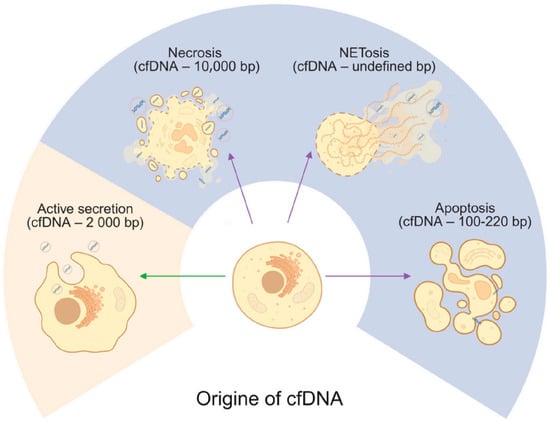
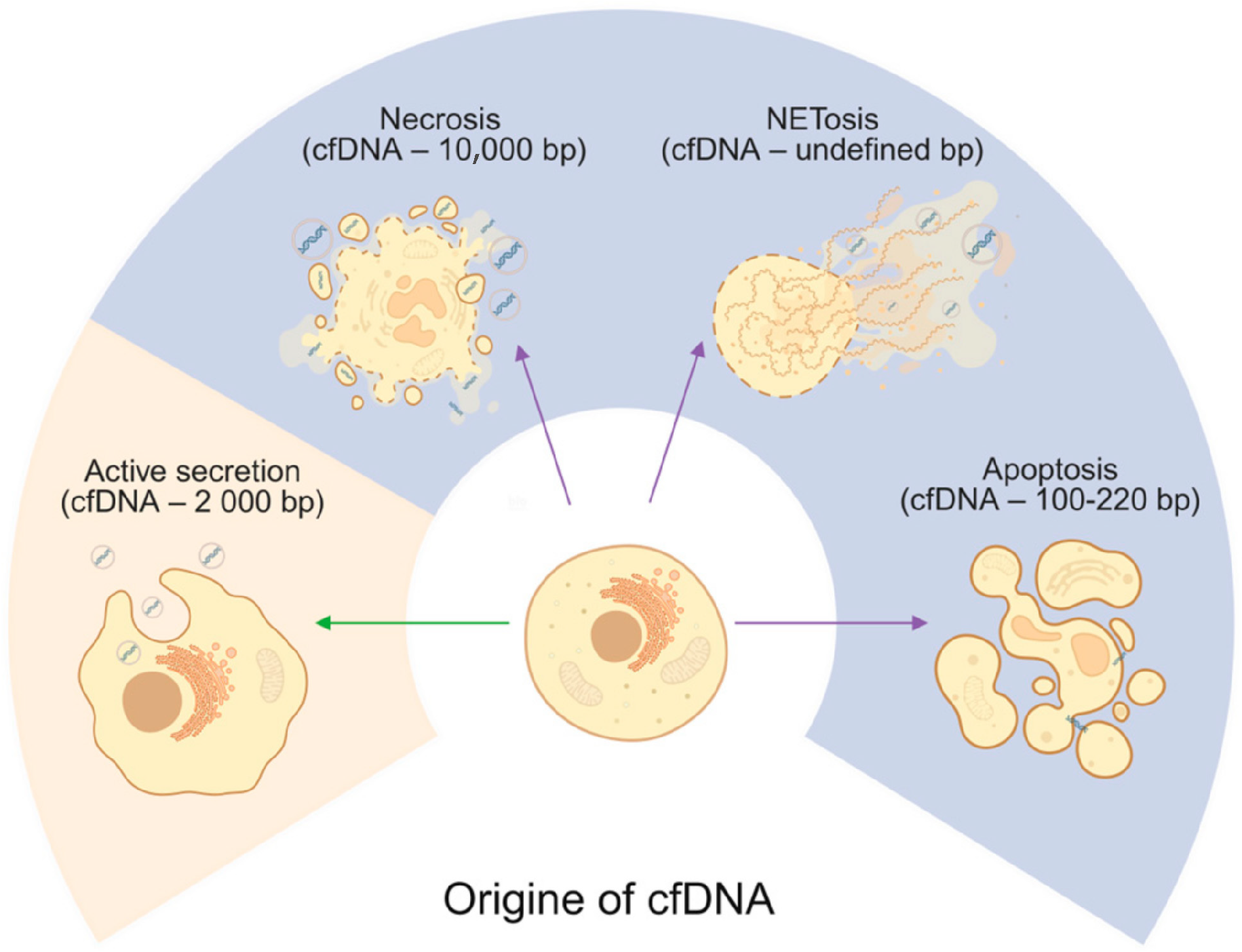
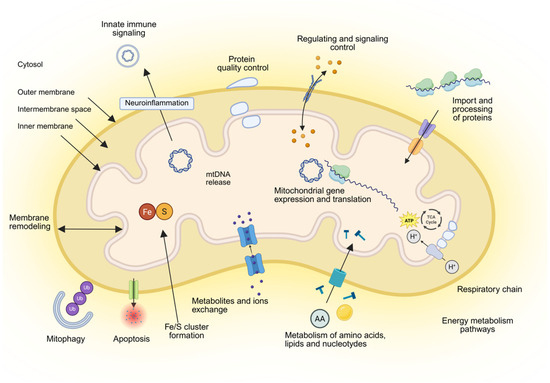
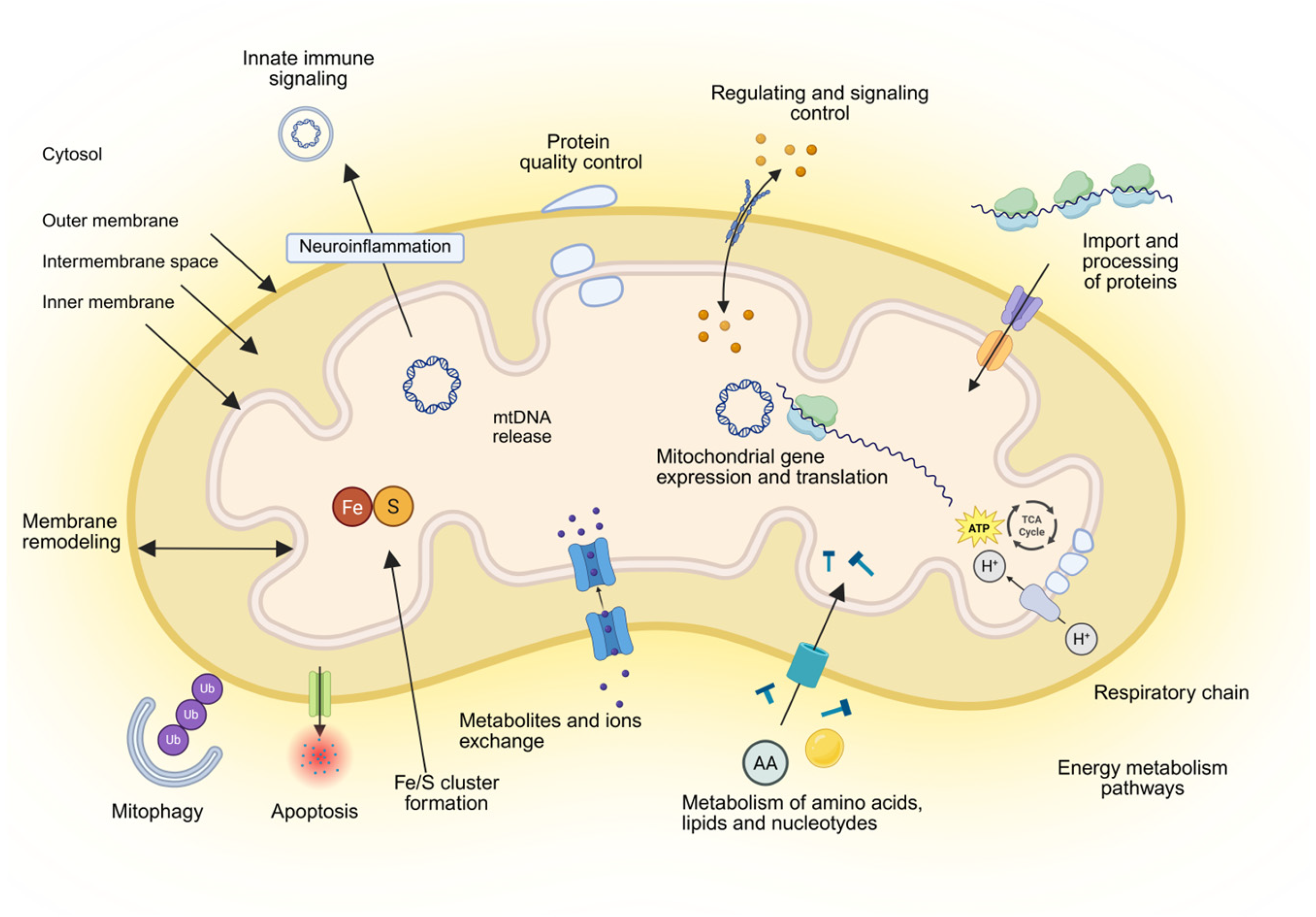
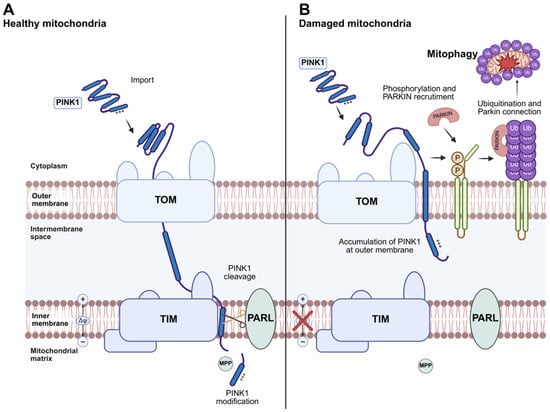
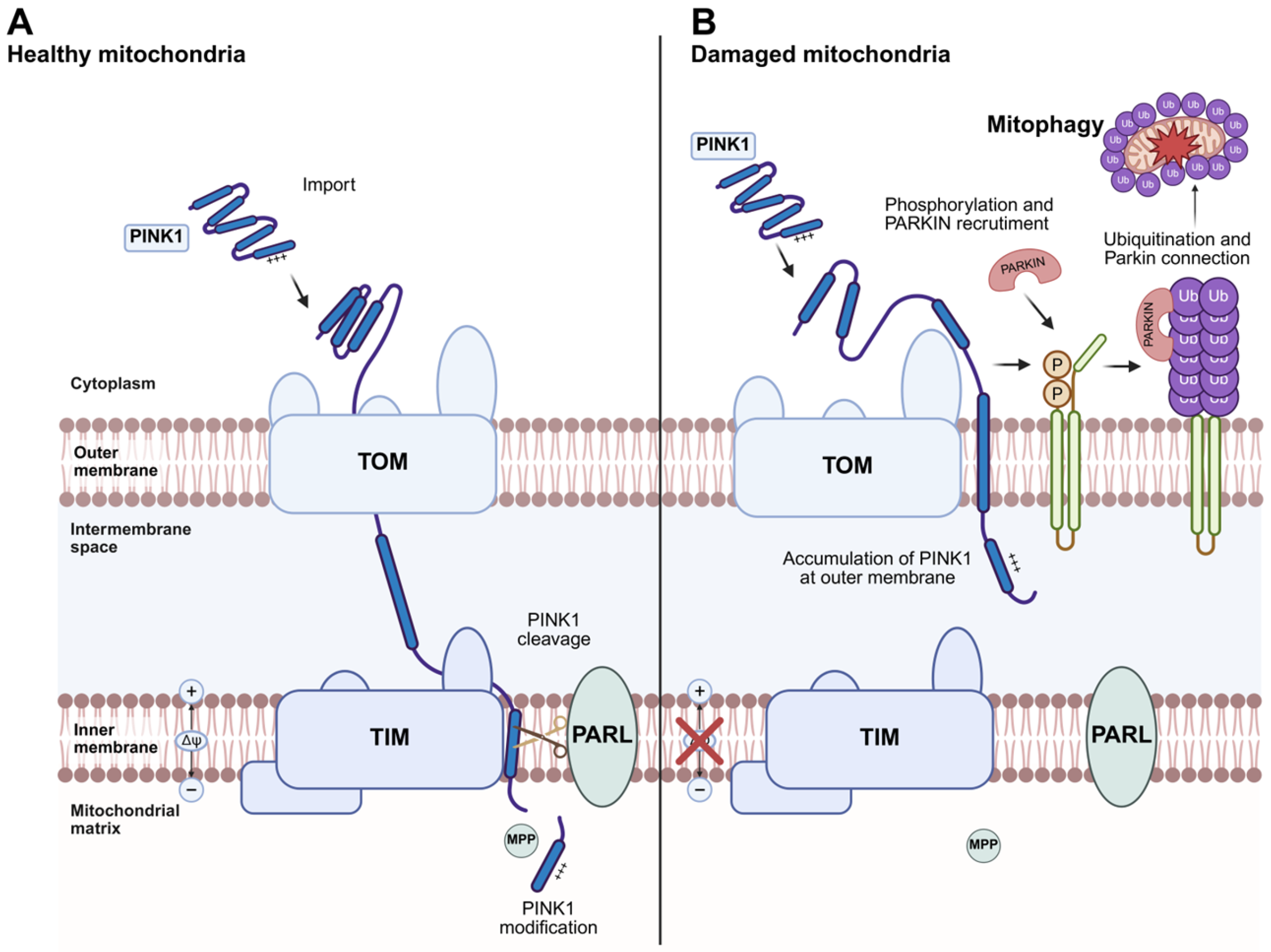
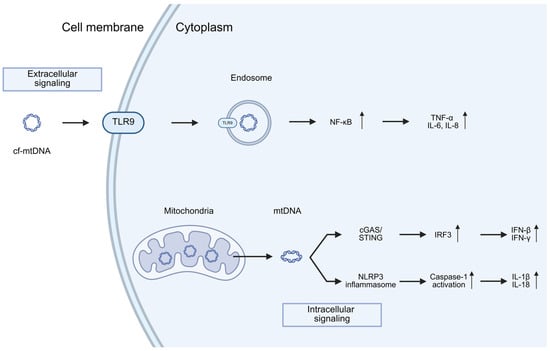
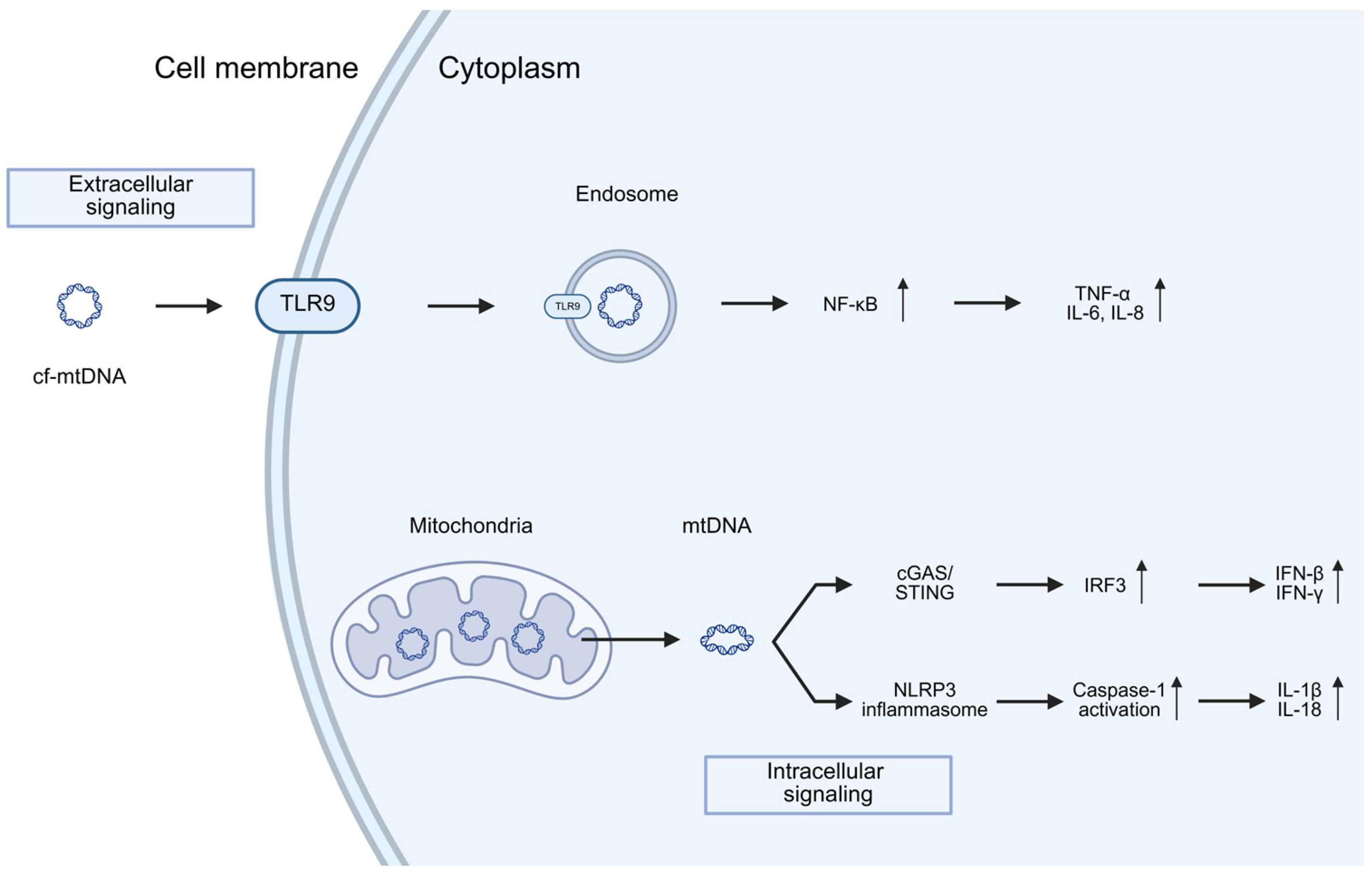
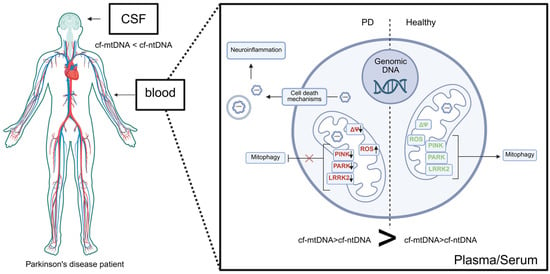
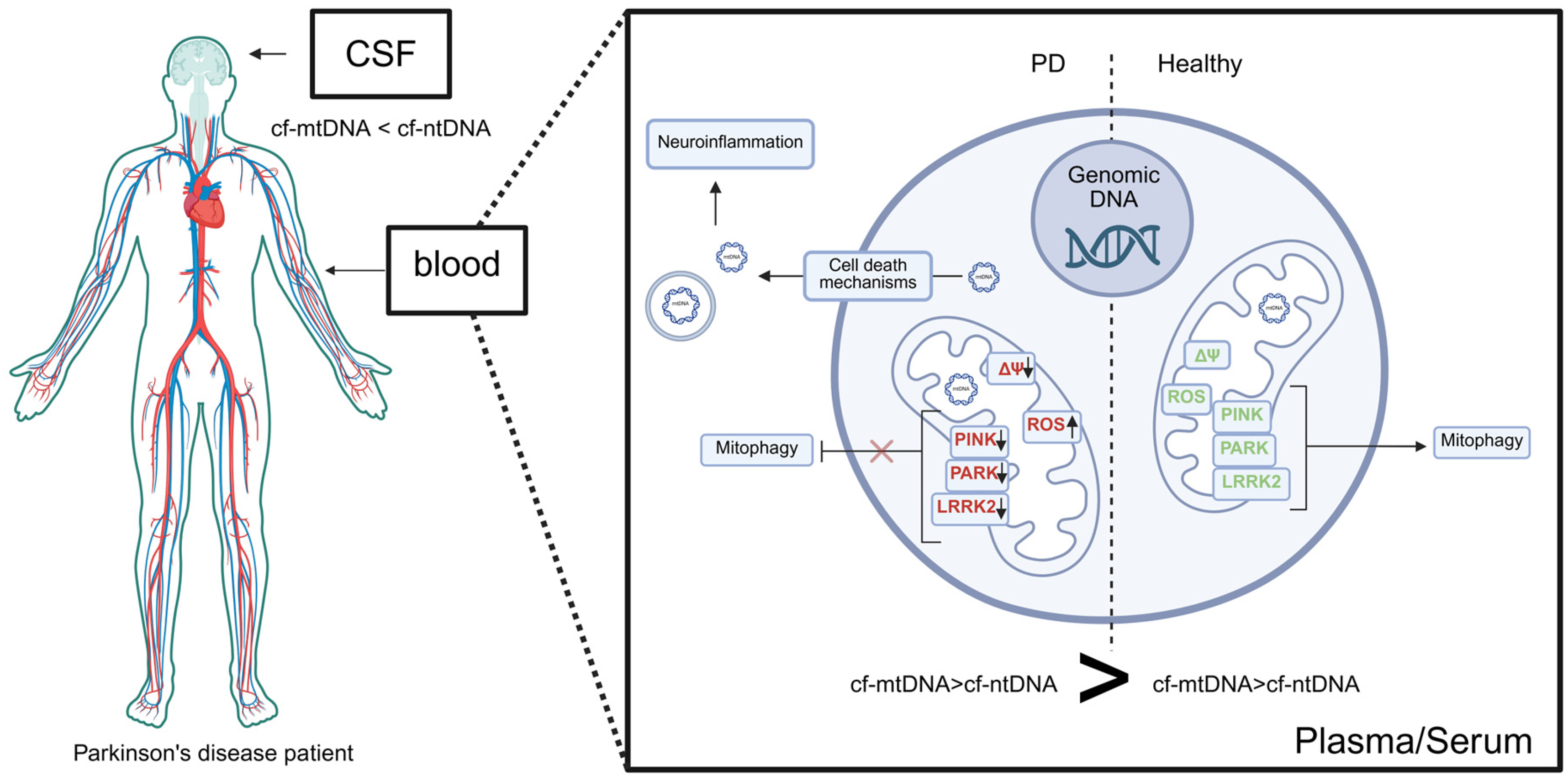
Disclaimer/Publisher’s Note: The statements, opinions and data contained in all publications are solely those of the individual author(s) and contributor(s) and not of MDPI and/or the editor(s). MDPI and/or the editor(s) disclaim responsibility for any injury to people or property resulting from any ideas, methods, instructions or products referred to in the content. |
© 2025 by the authors. Licensee MDPI, Basel, Switzerland. This article is an open access article distributed under the terms and conditions of the Creative Commons Attribution (CC BY) license (https://creativecommons.org/licenses/by/4.0/).