Review

Multifaceted Chromatin Structure and Transcription Changes in Plant Stress Response
1
Advanced Radiation Technology Institute, Korea Atomic Energy Research Institute, 29 Geumgu-gil, Jeongeup-si, Jeollabuk-do 56212, Korea
2
Department of Radiation Science and Technology, University of Science and Technology, 217 Gajeong-ro, Yuseong-gu, Daejeon 34113, Korea
Int. J. Mol. Sci. 2021, 22(4), 2013; https://doi.org/10.3390/ijms22042013
Submission received: 29 January 2021 / Revised: 15 February 2021 / Accepted: 16 February 2021 / Published: 18 February 2021
(This article belongs to the Special Issue Gene Expression and Chromatin Biology)

Abstract

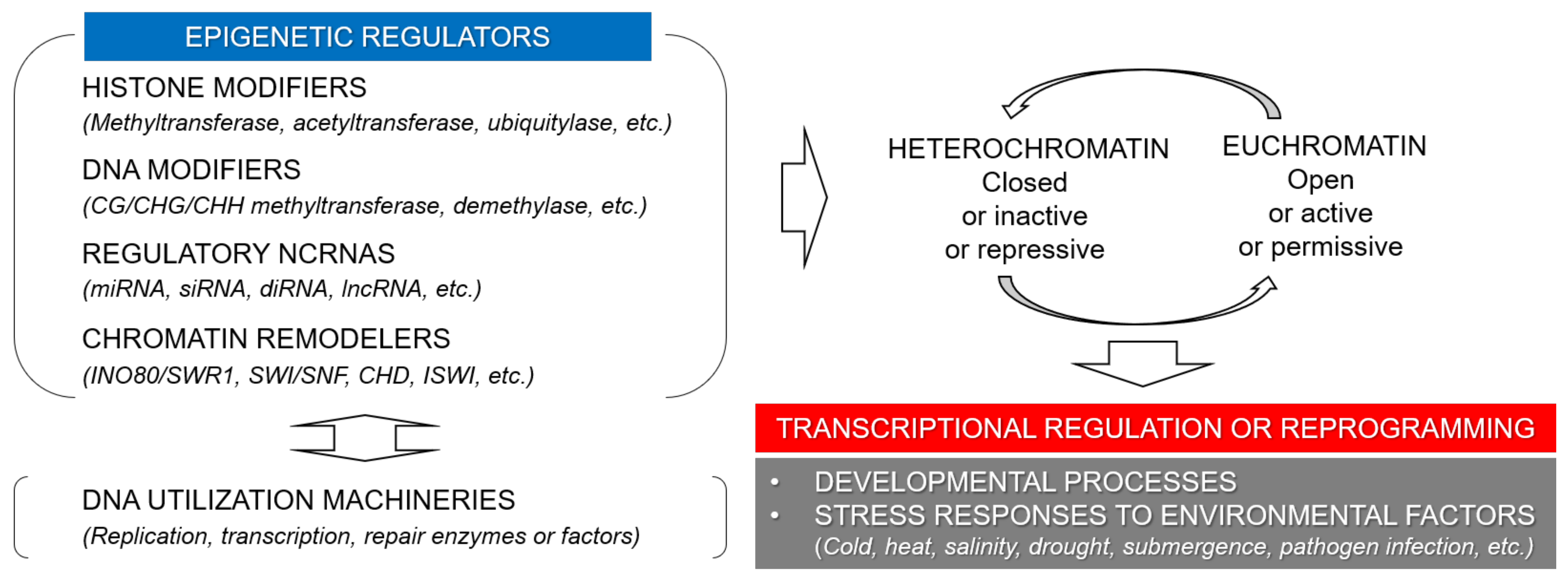
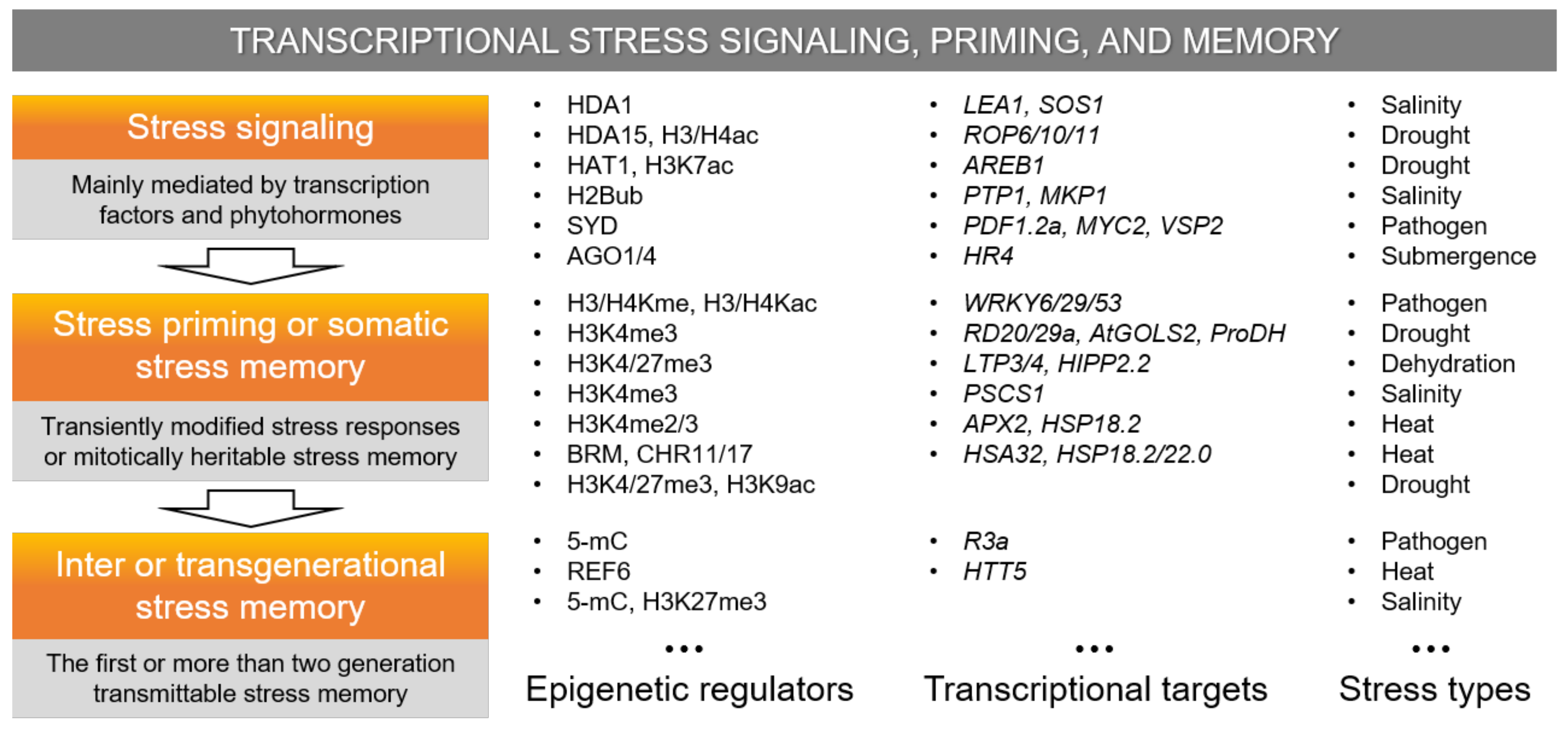
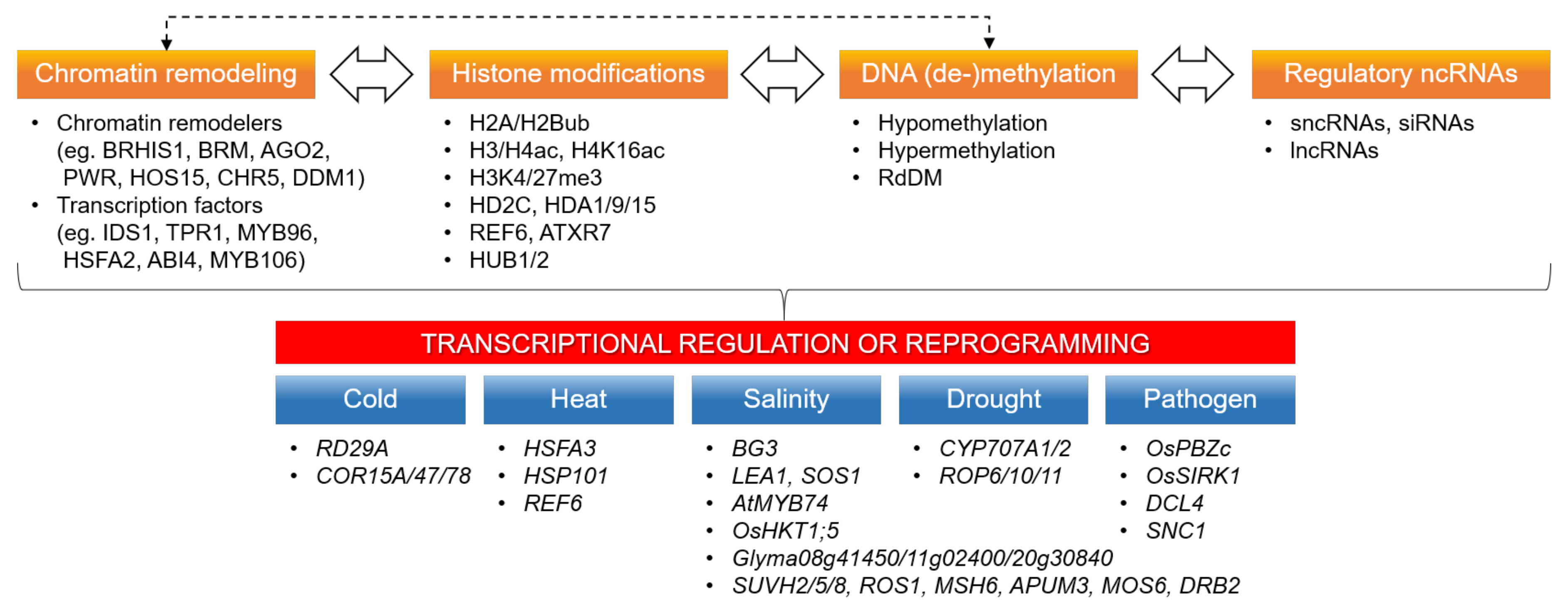
Sessile plants are exposed throughout their existence to environmental abiotic and biotic stress factors, such as cold, heat, salinity, drought, dehydration, submergence, waterlogging, and pathogen infection. Chromatin organization affects genome stability, and its dynamics are crucial in plant stress responses. Chromatin dynamics are epigenetically regulated and are required for stress-induced transcriptional regulation or reprogramming. Epigenetic regulators facilitate the phenotypic plasticity of development and the survival and reproduction of plants in unfavorable environments, and they are highly diversified, including histone and DNA modifiers, histone variants, chromatin remodelers, and regulatory non-coding RNAs. They contribute to chromatin modifications, remodeling and dynamics, and constitute a multilayered and multifaceted circuitry for sophisticated and robust epigenetic regulation of plant stress responses. However, this complicated epigenetic regulatory circuitry creates challenges for elucidating the common or differential roles of chromatin modifications for transcriptional regulation or reprogramming in different plant stress responses. Particularly, interacting chromatin modifications and heritable stress memories are difficult to identify in the aspect of chromatin-based epigenetic regulation of transcriptional reprogramming and memory. Therefore, this review discusses the recent updates from the three perspectives—stress specificity or dependence of transcriptional reprogramming, the interplay of chromatin modifications, and transcriptional stress memory in plants. This helps solidify our knowledge on chromatin-based transcriptional reprogramming for plant stress response and memory.
Keywords: chromatin; chromatin remodeling; histone modification; transcription; transcriptional reprogramming; plant stress response; DNA methylation chromatin; chromatin remodeling; histone modification; transcription; transcriptional reprogramming; plant stress response; DNA methylation