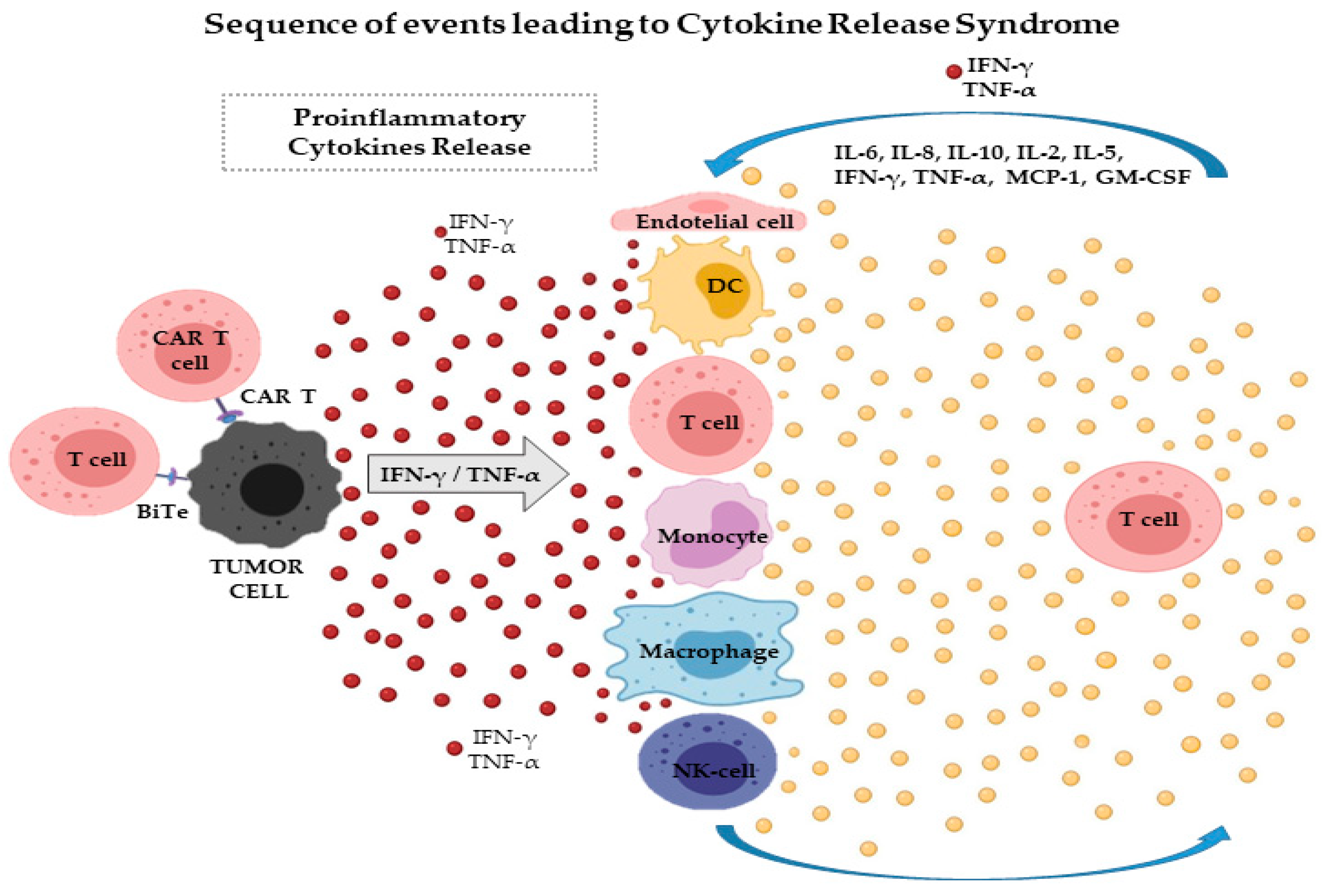
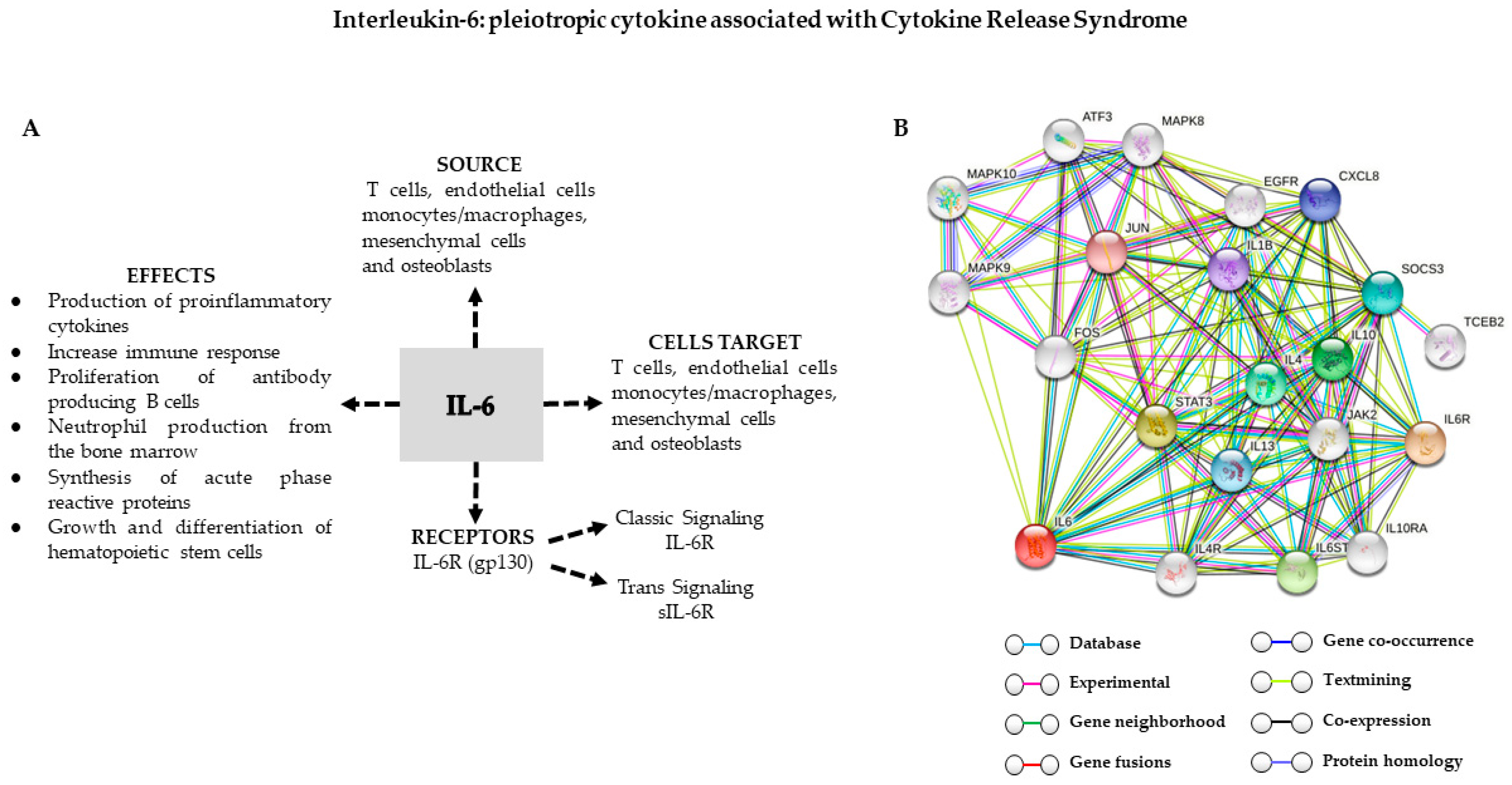
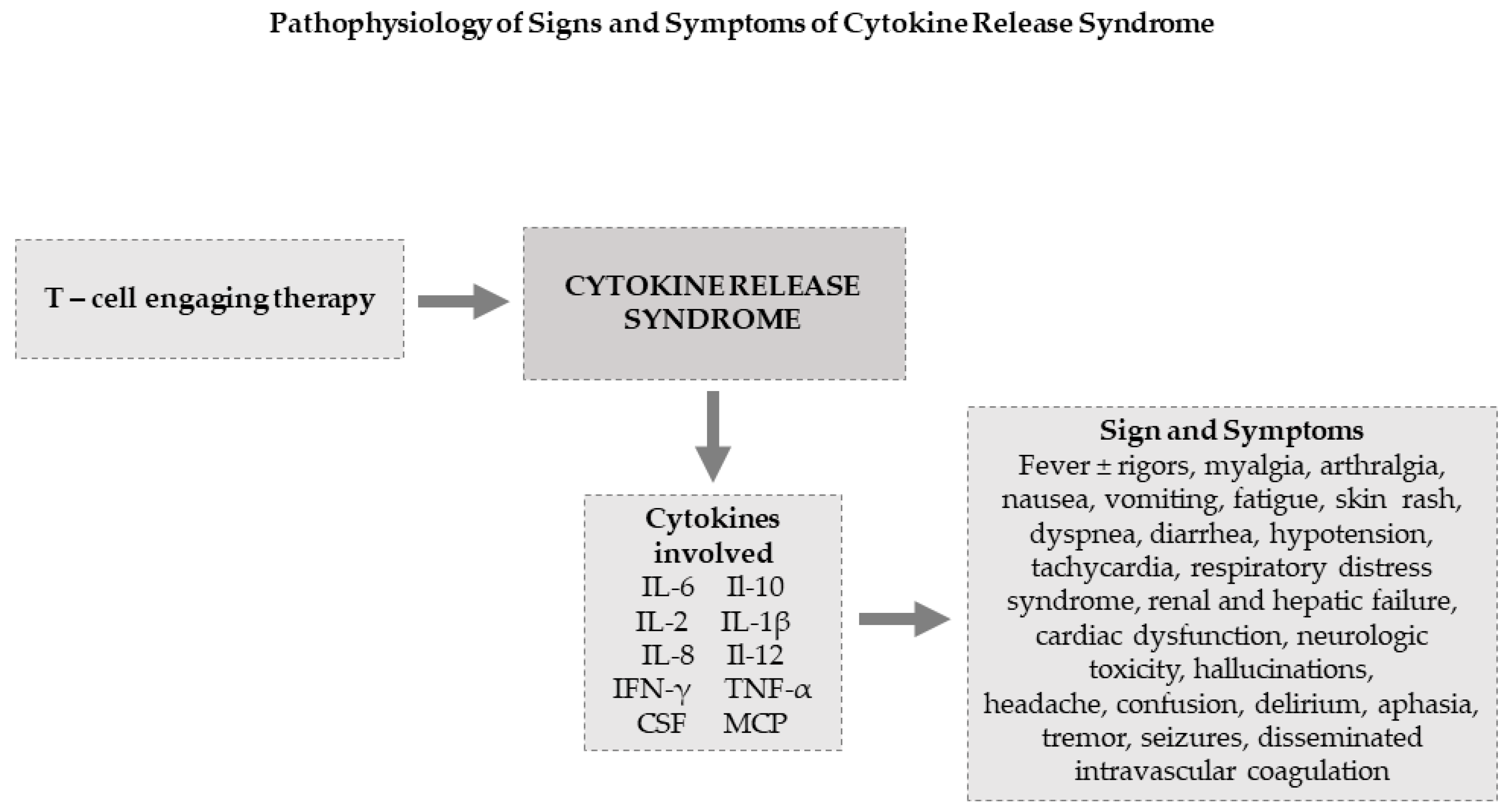
Cytokine Release Syndrome Associated with T-Cell-Based Therapies for Hematological Malignancies: Pathophysiology, Clinical Presentation, and Treatment

Abstract
Share and Cite
Cosenza, M.; Sacchi, S.; Pozzi, S. Cytokine Release Syndrome Associated with T-Cell-Based Therapies for Hematological Malignancies: Pathophysiology, Clinical Presentation, and Treatment. Int. J. Mol. Sci. 2021, 22, 7652. https://doi.org/10.3390/ijms22147652
Cosenza M, Sacchi S, Pozzi S. Cytokine Release Syndrome Associated with T-Cell-Based Therapies for Hematological Malignancies: Pathophysiology, Clinical Presentation, and Treatment. International Journal of Molecular Sciences. 2021; 22(14):7652. https://doi.org/10.3390/ijms22147652
Chicago/Turabian StyleCosenza, Maria, Stefano Sacchi, and Samantha Pozzi. 2021. "Cytokine Release Syndrome Associated with T-Cell-Based Therapies for Hematological Malignancies: Pathophysiology, Clinical Presentation, and Treatment" International Journal of Molecular Sciences 22, no. 14: 7652. https://doi.org/10.3390/ijms22147652
APA StyleCosenza, M., Sacchi, S., & Pozzi, S. (2021). Cytokine Release Syndrome Associated with T-Cell-Based Therapies for Hematological Malignancies: Pathophysiology, Clinical Presentation, and Treatment. International Journal of Molecular Sciences, 22(14), 7652. https://doi.org/10.3390/ijms22147652