


Abstract
Long-term high-fat dietary intake plays a crucial role in the composition of gut microbiota in animal models and human subjects, which affect directly short-chain fatty acid (SCFA) production and host health. This review aims to highlight the interplay of fatty acid (FA) intake and gut microbiota composition and its interaction with hosts in health promotion and obesity prevention and its related metabolic dysbiosis. The abundance of the Bacteroidetes/Firmicutes ratio, as Actinobacteria and Proteobacteria species are associated with increased SCFA production, reported high-fat diet rich in medium-chain fatty acids (MCFAs), monounsaturated fatty acids (MUFAs), and n–3 polyunsaturated fatty acids (PUFAs) as well as low-fat diets rich in long-chain fatty acids (LCFAs). SCFAs play a key role in health promotion and prevention and, reduction and reversion of metabolic syndromes in the host. Furthermore, in this review, we discussed the type of fatty acids and their amount, including the administration time and their interplay with gut microbiota and its results about health or several metabolic dysbioses undergone by hosts.
1. Introduction
Fatty acids (FAs) are the principal components of triacylglycerols found in oils and fats, which are the second primary source of dietary energy for humans [1]. Several FAs are obtained from different types of foodstuff and can be affected during their processing, storage, and cooking and various eating habits. The majority of FAs dietary intake (>95%) is available to the bloodstream through efficient processes of digestion and absorption [2].
FAs furnish energy (9 kcal per gram corresponding to 20%–35% of total calorie intake in adults) [3]; carry fat-soluble vitamins (A, D, E, and K) [4]; constitute the cell-membrane phospholipids; and act on its fluidity and signaling [2], immune system regulation, blood clots, and cholesterol metabolism [5].
On the other hand, fat production and accumulation in the body can be related to calories furnished by unbalanced FA intake and expended quantities, related to a lack of physical activities, genetic predisposition, and pathways involving metabolites and hormones [6,7,8].
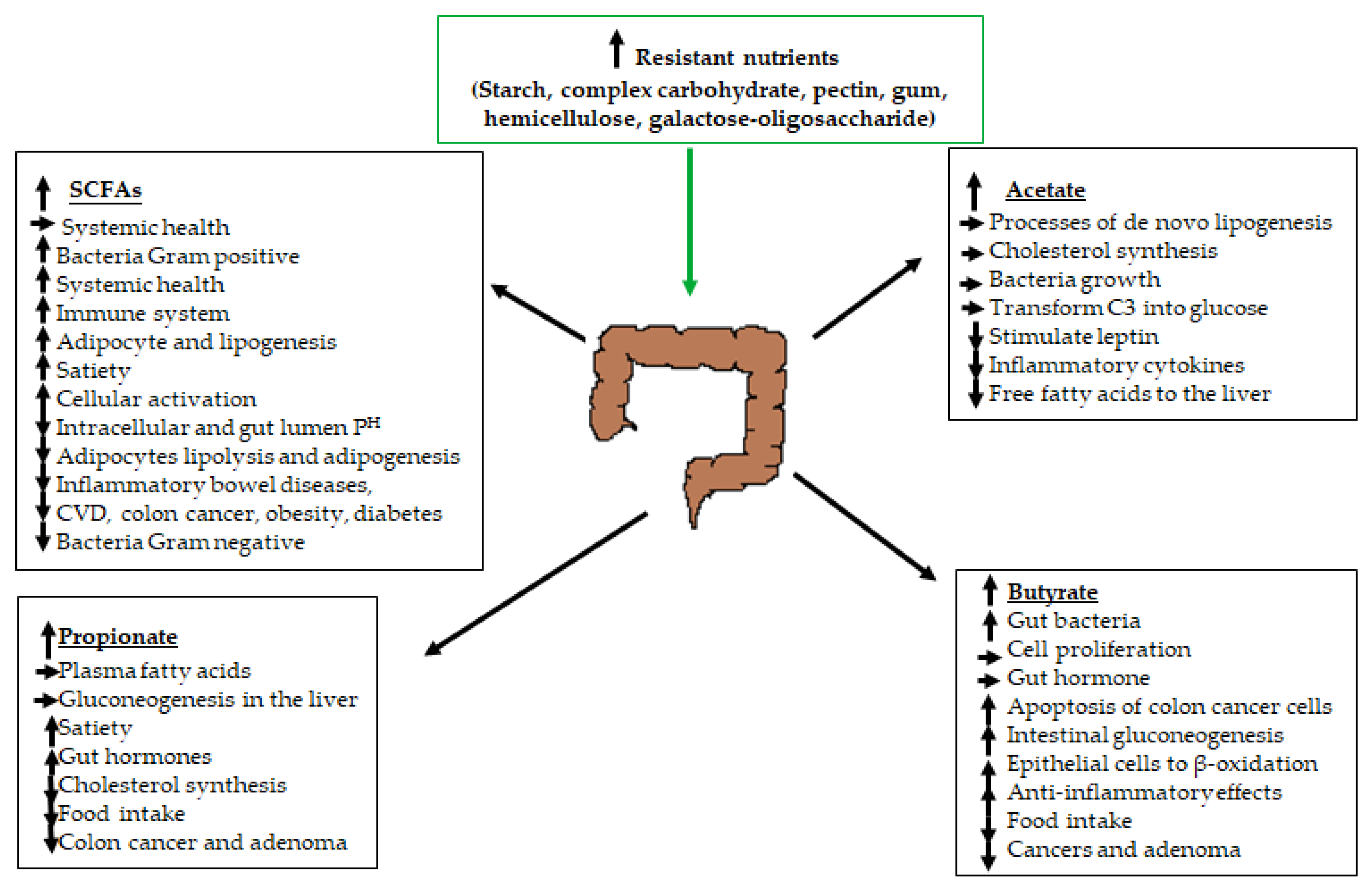
Furthermore, these dysfunctions can be associated with unbalanced microbiota composition in the host gut, which is the complex tract through which food passes during a lifetime and has found an abundant and dynamic population of microbiota [9]. Thus, the gut is home to about 100 trillion organisms, with 35,000 species of bacteria, of which small the intestine presents 107–108 and the large intestine presents 1010–1011 cells per mL of contents [10,11]. This microbiota compound is mainly anaerobic, in which 98% is constituted by phyla Bacteroidetes (9%–42%) (Porpyromonas and Prevotella), Firmicutes (30–52%) (Ruminococcus, Clostridium, and Eubacteria) and Actinobacteria (1–13%) (Bifidobacterium) and in which 2% is constituted by phylum Lactobacillae (2%) (Streptococci (2%) and Enterobacteria (1%)) [12,13]. The most crucial gut microbiota activity is involved with short-chain fatty acids (SCFAs), produced by fermentation, which is represented by Ruminococcaceae and Eubacterium in the order Clostridia, classes Clostridia and Firmicutes, from prebiotics: polysaccharides (resistant starches, hemicellulose, pectins, and gums), oligosaccharides, proteins, peptides, and glycoproteins [14,15,16]. The SCFAs are a group that presents 1–6 saturated carbons in their structures. The most relevant SCFAs produced are acetate > propionate ≥ butyrate [17]. Propionate is abundantly synthesized by Bacteroidetes and Negativicutes, utilizing succinate [18]. Butyrate is broadly produced by Clostridial clusters IV, XIVa, and XVI (Firmicutes) through the butyrate kinase or butyryl-coenzyme A (CoA): acetate CoA-transferase pathways, and this last pathway provides a high quantity of acetate [19]. The beneficial effects of the SCFAs produced by the gut microbiota are summarized in Figure 1.
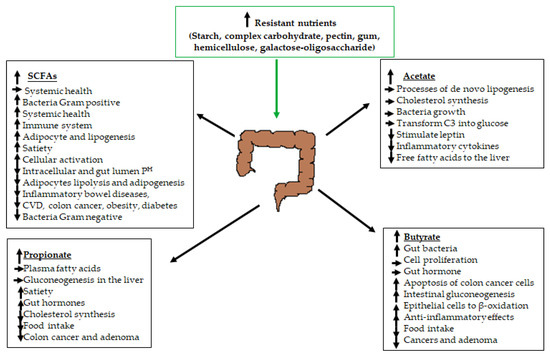
Figure 1.
The role of the gut microbiota in short-chain fatty acid (SCFA) production and their benefits to human physiology regulation, which have contributed greatly in health promotion and disease prevention. Abbreviation: ↑ = significant increase; ↓ = significant decrease; → = stable performance C3 = propionate; and CVD = cardiovascular diseases.
The SCFAs produced in the colon are immediately absorbed and furnish energy for colonocytes, and the remaining SCFAs are immediately incorporated into the hepatic portal vein by passive diffusion and active transport mechanisms and contribute to the optimal function of several organs [20,21,22]. Therefore, studies have demonstrated that the energy furnished to the host from diet intake is associated with modulation of the gut microbiota composition and leads to SCFA production [23,24,25,26]. Also, FA diet has contributed to health promotion and disease prevention, including obesity and its related disorders [27,28,29,30].
Obesity represents a consequence of abnormal fat accumulation in the body, resulting in high energy, which may lead to a pro-inflammatory response, and culminating at several disorders [31,32,33], such as insulin resistance and inflammatory diseases.
The objective of this review is to provide an overview of fatty acid intake and gut microbiota composition for host health promotion and obesity prevention and its related metabolic dysbioses (e.g., coronary heart diseases and type 2 diabetes mellitus) through the compilation of several scientific articles published in the last five years related to studies with animal models and human subjects.
2. Medium-Chain Fatty Acids
Medium-chain fatty acids (MCFAs) are a group that presents 7–12 saturated carbons in their structures. The most common MCFAs are caprylic (C8:0), capric (C10:0), and lauric (C12:0) acids [34]. The common diet sources of caprylic, capric, and lauric acids are coconut, palm kernel, and human milk with 5–8%, 6–7%, and 48–58%, respectively [35,36,37,38]. MCFA digestion and absorption occur in the stomach, catalyzed by lingual and gastric lipases, solubilized in the aqueous phase of the intestinal contents, absorbed bounded to albumin, and transported to the liver via the portal vein [39,40,41]. These acids do not need carnitine shuttle to enter mitochondria; however, they increase the energy spent, regulate protein activation, reduce adiposity and preserve insulin action in muscle and fat, induce satiety, increase mucosal microvillus enzymes activity in the small intestine, elongate to long-chain fatty acids, and resynthesize triglycerides [42,43,44,45]. MCFAs have shorter biological half-time and higher stability to lipoperoxidation [34]. Considering the lack of scientific evidence that address human studies with MCFAs, the effects of MCFAs-rich diet consumption on gut microbiota on obesity and its related diseases that occur in animal model studies are summarized in Table 1.

Table 1.
Effects of medium-chain fatty acid intake on gut microbiota composition and metabolic outcomes in animal models.
Several studies on MCFAs reported that the increase of Bacteroidetes and the decrease of Firmicutes and Proteobacteria in mice gut consequently lowered the inflammation and obesity effects [46]. Furthermore, the increase of the Bacteroidetes to Firmicutes ratio as well as the abundance of Ruminococcaceae, Bifidobacterium, and Lactobacillus are associated with SCFA production [15,50,51]. Moreover, these bacteria are correlated with reducing effects of obesity, inflammatory bowel disease (IBD), type 2 diabetes mellitus (T2DM), and cardiovascular diseases (CVD) in the hosts [51,52,53,54,55]. Bifidobacterium and Lactobacillus are predominantly abundant in the human gut during early life, producing lactate and acetate acids protecting the hosts against enter-pathogenic agents [50,51,56,57]. The natural sources of MCFAs are human milk (9–15%) and virgin coconut oil (61%), presenting higher composition compared with infant formula (8–42%) [37,38,58,59].
However, diets rich in coconut oil ≥25% administrated to healthy female animal models for 8 or 10 weeks showed obesity and its related dysfunction effects and increase of Allobaculum, Clostridium, Lactobacillus, Staphylococcus, and the Firmicutes to Bacteroidetes ratio in their guts [48,49,52,60].
3. Long-Chain Fatty Acids
Long-chain fatty acids (LCFAs) are a group that presents 13–18 saturated carbons in their structures. The LCFAs in the diet are myristic (C14:0), palmitic (C16:0), and stearic (C18:0) acids [41]. The primary dietary sources of myristic acid include human milk, palm olein, and coconut (8–20%) [37,38,61]. Palmitic acid (PA) is commonly found in olive, human milk, cottonseed, and palm olein (20–47%) [37,38,61,62]. Stearic acid occurs in pumpkin, sesame, and human milk (6–7%) [37,38].
Therefore, LCFAs represent 80–90% of total saturated fatty acid food intake [34], between 20–30 g per day corresponding to PA [63]. However, PA intake (exogenous) is counterbalanced by PA endogenous biosynthesis via de novo lipogenesis (DNL), crucial to maintaining cell membrane fluidity and insulin sensitivity [64]. In normal physiology conditions, PA accumulation is prevented by enhanced Δ-9 desaturation to palmitoleic acid (16:1 n-7) and/or elongation to stearic acid and/or Δ-9 desaturation to oleic (18:1 n-9) and then elongation to eicosenoic acid (20:1 n-9) [34,65]. The effects of LCFA-rich diet consumption on gut microbiota composition in animal models are summarized in Table 2.
Table 2.
Effects of long-chain fatty acids intake on gut microbiota composition and metabolic outcomes in animal models.
In general, the increase of the Bacteroidetes to Firmicutes ratio was due to low fatty acid diets (7% of energy), and high fatty acids (25% of energy) of LCFAs was reported for healthy men and women (21–65 years old) [74]. Additionally, the main genera recorded by several studies are represented by Blautia, Clostridium, Coprococcus, Dialister, Lachnospira, Lactococcus, Lachnobacterium, Phascolarctobacterium, Roseburia, Ruminococcus (Firmicutes), Bacteroides, Paraprevotella, Parabacteroides, and Prevotella (Bacteroidetes), correlated with SCFA production, obesity, and its related metabolic dysbiosis reduction [75,76,77,78,79,80,81].
Additionally, another gut microbiota feature is related to the most abundant Firmicutes in the intestine of healthy subjects and followed by relatively increasing Bacteroidetes [82,83]. This behavior is maintained by equilibrated amounts of energy intake and expenditure by the host, which play a key role to keep the symbiotic relationship between gut microbiota and host [84]. Thus, this harmonic relationship between the host and gut microbiota can allow the increase of SCFA production (acetic, propionic and butyric acids) which are crucial to the homeostasis and diseases of the host [9,85].
However, the increase of the Firmicutes to Bacteroidetes ratio, including Actinobacteria, was recorded with LCFA-rich diets (34–72% of energy) fed to healthy animal models. Additionally, increased effects of obesity, adipose tissue, plasma cholesterol, total cholesterol, weight gain, hypertension, insulin resistance, inflammatory bowel diseases (IBD), nonalcoholic steatohepatitis (NASH) in the studied subjects occurred [66,67,68,69,72]. Obesity and its related metabolic syndromes are associated with increase of Desulfovibrio and Bilophila wadsworthia (Proteobacteria) and decrease of Bifidobacterium spp. (Actinobacteria) [70,71].
Therefore, higher caloric intake and lower energy expenditure by animal models and human subjects show increasing Firmicutes abilities for energy extraction from diet and SCFA (acetate and butyrate) production and consequently elevating mass weight gain of the host and obesity by fat accumulation in adipocyte tissue [86,87]. Additionally, decreasing Bacteroidetes at 50% compared with the Firmicutes ratio, including the abundance of Actinobacteria and Proteobacteria, is correlated with obesity and its related metabolic dysbioses [83,88,89,90].
4. Monounsaturated Fatty Acids
Monounsaturated fatty acids (MUFAs) are an unsaturated group with one double bond in their structures. The MUFAs include palmitoleic (C16:1 n-7), oleic (C18:1 n-9), and eicosenoic (C20:1 n-9) acids [37]. The MUFAs are endogenously obtained by Δ-9 desaturation, palmitoleic from palmitic acid and oleic from stearic acid, and by elongation of oleic to eicosenoic acid [34]. The MUFAs are obtained through ingestion; oleic acid is the most representative with 25–71% in safflower, sesame, pumpkin seed, rice bran, human milk, rapeseed, olive, and peanut [37,38] and with eicosenoic acid with 7–17% in wheat germ, rapeseed, and hemp [37].
MUFA consumption is associated with reduced effects of obesity and its related metabolic syndromes [91,92,93]. Furthermore, these health beneficial effects demonstrated by MUFAs result from their apolipoproteins (E and C-III) that present a high affinity for the hepatic receptors and rapidly activate synthetic and catabolic pathways for triacylglycerol-rich lipoprotein metabolism [94,95]. Moreover, the consumption of MUFAs-rich diet showed positive health effects, e.g., extra virgin olive oil increased the gut microbiota diversity of healthy and unhealthy animal models, including humans under risk of metabolic syndrome [74,96,97]. Effects of MUFA-rich diet consumption on gut microbiota composition in animal models are summarized in Table 3.
Table 3.
Effects of monounsaturated fatty acids intake on gut microbiota composition and metabolic outcomes in animal models.
The increased Bacteroidetes to Firmicutes ratio, including Bifidobacterium spp. (Actinobacteria), was recorded for MUFA-rich diet (10–76% of energy) administrated to humans for several weeks (Table 4). The increase in Bacteroidetes and Bifidobacterium spp. is correlated with high SCFA (acetic, propionic and butyric acids) production [15,101,102]. Among SCFAs, butyrate is the most important because it is an energy source for colonocytes and, on the other hand, triggers Firmicutes to reduce dietary energy harvest and consequently decreases adipose tissue fat accumulation in hosts [84,86,87,103].
Table 4.
Effects of monounsaturated fatty acids intake on gut microbiota composition and metabolic outcomes in humans.
Consequently, MUFA-rich diet shows decreasing effects of obesity, weight gain, insulin resistance, hypertension, body mass index (BMI), and nonalcoholic steatohepatitis (NASH) [73,96,97,100]. SCFAs are crucial biomacromolecular substances utilized for the homeostasis and disease of the host, protecting or reducing the effects of obesity, diabetes, inflammatory bowel diseases (IBD) and cardiovascular diseases (CVD) [9,103,104].
5. Polyunsaturated Fatty Acids
The polyunsaturated fatty acids (PUFAs) are an unsaturated group that presents two or up to six double bonds in their structures. PUFAs are essential FAs (cannot be synthesized by human or higher animals’ bodies and are required from dietary intake) constituted by α-linolenic acid (ALA) from the n–3 PUFA family and by linoleic acid (LA) from the n–6 PUFA family [106]. ALA is abundant in flaxseed (53 g), canola (18 g), and soybean oils (7 g). LA is found in soybean (56 g), corn (53 g), canola (19 g), flaxseed (14 g), and safflower oils (12.72 g) [107].
In the body, ALA is converted to eicosapentaenoic (EPA) and docosahexaenoic acids (DHA) through a series of desaturation and elongation reactions and presents effects of anti-inflammation, vasodilation, bronchodilation, and anti-platelet aggregation, and LA follows the same pathways, shares the same enzymes, competes with ALA for its desaturation and elongation processes, is converted to arachidonic acid (ARA), and presents an antagonistic effect to ALA and pathophysiology [106,108,109].
Furthermore, an n–3 PUFA-rich diet is correlated with decreasing or preventing adipose tissue fat accumulation, insulin resistance, inflammation, hypertension, atherosclerosis, obesity, cardiovascular diseases (CVD), and type 2 diabetes mellitus (T2DM) [110,111,112,113]. In contrast, an n–6 PUFA-rich dietary intake is associated with metabolic dysbioses such as obesity, inflammatory bowel diseases (IBD), nonalcoholic steatohepatitis (NASH), and CVD [71,114,115]. Due to competition and antagonistic effects of n–6 against n–3 PUFAs, the recommended balanced dietary ratio of n–6/n–3 intake is 1/1 or 2/1–10/1 [106,116].
Thus, dietary PUFAs play a crucial role in a host specific to gut microbiota composition and in the ability of the production of MUFA-derived metabolites [104,117]. Also, n–3 PUFA intake is related to the abundance of gut microbiota composition and to increasing SCFA production [101,102,118]. Effects of PUFA-rich diet consumption on gut microbiota composition in animal models are summarized in Table 5.
Table 5.
Effects of PUFA intake on gut microbiota composition and metabolic outcomes in animal models.
The increased Bacteroidetes to Firmicutes ratio, including Actinobacteria and Proteobacteria, was reported with administration of n–3 PUFAs in a low fat-diet or high-fat diet and of n–6/n–3 PUFA proportions (1/2 or 3/1–11/1) to humans (Table 6). The results demonstrated the decreased effects of obesity, inflammation, weight gain, nonalcoholic steatohepatitis (NASH), and type 2 diabetes mellitus (T2DM) [80,96,118,124]. Furthermore, the abundance of the Bacteroidetes to Firmicutes ratio is correlated with increasing SCFA (acetate, propionate, and butyrate acids) production [85,102]. Butyrate is a substrate for colonocytes, and all SCFAs produced are important to biomacromolecular substances linked to homeostasis and disease of the host [9,106].
Table 6.
Effects of PUFA intake on gut microbiota composition and metabolic outcomes in humans.
However, interestingly, lowering obesity effects were recorded for healthy female genetically modified mice compared with wild-type mice; administrating safflower oil (n–6 PUFA-rich diet) for 21 weeks increased Bacteroidetes to Firmicutes ratio, including Proteobacteria [119]. Inversely, weight gain remained stable with decreased Helicobacter and Clostridiales in healthy mice (male and female) given n–3 PUFA of fish oil (40% EPA- and 27% DHA-rich diet) for two weeks [120]. Helicobacter and Clostridiales are related to increasing effects of insulin resistance, low-density lipoprotein-cholesterol (LDL-C), IBD, NASH, T2DM, and CVD [125,126,127].
With regard to diets, n–6/n–3 PUFA proportion at 1/2 demonstrated anti-inflammatory effects on pups with increased Blautia (Firmicutes) and decreased Bacteroidetes [121]. Blautia is associated with butyrate production and anti-inflammatory effect [75,128]. An n–6/n–3 PUFA proportion of 3/1 to 11/1 in the diet recorded decreased effects of obesity and its related metabolic dysbioses and increased Allobaculum, Isobaculum, Proteobacteria, and Lachnospiraceae [80,96,101]. Lachnospiraceae and Allobaculum are associated with SCFA production [80,129,130]. Besides, Allobaculum is related to high-lipoprotein density-cholesterol (HLD-C) production and reduction in obesity effect [131]. Unfortunately, the beneficial effect of Isobaculum on health is yet unknown [98].
Other studies on n–6 PUFA-rich diets reported increasing effects of obesity, weight gain, inflammation, and adipose tissue fat accumulation [71,115]. The increase of Bacteroides, Bifidobacterium, Lachnospiraceae Proteobacteria, and Clostridiales is related to metabolic dysfunction risks [132,133,134]. Effects of PUFAs on gut microbiota are summarized in Table 6.
6. Conclusions
Different types of FA dietary intakes play a crucial role in modifying the composition of gut microbiota, which interplay the health improvement or disease of the host. The consumption of HFD with a predominance of MCFAs, MUFAs, and n–3 (EPA and DHA), including low fat-diet of LCFA dietary intake, increases the beneficial microbiota, mainly the Bacteroidetes to Firmicutes ratio as well as Actinobacteria and Proteobacteria species. These bacterial species are correlated with increasing SCFA production, which prevents and reduces obesity and its related metabolic dysbiosis effects. However, high-fat diets of LCFAs and n–6 PUFA dietary intake present antagonistic effects and show pathologic results to animal models and human studies compared with other types of fatty acids.
Author Contributions
D.J.M., R.d.C.A.G., and A.P.: assistance with structure of the review, writing, and literature review; P.S.F., G.M., P.A.H., D.B., L.C.S.d.O., and V.A.Z.P.: assistance with structuring of the review. All authors have read and agreed to the published version of the manuscript.
Funding
This research was funded by Federal University of Mato Grosso do Sul (UFMS) and Coordination of Superior Level Staff Improvement (CAPES)—Portaria 2016/2018. This study was financed in part by the CAPES—finance code 001.
Acknowledgments
We thank the Graduate Program in Biotechnology and Biodiversity and the Graduate Program in Health and Development in the Central-West Region of Brazil, Federal University of Mato Grosso do Sul-UFMS for support. The authors thank the Coordination for the Improvement of Higher Education Personal (Coordenação de Aperfeiçoamento de Pessoal de Nível Superior–CAPES) and the National Council for Scientific and Technological Development (Conselho Nacional de Desenvolvimento Científico e Tecnológico—CNPq) for research grants.
Conflicts of Interest
The authors declare no conflict of interest.
References
- Hawkesworth, S.; Dangour, A.D.; Johnston, D.; Lock, K.; Poole, N.; Rushton, J.; Uauy, R.; Waae, J. Feeding the world healthily: The challenge of measuring the effects of agriculture on health. Phil. Trans. R. Soc. B. 2010, 365, 3083–3097. [Google Scholar] [CrossRef] [PubMed]
- Calder, P.C. Functional roles of fatty acids and their effects on human health. J. Parenter. Enteral. Nutr. 2015, 39, 18S–32S. [Google Scholar] [CrossRef] [PubMed]
- FAO. Fats and fatty acids in human nutrition. In Report of an Expert Consultation; FAO Food and Nutrition Paper 91; FAO: Rome, Italy, 2010; ISBN 978-92-5-106733-8. [Google Scholar]
- Albahrani, A.A.; Greaves, R.F. Fat-soluble vitamins: Clinical indications and current challenges for chromatographic measurement. Clin. Biochem. Ver. 2016, 37, 27–47. [Google Scholar]
- Abedi, E.; Sahari, M.A. Long-chain polyunsaturated fatty acid sources and evaluation of their nutritional and functional properties. Food Sc. Nutr. 2014, 2, 443–463. [Google Scholar] [CrossRef] [PubMed]
- Choquet, H.; Meyre, D. Genetics of obesity: What have we learned? Curr. Genom. 2011, 12, 169–179. [Google Scholar] [CrossRef] [PubMed]
- Greenwood, H.C.; Bloom, S.R.; Murphy, K.G. Peptides and their potential role in the treatment of diabetes and obesity. Rev. Diabet. Stud. 2011, 8, 355–368. [Google Scholar] [CrossRef]
- Camacho, S.; Ruppel, A. Is the calorie concept a real solution to the obesity epidemic? Global Health Action 2017, 10, 1289650. [Google Scholar] [CrossRef]
- Thursby, E.; Juge, N. Introduction to the human gut microbiota. Biochem. J. 2017, 474, 1823–1836. [Google Scholar] [CrossRef]
- Sekirov, I.; Russell, S.L.; Antunes, L.C.; Finlay, B.B. Gut microbiota in health and disease. Physiol. Rev. 2010, 90, 859–904. [Google Scholar] [CrossRef]
- Lecocq, M.; Detry, B.; Guisset, A.; Pilette, C. FcαRI-mediated inhibition of IL-12 production and priming by IFN-γ of human monocytes and dendritic cells. J. Immunol. 2013, 190, 2362–2371. [Google Scholar] [CrossRef]
- Bourlioux, P.; Koletzko, B.; Guarner, F.; Braesco, V. The intestine and its microflora are partners for the protection of the host: Report on the danone symposium “The intelligent intestine”, held in Paris, June 14, 2002. Am. J. Clin. Nutr. 2003, 78, 675–683. [Google Scholar] [CrossRef] [PubMed]
- Rajoka, M.S.R.; Shi, J.; Mehwish, H.M.; Zhu, J.; Li, Q.; Shao, D.; Huang, Q.; Yang, H. Interaction between diet composition and gut microbiota and its impact on gastrointestinal tract health. Food Sci. Hum. Wellness 2017, 6, 121–130. [Google Scholar] [CrossRef]
- Cummings, J.H.; Macfarlane, G.T. The control and consequences of bacterial fermentation in the human colon. J. Appl. Bacteriol. 1991, 70, 443–459. [Google Scholar] [CrossRef] [PubMed]
- Ohira, H.; Tsutsui, W.; Fujioka, Y. Are short chain fatty acids in gut microbiota defensive players for inflammation and atherosclerosis? J. Atheroscler. Thromb. 2017, 24, 660–672. [Google Scholar] [CrossRef]
- Valdes, A.M.; Walter, J.; Segal, E.; Spector, T.D. Role of the gut microbiota in nutrition and health. BMJ 2018, 361, k2179. [Google Scholar] [CrossRef]
- Topping, D.L.; Clifton, P.M. Short-chain fatty acids and human colonic function: Roles of resistant starch and nonstarch polysaccharides. Physiol. Rev. 2001, 81, 1031–1064. [Google Scholar] [CrossRef]
- Reichardt, N.; Duncan, S.H.; Young, P.; Belenguer, A.; Leitch, C.M.; Scott, K.P.; Flint, H.; Louis, P. Phylogenetic distribution of three pathways for propionate production within the human gut microbiota. ISME J. 2014, 8, 1323. [Google Scholar] [CrossRef]
- Louis, P.; Duncan, S.H.; McCrae, S.I.; Millar, J.; Jackson, M.S.; Flint, H.J. Restricted distribution of the butyrate kinase pathway among butyrate-production bacteria from the human colon. J. Bacterol. 2004, 186, 2099–2106. [Google Scholar] [CrossRef]
- Roediger, W.E. Role of anaerobic bacteria in the metabolic welfare of the colonic mucosa in man. Gut 1980, 21, 793–798. [Google Scholar] [CrossRef]
- Cummings, J.H.; Pomare, E.W.; Branch, W.J.; Naylor, C.P.; Macfarlane, G.T. Short chain fatty acids in human large intestine, portal, hepatic and venous blood. Gut 1987, 28, 1221–1227. [Google Scholar] [CrossRef]
- den Besten, G.; van Eunen, K.; Groen, A.K.; Venema, K.; Reijngoud, D.J.; Bakkaer, B.M. The role of short-chain fatty acids in the interplay between diet, gut microbiota, and host energy metabolism. J. Lipid Res. 2013, 54, 2325–2340. [Google Scholar] [CrossRef] [PubMed]
- Chen, H.M.; Yu, Y.N.; Wang, J.L.; Lin, Y.W.; Kong, X.; Yang, C.Q.; Yang, L.; Liu, Z.J.; Yuan, Y.Z.; Liu, F.; et al. Decreased dietary fiber intake and structural alteration of gut microbiota in patients with advanced colorectal adenoma. Am. J. Clin. Nutr. 2013, 97, 1044–1052. [Google Scholar] [CrossRef] [PubMed]
- Graf, D.; Cagno, R.D.; Fak, F.; Flint, H.J.; Nyman, M.; Saarela, M.; Watzl, B. Contribution of diet to the composition of the human gut microbiota. Microb. Ecol. Health Dis. 2015, 26, 26164. [Google Scholar] [CrossRef] [PubMed]
- Alou, M.T.; Lagier, J.C.; Roaoult, D. Diet influence on the gut microbiota and dysbiosis related to nutritional disorders. Human Microbiome Journal 2016, 1, 3–11. [Google Scholar] [CrossRef]
- Bibbò, S.; Ianiro, G.; Giorgio, V.; Scaldaferri, F.; Masucci, L.; Gasbarrini, A.; Cammarota, G. The role of diet on gut microbiota composition. Eur. Rev. Med. Pharmacol. Sci. 2016, 20, 4742–4749. [Google Scholar]
- Elmadfa, I.; Freisling, H. Fat intake, diet variety and health promotion. Forum Nutr. 2005, 57, 1–10. [Google Scholar]
- Honors, M.A.; Harnack, L.J.; Zhou, X.; Steffen, L.M. Trends in fatty acid intake of adults in the Minneapolis-St Paul, MN metropolitan area, 1980–1982 through 2007 – 2009. J. Am. Heart Assoc. 2014, 3, e001023. [Google Scholar] [CrossRef]
- Figueiredo, P.S.; Inada, A.C.; Marcelino, G.; Cardozo, C.M.L.; Freitas, K.C.; Guimarães, R.C.A.; Castro, A.P.; Nascimento, V.A.; Hiane, P.A. Fatty acids consumption: The role Metabolic aspects involved in obesity and its associated disorders. Nutrients 2017, 9, 1158. [Google Scholar] [CrossRef]
- Forouhi, N.G.; Krauss, R.M.; Taubes, G.; Willett, W. Dietary fat and cardiometabolic health: Evidence, controversies, and consensus for guidance. BMJ 2018, 361, k2139. [Google Scholar] [CrossRef]
- Kim, M.H.; Kang, S.G.; Park, J.H.; Yanagisawa, M.; Kim, C.H. Short-chain fatty acids activate GPR41 and GPR43 on intestinal epithelial cells to promote inflammatory responses in mice. Gastroenterology 2013, 145, 396–406. [Google Scholar] [CrossRef]
- Lyons, C.L.; Kennedy, E.B.; Roche, H.M. Metabolic inflammation-differential modulation by dietary constituents. Nutrients 2016, 8, 247. [Google Scholar] [CrossRef] [PubMed]
- Goossens, G.H. The metabolic phenotype in obesity: Fat mass, body fat distribution, and adipose tissue function. Obes. Facts 2017, 10, 207–215. [Google Scholar] [CrossRef] [PubMed]
- Tvrszicka, E.; Kremmyda, L.S.; Stankova, B.; Zak, A. Fatty acids as biocompounds: Their role in human metabolism, health and disease–a review. Part 1: Classification, dietary sources and biological functions. Biomed. Pap. Med. Fac. Univ. Palacky Olomouc. Czech. Repub. 2011, 155, 117–130. [Google Scholar] [CrossRef] [PubMed]
- Francois, C.A.; Cannor, S.L.; Wander, R.C.; Connor, W.E. Acute effects of dietary fatty acids on the fatty acids of human milk. Am. J. Clin. Nutr. 1998, 67, 301–308. [Google Scholar] [CrossRef] [PubMed]
- Kok, S.; Ong-Abdullah, M.; Ee, C.G.; Namasivayam, P. Comparison of nutrient composition in kernel of tenera and clonal materials of oil palm (Elaeis guineensis Jacq.). Food Chem. 2011, 129, 1343–1347. [Google Scholar] [CrossRef]
- Orsavova, J.; Misurcova, L.; Ambrozova, J.V.; Vicha, R.; Mlcek, J. Fatty acids composition of vegetable oils and its contribution to dietary energy intake and dependence of cardiovascular mortality on dietary intake of fatty acids. Int. J. Mol. Sci. 2015, 16, 12871–12890. [Google Scholar] [CrossRef]
- Gardner, A.S.; Rahman, I.A.; Lai, C.T.; Hepworth, A.; Trengove, N.; Hartmann, P.E.; Geddes, D.T. Changes in fatty acid composition of human milk in response to cold-like symptoms in the lactating mother and infant. Nutrients 2017, 9, 1034. [Google Scholar] [CrossRef]
- Thomson, A.B.R.; Garg, M.K.M.L.; Clandinin, M.T. Intestinal aspects of absorption: In review. Can. J. Physiol. Pharmacol. 1989, 67, 179–191. [Google Scholar] [CrossRef]
- Decker, E.A. The role of stereospecific saturated fatty acid position on lipid nutrition. Nutr. Rev. 1996, 54, 108–110. [Google Scholar] [CrossRef]
- Briggs, M.A.; Petersen, K.S.; Kris-Etherton, P.M. Saturated fatty acids and cardiovascular disease: Replacements for saturated fat to reduce cardiovascular risk. Healthcare (Basel) 2017, 5, 29. [Google Scholar] [CrossRef]
- Hill, J.O.; Peters, J.C.; Swift, L.L.; Yang, D.; Sharp, T.; Abumrad, N.; Greene, H.L. Changes in blood lipids during six days of overfeeding with medium or long chain triglycerides. J. Lipid Res. 1990, 31, 407–416. [Google Scholar] [PubMed]
- Turner, N.; Hariharan, K.; TidAng, J.; Frangioudakis, G.; Beale, S.M.; Wright, L.E.; Zeng, X.Y.; Leslie, S.J.; Li, J.Y.; Kraegen, E.W. Enhancement of muscle mitochondrial oxidative capacity and alterations in insulin action are lipid species dependent. Diabetes 2009, 58, 2547–2554. [Google Scholar] [CrossRef] [PubMed]
- Shah, N.D.; Limketkai, B.N. The Use of Medium-Chain Triglycerides in Gastrointestinal Disorders. Pract. Gastroenterol. 2017, 41, 20–28. [Google Scholar]
- Wang, Y.; Liu, Z.; Han, Y.; Xu, J.; Haung, W.; Li, Z. Medium chain triglycerides enhances exercise endurance through the increased mitochondrial biogenesis and metabolism. PLoS ONE 2018, 13, e0191182. [Google Scholar] [CrossRef]
- Zhou, S.; Wan, Y.; Jacoby, J.; Jiang, Y.; Zhang, Y.; Yu, L. Effects of medium- and long-chain triacylglicerols on lipid metabolism and gut microbiota composition in C57BL/6L mice. J. Agric. Food Chem. 2017, 65, 6599–6607. [Google Scholar] [CrossRef]
- Djurasevic, S.; Bojic, S.; Nikolic, B.; Dimkic, I.; Todorovic, Z.; Djordjevic, J.; Mitic-Culafic, D. Beneficial effect of virgin coconut oil on alloxan-induced diabetes and microbiota composition in rats. Plant Foods Hum. Nutr. 2018, 73, 295–301. [Google Scholar] [CrossRef]
- Dias, M.M.; Siqueira, N.P.; Conceição, L.L.; Reis, S.A.; Valente, F.X.; Dias, M.M.S.; Rosa, C.O.B.; Paula, S.O.; Matta, S.L.P.; Oliveira, L.L.; et al. Consumption of virgin coconut oil in Wistar rats increases saturated fatty acids in the liver and adipose tissue, as well as adipose tissue inflammation. J. Funct. Foods 2018, 48, 472–480. [Google Scholar] [CrossRef]
- Patrone, V.; Minuti, A.; Lizier, M.; Miragoli, F.; Lucchini, F.; Trevisi, E.; Rossi, F.; Callegari, M.L. Differential effects of coconut versus soy oil on gut microbiota composition and predicted metabolic function in adult mice. BMC Genomics 2018, 19, 808. [Google Scholar] [CrossRef]
- Bindels, L.B.; Delzenne, N.M.; Cani, P.D.; Walter, J. Towards a more comprehensive concept for prebiotics. Nat. Rev. Gastroenterol. Hepatol. 2015, 12, 303–310. [Google Scholar] [CrossRef]
- Zhang, Y.J.; Li, S.; Gan, R.Y.; Zhou, T.; Xu, D.P.; Li, H.B. Impacts of gut bacteria on human health and diseases. Int. J. Mol. Sci. 2015, 16, 7493–7519. [Google Scholar] [CrossRef]
- Sanmiguel, C.; Gupta, A.; Mayer, E.A. Gut microbiome and obesity: A plausible explanation for obesity. Curr. Obes. Rep. 2015, 4, 250–261. [Google Scholar] [CrossRef] [PubMed]
- Azad, A.K.; Sarker, M.; Li, T.; Yin, J. Probiotic species in the modulation of gut microbiota: An overview. BioMed Res. Int. 2018, 9478630. [Google Scholar] [CrossRef] [PubMed]
- Ossa, J.C.; Yáñez, D.; Valenzuela, R.; Gallardo, P.; Lucero, Y.; Farfán, M.J. Intestinal Inflammation in chilean infants fed with bovine formula vs. breast milk and its association with their gut microbiota. Front. Cell. Infect. Microbiol. 2018, 8, 190. [Google Scholar] [CrossRef] [PubMed]
- Yang, W.Y.; Lee, Y.; Lu, H.; Chou, C.H.; Wang, C. Analysis of gut microbiota and the effect of lauric acid against necrotic enteritis in Clostridium perfringens and Eimeria side-by-side challenge model. PLoS ONE 2019, 14, e0205784. [Google Scholar] [CrossRef] [PubMed]
- Walter, J. Ecological role of lactobacilli in the gastrointestinal tract: Implications for fundamental and biomedical research. Appl. Environ. Microbiol. 2008, 74, 4985–4996. [Google Scholar] [CrossRef]
- Fukuda, S.; Toh, H.; Hase, K.; Oshima, K.; Nakanishi, Y.; Yoshimura, K.; Tobe, T.; Clarke, J.M.; Topping, D.L.; Suzuki, T.; et al. Bifidobacteria can protect from enteropathogenic infection through production of acetate. Nature 2011, 469, 543–549. [Google Scholar] [CrossRef]
- Mendonça, M.A.; Araújo, W.M.C.; Borgo, L.A.; Alencar, E.R. Lipid profile of different infant formulas for infants. PLoS ONE 2017, 12, e0177812. [Google Scholar] [CrossRef]
- Mazzocchi, A.; D’Oria, V.; de Cosmi, V.; Bettocchi, S.; Milani, G.P.; Silano, M.; Agostoni, C. The role of lipids in human milk and infant formulae. Nutrients 2018, 10, 567. [Google Scholar] [CrossRef]
- Gomes, A.C.; Hoffmann, C.; Mota, J.F. The human gut microbiota: Metabolism and perspective in obesity. Gut Microbes. 2018, 9, 304–325. [Google Scholar] [CrossRef]
- Sousa, F.P.; Silva, L.N.; Rezende, D.B.L.; Oliveira, L.C.A.; Pasa, V.M.D. Simultaneous deoxygenation, cracking and isomerization of palm kernel oil and palm olein over beta zeolite to produce biogasoline, green diesel and biojet-fuel. Fuel 2018, 223, 149–152. [Google Scholar] [CrossRef]
- Mohdaly, A.A.E.R.; Seliem, K.A.E.H.; El-Hassan, A.E.M.M.A. Effect of Refining Process on the Quality Characteristics of Soybean and Cotton seed Oils. Int. J. Curr. Microbiol. App. Sci. 2017, 6, 207–222. [Google Scholar] [CrossRef]
- Sette, S.; Le Donne, C.; Piccinelli, R.; Arcella, D.; Turrini, A.; Leclercq, C.; Arcella, D.; Bevilacqua, N.; Buonocore, P.; Capriotti, M.; et al. The third Italian national food consumption survey, INRAN-SCAI 2005-06–part 1: Nutrient intakes in Italy. Nutr. Metab. Cardiovasc. Dis. 2011, 21, 922–932. [Google Scholar] [CrossRef] [PubMed]
- Collins, J.M.; Neville, M.J.; Hoppa, M.B.; Frayn, K.N. De novo lipogenesis and stearoyl-CoA desaturase are coordinately regulated in the human adipocyte and protect against palmitate-induced cell injury. J. Biol. Chem. 2010, 285, 6044–6052. [Google Scholar] [CrossRef] [PubMed]
- Silbernagel, G.; Kovarova, M.; Cegan, A.; Machann, J.; Schick, F.; Lehmann, R.; Häring, H.U.; Stefan, N.; Schleicher, E.; Fritsche, A.; et al. High hepatic SCD1 activity is associated with low liver fat content in healthy subjects under a lipogenic diet. J. Clin. Endocrinol. Metab. 2012, 97, E2288–E2292. [Google Scholar] [CrossRef]
- De Wit, N.; Derrien, M.; Bosch-Vermeulen, H.; Oosterink, E.; Keshtkar, S.; Duval, C.; de Vogel-van den Bosch, J.; Kleerebezem, M.; Müller, M.; van der Meer, R. Saturated fat stimulates obesity and hepatic steatosis and affects gut microbiota composition by an enhanced overflow of dietary fat to the distal intestine. Am. J. Physiol. Gastrointest. Liver Physiol. 2012, 303, G589–G599. [Google Scholar] [CrossRef]
- Kim, K.A.; Gu, W.; Lee, I.A.; Joh, E.H.; Kim, D.H. High fat diet-induced gut microbiota exacerbates inflammation and obesity in mice via TLR4 signaling pathway. PLoS ONE 2012, 7, e47713. [Google Scholar] [CrossRef]
- Huang, E.Y.; Leone, V.A.; Devkota, S.; Wang, Y.; Brady, M.J.; Chang, E.B. Composition of dietary fat source shape gut microbiota architecture and alters host inflammatory mediators in mouse adipose tissue. JPEN J. Parenter. Enteral Nutr. 2013, 37, 746–754. [Google Scholar] [CrossRef]
- Patterson, E.; O’Doherty, R.M.; Murphy, E.F.; Wall, R.; O’Sullivan, O.; Nilaweera, K.; Fitzgerald, G.F.; Cotter, P.D.; Ross, R.P.; Stanton, C. Impact of dietary fatty acids on metabolic activity and host intestinal microbiota composition in C57BL/6J mice. Br. J. Nutr. 2014, 111, 1905–1917. [Google Scholar] [CrossRef]
- Shen, W.; Wolf, P.G.; Carbonero, F.; Zhong, W.; Reid, T.; Gaskins, R.; McIntosh, M.K. Intestinal and systemic inflammatory responses are positively associated with sulfidogenic bacteria abundance in high-fat-fed male C57BL/6J mice. J. Nutr. 2014, 144, 1181–1187. [Google Scholar] [CrossRef]
- Lam, Y.Y.; Ha, C.W.Y.; Hoffmann, J.M.A.; Oscarsson, J.; Dinudom, A.; Mather, T.J.; Cook, D.I.; Hunt, N.H.; Caterson, I.D.; Holmes, A.J.; et al. Effects of dietary fat profile on gut permeability and microbiota and their relationships with metabolic changes in mice. Obesity (Silver Spring) 2015, 23, 1429–1439. [Google Scholar] [CrossRef]
- Yamada, S.; Kamada, N.; Amiya, T.; Nakamoto, N.; Nakaoka, T.; Kimura, M.; Saito, Y.; Ejima, C.; Kanai, T.; Saito, H. Gut microbiota-mediated generation of saturated fatty acids elicits inflammation in the liver in murine high-fat diet-induced steatohepatitis. BMC Gastroenterol. 2017, 17, 136. [Google Scholar] [CrossRef] [PubMed]
- Prieto, I.; Hidalgo, M.; Segarra, A.B.; Martínez-Rodríguez, A.M.; Cobo, A.; Ramírez, M.; Abriouel, H.; Gálvez, A.; Martínez-Cañamero, M. Influence of a diet enriched with virgin olive oil or butter on mouse gut microbiota and its correlation to physiological and biochemical parameters related to metabolic syndrome. PLoS ONE 2018, 13, e0190368. [Google Scholar] [CrossRef] [PubMed]
- Lang, J.M.; Pan, C.; Cantor, R.M.; Tang, W.H.W.; Garcia-Garcia, J.C.; Kurtz, I.; Hazen, S.L.; Bergeron, N.; Krauss, R.M.; Lusis, A.J. Impact of individual traits, saturated fat, and protein source on the gut microbiome. mBio 2018, 9, e01604–e01618. [Google Scholar] [CrossRef] [PubMed]
- Jenq, R.R.; Taur, Y.; Devlin, S.M.; Ponce, D.M.; Goldberg, J.D.; Ahr, K.F.; Littmann, E.R.; Ling, L.; Gobourne, A.C.; Miller, L.C.; et al. Intestinal Blautia is associated with reduction death from graft-versus-host disease. Biol. Blood Marrow Transplant. 2015, 21, 1373–1383. [Google Scholar] [CrossRef]
- Feng, Q.; Chen, W.D.; Wang, Y.D. Gut microbiota: An integral moderator in health and disease. Front. Microbiol. 2018, 9, 151. [Google Scholar] [CrossRef]
- Garcia-Mantrana, I.; Selma-Royo, M.; Alcantara, C.; Collado, M.C. Shifts on gut microbiota associated to Mediterranean diet adherence and specific dietary intakes on general adult population. Front. Microbiol. 2018, 9, 890. [Google Scholar] [CrossRef]
- Li, Y.; Yang, H.; Xu, L.; Wang, Z.; Zhao, Y.; Chen, X. Effects of dietary fiber levels on cecal microbiota composition in geese. Asian-Australas J. Anim. Scie. 2018, 31, 1285–1290. [Google Scholar] [CrossRef]
- Jefferson, A.; Adolphus, K. The effects of intact cereal grain fibers, including wheat bran on the gut microbiota composition of healthy adults: A systematic review. Front. Nutr. 2019, 6, 33. [Google Scholar] [CrossRef]
- Lee, H.C.; Yu, S.C.; Lo, Y.C.; Lin, I.H.; Tung, T.H.; Huang, S.Y. A high linoleic acid exacerbates metabolic responses and gut microbiota dysbiosis in obese rats with diabetes mellitus. Food Funct. 2019, 10, 786–798. [Google Scholar] [CrossRef]
- Wang, K.; Liao, M.; Zhou, N.; Bao, L.; Ma, K.; Zheng, Z.; Wang, Y.; Liu, C.; Wang, W.; Wang, J.; et al. Parabacteroides distasonis alleviates obesity and metabolic dysfunctions via production of succinate and secondary bile acids. Cell Reports 2019, 26, 222–235. [Google Scholar] [CrossRef]
- Eckburg, P.B.; Bik, E.M.; Bernstein, C.N.; Purdom, E.; Dethlefsen, L.; Sargent, M.; Gill, S.R.; Nelson, K.E.; Relman, D.A. Diversity of the human intestinal microbial flora. Science 2005, 308, 1635–1638. [Google Scholar] [CrossRef] [PubMed]
- Ley, E.R.; Turnbaugh, P.J.; Klein, S.; Gordon, J.I. Human gut microbes associated with obesity. Nature 2006, 444, 1022–1023. [Google Scholar] [CrossRef] [PubMed]
- Bäckhed, F.; Dng, H.; Wang, T.; Hooper, L.V.; Koh, G.Y.; Nagy, A.; Semenkovich, C.F.; Gordon, J. The gut microbiota as an environmental factor that regulates fat storage. Proc. Natl. Acad. Sci. USA 2004, 101, 15718–15723. [Google Scholar] [CrossRef] [PubMed]
- De Filippo, C.; Cavalieri, D.; Di Paola, M.; Ramazzotti, M.; Poullet, J.B.; Massart, S.; Collini, S.; Pieraccini, G.; Lionetti, P. Impact of diet in shaping gut microbiota revealed by a comparative study in children from Europe and rural Africa. Proc. Natl. Acad. Sci. USA 2010, 107, 14691–14696. [Google Scholar] [CrossRef] [PubMed]
- Turnbaugh, P.J.; Ley, R.E.; Mahowald, M.A.; Magrini, V.; Mardis, E.R.; Gordon, J.I. An obesity-associated gut microbiome with increased capacity for energy harvest. Nature 2006, 444, 1027–1031. [Google Scholar] [CrossRef]
- Turnbaugh, P.J.; Hamady, M.; Yatsunenko, T.; Cantarel, B.L.; Duncan, A.; Ley, R.E.; Sogin, M.L.; Jones, W.J.; Roe, B.A.; Affourtit, J.P.; et al. A core gut microbiome in obese and lean twins. Nature 2009, 457, 480–485. [Google Scholar] [CrossRef]
- Ley, R.E.; Backhed, F.; Turnbaugh, P.; Lozupone, C.A.; Knight, R.D.; Gordon, J.I. Obesity alters gut microbial ecology. Proc. Natl. Acad. Sci. USA 2005, 102, 11070–11075. [Google Scholar] [CrossRef]
- Koliada, A.; Syzenko, G.; Moseiko, V.; Budovska, L.; Puchkov, K.; Perederiy, V.P.; Gavalko, Y.; Dorofeyev, A.; Romanenko, M.; Tkach, S.; et al. Association between body mass index and Firmicutes/Bacteroidetes ratio in an adult Ukrainian population. BMC Microbiol. 2017, 17, 120. [Google Scholar] [CrossRef]
- Rizzatti, G.; Lopetuso, L.R.; Gibiino, G.; Binda, C.; Gasbarrini, A. Proteobacteria: A common factor in human diseases. Biomed. Res. Int. 2017, 2017, 9351507. [Google Scholar] [CrossRef]
- De Souza, P.A.L.; Marcadenti, A.; Portal, V.L. Effects of olive oil phenolics compounds on Inflammation in the prevention and treatment of coronary artery disease. Nutrients 2017, 9, 1087. [Google Scholar] [CrossRef]
- Luque-Sierra, A.; Alvarez-Amor, L.; Kleemann, R.; Martín, F.; Varela, L.M. Extra-virgin olive oil with natural phenolic content exerts an anti-inflammatory effect in adipose tissue and attenuates the severity of atherosclerotic lesion in Ldlr–/–.Leiden mice. Mol. Nutr. Food Res. 2018, 62, 1800295. [Google Scholar] [CrossRef] [PubMed]
- Visioli, E.; Franco, M.; Toledo, E.; Luchsinger, J.; Willett, W.C.; Hu, F.B.; Martinez-Gonzalez, M.A. Olive oil and prevention of chronic diseases: Summary of an international conference. Nutr. Metab. Cardiovasc. Dis. 2018, 28, 649–656. [Google Scholar] [CrossRef] [PubMed]
- Zheng, C.; Khoo, C.; Furtado, J.; Ikewaki, K.; Sacks, F.M. Dietary monounsaturated fat activates metabolic pathways for triglycerides-rich lipoproteins that involve apolipoproteins E and C-III. Am. J. Clin. Nur. 2008, 88, 272–281. [Google Scholar] [CrossRef] [PubMed]
- Lozano, A.; Perez-Martinez, P.; Delgado-Lista, J.; Marin, C.; Cortes, B.; Rodriguez-Cantalejo, F.; Gomez-Luna, M.J.; Cruz-Teno, C.; Perez-Jimenez, F.; Lopez-Miranda, J. Body mass interacts with fat quality to determine the postprandial lipoprotein response in healthy young adults. Nutr. Metab. Cardiovasc. Dis. 2012, 22, 355–361. [Google Scholar] [CrossRef]
- Pu, S.; Khazanehei, H.; Jones, P.J.; Khafipour, E. Interactions between obesity status and dietary intake of monounsaturated and polyunsaturated oils on human gut microbiome profiles in the canola oil multicenter intervention trial (COMIT). Front. Microbiol. 2016, 7, 1612. [Google Scholar] [CrossRef]
- Hidalgo, M.; Prieto, I.; Abriouel, H.; Villarejo, A.B.; Ramírez-Sánchez, M.; Cobo, A.; Benomar, N.; Gálvez, A.; Martínez-Cañamero, M. Changes in gut microbiota linked to a reduction in systolic blood pressure in spontaneously hypertensive rats fed an extra virgin olive oil-enriched diet. Plant. Foods Hum. Nutr. 2018, 73, 1–6. [Google Scholar] [CrossRef]
- Bäckhed, F.; Manchester, J.K.; Semenkovich, C.F.; Gordon, J.I. Mechanisms underlying the resistance to diet-induced obesity in germ-freemice. Proc. Natl. Acad, Sci. USA. 2007, 16, 979–984. [Google Scholar] [CrossRef]
- De La Serre, C.B.; Ellis, C.L.; Lee, J.; Hartman, A.L.; Rtledge, J.C.; Raybould, H.E. Propensity to high-fat diet-induced obesity in rats is associated with changes in the gut microbiota and gut inflammation. Am. J. Physiol. Gastrointest. Liver Physiol. 2010, 299, G440–G448. [Google Scholar] [CrossRef]
- Mujico, J.R.; Baccan, G.C.; Gheorghe, A.; Díaz, L.E.; Marcos, A. Changes in gut microbiota due to supplemented fatty acids in diet-induced obese mice. Br. J. Nutr. 2013, 110, 711–720. [Google Scholar] [CrossRef]
- Menni, C.; Zierer, J.; Pallister, T.; Jackson, M.A.; Long, T.; Mohney, R.P.; Steves, C.J.; Spector, T.D.; Valdes, A.M. Omega-3 fatty acids correlate with gut microbiome diversity and production of N-carbamylglutamate in middle aged and elderly women. Sci. Rep. 2017, 7, 11079. [Google Scholar] [CrossRef]
- Watson, H.; Mitra, S.; Croden, F.C.; Taylor, M.; Wood, H.M.; Perry, S.L.; Spencer, J.A.; Quirke, P.; Toogood, G.J.; Lawton, C.L.; et al. A randomised trial of the effect of omega-3 polyunsaturated fatty acid supplements on the human intestinal microbiota. Gut 2017, 67, 1974–1983. [Google Scholar] [CrossRef]
- Andrade-Oliveira, V.; Amano, M.Y.; Correa-Costa, M.; Castoldi, A.; Felizardo, R.J.F.; de Almeida, D.C.; Bassi, E.J.; Moraes-Vieira, P.M. Gut bacteria products prevent AKI induced by ischemia-reperfusion. J. Am. Soc. Nephrol. 2015, 26, 1877–1888. [Google Scholar] [CrossRef] [PubMed]
- Constantini, L.; Molinari, R.; Farinon, B.; Merendino, N. Impact of omega-3 fatty acids on the gut microbiota. Int. J. Mol. Sci. 2017, 18, 2645. [Google Scholar] [CrossRef] [PubMed]
- Díaz-Rizzolo, D.A.; Kostov, B.; López-Siles, M.; Serra, A.; Colungo, C.; González-de-Paz, L.; Martinez-Medina, M.; Sisó-Almirall, A.; Gomis, R. Healthy dietary pattern and their corresponding gut microbiota profile are linked to a lower risk of type 2 diabetes, independent of the presence of obesity. Clin. Nutr. 2020, 39, 524–532. [Google Scholar] [CrossRef]
- Saini, R.K.; Keum, Y.S. Omega-3 and omega-6 polyunsaturated fatty acids: Dietary sources, metabolism, and significance–A review. Life Sci. 2018, 203, 255–267. [Google Scholar] [CrossRef] [PubMed]
- USDA Nutrient Database. Available online: http://ndb.nal.usda.gov/ndb/search (accessed on 22 February 2020).
- Bazinet, R.P.; Layé, S. Polyunsaturated fatty acids and their metabolites in brain function and disease. Nat. Rev. Neurosci. 2014, 15, 771–785. [Google Scholar] [CrossRef] [PubMed]
- van Elst, K.; Bruining, H.; Birtoli, B.; Terreaux, C.; Buitelaar, J.K.; Kas, M.J. Food for thought: Dietary changes in essential fatty acid ratios and the increase in autism spectrum disorders. Neurosci. Biobehav. Rev. 2014, 45, 369–378. [Google Scholar] [CrossRef] [PubMed]
- Huang, C.W.; Chien, Y.S.; Chen, Y.J.; Ajuwon, K.M.; Mersmann, H.M.; Ding, S.T. Role of n-3 polyunsaturated fatty acids in ameliorating the obesity-induced metabolic syndrome in animal models and humans. Int. J. Mol. Sci. 2016, 17, 1689. [Google Scholar] [CrossRef] [PubMed]
- Lalia, A.Z.; Lanza, I.R. Insulin-sensitizing effects of omega-3 fatty acids: Lost in translation? Nutrients 2016, 8, 329. [Google Scholar] [CrossRef]
- Lepretti, M.; Martucciello, S.; Aceves, M.A.B.; Putti, R.; Lioneti, L. Omega-3 fatty acids and insulin resistance: Focus on the regulation of mitochondria and endoplasmic reticulum stress. Nutrients 2018, 10, 350. [Google Scholar] [CrossRef]
- Sokova-Wysoczanska, E.; Wysoczanski, T.; Wagner, J.; Czyz, K.; Bodkowski, R.; Lochynski, S.; Patkowska-Sokola, B. Polyunsaturated fatty acids and their potential therapeutic role in cardiovascular system disorders–A review. Nutrients 2018, 10, 1561. [Google Scholar] [CrossRef] [PubMed]
- Patterson, E.; Wall, R.; Fitzgerald, G.F.; Ross, R.P.; Stanton, C. Health implications of high dietary omega-6 polyunsaturated fatty acids. J. Nutr. Metab. 2012, 2012, 539426. [Google Scholar] [CrossRef] [PubMed]
- Ghosh, S.; Molcant, E.; DeCoffe, D.; Dai, C.; Gibson, D.L. Diets rich in n-6 PUFA induce intestinal microbial dysbiosis in aged mice. Br. J. Nutr. 2013, 110, 515–523. [Google Scholar] [CrossRef]
- Kris-Etherton, P.M.; Taylor, D.S.; Yu-Poth, S.; Huth, P.; Moriarty, K.; Fishell, V.; Hargrove, R.L.; Zhao, G.; Etherton, T.D. Polyunsaturated fatty acids in the food chain in the United States. Am. J. Clin. Nutr. 2000, 71, 179S–188S. [Google Scholar] [CrossRef] [PubMed]
- Druart, C.; Bindels, L.B.; Schmaltz, R.; Neyrinck, A.M.; Cani, P.D.; Walter, J.; Ramer-Tait, A.E.; Delzenne, N.M. Ability of the gut microbiota to produce PUFA-derived bacterial metabolites: Proof of concept in germ-free versus conventionalized mice. Mol. Nutr. Food Res. 2015, 59, 1603–1613. [Google Scholar] [CrossRef]
- Noriega, B.S.; Snchaz-Gonzalez, M.A.; Salyakina, D.; Coffman, J. Understanding the impact of omega-3 rich diet on the gut microbiota. Case Rep. Med. 2016, 2016, 3089303. [Google Scholar] [CrossRef]
- Hildebrandt, M.A.; Hoffmann, C.; Sherrill-Max, S.A.; Keilbaugh, S.A.; Hamady, M.; Chen, Y.Y.; Knight, R.; Ahima, R.S.; Bushman, F.; Wu, G.D. High-fat diet determines the composition of the murine gut microbiome independently of obesity. Gastroenterology 2009, 137, 1716–1724. [Google Scholar] [CrossRef]
- Yu, H.N.; Zhu, J.; Pan, W.S.; Shen, S.R.; Shan, W.G.; Das, U.N. Effects of fish with a high content of n-3 polyunsaturated fatty acids on mouse gut microbiota. Arch. Med. Res. 2014, 45, 195–202. [Google Scholar] [CrossRef]
- Myles, I.A.; Pincus, N.B.; Fontecilla, N.M.; Datta, S.K. Effects of parental omega-3 fatty acid intake on offspring microbiome and immunity. PLoS ONE 2014, 9, e87181. [Google Scholar] [CrossRef]
- Pusceddu, M.M.; Aidy, S.E.; Crispie, F.; O’Sullivan, O.; Cotter, P.; Stanton, C.; Kelly, P.; Cryan, J.F.; Dinan, T.G. N-3 polyunsaturated fatty acids (PUFAs) reverse the impact of early-life stress on the gut microbiota. PLoS ONE 2015, 10, e0139721. [Google Scholar] [CrossRef]
- Robertson, R.C.; Oriach, C.S.; Murphy, K.; Moloney, G.M.; Cryan, J.F.; Dinan, T.G.; Ross, R.P.; Stanton, C. Omega-3 polyunsaturated fatty acids critically regulate behavior and gut microbiota development in adolescent and adulthood. Brain Behav. Immun. 2017, 59, 21–37. [Google Scholar] [CrossRef] [PubMed]
- Robertson, R.C.; Kaliannan, K.; Strain, C.R.; Ross, R.P.; Stanton, C. Maternal omega-3 fatty acids regulate offspring obesity through persistent modulation of gut microbiota. Microbiome 2018, 6, 95. [Google Scholar] [CrossRef] [PubMed]
- Bravo, D.; Hoare, A.; Soto, C.; Valenzuela, M.A.; Quest, A.F.G. Helicobacter pylori in human health and disease: Mechanisms for local gastric and systemic effects. World, J. Gastroenterol. 2018, 24, 3071–3089. [Google Scholar] [CrossRef]
- Allin, K.H.; Tremaroli, V.; Caesar, R.; Jensen, B.A.H.; Damgaard, M.T.F.; Bahl, M.I.; Licht, T.R.; Hansen, T.H.; Nielsen, T.; Dantoft, T.M.; et al. Aberrant intestinal microbiota in individuals with prediabetes. Diabetologia 2018, 61, 810–820. [Google Scholar] [CrossRef] [PubMed]
- Ding, R.X.; Goh, W.R.; Wu, R.N.; Yue, X.Q.; Luo, X.; Khine, W.W.T.; Wu, J.R.; Lee, Y.K. Revisit gut microbiota and its impact on health and disease. J. Food Drug Anal. 2019, 27, 623–631. [Google Scholar] [CrossRef] [PubMed]
- Sandri, M.; Monego, S.D.; Conte, G.; Sgorlon, S.; Stefanon, B. Raw meat based diet influences faecal microbiome and end products of fermentation in healthy dogs. BMC Vet. Res. 2017, 13, 65. [Google Scholar] [CrossRef]
- Monda, V.; Villano, I.; Messina, A.; Valenzano, A.; Esposito, T.; Moscatelli, F.; Viggiano, A.; Cibelli, G.; Chieffi, S.; Monda, M.; et al. Exercise modifies the gut microbiota with positive health effects. Oxid. Med. Cell Longev. 2017, 2017, 3831972. [Google Scholar] [CrossRef]
- Hermann, E.; Young, W.; Rosendale, D.; Reichert-Grimm, V.; Riedel, C.U.; Conrad, R.; Egert, M. RNA-Based stable isotope probing suggests Allobaculum spp. as particularly active glucose assimilators in a complex murine microbiota cultured in vitro. BioMed Res. Int. 2017, 2017, 1829685. [Google Scholar] [CrossRef]
- Raza, G.S.; Putaala, H.; Hibberd, A.A.; Alhoniemi, E.; Tiihonen, K.; Mäkelä, K.A.; Herzig, K.H. Polydextrose changes the gut microbiome and attenuates fasting triglyceride and cholesterol levels in western diet fed mice. Sci. Rep. 2017, 7, 5294. [Google Scholar] [CrossRef]
- Kim, D.; Zeng, M.Y.; Núñez, G. The interplay between host immune cells and gut microbiota in chronic inflammatory diseases. Exp. Mol. Med. 2017, 49, e339. [Google Scholar] [CrossRef]
- De La Cuesta-Zuluaga, J.; Corrales-Agudelo, V.; Velásques-Mejía, E.P.; Carmona, J.A.; Abad, J.M.; Escobar, J.S. Gut microbiota is associated with obesity and cardiometabolic disease in a population in the midst of westernization. Sci. Rep. 2018, 8, 11356. [Google Scholar] [CrossRef] [PubMed]
- Méndez-Salazar, E.O.; Ortiz-López, M.G.; Granados-Silvestre, M.A.; Palacios-González, B.; Menjivar, M. Altered gut microbiota and compositional changes in Firmicutes and Proteobacteria in Mexican undernourished and obese children. Front. Microbiol. 2018, 9, 2494. [Google Scholar] [CrossRef]
- Wu, G.D.; Chen, J.; Hoffmann, C.; Bittinger, K.; Chen, Y.Y.; Keilbaugh, S.A.; Bewtra, M.; Knights, D.; Walters, W.A.; Knight, R.; et al. Linking long-term dietary patterns with gut microbial enterotypes. Science 2011, 334, 105–108. [Google Scholar] [CrossRef] [PubMed]
© 2020 by the authors. Licensee MDPI, Basel, Switzerland. This article is an open access article distributed under the terms and conditions of the Creative Commons Attribution (CC BY) license (http://creativecommons.org/licenses/by/4.0/).