Article

Tuning CO2 Absorption in Hydrophobic Protic Ionic Liquids via Temperature and Structure

by
Nurin Athirah Mohd Mazlan
1,
Madelyn Wen Qian Teoh
2,
Asyraf Hanim Ab Rahim
1,3,
Gani Purwiandono
4 and
Normawati M. Yunus
1,3,*
1
Department of Applied Science, Universiti Teknologi PETRONAS, Seri Iskandar 32610, Perak, Malaysia
2
Nanotechnology and Catalysis Research Centre (NANOCAT), Universiti Malaya, 50603 Kuala Lumpur, Malaysia
3
Centre for Research in Ionic Liquid (CORIL), Institute of Sustainable Energy and Resources (ISER), Universiti Teknologi PETRONAS, Seri Iskandar 32610, Perak, Malaysia
4
Department of Chemistry, Universitas Islam Indonesia, Sleman 55584, Indonesia
*
Author to whom correspondence should be addressed.
Molecules 2025, 30(24), 4674; https://doi.org/10.3390/molecules30244674
Submission received: 29 October 2025 / Revised: 23 November 2025 / Accepted: 2 December 2025 / Published: 5 December 2025

Abstract

Conventional amine-based solvents such as monoethanolamine (MEA) and diethanolamine (DEA) are widely used for CO2 removal from natural gas but this technology suffers from drawbacks including high regeneration energy, solvent degradation, and corrosion issues. To overcome these limitations, this study investigates the use of newly synthesized hydrophobic protic ionic liquids (HPILs) composed of ammonium cations coupled with the bis(trifluoromethane)sulfonylimide ([Tf2N]) anion for CO2 absorption using the pressure-drop method. The results show that CO2 solubility increases with pressure but decreases with temperature. Among the studied ionic liquids (ILs), [BEHA][Tf2N] exhibits the highest CO2 capacity at 298.15 K within the pressure range of 1–20 bar, which is consistent with its free volume (Vf) value. Furthermore, a comparison study indicates that all ILs demonstrate superior CO2 selectivity over methane (CH4) at 298.15 K. The recyclability study shows that [BEHA][Tf2N] maintains its structural integrity over two CO2 absorption cycles at 20 bar across all tested temperatures.

1. Introduction

Carbon dioxide (CO2) is a greenhouse gas that significantly contributes to global environmental issues such as global warming and climate change [1,2]. With the mitigation of CO2 emissions becoming a key focus in the energy sector, natural gas has been recognized as a cleaner alternative energy source for electricity generation, heating and industrial applications. However, natural gas not only contains methane (CH4) as its main component but also acidic gases including CO2 and hydrogen sulphide (H2S) [3]. The presence of CO2 in natural gas reduces its heating value and promotes corrosion in pipelines, making its removal essential for both economic and safety reasons [4]. The separation of CO2 from methane (CH4) is a crucial step in producing natural gas that is rich in calorific value [5]. The removal of CO2 using amine scrubbing technology, which utilizes solvent such as monoethanolamine (MEA) and diethanolamine (DEA), remains the most commercially favourable approach in large-scale facilities due to its high CO2 selectivity and affordable and fast reaction kinetics [6].
Nevertheless, this technology faces several drawbacks, including the requirement for high regeneration energy, solvent degradation, and equipment corrosion [7,8,9]. These drawbacks have encouraged the development of materials such as ionic liquids (ILs), deep eutectic solvents (DES), soft organic materials [10] and metal–organic frameworks (MOFs). Several new processes are also being developed, including membrane separation and cryogenic processing [11,12,13,14]. However, membrane separation still suffers from limited selectivity and permeability and is very sensitive to impurities. On the other hand, while cryogenic technologies can produce high-purity CO2, they require high energy consumption and complex refrigeration systems, thus making them less economical for low-concentration CO2 streams. Among the various gas capture techniques, absorption and adsorption are the most widely investigated. According to Soo et al., absorption refers to the dissolution of CO2 into a liquid medium, which may occur via either chemisorption or physisorption. In contrast, adsorption involves the attachment of CO2 molecules to the surface of a solid material [15]. The absorption of CO2 using ILs has attracted significant attention due to its negligible vapour pressure, high thermal stability, and tunable chemical structures [7].
Over the past few decades, numerous ILs have been synthesized and studied for CO2 absorption. These include room-temperature ionic liquids (RTILs) and task-specific ionic liquids (TSILs), both of which have shown strong potential for CO2 capture [16,17]. However, their large-scale application is limited by their high production costs and the use of hazardous reagents during synthesis [8]. Protic ILs (PILs) offer a more accessible alternative, as they can be synthesized through a simple acid–base neutralization reaction without the use of organic solvents [18]. Some PILs have demonstrated CO2 uptake comparable to that of conventional ILs, although their relatively low thermal stability remains a challenge for industrial applications. Consequently, the synthesis of hydrophobic protic ionic liquids (HPILs) which incorporate non-polar groups to improve stability, reduce water absorption, and enhance CO2 selectivity, has been proposed. While there are limited studies on the utilization of HPILs in gas capture, Huang and co-workers reported the use of hydrophobic ILs for H2S removal, recording a high absorption capacity of 0.546 mol/mol at 1 bar [19]. This further highlights the potential of HPILs for acid gas separation.
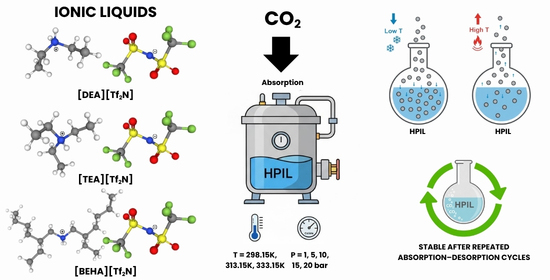
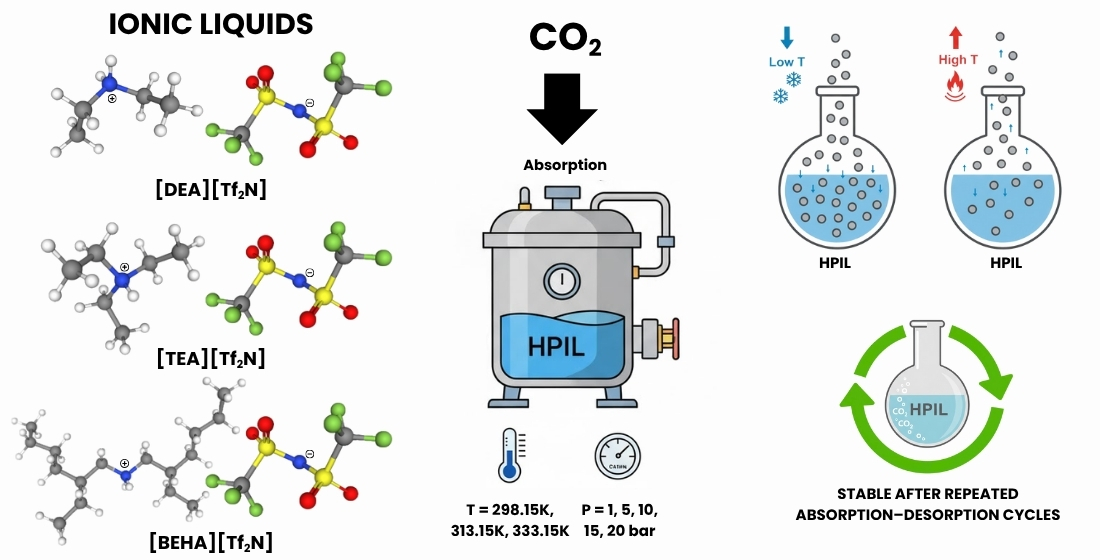
Thus, this work reports the synthesis and characterization of three new hydrophobic PILs (HPILs) with different cation structures, namely diethylammonium bis-(trifluoromethane)sulfonylimide [DEA][Tf2N], triethylammonium bis-(trifluoromethane)sulfonylimide [TEA][Tf2N], and bis(2-ethylhexyl)ammonium bis-(trifluoromethane)sulfonylimide [BEHA][Tf2N], as shown in Figure 1. The purity of the HPILs was confirmed by structural analysis and their thermal properties were tested. This paper also provides a detailed study on the thermophysical properties of HPILs, including molar volume (Vm), free volume (Vf), and lattice energy (Ulatt). CO2 solubility was measured at pressures from 1 to 20 bars and at temperatures of 298.15 K, 313.15 K, and 333.15 K. Recyclability was also studied to evaluate the potential of these HPILs for CO2 capture. In addition, CO2 absorption was compared with methane (CH4) absorption at 298.15 K under similar pressure conditions.

2. Results and Discussion

2.1. Structural Confirmation

The structures of the synthesized PILs and HPILs were confirmed using 1H NMR, 13C NMR, and FTIR spectroscopy. The obtained data were consistent with the expected molecular structures. All NMR chemical shifts and spectra are provided in the Supplementary Materials (Figures S1–S12).

FTIR Analysis

The FTIR spectra of DEA, [DEA][Cl], and [DEA][Tf2N] confirm the successful formation of the protic ILs, as shown in Figure 2. All other FTIR spectra are provided in the Supplementary Materials, Figures S13 and S14. For PILs, N-H stretching bands were detected in the range 3178–3404 cm−1, together with bending vibrations between 1590 and 1650 cm−1 [20]. These shifts, when compared with the parent amines, indicate proton transfer and the formation of ammonium species. C-H stretching bands appeared between 2960 and 2850 cm−1, with corresponding bending modes at 1450–1380 cm−1, confirming that the alkyl groups remained unchanged after protonation. C-N stretching was observed between 1150 and 1035 cm−1 [21]. For HPILs, additional peaks were present, including a strong absorption at 1340 cm−1 assigned to S=O stretching [20,21], several intense bands between 1180 and 1050 cm−1 from C-F vibrations, and a band near 740 cm−1 corresponding to C-F rocking. The presence of these characteristic S=O and C-F vibrations in the HPILs further supports the incorporation of the [Tf2N] anion and confirms the successful synthesis of the HPILs.

2.2. Thermal Stability of PILs and HPILs

The thermal stability of the synthesized PILs and HPILs was evaluated using thermogravimetric analysis (TGA). The onset temperature (Tonset) marks the beginning of decomposition, while the peak temperature (Tmax) corresponds to the maximum decomposition rate. The results are presented in Table 1.
The decomposition temperature of the PILs and HPILs in this work was evaluated based on Tonset, which represents the point at which thermal degradation begins. For the PILs, [TEA][Cl] exhibited a slightly higher Tonset, indicating marginally greater thermal stability compared with [DEA][Cl] and [BEHA][Cl]. The small differences in their Tonset values suggest that the chloride anion primarily governs the thermal behaviour, rather than the cation. In contrast, the HPILs displayed significantly higher Tonset values, ranging from 614.15 to 672.15 K, compared with 478.15 to 480.15 K for the PILs. Among the HPILs, [TEA][Tf2N] was the most thermally stable, followed by [DEA][Tf2N] and [BEHA][Tf2N]. Their enhanced stability is attributed to the bulky, charge-delocalized [Tf2N] anion, which reduces localized charge density and delays the onset of decomposition relative to chloride [22]. Similar improvements in thermal resistance associated with bulky or delocalized anions have been reported for ammonium-based PILs [7,23].
Despite being bulkier, [BEHA][Tf2N] is less thermally stable than [TEA][Tf2N]. The long, branched 2-ethylhexyl chains of [BEHA]+ cation increase Vf and weaken cation–anion interactions, leading to earlier decomposition. In contrast, the more compact [TEA]+ cation forms stronger interactions with [Tf2N], resulting in enhanced stability. This behaviour is consistent with previous reports showing that longer alkyl chains reduce IL stability by weakening ion–ion interactions [23].

2.3. Heat Capacity

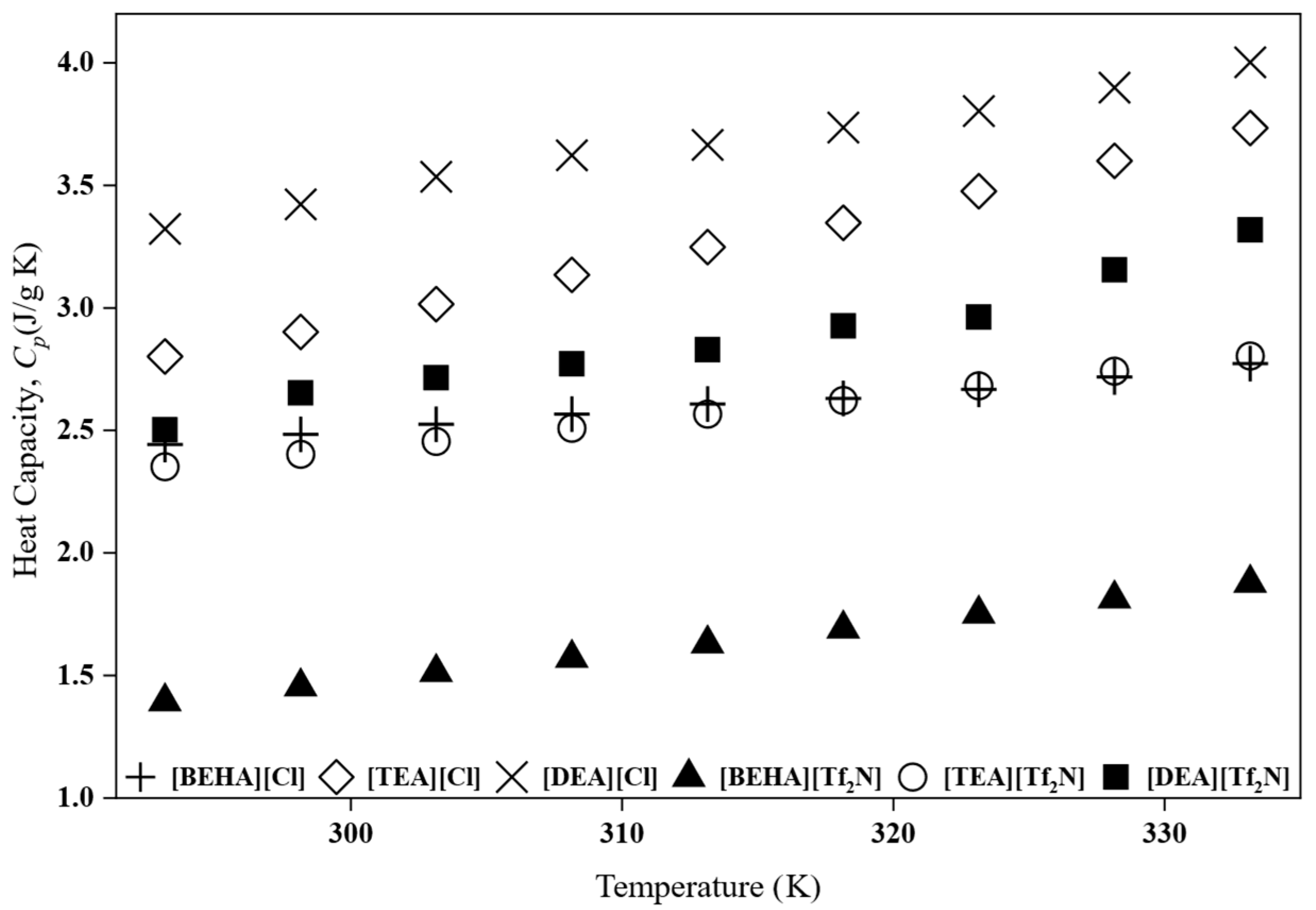
The heat capacity of PILs and HPILs is an important property because it affects how much energy is needed during the regeneration step in separation processes [7]. However, there are still limited data available for PILs and HPILs. In this study, the specific heat capacity (Cp) of the synthesized PILs and HPILs was measured using DSC, and the results are presented in Figure 3. Besides, the values of heat capacity can be found in the Supplementary Materials (Table S1). All samples exhibited an increase in Cp with temperature, consistent with trends reported in previous studies for both protic and aprotic ILs [7,24,25].
Importantly, the Cp values of all PILs studied were consistently lower than those of the conventional 30 wt% monoethanolamine (MEA) aqueous solution, which typically ranges from 3.9 to 4.3 J g−1 K−1 over the same temperature interval [7]. This lower heat capacity suggests reduced sensible heat requirements during regeneration, thereby improving the overall energy efficiency of CO2 absorption processes [26].

2.4. Density

Density is known to be temperature-dependent, and the density of ILs typically decreases with increasing temperature [27,28]. As the temperature increases, ions gain kinetic energy, leading to greater intermolecular separation. This expansion increases the free volume within the liquid and results in lower density values. In this study, the densities of the HPILs that exist in the liquid state, namely [BEHA][Tf2N] and [TEA][Tf2N], were measured in triplicate, and the results are summarized in Table S2 of the Supplementary Materials. Figure 4 illustrates the average density values of [TEA][Tf2N] and [BEHA][Tf2N] within the temperature range of 293.15 to 333.15 K, whereas Table 2 lists the densities of [DEA][Tf2N], [TEA][Tf2N], and [BEHA][Tf2N] at 298.15 K.
The density of the investigated HPILs, as shown in Table 2, follows the order [DEA][Tf2N] > [TEA][Tf2N] > [BEHA][Tf2N]. This trend reflects the influence of cation structure on packing efficiency [28,29]. The highest density of [DEA][Tf2N] is due to the small and compact diethylammonium cation, which allows for closer interaction with the [Tf2N] anion. The presence of two N-H groups also promotes hydrogen bonding, leading to stronger attraction between ions and a lower free volume. The [TEA]+ cation, with three ethyl substituents and only one N–H group, exhibits reduced hydrogen-bonding capacity and steric hindrance, resulting in intermediate density values. In contrast, the bulky [BEHA]+ cation, bearing two long branched alkyl chains, introduces significant free volume and weaker ionic interactions, leading to the lowest density. This observation is consistent with the findings of Zailani and co-workers, who reported that smaller cations enhance local packing and increase density, whereas longer alkyl chains introduce steric hindrance and reduce density values [9]. Similar trends have also been found in other ILs, such as pyridinium and imidazolium systems, where increasing the alkyl chain length decreases density due to higher molecular asymmetry and free volume [8,30].
The density variation with temperature was correlated using the linear relationship shown in Equation (1):
ρ = D 1 T + D 0
where ρ represents the density (g·cm−3), T is the absolute temperature (K), and D 1 and D 0 are the regression coefficients obtained by the least-squares method. The goodness of fit was assessed by calculating the standard deviation (SD) using Equation (2), where x e x p and x c a l c are the experimental and calculated values, respectively, and N is the number of experimental data points. The regression coefficients, together with the corresponding SD values, are presented in Table 3.
S D = i n D A T ( x e x p x c a l c ) 2 N
The thermal expansion coefficient ( α ) was obtained using Equation (3), and the calculated values are summarized in Table 4. The α represents the relative change in density with temperature and indicates how much the ionic liquid expands when heated. In this study, all three HPILs exhibited α values in the order of 10−4 K−1, which is in good agreement with previously reported ranges for ILs [7].
α = 1 ρ × ρ T = ( D 1 D 0 + D 1 T )
Within the studied range of 293–333 K, α values remained nearly constant, confirming that thermal expansion in HPILs is weakly temperature-dependent under moderate heating, as also observed for other ILs in the literature [7,9]. In addition, the experimental density data were used to calculate the molar volume ( V m ) and the molecular volume (V) according to the equations below:
V m = M ρ
V = M ρ × N A
The V m was obtained from the ratio of molar mass ( M ) to density, while the V was calculated by dividing V m by Avogadro’s number. According to Glasser’s theory, these parameters were further employed to estimate the standard molar entropy () and the lattice energy (Ulatt) using the following equations:
S ° = 1246.5 × V + 29.5
U l a t t = 1981.2 × ( ρ M ) 1 3 + 103.8
Based on Table 4, the results reveal that the V m and V increase in the order of [TEA][Tf2N] < [BEHA][Tf2N], in agreement with increasing cation size and Vf. Correspondingly, the Glasser-derived thermodynamic properties indicate that [TEA][Tf2N] has the highest lattice energy and lowest entropy, reflecting its compact ionic structure and crystalline state. In contrast, [BEHA][Tf2N] exhibits the lowest lattice energy and highest entropy, consistent with its bulky, flexible cation and reduced packing efficiency [31].

2.5. Refractive Index

In this work, refractive index measurements were carried out for HPILs that exist as liquid at room temperature, namely [TEA][Tf2N] and [BEHA][Tf2N]. The analysis was conducted in the temperature range of 293.15 to 333.15 K. The experimental data are presented in Figure 5. The refractive index values for both HPILs are summarized in Table S3 of the Supplementary Materials. The refractive index values, nd of the synthesized HPILs were fitted to a linear equation using the least-squares method, based on Equation (8), and the standard deviation (SD) was calculated accordingly. In Equation (8), R 1 and R 0 represent the estimated fitting parameters. The corresponding parameters and SD values are listed in Table 5, enabling the estimation of n d at other temperatures.
n d = R 1 T + R 0
As shown in Figure 5, the nd decreases with increasing temperature. This behaviour is consistent with previous studies on PILs [7]. Between the two liquids, [BEHA][Tf2N] exhibits a higher nd than [TEA][Tf2N] even though its density is lower. This apparent contradiction can be explained by considering that the nd is influenced not only by density but also by molar refraction ( R m ), which is related to the polarizability of the ions [32]. From the nd, the R m or electronic polarizability was calculated by employing the Lorentz–Lorenz relation, as shown in Equation (9).
R m = n d 2 1 n d 2 + 2 V m
where V m is the molar volume obtained from density data. The calculated R m values of [BEHA][Tf2N] are higher than those of [TEA][Tf2N] based on Table 4, confirming that the bulkier BEHA cation has greater electronic polarizability. The R m values do not vary significantly with temperature, indicating that molar refraction is not strongly dependent on temperature. In addition, the obtained R m values can be further used to calculate the free volume ( V f ) based on Equation (10).
V f = V m R m
Based on Table 4, the results show that [BEHA][Tf2N] has a larger Vf than [TEA][Tf2N], which is consistent with its lower density and reflects less efficient packing of the longer alkyl chains [29]. The combination of higher R m and larger Vf explains why [BEHA][Tf2N] maintains a higher nd despite its lower density. Similar behaviour has been reported for both protic and aprotic ILs, where longer alkyl chains decrease density but enhance refractive index due to increased polarizability [23,33,34].
Although the nd of [DEA][Tf2N] was not experimentally determined in its present state, its smaller cation size suggests a lower R m compared to [TEA][Tf2N] and [BEHA][Tf2N]. Consequently, [DEA][Tf2N] would be expected to exhibit the lowest r nd of the series. This inference is consistent with the general relationship between cation size, R m and nd reported by Zailani et al. [23] for DEA-based PILs. However, nd data for PILs in the solid state for further comparison and analysis are still limited in the literature.

2.6. CO2 Absorption Analysis

In this study, the CO2 absorption of three newly synthesized HPILs, namely [DEA][Tf2N], [TEA][Tf2N], and [BEHA][Tf2N], was analyzed at different temperatures of 298.15 K, 313.15 K, and 333.15 K over a pressure range of 1 bar to 20 bar. The CO2 absorption data are presented in terms of mole fraction ( x C O 2 ) and the results are shown in Figure 6 and Figure 7. The Henry’s law constants (KH) for CO2 solubility in the HPILs were obtained by linear regression of Equation (16), and the corresponding values for all investigated temperatures are summarized in Table 6. The solubility characteristics of CO2 in the synthesized [Tf2N]-based ILs are discussed in the following sections.

2.6.1. Effect of Pressure and Temperature

Based on Figure 6 and Figure 7, an increase in pressure leads to an increase in the mol fraction of CO2 absorption. This aligns with the Henry’s Law, which states that an increase in pressure results in a higher CO2 absorption capacity [7,35]. The solubility of a gas in a liquid is proportional to the pressure, indicating a physical process [8]. Furthermore, the effect of temperature on the solubility of CO2 in this HPILs was also studied at 298.15 K, 313.15 K, and 333.15 K, as illustrated in Figure 6. As shown by the data, an increase in temperature leads to a decrease in CO2 absorption capacity [36,37]. A similar trend was reported for pyridinium-based ILs studied by Yunus and co-workers [8]. It was observed that the effect of temperature is more pronounced at high pressure. This is due to the decreased gas solubility at higher temperatures as the increased kinetic energy allows gas molecules to escape more readily from the liquid phase [8,38].
The temperature derivative of the solubility is related to the either the partial molar enthalpy, Δ h 2 , or the partial molar entropy, Δ s 2 , of the gaseous solute in the liquid phase. The enthalpy and entropy change in solution provide information on the effect of temperature on solubility. Specifically, the enthalpy reflects the strength of interactions between the liquid and the dissolved gas, while the entropy indicates the degree of ordering in the liquid–gas mixture [8,39]. The values for Δ h 2 and Δ s 2 can be estimated from a linear fit data using Equations (11) and (12).
Δ h 2 = R ln x 2 1 T P = R ln K H 1 T P
Δ s 2 = R ln x 2 ln T P = R ln K H ln T P
The Δ h 2 and Δ s 2 values for CO2 absorption in the studied HPILs are summarized in Table 7. All HPILs exhibit negative enthalpy and entropy values, indicating an exothermic process with increased molecular ordering upon absorption. The enthalpy values become more negative from [DEA][Tf2N] to [BEHA][Tf2N], indicating stronger interactions with CO2 as the cation size increases [8,37]. This trend may be attributed to the longer alkyl chains in [BEHA][Tf2N], which provide greater space and flexibility for CO2 incorporation. Although the enthalpy values in this work are more negative than those reported for conventional physical solvents such as Solexol (−15 to −20 kJ mol−1) [40], they remain within the typical range for ionic liquids undergoing physisorption. For example, Hu et al. reported enthalpy values between −3.801 and −4.729 kJ mol−1 for CO2 absorption [41], supporting the presence of moderately exothermic interactions in ionic liquid systems. The negative entropy values, ranging from −10.02 to −22.38 J mol−1 K−1, further indicate that CO2 becomes more ordered within the ionic liquids [8].

2.6.2. Effect of Cation Size

As shown in Figure 7, the CO2 absorption capacity of the HPILs follows the order of [BEHA][Tf2N] > [TEA][Tf2N] > [DEA][Tf2N]. This trend is influenced by cation size and structure, which affect the free volume (Vf) and CO2 solubility. A strong linear correlation was observed between CO2 solubility and Vf [7]. The [BEHA]+ cation contains long branched alkyl chains and has the highest molar mass among the studied HPILs. This creates a more open and less densely packed ionic liquid structure, providing additional space for CO2 molecules to be accommodated compared to [TEA][Tf2N] and [DEA][Tf2N] [8,34]. According to Aki et al. [42] and Yunus et al. [8], this behaviour is primarily driven by entropic factors rather than enthalpic contributions. The observed decrease in density and the corresponding increase in entropy from [DEA][Tf2N] to [BEHA][Tf2N] confirm that the enhanced CO2 solubility arises from the greater structural flexibility and increased free space within the ionic liquid system.

2.7. Gas Solubility Comparison Between CO2 and CH4 in the HPILs

The solubility of CO2 and methane (CH4) in [BEHA][Tf2N], [TEA][Tf2N], and [DEA][Tf2N] at 298.15 K was determined, and the results are presented in Figure 8. As shown, all the HPILs absorbed significantly higher amounts of CO2 compared to CH4. The Henry’s law constants (KH) for both gases are summarized in Table 8. For all systems, the KH values of CO2 were lower than those of CH4, confirming that CO2 is more soluble in these HPILs.
The difference in solubility is attributed to the molecular characteristics of the gases and their interactions with the HPILs. CO2, which has a permanent quadrupole moment and moderate polarizability, interacts strongly with HPIL components, particularly the [Tf2N] anion, through Lewis acid–base and dipole–quadrupole interactions. These interactions enhance physical absorption and result in a lower Henry’s constant. In contrast, CH4 is nonpolar and has very low polarizability, interacting weakly with the HPIL through dispersion forces and exhibiting lower solubility. This behaviour, in which CO2 shows higher solubility than CH4 due to its affinity for charged and polar groups, has been widely reported in the literature [43,44,45].

2.8. Comparison with Other Reported Ionic Liquids

For comparison, few studies have reported the CO2 solubility in HPILs composed of ammonium cations paired with the bis(trifluoromethylsulfonyl)imide [Tf2N] anion. Thus, the present CO2 solubility data were compared with related ILs, including 1-hexyl-3-methylimidazolium bis(trifluoromethylsulfonyl)imide ([HMIM][Tf2N]) and 1-butylpyridinium bis(trifluoromethylsulfonyl)imide ([C4Py][Tf2N]). At 298.15 K, [BEHA][Tf2N] exhibited a CO2 mole fraction of 0.5766, higher than the 0.415 observed for [HMIM][Tf2N] under similar conditions [7]. This indicates a greater affinity for CO2, likely due to weaker cation–anion interactions in ammonium-based HPILs. A comparison of the KH values further confirms the higher CO2 solubility of ammonium-based PILs. For pyridinium-based ILs [C4Py][Tf2N], Yunus et al. [8] reported KH values of 40.7 bar at 313.15 K and 51.7 bar at 333.15 K. In contrast, the present [DEA][Tf2N] showed lower KH values of 39.29 and 44.09 bar at the same respective temperatures, suggesting that the shorter-alkyl ammonium cation enhances CO2 absorption more effectively than the aromatic pyridinium structure. The lower KH values of [DEA][Tf2N] are attributed to the flexible alkyl environment, which provides increased free volume and reduced ion-pairing strength, facilitating greater physical absorption of CO2.
Further comparison between identical cations paired with different anions supports the CO2-philic nature of [Tf2N]. Yunus et al. [46] reported a CO2 mole fraction of 0.4860 at 298.15 K and 20 bar for bis(2-ethylhexyl)ammonium butyrate ([BEHA][BA]), which is lower than the 0.5766 mole fraction obtained by [BEHA][Tf2N] in this study. Moisture does not significantly influence CO2 uptake in ILs; for instance, Goodrich et al. showed that even 14 wt% water in [P66614][Met] reduced CO2 absorption to only 0.2 mol CO2 per mol IL [47]. Although [BEHA][Tf2N] contains slightly more water (0.48%) than [BEHA][BA] (0.15%), it still exhibits superior CO2 uptake, indicating that absorption is primarily governed by the anion rather than by moisture content. The large, weakly coordinating [Tf2N] anion, with its delocalized charge and highly fluorinated structure, enhances CO2-philicity through quadrupole–dipole interactions with CO2 molecules [48,49,50]. The combined effect of the flexible ammonium cation and the fluorinated [Tf2N] anion provides a synergistic improvement in CO2 absorption compared with previously reported ammonium, pyridinium, and imidazolium systems. Task-specific ILs containing amine functionalities can chemically capture CO2, but their strong solvent–solute interactions often require higher regeneration energy [8]. In contrast, the [Tf2N]-based HPILs synthesized in this work demonstrate excellent physical absorption performance, achieving a favourable balance between solubility and regenerability, as discussed in the following section. These findings highlight the potential of ammonium-based PILs as efficient and energy-favourable alternatives for CO2 capture under mild conditions.

2.9. Characterization of HPILs After CO2 Absorption

In this work, FTIR and 13C NMR spectroscopy were also employed to examine the possible CO2 absorption mechanism of the HPILs. For [BEHA][Tf2N], the 13C NMR spectrum based on Figure 9a shows no new signals after CO2 absorption, suggesting no chemical interaction between CO2 and HPILs. FTIR spectra were recorded using the ATR method in the range of 3900–500 cm−1. The spectrum of [BEHA][Tf2N] is presented in Figure 9b, while those of [TEA][Tf2N] and [DEA][Tf2N] are provided in the Supplementary Materials (Figures S15 and S16). Before and after CO2 absorption, the spectra were nearly identical, except for the appearance of a new band at 2337–2339 cm−1, attributed to the O=C=O stretching vibration of CO2. No additional peaks were observed in the carbonyl region around 1700–1720 cm−1, where carbamate formation would typically appear in a chemisorption process. These results confirm that CO2 uptake by the three HPILs occurs through physisorption rather than chemisorption.

2.10. Recyclability Performance of [BEHA][Tf2N]

After CO2 absorption, the recyclability of the best-performing HPIL was further evaluated to assess its potential for reuse, considering that conventional amine scrubbing processes are costly and require advanced technologies. Among all the investigated HPILs, [BEHA][Tf2N] exhibited the highest CO2 solubility, at 20 bar. Therefore, recyclability tests for [BEHA][Tf2N] were conducted at 20 bar for two consecutive absorption–desorption cycles at 298.15 K, 313.15 K, and 333.15 K. After each cycle, the used [BEHA][Tf2N] was regenerated by heating at 333.15 K for 4 h to release the absorbed CO2 and then reused in the subsequent cycle. FTIR and 1H NMR analyses were also performed after CO2 desorption to evaluate the structural stability of [BEHA][Tf2N]. As shown in Figure 10, the recyclability plots show only slight variations in CO2 uptake between the two absorption–desorption cycles at all tested temperatures, indicating that [BEHA][Tf2N] has good stability and can be effectively reused for CO2 capture. Representative FTIR and 1H NMR spectra after CO2 desorption at 298.15 K are shown in Figure 11, while the corresponding spectra at 313.15 K and 333.15 K are provided in the Supplementary Materials (Figures S17–S20). The 1H NMR signals and FTIR peaks after two cycles remained essentially unchanged compared to the fresh sample, confirming that the molecular structure of [BEHA][Tf2N] was preserved throughout the recycling process.

3. Materials and Methods

3.1. Materials and Reagents

All chemicals of analytical grade were used without an additional purification process for the synthesis of HPILs. The CAS number, source, and chemical purity are as follows: diethylamine (109-89-7, Merck, Rahway, NJ, USA, 99%), triethylamine (121-44-8, Merck, Rahway, NJ, USA, 99%), bis(2-ethylhexyl)amine (106-20-7, Aldrich Chemistry, Saint Louis, MO, USA 99%), hydrochloric acid (7647-01-0, Fischer Scientific, Waltham, MA, USA 37%), lithium bis(trifluoromethylsulfonyl)imide (90076-65-6, Sigma Aldrich, St. Louis, MA, USA, 99%), dichloromethane (75-09-2, Merck, Rahway, NJ, USA, 99%).

3.2. Synthesis of Hydrophobic Protic Ionic Liquids (HPILs)

The HPILs in this study were synthesized through a two-step procedure, as illustrated in Figure 12 and Figure 13. PILs were synthesized before they were converted to HPILs. In the first step, an equimolar amount of hydrochloric acid was added dropwise into a 250 mL, three-neck, round-bottom flask containing the selected amines, which were triethylamine (TEA), diethylamine (DEA), or bis(2-ethylhexyl)amine (BEHA), while the flask was kept in an ice bath to control the temperature. The mixture was stirred at 250 rpm for 24 h at room temperature to ensure complete reaction. This step produced PILs, namely [DEA][Cl] and [TEA][Cl], as solids, and [BEHA][Cl] as a liquid. The products were dried using a rotary evaporator and stored in a vacuum cabinet until further use.
In the second step, the dried PILs from the first step was reacted with an equimolar amount of lithium bis(trifluoromethylsulfonyl)imide (LiTf2N) in 30 mL of deionized water. The mixtures were stirred at room temperature for 24 h for [TEA][Tf2N] and [DEA][Tf2N], and 48 h for [BEHA][Tf2N] due to its longer alkyl chain. After the reaction was completed, the IL phase was extracted using dichloromethane, and the solvent was removed by rotary evaporation. This step produced liquid products for all HPILs except [DEA][Tf2N], which remained as a solid.

3.3. Characterization

3.3.1. Structural Analysis

The structures of the PILs and HPILs were confirmed using 1H and 13C Nuclear Magnetic Resonance (NMR) and Fourier Transform Infrared (FTIR) spectroscopy. For NMR analysis, approximately 5 mg of the dried ionic liquid was dissolved in 650 µL of deuterated solvent, transferred into an NMR tube, and analyzed at room temperature using a Bruker Avance III 500 MHz spectrometer Billerica, MA, USA. Chemical shifts (δ) are reported in ppm relative to TMS, and signal multiplicities are denoted as s (singlet), d (doublet), t (triplet), and m (multiplet). FTIR spectra were recorded to verify functional groups. Liquid samples were analyzed using a Thermo Fisher Nicolet iS5 spectrometer from Waltham, MA, United States with an iD5 ATR diamond crystal, while solid samples were examined on a PerkinElmer Frontier 01, Shelton, CT, USA using the KBr pellet method. Spectra were collected over 400–4100 cm−1.

3.3.2. Water Content

The water content of the synthesized PILs and HPILs was determined using a coulometric Karl Fischer auto titrator, Mettler Toledo V30, Columbus, Ohio serial number B440100667. Approximately 0.2 g of each ionic liquid was introduced into the reagent via a volumetric Karl Fischer setup equipped with a Stromboli oven. The analysis was performed at 443.15 K for 15 min to ensure complete moisture evaporation. The water content was expressed as a percentage of the sample weight.

3.3.3. Thermal Stability

The thermal stability of PILs and HPILs was studied using the PerkinElmer STA 6000 thermogravimetric analyser from Shelton, CT, USA in a temperature range from 303.15 K to 973.15 K at a rate of 283.15 K min−1 under a nitrogen flow of 20 mL min−1. Results were reported in the form of onset temperature, (Tonset), and decomposition temperature, (Tmax).

3.3.4. Heat Capacity, Cp

The heat capacity of the PILs and HPILs was analyzed using Differential Scanning Calorimetry with a TA Instruments Q2000 system, New Castle, Delaware within a temperature range of 293.15 to 333.15 K.

3.3.5. Density, ρ

The density of the synthesized HPILs was measured using a 2 mL glass pycnometer for the liquid-state HPILs and a gas pycnometer for the solid-state HPIL. For liquid HPIL, the empty glass pycnometer was weighed, filled completely with the HPIL, and weighed again. The pycnometer containing the sample was placed in a water bath at the required temperature for 15 to 20 min to achieve thermal equilibrium, then reweighed. This procedure was repeated three times for each temperature within the range of 293.15 K to 333.15 K. The average mass of the sample at each temperature was used to determine the density according to Equation (13).
ρ H P I L s = ( m f i n a l m i n i t i a l ) V H P I L s
where m f i n a l is the mass of HPILs with glass pycnometer, m i n i t i a l is the mass of empty glass pycnometer, and V H P I L s is the known volume of HPILs (2 mL).
For solid HPIL, its density was measured at 298.15 K using a Micromeritics AccuPyc II TEC gas pycnometer, Micromeritics, Norcross, GA, USA, with helium as the displacement medium. Sample mass was determined by difference, and the instrument software calculated density from the measured volume after ten purge cycles.

3.3.6. Refractive Index Measurement

The refractive index of the HPILs was measured in triplicate using an ATAGO RX-5000 Alpha Digital Refractometer, Tokyo, Japan, at temperatures within the range of 293.15 K to 333.15 K. The validation test was performed using standard organic solvents supplied by the manufacturer to ensure accuracy.

3.4. CO2 Absorption Measurement

The solubility of CO2 in the HPILs was determined using the pressure-drop technique with a custom-built solubility cell, as illustrated in Figure 14 and adapted from Rahim et al. [7]. For each run, a pre-weighed amount of HPILs was loaded into a 15 mL stainless steel equilibrium cell and degassed using a vacuum pump. The cell was immersed in a thermostatic water bath maintained at 298.15 K. CO2 from the storage vessel was compressed to the desired pressure in the reservoir (VA–VB) and allowed to stabilize. Once stabilized, CO2 was introduced into the equilibrium cell via opening valve VB. The system was maintained until equilibrium was reached, which took approximately 120–180 min depending on the ionic liquid. This procedure was repeated at temperatures of 313.15 K and 333.15 K over a pressure range of 1 to 20 bar to evaluate the effect of temperature and pressure on CO2 solubility.
The CO2 absorption performance of the HPILs was calculated using the following equation:
n C O 2 =   P i n i V r e s Z i n i ( P i n i , T i n i ) R T i n i P e q ( V t o t a l   V H P I L s ) Z e q ( P e q , T e q ) R T e q
where n C O 2 is the number of moles CO2 absorbed by HPILs, P i n i , T i n i is the initial pressure and temperature, P e q , T e q is the equilibrium pressure and temperature, V r e s is the volume of CO2 in the reservoir, V t o t a l , V H P I L s is the total system volume and liquid adsorbent volume, Z i n i , Z e q is the compressibility factor at the initial point and equilibrium, calculated using the Peng–Robison equation of state at selected pressure and temperature, and R is the value of the universal gas constant (0.0821 L atm K−1 mol−1).
The solubility of CO2 was expressed as mole fraction calculated using Equation (15):
x C O 2 = n C O 2 n C O 2 + n H P I L s
where x C O 2 is the mole fraction of CO2 absorbed by HPILs, n C O 2 is the number of moles CO2 absorbed by HPILs, and n H P I L s is the number of moles HPILs used the system. Additionally, Henry’s Law constant was determined by fitting the experimental data to Equation (16):
P C O 2 =   K H x C O 2
where P C O 2 is the CO2 partial pressure, x C O 2 is the physical absorption value,   K H is the Henry’s law constant in HPILs in bar. A similar procedure was also applied to determine the absorption of CH4, which was later used for comparison.
The CO2 absorption data were used to identify the HPIL with the highest absorption capacity, which was subsequently subjected to a recyclability test. To investigate potential interactions or chemical pathways between CO2 and the HPILs, an FTIR analysis was conducted within 20 min after the CO2 absorption process.

3.5. Recyclability of Hydrophobic Protic Ionic Liquids (HPILs) in CO2 Absorption

The recyclability of the HPILs with the highest CO2 absorption capacity was evaluated over two consecutive cycles. After each absorption experiment, the CO2-loaded HPIL was transferred into an equilibrium cell and regenerated by heating in an oven at 333.15 K for 4 h to remove the absorbed CO2. The regenerated HPIL was then reused for subsequent absorption cycles. This procedure was adapted from Rahim et al. and Li et al. [7,18], with minor modifications.

4. Conclusions

In conclusion, three HPILs were successfully synthesized, characterized, and evaluated for their CO2 absorption performance at temperatures of 298.15, 313.15, and 333.15 K and pressures up to 20 bar. The CO2 solubility in all studied HPILs increased with pressure, while a negative correlation with temperature was observed. The alkyl chain length of the cation showed a pronounced effect on CO2 absorption capacity, attributed to the increase in free volume (Vf). In addition, the solubility of CH4 in these HPILs was significantly lower than that of CO2, demonstrating their high selectivity toward CO2. Recyclability tests conducted for [BEHA][Tf2N] at all temperatures over two consecutive cycles revealed consistent CO2 uptake and excellent structural stability, indicating that this ionic liquid is a promising alternative to conventional amine-based solvents such as MEA for CO2 capture applications.

Supplementary Materials

The following supporting information can be downloaded at: https://www.mdpi.com/article/10.3390/molecules30244674/s1, Figures S1–S12: 1H NMR and 13C NMR analyses of all PILs and HPILs. Figures S13 and S14: FTIR Spectra of TEA, BEHA, and their corresponding salts. Table S1: Heat capacity values of all PILs and HPILs measured from 293.15 K to 333.15 K. Table S2: Density values of [TEA][Tf2N] and [BEHA][Tf2N] measured from 293.15 to 333.15 K. Table S3: Refractive index values of [TEA][Tf2N] and [BEHA][Tf2N] measured from 293.15 to 333.15 K. Refractive index Figures S15 and S16: Stacked FTIR of [TEA][Tf2N] and [DEA][Tf2N] before and after CO2 absorption. Figures S17 and S18: Stacked FTIR spectra of [BEHA][Tf2N] for the fresh sample and after CO2 desorption in Cycle 1 and Cycle 2 at 313.15 K and 333.15 K. Figures S19 and S20: Stacked 1H NMR spectra of [BEHA][Tf2N] for the fresh sample and after CO2 desorption in Cycle 1 and Cycle 2 at 313.15 K and 333.15 K.

Author Contributions

Conceptualization, N.M.Y., A.H.A.R. and G.P.; methodology, N.M.Y., N.A.M.M. and M.W.Q.T.; formal analysis, N.A.M.M. and M.W.Q.T.; investigation, N.A.M.M.; resources, N.M.Y. and A.H.A.R.; data curation, N.A.M.M.; writing—original draft preparation, N.A.M.M.; writing—review and editing, N.M.Y. and G.P.; supervision, N.M.Y.; project administration, N.M.Y.; funding acquisition, N.M.Y. All authors have read and agreed to the published version of the manuscript.

Funding

This research was funded by the Yayasan Universiti Teknologi PETRONAS-Fundamental Research Grant (YUTP-FRG) with the grant cost center (015LC0-436).

Institutional Review Board Statement

Not applicable.

Informed Consent Statement

Not applicable.

Data Availability Statement

The original contributions presented in this study are included in the article/Supplementary Materials.

Acknowledgments

The authors would like to acknowledge the Yayasan Universiti TeknologiPETRONAS (YUTP), for providing financial assistance under YUTP-FRG (015LC0-436), Universiti Teknologi PETRONAS and Centre for Research in Ionic Liquid (CORIL) for providing required assistance in completing the work.

Conflicts of Interest

The authors declare no conflicts of interest.

Abbreviations

The following abbreviations are used in this manuscript:
αThermal expansion coefficient
ρDensity
Δ h 2 Partial molar enthalpy of the gaseous solute in the liquid phase
Δ s 2 Partial molar entropy of the gaseous solute in the liquid phase
[BEHA][Ac]Bis(2-ethylhexyl)ammonium acetate
[BEHA][BA]Bis(2-ethylhexyl)ammonium butyrate
[BEHA][Cl]Bis(2-ethylhexyl)ammonium chloride
[BEHA][Tf2N]Bis(2-ethylhexyl)ammonium bis(trifluoromethylsulfonyl)imide
[BEHA]+Bis(2-ethylhexyl)ammonium
[C4Py][Tf2N]1-butylpyridium bis(trifluoromethylsulfonyl)imide
[DEA][Cl]Diethylammonium chloride
[DEA][Tf2N]Diethylammonium bis(trifluoromethylsulfonyl)imide
[DEA]+Diethylammonium
[HMIM][Tf2N]1-hexyl-3-methylimidazolium bis(trifluoromethylsulfonyl)imide
[TEA][Cl]Triethylammonium chloride
[TEA][Tf2N]Triethylammonium bis(trifluoromethylsulfonyl)imide
[TEA]+Triethylammonium
ATRAttenuated total reflectance
BEHABis(2-ethylhexyl)amine
CASChemical abstracts service number
CDCl3Deuterated chloroform
CH4Methane
CO2Carbon dioxide
CpHeat capacity
DEADiethylamine
DMSODimethyl sulfoxide
DSCDifferential scanning calorimetry
FTIRFourier transform infrared spectroscopy
H2SHydrogen sulphide
HPILsHydrophobic protic ionic liquids
ILsIonic liquids
KBrPotassium bromide
KHHenry’s law constants
LiTf2NLithium bis(trifluoromethylsulfonyl)imide
MEAMonoethanolamine
n C O 2 Number of moles CO2 absorbed by ionic liquid
ndRefractive index values
n H P I L s Number of moles HPILs used in the system
NMRNuclear magnetic resonance
PeqEquilibrium pressure
P C O 2 CO2 partial pressure
PILsProtic ionic liquids
PiniInitial pressure
RUniversal gas constant value
RIRefractive index
RmMolar refraction
Standard molar entropy
SDStandard deviation
TAbsolute temperature
TEATriethylamine
TeqEquilibrium temperature
Tf2NBis(trifluoromethylsulfonyl)imide anion
TGAThermogravimetric analysis
TiniInitial temperature
TmaxPeak temperature
TMSTetramethylsilane
TonsetOnset temperature
TSILsTask-specific ionic liquids
UlattStandard lattice energy
VMolecular volume
VfFree volume
VHPILsLiquid adsorbent volume
VmMolar volume
VresVolume of the CO2 in the reservoir
VtotalTotal system volume
x C O 2 Mole fraction of CO2 dissolved in the ionic liquid
x 2 Mole fraction of the gaseous solute at saturation
ZeqbEquilibrium compressibility factor
ZiniInitial compressibility factor

References

  1. Aghaie, M.; Rezaei, N.; Zendehboudi, S. A systematic review on CO2 capture with ionic liquids: Current status and future prospects. Renew. Sustain. Energy Rev. 2018, 96, 502–525. [Google Scholar] [CrossRef]
  2. Filonchyk, M.; Peterson, M.P.; Zhang, L.; Hurynovich, V.; He, Y. Greenhouse gases emissions and global climate change: Examining the influence of CO2, CH4, and N2O. Sci. Total Environ. 2024, 935, 173359. [Google Scholar] [CrossRef]
  3. Potocnik, P. (Ed.) ‘Natural Gas’; IntechOpen: London, UK, 2010. [Google Scholar] [CrossRef]
  4. Nwimae, C.; Simms, N.J. Potential Corrosion Issue in CO2 Pipeline. J. Educ. Pract. 2022, 10, 12. [Google Scholar]
  5. Kallo, M.T.; Lennox, M.J. Understanding CO2/CH4 Separation in Pristine and Defective 2D MOF CuBDC Nanosheets via Nonequilibrium Molecular Dynamics. Langmuir 2020, 36, 13591–13600. [Google Scholar] [CrossRef]
  6. Han, B.; Zhou, C.; Wu, J.; Tempel, D.J.; Cheng, H. Understanding CO2 Capture Mechanisms in Aqueous Monoethanolamine via First Principles Simulations. J. Phys. Chem. Lett. 2011, 2, 522–526. [Google Scholar] [CrossRef]
  7. Rahim, A.H.; Yunus, N.M.; Jaffar, Z.; Allim, M.F.; Othman Zailani, N.Z.; Mohd Fariddudin, S.A.; Abd Ghani, N.; Umar, M. Synthesis and characterization of ammonium-based protic ionic liquids for carbon dioxide absorption. RSC Adv. 2023, 13, 14268–14280. [Google Scholar] [CrossRef]
  8. Yunus, N.M.; Mutalib, M.I.A.; Man, Z.; Bustam, M.A.; Murugesan, T. Solubility of CO2 in pyridinium based ionic liquids. Chem. Eng. J. 2012, 189–190, 94–100. [Google Scholar] [CrossRef]
  9. Zailani, N.H.; Yunus, N.M.; Ab Rahim, A.H.; Bustam, M.A. Experimental Investigation on Thermophysical Properties of Ammonium-Based Protic Ionic Liquids and Their Potential Ability towards CO2 Capture. Molecules 2022, 27, 851. [Google Scholar] [CrossRef]
  10. Duy Ho, Q.; Rauls, E. Investigations of Functional Groups Effect on CO2 Adsorption on Pillar [5] arenes Using Density Functional Theory Calculations. ChemistrySelect 2024, 9, e202401490. [Google Scholar] [CrossRef]
  11. Foorginezhad, S.; Yu, G.; Ji, X. Reviewing and screening ionic liquids and deep eutectic solvents for effective CO2 capture. Front. Chem. 2022, 10, 951951. [Google Scholar] [CrossRef] [PubMed]
  12. Dai, Z.; Deng, L. Membranes for CO2 capture and separation: Progress in research and development for industrial applications. Sep. Purif. Technol. 2024, 335, 126022. [Google Scholar] [CrossRef]
  13. Kamio, E.; Yoshioka, T.; Matsuyama, H. Recent Advances in Carbon Dioxide Separation Membranes: A Review. J. Chem. Eng. Jpn. 2023, 56, 2222000. [Google Scholar] [CrossRef]
  14. Song, C.; Liu, Q.; Deng, S.; Li, H.; Kitamura, Y. Cryogenic-based CO2 capture technologies: State-of-the-art developments and current challenges. Renew. Sustain. Energy Rev. 2019, 101, 265–278. [Google Scholar] [CrossRef]
  15. Soo, X.Y.D.; Lee, J.J.C.; Wu, W.-Y.; Tao, L.; Wang, C.; Zhu, Q.; Bu, J. Advancements in CO2 capture by absorption and adsorption: A comprehensive review. J. CO2 Util. 2024, 81, 102727. [Google Scholar] [CrossRef]
  16. Qu, Y.; Zhao, Y.; Li, D.; Sun, J. Task-specific ionic liquids for carbon dioxide absorption and conversion into value-added products. Curr. Opin. Green Sustain. Chem. 2022, 34, 100599. [Google Scholar] [CrossRef]
  17. Cheng, J.; Xie, K.; Guo, P.; Qin, H.; Deng, L.; Qi, Z.; Song, Z. Capturing CO2 by ionic liquids and deep eutectic solvents: A comparative study based on multi-level absorbent screening. Chem. Eng. Sci. 2023, 281, 119133. [Google Scholar] [CrossRef]
  18. Li, F.; Bai, Y.; Zeng, S.; Liang, X.; Wang, H.; Huo, F.; Zhang, X. Protic ionic liquids with low viscosity for efficient and reversible capture of carbon dioxide. Int. J. Greenh. Gas Control 2019, 90, 102801. [Google Scholar] [CrossRef]
  19. Huang, K.; Zhang, X.; Wu, Y.; Wu, Y.-T. Hydrophobic Protic Ionic Liquids Tethered with Tertiary Amine Group for Highly Efficient and Selective Absorption of H2S from CO2. AIChE J. 2016, 62, 4480–4490. [Google Scholar] [CrossRef]
  20. Chen, Y.; Rodenbücher, C.; Morice, A.; Tipp, F.; Kowalski, P.M.; Korte, C. Understanding the Mid-Infrared Spectra of Protic Ionic Liquids by Density Functional Theory. J. Phys. Chem. B 2024, 128, 11723–11729. [Google Scholar] [CrossRef]
  21. Schott, J.A.; Do-Thanh, C.-L.; Shan, W.; Puskar, N.G.; Dai, S.; Mahurin, S.M. FTIR investigation of the interfacial properties and mechanisms of CO2 sorption in porous ionic liquids. Green Chem. Eng. 2021, 2, 392–401. [Google Scholar] [CrossRef]
  22. Cao, Y.; Mu, T. Comprehensive Investigation on the Thermal Stability of 66 Ionic Liquids by Thermogravimetric Analysis. Ind. Eng. Chem. Res. 2014, 53, 8651–8664. [Google Scholar] [CrossRef]
  23. Zailani, N.H.O.; Yunus, N.M.; Ab Rahim, A.H.; Bustam, M.A. Thermophysical Properties of Newly Synthesized Ammonium-Based Protic Ionic Liquids: Effect of Temperature, Anion and Alkyl Chain Length. Processes 2020, 8, 742. [Google Scholar] [CrossRef]
  24. Shimizu, Y.; Ohte, Y.; Yamamura, Y.; Tsuzuki, S.; Saito, K. Comparative Study of Imidazolium- and Pyrrolidinium-Based Ionic Liquids: Thermodynamic Properties. J. Phys. Chem. B 2012, 116, 5406–5413. [Google Scholar] [CrossRef]
  25. Ge, R.; Hardacre, C.; Jacquemin, J.; Nancarrow, P.; Rooney, D.W. Heat Capacities of Ionic Liquids as a Function of Temperature at 0.1 MPa. Measurement and Prediction. J. Chem. Eng. Data 2008, 53, 2148–2153. [Google Scholar] [CrossRef]
  26. Xie, Y.; Zhang, Y.; Lu, X.; Ji, X. Energy consumption analysis for CO2 separation using imidazolium-based ionic liquids. Appl. Energy 2014, 136, 325–335. [Google Scholar] [CrossRef]
  27. Santos, D.; Santos, M.; Franceschi, E.; Dariva, C.; Barison, A.; Mattedi, S. Experimental Density of Ionic Liquids and Thermodynamic Modeling with Group Contribution Equation of State Based on the Lattice Fluid Theory. J. Chem. Eng. Data 2016, 61, 348–353. [Google Scholar] [CrossRef]
  28. Ghatee, M.H.; Zare, M.; Moosavi, F.; Zolghadr, A.R. Temperature-Dependent Density and Viscosity of the Ionic Liquids 1-Alkyl-3-methylimidazolium Iodides: Experiment and Molecular Dynamics Simulation. J. Chem. Eng. Data 2010, 55, 3084–3088. [Google Scholar] [CrossRef]
  29. Bakis, E.; Goloviznina, K.; Vaz, I.C.M.; Sloboda, D.; Hazens, D.; Valkovska, V.; Klimenkovs, I.; Padua, A.; Costa Gomes, M. Unravelling free volume in branched-cation ionic liquids based on silicon. Chem. Sci. 2022, 13, 9062–9073. [Google Scholar] [CrossRef] [PubMed]
  30. Kim, Y.S.; Choi, W.Y.; Jang, J.H.; Yoo, K.P.; Lee, C.S. Solubility measurement and prediction of carbon dioxide in ionic liquids. Fluid Phase Equilibria 2005, 228–229, 439–445. [Google Scholar] [CrossRef]
  31. Glasser, L. Lattice and phase transition thermodynamics of ionic liquids. Thermochim. Acta 2004, 421, 87–93. [Google Scholar] [CrossRef]
  32. Bhattacharjee, A.; Coutinho, J.A.; Freire, M.G.; Carvalho, P.J. Thermophysical properties of two ammonium-based protic ionic liquids. J. Solut. Chem. 2015, 44, 703–717. [Google Scholar] [CrossRef]
  33. Filippov, A.; Taher, M.; Shah, F.U.; Glavatskih, S.; Antzutkin, O.N. The effect of the cation alkyl chain length on density and diffusion in dialkylpyrrolidinium bis(mandelato)borate ionic liquids. Phys. Chem. Chem. Phys. 2014, 16, 26798–26805. [Google Scholar] [CrossRef] [PubMed]
  34. Tariq, M.; Forte, P.A.S.; Gomes, M.F.C.; Lopes, J.N.C.; Rebelo, L.P.N. Densities and refractive indices of imidazolium- and phosphonium-based ionic liquids: Effect of temperature, alkyl chain length, and anion. J. Chem. Thermodyn. 2009, 41, 790–798. [Google Scholar] [CrossRef]
  35. Mejía, I.; Stanley, K.; Canales, R.; Brennecke, J.F. On the High-Pressure Solubilities of Carbon Dioxide in Several Ionic Liquids. J. Chem. Eng. Data 2013, 58, 2642–2653. [Google Scholar] [CrossRef]
  36. Kumełan, J.; Pérez-Salado Kamps, Á.; Tuma, D.; Maurer, G. Solubility of CO2 in the Ionic Liquids [bmim][CH3SO4] and [bmim][PF6]. J. Chem. Eng. Data 2006, 51, 1802–1807. [Google Scholar] [CrossRef]
  37. Huang, Y.; Cui, G.; Wang, H.; Li, Z.; Wang, J. Absorption and thermodynamic properties of CO2 by amido-containing anion-functionalized ionic liquids. RSC Adv. 2019, 9, 1882–1888. [Google Scholar] [CrossRef]
  38. Torralba-Calleja, E.; Skinner, J.; Gutiérrez-Tauste, D. CO2 Capture in Ionic Liquids: A Review of Solubilities and Experimental Methods. J. Chem. 2013, 2013, 473584. [Google Scholar] [CrossRef]
  39. Quaye, E.; Henni, A.; Shirif, E. Carbon Dioxide Solubility in Three Bis Tri (Fluromethylsulfonyl) Imide-Based Ionic Liquids. Molecules 2024, 29, 2784. [Google Scholar] [CrossRef]
  40. Rayer, A.; Henni, A.; Tontiwachwuthikul, P. High Pressure Physical Solubility of Carbon Dioxide (CO2) in Mixed Polyethylene Glycol Dimethyl Ethers (Genosorb 1753). Can. J. Chem. Eng. 2012, 90, 576–583. [Google Scholar] [CrossRef]
  41. Hu, Y.; Li, X.; Liu, J.; Li, L.; Zhang, L. Experimental investigation of CO2 absorption enthalpy in conventional imidazolium ionic liquids. Greenh. Gases Sci. Technol. 2018, 8, 713–720. [Google Scholar] [CrossRef]
  42. Aki, S.N.V.K.; Mellein, B.R.; Saurer, E.M.; Brennecke, J.F. High-Pressure Phase Behavior of Carbon Dioxide with Imidazolium-Based Ionic Liquids. J. Phys. Chem. B 2004, 108, 20355–20365. [Google Scholar] [CrossRef]
  43. Mirzaei, M.; Sharifi, A.; Abaee, M.S. Experimental study on solubility of CO2 and CH4 in the ionic liquid 1-benzyl-3-methylimidazolium nitrate. J. Supercrit. Fluids 2023, 199, 105963. [Google Scholar] [CrossRef]
  44. Ramdin, M.; Amplianitis, A.; Bazhenov, S.; Volkov, A.; Volkov, V.; Vlugt, T.J.H.; de Loos, T.W. Solubility of CO2 and CH4 in Ionic Liquids: Ideal CO2/CH4 Selectivity. Ind. Eng. Chem. Res. 2014, 53, 15427–15435. [Google Scholar] [CrossRef]
  45. Dashti, A.; Riasat Harami, H.; Rezakazemi, M.; Shirazian, S. Estimating CH4 and CO2 solubilities in ionic liquids using computational intelligence approaches. J. Mol. Liq. 2018, 271, 661–669. [Google Scholar] [CrossRef]
  46. Yunus, N.M.; Halim, N.H.; Wilfred, C.D.; Murugesan, T.; Lim, J.W.; Show, P.L. Thermophysical Properties and CO2 Absorption of Ammonium-Based Protic Ionic Liquids Containing Acetate and Butyrate Anions. Processes 2019, 7, 820. [Google Scholar] [CrossRef]
  47. Goodrich, B.F.; de la Fuente, J.C.; Gurkan, B.E.; Lopez, Z.K.; Price, E.A.; Huang, Y.; Brennecke, J.F. Effect of Water and Temperature on Absorption of CO2 by Amine-Functionalized Anion-Tethered Ionic Liquids. J. Phys. Chem. B 2011, 115, 9140–9150. [Google Scholar] [CrossRef]
  48. Gonzalez-Miquel, M.; Bedia, J.; Abrusci, C.; Palomar, J.; Rodriguez, F. Anion Effects on Kinetics and Thermodynamics of CO2 Absorption in Ionic Liquids. J. Phys. Chem. B 2013, 117, 3398–3406. [Google Scholar] [CrossRef]
  49. Anthony, J.L.; Anderson, J.L.; Maginn, E.J.; Brennecke, J.F. Anion Effects on Gas Solubility in Ionic Liquids. J. Phys. Chem. B 2005, 109, 6366–6374. [Google Scholar] [CrossRef]
  50. Palomar, J.; Gonzalez-Miquel, M.; Polo, A.; Rodriguez, F. Understanding the Physical Absorption of CO2 in Ionic Liquids Using the COSMO-RS Method. Ind. Eng. Chem. Res. 2011, 50, 3452–3463. [Google Scholar] [CrossRef]
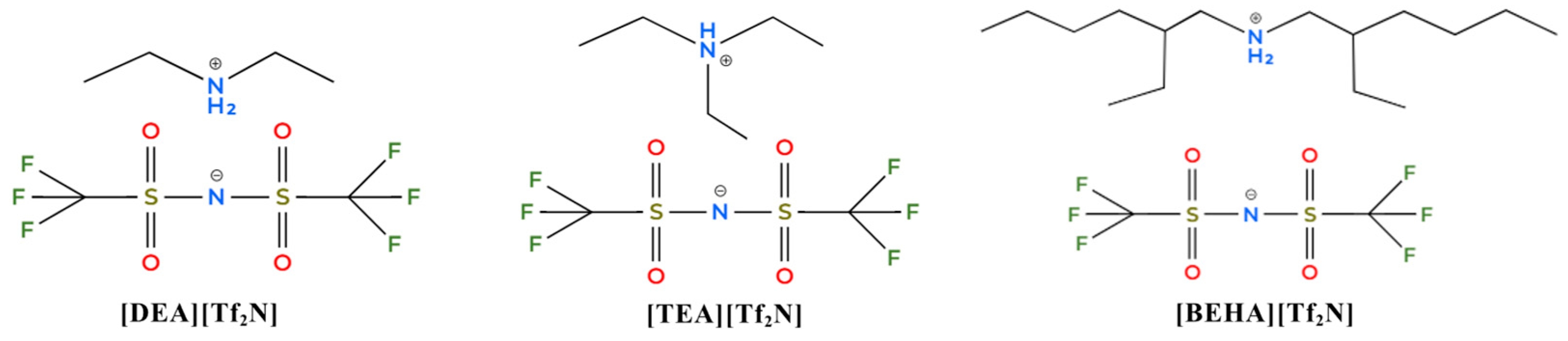
Figure 1. Chemical structures of the synthesized HPILs ([DEA][Tf2N], [TEA][Tf2N], and [BEHA][Tf2N]).
Molecules 30 04674 g001
Figure 2. FTIR spectra of DEA, [DEA][Cl], and [DEA][Tf2N].
Molecules 30 04674 g002
Figure 3. Heat capacity, Cp, of PILs and HPILs at 293.15 K–333.15 K.
Molecules 30 04674 g003
Figure 4. Experimental density variation in [TEA][Tf2N] and [BEHA][Tf2N] as a function of temperature.
Molecules 30 04674 g004
Figure 5. The nd plot for HPILs at a temperature range of 293.15 K to 333.15 K.
Molecules 30 04674 g005
Figure 6. Comparison of CO2 absorption for (a) [BEHA][Tf2N], (b) [TEA][Tf2N], and (c) [DEA][Tf2N] at different temperatures.
Molecules 30 04674 g006
Figure 7. Comparison of CO2 absorption capacities for all HPILs at varying temperatures: (a) 298.15 K, (b) 313.15 K, and (c) 333.15 K.
Molecules 30 04674 g007
Figure 8. Comparison of CO2 and CH4 absorption behaviour for the synthesized HPILs at 298.15 K: (a) [BEHA][Tf2N], (b) [TEA][Tf2N], and (c) [DEA][Tf2N].
Molecules 30 04674 g008
Figure 9. Spectroscopic characterization of [BEHA][Tf2N] before and after CO2 absorption: (a) stacked 13C NMR spectra and (b) FTIR spectra recorded using the ATR method in the range of 3900–500 cm−1.
Molecules 30 04674 g009
Figure 10. Recyclability of [BEHA][Tf2N] at 298.15 K, 313.15 K, and 333.15 K over two consecutive CO2 absorption–desorption cycles.
Molecules 30 04674 g010
Figure 11. Spectroscopic characterization of [BEHA][Tf2N] after CO2 desorption: (a) FTIR spectra and (b) 1H NMR spectra for fresh, cycle 1, and cycle 2 samples at 298.15 K.
Molecules 30 04674 g011aMolecules 30 04674 g011b
Figure 12. General synthesis pathway for first-step reaction to produce PIL.
Molecules 30 04674 g012
Figure 13. General synthesis pathway for second-step reaction to produce HPIL.
Molecules 30 04674 g013
Figure 14. Schematic diagram of the solubility cell used for CO2 absorption measurements [7].
Molecules 30 04674 g014
Table 1. The values of decomposition temperature (Tonset) and peak temperature (Tmax) for PILs and HPILs, determined by thermogravimetric analysis.
PILs/HPILsTonset (K)Tmax (K)
[DEA][Cl]478.33508.26
[TEA][Cl]480.36511.00
[BEHA][Cl]478.18505.73
[DEA][Tf2N]635.13677.41
[TEA][Tf2N]672.09710.75
[BEHA][Tf2N]614.62651.91
Table 2. Density values of HPILs measured at 298.15 K.
HPILsDensity (g·cm−3)
[DEA][Tf2N]1.6510
[TEA][Tf2N]1.4377
[BEHA][Tf2N]1.2004
Table 3. Fitting parameters to correlate the density of HPILs and calculated SD.
HPILsD1D0SD
[TEA][Tf2N]−0.00081.67220.0126
[BEHA][Tf2N]−0.00071.40820.0112
Table 4. The values of molar mass, α , Vm, S°, Ulatt, V, Rm, and Vf for HPILs.
Temperature
(K)
Molar Mass
(g mol−1)
α × 10 4
(K−1)
V m × 10 2
(cm3 mol−1)
S °
(J K−1 mol−1)
Ulatt
(kJ mol−1)
V
(nm3)
Rm
(cm3 mol−1)
Vf
(cm3 mol−1)
[TEA][Tf2N]382.35
293.15 5.552.658579.64411.940.441365.20200.58
303.15 5.582.666581.37411.620.442764.93201.68
313.15 5.612.682584.69411.010.445464.93203.30
323.15 5.642.699588.18410.370.448264.97205.00
333.15 5.672.716591.68409.730.451065.02206.57
[BEHA][Tf2N]522.62
293.15 5.804.352930.23365.250.7226112.44322.72
303.15 5.834.369933.77364.900.7254112.10324.76
313.15 5.864.391938.40364.460.7292111.91327.19
323.15 5.904.429946.18363.720.7354112.12330.74
333.15 5.934.452950.95363.270.7392111.98333.18
Table 5. Fitting parameters to correlate nd of HPILs and calculated SD.
HPILsR1R0SD
[TEA][Tf2N]−0.00031.48480.0042
[BEHA][Tf2N]−0.00031.52470.0054
Table 6. The KH values of HPILs at temperatures of 298.15 K, 313.15 K, and 333.15 K.
HPILsKH (bar)
T = 298.15 KT = 313.15 KT = 333.15 K
[DEA][Tf2N]38.7039.2944.09
[TEA][Tf2N]30.1232.8136.33
[BEHA][Tf2N]25.1528.2833.87
Table 7. Calculated partial molar enthalpy ( Δ h 2 ) and entropy (Δs2) of CO2 absorption for [BEHA][Tf2N], [TEA][Tf2N], and [DEA][Tf2N]
HPILs Enthalpy ,   Δ h 2
( k J m o l )
Entropy ,   Δ s 2
( J m o l · K )
[DEA][Tf2N]−3.14−10.02
[TEA][Tf2N]−4.42−14.03
[BEHA][Tf2N]−7.05−22.38
Table 8. Comparison of Henry’s law constants (KH) for CO2 and CH4 absorption in the synthesized 3HPILs at 298.15 K.
HPILsKH (bar)
CO2 (T = 298.15 K)CH4 (T = 298.15 K)
[DEA][Tf2N]38.7048.05
[TEA][Tf2N]30.1235.92
[BEHA][Tf2N]25.1532.33
Disclaimer/Publisher’s Note: The statements, opinions and data contained in all publications are solely those of the individual author(s) and contributor(s) and not of MDPI and/or the editor(s). MDPI and/or the editor(s) disclaim responsibility for any injury to people or property resulting from any ideas, methods, instructions or products referred to in the content.