1. Introduction
With the rapid development of electronic commerce, interactive marketing has become the dominant paradigm in brand communication [
1]. Green brands have leveraged the wide reach and interactivity of social media to establish new channels for consumer engagement [
2,
3]. This shift not only encourages more proactive adoption of sustainability but also enhances brand relatability, strengthens the product experience, and empowers consumers through greater participation and access to information [
4,
5,
6]. Meanwhile, the communication landscape has migrated from traditional public media (e.g., television and billboards) to private digital devices such as smartphones and tablets, making e-commerce platforms key arenas for message delivery and conversion [
7,
8,
9]. In this high-frequency, fragmented marketing environment, capturing attention and increasing ad engagement time has become a pressing challenge [
10,
11].
In response, many green brands have adopted homophonic puns as a core rhetorical strategy in interactive communication. A homophonic pun leverages the phonological similarity of homophones to elicit semantic association and inference, thereby producing humor and other rhetorical effects [
12,
13]. In green branding, such wordplay helps construct a compelling green vision, enhances brand likability, and further stimulates green purchase intention [
14,
15]. For instance, McDonald’s Norway used the phrase “take away your take away,” and Starbucks China used “Great job! Let the Earth have fewer carbon sighs (GOOD, GOOD, 让地球少‘碳’气)”, both effectively conveying green brand messages through wordplay. As an ancient rhetorical device, the homophonic pun has thus re-emerged as a central tool in green brand messaging. Revived within contemporary marketing, it endows copy with dual meanings via phonetic similarity despite semantic differences, providing brand messages with “dual engines” that boost both engagement and interpretive richness [
16,
17]. Functioning as a precisely calibrated key, this strategy ignites curiosity, infuses emotional nuance, and fosters tighter brand–consumer connections through interactive involvement; ultimately, it enables green brands to stand out and cultivate a novel model of sustainable marketing [
18].
Although work on homophonic and homographic wordplay in green brand rhetoric is growing, three gaps remain. First, prior studies tend to treat humor as a unitary construct and seldom isolate the specific mechanism by which puns affect purchase-relevant outcomes; they rarely test the exclusivity of affiliative humor against non-affiliative styles [
19,
20,
21,
22]. Second, research often collapses pun subtypes, overlooking differences between homophonic and homographic puns in cognitive load and context dependence; while homophonic puns are phonetic, low-load, and well suited to attention-scarce interactive environments, evidence on whether they elicit affiliative humor that translates into green purchase intention remains limited [
23,
24]. Third, in digital commerce interfaces, scholarship has under-theorized boundary conditions, especially the role of visual salience that can gate when linguistic creativity helps rather than hurts; most studies consider visual and verbal cues in isolation and lack models of their synergy [
25,
26]. In sum, these theoretical gaps and practical misalignments highlight the need to investigate how, within interactive marketing contexts, green brands can strategically employ homophonic puns to elicit affiliative humor and optimize communication outcomes through visual salience. Addressing these limitations provides the conceptual foundation for this study.
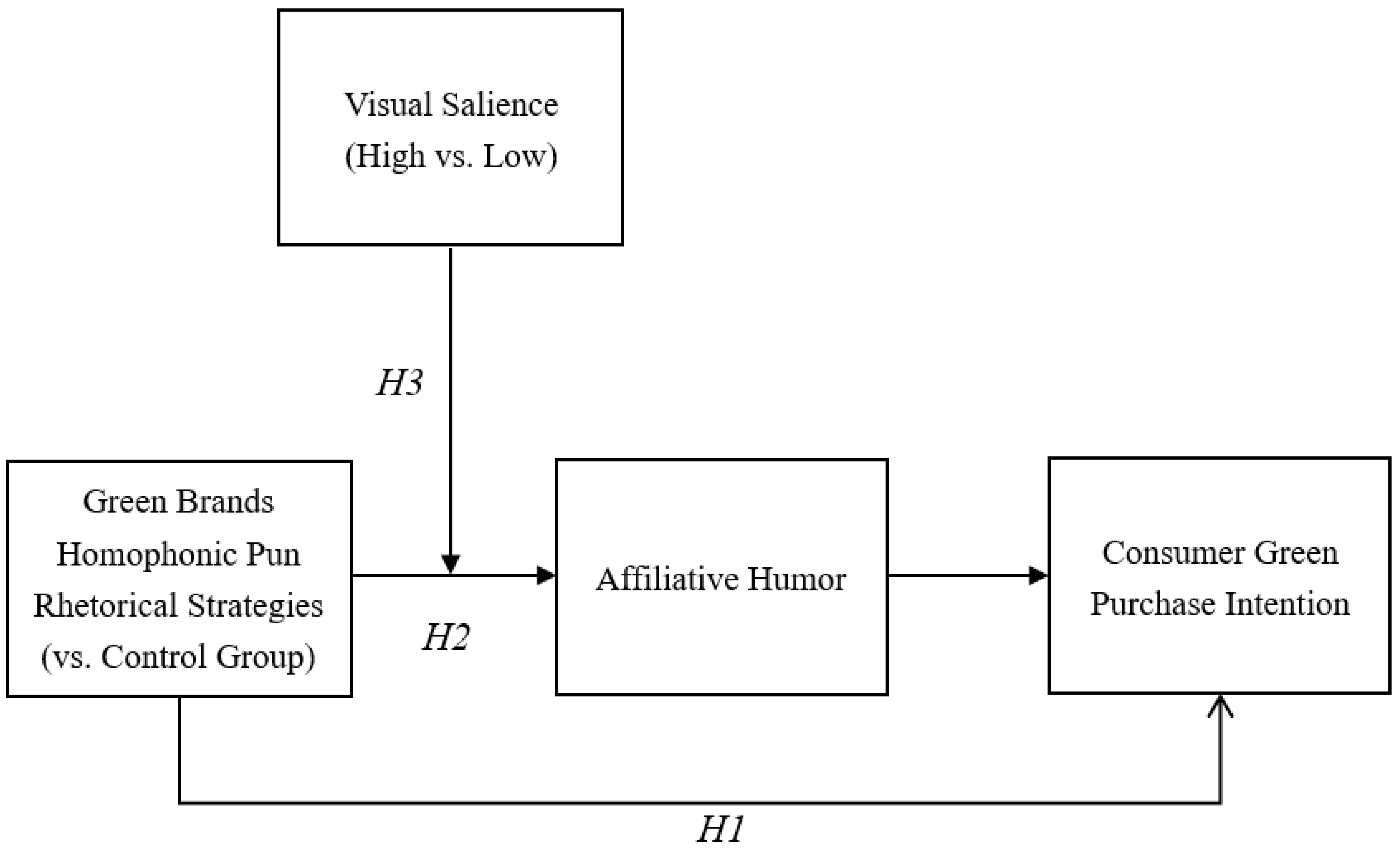
To bridge these research voids, this study proposes and empirically validates a causal model whereby green brands’ deployment of homophonic pun rhetoric elevates consumers’ green purchase intentions through the activation of affiliative humor. Drawing on Benign Violation Theory, we explain how homophonic puns generate affiliative humor: when marketing messages create surprising yet harmless linguistic incongruities through phonetic play, consumers are more likely to experience positive humorous responses [
27,
28]. Additionally, we integrate visual salience as a moderating variable to examine how the prominence of visual cues shapes the efficacy of homophonic puns in eliciting affiliative humor, positing that greater visual salience amplifies the perceived humor effect [
29]. Conducted within the interactive marketing context of an emerging market (China), this inquiry not only extends current literature but also offers new theoretical insights and empirical evidence for green brand communication and humor-based marketing.
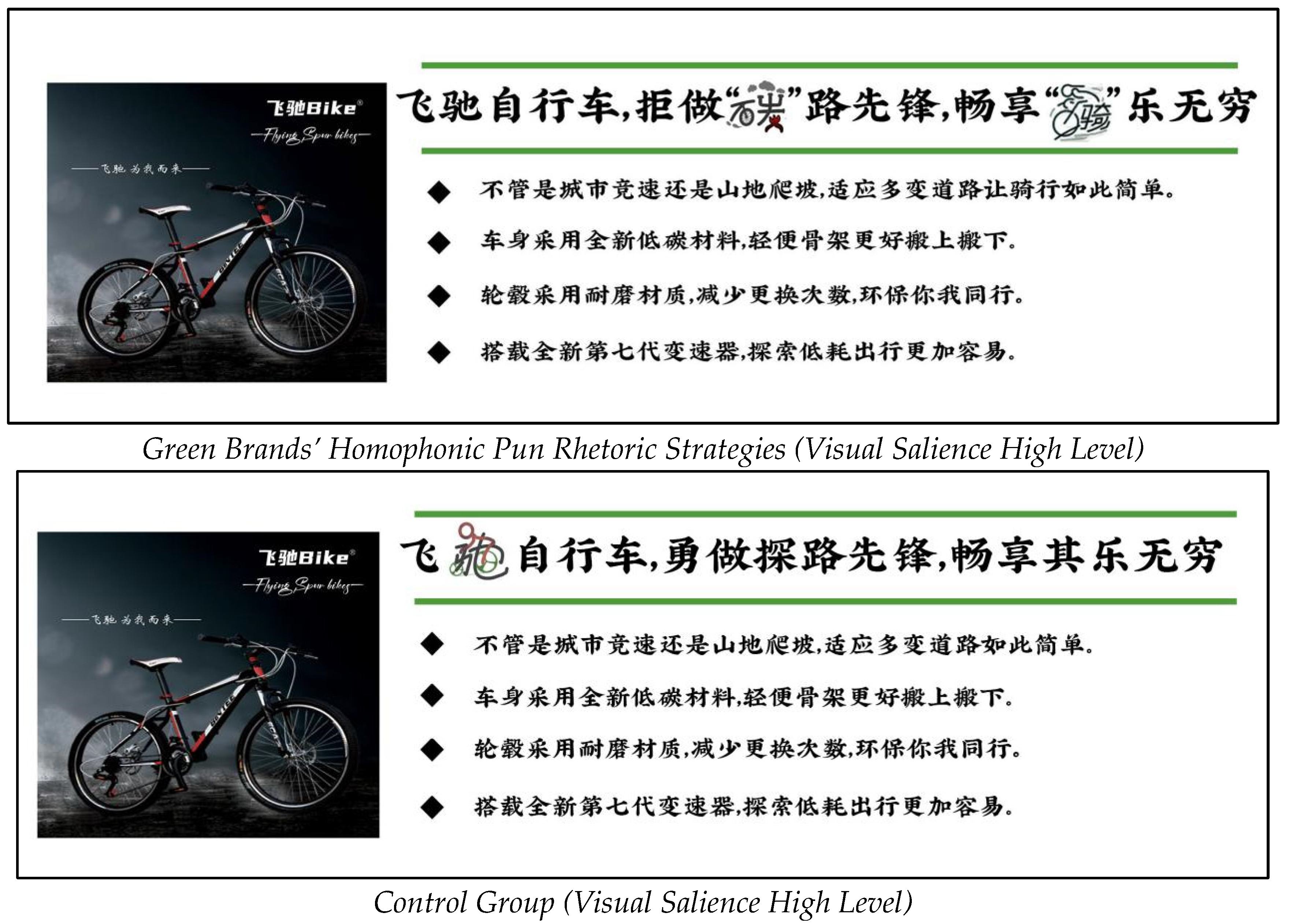
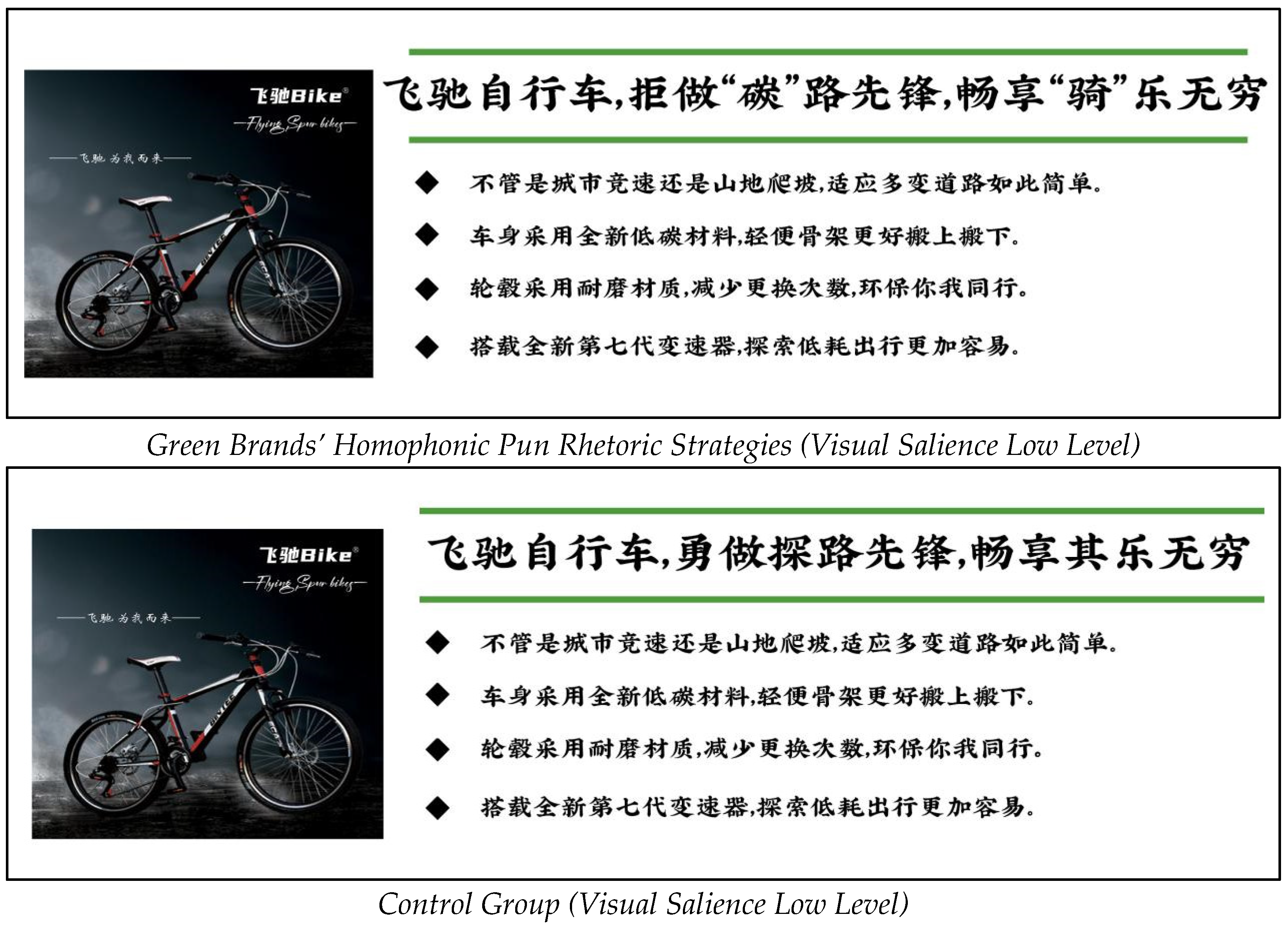
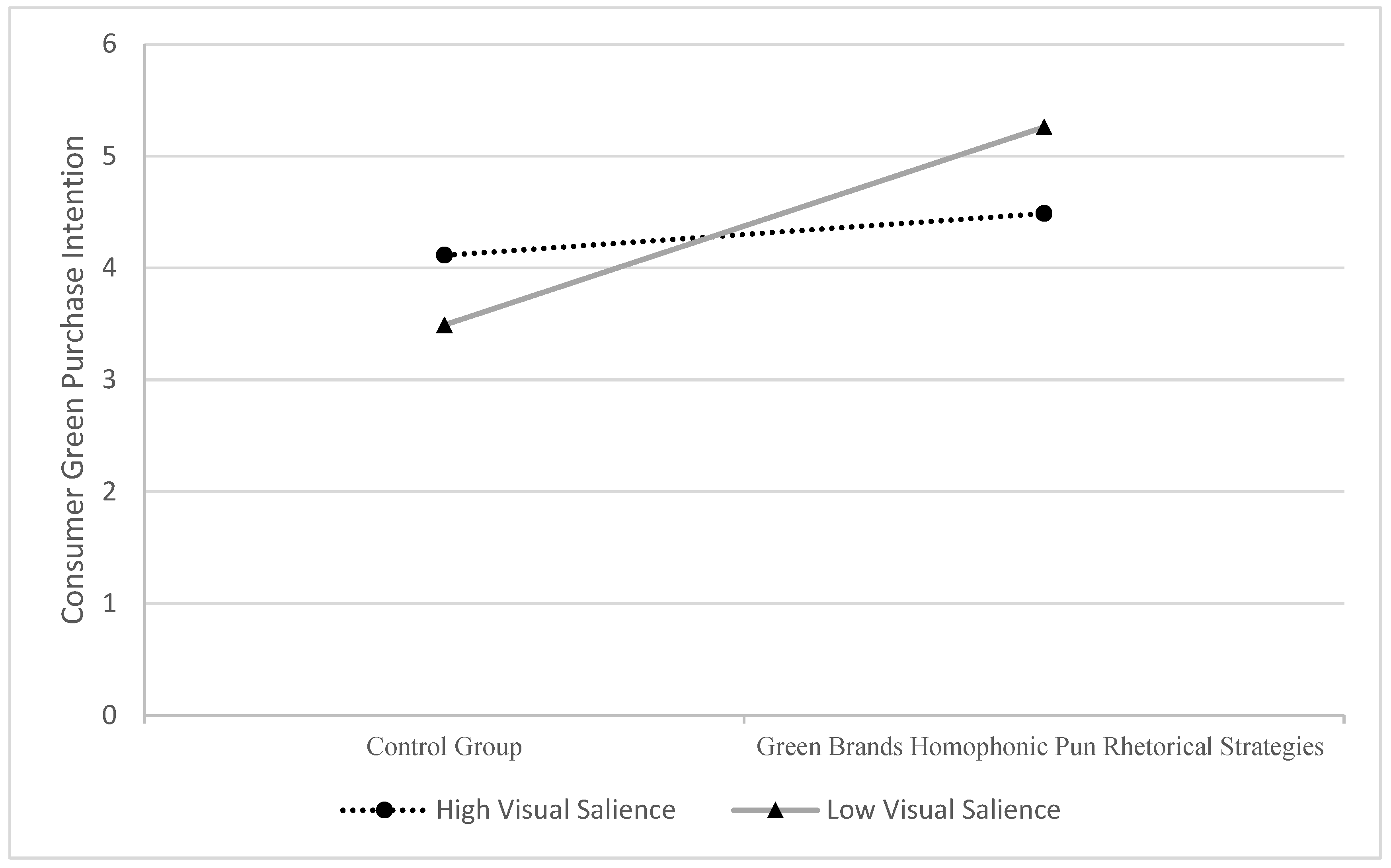
This study addresses a single question: when, through what mechanism, and under what visual conditions do homophonic pun slogans used by green brands influence consumers’ green purchase intentions. We develop and test a theory driven process model that integrates Benign Violation Theory with visual attention. The model proposes that homophonic puns increase green purchase intention through affiliative humor and that visual salience moderates the link from pun to humor. We test three predictions: homophonic puns elicit affiliative humor that mediates purchase intention; affiliative humor is the unique mediator relative to non-affiliative styles; the indirect effect appears under high visual salience and not under low salience. Evidence from four experiments supports this account. Homophonic puns increase green purchase intention by eliciting affiliative humor, the mechanism is specific to affiliative humor, and the effect is stronger when visual salience is high. These results set a clear objective and a focused test of one mechanism and one boundary condition, and they offer practical guidance for combining linguistic creativity with strategic visual salience to strengthen emotional engagement, improve message clarity, and increase green purchase intentions.
This study advances digital commerce research in three ways. First, it isolates affiliative humor as the unique mediator linking homophonic-pun rhetoric by green brands to green purchase intentions, thereby moving beyond generic “humor effects” toward a precise language–emotion–behavior process model grounded in Benign Violation Theory. Second, it identifies visual salience as a theoretically bounded moderator that determines when linguistic creativity translates into purchase-relevant responses in visually crowded, feed-based interfaces. Third, it provides a reproducible experimental paradigm for creative optimization by jointly manipulating rhetorical strategy and visual design across categories, offering empirically grounded guidance for interactive marketing in digital channels.
The remainder of this article proceeds as follows:
Section 2 develops hypotheses;
Section 3 details the experimental design and measures;
Section 4,
Section 5,
Section 6 and
Section 7 report four experiments: Study 1 (main effect), Study 2 (mediation via affiliative humor), Study 3 (exclusivity of the mediator), and Study 4 (moderation by visual salience);
Section 8 concludes with theoretical contributions, managerial implications, limitations, and directions for future research.
5. Study 2: Testing the Mediating Role of Affiliative Humor
5.1. Experimental Procedure
The purpose of this experiment was to test H2, which proposes that homophonic pun rhetoric (vs. control group) by green brands is more likely to stimulate consumers’ green purchase intentions, with affiliative humor serving as a mediating mechanism. Following the experimental procedure outlined by Lin [
56], a between-subjects design with one factor and two levels (rhetorical strategy: homophonic pun vs. control group) was employed, using light bulbs as the experimental material. Data were collected via the Credamo online platform, resulting in 400 valid responses. The achieved sample satisfied prespecified power targets for the mediation analysis, and data collection remained open for seven days. Among the participants, 195 were female (48.75%), and the average participant age was 26.75 years (
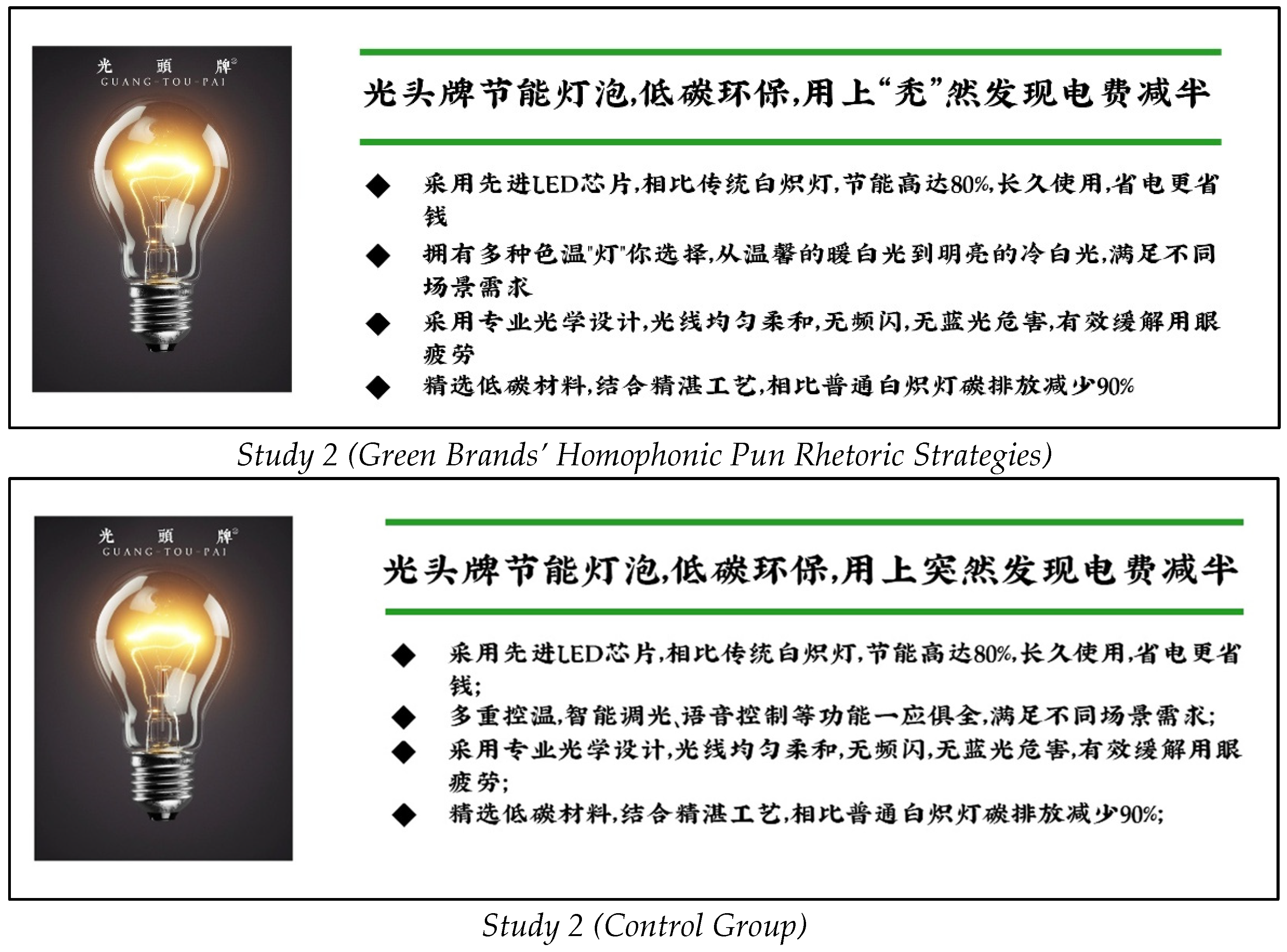
SD = 4.47). Following a similar priming method as in Study 1, participants were randomly assigned to one of two groups and exposed to a banner advertisement for a fictitious light bulb brand called “Guangtou (光头).” The experimental group viewed an ad featuring a homophonic pun slogan, “Using ‘bald’ by discover that electricity bills are halved” (用上 “秃” 然发现电费减半) (
Figure 4), while the control group viewed a non-pun slogan: Using suddenly discover that electricity bills are halved (用上突然发现电费减半) (
Figure 4). Participants then completed a manipulation check to assess the effectiveness of the homophonic pun strategy (confirming whether the advertisement employed a homophonic pun). After the manipulation check, participants sequentially completed measures for affiliative humor responses and green purchase intentions. The affiliative humor scale was adapted from Martin’s [
37] research (Cronbach’s α = 0.901, AVE = 0.647, CR = 0.902), with minor modifications based on his conceptualization of affiliative humor. The scale included five items: “I felt relaxed and happy while viewing this green advertisement,” “I could easily recognize the humorous intent of the advertisement,” “The advertisement triggered humorous associations in my mind,” “I found it difficult to perceive the humor in this advertisement” (reverse-coded), and “I found the humor in this advertisement to be creative.” Responses were measured using a 7-point Likert scale (1 = no sense of humor at all, 7 = strong perception of humor).
5.2. Manipulation Check and Direct-Effect Analysis for Homophonic Pun Rhetoric by Green Brands
Manipulation Check for Homophonic Pun Rhetoric: First, the group variable was dummy coded (homophonic pun rhetoric group = 1; control group = 0). An independent samples t-test was conducted with the manipulation check item (“This advertisement used a homophonic pun strategy”) as the dependent variable. Results showed that participants in the homophonic pun group reported significantly higher agreement compared to those in the control group (Mhomophonic pun = 6.07, SD = 0.79 vs. Mcontrol group = 2.96, SD = 1.33; t (398) = 28.397, p < 0.001). These results indicate that the manipulation of the homophonic pun rhetoric was successful.
Direct Effect of Green Brand Homophonic Pun Rhetoric on Green Purchase Intentions: First, the group variable was dummy coded (homophonic pun rhetoric group = 1; control group = 0). A one-way ANOVA was conducted with green purchase intentions as the dependent variable. Results revealed a significant difference in green purchase intentions based on the rhetorical strategy. Participants exposed to homophonic pun rhetoric reported significantly higher purchase intentions compared to those exposed to control group (Mhomophonic pun = 4.20, SD = 1.31 vs. Mcontrol group = 3.55, SD = 1.33; F (2, 398) = 24.323, p < 0.001). These findings suggest that, compared to non-pun rhetoric, homophonic pun rhetoric is more effective in stimulating consumers’ green purchase intentions.
5.3. Mediation Analysis
Study 2: Experimental data were collected via the Credamo platform using light bulbs (a common household product) as the stimulus to examine the effect of homophonic pun rhetoric by green brands on consumers’ green purchase intentions and the mediating role of affiliative humor. Results from an independent samples t-test showed that participants exposed to the homophonic pun rhetoric reported significantly stronger affiliative humor responses than those in the control group (Mhomophonic pun = 4.045, SD = 1.269 vs. Mcontrol group = 2.745, SD = 1.089; t (398) = 10.992, p < 0.001). Regression analysis further revealed that affiliative humor had a significant positive effect on green purchase intentions (β = 0.482, t = 7.210, p < 0.001).
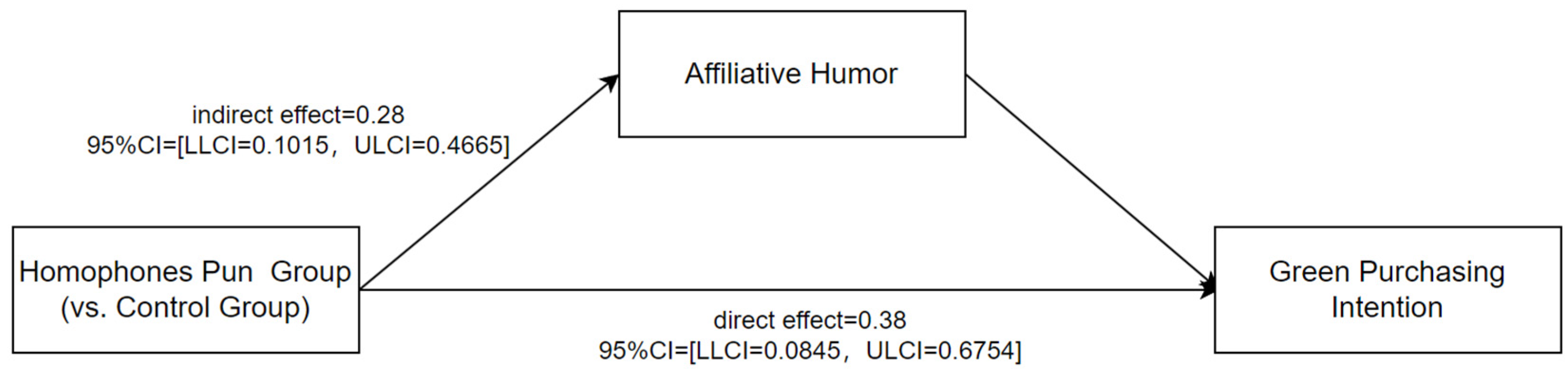
Following the bootstrap mediation analysis procedure (Model 4), green purchase intention was set as the dependent variable, homophonic pun rhetoric (homophonic pun group = 1; control group = 0) as the independent variable, and affiliative humor as the mediator. The indirect effect through affiliative humor was 0.289, with a 95% confidence interval of (LLCI = 0.097, ULCI = 0.494), excluding zero, indicating a significant mediation effect.
Moreover, after controlling for affiliative humor, the direct effect of homophonic pun rhetoric on green purchase intentions remained significant (effect = 0.361, p = 0.017, LLCI = 0.064, ULCI = 0.658).
These results confirm the mediating role of affiliative humor and support H2; the mediation model is depicted in
Figure 5.
6. Study 3: Testing the Exclusivity of Affiliative Humor as a Mediator
6.1. Purpose
This experiment aims to further verify the distinctiveness and exclusivity of affiliative humor as a mediating variable, as identified in Study 2. Although previous results demonstrated a significant mediating effect of affiliative humor in the relationship between homophonic pun rhetoric and consumers’ green purchase intentions, it remains unclear whether this mechanism is exclusive. In other words, it is unknown whether other types of humor (Aggressive Humor, Self-defeating Humor, Self-enhancing Humor) can produce similar effects. To address this issue, the study introduces experimental groups using alternative humor styles and systematically examines whether affiliative humor uniquely mediates the rhetorical to emotion to behavior pathway. This approach enhances the explanatory power and robustness of the theoretical model. Additionally, it clarifies the alignment between rhetorical strategies and emotional responses in green brand communication and provides more targeted theoretical support for selecting effective humor strategies in homophonic pun advertisements.
6.2. Methodology
This study employed a single-factor between-subjects experiment with two conditions. Participants were randomly assigned to view a green brand advertisement that either used a homophonic pun or a literal control headline. Drawing on the energy-saving light bulb materials from Study 2, we created two banner ad versions with identical product information; the headline was the only manipulated element. Affiliative, aggressive, self-defeating, and self-enhancing humor were then measured with validated short scales rather than manipulated in the stimuli. A pretest was conducted to confirm the clarity of humor style differentiation and to ensure consistency in language tone across conditions.
The experiment was distributed via the Credamo platform, and a total of 400 valid responses were collected. The achieved sample size was sufficient for the planned exclusivity test of alternative humor-style explanations. Data collection remained open for seven days. Participants were randomly assigned to one of the four groups. After viewing the advertisement, they completed questionnaires assessing humor type recognition and green purchase intention. Affiliative humor was measured using the same validated scale as in Study 2. For the other humor types, modified items based on the Humor Styles Questionnaire developed by Martin et al. [
37] were used to capture aggressive, self-defeating, and self-enhancing humor styles. The green purchase intention scale remained consistent with the prior studies.
Data analysis was conducted using SPSS 26.0. Mediation effects were examined using PROCESS Model 4. The independent variable was the rhetorical strategy, coded as homophonic pun versus control. The dependent variable was green purchase intention. Each of the four humor types was entered as a parallel mediator. A bootstrapping procedure with 5000 samples and a 95 percent confidence interval was employed to test the significance of each mediation path. This approach allowed the comparison of indirect effects across humor types and provided evidence on whether affiliative humor serves as a unique and exclusive mediator in the pathway from rhetorical strategy to green purchase intention.
6.3. Integrated Results
Mediation analysis was conducted using PROCESS Macro (Model 4) in SPSS, with rhetorical strategy (homophonic pun vs. control group) as the independent variable and green purchase intention as the dependent variable. Affiliative humor and three types of non-affiliative humor (Aggressive, Self-defeating, and Self-enhancing) were tested as parallel mediators.
The analysis revealed that affiliative humor significantly mediated the effect of homophonic pun rhetoric on green purchase intention in the green brand condition. The indirect effect was 0.289, with a 95% confidence interval of (LLCI = 0.097, ULCI = 0.494). The indirect effect of self-enhancing humor was not significant, with an effect size of −0.0012 and a 95% confidence interval of (LLCI = −0.034, ULCI = 0.041), which included zero. Similarly, the indirect effect of self-defeating humor was not significant. The effect size was −0.0049 with a confidence interval of (LLCI = −0.040, ULCI = 0.033), also including zero. The indirect effect of aggressive humor was also non-significant, with a value of 0.0036 and a confidence interval of (LLCI = −0.037, ULCI = 0.035), also including zero. The mediating effect of affiliative humor was significantly greater than that of non-affiliative humor, indicating that affiliative humor plays a distinct and exclusive mediating role in the proposed mechanism. Control variables such as age and gender did not exert significant confounding effects, further validating the central role of affiliative humor as a mediator.
Taken together, only the affiliative humor pathway reached statistical significance and its mediating impact was stronger than those of the non-affiliative styles, indicating a distinct and exclusive mediating role that aligns with Benign Violation Theory: favorable attitudes and intentions are more likely when the linguistic deviation is appraised as harmless. In contrast, aggressive, self-defeating, and self-enhancing humor, although potentially entertaining, may evoke discomfort or credibility concerns and are less effective in fostering positive cognitive reappraisal or emotional transfer, which can attenuate a brand’s green image. These findings reinforce the causal progression from perceived semantic conflict to affiliative humor and then to purchase intention, offer clear guidance for selecting rhetorical and humor strategies in interactive marketing by green brands, and provide an empirical template for future examinations of mediator exclusivity.
8. Discussion
This study tested a theory-driven process model for how homophonic pun rhetoric by green brands shapes consumer response and identified both a mechanism and a boundary condition within one framework. Across four experiments, a clear pattern emerged. Homophonic puns increased green purchase intention, and the effect operated through affiliative humor. Visual salience functioned as a boundary condition that links language to attention. When salience was high, the pun cue was more likely to be noticed and quickly interpreted, a benign appraisal followed, affiliative humor was elicited, and downstream effects strengthened. When salience was low, affiliative humor was not reliably elicited and the indirect effect did not appear. Two results refine common assumptions. Non-affiliative humor styles did not transmit the effect, which challenges undifferentiated views of humor and supports the core claim of Benign Violation Theory that a mild and harmless violation is most naturally expressed as affiliative humor in sustainable branding. Study two also showed partial mediation, suggesting that novelty or processing fluency may contribute alongside affiliative humor. Taken together, these regularities and exceptions confirm the positive main effect, specify a language to emotion to behavior pathway centered on affiliative humor, and show that the pathway depends on visual conditions that bring the cue to the foreground. The pattern integrates Benign Violation Theory with visual attention, explains variation in prior findings, and clarifies when language-based persuasion emerges in multimodal advertising (
Table 1).
8.1. Theoretical Implications
This study advances the theory on green brand interactive marketing by linking the four studies into an integrated storyline and using this storyline to present our theoretical contributions. In line with recent calls in interactive marketing to demonstrate contributions through storytelling [
57], we connect linguistic design, emotional experience, and behavioral response to explain how homophonic puns operate in green brand communication.
First, this research supports and extends rhetorical theory in green branding by articulating a micro-level pathway from language to emotion to behavior. Prior work that links rhetorical style to persuasion [
33,
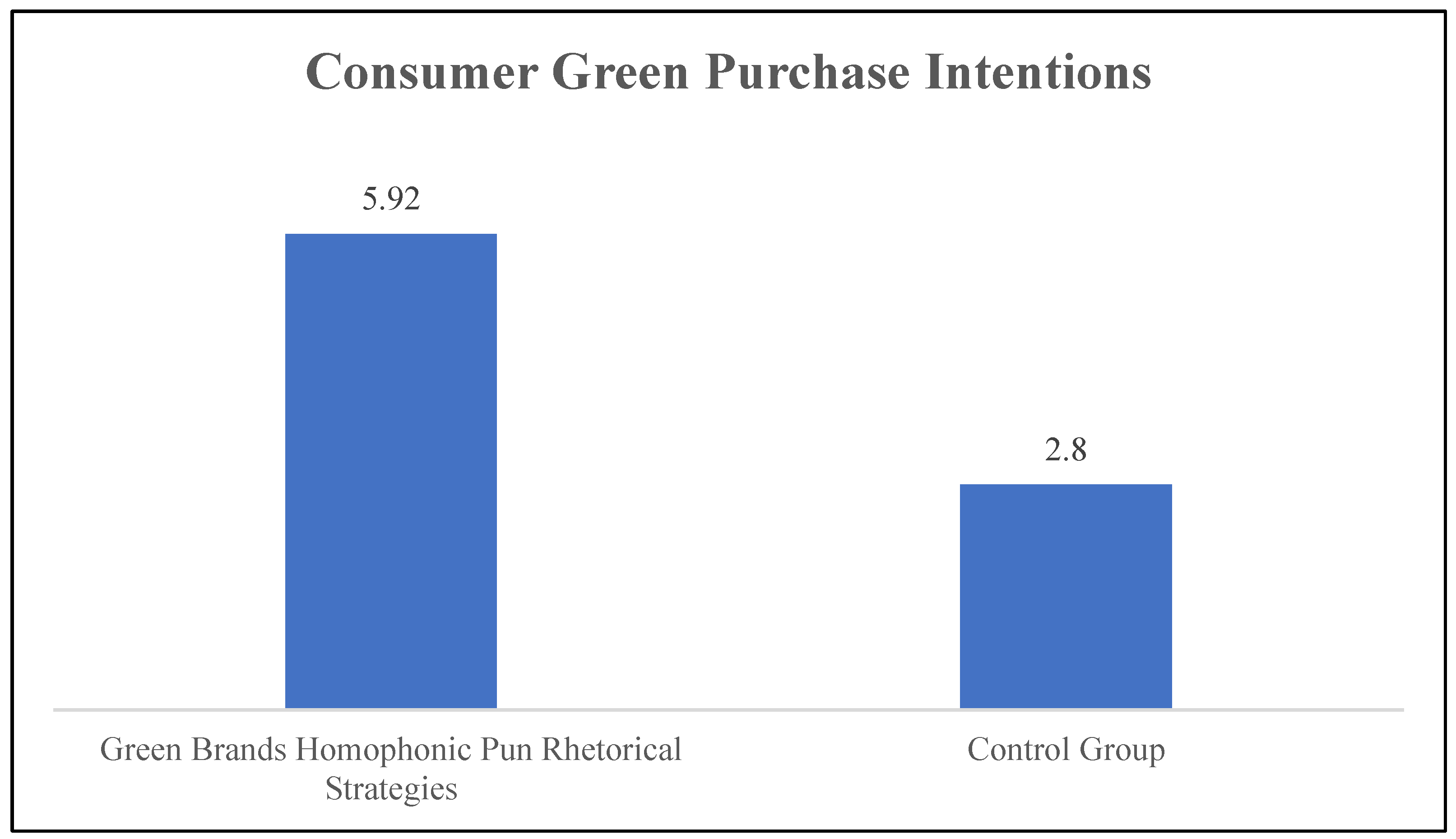
58] has largely remained at the macro-level and has treated rhetorical figures as global message features. Our evidence goes beyond these accounts and shows that, in interactive green brand communication, homophonic pun rhetoric exerts a positive main effect on green purchase intention. Study 1 documents this main effect of homophonic pun rhetoric on green purchase intention. Subsequent studies refine this picture by showing that the effect is carried by specific emotional processes rather than operating as a purely cognitive shortcut. The focus on homophonic rather than homographic wordplay clarifies that forms with lower processing demands and weaker context dependence are especially suitable for interactive environments in which consumers scroll, click, and respond rapidly. This extension provides a refined theoretical basis for the design of rhetorical strategies in green branding.
Second, this research clarifies and qualifies Benign Violation Theory and related work on humor in marketing, and it connects these ideas to emerging interactive marketing research on the boundaries of brand playfulness. Introducing Benign Violation Theory into brand rhetoric research [
38], Study 2 demonstrates that the effect of homophonic puns on purchase intention operates through affiliative humor. This finding supports the core proposition of the theory that mild and harmless violations generate positive affect and approach tendencies. Study 3 further qualifies broad claims about humor in marketing. Prior research often treats humor as a unitary driver [
37,
59]. Our results contradict that undifferentiated assumption by showing that non affiliative styles do not carry the effect in the green branding context. In doing so, we extend the application scope of Benign Violation Theory and specify affiliative humor as the key process variable that links linguistic deviation to consumer response in sustainable communication. At the same time, our findings resonate with interactive marketing research showing that creative brand tactics can generate either resonance or resistance in customer engagement and that dark or aggressive humor, such as roasting, is appreciated only within certain boundaries and among specific segments [
60,
61]. By isolating affiliative humor as the effective style for homophonic puns in green interactive campaigns, our study adds a linguistic and emotionally differentiated layer to this stream of work.
Third, this research extends visual attention theory to a boundary condition for language-based persuasion in multimodal interactive settings. Integrating visual attention theory [
50] with language processing, Study 4 shows that visual salience conditions the success of homophonic puns in green brand messages. High salience improves access to the pun cue and accelerates inference, which increases the likelihood of a benign appraisal and the experience of affiliative humor. This moderated pathway extends visual attention theory into multimodal persuasion by identifying salience as a gating mechanism that shapes decoding efficiency and humor appraisal, and it responds to calls to consider linguistic and visual elements jointly rather than in isolation [
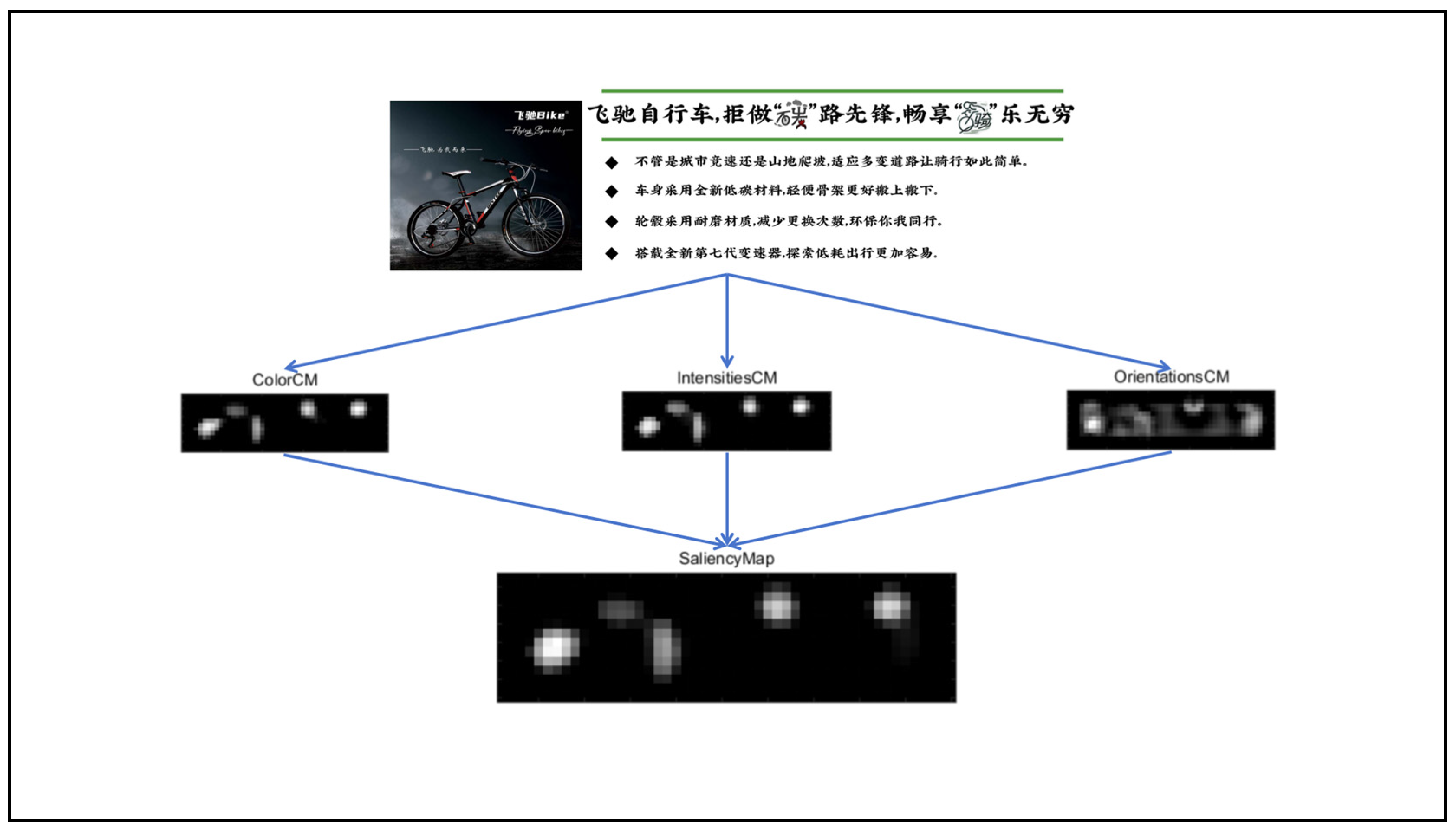
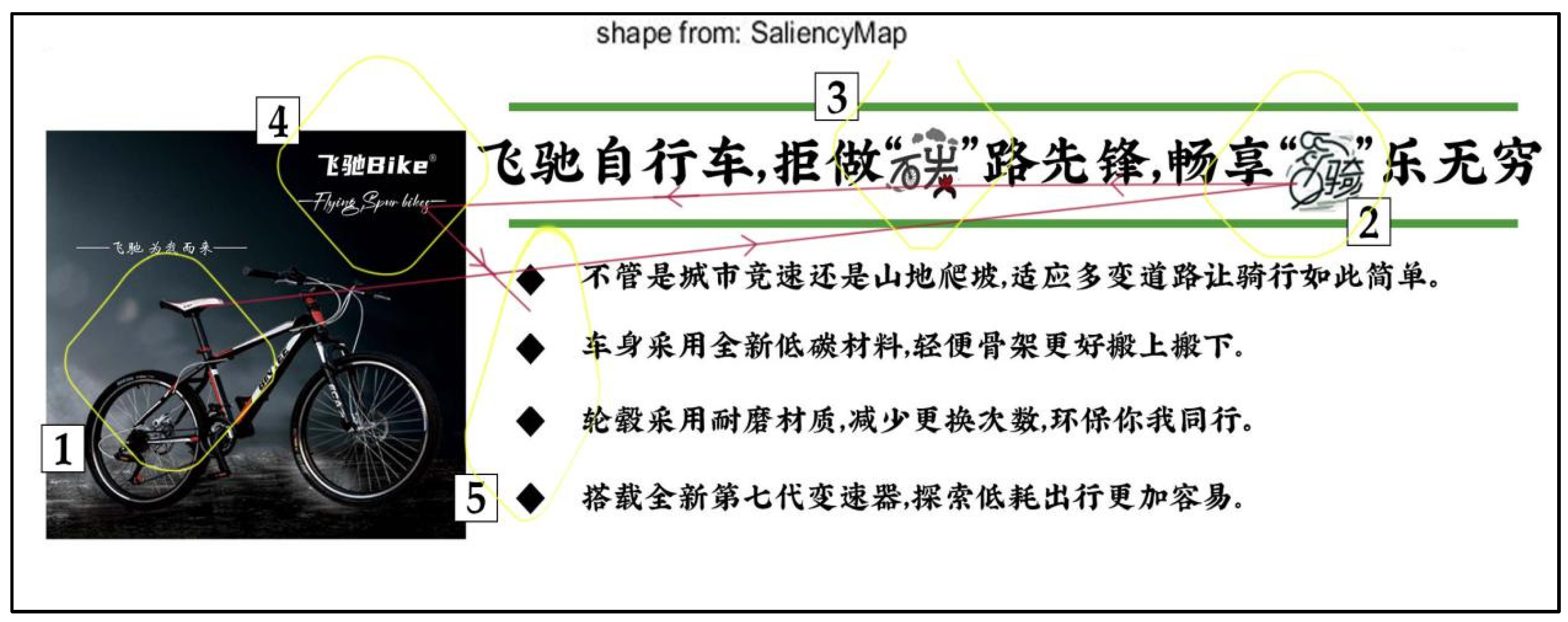
52]. The null pattern under low salience qualifies simple main effect expectations by showing that linguistic creativity alone is insufficient when attention is not effectively guided. The findings also introduce a quantitative paradigm based on salience modeling that links visual stimuli to language-based cognition in consumer research.
Taken together, the four studies support a unified conceptual model in which homophonic pun rhetoric influences green purchase intention through affiliative humor and in which visual salience operates as a boundary condition. The results both support key propositions in existing theories and qualify or extend them by identifying the unique role of affiliative humor and by specifying when the mechanism is likely to emerge in interactive green brand communication.
8.2. Managerial Implications
The findings of this study offer important managerial implications for green brand management in interactive new media contexts. Most notably, this study proposes a framework for multimodal synergistic communication, combining homophonic pun rhetoric with visual salience. In green brand marketing, companies should prioritize the use of homophonic pun rhetoric, transforming environmental messages into affiliative humor expressions through the creative use of phonological similarity, thereby reducing consumers’ psychological distance toward green information. At the same time, firms should enhance the synergistic effect between visual salience and pun rhetoric by employing high-contrast colors, dynamic symbols, and metaphorical icons (e.g., green leaves, images of the Earth) to increase the perceptual prominence of the pun elements. By constructing an integrated decoding environment that combines “semantic conflict in language” with “reinforcement through visual cues,” brands can accelerate consumers’ comprehension of environmental intentions via cross-modal information synergy, thereby stimulating affiliative humor responses and enhancing green purchase intentions.
Our study further suggests that green brands should dynamically adjust their communication strategies based on application contexts and audience characteristics. Specifically, brands should flexibly adjust the level of visual salience and the complexity of pun rhetoric according to different media characteristics and consumers’ cognitive contexts: In high-visual-load environments (e.g., outdoor advertisements, short videos), brands should employ strong contrast visual elements and straightforward homophonic puns to quickly capture consumer attention. In low-visual-load environments (e.g., text-based social media), brands should enhance the recognizability of puns through localized symbolic markers such as quotation marks or color highlights, thereby minimizing decoding difficulties. Meanwhile, communication strategies should be tailored based on the target audience’s level of environmental knowledge: For audiences with strong environmental awareness, brands can design homophonic puns that combine depth and creativity, supplemented by abstract visual metaphors. For the mass market, preference should be given to catchy and easily understood homophonic puns paired with intuitive visual symbols, aiming to achieve a balance between low processing effort and high cognitive impact.
Finally, green brands can employ empirical research to quantitatively assess the synergistic effects of “pun rhetoric strategies and visual salience”, analyzing consumer attention duration, semantic decoding efficiency, and emotional response intensity under different advertising conditions, thereby enabling targeted optimization of ad design. The core objective is to transform brand environmental appeals into perceptible humorous experiences for consumers through cross-modal synergy, thereby stimulating green purchase intentions. Companies must recognize that the key to green marketing lies not merely in information transmission but in the precise coordination of language and visual elements, embedding environmental values into consumer cognition through a “harmless conflict—benign humor” approach. This ultimately facilitates a sustainable marketing loop of “emotional arousal—value identification—behavioral transformation”, helping brands build a differentiated competitive advantage in the green consumer market.
8.3. Limitations and Future Research Directions
Although this study reveals the underlying mechanisms by which homophonic pun rhetoric combined with visual salience influences green brand communication, several limitations remain. Issues of external validity and generalizability should be acknowledged, and these limitations suggest several directions for future research [
62].
At the theoretical and linguistic level, the study focuses solely on homophonic puns and does not examine how other linguistic strategies, such as semantic puns, metaphors or irony, may interact with visual elements in green brand communication. A central boundary condition concerns linguistic dependency. Our stimuli draw on Chinese homophony within a character-based writing system, where dense phonological overlap and morpheme-to-character mapping facilitate pun formation and may shape the path from phonetic ambiguity to benign appraisal. Moreover, the measurement of humor responses is limited to affiliative humor and does not consider the potential influence of other humor types. This restriction may narrow the scope of the proposed mechanism and leaves open the question of how different humor styles shift the balance between benign and non-benign appraisals in green branding.
At the methodological level, all experimental studies are scenario-based and conducted in a Chinese context. Participants responded to hypothetical green brand campaigns with controlled stimuli and evaluated their intentions in scripted scenarios rather than in live interactive environments. This design strengthens internal validity but constrains external and ecological validity, because it may not fully capture spontaneous reactions, social interactions or behavioral choices that occur on real digital platforms. The sample is largely drawn from a single cultural context with specific norms regarding green consumption, brand humor and homophonic wordplay, so the generalizability of the findings across cultural settings remains to be validated. In addition, the operationalization of visual salience primarily relies on basic visual features such as color and motion, with limited attention to more complex visual elements such as typography, spatial layout, interface clutter and platform-specific design cues that are typical of real interactive feeds. The research program also relies exclusively on laboratory-style experiments with controlled stimuli and online panels. We did not conduct large-scale natural or field experiments embedded in live digital platforms, which limits ecological validity and may constrain inference about performance under marketplace dynamics such as algorithmic ranking, social interactions and competing content. Finally, the present studies measure key constructs using self-report questionnaires only. The absence of behavioral and physiological indicators raises the risk of common method variance and may understate or overstate effect sizes.
Future research could be expanded in several directions. First, scholars can incorporate cross-linguistic designs that explicitly compare character-based and alphabetic languages by creating meaning-equivalent homophonic slogans, minimal pair manipulations or orthographic versus phonological cues, and thereby test whether the affiliative humor pathway holds outside the Chinese context. Second, future studies can include a wider range of linguistic rhetorical strategies and humor types to build a more comprehensive theoretical framework for green communication and to identify when different forms of wordplay and humor are beneficial or detrimental. Third, researchers can refine the dimensional categorization of visual salience and use technologies such as eye tracking and fMRI to investigate the underlying cognitive and neural mechanisms that link visual guidance, pun resolution and humor appraisal. Fourth, cross-cultural and cross-linguistic comparative studies can examine how language structure and cultural norms jointly condition the effectiveness of visual–linguistic synergy in interactive green branding. Fifth, longitudinal research designs can be employed to track the long-term impact of humor responses on green consumer behavior, thereby providing more dynamic theoretical support for sustainable brand communication. Combining these extensions with richer visual manipulations, behavioral and physiological indicators and field-based evidence will offer a more precise and externally valid test of the proposed model.