Topic Editors

Institute of Electronics, Computer and Telecommunication Engineering (IEIIT), National Research Council of Italy (CNR), Milano, Italy
Dr. Ramez Daoud
SEAD Group, American University in Cairo‌, New Cairo 11835, Egypt
Department of Information Technology, Ghent University, Sint-Pietersnieuwstraat 41, 9000 Gent, Belgium
Dr. Pedro Santos
Faculdade de Engenharia, Universidade do Porto, Rua Dr. Roberto Frias, s/n 4200-465 Porto, Portugal

Challenges and Future Trends of Wireless Networks
Abstract submission deadline
closed (30 June 2026)
Manuscript submission deadline
30 September 2026
Viewed by
8462

Topic Information

Dear Colleagues,

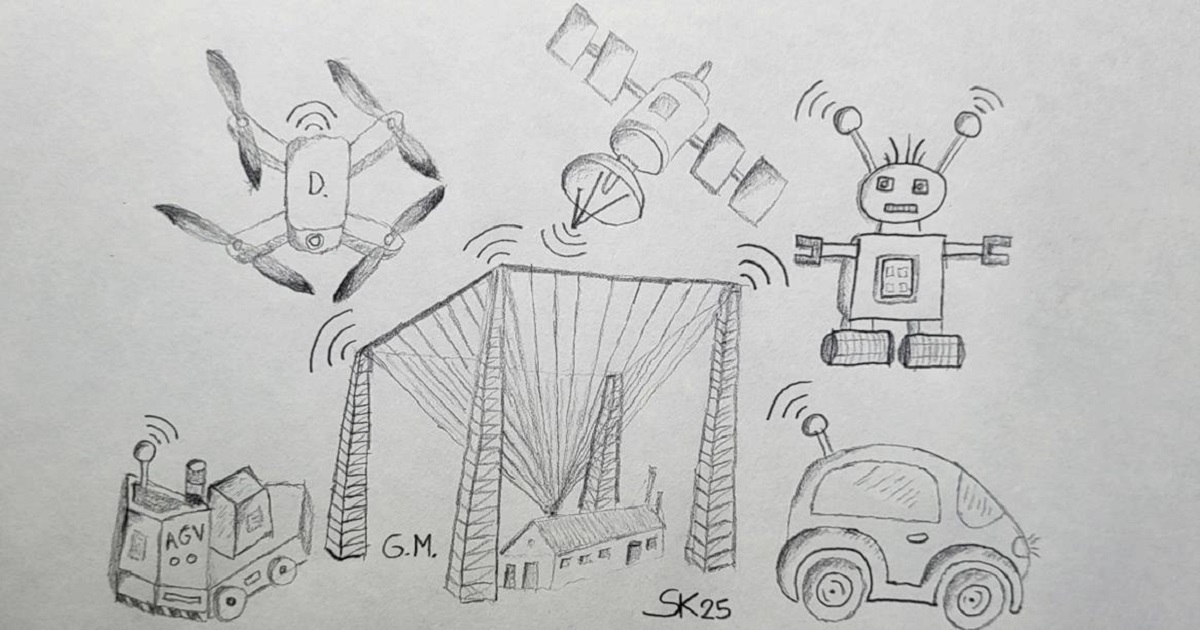
Since their invention, wireless communication networks have been one of the driving forces of innovation, acting as the skeleton and the nervous system upon which future technological applications are grounded.

The requirements of the upcoming technological revolutions range from determinism and the reliability of industrial networks to achieving extremely low power consumption for wireless sensor (and actuation) networks and personal networks. The presence, coexistence, and improvements of different communication technologies (e.g., Wi-Fi, 5G/6G/xG, LoRaWAN, IEEE 802.15.4, Bluetooth, to cite a few); the introduction of artificial intelligence (AI) and machine learning (ML) algorithms to optimize network behavior in real-time; and research on network digital twins and intelligent networks in general have combined to make wireless networks a promising and challenging research topic.

Current wireless networks represent an interdisciplinary Topic due to their heterogeneity and the fact that research regarding modern wireless networks covers various disciplinary fields, including AI, ML, distributed systems, optimization, Internet of Things (IoT), cloud/fog/edge computing, security and safety aspects, communication protocols, standardization, management of smart cities, grids, health, buildings, transportation, homes, and agriculture.

This Topic is open to anyone who wishes to submit a relevant research manuscript about technological improvements in wireless networks and their application.

Dr. Stefano Scanzio
Dr. Ramez Daoud
Dr. Jetmir Haxhibeqiri
Dr. Pedro Santos
Topic Editors

Keywords

  • wireless networks
  • Internet of Things (IoT)
  • Wireless Sensor Networks (WSN)
  • Wi-Fi
  • 5G/6G/xG
  • bluetooth
  • LoRaWAN
  • smart networks
  • cloud/fog/edge computing
  • artificial intelligence

Participating Journals

Journal Name Impact Factor CiteScore Launched Year First Decision (median) APC
Big Data and Cognitive Computing
BDCC
5.3 11.4 2017 23.3 Days CHF 1800 Submit
Computers
computers
5.2 9.1 2012 15.4 Days CHF 1800 Submit
Electronics
electronics
2.9 7.0 2012 14.8 Days CHF 2400 Submit
Future Internet
futureinternet
4.6 10.0 2009 15 Days CHF 1800 Submit
IoT
IoT
4.3 8.0 2020 24.2 Days CHF 1400 Submit
Journal of Sensor and Actuator Networks
jsan
4.8 11.3 2012 24.4 Days CHF 2000 Submit
Network
network
3.7 8.0 2021 23.2 Days CHF 1200 Submit
Sensors
sensors
4.0 9.4 2001 17.8 Days CHF 2600 Submit
Technologies
technologies
5.2 6.7 2013 17 Days CHF 1800 Submit

Preprints.org is a multidisciplinary platform offering a preprint service designed to facilitate the early sharing of your research. It supports and empowers your research journey from the very beginning.

MDPI Topics is collaborating with Preprints.org and has established a direct connection between MDPI journals and the platform. Authors are encouraged to take advantage of this opportunity by posting their preprints at Preprints.org prior to publication:

  1. Share your research immediately: disseminate your ideas prior to publication and establish priority for your work.
  2. Safeguard your intellectual contribution: Protect your ideas with a time-stamped preprint that serves as proof of your research timeline.
  3. Boost visibility and impact: Increase the reach and influence of your research by making it accessible to a global audience.
  4. Gain early feedback: Receive valuable input and insights from peers before submitting to a journal.
  5. Ensure broad indexing: Web of Science (Preprint Citation Index), Google Scholar, Crossref, SHARE, PrePubMed, Scilit and Europe PMC.

Published Papers (6 papers)

Order results
Result details
Journals
Select all
Export citation of selected articles as:
56 pages, 1345 KB  
Article
Machine-Learned Mismatch and Task Preservation Beliefs in CoSMA DAI for Common Knowledge Aware Semantic Alignment
by Iacovos Ioannou, Christophoros Christophorou, Marios Raspopoulos and Vasos Vassiliou
Network 2026, 6(3), 80; https://doi.org/10.3390/network6030080 - 17 Sep 2026
Viewed by 71
Abstract
Correct packet delivery does not guarantee correct semantic interpretation when endpoint meanings for the same learned codeword diverge. CoSMA DAI is proposed for mismatch detection, protected confirmation, task preservation and semantic repair. Channel-conditioned global evidence, semantic class local evidence, temporal dynamics, channel context [...] Read more.
Correct packet delivery does not guarantee correct semantic interpretation when endpoint meanings for the same learned codeword diverge. CoSMA DAI is proposed for mismatch detection, protected confirmation, task preservation and semantic repair. Channel-conditioned global evidence, semantic class local evidence, temporal dynamics, channel context and protected probe evidence are fused by a causal machine-learned mismatch belief. A transmitter-derived task belief preserves the downstream decision while repair is pending and BDIx agents select guarded intentions for probing, fallback and resynchronisation. Evaluation uses 30 held-out drift seeds, 300 matched null streams and 300 degrading channel controls. Six referenced sequential monitors receive the same conditioned payload score. CoSMA DAI obtains 100.00 percent balanced accuracy, precision, recall, F1 score and Matthews correlation coefficient with zero observed matched null false alarms. Its aggregate delay is 5.62 slots, compared with 11.58 slots for the other zero false alarm method. The task-preservation belief maintains 94.73 percent task accuracy through every divergence scenario, above the quantised accuracy ceiling of 0.919 of the semantic path, because it is derived from the unquantised transmitter latent. A task-label-only control confirms that this accuracy is secured by the preservation belief alone, independently of the detector, so task preservation and mismatch detection are decoupled by design and detectors are compared on residual functional semantic outage, outage duration and semantic reconstruction fidelity, which measure the restoration of the semantic representation itself. Without repair, the residual semantic outage is 73.69 percent at 15.97 dB reconstruction fidelity, whereas CoSMA DAI reduces it to 0.73 percent over 6.62 slots at 21.74 dB. Under five declared parity tiers, in which multivariate and supervised baselines receive the identical features, training seeds, protected probe and candidate budget, the protected confirmation stage reduces false repair for every detector to which it is attached. Zero-shot evaluation over 7 unseen mismatch families and 5 unseen link models retains full detection with zero observed false repair in 6 of the 7 families and on every link and identifies receiver-side decoder drift as a condition the present observation model cannot detect. The learned belief is validated at slot level with an area under the receiver operating characteristic curve of 0.99997 and a class overlap of 0.00039, leave-one-mechanism-out and cross-channel retraining are reported, behaviour is characterised down to the practical detection boundary and scaling to 64-dimensional representations with 2048-entry codebooks is demonstrated. The task-belief mechanism is shown to be economical only for small closed-set output spaces and the channel-conditioning tables are shown to reduce to 6 cells without loss. Every comparator is additionally retuned on the same development budget, paired bootstrap intervals and signed-rank tests are reported over the shared streams, auxiliary traffic and radio energy are normalised per correct decision, authentication of the task belief is specified and charged and transfer to MNIST, Fashion-MNIST, CIFAR-10 and CIFAR-100 is demonstrated without retraining, including on a convolutional VQ-VAE representation with a jointly learned 512-entry codebook, where foreground segmentation and localisation are restored to within the quantisation limit while a class decision cannot serve either task. The control traffic share is 23.59 percent, which is 12.62 percent lower than the monitor value. The additional semantic side information increases radio energy to 0.393 mJ per stream and reduces control-adjusted resource efficiency to 6.203 source-equivalent bits per channel use. The results therefore establish reliable detection and semantic repair within the principal comparison, with comparator-specific delay advantages and without claiming task-accuracy, semantic-rate or energy superiority. Full article
(This article belongs to the Topic Challenges and Future Trends of Wireless Networks)
Show Figures

Graphical abstract

39 pages, 5377 KB  
Article
STGen: A Lightweight Process-Based Testbed for Scalable IoT Protocol Evaluation with Physically Validated Synthetic Sensor and Anomaly Generation
by Hasan M. A. Islam, Md. M. R. Maharaz, M. Georgiades, S. M. N. Shahriar, P. Akibuzzaman, N. R. Aurna, Md. Masum and Riadul Islam
J. Sens. Actuator Netw. 2026, 15(4), 63; https://doi.org/10.3390/jsan15040063 - 3 Aug 2026
Viewed by 567
Abstract
This paper introduces the Sensor Traffic Generator (STGen), a lightweight, pure-software testbed for evaluating IoT application- and transport-layer protocols at scale. Relative to existing software-based IoT evaluation platforms, STGen combines three design decisions that, to the best of our knowledge, no prior testbed [...] Read more.
This paper introduces the Sensor Traffic Generator (STGen), a lightweight, pure-software testbed for evaluating IoT application- and transport-layer protocols at scale. Relative to existing software-based IoT evaluation platforms, STGen combines three design decisions that, to the best of our knowledge, no prior testbed offers together. Every emulated sensor node runs as an independent operating-system process using a real transport stack rather than a discrete-event model or a container. Sensor workloads are generated using physically grounded stochastic models calibrated against real deployment data. Experiments are specified in three independent tiers, IoT Protocols (N), Scenarios (M), and Networks (L), reducing configuration effort from a combinatorial N×M×L problem to a linear N+M+L workflow, with new protocols integrated by overriding a four-method abstract interface. STGen operates above OSI Layer 4 and therefore does not model PHY- or MAC-layer behavior, such as RF interference, CSMA/CA collision avoidance, or duty cycling. The sensor models are calibrated using 1,826,223 real-world readings from the Intel Berkeley Research Laboratory; for temperature, the synthetic stream matches the 37-day measurements of 54 Mica2Dot motes with a Kolmogorov–Smirnov D of 0.071 and a Jensen–Shannon divergence of 0.018, showing that STGen reproduces the statistical structure of real sensor data rather than only plausible values. By inverting these calibrated models, STGen also synthesizes labeled false-data-injection anomalies that are separable from normal traffic, with a receiver operating characteristic AUC of 0.898 for stealthy drift and 1.0 for hard physical range violations. In our experiments, STGen instantiates 6000 concurrently emulated sensor nodes on a commodity workstation in 1.02 s using 0.62 GB of memory (approximately 99 KB per node), which is more than two orders of magnitude below the per-node memory costs of container- and VM-based testbeds. STGen also exposes deployment-relevant behavior that controlled emulation alone may hide. Under live wide-area jitter, MQTT and CoAP exhibit different loss and latency patterns than those observed under uniformly degraded NetEm conditions, including MQTT reconnection storms. These results show that STGen provides a scalable and reproducible bridge between lightweight protocol emulation and practical deployment-oriented IoT protocol evaluation. Full article
(This article belongs to the Topic Challenges and Future Trends of Wireless Networks)
Show Figures

Graphical abstract

65 pages, 14780 KB  
Review
Computational Architectures for 6G Networks: Integrating Distributed Computing and Edge Artificial Intelligence
by Evelio Astaiza Hoyos, Héctor Fabio Bermúdez-Orozco and Nasly Cristina Rodríguez-Idrobo
J. Sens. Actuator Netw. 2026, 15(3), 44; https://doi.org/10.3390/jsan15030044 - 5 Jun 2026
Cited by 1 | Viewed by 1246
Abstract
This paper investigates the integration of distributed computing and edge Artificial Intelligence (edge AI) as foundational enablers of sixth-generation (6G) mobile networks. Through a systematic review following the Preferred Reporting Items for Systematic Reviews and Meta-Analyses (PRISMA) guidelines, encompassing over 200 peer-reviewed papers, [...] Read more.
This paper investigates the integration of distributed computing and edge Artificial Intelligence (edge AI) as foundational enablers of sixth-generation (6G) mobile networks. Through a systematic review following the Preferred Reporting Items for Systematic Reviews and Meta-Analyses (PRISMA) guidelines, encompassing over 200 peer-reviewed papers, architectural proposals, and standardization documents retrieved from IEEE Xplore, Scopus, Web of Science, MDPI, arXiv, ITU-R, 3GPP, and ETSI, this study provides a structured computational analysis of architectural approaches that integrate distributed computing paradigms and edge AI as core enablers of 6G. The analysis examines the evolution from cloud-centric to edge-centric computing, key edge AI techniques—including Federated Learning (FL), Split Learning (SL), and edge-adapted Large AI Models (LAMs)—and their role in enabling intelligent orchestration, resource optimization, and context-aware services. The comparative analysis demonstrates that edge computing architectures reduce end-to-end latency by 85–95% relative to cloud-centric deployments (under conditions of MEC servers within 1 km and 5G NR fronthaul), while federated learning with gradient compression achieves communication overhead reductions of up to 99% under IID data distributions and stable channel conditions. The results indicate that the tight integration of distributed computing and edge AI enhances network responsiveness, scalability, and adaptability, while also revealing persistent challenges related to orchestration complexity, resource constraints, security, and interoperability. The study concludes that holistic computational architectures and AI-native design principles are essential for the effective realization of 6G networks and for guiding future research and standardization efforts. Full article
(This article belongs to the Topic Challenges and Future Trends of Wireless Networks)
Show Figures

Figure 1

29 pages, 1900 KB  
Article
A Low-Complexity Hybrid Handover Strategy for LEO NTN: Balancing Stability and Link Quality
by Khalid Aldubaikhy
Sensors 2026, 26(5), 1449; https://doi.org/10.3390/s26051449 - 26 Feb 2026
Cited by 2 | Viewed by 1628
Abstract
The deployment of low Earth orbit (LEO) satellite mega-constellations enables global broadband access, but their high orbital velocity demands frequent handover decisions that critically impact service continuity. Conventional strategies that maximize instantaneous signal quality often trigger excessive handovers, while stability-focused approaches may sacrifice [...] Read more.
The deployment of low Earth orbit (LEO) satellite mega-constellations enables global broadband access, but their high orbital velocity demands frequent handover decisions that critically impact service continuity. Conventional strategies that maximize instantaneous signal quality often trigger excessive handovers, while stability-focused approaches may sacrifice link performance. In this paper, we propose the Hybrid Handover Strategy (HHS), a low-complexity algorithm that addresses this trade-off. The HHS utilizes a multi-attribute utility function that integrates the signal-to-interference-plus-noise ratio (SINR), satellite elevation angle, and network load with a novel logistic-decay stability bonus mechanism. We provide a formal mathematical analysis of the algorithm’s stability and performance trade-offs. To ensure industrial relevance, the strategy is validated using a high-fidelity simulator driven by real-world two-line element (TLE) data from the Starlink constellation. Results demonstrate that the HHS reduces the handover frequency by 64% compared to SINR-based benchmarks while maintaining service availability of 90.2%. The proposed algorithm delivers these improvements with significantly smaller computational overhead than machine learning approaches, making it suitable for resource-constrained on-board processing and ground terminals. Full article
(This article belongs to the Topic Challenges and Future Trends of Wireless Networks)
Show Figures

Figure 1

20 pages, 9630 KB  
Article
A Novel Intersection-Statistics-Based Indoor TOA Localization Algorithm with Adaptive Error Correction for NLOS Environments
by Zhaohui Wang, Chengchun Zhang, Peng Zhao, Liangkui Ding, Yanmei Lu, Longhua Shang, Mingyang Wei, Mingming Xie and Hongwei Li
Electronics 2026, 15(3), 639; https://doi.org/10.3390/electronics15030639 - 2 Feb 2026
Viewed by 788
Abstract
To address the performance degradation of existing base station-based indoor localization algorithms in non-line-of-sight (NLOS) environments, we propose a novel intersection-statistics-based localization method. The proposed algorithm introduces an adaptive error-correction mechanism that mitigates the aggregated effects of multipath interference and environmentally induced variations [...] Read more.
To address the performance degradation of existing base station-based indoor localization algorithms in non-line-of-sight (NLOS) environments, we propose a novel intersection-statistics-based localization method. The proposed algorithm introduces an adaptive error-correction mechanism that mitigates the aggregated effects of multipath interference and environmentally induced variations in TOA measurements. The core innovation lies in establishing a statistical framework that utilizes intersection density within minimum bounding circles to optimize correction parameters. Subsequent refinement employs standard deviation analysis to eliminate spatial outliers before final coordinate estimation. Comparative experimental results demonstrate significant improvements over conventional least squares (LS) and Nano algorithms across three key metrics: mean positioning error (reduced by 38.7%), maximum error (decreased by 42.1%), and error variance (improved by 57.3%). Empirical validation shows that the algorithm achieves 97.36% of absolute positioning errors within 1 m precision under optimized parameters, while maintaining 85.82% sub-meter accuracy using universal correction factors. These performance characteristics satisfy rigorous requirements for commercial indoor positioning systems while providing practical implementation advantages through adaptive parameter tuning. Full article
(This article belongs to the Topic Challenges and Future Trends of Wireless Networks)
Show Figures

Figure 1

23 pages, 5201 KB  
Article
HiFiRadio: High-Fidelity Radio Map Reconstruction for 3D Real-World Scenes
by Ke Liao, Mengyu Ma, Luo Chen, Yifan Zhang and Ning Jing
Technologies 2026, 14(1), 58; https://doi.org/10.3390/technologies14010058 - 12 Jan 2026
Cited by 1 | Viewed by 1220
Abstract
The reconstruction of high-fidelity radio maps is pivotal for wireless network planning but remains challenging due to the tension between physical accuracy and computational efficiency. We propose HiFiRadio, a novel framework that achieves a breakthrough in this balance by integrating centimeter-resolution 3D environmental [...] Read more.
The reconstruction of high-fidelity radio maps is pivotal for wireless network planning but remains challenging due to the tension between physical accuracy and computational efficiency. We propose HiFiRadio, a novel framework that achieves a breakthrough in this balance by integrating centimeter-resolution 3D environmental meshes with semantic-aware propagation modeling. At its core, HiFiRadio introduces a semantic-enhanced 3D indexing structure that efficiently manages complex terrain data, enabling real-time classification of signal paths into line-of-sight, non-line-of-sight, and vegetation-obstructed categories. This classification directly guides a hybrid propagation model, which dynamically applies dedicated loss calculations for buildings and foliage, grounded in physical principles. Extensive experiments demonstrate that HiFiRadio attains an accuracy comparable to commercial ray-tracing tools while being orders of magnitude faster. It also significantly outperforms existing learning-based baselines in both accuracy and scalability, a claim further validated by field measurements. By making high-fidelity, real-time radio map reconstruction practical for large-scale scenes, HiFiRadio establishes a new state of the art with immediate applications in network planning, UAV pathing, and dynamic spectrum access. Full article
(This article belongs to the Topic Challenges and Future Trends of Wireless Networks)
Show Figures

Figure 1

Back to TopTop