

Special Issue "Physical Activity and Sustainable Health"

A special issue of Sustainability (ISSN 2071-1050). This special issue belongs to the section "Health and Sustainability".

Deadline for manuscript submissions: 31 December 2021.

Special Issue Editors

Dr. Miguel Peralta
E-Mail Website
Guest Editor
Faculty of Human Kinetics, University of Lisbon, Cruz Quebrada 1499-002 Portugal
Interests: physical activity; fitness; public health; epidemiology; physical education

Special Issue Information

Dear Colleagues,

The Sustainable Development Goals (SDGs) are part of the United Nations 2030 agenda for peace and prosperity for people and the planet, now and into the future. Goal 3 from the SDGs, “Ensure healthy lives and promote well-being for all at all ages”, is focused on health promotion and reinforces the importance of well-being. One of the targets from this goal is ‘by 2030, reduce by one-third premature mortality from non-communicable diseases through prevention and treatment and promote mental health and well-being’.
The impact of physical activity on health is well established, especially chronic diseases and mental health. Furthermore, endorsing physical activity is often considered as an important strategy to promote health for all. Physical activity brings significant benefits for peoples’ health and can have an essential role in helping to achieve the SDGs, especially the health-related goal 3.
Research interest in physical activity and its potential as a health-promoting strategy has been increasing over the years. Meaningful investigations on this topic can help public health, education, and social authorities to make more informed decisions and undertake meaningful action in promoting health and help to achieve SDGs goal 3.
This Special Issue of MDPI’s Sustainability entitled “Physical Activity and Sustainable Health” is open to scientific articles from all disciplines investigating:

  1. The impact of physical activity on health and well-being;
  2. The role of physical activity in promoting sustainable health;
  3. The use of physical activity as a strategy to promote health for all.

Dr. Adilson Marques
Dr. Miguel Peralta
Guest Editors

Manuscript Submission Information

Manuscripts should be submitted online at www.mdpi.com by registering and logging in to this website. Once you are registered, click here to go to the submission form. Manuscripts can be submitted until the deadline. All papers will be peer-reviewed. Accepted papers will be published continuously in the journal (as soon as accepted) and will be listed together on the special issue website. Research articles, review articles as well as short communications are invited. For planned papers, a title and short abstract (about 100 words) can be sent to the Editorial Office for announcement on this website.

Submitted manuscripts should not have been published previously, nor be under consideration for publication elsewhere (except conference proceedings papers). All manuscripts are thoroughly refereed through a single-blind peer-review process. A guide for authors and other relevant information for submission of manuscripts is available on the Instructions for Authors page. Sustainability is an international peer-reviewed open access semimonthly journal published by MDPI.

Please visit the Instructions for Authors page before submitting a manuscript. The Article Processing Charge (APC) for publication in this open access journal is 1900 CHF (Swiss Francs). Submitted papers should be well formatted and use good English. Authors may use MDPI's English editing service prior to publication or during author revisions.

Keywords

  • health-related physical activity
  • exercise
  • chronic diseases
  • public health

Published Papers (6 papers)

Order results
Result details
Select all
Export citation of selected articles as:

Research

Jump to: Other

Article
Physical Activity and Body-Mass-Index: Do Family, Friends and Teachers Restrain the Risk for Physical Inactivity in Adolescents?
Sustainability 2021, 13(13), 6992; https://doi.org/10.3390/su13136992 - 22 Jun 2021
Viewed by 496
Abstract
Background: The present study investigates the role of different sources of social support in the relationship of BMI and PA in an international sample of children and adolescents. Methods: Data included 170,211 adolescents (51.5% female), aged 10–16 (M = 13.6, SD = 1.64) [...] Read more.
Background: The present study investigates the role of different sources of social support in the relationship of BMI and PA in an international sample of children and adolescents. Methods: Data included 170,211 adolescents (51.5% female), aged 10–16 (M = 13.6, SD = 1.64) from 37 European countries/regions and were retrieved from the 2013/14 Health Behaviour in School-aged Children (HBSC) international database. Results: PA levels in adolescents are lower for girls, decrease with age, and are lower for overweight and obese adolescents compared to underweight and normal-weight adolescents. Peer support and teacher support significantly predict PA (ORpeer = 1.11; ORteacher = 0.97) and vigorous PA frequency (ORpeer = 1.13; ORteacher = 0.94). Family support only affected vigorous PA frequency (OR = 1.03). Family support had a moderating effect on PA in overweight (ORfamily*BMI(overweight) = 0.94) and obese (ORfamily*BMI(obese) = 0.90) adolescents. Peer support had a moderating effect on vigorous PA frequency in obese (ORpeer*BMI(obese) = 1.08) adolescents. Teacher support had a moderating effect on PA (ORteacher*BMI(normal) = 1.05; ORteacher*BMI(overweight) = 1.09) and vigorous PA frequency (ORteacher*BMI(normal) = 1.07; ORteacher*BMI(overweight) = 1.08) in normal-weight and overweight adolescents. Conclusion: Social support helps adolescents to be active. Especially for obese adolescents, support by and relations with peers are important to reach a significant amount of PA. Full article
(This article belongs to the Special Issue Physical Activity and Sustainable Health)
Article
The Impact of Perceived Hapkido Service Quality on Exercise Continuation and Recommendation Intentions, with a Focus on Korean Middle and High School Students
Sustainability 2021, 13(6), 3389; https://doi.org/10.3390/su13063389 - 18 Mar 2021
Viewed by 405
Abstract
This research analyzes the impact of quality of service as perceived by Hapkido students on their exercise continuation and recommendation intentions. It also identifies measures to reduce the rate of student dropout, strengthen competitiveness, and create more efficient marketing strategies for consumer patterns [...] Read more.
This research analyzes the impact of quality of service as perceived by Hapkido students on their exercise continuation and recommendation intentions. It also identifies measures to reduce the rate of student dropout, strengthen competitiveness, and create more efficient marketing strategies for consumer patterns that are rapidly diversifying Hapkido. A questionnaire survey method was conducted with 300 middle and high school students, aged 14–19 years, with between three months and two years of Hapkido training in Incheon and Bucheon during March and April 2019. Frequency, factor, reliability, correlation, and standard multiple regression analyses were conducted on the surveyed data. The study concludes that, first, considering the impact of service quality on exercise continuation intention, service quality positively affects reliability, personification, and perceptual openness; in terms of possibility, it positively affects typicality, personification, and perceptual openness; and in terms of reinforcement, it positively affects reliability and perceptual openness. Second, regarding the impact of service quality on recommendation intention, it positively affects reliability, personification, and perceptual openness. Third, exercise continuation intention positively affects recommendation intention. This study suggests that various efforts should be made to increase the reliability, tangibility, confidence, and empathy of the service quality to increase the exercise continuation and recommendation intentions of the trainees of Hapkido gymnasiums. Full article
(This article belongs to the Special Issue Physical Activity and Sustainable Health)
Article
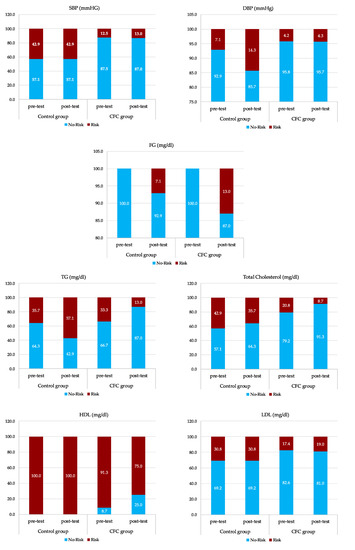
Choreographic Group-Based Fitness Classes Improve Cardiometabolic Health-Related Anthropometric Indices and Blood Lipids Profile in Overweight Sedentary Women
Sustainability 2021, 13(2), 972; https://doi.org/10.3390/su13020972 - 19 Jan 2021
Cited by 1 | Viewed by 516
Abstract
Background: Choreographic group-based fitness classes are the most common type of physical activity practiced by women, being a viable and sustainable strategy to improve general health. Thus, the aim of this study was to analyze the effect of a 16-week healthy lifestyle program, [...] Read more.
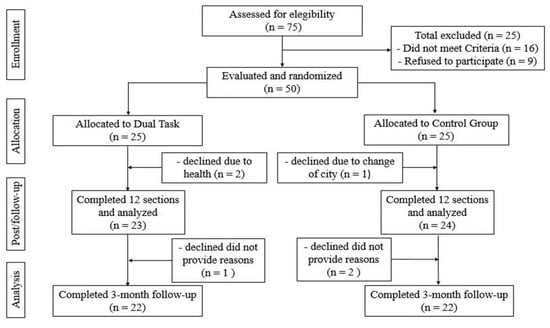
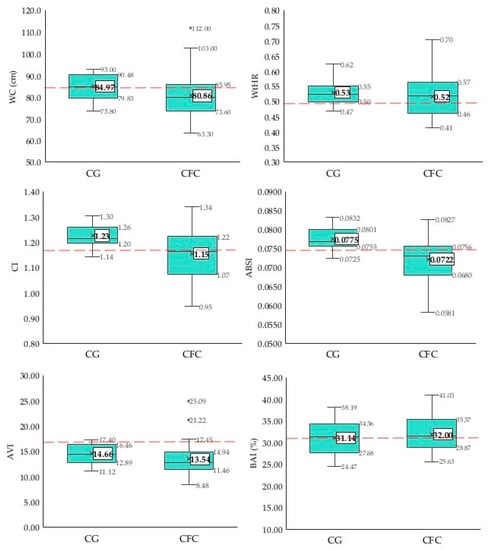
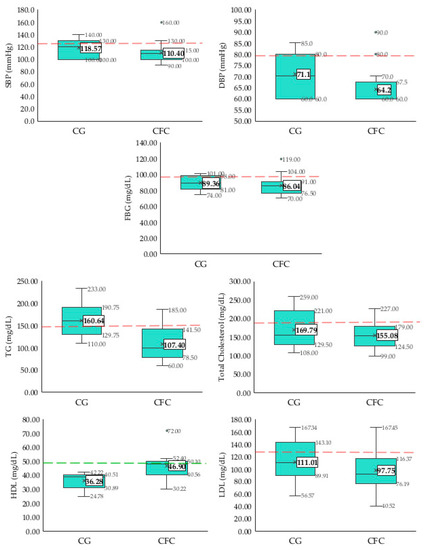
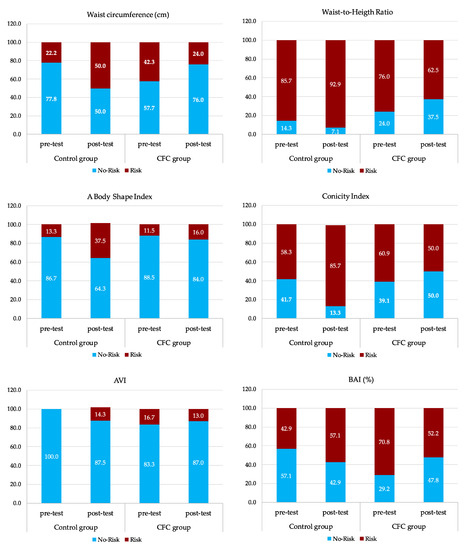
Background: Choreographic group-based fitness classes are the most common type of physical activity practiced by women, being a viable and sustainable strategy to improve general health. Thus, the aim of this study was to analyze the effect of a 16-week healthy lifestyle program, based on choreographic fitness classes, on cardiometabolic health-related anthropometric indices and metabolic blood profile among overweight sedentary women. Methods: A total of 50 overweight (Body Mass Index = 27.68 ± 1.19 kg/m2) middle-aged women (39.73 ± 7.41 years) were randomly assigned to an experimental exercise group based on structured choreographic fitness classes (CFC) with the Zumba Fitness program (3 days/week; 60 min/session) (CFC = 30) or a non-exercise control group (CG = 20). The anthropometric indices (waist circumference, waist-to-height ratio, a body shape index, conicity index, abdominal volume index, and body adiposity index), blood pressure, glycemia, and blood lipid profile [triglycerides (TG), total cholesterol, Low Density Lipoprotein (LDL), High Density Lipoprotein (HDL)] were evaluated pre- and post-intervention. Results: 40 participants competed the pre/post measures. Post-intervention, the CFC group (n = 25) presented a significant improvement in all anthropometric indices as well as in TG, HDL, and LDL as compared with the CG (n = 15). Conclusion: A 16-week healthy lifestyle program based on structured choreographic fitness classes with the Zumba Fitness program (3 days/week; 60 min/session) could significantly improve cardiometabolic health-related anthropometric indices and the blood lipid profile in overweight sedentary middle-aged women. Full article
(This article belongs to the Special Issue Physical Activity and Sustainable Health)
Show Figures

Figure 1
Article
Physical Fitness Predicts Subsequent Improvement in Academic Achievement: Differential Patterns Depending on Pupils’ Age
Sustainability 2020, 12(21), 8874; https://doi.org/10.3390/su12218874 - 26 Oct 2020
Cited by 2 | Viewed by 603
Abstract
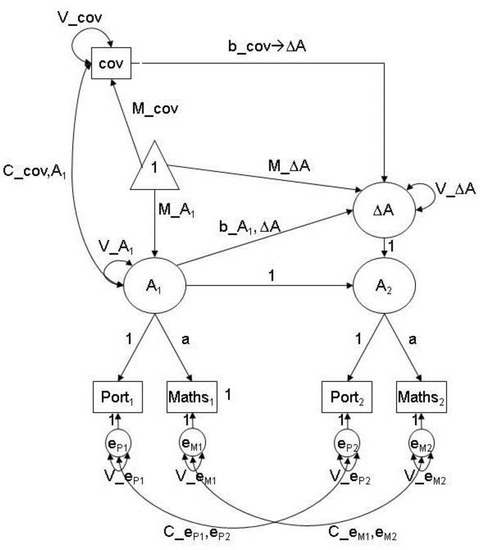
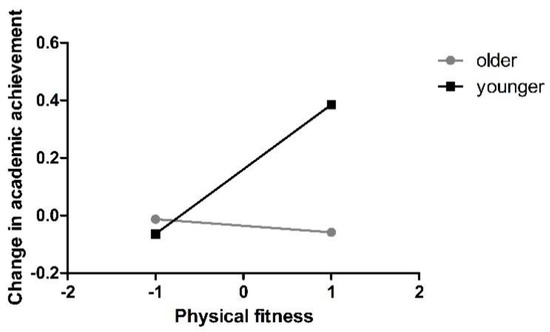
We investigated the longitudinal relationship between physical fitness (flexibility, functional strength, and running speed-agility components) and subsequent change in academic achievement across one school year. We also examined whether this longitudinal relationship differed as a function of pupils’ age, controlling for sex, body [...] Read more.
We investigated the longitudinal relationship between physical fitness (flexibility, functional strength, and running speed-agility components) and subsequent change in academic achievement across one school year. We also examined whether this longitudinal relationship differed as a function of pupils’ age, controlling for sex, body mass index, and socioeconomic status. Academic achievement in terms of marks in Portuguese and mathematics was recorded from 142 pupils (M = 14.59 years; SD = 1.99, range 11–18), between autumn 2017 and summer 2018. The physical fitness components, including flexibility, functional strength, and running speed-agility, were assessed at the baseline (i.e., at the beginning of the school year). Latent change score modelling revealed that higher physical fitness level at baseline significantly predicted a subsequent improvement in academic achievement across the school year. This longitudinal relationship was significantly stronger in younger compared to older pupils. Physical fitness and its interaction with age predicted 45.7% of the variance in the change in academic achievement. In conclusion, a better physical fitness profile including flexibility, functional strength, and running speed-agility explains a subsequent improvement in academic achievement. This longitudinal relationship seems to be age-dependent. Full article
(This article belongs to the Special Issue Physical Activity and Sustainable Health)
Show Figures

Figure 1
Article
Moderators of Change in Physical Activity Levels during Restrictions Due to COVID-19 Pandemic in Young Urban Adults
Sustainability 2020, 12(16), 6392; https://doi.org/10.3390/su12166392 - 08 Aug 2020
Cited by 12 | Viewed by 2771
Abstract
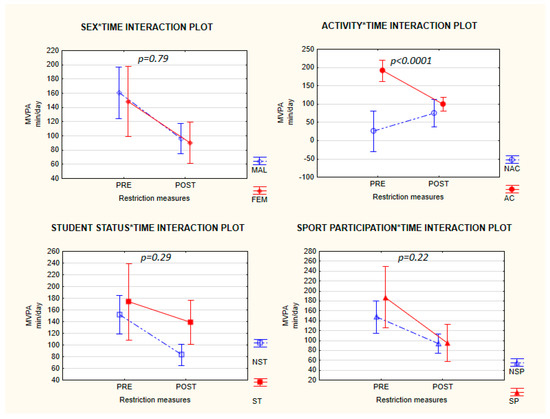
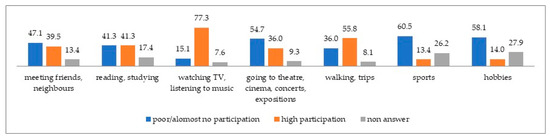
This study aimed to investigate moderators of change in physical activity (PA) levels after 30 days (30-d) of restrictions due to the COVID-19 pandemic in young adults. This research is an extension of the CRO-PALS study and analyses for this study were performed [...] Read more.
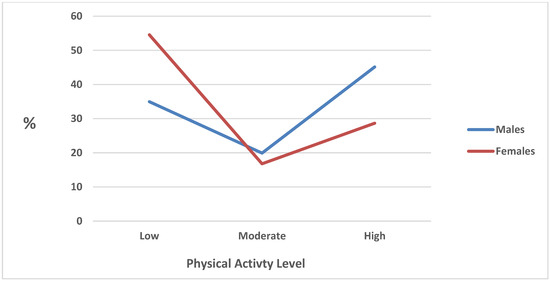
This study aimed to investigate moderators of change in physical activity (PA) levels after 30 days (30-d) of restrictions due to the COVID-19 pandemic in young adults. This research is an extension of the CRO-PALS study and analyses for this study were performed on young adults (20–21 y.o., n = 91). Moderate-to-vigorous physical activity (MVPA), sport participation, student and socioeconomic status were assessed pre- and post-30-d restrictions. Differences in MVPA levels were examined using repeated-measures ANOVAs. After 30-d of restrictions, the drop in MVPA in females (−64.8 min/day, p = 0.006) and males was shown (−57.7 min/day, p < 0.00). However, active participants decreased, while non-active peers increased their MVPA level (−100.7 min/day, p < 0.00, and +48.9 min/day, p = 0.051, respectively). Moreover, students and non-students decreased their MVPA level (−69.0 min/day, p < 0.00, and −35.0 min/day, p = 0.22, respectively) as well as sport participants and non-sport participants (−95.3 min/day, p < 0.001, and −53.9 min/day, p < 0.00, respectively). Our results suggest that 30-d of restrictions equally affect females and males where the evident drop in MVPA is seen in both genders. However, active people decreased their PA level during lockdown and the opposite pattern was seen in non-active peers, where restrictions for them can represent an opportunity to change their behavior in a positive direction in order to gain better health status. Full article
(This article belongs to the Special Issue Physical Activity and Sustainable Health)
Show Figures

Figure 1
Other

Jump to: Research

Hypothesis
Active Commuting: An Opportunity to Fight Both Climate Change and Physical Inactivity
Sustainability 2021, 13(8), 4290; https://doi.org/10.3390/su13084290 - 12 Apr 2021
Viewed by 923
Abstract
Global health, climate, and ecological conditions cannot be dissociated, and over the last decade, the impacts of climate change on health have been profoundly felt. In 2010, the transport sector has been responsible for the direct emission of 6.7 Gt of carbon dioxide [...] Read more.
Global health, climate, and ecological conditions cannot be dissociated, and over the last decade, the impacts of climate change on health have been profoundly felt. In 2010, the transport sector has been responsible for the direct emission of 6.7 Gt of carbon dioxide (CO2), and these numbers are expected to double by 2050. Additionally, physical inactivity rates have been growing over the last years, with most individuals in developed countries still relying on their cars for daily transportation, despite the unexplored potential of daily commuting in the promotion of physical activity. Given the well-known link between chronic diseases and sedentary lifestyles, addressing both the upward tendency of public health costs and energy consumption obtained from fossil fuels can be, possibly, one of the greatest public health opportunities over the last century. In this paper, we explore the potential of active commuting as a contemporary approach to address both global issues, considering its benefits on several indicators of health, quality of life, and well-being, as well as environmental-friendly behaviors. Full article
(This article belongs to the Special Issue Physical Activity and Sustainable Health)
Back to TopTop