

Special Issue "Sustainable Hospitality Management and Marketing: From Theory to Survival Reality"

A special issue of Sustainability (ISSN 2071-1050). This special issue belongs to the section "Sustainable Management".

Deadline for manuscript submissions: 1 September 2021.

Special Issue Editors

Dr. Asad Mohsin
E-Mail Website
Guest Editor
School of Management and Marketing, University of Waikato, Hamilton 3240, New Zealand
Interests: hospitality management; staff turnover in hotels; service quality in hotels; holidaying attitudes of people
Dr. Ana Brochado
E-Mail Website
Guest Editor
ISCTE - Instituto Universitário de Lisboa, Av. das Forças Armadas, 1649-026 Lisboa, Portugal
Interests: marketing; tourism and hospitlaity; social media; entrepreneurship
Dr. Andi Tamsang Andi Kele
E-Mail Website
Guest Editor
Business, Economics and Accountancy, Universiti Malaysia Sabah, 88400 Kota Kinabalu, Sabah, Malaysia
Interests: hospitality management; empowerment in luxury hotels; staff turnover in hotels

Special Issue Information

Dear Colleagues,

The recent global circumstances have highlighted the significance of the hospitality industry for its economic and social contributions. This special issue examines contemporary trends in management and marketing of hospitality service industries. The United States Department of Labour, Standard Industry Classification (SIC) defines the hospitality industry as encompassing services pertaining to food, drinks, accommodation, transportation and even camping and recreational facilities while other countries often associate it with hotels, bars, restaurants and related facilities (Andrews, 2011). Survival of these businesses will require rethinking and realigning of hospitality management and marketing. Hospitality customer are expected to demand beside quality service and product, safe distancing measures, sanitizing and bio-security measures in all sectors of the hospitality industry. The special issue should provide knowledge, concepts, and skills necessary to analyse and evaluate current situation, establish future trends and help hospitality businesses to meet the diversifying demand of hospitality consumers. The issue will cultivate an awareness of rapidly changing and intensifying competition to survive in the industry. It also helps to understand strategies and theories associated with hospitality service ethics, business sustainability and environment responsibility.

Hence, there is a need to investigate how different sectors of the hospitality industry can further enhance ethical principles in managing and marketing safety and sanitation, risk and crisis management, consumer trust in design and delivery of hospitality services to grow the business. 

The main aim of this special issue is to explore ‘real life’ problems and challenges linked to hospitality management and marketing and to find solutions to survive in the current global environment.

Dr. Asad Mohsin
Dr. Ana Brochado
Dr. Andi Tamsang Andi Kele
Guest Editors

Manuscript Submission Information

Manuscripts should be submitted online at www.mdpi.com by registering and logging in to this website. Once you are registered, click here to go to the submission form. Manuscripts can be submitted until the deadline. All papers will be peer-reviewed. Accepted papers will be published continuously in the journal (as soon as accepted) and will be listed together on the special issue website. Research articles, review articles as well as short communications are invited. For planned papers, a title and short abstract (about 100 words) can be sent to the Editorial Office for announcement on this website.

Submitted manuscripts should not have been published previously, nor be under consideration for publication elsewhere (except conference proceedings papers). All manuscripts are thoroughly refereed through a single-blind peer-review process. A guide for authors and other relevant information for submission of manuscripts is available on the Instructions for Authors page. Sustainability is an international peer-reviewed open access semimonthly journal published by MDPI.

Please visit the Instructions for Authors page before submitting a manuscript. The Article Processing Charge (APC) for publication in this open access journal is 1900 CHF (Swiss Francs). Submitted papers should be well formatted and use good English. Authors may use MDPI's English editing service prior to publication or during author revisions.

Keywords

  • Sustainable hospitality management
  • Sustainable hospitality marketing
  • Crisis management in the hospitality
  • Hospitality operations management
  • Human resource issues in the hospitality
  • Case studies in the hospitality

Published Papers (4 papers)

Order results
Result details
Select all
Export citation of selected articles as:

Research

Article
Exploring Sustainable Human Resource Practices and Framework in Star-Rated Hotels
Sustainability 2021, 13(16), 9024; https://doi.org/10.3390/su13169024 - 12 Aug 2021
Viewed by 267
Abstract
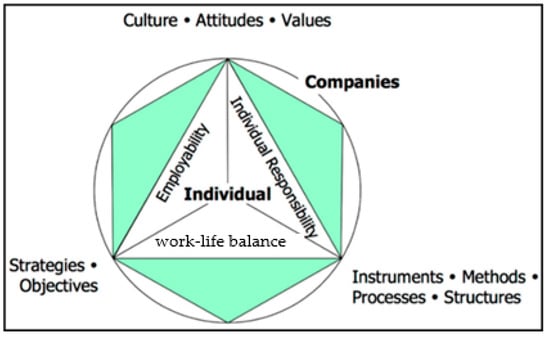
Extensive attention has been paid to environmental issues when evaluating the sustainability of organisations, and little attention has been paid to sustainable human capital practices. The literature shows contradictions and gaps among theoretical propositions, empirical findings, and the realities of human resource management [...] Read more.
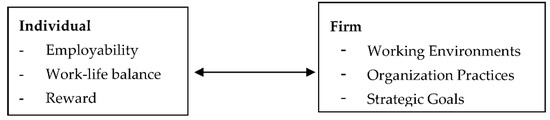
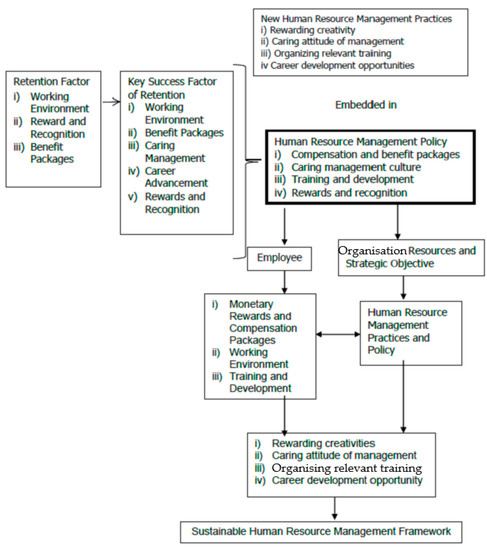
Extensive attention has been paid to environmental issues when evaluating the sustainability of organisations, and little attention has been paid to sustainable human capital practices. The literature shows contradictions and gaps among theoretical propositions, empirical findings, and the realities of human resource management (HRM). Theoretical approaches and empirical studies state that effective HRM is essential, yet in actual practice and employment conditions, the importance of effective HRM is not reflected. Thus, this paper aims to determine the critical emerging issues that affect human resource practices and management in the current employment context, as well as proposes a sustainable human resource framework for the hotel industry. Data were collected via in-depth focus group interviews with 40 respondents from operational, supervisorial, and managerial positions in the Malaysia hotel industry. The proposed model of sustainable human resource practices can yield a wide selection of tangible and intangible benefits. The findings benefit the hotel organisations by identifying the needs of their employees, a more in-depth point of view, and their thoughts about their organisations. This paper provides a new perspective of sustainable HRM practices by applying resource-based view theory on managing people as the “resource”, specifically in the hotel industry. Full article
Show Figures

Figure 1

Article
Gender and Bankruptcy: A Hotel Survival Econometric Analysis
Sustainability 2021, 13(12), 6782; https://doi.org/10.3390/su13126782 - 15 Jun 2021
Viewed by 414
Abstract
This study’s objective was to understand how chief executive officers’ (CEOs) gender affects hotel businesses’ survival. Female managers’ influence has already been examined in other sectors, but researchers have not studied women CEOs’ role in hotel management and survival. A sample of 2615 [...] Read more.
This study’s objective was to understand how chief executive officers’ (CEOs) gender affects hotel businesses’ survival. Female managers’ influence has already been examined in other sectors, but researchers have not studied women CEOs’ role in hotel management and survival. A sample of 2615 Spanish hotel companies was examined during the period 2005–2018 for how their survival was affected by the variables of financial aspects, years of experience and the principal hotel executive’s gender. An econometrics-based survival analysis was conducted using a single complementary log-log model and panel data. The results indicate that some financial variables, such as sales, working capital to total assets ratio and each company’s experience, influence hotel businesses’ survival. The main finding was that women CEOs increase hotels’ survival rate. This CEO gender study is a novelty in the literature on hotel survival. Full article
Article
Dimensions of Football Stadium and Museum Tour Experiences: The Case of Europe’s Most Valuable Brands
Sustainability 2021, 13(12), 6602; https://doi.org/10.3390/su13126602 - 09 Jun 2021
Cited by 1 | Viewed by 551
Abstract
In the context of football’s globalisation, some of the most important football clubs (FCs) can currently be classified as ‘entertainment multinationals’. Sport hospitality provides opportunities to maximise club stadiums’ use so that they can increase clubs’ annual turnover and function as branding platforms. [...] Read more.
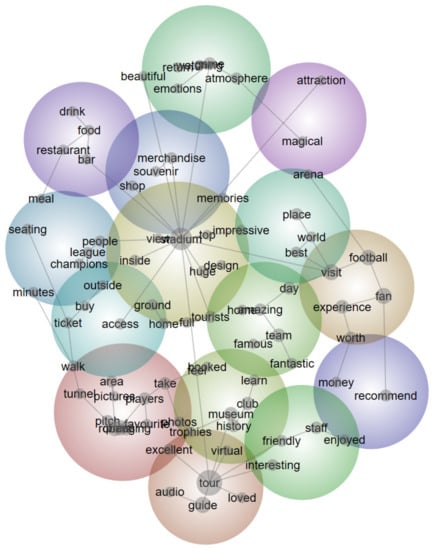
In the context of football’s globalisation, some of the most important football clubs (FCs) can currently be classified as ‘entertainment multinationals’. Sport hospitality provides opportunities to maximise club stadiums’ use so that they can increase clubs’ annual turnover and function as branding platforms. This study sought to identify the main narratives shared online about—and the dimensions of—visitors’ experiences with top football brands in stadium tours. The data collected for this research comprised 400 text reviews for 10 European FCs’ stadiums (i.e., 4000 reviews) written by visitors in the post-experience phase. Content analysis of these Web reviews was conducted using Leximancer software. The results confirm the existence of 15 themes: fan, tour, stadium, team, museum, room, staff, game, (best) place, ticket, seating, recommend(ation), food, shop and attraction. Most researchers have examined stadium tours from a supply-side perspective. The present study’s aim was, therefore, to contribute to the existing literature by analysing stadium tours’ dimensions from the visitors’ point of view. Stadium tours and museum visits are important sources of revenue that contribute to FCs’ economic sustainability. Offering outstanding customer experiences is thus of utmost importance to maximise club stadiums’ usage and strengthen fans’ engagement. Full article
Show Figures

Figure 1

Article
The Relationship between Strategic Orientation, Service Innovation, and Performance in Hotels in Angola
Sustainability 2021, 13(11), 6256; https://doi.org/10.3390/su13116256 - 01 Jun 2021
Viewed by 707
Abstract
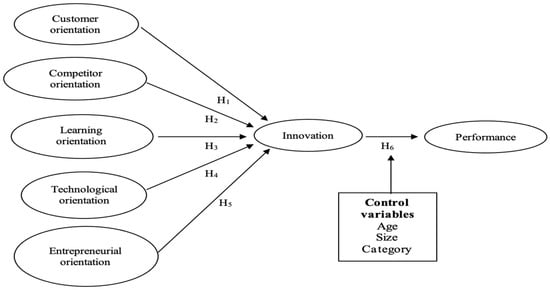
This paper aims to investigate the impacts of customer orientation, competitor orientation, learning orientation, technology orientation, and entrepreneurial orientation on hotel innovation and performance. Data from 69 hotels in four Angolan provinces were analyzed using the partial least squares (PLS) approach and multi [...] Read more.
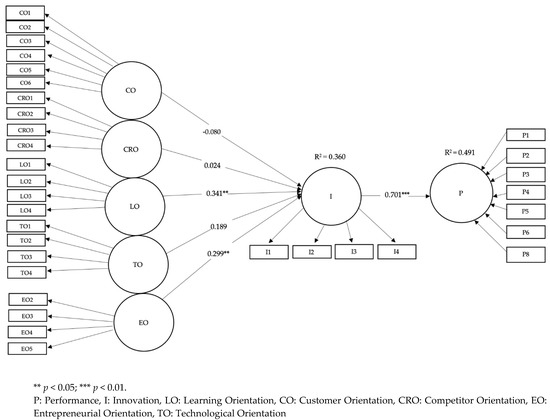
This paper aims to investigate the impacts of customer orientation, competitor orientation, learning orientation, technology orientation, and entrepreneurial orientation on hotel innovation and performance. Data from 69 hotels in four Angolan provinces were analyzed using the partial least squares (PLS) approach and multi group analysis. The results show that learning and entrepreneurial orientations have a positive impact on hotel innovation. As anticipated, innovation has a positive impact on performance. According to the multigroup analysis, only the hotel category has a moderating effect on performance. Results suggest that hotels in developing countries could add value to both customers and shareholders by promoting new services and exploring new business opportunities. To the best of our knowledge, this is one of the few studies that has researched the impact of strategic orientation on hotel innovation and financial performance in developing countries. Full article
Show Figures

Figure 1

Back to TopTop