



Polymers 2023, 15(19), 3944; https://doi.org/10.3390/polym15193944 - 29 Sep 2023
Cited by 15 | Viewed by 2569
Abstract
►
Show Figures
The feasibility of using Garnacha Tintorera bagasse and potato wastes as substrate for the co-production of bacterial cellulose (BC) and gluconic acid by Komagataibacter xylinus fermentation was studied. Firstly, the sulfuric acid hydrolysis of bagasse was evaluated depending on the sulfuric acid concentration
[...] Read more.
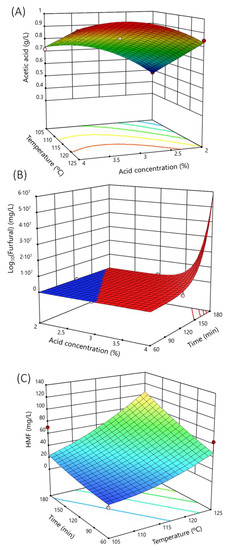
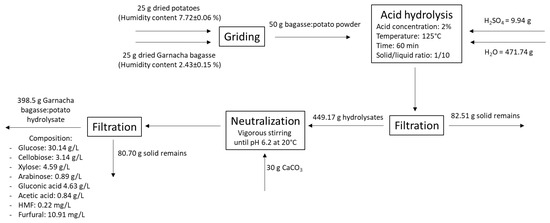
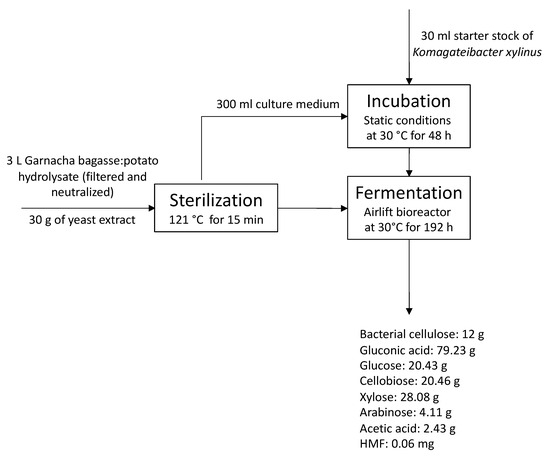
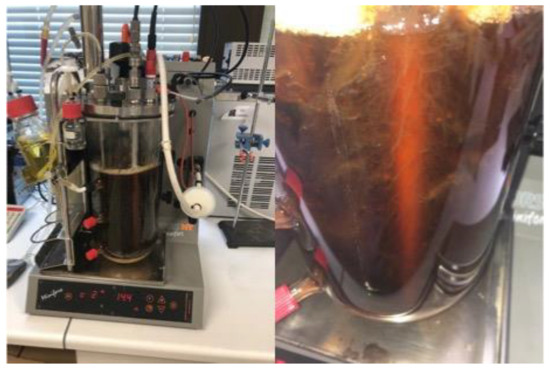
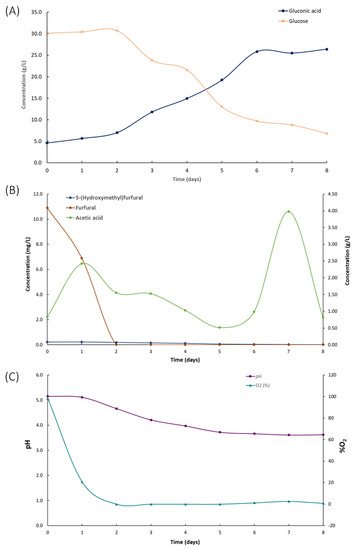
The feasibility of using Garnacha Tintorera bagasse and potato wastes as substrate for the co-production of bacterial cellulose (BC) and gluconic acid by Komagataibacter xylinus fermentation was studied. Firstly, the sulfuric acid hydrolysis of bagasse was evaluated depending on the sulfuric acid concentration (2–4%), temperature (105–125 °C), and time (60–180 min). The bagasse hydrolysates showed a low monosaccharide concentration profile: glucose 3.24–5.40 g/L; cellobiose 0.00–0.48 g/L; arabinose 0.66–1.64 g/L and xylose 3.24–5.40 g/L. However, the hydrolysis treatment enhanced the total phenolic content of the bagasse extract (from 4.39 up to 12.72 mg GAE/g dried bagasse). The monosaccharide profile of the culture medium was improved by the addition of potato residues. From a medium containing bagasse–potato powder (50:50 w/w) and optimal hydrolysate conditions (125 °C for 60 min and 2% H2SO4), the composition of glucose increased up to 30.14 g/L. After 8 days of fermentation in an airlift bioreactor by Komagataibacter xylinus, 4 g dried BC/L and 26.41 g gluconic acid/L were obtained with a BC productivity of 0.021 g/L·h, an efficiency of 0.37 g/g and yield of 0.47 g/g. The productivity of gluconic acid was 0.14 g/L·h with an efficiency of 0.93 g/g and yield of 0.72 g/g. This research demonstrates the promising potential of utilizing waste materials, specifically Garnacha Tintorera bagasse and potato residues, as sustainable substrates for the co-production of valuable bioproducts, such as bacterial cellulose and gluconic acid.
Full article
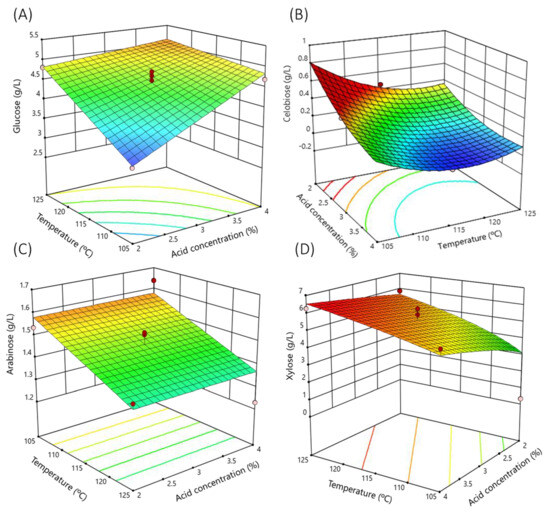
Figure 1