
Advances in Organoid Technology: Bridging the Gap between Research and Therapy

A special issue of Organoids (ISSN 2674-1172).

Deadline for manuscript submissions: closed (30 November 2025) | Viewed by 16271

Special Issue Editors


E-Mail Website
Guest Editor
Department of Infectious Diseases, Melbourne Medical School, University of Melbourne, Melbourne, VIC 3010, Australia
Interests: wnt signalling; frizzled; cancer; organoids; infectious disease; host–pathogen interactions; pandemic preparedness
Special Issues, Collections and Topics in MDPI journals

E-Mail Website
Guest Editor
Genome Institute of Singapore, A*STAR, Singapore 138672, Singapore
Interests: precision oncology; tumor evolution; drug development; tumor microenvironment

E-Mail Website
Guest Editor
Siriraj Center of Research Excellence for Cancer Precision Medicine and Systems Pharmacology, Department of Pharmacology, Faculty of Medicine Siriraj Hospital, Mahidol University, Bangkok 73170, Thailand
Interests: precision oncology; systems pharmacology; tumoroids; high-throughput drug screening

E-Mail Website
Guest Editor
Avatar Biotechnologies for Oral Health and Healthy Longevity Research Unit, Chulalongkorn University, Bangkok 10330, Thailand
Interests: precision dentistry; precision head and neck oncology; disease modeling; salivary gland; lacrimal gland; oral mucosa; organ-on-chip; microphysiological systems; high-throughput drug screening

Special Issue Information

Dear Colleagues,

The upcoming Special Issue, “Advances in Organoid Technology: Bridging the Gap between Research and Therapy”, highlights the groundbreaking research and discussions presented at the “Organoids Are Us 2024” symposium. Organized by Prof. Elizabeth Vincan, Prof. Ramanuj DasGupta, and Asst. Prof. Somponnat Sampattavanich, this conference is a premier event in the field, bringing together leading experts and emerging scientists to share their latest findings and innovative approaches in organoid technology.

“Organoids Are Us” is renowned for fostering interdisciplinary collaboration and driving advancements in biomedical research. The symposium provides a unique platform for presenting pioneering work on organoids, which are three-dimensional structures derived from stem cells that replicate the complexity and functionality of real organs. Organoids offer unparalleled insights into human biology, disease mechanisms, and therapeutic potential, making them invaluable tools for both basic research and clinical applications.

The “Organoids Are Us 2024” symposium, now in its sixth year, marks the first time it will be held outside of Australia. Scheduled to take place from Tuesday, August 6, 2024 to Thursday, August 8, 2024, at the Ozo North Pattaya in Thailand, the symposium promises to be a landmark event. Conceived and named by Special Issue Guest Editor Professor Elizabeth Vincan, the symposium underscores the fundamental truth that “organoids” are indeed "us."

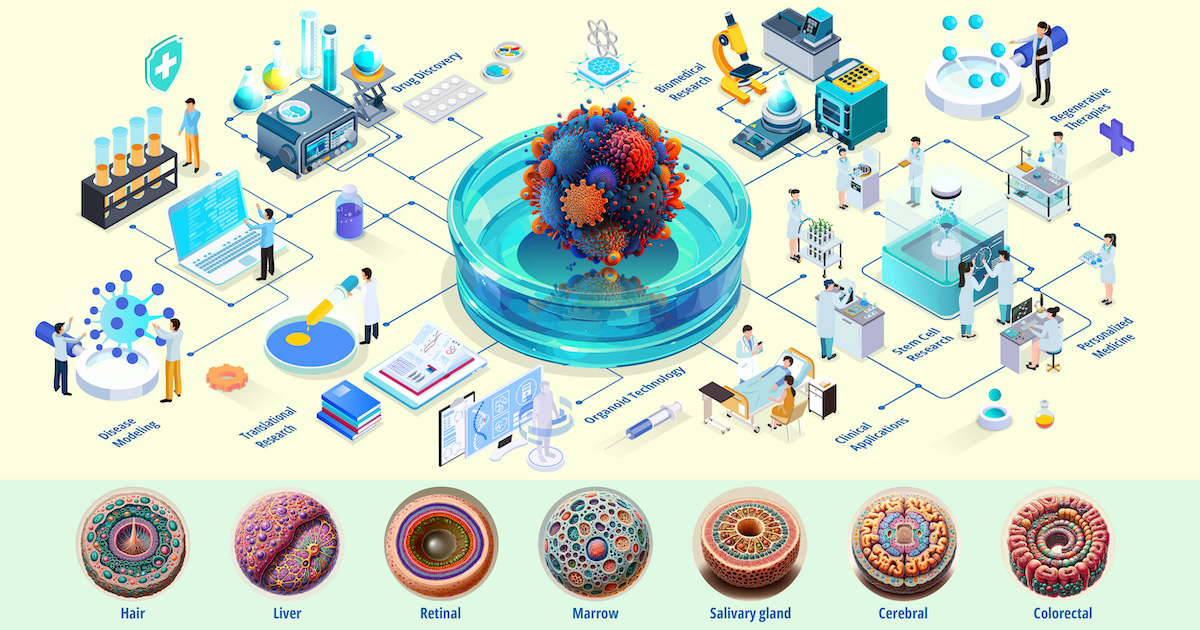
Conference participants are invited to contribute original research papers or reviews to this Special Issue of Organoids. Submissions from conference participants will be completely free of charge. We welcome previously unpublished work on all aspects and applications of organoids. This Special Issue aims to bridge the gap between laboratory discoveries and therapeutic applications, covering topics such as innovative methods for generating and manipulating organoids, their use in disease modeling, drug discovery, personalized medicine, and regenerative therapies. By featuring contributions from this esteemed symposium, the collection of work seeks to drive scientific innovation and translate organoid technology from the bench to the bedside.

Prof. Dr. Elizabeth Vincan
Dr. Ramanuj DasGupta
Dr. Somponnat Sampattavanich
Dr. Joao Ferreira
Guest Editors

Manuscript Submission Information

Manuscripts should be submitted online at www.mdpi.com by registering and logging in to this website. Once you are registered, click here to go to the submission form. Manuscripts can be submitted until the deadline. All submissions that pass pre-check are peer-reviewed. Accepted papers will be published continuously in the journal (as soon as accepted) and will be listed together on the special issue website. Research articles, review articles as well as short communications are invited. For planned papers, a title and short abstract (about 100 words) can be sent to the Editorial Office for announcement on this website.

Submitted manuscripts should not have been published previously, nor be under consideration for publication elsewhere (except conference proceedings papers). All manuscripts are thoroughly refereed through a single-blind peer-review process. A guide for authors and other relevant information for submission of manuscripts is available on the Instructions for Authors page. Organoids is an international peer-reviewed open access quarterly journal published by MDPI.

Please visit the Instructions for Authors page before submitting a manuscript. Submitted papers should be well formatted and use good English. Authors may use MDPI's English editing service prior to publication or during author revisions.

Keywords

  • organoids in biomedical research
  • stem cell research
  • regenerative therapies
  • disease modeling and drug discovery
  • personalized medicine and translational research

Benefits of Publishing in a Special Issue

  • Ease of navigation: Grouping papers by topic helps scholars navigate broad scope journals more efficiently.
  • Greater discoverability: Special Issues support the reach and impact of scientific research. Articles in Special Issues are more discoverable and cited more frequently.
  • Expansion of research network: Special Issues facilitate connections among authors, fostering scientific collaborations.
  • External promotion: Articles in Special Issues are often promoted through the journal's social media, increasing their visibility.
  • Reprint: MDPI Books provides the opportunity to republish successful Special Issues in book format, both online and in print.

Further information on MDPI's Special Issue policies can be found here.

Published Papers (7 papers)

Order results
Result details
Select all
Export citation of selected articles as:

Research

Jump to: Review, Other

12 pages, 1321 KB  
Article
Air–Liquid-Interface-Differentiated Human Nose Epithelium: The Benchmark Culture Model for SARS-CoV-2 Infection
by Sarah L. Harbach, Bang M. Tran, Abderrahman Hachani, Samantha Leigh Grimley, Damian F. J. Purcell, Georgia Deliyannis, Joseph Torresi, Julie L. McAuley and Elizabeth Vincan
Organoids 2025, 4(3), 21; https://doi.org/10.3390/organoids4030021 - 18 Sep 2025
Viewed by 1470
Abstract
COVID-19 has triggered the rapid adoption of human organoid-based tissue culture models to overcome the limitations of the commonly used Vero cell line that did not fully recapitulate SARS-CoV-2 infection of human tissues. As the primary site of SARS-CoV-2 infection, the human nasal [...] Read more.
COVID-19 has triggered the rapid adoption of human organoid-based tissue culture models to overcome the limitations of the commonly used Vero cell line that did not fully recapitulate SARS-CoV-2 infection of human tissues. As the primary site of SARS-CoV-2 infection, the human nasal epithelium (HNE) cultivated in vitro and differentiated at air–liquid interface (ALI) is an ideal model to study infection processes and for testing anti-viral antibodies and drugs. However, the need for primary basal cells to establish the ALI-HNE limits the scalability of this model system. To try and bypass this bottleneck, we devised an ALI-differentiated form of the human adenocarcinoma cell line Calu-3, reported to model most aspects of authentic SARS-CoV-2 infection, including viral entry. The ALI-Calu-3 were tested for infection by a panel of SARS-CoV-2 variants, including ancestral (VIC01) and early pandemic lineages (VIC2089, Beta, Delta), and Omicron subvariants (BA2.75, BA4, BA5, XBB1.5). All tested lineages infected the ALI-HNE. In stark contrast, infection of the ALI-Calu-3 by Omicron subvariants BA4 and XBB1.5 was reduced. These data support the use of ALI-Calu-3 as a complementary, intermediary model for most but not all SARS-CoV-2 lineages, and places the ALI-HNE as the benchmark culture model for SARS-CoV-2 infection. Full article
Show Figures

Figure 1

Review

Jump to: Research, Other

16 pages, 695 KB  
Review
Combining Proteomics and Organoid Research to Unravel the Multifunctional Complexity of Kidney Physiology Enhances the Need for Controlled Organoid Maturation
by Kathrin Groeneveld and Ralf Mrowka
Organoids 2025, 4(4), 28; https://doi.org/10.3390/organoids4040028 - 14 Nov 2025
Viewed by 523
Abstract
This review aims to highlight how the study of kidney organoids combined with proteomic analysis can deepen our understanding of renal physiology and disease. Proteomics quantifies proteins in a sample, allowing us to determine which proteins are present, how abundant they are, and [...] Read more.
This review aims to highlight how the study of kidney organoids combined with proteomic analysis can deepen our understanding of renal physiology and disease. Proteomics quantifies proteins in a sample, allowing us to determine which proteins are present, how abundant they are, and how they are modified. These data may reveal the pathways that are active in the kidney organoids and how they change in disease, helping to pinpoint candidate biomarkers. Kidney organoids are three-dimensional structures derived from induced pluripotent stem cells (iPS) that recapitulate many architectural and functional features of the adult organ. Because they can be generated in large numbers under defined conditions, organoids provide a promising platform for testing how genetic mutations, environmental stresses, or drugs affect kidney development and pathology. When proteomic profiles are obtained from mature organoids, researchers can directly link protein-level changes to phenotypic outcomes observed in the model. This integration makes it possible to map disease-related networks at the molecular level and to assess the impact of therapeutic interventions in a system that more closely resembles human kidney tissue than traditional cell lines. A current limitation is that many kidney organoids do not reach the full maturation seen in vivo; they often lack complete segmental differentiation and the functional robustness of adult nephrons. Improving the maturation state of organoids will be essential for accurately modeling chronic kidney diseases and for translating findings into clinically relevant therapies. Full article
Show Figures

Figure 1

35 pages, 22753 KB  
Review
Integrating 3D Bioprinting with Organoid Technology-Based Breast Cancer Models for Drug Evaluation
by Arvind Kumar Shukla, Sandhya Shukla, Raj Kumar Mongre, Adarsha Mahendra Upadhyay, Govindhan Thiruppathi, Chandra Dhar Shukla, Shuktika Mishra and Sayan Deb Dutta
Organoids 2025, 4(4), 26; https://doi.org/10.3390/organoids4040026 - 5 Nov 2025
Viewed by 1063
Abstract
Breast cancer remains one of the leading causes of cancer morbidity and mortality among women worldwide. Conventional two-dimensional (2D) cell culture models and animal studies often fail to accurately recapitulate the complex tumor microenvironment and heterogeneous nature of breast cancer. Recent advancements in [...] Read more.
Breast cancer remains one of the leading causes of cancer morbidity and mortality among women worldwide. Conventional two-dimensional (2D) cell culture models and animal studies often fail to accurately recapitulate the complex tumor microenvironment and heterogeneous nature of breast cancer. Recent advancements in tissue engineering have enabled the development of more physiologically relevant models using three-dimensional (3D) bioprinting and organoid technology. This study focuses on integrating 3D bioprinting with patient-derived organoid models to replicate breast cancer tissue architecture, cellular heterogeneity, and tumor-stroma interactions. Utilizing biomimetic bioinks and customized bioprinting protocols, we successfully fabricated breast cancer tissue constructs embedded with stromal and immune components. These engineered models demonstrated high fidelity in mimicking in vivo tumor pathophysiology, including angiogenesis, epithelial–mesenchymal transition, and extracellular matrix remodeling. Furthermore, the platform allowed for high-throughput drug screening and evaluation of therapeutic responses, revealing differential sensitivities to chemotherapeutics and targeted therapies. Our findings highlight the potential of bioprinted organoid models as powerful tools for personalized medicine, enabling more predictive and reliable cancer research and drug development. Full article
Show Figures

Figure 1

21 pages, 1206 KB  
Review
Breaking and Remaking: Using Organoids to Model Gastric Tissue Damage and Repair
by Nikki Liddelow, Jie Yu Tan and Dustin J. Flanagan
Organoids 2025, 4(3), 20; https://doi.org/10.3390/organoids4030020 - 5 Sep 2025
Viewed by 2455
Abstract
The stomach epithelium is a highly dynamic tissue that undergoes continuous self-renewal and responds robustly to injury through tightly regulated repair processes. Organoids have emerged as powerful tools for modelling gastrointestinal biology. This review focuses on the capacity of gastric organoids to model [...] Read more.
The stomach epithelium is a highly dynamic tissue that undergoes continuous self-renewal and responds robustly to injury through tightly regulated repair processes. Organoids have emerged as powerful tools for modelling gastrointestinal biology. This review focuses on the capacity of gastric organoids to model epithelial homeostasis, injury and repair in the stomach. We examine how organoid systems recapitulate key features of in vivo gastric architecture and stem cell dynamics, enabling detailed interrogation of lineage specification, proliferative hierarchies and regional identity. Gastric organoids have proven particularly useful for studying how environmental factors, such as Helicobacter pylori infection or inflammatory cytokines, disrupt epithelial equilibrium and drive metaplastic transformation. Furthermore, we discuss the emerging use of injury-mimicking conditions, co-cultures and bioengineered platforms to model regeneration and inflammatory responses in vitro. While organoids offer unparalleled accessibility and experimental manipulation, they remain limited by the absence of critical niche components such as immune, stromal and neural elements. Nevertheless, advances in multi-cellular and spatially resolved organoid models are closing this gap, making them increasingly relevant for disease modelling and regenerative medicine. Overall, gastric organoids represent a transformative approach to dissecting the cellular and molecular underpinnings of stomach homeostasis and repair. Full article
Show Figures

Figure 1

18 pages, 1150 KB  
Review
Precision Medicine for Peritoneal Carcinomatosis—Current Advances in Organoid Drug Testing and Clinical Applicability
by Harleen Kaur, Josephine A. Wright, Daniel L. Worthley, Elizabeth Murphy and Susan L. Woods
Organoids 2025, 4(1), 2; https://doi.org/10.3390/organoids4010002 - 24 Jan 2025
Cited by 1 | Viewed by 2855
Abstract
Peritoneal carcinomatosis from gastrointestinal tumours is considered a poor prognostic factor, with a median overall survival of six to nine months in the absence of intervention. The advent of patient-derived organoid cultures (PDOs) has provided a breakthrough in personalised medicine, allowing researchers and [...] Read more.
Peritoneal carcinomatosis from gastrointestinal tumours is considered a poor prognostic factor, with a median overall survival of six to nine months in the absence of intervention. The advent of patient-derived organoid cultures (PDOs) has provided a breakthrough in personalised medicine, allowing researchers and clinicians to model the complexity and heterogeneity of individual tumours in vitro. PDOs hold great promise in this field, as variations in the management of peritoneal carcinomatosis due to differences in the method of delivery of chemotherapeutics, drug selection, exposure duration, and tumour pathology make it impractical to use a single, standardised treatment regimen. We aim to summarise the methodologies and limitations of studies encapsulating organoids derived from peritoneal metastases to encourage design considerations that may improve future clinical relevance, standardise protocols, and address translational challenges in personalising treatment strategies. Full article
Show Figures

Figure 1

15 pages, 1134 KB  
Review
Precision Medicine for Gastric Cancer: Current State of Organoid Drug Testing
by Tharindie N. Silva, Josephine A. Wright, Daniel L. Worthley and Susan L. Woods
Organoids 2024, 3(4), 266-280; https://doi.org/10.3390/organoids3040016 - 31 Oct 2024
Cited by 1 | Viewed by 4170
Abstract
Gastric cancer (GC) presents a significant health challenge and ranks as the fifth most common cancer in the world. Unfortunately, most patients with GC exhaust standard care treatment options due to late diagnosis and tumour heterogeneity that leads to drug resistance, resulting in [...] Read more.
Gastric cancer (GC) presents a significant health challenge and ranks as the fifth most common cancer in the world. Unfortunately, most patients with GC exhaust standard care treatment options due to late diagnosis and tumour heterogeneity that leads to drug resistance, resulting in poor survival outcomes. Potentially, this situation can be improved by personalising treatment choice. Organoids are an emerging cell model system that recapitulates tumour heterogeneity and drug responses. Coupled with genomic analysis, organoid culture can be used to guide personalised medicine. The GC organoid field, however, lacks standardised methodologies for assessing organoid drug sensitivities. Comparing results across different GC organoid studies and correlating organoid drug responses with patient outcomes is challenging. Hence, we aim to summarise the methodologies used in GC organoid drug testing and correlation with clinical outcomes and discuss design considerations and limitations to enhance the robustness of such studies in the future. Full article
Show Figures

Figure 1

Other

Jump to: Research, Review

13 pages, 224 KB  
Commentary
Organoid Intelligence: Can We Separate Intelligent Behavior from an Intelligent Being?
by Daniel Montoya
Organoids 2025, 4(4), 29; https://doi.org/10.3390/organoids4040029 - 18 Nov 2025
Viewed by 921
Abstract
As brain organoids and organoid-based computational models grow in complexity, they increasingly exhibit electrophysiological patterns consistent with plasticity and information processing. This article explores a central question at the intersection of neuroscience, synthetic biology, and philosophy of mind: Can intelligent behavior be meaningfully [...] Read more.
As brain organoids and organoid-based computational models grow in complexity, they increasingly exhibit electrophysiological patterns consistent with plasticity and information processing. This article explores a central question at the intersection of neuroscience, synthetic biology, and philosophy of mind: Can intelligent behavior be meaningfully separated from an intelligent being? In other words, can adaptive, goal-directed behavior exist independently of subjective awareness—a question that challenges conventional definitions of cognition and consciousness. Drawing from neuroscience, artificial intelligence, and philosophy, I propose a tiered framework based on neural complexity and environmental responsiveness. This includes a simple level analysis and a context-sensitive benchmark for evaluating intelligence in organoid systems without presupposing sentience. Ethical and ontological implications are also addressed, particularly the risk of anthropomorphizing synthetic cognition and the importance of developing context-aware definitions of intelligence. By distinguishing functional sophistication from subjective experience, the framework aims to guide responsible scientific inquiry while clarifying the boundaries of synthetic cognition. Full article
Back to TopTop