
Article

Examining the Delivery of an Online Adaptation of ACT Training in the Workplace for Nursing Professionals: A Feasibility Study


1
School of Health Sciences, University of Nottingham, Nottingham NG7 2HA, UK
2
Independent Researcher
3
NIHR Nottingham Biomedical Research Centre, Nottingham University Hospitals NHS Trust, Nottingham NG7 2UH, UK
*
Author to whom correspondence should be addressed.
Occup. Health 2026, 1(1), 2; https://doi.org/10.3390/occuphealth1010002
Submission received: 31 October 2025 / Revised: 28 November 2025 / Accepted: 2 December 2025 / Published: 6 December 2025

Abstract

Background: Poor mental health is a major contributor to absenteeism and turnover among nurses. Psychological flexibility may act as a protective factor for work-related well-being. This early-phase feasibility study explored the delivery of an online adaptation of Acceptance and Commitment Therapy (ACT) training for UK nursing professionals. Methods: A self-guided, 4-week online adaptation of an ACT training course was delivered via Moodle. Measures of professional quality of life, work engagement, and work-related psychological flexibility were collected at baseline and post-intervention (6 weeks). Feasibility outcomes included recruitment, retention, intervention adherence, and user engagement, assessed through platform usage statistics and user experience feedback. Results: A total of 43 participants enrolled in this single-group pre–post feasibility study. Recruitment targets were met, and completion of baseline measures was high. Engagement with course content was acceptable for an early-stage digital intervention. Among the well-being outcomes, work engagement showed the clearest indication of potential measure responsiveness. Retention was acceptable for the post-intervention survey but low for the usability survey and follow-up interview, limiting further exploration of engagement drivers. Conclusions: This study supports the feasibility of delivering online ACT training to nursing professionals. Key areas for refinement were identified, including closer integration with existing workplace communication and professional development systems, ongoing stakeholder involvement across study phases, and workplace-embedded engagement mechanisms to improve retention. Future research should further explore how workplace context influences intervention acceptability in larger feasibility trials.

1. Introduction

Epidemiological data consistently demonstrate the risks posed by prolonged exposure to workplace stressors and intensified job demands to nursing professionals’ mental health and well-being. Recent global estimates indicate high levels of burnout among them, with prevalence rates of 33.45% for burnout, 25% for depersonalisation, and 33.49% for low personal accomplishment. During the COVID-19 pandemic the global prevalence of emotional exhaustion among nurses reached 39.2% [1]. In the United Kingdom, poor mental health has remained the most frequently reported reason for sickness absence [2]. Survey data further reveal that over 80% of nurses leaving the profession believe that their role directly contributed to a deterioration in their mental health [3].
Reviews of mental health interventions for nurses consistently note an overreliance on individual-level interventions, mixed results of organisational interventions, and the importance of adopting a multi-level approach to well-being support programmes [4,5,6,7]. Overall, organisational- and team-level interventions remain the primary and most effective strategies for preventing work-related psychosocial risks [8,9]. Individual-level interventions should, therefore, be viewed as complementary measures within multi-level workplace mental health frameworks rather than alternative solutions. It is, therefore, essential to seek in-depth understanding of conditions that determine the feasibility and acceptability of different intervention approaches.
According to the updated Medical Research Council (MRC) framework, the core elements of intervention development (i.e., context, programme theory refinement, engagement with stakeholders, key uncertainties, intervention refinement, economic considerations) need to be addressed at each stage of intervention development and evaluation—that is, the development, feasibility, and evaluation stages [10]. Addressing those core elements can uncover reasons why a feasibility study may not meet the progression criteria to the evaluation stage and inform decisions regarding future implementation studies [11,12,13].
The World Health Organization (WHO) defines mental health as a “state of well-being in which the individual realises his or her own abilities, copes with the normal stresses of life, works productively and fruitfully, and makes a contribution to his or her community” [14]. This definition aligns with calls for the adaptation of integrative approaches to well-being, aiming to reduce the experience of mental health symptoms, reduce work-related risk factors for poor mental health, and promote positive psychological resources and capacities [6,15,16]. Psychological flexibility processes match that definition and have been identified as protective factors of mental well-being at work due to their alignment with resource-based conceptualisations of work-related psychological health, such as the concept of goal-related context sensitivity, conservation of resources (COR), theory of burnout, and the job demands–resources (JD-R) model [17].
Acceptance and commitment therapy (ACT), along with dialectical behaviour therapy and integrative behavioural couple therapy, belongs to a family of approaches to psychotherapy described as mindfulness-based “third-wave” or contextual CBT approaches. They are characterised by their focus on the function of cognition rather than its content or frequency [18]. ACT as a context-driven approach to behaviour change targets individuals’ relationships with their thoughts, feelings, and bodily sensations [19]. ACT aims to strengthen psychological flexibility, which refers to one’s capability to be aware and open towards all sensations, thoughts, and feelings and to choose actions that align with one’s values, depending on the situation [20]. ACT interventions aim to strengthen these processes through cultivating three overarching skills: openness, awareness, and engagement. (1) Openness (i.e., willingness to have unwanted thoughts and feelings), (2) awareness (i.e., ability to mindfully notice one’s experiences as they occur in the here-and-now), and (3) engagement (i.e., consistent choice of actions that enable progress on one’s overarching goals and values) [21].
Several systematic reviews have reported positive effects of ACT (Acceptance and Commitment Therapy)-based interventions on workplace psychological health outcomes across a range of workplace settings, including healthcare organisations [17,21,22,23]. ACT-based interventions aim to strengthen psychological flexibility, thereby reducing emotional suffering and increasing well-being. The transdiagnostic nature of the psychological flexibility model means that ACT-based interventions can target both pathological and non-pathological behavioural patterns, making them well-suited for promoting adaptive behavioural repertoires at work [24,25,26]. Therefore, it is an approach that is well aligned with theoretical frameworks describing mental well-being in organisations. Overall, studies have shown positive effects on stress reduction and work-related distress, as well as inconsistent evidence on the impact on self-compassion, burnout, and psychological flexibility processes [21,27,28].
ACT training was originally developed as a workplace group-based intervention [29,30]. Evidence from its implementation with healthcare professionals indicates that it can support nurses’ work-related psychological health [17,21,31,32]. A small but growing body of literature that has also examined online ACT-based interventions has found positive effects on psychological flexibility and mental health of healthcare professionals, including nurses [31,33,34,35]. Most online interventions have used self-help booklets or general ACT principles of ACT and typically spanned 6–8 weeks [33,34,35]. One shorter workplace intervention (2–3 weeks) for social and healthcare workers found that online ACT training found that it can be equivalent to CBT in managing work stress [31]. No previous study has examined the feasibility of online ACT training incorporating all six psychological flexibility processes for UK-based nurses, delivered via Moodle in a self-guided format.
Similar to evidence on group-based ACT interventions, ‘commitment to values’ is often the least frequently represented component of ACT training. Previous reviews have concluded that training programmes that incorporate values-based action training can have significant effects on distress reduction through changes in values-obstruction and self-compassion. However, those effects are less consistently evaluated, as not all interventions always target all processes included in ACT’s ‘hexaflex’ model [21,36]. For this reason, the adaptation of online ACT training for this feasibility study aimed to include training content across all psychological flexibility processes.
The primary aim of this study was to examine the feasibility, acceptability, and user engagement associated with delivering a self-guided online adaptation of ACT training in the workplace, delivered to UK (United Kingdom)-based nursing professionals. The study was not designed or powered to evaluate effectiveness, and all outcome measures were included to explore measurement feasibility and sensitivity to change in this context. Thus, any pre–post changes observed in this study are interpreted as preliminary signals only and not as evidence of intervention effectiveness, which remains a question for future controlled trials.
The study objectives were as follows:
  • To assess recruitment and retention rates for the duration of the study, collect data on study uptake and completion, and compare pre- and post-intervention data.
  • To examine intervention fidelity, including course utilisation, usability, and participants’ engagement with the intervention.

2. Materials and Methods

2.1. Study Design

This was an early-phase feasibility study with a before-and-after comparative research design and a mixed-methods process evaluation. Due to its single-arm design and short observation period, this study cannot establish causality and was not intended to demonstrate intervention effectiveness. Ethical approval was received by the University’s Research Ethics Committee. All participants provided written informed consent. The extension of CONSORT guidelines for feasibility studies was applied in reporting this study, and details on the intervention are described using the Template for Intervention Description and Replication (TIDier) checklist [34,35] (see Supplementary Materials).

2.2. Sample

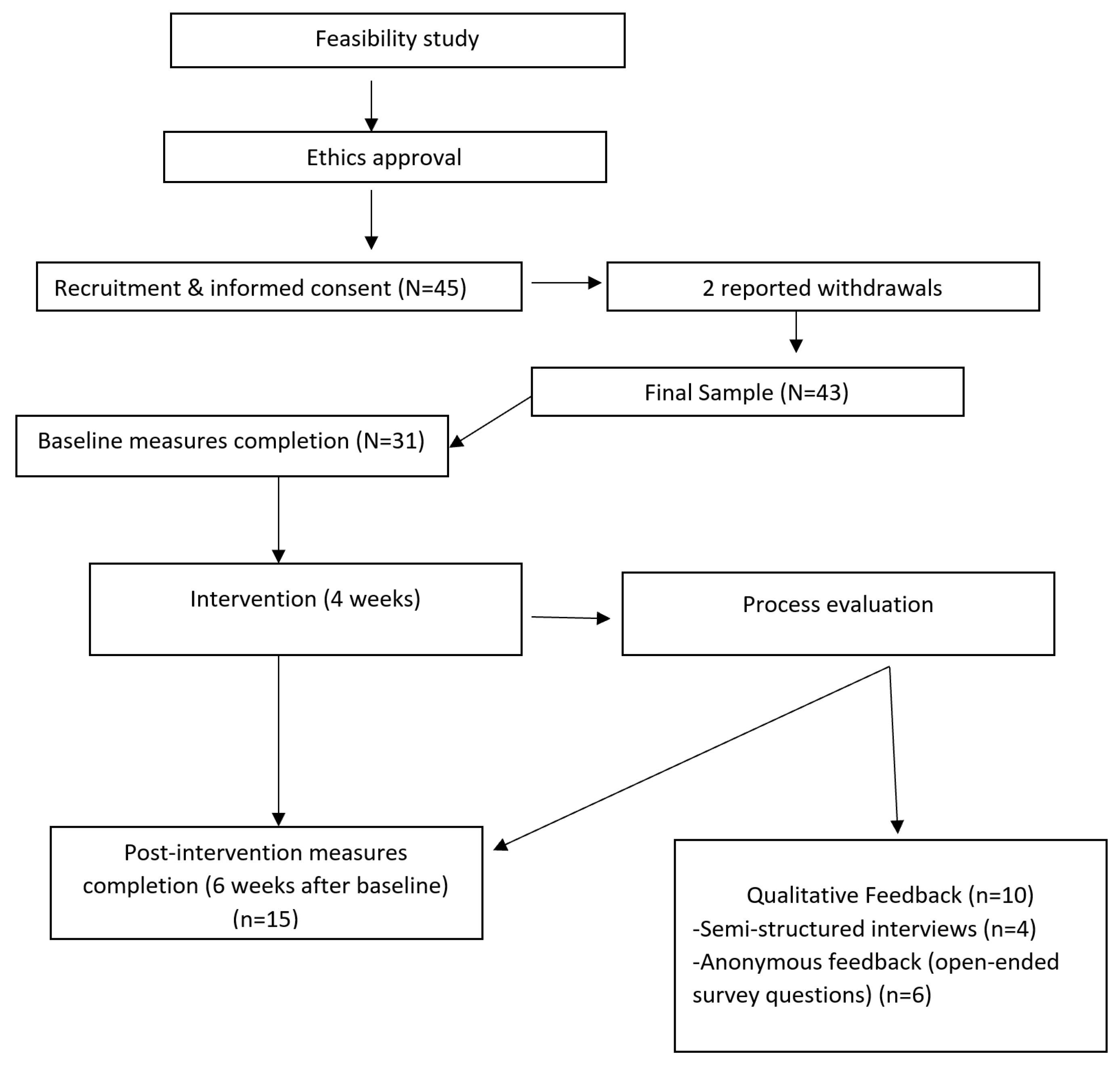
Non-probability convenience sampling was used for this study. Eligible participants were UK-based registered nurses, healthcare assistants, and nursing associates employed in any setting, as well as postgraduate and second- or third-year undergraduate student nurses with previous work experience or those who had completed placements in the UK context. Individuals without current or previous UK-based nursing experience and those unable to provide informed consent were excluded. Recruitment to the intervention took place on a rolling basis between April 2022 and November 2022 via a recruitment campaign on Twitter (now X) and through professional networks for nurses including support from stakeholders who participated in the intervention adaptation process such as circulating the call for participants in internal communications (i.e., emails and newsletters). Figure 1 provides an overview of participant flow through the study.

2.3. Research Procedure

Upon enrolment, participants were asked to complete the pre-intervention survey and were sent a link to a 4-session Moodle course, which they could access as a guest user. They were advised to complete one session per week, and the last session provided further resources and exercises. A link to the usability survey was placed at the end of the fourth session in a separate tab called “Study Evaluation,” allowing participants to complete it online immediately after finishing the training. This study evaluation survey also allowed them to provide open-text qualitative feedback. A link to the post-intervention survey was sent to each participant 6 weeks after their enrolment, along with an invitation to participate in a follow-up interview.

2.4. Intervention Adaptation: Online ACT Training at Work

An iterative user-centred process was followed that aligns with frameworks describing the development of digital behavioural change interventions and with insights from instructional design models [37,38,39,40,41]. This involved using feedback from stakeholders’ consultations that explored nursing professionals’ views on digital psychological interventions and users’ and experts’ feedback on the online training content and course design. During the intervention adaptation stage, a series of consultations with stakeholders was conducted, which included two one-to-one and two group consultations and explored the views of professionals with a background in nursing or nurses’ well-being on the usefulness of a digital tool for promoting nurses’ psychological well-being. Insights were tabulated across four themes (psychological well-being support, things to consider about digital psychological interventions, the case for digital interventions, and intervention characteristics) and were taken into consideration in the process of refining the content for the ACT training course. For example, a separate section with additional resources was added to the training following stakeholders’ feedback that the prime goals of digital solutions should be to signpost what support is available and point towards specific support service and resources (e.g., local independent groups, resource list) and offer factual information and access to further help (e.g., self-care advice, relaxation techniques). Course content was further refined via a peer-review process and the feedback from two ACT specialists, four nursing professionals, and two design specialists. Furthermore, two nurses contributed to reviewing and amending those scripts so that they matched a natural way of talking and provided audio recordings, which the researcher then used to create animations. During the delivery of the training, two participants (one of whom also participated in the intervention adaptation stage) were palliative care nurses who promoted the study’s call for participants among their hospice colleagues. Another nursing professional who participated in the intervention adaptation process (not recruited in the feasibility study) also circulated the study’s call for participants among nurses in her network. Ongoing monitoring of participant recruitment and retention rates showed the importance of maintaining the support of key stakeholders throughout the study adaptation process and its feasibility assessment. The peer-review process led to specific adaptations in the intervention content. One was the inclusion of an alternative version of the Eulogies metaphor as an exercise for values identification, a substitution that is a common practice within a therapeutic setting [42].
Expert feedback was particularly valuable in adjusting the language used to refer to ACT processes within the course, identify usability problems, and highlight any heuristics violations, and user feedback allowed for the identification of areas where language and navigation were problematic. Moreover, one of the adaptations was the inclusion of brief self-compassion training in the fourth session as a means to introduce participants to a type of training that is often merged with ACT-based intervention content [43,44]. Furthermore, users’ feedback informed the refinement of the scripts used in the animation and the audio–visual and text content. Feedback on ACT content informed the selection and prioritisation of specific content, including new material, and further adaptation of the language used to refer to the psychological flexibility processes. Those decisions aimed to reduce the use of jargon, improve readability, and maintain users’ attention to the intended content [45]. While ACT in workplace contexts is typically delivered through facilitated group workshops or training programmes led by organisational or occupational psychologists (rather than clinical therapists), this intervention translated those principles into a self-guided, asynchronous online learning format. In particular, ACT at work training was adapted and delivered as a Massive Open Online Course (MOOC) following an agile iterative development process [41,46]. This adaption aimed to retain the core experiential and reflective elements of workplace ACT training while increasing accessibility for nursing professionals working variable shifts and under time constraints.
The adaptation of the ACT training before deployment also involved comparing Moodle with an alternative platform (Xerte) and consulting stakeholders to assess relevance, accessibility, and format suitability for nursing professionals. Moodle was selected based on its flexible multimedia capabilities, familiarity within healthcare education settings, and suitability for modular, asynchronous delivery [47]. This adaptation process ensured that the final programme was both theoretically coherent and practically deliverable to nursing professionals completing training remotely, supporting both access and engagement with the course content [48,49]. The final online version of the training was delivered as a Moodle course on MoodleCloud. Advantages in using the Moodle platform include its flexibility, adaptability, and user-friendliness, which have all been well-documented as reasons for which it is commonly used by many medical schools and institutions [50]. Content was restructured into shorter, modular components that could be delivered asynchronously and accessed remotely by nursing professionals. Each session included a combination of psychoeducational explanations, experiential exercises, and values-based reflective prompts. Lessons were organised into small, discrete learning units consistent with microlearning principles [51,52], enabling participants to progress in manageable segments at their own pace. Moodle’s pedagogical features (e.g., integration of multimedia resources into learning, content completion non-linearly) [53,54] supported course design choices that prioritised flexible access to training. Although these pedagogical features informed the design and delivery of the training, this study did not evaluate their independent contribution to engagement or learning outcomes.
Each lesson functioned as a short reusable learning object (RLO), integrating text, multimedia elements, and experiential activities designed to support psychological flexibility skill development. Videos presented core ACT concepts, audio-based mindfulness practices (e.g., Leaves on a Stream, Mindfulness of Breath, The Observer Exercise, The Tin Can Monster Exercise) offered guided experiential learning, and downloadable worksheets facilitated values clarification and action planning. This multimodal design is aligned with established principles of multimedia learning theory and cognitive load management [52,55]. Moreover, it aligns with instructional design approaches promoting reusable learning resources in digital environments and effective eLearning approaches for healthcare professionals’ continuous professional development [56,57].
The online intervention consisted of a four-session self-guided Acceptance and Commitment Training (ACT) programme delivered via Moodle. The first three sessions were based primarily on content adapted from Bond’s ‘ACT for Stress’ training protocol [27] and also included material based on Flaxman et al.‘s ACT training protocol [28]. The fourth session served as an overview of the ACT processes and also included self-compassion training, exercises included in the Flaxman’s et al. protocol [28], and links to other resources and useful information. Table 1 offers a description of each of the course sessions and the ACT processes that were targeted in each of them.
Similarly, to other online ACT interventions, the training included videos, audio files (mindfulness practices and experiential exercise), self-help texts, and home assignments, and as participants were free to navigate in the system, they were also provided with a recommendation to complete within a given period [36,37]. Sample images 1–3 (see Supplementary Materials) show the course landing page, an example of a home exercise, and one lesson within one of the sessions.

2.5. Feasibility Criteria

Feasibility outcomes were recorded throughout the study and included the assessment of feasibility criteria on the recruitment process and measurement tools, participant retention, and adherence to the intervention (Table 2).

2.5.1. Recruitment and Retention Rates

Sample size was estimated based on guidelines for feasibility studies [58], such as that a size of 30 participants is recommended for single-arm feasibility studies [59] and previous reported recruitment and retention rates of feasibility trials of digital psychological interventions [60,61], including that feasibility studies with less than 40 participants can account for 25–35% attrition [62]. Therefore, a target sample size of approximately 45 participants was deemed appropriate to meet the study aims, complete recruitment within the study’s timescale, and have an adequate portion of those participants engage with the study. An acceptable attrition level was set to at 40% for completion of all study components (i.e., pre- and post-study measures completion, usability survey completion, interview participation) based on previous feasibility studies reporting online ACT interventions delivered to nurses [31,34]. Throughout the study, recruitment rates and the percentage of participants who completed the questionnaire and participated in an interview were monitored. Retention rates were tracked by monitoring dropout rates throughout the study period and completion rates of the pre- and post-intervention questionnaires.

2.5.2. Intervention Adherence

Intervention adherence was evaluated using indicators of participant engagement. For this reason, process evaluation activities were identified using the US National Institute of Health (NIH) Behaviour Change Consortium fidelity framework to examine the fidelity of intervention delivery and receipt [63,64]. These were designed as a mixed-methods fidelity assessment in order to explore different factors that can define participant engagement, such as intervention appropriateness, and provide a detailed assessment on content fidelity, dose frequency, and exposure [65,66,67]. All course sections were immediately available to participants; thus, evaluation of participants’ exposure to the intervention content was based on the logs of patient visits to the course. For this reason, the sample used to assess the fidelity of the intervention delivery was the total number of participants who evidently visited at least one of the sessions [68,69].
Key fidelity measures of dose frequency and intervention exposure were assessed through course usage statistics by Google Analytics and Moodle properties that described completion patterns of different sessions. Furthermore, additional insights were sought on factors that may influence participant responsiveness to the intervention experience [67,70]. This involved a link to a usability survey at the end of the online training, which included the System Usability Survey (SUS) scale [71] and an open-text feedback option, as well as a separate invitation to participate in a follow-up semi-structured interview. Questions focused on the perceived ease of use of the online system, the perceived usefulness of intervention content, and participants’ intentions to use the online training and explored participants’ experiences of being part of the study and, more broadly, the perceived usefulness of digital psychological interventions for nurses. Due to the high attrition rate (70% for the usability survey and 73% for the follow-up interview) the final data collected about perceived user experience were treated as generic qualitative feedback that complemented user metric patterns.

2.5.3. Acceptability

Acceptability in this study was approached in line with contemporary understandings of acceptability as a multidimensional construct [72]. However, a full theoretical framework was not formally applied. Because this was an early-stage, exploratory feasibility study, the focus was on identifying preliminary indicators that could inform how acceptability should be evaluated in a future feasibility trial. To that end, a broad set of data sources were used, including usability ratings, engagement patterns, and participant feedback, to capture early signals about how the training was experienced. This approach is consistent with guidance for early-phase intervention development, where preliminary acceptability indicators are used to refine intervention design and determine which constructs warrant formal assessment in later trials [73,74].

2.5.4. Feasibility of Outcome Measures

Participants completed previously validated psychological measures designed to assess psychological well-being in work contexts at two time points: upon enrolment (T1) and post-intervention (T2) using the online JISC survey platform. Demographic variables (gender, age, ethnicity, nursing role, and current speciality/area of nursing) were also collected alongside those measures.
(i)
Professional quality of life
Professional Quality of Life-Revision IV (ProQOL5) [75] is a 30-item self-report instrument addressing compassion fatigue and compassion satisfaction. Compassion satisfaction (CS) refers to feelings of satisfaction when helping others and is the opposite of compassion fatigue (CF). Compassion fatigue refers to the negative aspects of providing care, including burnout (BO), characterised by exhaustion and feelings of disconnectedness, and secondary traumatic stress (STS), which refers to being preoccupied with the thoughts of people whom one has previously helped and who have experienced traumatic events. The instrument uses a 5-point Likert-type scale (1 = never, 5 = very often) to calculate its three subscales: burnout, compassion fatigue/secondary trauma, and compassion satisfaction. The internal reliability for CS was 0.88, for BO, it was 0.73, and for STS, it was 0.86.
(ii)
The Utrecht Work Engagement Scale (UWES-9, short-form)
The UWES-9 [76] is a 9-item scale developed to measure work engagement. Its items are scored on a 7-point rating scale and have the following three subscales: vigour, dedication, and absorption. The internal reliability for the total UWES-9 scale was 0.86; per its subscales, that for vigour was 0.59, that for dedication was 0.83, and that for absorption was 0.80.
(iii)
Work-related Acceptance and Action Questionnaire (WAAQ)
The WAAQ is a 7-item scale developed to measure work-related processes of change that may occur as a result of ACT interventions, and higher scores indicate greater levels of work-related psychological flexibility [77]. The WAAQ has been found to correlate significantly with better work engagement, and, contrary to other measures of psychological flexibility, it has shown a significantly stronger correlation with work-specific variables [77]. The internal reliability for work-related psychological flexibility was 0.90.

2.6. Data Analysis

Surveys analyses included descriptive statistics and paired t-tests between participants’ pre- and post-intervention work engagement scores, psychological flexibility scores, and PRO-QOL scores. A Shapiro–Wilk test of normality showed that the scores for all outcome measures had a normal distribution except for the baseline psychological flexibility score. For this reason, non-parametric criteria were used to explore its associations with the other study variables. Quantitative analyses were conducted using SPSS (Version 29) and descriptive analytics derived from Google Analytics and Moodle logs. Google Analytics and Moodle usage reports were analysed to examine user engagement with different sessions and types of content. Finally, simple tabulation was conducted for all qualitative feedback received in the study.

3. Results

3.1. Feasibility

Forty-five nursing professionals responded to the recruitment campaign by completing the study’s online consent form, and forty-three were finally enrolled in the study. Thirty-one completed the pre-intervention survey, and fifteen completed the post-intervention survey (48.4% baseline survey completers). Only nine participants completed the usability survey that was embedded at the end of the course, and only four participants took part in a follow-up interview.

3.2. Participants

Table 3 shows participants’ sociodemographic details. Study participants had 22.8 mean years of experience. The majority were females (n = 27, 87.1%) and registered nurses (n = 27, 87.1%) in palliative care (n = 7, 22.6%) and mental health (n = 5, 16.1%).

3.3. Psychological Outcomes

Baseline and post-intervention assessments of participants’ scores were conducted not to test intervention effectiveness but to examine whether the selected measures appeared sensitive enough to detect change in the context of a future feasibility trial.

3.3.1. Baseline Findings

At baseline, participants showed moderate (23–41)-to-high (≥42) levels of compassion satisfaction, and moderate (23–41)-to-low (≤22) levels of burnout and secondary traumatic stress. Baseline psychological flexibility correlated negatively with burnout (rho = −0.42, p = 0.05) and secondary traumatic stress (rho = −0.46, p = 0.01). Vigour correlated negatively with burnout (r = −0.50, p = 0.01) and positively with compassion satisfaction (r = 0.53, p = 0.01). Years of experience in a nursing support role also showed a negative correlation with baseline burnout (r = −0.47, p = 0.01) and a positive correlation with psychological flexibility (rho = 0.39, p = 0.05).

3.3.2. Post-Intervention Correlations

Post-intervention, psychological flexibility showed a negative correlation with burnout (r = −0.69, p = 0.01) and secondary traumatic stress (r = −0.54, p = 0.05) and a positive correlation with compassion satisfaction (r = 0.61, p < 0.05). Unlike the baseline pattern, compassion satisfaction at post-intervention correlated positively with overall work engagement (r = 0.88, p = 0.01) and all its subscales (vigour: r = 0.88, p = 0.01; dedication: r = 0.85, p = 0.01; absorption: r = 0.81, p = 0.01). Burnout, conversely, correlated negatively with work engagement (r = −0.62, p = 0.05) and with two of its subscales (vigour: r = −0.70, p = 0.01; dedication: r = −0.71, p = 0.01).
Work engagement appeared to be the only measure potentially sensitive to change, as small improvements appear in work engagement components—specifically, vigour (t = −6.3, p < 0.01) and absorption (t = −2.16, p < 0.05), with dedication showing a marginal change (see Table 4). These changes should be interpreted strictly as indicators of possible measure responsiveness, not as evidence of intervention effectiveness, and only as preliminary candidates for inclusion in a future feasibility trial.

3.4. User Engagement

The course Moodle logs and Google Analytics metrics were analysed to understand patterns of user engagement. Google Analytics and Moodle logs were used purely as observational engagement indicators, not as tools visible to participants or used for individualised feedback. All sessions and lessons were made available to participants from the outset. Consequently, the observed engagement patterns reflect access and navigation behaviours across the full course rather than a strictly linear progression from one session to the next, as individual learning pathways and sequencing could not be confirmed.
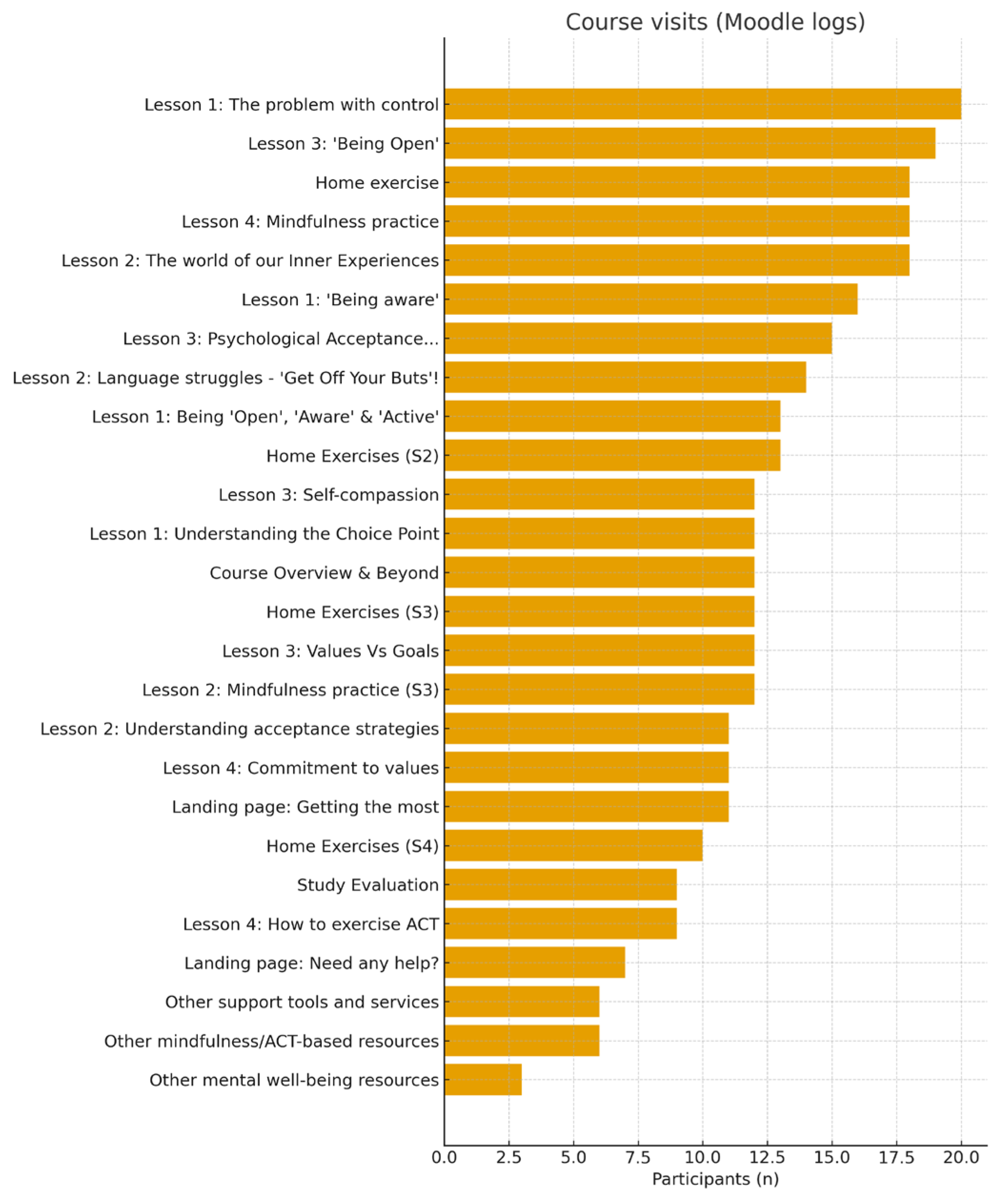
The different ways in which metrics are captured by each systems offer different insights on average user engagement. Overall, Moodle logs offer the most straightforward indicator of ‘reach’, providing a simple count on how many participants accessed each lesson at least once. However, they only track the activity of users across a course that have both created an account on Moodle and have registered as a ‘student’. As study participants were able to access the course as ‘guest users’, Moodle logs were not fully representative of course usage, as they only count for only those participants that created an account, which was a total of 22 participants. These logs did not count users that accessed the training and completed the intervention without creating an account, as was the case with at least three participants. What is more, none of the study participants were registered to the course as ‘Moodle-students’; thus, user-level tracking was not possible. Thus, the minimum number of people who accessed any part of the course was 22, 51.2% of the enrolled study participants. Furthermore, Moodle logs do not reliably capture multimedia interactions and time spent on such content (i.e., embedded YouTube videos). Thus, Figure 2 only shows the variance in lesson visits per session. According to those Moodle logs, 20 participants visited the first lesson of session 1, and half of those also accessed the home exercise in the fourth session that focused on ‘Future action plans’.
Google Analytics metrics on users’ behaviour provided more in-depth details on participants’ engagement with the online content, including participants who logged in as guests without creating an account, and they offer a better breakdown of all pages within each session. Google Analytic metrics included data on users’ repeated visits, views per user, and time spent on different components.
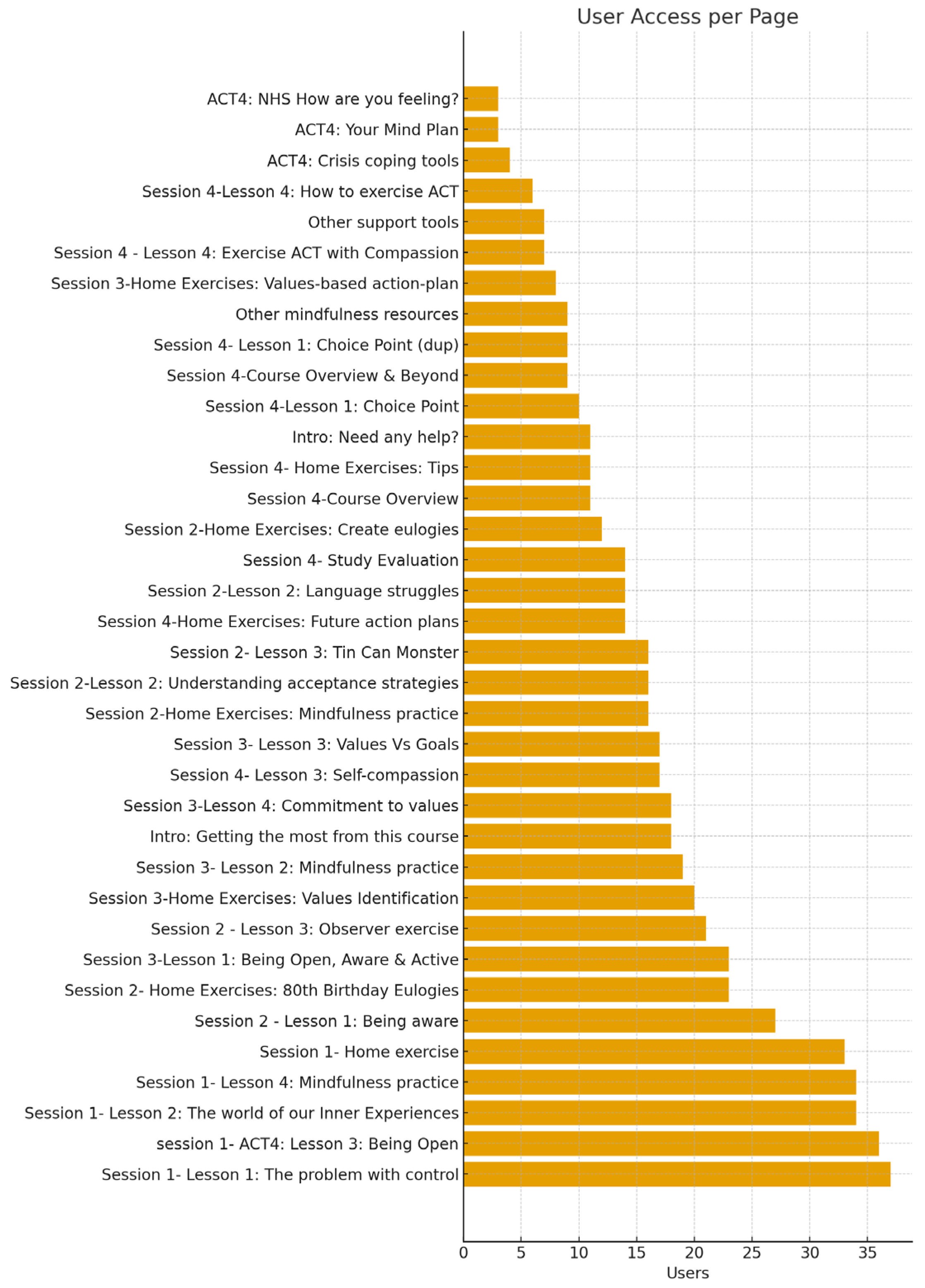
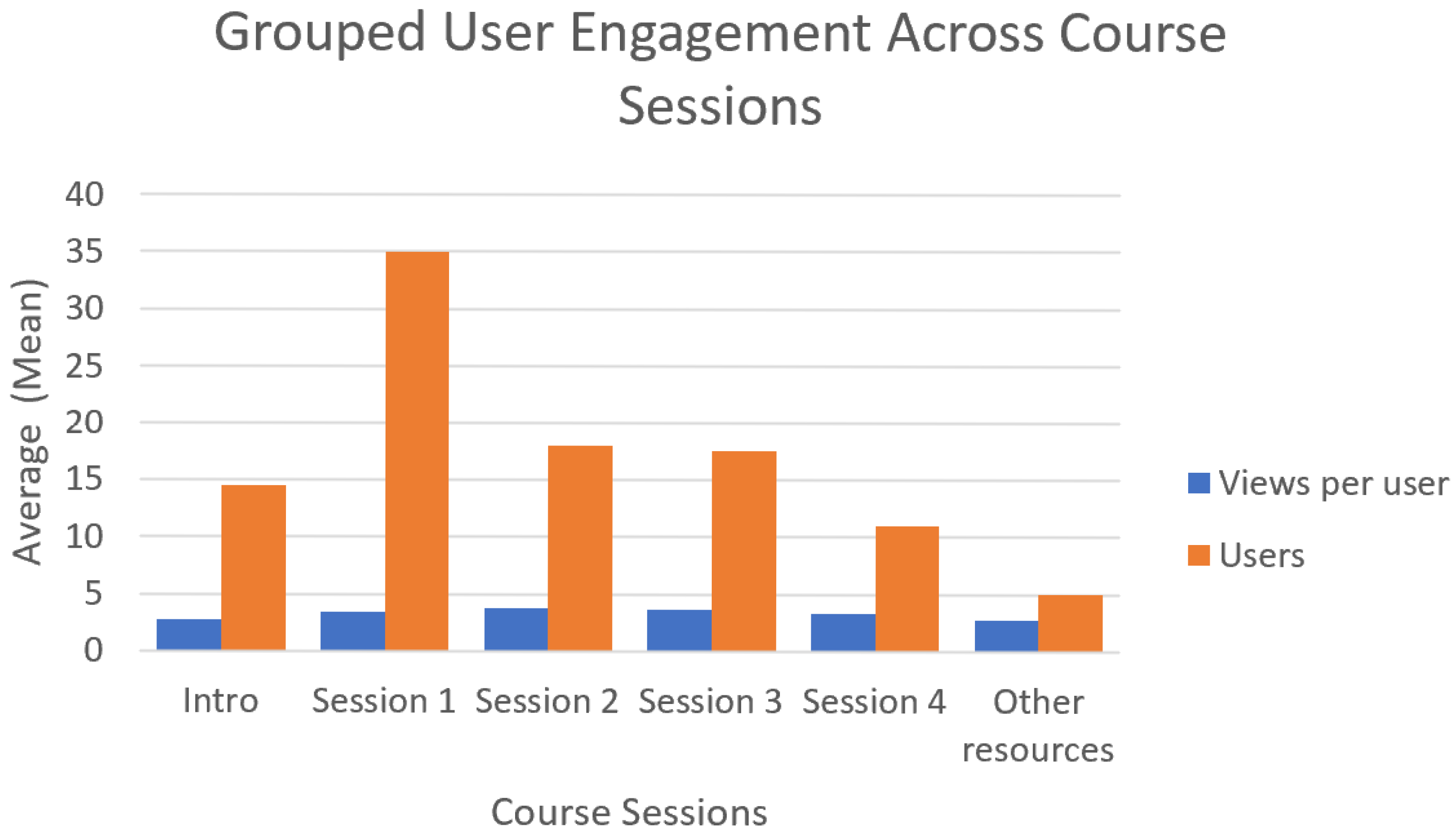
According to the Google Analytics metrics, up to 100% of users may have accessed the landing page of the interventions, whereas up to 86% may have accessed the first video within session one. Furthermore, 27 users (62.8% enrolled participants) may have accessed at least a lesson from session 2. However, as users could access the resource from any location and, thus, from different IP addresses, those metrics should be treated as an approximation of the exact number of participants who accessed the course rather than the exact number of participants who accessed course pages. Table 5 shows the overall user engagement based on the Google Analytics metrics. Among the training sessions, session 1 had the highest access rate (mean 34.8 users), but session 3 had the highest average engagement per user (mean 2.5 min page/viewer), and session 2 had the highest amount of viewing per user (4.4 views per user). There was a cluster of lesson pages from sessions 2, 3, and 4, whose order in users’ visits did not always match the order in which they were placed within the intervention. For example, session three, almost in its entirety, demonstrated higher user engagement than session two. What is more, the “ACT4: Home Exercises: A Discovery of Values: Your 80th Birthday Eulogies (session 2)” was the second most popular page in the session even though it was at the end of the session. In addition, specific pages within one session such as the “ACT4: Lesson 3: Self-compassion- “Taking care of the caregiver “(session 4)”, “ACT4: Lesson 2: Understanding the nature of psychological acceptance strategies (session 2)”, and “ACT4: Home Exercises: Future action plans (session 4)” demonstrated higher usage rates than the rest of the pages in the same session.
Figure 3 and Figure 4 show the patterns of participant engagement with the online training course as derived from Google Analytics. Figure 3 reports the average number of users visiting each lesson (page-level engagement), while Figure 4 reports average user engagement at the component level, including introductory pages, sessions 1–4, and external resources. Overall, engagement was highest in sessions 1 and 2, with a progressive decline across sessions 3 and 4 and minimal usage of external resources. Lessons containing mindfulness practices showed the highest number of views per user, suggesting that experiential components may have been perceived as particularly useful or actionable. Two downloadable worksheets—“Session 4: Home Exercises: Future action plans” and “Session 3: Home Exercises: Creating a values-based action-plan”—were also accessed at relatively high rates, indicating sustained interest in values-based activities among those who continued past the early sessions.
Overall, Figure 2, Figure 3 and Figure 4 provide complementary insights into user engagement patterns. The progressive decline across sessions is consistent with patterns observed in other self-directed online interventions and highlights areas that may require refinement in a future feasibility trial. Moodle logs indicate that users were able to navigate the course and access the intended components, while Google Analytics show that participants engaged more deeply with specific experiential elements.
Experiential training (i.e., the mindfulness practices and values-based exercises) was consistently associated with higher engagement across both tracking systems. In particular, these activities attracted more participants in Moodle logs and generated a higher number of views per user in Google Analytics. This finding suggests that participants revisited them and may have perceived them as more useful or relevant than other lessons. Taken together, they support the feasibility of delivering self-guided ACT content to nursing professionals in an online format.

3.5. User Experience Insights

The overall mean SUS score of the participants that completed the SUS scale was 86.1. A SUS score in the eight percentile demonstrates an excellent/best-imaginable usability. All four interview participants were familiar with mindfulness interventions or the experience of talk therapy and had very positive attitudes towards the intervention content: “I’d kind of engaged in similar kind of mindfulness and breathing techniques like that before. Um, so it, it wasn’t like a new concept to me”.
The participating interviewees noted that they followed the study’s recommendation and completed one session per week. They gave positive feedback regarding the ease of using the online course, focusing on the short duration of the videos and the placement of a video introducing each session: “really easy to follow. And again, like I say, a nice chunk, that it doesn’t take too long to do”.
There were also difficulties reported regarding navigation within the Moodle interface. Those included confusion over signposting of completed sessions and moving between pages, especially through Moodle prompts to complete session two, for which there are multiple on-screen tabs, as well as the way YouTube videos are embedded in Moodle: “Then on some of the pages it […] it came up saying, um, you’ve viewed this already. And like gave, asked me a question, did I want to […] look at it again or did I want to carry on […], it took me a moment to work out that I need to say, no, I, I want to go, I want to look at it again for it to then all load up.”
Content that was frequently perceived as useful or was often revisited included the values content in session 3, the “Get off your Buts” practice, and specific mindfulness practices such as the Leaves on Stream meditation and the Tin Man mindfulness practice: “Session three is where the values and goals one. That’s the one I found most helpful. I did engage in trying to figure out what my five values were in life”.

4. Discussion

This study assessed the feasibility and fidelity of an adapted online version of ACT training among UK nursing professionals. The study met its recruitment target and partially its retention benchmarks. To our knowledge, this was the first study to deliver a combination of Bond, Flaxman, and colleagues’ training online to UK nursing professionals as a MOOC course. The intervention adaptation aligned with the NIHR guidelines on patient and public involvement and engagement consultations, gave descriptions of iterative development of theory-based digital behavioural interventions, and addressed the core contents of intervention adaptation based on the updated MRC guidelines [37,78].
Feasibility was assessed based on participant recruitment and retention based on guidance on feasibility studies [58,59]. A minimum of a 70% completion rate of the baseline measures and access to online training course was achieved along with an acceptable 48% completion rate of the post-intervention survey. However, there was only 13% retention at the follow-up interview. Such observations have been common among studies reporting digital psychological interventions, as they frequently demonstrate low participant engagement, low intervention adherence, and high dropout rates [79,80]. Taken together, user behaviour patterns and study completion rates reflected a core group of 12–15 more engaged participants (39–48% baseline measures’ completers) that accessed all study sessions. It is therefore essential to conduct a closer examination on intervention and individual factors that may impact participants’ adherence to the overall intervention procedures [81].
Participants’ adherence to the training programme is central to the feasibility of an online intervention. The examination of the Google Analytics and Moodle user metrics showed that the fidelity of intervention delivery was good, with at least 51% to 63% of enrolled participants being exposed to the intervention and comparable to other online psychological skill training programmes [68,82]. Moreover, similarly to other online psychological interventions, participants engaged less with the content included in later sessions [83]. At the same time, the user metrics showed that acceptable levels of participant engagement were maintained throughout the training. This is important for designing any definitive trial of an intervention, as participant engagement and intervention fidelity are strongly associated with outcome improvement in digital mental health interventions, including unguided interventions [84,85].
Taken as a whole, the user experience insights support including both values-based commitment and self-compassion training in digital ACT interventions delivered to nurses [33,34]. Both course usage data and qualitative feedback suggest that some participants frequently viewed specific mindfulness practices and that sections that focused on connection with values were more popular overall. Furthermore, self-compassion training was received well by study participants, and usage statistics suggest that it can help maintain satisfactory user engagement with the intervention.
The direction of the study findings overall, though, aligns with evidence showing that across several low-intensity workplace psychological interventions targeting different outcome measures of mental well-being, work engagement is the one that consistently shows improvement [86]. Moreover, changes in the pre- and post-intervention score measures match with the underlying psychological flexibility model and the type of results reported previously in the literature [31,33,34,35]. ACT theorists view psychological flexibility as a key ingredient to psychological health, and empirical studies treat it as a personal resource that can promote well-being (i.e., subjective well-being, hedonic and eudaimonic well-being) [87,88,89]. The results in this study showed that the association with work engagement may become stronger post-intervention and suggest an improvement, especially in participant vigour and absorption scores. Previous studies with Swedish healthcare professionals, the majority of which were nurses, have shown significant correlations between work-related flexibility and work engagement, with vigour exhibiting the strongest correlations and significant predictive value for work-related flexibility [90,91]. This direction of those findings aligns with evidence showing that across several low-intensity workplace psychological interventions targeting different outcome measures of mental well-being, work engagement is the one that consistently shows improvement [86].
The lack of statistically significant changes in professional quality of life may partly reflect the small sample size and a potential ceiling effect in baseline ProQoL scores. This is consistent with reports of elevated burnout and traumatic stress and reduced compassion satisfaction among healthcare workers, including nurses, after the onset of the COVID-19 pandemic [92,93,94]. Additionally, the pattern of associations observed may relate to ongoing debates about the construct validity and operationalisation of psychological flexibility in applied workplace settings [95]. Such measurement challenges can create further obstacles in the evaluation of online ACT interventions, creating additional uncertainties in the selection of suitable well-being measures. As the review of instruments measuring nurses’ well-being at work concluded, the majority of the measures can be assessed as ‘low quality’, focusing on different facets of well-being that are based on different theories of well-being and concepts, with only a few measures developed to measure nurses’ well-being within specific types of settings [96]. It is, therefore, important for intervention evaluation designs to seek to mitigate such challenges. Strategies may include focusing on specific nursing settings to capture influences of leader behaviours and organisational culture on nurses’ well-being [97] and clearly illustrating shared theoretical underpinnings for the intervention content, intervention hypotheses, and selected measures [98].
The high attrition across sessions is consistent with patterns observed in self-guided online training, particularly among healthcare workers experiencing substantial time pressures and post-pandemic fatigue [48,99]. This pattern may be particularly pronounced in nursing contexts, where high patient loads, shift-based schedules, and chronic staff shortages severely limit discretionary time for voluntary training activities. Furthermore, it aligns with evidence that participation in digital well-being programmes can be significantly reduced when lacking automated reminders or integration into routine workflows [100,101]. Moreover it is likely that participants most affected by stress or mental health symptoms did not engage deeply or withdrew early, in line with evidence that self-directed digital interventions are less accessible and less engaging for individuals experiencing acute distress or burnout [49,102]. This early-phase study therefore underscores the need for early and ongoing stakeholder engagement throughout intervention development and feasibility evaluation. Embedding recruitment, engagement, and feedback mechanisms within routine workplace structures, including existing communication and professional development systems, will be critical for improving participation, acceptability, and interpretability of feasibility outcomes in future trials [73,103]. A strength of this study is that the intervention adaptation process and the assessment of the feasibility and fidelity of online training were guided by the updated MRC framework, as it allows for ongoing evaluation of intervention components at each stage of intervention evaluation. For example, the results of this study suggest that mixed-methods fidelity assessments can provide valuable insights on user engagement trends and its drivers that can inform intervention refinement. Such knowledge can then be used to uncover uncertainties about intervention acceptability, potentially refine intervention content and hypothesis formation, research activities that are all considered to be core dimensions of the development and evaluation of complex interventions [10]. What is more, stakeholder involvement in the process of intervention adaptation, delivery, and evaluation is central to intervention effectiveness [101], and our approach to intervention development allowed us to clearly track their contributions.

4.1. Limitations and Future Directions

The study did not include a priori sample size calculation, as recruitment targets were based on early-phase feasibility guidance that prioritises understanding acceptability and engagement rather than detecting statistical effects. The small sample and reduced post-intervention response rates restrict generalisability but remain informative for planning progression criteria and refining procedures for a future feasibility trial.
The study’s inclusion criteria were intentionally broad, allowing any nursing professional to participate, and there was no purposeful sampling targeting specific types of nurses. As a result, parameters relevant to specific nursing settings were not covered in the study analysis. Ultimately, hospice and mental health nurses were the most frequently recruited nursing professionals. However, the sample comprised a heterogeneous group of nursing professionals, students, and healthcare assistants, limiting the applicability of the results to any single occupational subgroup. This heterogeneity was intentional at this exploratory stage to maximise diversity of user experiences and engagement patterns when delivering the intervention remotely. Future feasibility trials should adopt occupation-specific recruitment in collaboration with clinical managers and target defined nursing subspecialities Furthermore, the study’s sampling method, combined with high attrition in follow-up interviews, leaves it unclear which intervention and study parameters primarily drove user engagement (e.g., content, delivery method, prior familiarity with online psychological skills training). A future feasibility trial could explore intervention acceptability, focusing on certain nursing disciplines, to gain a better understanding of how adherence can be supported. A review of twenty-eight studies on employees’ acceptability of web-based mental health interventions showed the persistence of high levels of attrition, even though studies overall reported high levels of intervention acceptability and perceived utility, which suggests that adherence to interventions is influenced by other factors (e.g., organisational culture) [104]. Dynamic models of intervention acceptability illustrate the complex nature of the relationship between acceptability and user engagement and how intervention acceptability reflects both individuals’ evaluations of the usefulness and burden of intervention and the impacts of sociocultural contexts on one’s beliefs, needs, and ultimately active engagement with a digital mental health intervention [72,105,106].
This study used a single-arm pre–post design without a control group. As a result, it is not possible to attribute any observed changes to the intervention itself. These data should be interpreted only as preliminary signals informing future feasibility work rather than indications of effectiveness. Furthermore, no follow-up assessment was conducted. Immediate post-intervention improvements in self-reported well-being may reflect transient effects or a generalised ‘placebo’ response. Without longer-term data, the sustainability of any changes cannot be assessed.
Moreover, one specific limitation to the intervention delivery method was the use of the MoodleCloud interface, which, compared to self-hosted Moodle, has pre-set features and further limits access to usage statistics. Delivering the training through the self-hosted Moodle option can allow for taking advantage of its capabilities to support adaptive, collaborative, and blended learning and, thus, can allow future iterations to accommodate and evaluate adjustments to the online course [50]. What is more, even small changes in intervention delivery, such as requiring users to ‘log-in’ as students to the course, can allow for a closer examination of the user journey, make better comparisons between completers and non-completers, and explore associations between user engagement and the direction of changes in psychological flexibility skills. Therefore, a future mixed-methods feasibility trial could both assess between-group differences and examine the ongoing influence of parameters that may impact the study’s implementation strategy [107]. Finally, future studies should compare different delivery modalities of ACT training (e.g., fully online, hybrid, and in-person formats) to determine their feasibility, acceptability, and potential effectiveness across different nursing contexts.

4.2. Conclusions

This early-stage feasibility study examined the delivery and preliminary engagement patterns of a self-guided online adaptation of ACT training for UK nursing professionals. Among participants who engaged with the course, usage patterns indicated sustained interaction with the platform and its content across multiple sessions. Although attrition was high, this is consistent with patterns observed in self-guided digital interventions for healthcare workers, and it highlighted key study parameters that must be addressed before progressing to a full feasibility trial.
Future studies would benefit from conceptualising acceptability as a multi-component process and adopting a mixed-methods design that examines both behavioural engagement and user experience. This approach will support a more nuanced understanding of feasibility beyond effectiveness metrics alone.
Exploratory baseline and post-intervention assessments were used to examine the suitability and sensitivity of the selected psychological measures. Encouraging signals regarding the sensitivity of the selected outcome measures were observed for work-engagement subscales, suggesting that these outcomes may warrant further investigation in a future feasibility trial. In contrast, larger and more stratified samples, along with structured follow-up assessments, may be needed to evaluate changes in psychological flexibility and professional quality-of-life measures. Overall, this study provides a valuable foundation for identifying study parameters to consider in the design of a fully powered feasibility trial that would assess the acceptability, engagement, and potential mechanisms of change in online ACT-based training for the nursing workforce.

Supplementary Materials

The following supporting information can be downloaded at: https://www.mdpi.com/article/10.3390/occuphealth1010002/s1, Figure S1: TIDier Checklist; Figure S2: Online course- sample images.

Author Contributions

M.A.: writing—review and editing, writing—original draft, methodology, analysis, investigation, data curation; S.T.: writing—review and editing, resources; S.K.: conceptualisation, supervision, writing—reviewing and editing; H.B.: conceptualisation, supervision, writing—reviewing and editing, methodology. All authors have read and agreed to the published version of the manuscript.

Funding

This research received no external funding.

Institutional Review Board Statement

The study was conducted in accordance with the Declaration of Helsinki and approved by the Ethics Committee) of University of Nottingham (FMHS 267-0621 on 2 June 2021).

Informed Consent Statement

Informed consent was obtained from all subjects involved in the study.

Data Availability Statement

The data supporting the findings of this study are available upon reasonable request from the corresponding author.

Conflicts of Interest

The authors declare no conflicts of interest.

References

  1. Getie, A.; Ayenew, T.; Amlak, B.T.; Gedfew, M.; Edmealem, A.; Kebede, W.M. Global prevalence and contributing factors of nurse burnout: An umbrella review of systematic review and meta-analysis. BMC Nurs. 2025, 24, 596. [Google Scholar] [CrossRef] [PubMed]
  2. NHS Digital. NHS Sickness Absence Rates, September 2024; NHS England: Leeds, UK, 2025. [Google Scholar]
  3. NMC. The NMC Register 2023–2024; NMC: London, UK, 2024. [Google Scholar]
  4. Taylor, C.; Maben, J.; Jagosh, J.; Carrieri, D.; Briscoe, S.; Klepacz, N.; Mattick, K. Care Under Pressure 2: A realist synthesis of causes and interventions to mitigate psychological ill health in nurses, midwives and paramedics. BMJ Qual. Saf. 2024, 33, 523–538. [Google Scholar] [CrossRef]
  5. Cohen, C.; Pignata, S.; Bezak, E.; Tie, M.; Childs, J. Workplace interventions to improve well-being and reduce burnout for nurses, physicians and allied healthcare professionals: A systematic review. BMJ Open 2023, 13, e071203. [Google Scholar] [CrossRef]
  6. Aust, B.; Leduc, C.; Cresswell-Smith, J.; O’Brien, C.; Rugulies, R.; Leduc, M.; Dhalaigh, D.N.; Dushaj, A.; Fanaj, N.; Guinart, D. The effects of different types of organisational workplace mental health interventions on mental health and wellbeing in healthcare workers: A systematic review. Int. Arch. Occup. Environ. Health 2024, 97, 485–522. [Google Scholar] [CrossRef]
  7. Nielsen, K.; Yarker, J.; Munir, F.; Bültmann, U. IGLOO: An integrated framework for sustainable return to work in workers with common mental disorders. Work Stress 2018, 32, 400–417. [Google Scholar] [CrossRef]
  8. Bes, I.; Shoman, Y.; Al-Gobari, M.; Rousson, V.; Guseva Canu, I. Organizational interventions and occupational burnout: A meta-analysis with focus on exhaustion. Int. Arch. Occup. Environ. Health 2023, 96, 1211–1223. [Google Scholar] [CrossRef]
  9. Herz, M.; Bösl, S.; Gebhard, D. Individual and organizational interventions to promote staff health and well-being in residential long-term care: A systematic review of randomized controlled trials over the past 20 years. BMC Nurs. 2024, 23, 195. [Google Scholar] [CrossRef]
  10. Skivington, K.; Matthews, L.; Simpson, S.A.; Craig, P.; Baird, J.; Blazeby, J.M.; Boyd, K.A.; Craig, N.; French, D.P.; McIntosh, E. Framework for the development and evaluation of complex interventions: Gap analysis, workshop and consultation-informed update. Health Technol. Assess. 2021, 25, 1–132. [Google Scholar] [CrossRef]
  11. Kelly, J.T.; Warner, M.M.; Conley, M.; Reidlinger, D.P.; Hoffmann, T.; Craig, J.; Tong, A.; Reeves, M.; Johnson, D.W.; Palmer, S. Feasibility and acceptability of telehealth coaching to promote healthy eating in chronic kidney disease: A mixed-methods process evaluation. BMJ Open 2019, 9, e024551. [Google Scholar] [CrossRef] [PubMed]
  12. Aschbrenner, K.A.; Kruse, G.; Gallo, J.J.; Plano Clark, V.L. Applying mixed methods to pilot feasibility studies to inform intervention trials. Pilot Feasibility Stud. 2022, 8, 217. [Google Scholar] [CrossRef] [PubMed]
  13. Moore, G.; Audrey, S.; Barker, M.; Bond, L.; Bonell, C.; Cooper, C.; Hardeman, W.; Moore, L.; O’Cathain, A.; Tinati, T. Process evaluation in complex public health intervention studies: The need for guidance. J. Epidemiol. Community Health 2014, 68, 101–102. [Google Scholar] [CrossRef]
  14. WHO. Strengthening Mental Health Promotion; World Health Organization: Geneva, Switzerland, 2001.
  15. LaMontagne, A.D.; Martin, A.; Page, K.M.; Reavley, N.J.; Noblet, A.J.; Milner, A.J.; Keegel, T.; Smith, P.M. Workplace mental health: Developing an integrated intervention approach. BMC Psychiatry 2014, 14, 131. [Google Scholar] [CrossRef]
  16. LaMontagne, A.D.; Martin, A.; Page, K.M.; Reavley, N.J.; Noblet, A.J.; Milner, A.J.; Keegel, T.; Allisey, A.; Papas, A.; Witt, K. Developing an integrated approach to workplace mental health. In Total Worker Health; American Psychology Association: Washington, DC, USA, 2019. [Google Scholar]
  17. Flaxman, P.E.; Prudenzi, A.; Zernerova, L. 19 Acceptance and Commitment Training in the Workplace. In The Oxford Handbook of Acceptance and Commitment Therapy; Oxford University Press: Oxford, UK, 2023; p. 407. [Google Scholar]
  18. Hayes, S.C.; Villatte, M.; Levin, M.; Hildebrandt, M. Open, aware, and active: Contextual approaches as an emerging trend in the behavioral and cognitive therapies. Annu. Rev. Clin. Psychol. 2011, 7, 141–168. [Google Scholar] [CrossRef]
  19. Zhang, C.-Q.; Leeming, E.; Smith, P.; Chung, P.-K.; Hagger, M.S.; Hayes, S.C. Acceptance and commitment therapy for health behavior change: A contextually-driven approach. Front. Psychol. 2018, 8, 2350. [Google Scholar] [CrossRef]
  20. Ciarrochi, J.; Bilich, L.; Godsell, C. Psychological flexibility as a mechanism of change in acceptance and commitment therapy. In Assessing Mindfulness and Acceptance Processes in Clients: Illuminating the Theory and Practice of Change; New Harbinger Publications: Oakland, CA, USA, 2010; Volume 2010, pp. 51–75. [Google Scholar]
  21. Prudenzi, A.; Graham, C.D.; Clancy, F.; Hill, D.; O’Driscoll, R.; Day, F.; O’Connor, D.B. Group-based acceptance and commitment therapy interventions for improving general distress and work-related distress in healthcare professionals: A systematic review and meta-analysis. J. Affect. Disord. 2021, 295, 192–202. [Google Scholar] [CrossRef]
  22. Unruh, I.; Neubert, M.; Wilhelm, M.; Euteneuer, F. ACT in the workplace: A meta-analytic examination of randomized controlled trials. J. Context. Behav. Sci. 2022, 26, 114–124. [Google Scholar] [CrossRef]
  23. Towey-Swift, K.D.; Lauvrud, C.; Whittington, R. Acceptance and commitment therapy (ACT) for professional staff burnout: A systematic review and narrative synthesis of controlled trials. J. Ment. Health 2023, 32, 452–464. [Google Scholar] [CrossRef]
  24. Hayes, S.C.; Luoma, J.B.; Bond, F.W.; Masuda, A.; Lillis, J. Acceptance and commitment therapy: Model, processes and outcomes. Behav. Res. Ther. 2006, 44, 1–25. [Google Scholar] [CrossRef]
  25. Dindo, L.; Van Liew, J.R.; Arch, J.J. Acceptance and commitment therapy: A transdiagnostic behavioral intervention for mental health and medical conditions. Neurotherapeutics 2017, 14, 546–553. [Google Scholar] [CrossRef] [PubMed]
  26. Gloster, A.T.; Walder, N.; Levin, M.E.; Twohig, M.P.; Karekla, M. The empirical status of acceptance and commitment therapy: A review of meta-analyses. J. Context. Behav. Sci. 2020, 18, 181–192. [Google Scholar] [CrossRef]
  27. Rudaz, M.; Twohig, M.P.; Ong, C.W.; Levin, M.E. Mindfulness and acceptance-based trainings for fostering self-care and reducing stress in mental health professionals: A systematic review. J. Context. Behav. Sci. 2017, 6, 380–390. [Google Scholar] [CrossRef]
  28. Reeve, A.; Tickle, A.; Moghaddam, N. Are acceptance and commitment therapy-based interventions effective for reducing burnout in direct-care staff? A systematic review and meta-analysis. Ment. Health Rev. J. 2018, 23, 131–155. [Google Scholar] [CrossRef]
  29. Bond, F.W. ACT for stress. In A Practical Guide to Acceptance and Commitment Therapy; Springer: New York, NY, USA, 2004; pp. 275–293. [Google Scholar]
  30. Flaxman, P.E.; Bond, F.W.; Livheim, F. The Mindful and Effective Employee: An Acceptance and Commitment Therapy Training Manual for Improving Well-Being and Performance; New Harbinger Publications: Oakland, CA, USA, 2013. [Google Scholar]
  31. Barrett, K.; Stewart, I. A preliminary comparison of the efficacy of online Acceptance and Commitment Therapy (ACT) and Cognitive Behavioural Therapy (CBT) stress management interventions for social and healthcare workers. Health Soc. Care Community 2021, 29, 113–126. [Google Scholar] [CrossRef]
  32. Prudenzi, A.; Graham, C.D.; Flaxman, P.E.; Wilding, S.; Day, F.; O’Connor, D.B. A workplace Acceptance and Commitment Therapy (ACT) intervention for improving healthcare staff psychological distress: A randomised controlled trial. PLoS ONE 2022, 17, e0266357. [Google Scholar] [CrossRef] [PubMed]
  33. El-Ashry, A.M.; Elhay, E.S.A.; Taha, S.M.; Salem, E.S.A.E.H.E.S.; El-Sayed, M.M. Impact of virtual group-based acceptance and commitment therapy on social adjustment and work-family conflict among intern nurses: A randomized control trial. BMC Psychiatry 2023, 23, 552. [Google Scholar] [CrossRef] [PubMed]
  34. Finucane, A.M.; Hulbert-Williams, N.J.; Swash, B.; Spiller, J.A.; Wright, B.; Milton, L.; Gillanders, D. Feasibility of RESTORE: An online acceptance and commitment therapy intervention to improve palliative care staff wellbeing. Palliat. Med. 2023, 37, 244–256. [Google Scholar] [CrossRef]
  35. Reyes, A.T.; Fudolig, M.; Sharma, M.; Evangelista, L.S. Testing the Effectiveness of a Mindfulness-and Acceptance-Based Smartphone App for Nurses Traumatized by the COVID-19 Pandemic: A Pilot Study. Issues Ment. Health Nurs. 2024, 45, 1034–1045. [Google Scholar] [CrossRef]
  36. Rad, Y.; Prudenzi, A.; Zernerova, L.; Gerson, J.; Flaxman, P.E. Effects of workplace acceptance and commitment therapy (ACT) programs on psychological flexibility’s subprocesses: A systematic review. J. Context. Behav. Sci. 2025, 37, 100915. [Google Scholar] [CrossRef]
  37. Stephenson, A.; Garcia-Constantino, M.; McDonough, S.M.; Murphy, M.H.; Nugent, C.D.; Mair, J.L. Iterative four-phase development of a theory-based digital behaviour change intervention to reduce occupational sedentary behaviour. Digit. Health 2020, 6, 2055207620913410. [Google Scholar] [CrossRef]
  38. Michie, S.; Van Stralen, M.M.; West, R. The behaviour change wheel: A new method for characterising and designing behaviour change interventions. Implement. Sci. 2011, 6, 42. [Google Scholar] [CrossRef]
  39. Smith, R.; Michalopoulou, M.; Reid, H.; Riches, S.P.; Wango, Y.; Kenworthy, Y.; Roman, C.; Santos, M.; Hirst, J.; Mackillop, L. Applying the behaviour change wheel to develop a smartphone application ‘stay-active’to increase physical activity in women with gestational diabetes. BMC Pregnancy Childbirth 2022, 22, 253. [Google Scholar] [CrossRef] [PubMed]
  40. Wharrad, H.; Windle, R.; Taylor, M. Designing digital education and training for health. In Digital Innovations in Healthcare Education and Training; Elsevier: Amsterdam, The Netherlands, 2021; pp. 31–45. [Google Scholar]
  41. Sucala, M.; Ezeanochie, N.P.; Cole-Lewis, H.; Turgiss, J. An iterative, interdisciplinary, collaborative framework for developing and evaluating digital behavior change interventions. Transl. Behav. Med. 2020, 10, 1538–1548. [Google Scholar] [CrossRef]
  42. Wilson, K.G. Resources for Clinicians. Available online: https://contextualscience.org/book/export/html/17 (accessed on 1 October 2021).
  43. Kleiman, K.; Marks, D.R.; Block-Lerner, J.; Tirch, D.; Brady, V.; Foote, B.; Silberstein-Tirch, L. Feasibility and preliminary outcomes of compassion-focused acceptance and commitment therapy delivered via telehealth in a community behavioral health clinic. Front. Psychol. 2025, 16, 1509396. [Google Scholar] [CrossRef]
  44. Trindade, I.A.; Soares, A.; Skvarc, D.; Carreiras, D.; Pereira, J.; Lourenço, Ó.; Sampaio, F.; de Sousa, B.; Martins, T.C.; Boaventura, P. Efficacy and cost-effectiveness of an ACT and compassion-based intervention for women with breast cancer: Study protocol of two randomised controlled trials. Trials 2025, 26, 5. [Google Scholar] [CrossRef]
  45. Jilka, S.; Simblett, S.; Odoi, C.M.; van Bilsen, J.; Wieczorek, A.; Erturk, S.; Wilson, E.; Mutepua, M.; Wykes, T. Terms and conditions apply: Critical issues for readability and jargon in mental health depression apps. Internet Interv. 2021, 25, 100433. [Google Scholar] [CrossRef]
  46. Blake, H.; Bermingham, F.; Johnson, G.; Tabner, A. Mitigating the psychological impact of COVID-19 on healthcare workers: A digital learning package. Int. J. Environ. Res. Public Health 2020, 17, 2997. [Google Scholar] [CrossRef]
  47. Graf, S.; List, B. An evaluation of open source e-learning platforms stressing adaptation issues. In Proceedings of the Fifth IEEE International Conference on Advanced Learning Technologies (ICALT’05), Kaohsiung, Taiwan, 5–8 July 2005; pp. 163–165. [Google Scholar]
  48. Paleri, V.; Valmaggia, L.; Kaleva, I.; Martland, R.; Riches, S. Digital Staff Support Interventions for the Psychological Wellbeing of Healthcare Professionals: A Systematic Review. J. Technol. Behav. Sci. 2025, 10, 250–282. [Google Scholar] [CrossRef]
  49. Zhang, Z.; Hu, Y.; Liu, S.; Feng, X.; Yang, J.; Cheng, L.J.; Ramazanu, S.; Wu, X.V. The effectiveness of e-mental health interventions on stress, anxiety, and depression among healthcare professionals: A systematic review and meta-analysis. Syst. Rev. 2024, 13, 144. [Google Scholar] [CrossRef]
  50. Jeong, S.; Hwang, H. Do we need Moodle in medical education? A review of its impact and utility. Kosin Med. J. 2023, 38, 159–168. [Google Scholar] [CrossRef]
  51. Corbeil, J.R.; Khan, B.H.; Corbeil, M.E. Microlearning in the Digital Age; Taylor and Francis: Abingdon, UK, 2021; Volume 10. [Google Scholar] [CrossRef]
  52. Mayer, R.E. Multimedia Learning, 2nd ed; Cambridge University Press: New York, NY, USA, 2009; p. 304. [Google Scholar]
  53. Dougiamas, M.; Taylor, P. Moodle: Using learning communities to create an open source course management system. In Proceedings of the EdMedia + Innovate Learning, Honolulu, HI, USA, 23–28 June 2003; pp. 171–178. [Google Scholar]
  54. Cole, J.; Foster, H. Using Moodle: Teaching with the Popular Open Source Course Management System; O’Reilly Media, Inc.: Sebastopol, CA, USA, 2007. [Google Scholar]
  55. Sweller, J.; Ayres, P.; Kalyuga, S. Altering element interactivity and intrinsic cognitive load. In Cognitive Load Theory; Springer: Berlin/Heidelberg, Germany, 2011; pp. 203–218. [Google Scholar]
  56. Staneviciene, E.; Žekienė, G. The Use of Multimedia in the Teaching and Learning Process of Higher Education: A Systematic Review. Sustainability 2025, 17, 8859. [Google Scholar] [CrossRef]
  57. Aryee, G.F.B.; Amoadu, M.; Obeng, P.; Sarkwah, H.N.; Malcalm, E.; Abraham, S.A.; Baah, J.A.; Agyare, D.F.; Banafo, N.E.; Ogaji, D. Effectiveness of eLearning programme for capacity building of healthcare professionals: A systematic review. Hum. Resour. Health 2024, 22, 60. [Google Scholar] [CrossRef]
  58. Bowen, D.J.; Kreuter, M.; Spring, B.; Cofta-Woerpel, L.; Linnan, L.; Weiner, D.; Bakken, S.; Kaplan, C.P.; Squiers, L.; Fabrizio, C. How we design feasibility studies. Am. J. Prev. Med. 2009, 36, 452–457. [Google Scholar] [CrossRef]
  59. Totton, N.; Lin, J.; Julious, S.; Chowdhury, M.; Brand, A. A review of sample sizes for UK pilot and feasibility studies on the ISRCTN registry from 2013 to 2020. Pilot Feasibility Stud. 2023, 9, 188. [Google Scholar] [CrossRef] [PubMed]
  60. Nicholson, J.; Wright, S.M.; Carlisle, A.M. Pre-post, mixed-methods feasibility study of the WorkingWell mobile support tool for individuals with serious mental illness in the USA: A pilot study protocol. BMJ Open 2018, 8, e019936. [Google Scholar] [CrossRef]
  61. Wright, H.; Martin, F.; Clyne, W.; Clark, C.C.; Matouskova, G.; McGillion, M.; Turner, A. A digital self-management program (help to overcome problems effectively) for people living with cancer: Feasibility randomized controlled trial. J. Med. Internet Res. 2021, 23, e28322. [Google Scholar] [CrossRef] [PubMed]
  62. Yunus, W.M.A.W.M.; Musiat, P.; Brown, J.S. Evaluating the feasibility of an innovative self-confidence webinar intervention for depression in the workplace: A proof-of-concept study. JMIR Ment. Health 2019, 6, e11401. [Google Scholar] [CrossRef]
  63. Bellg, A.J.; Borrelli, B.; Resnick, B.; Hecht, J.; Minicucci, D.S.; Ory, M.; Ogedegbe, G.; Orwig, D.; Ernst, D.; Czajkowski, S. Enhancing treatment fidelity in health behavior change studies: Best practices and recommendations from the NIH Behavior Change Consortium. Health Psychol. 2004, 23, 443. [Google Scholar] [CrossRef] [PubMed]
  64. Duran, A.T.; Cumella, R.M.; Mendieta, M.; Keener-Denoia, A.; Veneros, D.L.; Farris, S.G.; Moise, N.; Kronish, I.M. Leveraging Implementation Science at the Early-Stage Development of a Novel Telehealth-Delivered Fear of Exercise Program to Understand Intervention Feasibility and Implementation Potential: Feasibility Behavioral Intervention Study. JMIR Form. Res. 2024, 8, e55137. [Google Scholar] [CrossRef]
  65. Viskovich, S.; Pakenham, K.I. Randomized controlled trial of a web-based Acceptance and Commitment Therapy (ACT) program to promote mental health in university students. J. Clin. Psychol. 2020, 76, 929–951. [Google Scholar] [CrossRef]
  66. Perski, O.; Blandford, A.; West, R.; Michie, S. Conceptualising engagement with digital behaviour change interventions: A systematic review using principles from critical interpretive synthesis. Transl. Behav. Med. 2017, 7, 254–267. [Google Scholar] [CrossRef]
  67. Coorey, G.; Peiris, D.; Scaria, A.; Mulley, J.; Neubeck, L.; Hafiz, N.; Redfern, J. An internet-based intervention for cardiovascular disease management integrated with primary care electronic health records: Mixed methods evaluation of implementation fidelity and user engagement. J. Med. Internet Res. 2021, 23, e25333. [Google Scholar] [CrossRef]
  68. Rith-Najarian, L.R.; Chorpita, B.F.; Gong-Guy, E.; Hammons, H.R.; Chavira, D.A. Feasibility of a web-based program for universal prevention of anxiety and depression in university students: An open trial. J. Am. Coll. Health 2022, 70, 2519–2526. [Google Scholar] [CrossRef]
  69. Tielemans, N.S.; Schepers, V.P.; Visser-Meily, J.M.; van Haastregt, J.C.; van Veen, W.J.; van Stralen, H.E.; van Heugten, C.M. Process evaluation of the Restore4stroke Self-Management intervention ‘Plan Ahead!’: A stroke-specific self-management intervention. Clin. Rehabil. 2016, 30, 1175–1185. [Google Scholar] [CrossRef] [PubMed]
  70. Osborne, E.L.; Ainsworth, B.; Hooper, N.; Atkinson, M.J. Experiences of using digital mindfulness-based interventions: Rapid scoping review and thematic synthesis. J. Med. Internet Res. 2023, 25, e44220. [Google Scholar] [CrossRef] [PubMed]
  71. Brooke, J. SUS-A quick and dirty usability scale. Usability Eval. Ind. 1996, 189, 4–7. [Google Scholar]
  72. Perski, O.; Short, C.E. Acceptability of digital health interventions: Embracing the complexity. Transl. Behav. Med. 2021, 11, 1473–1480. [Google Scholar] [CrossRef] [PubMed]
  73. Moore, G.F.; Audrey, S.; Barker, M.; Bond, L.; Bonell, C.; Hardeman, W.; Moore, L.; O’Cathain, A.; Tinati, T.; Wight, D. Process evaluation of complex interventions: Medical Research Council guidance. bmj 2015, 350, h1258. [Google Scholar] [CrossRef]
  74. Sekhon, M.; Cartwright, M.; Francis, J.J. Acceptability of healthcare interventions: An overview of reviews and development of a theoretical framework. BMC Health Serv. Res. 2017, 17, 88. [Google Scholar] [CrossRef]
  75. Stamm, B. The Concise Manual for the Professional Quality of Life Scale; CVT: St. Paul, MN, USA, 2010. [Google Scholar]
  76. Schaufeli, W.B.; Bakker, A.B.; Salanova, M. The measurement of work engagement with a short questionnaire: A cross-national study. Educ. Psychol. Meas. 2006, 66, 701–716. [Google Scholar] [CrossRef]
  77. Bond, F.W.; Lloyd, J.; Guenole, N. The work-related acceptance and action questionnaire: Initial psychometric findings and their implications for measuring psychological flexibility in specific contexts. J. Occup. Organ. Psychol. 2013, 86, 331–347. [Google Scholar] [CrossRef]
  78. NIHR. Briefing Notes for Researchers—Public Involvement in NHS, Health and Social Care Research. Available online: https://www.nihr.ac.uk/documents/briefing-notes-for-researchers-public-involvement-in-nhs-health-and-social-care-research/27371 (accessed on 1 October 2021).
  79. Linardon, J.; Fuller-Tyszkiewicz, M. Attrition and adherence in smartphone-delivered interventions for mental health problems: A systematic and meta-analytic review. J. Consult. Clin. Psychol. 2020, 88, 1. [Google Scholar] [CrossRef] [PubMed]
  80. Lawler, K.; Earley, C.; Timulak, L.; Enrique, A.; Richards, D. Dropout from an internet-delivered cognitive behavioral therapy intervention for adults with depression and anxiety: Qualitative study. JMIR Form. Res. 2021, 5, e26221. [Google Scholar] [CrossRef]
  81. Beatty, L.; Binnion, C. A systematic review of predictors of, and reasons for, adherence to online psychological interventions. Int. J. Behav. Med. 2016, 23, 776–794. [Google Scholar] [CrossRef]
  82. Rith-Najarian, L.R.; Gong-Guy, E.; Flournoy, J.C.; Chavira, D.A. Randomized controlled trial of a web-based program for preventing anxiety and depression in university students. J. Consult. Clin. Psychol. 2023, 92, 1–15. [Google Scholar] [CrossRef] [PubMed]
  83. Beukes, E.W.; Manchaiah, V.; Baguley, D.M.; Allen, P.M.; Andersson, G. Process evaluation of Internet-based cognitive behavioural therapy for adults with tinnitus in the context of a randomised control trial. Int. J. Audiol. 2018, 57, 98–109. [Google Scholar] [CrossRef] [PubMed]
  84. Gan, D.Z.; McGillivray, L.; Han, J.; Christensen, H.; Torok, M. Effect of engagement with digital interventions on mental health outcomes: A systematic review and meta-analysis. Front. Digit. Health 2021, 3, 764079. [Google Scholar] [CrossRef]
  85. Harrer, M.; Nixon, P.; Sprenger, A.A.; Heber, E.; Boß, L.; Heckendorf, H.; Buntrock, C.; Ebert, D.D.; Lehr, D. Are web-based stress management interventions effective as an indirect treatment for depression? An individual participant data meta-analysis of six randomised trials. BMJ Ment. Health 2024, 27, e300846. [Google Scholar] [CrossRef]
  86. Fleming, W.J. Employee well-being outcomes from individual-level mental health interventions: Cross-sectional evidence from the United Kingdom. Ind. Relat. J. 2024, 55, 162–182. [Google Scholar] [CrossRef]
  87. Kashdan, T.B.; Rottenberg, J. Psychological flexibility as a fundamental aspect of health. Clin. Psychol. Rev. 2010, 30, 865–878. [Google Scholar] [CrossRef]
  88. Howell, A.J.; Demuynck, K.M. Psychological flexibility and psychological inflexibility are independently associated with both hedonic and eudaimonic well-being. J. Context. Behav. Sci. 2021, 20, 163–171. [Google Scholar] [CrossRef]
  89. Stenhoff, A.; Steadman, L.; Nevitt, S.; Benson, L.; White, R.G. Acceptance and commitment therapy and subjective wellbeing: A systematic review and meta-analyses of randomised controlled trials in adults. J. Context. Behav. Sci. 2020, 18, 256–272. [Google Scholar] [CrossRef]
  90. Holmberg, J.; Kemani, M.K.; Holmström, L.; Öst, L.-G.; Wicksell, R.K. Evaluating the psychometric characteristics of the Work-related Acceptance and Action Questionnaire (WAAQ) in a sample of healthcare professionals. J. Context. Behav. Sci. 2019, 14, 103–107. [Google Scholar] [CrossRef]
  91. Holmberg, J.; Kemani, M.K.; Holmström, L.; Öst, L.-G.; Wicksell, R.K. Psychological flexibility and its relationship to distress and work engagement among intensive care medical staff. Front. Psychol. 2020, 11, 603986. [Google Scholar] [CrossRef] [PubMed]
  92. Yeung, N.C.Y.; Tang, J.L.T.; Lau, S.T.Y.; Hui, K.H.; Cheung, A.W.-l.; Wong, E.L.-y. ‘Caring for the helpers’: Factors associated with professional quality of life among Hong Kong nurses during the fifth wave of the COVID-19 pandemic. Eur. J. Psychotraumatology 2023, 14, 2183454. [Google Scholar] [CrossRef]
  93. Asikainen, H.; Katajavuori, N. Exhausting and difficult or easy: The association between psychological flexibility and study related burnout and experiences of studying during the pandemic. Front. Educ. 2023, 8, 1215549. [Google Scholar] [CrossRef]
  94. Serrão, C.; Martins, V.; Ribeiro, C.; Maia, P.; Pinho, R.; Teixeira, A.; Castro, L.; Duarte, I. Professional quality of life among physicians and nurses working in Portuguese hospitals during the third wave of the COVID-19 pandemic. Front. Psychol. 2022, 13, 814109. [Google Scholar] [CrossRef]
  95. Cherry, K.M.; Vander Hoeven, E.; Patterson, T.S.; Lumley, M.N. Defining and measuring “psychological flexibility”: A narrative scoping review of diverse flexibility and rigidity constructs and perspectives. Clin. Psychol. Rev. 2021, 84, 101973. [Google Scholar] [CrossRef]
  96. Wati, S.G.; Effendy, C.; Alim, S.; Martani, H.R.; Nisman, W.A. A Systematic Review of Instruments to Measure Nurses’ Well-Being in the Work Environment. J. Adv. Nurs. 2025, 81, 8470–8503. [Google Scholar] [CrossRef]
  97. Almeida, D.; Figueiredo, A.R.; Lucas, P. Nurses’ well-being at work in a hospital setting: A scoping review. Healthcare 2024, 12, 173. [Google Scholar] [CrossRef] [PubMed]
  98. Horan, K.A.; Streit, J.M.; Beltramo, J.M.; Post, M. The application of the theory coding scheme to interventions in occupational health psychology. J. Occup. Environ. Med. 2021, 63, e111–e119. [Google Scholar] [CrossRef]
  99. De Kock, J.H.; Latham, H.A.; Leslie, S.J.; Grindle, M.; Munoz, S.-A.; Ellis, L.; Polson, R.; O’Malley, C.M. A rapid review of the impact of COVID-19 on the mental health of healthcare workers: Implications for supporting psychological well-being. BMC Public Health 2021, 21, 104. [Google Scholar] [CrossRef]
  100. Zhang, Z.; Sun, S.; Moradbakhti, L.; Hall, A.; Mougenot, C.; Chen, J.; Calvo, R.A. Health Care Professionals’ Engagement with Digital Mental Health Interventions in the United Kingdom and China: Mixed Methods Study on Engagement Factors and Design Implications. JMIR Ment. Health 2025, 12, e67190. [Google Scholar] [CrossRef]
  101. Yu, F.; Chu, G.; Yeh, T.; Fernandez, R. Effects of interventions to promote resilience in nurses: A systematic review. Int. J. Nurs. Stud. 2024, 157, 104825. [Google Scholar] [CrossRef]
  102. Eysenbach, G. The law of attrition. J. Med. Internet Res. 2005, 7, e402. [Google Scholar] [CrossRef]
  103. Yardley, L.; Morrison, L.; Bradbury, K.; Muller, I. The person-based approach to intervention development: Application to digital health-related behavior change interventions. J. Med. Internet Res. 2015, 17, e4055. [Google Scholar] [CrossRef]
  104. Scheutzow, J.; Attoe, C.; Harwood, J. Acceptability of web-based mental health interventions in the workplace: Systematic review. JMIR Ment. Health 2022, 9, e34655. [Google Scholar] [CrossRef] [PubMed]
  105. Borghouts, J.; Eikey, E.; Mark, G.; De Leon, C.; Schueller, S.M.; Schneider, M.; Stadnick, N.; Zheng, K.; Mukamel, D.; Sorkin, D.H. Barriers to and facilitators of user engagement with digital mental health interventions: Systematic review. J. Med. Internet Res. 2021, 23, e24387. [Google Scholar] [CrossRef]
  106. Gauthier-Beaupré, A.; Grosjean, S. Understanding acceptability of digital health technologies among francophone-speaking communities across the world: A meta-ethnographic study. Front. Commun. 2023, 8, 1230015. [Google Scholar] [CrossRef]
  107. Landes, S.J.; McBain, S.A.; Curran, G.M. Reprint of: An introduction to effectiveness-implementation hybrid designs. Psychiatry Res. 2020, 283, 112630. [Google Scholar] [CrossRef] [PubMed]
Figure 1. Study participants’ flow-chart.
Occuphealth 01 00002 g001
Figure 2. Moodle visits.
Occuphealth 01 00002 g002
Figure 3. Average page-level user engagement.
Occuphealth 01 00002 g003
Figure 4. Average user engagement across course sessions.
Occuphealth 01 00002 g004
Table 1. Description of course content.
SessionSummary of Course ContentPrimary ACT Processes Targeted
Study DetailsIntroduction to course aims, study information, next steps, and guidance for navigating the online training.Orientation and preparation
Session 1: “Being Open”Introduction to the problem of control; inner experiences; experiential acceptance; introductory mindfulness practice (“Leaves on a Stream”). Home task: identify daily “stress buttons” and repeat mindfulness practice.Experiential avoidance, Defusion, Acceptance, Present-moment awareness
Session 2: “Being Aware”Awareness of thoughts and language; “Get Off Your Buts” exercise; acceptance-based strategies; observer-self and Tin Can Monster practices. Home task: values reflection through 80th birthday exercise and repeating mindfulness practice.Defusion, Present-moment awareness, Self-as-context, Acceptance, Values clarification
Session 3: “Being Active”Integration of open/aware/active skills; mindfulness of breath; values vs. goals; commitment skills; animated “bubble on the road” exercise. Home tasks: values identification and values-based action planning.Present-moment awareness, Acceptance, Defusion, Values clarification, Committed action
Session 4: Consolidation and Future PlanningCourse overview; Choice Point model; psychological acceptance strategies; self-compassion (“self-compassion break”); applying ACT with compassion. Home task: future-oriented values-based action planning.Psychological flexibility overview, Self-compassion, Values-based action
Additional ResourcesOptional mindfulness and ACT-based materials, well-being resources, and support tools.Supplementary practice support
Table 2. Overall intervention feasibility benchmarking.
ObjectiveStudy ComponentFeasibility TargetObserved ValueFeasibility Interpretation *
Recruitment feasibilityRecruitment and enrolment45–50 participants43 participants enrolled (after 2 withdrawals)Target partially met
Measurement feasibilityBaseline (pre-intervention) survey≥70% completion of enrolled sample31 participants (72.1%)Target met
Intervention adherenceCourse usage and lesson access≥70% access to at least one lesson; satisfactory engagement across content typesAccess 70–100%; home-exercise completion 51–63%Target met (usage), variable engagement across components
Measurement feasibilityPost-intervention survey≥50–60% of baseline completers15 participants (48.4%)Slightly below target
Measurement feasibilitySystem Usability Scale≥50–60% of baseline completers9 participants (29.0%)Below target
Qualitative componentOptional interviews~15 participants, or ≥45–50% of baseline completers4 participants (12.9%)Below target
Qualitative analysisThematic analysis of engagement driversAdequate sample for thematic saturationLimited by small sampleNot achieved
* Interpretations indicate whether predetermined feasibility targets were achieved. Lower-than-expected retention and qualitative participation reflect typical challenges in early-stage digital feasibility studies.
Table 3. Sample demographics.
Characteristicn (%)
Age
16–200 (0.0)
21–302 (6.5)
31–405 (16.1)
41–508 (25.8)
51–6516 (51.6)
66+0 (0.0)
Gender
Male3 (9.7)
Female27 (87.1)
Non-binary/gender fluid0 (0.0)
Other1 (3.2)
Ethnicity
White (total)30 (96.8)
Mixed ethnicity1 (3.2)
Other ethnic background0 (0.0)
Nursing Role / Nursing speciality *
Registered nurse27 (87.1)
Healthcare assistant1 (3.2)
Nursing associate0 (0.0)
Student nurse (placement) **2 (6.5)
Other (clinical research associate)1 (3.2)
Years of experience (years)Mean = 22.8, SD = 12.7, range = 0.5–39
* Nursing speciality/area of practice: Nursing speciality was captured via an open-ended question and grouped for reporting clarity. Participants worked in palliative care/end-of-life care and education (n = 7; 22.6%), mental health services, including community, forensic and crisis care (n = 5; 16.1%), occupational health (n = 3; 9.7%), adult nursing (n = 2; 6.5%), research nursing (n = 2; 6.5%), and smaller representations across cardiothoracic critical care, endoscopy, ENT, haematology, operating theatres and teaching, paediatrics, renal transplant, and dementia care (each n = 1; 3.2%). Four participants (n = 4; 12.9%) did not specify a nursing speciality. ** Student nurse details (n = 2): Both students were in year 3 of training. One had completed 6 placements and the other 7 placements.
Table 4. Paired z-test/t-test analysis for pre- and post-intervention study measure scores (n = 15).
VariablePre-Intervention Mean (SD)Post-Intervention Mean (SD)Test StatisticEffect Size (d)p-Value
Psychological flexibility34.93 (6.15)36.93 (5.97)z = −1.38 (Wilcoxon)0.25
Compassion satisfaction40.13 (5.32)39.53 (6.57)t = 0.460.100.65
Burnout26.00 (4.12)25.80 (5.60)t = 0.210.200.84
Secondary traumatic stress24.00 (6.76)22.67 (6.42)t = 1.160.200.26
Work engagement (UWES-9 total)3.46 (0.97)4.03 (1.00)t = −3.460.590.002 **
Vigour2.91 (0.85)3.76 (0.90)t = −6.320.97<0.001 **
Absorption3.60 (1.29)4.16 (1.10)t = −2.160.470.049 *
Dedication3.89 (1.10)4.29 (1.05)t = −1.890.380.08
* p < 0.05. ** p < 0.01. Cohen’s d conventions: small ≥ 0.20, medium ≥ 0.50, large ≥ 0.80.
Table 5. User engagement metrics *.
SessionAverage Number of Users Accessing SessionAverage Time per User (min:s)Average Page Views per User
Session 134.802:403.2
Session 217.802:074.4
Session 317.502:494.1
Session 411.301:283.3
Other resources5.200:493.7
* Engagement metrics represent mean values derived from Google Analytics. “Average number of users accessing session” indicates the mean number of participants who viewed any page within that session.
Disclaimer/Publisher’s Note: The statements, opinions and data contained in all publications are solely those of the individual author(s) and contributor(s) and not of MDPI and/or the editor(s). MDPI and/or the editor(s) disclaim responsibility for any injury to people or property resulting from any ideas, methods, instructions or products referred to in the content.