Announcements

6 November 2025
MDPI Launches the Michele Parrinello Award for Pioneering Contributions in Computational Physical Science


MDPI is delighted to announce the establishment of the Michele Parrinello Award. Named in honor of Professor Michele Parrinello, the award celebrates his exceptional contributions and his profound impact on the field of computational physical science research.

The award will be presented biennially to distinguished scientists who have made outstanding achievements and contributions in the field of computational physical science—spanning physics, chemistry, and materials science.


About Professor Michele Parrinello

"Do not be afraid of new things. I see it many times when we discuss a new thing that young people are scared to go against the mainstream a little bit, thinking what is going to happen to me and so on. Be confident that what you do is meaningful, and do not be afraid, do not listen too much to what other people have to say.”

——Professor Michele Parrinello

Born in Messina in 1945, he received his degree from the University of Bologna and is currently affiliated with the Italian Institute of Technology. Professor Parrinello is known for his many technical innovations in the field of atomistic simulations and for a wealth of interdisciplinary applications ranging from materials science to chemistry and biology. Together with Roberto Car, he introduced ab initio molecular dynamics, also known as the Car–Parrinello method, marking the beginning of a new era both in the area of electronic structure calculations and in molecular dynamics simulations. He is also known for the Parrinello–Rahman method, which allows crystalline phase transitions to be studied by molecular dynamics. More recently, he has introduced metadynamics for the study of rare events and the calculation of free energies.

For his work, he has been awarded many prizes and honorary degrees. He is a member of numerous academies and learned societies, including the German Berlin-Brandenburgische Akademie der Wissenschaften, the British Royal Society, and the Italian Accademia Nazionale dei Lincei, which is the major academy in his home country of Italy.


Award Committee

The award committee will be chaired by Professor Xin-Gao Gong, a computational condensed matter physicist, academician of the Chinese Academy of Sciences, and professor at the Department of Physics, Fudan University. Professor Xin-Gao Gong will lead a panel of several senior experts in the field to oversee the evaluation and selection process.

The Institute for Computational Physical Sciences at Fudan University (Shanghai, China), led by Professor Xin-Gao Gong, will serve as the supporting institute for the award.

"We hope the Michele Parrinello Award will recognize scientists who have made significant contributions to the field of computational condensed matter physics and at the same time set a benchmark for the younger generation, providing clear direction for their pursuit—this is precisely the original intention behind establishing the award."

——Professor Xin-Gao Gong

The first edition of the award was officially launched on 1 November 2025. Nominations will be accepted before the end of March 2026. For further details, please visit mparrinelloaward.org.


About the MDPI Sustainability Foundation and MDPI Awards

The Michele Parrinello Award is part of the MDPI Sustainability Foundation, which is dedicated to advancing sustainable development through scientific progress and global collaboration. The foundation also oversees the World Sustainability Award, the Emerging Sustainability Leader Award, and the Tu Youyou Award. The establishment of the Michele Parrinello Award will further enrich the existing award portfolio, providing continued and diversified financial support to outstanding professionals across various fields. 

In addition to these foundation-level awards, MDPI journals also recognize outstanding contributions through a range of honors, including Best Paper Awards, Outstanding Reviewer Awards, Young Investigator Awards, Travel Awards, Best PhD Thesis Awards, Editor of Distinction Awards, and others. These initiatives aim to recognize excellence across disciplines and career stages, contributing to the long-term vitality and sustainability of scientific research.

Find more information on awards here.

9 January 2026
MDPI’s Newly Launched Journals in December 2025


We have expanded our open access portfolio with eight new journals publishing their inaugural issues in December 2025, as well as three journal transfers. These additions span physical sciences, social sciences, arts and humanities, environmental and Earth sciences, medicine and pharmacology, and public health and healthcare. We extend our sincere thanks to the Editors-in-Chief, Associate Editors, and Editorial Board Members who are shaping these journals’ direction. All journals uphold strong editorial standards through a thorough peer review process, ensuring impactful open access scholarship.

Please feel free to browse and discover more about the new journals below.

New Journals

Founding Editor-in-Chief(s)

Journal Topics (Selected)

Dr. Elisa Felicitas Arias,

Université PSL, France

Editorial | view inaugural issue

atomic clocks; time and frequency metrology; GNSS systems; relativity and relativistic timekeeping; fundamental physics in space |

view journal scope | submit an article

Prof. Dr. José F.F. Mendes,

University of Aveiro, Portugal

Editorial | view inaugural issue

complex systems; network science; nonlinear dynamics and chaotic behaviour; information theory and complexity; computational complexity |

view journal scope | submit an article

Prof. Dr. Roberto Morandotti,

Institut National de la Recherche Scientifique—Énergie, Matériaux et Télécommunications (INRS), Canada

Editorial | view inaugural issue

light generation; light sources and applications; light control and measurement; human responses to light; lighting design |

view journal scope | submit an article

Prof. Dr. Savvas A. Chatzichristofis,

Neapolis University Pafos, Cyprus

Editorial | view inaugural issue

generative AI and large language models in education; multimodal and embodied AI; personalization and adaptive systems; assessment, feedback, and academic integrity; learning analytics |

view journal scope | submit an article

Prof. Dr. Jon Andoni Duñabeitia,

Universidad Nebrija, Spain

Editorial | view inaugural issue

cognitive psychology; cognitive neuroscience; psycholinguistics; applied linguistics; experimental psychology |

view journal scope | submit an article

Prof. Dr. Caiwu Fu,

Wuhan University, China;

Prof. Dr. Longxi Zhang,

Peking University, China

Editorial | view inaugural issue

cultural practices; cultural theory; cultural policy; cultural heritage; transregional and transnational cultural flows|

view journal scope | submit an article

Dr. Ghassem R. Asrar,

iCREST Environmental Education Foundation, USA

Editorial | view inaugural issue

biosphere interactions, processes, and sustainability; ecosystem science and dynamics; biodiversity conservation; global change and environmental adaptation; biogeochemical cycles |

view journal scope | submit an article

Dr. Giuseppe Mulè,

University of Palermo, Italy

Editorial | view inaugural issue

cardiorenal syndromes; chronic heart failure and chronic kidney disease; cardiorenalmetabolic syndrome; hypertension and diabetes in relation to the abovementioned syndromes; diagnostic techniques |

view journal scope | submit an article

Transferred Journals

Editor-in-Chief

Journal Topics (Selected)

Prof. Dr. Peter Matt,

Lucerne Cantonal Hospital (LUKS), Switzerland

Editorial | view first issue

cardiology; cardiovascular and aortic surgery; cardiovascular anatomy, physiology and pathophysiology; congenital heart disease and pediatric cardiology;

cardiovascular regenerative and reparative medicine |

view journal scope | submit an article

Prof. Dr. Oana Săndulescu,

Carol Davila University of Medicine and Pharmacy, Romania;

National Institute for Infectious Diseases “Prof. Dr. Matei Bals”, Romania

Editorial | view first issue

infectious diseases across clinical and public health domains; epidemiology of communicable diseases; clinical microbiology and applied virology; vaccinology and immunization; host–pathogen interactions and immunity |

view journal scope | submit an article

Dr. Roxana Elena Bohiltea,

“Carol Davila” University of Medicine and Pharmacy, Romania

Editorial | view first issue

public health; disease prevention; screening and early detection; lifestyle interventions and health education; digital and innovative prevention |

view journal scope | submit an article

We would like to thank everyone who has supported the development of open access publishing. If you would like to create more new journals, you are welcome to send an application here, or contact the New Journal Committee (newjournal-committee@mdpi.com).

31 December 2025
MDPI INSIGHTS: The CEO's Letter #30 - Scaling with Integrity, Highly Cited Researchers, KEMÖ Consortium, Michele Parrinello, and Best PhD Thesis Awards

Welcome to the MDPI Insights: The CEO's Letter.

In these monthly letters, I will showcase two key aspects of our work at MDPI: our commitment to empowering researchers and our determination to facilitating open scientific exchange.


Opening Thoughts


With colleagues at MDPI headquarters in Basel, representing the people behind our global growth and shared commitment to integrity.

Scaling with Integrity: A Year of Growth, Responsibility, and Trust

When I look back on 2025, one phrase seems to sum up the year: “Scaling with integrity.” That was our watchword for 2025, and it will remain so as we move forward in to 2026.

Our journal portfolio continued to grow in 2025, reflecting the trust of a widening proportion of the scholarly community.

Today, MDPI has 355 journals indexed in Scopus and 330 in Web of Science – a testimonial to the scale at which our journals meet established external quality criteria. During the year, 45 of our journals were newly accepted into Scopus and 29 into Web of Science (this excludes transferred journals to our portfolio that were already indexed), following rigorous, independent evaluation by the world’s leading indexing bodies

Meeting external quality benchmarks

These results underline the fact that scaling responsibly is not only about expanding our catalogue, but also about meeting external quality benchmarks consistently, transparently, and at scale. Our indexing performance remains one of the strongest independent validations of MDPI’s commitment to rigor, trust, and long-term sustainability.

Over the course of 2025, we made targeted investments to ensure that the integrity of our editorial process scaled to keep pace with our growth. We strengthened our editorial governance by doubling down on our dedicated Publication Ethics department, appointing a Head of Ethics, and expanding our research integrity team by the addition of new specialists plus the creation of embedded editorial ethics roles across key journals. We also introduced new internal ethics guidelines, pre-review integrity checks, and monitoring dashboards to help teams identify potential issues and apply consistent standards across our portfolio.

Besides investing in systems and tools, we of course also invested heavily in our people and culture, delivering organisation-wide training on topics such as image integrity, AI use in publishing, and ethical oversight, while actively engaging with the wider publishing community through COPE and STM forums.

All these efforts reflect a simple principle: growth only matters if it is matched by rigor, responsibility, and trust.

Technology and AI: Supporting the editorial decision-making process

At MDPI, AI is designed to assist, not replace, editorial decision-making. It is one element in a broader system that combines people, technology, and processes to support scale responsibly.

In 2025, we continued to invest heavily in technology that supports quality rather than shortcuts. Our AI team doubled in size, ensuring that increased automation goes hand-in-hand with expertise and oversight. Proprietary AI tools such as Scholar Finder have significantly improved the precision of reviewer matching, while Ethicality has been widely adopted across editorial workflows to identify contextual signals, such as scope alignment and citation behaviour, so that human judgment can be applied where it matters most.

Partnerships: Institutional Open Access Program (IOAP) agreements and Societies

Our recent growth is also reflected in the strength of our partnerships. In 2025, we entered into more than 150 new IOAP agreements, bringing our total to 975 active agreements worldwide. This activity included the signing of our first-ever consortium agreements in North America, renewals of all major national consortia in the UK, Switzerland, Sweden, Norway, Austria, and Croatia, and the conclusion of several flat-fee agreements. At the same time, we concluded a total of 30 agreements, encompassing 24 new Society affiliations, four strategic publishing partnerships, and two journal acquisitions.

In 2025, we opened MDPI USA in Philadelphia – our latest global office, which complements our Toronto office in representing North America. MDPI USA is responsible for accelerating Open Access in the US through ongoing support of our scholars and for expanding our institutional and society partnerships.

On the other side of the globe, meanwhile, we signed an IOAP agreement in India, allowing researchers discounted Article Processing Charges (APCs), streamlined APC management for universities, and visibility into submissions, supporting India’s push for wider Open Access by offering flexible models and helping institutions meet national mandates such as Plan S.

Sustainability, sponsorships and awards

We continued to expand our sustainability efforts during 2025, hosting the 11th World Sustainability Forum, awarding CHF 125,000 in sustainability-related funding, and launching the Z-Forum on Sustainability and Innovation conference, which will officially take place in January 2026.

We also saw a record year for conference sponsorships and awards (while establishing new awards such as the Michele Parrinello Award), recognising scholars across disciplines and reinforcing our commitment to supporting the global research community at every stage of the academic journey.

Deepening our relationships

In 2025, I had the opportunity to travel more widely than ever before on MDPI business, meeting many of our stakeholders face to face and relishing the opportunity to gain a deeper understanding of their science communication needs. It was also excellent to visit a large number of MDPI offices and witness the commitment and service orientation of so many of our colleagues around the world. I shall resume my itinerary in the new year, and I look forward to many more such interactions.

Looking ahead to 2026, we will be celebrating a very significant milestone: 30 years of MDPI. From our foundation as a single Open Access journal in 1996 to the global publishing organisation we are today, our mission has remained consistent: advancing Open Access through rigorous and trustworthy scientific communication.

I would like to take this opportunity to thank all our stakeholders – authors, Editors-in-Chief, Editorial Board members, and reviewers – who have placed their trust in us during 2025. On behalf of the entire MDPI team, I look forward to deepening our relationships yet further in 2026 and celebrating 30 Years of Open Science at MDPI, something we’ve built together.


Basel, Switzerland, where MDPI was founded in 1996.

Impactful Research

621 MDPI Editors Named Highly Cited Researchers in 2025

I am pleased to share an important milestone for our editorial community and for MDPI. In late November, Clarivate announced the 2025 Highly Cited Researchers, and 621 MDPI Editorial Board Members were included among the most influential scientific contributors over the past decade! 

The 621 editors come from 33 countries, representing 21 scientific disciplines, and account for nearly one in every ten Highly Cited Researchers globally. This recognition speaks to the depth of expertise across our Editorial Boards and the strength of the scientific communities that choose to collaborate with MDPI. It is important to note that while citation metrics are not in themselves a proxy for quality, they do offer one lens on sustained scientific influence.

“Our strength comes from the scientific communities who choose to work with us”

Why this is important

Having more than 600 editors recognized on this list highlights:

  • The high level of expertise guiding peer review across our journals
  • The global and disciplinary diversity within our Editorial Boards
  • Our commitment to maintaining strong, knowledgeable, and engaged editorial oversight

Impactful science is of course shaped by broad, diverse research communities, and no single metric captures the full picture of research quality. However, this recognition does serve as meaningful, independent affirmation of the calibre of many editors who contribute to MDPI’s work.

A closer look at the recognition

Clarivate’s methodology highlights researchers whose publications rank in the top one per cent by citation count, reflecting consistent influence over the past decade. The process includes:

  • Evaluation of c. 200,000 highly cited papers
  • Removal of retracted publications
  • Filtering of papers with unusually large authorship groups to focus on clear contributions

That so many of our editors meet these thresholds reflects the impact of the communities behind our journals.

What this means going forward

This recognition underlines the fact that our strength comes from the scientific communities who choose to work with us.

For authors, partners, and readers, it confirms that:

  • MDPI journals benefit from editorial guidance grounded in active, high-impact research
  • Our Editorial boards include leaders who are helping shape the future direction of their fields
  • MDPI continues to attract experts who value openness, efficiency, and scientific integrity

For our internal teams, it is a reminder that the work we do every day (supporting editors, refining workflows, and improving systems) directly contributes to the trust placed in MDPI by researchers worldwide.

Thank you to all our editorial teams, publishing staff, and journal relationship specialists, and to everyone who collaborates with our Editorial Boards. Achievements like this are only possible because of your ongoing hard work, dedication, and collaboration.


From our first annual MDPI UK Summit in Manchester, bringing together over 30 Chief Editors and Editorial Board Members to discuss MDPI’s mission, achievements, and collaborations in the UK.

Inside MDPI

MDPI Launches the Michele Parrinello Award for Computational Physical Science

In case you missed it, in November, we announced the launch of the Michele Parrinello Award. This new biennial international award will recognize pioneering contributions in computational physical science. The award honours Michele Parrinello, one of the most influential scientists of the past half-century in atomistic simulations and computational materials research.

This award reflects MDPI’s long-standing commitment to recognizing scientific excellence, supporting foundational research, and inspiring the next generation of scholars across disciplines.

“Be confident that what you do is meaningful”

Honouring a transformative scientific legacy

Professor Parrinello’s work has fundamentally reshaped how scientists model matter at the atomic scale. Together with Roberto Car, he introduced ab initio molecular dynamics, widely known as the Car–Parrinello method, opening new pathways in electronic structure calculations and molecular simulations. His subsequent contributions, including the Parrinello–Rahman method and metadynamics, have become core tools across physics, chemistry, materials science, and increasingly biology.

“Do not be afraid of new things. I see it many times when we discuss a new thing that young people are scared to go against the mainstream a little bit, thinking, ‘What is going to happen to me?’ and so on. Be confident that what you do is meaningful, and do not be afraid, do not listen too much to what other people have to say.”

 – Professor Michele Parrinello

A global, community-led award

The award committee is chaired by Xin-Gao Gong, Professor of Physics at Fudan University and academician of the Chinese Academy of Sciences.

The Institute for Computational Physical Sciences at Fudan University will serve as the supporting institute, reinforcing the award’s international and cross-cultural foundation.

Nominations for the first edition of the Michele Parrinello Award opened on 1 November 2025, with submissions accepted until March 2026. The award will recognize scientists whose work has advanced computational physical science across physics, chemistry, and materials research – fields increasingly central to energy, sustainability, advanced manufacturing, and technological innovation.

Why this matters for MDPI

The Michele Parrinello Award is part of the MDPI Sustainability Foundation, which supports science as a driver of long-term societal progress.

Alongside other foundation-level honours, including the World Sustainability Award, the Emerging Sustainability Leader Award, and the Tu Youyou Award, this new prize builds on our role in supporting excellence across career stages and disciplines.

MDPI journals and programs continue to recognize researchers through Best Paper Awards, Young Investigator Awards, Travel Awards, Best PhD Thesis Awards, and Outstanding Reviewer Awards. Together, these initiatives reflect a simple belief: strong scientific communities are built through recognition, trust, and sustained support.

As MDPI approaches its 30th anniversary, the launch of the Michele Parrinello Award highlights our commitment not only to publishing research but also to helping shape the future of science by celebrating those who expand its boundaries.

Coming Together for Science

KEMÖ Consortium (Austria) Extends Open Access Agreement with MDPI until 2027

I’m pleased to share that MDPI has renewed its Institutional Open Access Program (IOAP) agreement with the Austrian library consortium KEMÖ, extending our partnership through 2027.

The renewed agreement now includes 23 Austrian institutions, with the Medical University of Vienna and the University of Natural Resources and Life Sciences (BOKU) joining the partnership. Participating institutions benefit from APC discounts across MDPI’s more than 495 journals, with centralized funding options further reducing the administrative burden for researchers and libraries.

“This renewal reflects shared commitment to advancing Open Access publishing in Europe”

Austria continues to be an important and engaged research community for MDPI, with 525+ Austrian Editorial Board Members, eight Editors-in-Chief, and 15 Section Editors-in-Chief contributing to our journals.

This renewal reflects long-term trust and shared commitment to advancing Open Access publishing in Europe, and improves MDPI’s collaboration with national OA infrastructures such as the Open Access Monitor Austria. Such long-term agreements show how MDPI’s growth is increasingly built on institutional trust, collaboration, and shared commitment to Open Access.

A big thank-you to the IOAP team and everyone involved in supporting this partnership.

Closing Thoughts

Celebrating the Next Generation of Scholars: MDPI’s 2024 Best PhD Thesis Awards

One of the privileges of working in scholarly publishing is supporting the beginning of new scientific journeys. We recently announced the recipients of MDPI’s 2024 Best PhD Thesis Awards, recognizing some of the most promising emerging researchers across disciplines.

These awards do more than celebrate academic excellence. They reflect something deeper about our mission: supporting the next generation of authors and the future of Open Science.

Recognition of Excellence

This year, we made awards to 55 early-career researchers across seven fields:

For those of you who have completed a PhD, you’ll know first-hand that behind each number is a story of perseverance, curiosity, and sustained effort. These researchers represent institutions around the world, with thesis topics spanning:

  • Brain–machine interfaces and neural engineering
  • Sustainable materials and next-generation batteries
  • Cancer genomics, tumour microenvironments, and immunotherapy
  • AI-driven image analysis, robotics, and computational models
  • Climate change monitoring and environmental risk assessment
  • Regenerative medicine, biomaterials, and drug development

These dissertations are early signs of the scientific directions that will shape the coming decade.

“Our mission is about building a global community of authors”

Why this is important

Every year, millions of scholars begin their research careers with limited visibility and few platforms for sharing their work. By recognizing outstanding PhD theses, we elevate authors early in their academic journeys, build MDPI’s connection to the global research community, reinforce our commitment to quality and rigor, and highlight the depth and breadth of scholarship published across our portfolio (from biology to materials science to mathematics).

A foretaste of the future

These 55 awardees represent the next generation of researchers whose work will influence science, policy, and society in the years ahead. What we support today helps shape the scientific ecosystem of tomorrow. Our mission goes beyond publishing papers. It is about building a global community of authors who will define the next era of scientific discovery.

To explore more about MDPI Awards, including current and upcoming Best PhD Thesis Awards, please click here.

Thank you to the editors, reviewers, and teams across MDPI who make these awards possible each year.

Everything we achieved this year was made possible by the collective effort of our global teams and the trust placed in us by the scholarly community. Thank you again, and here’s to the successful continuation of our collaboration in 2026!

Stefan Tochev
Chief Executive Officer
MDPI AG

29 December 2025
Medical Sciences | Special Issue Mentor Program


We are delighted to announce the launch of a new initiative—the Medical Sciences (ISSN: 2076-3271) Special Issue Mentor Program.

This program enables early career researchers (who must hold a PhD in a related field) to gain experience editing a Special Issue in MDPI journals under the mentorship of our experienced Editorial Board Members or other experienced scientists. The mentor program provides an excellent opportunity for early-career scientists to gain editorial experience and to cultivate their ability to edit scientific research. It is important to note that, within this program, the mentor will hold the title of Guest Editor (GE), while the mentee will be recognized as the Guest Editor Assistant (GEA).

The mentee’s responsibilities include:

  • Proposing a Special Issue title and assisting with the mentor to prepare a summary (around 200–400 words) and 3–10 keywords describing the background, importance, and goal of the Special Issue;
  • Writing a brief promotion plan for the Special Issue;
  • Preparing a list of scholars that may be interested in the Special Issue and personally e-mailing the invitations on behalf of the GEs;
  • Writing an editorial for the online Special Issue together with the mentor;
  • Providing opinions and suggestions to the mentor to assist them with making their final decisions (they cannot make decisions during paper processing, and the mentee will not be listed in the published papers as an Academic Editor).

The mentor’s responsibilities include:

  • Conducting a final check before the Special Issue is published online;
  • Performing editorial control of the Special Issue and quality control of the publications in a timely manner;
  • Providing suggestions to the mentee if they have any doubts or concerns regarding submissions;
  • Regularly organizing video calls with the mentee and the Editorial Office to discuss problems and suggestions for improvement for the Special Issue;
  • Making and submitting decisions for the submissions with the assistance of the mentees.

Certificates and awards:

After the Special Issue closes, the Editorial Office will provide official certificates for all the mentors and mentees.

If you are interested in this opportunity, please send your Special Issue proposal to the Medical Sciences Editorial Office and we will discuss the process (i.e., mentor collaboration, Special Issue topic feasibility analysis, etc.) in further detail.

In addition to the new Special Issue Mentor Program, Medical Sciences will continue to welcome all Special Issue proposals based on hot research topics in the field as usual.

25 December 2025
Recruiting Early Career Editorial Board Members for Medical Sciences


In order to further enhance the international influence of the journal Medical Sciences (ISSN: 2076-3271), promote the academic exchange of young scientists, and support the Editorial Board with additional expertise, Medical Sciences is inviting interested and eligible early career researchers to apply for Early Career Editorial Board (ECEB) membership.

A total of 30 Early Career Editorial Board Members are planned to be recruited. Early Career Editorial Board (ECEB) members will hold the position for two years with the possibility of renewal for a second term.

Application eligibility:

  • Completed their doctorate/PhD degree in the past 10 years (considering exceptions for career interruptions, including medical and family leave);
  • Served as the first author on at least five peer-reviewed and published manuscripts;
  • Have a strong and impactful portfolio of publications in their field of research;
  • Currently (at the time of application) an assistant professor, research assistant professor, associate research scientist, post-doctoral fellow, or equivalent early career position;
  • Willingness to dedicate their time to the development of the journal with passion and enthusiasm;
  • Active and engaged in their community (e.g., experienced at presenting at academic conferences or involved in professional organizations).

Benefits of being an Early Career Editorial Board Member:

  • A certificate of appointment as an Early Career Editorial Board Member will be provided;
  • The achievements of Early Career Editorial Board Members will be publicized on the journals’ various media platforms to improve academic visibility;
  • Opportunities to be promoted to a full Editorial Board Member will be provided contingent upon contributions;
  • The journal will regularly acknowledge those who have participated in the peer-review process on the website;
  • Opportunities to participate in or host annual meetings and online seminars organized by the Editor-in-Chief and the Editorial Board Members.

Responsibilities of an Early Career Editorial Board Member:

  • Publicizing and promoting the journal at academic conferences and among peers;
  • Selecting high-quality articles and preparing media content for their promotion;
  • Reviewing at least four manuscripts per year;
  • Identifying potential reviewers for specific papers, and assessing any potential ethical or policy-based questions that might arise due to the papers’ content;
  • Supporting the development of the journal through various means, such as providing suggestions and promoting the journal via academic networks, academic conferences, and new media channels;
  • Inviting submissions from world-leading scientists in their respective research fields through both local and global networks;
  • Learning about the scholarly publishing landscape, including gaining an awareness of the manuscript review process, ethical considerations, and the strategies used by publishers.

Applications:
Please fill in the application form here.

Please send the application form and your academic resume to medsci@mdpi.com with the subject of “Medical Sciences Early Career Editorial Board Application + Name + Institute + Research Expertise”.

Application deadline: 31 July 2026.

Selection process and announcement:
The selection process: initial screening of application materials → selection by the Editor-in-Chief and Editorial Board Members → email notification → issuing a certificate of appointment.

The selection will be made within one month of the application deadline and the results will be announced on the journal website.

19 December 2025
Meet Us at the ESCMID Global 2026, 17–21 April 2026, Munich, Germany


MDPI will be attending the ESCMID Global 2026, which will be held from 17 to 21 April 2026, in Munich, Germany.

ESCMID Global 2026 stands as the largest international conference in the fields of clinical microbiology and infectious diseases, dedicated to connecting scientists, doctors, veterinarians and other healthcare professionals worldwide. Centered on combating antimicrobial resistance (AMR), this annual congress serves as a pivotal platform for driving innovation and collaboration in the sector.

The conference covers a wide spectrum of key areas, including scientific research, infection management, and innovations in therapeutics, diagnostics and vaccines. Attendees will have the opportunity to access the latest scientific breakthroughs, transformative treatments and rapid diagnostic technologies, making it an essential event for those looking to connect, learn and lead the future of infectious disease control.

The following MDPI journals will be represented:

If you plan on attending this conference, please feel free to stop by our booth at #G46 and have a conversation with us. Our delegates look forward to meeting you in person and answering any questions that you may have. For more information about the conference, please visit the following link: https://www.escmid.org/congress-events/escmid-global/munich-2026/.

11 December 2025
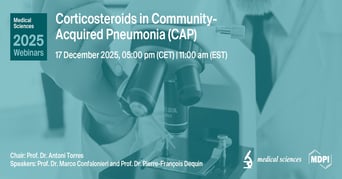
Medical Sciences Webinar | Corticosteroids in Community-Acquired Pneumonia (CAP), 17 December 2025


Welcome message from the Chair:

Welcome to the Corticosteroid’s webinar organized by the ournal of Medical Sciences (ISSN: 2076-3271). This webinar will cover controversial topics such as the administration of corticosteroids in sCAP, a frequent respiratory infection and a very lethal disease.

After a short introduction by myself, Prof. Marco Confalonieri from Triestre will review the complex issue of the physiology of corticosteroids administration in critically ill patients, and Prof. François-Dequin from Tour will provide an in-depth review on the current evidence, including the pros and the cons, for administering corticosteroids in sCAP.

Following the two presentations, there will be a debate and a Q&A session with our two speakers.

Date: 17 12 2025 at 5:00 p.m. CET | 11:00 a.m. EST
Webinar ID: 836 7053 6137

Register now for free!

Program:

Speaker/Presentation Time in CET Time in EST
Prof. Dr. Antoni Torres
Chair Introduction
5:00–5:05 p.m. 11:00–11:05 a.m.
Prof. Dr. Marco Confalonieri
Physiopathology of the administration of glucocorticosteroids in Critically ill patients
5:05–5:25 p.m. 11:05–11:25 a.m.
Prof. Dr. Pierre François Dequin
Role of gtlucocorticosteroids in Community-Acquired Pneumonia
5:25–5:45 p.m. 11:25–11:45 a.m.
Q&A Session 5:25–6:00 p.m. 11:45 a.m.–12:00 p.m.

After registering, you will receive a confirmation email containing information on how to join the webinar. Registrations with academic institutional email addresses will be prioritized.

Unable to attend? Register anyway and we will let you know when the recording is available to watch.

Webinar Chair and Keynote Speakers:

  • Prof. Dr. Antoni Torres, 1 Institut D investigacions August Pi I Sunyer (IDIBAPS), Department of Pulmonology, Hospital Clinic de Barcelona, Universidad de Barcelona, 08036 Barcelona, Spain; 2 Centro de Investigación Biomédica en Red en Enfermedades Respiratorias (CIBERES), Instituto de Salud Carlos III, 28029 Madrid, Spain;
  • Prof. Dr. Marco Confalonieri, Department of Pulmonology, University of Trieste, Italy;
  • Prof. Dr. Pierre François Dequin, Department of Intensive Care Medicine, University of Tours, France.

11 December 2025
Article Layout and Template Revised for Future Volumes

We are pleased to announce updates to our article template, aimed at improving the readability and visual appeal of our publications. The following updates will be applied to articles published in volumes in 2026, starting from 19 December 2025.

Left information bar:

  • Updated the logo and URL for “Check for updates”;
  • Removed the “Citation” section (Note: Citation details remain accessible via “Cite” in the online article version);
  • Changed the link in “Copyright” to a hyperlink format.

Footer:

  • Added a DOI link at the bottom-right corner of each page.

The updated template is now available for download from the Instructions for Authors page of each journal.

We hope that the new version of the template will provide users with better experience and make the process more convenient.

For any questions or suggestions, please contact our production team at production@mdpi.com.

1 December 2025
World AIDS Day, 1 December 2025


1 December is World AIDS Day, the day is an opportunity for public and private partners to spread awareness about the status of the pandemic and encourage progress in HIV/AIDS prevention, treatment, and care around the world. It has become one of the most widely recognized international health days.

In recognition of this day, we recommend the following related articles, Special Issues, and journals spanning multidisciplinary fields, including clinical medicine and biology. We believe that sharing such research can raise the public’s awareness and understanding of AIDS. The aim is to strengthen scientific cooperation in response to increased awareness about HIV/AIDS and to demonstrate international solidarity in the face of the pandemic.

Biology & Life Science Medicine & Pharmacology Social Science, Art and Humanities


Progress and Challenges in HIV-1 Vaccine Research: A Comprehensive Overview
by Alex C. Boomgarden and Chitra Upadhyay
Vaccines 2025, 13(2), 148; https://doi.org/10.3390/vaccines13020148

Drug-Drug Interactions Between HIV Antivirals and Concomitant Drugs in HIV Patients: What We Know and What We Need to Know
by Emanuela De Bellis, Danilo Donnarumma, Adele Zarrella, Salvatore Maria Mazzeo, Annarita Pagano, Valentina Manzo, Ines Mazza, Francesco Sabbatino, Graziamaria Corbi, Pasquale Pagliano et al.
Pharmaceutics 2025, 17(1), 31; https://doi.org/10.3390/pharmaceutics17010031

High Prevalence of High-Risk HPV Among People with and Without HIV: Insights into Risk Factors for Tailored Screening Approaches
by Elena Bruzzesi, Federica Gandini, Sara Diotallevi, Riccardo Lolatto, Massimo Cernuschi, Caterina Candela, Angelo Roberto Raccagni, Flavia Passini, Andrea Marco Tamburini, Roberto Burioni et al.
Microorganisms 2024, 12(12), 2571; https://doi.org/10.3390/microorganisms12122571

Association Between Left Ventricular Diastolic Dysfunction, Systemic Inflammation, and Gastrointestinal Symptoms in HIV-Positive Patients on Antiretroviral Therapy
by Madalina-Ianca Suba, Bogdan Hogea, Ahmed Abu-Awwad, Voichita Elena Lazureanu, Ovidiu Rosca, Daniela Gurgus, Sorina Maria Denisa Laitin and Alina Abu-Awwad
Diseases 2024, 12(12), 313; https://doi.org/10.3390/diseases12120313

NSC95397 Is a Novel HIV-1 Latency-Reversing Agent
by Randilea Nichols Doyle, Vivian Yang, Yetunde I. Kayode, Robert Damoiseaux, Harry E. Taylor and Oliver I. Fregoso
Viruses 2024, 16(11), 1783; https://doi.org/10.3390/v16111783

HIV Self-Testing: A Discussion on the Benefits, Limitations, and Implications for Public Health with a Focus on Poland
by Aleksandra Kozieł, Igor Domański, Aleksandra Szymczak, Tomasz Dudzik, Brygida Knysz and Bartosz Szetela
Diagnostics 2024, 14(22), 2475; https://doi.org/10.3390/diagnostics14222475

Tumor Initiation and Progression in People Living on Antiretroviral Therapies
by Seun E. Olufemi, Daniel A. Adediran, Temitope Sobodu, Isaac O. Adejumo, Olumide F. Ajani and Elijah K. Oladipo
Biologics 2024, 4(4), 390-406; https://doi.org/10.3390/biologics4040024

J3ExoA: A Novel Anti-HIV Immunotoxin Fusion of Anti-Gp120 J3VHH and PE38 Fragment of Pseudomonas Exotoxin A
by Seth H. Pincus, Kun Luo, Tami Peters, James T. Gordy, Frances M. Cole, Grant Klug, Kelli Ober, Tamera K. Marcotte and Richard B. Markham
Pharmaceuticals 2025, 18(9), 1305; https://doi.org/10.3390/ph18091305

A Memo on Factors Associated with Perception of Stigma Attached to PrEP: Evidence from the Keeping It LITE Study
by Shahin Davoudpour, Gregory L. Phillips II, Pedro A. Serrano, Audrey L. French and Sybil G. Hosek
Sexes 2024, 5(3), 300-316; https://doi.org/10.3390/sexes5030023

Effects of E-Cigarettes on the Lung and Systemic Metabolome in People with HIV
by Aline Zaparte, Courtney J. Christopher, Connie Arnold, Lauren Richey, Adairre Castille, Kyle Mistretta, Christopher M. Taylor, Huiyi Lin, Steve Nelson, John P. Kirwan, John W. Apolzan, Shawn R. Campagna and David A. Welsh
Metabolites 2024, 14(8), 434; https://doi.org/10.3390/metabo14080434

Bone Tissue Changes in Individuals Living with HIV/AIDS: The Importance of a Hierarchical Approach in Investigating Bone Fragility
by Jelena Jadzic, Gordana Dragovic, Relja Lukic, Bozana Obradovic and Marija Djuric
J. Pers. Med. 2024, 14(8), 791; https://doi.org/10.3390/jpm14080791

Advanced Therapies for Human Immunodeficiency Virus
by Daniel Josef Lindegger
Med. Sci. 2024, 12(3), 33; https://doi.org/10.3390/medsci12030033

Antiretroviral Therapy Switch in HIV-Infected Adults from a Regional HIV/AIDS Center in NE Romania
by Isabela Ioana Loghin, Șerban Alin Rusu, Andrei Vâţă, Mihaela Cobaschi, Ion Cecan, Carmen Manciuc and Carmen Mihaela Dorobăţ
Medicina 2024, 60(6), 854; https://doi.org/10.3390/medicina60060854

Alterations in the Gut Microbiome Composition of People Living with HIV in the Asia–Pacific Region: A Systematic Review
by Paul Benedic U. Salvador, Patrick Josemaria d. R. Altavas, Mark Angelo S. del Rosario, Eric David B. Ornos and Leslie Michelle M. Dalmacio
Clin. Pract. 2024, 14(3), 846-861; https://doi.org/10.3390/clinpract14030066

Systematic Review: HIV, Aging, and Housing—A North American Perspective, 2012–2023
by Arthur S. Chaminuka, Gayle Prybutok, Victor R. Prybutok and William D. Senn
Healthcare 2024, 12(10), 992; https://doi.org/10.3390/healthcare12100992

The Role of MicroRNAs in HIV Infection
by Nicolas Morando, Mara Cecilia Rosenzvit, Maria A. Pando and Jens Allmer
Genes 2024, 15(5), 574; https://doi.org/10.3390/genes15050574

HIV-TB Co-Infection and Pediatric Pathogen Dynamics
Guest Editor: Dr. Boris Kevin Tchounga
Submission deadline: 15 March 2026

HIV Expression in Diverse Cell Types: Mechanisms, Regulation, and Pathogenesis
Guest Editor: Dr. Rosemary Kiernan
Submission deadline: 20 March 2026

Research on HIV/AIDS Vaccine
Guest Editors: Dr. Portia Chipo Mutevedzi and Dr. Nagesh Kolishetti
Submission deadline: 31 May 2026

Gene and Cell Therapy: New Findings from Medical Research and Treatment
Guest Editors: Dr. Lorella Tripodi and Dr. Antonio Di Stasi
Submission deadline: 30 June 2026

Emerging Knowledge on Human Immunodeficiency Virus
Guest Editors: Dr. Giota Lourida and Prof. Dr. Dimitrios Paraskevis
Submission deadline: 22 July 2026

Nutrition Intervention in HIV Patients
Guest Editors: Dr. Meena Mahadevan
Submission deadline: 10 August 2026

21 November 2025
Meet Us at the 2025 ISBI Regional Conference, 3–4 December 2025, Thessaloniki, Greece


MDPI will be attending the 2025 ISBI Regional Conference, which will be held from 3 to 4 December 2025, in Thessaloniki, Greece.

The ISBI 2025 Regional Conference, hosted by International Society for Burn Injuries (ISBI), has the theme “Improving the Quality of Burn Care from Admission to Discharge and Beyond”. This international burn care scientific conference will focus on quality in burn care along the continuum of care. Topics to be discussed include burn wound debridement, closing the burn wound, burn critical care management, burn reconstruction, burn rehabilitation, and burn nursing, among others. Delegates from around the world will have the opportunity to discuss topics in burn care and exchange knowledge on how to best care for burn survivors. Industry partners will have the opportunity to showcase their latest burn care products, services, and technology and interact with medical professionals from around the world.

The following open access journals will be represented:

If you plan on attending this conference, please feel free to stop by our booth and have a conversation with us. Our delegates look forward to meeting you in person and answering any questions that you may have. For more information about the conference, please visit https://worldburn.org/conferences/isbi_regional_conference.aspx.

Back to TopTop