




Trends in Modern Mineral Processing and Recovery Techniques Toward the Energy Transition
A special issue of Materials (ISSN 1996-1944). This special issue belongs to the section "Energy Materials".
Deadline for manuscript submissions: closed (20 May 2025) | Viewed by 8523
Special Issue Editors

Interests: mineral processing; comminution; modeling and simulation; waste valorization
Special Issues, Collections and Topics in MDPI journals

Interests: rock mechanics; fracture mechanics; mining engineering; rock cutting; underground stability
Special Issues, Collections and Topics in MDPI journals

Special Issue Information
Dear Colleagues,
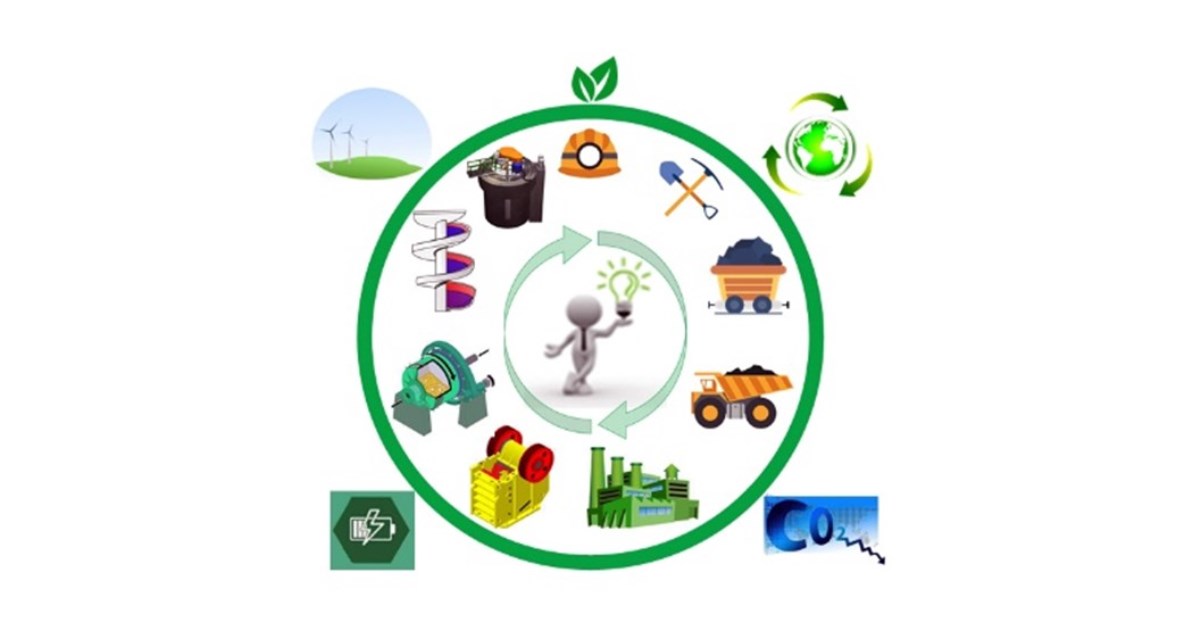
This Special Issue aims to cover topics and foster debates concerning technological innovations in geometallurgy, focusing on mineral processing technologies and recovery techniques for ores, by-products, and waste streams, including critical raw materials (CRMs), while rebounding a responsible supply of strategic metals through sustainable metallurgy in the era of energy transition. To the trajectory of ecological modernization and development, the mining industry requires sustainable exploration/exploitation and the efficient processing of materials. To meet the fundamental needs in mining concerning low CO2 emission and energy consumption, intelligent mining, mining hazard management, and self-driving technologies are proposed to be implemented in order to obtain social, economic, and environmental outcomes. Additionally, old-standing mineral processing technologies (e.g., comminution—grinding/crushing; classification—particle size separation; beneficiation combined with metallurgy and dewatering—solid/liquid separation) serve as high-energy and cost-consuming methods, affecting the economy and environment. Therefore, vital to optimize such techniques in order to produce mineral concentrates, reducing energy/water consumption and solid waste production by its recycling. The aforementioned actions can be achieved by applying sustainable architectures (modeling and simulation) and efficient controlling techniques in mineral processing systems, thus contributing to a more sustainable “modus operandi”.
Dr. Evangelos Petrakis
Dr. George Xiroudakis
Dr. Platon N. Gamaletsos
Guest Editors
Manuscript Submission Information
Manuscripts should be submitted online at www.mdpi.com by registering and logging in to this website. Once you are registered, click here to go to the submission form. Manuscripts can be submitted until the deadline. All submissions that pass pre-check are peer-reviewed. Accepted papers will be published continuously in the journal (as soon as accepted) and will be listed together on the special issue website. Research articles, review articles as well as short communications are invited. For planned papers, a title and short abstract (about 250 words) can be sent to the Editorial Office for assessment.
Submitted manuscripts should not have been published previously, nor be under consideration for publication elsewhere (except conference proceedings papers). All manuscripts are thoroughly refereed through a single-blind peer-review process. A guide for authors and other relevant information for submission of manuscripts is available on the Instructions for Authors page. Materials is an international peer-reviewed open access semimonthly journal published by MDPI.
Please visit the Instructions for Authors page before submitting a manuscript. The Article Processing Charge (APC) for publication in this open access journal is 2600 CHF (Swiss Francs). Submitted papers should be well formatted and use good English. Authors may use MDPI's English editing service prior to publication or during author revisions.
Keywords
- mineral processing
- comminution modeling and simulation
- classification—particle size separation
- dewatering—solid/liquid separation
- metallurgy
- sustainability
- circular economy
- energy efficiency
- critical raw materials (CRMs) and metals
- solid waste and materials recycling
Benefits of Publishing in a Special Issue
- Ease of navigation: Grouping papers by topic helps scholars navigate broad scope journals more efficiently.
- Greater discoverability: Special Issues support the reach and impact of scientific research. Articles in Special Issues are more discoverable and cited more frequently.
- Expansion of research network: Special Issues facilitate connections among authors, fostering scientific collaborations.
- External promotion: Articles in Special Issues are often promoted through the journal's social media, increasing their visibility.
- Reprint: MDPI Books provides the opportunity to republish successful Special Issues in book format, both online and in print.
Further information on MDPI's Special Issue policies can be found here.
