
Personalized Medicine for Clinical Psychology

A special issue of Journal of Personalized Medicine (ISSN 2075-4426). This special issue belongs to the section "Personalized Therapy in Clinical Medicine".

Deadline for manuscript submissions: 10 September 2026 | Viewed by 1940

Special Issue Editor


E-Mail Website
Guest Editor
1. Clinical Psychology Unit, Fondazione Policlinico Universitario A Gemelli IRCCS, 00168 Rome, Italy
2. Department of Woman, Children and Public Health, Catholic University of Sacred Heart, 00168 Rome, Italy
Interests: infancy and child; adults; medicine and life sciences; cognitive disorders; early rehabilitation; neuropsychological profile; mental health
Special Issues, Collections and Topics in MDPI journals

Special Issue Information

Dear Colleagues,

The field of personalized medicine is progressively expanding beyond pharmacological and genetic methodologies to include psychological and behavioral dimensions of healthcare.

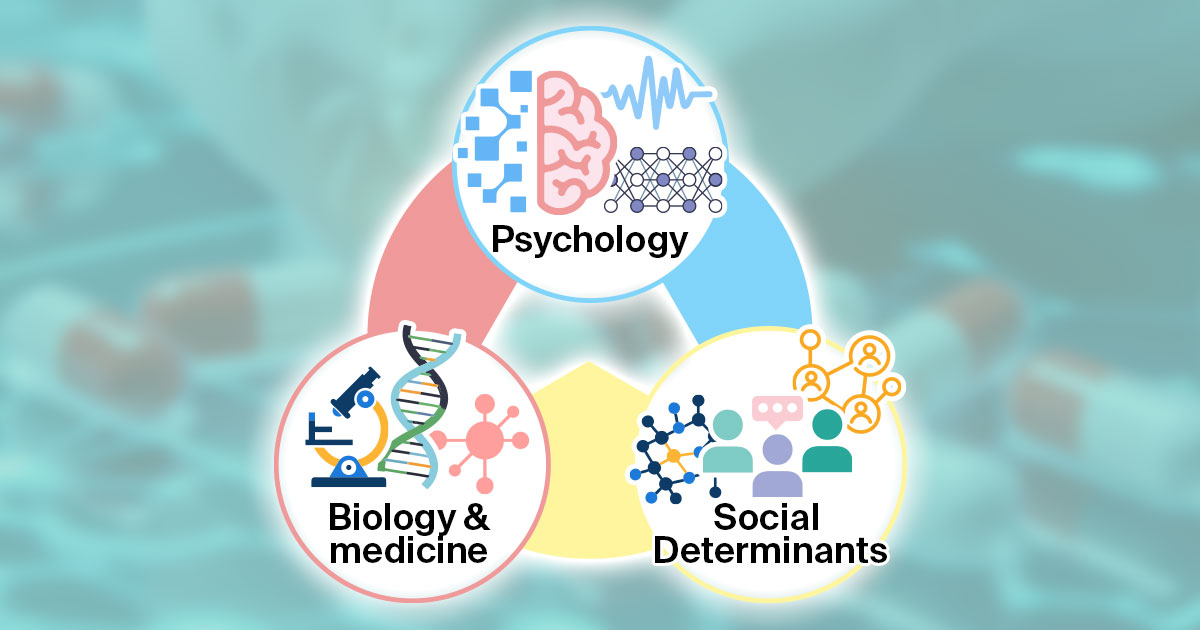
This Special Issue seeks to investigate the application of personalized medicine principles within the domains of clinical psychology and psychosomatic medicine, thereby facilitating a comprehensive understanding of the interplay among biological, psychological, and social determinants of health.

We are seeking submissions that encompass precision assessment, customized psychological interventions, and interdisciplinary care models within various medical settings. We welcome original research and comprehensive reviews that focus on individualized psychotherapeutic approaches, integrated care strategies, digital personalization, or psychological outcomes related to personalized medicine.

Dr. Daniela Pia Rosaria Chieffo
Guest Editor

Manuscript Submission Information

Manuscripts should be submitted online at www.mdpi.com by registering and logging in to this website. Once you are registered, click here to go to the submission form. Manuscripts can be submitted until the deadline. All submissions that pass pre-check are peer-reviewed. Accepted papers will be published continuously in the journal (as soon as accepted) and will be listed together on the special issue website. Research articles, review articles as well as short communications are invited. For planned papers, a title and short abstract (about 250 words) can be sent to the Editorial Office for assessment.

Submitted manuscripts should not have been published previously, nor be under consideration for publication elsewhere (except conference proceedings papers). All manuscripts are thoroughly refereed through a single-blind peer-review process. A guide for authors and other relevant information for submission of manuscripts is available on the Instructions for Authors page. Journal of Personalized Medicine is an international peer-reviewed open access monthly journal published by MDPI.

Please visit the Instructions for Authors page before submitting a manuscript. The Article Processing Charge (APC) for publication in this open access journal is 2600 CHF (Swiss Francs). Submitted papers should be well formatted and use good English. Authors may use MDPI's English editing service prior to publication or during author revisions.

Keywords

  • personalized medicine
  • clinical psychology
  • integrated care
  • psychosomatic medicine
  • patient-centered care
  • digital health
  • individualized intervention
  • psycho-oncology

Benefits of Publishing in a Special Issue

  • Ease of navigation: Grouping papers by topic helps scholars navigate broad scope journals more efficiently.
  • Greater discoverability: Special Issues support the reach and impact of scientific research. Articles in Special Issues are more discoverable and cited more frequently.
  • Expansion of research network: Special Issues facilitate connections among authors, fostering scientific collaborations.
  • External promotion: Articles in Special Issues are often promoted through the journal's social media, increasing their visibility.
  • Reprint: MDPI Books provides the opportunity to republish successful Special Issues in book format, both online and in print.

Further information on MDPI's Special Issue policies can be found here.

Published Papers (3 papers)

Order results
Result details
Select all
Export citation of selected articles as:

Research

Jump to: Review

52 pages, 5025 KB  
Article
In Silico Psycho-Oncology: Understanding Resilience Pathways in Breast Cancer—Determinants of Longitudinal Depression and Quality-of-Life Trajectories
by Eleni Kolokotroni, Paula Poikonen-Saksela, Ruth Pat-Horenczyk, Berta Sousa, Albino J. Oliveira-Maia, Ketti Mazzocco, Haridimos Kondylakis and Georgios S. Stamatakos
J. Pers. Med. 2026, 16(4), 209; https://doi.org/10.3390/jpm16040209 - 7 Apr 2026
Viewed by 416
Abstract
Background/Objectives: Patients with breast cancer show substantial heterogeneity in terms of psychological adjustment following diagnosis. We aimed to characterize longitudinal trajectories of quality of life (QoL) and depressive symptoms during the first 18 months post-diagnosis and to identify robust clinical, psychosocial, and behavioral [...] Read more.
Background/Objectives: Patients with breast cancer show substantial heterogeneity in terms of psychological adjustment following diagnosis. We aimed to characterize longitudinal trajectories of quality of life (QoL) and depressive symptoms during the first 18 months post-diagnosis and to identify robust clinical, psychosocial, and behavioral predictors associated with distinct adjustment pathways. Methods: Women (N = 538; mean age 55.4 years; range 40–70) with operable breast cancer (stages I–III) were drawn from the multicenter BOUNCE cohort. QoL (Global Health Status/QoL scale of the European Organisation for Research and Treatment of Cancer Quality of Life Questionnaire Core 30) and depressive symptoms (depression subscale of the Hospital Anxiety and Depression Scale) were assessed at baseline and months 3, 6, 9, 12, 15 and 18. Latent class growth analysis and growth mixture modeling identified distinct trajectory classes. Associations between early predictors and trajectory membership were examined using logistic regression combined with elastic net regularization. Results: Depression trajectories demonstrated heterogeneity, with groups characterized by persistent resilience (59.7%), stable moderate/high (25.3%), delayed onset (5.0%), and recovery (10.0%). QoL trajectories ranged from stable excellent (13.2%) and stable high (40.7%) to moderate (31.4%) and persistent low/deteriorating (6.9%), as well as a distinct recovering trajectory (7.8%). Trajectory differentiation was primarily driven by psychological resources, symptom burden, functional status, and coping processes, alongside specific contributions from clinical factors. Conclusions: Distinct subgroups of women with breast cancer follow divergent adjustment pathways. These findings highlight the multidimensional nature of resilience and support the need for tailored interventions that promote long-term well-being beyond simple risk reduction. Full article
(This article belongs to the Special Issue Personalized Medicine for Clinical Psychology)
Show Figures

Figure 1

14 pages, 252 KB  
Article
Personalised Psychological Care in Hospitals: An Organisational Model of Integrated, Patient- and Staff-Centred Services (2019–2024)
by Daniela Pia Rosaria Chieffo, Valentina Massaroni, Valentina Delle Donne, Letizia Lafuenti, Laura Monti, Valentina Arcangeli, Federica Moriconi, Daniele Ferrarese, Roberta Galluzzi, Eugenio Maria Mercuri, Gabriele Sani, Giampaolo Tortora and Antonio Gasbarrini
J. Pers. Med. 2026, 16(1), 30; https://doi.org/10.3390/jpm16010030 - 5 Jan 2026
Viewed by 671
Abstract
Background: Psychological services within hospitals are essential to delivering integrated, patient-centred care, yet in many health systems they remain fragmented, variably organised, or confined to specific medical specialties. The Clinical Psychology Unit of the Fondazione Policlinico Universitario Agostino Gemelli, Istituto di Ricerca [...] Read more.
Background: Psychological services within hospitals are essential to delivering integrated, patient-centred care, yet in many health systems they remain fragmented, variably organised, or confined to specific medical specialties. The Clinical Psychology Unit of the Fondazione Policlinico Universitario Agostino Gemelli, Istituto di Ricerca e Cura a Carattere Scientifico (IRCCS), represents one of the few examples of a hospital-wide psychological governance model in Italy, but its organisational structure and longitudinal activity have not previously been systematically described. Objective: This study (I) describes the organisational design and operational components of the Gemelli Unit; (II) compares it with international organisational models using a typological framework; and (III) examines its resilience and adaptive capacity during the coronavirus disease 2019 (COVID-19) pandemic. Methods: A descriptive–narrative approach was adopted, integrating institutional documentation, routinely collected service data (2019–2024), anonymised case vignettes, and a structured comparison with national and international psychological care structures. The analysis was informed by theoretical models of integrated health-care delivery and by Donabedian’s structure–process–outcome framework. Results: Between 2019 and 2024, psychological interventions increased from 28,878 to 47,076 (+63%), with a post-pandemic average of 41,868 annual interventions. In 2024, the Unit supported 2150 patients and 340 healthcare professionals, with psycho-oncology accounting for approximately one-third of all activities. The model integrates clinical activity, staff support, conflict management, research, and training under a centralised governance structure, ensuring hospital-wide coverage and coordinated referral pathways. The comparative analysis identified four international organisational types—department-based, liaison/specialty-based, structured health-system, and academic–clinical hybrid—highlighting the hybrid and transversal nature of the Gemelli Unit and its capacity to maintain and adapt services during the COVID-19 emergency. Conclusions: The Gemelli Unit represents a distinctive hospital-wide organisational model that combines centralised governance, transversal deployment, personalised care, and structured support for healthcare professionals. These characteristics position it as a potentially transferable benchmark for health systems seeking to integrate psychological care into core organisational and clinical processes. Future work should prioritise the development of standardised outcome indicators and national frameworks to support the evaluation and harmonisation of hospital-based psychological services. Full article
(This article belongs to the Special Issue Personalized Medicine for Clinical Psychology)

Review

Jump to: Research

29 pages, 1217 KB  
Review
Psychological Resilience in Surgery: Psychobiological Pathways, Clinical Impact, and Perioperative Modulation—A Narrative Review
by Giovanni Camardese, Marco Maria Pascale, Antonio Maria D’Onofrio, Rosaria Calia, Michele Ribolsi, Alexia Koukopoulos, Federico Fiori Nastro, Gaspare Filippo Ferrajoli, Elisa Schirra, Eleonora Maggio, Gabriele Sani and Gianluca Costa
J. Pers. Med. 2026, 16(4), 178; https://doi.org/10.3390/jpm16040178 - 25 Mar 2026
Viewed by 591
Abstract
Background and Objectives: Psychological resilience is increasingly recognized as a determinant of how patients respond to surgical stress, yet its role in perioperative medicine remains poorly defined. This narrative review aims to synthesize current evidence on resilience in surgical populations from a psychobiological [...] Read more.
Background and Objectives: Psychological resilience is increasingly recognized as a determinant of how patients respond to surgical stress, yet its role in perioperative medicine remains poorly defined. This narrative review aims to synthesize current evidence on resilience in surgical populations from a psychobiological perspective, spanning conceptual models, measurement approaches, clinical correlates, biological mechanisms, and intervention strategies. Materials and Methods: This narrative review was conducted to examine psychological resilience in adult surgical populations from an integrated psychobiological and perioperative perspective. A structured literature search was performed in December 2026 using PubMed, Scopus, and PsycInfo, combining resilience-related constructs with surgical, perioperative, biological, and clinical outcome keywords. Eligible publications included observational, longitudinal, interventional, translational, and conceptually relevant studies addressing resilience in adult surgical settings. Evidence was synthesized qualitatively across predefined domains, including conceptualization and measurement of resilience, associations with perioperative outcomes, neuroendocrine and inflammatory mechanisms, and resilience-modulating interventions within perioperative and Enhanced Recovery After Surgery (ERAS) frameworks. Results: Contemporary models conceptualize resilience as a dynamic, context-dependent process supported by interacting psychological, biological, and social factors. In surgical cohorts, higher resilience is consistently associated with better patient-reported outcomes, including quality of life, pain control, and emotional adjustment, and in some studies with survival and functional recovery. Preoperative depression, anxiety, maladaptive coping, and low social support converge as components of a broader “resilience profile” linked to poorer postoperative trajectories. Biologically, resilient phenotypes are characterized by more regulated hypothalamic–pituitary–adrenal and autonomic responses and reduced inflammatory activation. Psychological therapies, prehabilitation programs, and selected pharmacological strategies show convergent, though heterogeneous, signals of benefit and can be interpreted as indirect resilience-enhancing interventions. Conclusions: Resilience appears to be a clinically meaningful, potentially modifiable construct that links psychosocial functioning, biological vulnerability, and postoperative outcomes. Incorporating resilience assessment into preoperative risk stratification and systematically embedding resilience-building strategies within perioperative and ERAS pathways may support more personalized, psychologically informed surgical care. Prospective, multidomain studies are needed to validate measurement tools, clarify mechanisms, and test resilience-targeted interventions in surgical populations. Full article
(This article belongs to the Special Issue Personalized Medicine for Clinical Psychology)
Show Figures

Figure 1

Back to TopTop