

jcm-logo

Journal Browser

Journal Browser

Pediatric and Adolescent Gynecology

A topical collection in Journal of Clinical Medicine (ISSN 2077-0383). This collection belongs to the section "Obstetrics & Gynecology".

Viewed by 17292

Editor


E-Mail Website
Collection Editor
2nd Department of Obstetrics and Gynecology, Medical School, National and Kapodistrian University of Athens, 115 28 Athens, Greece
Interests: gynecology; obstetrics; reproductive; endocrinology; mullerian anomalies; PCOS; pediatric gynecology; high-risk pregnancy; adolescent gynecology; minimally invasive surgery
Special Issues, Collections and Topics in MDPI journals

Topical Collection Information

Dear Colleagues,

Paediatric and Adolescent Gynaecology (PAG) is a specialized field that focuses on the reproductive health of children and young adults. It deals with concerns related to diagnosing, managing, and treating gynaecological issues in children, such as congenital anomalies, reproductive tract malformations, and disorders of sexual development. Other specific conditions that may occur in young patients include inflammation of the vulva and vagina, early onset of puberty, delayed puberty, and others. In adolescence, menstrual disorders like irregular periods, heavy or prolonged bleeding, or absence of menstruation are common. Disorders like polycystic ovary syndrome (PCOS), dysmenorrhea, endometriosis, ovarian cysts, contraception, sexually transmitted infections (STIs), teenage pregnancy, ovarian disorders and fertility preservation, intersex issues, abortions, psychosomatics, paediatric and adolescent reproductive malignancies also require careful investigation and treatment. Understanding these areas helps medical professionals address the specific needs of this patient population and promote their overall well-being.

The scientists involved in these fields may include gynaecologists, paediatricians, paediatric surgeons, paediatric urologists, paediatric or adult endocrinologists, clinical geneticists and psychologists, and other medical experts specializing in reproductive health.

As our knowledge expands and our PAG practice improves, there is a need for a specific scientific journal, dedicated to PAG, in order to host specific scientific information, helpful for those interested in and practicing in this area of specific interest.

The Hellenic Society of Paediatric and Adolescent Gynaecology (HellenicPAG-HSPAG) presents its official journal, established in collaboration with the Journal of Clinical Medicine. Our goal is to serve as a hub for scientists and contribute to the advancement of knowledge and understanding in the field of paediatric and adolescent gynaecology.

The Hellenic Society of Paediatric and Adolescent Gynaecology (HellenicPAG) and the Journal of Clinical Medicine offer the opportunity to publish in a PubMed journal with a high impact factor. Members of any National Paediatric and Adolescent Gynaecology Society worldwide receive discounted publication fees. Certified IFEPAG fellows receive even greater discounts. This journal primarily accepts reviews, metanalyses, and original research studies, belonging to the field of Paediatric and Adolescent Gynaecology. However, case reports that present significant and practice-changing cases will also be considered for publication.

This journal aims to become a useful tool and a referral platform for PAG practitioners around the world. Publishing in this journal not only increases the visibility of your scientific work but also contributes to improving the practice of Pediatric and Adolescent Gynecology and promotes networking among practitioners. 

Dr. Panagiotis Christopoulos
Collection Editor

Manuscript Submission Information

Manuscripts should be submitted online at www.mdpi.com by registering and logging in to this website. Once you are registered, click here to go to the submission form. Manuscripts can be submitted until the deadline. All submissions that pass pre-check are peer-reviewed. Accepted papers will be published continuously in the journal (as soon as accepted) and will be listed together on the collection website. Research articles, review articles as well as short communications are invited. For planned papers, a title and short abstract (about 250 words) can be sent to the Editorial Office for assessment.

Submitted manuscripts should not have been published previously, nor be under consideration for publication elsewhere (except conference proceedings papers). All manuscripts are thoroughly refereed through a single-blind peer-review process. A guide for authors and other relevant information for submission of manuscripts is available on the Instructions for Authors page. Journal of Clinical Medicine is an international peer-reviewed open access semimonthly journal published by MDPI.

Please visit the Instructions for Authors page before submitting a manuscript. The Article Processing Charge (APC) for publication in this open access journal is 2600 CHF (Swiss Francs). Submitted papers should be well formatted and use good English. Authors may use MDPI's English editing service prior to publication or during author revisions.

Keywords

  • paediatric gynaecology
  • adolescent gynaecology
  • children
  • adolescents
  • congenital anomalies
  • disorders of sexual development
  • vulvovaginitis
  • puberty
  • menstruation
  • PCOS
  • dysmenorrhea
  • endometriosis
  • contraception
  • sexually transmitted infections
  • pregnancy
  • amenorrhoea
  • abnormal uterine bleeding
  • ovarian disorders
  • intersex
  • abortions
  • reproductive malignancies

Published Papers (6 papers)

2025

Jump to: 2024

30 pages, 1312 KB  
Article
Development of Novel Predictive Scores for Obstetrical Risk Stratification in Adolescent Pregnancies: A Retrospective Study
by Abdul Jabar Khudor, Marius Alexandru Moga, Oana Gabriela Dimienescu, Andrada Camelia Nicolau, Cristian Andrei Arvatescu and Mircea Daniel Hogea
J. Clin. Med. 2026, 15(1), 139; https://doi.org/10.3390/jcm15010139 - 24 Dec 2025
Viewed by 168
Abstract
Background: Adolescent pregnancies represent a significant global health challenge, with increased risks of maternal and neonatal complications. Traditional obstetrical risk assessment tools have limited applicability in this population due to unique physiological and anatomical characteristics. This study aimed to develop and validate [...] Read more.
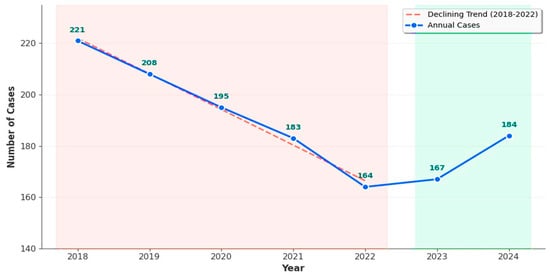
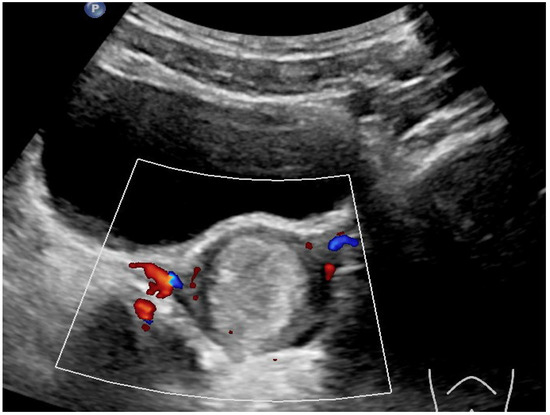
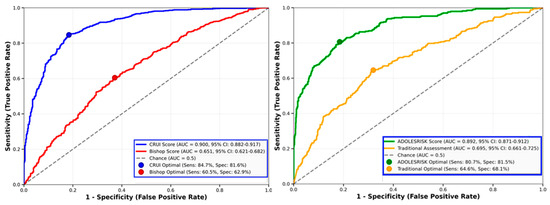
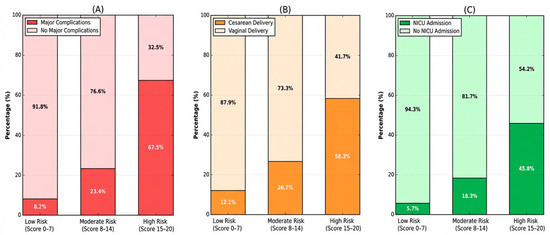
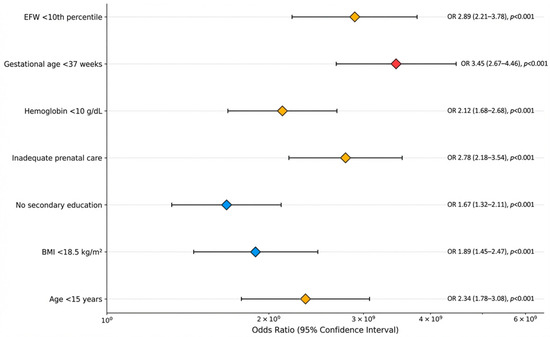
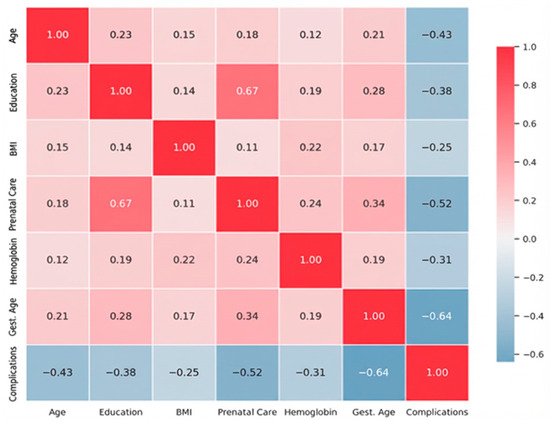
Background: Adolescent pregnancies represent a significant global health challenge, with increased risks of maternal and neonatal complications. Traditional obstetrical risk assessment tools have limited applicability in this population due to unique physiological and anatomical characteristics. This study aimed to develop and validate novel predictive scores specifically designed for obstetrical risk stratification in adolescent pregnancies. Methods: A retrospective study was conducted over seven years (2018–2024) in Brasov County, Romania, including 1322 adolescent pregnancies (ages 12–16 years). Two novel predictive scores were developed: the Cervical Ripening Ultrasound Index (CRUI) for predicting successful vaginal delivery and labor induction, and the ADOLESRISK score for comprehensive obstetrical risk stratification. Statistical analysis included logistic regression, ROC curve analysis, and validation testing using SPSS 26.0 and R Studio version 4.3.2. Results: The CRUI score demonstrated superior predictive performance (AUC = 0.87, 95% CI: 0.84–0.90) compared to traditional Bishop score (AUC = 0.62, 95% CI: 0.58–0.66) for successful labor induction in adolescents. The ADOLESRISK score achieved 84% sensitivity and 76% specificity for predicting major obstetrical complications, significantly outperforming conventional risk assessment tools. Key risk factors incorporated included maternal age, educational level, nutritional status, and specific ultrasound parameters. Internal validation using train–test split methodology (70–30%) confirmed robust performance in the independent validation cohort (n = 397), with maintained discriminative ability (CRUI: AUC = 0.85, 95% CI: 0.80–0.90; ADOLESRISK: AUC = 0.82, 95% CI: 0.77–0.87) across different demographic subgroups. Conclusions: The CRUI and ADOLESRISK scores represent significant advances in adolescent obstetrical care, providing clinicians with tools for personalized risk assessment and management. Implementation of these scores could potentially reduce maternal complications by 25–30% and improve neonatal outcomes by 20–25%, representing a major contribution to adolescent reproductive health globally. Full article
Show Figures

Figure 1
15 pages, 1251 KB  
Article
Multicentre Trial Evaluating the Safety and Tolerability of Estetrol-Drospirenone Combined Oral Contraceptive in Postmenarchal Female Adolescents
by Angelica Lindén Hirschberg, Lali Pkhaladze, Kristina Gemzell-Danielsson, Kai Haldre, Kateryna Ruban, Nina Flerin, Guillaume Chatel and Dan Apter
J. Clin. Med. 2025, 14(24), 8832; https://doi.org/10.3390/jcm14248832 - 13 Dec 2025
Viewed by 411
Abstract
Objectives: This study aims to evaluate the safety and tolerability of estetrol/drospirenone in adolescents. Methods: In this Phase 3 open-label study, postmenarchal adolescents (12–17 years) received estetrol (E4)/drospirenone (DRSP) 15 mg/3 mg orally for six cycles (24 active/4 placebo regimen). Safety [...] Read more.
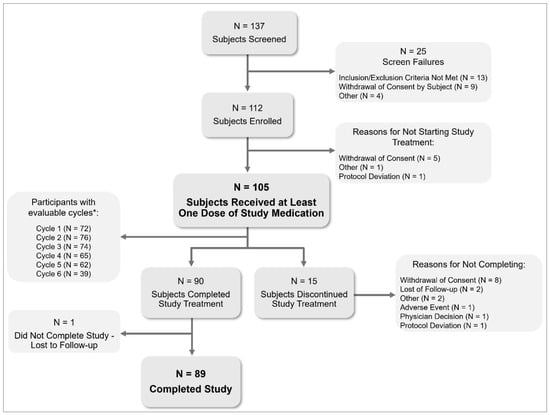
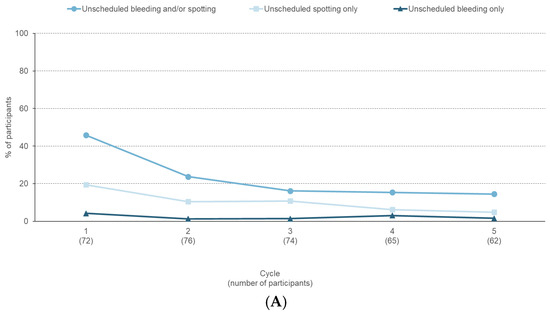
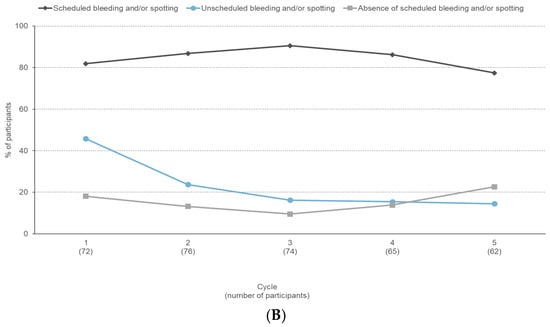
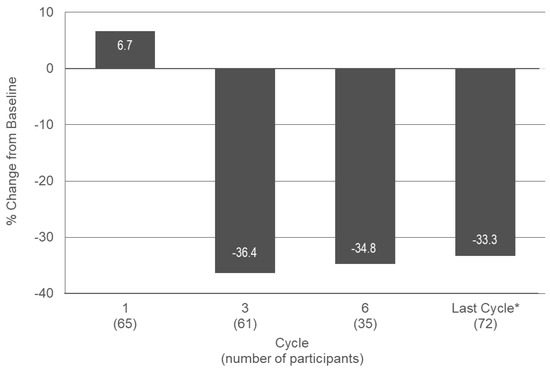
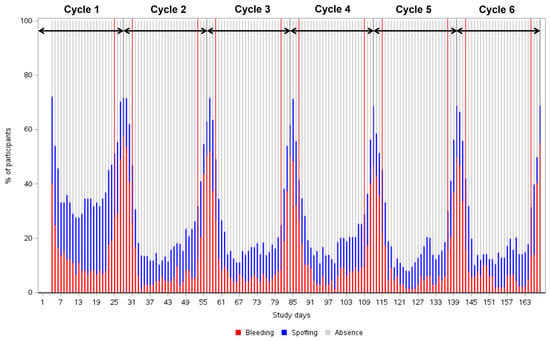
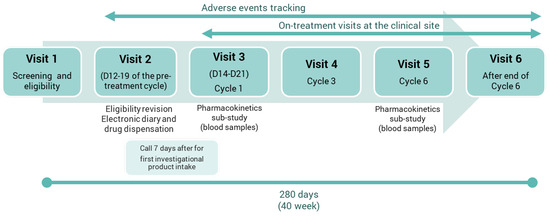
Objectives: This study aims to evaluate the safety and tolerability of estetrol/drospirenone in adolescents. Methods: In this Phase 3 open-label study, postmenarchal adolescents (12–17 years) received estetrol (E4)/drospirenone (DRSP) 15 mg/3 mg orally for six cycles (24 active/4 placebo regimen). Safety was evaluated through adverse event (AE) reporting. Participants also recorded daily pill intake, bleeding/spotting, dysmenorrhea, and pain medication use in e-diaries. Descriptive statistics were used. Results: Of 112 enrolled participants, 105 received treatment (mean age: 15.2 years), and 84.8% were completers. No serious treatment-related AEs or safety concerns were observed. Nausea and dysmenorrhea (each 1.9%) were the most common treatment-related AEs. Over 71% of participants took all tablets in each cycle. The percentage of participants with unscheduled bleeding and/or spotting decreased from 45.8% (Cycle 1) to 14.5% (Cycle 5), and the number of days with unscheduled bleeding and/or spotting decreased from nine to six days per cycle. The scheduled bleeding and/or spotting rate ranged between 77.4% and 90.5%, with a duration decreasing from six to four days in Cycle 1 to Cycle 5. Absence of scheduled bleeding increased from 9.5% in Cycle 3 to 22.6% in Cycle 5. The proportion of participants reporting dysmenorrhea decreased by 34.8%, with a median visual analogue scale score dropping from 5.0 at baseline to 3.7 at Cycle 6. Pain medication use decreased from 63.9% to 31.6% in Cycle 6. Conclusions: The use of E4/DRSP in adolescents raised no safety concerns, was well tolerated, resulted in a clear and stable cyclic bleeding pattern, and reduced pain associated with dysmenorrhea. Full article
Show Figures

Figure 1
9 pages, 213 KB  
Article
A Retrospective Review of Gynaecological and Social Outcomes for Teenage Pregnancies from 2020 to 2022 in Stoke-on-Trent
by Maria van Veelen, Lauren Franklin, Aisling McCann and Fidelma O’Mahony
J. Clin. Med. 2025, 14(16), 5745; https://doi.org/10.3390/jcm14165745 - 14 Aug 2025
Cited by 1 | Viewed by 851
Abstract
Background/Objectives: Adolescent pregnancies are associated with negative outcomes of health and social and economic consequences for both the mother and child. The aim of this audit was to determine the incidence of gynaecological complications and adverse social determinants of health affecting pregnant [...] Read more.
Background/Objectives: Adolescent pregnancies are associated with negative outcomes of health and social and economic consequences for both the mother and child. The aim of this audit was to determine the incidence of gynaecological complications and adverse social determinants of health affecting pregnant women less than 20 years old at the time of delivery in Stoke-on-Trent, with the goal of improving local and national trust guidelines. Methods: A retrospective case note review was conducted using electronic databases. Subjects had to be under the age of 20 years old at the time of delivery at our local tertiary hospital from January 2020 to December 2022. Results: Four hundred and seventy-three women met the inclusion criteria. The median age was 18 years old (range: 13–19 years). Most women delivered at term (mean 38+3), were primigravida (76%), and underwent spontaneous delivery (43%). Both our induction rate of 28.2% and caesarean section rate of 18.4% were below the national averages. Complications of post-partum haemorrhage and low birth weights exceeded the national averages, with third- to fourth-degree perineal tears just below the national incidence rate of 2.9%. Negative social determinants of health included smoking, mental illness, and low breastfeeding rates. Our mean 3-year breastfeeding rate was 24.3%. Conclusions: This single-centre audit at a large tertiary hospital has demonstrated that women under the age of 20 years old in socially deprived areas of the UK are more likely to experience negative gynaecological and social outcomes from their pregnancies compared to areas of low deprivation within the UK. Full article

2024

Jump to: 2025

117 pages, 11215 KB  
Conference Report
Abstracts of the 16th European Congress of Paediatric and Adolescent Gynaecology
by Panagiotis Christopoulos, Anastasia Vatopoulou, Lina Michala, Zuzana Nižňanská, Zoran Stankovic, Evelien Roos, Theodoros Theodoridis, Pandelis Tsimaris, Pallavi Lathe, Angelos Daniilidis, Nikos F. Vlahos and Žana Bumbulienė
J. Clin. Med. 2024, 13(24), 7574; https://doi.org/10.3390/jcm13247574 - 12 Dec 2024
Viewed by 6429
Abstract
Objectives of Paediatric and Adolescent Gynaecology (PAG): PAG aims to foster a collaborative environment that bridges knowledge from various disciplines to ensure the highest quality of care for children and adolescents with gynaecological issues. The European Association of PAG and HellenicPAG, like all [...] Read more.
Objectives of Paediatric and Adolescent Gynaecology (PAG): PAG aims to foster a collaborative environment that bridges knowledge from various disciplines to ensure the highest quality of care for children and adolescents with gynaecological issues. The European Association of PAG and HellenicPAG, like all National PAG Societies, support research and education to advance new insights, improve health outcomes, enhance quality of life, and protect future fertility. Additionally, PAG promotes international cooperation by proposing guidelines for good clinical practice in terms of prevention, diagnosis, procedures, and treatment. Scientific Program and Highlights: The scientific committee curated a comprehensive program featuring renowned experts and researchers from across Europe. Over four days, participants explored a wide range of topics through lectures, panel discussions, case studies, debates, video presentations, and workshops. The conference attracted professionals from various disciplines, including gynaecology, paediatrics, paediatric endocrinology, psychology, plastic surgery, and paediatric surgery. The collaboration between the European Association of Paediatric and Adolescent Gynaecology and the Hellenic Society of Paediatric and Adolescent Gynaecology resulted in a cutting-edge scientific program. World-renowned experts (Appendix A) presented on all aspects of paediatric and adolescent gynaecology, with a particular focus on emerging topics such as abortion, global rights, transgender care, teenage pregnancy, and more. Theme—Individualized Care in an Evolving World: The congress theme aligned perfectly with the evolving landscape of PAG. By presenting high-quality, evidence-based topics, the program aimed to equip the next generation of specialists with the knowledge and skills needed to provide individualized care in a rapidly changing world. Full article
Show Figures

Figure 1
13 pages, 830 KB  
Article
Dysmenorrhea in Polish Adolescent Girls: Impact on Physical, Mental, and Social Well-Being—Results from POLKA 18 Study
by Michalina Drejza, Katarzyna Rylewicz, Ewa Majcherek, Joanna Barwińska, Grzegorz Łopiński, Małgorzata Mizgier, Katarzyna Plagens-Rotman, Magdalena Pisarska-Krawczyk, Grażyna Jarząbek-Bielecka and Witold Kędzia
J. Clin. Med. 2024, 13(20), 6286; https://doi.org/10.3390/jcm13206286 - 21 Oct 2024
Cited by 4 | Viewed by 2619
Abstract
Background: Dysmenorrhea, characterised by painful menstrual cramps, is a pressing issue among adolescent girls globally. It significantly impacts their quality of life and has been associated with increased mental health issues and engagement in risky behaviours like smoking. In Poland, there is [...] Read more.
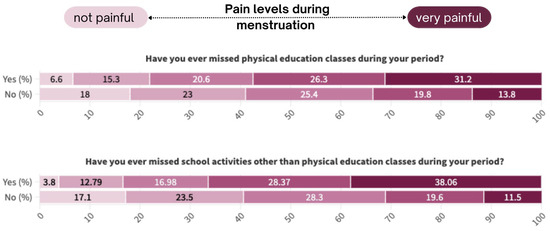
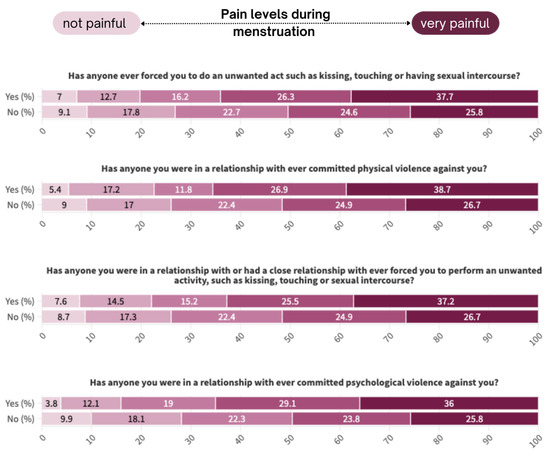
Background: Dysmenorrhea, characterised by painful menstrual cramps, is a pressing issue among adolescent girls globally. It significantly impacts their quality of life and has been associated with increased mental health issues and engagement in risky behaviours like smoking. In Poland, there is limited research on menstrual health, emphasising the need for a study to understand dysmenorrhea experiences and their impact on young menstruating individuals. Methods: This research project investigated the effects of dysmenorrhea on quality of life and school attendance, as well as its associations with non-communicable diseases, including mental health among adolescent girls in Poland. Additionally, the study examined risk factors for non-communicable disease development, including high-risk health behaviours and exposure to violence. The study utilised a cross-sectional design, administering self-reported questionnaires in high schools and vocational schools in six voivodeships (regions) in Poland. The analysis was performed using the R language in the Rstudio environment. p-value < 0.05 was considered significant. Results: A significant percentage of respondents experienced heavy menstruation, irregularity, and pain. Adolescents with dysmenorrhea reported higher rates of school absenteeism, mental health issues (such as anxiety and panic attacks), and a higher likelihood of engagement in risk behaviours like smoking and illicit drug use. The study also identified associations between dysmenorrhea and experiences of violence, including sexual abuse and intimate partner violence, as well as links to self-harm and suicidal ideation. Conclusions: These findings contribute to understanding dysmenorrhea among Polish adolescent girls, emphasising the need for tailored interventions and support services. The study underscores the necessity of addressing menstrual health comprehensively, considering its impact on various aspects of young women’s lives and promoting their overall well-being. Full article
Show Figures

Figure 1
23 pages, 647 KB  
Systematic Review
Applicability and Suitability of the Embryological–Clinical Classification of Female Genital Malformations: A Systematic Review
by Victoria Navarro, Maribel Acién and Pedro Acién
J. Clin. Med. 2024, 13(10), 2988; https://doi.org/10.3390/jcm13102988 - 19 May 2024
Cited by 2 | Viewed by 2948
Abstract
Complex urogenital malformations are clinically highly relevant; thus, they must be appropriately diagnosed and classified before initiating treatment. Background/Objectives: This study aimed to evaluate the applicability and suitability of the embryological–clinical classification of female genital malformations. Methods: A systematic review of cases of [...] Read more.
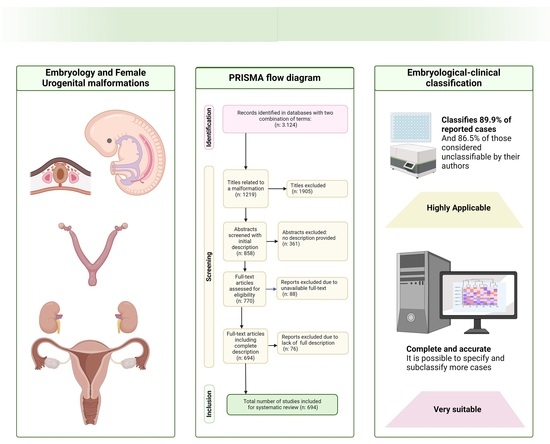
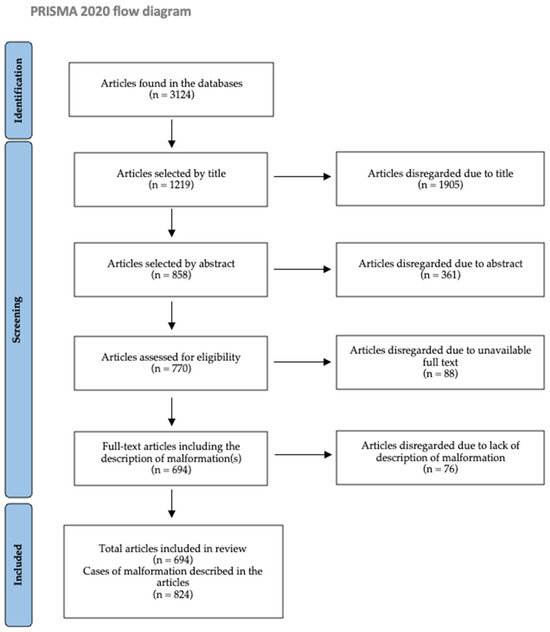
Complex urogenital malformations are clinically highly relevant; thus, they must be appropriately diagnosed and classified before initiating treatment. Background/Objectives: This study aimed to evaluate the applicability and suitability of the embryological–clinical classification of female genital malformations. Methods: A systematic review of cases of genital malformations reported in the literature from 2000 to 2020 was conducted. Case reports and series with the following combinations: “female genital tract” AND (malformation OR anomaly OR müllerian anomaly OR uterine anomaly OR cervical anomaly OR vaginal anomaly OR cloacal anomaly OR urogenital sinus); and “female genital tract” AND (renal agenesis OR ectopic ureter) were searched. A total of 3124 articles were identified, of which 824 cases of genital malformation were extracted. The characteristics of each malformation were included in a database for further analyses. Results: Using the embryological–clinical classification, 89.9% of the published cases and 86.5% of the 52 cases defined as unclassifiable by their authors have been classified in this review. In 73 cases (72.2%), the classification of the malformation using the AFS system was incomplete because although the type of uterine anomaly of the AFS classification matched that of the embryological–clinical classification, characteristics of the urinary system or the vagina were overlooked when using the AFS system. Following a dispersion matrix, we have been able to show that the embryological–clinical classification system is able to classify and subclassify the genitourinary malformations more accurately. Conclusions: The applicability of the embryological–clinical classification has been confirmed after classifying most of the cases of genital malformation previously published. This system also provides a more complete and accurate classification than other classifying systems exclusively based on Müllerian duct development or uterovaginal parameters, demonstrating its suitability. Full article
Show Figures

Graphical abstract

Back to TopTop