
Skip Content
You are currently on the new version of our website. Access the old version .
  • Tracked for
    Impact Factor
  • 6.2
    CiteScore
  • 21 days
    Time to First Decision

FinTech

FinTech is an international, peer-reviewed, open access journal on a variety of themes connected with financial technology, such as cryptocurrencies, risk management, robo-advising, crowdfunding, blockchain, new payment solutions, machine learning and AI for financial services, digital currencies, etc., published quarterly online by MDPI.

All Articles (192)

Asia presently houses some of the top and dynamic economies in the world. These economies have also experienced high fintech adoption in their banking sectors. This paper examines the impact of fintech adoption and integration on the efficiency and stability of banks in 9 Asian countries, using panel data from 85 banks spanning 11 years from 2014 to 2024. It first analyzes the impact of fintech on banks across all selected countries and then, on a stratified basis, divides them into three categories: developed economies, large economies, and emerging countries. The paper uses non-performing loan (NPL) and provision for loan losses (PLLs) as proxies for risk, efficiency ratios, and the cost-to-income ratio as efficiency measures, and the stability ratio and Z-score as indicators of stability. To estimate the results, it has applied ordinary least squares and fixed-effect techniques. The study finds that fintech adoption reduces associated bank risk, presents mixed effects on efficiency, and strongly supports bank stability. Moreover, total assets and ROA consistently demonstrate lower risk, higher efficiency, and greater stability. Overall, the results of this study indicate that fintech encourages greater competition, leading banks to lend more aggressively and, consequently, increasing NPLs, PLLs, and overall risk exposure. Based on the findings, this research suggests that policymakers may adopt fintech strategies to maximize the benefits.

2 February 2026

Conceptual Framework: Fintech Adoption and Bank Performance.

When Will the Next Shock Happen? A Dynamic Framework for Event Probability Estimation

  • Konstantinos Pantelidis,
  • Ioannis Karakostas and
  • Odysseas Pavlatos

Extreme movements in financial time series pose challenges for risk management and forecasting, particularly when their timing is irregular and difficult to anticipate. This study aims to develop a probabilistic framework for detecting and predicting such events using daily Bitcoin returns as a case study. We first identify extreme positive and negative return events using the Isolation Forest algorithm and estimate their empirical recurrence patterns using a dynamic frequency table to derive baseline parametric probabilities. A 7-day Hawkes excitation kernel is then applied to capture short-run self-exciting dynamics, and both components are integrated using logistic regression to produce real-time probability forecasts. The results show that positive events occur more frequently than negative ones and that prediction accuracy improves over time: Brier scores, which measure the accuracy of probabilistic predictions, decrease as additional event data accumulate, and log loss values exhibit a consistent downward trend. Overall, by combining anomaly detection, empirical inter-arrival estimation, and excitation dynamics into a unified structure, the proposed framework offers a transparent and adaptable tool for forecasting extreme events in the financial market.

2 February 2026

Methodology flowchart.

We examine whether aggregate “music mood” derived from globally popular songs can help forecast primary equity issuance. We build a Friday-anchored weekly panel that merges SEC EDGAR counts of priced Initial Public Offerings (IPOs) with features from the Spotify Daily Top 200 (audio descriptors such as valence, energy, danceability, tempo, loudness, etc.) and Genius-scraped lyrics. We extract lyric sentiment by tokenizing Genius-scraped lyrics and aggregating lexicon-based affect scores (valence and arousal) into popularity-weighted weekly indices. To address sparsity and regime shifts in issuance, we train a leakage-safe Long Short-Term Memory (LSTM) network on a smoothed target—the forward 4-week sum of IPOs—and obtain next-week forecasts by dividing the predicted sum by 4. On a chronological holdout, a single LSTM with look-back K = 8 outperforms strong baselines—reducing MAE by 13.9%, RMSE by 15.9%, and mean Poisson deviance by 27.6% relative to the best baseline in each metric. Furthermore, we adopt SHapley Additive exPlanations (SHAP) to explain our LSTM model, showing that IPO persistence remains the dominant driver, but music and lyrics covariates contribute incremental and robust signal. These results suggest that aggregate music sentiment contains economically meaningful information about near-term IPO activity.

2 February 2026

Weekly U.S. IPO counts, 2017–2023 (Friday-anchored weeks). The series exhibits zero inflation and clustered issuance windows.

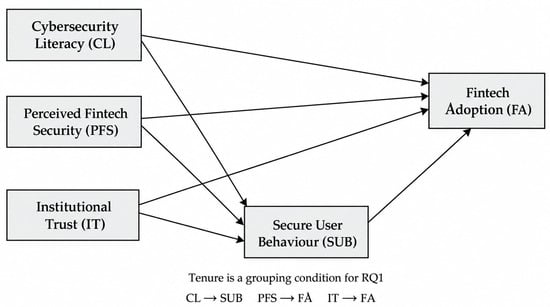
Robo-advisors are evolving fintech solutions that ask potential clients about their investment purpose and time horizon and then offer investment strategies to reach different goals. This study aims to build on prior research and gain insights into the influence of innovation attributes (relative advantage, complexity, compatibility, and observability), perceived trust, and image regarding robo-advisor adoption by applying and extending the Diffusion of Innovation (DOI) theory. Data were collected using a cross-sectional survey approach. A total of 187 valid responses were obtained from an online participant recruitment website based in the United States and analysed using the partial least squares approach. The findings indicate that relative advantage and attitude influence an individual’s intention to adopt a robo-advisor, while all innovation attributes, perceived trust, and image of a robo-advisor influence an individual’s attitude towards it. By extending the DOI framework, this research advances understanding of its applicability to robo-advisor adoption. This study contributes to the literature by clarifying the influences on robo-advisor adoption and their relationships. From a practical standpoint, the findings and measures could help wealth management companies improve their promotional campaigns and technical design.

20 January 2026

Research model.

News & Conferences

Issues

Open for Submission

Editor's Choice

Reprints of Collections

Trends and New Developments in FinTech
Reprint

Trends and New Developments in FinTech

Editors: Nikiforos T. Laopodis, Eleftheria Kostika
Financial Technology and Innovation Sustainable Development
Reprint

Financial Technology and Innovation Sustainable Development

Editors: Otilia Manta, Mohammed K. A. Kaabar, Eglantina Hysa, Ovidiu Folcuţ, Anuradha Iddagoda

Get Alerted

Add your email address to receive forthcoming issues of this journal.

XFacebookLinkedIn
FinTech - ISSN 2674-1032