




Polyphenols and Cancer Metabolism
A special issue of Cancers (ISSN 2072-6694). This special issue belongs to the section "Cancer Pathophysiology".
Deadline for manuscript submissions: closed (31 January 2024) | Viewed by 24556
Special Issue Editors

Interests: cancer genomics; molecular mechanisms of tumorigenesis; chemoprevention; melanoma; uveal melanoma
Special Issues, Collections and Topics in MDPI journals

Special Issue Information
Dear Colleagues,
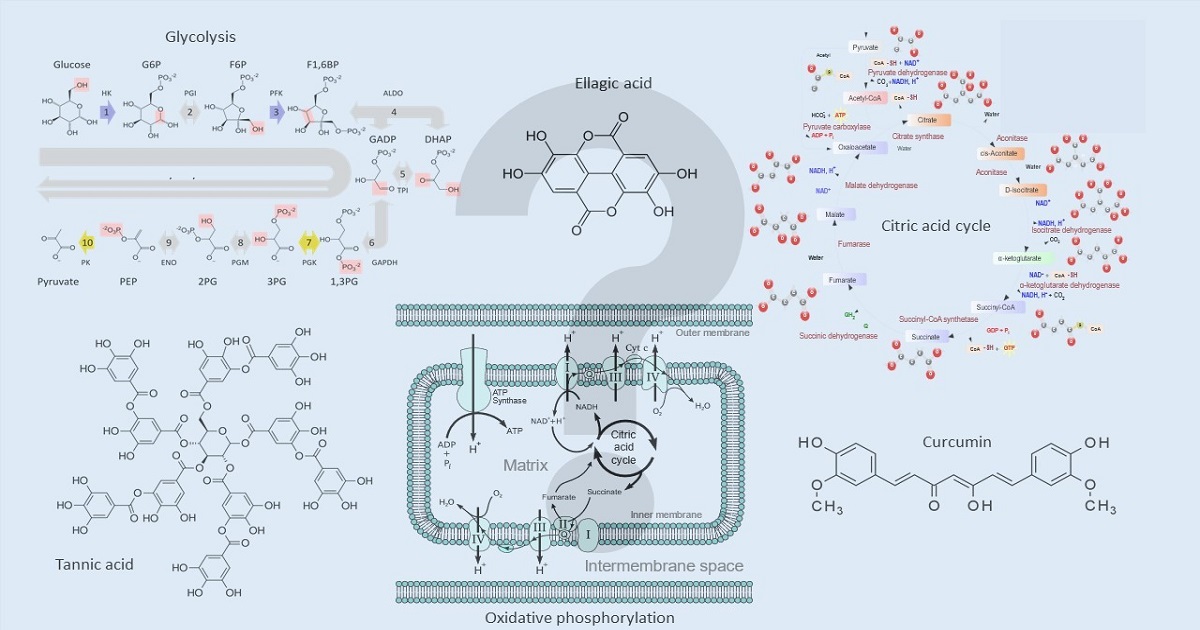
Polyphenols naturally occur in many plants, where they act as a defense mechanism against pathogens and the effects of ultraviolet light exposure. A large body of literature indicates a role for polyphenols in the prevention and control of human diseases, especially cancer and cardiovascular disease. The antioxidant and anti-inflammatory functions of polyphenols are well established; many of them interfere with the activation of Nuclear factor Kappa B (NFkB), the master control factor of inflammation. Yet polyphenols likely have additional roles in human (patho-)physiology that are not necessarily linked to anti-inflammatory functions. Several studies attribute metabolic functions to polyphenols, and they have been considered as calorie restriction mimetics.
In the present Special Issue, we would like to focus on the (anti-)metabolic activities of dietary polyphenols, which merit more attention. Metabolic derangement is a hallmark of cancer, and aerobic glycolysis provides pyruvate, the basic building block for the production of nucleic acids and proteins that is required by fast-dividing cells. Interference with the neoplastic metabolic program can contribute to cancer prevention and therapy, but the true potential of such approaches has not yet been completely revealed.
We are pleased to invite you to contribute original articles, reviews, and commentaries on the above with the aim of reflecting the state of the art in research on polyphenols and cancer metabolism. Dietary compounds and control of metabolism are much debated beyond the scientific community, and incorrect information and myths pervade public discussion. For this reason, the present Special Issue intends to make a stark statement by segregating urban legends from scientific evidence.
We look forward to receiving your contributions.
Dr. Ulrich Pfeffer
Dr. Zeinab El Rashed
Guest Editors
Manuscript Submission Information
Manuscripts should be submitted online at www.mdpi.com by registering and logging in to this website. Once you are registered, click here to go to the submission form. Manuscripts can be submitted until the deadline. All submissions that pass pre-check are peer-reviewed. Accepted papers will be published continuously in the journal (as soon as accepted) and will be listed together on the special issue website. Research articles, review articles as well as communications are invited. For planned papers, a title and short abstract (about 250 words) can be sent to the Editorial Office for assessment.
Submitted manuscripts should not have been published previously, nor be under consideration for publication elsewhere (except conference proceedings papers). All manuscripts are thoroughly refereed through a single-blind peer-review process. A guide for authors and other relevant information for submission of manuscripts is available on the Instructions for Authors page. Cancers is an international peer-reviewed open access semimonthly journal published by MDPI.
Please visit the Instructions for Authors page before submitting a manuscript. The Article Processing Charge (APC) for publication in this open access journal is 2900 CHF (Swiss Francs). Submitted papers should be well formatted and use good English. Authors may use MDPI's English editing service prior to publication or during author revisions.
Keywords
- polyphenols
- cancer metabolism
- chemoprevention
- therapy
- calorie restriction mimetics
Benefits of Publishing in a Special Issue
- Ease of navigation: Grouping papers by topic helps scholars navigate broad scope journals more efficiently.
- Greater discoverability: Special Issues support the reach and impact of scientific research. Articles in Special Issues are more discoverable and cited more frequently.
- Expansion of research network: Special Issues facilitate connections among authors, fostering scientific collaborations.
- External promotion: Articles in Special Issues are often promoted through the journal's social media, increasing their visibility.
- Reprint: MDPI Books provides the opportunity to republish successful Special Issues in book format, both online and in print.
Further information on MDPI's Special Issue policies can be found here.
