



Special Issue "Creation of a Low-Carbon Healthy Building Environment with Intelligent Technologies"

A special issue of Buildings (ISSN 2075-5309). This special issue belongs to the section "Building Energy, Physics, Environment, and Systems".

Deadline for manuscript submissions: 31 December 2021.

Special Issue Editors

Prof. Dr. Shi-Jie Cao
E-Mail Website1 Website2
Guest Editor
1. School of Architecture, Southeast University, Nanjing 210096, China
2. Global Centre for Clean Air Research (GCARE), Department of Civil and Environmental Engineering, Faculty of Engineering and Physical Sciences, University of Surrey, Guildford GU2 7XH, UK
Interests: building environment and control; air quality and health; urban environment and design; fast prediction of built environment
Special Issues and Collections in MDPI journals
Dr. Dahai Qi
E-Mail Website
Guest Editor
Department of Civil and Building Engineering, Université de Sherbrooke, Sherbrooke, QC, Canada
Interests: smoke control; green building; Building Environment; Building Energy
Dr. Junqi Wang
E-Mail Website
Guest Editor
School of Environmental Science and Engineering, Suzhou University of Science and Technology, Suzhou, China
School of Architecture, Southeast University, Nanjing, China
Interests: HVAC; Control and Optimization; Demand-Controlled Ventilation; Occupancy Detection; Machine Learning and Computer Vision; Building Energy Management; Building Environment; Low Carbon Heating and Cooling

Special Issue Information

Dear Colleagues,

The building sector accounts for 1/3 of global carbon emissions. With various decarbonization plans initiated around the world, the need to reduce carbon emissions from buildings is becoming increasingly critical. Aiming to create a healthy and comfortable indoor environment, building systems are designed and operated to provide required services, e.g., HVAC and lighting systems. However, a healthy or comfortable indoor environment is normally associated with high carbon emissions. Building a healthy and comfortable yet low-carbon building environment thus becomes an urgent research challenge. Given the complex interactions among the environment, buildings, and energy systems, optimized building environment solutions require an interdisciplinary endeavor, e.g., building environment, automatic control, architecture, and artificial intelligence. With the rapid development in information and communication technologies, various intelligent monitoring, diagnosing, control, and optimization technology systems have been applied in buildings.

This Special Issue aims to gather innovative research and development in intelligent buildings to create a low-carbon, healthy, and comfortable building environment. The Special Issue covers original research and review studies, including but not limited to:

  • Online monitoring and prediction;
  • Low-cost sensing and detection;
  • Low carbon heating and cooling;
  • Sustainable architecture design;
  • Demand-based control and optimization;
  • Modeling, control, and optimization of HVAC and lighting systems;
  • Measurement and analysis of building energy and environment data;
  • Intelligent control of building integrated renewable energy systems;
  • Artificial intelligence for building energy and environment systems;
  • Power management, video surveillance, data acquisition, and network.

Prof. Dr. Shi-Jie Cao
Dr. Dahai Qi
Dr. Junqi Wang
Dr. Gwanggil Jeon
Guest Editors

Manuscript Submission Information

Manuscripts should be submitted online at www.mdpi.com by registering and logging in to this website. Once you are registered, click here to go to the submission form. Manuscripts can be submitted until the deadline. All papers will be peer-reviewed. Accepted papers will be published continuously in the journal (as soon as accepted) and will be listed together on the special issue website. Research articles, review articles as well as short communications are invited. For planned papers, a title and short abstract (about 100 words) can be sent to the Editorial Office for announcement on this website.

Submitted manuscripts should not have been published previously, nor be under consideration for publication elsewhere (except conference proceedings papers). All manuscripts are thoroughly refereed through a single-blind peer-review process. A guide for authors and other relevant information for submission of manuscripts is available on the Instructions for Authors page. Buildings is an international peer-reviewed open access monthly journal published by MDPI.

Please visit the Instructions for Authors page before submitting a manuscript. The Article Processing Charge (APC) for publication in this open access journal is 1600 CHF (Swiss Francs). Submitted papers should be well formatted and use good English. Authors may use MDPI's English editing service prior to publication or during author revisions.

Published Papers (1 paper)

Order results
Result details
Select all
Export citation of selected articles as:

Research

Article
Detection of District Heating Pipe Network Leakage Fault Using UCB Arm Selection Method
Buildings 2021, 11(7), 275; https://doi.org/10.3390/buildings11070275 - 27 Jun 2021
Viewed by 557
Abstract
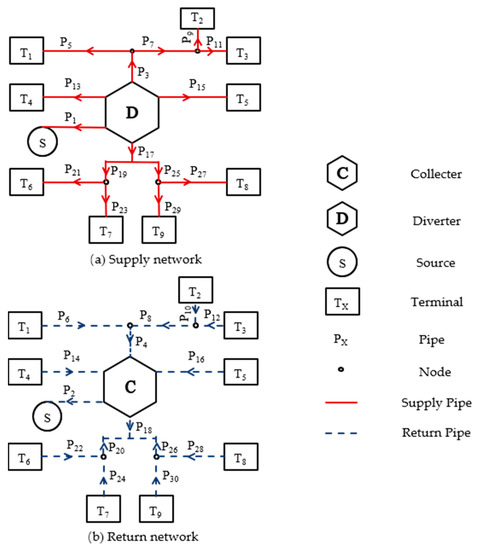
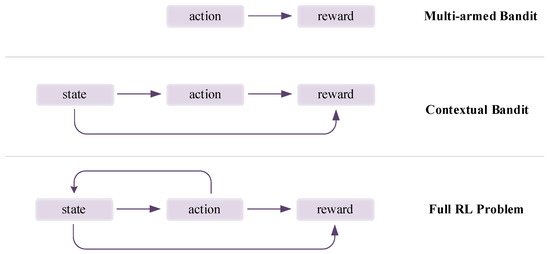
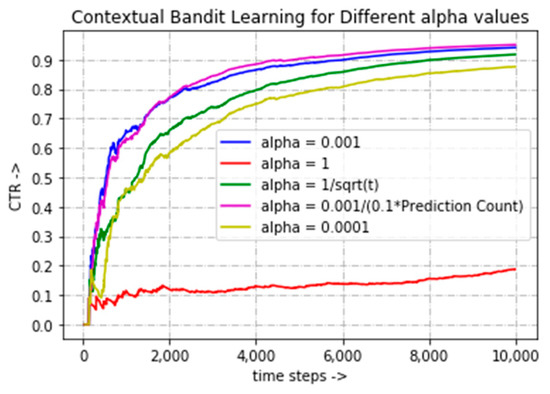
District heating networks make up an important public energy service, in which leakage is the main problem affecting the safety of pipeline network operation. This paper proposes a Leakage Fault Detection (LFD) method based on the Linear Upper Confidence Bound (LinUCB) which is [...] Read more.
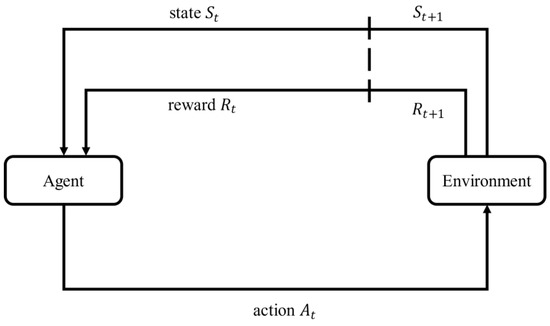
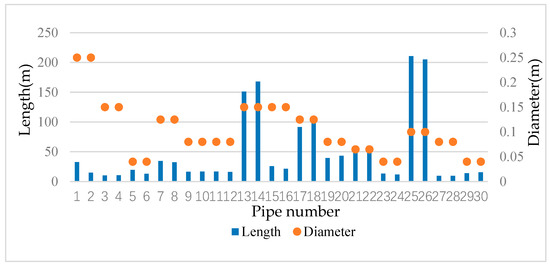
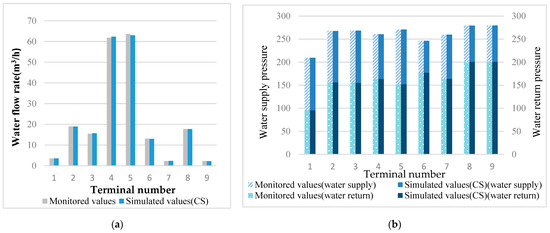
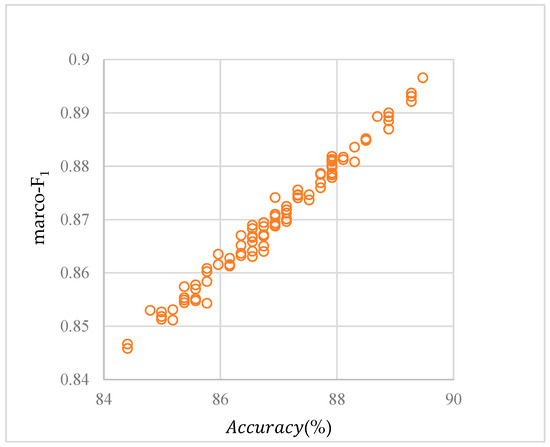
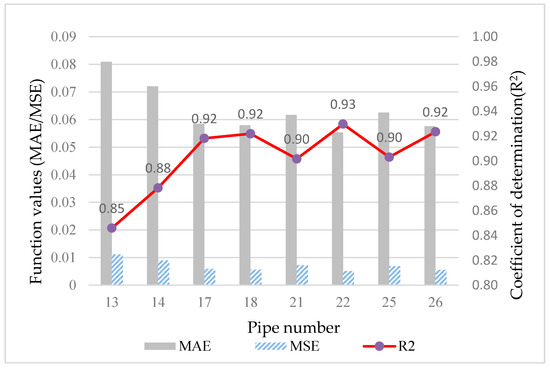
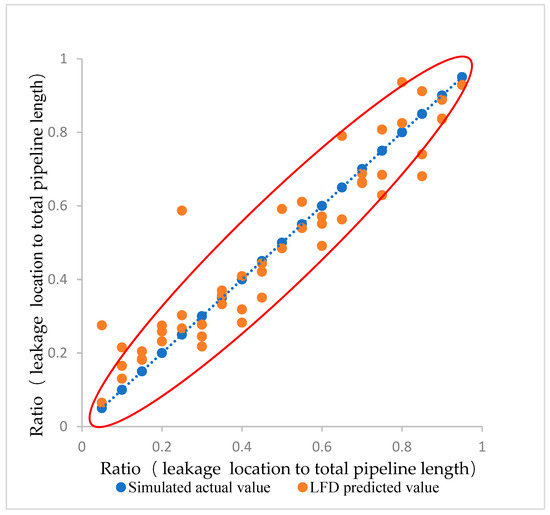
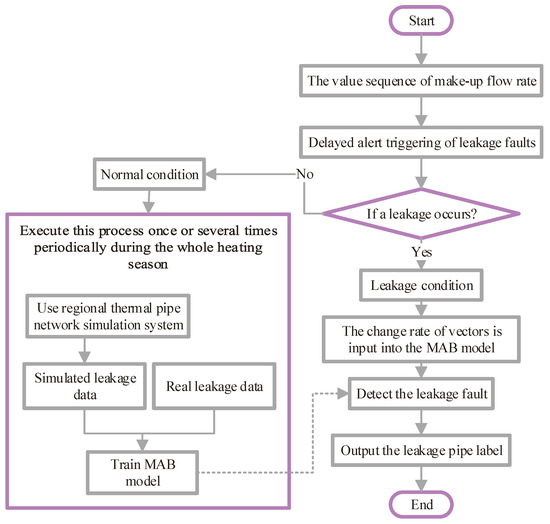
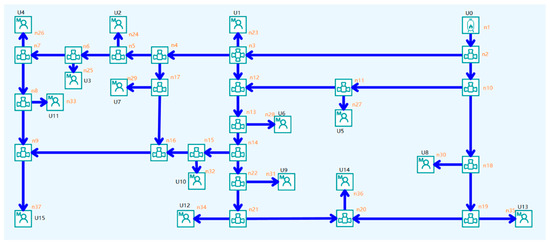
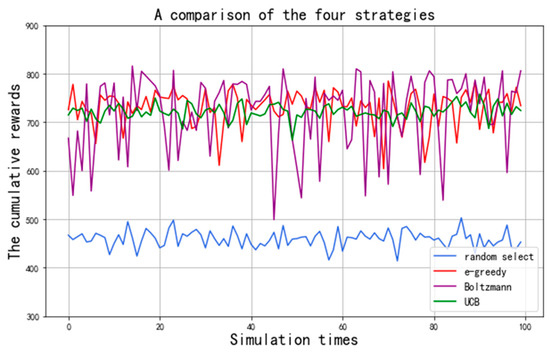
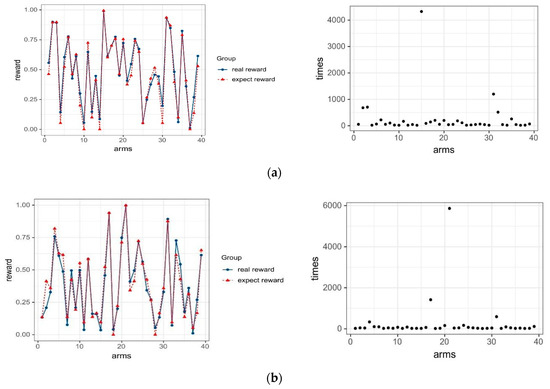
District heating networks make up an important public energy service, in which leakage is the main problem affecting the safety of pipeline network operation. This paper proposes a Leakage Fault Detection (LFD) method based on the Linear Upper Confidence Bound (LinUCB) which is used for arm selection in the Contextual Bandit (CB) algorithm. With data collected from end-users’ pressure and flow information in the simulation model, the LinUCB method is adopted to locate the leakage faults. Firstly, we use a hydraulic simulation model to simulate all failure conditions that can occur in the network, and these change rate vectors of observed data form a dataset. Secondly, the LinUCB method is used to train an agent for the arm selection, and the outcome of arm selection is the leaking pipe label. Thirdly, the experiment results show that this method can detect the leaking pipe accurately and effectively. Furthermore, it allows operators to evaluate the system performance, supports troubleshooting of decision mechanisms, and provides guidance in the arrangement of maintenance. Full article
Show Figures

Figure 1
Back to TopTop