

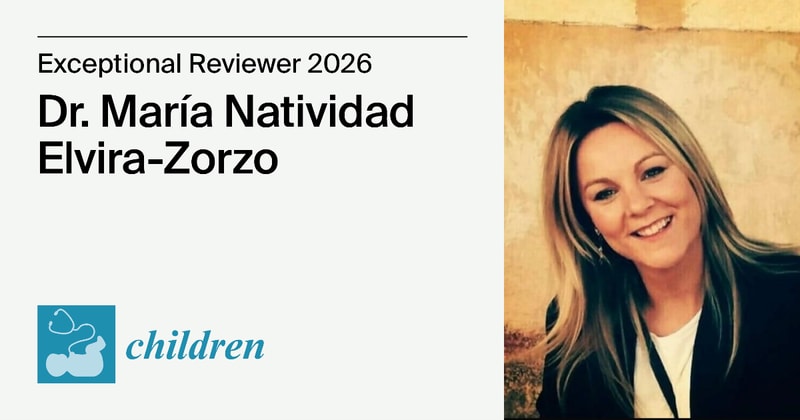
Interview with Dr. María Natividad Elvira-Zorzo—Children Exceptional Reviewer 2026
To show appreciation for our reviewers, the Editorial Office of Children (ISSN: 2227-9067) will announce our Exceptional Reviewers each month. You can find the award list here:
https://www.mdpi.com/about/announcements/15639.
We wish to congratulate Dr. María Natividad Elvira-Zorzo (University of Salamanca, Spain) on being a Children Exceptional Reviewer. She also shared some professional opinions about the current peer-review process.
The following is an interview with Dr. María Natividad Elvira-Zorzo:
1. Could you briefly introduce yourself and your current research topic to our readers, as well as the important role of your research area in promoting children's health?
I hold a PhD in psychology and am a lecturer in the field of social psychology, focusing my research on the psychosocial aspects of health and well-being. My main areas of research include active ageing, retirement, inclusive education, mental health, and the analysis of attitudes and stigma. I have also conducted research on children and adolescents, particularly in relation to mental health and suicidal behavior, as well as on educational processes and psychological well-being. I believe these areas are key to promoting children’s health from a preventive, inclusive and socially contextual perspective.
2. What criteria do you consider most important when evaluating a manuscript?
When evaluating a manuscript, I consider the relevance and topicality of the subject, methodological rigor and consistency between objectives, results and conclusions, as well as the clarity of presentation and contribution to scientific knowledge, to be particularly important.
3. How do you view the role of a reviewer in shaping the quality and integrity of newly submitted research? What are your thoughts on the use of AI tools in the academic publishing industry, and what are your recommendations for ensuring quality control in the future?
The reviewer plays a fundamental role in ensuring the quality, rigor and integrity of scientific research. Regarding the use of AI tools, I believe they can be useful as a support in the editorial process, provided their use is transparent and complementary to expert judgement. It is essential to establish clear criteria that ensure the quality, ethics and reliability of published work.
4. What advice would you give to early-career researchers who want to become strong peer reviewers? Or any suggestions for the peer review process? Would you like to recommend that more scholars join us as reviewers to promote the scientific quality of peer review?
I would recommend that early-career researchers train in research methodology and critical reading, as well as gradually becoming involved in peer review under criteria of responsibility and rigor. I also consider it essential to encourage the participation of more academics in the peer review process, given that their contribution is key to maintaining scientific quality.
To continue helping the journal improve the peer review process, the office encourages scholars related to the topics of Children to join us via this link: https://www.mdpi.com/reviewers.
Children Editorial Office