


Abstract
Pet insurance is a financial tool meant to provide financial support to pet owners for veterinary expenses. It was introduced to the Malaysian market in 2010 with several companies offering various subscription packages. However, public awareness of pet insurance has been low compared to other pet-related industries in Malaysia for the past five years. There is also a lack of research on the acceptance and adoption of pet insurance by pet owners in Malaysia. Therefore, this study aims to (i) assess the knowledge, attitudes, and practices (KAPs) of pet owners regarding pet insurance in Selangor, Malaysia, (ii) determine the associations of sociodemographic factors with the KAP levels, and (iii) determine the correlation between the levels of KAPs. A cross-sectional survey was conducted in Selangor, Malaysia, and 116 pet owners participated. Data were subjected to descriptive analysis statistics, followed by Chi-square tests of association and a Spearman correlation analysis, which were all performed using IBM SPSS Statistic version 27.0. The results showed that most of the respondents have poor knowledge of (n = 63, 54.3%), moderate attitudes towards (n = 63, 54.3%), and poor practices regarding (n = 87, 75.0%) pet insurance. Significant associations were indicated between income range per month and knowledge and practice (p < 0.05), highest education level and attitude (p < 0.05), and locality of residence and practice (p < 0.05). There is a significant correlation between total knowledge and practice scores (r = 0.649). The poor knowledge of insurance among pet owners in Selangor indicated the need to further increase the awareness of pet owners regarding the benefits of pet insurance through enhanced marketing and public education initiatives.
1. Introduction
Pet ownership has increased globally and is often associated with companionship, emotional support, and perceived improvements in quality of life [1,2]. Animal welfare advocates emphasize the five freedoms of animals, including freedom from discomfort, freedom from thirst, hunger, and malnutrition, freedom to express normal behavior, freedom from fear and distress, and freedom from pain, injury, and disease [3,4]. Pet insurance focuses on providing owners with the financial capability to further enhance their animals’ fifth freedom, as it acts as a financial tool to help with the funding of veterinary bills [5]. In Malaysia, pet ownership has become increasingly popular over the years. According to Consumer Report Malaysia 2023 by Standard Insights, 51.1% of Malaysians own pets, with more than half (26.42%) within this group owning more than one pet [6]. In addition, up to 26.22% of the respondents expressed their interest in owning a pet in the future, although they currently did not own any at that time [6]. With these statistics, it is projected that the pet ownership market in Malaysia will grow by 2025 compared to 2016 [4,7]. Cats are the most popular pets in Malaysia, with up to 77.7% of pet owners owning at least one cat, followed by fish (19.8%) and dogs (14.9%); other pets included but were not limited to avians, reptiles, and small mammals [6]. Pet ownership brings many benefits to pet owners, which include companionship, improved mental health and wellbeing, better social connections, an active lifestyle, and a better sense of security [8,9,10]. With the various benefits brought by pets, increasing numbers of pet owners view their pets as family members and therefore are more willing to invest in the health and wellbeing of their pets, which includes seeking veterinary advice [11]. According to Standard Insights, up to 77.7% of pet owners in Malaysia seek consultations with veterinary professionals, with up to 51.9% of pet owners seeking consultations with veterinary professionals more than once annually [12,13]. In 2010, Mitsui Sumitomo Insurance Group (Malaysia) Berhad (MSIG) launched pet insurance for the Malaysian mrket. Currently, there are four companies—MSIG, Oyen, CG Cover, and eTiQa—that offer different pet insurance packages [14]. Oyen is currently in Insurtech, a sector that works towards the automation of traditional insurance services, and provides the highest medical coverage limit in Malaysia [12,13]. However, Oyen also faces challenges regarding pet owners’ beliefs; for example, some think that pet insurance is a scam and that the process of insurance claims is very difficult and not worth the time and money. Veterinarians play a crucial role in advocating for pet insurance, as it was observed that pet owners believe the information provided by veterinarians more than the information provided by pet insurance agents, but it was still observed that the majority of veterinarians, even in European countries, only did the bare minimum, such as displaying brochures and posters in their practice [15,16,17]. Although pet insurance has been marketed in Malaysia since 2010, it is still a relatively new concept that is not well known among pet owners in Malaysia. Aside from that, there are still no data on the knowledge of, attitudes towards, and practices regarding pet insurance among pet owners in Malaysia [12].
In the 2021 article ‘Evaluation of owners’ attitudes towards veterinary insurance in a specialty hospital’, it was observed that pet owners have a higher level of adherence to recommended diagnostic tests and treatments if they have insurance, similarly to people who have health insurance, who utilize prescription drugs more frequently, visit the doctor more frequently for preventative care, and follow their doctor’s orders more closely [18,19]. This shows that insurance can enhance animal welfare, and hence, further efforts should be made to attain the greatest benefits. The benefits of the broad acceptance and use of pet insurance by pet owners in Malaysia include better health outcomes for diseases, the improvement of veterinary services and facilities, and thereby the improvement of the overall health conditions of pets in Malaysia [12].Therefore, investigating the knowledge of, attitudes towards, and practices of pet owners in Malaysia regarding pet insurance is needed to find a suitable approach to educate and gain the acceptance of the general public regarding pet insurance.
Therefore, this study aimed to determine the knowledge, attitude, and practice levels regarding pet insurance among pet owners in Selangor and to determine the factors affecting these levels.
2. Materials and Methods
2.1. Study Design and Study Area
This study employed a cross-sectional, exploratory design using a non-probability convenience sampling method for respondents, who were pet owners residing in Selangor, Malaysia, from 15 July 2024 to 31 October 2024. Participants were recruited through online campaign on social media platforms and in-person approaches at selected morning markets in Selangor, Malaysia. While this approach facilitated access to pet owners, it did not allow for random selection, and therefore, the findings should not be considered representative of the broader pet-owning population in Selangor or Malaysia.
2.2. Sample Size and Sampling Method
According to the demographic chart by Statistica, as of July 2024, there were approximately 7.4 million people residing in Selangor [20]
The sample size was determined using the sample size forma, and it was calculated that the minimum number of participants required was 385 to achieve a 95% confidence level, with a maximum acceptable difference of 5% or 0.05 in detecting the knowledge, attitude, and practice (KAP) proportions in the population. Although an estimated minimum sample size of 385 was calculated for population-level inference, the final sample comprised 116 respondents. As such, the study is positioned as exploratory, aiming to generate preliminary insights rather than definitive conclusions.
2.3. Inclusion and Exclusion Criteria of Respondents
2.3.1. Inclusion Criteria
The inclusion criteria were as follows: pet owners aged 18 years old or older, who resided in Selangor, who were the primary caretakers of at least one pet, and who gave their consent for their data to be collected for the survey.
2.3.2. Exclusion Criteria
The exclusion criteria were as follows: pet owners who resided outside of Selangor, pet owners who were not the primary caretaker of at least one pet, pet owners who used to own pets but who no longer owned any, and pet owners who did not give their consent for their data to be collected for the survey.
2.4. Questionnaire Survey
A new questionnaire was developed following an extensive literature search and it was subjected to content and face validation solely for this study. The questionnaire was designed to be distributed through Google Forms.
The questionnaire consisted of five sections: (1) sociodemographic characteristics, (2) pet ownership profile, (3) knowledge of pet insurance, (4) attitudes towards pet insurance, and (5) pet healthcare practices and insurance-related behaviors (Questionnaire S1) to assess knowledge, attitudes, and practices (KAPs) related to pet ownership and pet-friendly public spaces. Content and face validity were assessed by two veterinarians and one academic researcher. Feedback focused on clarity, relevance, and cultural appropriateness, resulting in minor wording revisions. The knowledge domain consisted of closed-ended questions scored as correct (1) or incorrect/unsure (0). Knowledge scores were summed and categorized according to predefined cut-off values. The attitude domain comprised Likert-scale statements, with higher scores indicating more positive attitudes. The practice domain assessed self-reported behaviors using dichotomous or frequency-based response options, with higher scores reflecting more appropriate practices.
The categorization of KAP scores was based on pragmatic and exploratory cut-off values from previous KAP studies [21]. The questionnai re was developed in English and translated into Malay and Chinese using a forward-translation and back-translation procedure. Discrepancies were discussed and resolved to ensure semantic equivalence across languages. The survey forms were also distributed randomly as public posts on different social media platforms, such as Instagram and Xiao Hong Shu. To ensure that the survey also involved pet owners who were not active on social media, several respondents were approached at morning markets.
2.5. Statistical Analysis
The collected data were imported into Microsoft Excel and then analyzed using IBM® SPSS® Version 27 (IBM®, Armonk, NY, USA). Frequency and percentage descriptive statistics were used to depict the category variables. The relationship between the sociodemographic traits and the knowledge, attitude, and practice (KAP) scores was then examined using Pearson Chi-Square test; a p-value of less than 0.05 was deemed statistically significant. Finally, the association between the overall knowledge, attitude, and practice scores was measured using Spearman’s rho correlation and was significant when p < 0.05.
3. Results
3.1. Sociodemographic Characteristics of Respondents
A total of 116 respondents were included in this study. They were from various districts in Selangor. The highest number of respondents were from the Petaling district (n = 42/116, 36.2%). The majority of the respondents were between 21 and 30 years old (n = 80/116, 69%), with an income of less than MYR 2500 (n = 43/116, 37.1%). Most of the respondents had the highest education level, a Bachelor’s degree (n = 72/116, 62.1%). The majority of the respondents claimed that they had personal insurance for themselves (n = 76/116, 65/5%). A total of 44% (n = 51/116) owned one pet, while the remaining 56% of the respondents owned more than one. A total of 87.1% of the total respondents owned at least one cat or dog (n = 101/116), while the remaining respondents owned only fully exotic pets. The detailed percentages for each sociodemographic response are available in the Supplementary Materials (Table S1).
3.2. Knowledge of Pet Insurance
Based on the 116 responses collected, it is observed that most of the respondents were not aware of the availability of pet insurance in Malaysia (Table S2). A total of 37 respondents claimed that they were aware of the availability of pet insurance. A total of 29 mentioned they were aware of Oyen as a pet insurance provider. A total of five of the respondents could not recall the names of any pet insurance providers. Less than half of the respondents recalled coming across advertisements or articles regarding pet insurance in Malaysia (n = 49/116, 42%), with 67.2% of the total respondents not knowing that pet insurance in Malaysia is currently only available for cats and dogs (n = 78/116). More than half of the respondents did not know that pet insurance can help financially when their pets need medical attention (n = 66/116, 56.9%), and only 19.8% of the total respondents knew about the process of making a claim via pet insurance (n = 23/116), as shown in the Supplementary Materials (Table S2).
3.3. Attitudes Towards Pet Insurance
Most of the respondents indicated that they saved up for or were prepared for any medical situation that their pets might require. Even so, most also indicated that getting pet insurance provides them with more freedom to choose better treatments and ensure a better quality of life for their pets (Table S3). Regarding the affordability of pet insurance, a total of 50% of the respondents believed that pet insurance is affordable. Regarding the ease of the process of making a claim via pet insurance, 55.2% (n = 64/116) of the respondents neither agreed or disagreed. But when it came to getting more help and information, most of the respondents indicated (total n = 65/116, 56%) that help and advice from pet insurance providers are easily accessible, while 50.86% (total n = 59/116) of the respondents believed that information on pet insurance in Malaysia is transparent and readily available (Table S3).
3.4. Practice of Pet Insurance
The frequencies and percentage of the responses to the three practice questions reveal that most of the respondents only sometimes brought their pets to the vet (n = 55/116, 47.4%), which meant that close to half of the respondents only brought their pets to the vet when their pets were sick. However, it is also good to know that 44.8% of the respondents (n = 52/116) brought their pets to the vet at least once a year. Most of the 116 respondents had not searched for pet insurance information before (n = 74/116, 63.8%), and even though 36.2% of the respondents had searched for pet insurance information before, 89.7% of the total respondents had never had pet insurance (Table S4).
3.5. Acceptable Annual Price Range for Pet Insurance Subscription by Pet Owners in Selangor
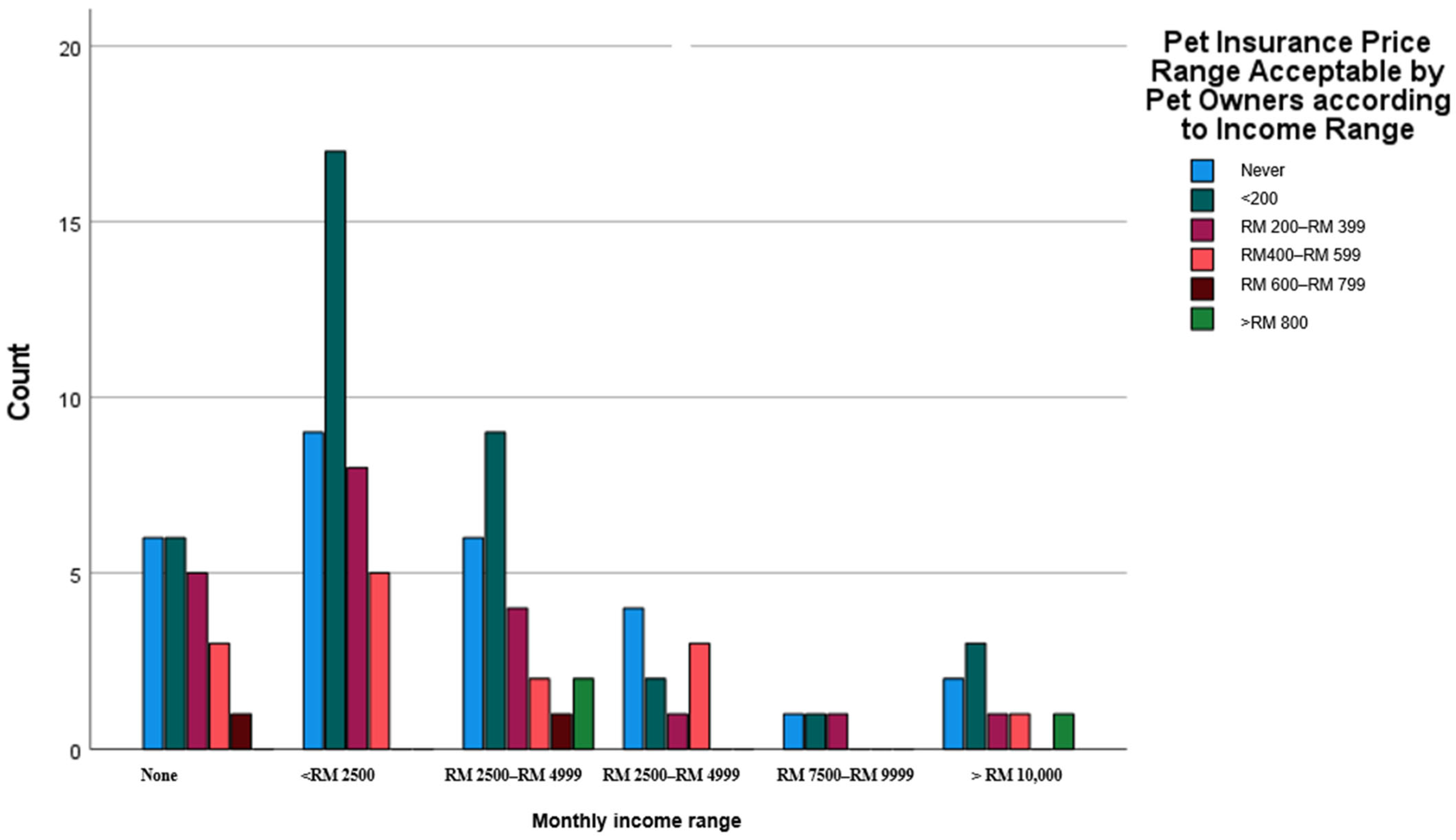
Considering that cost is a concern for most pet owners, a question on the ideal annual subscription price of pet insurance was also added to the survey form to better understand the ideal range of pet insurance costs that would be acceptable to most pet owners in Selangor, Malaysia. The results showed that many of the respondents were willing to spend up to MYR 200 a year on pet insurance (n = 44/116, 37.9%), while a total of 36.2% of the respondents were willing to spend more than MYR 200 per year on pet insurance (Figure 1). However, this study observed that the higher income range does not indicate a willingness to pay for more expensive pet insurance plans. Rather, it was observed that those in the higher income range are less likely to purchase pet insurance as compared to those in the lower income range, with a higher likelihood of purchasing pet insurance if the annual premium was less than MYR 200.
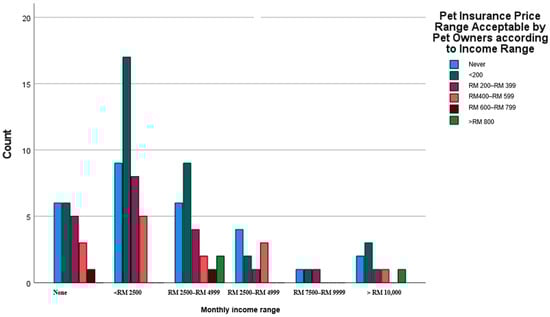
Figure 1.
Pet insurance price range acceptable by pet owners according to income range.
3.6. Respondents’ Knowledge, Attitude, and Practice Levels Regarding Pet Insurance
The data collected are categorized and analyzed descriptively and presented using frequency and percentage. Scoring is performed for each variable, and the knowledge, attitude, and practice levels of each respondent are categorized into poor, moderate, and good. The results indicated the majority of the respondents included in the survey sample in Selangor, Malaysia demonstrated a poor level of knowledge of, moderate attitudes towards, and poor practice of pet insurance. Further details are presented in Table S5 in the Supplementary Materials.
3.7. Association Between Respondents’ Sociodemographic Characteristics and Their Levels of Knowledge, Attitude, and Practice Regarding Pet Insurance
The analysis of associations between the respondents’ sociodemographic variables and their knowledge, attitude, and practice (KAP) levels regarding pet insurance in the survey sample revealed several significant relationships. A statistically significant association was found between their level of knowledge and monthly income (χ2 = 24.734, p = 0.006). Respondents with lower income levels (<MYR 2500) or without a fixed income demonstrated poorer knowledge of pet insurance compared to those with a higher income. No significant associations were identified between their level of knowledge and other sociodemographic variables, including age, education level, district of residence, type of pet, or number of pets owned, as shown in Table 1.

Table 1.
Association between respondents’ sociodemographic characteristics and knowledge of pet insurance.
Regarding attitude, a significant association was observed with education level (χ2 = 46.903, p < 0.001). Respondents holding Bachelor’s or Master’s degrees exhibited more positive attitudes toward pet insurance, indicating that higher educational attainment may contribute to an improved understanding and acceptance of the concept of pet insurance (Table 2).
Table 2.
Association between respondents’ sociodemographic characteristics and attitudes towards pet insurance.
Regarding practice, significant associations were observed with both district of residence (χ2 = 24.053, p = 0.045) and income level (χ2 = 24.864, p = 0.006). Respondents residing in the Petaling district and those in lower income categories demonstrated poorer practices related to pet insurance. Other sociodemographic factors, including their age, education level, number of pets, and whether they owned personal insurance, showed no significant associations with practice levels, as shown in Table 3.
Table 3.
Association between respondents’ sociodemographic characteristics and practices regarding pet insurance.
3.8. Correlation Between Knowledge, Attitude, and Practice Scores Regarding Pet Insurance
As can be seen in Table 4, there is a weak positive correlation between total knowledge score and total attitude score (r = 0.042) and between total attitude score and total practice score (r = 0.070). There is a moderate correlation between total knowledge score and total practice score (r = 0.649). Only the correlation between the total knowledge score and total practice score is significant in this study (p-value < 0.001).
Table 4.
Correlation between total knowledge, attitude, and practice scores.
4. Discussion
This study was conducted to determine pet owners’ knowledge of, attitude towards, and practices regarding pet insurance in Selangor, Malaysia. Among the 116 survey participants, the majority demonstrated limited knowledge of pet insurance, moderate attitudes towards its perceived value, and a low uptake of insurance products. These findings reflect the responses of the study sample only and should not be generalized to the wider population of pet owners in Selangor or Malaysia.
Based on this study, the respondents showed poor knowledge of pet insurance, with the majority not knowing that pet insurance is available in Malaysia, and less than half of the respondents coming across advertisements or articles directly mentioning the availability of pet insurance options in Malaysia. A follow-up question was asked to respondents who did know pet insurance is available in Malaysia, and the majority responded that they know Oyen is a pet insurance brand, as Oyen has more effectively marketed their pet insurance product to the public in Malaysia [12,13]. Based on the results obtained regarding the respondents’ knowledge, it can be concluded that pet insurance companies have insufficient publicity; therefore, pet owners are unaware of the availability and the benefits of pet insurance. Aside from the efforts of pet insurance companies, veterinarians also play a crucial role in increasing the knowledge levels of pet owners in regard to pet insurance, the choice of policies, how it can help with the cost of veterinary care, why it is better to buy pet insurance early, and where pet owners can obtain more information on pet insurance [18,19,22].
According to Darryl Rawlings, the chief operating officer of the Seattle-based company Trupanion in his interview with Veterinary Practice News for the article ‘Why pet insurance is a win for vets and pets’, pet owners are more likely to trust their veterinarian’s judgement in regards to obtaining pet insurance, and hence are more likely to obtain more information on pet insurance after receiving recommendations by their veterinarian [17]. Pet insurance can be recommended to pet owners during early consultations such as during vaccinations when their pets are puppies or kittens, at which time veterinarians can also educate owners on long-term health care, possible diseases that pets may encounter as they age, and the approximate cost of care, which can then ease into the subject of pet insurance availability in Malaysia and the method for making claims [16,17]
Based on this study, most respondents have moderate attitude levels towards pet insurance in Malaysia. The results showed that the majority of the respondents indicate that help, advice, and information are easily accessible, more financial benefits can be secured, and better treatment options are available if they purchase pet insurance policies for their pets. However, most of the respondents have a neutral view on the ease of the process of making a claim via insurance. Furthermore, we observed that affordability and knowledge appeared to influence perceptions of pet insurance, with most respondents expressing a greater preference for lower-cost plans and demonstrating limited knowledge.
It was observed that there was a significant association between the highest education level with attitude, with respondents with Master’s degrees and PhDs having good attitudes towards pet insurance, whereas respondents with a Bachelor’s degree had more moderate attitudes towards pet insurance. Based on this finding, it can be seen that the respondents’ level of education had a positive impact on their acceptance of new things, in this case, pet insurance. Another reason why those with moderate attitudes towards pet insurance had low levels of knowledge regarding pet insurance might be internet accessibility: it has been observed that the usage of the internet increases the open-mindedness of people, therefore making them less likely to reject new concepts [23].
As can be seen in the results, there is a low practice level of pet insurance by the majority of pet owners in Selangor. Most of the pet owners had never searched for pet insurance before and had no experience of making pet insurance claims. The purchase of pet insurance may not have occurred to most pet owners; as shown by their knowledge levels, most of the pet owners were unaware of the availability of pet insurance in Malaysia, which also explains their low practice levels. Most of the respondents only brought their pets in for veterinary care when their pets were sick and not for annual veterinary checkups. Given the fact that pet insurance requires one’s pet to be free from any injuries or diseases at the start of the insurance subscription, pet owners who bring their pets in for veterinary care when they have diseases or injuries would be less likely to purchase or successfully subscribe to pet insurance even with a veterinary professional’s recommendation to obtain pet insurance [17,24].
It is only those who do bring their pets for annual checkups who are able to receive recommendations from veterinary professionals regarding pet insurance. Several studies suggests that marketing strategies, transparent communication, and advice from veterinarians and friends may contribute to an improved awareness of pet insurance [25]. A significant association was found between monthly income range and pet insurance practice in a research study on pet insurance and veterinary expenditures in the United States, in which it was shown that pet owners with a higher income had more disposable income, which highly influenced their level of expenditure on pet healthcare [26]. However, in this study, it is observed that a higher income does not indicate a greater willingness to pay for higher-cost policies, as shown in Figure 1. Rather, the majority are more inclined to obtain annual policies priced at less than MYR 200. The results may vary, as from a consumer psychology standpoint, monthly subscription models appear to have lower upfront expenses, with a greater degree of flexibility to change to a different plan according to one’s needs. On the other hand, annual subscriptions may provide more discounts, but their higher upfront costs and lower degree of flexibility can turn off potential clients [27,28].
Therefore, determining acceptable monthly payment plans should be considered in a similar study. The study identified a positive correlation between knowledge and practice scores, suggesting that pet owners with a greater awareness and understanding of pet insurance are more likely to demonstrate proactive behaviors in seeking and utilizing these services. This finding is also similarly observed in the journal article ‘A Study On Pet Health Insurance And Its Impact On Owners Spending For Veterinary Services With Reference To Mysuru City’, which was published in 2023, in which it was found that pet owners in Mysuru City, India who were previously unaware of pet insurance are now interested in obtaining it and acknowledge that pet health insurance is just as vital as human health insurance [29]. This demonstrates that awareness influences one’s willingness to pay and has a big influence on pet insurance purchases. This finding highlights the importance of knowledge in shaping practice. In particular, pet owners’ confidence in using and willingness to use pet insurance services seem to be enhanced by greater knowledge of the availability of, advantages of, and procedures involved in pet insurance, including eligible species, financial coverage, and the claims procedure.
5. Conclusions
This study indicated that the pet owners in Selangor who were the survey participants demonstrated poor knowledge and practice levels regarding pet insurance and moderate attitudes toward pet insurance. Significant associations were found between income and both knowledge and practice, education level and attitude, as well as district of residence and practice. The positive correlation between knowledge and practice suggests that improving awareness could enhance the adoption and utilization of pet insurance. Increasing public education, targeted awareness campaigns, and the greater involvement of veterinarians in promoting pet insurance could improve understanding and acceptance among pet owners. These efforts would not only enhance pet health management but also contribute to better animal welfare outcomes in Malaysia. This study has several limitations, including the use of convenience sampling and the relatively small sample size, which limits the study’s statistical power and generalizability. Also, the absence of formal reliability testing, such as internal consistency measures, reduced the interpretability and comparability of the categorized scores. These limitations underscore the need for larger probability-based studies to confirm and extend the present findings.
Supplementary Materials
The following supporting information can be downloaded at: https://www.mdpi.com/article/10.3390/pets3010010/s1, Questionnaire S1: Knowledge, Attitude, and Practice of Pet Insurance Among Pet Owners in Selangor, Malaysia; Table S1: Respondents’ Sociodemographic Characteristics (n = 116); Table S2: Knowledge of Respondents Towards Pet Insurance (n = 116); Table S3: Attitude Towards Pet Insurance (n = 116); Table S4: Practice of Pet Insurance (n = 116); Table S5: Selangor Respondents’ Level of Knowledge, Attitude, and Practice of Pet Insurance in Malaysia.
Author Contributions
Conceptualization, N.F.K. and M.D.G.; methodology, A.K.R.P., N.F.K., and M.D.G.; analysis, A.K.R.P., and M.D.G.; writing—original draft preparation, A.K.R.P., S.I.S., and N.F.K.; writing—review and editing, N.F.K., S.I.S., and M.D.G.; visualization, S.I.S., N.F.K. and M.D.G.; supervision, N.F.K. and M.D.G. All authors have read and agreed to the published version of the manuscript.
Funding
This study received no external funding.
Institutional Review Board Statement
This study was conducted in accordance with the Institutional Animal Care and Use Committee (IACUC) of the Faculty of Veterinary Medicine, Universiti Malaysia Kelantan, with ethical approval granted on 3 October 2024 (Code: UMK/FPV/HUMAN/EXT/0007/2024).
Informed Consent Statement
All respondents provided their informed consent online to participate in the questionnaire webpage.
Data Availability Statement
Data are contained within the article and Supplementary Materials.
Acknowledgments
The authors express their sincere gratitude to the Faculty of Veterinary Medicine, Universiti Malaysia Kelantan, for providing institutional support for this research project. We also express our sincere gratitude to the pet owners who participated in the survey for their invaluable contribution.
Conflicts of Interest
The authors declare no conflicts of interest.
References
- Scoresby, K.J.; Strand, E.B.; Ng, Z.; Brown, K.C.; Stilz, C.R.; Strobel, K.; Barroso, C.S.; Souza, M. Pet ownership and quality of life: A systematic review of the literature. Vet. Sci. 2021, 8, 332. [Google Scholar] [CrossRef] [PubMed]
- Gan, G.Z.H.; Hill, A.-M.; Yeung, P.; Keesing, S.; Netto, J.A. Pet ownership and its influence on mental health in older adults. Aging Ment. Health 2020, 24, 1605–1612. [Google Scholar] [CrossRef] [PubMed]
- Mellor, D.J. Updating animal welfare thinking: Moving beyond the “Five Freedoms” towards “a Life Worth Living”. Animals 2016, 6, 21. [Google Scholar] [CrossRef] [PubMed]
- McCausland, C. The five freedoms of animal welfare are rights. J. Agric. Environ. Ethics 2014, 27, 649–662. [Google Scholar] [CrossRef]
- Williams, A.; Williams, B.; Hansen, C.R.; Coble, K.H. The impact of pet health insurance on dog owners’ spending for veterinary services. Animals 2020, 10, 1162. [Google Scholar] [CrossRef] [PubMed]
- Standard Insights. Purrfect Companions: A Closer Look at Pet Ownership in Malaysia. Standard Insights. 17 May 2023. Available online: https://standard-insights.com/blog/pet-ownership-in-malaysia/ (accessed on 10 April 2024).
- Branded-The Edge Malaysia. Quality, Sustainability, and the Ultimate Royal Canin Experience. The Edge Malaysia. 20 December 2023. Available online: https://theedgemalaysia.com/content/advertise/quality-sustainability-and-the-ultimate-royal-canin-experience (accessed on 10 April 2024).
- Maidin, N.A.S.; Nazri, M.A.; Anim, N.A.H.M.; Omar, N.A. Exploring the behavioural intention of pet owners towards pet accessories: An extended theory of planned behaviour. Selangor Bus. Rev. 2025, 10, 100–116. [Google Scholar]
- Jeremy. Pet Industry Trends in Malaysia. Petotum. 13 October 2020. Available online: https://www.petotum.com/blog/2020-pet-industry-trends-in-malaysia (accessed on 10 April 2024).
- Mordor Intelligence. Malaysia Pet Food Market Trends; Mordor Intelligence: Telangana, India, 2024; Available online: https://www.mordorintelligence.com/industry-reports/malaysia-petfood-market/market-trends (accessed on 10 April 2024).
- Phang, K.; Fall, A.A.; Jamil, Z. Attitude towards pets and depression among residents in Klang Valley, Malaysia: Moderating effect of pet ownership. J. Concurr. Disord. 2023, 5, 27. [Google Scholar] [CrossRef]
- Bahari, M. A Malaysian Start-Up Story-Oyen Pet Insurance. Fly Malaysia. 11 September 2023. Available online: https://www.flymalaysia.org/journalism/a-malaysian-start-up-story-oyen-pet-insurance/ (accessed on 10 April 2024).
- Khew, C. Oyen Pet Insurance: Not Just Another Insurtech. Smart Investor Malaysia. 2023. Available online: https://smartinvestor.com.my/oyen-pet-insurance/ (accessed on 10 April 2024).
- Tiqa. The Ultimate Guide to Pet Insurance in Malaysia 2023-Pet Blog for Malaysians. Pet Lovers Centre Blog. 12 October 2023. Available online: https://www.etiqa.blog/pet-insurance-in-malaysia/ (accessed on 10 April 2024).
- Xiya, G.; Salam, Z.A. Chinese Pet Owners Dilemma: Underutilized Pet Insurance? Int. J. Acad. Res. Econ. Manag. Sci. 2025, 14, 399–409. [Google Scholar] [CrossRef] [PubMed]
- Loria, K. How to talk to clients about pet insurance. Veterinary Practice News. 10 August 2022. Available online: https://www.veterinarypracticenews.com/how-to-talk-to-clients-about-pet-insurance/ (accessed on 8 April 2024).
- Brown, J. Why pet insurance is a win for vets and pets. Veterinary Practice News. 28 March 2017. Available online: https://www.veterinarypracticenews.com/why-pet-insurance-is-a-win-for-vets-and-pets/ (accessed on 20 December 2025).
- Janke, N.; Coe, J.B.; Bernardo, T.M.; Dewey, C.E.; Stone, E.A. Pet owners’ and veterinarians’ perceptions of information exchange and clinical decision-making in companion animal practice. PLoS ONE 2021, 16, e0245632. [Google Scholar] [CrossRef] [PubMed]
- Chaumet, A.C.S.G.; Rossi, T.A.; Murphy, L.A.; Nakamura, R.K. Evaluation of owners’ attitudes towards veterinary insurance in a specialty hospital. J. Small Anim. Pract. 2021, 62, 805–809. [Google Scholar] [CrossRef] [PubMed]
- Siddharta, A. Malaysia: Population by State 2024. Statista. 22 August 2024. Available online: https://www.statista.com/statistics/1040670/malaysia-population-distribution-by-state/ (accessed on 24 October 2024).
- Dauda Goni, M.; Peng, T.L.; Hamdan, R.H.; Shaharulnizim, N.; Zainuddin, S.A. Awareness, Knowledge, Affective and Practice Among Women Towards Cat Parasitic Zoonoses in Malaysia. 2023. Available online: https://ssrn.com/abstract=4667970 (accessed on 25 January 2026).
- Kipperman, B.S.; Kass, P.H.; Rishniw, M. Factors that influence small animal veterinarians’ opinions and actions regarding cost of care and effects of economic limitations on patient care and outcome and professional career satisfaction and burnout. J. Am. Vet. Med. Assoc. 2017, 250, 785–794. [Google Scholar] [CrossRef] [PubMed]
- Weyand, C. Online and Open-Minded: Cross-Country and Panel Analyses of the Impact of Internet Usage on Liberal Attitudes. Can the Internet Empower People? Empirical Studies on Transparency, Accountability, and Open-Mindedness. 19 May 2014. Available online: https://kups.ub.uni-koeln.de/5616/1/Diss.pdf (accessed on 25 October 2025).
- Becker, M.; Volk, H.; Kunzmann, P. Is Pet Health Insurance Able to Improve Veterinary Care ? Why Pet Health Insurance for Dogs and Cats Has Limits: An Ethical Consideration on Pet Health Insurance. Animals 2022, 12, 1728. [Google Scholar] [CrossRef] [PubMed]
- Brown, B.R. The dimensions of pet-owner loyalty and the relationship with communication, trust, commitment and perceived value. Vet. Sci. 2018, 5, 95. [Google Scholar] [CrossRef] [PubMed]
- Chiu, L.J.V.; Li, J.; Lhermie, G.; Cazer, C. Analysis of the demand for pet insurance among uninsured pet owners in the United States. Vet. Rec. 2021, 189, e243. [Google Scholar] [CrossRef] [PubMed]
- Hamilton, B. 4 Major Advantages of Annual vs. Monthly Subscription Billing. Maxio. 20 September 2024. Available online: https://www.maxio.com/blog/advantages-of-annual-vs-monthly-subscription-billing (accessed on 23 December 2024).
- Bailey, N. Monthly vs. Annual Subscription Model: What Is Best for Your Business? Stax Bill: Kanata, ON, Canada, 2026; Available online: https://staxbill.com/blog/monthly-annual-subscription-model-for-business/ (accessed on 25 January 2026).
- Gowtham, P.; Hv, V.; Kurthukoti, D.A. A Study on Pet Health Insurance and Its Impact on Owners Spending for Veterinary Services with Reference to Mysuru City. J. Surv. Fish. Sci. 2023, 10, 3413–3425. [Google Scholar] [CrossRef]
Disclaimer/Publisher’s Note: The statements, opinions and data contained in all publications are solely those of the individual author(s) and contributor(s) and not of MDPI and/or the editor(s). MDPI and/or the editor(s) disclaim responsibility for any injury to people or property resulting from any ideas, methods, instructions or products referred to in the content. |
© 2026 by the authors. Licensee MDPI, Basel, Switzerland. This article is an open access article distributed under the terms and conditions of the Creative Commons Attribution (CC BY) license.