


Abstract
This study conducts a systematic literature review (SLR) of 406 peer-reviewed studies on sustainability in higher education published between 2014 and 2025. Guided by the PRISMA 2020 framework and the PICo criteria, this review identifies thematic patterns, institutional enablers, and barriers shaping sustainability integration. Data were manually screened and thematically coded using a structured extraction template. The findings reveal a conceptually active yet uneven field, with curriculum and pedagogy dominating discourse, while leadership, policy coherence, transformative learning, and global citizenship are less examined. Barriers such as institutional inertia and fragmented policies persist, but enabling factors, including digital agility, collaborative governance, and community partnerships, are attracting attention. Resilience and climate change education remain underexplored, indicating a gap between institutional strategies and sustainability goals. This review contributes by (i) identifying critical under-researched areas, (ii) refining a keyword framework to guide future inquiry, and (iii) introducing the Sustainability in Higher Education (SHE) Institutional Maturity Matrix (SHE-IMM), a conceptual model categorising institutions into foundational, transitional, and transformative stages of sustainability integration. The review received no external funding, and the authors declare there are no competing interests.
1. Introduction
Sustainability has become a central concern for higher-education institutions as societies confront accelerating climate change, social inequality, and economic uncertainty. Universities are increasingly expected not only to generate sustainability-related knowledge but also to operationalise sustainability through institutional governance, teaching practices, research agendas, campus operations, and community engagement. As a result, higher education is now widely recognised as a critical actor in advancing sustainable development objectives at local, national, and global levels [1,2,3].
Within this expanding body of scholarship, several closely related concepts are frequently used, often interchangeably, despite referring to analytically distinct phenomena. Education for Sustainable Development (ESD) typically refers to pedagogical approaches and curricular initiatives that foster sustainability knowledge, values, and competencies among learners, largely reflecting the UNESCO framework and widely discussed in higher-education research [4,5,6,7]. Sustainability education is often employed as a broader descriptor encompassing formal and informal learning processes that encourage sustainable thinking and behaviour [2]. In contrast, Sustainability in Higher Education (SHE) refers to the institutional integration of sustainability principles across organisational structures, policies, leadership practices, research functions, teaching activities, and community engagement [1,8,9]. This review adopts Sustainability in Higher Education as its primary analytical lens, treating ESD as one important pedagogical sub-stream within a wider institutional sustainability domain.
Although research on sustainability in higher education has expanded substantially over the past two decades, concerns persist regarding the coherence and balance of this body of literature. Existing studies frequently emphasise curriculum reform and pedagogical innovation, while institutional dimensions such as leadership, governance, policy alignment, organisational culture, and systemic implementation receive comparatively limited attention [8,9]. As a result, sustainability initiatives in higher education are often documented as fragmented, unevenly implemented, or symbolic rather than embedded across institutional functions [10,11]. This imbalance raises questions about whether current scholarship adequately reflects the systemic transformations required for universities to act as effective sustainability agents.
Prior research also highlights a persistent gap between sustainability commitments articulated in institutional strategies and their practical enactment. While many universities have adopted sustainability policies, declarations, and action plans, empirical evidence suggests that implementation outcomes vary considerably across contexts [8,9]. Barriers such as weak policy coherence, limited leadership commitment, insufficient resources, and fragmented governance structures are repeatedly identified as constraints on institutional transformation [10,11]. At the same time, emerging studies point to enabling conditions including strategic leadership, collaborative governance, digital capability, and community partnerships [12,13,14,15,16]. However, these enabling factors are not consistently synthesised throughout the literature, limiting cumulative theoretical development and practical guidance.
Against this background, systematic reviews have played an important role in mapping sustainability-related research in higher education. Previous reviews have provided valuable overviews of education for sustainable development, pedagogical innovation, and sustainability-oriented teaching practices [4,5,6,7]. Nevertheless, comparatively few reviews have explicitly examined sustainability in higher education from an institutional integration perspective or critically assessed how thematic focus, methodological choices, and reported enablers and barriers interact throughout the literature. Moreover, the prominence of ESD-indexed research within sustainability scholarship raises important methodological considerations regarding how search strategies shape retrieved evidence and, consequently, the conclusions drawn.
This study responds to these limitations by conducting a systematic literature review of peer-reviewed research on sustainability in higher education published between 2014 and 2025. Guided by the PRISMA 2020 framework and PICo criteria [17,18,19,20,21,22,23], the review synthesises 406 studies retrieved from the Scopus database. While education for sustainable development features prominently within the retrieved corpus, the review explicitly situates ESD within a broader institutional sustainability framework, allowing for critical reflection on how pedagogical emphasis intersects with governance, leadership, policy, technology, and community engagement. By adopting a qualitative, thematic synthesis rather than bibliometric mapping, the review prioritises conceptual interpretation and institutional relevance over citation concentration.
The objectives of this review are fivefold: (i) to synthesise dominant themes and conceptual perspectives shaping sustainability research in higher education; (ii) to examine reported institutional enablers and barriers influencing sustainability integration; (iii) to evaluate the distribution of research methodologies across thematic areas; (iv) to identify under-researched dimensions, including leadership, resilience, and transformative learning; and (v) to introduce a conceptual framework, the Sustainability in Higher Education Institutional Maturity Matrix (SHE-IMM), which categorises institutions according to their stage of sustainability integration.
2. Methodology
2.1. Review Design and Protocol
This study adopted a Systematic Literature Review (SLR) design to synthesise peer-reviewed research on sustainability in higher education. The review was conducted in accordance with the PRISMA 2020 reporting guidelines to ensure transparency, replicability, and methodological rigour [19,20,21]. The review protocol was developed a priori and defined the scope of the study, eligibility criteria, screening procedures, and data extraction strategy. Although the protocol was not formally registered, all review stages adhered to established standards for systematic qualitative synthesis.
The review focused on literature published between 2014 and 2025, a period capturing intensified global attention to sustainability following the adoption of the United Nations Sustainable Development Goals and subsequent institutional responses within higher-education systems. The analytical emphasis of the review was on Sustainability in Higher Education (SHE), defined as the institutional integration of sustainability principles across governance, policy, teaching, research, operations, and external engagement.
2.2. Information Source and Search Strategy
The Scopus database was selected as the sole data source due to its comprehensive coverage of high-impact, peer-reviewed journals across education, sustainability, policy, and management disciplines. A structured Boolean search strategy was employed using combinations of the following terms:
“sustainability”, “higher education”, “education for sustainable development”, “enablers”, “inhibitors”, “hindrances”, and “digital transformation”.
The search was restricted to English-language journal articles published between 2014 and 2025. Grey literature, conference proceedings, book chapters, editorials, and non-peer-reviewed materials were excluded to maintain academic consistency and quality.
2.3. Keyword Selection Criteria
The keyword strategy was designed to strike a balance between conceptual breadth and retrieval precision. The terms “sustainability” and “higher education” served as core anchors to delimit the institutional context. The inclusion of “enablers”, “inhibitors”, and “hindrances” was intended to capture studies examining factors that facilitate or constrain the integration of sustainability across institutional domains.
“Education for Sustainable Development” (ESD) was included because it remains a dominant indexing term used by authors and databases to classify sustainability-related research in higher education [15,16,17,18]. However, the inclusion of ESD introduces a recognised methodological risk of over-representing pedagogically focused studies. This limitation was explicitly acknowledged at the design stage, and ESD-related publications were analytically treated as a pedagogical sub-stream within the broader framework of Sustainability in Higher Education, rather than as the defining construct of the review.
The term ‘digital transformation’ was included as a retrieval and indexing boundary to capture institution-level sustainability studies framed around digital systems, technology-enabled governance, and online infrastructures that are not consistently indexed using ‘enabler’ terminology in bibliographic databases [9,10,11,12,13,14,15,16,17,18,19,20,21,22]. Its inclusion reflects its function as a meta-enabling mechanism rather than a standalone thematic focus.
2.4. Eligibility Criteria
Eligibility criteria were defined using the PICo framework (Population, Interest, Context) [23,24,25]. The review included only peer-reviewed journal articles addressing sustainability or education for sustainable development (ESD) within higher-education institutions (HEIs). Articles were included if they offered theoretical or empirical insights and met the publication criteria [24,25]. Studies focused on primary or secondary education, or on sustainability outside educational contexts (e.g., manufacturing or engineering), were excluded. Editorials, opinion pieces, and non-empirical reviews were also excluded. Duplicates, retracted publications, and entries with insufficient abstract detail were removed during the screening process.
2.5. Screening and Selection Process
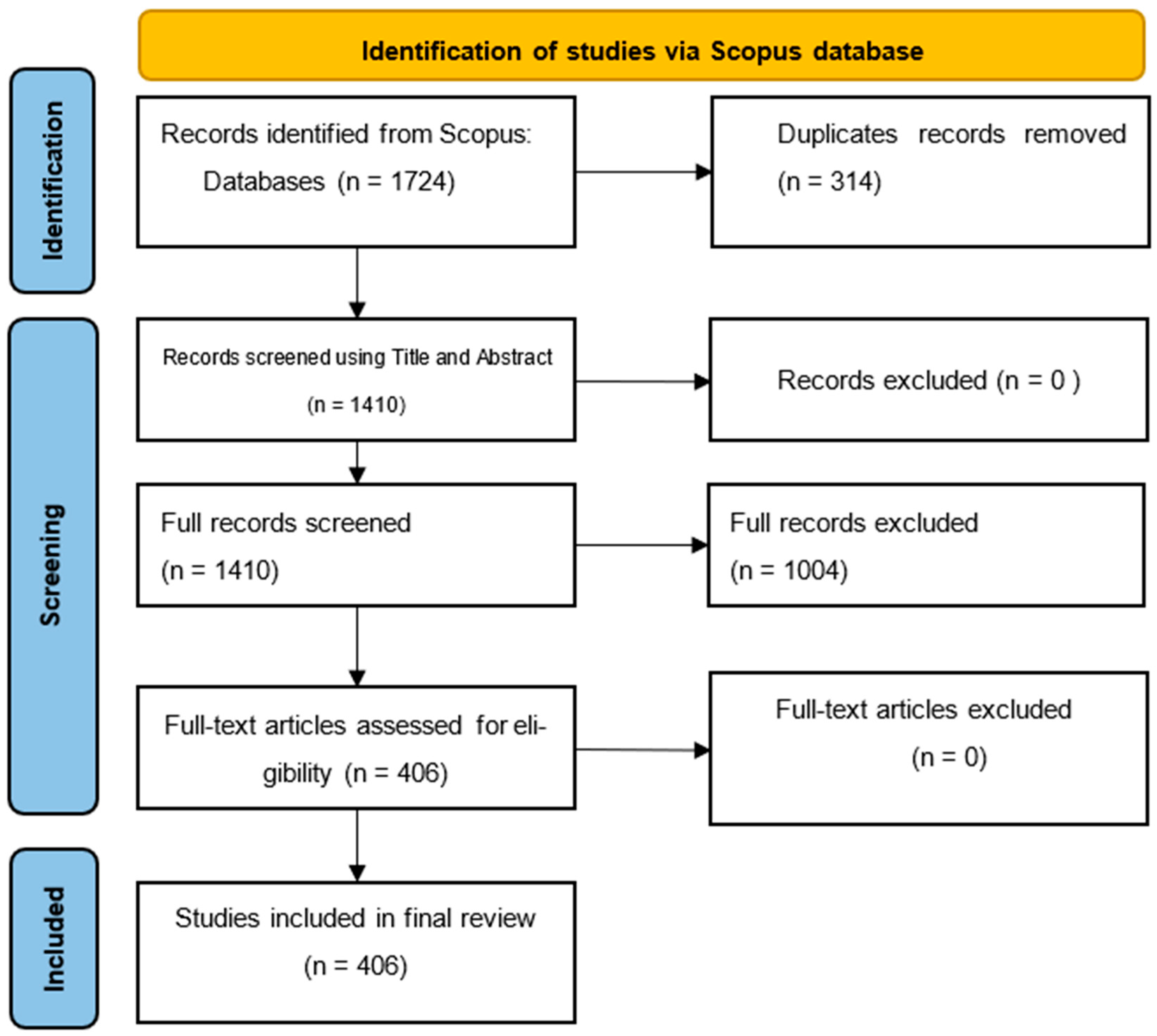
An initial dataset consisting of 1724 documents was exported from Scopus and converted into structured tabular data in R. After removing 314 duplicates and irrelevant entries (e.g., studies on corrosion or materials science), 1410 records remained for screening. Title and abstract screening excluded 1004 records, leaving 406 articles for full-text review. All articles were assessed for thematic relevance and accessibility. Risk of bias was not formally assessed due to the qualitative and exploratory nature of the review. A PRISMA 2020 flow diagram (Figure 1) was used to document and visualise the selection process, aligning with the recommendations of [19,21]. The conduct and reporting of the review followed PRISMA 2020 guidelines, with full compliance details provided in Appendix A.
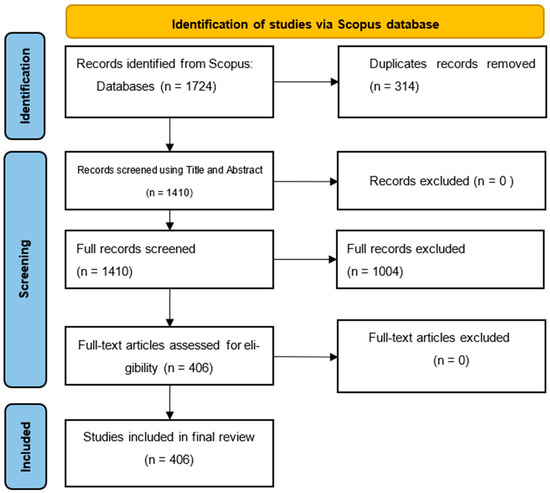
Figure 1.
Prisma Diagram.
2.6. Data Extraction and Thematic Coding
Following the final screening process, data were extracted using a structured template designed to support qualitative thematic synthesis. For each article, bibliographic metadata were recorded, including title, authors, publication year, journal, abstract, and author-provided keywords. In addition, analytical fields were included to capture research methodology (qualitative, quantitative, mixed methods, or unspecified), reported enablers and barriers to sustainability implementation, and the primary thematic focus. These themes were not prespecified but were derived inductively from recurring patterns in the dataset, including curriculum and pedagogy, leadership and strategy, policy and governance, technology and innovation, and community engagement.
The exported dataset from R was manually coded by four independent reviewers using a shared classification framework. Abstracts were analysed for conceptual language and keyword indicators to guide thematic assignment. To ensure consistency, coders participated in initial calibration sessions and engaged in cross-checking and reconciliation meetings. Discrepancies were resolved collectively to maximise reliability. This rigorous approach enabled the identification of dominant research areas, conceptual blind spots, and intersecting methodological trends. The final coded dataset served as the basis for cross-tabulation and synthesis [26,27].
2.7. Synthesis Method
The analysis employed qualitative content synthesis, focusing on the recurrence of themes, the conceptual depth, and the contextual framing of sustainability in higher education. Citation counts and metric-based methods were intentionally excluded to foreground conceptual insights. Findings were synthesised and presented in Table 1, Table 2 and Table 3 using descriptive summaries and thematic matrices to highlight intersections between methodologies, thematic foci, and implementation factors. This method supported a critical understanding of how sustainability is conceptualised and operationalised across the literature. No formal risk of bias assessment was conducted, which is consistent with the interpretive nature of this review design.

Table 1.
Summary statistics of the reviewed literature (n = 406).
Table 2.
Coding Framework and Thematic Categories.
Table 3.
Summary of Enablers and Barriers by Thematic Area.
2.8. Bias Awareness and Analytical Positioning
Given the qualitative and interpretive nature of this review, formal risk-of-bias assessment tools were not applied. However, methodological reflexivity was maintained throughout the review process. In particular, the potential over-representation of pedagogical studies arising from the inclusion of ESD-related search terms was acknowledged and addressed analytically by situating pedagogical findings within a broader institutional sustainability framework during coding and synthesis. This approach enabled critical examination of thematic imbalances without conflating search-driven prevalence with substantive dominance.
3. Descriptive Overview of the Reviewed Literature
The descriptive analysis of the dataset presented in Table 1 offers foundational insights into the scale and structure of scholarly engagement with sustainability in higher education between 2014 and 2025. A total of 406 peer-reviewed articles were included in the final dataset following comprehensive cleaning and relevance screening. These articles were published across 188 unique journals, reflecting the interdisciplinary nature of the topic and its relevance across fields such as education, environmental studies, policy, and management.
The temporal distribution spans 2014 to 2025, capturing over a decade of sustained and evolving research activity. This period includes critical inflexion points such as adopting the United Nations Sustainable Development Goals (SDGS) and the global shift to remote learning during the COVID-19 pandemic. Both of which have significantly influenced higher-education practices and sustainability priorities.
Authorship trends reveal that the field is supported by a broad scholarly base, with 1290 unique authors contributing to the body of literature. The average number of authors per article is 3.4, suggesting a moderate level of collaboration. While not exceptionally high, this figure indicates growing interest in cross-disciplinary and co-authored research, which is essential for addressing the multifaceted challenges of sustainability in higher education. These descriptive statistics confirm the topic’s breadth, growing maturity, and relevance across academic disciplines.
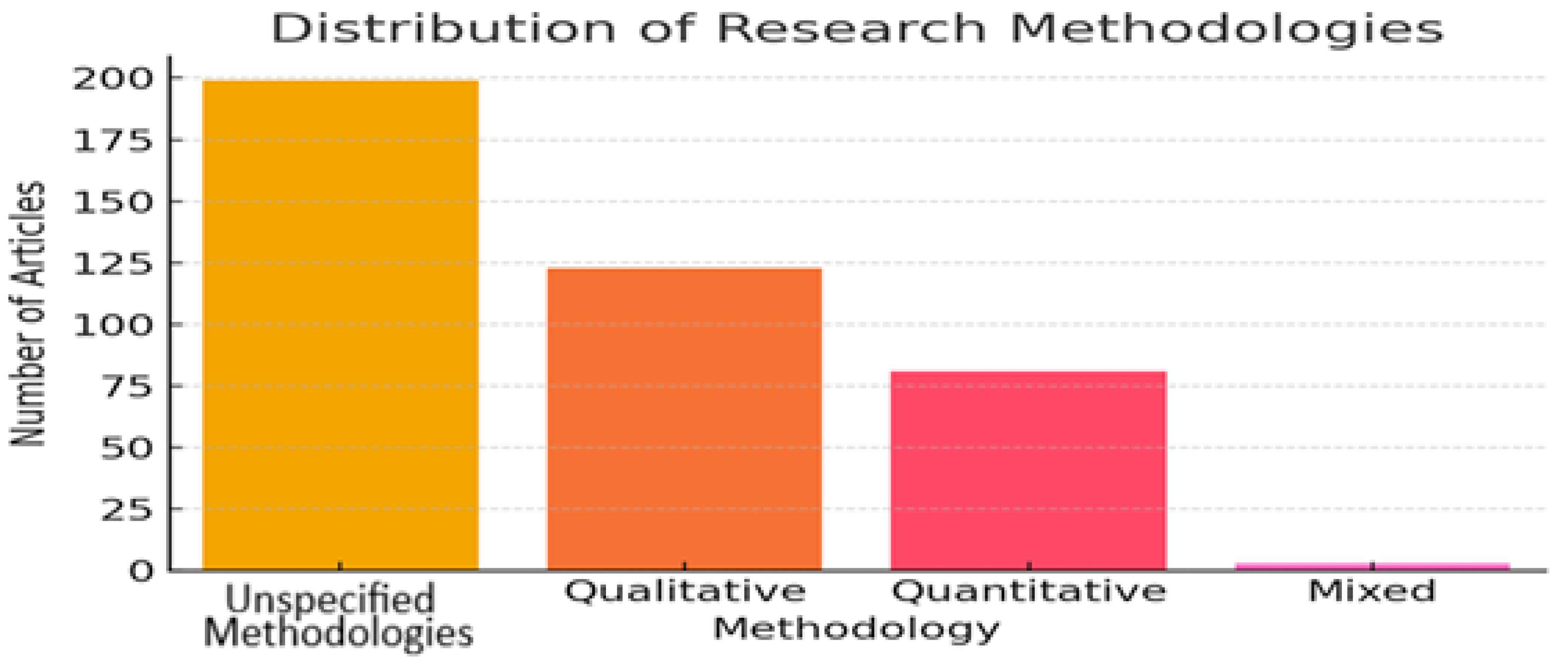
As shown in Figure 2 (Distribution of Research Methodologies), qualitative designs predominate because they effectively capture institutional and pedagogical dynamics [4,7]. Quantitative and mixed-method studies, although fewer in number, are increasingly used to measure sustainability outcomes [10,11,12].
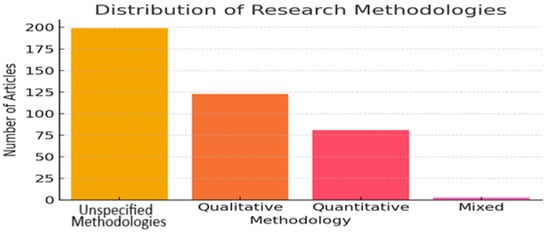
Figure 2.
Distribution of Research Methodologies across the Reviewed Studies. The first column indicates the primary methodological approach explicitly reported by each study, categorised as qualitative, quantitative, mixed methods, or unspecified. Frequencies represent the number of articles adopting each approach within the reviewed corpus (n = 406).
Figure 2 further reveals diverse but uneven methodological approaches by scholars. Many reviewed studies employed qualitative methods, such as case studies and interviews, reflecting the field’s emphasis on contextual depth and institutional practices. A smaller share of publications utilised quantitative designs, often relying on survey data to assess perceptions, implementation outcomes, or institutional readiness. The mixed methods category appeared in fewer studies, despite its potential to provide more comprehensive insights by combining empirical depth with generalisability. This distribution suggests that while qualitative approaches dominate the field, there is room for greater methodological plurality, particularly through mixed-methods designs that bridge the gap between theory and practice.
The thematic coding in Table 2 indicates a strong focus on Curriculum and Pedagogy, accounting for 332 of the 406 reviewed articles. This prominence reflects the central role of education for sustainable development within sustainability scholarship in higher education and is consistent with the inclusion of ESD-indexed studies in the retrieval strategy. By contrast, institution-level themes such as Leadership and Strategy, Technology and Innovation, and Community Engagement appear far less frequently. This distribution highlights an imbalance in thematic emphasis within the literature, rather than definitive evidence of institutional priorities, and underscores the need to interpret pedagogical dominance in light of search design and indexing practices.
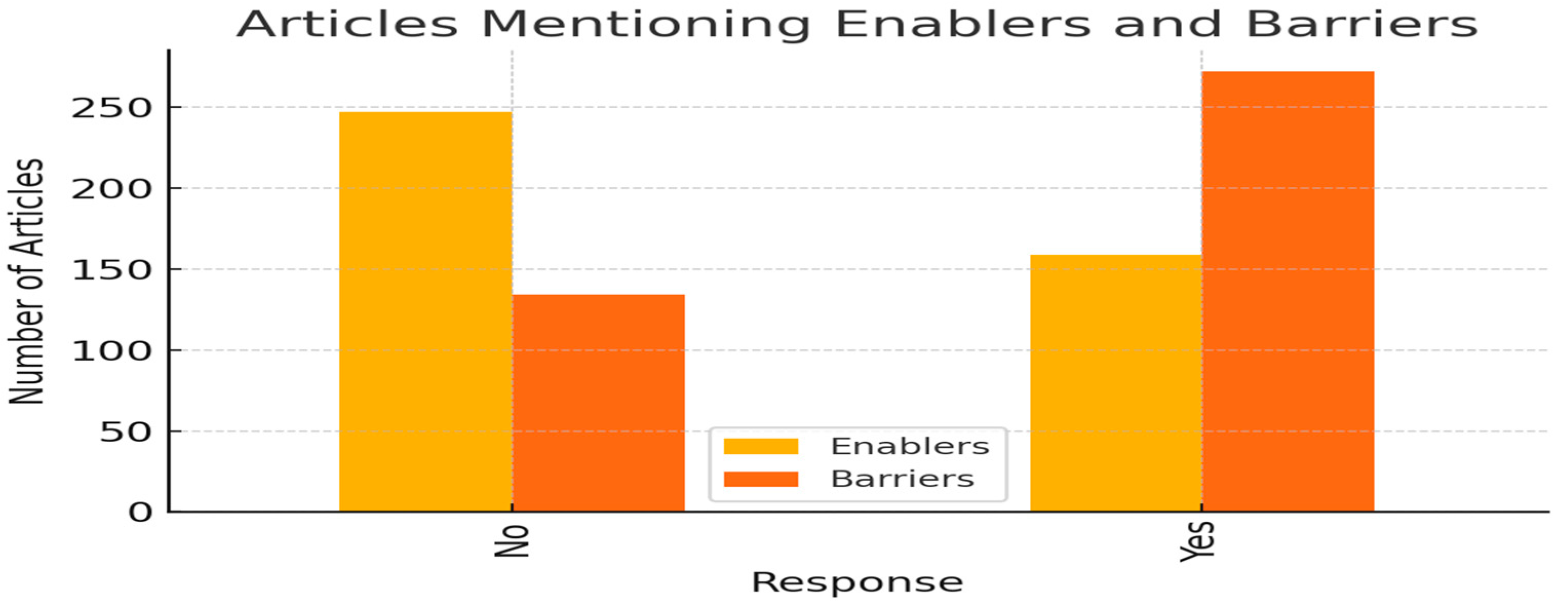
Analysis from Figure 3 and Table 3 reveals an apparent asymmetry in the literature: barriers to sustainability implementation are reported far more frequently than enablers across all thematic areas. This pattern is particularly evident in Curriculum and Pedagogy, the dominant theme in the dataset, where barriers are mentioned in 81.6% of studies compared to 52.1% that reference enablers. Despite its strategic importance, leadership and strategy were scarcely discussed and were only in the context of barriers. Community Engagement, although representing a small proportion of the studies, notably showed relatively high reporting of enablers and barriers. The most commonly cited barriers include institutional resistance, lack of policy coherence, funding constraints, and implementation challenges.
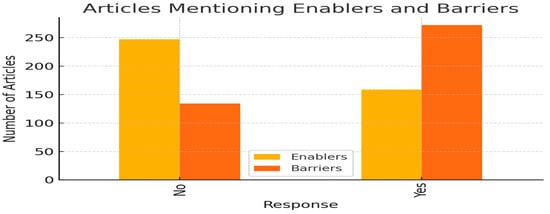
Figure 3.
Graphical representation of articles mentioning enablers and barriers.
In contrast, enablers such as leadership support, digital innovation, and collaborative governance structures appear less frequently, suggesting either a research blind spot or a prevailing tendency to focus on diagnosing problems rather than documenting solutions. This imbalance reinforces the broader observation that sustainability research in higher education remains heavily problem-oriented. A shift toward identifying and analysing replicable success factors and effective practices is necessary to guide institutional transformation and policy development [6,7].
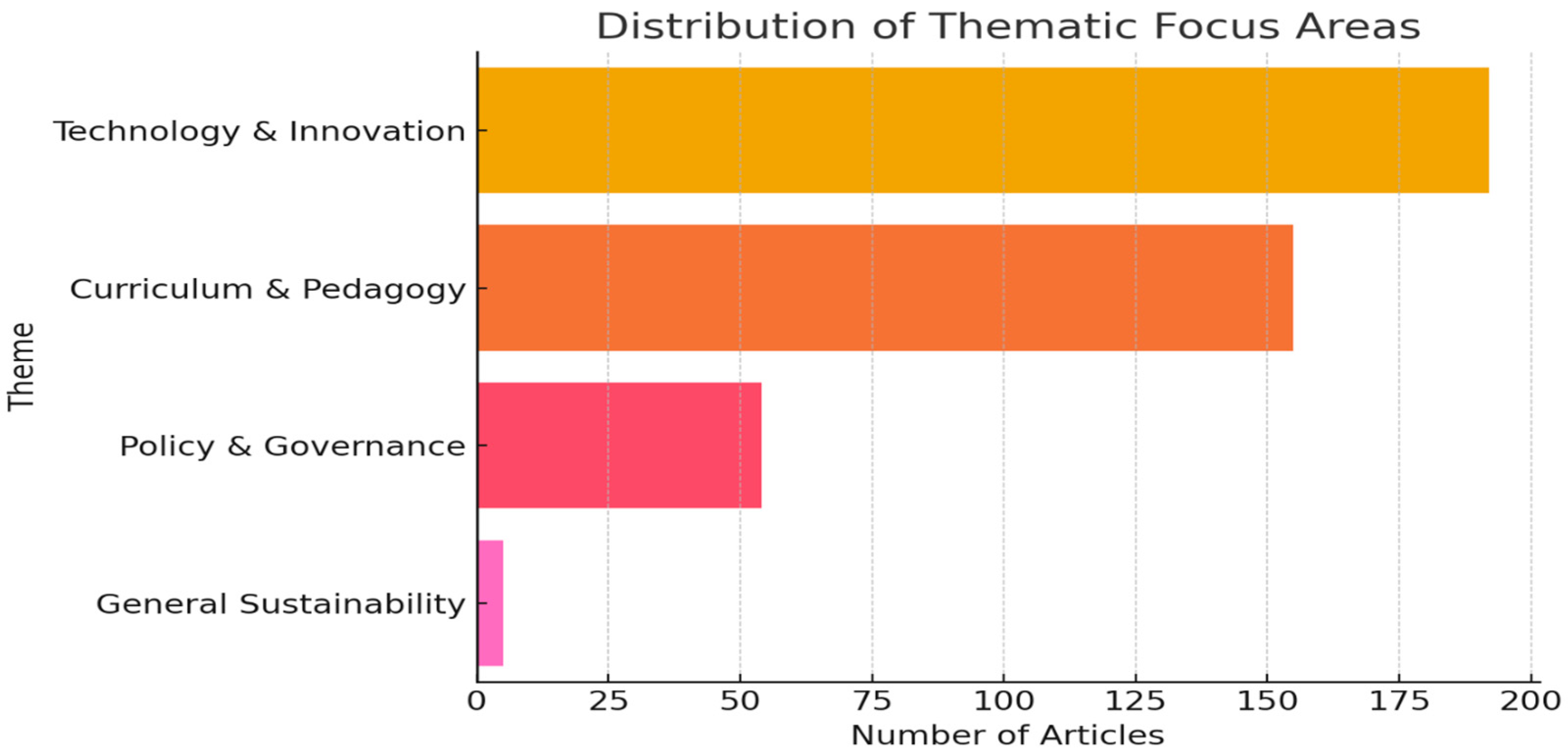
Figure 4 presents the thematic analysis of article abstracts categorised into five major areas: Curriculum & Pedagogy, Policy & Governance, Technology & Innovation, Leadership & Strategy, and Community Engagement. Curriculum & Pedagogy emerged as the most frequent theme, indicating sustained scholarly interest in transforming what and how sustainability is taught. Technology and innovation followed closely, particularly concerning digital transformation and artificial intelligence in educational delivery. Themes such as Leadership and Community Engagement appeared less frequently, indicating potential gaps in research on the strategic and societal interfaces of sustainability. The relatively low presence of Policy & Governance may reflect challenges in accessing or measuring the impact of policy within academic environments. The thematic distribution highlights a strong pedagogical core with emerging digital and institutional dynamics of interest.
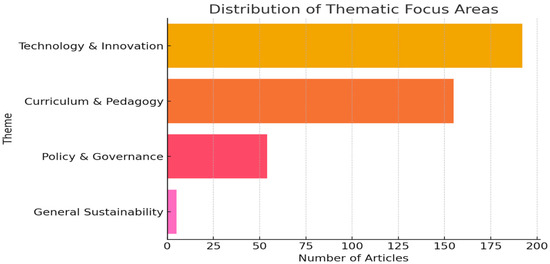
Figure 4.
Thematic Focus of Reviewed Articles.
Enhanced Keyword Co-Occurrence Summary
Table 4 presents the most frequently occurring keywords in sustainability in higher-education research (2014–2025). It highlights redundant or fragmented terms, those missing from the co-occurrence map despite their importance, and formatting issues such as truncation. These insights aim to improve keyword consistency and the interpretability of future co-word analyses.
Table 4.
Enhanced Keyword Co-occurrence Summary.
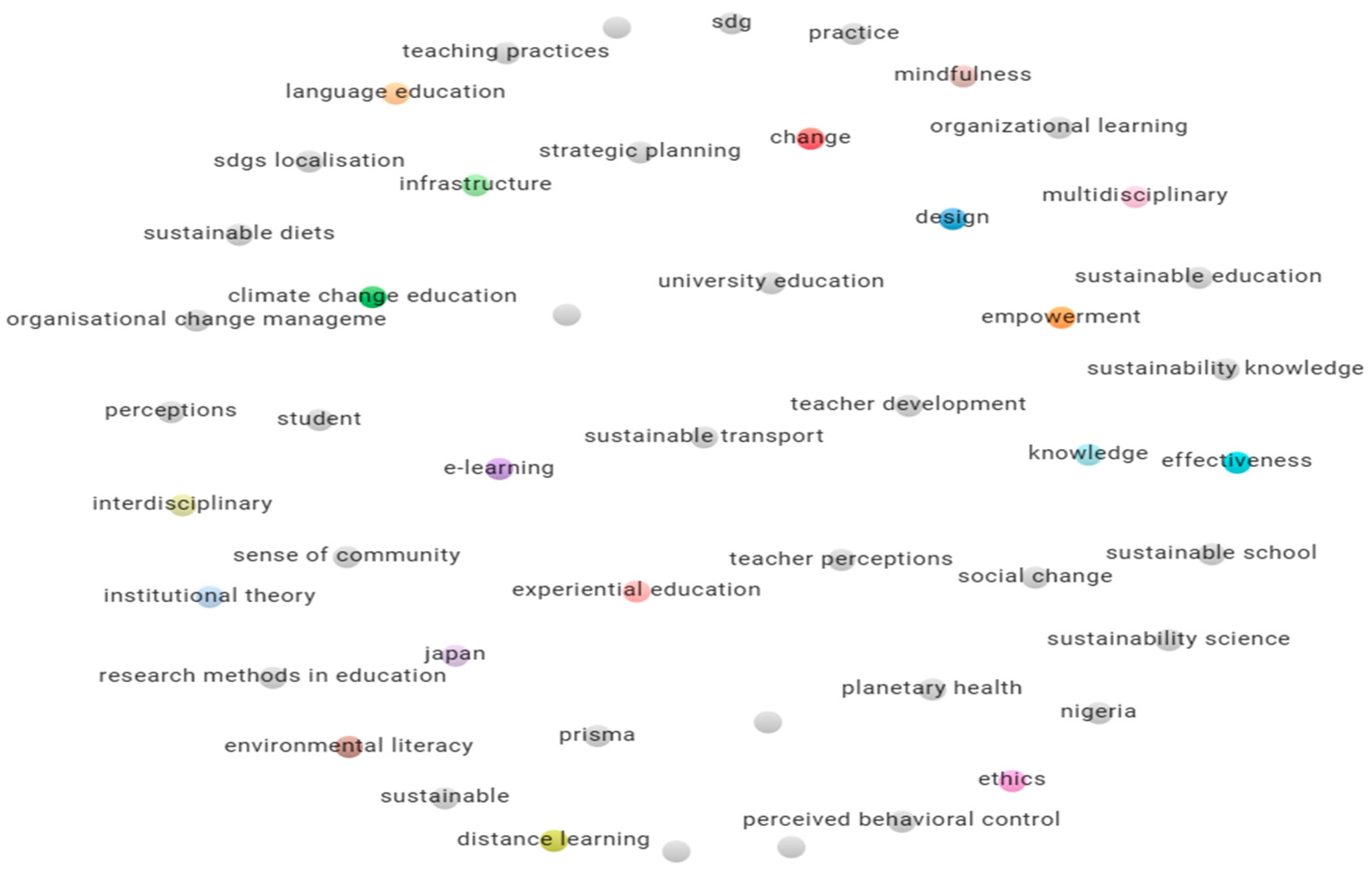
Figure 5 presents a keyword co-occurrence map generated in VOSviewer, version 1.6.20, from author-assigned keywords that appear more than once in the reviewed corpus (2014–2025). Rather than displaying clearly bounded thematic clusters, the visualisation reveals a pattern of thematic concentration alongside substantial dispersion, indicating uneven conceptual consolidation within sustainability research in higher education.
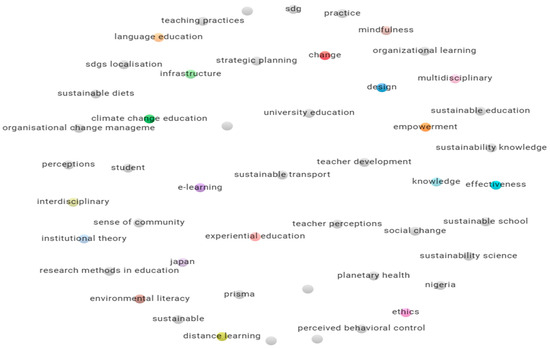
Figure 5.
Keyword Co-occurrence Map based on Author Keywords (2014–2025), generated using VOSviewer.
The most visually prominent and interconnected terms are concentrated around pedagogical and education-oriented concepts, including teacher development, education for sustainable development, climate change education, experiential education, and e-learning. The relative density of connections among these terms reflects the dominant pedagogical orientation of the literature and confirms that sustainability scholarship in higher education continues to be anchored primarily in teaching and learning practices.
Beyond this pedagogical core, keywords associated with institutional, organisational, and strategic dimensions, such as strategic planning, organisational learning, institutional theory, and infrastructure, appear more weakly connected and spatially dispersed. Their positioning suggests emerging scholarly attention to structural and governance-related aspects of sustainability, but without sufficient co-occurrence density to indicate a consolidated research stream.
Importantly, several conceptually significant terms, including ethics, empowerment, planetary health, leadership, and resilience, appear as peripheral or weakly connected nodes. Their limited connectivity does not reflect visual clustering but instead signals fragmented and episodic engagement with these themes across the literature. This peripheral positioning indicates that, although such concepts are present, they have not yet been systematically integrated into dominant sustainability discourses in higher education research.
The map also highlights terminological inconsistency, with related concepts appearing under multiple labels (e.g., change, social change, organisational change management), which further weakens network cohesion. This fragmentation weakens the analytical power of co-occurrence patterns and underscores the lack of standardised keyword practices across studies.
Overall, Figure 5 should be interpreted not as evidence of mature thematic clustering, but as a visual diagnosis of conceptual imbalance and uneven integration. The co-occurrence network reveals strong consolidation around pedagogical themes, alongside fragmented and underdeveloped engagement with ethical, institutional, leadership, and systemic dimensions of sustainability. This pattern reinforces findings from the thematic synthesis and highlights the need for more integrative, institutionally grounded research agendas in sustainability in higher education.
4. Synthesis of Findings
Prior reviews and conceptual studies characterise sustainability research in higher education as an expanding field that has broadened its thematic scope while continuing to face methodological and structural constraints, particularly in relation to institutional integration and the depth of implementation [1,4,5,15,17]. This broader characterisation is not derived from a single analytical output but reflects cumulative assessments across pedagogical, organisational, and governance-oriented strands of the literature.
Within this established context, Table 5 serves a more limited but precise role by illustrating how methodological approaches are distributed across thematic areas in the reviewed corpus. The cross-tabulation indicates a clear predominance of qualitative, methodologically unspecified studies across most themes, with this pattern particularly pronounced in Curriculum and Pedagogy. In these studies, qualitative designs such as case studies and interviews are frequently used to explore curriculum reform, teaching practices, and institution-specific sustainability initiatives. Quantitative approaches are comparatively fewer and appear more frequently in Technology and Innovation and Policy and Governance, where survey-based assessments and evaluative designs are more commonly employed to examine readiness, adoption, or performance-related outcomes. Mixed-methods designs remain rare across all thematic categories.
Table 5.
Thematic–Methodological Synthesis Matrix.
This uneven distribution of methodological approaches aligns with concerns raised in prior scholarship regarding the dominance of depth-oriented qualitative inquiry and the relative underutilisation of designs that enable triangulation and cross-contextual comparison [2,3,9,10]. The substantial proportion of studies classified as methodologically unspecified further points to inconsistencies in reporting practices, which have been identified as a constraint on cumulative knowledge development and comparative synthesis in sustainability research within higher education [4,5]. As such, Table 5 does not, in itself, evidence field maturation, but it provides methodological support for existing critiques by showing how these imbalances manifest across thematic areas.
Matrix-Based Synthesis of Findings
The revised cross-tabulation between methodology and thematic areas offers clearer insight into how sustainability in higher education is approached. While many articles still lack explicitly stated methodologies, now categorised as Unspecified, the distribution among clearly defined approaches reveals essential trends. Studies in Curriculum & Pedagogy strongly prefer qualitative methods, emphasising in-depth exploration of pedagogical reform, experiential learning, and sustainability-driven instruction. Themes such as Technology & Innovation feature a balanced mix of quantitative and qualitative methods, reflecting the experimental and evaluative nature of digital transformation research [28,29,30,31,32]. The appearance of mixed methods remains limited across all themes, reinforcing earlier concerns about methodological diversity and generalisability.
Analysing enablers and barriers across themes has also become more robust with the corrected data. Notably, Curriculum & Pedagogy and Technology & Innovation are the most likely to include references to enablers such as digital infrastructure, collaborative learning, and academic agility [9,10,11,12]. In contrast, Leadership & Strategy and Policy & Governance still register a higher incidence of barriers, indicating structural rigidity, limited administrative buy-in, and regulatory fragmentation as consistent hindrances [4,5].
Interestingly, even among articles with unspecified methodologies, discussions around barriers are frequent. This suggests that, regardless of research design, scholars are broadly attuned to the operational and systemic challenges that inhibit sustainability integration. However, the lower frequency of reported enablers remains a concern. The findings indicate that while much of the literature documents what is not working, fewer contributions offer validated models or successful frameworks that could be scaled or adapted. This reinforces the call for a more solution-oriented research agenda and the need for empirical investigations that centre on how sustainability transformations are being achieved, not just theorised [1,2].
These synthesised matrices provide a more precise thematic-methodological map of the field. The matrices highlight the importance of expanding methodological transparency, improving thematic balance, and prioritising enabler-focused inquiry to inform academic debate and institutional practice in sustainability education.
5. Discussion of Findings
This systematic review examines how sustainability has been conceptualised and investigated within higher-education research over the past decade, rather than whether it is recognised as an institutional concern. Analysis of 406 peer-reviewed articles reveals a pronounced concentration on curriculum reform and pedagogical practices, reflecting higher education’s long-standing emphasis on learning outcomes and competency development in sustainability education [1,3]. While this emphasis aligns with international policy agendas, it also points to a comparatively narrow interpretation of sustainability that frequently sidelines governance structures, operational systems, and forms of external engagement that are critical for institution-wide transformation.
From a methodological perspective, the reviewed literature continues to rely predominantly on qualitative approaches, particularly case studies and interview-based designs. As shown in Table 5, these approaches dominate across most thematic areas, especially within Curriculum and Pedagogy. Although qualitative designs provide rich contextual insight into institutional practices and localised sustainability initiatives, their prevalence constrains comparability and cross-contextual generalisability. Quantitative studies are comparatively fewer and appear more prominently within Technology and Innovation and Policy and Governance, where survey-based assessments and evaluative designs are more commonly employed. Mixed-methods designs remain rare across all thematic categories, and a substantial proportion of studies do not clearly specify their methodological orientation. Together, these patterns raise concerns about reporting transparency and the cumulative development of knowledge, reinforcing earlier observations that sustainability research in higher education remains methodologically uneven rather than analytically consolidated.
A further pattern emerging from the findings is the asymmetry between attention to barriers and attention to enablers. Structural constraints, including policy misalignment, limited leadership commitment, funding shortages, and fragmented governance arrangements, are extensively documented across institutional and national contexts [4,5]. In contrast, considerably fewer studies examine the conditions that facilitate successful sustainability integration. Where enabling factors are discussed, they most frequently relate to leadership commitment, knowledge-sharing practices, digital infrastructure, and adaptive governance arrangements [9,11,12,32]. The predominance of barrier-focused analysis suggests that the literature remains largely problem-oriented, with limited synthesis of transferable or scalable implementation strategies capable of informing institutional practice.
Thematic analysis further indicates that, while pedagogical innovation is relatively well developed, institution-level dimensions such as leadership, strategy, governance, and community partnership remain under-examined. This imbalance reinforces fragmented and siloed approaches to sustainability implementation, limiting the capacity of higher-education institutions to pursue systemic transformation [8,22]. Although technological tools and digital systems are increasingly referenced as supporting mechanisms, their role is most often discussed in relation to teaching delivery rather than as part of broader organisational change processes involving governance, coordination, and decision-making authority.
Finally, several concepts commonly associated with transformative sustainability agendas—including transformative learning, resilience, global citizenship, and climate change education—remain weakly integrated within the reviewed literature [2,13,15]. Their limited visibility suggests a disconnect between the transformative aspirations frequently articulated in sustainability discourse and the dominant empirical focus of existing research. In light of these patterns, the limited integration of transformative concepts reflects not an absence of normative ambition, but a structural tendency for sustainability research in higher education to privilege pedagogical activity over institution-wide change mechanisms. Addressing this gap requires stronger theoretical integration and greater methodological diversity, enabling sustainability scholarship to move beyond descriptive accounts toward institution-wide, action-oriented inquiry.
Overall, the findings indicate that sustainability research in higher education is characterised by strong pedagogical engagement, persistent structural challenges, and uneven methodological development. Advancing the field will require more balanced attention to enabling conditions, deeper integration of leadership and governance perspectives, and research designs capable of capturing sustainability as a systemic institutional process rather than a collection of isolated educational practices.
6. Conceptual Contribution
The reviewed literature documents a range of sustainability-oriented practices within higher education, including curriculum mainstreaming initiatives [15], the development of digital infrastructures that support sustainable learning environments [28,31], and governance arrangements that aim to integrate sustainability into institutional strategies [4,8]. While these practices are reported across diverse contexts, they are unevenly developed and rarely examined as part of an integrated institutional transformation process.
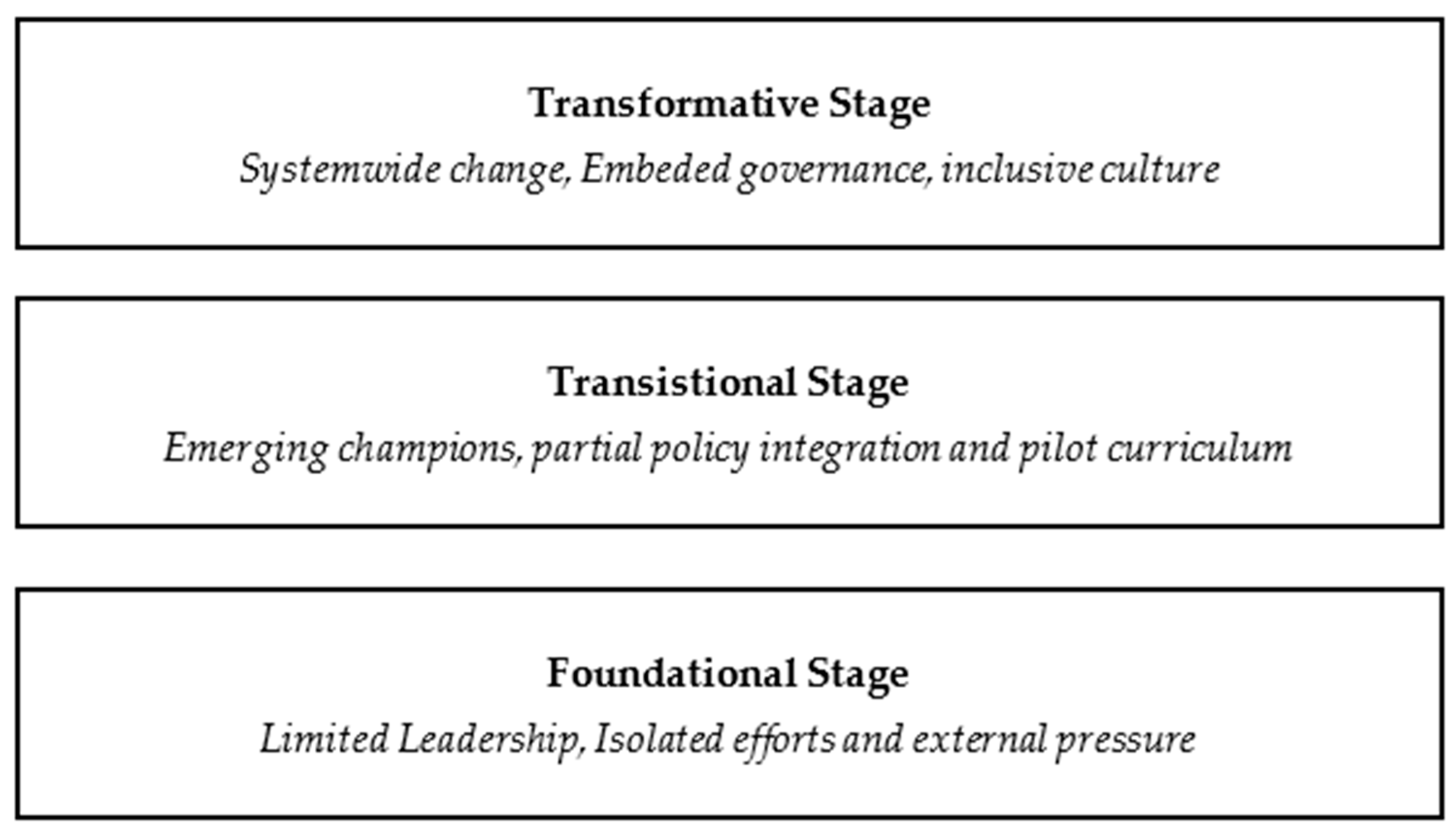
Building on this synthesis, the review moves beyond descriptive aggregation to propose a conceptual framework, the Sustainability in Higher Education Institutional Maturity Matrix (SHE-IMM). The framework is analytically derived from recurring patterns identified in the reviewed studies and is intended to support conceptual understanding rather than to provide a prescriptive or evaluative classification tool. SHE-IMM conceptualises sustainability integration in higher education as a progressive continuum, reflecting differences in structural readiness, cultural adoption, digital capacity, and institutional commitment.
The framework distinguishes three ideal-typical stages of sustainability integration:
- Foundational institutions are characterised by fragmented and reactive sustainability activities, often driven by external pressures. Sustainability efforts at this stage typically lack coherent policy alignment, sustained leadership support, or institution-wide coordination.
- Transitional institutions exhibit emerging internal champions, pilot-level curricular initiatives, and partial integration of sustainability across academic programmes or operational domains. Sustainability practices remain uneven but demonstrate increasing internalisation.
- Transformative institutions are conceptualised as those in which sustainability principles are systematically embedded across governance structures, academic culture, stakeholder partnerships, and performance frameworks. At this stage, sustainability functions as an organising logic rather than a peripheral initiative.
By articulating these stages, the SHE-IMM framework provides a heuristic lens for interpreting variation in sustainability integration across higher-education institutions. It does not imply linear progression or empirical categorisation of specific universities but instead offers a structured way to synthesise existing evidence and to guide future empirical investigation into pathways of institutional sustainability transformation.
This framework (Figure 6) extends the current literature by offering a multi-dimensional diagnostic tool that helps assess institutional sustainability maturity in terms of policy presence, operational depth, cultural alignment, and systemic coherence. Furthermore, the model is context-sensitive, accommodating the constraints and realities of institutions in the Global South. As such, the SHE-IMM contributes an original theoretical lens and a practical roadmap for understanding, comparing, and guiding sustainability adoption across diverse HEI landscapes.
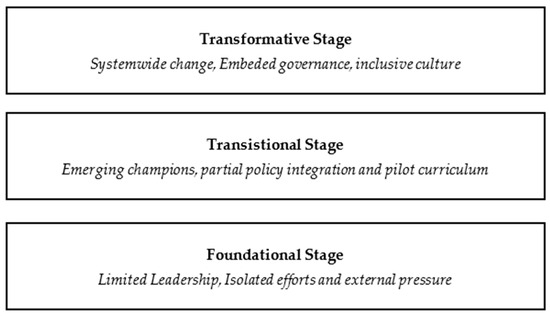
Figure 6.
The SHE Institutional Maturity Matrix (SHE-IMM): Progressive Stages of Sustainability Integration in Higher Education.
7. Conclusions and Recommendations
This review synthesised a decade of peer-reviewed research on sustainability in higher education to examine how the field has developed and where substantive gaps remain. The findings indicate that, despite increasing scholarly attention, sustainability research continues to be heavily oriented toward educational content and pedagogical practices. In contrast, institution-level dimensions such as leadership, policy coherence, governance arrangements, and strategic enablers receive comparatively limited empirical attention. Although barriers to sustainability integration are widely documented, evidence on effective implementation strategies remains fragmented. This imbalance constrains both theoretical consolidation and the practical applicability of existing research.
To address these limitations, future research should pursue greater thematic breadth and methodological diversity. Underexplored areas, including resilience, global citizenship, and transdisciplinary collaboration, warrant more systematic investigation. Methodologically, greater use of mixed-methods, comparative designs, and multi-institutional studies would enhance the robustness and transferability of findings across diverse contexts. Stronger engagement with theory and clearer reporting of research designs are also necessary to support cumulative knowledge development in this field.
The review further suggests implications for scholarly communication and research agendas. Editors and publishers can play an enabling role by encouraging submissions that address institution-level sustainability processes, leadership dynamics, and policy implementation, as well as studies situated in underrepresented geographical contexts. Supporting interdisciplinary and cross-institutional research may also contribute to a more balanced and integrative evidence base.
From a policy and institutional perspective, the findings underscore the importance of aligning sustainability initiatives with coherent governance structures and long-term strategic planning. While higher-education institutions increasingly articulate sustainability commitments, translating these commitments into coordinated institutional practice remains uneven. Greater attention to leadership capacity, organisational readiness, and enabling infrastructures may support more integrated approaches to sustainability implementation.
Overall, this review highlights the need for a recalibration of sustainability research in higher education. Advancing the field requires moving beyond fragmented and predominantly pedagogical analyses toward institution-wide perspectives that capture sustainability as a systemic process. By strengthening conceptual clarity, methodological rigour, and empirical focus on enabling conditions, future research can better inform both scholarship and practice in support of sustainable transformation within higher-education institutions.
8. Limitations and Future Research Directions
While this review provides a comprehensive and structured synthesis of sustainability research on higher education, several limitations should be acknowledged. First, the review was restricted to peer-reviewed articles indexed in the Scopus database. Although Scopus offers broad multidisciplinary coverage, relevant studies indexed in other databases, such as Web of Science or ERIC, as well as regionally focused repositories, may not have been captured. In addition, the exclusion of grey literature, including policy reports, institutional evaluations, and practitioner-oriented studies, may have limited the diversity of perspectives represented in the synthesis.
Second, although thematic coding was applied systematically, data extraction relied primarily on abstracts in cases where full-text access was unavailable. This constraint may have restricted deeper conceptual interpretation and limited the ability to capture methodological nuance or theoretical positioning in some studies. Consequently, certain themes may be underrepresented or simplified relative to the full scope of the original research.
Third, the review did not apply formal quality appraisal tools, such as the Mixed-Methods Appraisal Tool (MMAT) or the Critical Appraisal Skills Programme (CASP). This decision was made to maintain thematic breadth and accommodate the heterogeneity of study designs within the corpus. However, the absence of formal quality assessment limits the ability to evaluate methodological robustness systematically across included studies and should be considered when interpreting the findings.
Future research can address these limitations in several ways. Expanding data sources to include multiple bibliographic databases and selected grey-literature studies would enhance coverage and reduce database-related bias. The application of structured quality appraisal frameworks would also strengthen evaluative depth and support more nuanced interpretation of evidence quality. Methodologically, greater emphasis on mixed-methods, longitudinal, and comparative designs would help capture how sustainability initiatives evolve over time and across institutional contexts.
Substantively, future studies should prioritise underexplored areas identified in this review, including institutional leadership, governance mechanisms, organisational readiness, and climate-resilient education models. Greater empirical attention to students, faculty, and community stakeholders as active contributors to sustainability processes would also enrich understanding of institutional dynamics. Ultimately, the development of integrative sustainability frameworks that draw on interdisciplinary theory while remaining context-sensitive may provide more coherent and transferable insights into how sustainability can be effectively embedded across diverse higher-education systems.
Author Contributions
Conceptualization, G.O.; methodology, G.O. and S.H.; software, M.O.; validation, G.O., S.H., A.A., M.O., M.A. and O.A.; formal analysis, M.O.; investigation, G.O., S.H. and O.A.; resources, G.O.; data curation, A.A., M.A. and O.A.; writing—original draft preparation, G.O.; writing—review and editing, S.H., A.A., M.O., M.A. and O.A.; visualization, M.O.; supervision, G.O.; project administration, G.O.; funding acquisition, G.O. All authors have read and agreed to the published version of the manuscript.
Funding
This research received no external funding.
Institutional Review Board Statement
Not applicable.
Informed Consent Statement
Not applicable.
Data Availability Statement
No new data were created or analyzed in this study.
Conflicts of Interest
The authors declare no conflict of interest.
Appendix A
Table A1.
Completed PRISMA 2020 Checklist (Qualitative Review).
Table A1.
Completed PRISMA 2020 Checklist (Qualitative Review).
| Section | Item | Checklist Item | Location in Manuscript/Notes |
|---|---|---|---|
| TITLE | 1 | Identify the report as a systematic review | Title page |
| ABSTRACT | 2 | Structured summary per PRISMA abstract checklist | Revised abstract |
| INTRODUCTION | 3 | Rationale for the review | Introduction |
| 4 | Explicit statement of objectives | End of Introduction | |
| METHODS | 5 | Eligibility criteria | Eligibility Criteria section |
| 6 | Information sources | Review Design and Protocol | |
| 7 | Full search strategies for all databases | Boolean search terms listed in Review Design and Protocol | |
| 8 | Selection process | Screening and Selection Process | |
| 9 | Data collection process | Data Extraction and Thematic Coding | |
| 10 | Data items | Data Extraction and Thematic Coding | |
| 11 | Risk of bias assessment | Not formally assessed; rationale in Screening and Selection | |
| 12 | Effect measures | Not applicable—qualitative synthesis | |
| 13 | Synthesis methods | Synthesis Method section | |
| 14 | Heterogeneity exploration | Not applicable—qualitative synthesis | |
| 15 | Sensitivity analyses | Not applicable—qualitative synthesis | |
| RESULTS | 16 | Results of search and selection process (flow diagram) | Figure 1: PRISMA Flow Diagram |
| 17 | Study characteristics | Table 1, Methods section | |
| 18 | Risk of bias in studies | Not assessed; explained in Methods | |
| 19 | Results of individual studies | Thematic synthesis tables | |
| 20 | Results of syntheses | Table 1, Table 2 and Table 3 | |
| 21 | Heterogeneity results | Not applicable—qualitative synthesis | |
| 22 | Sensitivity analyses | Not applicable—qualitative synthesis | |
| DISCUSSION | 23 | General interpretation of results | Discussion section |
| 24 | Limitations of the evidence | Limitations section | |
| 25 | Limitations of the review process | Limitations section | |
| 26 | Implications for practice, policy, and research | Discussion: final paragraphs | |
| OTHER | 27 | Registration and protocol availability | Protocol not registered; noted in Methods |
| 28 | Support sources | No external funding; stated in manuscript | |
| 29 | Role of funders | No sponsor involvement; stated in manuscript | |
| 30 | Competing interests | Declared: “no competing interests” | |
| 31 | Data/code/materials availability | Dataset available on request; stated in manuscript |
References
- Lozano, R.; Lozano, F.J.; Mulder, K.; Huisingh, D.; Waas, T. Advancing higher education for sustainable development: International insights and critical reflections. J. Clean. Prod. 2013, 48, 3–9. [Google Scholar] [CrossRef]
- Franco, I.; Saito, O.; Vaughter, P.; Whereat, J.; Kanie, N.; Takemoto, K. Higher education for sustainable development: Actioning the global goals in policy, curriculum and practice. Sustain. Sci. 2019, 14, 1621–1642. [Google Scholar] [CrossRef]
- Leal Filho, W.; Vargas, V.R.; Salvia, A.L.; Brandli, L.L.; Pallant, E.; Klavins, M.; Ray, S.; Moggi, S.; Maruna, M.; Conticelli, E.; et al. The role of higher education institutions in sustainability initiatives at the local level. J. Clean. Prod. 2019, 233, 1004–1015. [Google Scholar] [CrossRef]
- Castellanos, P.M.A.; Queiruga-Dios, A. From environmental education to education for sustainable development in higher education: A systematic review. Int. J. Sustain. High. Educ. 2022, 23, 622–644. [Google Scholar] [CrossRef]
- Nordén, B.; Avery, H. Global Learning for Sustainable Development: A Historical Review. Sustainability 2021, 13, 3451. [Google Scholar] [CrossRef]
- Mishra, M.; Desul, S.; Santos, C.A.G.; Mishra, S.K.; Kamal, A.H.M.; Goswami, S.; Kalumba, A.M.; Biswal, R.; da Silva, R.M.; dos Santos, C.A.C.; et al. A bibliometric analysis of sustainable development goals (SDGs): A review of progress, challenges, and opportunities. Environ. Dev. Sustain. 2024, 26, 11101–11143. [Google Scholar] [CrossRef]
- Crawford, J.; Cifuentes-Faura, J. Sustainability in Higher Education during the COVID-19 Pandemic: A Systematic Review. Sustainability 2022, 14, 1879. [Google Scholar] [CrossRef]
- Elmassah, S.; Biltagy, M.; Gamal, D. Framing the role of higher education in sustainable development: A case study analysis. Int. J. Sustain. High. Educ. 2022, 23, 320–355. [Google Scholar] [CrossRef]
- Zepeda Quintana, D.S.; Esquer, J.; Munguía, N. Factors that hinder the implementation of sustainability initiatives in higher education institutions. In The Wiley Handbook of Sustainability in Higher Education Learning and Teaching; Wiley: Hoboken, NJ, USA, 2022; pp. 79–98. [Google Scholar]
- Carreño, A.M. Strategic alignment in program management: A framework for sustainable business transformation. Inst. Change Leadersh. Bus. Transform. 2024, 13922003. [Google Scholar] [CrossRef]
- Singun, A.J. Unveiling the barriers to digital transformation in higher education institutions: A systematic literature review. Discov. Educ. 2025, 4, 37. [Google Scholar] [CrossRef]
- Iqbal, Q.; Piwowar-Sulej, K. Sustainable leadership in higher education institutions: Social innovation as a mechanism. Int. J. Sustain. High. Educ. 2022, 23, 1–20. [Google Scholar] [CrossRef]
- Menon, S.; Suresh, M. Enablers of technology agility in higher education. Int. J. Inf. Learn. Technol. 2022, 39, 166–196. [Google Scholar] [CrossRef]
- Menon, S.; Suresh, M. Modelling the enablers of sustainability in higher education institutions. J. Model. Manag. 2022, 17, 405–439. [Google Scholar] [CrossRef]
- Menon, S.; Suresh, M.; Raman, R.R. Enablers facilitating industry-academia, transnational education and university-community partnering agility in higher education. High. Educ. Ski. Work. Learn. 2022, 12, 604–626. [Google Scholar] [CrossRef]
- Santos, E.; Carvalho, M.; Martins, S. Sustainable Enablers of Knowledge Management Strategies in a Higher Education Institution. Sustainability 2024, 16, 5078. [Google Scholar] [CrossRef]
- Alam, A. Mapping a Sustainable Future Through Conceptualisation of Transformative Learning Framework, Education for Sustainable Development, Critical Reflection, and Responsible Citizenship: An Exploration of Pedagogies for Twenty-First Century Learning. ECS Trans. 2022, 107, 9827–9840. [Google Scholar] [CrossRef]
- Hunduma, C.M.; Mekuria, Y.S. Multicultural education and global citizenship: Literature review. Multidiscip. Rev. 2024, 7, 2024223. [Google Scholar] [CrossRef]
- Page, M.J.; McKenzie, J.E.; Bossuyt, P.M.; Boutron, I.; Hoffmann, T.C.; Mulrow, C.D.; Shamseer, L.; Tetzlaff, J.M.; Akl, E.A.; Brennan, S.E.; et al. The PRISMA 2020 statement: An updated guideline for reporting systematic reviews. BMJ 2021, 372, 71. [Google Scholar]
- Page, M.J.; McKenzie, J.E.; Bossuyt, P.M.; Boutron, I.; Hoffmann, T.C.; Mulrow, C.D.; Shamseer, L.; Tetzlaff, J.M.; Akl, E.A.; Brennan, S.E.; et al. The PRISMA 2020 statement: An updated guideline for reporting systematic reviewsDeclaracion PRISMA 2020: Una guia actualizada para la publicacion de revisiones sistematicas. Rev. Panam. Salud Publica 2022, 46, e112. [Google Scholar]
- Page, M.J.; Moher, D.; Bossuyt, P.M.; Boutron, I.; Hoffmann, T.C.; Mulrow, C.D.; Shamseer, L.; Tetzlaff, J.M.; Akl, E.A.; Brennan, S.E.; et al. PRISMA 2020 explanation and elaboration: Updated guidance and exemplars for reporting systematic reviews. BMJ 2021, 372, n160. [Google Scholar] [PubMed]
- Trevisan, L.V.; Eustachio, J.H.P.P.; Dias, B.G.; Filho, W.L.; Pedrozo, E.Á. Digital transformation towards sustainability in higher education: State-of-the-art and future research insights. Environ. Dev. Sustain. 2024, 26, 2789–2810. [Google Scholar] [CrossRef] [PubMed]
- Schardt, C.; Adams, M.B.; Owens, T.; Keitz, S.; Fontelo, P. Utilization of the PICO framework to improve searching PubMed for clinical questions. BMC Med. Inform. Decis. Mak. 2007, 7, 16. [Google Scholar] [CrossRef]
- Amir-Behghadami, M.; Janati, A. Population, Intervention, Comparison, Outcomes and Study (PICOS) design as a framework to formulate eligibility criteria in systematic reviews. Emerg. Med. J. 2020, 37, 387. [Google Scholar] [CrossRef] [PubMed]
- Eckstein, J.; Phillips, C.A.; Hart, W.E. PICO: An object-oriented framework for parallel branch and bound. In Studies in Computational Mathematics; Elsevier: Amsterdam, The Netherlands, 2001; Volume 8, pp. 219–265. [Google Scholar]
- Bookstein, F.L. Biometrics, biomathematics and the morphometric synthesis. Bull. Math. Biol. 1996, 58, 313–365. [Google Scholar] [CrossRef]
- Sharma, L.; Nayar, K. Dictionary of Terms in Research Methodology; The Readers Paradise: Delhi, India, 2021. [Google Scholar]
- Mafenya, N.P. Exploring technology as enabler for sustainable teaching and learning during COVID-19 at a university in South Africa. Perspect. Educ. 2022, 40, 212–223. [Google Scholar] [CrossRef]
- Suryanarayana, K.; Kandi, V.P.; Pavani, G.; Rao, A.S.; Rout, S.; Krishna, T.S.R. Artificial Intelligence Enhanced Digital Learning for the Sustainability of Education Management System. J. High Technol. Manag. Res. 2024, 35, 100495. [Google Scholar] [CrossRef]
- Mhlongo, S.; Mbatha, K.; Ramatsetse, B.; Dlamini, R. Challenges, opportunities, and prospects of adopting and using smart digital technologies in learning environments: An iterative review. Heliyon 2023, 9, e16348. [Google Scholar] [CrossRef]
- Pedro, F.; Subosa, M.; Rivas, A.; Valverde, P. Artificial Intelligence in Education: Challenges and Opportunities for Sustainable Development. 2019. Available online: https://unesdoc.unesco.org/ark:/48223/pf0000366994 (accessed on 6 December 2025).
- Buerkle, A.; O’DEll, A.; Matharu, H.; Buerkle, L.; Ferreira, P. Recommendations to align higher education teaching with the UN sustainability goals—A scoping survey. Int. J. Educ. Res. Open 2023, 5, 100280. [Google Scholar] [CrossRef]
Disclaimer/Publisher’s Note: The statements, opinions and data contained in all publications are solely those of the individual author(s) and contributor(s) and not of MDPI and/or the editor(s). MDPI and/or the editor(s) disclaim responsibility for any injury to people or property resulting from any ideas, methods, instructions or products referred to in the content. |
© 2026 by the authors. Licensee MDPI, Basel, Switzerland. This article is an open access article distributed under the terms and conditions of the Creative Commons Attribution (CC BY) license.