Skip to Content
GrassesGrasses
  • Article
  • Open Access

9 February 2026

Frequency Distribution of Sward Heights and Forage Species Composition in Different Integrated Crop–Livestock Systems


,
,
,
,
,
,
and
1
Department of Crop Production and Protection, Federal University of Paraná, Curitiba 80035-050, Paraná, Brazil
2
Grazing Ecology Research Group, Federal University of Rio Grande do Sul, Porto Alegre 91540-000, Rio Grande do Sul, Brazil
3
Department of Agricultural Sciences, Regional Integrated University, Frederico Westphalen 98400-000, Rio Grande do Sul, Brazil
*
Author to whom correspondence should be addressed.

Abstract

Sward height is a practical indicator for defining management targets that reflect pasture structure. The complexity of integrated systems, including the coexistence of trees, crops, and livestock, can modify animal grazing distribution and microhabitat conditions, leading to different degrees of sward heterogeneity and botanical composition. This study investigated sward-height distribution and species composition in four systems: livestock (L), livestock–forestry (LF), crop–livestock (CL), and crop–livestock–forestry (CLF). Data were collected over two years in pastures of black oat (Avena strigosa Schreb.), Aries grass (Megathyrsus maximus cv. Aries), Italian ryegrass (Lolium multiflorum Lam.), and other tropical grasses during summer, transition, and winter. Sward heights were classified into three categories (low, optimal, high) according to seasonal thresholds (winter: <18.0; 18–29.9; >30 cm; summer: <15.0; 15–24.9; >25 cm) and fitted to four probability distributions (normal, log-normal, Gamma, Weibull). Management based on target-height maintained 46% of observations within the optimal class, a satisfactory proportion for continuous stocking systems where structural heterogeneity is inherent. The CL system presented greater species diversity due to a higher frequency of Italian ryegrass and other grasses. Across systems and seasons, the Gamma distribution provided the best fit for sward-height frequencies. These findings offer a practical statistical tool for evaluating grazing management efficiency.

1. Introduction

Peak short-term intake by grazing herbivores occurs only within a bounded interval of sward heights [1,2,3]. Above this interval, greater sward heights typically yield no gain in intake because handling and mastication times lengthen [4,5,6]. Below it, reduced bite mass constrains throughput and depresses intake rate [7,8]. Accordingly, managers have increasingly adopted mean sward height as an operational indicator for decision-making (e.g., [2,9]).
However, managing pastures under continuous stocking based on average pasture height presents difficulties, as it reduces the manager’s control over grazing intensity and the spatial distribution of animals [8]. As a result, continuously stocked paddocks tend to display pronounced heterogeneity, with coexisting overgrazed and undergrazed zones, relative to rotationally managed paddocks [8].
Such heterogeneity is largely shaped by the spatial behavior of grazing animals. How animals distribute grazing within a paddock reflects several factors, including topography, the location of shade and water, and the grazing process itself [10,11]. As herbivores interact with plants, they restructure canopy architecture and species composition, which subsequently influences foraging choices, closing a feedback loop [12]. This ongoing process maintains heterogeneity, supports selective intake [13], and allows animals to harvest forage of higher quality than the paddock mean [12].
In addition to animal behavior, modifications in the grazing environment can also modulate the structural variability of the pasture. Environmental changes, such as temporal integration with crops or concurrent integration with trees, can amplify pasture heterogeneity and reshape botanical composition [14,15]. Even though heterogeneity underpins selective intake, management decisions are commonly anchored to average sward height, with little consideration of its variability.
However, average values alone often fail to capture the asymmetrical nature of canopy height under continuous stocking. Using the mean as a management indicator works when height distributions are symmetrical, but continuous stocking often produces skewed frequency patterns [16]. In such cases, other distributions can represent canopy-height behavior more faithfully, including asymmetric, bimodal, and plateau-shaped forms. In particular, ref. [17] reported superior fits for positively skewed data using bimodal, Gamma, log-normal, and Weibull models. Therefore, a fine-grained characterization of sward-height frequency is critical to define targets that optimize pasture structure and productivity [11], supporting gains in efficiency aligned with sustainable intensification.
Based on these considerations, this study investigated the distribution of pasture height in multi-species pastures under the continuous stocking method in different integrated crop–livestock production systems (ICLS). Our hypothesis is that (i) systems that integrate a tree component present greater heterogeneity in pasture height because the shade generated by the trees alters the pasture structure, allowing for changes in pasture height in areas with greater shade incidence, and (ii) the species composition would be strongly influenced by crop integration because sowing crops over a perennial summer pasture would reduce the population of this pasture, allowing for the emergence of other species. To test these hypotheses, we characterized sward structure using mean height, height-class frequencies, and fitted probability distributions.

2. Materials and Methods

This study was conducted at UFPR’s Canguiri Experimental Farm, Pinhais, Paraná State, Brazil (25°23′30″ S, 49°07′30″ W), at approximately 920 m a.s.l. The area is classified as Cfb in the Köppen system (humid temperate, mild summers), with average annual rainfall near 1400 mm and mean temperatures of 22.5 °C (maximum) and 12.5 °C (minimum).
The evaluation covered two grazing cycles: the first from August 2018 to April 2019 and the second from June 2019 to March 2020. The trial forms part of a long-term research protocol initiated in 2013, designed to test different integrated crop–livestock–forestry (ICLF) arrangements. The plant species involved were Aries grass (Megathyrsus maximus (Jacq.) B.K.Simon & S.W.L.Jacobs cv. Aries) and black oat (Avena strigosa Schreb) as forages, with Eucalyptus benthamii Maiden et Cambage as the arboreal component, and maize (Zea mays L.) as the annual crop.
We evaluated four system configurations: livestock (L), livestock–forestry (LF), crop–livestock–forestry (CLF). The trial followed a randomized block design with three replications, yielding 12 experimental units, each between 1.3 and 2.2 ha. Differences in unit size resulted from the natural topography and pre-existing paddock divisions of the experimental area, but all units received identical management and were treated as random effects in the statistical models.
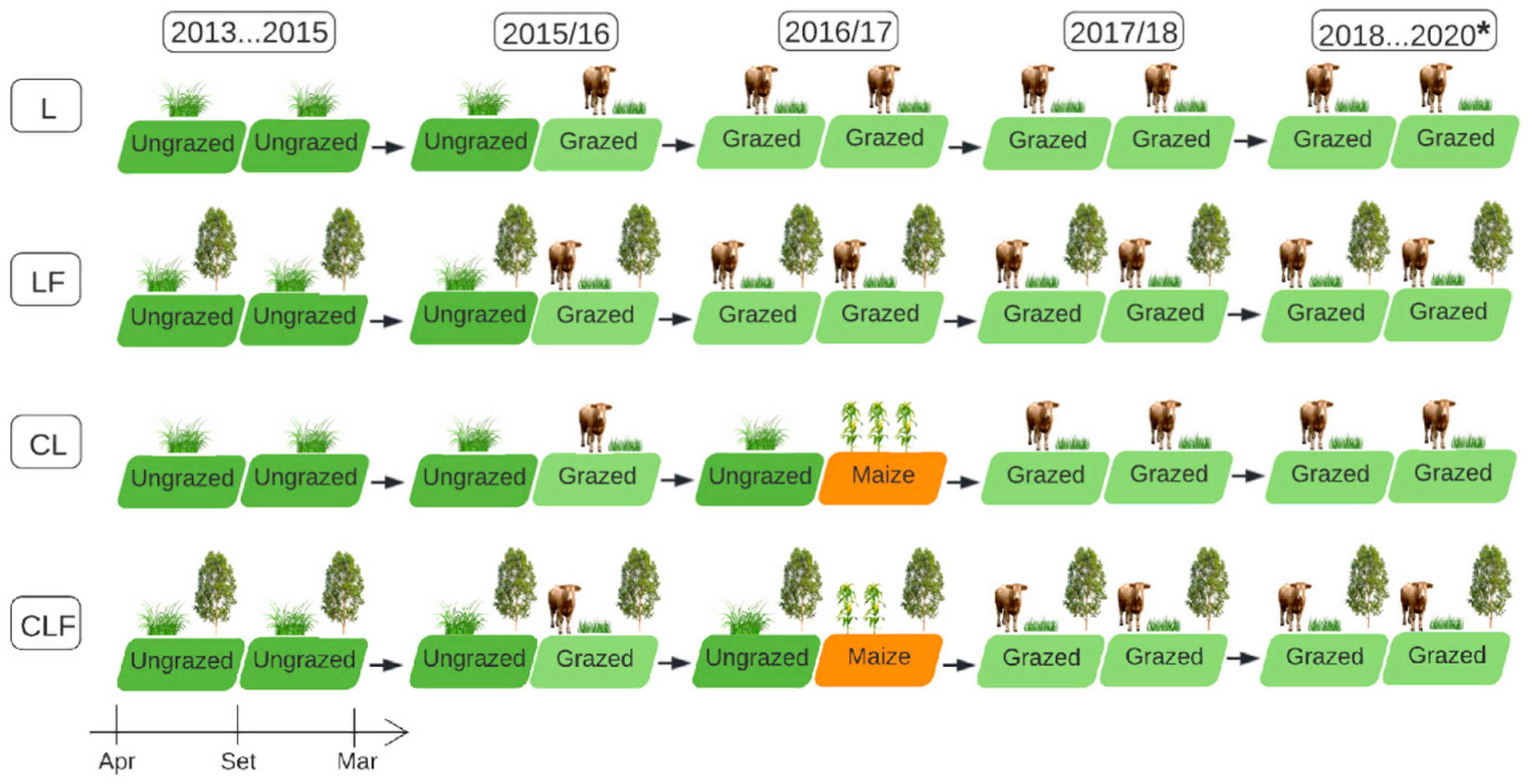
In all systems, black oat was used as the winter forage and sown annually between April and May, while Italian ryegrass (Lolium multiflorum Lam.) was re-established via natural reseeding. During summer, the pastures were composed mainly of Aries grass (Megathyrsus maximus), established in 2013, together with other grasses that appeared spontaneously. In the crop-including treatments (CL and CLF), maize was cultivated under no-tillage without chemical desiccation, following a cycle of one maize year and three pasture years (Figure 1). The arboreal component in LF and CLF consisted of Eucalyptus benthamii, initially spaced at 2 m between plants and 14 m between rows, and thinning in autumn 2017 removed 50% of the trees, with a further 12.5% reduction in 2019, while maintaining the original row spacing.
Figure 1. Representation of temporal rotation schemes over seven years and the arrangement of the experimental systems evaluated (L, livestock; LF, livestock–forestry; CL, crop–livestock; CLF, crop–livestock–forestry). * Corresponds to the evaluation period.
Black oat was sown at 80 kg ha−1 in May 2018 and again in April 2019. Prior to seeding, the summer sward was mown to approximately 5 cm, sowing was performed under no-till and no herbicides were used. In the first year, fertilization comprised 90 kg ha−1 N, 80 kg ha−1 P2O5 and 110 kg ha−1 K2O during winter, followed by 180 kg ha−1 N, 70 kg ha−1 P2O5 and 70 kg ha−1 K2O in summer. In the second year, winter received 90 kg ha−1 N, and summer 130 kg ha−1 N, 90 kg ha−1 P2O5 and 90 kg ha−1 K2O. Nutrient sources were urea, natural phosphate and potassium chloride.
Grazing followed a continuous stocking approach with a variable stocking rate, using three permanent tester animals per paddock and adding or removing regulators as required under the put-and-take technique [18]. In winter, black oat swards were maintained at an average height of 24 cm [19], whereas in summer, Aries grass was managed at 20 cm [20]. If the combined frequency of winter species (black oat + Italian ryegrass) fell below 50% for three consecutive assessments, management switched to the 20 cm criterion associated with Aries grass.
Because the experimental area lies within the Environmentally Protected Area of the Iraí River Basin (Decree No. 1753, 6 May 1996), the use of agrochemicals and other biocides is prohibited [21]. Thus, three annual rotary cuttings at ~40 cm height were carried out in all systems to control invasive plants.
Measurements of sward height were taken weekly during the first year and every 15 days during the second. Per paddock, 150 points were assessed in a zigzag layout with a sward stick [22]. Species at each point were identified to compute the relative frequencies of black oats, Italian ryegrass, Aries grass, and “other grasses”; the latter was composed chiefly of Urochloa spp., Cynodon spp., Hemarthria altíssima (Poir.) Stapf, and Penisetum clandestinum Hochst. ex Chiov. that emerged naturally on site.
To align height-distribution analyses with the management practiced in each period, each year was partitioned into two seasons. A period was designated winter when the combined frequency of black oats + Italian ryegrass exceeded 50%. Conversely, when Aries + other grasses surpassed 50% for three consecutive assessments, the period was designated summer. In both seasons, sward heights were grouped into three classes according to the “Rotatinuous stocking” concept [3], which defines an optimal height at which intake per unit grazing time is maximized and allows a reduction of up to 40% from that target while maintaining intake rate. Winter thresholds: low < 17.99 cm; optimal 18.00–29.99 cm; high ≥ 30.00 cm. Summer thresholds: low < 14.99 cm; optimal 15.00–24.99 cm; high ≥ 25.00 cm.
For species-composition analysis, seasons were defined from the species frequencies recorded during height sampling. Winter was assigned when black oats + Italian ryegrass exceeded 60%. A transition period was assigned when either black oats + Italian ryegrass or Aries + grasses represented 40–60%. Summer was assigned when Aries + grasses surpassed 60%.
Statistical analyses were performed using R software (version 3.6.3; R Development Core Team, 2020). Several linear mixed models were fitted, each considering different random-effect structures. Model selection was based on the lowest Akaike Information Criterion (AIC) value. The parameters of each theoretical distribution were estimated using the maximum likelihood method (default in the fitdistrplus package [23]). Model comparisons relied on AIC values, and the model with the lowest AIC was selected as the best fit. Preliminary diagnostic plots (density and cumulative distributions) indicated a satisfactory agreement between observed and fitted data. Since the AIC values showed consistent differences among distributions, only the AIC-based ranking is presented here for conciseness. The lmer function from the lme4 package [24] was employed for model fitting. For the evaluation of sward height, fixed factors included the production system, the management period (summer or winter), and their interaction, while year and paddock were treated as random factors. In the assessment of forage species composition, the fixed factors were the production system and the seasonal classification (winter, transition, and summer), including their interaction, with year and paddock again included as random factors. When significant effects were detected, means were compared using the Tukey test at a 5% significance level.
For distribution fitting, the package fitdistrplus [23] was used. The function plotdist was used for graphical visualization of the empirical data, while descdist provided comparative diagnostic plots among the normal, log-normal, Gamma, and Weibull distributions. The best-fitting distributions were obtained with fitdist and compared using AIC.

3. Results

3.1. Average Sward Height

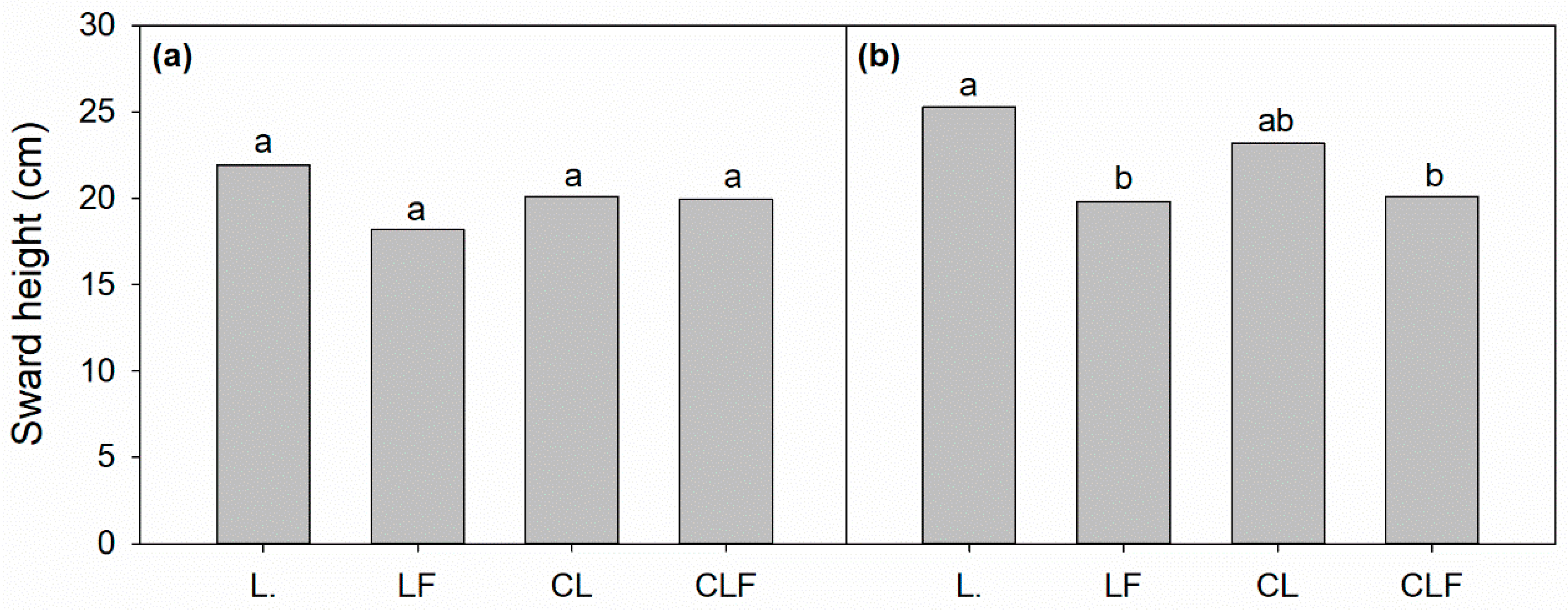
In winter, mean sward height was 16.6% below the 24 cm target (Figure 2), with no detectable differences among systems. In summer, LF and CLF maintained heights close to the expected average, whereas L exhibited greater mean height than the tree-based systems (p < 0.05) and did not differ from CL.
Figure 2. Average pasture height in winter (a) and summer (b) periods in livestock production systems (L, livestock; LF, livestock–forestry; CL, crop–livestock; CLF, crop–livestock–forestry). Different letters represent significant differences between systems according to Tukey’s test (p < 0.05).

3.2. Height Frequency and Classes

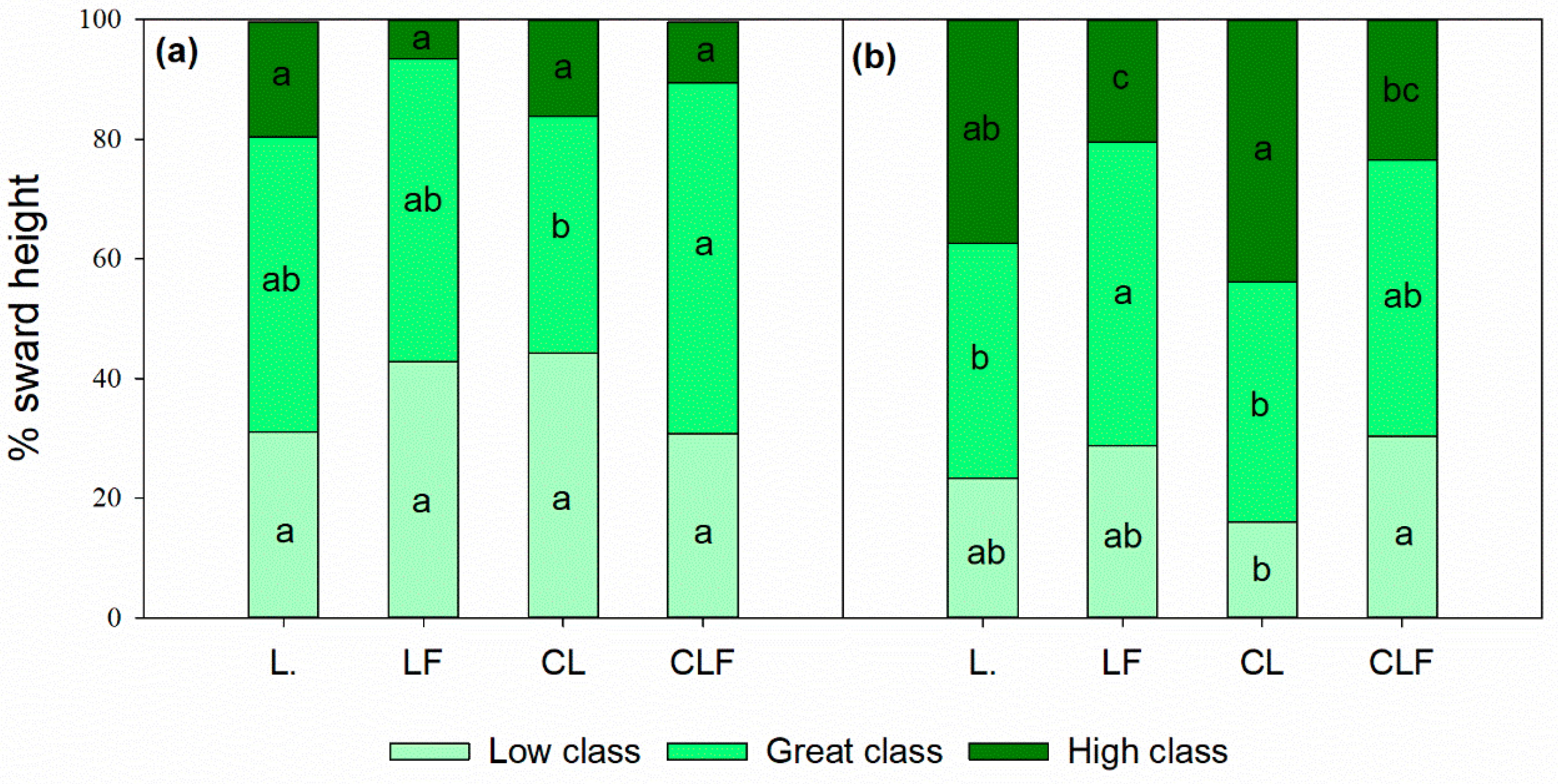
During winter, systems did not differ in the frequency of low-height observations (Figure 3). In summer, CLF displayed a higher frequency of low heights than CL (p < 0.05) and was comparable to the remaining systems. The optimal class showed the same winter pattern (no system differences). In summer, LF recorded a greater share of observations in the optimal class than CL and L (p < 0.05), without differing from CLF. For the high class, no system differences were detected in winter. In summer, CL had the highest frequency of tall swards compared with the tree-based systems (p < 0.05).
Figure 3. Height classes for the winter period (a) (low class, less than 17.99 cm; optimal class, 18 to 29.99 cm; high class, above 30 cm) and summer (b) (low class, less than 14.99 cm; optimal class, 15 to 24.99 cm; high class, above 25 cm) in livestock production systems (L, livestock; LF, livestock–forestry; CL, crop–livestock CLF, crop–livestock–forestry). Different letters represent significant differences between systems according to Tukey’s test (p < 0.05).

3.3. Frequency of Forage Species

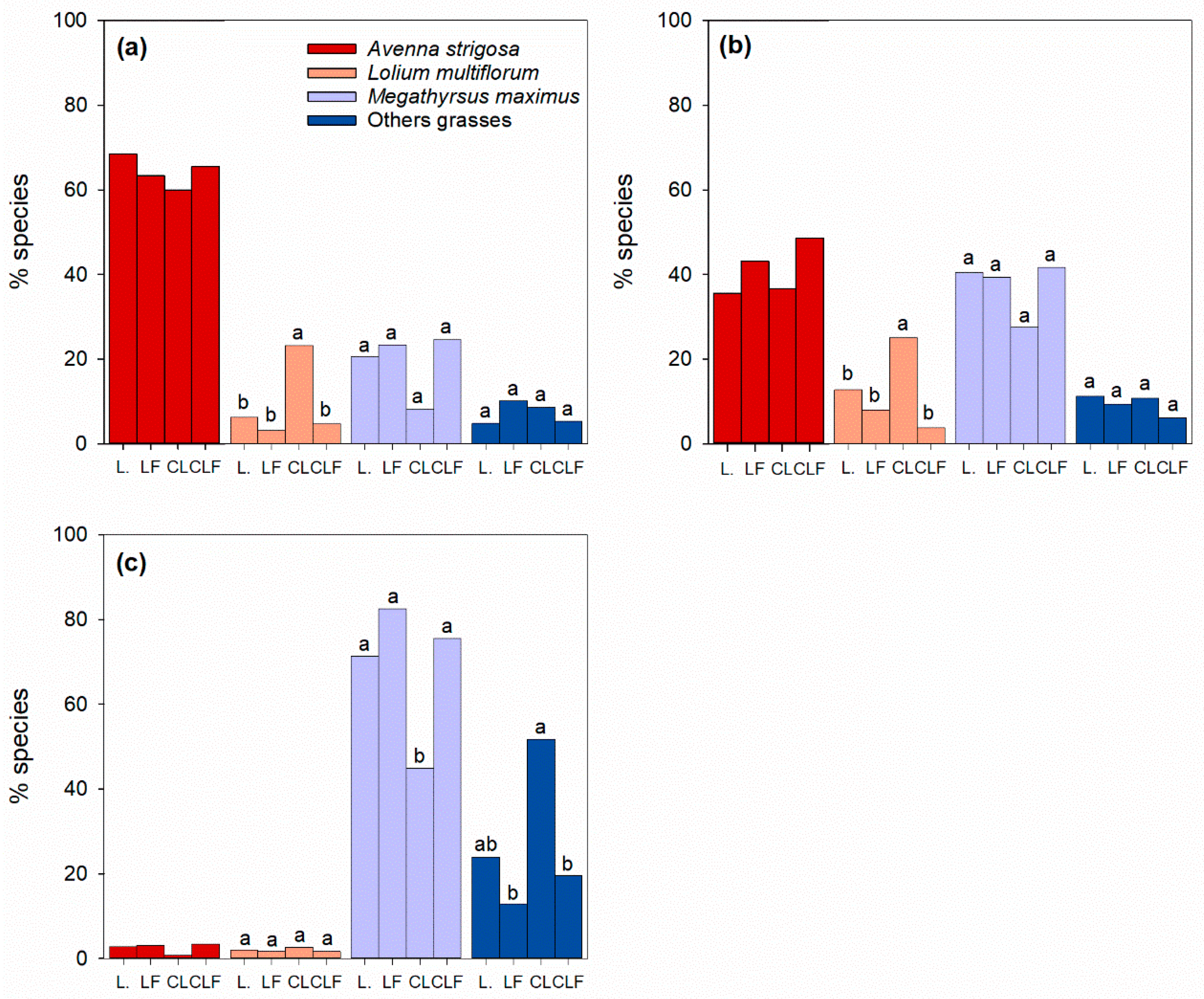
Species composition is shown in Figure 4. Across all periods, black oats did not vary among systems (p > 0.05). Italian ryegrass occurred at higher frequencies in CL during the winter and transition (p < 0.05), but in summer it was scarce and similar among systems. For Aries and other grasses, no system effect was observed in winter or transition; in summer, CL had less Aries and more of the other grasses relative to the other systems (p < 0.05).
Figure 4. Frequency of species composition in the winter (a), transition (b) and summer (c) periods in livestock production systems (L, livestock; LF, livestock–forestry; CL, crop–livestock; CLF, crop–livestock–forestry). Different letters represent significant differences between systems according to Tukey’s test (p < 0.05).
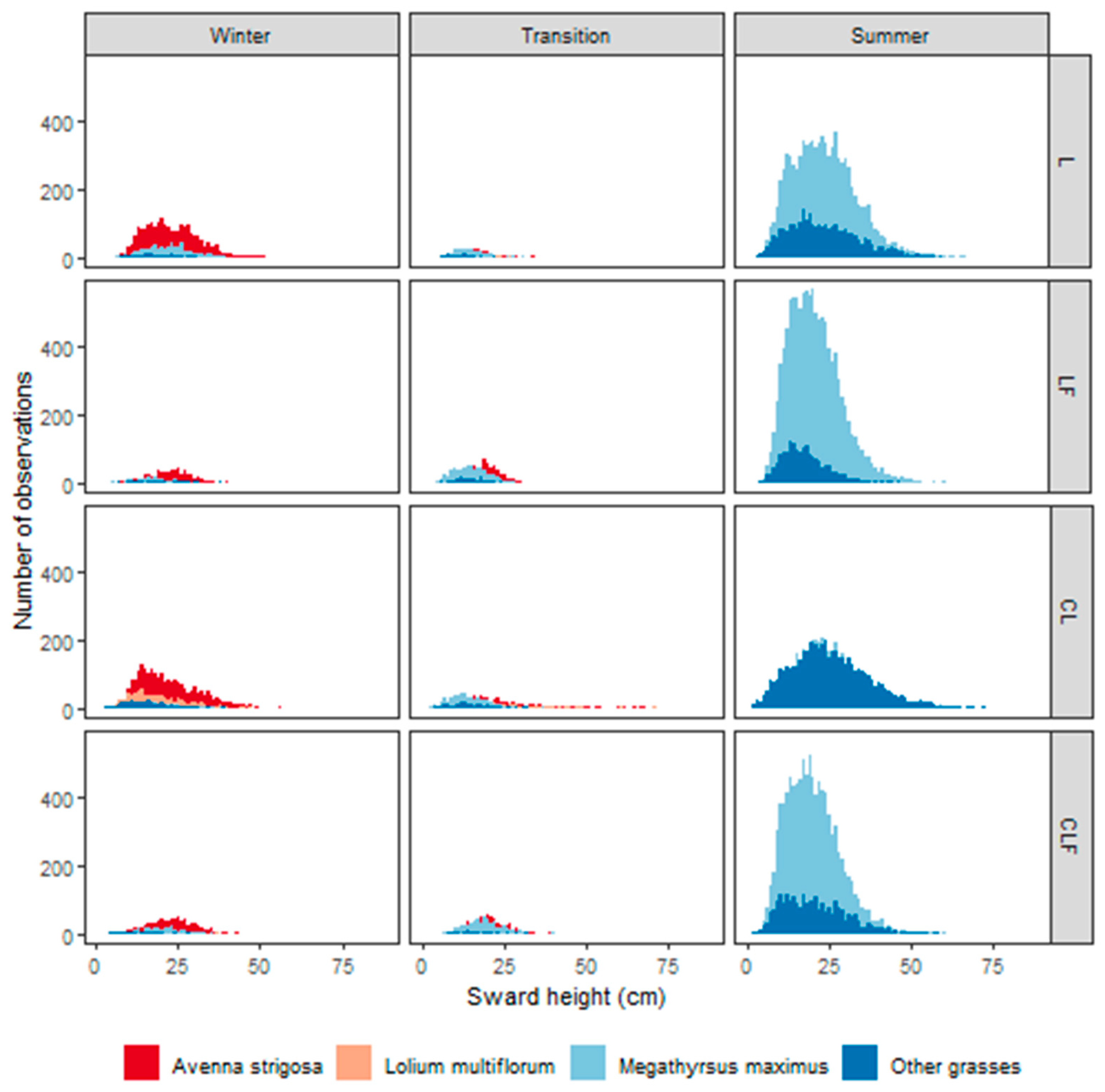
Figure 5 depicts species distributions by height-class and season. In winter, L and CL showed a higher frequency of black oats than the tree-integrated systems (LF and CLF); between L and CL, the L system concentrated more observations in the taller height classes than CL. During the transition, black oats were more frequent in the tree systems (CLF and LF). Because summer spanned a longer interval, it contributed a larger number of observations. In this period, CL had a higher frequency of other grasses and greater height variability, whereas LF exhibited a narrower range of heights.
Figure 5. Frequency of pasture height distribution for each species and period in the different livestock production systems (L, livestock; LF, livestock–forestry; CL, crop–livestock; CLF, crop–livestock–forestry).

3.4. Fitting the Height Distributions

The AIC values used to choose the best-fitting distribution models are presented in Table 1. Overall, the Gamma distribution provided the best fit in most system–season combinations, indicating its superior ability to represent the asymmetric patterns of sward height under continuous stocking. Across the eight system–season combinations, the Gamma distribution provided the best fit in seven cases, while the Weibull distribution was superior only in the CLF system during winter.
Table 1. Akaike’s information criterion for four theoretical distributions fitted for grazing height frequencies in two periods (winter and summer) and four livestock production systems (L, livestock; LF, livestock–forestry; CL, crop–livestock; CLF, crop–livestock–forestry).
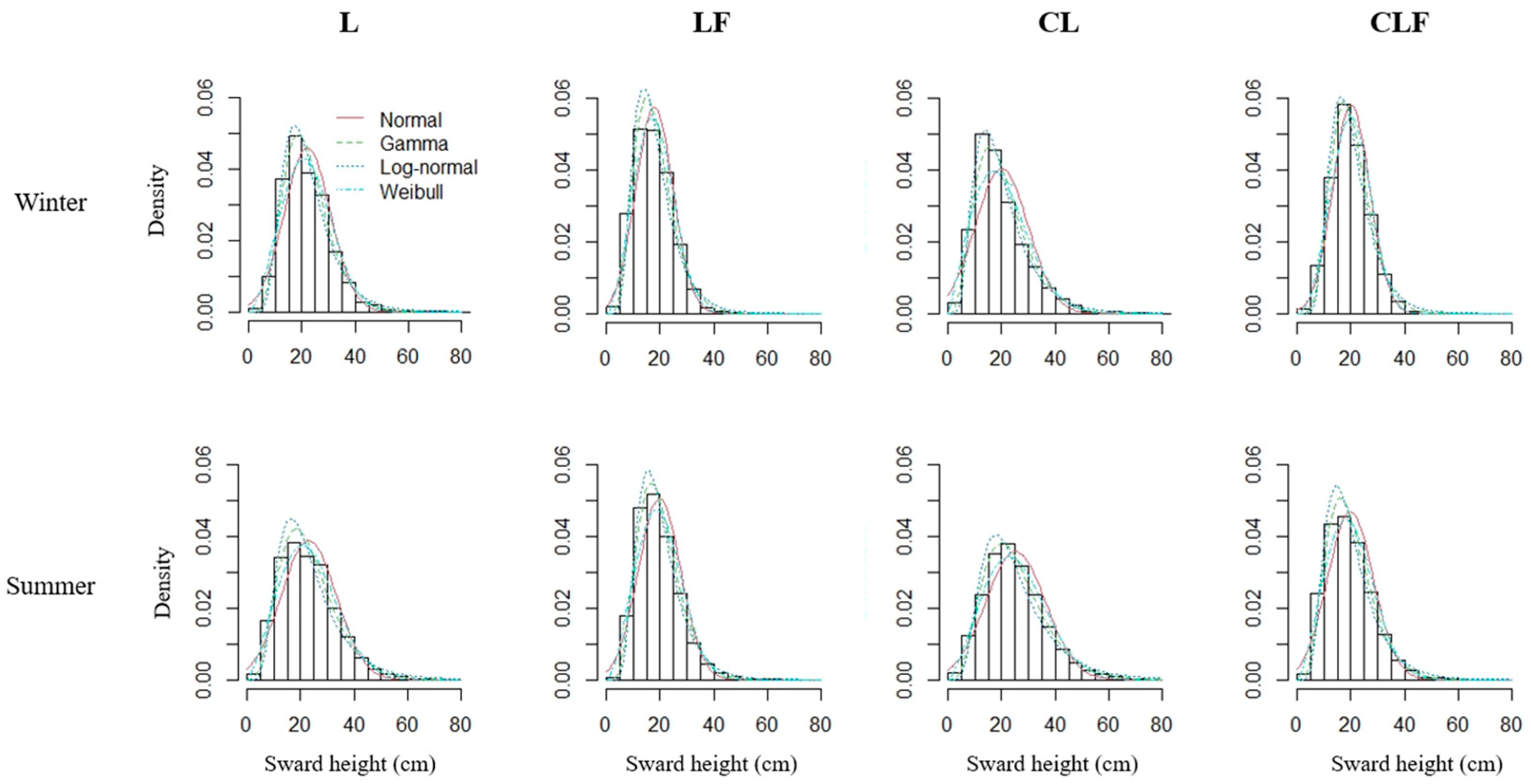
Figure 6 overlays the observed height histograms with the fitted theoretical distributions. In winter, L and CL displayed a higher frequency of observations above 40 cm than the tree-integrated systems, whose frequencies were more concentrated around the mean. This pattern persisted in summer; moreover, in L and CL the share of very tall heights increased relative to winter.
Figure 6. Adjustment of distributions (normal, Gamma, log-normal and Weibull) for pasture height frequencies in the winter and summer periods in livestock production systems (L, livestock; LF, livestock–forestry; CL, crop–livestock; CLF, crop–livestock–forestry).

4. Discussion

The integration of livestock with the arboreal component promoted a greater frequency of sward heights within the optimal class during summer (Figure 3). This finding underscores the potential of integrating livestock–forestry to maintain pasture structures closer to those that maximize forage intake. Grazing management strategies increasingly rely on sward structural characteristics to optimize animal performance [25]. Forage intake is determined by the interaction between, bite mass, bite rate, and grazing time [26]. Consequently, identifying pasture structures that promote larger bite mass, thereby maximizing intake, has been the focus of numerous studies [1,2,3]. Among these structural attributes, pasture height has been recognized as one of the most reliable indicators to guide grazing management [2,19,25].
In this study, the continuous stocking method with a variable stocking rate, based on a target grazing height, proved to be effective in maintaining a high frequency of optimal structures across all systems (Figure 3). Even under continuous stocking, animals had consistent access to canopies that sustain high short-term intake rates, in line with [27], who emphasized the challenge of keeping optimal structures available under this strategy. Our results reinforce that target-height management is a practical and efficient approach to sustain pasture productivity and animal performance.
The greater frequency of optimal heights observed in the LF and CLF systems during summer (Figure 5) suggests that tree integration promotes a more uniform grazing distribution and a reduction in sward height heterogeneity. This agrees with previous studies showing that animals in shaded environments tend to graze more evenly across the area [10], while in full-sun systems grazing pressure is often concentrated near specific sites, such as water troughs, increasing structural variability [28]. Moreover, shading may limit sward growth rates, which also contributes to maintaining more homogeneous canopy structures.
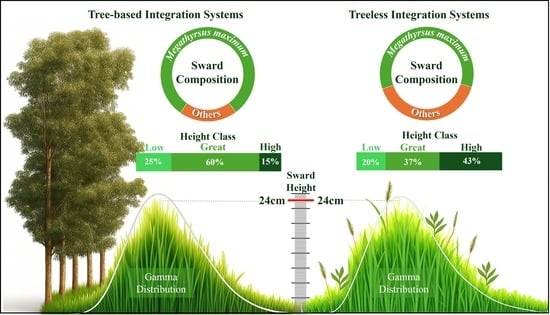
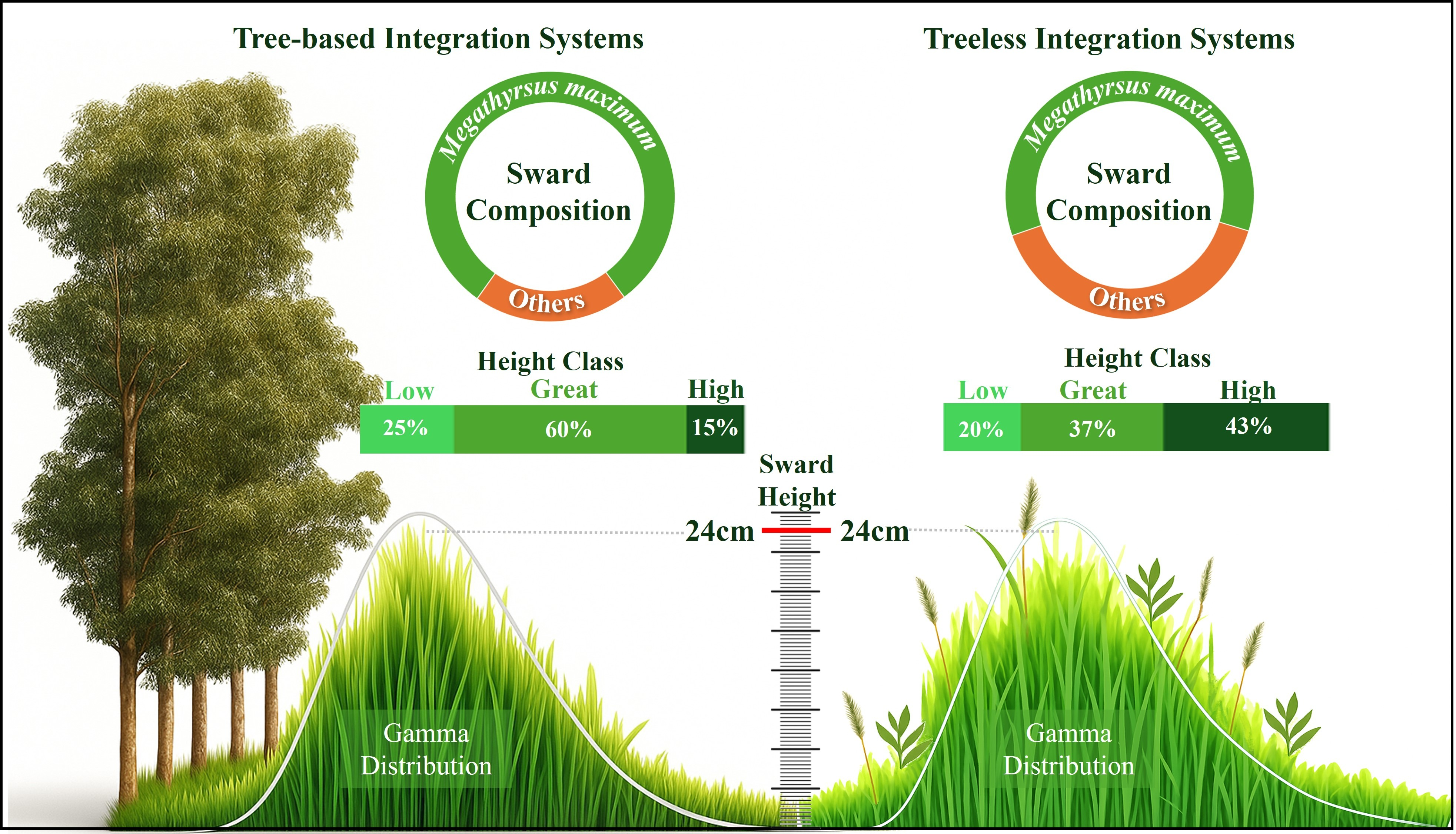
Frequency distribution analysis further supports these findings. In most cases, pasture height data were best fitted by the Gamma distribution, which appropriately models positively skewed data with a peak near 20 cm and a tail extending up to 50 cm (Figure 6). The exception was the CLF system in winter, where the Weibull distribution provided a better fit (Figure 6). These results confirm that pasture height distributions under continuous stocking are asymmetric and cannot be satisfactorily described by normal models, as also reported by [17,29]. The better fit of the Gamma and Weibull models reflects the predominance of optimal heights, accompanied by a lower frequency of taller patches, suggesting that selective grazing and differential patch recovery processes are active, resulting in a mosaic of heights dominated by structures close to the management target, but with the persistence of small under- or overgrazed areas [14,15]. Notably, the tree-based systems showed higher frequencies of heights close to the optimal target, indicating that livestock–forestry integration helps mitigate the formation of extreme patches and fosters more stable sward structures.
It is important to emphasize, however, that the fit of the statistical distribution only describes the empirical form of the data, not confirming, by itself, the underlying ecological mechanisms. Patterns such as selective grazing or self-regulation of canopy structure should ideally be corroborated by behavioral observations (space use, grazing time) or spatial data on height distribution. Even so, the adherence of the Gamma distribution to the data suggests that plant–animal–environment interactions result in a self-regulating pasture structure.
Pasture botanical composition also differed among systems, particularly in the frequency of Megathyrsus maximus cv. Aries (Figure 4). In the CL system, Aries occurrence was consistently lower compared to the other systems, reflecting both the competitive effects of high black oat residue and maize cultivation in previous cycles, as well as the greater presence of prostrate species that are more tolerant to intense defoliation [30]. In contrast, Aries persistence was favored in the CLF system, where seed production near tree rows facilitated its continuous re-establishment after annual crop harvests. These findings indicate that tree integration may indirectly contribute to the maintenance of Aries in mixed pastures by reducing interspecific competition and providing microsites that favor its regeneration. From a management perspective, maintaining a higher frequency of Aries is relevant, as this species provides desirable structural characteristics for grazing, supports optimal intake rates, and enhances the stability of the production system. The reliance on natural reseeding for Italian ryegrass may contribute to variation in its seasonal frequency. This uncontrolled factor is intrinsic to the management of temperate annuals under continuous stocking and should be acknowledged as a minor limitation of the species-composition analysis.
Altogether, our findings provide strong evidence that continuous stocking with a variable stocking rate adjusted to a target sward height is a reliable strategy to maintain favorable canopy structures for grazing. Furthermore, the integration of trees reduces spatial heterogeneity in sward height and supports the persistence of Megathyrsus maximus cv. Aries under grazing, ensuring both productive and sustainable outcomes.

5. Conclusions

This study investigated the distribution of sward height in multispecies pastures managed under continuous stocking in different integrated crop–livestock systems. Contrary to our initial hypothesis, and with relevant practical implications, of greater heterogeneity in tree-based systems, the integration of livestock with trees promoted a higher frequency of near-optimal heights, resulting in a narrower amplitude of the height distribution and, therefore, reduced heterogeneity. In contrast, the CL system showed lower persistence of Megathyrsus maximus cv. Aries and greater frequency of spontaneous prostrate species, suggesting that in systems without trees, seed input may be required to sustain Aries after annual crop cultivation.
The Gamma distribution proved the most suitable model to describe sward height frequencies across systems and seasons, except for the CLF system during winter, where the Weibull model provided a better fit. These results reinforce that sward height data under continuous stocking are asymmetric and require models that account for skewed distributions.
Overall, the adoption of continuous stocking with a variable stocking rate based on a target sward height proved to be an effective management strategy to maintain canopy structures favorable to grazing across all systems. Additionally, tree integration not only reduced sward height heterogeneity but also contributed to the persistence of Megathyrsus maximus cv. Aries, thereby enhancing the sustainability and resilience of integrated crop–livestock systems. Furthermore, the identification of Gamma and Weibull distributions as more accurate descriptors of sward height variability contributes methodologically to pasture management research, offering a valuable framework for future studies and technical recommendations.

Author Contributions

Conceptualization, P.C.d.F.C., A.P.P. and R.F.M.; methodology, R.F.M., A.d.M. and C.B.; software, R.F.M. and C.B.; validation, R.F.M., C.B. and L.B.d.O.; formal analysis, C.B.; investigation, R.F.M. and D.M.M.; resources, A.d.M. and L.B.d.O.; data curation, R.F.M. and D.M.M.; writing—original draft preparation, R.F.M.; writing—review and editing, R.F.M., D.M.M., L.A.A. and L.B.d.O.; visualization, P.C.d.F.C., A.P.P. and R.F.M.; supervision, A.d.M.; project administration, A.d.M. and L.B.d.O.; funding acquisition, A.d.M. All authors have read and agreed to the published version of the manuscript.

Funding

This study was financed in part by the Coordenação de Aperfeiçoamento de Pessoal de Nível Superior—Brazil (CAPES)—Finance Code 001.

Data Availability Statement

The data presented in this study are available on request from the corresponding author.

Acknowledgments

We thank all the students of the “Núcleo de Inovação Tecnológica em Agropecuária” (UFPR) for their help during the experiment and the Brazilian Research Agency (CAPES) for the financial support provided for this work.

Conflicts of Interest

The authors declare no conflicts of interest in this study.

Abbreviations

The following abbreviations are used in this manuscript:
ICLSIntegrated crop–livestock systems
LLivestock
LFLivestock–forestry
CLCrop–livestock
CLFCrop–livestock–forestry

References

  1. Bradbury, J.W.; Vehrencamp, S.L.; Clifton, K.E.; Clifton, L.M. The relationship between bite rate and local forage abundance in wild Thomson’s gazelles. Ecology 1996, 77, 2237–2255. [Google Scholar] [CrossRef]
  2. Fonseca, L.; Mezzalira, J.C.; Bremm, C.; Gonda, H.L.; Carvalho, P.D.F. Management targets for maximising the short-term herbage intake rate of cattle grazing in Sorghum bicolor. Livest. Sci. 2012, 145, 205–211. [Google Scholar] [CrossRef]
  3. de Faccio Carvalho, P.C. Harry Stobbs memorial lecture: Can grazing behavior support innovations in grassland management? Trop. Grassl.-Forrajes Trop. 2013, 1, 137–155. [Google Scholar] [CrossRef]
  4. Flores, E.R.; Laca, E.A.; Griggs, T.C.; Demment, M.W. Sward height and vertical morphological differentiation determine cattle bite dimensions. Agron. J. 1993, 85, 527–532. [Google Scholar] [CrossRef]
  5. Benvenutti, M.A.; Gordon, I.J.; Poppi, D.P. The effect of the density and physical properties of grass stems on the foraging behaviour and instantaneous intake rate by cattle grazing an artificial reproductive tropical sward. Grass Forage Sci. 2006, 61, 272–281. [Google Scholar] [CrossRef]
  6. Heuermann, N.; van Langevelde, F.; van Wieren, S.E.; Prins, H.H. Increased searching and handling effort in tall swards lead to a type IV functional response in small grazing herbivores. Oecologia 2011, 166, 659–669. [Google Scholar] [CrossRef]
  7. Fonseca, L.; Carvalho, P.D.F.; Mezzalira, J.C.; Bremm, C.; Galli, J.R.; Gregorini, P. Effect of sward surface height and level of herbage depletion on bite features of cattle grazing Sorghum bicolor swards. J. Anim. Sci. 2013, 91, 4357–4365. [Google Scholar] [CrossRef]
  8. de Lima, L.C.; de Freitas, T.S.; Pontes-Prates, A.; Gómez, A.M.; Savian, J.V.; de Faccio Carvalho, P.C. Pasture management strategies to offer optimal sward structures for maximizing intake rate in continuous stocking. Livest. Sci. 2025, 299, 105761. [Google Scholar] [CrossRef]
  9. Mezzalira, J.C.; Carvalho, P.C.F.; Amaral, M.F.; Bremm, C.; Trindade, J.K.; Gonçalves, E.N.; Genro, T.C.M.; Silva, R.W.S.M. Rotational grazing management in a tropical pasture to maximize the dairy cow’s herbage intake rate. Arq. Bras. Med. Vet. Zootec. 2013, 65, 833–840. [Google Scholar] [CrossRef]
  10. Larson-Praplan, S.; George, M.R.; Buckhouse, J.C.; Laca, E.A. Spatial and temporal domains of scale of grazing cattle. Anim. Prod. Sci. 2015, 55, 284–297. [Google Scholar] [CrossRef]
  11. Pontes-Prates, A.; de Faccio Carvalho, P.C.; Laca, E.A. Mechanisms of grazing management in heterogeneous swards. Sustainability 2020, 12, 8676. [Google Scholar] [CrossRef]
  12. Carvalho, P.D.F.; Mezzalira, J.C.; Fonseca, L.; Wesp, C.D.L.; Da Trindade, J.K.; Neves, F.P.; Pinto, C.E.; do Amaral, M.F.; Bremm, C.; do Amaral, G.A.; et al. Do bocado ao sítio de pastejo: Manejo em 3D para compatibilizar a estrutura do pasto e o processo de pastejo. In Proceedings of the Simpósio De Forragicultura e Pastagens, Lavras, Brasil, 4 June 2009; pp. 116–137. [Google Scholar]
  13. Pauler, C.M.; Isselstein, J.; Suter, M.; Berard, J.; Braunbeck, T.; Schneider, M.K. Choosy grazers: Influence of plant traits on forage selection by three cattle breeds. Funct. Ecol. 2020, 34, 980–992. [Google Scholar] [CrossRef]
  14. Nunes, P.A.A.; Bredemeier, C.; Bremm, C.; Caetano, L.A.M.; De Almeida, G.M.; De Souza Filho, W.; Anghinoni, I.; Carvalho, P.C.F. Grazing intensity determines pasture spatial heterogeneity and productivity in an integrated crop-livestock system. Grassl. Sci. 2019, 65, 49–59. [Google Scholar] [CrossRef]
  15. Schuster, M.Z.; Barroso, A.A.; Gastal, F. Grassland phases as ecological buffers: Reducing invasive weeds even under drought-induced stress in cropping systems. Agric. Ecosyst. Environ. 2026, 395, 109939. [Google Scholar] [CrossRef]
  16. Gibb, M.J.; Ridout, M.S. The fitting of frequency distributions to height measurements on grazed swards. Grass Forage Sci. 1986, 41, 247–249. [Google Scholar] [CrossRef]
  17. Barthram, G.T.; Duff, E.I.; Elston, D.A.; Griffiths, J.H.; Common, T.G.; Marriott, C.A. Frequency distributions of sward height under sheep grazing. Grass Forage Sci. 2005, 60, 4–16. [Google Scholar] [CrossRef]
  18. Mott, G.O.; Lucas, H.L. The design, conduct and interpretation of grazing trials on cultivated and improved pastures. In Proceedings of the International Grassland Congresss, State College, PA, USA, 17–23 August 1952; PN (Proceedings). pp. 1380–1395. [Google Scholar]
  19. Mezzalira, J.C.; Carvalho, P.C.F.; Fonseca, L.; Bremm, C.; Cangiano, C.; Gonda, H.L.; Laca, E.A. Behavioural mechanisms of intake rate by heifers grazing swards of contrasting structures. Appl. Anim. Behav. Sci. 2014, 153, 1–9. [Google Scholar] [CrossRef]
  20. Negri, R.; Dos Santos, G.B.; de Paulo Macedo, V.; da Silveira, M.F.; Wlodarski, L.; Kluska, S. Morphogenesis and tiller density of Aruana grass managed at different heights under sheep grazing. Semin. Ciênc. Agrár. 2019, 40, 2341–2350. [Google Scholar] [CrossRef]
  21. Paraná. Decreto N° 1753, de 06 de Maio de 1996; Área de Proteção Ambiental do Iraí: Curitiba, Brazil, 1996. [Google Scholar]
  22. Barthram, G.T. Experimental techniques: The HFRO sward stick. In The Hill Farming Research Organization Biennial Report 1984/1985; Alcok, M.M., Ed.; HFRO: Penicuik, UK, 1985; pp. 29–30. [Google Scholar]
  23. Delignette-Muller, M.L.; Dutang, C. Fitdistrplus: An R Package for Fitting Distributions. J. Stat. Softw. 2015, 64, 1–34. [Google Scholar] [CrossRef]
  24. Bates, D.; Mächler, M.; Bolker, B.; Walker, S. Fitting Linear Mixed-Effects Models Using lme4. J. Stat. Softw. 2015, 67, 1–48. [Google Scholar] [CrossRef]
  25. Mezzalira, J.C.; Bonnet, O.J.; Carvalho, P.C.D.F.; Fonseca, L.; Bremm, C.; Mezzalira, C.C.; Laca, E.A. Mechanisms and implications of a type IV functional response for short-term intake rate of dry matter in large mammalian herbivores. J. Anim. Ecol. 2017, 86, 1159–1168. [Google Scholar] [CrossRef]
  26. Allden, W.G.; McDWhittaker, I.A. The determinants of herbage intake by grazing sheep: The interrelationship of factors influencing herbage intake and availability. Aust. J. Agric. Res. 1970, 21, 755–766. [Google Scholar] [CrossRef]
  27. Carvalho, P.C.F.; Prates, A.P.; Moojen, F.G.; Szymczak, L.S.; Nunes, P.A.A.; Silva Neto, G.F.; Savian, J.V.; Eloy, L. Métodos de pastoreio: Uma perspectiva alternativa a décadas de debate e pouco avanço conceitual. In Anais do V Simpapasto V Simpósio de Produção Animal a Pasto; Nova Sthampa Gráfica e Editora: Maringá, Brazil, 2019. [Google Scholar]
  28. Karki, U.; Goodman, M.S. Cattle distribution and behavior in southern-pine silvopasture versus open-pasture. Agrofor. Syst. 2010, 78, 159–168. [Google Scholar] [CrossRef]
  29. Carvalho, P.C.F.; da Rocha, L.M.; Baggio, C.; Macari, S.; Kunrath, T.R.; de Moraes, A. Característica produtiva e estrutural de pastos mistos de aveia e azevém manejados em quatro alturas sob lotação contínua. Rev. Bras. Zootec. 2010, 39, 1857–1865. [Google Scholar] [CrossRef][Green Version]
  30. Fedrigo, J.K.; Pablo, F.A.; Azambuja Filho, J.; Oliveira, L.V.; Jaurena, M.; Laca, E.A.; Overbeck, G.E.; Nabinger, C. Temporary grazing exclusion promotes rapid recovery of species richness and productivity in a long-term overgrazed Campos grassland. Restor. Ecol. 2017, 26, 677–685. [Google Scholar] [CrossRef]
Disclaimer/Publisher’s Note: The statements, opinions and data contained in all publications are solely those of the individual author(s) and contributor(s) and not of MDPI and/or the editor(s). MDPI and/or the editor(s) disclaim responsibility for any injury to people or property resulting from any ideas, methods, instructions or products referred to in the content.

Article Metrics

Citations

Article Access Statistics

Multiple requests from the same IP address are counted as one view.