
Abstract
Naturally Occurring Retirement Communities Supportive Service Programs (NORC-SSPs) are one of the most popular models of aging in place. While the existing NORC literature focuses on the social and service environments of these programs, their built environments remain underexplored, particularly across housing tenures. This study is the first to explore the built environment, social integration, and socio-demographic factors among older people living in NORCs in New York, and their associations with health and well-being. The mixed-methods research included qualitative (interviews with NORC directors) and quantitative (151 resident surveys and an architectural assessment) data on 26 housing developments in New York, collected simultaneously using a convergent parallel design. The findings show that socialization and exercise improve the health and quality of life of NORC residents. The study also revealed that older people living in public housing have different needs than those in cooperative housing, namely a worse perception of their health and dwellings of a poorer physical condition. Therefore, the services offered by NORC programs should vary according to housing type, while management and NORC staff should improve coordination to address maintenance in public housing. Future research should examine interventions to improve the physical environments of NORC residents.
1. Introduction
The world population is aging at an unprecedented rate. In Europe and North America, almost 19 percent of the population aged 65 and over is projected to reach one in every four persons in 2050 [1]. At the same time, urbanization is another global trend [2,3].
Additionally, research shows that most older adults prefer to remain in their homes rather than enter institutional care [4,5,6], which underscores the relevance of researching the architecture surrounding those aging in place, since they spend most of their time at home and in their closer neighborhood [7,8,9].
Several initiatives have been developed to allow older people to age in place in cities by providing health and social services within their communities. Examples include Cohousing, which consists of private domestic spaces combined with shared spaces and services managed collectively and in a participatory way [10], and Villages, where older adults remain in their homes and pay to be members of an organization that delivers services [11].
1.1. Aging in Place and NORC Models
Among them, one of the most popular models is Naturally Occurring Retirement Communities Supportive Service Programs (NORC-SSPs). NORCs originated in 1986 in New York City when the UJA-Federation established the Penn South Program for Seniors [12]. Penn South is a moderate-income cooperative from the 1960s with 2820 apartments in the Chelsea neighborhood of Manhattan [13]. As of January 2026, about 60 NORCs operated in four of New York City’s five boroughs, funded by its Department of Aging [14] or the New York State Office for the Aging [15]. These NORCs are primarily located in urban affordable multifamily housing developments serving low- and moderate-income older adults from various housing tenures [12]: cooperatives, public housing, and subsidized rental.
There are two types of NORCs: classic NORCs, or “vertical” ones, are usually located in urban high-rise housing complexes, while “horizontal” or Neighborhood NORCs (NNORCs) are mostly made up of suburban and rural low-rise housing [15]. Initially, the research focused on the former to determine how well this high-rise urban typology serves residents aging in place. However, during data collection, the authors considered it valuable to include suburban NNORCs to examine how they compare with urban NORCs.
1.2. Built Environment and Older Adults’ Well-Being
Research shows an association between the architecture of age-integrated urban multifamily housing and the well-being of its older residents [16,17,18]. For example, Prosper [19] identified 19 safety and convenience features in the built environment of multifamily housing developments that positively affected older people’s well-being. At the same time, Clarke & Gallagher [20] found that several accessibility features were associated with better mobility. On the contrary, other authors found associations between certain built environment features and poorer health outcomes, such as inadequate housing maintenance or environmental problems [21]. It is therefore critical to further investigate this relationship.
From an architectural perspective, aging in place can be conceptualized as a challenge arising from inherited housing typologies and long-standing design assumptions that fail to account for residents’ changing needs as they age. Drawing on the ecological model of aging, which conceptualizes well-being as a dynamic balance between individual competence and environmental press [22], our study explores how residential architecture is not merely a setting for aging in place but an active mediator of this balance. Since the release of the ‘Global age-friendly cities’ guide [3], which highlights the features of urban physical environments that can support older people’s well-being, many studies have explored age-friendly communities and their association with aging in place [2,9,23,24].
1.3. Housing Tenure and Disparities in Aging
While most scholars [11,25,26] suggest that NORCs’ attention to the social and service environment improves their older residents’ health and quality of life, less attention has been paid to the challenge of adapting NORCs’ built environment [27], given that these complexes were not built specifically for older people. Although some recent research has explored the architecture of New York’s NORCs and their challenges [19,27,28,29], the case studies focused on only one housing type or did not consider older people’s perspectives. Combining objective and self-rated measures is preferable because it provides a more comprehensive approach [30]. An example is Serrano-Jiménez et al., who developed a method for assessing the most suitable interventions in urban residential multifamily buildings, comprising an architectural–technical inspection and residents’ psycho-environmental perceptions [31].
This study contributes by determining whether NORCs, examples of age-friendly communities, help older people age in place. Specifically, it examines how built environment quality, social integration, and housing tenure interact to influence health and quality of life among NORC residents, offering some of the first insights into this connection. Recognizing differences in the built environment and demographics of cooperative housing and rentals, the analysis also compares well-being outcomes and built environment factors by housing tenure. Therefore, this study aimed to conduct a cross-sectional analysis of NORCs in New York, integrating on-site architectural inspections with residents’ psycho-environmental perceptions to assess whether NORCs support aging in place and identify areas for improvement in NORC policy and practice.
2. Materials and Methods
2.1. Research Design and Data Collection
This mixed-methods study collected quantitative and qualitative data from two primary sources between May and November 2022: architectural inspections and a survey for NORC residents. On the one hand, site visits were made to a selection of these communities (26 out of the 37 city-financed NORCs, as shown in Table 1). Open spaces were toured, buildings were accessed, and informal conversations with older residents were held to explore their satisfaction with their residential environment. An evaluation tool was adapted from the Architectural and Psycho-environmental Retrofitting Assessment Method (APRAM) technical inspection grid, developed by Serrano-Jiménez et al., and completed for each visited site (see Supplementary Materials S1). This method obtains a diagnosis by combining an architectural evaluation through technical grids and psycho-environmental perceptions, by gathering residents’ responses from a participatory survey to support decision-making regarding retrofitting actions [31]. The rationale behind these inspections was to provide a technical, specialized architectural diagnosis that objectively informed necessary interventions, which would later be contrasted with residents’ perceptions of possible architectural challenges in their residential environments.
Table 1.
Characteristics of the Naturally Occurring Retirement Communities (NORCs) where an architectural diagnosis was performed.
The authors constructed a 34-item survey instrument for NORC residents, drawing primarily from the questionnaires developed by Chao [27] and Pinckney and Bishop [28] for their research about NORCs’ architecture in New York City. Additional questions validated by previous research [7,19,21,32,33,34] were incorporated to inquire about education, marital status, number of bedrooms, neighborhood environment, and the residents’ perception of safety and environmental quality, including a home modifications checklist [35]. The remaining items drew from the authors’ professional experience in aging and architecture. The survey comprised 33 closed-ended questions and a final open-ended question prompting additional comments or topics not previously discussed. A printable questionnaire was developed, and an online version was created on Google Forms in case it was possible to recruit participants who could not attend the survey sessions (see Supplementary Materials S2).
The survey targeted residents aged 60 and older participating in NORCs, aligning with eligibility requirements for NORC services [15]. There was no upper age limit, as participants who could attend were presumed not to have significant cognitive impairments. A list of operational NORCs in New York City was retrieved from the NYC Department for the Aging’s Services Finder [36]. NORC directors were contacted via e-mail, obtained from NORC websites, references, or in-person visits. Of the 36 operational NORCs identified, contact details for 26 NORC directors were obtained, and 8 participated, yielding a response rate of 22.2%. Seven NORCs were in Manhattan and one in Long Island, despite outreach to NORCs in Brooklyn, the Bronx, and Queens. A total of 151 surveys were collected. Table 2 shows the NORCs where surveys were implemented and the number of surveys conducted at each center.
Table 2.
Characteristics of the NORCs where surveys were conducted and an architectural diagnosis was performed.
Survey administration varied: AGS conducted group interviews after scheduled NORC activities or by appointment in five NORCs, to residents who attended and volunteered. In two of these, NORC directors also administered surveys. In two NORCs, interviews were conducted in Spanish. In two others, residents completed surveys independently. In one case, the questionnaire was shared with the NORC director, and staff performed surveys over a month. One response was submitted online. Participation was voluntary and anonymous, with informed consent obtained verbally. The Ethics in Research Committee of the Universitat Politècnica de València approved the research with reference number P15_27-12-2021.
AGS also conducted semi-structured interviews with directors from the eight participating NORCs and two others where surveys were not administered, for a total of ten interviews. These provided a professional perspective on the model’s opportunities and challenges, drawing on their expertise in NORCs’ social service environments. Sample questions included: ‘How well does the NORC work from your perspective?’ and ‘How could NORCs be improved?’ Interviews lasted 10–15 min, and notes were taken on key points.
2.2. Data Analysis
We used descriptive analysis to provide an overview of the sample. The study then employed multivariate analyses (two multiple linear regression models) to determine which demographic, built environment, and social integration variables were associated with well-being outcomes. Table 3 describes the variables used in the regression models and their codification. We analyzed data with Statgraphics Centurion 19 software. Following previous empirical research [29,37,38], we used two different well-being variables as our dependent variables: self-rated health and quality of life. Several sets of independent variables were used to predict the two dependent variables in separate regression models. We used the same independent variables for both models, but added self-rated health as another factor influencing self-rated quality of life. We calculated skewness statistics for both outcomes in our sample, and both were smaller than 1; therefore, the variables were treated as continuous, discarding a possible logistic regression analysis. Multicollinearity was assessed using the Pearson correlation matrix. Even though missing data on any given measure was no more than 10% of the sample, listwise deletion was not used since the resulting sample size would have been too small. Therefore, we used mode imputation for categorical variables and mean imputation for numerical variables to address missing data.
Table 3.
Variables used for the regression analyses and coding.
Conclusions on the strengths and opportunities of NORC’s architecture were derived from the inspection grids completed for each visited site. At the same time, common themes emerged after analyzing the interviews with the NORC directors. Our mixed-methods research followed a convergent parallel design, with quantitative and qualitative data collected simultaneously. Then, we integrated results from all data sources and discussed areas of convergence or divergence. Essentially, findings were derived from quantitative data, with qualitative results mostly confirming them and adding supplemental insights.
3. Results
3.1. Architectural Inspection
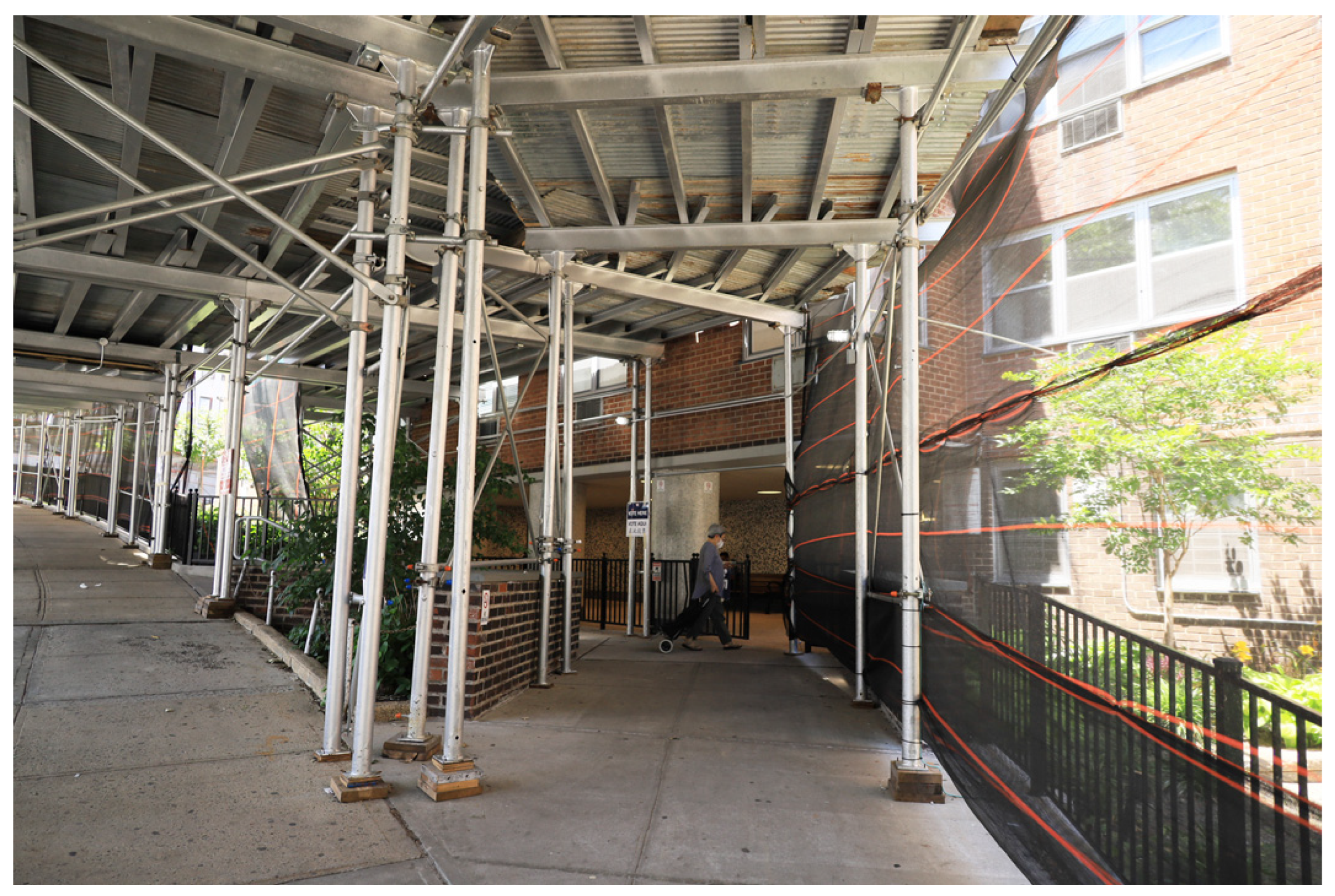
The analysis of technical inspection grids provided insights into the accessibility and conservation conditions of NORC communities. A prevalent issue in both cooperative and public housing was the presence of scaffolding and construction fences around sidewalks and internal pathways. These elements added a sense of insecurity and hindered directions around the developments, which were already difficult to navigate.
Overall, accessibility to buildings was good, with ramps when the access was not step-free, except in very few cases. However, in some public housing sites, ramps were excessively steep and included multiple flights, posing challenges for individuals with limited mobility. In most cases, there were accessible itineraries for walking around the site, though in some developments, pathways were paved with tarmac and poorly maintained, with many irregularities. In hilly neighborhoods, steep slopes hindered older residents’ mobility (Figure 1), making it difficult for them to perform daily activities and socialize, according to a NORC director. A few buildings also required residents to climb steps to reach the elevators.
Figure 1.
Step-free access to a cooperative building in Manhattan on a street with a pronounced slope.
Lobbies were typically spacious, and entrances featured wide doors with pull/push or sliding mechanisms, especially in cooperative buildings. However, public housing lobbies often lacked adequate natural and artificial lighting. Cooperative buildings tended to have more glazed areas, but those entrances covered by scaffolding were poorly lit. Flooring in many cooperative lobbies was slippery. Although large enough to accommodate many residents, the elevators were outdated and lacked handrails. Door widths generally met U.S. accessibility standards (81 cm).
The state of conservation of the façades varied, ranging from the 1930s to the early 1970s [13]. However, for same-age developments, the façades of cooperative buildings were much better maintained. A few cooperative complexes were having their façades restored when visited. Regarding interiors, the visits showed a notably poorer maintenance at public housing developments.
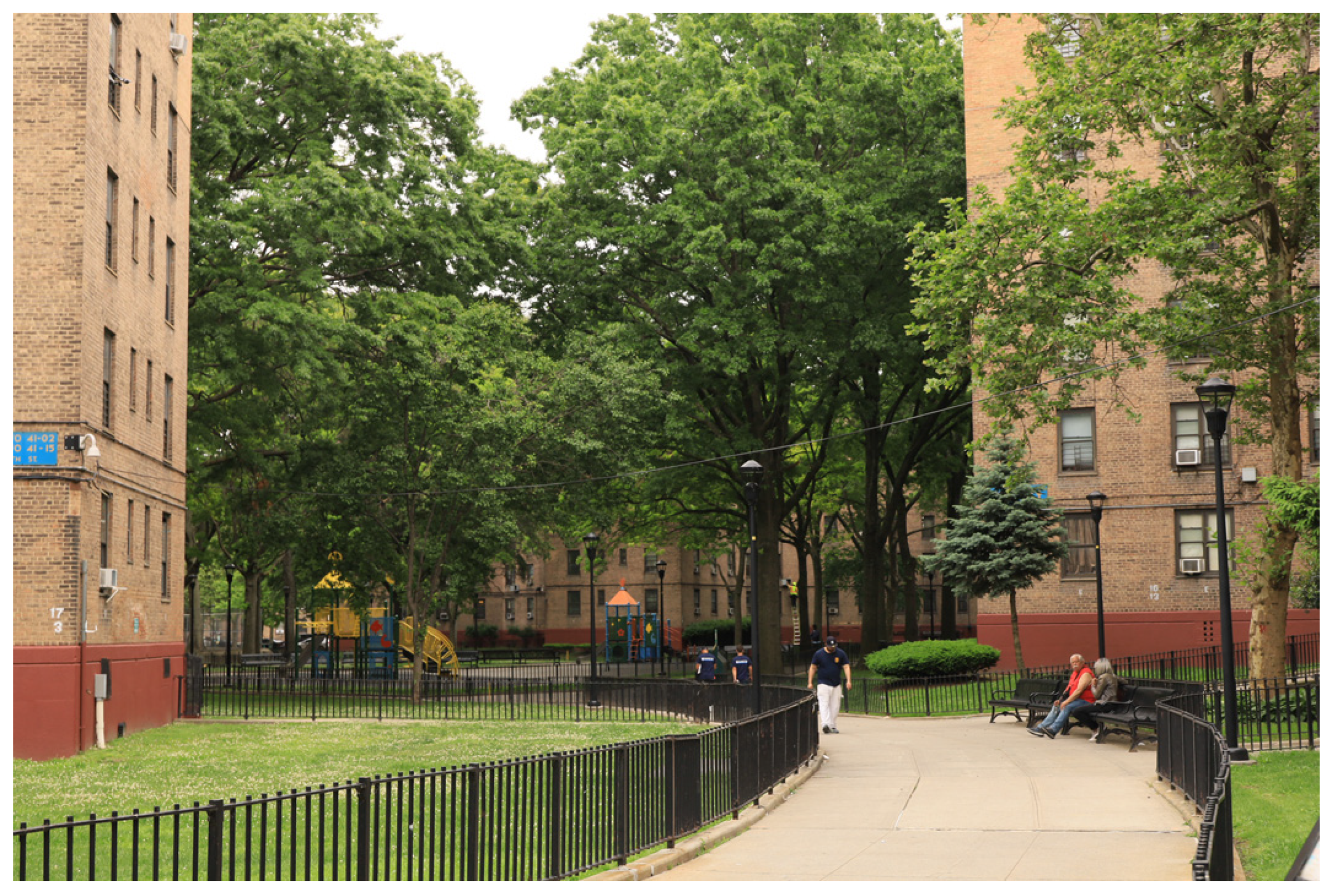
Even though there were abundant trees within the developments, this was not always the case on the surrounding streets, particularly in more urbanized areas of Brooklyn and Manhattan. Seating areas were common in most developments, usually in the shade and widely used by older residents (Figure 2), with chess tables in some instances. Some neighborhoods also had benches on the sidewalks surrounding the developments. Residents maintained community gardens in many public housing complexes.
Figure 2.
Older residents at the seating areas of a public housing development in Queens.
In most cases, access to services was good, on-site or within a few blocks. All surveyed developments had community rooms, and many had commercial premises. A bus stop or subway station was always on the same block. Notwithstanding, a frail resident of a public housing development in the Lower East Side stated that the bus that took him to the nearest subway station was no longer running and that the station was too far for him to walk.
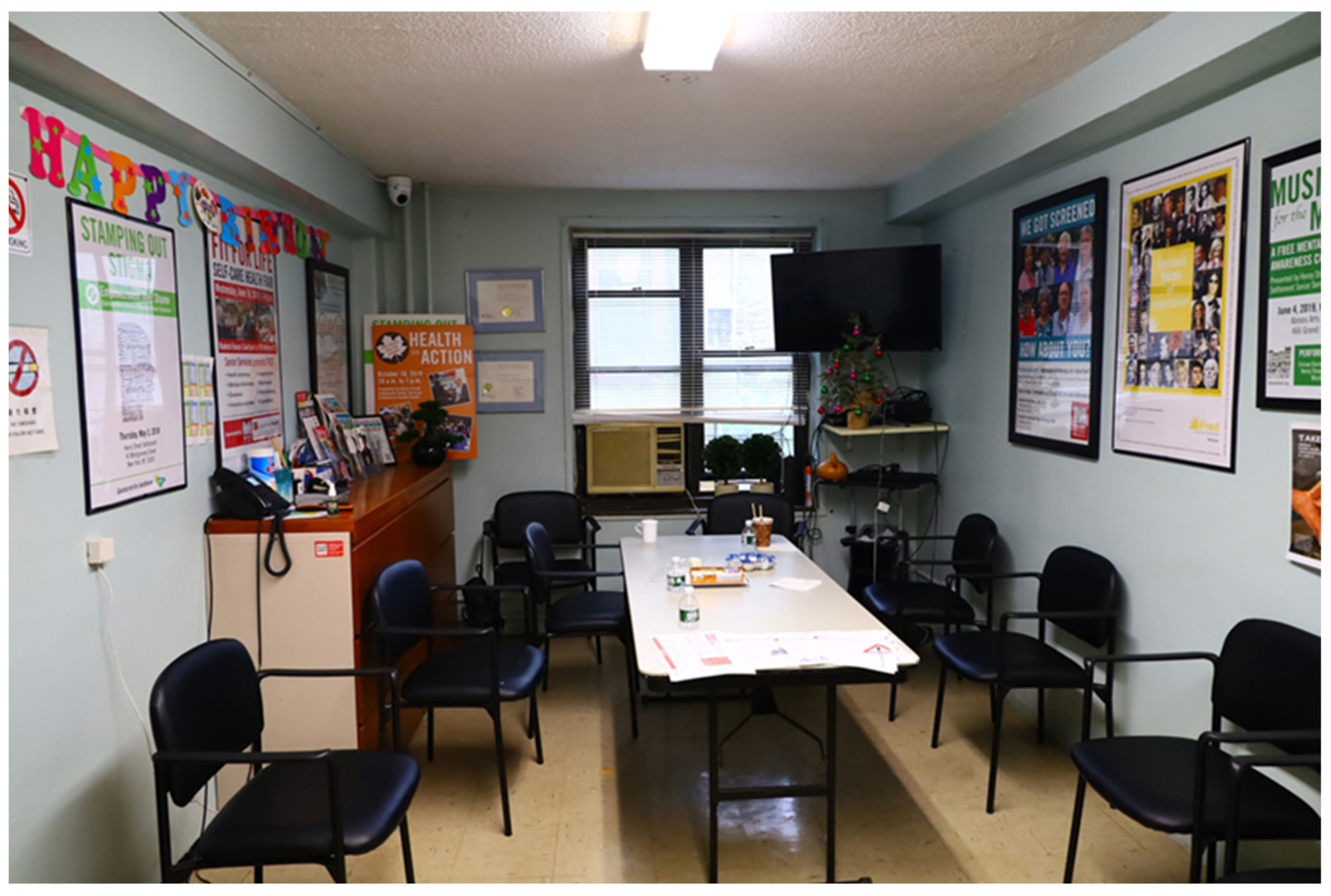
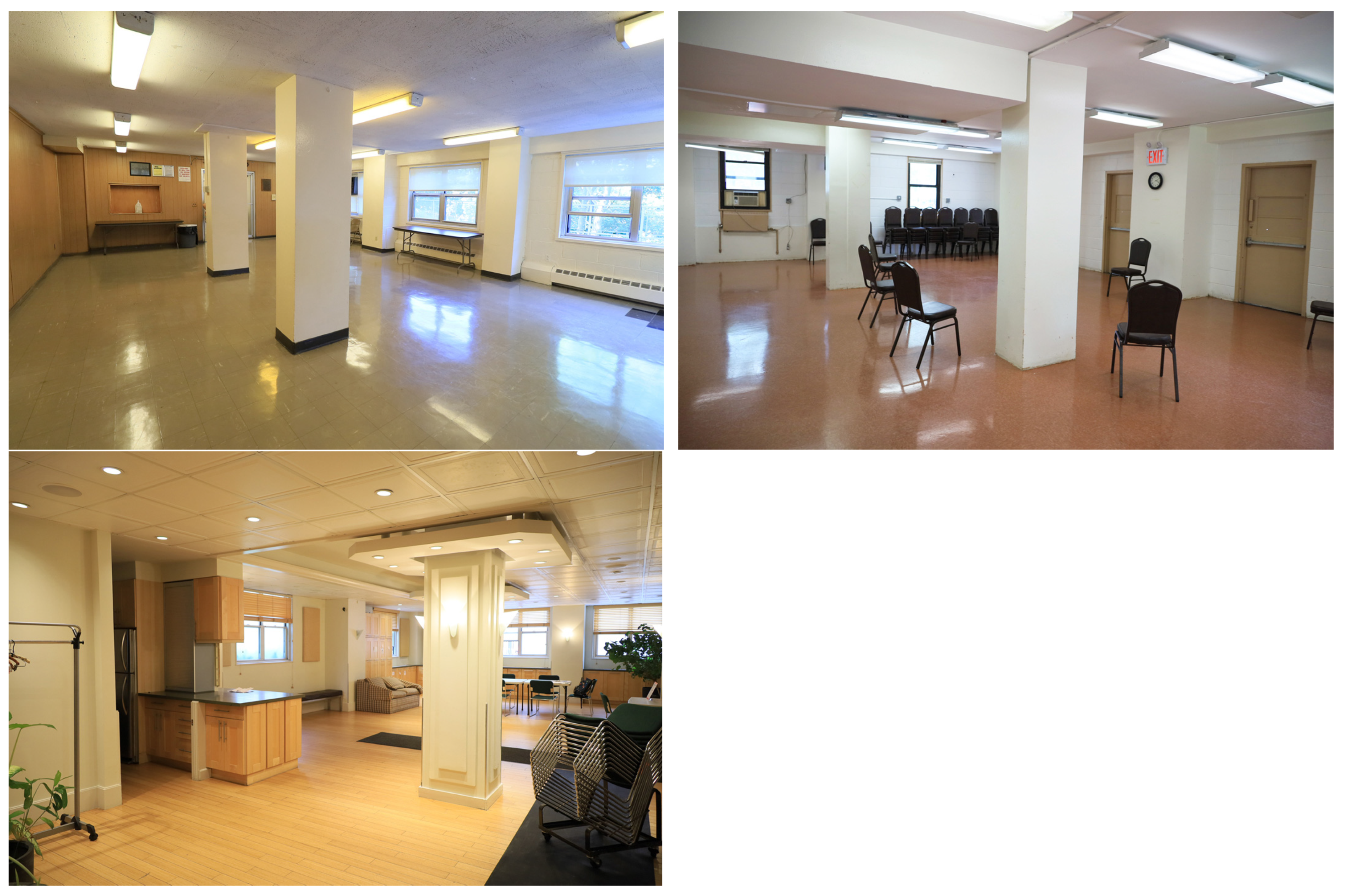
All visited NORC centers were accessible except for two developments. These spaces were generally more spacious and brighter in cooperative buildings (Figure 3 and Figure 4). One NORC had recently renovated its premises with older people’s needs in mind. The NORC that served several developments was located on the top floor of a new building, with bright, inviting facilities and an outdoor patio. However, several NORCs had columns in the middle of the activity rooms, rendering these spaces less functional (Figure 4).
Figure 3.
Community room where NORC activities take place at a public housing development in Manhattan.
Figure 4.
Community rooms where NORC activities take place at several cooperative buildings in Manhattan.
3.2. Residents Survey
3.2.1. Descriptive Statistics
Before describing the regression results, we discuss the profile of the 151 NORC residents in our sample. Table 4 provides descriptive statistics on the participants. Crosstab analyses showed significant differences across housing tenure. c2 statistics indicated dependence (p-value < 0.05); therefore, we compared characteristics for these groups (see Supplementary Materials S3). We tested interaction effects in both models for housing tenure, but they were not significant (p-value = 0.35 and 0.10, respectively) (results available upon request). All participants provided self-reported health data, but two did not disclose their self-rated quality of life, four did not disclose their age, and eight did not disclose their income.
Table 4.
Descriptive statistics of the sample (N = 151).
Participants were predominantly female, living alone, and aged 73 or older. About a third was married, and all but five were retired, with no participants working full-time. Residents of cooperative housing had higher incomes and higher levels of education than those in rentals. Over half of co-op residents earned more than $50,000 annually and had post-graduate degrees, while most rental residents earned under $20,000 and had not attended college.
The mean self-rated health score for the sample was above average (over 3), with cooperative housing residents scoring notably higher. Residents also reported above-average quality of life, with only one rating it as “poor.” Most respondents reported health changes since moving, with mobility issues being the most common (66.3%, n = 69), followed by vision (39.4%, n = 41) and balance problems (33.7%, n = 35) (full report of health issues available upon request).
The study found strong social integration, with over half of the participants living in their homes for over 15 years. 98% (n = 146) reported that staying in their homes as they aged was somewhat or very important, and only two residents expressed no desire to stay. Additionally, most agreed that NORC programs helped them age in place. About half of the residents reported moderate support from NORC programs, with a third stating they were invaluable.
NORC participants preferred to spend their day in their apartment, followed by their neighborhood. They engaged in social and physical activities more than once a week, with social work and recreational services being the most frequently used NORC programs. However, the COVID-19 pandemic affected social interactions, with respondents reporting that they had visitors, visited friends, and attended NORC events once or twice a month to once a week.
NORC participants lived in apartments with an average of 1.30 bedrooms, with cooperative housing residents occupying slightly larger apartments. Respondents reported above-average home architecture. Cooperative residents rated their apartments’ condition and esthetics higher, but both groups reported similar environmental comfort.
Both groups experienced difficulties performing daily tasks and navigating their apartment, building complex, and neighborhood. Cooperative residents had fewer mobility issues in their apartments and building complex; however, both groups had similar mobility around the neighborhood.
About half of the participants (n = 72) identified physical challenges in their apartments, with windows (8.6%, n = 13) and temperature control (5.3%, n = 8) being the most common problems. These two issues seem related, as five participants who identified controlling temperature as a challenge also reported problems opening windows. Several residents from public housing (8.6%, n = 13) reported challenges with elevators. Some participants had difficulty reaching the bottom or high cabinets. Approximately 25% had made home modifications, with handrails and grab bars being the most common adjustments (n = 26), followed by non-slip surfaces (n = 5) and increased lighting (n = 3) (complete reports of challenging features and modifications available upon request).
Residents generally felt moderately safe in both their building complexes and neighborhoods. Cooperative residents reported higher safety ratings in their buildings (i.e., 4 or 5 ratings) due to security measures, and felt notably safer in their buildings than in surrounding neighborhoods. In contrast, public housing residents reported little difference between perceived safety in their buildings and neighborhoods.
Most NORC residents rated neighborhood environmental pollution as average. However, the cooperative group rated it relatively lower than those living in rentals, with about half of the respondents giving it a below-average score. Furthermore, the only residents who rated the neighborhood’s environmental quality as “excellent” were living in the suburban NORC.
Open-ended responses revealed that cooperative housing residents frequently complained about street noise, safety concerns, traffic, construction, garbage, and pollution, while others praised the NORC community. For example, the Board President of one of these communities, who had lived there for over 20 years, noted, “This community has benefited greatly from the advice, suggestions, and programs offered by NORC staff”. On the other hand, in public housing, residents mainly complained about maintenance issues, such as heating, hot water, refrigerators, and painting. However, a few in the subsidized rental community stated how much they loved their community. One example came from a single woman in her late 60s who described her quality of life as “excellent”: “I have never loved living in any other place than in this community. It’s my favorite place to live” (complete answers available upon request).
3.2.2. Regression Models: Well-Being Outcomes
Our study included two regression models to estimate predictors of self-rated health and self-rated quality of life. We included different demographic, socialization, and built environment factors as independent variables to determine their influence on residents’ well-being, controlling for the specific NORC attended. Upon conducting diagnostics for highly correlated variables, we identified several sets of independent variables with correlation coefficients above 0.60 (see Supplementary Materials S4), which were excluded from the regression analysis to avoid redundancy. Across both models, the most consistent predictor of positive well-being outcomes was the frequency of social or physical activity, as shown in Table 5. Residents who engaged more frequently in exercise or socialization reported better self-rated health (p < 0.01) and quality of life (p < 0.01).
Table 5.
Results of the regression analyses predicting well-being outcomes.
Model 1 is an OLS regression estimating self-reported health. It found that female NORC residents rated their health nearly a third of a point higher than males (B = 0.31 ± 0.17). Increased exercise or socialization frequency improved self-reported health by 0.21 points. Better apartment mobility (B = 0.16 ± 0.09) and physical conditions (B = 0.18 ± 0.09) were also positively associated with health, but effect sizes were less significant. Conversely, changes in health negatively affected health ratings, resulting in a decline of 0.38 points (B = −0.38 ± 0.14). Differences across NORCs were also noted, with residents in a cooperative community reporting poorer health. The R-square value for this model indicates that it explains 56% of the variability in self-rated health.
Model 2 is another OLS regression predicting self-rated quality of life. The strongest predictor was self-reported health: each point increase in self-rated health was associated with a 0.37-point increase in quality of life (B = 0.37 ± 0.07). Residents who socialized more often (B = 0.16 ± 0.06), had better building mobility (B = 0.14 ± 0.08), and lived in neighborhoods with better environmental quality (B = 0.16 ± 0.08) also reported a higher quality of life, but with a more reduced effect. Surprisingly, age was positively associated with quality of life, but the effect size was small (B = 0.11 ± 0.05). The R-square value for this model was 0.66, indicating it has stronger explanatory power than the first model. Another model was tested without including self-rated health as an explanatory variable, but it was discarded because its R-square value was significantly lower (R2 = 0.58) (results available upon request).
3.3. Interviews with the NORC Directors
Semi-structured interviews revealed several key themes. NORC directors view these programs as beneficial and as fostering community spirit. They noted that high-rise buildings aid in service delivery. However, some older residents show mistrust toward service organizations. Additionally, maintenance issues are a common complaint in public housing.
In the studied NNORC, challenges differ from those of urban NORCs. Despite well-maintained housing in a safe, quiet area, many residents have low incomes and cannot afford private care. Subsidized caregivers are scarce due to the area’s remote location and high transportation costs. Additionally, limited public transit restricts access to essential services.
4. Discussion
This study is the first to survey NORC residents across various housing tenures and to examine multivariate correlations of self-reported health and a multi-scalar architectural assessment, combined with interviews with program directors to incorporate professional insights. In the context of aging in place, our research reframes NORCs as spatial systems whose architectural performance shapes aging outcomes over time.
Demographic results revealed an older population compared to Chao’s study [27], with many more retired residents, likely due to aging in place, which may explain the lower self-reported health rates in our 2022 survey. Residents reported reduced socialization and a greater preference for staying home, possibly associated with ongoing concerns about COVID-19, which might also have negatively impacted health ratings. However, Chao’s participants had lived in their apartments longer, possibly reflecting a growing trend of choosing these communities for retirement. Fewer residents reported health changes compared to Pinckney and Bishop [28]. While more cited mobility issues, fewer experienced vision problems. These shifts reflect increasing environmental press within apartments and shared spaces.
Apartment challenging features (i.e., cabinets, windows, temperature) were consistent with earlier studies and indicate limited inherent adaptability. Home modifications were also comparable to Chao’s findings [27], with grab bars being the most common adjustment, as noted by Pinckney and Bishop [28], suggesting that adaptation remains reactive and incremental rather than embedded structurally in spatial design.
Regression analyses indicated that better health is associated with improved quality of life, suggesting that enhanced health services in NORCs could benefit residents. Socialization and physical activity also positively influenced well-being, aligning with Choi [37] and supporting the need for NORC programs to offer various social and exercise opportunities. Gender also influenced residents’ self-reported health, with females reporting higher rates, possibly related to their greater social integration and more adaptive coping strategies after retirement, findings that confirm Choi’s [37] and highlight the need for targeted health services. Our findings align with Zlotnick [29] and Choi [37], but also emphasize the role of environmental factors in health outcomes, empirically substantiating the ecological model’s central premise: when environmental press is reduced, functional competence and well-being increase.
For example, regression results also showed that better apartment condition and internal mobility are significantly associated with higher self-rated health and quality of life, supporting Fernández-Carro et al.’s findings [21] and underscoring the need for in-home architectural assessments, as Chao suggested [27], to adapt the apartments to residents’ limitations, particularly in public housing, to prevent divergence in architectural quality over time. However, our quantitative and qualitative findings on the challenges of navigating specific neighborhoods contradict Chao’s observations on neighborhood accessibility [27].
Tenure emerged as a critical architectural variable. Quantitative data revealed that cooperative housing residents had higher levels of education and income and better housing conditions, factors not previously assessed in NORC studies. They also reported greater mobility within their homes and building complexes, likely due to their ability to afford home repairs and improvements. However, mobility within the neighborhood was similar across income levels, as both housing types are located in the same neighborhoods, often adjacent to one another. Surveys and resident interviews revealed that public housing residents expressed more concerns about safety, a factor not previously quantified but aligning with Chao’s qualitative findings [26]. This fear is supported by NYPD data [39], which reported that 16% of all shootings in New York happened in public housing developments, even though they only comprised 4% of the city’s population [40].
These differences show that the same architectural typology performs differently depending on residents’ ability to maintain and retrofit it, indicating more elevated environmental press for public housing residents, and might also be linked to this group’s poorer outcomes. Crosstab analyses and interviews confirmed that they face unique challenges compared to cooperative residents, suggesting that NORC programs should tailor services accordingly. For example, strengthening health services in public housing NORCs could eventually improve residents’ quality of life. Our findings suggest that architecture’s long-term performance depends on governance frameworks that enable continuous environmental adjustment.
Despite the disparities, all participants valued aging in place, aligning with Pinckney and Bishop’s findings [28] but diverging from Chao’s results [27]. They also credited NORC programs with enabling it, affirming Chao’s findings [27]. However, mobility rates were much lower, possibly due to the older population and ongoing construction at many surveyed sites. Additionally, interviews revealed complaints about street noise and neighborhood pollution across income levels, issues not previously explored in NORC research. The lower score of the cooperative group is due, to some extent, to the fact that a surveyed cooperative development was placed in a very noisy neighborhood; therefore, over half of the respondents rated environmental quality as “poor”, which might have contributed to its residents’ poorer health. On the contrary, the excellent ratings of the suburban group are due to these areas being less congested and densely populated than the city. Improved neighborhood environmental quality was associated with higher quality of life, as Fernández-Carro et al. [21] suggested. Municipalities should accordingly introduce measures to reduce noise, pollution, and garbage. These results extend the ecological model beyond the dwelling unit, demonstrating that architectural performance must be evaluated across apartment, building, and urban scales as a continuous spatial system.
Our architectural assessment revealed that while many physical features of these affordable housing complexes support aging in place, others pose challenges for older residents, such as slippery floors, a lack of handrails, or construction work, suggesting that, in ecological terms, the environment’s adaptive capacity diminishes over time without sustained reinvestment, reinforcing Chao’s observations [27]. Nonetheless, these developments, designed to a high standard for their time [13], have aged mainly well, retaining spatial qualities: architectural scans showed that most buildings offer step-free access, wide elevators, and bright, spacious apartments. Residents also benefit from on-site community rooms for socializing, exercising, and participating in NORC activities, as well as gardens and ample, widely used seating areas, which contradict Chao’s findings about the scarcity of inviting areas [27] and highlight architecture’s role in sustaining social competence. Such features reduce environmental press by enabling socialization and physical activity, both of which are positively associated with well-being.
Quantitative data support these findings. Despite mobility limitations, older adults attending NORC programs frequently engage in social and physical activities. Surveys showed above-average ratings for health, quality of life, home environment, mobility, and safety. These reasons suggest that NORCs are a successful aging-in-place model that contributes to their residents’ well-being, and the advantages they entail seem to outweigh potential challenges.
Nevertheless, areas for improvement remain. The architectural scans showed permanent scaffolding in many developments, often without active construction, which should be removed. In public housing, NORC staff should coordinate with NYCHA to address maintenance issues, a major complaint of residents and NORC directors, in line with Chao’s findings [27]. Surveys and resident interviews revealed that safety is a significant issue in public housing developments, requiring enhanced security measures. The architectural assessments suggest that accessibility improvements could help older residents navigate and enjoy shared spaces more easily. Our findings point to the need for systemic retrofit strategies that proactively reduce environmental press rather than reactively.
From a social perspective, NORC directors emphasized the need to improve program outreach and build trust among residents. Suburban NORCs need enhanced public transportation and more funding for public caregivers. Overall, findings from both quantitative and qualitative analyses confirm and extend previous research, offering new insights into how NORC’s architecture influences residents’ well-being. Aging in place thus emerges as a long-term architectural challenge: maintaining person–environment fit requires adaptable design, equitable retrofit infrastructures, and sustained environmental stewardship. Our study also provides a quantitative tool to evaluate NORC effectiveness and measure the quality of life for those aging in place, which fills a gap in the literature [2,26,41] and advances research such as Prosper [19].
Limitations
The primary concern to consider is that all recruited vertical NORCs were in Manhattan, limiting the generalizability of the results to other boroughs. Additionally, most surveyed NORCs were located in higher-income cooperative housing, while three-quarters of responses came from public housing, possibly biasing results. Analyzing outcomes by housing tenure may have reduced this bias.
80% of participants were women, suggesting men might be underrepresented, but aligning with Chao’s findings [27] and with demographic data: almost 60 percent of New Yorkers over 65 were women [42], while in public housing, 70% of households with a head over 62 were female-led [40]. Studies further disentangling gender effects on well-being outcomes are thereby recommended.
Finally, the sample was not entirely random: residents who did not attend NORC activities or had decreased mobility were excluded from the study, possibly skewing mobility levels. The study did not compare its demographic data with the broader population of people aged 60 and over in these developments, leaving the sample’s representativeness unclear. Future studies should use more representative sampling methods, including a more geographically dispersed sample, and contain a control group of older people not living in NORCs to properly assess the program’s impact on residents’ well-being.
5. Conclusions
Our mixed-methods study was among the first to examine the architecture, well-being, and socialization of older people residing in NORCs before the end of the COVID-19 pandemic, demonstrating that NORCs function not only as service delivery platforms but also operate as multi-scalar architectural systems shaping older adults’ well-being through the interaction of housing tenure, environmental quality, and social integration. Across regression models, frequent social and physical activity emerged as the most consistent predictor of improved health and quality of life, along with better apartment condition, internal and building mobility, and neighborhood environmental quality. Cooperative residents generally reported better housing conditions and mobility, reflecting tenure-based disparities in resources and maintenance capacity. In contrast, public housing residents faced greater environmental press linked to maintenance and safety concerns.
Future research should explore design opportunities to improve older residents’ well-being in NORCs and evaluate how this initiative, already successfully tested in other states [25,43,44,45], could be replicated internationally. For policy, the results imply a need for sustained reinvestment in public housing maintenance, targeted safety measures, and environmental improvements. At the same time, for design practice, our research highlights the importance of proactive retrofit strategies, adaptable interiors, and improved mobility infrastructure to ensure that aging in place remains sustainable and equitable over time.
Supplementary Materials
The following supporting information can be downloaded at: https://www.mdpi.com/article/10.3390/architecture6010031/s1, Supplementary Material S1: Example of a Built Environment Assessment for one of the surveyed developments; Supplementary Material S2: Questionnaire for NORC residents; Supplementary Material S3: Crosstab analyses filtering for housing tenure; Supplementary Material S4: Correlation matrix of dependent and independent variables (significant: p < 0.05).
Author Contributions
Conceptualization, A.G.S., A.T.B. and J.L.V.; methodology, A.G.S.; validation, A.T.B. and J.L.V.; formal analysis, A.G.S.; investigation, A.G.S.; resources, A.G.S.; writing—original draft preparation, A.G.S.; writing—review and editing, A.T.B. and J.L.V.; visualization, A.G.S.; supervision, A.T.B. and J.L.V.; funding acquisition, A.G.S. All authors have read and agreed to the published version of the manuscript.
Funding
This research was funded by Universitat Politècnica de València, Mobility Grant for PhD students, call 2022. Funding for open access charge: Universitat Politècnica de València.
Institutional Review Board Statement
The study was conducted in accordance with the Declaration of Helsinki, and approved by the Ethics Committee of Universitat Politècnica de València (protocol code P15_26-12-2021, approval date: 30 January 2022).
Informed Consent Statement
Informed consent was obtained from all subjects involved in the study.
Data Availability Statement
The data supporting this study’s findings are available from the corresponding author upon reasonable request.
Acknowledgments
The authors are greatly appreciative of the NORC directors and the older adults who participated in this study.
Conflicts of Interest
The authors declare no conflicts of interest. The funders had no role in the design of the study; in the collection, analyses, or interpretation of data; in the writing of the manuscript; or in the decision to publish the results.
References
- United Nations Department of Economic and Social Affairs Population Division. World Population Prospects 2022; United Nations Department of Economic and Social Affairs Population Division: New York, NY, USA, 2022. [Google Scholar]
- Steels, S. Key characteristics of age-friendly cities and communities: A review. Cities 2015, 47, 45–52. [Google Scholar] [CrossRef]
- World Health Organization. Global Age-Friendly Cities: A Guide; Geneva, Switzerland, 2007. [Google Scholar]
- American Association of Retired Persons. Aging in Place: A State Survey of Livability Policies and Practices; Washington, DC, USA, 2017. [Google Scholar]
- Jayantha, W.M.; Qian, Q.K.; Yi, C.O. Applicability of “Aging in Place” in redeveloped public rental housing estates in Hong Kong. Cities 2018, 83, 140–151. [Google Scholar] [CrossRef]
- Vasunilashorn, S.; Steinman, B.A.; Liebig, P.S.; Pynoos, J. Aging in Place: Evolution of a Research Topic Whose Time Has Come. J. Aging Res. 2012, 2012, 120952. [Google Scholar] [CrossRef]
- Burton, E.J.; Mitchell, L.; Stride, C.B. Good places for ageing in place: Development of objective built environment measures for investigating links with older people’s well-being. BMC Public Health 2011, 11, 839. [Google Scholar] [CrossRef] [PubMed]
- Greenfield, E.A.; Oberlink, M.; Scharlach, A.E.; Neal, M.B.; Stafford, P.B. Age-friendly community initiatives: Conceptual issues and key questions. Gerontologist 2015, 55, 191–198. [Google Scholar] [CrossRef] [PubMed]
- Scharlach, A.E.; Lehning, A.J. Ageing-friendly communities and social inclusion in the United States of America. Ageing Soc. 2013, 33, 110–136. [Google Scholar] [CrossRef]
- García Lantarón, H. Vivienda para un Envejecimiento Activo: El Paradigma Danés. Ph.D. Thesis, Universidad Politécnica de Madrid, Madrid, Spain, 2015. [Google Scholar]
- Greenfield, E.A.; Scharlach, A.; Lehning, A.J.; Davitt, J.K. A conceptual framework for examining the promise of the NORC program and Village models to promote aging in place. J. Aging Stud. 2012, 26, 273–284. [Google Scholar] [CrossRef]
- NYC Department for the Aging. Naturally Occurring Retirement Communities. Available online: https://www.nyc.gov/site/dfta/services/naturally-occurring-retirement-communities.page (accessed on 13 April 2024).
- NYS Office for the Aging. Naturally Occurring Retirement Community (NORC). Available online: https://aging.ny.gov/naturally-occurring-retirement-community-norc (accessed on 13 April 2024).
- Vladeck, F. Good Place to Grow Old: New York’s Model for NORC Supportive Service Programs; United Hospital Fund: New York, NY, USA, 2004. [Google Scholar]
- García Sánchez, A.; Torres Barchino, A. The Influence of the Built Environment on the Quality of Life of Urban Older Adults Aging in Place: A Scoping Review. J. Aging Environ. 2024, 38, 398–424. [Google Scholar] [CrossRef]
- Zhang, F.; Li, D.; Ahrentzen, S.; Feng, H. Exploring the inner relationship among neighborhood environmental factors affecting quality of life of older adults based on SLR–ISM method. J. Hous. Built Environ. 2020, 35, 215–242. [Google Scholar] [CrossRef]
- Herbers, D.J.; Mulder, C.H. Housing and subjective well-being of older adults in Europe. J. Hous. Built Environ. 2017, 32, 533–558. [Google Scholar] [CrossRef]
- Prosper, V. Aging in place in multifamily housing. Cityscape 2004, 7, 81–106. [Google Scholar]
- Clarke, P.; Gallagher, N.A. Optimizing mobility in later life: The role of the urban built environment for older adults aging in place. J. Urban Heal. 2013, 90, 997–1009. [Google Scholar] [CrossRef] [PubMed]
- Fernández-Carro, C.; Módenes, J.A.J.A.; Spijker, J. Living conditions as predictor of elderly residential satisfaction. A cross-European view by poverty status. Eur. J. Ageing 2015, 12, 187–202. [Google Scholar] [CrossRef] [PubMed]
- Lawton, M.P.; Nahemow, L. Ecology and the aging process. In The Psychology of Adult Development and Aging; Eisdorfer, C., Lawton, M.P., Eds.; American Psychological Association: Washington, DC, USA, 1973. [Google Scholar]
- Greenfield, E.A. Healthy aging and age-friendly community initiatives. Public Policy Aging Rep. 2015, 25, 43–46. [Google Scholar] [CrossRef]
- Temelová, J.; Slezáková, A. The changing environment and neighbourhood satisfaction in socialist high-rise panel housing estates: The time-comparative perceptions of elderly residents in Prague. Cities 2014, 37, 82–91. [Google Scholar] [CrossRef]
- Guo, K.L.; Castillo, R.J. The U.S. long term care system: Development and expansion of naturally occurring retirement communities as an innovative model for aging in place. Ageing Int. 2012, 37, 210–227. [Google Scholar] [CrossRef]
- Vladeck, F.; Altman, A. The Future of the NORC-Supportive Service Program Model. Public Policy Aging Rep. 2015, 25, 20–22. [Google Scholar] [CrossRef]
- Chao, C. Planning for the Unplanned Aging Community. Ph.D. Thesis, Columbia University, New York, NY, USA, 2016. [Google Scholar]
- Pinckney, S.D.; Bishop, M.L. Design for the Aging in Place Community: Re-Imagining the Older New York City Apartment Dwelling in Naturally Occurring Retirement Communities. Master’s Thesis, State University of New York, New York, NY, USA, 2017. [Google Scholar]
- Zlotnick, M. Adapting for the Senior Population: An Examination of the Naturally Occurring Retirement Community [NORC] A Case Study. Master’s Thesis, State University of New York, New York, NY, USA, 2013. [Google Scholar]
- Garin, N.; Olaya, B.; Miret, M.; Ayuso-Mateos, J.L.; Power, M.; Bucciarelli, P.; Haro, J.M. Built environment and elderly population health: A comprehensive literature review. Clin. Pract. Epidemiol. Ment. Heal. 2014, 10, 103–115. [Google Scholar] [CrossRef]
- Serrano-Jiménez, A.; Lima, M.L.; Molina-Huelva, M.; Barrios-Padura, Á. Promoting urban regeneration and aging in place: APRAM—An interdisciplinary method to support decision-making in building renovation. Sustain. Cities Soc. 2019, 47, 101505. [Google Scholar] [CrossRef]
- Oswald, F.; Jopp, D.; Rott, C.; Wahl, H.W. Is aging in place a resource for or risk to life satisfaction? Gerontologist 2011, 51, 238–250. [Google Scholar] [CrossRef]
- Wang, Z.; Shepley, M.M.C. Can aging-in-place be promoted by the built environment near home for physical activity: A case study of non-Hispanic White elderly in Texas. J. Hous. Built Environ. 2018, 33, 749–766. [Google Scholar] [CrossRef]
- Fernández-Mayoralas Fernández, G.; Rojo Pérez, F.; Pozo Rivera, E.P. Residential environment of the elderly people living in Madrid | El entorno residencial de los mayores en Madrid. Estud. Geogr. 2002, 63, 619–654. [Google Scholar] [CrossRef]
- Welti, L.M.; Beavers, K.M.; Mampieri, A.; Rapp, S.R.; Ip, E.; Shumaker, S.A.; Beavers, D.P. Patterns of home environmental modification use and functional health: The women’s health initiative. J. Gerontol. Ser. A 2020, 75, 2119–2124. [Google Scholar] [CrossRef]
- NYC Department for the Aging. DFTA Senior Services Results Page: NORCs. Available online: https://a125-egovt.nyc.gov/AgingService/ProgramService/searchResult?programType=NORC (accessed on 8 February 2024).
- Choi, Y.J. Age-friendly features in home and community and the self-reported health and functional limitation of older adults: The role of supportive environments. J. Urban Heal. 2020, 97, 471–485. [Google Scholar] [CrossRef] [PubMed]
- Mercader-Moyano, P.; Flores-García, M.; Serrano-Jiménez, A. Housing and neighbourhood diagnosis for ageing in place: Multidimensional Assessment System of the Built Environment (MASBE). Sustain. Cities Soc. 2020, 62. [Google Scholar] [CrossRef]
- Bloom, N.D.; Lasner, M.G. Affordable Housing in New York: The People, Places, and Policies That Transformed a City; Princeton University Press: Princeton, NJ, USA; Oxford, UK, 2016. [Google Scholar]
- NYPD. City Wide Crime Stats. Available online: https://www.nyc.gov/site/nypd/stats/crime-statistics/citywide-crime-stats.page (accessed on 2 July 2024).
- NYCHA. Resident Data Book Summary 2022; NYCHA: New York, NY, USA, 2022. [Google Scholar]
- Jian, I.Y.; Mo, K.H.; Ng, E.; Chen, W.; Jim, C.Y.; Woo, J. Age-friendly spatial design for residential neighbourhoods in a compact city: Participatory planning with older adults and stakeholders. Habitat Int. 2025, 161, 103428. [Google Scholar] [CrossRef]
- U.S. Census Bureau. 2018-2022 American Community Survey 5-Year Estimates. Available online: https://www.census.gov/acs/www/data/data-tables-and-tools/narrative-profiles/2022/report.php?geotype=place&state=36&place=51000 (accessed on 10 May 2024).
- Greenfield, E.A. An Overview of Naturally Occurring Retirement Community Supportive Services Programs in New Jersey; Rutgers University School of Social Work: New Brunswick, NJ, USA, 2011. [Google Scholar]
- Cohen-Mansfield, J.; Dakheel-Ali, M.; Frank, J.K. The impact of a naturally occurring retirement communities service program in Maryland, USA. Health Promot. Int. 2010, 25, 210–220. [Google Scholar] [CrossRef][Green Version]
- Enguidanos, S.; Pynoos, J.; Siciliano, M.; Diepenbrock, L.; Alexman, S. Integrating community services within a NORC: The Park La Brea experience. Cityscape 2010, 12, 29–45. [Google Scholar]
Disclaimer/Publisher’s Note: The statements, opinions and data contained in all publications are solely those of the individual author(s) and contributor(s) and not of MDPI and/or the editor(s). MDPI and/or the editor(s) disclaim responsibility for any injury to people or property resulting from any ideas, methods, instructions or products referred to in the content. |
© 2026 by the authors. Licensee MDPI, Basel, Switzerland. This article is an open access article distributed under the terms and conditions of the Creative Commons Attribution (CC BY) license.