


Abstract
This study examines how the notion of value is defined, recognised, and operationalised within the four main approaches to cultural heritage preservation: the material-based, value-based, living heritage, and historic urban landscape approaches. Positioned within the broader discourse on the evolving understanding of cultural heritage—from fixed, expert-driven interpretations toward more contextual, socially constructed, and participatory perspectives—this research aims to address which value types are recognised, and how and to what extent they are operationalised by applying four main approaches to cultural heritage preservation. The methodology comprises four phases: (1) the identification, search, and selection of academic articles in the Scopus database, (2) sample overlapping and elimination of duplicates to establish a final dataset, (3) bibliometric analysis to determine publishing trends and disciplinary reach, and (4) content analysis to identify, classify, and compare value types across the selected approaches. The results reveal significant variation in how values are represented, as well as notable inconsistency in their direct inclusion in research processes. While cultural, historical, aesthetic, social, and economic values dominate across approaches, only a fraction of studies operationalise values through defined criteria or indicators. The findings highlight the absence of consensus in value interpretation and emphasise the need for more systematic, integrative, and operationalisable frameworks for treating values in the process of cultural heritage preservation.
1. Introduction
1.1. Renewing the Discourse on Cultural Heritage’s Values
Researching the notion of value within the academic domain represents a continuation of the analysis initiated through the identification, systematisation, and review of relevant data sources verified and/or published by renowned international organisations engaged in global cultural heritage preservation [1]. Among them, the leading organisations include UNESCO [2], ICOMOS [3], ICCROM [4], the Council of Europe [5], and the Architects’ Council of Europe [6], while the various types of documents they have verified and/or published represent an attempt at a global reconciliation of ideas, principles, approaches, and guidelines for practical action on cultural heritage. Although the need for a global concession of practices concerning cultural heritage preservation was initiated in 1931 [7] and established in 1964 [8], clearer steps towards the definition of cultural heritage were made in 1972 with the Convention Concerning the Protection of the World Cultural and Natural Heritage [9]. It introduced the first division of heritage into natural (natural features, geological and physiographical formations, and natural sites) and cultural (monuments, groups of buildings, and sites) [9] (Articles 1, 2, p. 2). For this research problem and subject, of particular importance is the formulation “which are of outstanding universal value”, which constitutes an integral part of the definitions for both natural and cultural heritage [9] (Articles 1–2, p. 2). Although the issue of cultural heritage values, initiated by the work of Alois Riegl in the 19th century [10], has been continuously examined [1,11,12,13,14,15,16,17], it has become especially prominent through the formulation “outstanding universal value”. The importance of the notion of value was further confirmed in 1994 by the Nara Document on Authenticity, which emphasises that “conservation of cultural heritage in all its forms and historical periods is rooted in the values attributed to the heritage” [18] (Article 9, p. 2). Thanks to the Nara Document on Authenticity, the existence of values associated with a specific monument, group of buildings, or site becomes a prerequisite for its recognition as a part of cultural heritage, while the principle of authenticity—as our ability to understand the cultural heritage values in relation to the credibility and truthfulness of the source of information—has emerged as an “essential qualifying factor concerning values” [18] (Articles 9–10, p. 2). The issue of cultural heritage values becomes inseparable from the principle of authenticity, as further confirmed by the Declaration of San Antonio [19]. Its particular importance lies in understanding the principle of authenticity in relation to identity, history, materials, and social value, as well as the authenticity in dynamic and static sites, stewardship, and economics [19] (pp. 1–5), highlighting the complexity of the various factors that must be taken into account when researching cultural heritage and determining the credibility of its values.
Furthermore, within the Operational Guidelines for the Implementation of the World Heritage Convention, the principle of authenticity is considered through material, workmanship, design, and setting [12] (pp. 66–74). The Guidelines place particular emphasis on “outstanding universal value” and its identification, which determines the cultural heritage to be recognised as of outstanding significance to humanity and inscribed on the World Heritage List [20], thereby receiving special treatment in terms of protection and preservation [12] (p. 13). In this context, the role of the World Heritage Committee is of significant importance in identifying the “outstanding universal value” of a particular monument, group of buildings, or site, and in the decision-making regarding its inscription on the World Heritage List. To ensure an optimal level of objectivity in decision-making, a set of criteria for determining “outstanding universal value” has been defined [12] (pp. 6–8), and subsequently supplemented in accordance with new knowledge and practical experience [21,22,23].
The further development of heritage studies has pointed to the risks of applying a fixed set of criteria for determining “outstanding universal value” as globally applicable, yet defined within a Western European value system [24] (p. 11). This implies the potential non-recognition and, consequently, the loss of heritage values that are context-specific, as further confirmed by the Charter—Principles for the analysis, conservation and structural restoration of architectural heritage which states that the “value and authenticity of architectural heritage cannot be based on fixed criteria because the respect due to all cultures also requires that its physical heritage be considered within the cultural context to which it belongs” [25] (p. 1). This brings the “universality” of the notion of value into question, particularly in regard to its contextual dependency, as well as the perceptions of different groups (local communities and stakeholders) concerning cultural heritage and its values. Numerous documents verified and/or published by internationally recognised organisations aim to link cultural heritage and its values, both tangible and intangible, with the surrounding environment and the people with whom it is interrelated [26,27,28,29,30,31]. The term “heritage community” is defined as “people who value specific aspects of cultural heritage which they wish, within the framework of public action, to sustain and transmit to future generations” [27] (Article 2b, p. 2).
Moreover, cultural heritage has increasingly been viewed within the context of humanistic values, with its preservation aimed at protecting the spirit of place and the identity of people, as well as at improving quality of life [31]. There has been a growing emphasis on the need for more direct involvement of local communities and stakeholders in heritage preservation processes. This is particularly evident in the Recommendation on the Historic Urban Landscape, which highlights the importance of reaching the “consensus using participatory planning and stakeholder consultations on what values to protect for transmission to future generations, and to determine the attributes that bear these values” [30] (Article 3b, p. 1).
Furthermore, the Burra Charter [32] addresses the management of places with cultural heritage elements, calling for the direct involvement of local communities and stakeholders throughout the entire process. A model for managing heritage places is developed, comprising seven steps grouped into three main stages: (1) understand significance—(a) understand the place, and (b) assess cultural significance; (2) develop policy—(c) identify all factors and issues, (d) develop policy, and (e) prepare a management plan; and (3) manage in accordance with policy—(f) implement the management plan, and (g) monitor the results and review the plan [32] (p. 10). Recent research develops models for managing world cultural heritage that “involves the principles and practices of identifying, preserving, documenting, interpreting, and presenting objects, sites, and phenomena of historical, natural, scientific, or other value” [33] (p. 183), aligning with the principles of sustainable development, inclusiveness, and the participation of all relevant actors [34,35,36].
For this research problem and subject, the step “assess cultural significance” is of particular relevance, as it is defined in the Burra Charter to include the identification and approach to all values of a place with cultural heritage elements using relevant criteria, along with the formulation of a “statement of significance” [32] (p. 10). “Significance” is highlighted as the synthesis of cultural heritage values, while the “statement of significance” represents a formal document confirming the value of a specific monument, group of buildings, or site as a representative of cultural heritage and determines which protective measures, including legal frameworks, are appropriate [37] (p. 35). Given that the identification of values is a prerequisite for determining the significance of a particular monument, group of buildings, or site—based on which it is formally treated as cultural heritage—the importance of studying the notion of value is renewed. Additionally, the preceding overview of thoughts on the notion of value demonstrates that it was initially considered through the context of “outstanding universal value”, within which it held an instrumental role, serving as a normative framework for assessing significance and proclaiming cultural heritage. Subsequently, with the introduction of humanistic values and the growing need for the participation of various groups in processes of value identification and cultural heritage preservation, the notion of value became contextualised and locally dependent. This observed shift in understanding the notion of value underscores its mutable nature and the need for its continuous study and (re)examination in terms of its meaning, scope, and potential for manifestation in cultural heritage preservation.
1.2. Identifying the Main Approaches to Cultural Heritage Preservation
To analyse the notion of value within the framework of cultural heritage preservation, the authors of this paper recognised the need to identify and examine the main approaches to cultural heritage preservation. It is the authors’ statement that determining and analysing the main approaches enables insight into the ways of treating the notion of value in cultural heritage preservation.
In this regard, the analysis of relevant data sources, verified and/or published by renowned international organisations, included highlighting the meaning and scope of the notion of value and the core ideas of heritage preservation. The published results are part of wider research on the notion of value. Four main approaches to cultural heritage preservation were identified: (1) the material-based approach (MBA), (2) the value-based approach (VBA), (3) the living heritage approach, and (4) the historic urban landscape approach (HUL) [1]. Their identification as the main approaches is supported by the research of Ioannis Poulios, who recognises two dominant approaches, (1) material-based and (2) value-based, while promoting the application of the (3) living heritage approach [38]. The identification of the (4) historic urban landscape approach as the fourth dominant is based on the Recommendation on the Historic Urban Landscape [30].
1.2.1. MBA: Material-Based Approach to Cultural Heritage Preservation
The material-based approach developed from the idea of cultural heritage as the material remnants of the past, promoted by experts engaged in conservation to preserve them for future generations [34]. It has been supported by numerous internationally recognised documents in cultural heritage preservation [1], particularly the Venice Charter, which, through its explanation of conservation and restoration procedures [8] (Articles 4–13), contributed to the practical application of this approach. Within this conventional, object-based approach, cultural heritage is regarded as immutable. The focus is placed on the preservation of building materials as the direct representatives of cultural heritage and as the bearers of its values [33,39]. The widespread application of this approach has enabled the survival of a considerable cultural heritage affected by wartime destruction, especially during the 19th and 20th centuries [38]. On the other hand, viewing the building materials as the primary bearer of cultural heritage value has contributed to the perspective that heritage should be isolated from the present and protected from contemporary use that could potentially have a negative impact on its material [38].
1.2.2. VBA: Value-Based Approach to Cultural Heritage Preservation
The value-based approach emerged from the need to overcome the limitations of the material-based approach, particularly in understanding the notion of value. Unlike the material-based approach, which is oriented towards heritage conservation experts and their interpretation of value, the application of the value-based approach seeks to involve diverse groups—including local communities and stakeholders—in the processes of cultural heritage preservation. The expansion of the value-based approach into practical application can be attributed to documents such as the Burra Charter, which emphasises that the assessment of a place’s significance is based on values assigned to it by all stakeholder groups, not only by experts [32] (Article 6), [34]. Also, the Nara Document on Authenticity highlights the importance of ensuring “that attributed values are respected and that their determination includes efforts to build, as far as possible, a multidisciplinary and community consensus concerning these values” [18] (Appendix 1.3, p. 3). The value-based approach is grounded in understanding the cultural heritage and its values as a social construct [40] and in the statement that cultural heritage values result from the interaction between the heritage itself, its context, and people [33]. Owing to the ideas embedded in the value-based approach, the scope of the notion of value has expanded to include both tangible and intangible values, which are starting to be understood as changeable, justifying the importance of their (re)examination.
Although a significant step has been made toward including various relevant actors in the processes of cultural heritage preservation, researchers note the still-dominant role of experts in decision-making [33,38]. Consequently, the value-based approach remains closer to the material-based. Despite efforts to overcome the limitations identified in the material-based approach, the value-based approach has not yet succeeded in achieving a balance between the preservation of tangible and intangible values. Although the presence of intangible values has been acknowledged, they are still not treated equally within the processes of cultural heritage preservation. The limitations of the value-based approach have also been observed from the standpoint of the difficulty in forming a consensus about which cultural heritage values—identified by various groups such as local communities, stakeholders, and experts—should be preserved. Some authors explain this issue through the subjectivity in value assessment, as well as the existence of conflicting values and interests among local communities, stakeholders, and experts [40,41].
1.2.3. LHA: Living Heritage Approach to Cultural Heritage Preservation
The living heritage approach emerged from the need to identify and more directly involve relevant actors—primarily local community members—in the processes of cultural heritage preservation. Particular focus is placed on their equal participation and decision-making capacity. To understand its main ideas, it is necessary to comprehend the term “living heritage”, which is explained as “the ongoing use of heritage by its associated community for the purpose for which it was originally created” [42] (p. 4). This approach is based on the concept of continuity (1) of the original function of the cultural heritage, (2) of the relationship between the community and the cultural heritage, (3) of the community’s care for the cultural heritage, and (4) of the development of both tangible and intangible aspects of the cultural heritage in response to changing conditions [38,41,43]. The concept of continuity in the living heritage approach becomes dominant over the principle of authenticity, thus transforming the idea of preserving cultural heritage as a material remnant of the past into the need to preserve it as a process [33], thereby opening possibilities for its broader practical application, especially in the context of world heritage management [44].
On the other hand, the early development of the living heritage approach—also referred to as the people-centred, community-based approach—was the result of the activities of ICCROM and the Programme on Living Heritage Sites, launched in 2003 as part of the Integrated Territorial and Urban Conservation (ITUC) initiative [43]. The Programme’s main idea was to connect cultural heritage with the contemporary context, “including benefits and people’s interests and capacity to engage in continuous care as true and long-term custodians of these sites” [43] (p. 43). The Programme’s objectives included “the creation of tools necessary to develop a community-based approach to conservation and management; promotion of traditional knowledge systems in conservation practices and increased attention paid to living heritage issues in training programmes” [43] (p. 43).
The central role of the community in the development and implementation of the living heritage approach is evident. At the same time, the significant contribution lies in defining the “core community” as members of the local community who are directly connected to the cultural heritage, maintain its original function, and nurture a responsible relationship toward it—making it an integral part of contemporary life, or in other words, making it “living” [38] (p. 21). Due to their direct and intergenerational continuity with the cultural heritage, core community members are identified as relevant actors in decision-making processes concerning heritage preservation [38] (p. 24). Other stakeholder groups, including the broader local community and experts, have a consultative and educational role toward the core community, which acts as the decision-maker [45]. This represents one of the main differences between the living heritage approach and the previously analysed ones.
The particular significance of the living heritage approach lies in its applicability to various types of heritage [43]. However, it is essential to acknowledge the potential drawbacks of its practical application. This approach emphasises the continuity of cultural heritage use, in contrast to the material-based approach, which aims to separate it from contemporary life. Unlike the value-based approach, which attempts to include both tangible and intangible values (albeit with the continued dominance of tangible ones), the living heritage approach focuses on nurturing intangible values of cultural heritage, while the preservation of tangible values is deprioritised [38,46]. Nonetheless, through the living heritage approach, the idea of adapting cultural heritage to contemporary needs is developed, whereby cultural heritage begins to be preserved for the present, and the ways it is adapted to contemporary demands begin to be interpreted as its new values.
1.2.4. HUL: Historic Urban Landscape Approach to Cultural Heritage Preservation
To understand the historic urban landscape approach, it is necessary to explain the term “historic urban landscape”. It was defined in 2011 in the Recommendation on the Historic Urban Landscape [30]—a document responsible for the formal articulation of the historic urban landscape approach and promoting its broader application in cultural heritage preservation and management. According to the definition, “historic urban landscape” refers to “the urban area understood as the result of a historic layering of cultural and natural values and attributes, extending beyond the notion of ‘historic centre’ or ‘ensemble’ to include the broader urban context and its geographical setting” [30] (I. Definition, item 8, p. 3). Although its promotion was renewed in 2011 [30], its conceptual development dates back to 2005, in the UNESCO initiative and the Vienna Memorandum, which aimed to bridge the gap between cultural heritage preservation and development [44,47]. The Memorandum’s significance lies in the need to maintain cultural continuity through quality interventions and the imperative to identify different historical layers, as reflected in the statement that “urban planning, contemporary architecture and preservation of the historic urban landscape should avoid all forms of pseudo-historical design, as they constitute a denial of both the historical and the contemporary alike” [47] (D. Guidelines for conservation management, item 21, p. 4).
This approach is based on understanding cultural heritage as a process—an idea initiated by the living heritage approach. Focused on urban conservation and the preservation of historic urban landscapes, this approach reinterprets cultural heritage values that extend beyond the scope of individual monuments or ensembles, “shifting the discourse from ‘monuments’ to ‘people’, from ‘objects’ to ‘functions’, from ‘preservation’ to ‘sustainable use and development’ and from ‘material evidence to the intangible (and even unconservable) intellectual construct of ancestral communal memory” [48] (p. 2) [49]. Furthermore, it fosters an understanding of cultural heritage values as evidence of the urban environment’s evolution [37,50], thereby connecting with the concept of continuity. As in the value-based and living heritage approaches, it adopts the idea of cultural heritage as a social and ideological construct [48,51], positioning people at the centre of cultural heritage preservation and management [30] (Introduction, item 6, p. 2). The relevance of this approach is further demonstrated by research efforts aimed at identifying the relevant groups that should be included in cultural heritage preservation and management practices, as well as the tools for their participation and the methods for the practical implementation of the historic urban landscape approach [52,53,54,55,56,57,58,59]. The potential for broader practical application of this approach is outlined in the Recommendation on the Historic Urban Landscape [30] and further explained in the HUL Guidebook: Managing Heritage in Dynamic and Constantly Changing Urban Environments [60]. This includes a set of six steps [30] (item 3) and four groups of tools [30] (IV. Tools, item 24) for practically implementing the historic urban landscape approach in cultural heritage preservation and management practices, thereby marking a significant step toward a more direct link between heritage theory and practice.
Through an understanding of cultural heritage as a process and the recognition of the need to maintain continuity, the historic urban landscape approach is seen as a carrier of the advanced ideas on cultural heritage that were initiated in the Burra Charter [32,61]. These ideas expanded the scope of cultural heritage and its values, as well as the range of stakeholders involved in its preservation and management practices. However, despite the identification of significant potential, the historic urban landscape approach is still not globally applied in heritage preservation and management practice, which is explained by the lack of operational methods and tools [61]—particularly in identifying the cultural heritage values and associated attributes which form an essential starting point for any research considering cultural heritage and its preservation and management.
1.3. Research Challenge: Unestablished Consensus on Cultural Heritage and Its Values
Previous identification and analysis of the four main approaches to cultural heritage preservation have enabled tracing the ideas concerning cultural heritage over time. At their cores lie values; thus, cultural heritage preservation becomes a process of negotiating values [62] deemed significant by relevant experts and various stakeholder groups. However, the subjectivity inherent in different actors’ assessments of the values’ importance and in selecting the “most significant” ones complicates the process of responsible cultural heritage preservation. This complexity is further exacerbated by the increasing number of internationally recognised documents, which, despite striving to establish a global consensus on cultural heritage and its preservation [63], paradoxically fail to provide more precise and directly applicable guidance for the identification and safeguarding of cultural heritage values. This issue is particularly evident in the context of World Cultural Heritage. It entails the formal exclusion of local communities from preservation and management processes [64], thereby omitting a valuable source of local knowledge that could contribute to the recognition and appropriate treatment of cultural heritage values.
The gap between theory, which aspires to establish global coherence in the treatment of cultural heritage, and practice, which is contextually dependent, is also reflected in the categorisation of approaches to cultural heritage preservation. On the one hand, there is the application of expert-led approaches [16,24,48,65], predominant in the context of World Cultural Heritage and often based on the application of universally defined principles and the consideration of cultural heritage values within one or more related academic disciplines. On the other hand, approaches grounded in the central local community’s role are developing [16,24,48,65]. Although recognised as more interdisciplinary and inclusive compared to expert-led approaches, these approaches also possess potential drawbacks, including the risk that certain groups may abuse their positions as decision-makers [66,67,68].
The decision to apply one of the four main approaches depends on the context and condition of the cultural heritage, the needs of the stakeholders involved in its preservation, and the intentions of the decision-makers. However, there is an increasing call for the simultaneous application of knowledge from all four main approaches. Furthermore, to establish a basis for achieving consensus on the interpretation of cultural heritage, particular attention should be devoted to operationalising and combining the different tools for approaching its values, which constitute an integral component of each of the four identified main approaches to cultural heritage preservation.
1.4. Research Outline
Building on the identified lack of consensus and operational clarity in the treatment of cultural heritage values, this study moves beyond definitional discussions to examine how values are recognised, operationalised, and prioritised within contemporary academic practice. Rather than asking what cultural heritage values are in abstract terms, the research focuses on how value types are mobilised within the four dominant approaches to cultural heritage preservation—material-based (MBA), value-based (VBA), living heritage (LHA), and historic urban landscape (HUL) —as reflected in the global academic literature. Although the four-approach framework is well established, the literature still lacks a systematic, evidence-based account of how these approaches are operationalised through value types in contemporary scholarship and how their practical implications are implicitly shaped by what is actually measured and prioritised. Building on calls to combine knowledge across approaches and to better operationalise tools for approaching values, this study advances the field by moving from a descriptive classification of types to a data-driven synthesis that maps (1) value type recognition versus (2) direct inclusion in research processes across the four approaches, and identifies patterns of dominance and under-representation.
Accordingly, the study addresses the following research questions:
- RQ1. Which value types are recognised within academic research applying the four main approaches to cultural heritage preservation, and how does their representation vary across approaches?
- RQ2. To what extent are recognised value types directly operationalised within research processes (e.g., through criteria, indicators, or evaluative frameworks), and where do discrepancies emerge between recognition and application?
- RQ3. What patterns of dominance, under-representation, or selectivity in value operationalisation can be identified across the four approaches, and what do these patterns imply for current heritage preservation practices?
These questions are directly aligned with the bibliometric and content-analysis design of the study and structure the presentation and discussion of results.
2. Materials and Methods
This research encompassed four main phases: (1) the identification of the data source, data search and data selection, (2) sample overlapping–final data set creation, (3) bibliometric analysis, and (4) content analysis (Figure 1). The first two phases focused on defining, collecting, and selecting relevant data sources, and establishing the final data sample. The third phase focused on analysing the research topic’s currency, and its potential for interdisciplinarity and transdisciplinarity. The fourth phase is directly linked to the research objectives.
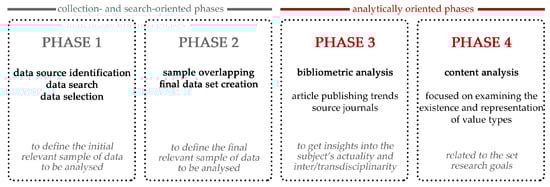
Figure 1.
Research design (provided by authors, 2026).
By combining bibliometric mapping with structured content analysis, the study enables a replicable synthesis of how the four approaches are enacted in contemporary academic practice, particularly through the value types that are explicitly identified and directly included into research processes.
2.1. Phase 1: Identification of Data Source, Data Search, and Data Selection
The first research phase comprised the following: (1) profiling data sources and selecting an appropriate database for collecting scholarly works, (2) creating the initial search string to determine the scope of data sources, and (3) creating the control search string to more directly link data sources with the research problem and subject.
2.1.1. Profiling Data Sources
Scopus was identified as the relevant database for collecting scholarly works in architecture, aligning with the authors’ research standpoint. This choice is well-justified through the existing academic literature, which highlights Scopus’s comprehensive scope, interdisciplinary coverage, and metadata accuracy [69,70].
2.1.2. Initial Search String
The initial search of the Scopus database encompassed the following: (1) data searching based on the input of primary and secondary keywords defined concerning the research problem and subject; and (2) data narrowing of scholarly works based on a defined set of criteria. Data sources indexed in the Scopus database up to 1 December 2024 were included.
- Data Searching
The primary and secondary keywords were searched within the title, abstract, and keywords of the scholarly works. The primary keywords related to the research field included the following: (1) architecture; (2) cultural heritage; and (3) values. The secondary keywords related to the research subject encompassed the names of the four main approaches to cultural heritage preservation: (1) material-based approach; (2) value-based approach; (3) living heritage approach; and (4) historic urban landscape approach. Based on the defined keywords, a total of 293 scholarly works were found: 40 related to the material-based approach, 192 related to the value-based approach, 39 related to the living heritage approach, and 22 related to the historic urban landscape approach.
- Data Narrowing
The sample of scholarly works (a total of 293) was narrowed down by introducing additional criteria to obtain a final relevant data sample for further analysis. The criteria for narrowing the data sample and the rationale for their definition are detailed in Table 1. The temporal framework of the published works was not considered, as it would have potentially excluded scholarly works studying one of the four main approaches to cultural heritage preservation, which would have affected the scope and relevance of the conducted research. Based on the applied criteria, a total of 97 academic articles were identified, of which 14 focused on the material-based approach, 65 on the value-based approach, 11 on the living heritage approach, and 7 on the historic urban landscape approach. By introducing the narrowing criteria, especially criteria C4, C5, and C6, it was possible to identify how well the academic articles, based on the defined primary and secondary keywords, align with this research problem and subject. The introduction of the additional criterion C7—which concerns the duplicate elimination and the grouping of academic articles according to the applied approach to cultural heritage preservation—resulted in the final relevant sample of 77 academic articles, of which 27 focused on the material-based approach, 30 on the value-based approach, 13 on the living heritage approach, and 7 on the historic urban landscape approach.

Table 1.
Set of criteria for data narrowing (provided by authors, 2025).
2.1.3. Control Search String
The control search of the Scopus database was conducted with the aim of establishing a more direct connection between the relevant sample of data sources and the problem and subject of this research study. As with the initial search, it included the following: (1) data searching based on the input of primary and secondary keywords redefined in relation to the initial search; and (2) data narrowing of scholarly works based on a previously defined set of criteria (Table 1).
- Data Searching
Primary and secondary keywords were once again searched within the title, abstract, and keywords of the scholarly works. In order to identify those that more directly address one of the four recognised main approaches to cultural heritage preservation, the search keywords within the Scopus database were redefined. The primary keyword, related to the research field, was (1) heritage, while the secondary keywords, related to the subject of the research, represented the names of the four recognised main approaches to cultural heritage preservation. They were specified using quotation marks as follows: (1) “material-based approach”; (2) “value-based approach”; (3) “living heritage approach”; and (4) “historic urban landscape approach”. Based on the defined keywords and their search within the title, abstract, and keywords of scholarly works, a total of 123 works were identified: 5 related to the material-based approach, 44 related to the value-based approach, 12 related to the living heritage approach, and 62 related to the historic urban landscape approach.
- Data Narrowing
The sample of scholarly works (a total of 123) was narrowed by introducing additional criteria, with the aim of obtaining a final relevant data sample for further analysis. Based on the applied set of criteria for data narrowing (Table 1), a total of 62 academic articles were identified: 4 focused on the material-based approach, 21 focused on the value-based approach, 7 focused on the living heritage approach, and 30 focused on the historic urban landscape approach. By introducing the additional criterion C7, the final relevant sample of 53 academic articles was obtained, of which 1 focused on the material-based approach, 15 focused on the value-based approach, 7 focused on the living heritage approach, and 30 focused on the historic urban landscape approach.
2.2. Phase 2: Sample Overlapping–Final Dataset Creation
Based on the results obtained from the initial and control search strings of the Scopus database, two samples of relevant data sources were formed. Phase 2 of the research focused on systematically merging these two samples in order to construct a single, coherent final dataset. As illustrated in Figure 2, this phase involved a parallel and transparent comparison of the two samples, enabling the identification of their overlap and convergence. The process comprised the following: (1) the systematisation of academic articles according to the applied approach to cultural heritage preservation, (2) the identification and elimination of duplicate records, and (3) the regrouping of articles to ensure consistency across the four analytical categories. The PRISMA-style diagram presented in Figure 2 provides a detailed visual account of the sample overlapping process, clearly tracing how the initial and control search strings progressively converged toward the final dataset. On the other hand, Table 2 shows the number of data sources from the initial and control search strings based on the criteria used to narrow and define academic articles for further bibliometric and content analysis.
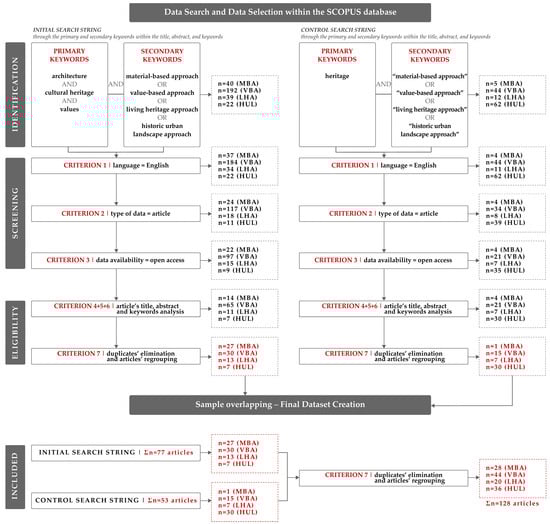
Figure 2.
Data search and data selection (provided by authors, 2026) The full resolution of this figure is provided within the Supplementary Material S2.
Table 2.
Two samples of relevant data sources (provided by authors, 2025).
In the subsequent steps, the refined sample is further structured according to the predefined criteria, resulting in a final dataset that is methodologically transparent, reproducible, and fully aligned with the research design.
- Data Systematisation
The data systematisation and their grouping according to the applied approach to cultural heritage preservation was possible through an analysis of the title, abstract, and keywords of the articles (application of the criteria C4, C5, and C6). Additionally, they were systematised into four groups: (1) MBA, (2) VBA, (3) LHA, and (4) HUL.
- Duplicate Elimination
The two data samples constitute the primary source of information relevant to this research problem and subject. The systematisation of academic articles also allowed the identification of potential duplicates. By applying the additional criterion C7—which pertains to the elimination of duplicates and the grouping of academic articles according to the applied approach to cultural heritage preservation—the final relevant data sample for further content analysis was defined: 128 academic articles (Supplementary Material S1). Of these, 28 focus on the material-based approach, 44 examine the value-based approach, 20 address the living heritage approach, and 36 academic articles analyse the historic urban landscape approach (Table 3).
Table 3.
Final sample of relevant data sources (provided by authors, 2025).
2.3. Phase 3: Bibliometric Analysis
Following the definition of the final relevant data sample (128 academic articles), a bibliometric analysis was carried out involving the following: (1) article publishing trends and (2) source journals.
- Article Publishing Trends
The trend in the publication of academic articles indicates the relevance of the research topic. The bibliometric analysis enabled the highlighting of the currency and potential dominance of one of the four main approaches over time, as well as the simultaneous representation of research addressing various approaches.
- Source Journals
The analysis of the academic journals where the articles were published enabled the identification of the research arenas to which they belong, the potential predominance of any specific research arena, and the journal’s impact. Furthermore, the obtained data indicate the degree of interdisciplinarity and transdisciplinarity of the research problem—the question of cultural heritage values and their manifestation through the application of one of the four main approaches to cultural heritage preservation. The relationship between the identified academic journals and the published articles is presented in Supplementary Material S1.
2.4. Phase 4: Content Analysis
The content analysis was conducted concerning the academic articles’ grouping according to the four main approaches to cultural heritage preservation: (1) MBA, (2) VBA, (3) LHA, and (4) HUL. It encompassed the following: (1) the article type, research arena, and value existence analysis, (2) representation of the value types recognised within the analysed articles, (3) identification of the value types directly included in the research process, and (4) representation of the value types directly included in the research process. Based on the content analysis conducted, the research objectives of this paper were achieved: (1) a systematic overview of the relationship between recognised value types and those directly involved in cultural heritage preservation on the one hand, and the applied approaches to cultural heritage preservation on the other, and (2) the identification of the dominance of specific value types/certain approaches within the process of cultural heritage preservation.
- Article Type, Research Arena, and Value Existence Analysis
The identification of the article type provided insight into how a particular research problem is viewed: (1) through a literature review, (2) by developing and applying specific methods, or (3) through the case study analysis (or their combination). Additionally, classifying the academic articles according to the research arenas allowed for an understanding of the interdisciplinarity and transdisciplinarity of the topic. On the other hand, based on the identification of the notion of value and its treatment in academic articles, a set of articles was identified in which specific value types were directly included in the research process. The value existence analysis distinguishes between several analytically relevant conditions:
- Articles in which cultural heritage values are not identified;
- Articles in which the term “value” is used descriptively or metaphorically but remains analytically irrelevant to the research objectives;
- Articles in which value types are recognised or mentioned but not operationalised;
- Articles in which specific value types are explicitly and directly integrated into the research methodology through criteria, indicators, evaluative frameworks, or scoring systems.
This distinction allows for a reading of how the notion of value is treated within contemporary academic practice, moving beyond mere terminological presence toward assessing the degree of methodological engagement with values. The same analytical logic was consistently applied across all four approaches, enabling a comparative examination of differences in how cultural heritage values are recognised, conceptualised, and operationalised within each approach. The results of this classification are presented in Appendix A (Table A1, Table A2, Table A3 and Table A4), which collectively supports the comparative analysis discussed in Section 3.2.
- Representation of the Value Types Recognised Within the Analysed Articles
The content analysis of academic articles, in which a specific value type was identified, enabled the listing of all recognised value types, with a particular focus on their representation. In this way, the most frequently represented value types were highlighted. The results of this research step are organised according to the four main approaches to cultural heritage preservation and presented in Supplementary Material S1.
- Identification of the Value Types Directly Included in the Research Process within the Analysed Articles
The content analysis enabled the identification of academic articles in which specific value types were directly included in the research process. The results of this research step are presented in a set of tables (Appendix A, Table A1, Table A2, Table A3 and Table A4), organised according to the approach to cultural heritage preservation applied in the research process.
- Representation of the Value Types Directly Included in the Research Process within the Analysed Articles
Based on the identification of the value types directly included in the research process, it was possible to observe the degree of their representation through the analysed articles. The results of this research step are organised according to the four main approaches to cultural heritage preservation and presented in Supplementary Material S1.
3. Results
As a result of the Scopus database search and the analysis of a relevant data sample of the academic articles, the following are presented: (1) a bibliometric analysis, and (2) a content analysis.
3.1. Bibliometric Analysis
The bibliometric analysis carried out on the relevant sample of academic articles encompasses an examination of the (1) article publishing trends, and (2) source journals. The bibliometric analysis is not intended to be an end in itself, but to be a contextual layer that frames the subsequent content analysis. By tracing publication dynamics, journal outlets, and disciplinary clustering, it provides insight into how value-oriented heritage research has evolved alongside shifts in policy frameworks, methodological agendas, and applied heritage practices.
- Article Publishing Trends
Figure 3 illustrates the annual publishing trend of the analysed academic articles, considering the main approach to cultural heritage preservation (MBA, VBA, LHA, or HUL). It illustrates that researching these approaches gained prominence in 2010. The annual publication count indicates that the subject has been particularly topical in the last four years, as 57.81% of the analysed data sample (74 articles) were published between 2021 and 2024. It is also observed that, until 2018, research was oriented towards the analysis of various approaches; however, not all four main approaches were represented simultaneously. Since 2018, research focused on the HUL has emerged, accounting for 19.44% (seven articles) of the total data sample. Research focused on the MBA has appeared intermittently since 2010. From 2018, the number of published articles has increased, reaching 25% (seven articles) of the total data sample in 2023. The year 2021 was significant for researching the LHA, when 30% (six articles) of the total data sample were published. Articles emphasising the VBA became prominent in 2022, while in 2024 they comprised 19.3% (10 articles) of the total data sample. The observed increase in publications after 2010, and particularly since 2018, corresponds with the consolidation and wider uptake of integrative heritage frameworks, most notably the LHA and HUL approaches. This temporal pattern reflects a gradual shift from object- and fabric-centred conservation toward process-oriented, value-driven, and context-sensitive practices, in which questions of value identification, negotiation, and operationalisation become increasingly central. The uneven temporal representation of the four approaches also indicates that methodological experimentation with value assessment emerges at different paces, shaping how and when values are translated from conceptual frameworks into heritage preservation practices.
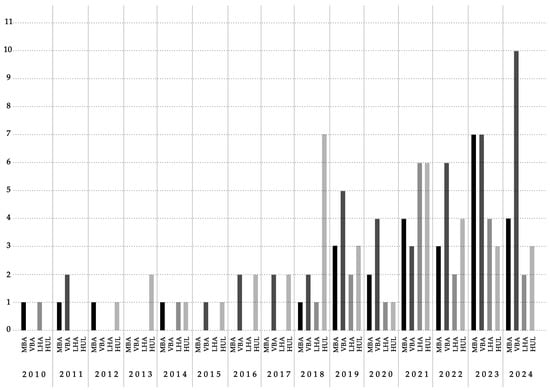
Figure 3.
Bibliometric analysis—article publishing trends (provided by authors, 2025).
- Source Journals
Based on the analysis of the journals’ characteristics, it was established that 128 academic articles were published across 69 different journals (Supplementary Material S1). The most significant number of journals publish articles focused on researching the VBA (value-based approach) (47.83%, 33 journals), followed by the HUL (historic urban landscape approach) (30.43%, 21 journals), and the MBA (material-based approach) (30.43%, 21 journals), while journals dedicated to publishing articles which research the LHA (living heritage approach) are less represented (20.29%, 14 journals). Among the identified journals, only two have published articles that investigate all four main approaches (Table 4). The Journal of Cultural Heritage Management and Sustainable Development stands out particularly, with a total of 12 academic articles (9.37% of the relevant data sample). It spans the fields of Arts and Humanities, Social Sciences, and Business, Management and Accounting [71]. Although Sustainability also publishes articles exploring all four main approaches to cultural heritage preservation, evidenced by the fact that 13 articles (10.16% of the relevant data sample) appear in it, it has a particular emphasis on researching the VBA (value-based approach) and the HUL (historic urban landscape approach). It covers Social Sciences, Computer Science, Environmental Science, and Energy [72]. In addition to the aforementioned journals, 15 others have published two or more articles, each focusing on researching one of the four main approaches to cultural heritage preservation (Table 4).
Table 4.
Journal information and number of articles (provided by authors, 2025).
The concentration of publications within a relatively limited set of journals further illustrates the institutionalisation of value-oriented heritage research within specific disciplinary and editorial contexts. Journals that consistently publish across multiple approaches function as key arenas where methodological conventions for value assessment are formed, stabilised, and disseminated. This concentration also suggests that the ways in which values are framed, prioritised, and operationalised are partly shaped by dominant publication venues, which in turn inform the patterns identified in the subsequent content analysis. Together, these bibliometric patterns informed the design and interpretation of the content analysis by indicating where dominant research agendas and publication practices are most likely to influence the recognition and direct operationalisation of cultural heritage values.
3.2. Content Analysis
The content analysis focused on the identification, representation, and direct inclusion of value types in the research process. The results are organised according to the four main approaches to cultural heritage preservation. They present the following: (1) article type, research arena, and value existence analysis, (2) representation of the value types recognised within the analysed articles, (3) identification of the value types directly included in the research process, and (4) representation of the value types directly included in the research process.
3.2.1. MBA: Material-Based Approach
- Article Type, Research Arena, and Value Existence Analysis
Analysing the academic articles focused on the MBA (material-based approach) (28 articles) indicates that they cover nine research arenas (Appendix A, Table A1), the most prevalent of which is heritage conservation (25%, seven articles). Research in each of the analysed articles involves the analysis of the case studies (100%, 28 articles), with some focusing exclusively on case study analysis (21.43%, 6 articles), and others applying a specific methodology to a case study (60.71%, 17 articles), or combining theoretical knowledge, a proposed methodology, and its application to a case study (17.86%, 5 articles) (Appendix A, Table A1). Furthermore, it was determined that three articles do not recognise any cultural heritage values (10.71%) [73,74,75]. In contrast, in seven articles (25%) [76,77,78,79,80,81,82], the term “value” is employed solely to explain specific parameters and characteristics that are not relevant to the problem and subject of this research. Conversely, in 14 articles (50%) [83,84,85,86,87,88,89,90,91,92,93,94,95,96], types of cultural heritage values relevant to this research were recognised. Specific value types were directly included in the research process in four articles (14.29%) [97,98,99,100] (Table 5).
Table 5.
MBA—identification of the value types directly included in the research process.
- Representation of the Value Types Recognised within the Analysed Articles
A total of 44 value types were identified, among which the most prominent are as follows: cultural (50%, nine articles), historical (44.44%, eight articles), architectural (38.89%, seven articles), and heritage (22.22%, four articles), as well as artistic and symbolic values (16.67%, three articles) (Supplementary Material S1).
- Identification of the Value Types Directly Included in the Research Process within the Analysed Articles
Although a large number of value types were recognised, only four articles demonstrated an effort to include them directly in the research process (Table 5). Among these, two articles employ valorisation to determine the level of significance [97] and the state of the cultural heritage’s preservation [98], while one article recognises the aspects influencing heritage development over time [99]. The research conducted by Moscatelli directly includes a specific value type—expressive value—in the research process [100].
- Representation of the Value Types Directly Included in the Research Process within the Analysed Articles
Given that only one value type—expressive value—was directly included in the research process within the analysed articles (Table 5), it was not possible to examine the representation of value types directly included in the research process through the analysis of articles focused on the application of the MBA (material-based approach).
3.2.2. VBA: Value-Based Approach
- Article Type, Research Arena, and Value Existence Analysis
By analysing the academic articles oriented towards the VBA (value-based approach) (44 articles), it was highlighted that they encompass eighteen research arenas (Appendix A, Table A2), among which the most represented is heritage preservation (27.27%, 12 articles). The most significant number of articles (36.36%, 16 articles) theoretically analyse a specific problem, define and develop research methods, and apply them to a particular case study (Appendix A, Table A2). From the 44 articles, content analysis determined that 28 articles (63.64%) [33,39,66,101,102,103,104,105,106,107,108,109,110,111,112,113,114,115,116,117,118,119,120,121,122,123,124,125] recognise specific value types, whereas they are directly included in the research process in 16 articles (36.36%) [126,127,128,129,130,131,132,133,134,135,136,137,138,139,140,141] (Table 6).
Table 6.
VBA—identification of the value types directly included in the research process.
- Representation of the Value Types Recognised within the Analysed Articles
A total of 306 different value types were recognised within the analysed articles (Supplementary Material S1). Of these, the most prominent are the following ones: cultural (72.73%, 32 articles), aesthetic (56.82%, 25 articles), heritage (52.27%, 23 articles), economic, historical and social (50%, 22 articles); then historic and scientific (31.8%, 14 articles), intrinsic (29.55%, 13 articles), spiritual (27.27%, 12 articles), architectural, educational, and intangible (25%, 11 articles), environmental, human, and tangible (20.45%, 9 articles); followed by symbolic and use (18.18%, 8 articles), added, community and political (15.91%, 7 articles), ecological and identity (13.64%, 6 articles), and artistic and archaeological (11.36%, 5 articles).
- Identification of the Value Types Directly Included in the Research Process within the Analysed Articles
Specific value types were directly included in the research process in 16 articles (Table 6). Notably, some articles clearly define a set of value types directly included in the research process [127,128,129,130,131,132,134,135,136,137,138,139,140]. Additionally, some studies include defined indicators for the directly included value types [128,130,135,137,138]. Two articles use the term “significance”, equating it with values [126,133]. Furthermore, three articles identify criteria for recognising values [137,139,141].
- Representation of the Value Types Directly Included in the Research Process within the Analysed Articles
Based on a content analysis of the 16 articles, 105 value types were directly included in the research process. However, only 16 value types are represented in more than 10% of the analysed articles. Among these, the most prominent are the following: economic (56.25%, nine articles), aesthetic (43.75%, seven articles), cultural, historical, and scientific (37.5%, six articles), social (31.25%, five articles), architectural, educational, historic, spiritual, and symbolic (18.75%, three articles), and ecological, environmental, heritage, intrinsic, and landscape (12.5%, two articles) (Supplementary Material S1).
3.2.3. LHA: Living Heritage Approach
- Article Type, Research Arena, and Value Existence Analysis
An analysis of the academic articles focused on the LHA (living heritage approach) (20 articles) indicates that they encompass seven research arenas (Appendix A, Table A3), among which the most represented is heritage management (45%, nine articles). The majority of articles focus on case study analysis conducted either in part or throughout the entire article (90%, 18 articles). To a lesser extent, articles that predominantly analyse a research problem through a literature review and theoretical development within the research field are also present (10%, two articles), as are those focusing on a combination of a literature review and case study analysis (15%, three articles) (Appendix A, Table A3). The content analysis determined that 13 articles (65%) [38,44,142,143,144,145,146,147,148,149,150,151,152] recognise different value types, whereas 7 articles (35%) [45,153,154,155,156,157,158] directly include different value types in the research processes (Table 7).
Table 7.
LHA—identification of the value types directly included in the research process.
- Representation of the Value Types Recognised within the Analysed Articles
A total of 130 different value types of cultural heritage were identified (Supplementary Material S1). The most prominent among them are as follows: social (45%, nine articles), cultural (40%, eight articles), heritage and historical (35%, seven articles), aesthetic and economic (30%, six articles), and religious and use value (25%, five articles). Following these are the following: inherent, socio-cultural, and traditional (20%, four articles), as well as artistic, ecological, historic, intangible, intrinsic, spiritual, and tangible (15%, three articles).
- Identification of the Value Types Directly Included in the Research Process within the Analysed Articles
Among the analysed academic articles, specific value types were directly included in the research process in seven of them (Table 7). Notably, some articles clearly define a set of value types that were identified and directly included in the research process [45,154,158]. Additionally, other articles not only identify and directly include specific value types but also define corresponding indicators [153,155,156,157]. Particularly noteworthy is an article in which the value types are grouped according to the stakeholders which identified them [154], as well as a study focusing on the analysis of garden culture as heritage [153], in which, by cross-referencing theoretical data on garden values with interview data from garden owners, a specific value matrix is developed. The lack of “doing value” is also recognised as a distinct value type.
- Representation of the Value Types Directly Included in the Research Process within the Analysed Articles
Based on content analysis of the 16 articles, 25 value types were directly included in the research process (Supplementary Material S1). However, only two value types are mentioned in more than one article: aesthetic and social (28.57%, two articles). This outcome is a result of the specific nature of the topics studied, as well as the fact that in numerous articles, in addition to the identified value types, corresponding indicators that cover other value types are also identified, as shown in Table 7.
3.2.4. HUL: Historic Urban Landscape Approach
- Article Type, Research Arena, and Value Existence Analysis
An analysis of the academic articles focused on the HUL (historic urban landscape approach) (36 articles) indicates that they span eight research arenas (Appendix A, Table A4), among which the most represented is heritage management (55.5%, 20 articles). The majority of articles (77.78%, 28 articles) include case study analysis. Considering that this approach is relatively recent within the field of heritage preservation, articles focused on its theoretical and critical examination are also highly presented (22.22%, eight articles). Additionally, a notable number of articles combine theoretical analysis of the research problem, development of methodological tools, and their application to a case study (16.67%, six articles) (Appendix A, Table A4). Among the 36 articles analysed, content analysis found that 29 articles (80.55%) [37,48,54,55,56,57,58,59,61,63,64,159,160,161,162,163,164,165,166,167,168,169,170,171,172,173,174,175,176] recognise different value types. However, only six articles (16.67%) [177,178,179,180,181,182] directly include specific value types in the research process (Table 8), while one article does not address the notion of value [183].
Table 8.
HUL—identification of the value types directly included in the research process.
- Representation of the Value Types Recognised within the Analysed Articles
A total of 171 different value types were identified among the analysed articles (Supplementary Material S1). The most predominantly represented are the following: cultural (71.43%, 25 articles), heritage (60%, 21 articles), intangible and natural (40%, 14 articles), historic and social (37.14%, 13 articles), outstanding universal (34.29%, 12 articles), historical (31.43%, 11 articles), and architectural and aesthetic (28.57%, 10 articles). Following these are the following value types: scientific (25.71%, nine articles), economic and tangible (22.86%, eight articles), symbolic (17.14%, six articles), archaeological, artistic, environmental, and spiritual (14.29%, five articles), and ecological, new, property, socio-cultural, and urban heritage (11.43%, four articles).
- Identification of the Value Types Directly Included in the Research Process within the Analysed Articles
Among the analysed academic articles, specific value types were directly included in the research process in six of them (Table 8). Some articles explicitly define a set of value types [178,179,180,182], while the corresponding indicators were identified in one article [181].
On the other hand, in the research conducted by Rey-Perez et al. [177], although value types were identified, the methodology for recognising and including them in the research process is not specified—this is justified by the article’s aim in presenting the scientific project’s results.
- Representation of the Value Types Directly Included in the Research Process within the Analysed Articles
Based on the content analysis of six articles, 30 value types directly included in the research process have been identified (Supplementary Material S1). However, only seven value types are referenced in more than one article: social (50%, three articles), and architectural, cultural, environmental, historic, scientific, and outstanding universal (33.33%, two articles).
4. Discussion
Based on the content analysis and the obtained research results, it was possible to compare and interpret them. Particular attention was paid to the following: (1) value representation in current approaches to cultural heritage preservation, and (2) identification of the dominance of specific value types/approaches in the process of cultural heritage preservation.
While the content analysis reveals clear patterns in the frequency and distribution of cultural heritage value types, its analytical scope lies in examining how values are framed, prioritised, and operationalised within contemporary academic practice. The dominance of certain value types should therefore be understood not as a direct reflection of societal or stakeholder-based valuation processes, but as an indicator of prevailing disciplinary conventions, methodological trajectories, and regulatory logics that structure heritage-related research. In particular, values such as scientific, artistic, historic, and social [181], as well as outstanding universal [135,179], tend to dominate because they align more readily with established planning instruments, assessment frameworks, and policy-oriented methodologies [9,12,184,185], making them easier to formalise and integrate into research designs. Conversely, relational, experiential, and socially negotiated values, although widely recognised, are less frequently operationalised due to their methodological complexity and reliance on participatory and perception-based research approaches [45,135,137,140,178,180,181]. This interpretive perspective is consistent with the refined research questions and the overall aim of the study, which is to provide a cross-cutting synthesis of how cultural heritage values are stabilised and mobilised within contemporary academic practice, thereby complementing applied [45,178,181], governance-oriented [135,182], and perception-based studies [137,140,154] that address value formation in specific contexts.
4.1. Value Representation in Current Approaches to Cultural Heritage Preservation
The comparison of the obtained research results involved analysing the degree of representation and direct involvement of specific value types in the research process within the analysed academic articles concerning the four main approaches to cultural heritage preservation. Figure 4 provides a synthetic depiction and numerical insight into the relationship between the recognised value types and those directly included in the process of cultural heritage preservation, on the one hand, and the applied approaches, on the other. It highlights discrepancies between the total number of value types that were recognised and those directly involved in the research process, both within a single approach (MBA: 44–1, VBA: 306–105, LHA, 130–25, and HUL: 171–30) and in their mutual comparison. Also, a difference was observed between the total number of recognised value types and those represented in more than 10% of the analysed relevant data sample (MBA: 44–13, VBA: 306–25, LHA, 130–18, and HUL: 171–23). The aforementioned discrepancy was also highlighted in the relationship between the total number of identified value types directly involved in the research process and those directly involved in more than 10% of the analysed relevant data sample (MBA: 1–1, VBA: 105–16, LHA: 25–2, and HUL: 30–7).
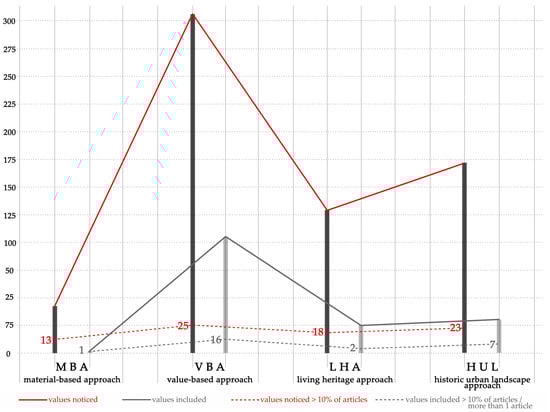
Figure 4.
Representation of the value types recognised/included in the analysed articles (provided by authors, 2025).
Rather than interpreting these discrepancies as methodological inconsistency or analytical deficiency, the results suggest that such variation may be inherent to the nature of cultural heritage values themselves. Value plurality, selective operationalisation, and uneven representation across approaches reflect the context-dependent and often conflicting character of heritage values [185], which are shaped by disciplinary traditions, research objectives, and institutional frameworks. In this sense, inconsistency should not be understood solely as a failure of methodological rigour, but also as an epistemologically productive condition that reveals how different approaches prioritise, stabilise, or bracket specific values in response to distinct analytical and practical demands. This reading aligns with recent empirical [137] and perception-based studies [140] that conceptualise value plurality and trade-offs as constitutive features of heritage processes rather than anomalies to be resolved. From this perspective, the uneven translation of recognised values into operational research categories does not necessarily indicate conceptual weakness, but instead exposes the limits of their formalisation.
At the same time, the observed patterns of value representation must be situated in relation to dominant normative heritage doctrines, such as those promoted by UNESCO [9,21,30,31,32] and ICOMOS [8,18,28,29], which have played a central role in structuring the vocabulary and categorisation of heritage values [1]. While these frameworks have been instrumental in broadening the understanding of heritage beyond material fabric, their widespread adoption within contemporary academic practice has also contributed to a certain terminological stabilisation that is not always matched by corresponding methodological innovation. As a result, values articulated within normative doctrines are frequently recognised at a conceptual level, yet only selectively translated into operational research tools. By critically positioning these findings vis-à-vis normative heritage frameworks, the analysis highlights a gap between doctrinal ambition and research practice. This gap has been increasingly problematised in recent scholarship that empirically tests, adapts, or challenges normative value categories through participatory methods [45,140], governance-oriented analyses [135,182], and context-sensitive modelling [178,181]. The discrepancies identified in Figure 4 can therefore be read as indicators of an ongoing tension between the normative expansion of value concepts and the practical constraints of their operationalisation within research- and planning-oriented contexts.
4.2. Dominance Identification of Specific Value Types/Approaches in the Process of Cultural Heritage Preservation
An insight into the relationship between all recognised value types and those directly involved in the research process within the analysed academic articles enabled the identification of 134 different value types directly included in the research process through the application of one of the four main approaches to cultural heritage preservation. Based on the obtained data, it was possible to conduct a comparative analysis aimed at identifying the potential dominance of (a) any of the four main approaches from the perspective of direct inclusion of specific value types in the research process, and (b) a specific value type, from the perspective of its direct inclusion in the research process through the application of two or more recognised main approaches to cultural heritage preservation.
Figure 5 includes a listing of all value types directly included in the research process through the application of one of the four main approaches. Specifically, it highlights the degree of the values’ inclusion within the analysed data sample. The dominance of the VBA is emphasised in terms of the number of value types directly included in the research process. Tracks on the circle of Figure 5 are allocated to each identified value type, and their lengths correspond to the level of inclusion of each value type within the analysed academic articles. Through the application of the MBA, only one value type—expressive—was directly involved in the research process. Furthermore, through the application of the VBA, the most frequently included value type is economic. On the other hand, through the application of the LHA, aesthetic and social values are equally included, whereas through the application of the HUL, the most frequently included value type is social.
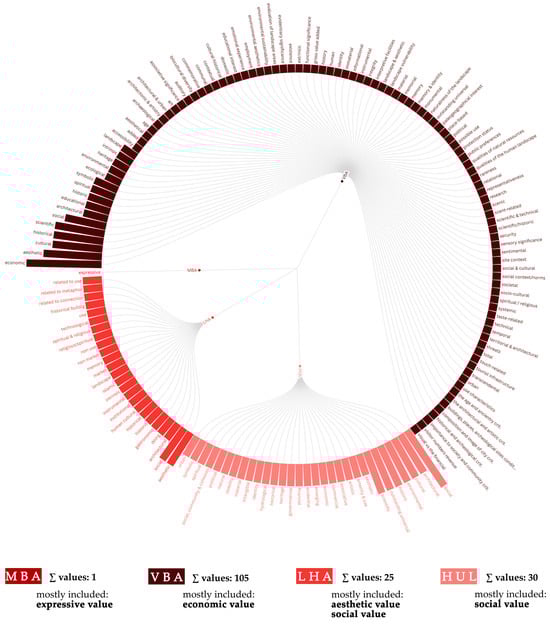
Figure 5.
Four main approaches to cultural heritage preservation—representation of dominance (provided by authors, using online available and free data visualisation platform “Flourish”, 2025). The full resolution of this figure is provided within the Supplementary Material S2.
Determining the dominance of a specific value type is contingent upon its inclusion in the research process through the application of two or more of the recognised main approaches to cultural heritage preservation. Figure 6 highlights that only 21 values are directly included. Specifically, five values (aesthetic, architectural, historic, historical, and social) are directly included through the VBA, LHA, and HUL. Four values (intrinsic, instrumental, landscape, and memory) are directly included through the VBA and LHA, whereas twelve other values (cultural, economic, environmental, heritage, identity, material, outstanding universal, political, scientific, spiritual, symbolic, and urban) are directly included through the VBA and HUL.
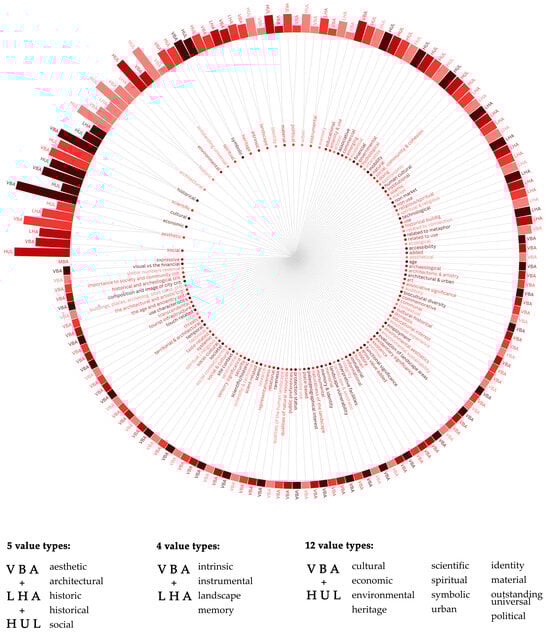
Figure 6.
Representation of value types’ dominance (provided by authors, using online available and free data visualisation platform “Flourish”, 2026). The full resolution of this figure is provided within the Supplementary Material S2.
The observed dominance of the VBA in terms of direct value inclusion reflects its stronger methodological alignment with structured assessment frameworks, including criteria-based evaluation [130,136,137,138,179], specific value matrix development [134,153], and multi-criteria decision-support tools [127,154,178,181]. Unlike the MBA, which remains closely tied to fabric-oriented conservation logics, the VBA more readily accommodates formalised value translation mechanisms, enabling a broader range of values to be explicitly integrated into research designs. In this sense, dominance should be understood not as theoretical superiority, but as a function of methodological compatibility with evaluative and planning-oriented research practices.
Importantly, the absence of a newly proposed conceptual or methodological model in this study is deliberate. Rather than advancing an additional framework, the present review positions itself as a critical synthesis that maps how existing structured assessment models and multi-criteria approaches are selectively mobilised across heritage paradigms. By identifying which value types consistently traverse multiple approaches, and which remain confined to single frameworks, the analysis highlights points of convergence and fragmentation that can inform the further development and refinement of applied evaluative tools. The comparatively limited operationalisation of the LHA and HUL approaches should therefore not be read as a reiteration of normative critique alone, but as an empirical indication of the methodological challenges inherent in translating relational, socially negotiated, and process-oriented values into formal research instruments. Seen from this perspective, the dominance patterns identified in Figure 5 and Figure 6 reveal a structural tension between integrative heritage paradigms and the demands of comparability, reproducibility, and formalisation in contemporary academic research practice. Rather than signalling analytical weakness, the selective operationalisation of values across approaches exposes where current assessment models succeed, where they struggle, and where future methodological innovation is most urgently needed.
4.3. Limitations of the Study
Several limitations within the study scope should be acknowledged when interpreting the results. First, the analysis is based on a single bibliographic database (Scopus). While Scopus was selected due to its broad interdisciplinary coverage, metadata quality, and relevance to architecture- and heritage-related research, the inclusion of additional databases (e.g., Web of Science or discipline-specific repositories) may have resulted in a broader or slightly different dataset. In particular, reliance on a single indexed database may privilege certain publication geographies, institutional contexts, and traditions, while underrepresenting locally grounded or regionally circulated scholarship. Second, the study includes English-language publications only. This choice was made to ensure consistency and accessibility within the global academic discourse. However, it may have excluded relevant research published in other languages, particularly in regions where cultural heritage scholarship is strongly embedded in local academic traditions. This limitation is especially relevant in the context of Global South research, where critical, practice-oriented, and community-based heritage studies are often published in national journals, policy reports, or non-English outlets that fall outside mainstream indexing systems. Third, although the study adopts a bibliometric and content-analysis framework, the analytical lens is anchored in architectural and built-environment scholarship. This framing may have influenced the disciplinary distribution of the sample and the prominence of certain value types, potentially underrepresenting perspectives from the fields such as anthropology [186], sociology [187], archaeology [188], or legal heritage studies [189,190]. Fourth, the dataset is limited to peer-reviewed, open-access journal articles. This restriction was introduced to ensure a consistent and comparable analytical framework, grounded in sources that undergo multiple rounds of peer review and follow clearly defined research structures and methodologies. While this corpus is considered appropriate and relevant for the aims of the present study, the inclusion of books, edited volumes, and applied project reports could provide additional conceptual and methodological insights in future research.
These limitations do not undermine the validity of the findings but rather define the scope of the study. They should be understood as structural constraints inherent to large-scale bibliometric and content-analytic reviews, rather than as methodological shortcomings. They also point to clear directions for future research, including (1) multi-database searches, (2) multilingual sampling, (3) the systematic inclusion of monographs and edited volumes, (4) targeted inclusion of regionally situated and Global South scholarship, and (5) broader interdisciplinary integration.
5. Concluding Remarks
This study examined how cultural heritage values are recognised and operationalised within contemporary academic research practice, applying four main approaches to cultural heritage preservation. By explicitly distinguishing between value recognition and value operationalisation, the research provides a structured response to the three research questions.
In relation to RQ1, the results demonstrate that academic research recognises a broad and heterogeneous spectrum of value types across all four approaches. However, their representation is highly uneven across approaches. The VBA exhibits the widest range of recognised value types, reflecting its explicit conceptual openness to plural and multidimensional understandings of the notion of value. In contrast, the MBA recognises a substantially narrower set of values, in which cultural, historical, architectural, heritage, artistic, and symbolic values dominate. The LHA and HUL approaches occupy an intermediate position, recognising both tangible and intangible values, but with differing emphases: (1) social and aesthetic values are most prominent within the LHA, while (2) social value dominates within the HUL. These findings indicate that value recognition is strongly conditioned by the epistemological orientation of each approach, rather than by a shared or convergent understanding of cultural heritage values.
With respect to RQ2, the analysis reveals a systematic discrepancy between value recognition and value operationalisation. This gap is evident across all four approaches but is particularly pronounced in the MBA and LHA, where value recognition rarely translates into methodological integration. Even within the VBA, where the value operationalisation is most developed and 306 different value types are recognised, only 105 of them are directly included in the research processes. The findings thus demonstrate that value recognition does not imply methodological operationalisation, and that the majority of academic studies continue to treat values as descriptive or discursive references rather than as analytically actionable constructs.
Moreover, although 134 value types were directly included in the research processes within the analysed dataset, only 21 value types were directly operationalised by applying two or more recognised main approaches. Additionally, their number is smaller (21) compared to the number of value types for which the theoretical definition exists (35) [1]. Conversely, among the 21 value types, seven were noted (intrinsic, instrumental, landscape, environmental, material, urban, and symbolic) that are not included among the 35 value types with a theoretical explanation. The above suggests the need for simultaneous research on the theoretical definitions of the notion of value and its practical manifestation in cultural heritage preservation. Furthermore, it emphasises the importance of verifying and supplementing internationally recognised data sources as primary guidelines for responsible cultural heritage preservation, with new insights that highlight the potentials and limitations of applying theoretically defined approaches and principles in cultural heritage preservation.
Addressing RQ3, the study identifies clear patterns of selective dominance in value operationalisation. Across approaches, a small group of values—most notably aesthetic, architectural, historic, historical, and social values—dominates operational practices. On the other hand, numerous other recognised value types remain marginal or underoperationalised—such as intrinsic, instrumental, landscape, environmental, material, urban, and symbolic values—and lack stable or consolidated theoretical definitions within internationally recognised doctrinal sources [1]. Conversely, some theoretically well-established values exhibit limited practical uptake. This selective operationalisation suggests that current heritage preservation practices privilege methodologically convenient or policy-aligned values, rather than reflecting the full plurality of recognised values.
Taken together, these findings underscore the need to move beyond debates on value plurality toward methodological clarification and integration. For future research, this implies a shift toward explicitly linking recognised value types with transparent operational tools, including multi-criteria assessment frameworks, composite indicators, and participatory evaluation models. For policy formulation, the results highlight the necessity of critically reassessing normative heritage doctrines to ensure that their value vocabularies are supported by implementable methodologies. Finally, for heritage and tourism management practice, the findings point to the importance of aligning value-based decision-making with clearly articulated evaluative procedures, capable of accommodating both contextual specificity and value trade-offs. In this sense, the study positions value plurality not as a methodological limitation, but as an analytical condition that requires deliberate operational strategies if it is to inform contemporary cultural heritage preservation.
Supplementary Materials
Supplementary Material S1 includes the following: (i) the final dataset comprising 128 scientific articles analysed in this study, (ii) an overview of source journals and corresponding research arenas, (iii) a systematic representation of value types recognised across the analysed articles for each of the four approaches to cultural heritage preservation, and (iv) a representation of value types that are explicitly and directly integrated into the research process within the analysed articles, structured according to the four approaches. Supplementary Material S2 provides the full-resolution versions of the diagrams presented in Figure 2 and Figure 5, and Figure 6. Supplementary Material S1 can be downloaded at https://doi.org/10.5281/zenodo.18394921, while Supplementary Material S2 can be downloaded at https://doi.org/10.5281/zenodo.18329824.
Author Contributions
Conceptualization, J.Š. and M.N.; Methodology, J.Š. and A.M.; Validation, J.Š., M.N. and A.M.; Formal analysis, J.Š.; Investigation, J.Š.; Data curation, J.Š.; Writing—original draft preparation, J.Š.; Writing—review and editing, J.Š., M.N. and A.M.; Visualization, J.Š.; Supervision, M.N. and A.M. All authors have read and agreed to the published version of the manuscript.
Funding
This research was funded by The Ministry of Science, Technological Development and Innovation of The Republic of Serbia, grant number 200090.
Institutional Review Board Statement
Not applicable.
Informed Consent Statement
Not applicable.
Data Availability Statement
All datasets generated and analyzed during the current study are included within the article and its appendices. No copyrighted or restricted data have been shared.
Acknowledgments
The authors extend their sincere gratitude to the anonymous reviewers who contributed suggestions to improve the quality of the paper, the Academic Editors, all the MDPI staff for their valuable work, and the University of Belgrade—Faculty of Architecture and their colleagues for the support and valuable comments during the research process.
Conflicts of Interest
The authors declare no conflicts of interest. The funders had no role in the design of the study; in the collection, analyses, or interpretation of data; in the writing of the manuscript; or in the decision to publish the results.
Abbreviations
The following abbreviations are used in this manuscript:
| MBA | Material-based approach |
| VBA | Value-based approach |
| LHA | Living heritage approach |
| HUL | Historic urban landscape approach |
Appendix A
Appendix A provides a structured overview of the academic articles included in the content analysis, organised according to the four main approaches to cultural heritage preservation examined in this study: the material-based approach (MBA), value-based approach (VBA), living heritage approach (LHA), and historic urban landscape approach (HUL). For each article, Appendix A systematically presents the following: (1) the article type (literature review, methodological research, case study analysis, or their combinations), (2) the primary research arena or domain in which the study is positioned, and (3) an assessment of the value existence within the research process.
Table A1.
MBA—article type, research arena, and value existence analysis.
Table A1.
MBA—article type, research arena, and value existence analysis.
| Authors | Year | Title | Article Type | Research Arena | Value Existence |
|---|---|---|---|---|---|
| Guarnieri et al. [83] | 2010 | Cultural heritage interactive 3D models on the web: An approach using open source and free software | case study | Heritage digitization | noticed |
| Styliadis et al. [76] | 2011 | Photography-based façade recovery & 3-d modeling: A CAD application in Cultural Heritage | methodological case study | Heritage digitization | not relevant |
| Urosevic et al. [77] | 2012 | Black soiling of an architectural limestone during two-year term exposure to urban air in the city of Granada (S Spain) | methodological case study | Heritage conservation | not relevant |
| Daly [84] | 2014 | A Framework for Assessing the Vulnerability of Archaeological Sites to Climate Change: Theory, Development, and Application | theoretical methodological case study | Heritage management | noticed |
| Nanavati [73] | 2018 | Developing Tradition: A Case of Heritage Foundation of Pakistan | methodological case study | Heritage regeneration | / |
| Tissier et al. [78] | 2019 | Electrochemical chloride extraction to repair combined carbonated and chloride contaminated reinforced concrete | methodological case study | Heritage conservation | not relevant |
| Balaguer et al. [74] | 2019 | Bioclimatic strategies of traditional earthen architecture | case study | Energy efficiency | / |
| Karoglou et al. [85] | 2019 | Towards a Preservation-Sustainability Nexus: Applying LCA to Reduce the Environmental Footprint of Modern Built Heritage | case study | Heritage regeneration | noticed |
| Adamopoulos et al. [75] | 2020 | Multispectral Sensing and Data Integration for the Study of Heritage Architecture | methodological case study | Heritage conservation | / |
| Sevieri et al. [97] | 2020 | A multi-hazard risk prioritisation framework for cultural heritage assets | theoretical methodological case study | Heritage disaster risk management | included |
| Du et al. [98] | 2021 | Study on the linear absent section ratio (L-ASR) of earthen sites and anthropogenic influence from the perspective of population density | case study | Heritage conservation | included |
| Galbiati et al. [86] | 2021 | Methodology for energy retrofitting of Modern Architecture. The case study of the Olivetti office buildingin the UNESCO site of Ivrea | methodological case study | Energy efficiency | noticed |
| Koutsoudis et al. [79] | 2021 | Multispectral aerial imagery-based 3D digitisation, segmentation and annotation of large scale urban areas of significant cultural value | methodological case study | Heritage disaster risk management | not relevant |
| Pepe et al. [87] | 2021 | UAV Photogrammetry and 3D Modelling of Complex Architecture for Maintenance Purposes: | methodological case study | Heritage digitization | noticed |
| Moreno et al. [80] | 2022 | Remote sensing to assess the risk for cultural heritage: forecasting potential collapses due to rainfall in historic fortifications | case study | Heritage disaster risk management | not relevant |
| Akil et al. [99] | 2022 | Spatial Historical Evolution of Urban Tosora Cultural Heritage | theoretical methodological case study | Heritage management | included |
| Kamelnia et al. [81] | 2022 | Exploring the spatial structure of Toon historical town courtyard houses: topological characteristics of the courtyard based on a configuration approach | methodological case study | Heritage conservation | not relevant |
| Pedišić et al. [88] | 2023 | Chapel of Sts Fabian and Sebastian in Letovanić: Historical and Design Features, and Approach to Renovation | case study | Heritage restoration | noticed |
| Jia et al. [89] | 2023 | Image Inpainting of Thangka Murals Using Edge-Assisted Feature Fusion and Self Attention Based Local Refine Network | methodological case study | Heritage restoration | noticed |
| Jiménez Rios [90] | 2023 | Learning from the Past: Parametric Analysis of Cob Walls | methodological case study | Heritage conservation | noticed |
| Guardiola-Víllora et al. [91] | 2023 | Performance based probabilistic seismic risk assessment for urban heritage. An example in Pla del Remei Area (Valencia) | methodological case study | Heritage disaster risk management | noticed |
| Yusuf D.A et al. [82] | 2023 | Quest for an Innovative Methodology for Retrofitting Urban Built Heritage: An Assessment of Some Historic Buildings in Kano Metropolis, Nigeria | theoretical methodological case study | Heritage conservation | not relevant |
| Moscatelli [100] | 2023 | Rethinking the Heritage through a Modern and Contemporary Reinterpretation of Traditional Najd Architecture, Cultural Continuity in Riyadh | methodological case study | Heritage reinterpretation | included |
| Sallam et al. [92] | 2023 | Seismic vulnerability assessment of historical minarets in Cairo | methodological case study | Heritage disaster risk management | noticed |
| Ahmadi et al. [93] | 2024 | Analysis of Rural Heritage House Facades as the Initial Step Towards Their Adaptive Reuse and Renovation: A Case Study of Sixteen Houses in Mazandaran Province, Iran | methodological case study | Heritage adaptive reuse | noticed |
| Altan et al. [94] | 2024 | Conceptual Approaches in Contemporary Hotel Interiors in Northern Cyprus: Ornamentation and Representation | theoretical methodological case study | Heritage reinterpretation | noticed |
| Ruberti et al. [95] | 2024 | Geoheritage and Cultural Heritage Interface in a Place of Worship: The Historical Development of the Monumental Complex of San Francesco le Moniche in Aversa (Italy) and Its Underground Artificial Cavities | methodological case study | Heritage digitization | noticed |
| Ben Charif et al. [96] | 2024 | Low-Cost Photogrammetry for Detailed Documentation and Condition Assessment of Earthen Architectural Heritage: The Ex-Hotel Oasis Rouge in Timimoun as a Case Study | methodological case study | Heritage digitization | noticed |
Table A2.
VBA—article type, research arena, and value existence analysis.
Table A2.
VBA—article type, research arena, and value existence analysis.
| Authors | Year | Title | Article Type | Research Arena | Value Existence |
|---|---|---|---|---|---|
| Plevoets et al. [101] | 2011 | Assessing authenticity of nineteenth-century shopping passages | case study | Heritage management | noticed |
| Araoz et al. [39] | 2011 | Preserving heritage places under a new paradigm | theoretical | Heritage preservation | noticed |
| Orbaşlı [66] | 2015 | Nara+20: A theory and practice perspective | theoretical | Heritage preservation | noticed |
| R. Blagojević et al. [102] | 2016 | The new technology era requirements and sustainable approach to industrial heritage renewal | case study | Heritage adaptive reuse | noticed |
| Cutajar et al. [126] | 2016 | A significant statement: new outlooks on treatment documentation | theoretical methodological case study | Heritage conservation | included |
| González Martínez [127] | 2017 | Urban authenticity at stake: A new framework for its definition from the perspective of heritage at the Shanghai Music Valley | methodological case study | Heritage management | included |
| Tomić Reljić et al. [128] | 2017 | An overview of GIS applications in landscape planning | theoretical methodological case study | Landscape studies | included |
| Montalbán Pozas et al. [103] | 2018 | Housing building typology definition in a historical area based on a case study: The Valley, Spain | methodological case study | Heritage preservation | noticed |
| Duval et al. [129] | 2018 | Contributions of a Heritage Values-based Approach to Rock Art Management. Lessons from the Maloti-Drakensberg World Heritage Site, South Africa | methodological case study | Heritage preservation | included |
| Konsa [33] | 2019 | Developments in approaches to heritage in Estonia: Monuments, values, and people | theoretical | Heritage management | noticed |
| Fatorić et al. [104] | 2019 | Knowledge co-production in climate adaptation planning of archaeological sites | methodological | Heritage preservation | noticed |
| O’Toole et al. [105] | 2019 | Choice, Values and Building Capability: A Case Study from Vietnam | theoretical methodological | Maritime archaeology | noticed |
| Kubalíková [130] | 2019 | Assessing geotourism resources on a local level: A case study from Southern Moravia (Czech Republic) | methodological case study | Geotourism | included |
| Nomeikaite [106] | 2019 | Street art and heritage conservation: From values to performativity | theoretical | Street art conservation | noticed |
| Sokołowicz et al. [107] | 2020 | The value of ambiguous architecture in cities. The concept of a valuation method of 20th century post-socialist train stations | theoretical methodological case study | Heritage management | noticed |
| Acharjya et al. [131] | 2020 | An integrated partial least square and rough set approach for studying pilgrimage attitude towards cultural heritage of Odisha | methodological case study | Behavioural studies | included |
| Ribera et al. [108] | 2020 | A multicriteria approach to identify the Highest and Best Use for historical buildings | methodological case study | Heritage management | noticed |
| Nikolić et al. [132] | 2020 | The possibilities of preservation, regeneration and presentation of industrial heritage: The case of Old Mint “A.D.” on Belgrade Riverfront | theoretical methodological case study | Heritage preservation | included |
| Durusoy Özmen et al. [109] | 2021 | Assessing the values-based context of conservation for modern architectural heritage: a study on the Headquarters Building of the T.R. 17th Regional Directorate of Highways Complex | theoretical case study | Heritage preservation | noticed |
| Saha et al. [133] | 2021 | Vernacular architecture as cultural heritage: An interpretation of urban vernacular ‘bangla baton’ houses of sylhet city, bangladesh | case study | Heritage management | included |
| Trajković et al. [134] | 2021 | Reprogramming modernist heritage: Enhancing social wellbeing by value-based programming approach in architectural design | theoretical methodological case study | Heritage reuse | included |
| Dubrovina et al. [110] | 2022 | Identifying Valuees of Constructivist Houses and Palaces of Culture in Leningrad | methodological case study | Heritage preservation | noticed |
| Martínez et al. [111] | 2022 | Vernacular Architecture and Cultural Identity in Shrinking Rural Settlements | case study | Heritage preservation | noticed |
| Al-Assadi et al. [112] | 2022 | Alienation in Contemporary Iraqi Architecture: The Questions of Space-Time Communication and Style | theoretical methodological case study | Heritage preservation | noticed |
| Liang et al. [135] | 2022 | Complex Social Value-Based Approach for Decision-Making and Valorization Process in Chinese World Cultural Heritage Site: The Case of Kulangsu (China) | theoretical methodological case study | Heritage management | included |
| Dabbene et al. [113] | 2022 | How to Monitor and Evaluate Quality in Adaptive Heritage Reuse Projects from a Well-Being Perspective: A Proposal for a Dashboard Model of Indicators to Support Promoters | theoretical methodological case study | Heritage reuse | noticed |
| Greco et al. [114] | 2022 | The Transformation of Healthcare Buildings: The Challenges of the University of Pavia for Urban Regeneration | case study | Heritage reuse | noticed |
| Petrulis et al. [115] | 2023 | Disturbing Values: Historic Thematic Framework as a Tool to Deal with the Soviet Architectural Legacy | theoretical case study | Heritage preservation | noticed |
| Spennemann [116] | 2023 | Conceptualizing a Methodology for Cultural Heritage Futures: Using Futurist Hindsight to Make ‘Known Unknowns’ Knowable | theoretical | Future studies | noticed |
| Zhang et al. [136] | 2023 | A model approach for post evaluation of adaptive reuse of architectural heritage: a case study of Beijing central axis historical buildings | theoretical methodological case study | Heritage reuse | included |
| Azzopardi et al. [137] | 2023 | What are heritage values? Integrating natural and cultural heritage into environmental valuation | theoretical methodological case study | Environmental studies | included |
| Ebejer et al. [138] | 2023 | Values as a base for the viable adaptive reuse of fortified heritage in urban contexts | theoretical case study | Heritage adaptive reuse | included |
| Ukabi et al. [117] | 2023 | Conserving the Historical Identity of North Nicosia Walled City: Exploring Design Approaches and Implications from 1983 to 2003 | theoretical methodological case study | Heritage regeneration | noticed |
| Vidyullatha et al. [139] | 2023 | Adaptive Reuse of Heritage Buildings for Sustainable Urban Regeneration: Two Case Studies from India. | methodological case study | Heritage adaptive reuse | included |
| Abdurahiman et al. [118] | 2024 | Built Heritage Aspect and Its Implications for Value-Based Urban Conservation in Historic Urban Precincts | theoretical methodological | Urban conservation | noticed |
| Cunha Ferreira et al. [140] | 2024 | The contribution of stakeholder engagement to cultural significance assessment: the case of values-based conservation management planning for the Ocean Swimming Pool, Portugal | theoretical methodological case study | Heritage management | included |
| Galani et al. [119] | 2024 | An augmented reality approach for communicating intangible and architectural heritage through digital characters and scale models | theoretical methodological case study | Heritage digitization | noticed |
| Le et al. [120] | 2024 | Discussion of So-Called “Architectural Heritage DNA” via a Case Study of the Conservation of the Nara Palace Site, Japan | theoretical methodological case study | Heritage conservation | noticed |
| Loakaewnoo [141] | 2024 | The Composition and Value of Architectural Heritages in Pattani Old Town | methodological case study | Heritage preservation | included |
| Putra et al. [121] | 2024 | Architectural Heritage Buildings and Tourism Sustainability in Karangasem Bali | case study | Cultural tourism | noticed |
| Shbaita et al. [122] | 2024 | An Evidence-Based Assessment of Biophilic Interior Design in a Traditional Context: The Case of the Kingdom of Saudi Arabia | theoretical methodological case study | Biophilic design | noticed |
| Tanner-Mcallister et al. [123] | 2024 | The Benefits of the IUCN Green List for Implementing Effective Park Management in Queensland, Australia | case study | Park management | noticed |
| Tavakoli et al. [124] | 2024 | Authenticity- and Sustainability-Based Failure Prevention in the Post-Conservation Life of Reused Historic Houses as Tourist Accommodations: Award-Winning Projects from Isfahan City | methodological case study | Heritage reuse | noticed |
| Tayhuadong et al. [125] | 2024 | Lighting Design for Lanna Buddhist Architecture: A Case Study of Suan Dok Temple, Chiang Mai, Thailand | theoretical methodological case study | Cultural tourism | noticed |
Table A3.
LHA—article type, research arena, and value existence analysis.
Table A3.
LHA—article type, research arena, and value existence analysis.
| Authors | Year | Title | Article type | Research Arena | Value Existence |
|---|---|---|---|---|---|
| Rabady [142] | 2010 | Place-based heritage regeneration in Madaba, Jordan | theoretical case study | Heritage regeneration | noticed |
| Poulios [38] | 2014 | Discussing strategy in heritage conservation: Living heritage approach as an example of strategic innovation | theoretical | Heritage management | noticed |
| Gao et al. [153] | 2018 | Garden culture as heritage: A pilot study of garden culture conservation based on Norwegian examples | theoretical methodological case study | Garden conservation | included |
| Chandani et al. [45] | 2019 | Assessing the values of living heritage sites in Kathmandu Valley: a community perspective | theoretical methodological case study | Heritage management | included |
| Heras et al. [154] | 2019 | Heritage values: towards a holistic and participatory management approach | methodological case study | Heritage management | included |
| Fetais et al. [143] | 2020 | Toward a diversified economy in post-pandemic environment: regeneration of Qatari villages | case study | Heritage regeneration | noticed |
| Chalabi et al. [155] | 2021 | Image and signification of the neo-moorish architecture in algeria case study: The big post office in Algiers | methodological case study | Heritage management | included |
| Osman et al. [156] | 2021 | The impact of living heritage approach for sustainable tourism & economics in mount lebanon | theoretical methodological case study | Heritage management | included |
| Khalaf [44] | 2021 | Continuity: a fundamental yet overlooked concept in World Heritage policy and practice | theoretical | Heritage management | noticed |
| Kevseroğlu et al. [144] | 2021 | Understanding intangible aspects of cultural landscape; living cultures of northeast kayseri valleys | theoretical case study | Heritage management | noticed |
| Shrestha [145] | 2021 | Community led post-earthquake heritage reconstruction in Patan–issues and lessons learned | case study | Heritage regeneration | noticed |
| Feng et al. [157] | 2021 | Dynamic authenticity: Understanding and conserving mosuo dwellings in china in transitions | methodological case study | Heritage conservation | included |
| Sudarwani et al. [146] | 2022 | The Survival of Chinatown Architecture: Lasem Chinatown, Indonesia | case study | Heritage resilience | noticed |
| O.Šćitaroci et al. [147] | 2022 | Cultural Heritage-testimony of the Man and Nature Co-existence | theoretical case study | Heritage regeneration | noticed |
| Sirisoda et al. [148] | 2023 | Reflecting Spatial Identity and Values through Local Architecture: The Thai-Yuan House in the Saraburi Province, Thailand | case study | Heritage regeneration | noticed |
| Nursanty et al. [158] | 2023 | Unveiling the Authenticity of Islamic Values: The Evolution and Transformation of Traditional Villages | case study | Heritage preservation | included |
| Mazzetto et al. [149] | 2023 | Urban Heritage in Saudi Arabia: Comparison and Assessment of Sustainable Reuses | methodological case study | Heritage reuse | noticed |
| Andari et al. [150] | 2023 | Local Wisdom in the Land System of Manggarai’s Indigenous People, Indonesia | case study | Heritage management | noticed |
| Piotrowski et al. [151] | 2024 | The life and death of windmills in central Poland: Between lost heritage and the heritage of memory | case study | Heritage preservation | noticed |
| Evans et al. [152] | 2024 | Aa Norf’k Wieh: a pacific epistemology for reconceptualising heritage management in Kingston and Arthur’s Vale Historic Area, Norfolk Island | case study | Heritage management | noticed |
Table A4.
HUL—article type, research arena, and value existence analysis.
Table A4.
HUL—article type, research arena, and value existence analysis.
| Authors | Year | Title | Article Type | Research Arena | Value Existence |
|---|---|---|---|---|---|
| Van Oers et al. [159] | 2012 | Historic cities as model of sustainability | theoretical | Heritage management | noticed |
| Van Oers et al. [54] | 2013 | Road map for application of the HUL approach in China | theoretical | Heritage management | noticed |
| De Rosa et al. [55] | 2013 | Historic urban landscape approach and port cities regeneration: Naples between identity and outlook | case study | Urban regeneration | noticed |
| Nikezić et al. [160] | 2014 | Seeking a new architectural paradigm | case study | Landscape revitalisation | noticed |
| Kudumović [161] | 2015 | Toward historic urban landscape approach: Serial properties along the Bosna river | case study | Heritage management | noticed |
| Dormaels [162] | 2016 | Participatory management of an urban world heritage site: The Table de Concertation du Vieux-Québec | theoretical case study | Heritage management | noticed |
| Caballero [163] | 2016 | The role of natural resources in the historic urban landscape approach | theoretical | Heritage management | noticed |
| G. Martínez [63] | 2017 | Built Heritage Conservation and Contemporary Urban Development: The Contribution of Architectural Practice to the Challenges of Modernisation | theoretical case study | Heritage management | noticed |
| Rey-Perez et al. [177] | 2017 | Historic urban landscape: an approach for sustainable management in Cuenca (Ecuador) | theoretical methodological case study | Heritage management | included |
| Zeayter et al. [56] | 2018 | Heritage conservation ideologies analysis–Historic urban landscape approach for a Mediterranean historic city case study | theoretical case study | Heritage conservation | noticed |
| Erkan [164] | 2018 | The Way Forward with Historic Urban Landscape Approach Towards Sustainable Urban Development | theoretical | Heritage management | noticed |
| Dastgerdi et al. [37] | 2018 | Specifying the significance of historic sites in heritage planning | theoretical | Heritage management | noticed |
| Rey-Pérez et al. [178] | 2018 | Towards the Implementation of the Historic Urban LandscapeApproach in the Guayaquil Waterfront (Ecuador): A Scoping Case Study | case study | Heritage management | included |
| Erkan [165] | 2018 | Viewpoint: Historic Urban Landscape Approach for Sustainable Urban Development | theoretical | Heritage management | noticed |
| Khalaf [64] | 2018 | A Proposal to Apply the Historic Urban Landscape Approach to Reconstruction in the World Heritage Context | theoretical | Heritage re- construction | noticed |
| Psarra [48] | 2018 | The Role of Spatial Networks in the Historic Urban Landscape: Learning from Venice in the Fifteenth and Sixteenth Centuries | theoretical case study | Urban conservation | noticed |
| Ginzarly et al. [166] | 2019 | The Historic Urban Landscape approach to urban management: a systematic review | theoretical | Heritage management | noticed |
| Colavitti et al. [179] | 2019 | Applying the HUL approach to walled towns of Mediterranean seaport cities: Lessons and guidelines through the experience of four UNESCO walled towns | theoretical case study | Heritage management | included |
| Wang et al. [183] | 2019 | The locality of Beijing historic areas from a dynamic perspective based on geo-tagged photos | case study | Urban regeneration | / |
| Issarathumnoon [167] | 2020 | Applying the historic urban landscape approach to the identification of urban heritage attributes of Bangkok’s old town | case study | Heritage conservation | noticed |
| Zhao et al. [61] | 2021 | The role of digital technologies in recording values of human settlements: testing a practical Historic Urban Landscape approach in China and India | theoretical case study | Digital technologies | noticed |
| Nouch [180] | 2021 | Planning the sustainable development of historic neighbourhoods through the management of significance: A proposal for a values-based approach in Santarém’s Mouraria | theoretical methodological case study | Heritage management | included |
| Kırmızı et al. [59] | 2021 | A participatory planning model in the context of Historic Urban Landscape: The case of Kyrenia’s Historic Port Area | theoretical case study | Heritage management | noticed |
| Wang et al. [181] | 2021 | Contextualising a heritage assessment toolkit at the pre-planning stage of the historic urban landscape approach | methodological case study | Heritage management | included |
| Pintossi et al. [57] | 2021 | Assessing Cultural Heritage Adaptive Reuse Practices: Multi-Scale Challenges and Solutions in Rijeka | theoretical methodological case study | Heritage reuse | noticed |
| Pintossi et al. [58] | 2021 | Identifying challenges and solutions in cultural heritage adaptive reuse through the historic urban landscape approach in Amsterdam | theoretical methodological case study | Heritage reuse | noticed |
| Klingmann [168] | 2022 | Re-scripting Riyadh’s historical downtown as a global destination: a sustainable model? | theoretical case study | Heritage reuse | noticed |
| Jiang et al. [169] | 2022 | Urban Heritage Conservation and Modern Urban Development from the Perspective of the Historic Urban Landscape Approach: A Case Study of Suzhou | case study | Urban conservation | noticed |
| El-bastawissi et al. [170] | 2022 | Conservation of Beirut’s Urban Heritage Values Through the Historic Urban Landscape Approach | case study | Urban conservation | noticed |
| García-Esparza [182] | 2022 | Urban Scene Protection and Unconventional Practices—Contemporary Landscapes in World Heritage Cities of Spain | theoretical methodological case study | Urban conservation | included |
| Cunha Ferreira et al. [171] | 2023 | The Historic Urban Landscape Approach and the Governance of World Heritage in Urban Contexts: Reflections from Three European Cities | methodological case study | Heritage management | noticed |
| Pintossi et al. [172] | 2023 | Cultural heritage adaptive reuse in Salerno: Challenges and solutions | theoretical methodological case study | Heritage reuse | noticed |
| Jiang et al. [173] | 2023 | Spatial Distribution of Urban Heritage and Landscape Approach to Urban Contextual Continuity: The Case of Suzhou | case study | Urban conservation | noticed |
| Macamo et al. [174] | 2024 | Developing Heritage Preservation on Ilha de Moçambique Using a Historic Urban Landscape Approach | theoretical case study | Heritage management | noticed |
| Prabowo et al. [175] | 2024 | Urban Heritage Facility Management: A Conceptual Framework for the Provision of Urban-Scale Support Services in Norwegian World Heritage Sites | methodological case study | Heritage management | noticed |
| Duangputtan et al. [176] | 2024 | Adapting the Historic Urban Landscape Approach to Study Slums in a Historical City: The Mae Kha Canal Informal Settlements, Chiang Mai | methodological case study | Heritage management | noticed |
References
- Šćekić, J.; Tilinger, D.; Milovanović, A. The notion of value in cultural heritage preservation: A systematic review of foundational sources published by renowned international organisations. J. Cult. Herit. 2025, 76, 52–64. [Google Scholar] [CrossRef]
- UNESCO (The United Nations Educational, Scientific and Cultural Organization). Available online: https://www.unesco.org/en (accessed on 1 November 2025).
- ICOMOS (The International Council on Monuments and Sites). Available online: https://www.icomos.org/en (accessed on 1 November 2025).
- ICCROM (The International Centre for the Study of the Preservation and Restoration of Cultural Property). Available online: https://www.iccrom.org/ (accessed on 1 November 2025).
- The Council of Europe. Available online: https://www.coe.int/en/web/portal (accessed on 1 November 2025).
- The Architects’ Council of Europe. Available online: https://ace-cae.eu/ (accessed on 1 November 2025).
- Athens Charter for the Restoration of Historic Monuments. Available online: https://civvih.icomos.org/wp-content/uploads/2022/03/The-Athens-Charter_1931.pdf (accessed on 1 November 2025).
- ICOMOS (International Council of Monuments and Sites). Venice Charter for the Conservation and Restoration of Monuments and Sites; ICOMOS: Venice, Italy, 1964; Available online: https://www.icomos.org/images/DOCUMENTS/Charters/venice_e.pdf (accessed on 1 November 2025).
- UNESCO (United Nations Educational, Scientific and Cultural Organization). Convention Concerning the Protection of the World Cultural and Natural Heritage; UNESCO: Paris, France, 1972; Available online: https://whc.unesco.org/archive/convention-en.pdf (accessed on 1 November 2025).
- Riegl, A. The Modern Cult of Monuments: Its Essence and Its Development. In Historical and Philosophical Issues in the Conservation of Cultural Heritage; Stanley Price, N., Kirby Talley, M., Jr., Vaccaro, A.M., Eds.; The Getty Conservation Institute: Los Angeles, CA, USA, 1996; pp. 69–83. [Google Scholar]
- De Lipe, W. Value and Meaning in Cultural Resources. In Approaches to the Archaeological Heritage: A Comparative Study of World Cultural Resource Management Systems; Cleere, H., Ed.; Cambridge University Press: New York, NY, USA, 1984; pp. 1–10. [Google Scholar]
- Feilden, B.M.; Jokilehto, J. Management Guidelines for World Cultural Heritage Sites; ICCROM: Rome, Italy, 1998. [Google Scholar]
- Frey, B. The Evaluation of Cultural Heritage: Some Critical Issues. In Economic Perspectives on Cultural Heritage; Hutter, M., Rizzo, I., Eds.; Palgrave Macmillan: New York, NY, USA, 1997; pp. 31–49. [Google Scholar]
- Throsby, D. Economic and Cultural Value in the Work of Creative Artists. In Values and Heritage Conservation; Avrami, E., Mason, R., de la Torre, M., Eds.; The Getty Conservation Institute: Los Angeles, CA, USA, 2000; pp. 26–31. [Google Scholar]
- Avrami, E.; Mason, R.; de la Torre, M. (Eds.) Values and Heritage Conservation; The Getty Conservation Institute: Los Angeles, CA, USA, 2000. [Google Scholar]
- Mason, R. Assessing Values in Conservation Planning: Methodological Issues and Choices. In Assessing the Values of Cultural Heritage; de la Torre, M., Ed.; The Getty Conservation Institute: Los Angeles, USA, 2002; pp. 5–31. [Google Scholar]
- Tiwari, S.R.; Jigyasu, R.; Itaya, N. Assessment of Heritage Values in Case Study Area. In Disaster Risk Management for the Historic City of Patan, Nepal, Final Report of the Kathmandu Research Project, Patan; Jigyasu, R., Naoko Itaya, N., Eds.; Rits-DMUCH: Kyoto, Japan, 2012; pp. 169–183. [Google Scholar]
- ICOMOS (International Council of Monuments and Sites). The Nara Document on Authenticity; ICOMOS: Nara, Japan, 1994; Available online: https://www.iccrom.org/sites/default/files/publications/2020-05/convern8_06_thenaradocu_ing.pdf (accessed on 2 November 2025).
- ICOMOS (International Council of Monuments and Sites). The Declaration of San Antonio; ICOMOS: San Antonio, TX, USA, 1996. Available online: https://ozgeustun.wordpress.com/2019/11/22/the-declaration-of-san-antanio-1996/ (accessed on 2 November 2025).
- World Heritage List. Available online: https://whc.unesco.org/en/list/ (accessed on 2 November 2025).
- UNESCO World Heritage Centre. Operational Guidelines for the Implementation of the World Heritage Convention; UNESCO: Paris, France, 2005; Available online: https://whc.unesco.org/archive/opguide05-en.pdf (accessed on 5 November 2025).
- Jokilehto, J.; Cameron, C.; Parent, M.; Petzet, M. What is OUV? Defining the Outstanding Universal Value of Cultural World Heritage Properties; Hendrik Bäßler Verlag: Berlin, Germany, 2008. [Google Scholar]
- Vahtikari, T. Valuing World Heritage Cities; Routledge: Oxford, UK; Routledge: New York, NY, USA, 2017. [Google Scholar]
- Smith, L. Uses of Heritage; Routledge: Oxford, UK; Routledge: New York, NY, USA, 2006. [Google Scholar]
- ICOMOS (International Council of Monuments and Sites). Icomos Charter. In Principles for the Analysis, Conservation and Structural Restoration of Architectural Heritage; ICOMOS: Victoria Falls, Zimbabwe, 2003; Available online: https://www.icomos.org/en/about-the-centre/179-articles-en-francais/ressources/chartersandstandards/165-icomos-charter-principles-for-the-analysis-conservation-and-structural-restoration-of-architectural-heritage (accessed on 7 November 2025).
- Council of Europe. T261.TMP. In Proceedings of the Fifth European Conference of Ministers Responsible for the Cultural Heritage, Portorož, Slovenia, 6–7 April 2001; Available online: https://rm.coe.int/fifth-european-conference-of-ministers-responsible-for-the-cultural-he/16808fde15 (accessed on 7 November 2025).
- Council of Europe. Council of Europe Framework Convention on the Value of Cultural Heritage for Society; Council of Europe: Faro, Portugal, 2005; Available online: https://rm.coe.int/1680083746 (accessed on 7 November 2025).
- ICOMOS (International Council of Monuments and Sites). The Québec Declaration on the Preservation of the Spirit of the Place; ICOMOS: Paris, France, 2008; Available online: https://whc.unesco.org/uploads/activities/documents/activity-646-2.pdf (accessed on 7 November 2025).
- ICOMOS (International Council of Monuments and Sites). New Zealand Charter for the Conservation of Places of Cultural Heritage Value; ICOMOS: Auckland, New Zealand, 2010; Available online: https://www.icomos.org/images/DOCUMENTS/Charters/ICOMOS_NZ_Charter_2010_FINAL_11_Oct_2010.pdf (accessed on 8 November 2025).
- UNESCO (United Nations Educational, Scientific and Cultural Organization). Recommendation on the Historic Urban Landscape; UNESCO: Paris, France, 2011; Available online: https://whc.unesco.org/uploads/activities/documents/activity-638-98.pdf (accessed on 8 November 2025).
- ICOMOS (International Council of Monuments and Sites). The Florence Declaration on Heritage and Landscape as Human Values; ICOMOS: Florence, Italy, 2014; Available online: https://www.icomos.org/images/DOCUMENTS/Secretariat/2015/GA_2014_results/GA2014_Symposium_FlorenceDeclaration_EN_final_20150318.pdf (accessed on 8 November 2025).
- ICOMOS (International Council of Monuments and Sites). The Australia ICOMOS Charter for the Conservation of Places of Cultural Significance; ICOMOS: Burra, Australia, 2013; Available online: https://australia.icomos.org/wp-content/uploads/The-Burra-Charter-2013-Adopted-31.10.2013.pdf (accessed on 10 November 2025).
- Konsa, K. Developments in approaches to heritage in Estonia: Monuments, values, and people. Balt. J. Art Hist. 2019, 18, 181–208. [Google Scholar] [CrossRef]
- Wijesuriya, G.; Thompson, J.; Young, C. Managing Cultual World Heritage; UNESCO: Paris, France; ICCROM: Paris, France; ICOMOS: Paris, France; IUCN: Paris, France, 2013. [Google Scholar]
- ICCROM; ICOMOS; UNESCO; IUCN. Paris Enhancing Our Heritage Toolkit 2.0 Assessing Management Effectiveness of World Heritage Properties and Other Heritage Places; ICCROM: Paris, France; ICOMOS: Paris, France; UNESCO: Paris, France; IUCN: Paris, France, 2023. [Google Scholar]
- Ishizawa Escudero, M.; Eugene Jo, E. Heritage Place Lab: A Model for Research-Practice Collaboration in the Context of World Heritage; ICCROM: Rome, Italy; Norwegian Ministry of Climate and Environment: Rome, Italy; IUCN: Rome, Italy, 2024. [Google Scholar]
- Dastgerdi, A.S.; De Luca, G. Specifying the Significance of Historic Sites in Heritage Planning. Conserv. Sci. Cult. Herit. 2018, 18, 29–39. [Google Scholar] [CrossRef]
- Poulios, I. Discussing strategy in heritage conservation. J. Cult. Herit. Manag. Sustain. Dev. 2014, 4, 16–34. [Google Scholar] [CrossRef]
- Araoz, G.F. Preserving heritage places under a new paradigm. J. Cult. Herit. Manag. Sustain. Dev. 2011, 1, 55–60. [Google Scholar] [CrossRef]
- de la Torre, M.; Mason, R. Introduction. In Assessing the Values of Cultural Heritage; de la Torre, M., Ed.; The Getty Conservation Institute: Los Angeles, CA, USA, 2002; pp. 3–4. [Google Scholar]
- Poulios, I. Moving Beyond a Values-Based Approach to Heritage Conservation. Conserv. Manag. Archaeol. Sites 2010, 12, 170–185. [Google Scholar] [CrossRef]
- Court, S.; Wijesuriya, G. People Centred Approaches to the Conservation of Cultural Heritage_Living Heritage; ICCROM: Rome, Italy, 2015. [Google Scholar]
- Heritage, A.; Copithorne, J. Sharing Conservation Decisions: Current Issues and Future Strategies; ICCROM: Rome, Italy, 2018. [Google Scholar]
- Khalaf, R.W. Continuity: A fundamental yet overlooked concept in World Heritage policy and practice. Int. J. Cult. Policy 2021, 27, 102–116. [Google Scholar] [CrossRef]
- Chandani, K.C.; Karuppannan, S.; Sivam, A. Assessing the values of living heritage sites in Kathmandu Valley: A community perspective. J. Cult. Herit. Manag. Sustain. Dev. 2019, 9, 93–110. [Google Scholar] [CrossRef]
- Wijesuriya, G. The Past Is in the Present: Perspectives in Caring for Buddhist Heritage Sites in Sri Lanka. In Conservation of Living Religious Heritage: Papers from the ICCROM 2003 Forum on Living Religious Heritage: Conserving the Sacred; Stovel, H., Stanley-Price, N., Killick, R., Eds.; ICCROM: Rome, Italy, 2005; pp. 31–43. [Google Scholar]
- UNESCO (United Nations Educational, Scientific and Cultural Organization). Vienna Memorandum on “World Heritage and Contemporary Architecture—Managing the Historic Urban Landscape” and Decision 29 COM 5D; UNESCO: Paris, France, 2005; Available online: https://whc.unesco.org/en/documents/5965 (accessed on 10 November 2025).
- Psarra, S. The Role of Spatial Networks in the Historic Urban Landscape: Learning from Venice in the Fifteenth and Sixteenth Centuries. Hist. Environ. Policy Pract. 2018, 9, 249–273. [Google Scholar] [CrossRef]
- Vakhitova, T.V.; Guthrie, P.; Roders, A.P.; Sunikka, M. World Heritage Assessment: Experience from the UK. In IAIA11 Conference Proceedings, Impact Assessment and Responsible Developments for Infrastructure, Business and Industry; International Association for Impact Assessment: Puebla, Mexico, 2011; pp. 1–7. Available online: https://conferences.iaia.org/2011/pdf/uploadedpapers/Final%20drafts/World%20Heritage%20Impact%20Assessment,%20Experience%20from%20the%20UK.pdf (accessed on 15 November 2025).
- Pini, D. The Historic Urban Landscapes: A Comprehensive Approach to Conservation. In Islamic Urban Heritage; IRCICA: Istanbul, Türkiye, 2005; Volume 13. [Google Scholar]
- Lowenthal, D. The Past Is a Foreign Country; Cambridge University Press: Cambridge, UK, 1985. [Google Scholar]
- Borrini, G.; Buchan, D. (Eds.) Beyond Fences: Seeking Social Sustainability in Conservation; A Resource Book; A Resource Book; IUCN: Gland, Switzerland, 1997; Volume 2. [Google Scholar]
- Doratli, N.; Hoskara, S.O.; Fasli, M. Ananalytical methodology for revitalization strategies in historic urban quarters: A case study of the Waled City of Nicocia, North Cyprus. Cities 2004, 21, 329–348. [Google Scholar] [CrossRef]
- van Oers, R.; Pereira Roders, A. Road map for application of the HUL approach in China. J. Cult. Herit. Manag. Sustain. Dev. 2013, 3, 4–17. [Google Scholar] [CrossRef]
- De Rosa, F.; Di Palma, M. Historic Urban Landscape Approach and Port Cities Regeneration: Naples between Identity and Outlook. Sustainability 2013, 5, 4268–4287. [Google Scholar] [CrossRef]
- Zeayter, H.; Mansour, A.M.H. Heritage conservation ideologies analysis—Historic urban Landscape approach for a Mediterranean historic city case study. HBRC J. 2018, 14, 345–356. [Google Scholar] [CrossRef]
- Pintossi, N.; Ikiz Kaya, D.; Pereira Roders, A. Assessing Cultural Heritage Adaptive Reuse Practices: Multi-Scale Challenges and Solutions in Rijeka. Sustainability 2021, 13, 3603. [Google Scholar] [CrossRef]
- Pintossi, N.; Ikiz Kaya, D.; Pereira Roders, A. Identifying Challenges and Solutions in Cultural Heritage Adaptive Reuse through the Historic Urban Landscape Approach in Amsterdam. Sustainability 2021, 13, 5547. [Google Scholar] [CrossRef]
- Kırmızı, Ö.; Karaman, A. A participatory planning model in the context of Historic Urban Landscape: The case of Kyrenia’s Historic Port Area. Land Use Policy 2021, 102, 105130. [Google Scholar] [CrossRef]
- UNESCO (United Nations Educational, Scientific and Cultural Organization). The HUL Guidebook: Managing Heritage in Dynamic and Constantly Changing Urban Environments; a Practical Guide to UNESCO’s Recommendation on the Historic Urban Landscape; UNESCO: Paris, France, 2016; Available online: https://www.hulballarat.org.au/resources/HUL%20Guidebook_2016_FINALWEB.pdf (accessed on 10 November 2025).
- Zhao, X.; Marnane, K.; Greenop, K. The role of digital technologies in recording values of human settlements: Testing a practical Historic Urban Landscape approach in China and India. Digit. Creat. 2021, 32, 253–274. [Google Scholar] [CrossRef]
- Avrami, E. Heritage, Values, and Sustainability. In Conservation: Principles, Dilemmas and Uncomfortable Truths; Richmond, A., Bracker, A., Eds.; Routledge: Oxford, UK; Routledge: New York, NY, USA, 2009; pp. 177–183. [Google Scholar]
- González Martínez, P. Built Heritage Conservation and Contemporary Urban Development: The Contribution of Architectural Practice to the Challenges of Modernisation. Built Herit. 2017, 1, 14–25. [Google Scholar] [CrossRef]
- Khalaf, R.W. A Proposal to Apply the Historic Urban Landscape Approach to Reconstruction in the World Heritage Context. Hist. Environ. Policy Pract. 2018, 9, 39–52. [Google Scholar] [CrossRef]
- Smith, J. The Marrying of the Old with the New in Historic Urban Landscapes. In Managing Historic Cities, UNESCO World Heritage Papers 27; UNESCO: Paris, France, 2010; pp. 45–52. Available online: https://unesdoc.unesco.org/ark:/48223/pf0000211910 (accessed on 10 November 2025).
- Orbaşlı, A. Nara+20: A Theory and Practice Perspective. Herit. Soc. 2015, 8, 178–188. [Google Scholar] [CrossRef]
- Holtorf, C. What Does Not Move Any Hearts—Why Should It Be Saved? The Denkmalpflegediskussion in Germany. Int. J. Cult. Prop. 2007, 14, 33–55. [Google Scholar] [CrossRef]
- Schmidt, L. Architectural Conservation: An Introduction; Westkreuz-Verlag: Berlin/Bonn, Germany, 2008. [Google Scholar]
- Milovanović, A.; Cvetković, N.; Šošević, U.; Janković, S.; Pešić, M. Synergies Between Land Use/Land Cover Mapping and Urban Morphology: A Review of Advances and Methodologies. Land 2024, 13, 2205. [Google Scholar] [CrossRef]
- Pranckute, R. Web of Science (WoS) and Scopus: The Titans of Bibliographic Information in Today’s Academic World. Publications 2021, 9, 12. [Google Scholar] [CrossRef]
- SJR. Source Details—Journal of Cultural Heritage Management and Sustainable Development. Available online: https://www.scimagojr.com/journalsearch.php?q=21100299413&tip=sid&clean=0 (accessed on 10 November 2025).
- SJR. Source Details—Sustainability (Switzerland). Available online: http://scimagojr.com/journalsearch.php?q=21100240100&tip=sid&clean=0 (accessed on 10 November 2025).
- Nanavati, M. Developing Tradition: A Case of Heritage Foundation of Pakistan. Lect. Notes Civ. Eng. 2018, 3, 6–69. [Google Scholar] [CrossRef]
- Balaguer, L.; Mileto, C.; Vegas López-Manzanares, F.; García-Soriano, L. Bioclimatic strategies of traditional earthen architecture. J. Cult. Herit. Manag. Sustain. Dev. 2019, 9, 227–246. [Google Scholar] [CrossRef]
- Adamopoulos, E.; Rinaudo, F.; Volinia, M.; Girotto, M. Multispectral Sensing and Data Integration for the Study of Heritage Architecture. Eng. Proc. 2020, 2, 64. [Google Scholar] [CrossRef]
- Styliadis, A.D.; Sechidis, L.A. Photography-based façade recovery & 3-d modeling: A CAD application in Cultural Heritage. J. Cult. Herit. 2011, 12, 243–252. [Google Scholar] [CrossRef]
- Urosevic, M.; Yebra-Rodríguez, A.; Sebastián-Pardo, E.; Cardell, C. Black soiling of an architectural limestone during two-year term exposure to urban air in the city of Granada (S Spain). Sci. Total Environ. 2012, 414, 564–575. [Google Scholar] [CrossRef]
- Tissier, Y.; Bouteiller, V.; Victoire, E.M.; Joiret, S.; Chaussadent, T.; Tong, Y. Electrochemical chloride extraction to repair combined carbonated and chloride contaminated reinforced concrete. Electrochim. Acta 2019, 317, 486–493. [Google Scholar] [CrossRef]
- Koutsoudis, A.; Ioannakis, G.; Pistofidis, P.; Arnaoutoglou, F.; Kazakis, N.; Pavlidis, G.; Chamzas, C.; Tsirliganis, N. Multispectral aerial imagery-based 3D digitisation, segmentation and annotation of large scale urban areas of significant cultural value. J. Cult. Herit. 2021, 49, 1–9. [Google Scholar] [CrossRef]
- Moreno, M.; Ortiz, R.; Ortiz, P. Remote sensing to assess the risk for cultural heritage: Forecasting potential collapses due to rainfall in historic fortifications. Int. J. Build. Pathol. Adapt. 2022, 42, 92–113. [Google Scholar] [CrossRef]
- Kamelnia, H.; Hanachi, P.; Moayedi, M. Exploring the spatial structure of Toon historical town courtyard houses: Topological characteristics of the courtyard based on a configuration approach. J. Cult. Herit. Manag. Sustain. Dev. 2022, 14, 981–997. [Google Scholar] [CrossRef]
- Yusuf, D.A.; Ahmed, A.; Zhu, J.; Usman, A.M.; Gajale, M.S.; Zhang, S.; Jialong, J.; Hussain, J.U.; Zakari, A.T.; Yusuf, A.A. Quest for an Innovative Methodology for Retrofitting Urban Built Heritage: An Assessment of Some Historic Buildings in Kano Metropolis, Nigeria. Buildings 2023, 13, 1899. [Google Scholar] [CrossRef]
- Guarnieri, A.; Pirotti, F.; Vettore, A. Cultural heritage interactive 3D models on the web: An approach using open source and free software. J. Cult. Herit. 2010, 11, 350–353. [Google Scholar] [CrossRef]
- Daly, C. A Framework for Assessing the Vulnerability of Archaeological Sites to Climate Change: Theory, Development, and Application. Conserv. Manag. Archaeol. Sites 2014, 16, 268–282. [Google Scholar] [CrossRef]
- Karoglou, M.; Kyvelou, S.S.; Boukouvalas, C.; Theofani, C.; Bakolas, A.; Krokida, M.; Moropoulou, A. Towards a Preservation–Sustainability Nexus: Applying LCA to Reduce the Environmental Footprint of Modern Built Heritage. Sustainability 2019, 11, 6147. [Google Scholar] [CrossRef]
- Galbiati, G.; Medici, F.; Graf, F.; Marino, G. Methodology for energy retrofitting of Modern Architecture. The case study of the Olivetti office building in the UNESCO site of Ivrea. J. Build. Eng. 2021, 44, 103378. [Google Scholar] [CrossRef]
- Pepe, M.; Costantino, D. UAV Photogrammetry and 3D Modelling of Complex Architecture for Maintenance Purposes: The Case Study of the Masonry Bridge on the Sele River, Italy. Period. Polytech. Civ. Eng. 2021, 65, 191–203. [Google Scholar] [CrossRef]
- Pedišić, A.; Kučinac, T.; Ratančić, B. Chapel of Sts Fabian and Sebastian in Letovanić—Historical and design features, and approach to renovation. Portal 2023, 14, 61–81. [Google Scholar] [CrossRef]
- Jia, Y.; Li, H.; Fang, J.; Chen, X.; Ji, L.; Wang, N. Image Inpainting of Thangka Murals Using Edge-Assisted Feature Fusion and Self Attention Based Local Refine Network. IEEE Access 2023, 11, 84360–84370. [Google Scholar] [CrossRef]
- Jiménez Rios, A. Learning from the Past: Parametric Analysis of Cob Walls. Appl. Sci. 2023, 13, 9045. [Google Scholar] [CrossRef]
- Guardiola-Víllora, A.; Molina, S.; D’Ayala, D. Performance based probabilistic seismic risk assessment for urban heritage. An example in Pla del Remei Area (Valencia). Bull. Earthq. Eng. 2023, 21, 4951–4991. [Google Scholar] [CrossRef]
- Sallam, M.A.; Hassan, H.M.; Sayed, M.A.; Hafiez, H.E.A.; Zahra, H.S.; Salem, M. Seismic vulnerability assessment of historical minarets in Cairo. Geoenviron. Disasters 2023, 10, 30. [Google Scholar] [CrossRef]
- Ahmadi, S.; Arfa, F.H.; Seyedian, S.A. Analysis of Rural Heritage House Facades as the Initial Step Towards Their Adaptive Reuse and Renovation: A Case Study of Sixteen Houses in Mazandaran Province, Iran. Buildings 2024, 14, 1938. [Google Scholar] [CrossRef]
- Altan, H.; Gürdallı, H. Conceptual Approaches in Contemporary Hotel Interiors in Northern Cyprus: Ornamentation and Representation. Buildings 2024, 14, 804. [Google Scholar] [CrossRef]
- Ruberti, D.; Fabozzi, M.A.; Guarino, P.M.; Guidone, I.; Pellegrino, A.; Vigliotti, M. Geoheritage and Cultural Heritage Interface in a Place of Worship: The Historical Development of the Monumental Complex of San Francesco le Moniche in Aversa (Italy) and Its Underground Artificial Cavities. Heritage 2024, 7, 5839–5864. [Google Scholar] [CrossRef]
- Ben Charif, H.; Zerlenga, O.; Iaderosa, R. Low-Cost Photogrammetry for Detailed Documentation and Condition Assessment of Earthen Architectural Heritage: The Ex-Hotel Oasis Rouge in Timimoun as a Case Study. Buildings 2024, 14, 3292. [Google Scholar] [CrossRef]
- Sevieri, G.; Galasso, C.; D’Ayala, D.; De Jesus, R.; Oreta, A.; Grio, M.E.D.A.; Ibabao, R. A multi-hazard risk prioritisation framework for cultural heritage assets. Nat. Hazards Earth Syst. Sci. 2020, 20, 1391–1414. [Google Scholar] [CrossRef]
- Du, Y.; Chen, W.; Cui, K.; Dong, W.; Zhang, S.; Zhang, O. Study on the linear absent section ratio (L-ASR) of earthen sites and anthropogenic influence from the perspective of population density. Herit. Sci. 2021, 9, 103. [Google Scholar] [CrossRef]
- Akil, A.; Pradadimara, D.; Syarif, E.; Beddu, S. Spatial Historical Evolution of Urban Tosora Cultural Heritage. Int. Rev. Spat. Plan. Sustain. Dev. 2022, 10, 188–212. [Google Scholar] [CrossRef] [PubMed]
- Moscatelli, M. Rethinking the Heritage through a Modern and Contemporary Reinterpretation of Traditional Najd Architecture, Cultural Continuity in Riyadh. Buildings 2023, 13, 1471. [Google Scholar] [CrossRef]
- Plevoets, B.; Van Cleempoel, K. Assessing authenticity of nineteenth-century shopping passages. J. Cult. Herit. Manag. Sustain. Dev. 2011, 1, 135–156. [Google Scholar] [CrossRef]
- Roter Blagojević, M.; Tufegdžić, A. The new technology era requirements and sustainable approach to industrial heritage renewal. Energy Build. 2016, 115, 148–153. [Google Scholar] [CrossRef]
- Montalbán Pozas, B.; Neila González, F.J. Housing building typology definition in a historical area based on a case study: The Valley, Spain. Cities 2018, 72, 1–7. [Google Scholar] [CrossRef]
- Fatorić, S.; Seekamp, E. Knowledge co-production in climate adaptation planning of archaeological sites. J. Coast. Conserv. 2019, 23, 689–698. [Google Scholar] [CrossRef]
- O’Toole, P.; Staniforth, M. Choice, Values and Building Capability: A Case Study from Vietnam. J. Marit. Archaeol. 2019, 14, 355–368. [Google Scholar] [CrossRef]
- Nomeikaite, L. Street art and heritage conservation: From values to performativity. SAUC—Str. Art Urban Creat. 2019, 5, 6–19. [Google Scholar] [CrossRef]
- Sokołowicz, M.E.; Przygodzki, Z. The value of ambiguous architecture in cities. The concept of a valuation method of 20th century post-socialist train stations. Cities 2020, 104, 102786. [Google Scholar] [CrossRef]
- Ribera, F.; Nesticò, A.; Cucco, P.; Maselli, G. A multicriteria approach to identify the Highest and Best Use for historical buildings. J. Cult. Herit. 2020, 41, 166–177. [Google Scholar] [CrossRef]
- Durusoy Özmen, E.; Omay Polat, E. Assessing the values-based context of conservation for modern architectural heritage: A study on the Headquarters Building of the T.R. 17th Regional Directorate of Highways Complex, Istanbul. J. Arch. Conserv. 2021, 27, 84–103. [Google Scholar] [CrossRef]
- Dubrovina, N.; Sementsov, S. Identifying Values of Constructivist Houses and Palaces of Culture in Leningrad. Arch. Eng. 2022, 7, 20–28. [Google Scholar] [CrossRef]
- Martínez, V.G.; Ma, G.; Pellegrini, P.; Costa, M.R. Vernacular Architecture and Cultural Identity in Shrinking Rural Settlements. ACE Archit. City Environ. 2022, 17, 11389. [Google Scholar] [CrossRef]
- Al-Assadi, F.I.; Najah, F.T.; Al-Saffar, I.M.A. Alienation in Contemporary Iraqi Architecture: The Questions of Space-Time Communication and Style. ISVS e-J. 2022, 9, 387–407. Available online: https://isvshome.com/pdf/ISVS_9-5/ISVS_9.5.26_Fareeq.pdf (accessed on 10 June 2025).
- Dabbene, D.; Bartolozzi, C.; Coscia, C. How to Monitor and Evaluate Quality in Adaptive Heritage Reuse Projects from a Well-Being Perspective: A Proposal for a Dashboard Model of Indicators to Support Promoters. Sustainability 2022, 14, 7099. [Google Scholar] [CrossRef]
- Greco, A.; Besana, D.; Giacometti, V.; Mericco, M.; Lombardi, S.; Borlini, A.; Turino, R.; Ruggeri, C. The Transformation of Healthcare Buildings: The Challenges of the University of Pavia for Urban Regeneration. Sustainability 2022, 14, 1517. [Google Scholar] [CrossRef]
- Petrulis, V.; Doğan, H.A.; Bliūdžius, R. Disturbing Values: Historic Thematic Framework as a Tool to Deal with the Soviet Architectural Legacy. Buildings 2023, 13, 424. [Google Scholar] [CrossRef]
- Spennemann, D.H.R. Conceptualizing a Methodology for Cultural Heritage Futures: Using Futurist Hindsight to Make ‘Known Unknowns’ Knowable. Heritage 2023, 6, 548–566. [Google Scholar] [CrossRef]
- Ukabi, E.B.; Akçay, A.Ö. Conserving the Historical Identity of North Nicosia Walled City: Exploring Design Approaches and Implications from 1983 to 2003. Buildings 2023, 13, 2199. [Google Scholar] [CrossRef]
- Abdurahiman, S.; Kizhakkayil, K.A.; Nuzhat, A. Built Heritage Aspect and Its Implications for Value-Based Urban Conservation in Historic Urban Precincts. J. Herit. Conserv. 2024, 77, 72–81. [Google Scholar] [CrossRef]
- Galani, S.; Vosinakis, S. An augmented reality approach for communicating intangible and architectural heritage through digital characters and scale models. Pers. Ubiquitous Comput. 2024, 28, 471–490. [Google Scholar] [CrossRef]
- Le, V.A.; Nguyen, T.K.N. Discussion of So-Called “Architectural Heritage DNA” via a Case Study of the Conservation of the Nara Palace Site, Japan. Buildings 2024, 14, 132. [Google Scholar] [CrossRef]
- Putra, I.D.G.A.D.; Adhika, I.M.; Aritama, A.A.N.; Putra, I.D.G. Architectural Heritage Buildings and Tourism Sustainability in Karangasem Bali. Rev. Gestão Soc. E Ambient. 2024, 18, e06625. [Google Scholar] [CrossRef]
- Shbaita, A.S.; Denerel, S.B.; Asilsoy, B. An Evidence-Based Assessment of Biophilic Interior Design in a Traditional Context: The Case of the Kingdom of Saudi Arabia. Sustainability 2024, 16, 7979. [Google Scholar] [CrossRef]
- Tanner-McAllister, S.; Tudman1, L.; Zadkovich, J.; Buch, W.; Dupuy, J.; Doyle, T.; Holmes, M. The Benefits of the IUCN Green List for Implementing Effective Park Management in Queensland, Australia. Parks 2024, 30, 14–24. [Google Scholar] [CrossRef]
- Tavakoli, S.; Tumer, E.U. Authenticity- and Sustainability-Based Failure Prevention in the Post-Conservation Life of Reused Historic Houses as Tourist Accommodations: Award-Winning Projects from Isfahan City. Sustainability 2024, 16, 6820. [Google Scholar] [CrossRef]
- Tayhuadong, L.; Inkarojrit, V. Lighting Design for Lanna Buddhist Architecture: A Case Study of Suan Dok Temple, Chiang Mai, Thailand. Sustainability 2024, 16, 7494. [Google Scholar] [CrossRef]
- Cutajar, J.D.; Duckor, A.; Sully, D.; Fredheim, L.H. A significant statement: New outlooks on treatment documentation. J. Inst. Conserv. 2016, 39, 81–97. [Google Scholar] [CrossRef]
- González Martínez, P. Urban authenticity at stake: A new framework for its definition from the perspective of heritage at the Shanghai Music Valley. Cities 2017, 70, 55–64. [Google Scholar] [CrossRef]
- Tomić Reljić, D.; Koščak Miočić-Stošić, V.; Butula, S.; Andlar, G. An Overview of GIS Applications in Landscape Planning. Kartogr. I Geoinformacije (Cartogr. Geoinf.) 2017, 16, 26–43. Available online: https://hrcak.srce.hr/en/file/274127 (accessed on 15 June 2025).
- Duval, M.; Hœrlé, S.; Bovet, L.; Smith, B. Contributions of a Heritage Values-based Approach to Rock Art Management. Lessons from the Maloti-Drakensberg World Heritage Site, South Africa. Conserv. Manag. Archaeol. Sites 2018, 20, 89–111. [Google Scholar] [CrossRef]
- Kubalíková, L. Assessing Geotourism Resources on a Local Level: A Case Study from Southern Moravia (Czech Republic). Resources 2019, 8, 150. [Google Scholar] [CrossRef]
- Acharjya, D.P.; Acharjya, B. An integrated partial least square and rough set approach for studying pilgrimage attitude towards cultural heritage of Odisha. J. Ambient Intell. Humaniz. Comput. 2020, 15, 1697–1713. [Google Scholar] [CrossRef]
- Nikolić, M.; Drobnjak, B.; Kuletin Ćulafić, I. The Possibilities of Preservation, Regeneration and Presentation of Industrial Heritage: The Case of Old Mint “A.D.” on Belgrade Riverfront. Sustainability 2020, 12, 5264. [Google Scholar] [CrossRef]
- Saha, K.; Sobhan, R.; Nahyan, M.; Mazumder, S.A. Vernacular architecture as cultural heritage: An interpretation of urban vernacular ‘bangla baton’ houses of Sylhet City, Bangladesh. J. Settl. Spat. Plan. 2021, 12, 35–49. [Google Scholar] [CrossRef]
- Ristić Trajković, J.; Milovanović, A.; Nikezić, A. Reprogramming Modernist Heritage: Enhancing Social Wellbeing by Value-Based Programming Approach in Architectural Design. Sustainability 2021, 13, 11111. [Google Scholar] [CrossRef]
- Liang, X.; Coscia, C.; Dellapiana, E.; Martin, J.; Zhang, Y. Complex Social Value-Based Approach for Decision-Making and Valorization Process in Chinese World Cultural Heritage Site: The Case of Kulangsu (China). Land 2022, 11, 614. [Google Scholar] [CrossRef]
- Zhang, Y.; Zhang, Q. A model approach for post evaluation of adaptive reuse of architectural heritage: A case study of Beijing central axis historical buildings. Herit. Sci. 2023, 11, 57. [Google Scholar] [CrossRef]
- Azzopardi, E.; Kenter, J.O.; Young, J.; Leakey, C.; O’Connor, S.; Martino, S.; Flannery, W.; Sousa, L.P.; Mylona, D.; Frangoudes, K.; et al. What are heritage values? Integrating natural and cultural heritage into environmental valuation. People Nat. 2023, 5, 368–383. [Google Scholar] [CrossRef]
- Ebejer, J.; Staniewska, A.; Środulska-Wielgus, J.; Wielgus, K. Values as a base for the viable adaptive reuse of fortified heritage in urban contexts. Muzeológia A Kultúrne Dedičstvo-Museol. Cult. Herit. 2023, 11, 41–72. [Google Scholar] [CrossRef]
- Vidyullatha, R.J.; Viswanadha Kumar, G.; Dileep, G. Adaptive Reuse of Heritage Buildings for Sustainable Urban Regeneration: Two Case Studies from India. ISVS e-J. 2023, 10, 191–214. Available online: https://isvshome.com/pdf/ISVS_10-8/ISVSej_10.8.13.pdf (accessed on 25 January 2026). [CrossRef]
- Cunha Ferreira, T.; Freitas, P.M.; Frigolett, C.; Mendonça, H.; Tarrafa Silva, A. The contribution of stakeholder engagement to cultural significance assessment: The case of values-based conservation management planning for the Ocean Swimming Pool, Portugal. Built Herit. 2024, 8, 26. [Google Scholar] [CrossRef]
- Loakaewnoo, T. The Composition and Value of Architectural Heritages in Pattani Old Town. J. Arch. Plan. Res. Stud. 2024, 21, 35–48. [Google Scholar] [CrossRef]
- Al Rabady, R. Place-based heritage regeneration in Madaba, Jordan. J. Tour. Cult. Change 2010, 8, 267–277. [Google Scholar] [CrossRef]
- Fetais, G.H.; Gharib, R. Toward a diversified economy in post-pandemic environment: Regeneration of Qatari villages. Open House Int. 2020, 45, 269–282. [Google Scholar] [CrossRef]
- Kevseroğlu, Ö.; Ayataç, H.; Baturayoğlu Yöney, N. Understanding intangible aspects of cultural landscape; living cultures of northeast Kayseri valleys. Milli Folk. 2021, 17, 185–203. Available online: https://dergipark.org.tr/en/download/article-file/1510803 (accessed on 6 June 2025).
- Shrestha, R. Community led post-earthquake heritage reconstruction in Patan–issues and lessons learned. Prog. Disaster Sci. 2021, 10, 100156. [Google Scholar] [CrossRef]
- Sudarwani, M.M.; Purwanto, E.; Rukayah, R.S. The Survival of Chinatown Architecture: Lasem Chinatown, Indonesia. ISVS e-J. 2022, 9, 1–17. Available online: https://isvshome.com/pdf/ISVS_9-2/ISVS9.2.7Maria_Sudarwani.pdf (accessed on 22 July 2025).
- Obad Šćitaroci, M. Cultural Heritage-testimony of the Man and Nature Co-existence. Rad. Zavoda Za Znan. Rad Varaždin 2022, 33, 123–145. [Google Scholar] [CrossRef]
- Sirisoda, T.; Loymek, R. Reflecting Spatial Identity and Values through Local Architecture: The Thai-Yuan House in the Saraburi Province, Thailand. ISVS e-J. 2023, 10, 135–145. Available online: https://isvshome.com/pdf/ISVS_10-3/ISVSej_10.3.9.pdf (accessed on 27 July 2025).
- Mazzetto, S.; Vanini, F. Urban Heritage in Saudi Arabia: Comparison and Assessment of Sustainable Reuses. Sustainability 2023, 15, 9819. [Google Scholar] [CrossRef]
- Andari, D.W.T.; Mujiburohman, D.A.; Junarto, R.; Riyadi, R.; Aisiyah, N.; Farid, A.H. Local Wisdom in the Land System of Manggarai’s Indigenous People, Indonesia. ISVS e-J. 2023, 10, 223–243. Available online: https://isvshome.com/pdf/ISVS_10-9/Old_Files/ISVSej_10.9.16_Dian.pdf (accessed on 25 January 2026).
- Piotrowski, R.; Prarat, M.; Mosakowski, Z.; Bartz, W. The life and death of windmills in central Poland: Between lost heritage and the heritage of memory. Muzeologia A Kulturne Dedicstvo-Museol. Cult. Herit. 2024, 12, 5–25. [Google Scholar] [CrossRef]
- Evans, C.; Baker, S.; Cantillon, Z. Aa Norf’k Wieh: A pacific epistemology for reconceptualising heritage management in Kingston and Arthur’s Vale Historic Area, Norfolk Island. Int. J. Herit. Stud. 2024, 30, 753–767. [Google Scholar] [CrossRef]
- Gao, L.; Dietze-Schirdewahn, A. Garden culture as heritage: A pilot study of garden culture conservation based on Norwegian examples. Urban For. Urban Green. 2018, 30, 239–246. [Google Scholar] [CrossRef]
- Heras, V.C.; Moscoso Cordero, M.S.; Wijffels, A.; Tenze, A.; Jaramillo Paredes, D.E. Heritage values: Towards a holistic and participatory management approach. J. Cult. Herit. Manag. Sustain. Dev. 2019, 9, 199–211. [Google Scholar] [CrossRef]
- Chalabi, A.; Lazri, Y. Image and Signification of the Neo-Moorish Architecture in Algeria Case Study: The Big Post Office in Algiers. Civ. Eng. Arch. 2021, 9, 1246–1256. [Google Scholar] [CrossRef]
- Osman, K.A.-A.; Farahat, B.I. The Impact of Living Heritage Approach for Sustainable Tourism & Economics in Mount Lebanon. HBRC J. 2021, 17, 491–517. [Google Scholar] [CrossRef]
- Feng, H.; Xiao, J. Dynamic Authenticity: Understanding and Conserving Mosuo Dwellings in China in Transitions. Sustainability 2021, 13, 143. [Google Scholar] [CrossRef]
- Nursanty, E.; Wulandari, A. Unveiling the Authenticity of Islamic Values: The Evolution and Transformation of Traditional Villages. J. Islam. Arch. 2023, 7, 595–612. [Google Scholar] [CrossRef]
- Van Oers, R.; Pereira Roders, A. Historic cities as model of sustainability. J. Cult. Herit. Manag. Sustain. Dev. 2012, 2, 4–14. [Google Scholar] [CrossRef]
- Nikezić, A.; Janković, N. Seeking a new architectural paradigm. Int. J. Des. Nat. Ecodyn. 2014, 9, 47–55. [Google Scholar] [CrossRef]
- Kudumović, L. Toward Historic Urban Landscape Appoarh: Serial Properties along the Bosna River. Open House Int. 2015, 40, 37–43. [Google Scholar] [CrossRef]
- Dormaels, M. Participatory management of an urban world heritage site: The Table de Concertation du Vieux-Québec. J. Cult. Herit. Manag. Sustain. Dev. 2016, 6, 14–33. [Google Scholar] [CrossRef]
- Caballero, G.V.A. The role of natural resources in the historic urban landscape approach. J. Cult. Herit. Manag. Sustain. Dev. 2016, 6, 2–13. [Google Scholar] [CrossRef]
- Erkan, Y. The Way Forward with Historic Urban Landscape Approach Towards Sustainable Urban Development. Built Herit. 2018, 2, 82–89. [Google Scholar] [CrossRef]
- Erkan, Y. Viewpoint: Historic Urban Landscape Approach for Sustainable Urban Development. Hist. Environ. Policy Pract. 2018, 9, 346–348. [Google Scholar] [CrossRef]
- Ginzarly, M.; Houbart, C.; Teller, J. The Historic Urban Landscape approach to urban management: A systematic review. Int. J. Herit. Stud. 2019, 25, 999–1019. [Google Scholar] [CrossRef]
- Issarathumnoon, W. Applying the Historic Urban Landscape Approach to the Identification of Urban Heritage Attributes of Bangkok Old Town. Nakhara J. Environ. Des. Plan. 2020, 19, 25–38. [Google Scholar] [CrossRef]
- Klingmann, A. Re-scripting Riyadh’s historical downtown as a global destination: A sustainable model? J. Place Manag. Dev. 2022, 15, 93–111. [Google Scholar] [CrossRef]
- Jiang, J.; Zhou, T.; Han, Y.; Ikebe, K. Urban Heritage Conservation and Modern Urban Development from the Perspective of the Historic Urban Landscape Approach: A Case Study of Suzhou. Land 2022, 11, 1251. [Google Scholar] [CrossRef]
- El-Bastawissi, I.Y.; Raslan, R.; Mohsen, H.; Zeayter, H. Conservation of Beirut’s Urban Heritage Values Through the Historic Urban Landscape Approach. Urban Plan. 2022, 7, 101–115. [Google Scholar] [CrossRef]
- Cunha Ferreira, T.; Rey-Pérez, J.; Pereira Roders, A.; Tarrafa Silva, A.; Coimbra, I.; Breda Vazquez, I. The Historic Urban Landscape Approach and the Governance of World Heritage in Urban Contexts: Reflections from Three European Cities. Land 2023, 12, 1020. [Google Scholar] [CrossRef]
- Pintossi, N.; Ikiz Kaya, D.; Pereira Roders, A. Cultural heritage adaptive reuse in Salerno: Challenges and solutions. City Cult. Soc. 2023, 33, 100505. [Google Scholar] [CrossRef]
- Jiang, J.; Zang, T.; Xing, J.; Ikebe, K. Spatial Distribution of Urban Heritage and Landscape Approach to Urban Contextual Continuity: The Case of Suzhou. Land 2023, 12, 150. [Google Scholar] [CrossRef]
- Macamo, S.; Raimundo, M.; Moffett, A.; Lane, P. Developing Heritage Preservation on Ilha de Moçambique Using a Historic Urban Landscape Approach. Heritage 2024, 7, 2011–2030. [Google Scholar] [CrossRef]
- Prabowo, B.N.; Temeljotov Salaj, A.; Lohne, J. Urban Heritage Facility Management: A Conceptual Framework for the Provision of Urban-Scale Support Services in Norwegian World Heritage Sites. Heritage 2024, 7, 1372–1399. [Google Scholar] [CrossRef]
- Duangputtan, P.; Mishima, N. Adapting the Historic Urban Landscape Approach to Study Slums in a Historical City: The Mae Kha Canal Informal Settlements, Chiang Mai. Buildings 2024, 14, 1927. [Google Scholar] [CrossRef]
- Rey-Perez, J.; Siguencia Ávila, M.E. Historic urban landscape: An approach for sustainable management in Cuenca (Ecuador). J. Cult. Herit. Manag. Sustain. Dev. 2017, 7, 308–327. [Google Scholar] [CrossRef]
- Rey-Pérez, J.; Avellán, D.V. Towards the Implementation of the Historic Urban Landscape Approach in the Guayaquil Waterfront (Ecuador): A Scoping Case Study. Hist. Environ. Policy Pract. 2018, 9, 349–375. [Google Scholar] [CrossRef]
- Colavitti, A.M.; Usai, A. Applying the HUL approach to walled towns of Mediterranean seaport cities: Lessons and guidelines through the experience of four UNESCO walled towns. J. Place Manag. Dev. 2019, 12, 338–364. [Google Scholar] [CrossRef]
- Nouch, M. Planning the sustainable development of historic neighbourhoods through the management of significance: A proposal for a values-based approach in Santarém’s Mouraria. Cid. Comunidades Territ. 2021, 21, 207–223. [Google Scholar] [CrossRef]
- Wang, X.; Xu, L.; Dong, W.; Zhou, X. Contextualising a heritage assessment toolkit at the pre-planning stage of the historic urban landscape approach: The case of Mrauk-U., Myanmar. Landsc. Res. 2021, 46, 273–294. [Google Scholar] [CrossRef]
- García-Esparza, J.A. Urban Scene Protection and Unconventional Practices—Contemporary Landscapes in World Heritage Cities of Spain. Land 2022, 11, 324. [Google Scholar] [CrossRef]
- Wang, F.; Hu, W.; Zhu, Y.; Jiang, C. The locality of Beijing historic areas from a dynamic perspective based on geo-tagged photos. Int. J. Tour. Cities 2019, 5, 75–89. [Google Scholar] [CrossRef]
- Court, S.; Jo, E.; Mackay, R.; Murai, M.; Therivel, R. Guidance and Toolkit for Impact Assessments; UNESCO: Paris, France; ICOMOS: Paris, France; IUCN: Paris, France, 2022. [Google Scholar]
- ICCROM; UNESCO (The International Centre for the Study of the Preservation and Restoration of Cultural Property/United Nations Educational, Scientific and Cultural Organization). Training Guide for Post Conflict Recovery of Cultural Heritage Based on Iccrom-Unesco Capacity Building Project in Mosul, Iraq; ICCROM: Rome, Italy; UNESCO: Paris, France, 2024; Available online: https://www.iccrom.org/sites/default/files/publications/2024-12/en_iccrom_training_guide_unesco-17-12-2024_final_iccrom_2024.pdf (accessed on 15 January 2026).
- Pfeilstetter, R. Culture in Heritage on the Socio-Anthropological Notion of Culture in Current Heritage Discourses. Anthropos 2017, 112, 609–616. [Google Scholar] [CrossRef]
- Jones, S. Wrestling with the Social Value of Heritage: Problems, Dilemmas and Opportunities. J. Commun. Archaeol. Herit. 2017, 4, 21–37. [Google Scholar] [CrossRef]
- Pastor Pérez, A.; Remacha Acebrón, S. Heritage Values in the Context of Community Archaeology. Conserv. Manag. Archaeol. Sites 2024, 26, 368–393. [Google Scholar] [CrossRef]
- Wells, J.C.; Lixinski, L. Heritage values and legal rules: Identification and treatment of the historic environment via an adaptive regulatory framework (part 1). J. Cult. Herit. Manag. Sustain. Dev. 2016, 6, 345–364. [Google Scholar] [CrossRef]
- Wells, J.C.; Lixinski, L. Heritage values and legal rules: Identification and treatment of the historic environment via an adaptive regulatory framework (part 2). J. Cult. Herit. Manag. Sustain. Dev. 2017, 7, 345–363. [Google Scholar] [CrossRef]
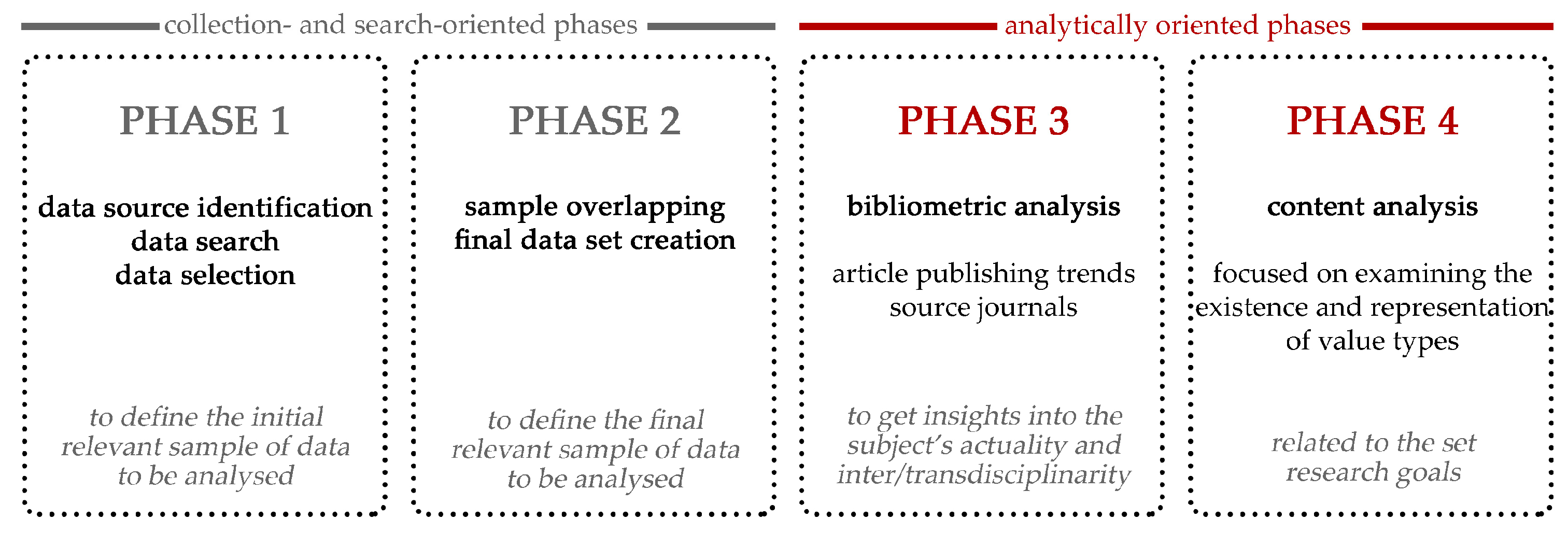
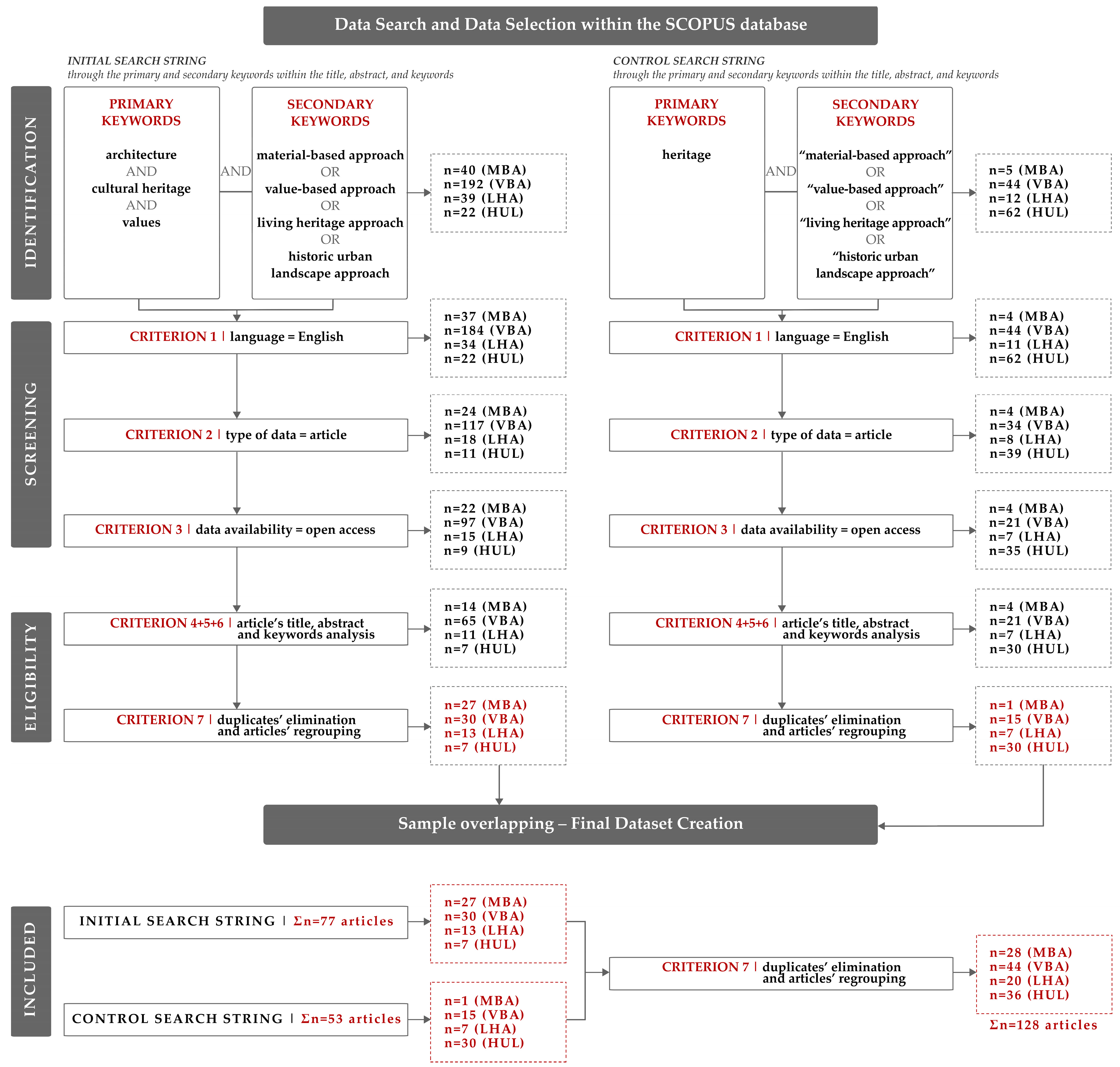
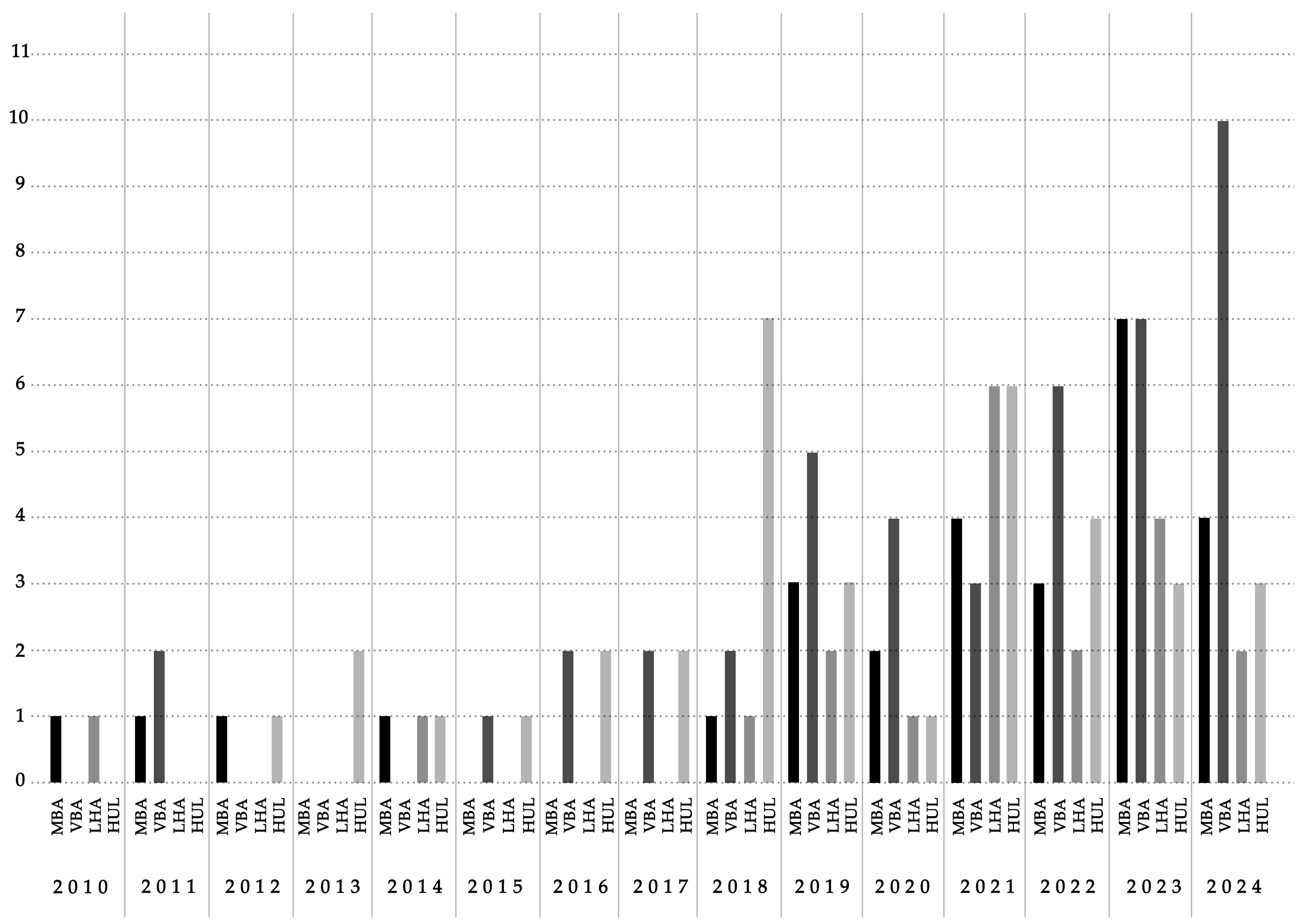
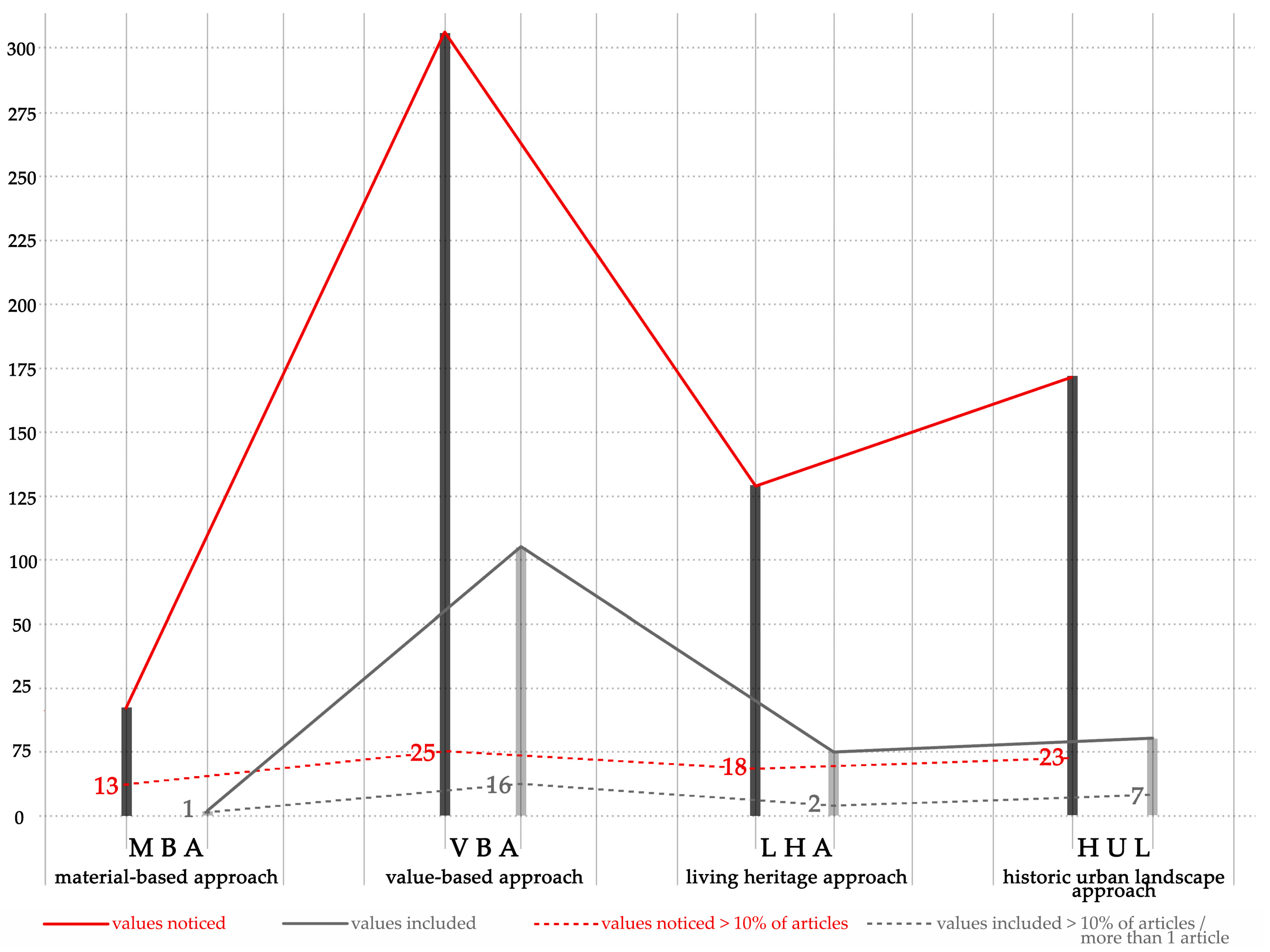
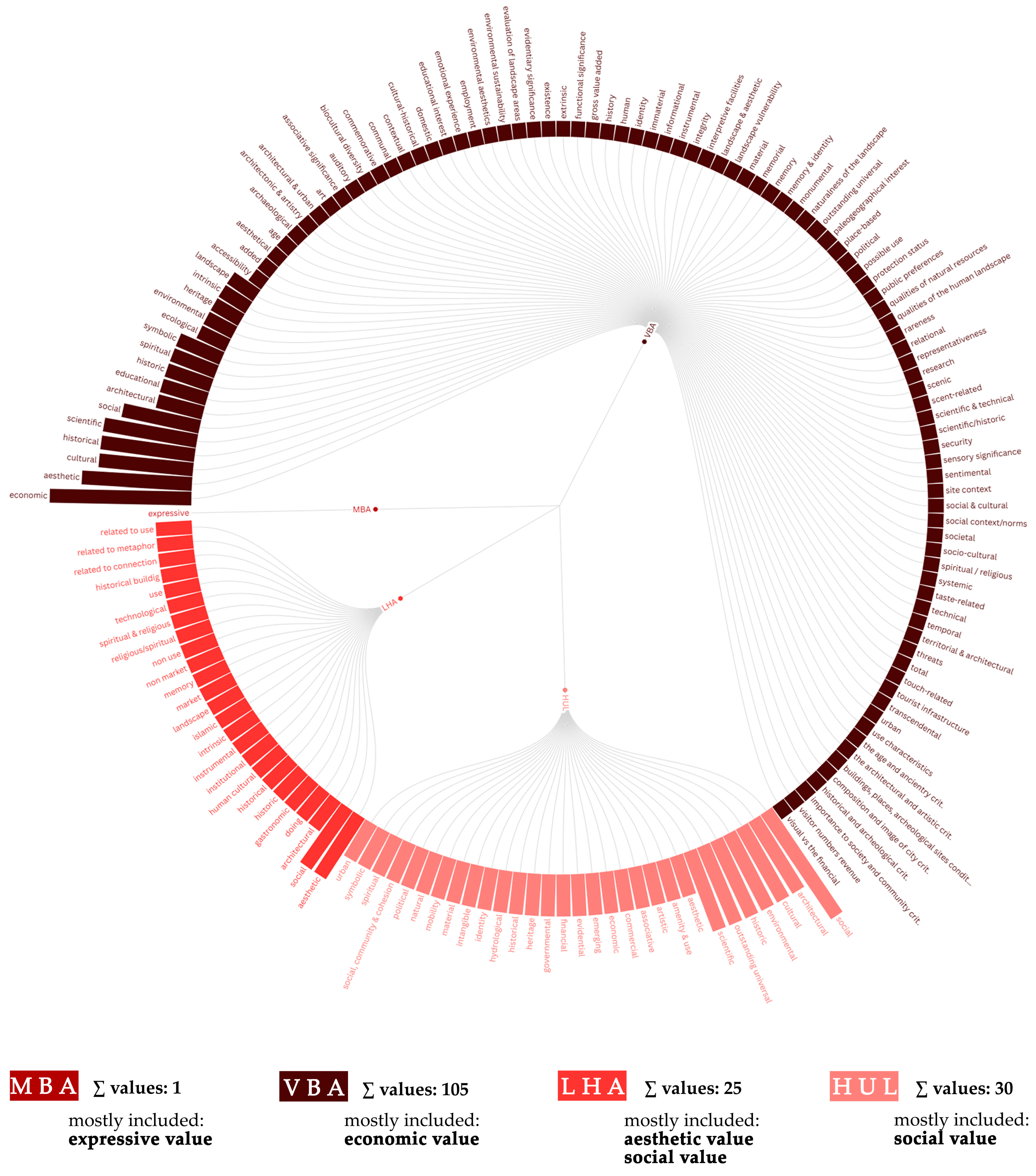
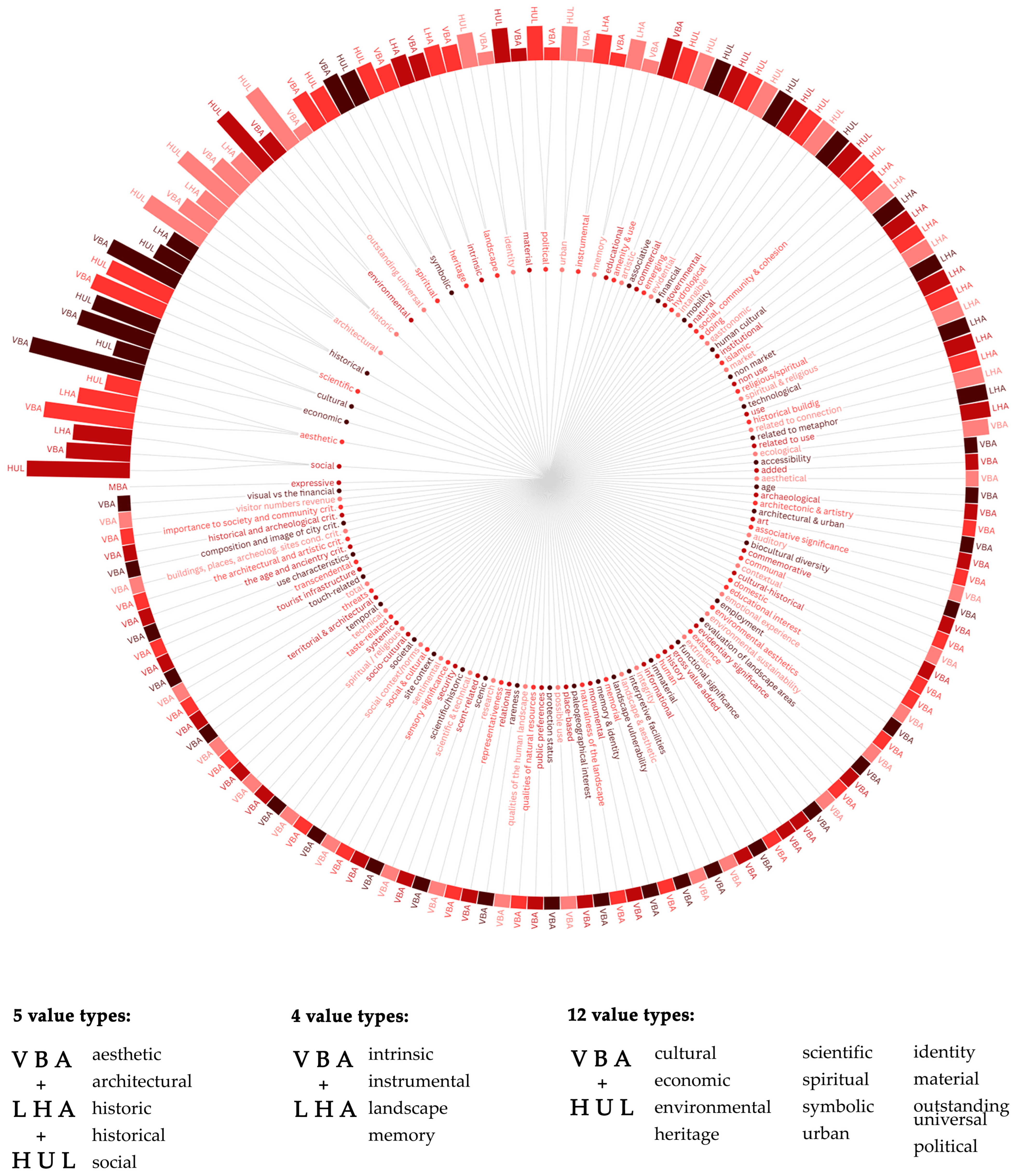
Disclaimer/Publisher’s Note: The statements, opinions and data contained in all publications are solely those of the individual author(s) and contributor(s) and not of MDPI and/or the editor(s). MDPI and/or the editor(s) disclaim responsibility for any injury to people or property resulting from any ideas, methods, instructions or products referred to in the content. |
© 2026 by the authors. Licensee MDPI, Basel, Switzerland. This article is an open access article distributed under the terms and conditions of the Creative Commons Attribution (CC BY) license.