


Microplastics, Volume 5, Issue 2 (June 2026) – 71 articles
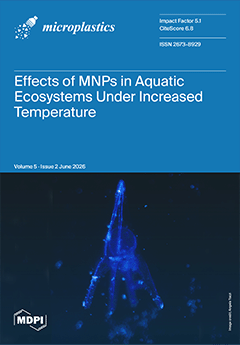
Cover Story (view full-size image):
In our study, we analyzed the effects of polystyrene micro- and nanoplastics (MNPs), both individually and combined with a global warming scenario (+2 °C), on aquatic model organisms, including marine and freshwater species at different trophic levels. In the marine system, P. lividus larvae were the most sensitive, with warming enhancing developmental impairment under MNP exposure, whereas in freshwater, D. magna appeared to be more affected by exposure to MNPs. Microalgae generally exhibited low sensitivity, while A. fischeri was inhibited in freshwater, likely due to lower MNP aggregation and higher bioavailability. Ecological hazard increased with temperature in the marine system but remained high and independent of heat in freshwater. Overall, toxicity may be modulated by species-specific responses, MNP size, and climatic variables. View this paper
- Issues are regarded as officially published after their release is announced to the table of contents alert mailing list.
- You may sign up for e-mail alerts to receive table of contents of newly released issues.
- PDF is the official format for papers published in both, html and pdf forms. To view the papers in pdf format, click on the "PDF Full-text" link, and use the free Adobe Reader to open them.
Previous Issue
Next Issue
