Article

Microplastics in Sewage Sludge: Changes in Abundance, Size Distribution and Composition During Short and Long-Term Vermicomposting


1
i-Grape Laboratory, Rúa de Murcia 3, A Sionlla, E-15707 Santiago de Compostela, Spain
2
Laboratory of Research and Development of Analytical Solutions (LIDSA), Department of Analytical Chemistry, Nutrition and Food Science, University of Santiago de Compostela, E-15782 Santiago de Compostela, Spain
3
Grupo de Ecoloxía Animal (GEA), Universidade de Vigo, E-36310 Vigo, Spain
*
Author to whom correspondence should be addressed.
Microplastics 2026, 5(2), 118; https://doi.org/10.3390/microplastics5020118 (registering DOI)
Submission received: 11 April 2026 / Revised: 18 May 2026 / Accepted: 5 June 2026 / Published: 10 June 2026

Abstract

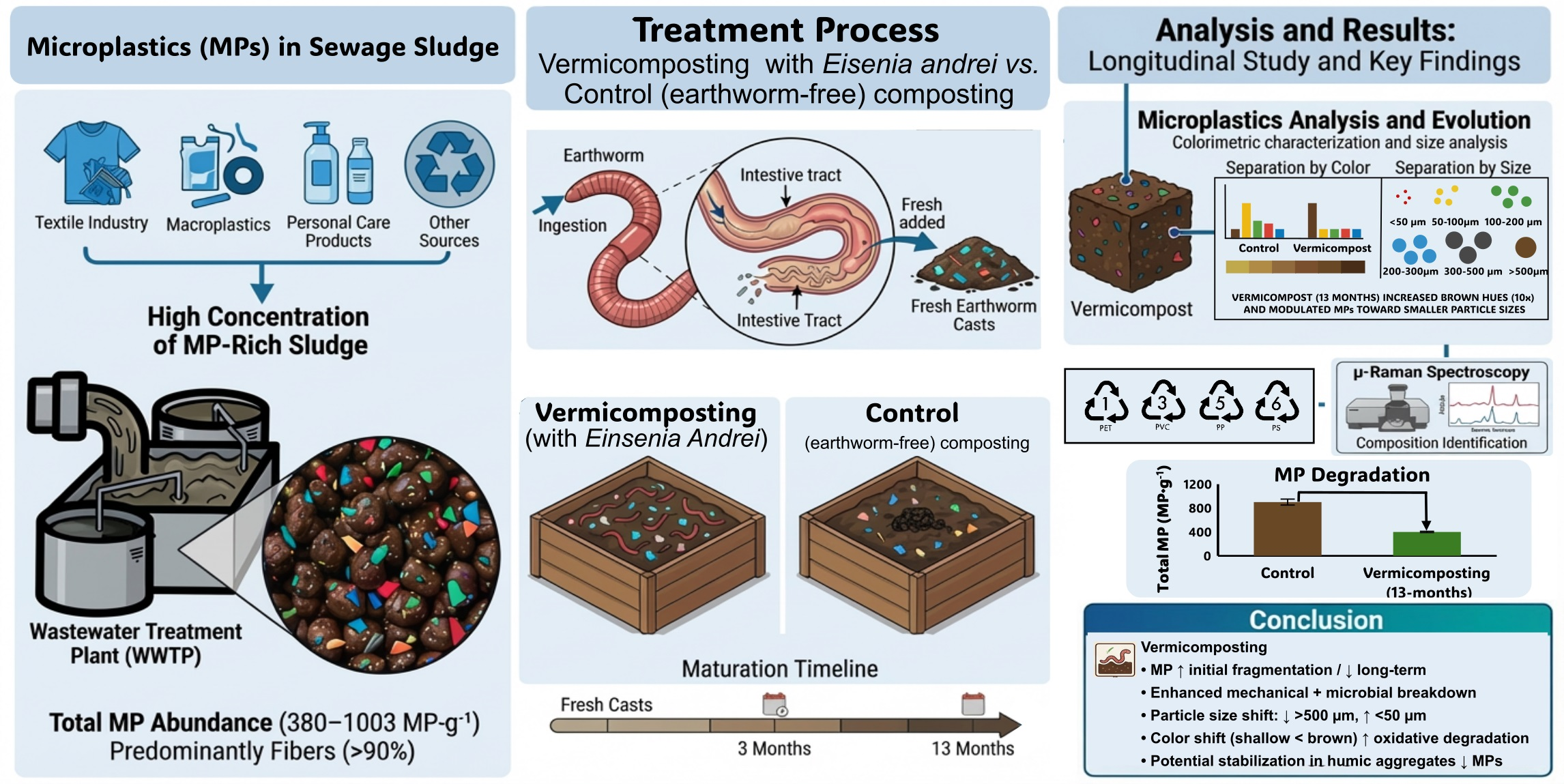
Applying sludge from wastewater treatment plants to agricultural soils is a major pathway for microplastics (MPs) to reach terrestrial ecosystems, with critical implications for food and environmental safety. A longitudinal analysis (13 months) was conducted to evaluate vermicomposting (with Eisenia andrei) as a remediation strategy, comparing fresh sludge, worm casts, mature vermicompost, and control (earthworm-free) compost. MPs were isolated by chemical digestion and density separation and characterized by optical microscopy and μ-Raman spectroscopy. The MP content of fresh casts (584 ± 45 MP·g−1; p = 0.036), driven by the mechanical and digestive activity of earthworms, showed a significant increase relative to sludge, in contrast to the invariant results observed in the control compost. The MP content of the vermicompost initially increased to 755 ± 88 MP·g−1 after 3 months of maturation due to gradual fragmentation by microbial degradation. However, after 13 months, the MP content in vermicompost, compared to the initial sludge, decreased by 62% (reduction of 625 ± 49 MP·g−1; p < 0.001), more than the 56% (reduction of 560 ± 83 MP·g−1; p = 0.001) observed in the control compost, suggesting a net long-term decrease. Morphological, colorimetric, and compositional changes, reflected by browning and reduced particle size and natural fiber content, revealed a temporal lag, with earlier transformation in vermicomposted samples. Overall, the findings show the potential of vermicomposting to reduce the MP content of sewage sludge used as a soil amendment.

1. Introduction

In the European Union, between 2 and 3 million tons of sewage sludge are generated annually, of which approximately 40% is directly applied to agricultural land, 10% is sent for composting and 11% goes to landfill; overall, more than half of this waste ends up being directly or indirectly incorporated into the soil [1]. Among the emerging pollutants associated with the sludge, microplastics (MPs), i.e., plastic particles smaller than 5 mm, are receiving increasing attention. MPs pose a widely documented threat to aquatic and terrestrial ecosystems on a global scale, as they are capable of adsorbing organic pollutants onto their surfaces, releasing toxic additives during their degradation and acting as attachment vectors for bacterial pathogens [2]. Although the concentration of MPs in sewage sludge varies considerably depending on the location and season, an average input of MPs of up to 200 kg·day−1 has been estimated for European wastewater treatment plants (WWTPs) [3].
In this context, WWTPs play a key role in the retention and redistribution of MPs. While these facilities are not specifically designed for the removal of MPs, conventional treatment processes can retain between 88% and 94% of the total MP content in the sewage sludge [4]. Despite this high removal efficiency, the residual fraction present in the treated effluent results in a significant release of MPs into the aquatic environment, given the enormous volume of water involved [5]. It has been estimated that between 125 and 850 tons of suspended solids per million inhabitants may reach agricultural soils each year through the application of sewage sludge [6]. High concentrations of MPs have a negative impact on soil microbial populations, such as bacteria and fungi, particularly due to their role in introducing toxic metals and contaminants into the soil [7]. Similarly, the presence of MPs in agricultural soils is linked to the accumulation of toxins (such as antibiotics, PAHs and pesticides) in edible plant tissues, posing a serious food safety risk [8].
Various methods are used to treat sludge prior to its final disposal, but very few of these methods are designed to remove MPs [9]. Conventional stabilization processes, such as lime-based treatments and anaerobic digestion, do not appear to significantly reduce the MP content, and agricultural application of the sludge returns almost all of these particles to the environment, even after composting [10]. In situ alternatives such as microorganism-mediated bioremediation show promise, but their effectiveness is limited by poor environmental adaptability and narrow substrate specificity [11]. Phytoremediation, on the other hand, which relies on the ability of plant roots to absorb or immobilize contaminants, may be limited by high MP concentrations, which can negatively affect plant growth [7]. Given these limitations, earthworm-mediated bioremediation through vermicomposting is emerging as an alternative treatment with greater potential [12].
Vermicomposting is a bio-oxidative process in which detritivorous earthworms (primarily Eisenia spp.) and microorganisms work together to accelerate decomposition and alter the physical, chemical, and biological properties of organic waste [13,14,15]. Earthworms ingest, fragment, and assimilate organic waste, producing casts, which become vermicompost after being released into the soil and acted upon by microbial action [16]. This material, rich in highly available essential nutrients (e.g., N, P and K), exhibits outstanding physical, chemical, and biological properties, including specific microbiomes, which provide multiple benefits to the soil–plant system [17,18]. During vermicomposting, the MPs present in sludge are subjected to mechanical grinding in the earthworm gizzard and to intestinal enzymatic processes, which fragment the particles [19], increase their specific surface area, and facilitate further degradation. However, these processes generate particles smaller than 1 µm, which are more easily absorbed by crop roots, and due to their high specific surface area, can function as vectors for coexisting contaminants, thereby amplifying the combined ecological risks [20]. It is therefore important to understand how earthworm activity modulates the integrity of MPs and how these transformations progress throughout the vermicomposting process. After being processed in earthworm intestines, the fragmented, enzymatically transformed MPs are incorporated into the soil via casts that harbor specific microbial communities and are rich in nutrients [21]. These characteristics may enhance the capacity for mineralization and accelerate the biodegradation of residual MPs [18].
In this context, the present study analyzed the nature, morphology, and colorimetry of MPs derived from sewage sludge processed by vermicomposting with Eisenia andrei. The changes in the microplastic load of the original sludge were evaluated by analysis of the fresh casts and of the vermicompost matured for 3 and 13 months. The study findings provide key insights into the role of vermicomposting as a bioremediation strategy for reducing MP loads in agricultural soils and provide a framework for understanding the risks and benefits associated with the use of treated sludge as a soil amendment.

2. Materials and Methods

2.1. Sewage Sludge, Fresh Earthworm Casts, and Vermicompost

Fresh sewage sludge was collected from the Moaña wastewater treatment plant (Pontevedra, Galicia, Spain), which serves a catchment population of 19,320. The samples were collected at two different times, forming two independent sampling batches, to assess the temporal variability in the content, composition, and characteristics of the MPs under the influence of earthworms. These samples will hereinafter be referred to as Batch 1 and Batch 2. The main physicochemical properties and microbiological parameters of the initial sludge samples for each batch are summarized in Table 1.
The sludge was processed in 1 m3 vermireactors (n = 3) located in the greenhouses of the Animal Ecology Group (GEA) at the University of Vigo (Spain), as previously described [18]. The earthworm density exceeded 15,000 individuals per m2. At the start of the experiment, a layer of fresh sludge (50 kg) was added to the surface of each vermireactor. After 72 h (sufficient time to allow earthworms to ingest the sludge), approximately 26,000 individuals of the earthworm species Eisenia andrei (average weight: 0.7 g) were collected. The earthworms were washed in a series of water baths to remove adhered particles. They were then placed in containers with moistened filter paper and held overnight at 20 °C to allow evacuation of their intestinal contents. The earthworms were then returned to the vermireactors, and the fresh casts were collected manually. No earthworm mortality was observed during cast sampling. For Batch 1, fresh sludge, fresh casts, and vermicompost derived from casts matured for 3 months under controlled conditions (20 °C and 80% humidity) were evaluated, along with a control sample consisting of composted sewage sludge maintained under the same conditions without earthworms. For Batch 2, the analysis compared fresh sludge with vermicompost and control composted sludge (earthworm-free) matured for 13 months to evaluate potential transformations of MPs during long-term vermicomposting.

2.2. Extraction of Microplastics

The samples initially underwent chemical digestion to remove organic matter. For this purpose, a mixture of hydrogen peroxide (H2O2) and Fenton’s reagent, prepared from a solution of ferrous sulfate heptahydrate (FeSO4·7H2O), as described by [22], was used. The reaction mixture was left to stand at room temperature for 60 min, ensuring that the reaction temperature did not exceed 50 °C. The samples were then incubated for 48 h in an oven at 40 °C. Fresh H2O2 and Fenton’s reagent were added after 24 h to ensure complete digestion of the residual organic matter.
Once digestion was completed, the supernatant was filtered through fiberglass filters, which were then placed in Petri dishes for analysis. The remaining solid residue was subjected to density separation using a ZnCl2 solution (density, 1.35 g cm−3). This allows the polymers to be recovered from the mineral and inorganic fractions that remain undigested after pre-treatment.

2.3. Identification and Characterization of Microplastics

After the extraction process, the filters were examined under a stereoscopic microscope (Olympus) with a magnification of up to 5.6×. The particles identified as MPs were classified according to their color, shape, and size. The size of the particles was determined by digital image analysis using ImageJ software 1.54k [23]. The composition of the MPs was determined using an NRS-4500 Raman Spectrometer (JASCO Corporation, Tokyo, Japan). The spectra were acquired in a spectral range between 3000 and 300 cm−1, enabling identification of the main types of synthetic polymers and natural materials present in the particles analyzed. The Raman spectra were interpreted using Spectra Manager™ Suite (JASCO Corporation, Tokyo, Japan) and OpenSpecy v1.5.3. The MP concentration was expressed as the number of particles per gram of dry sludge (MP·g−1). The final concentrations were corrected by considering the process blanks obtained using filters without samples exposed during the analysis and following previously described protocols [24].

2.4. Statistics

Changes in the abundance, size distribution, and composition of microplastic particles were analyzed by repeated measures ANOVA (RM-ANOVA), in which time (i.e., from sewage sludge to production of earthworm casts, and from earthworm casts to production of vermicompost) was included as a within-subject factor. All variables analyzed met the assumptions of sphericity (Mauchly test), homoscedasticity, and normality. Post hoc tests (Tukey HSD, with p-values corrected for multiple comparisons using the Holm method) were conducted following significant repeated measures ANOVA. For the comparison plots between batches (Batch 1 and 2), the responses (size and color) were normalized using linear rescaling (min–max scaling), transforming them to a bounded common scale. All statistical analyses and figures were generated using OriginLab Pro 2026 (OriginLab Corporation, Northampton, MA, USA).

3. Results and Discussion

3.1. Morphological Distribution of Microplastics in WWTP Sludge and Changes During Composting, Earthworm Cast Production and Vermicomposting

Although treatment processes in WWTPs can remove more than 90% of MPs from wastewater, a substantial portion of the load is transferred to the sludge generated in the treatment plants. This accumulation (potentially > 65% of the incoming MPs) poses a significant environmental problem due to limitations in its processing and management [25]. This study evaluated the distribution of fibers, fragments, and spheres in sewage sludge, as well as how these changed during short- and long-term vermicomposting, from fresh sludge to earthworm casts and vermicompost matured for 3 and 13 months. To this end, samples collected at two different times (Batch 1 and Batch 2) were analyzed to evaluate the temporal variability in the content, composition, and characteristics of the MPs present in the sludge.
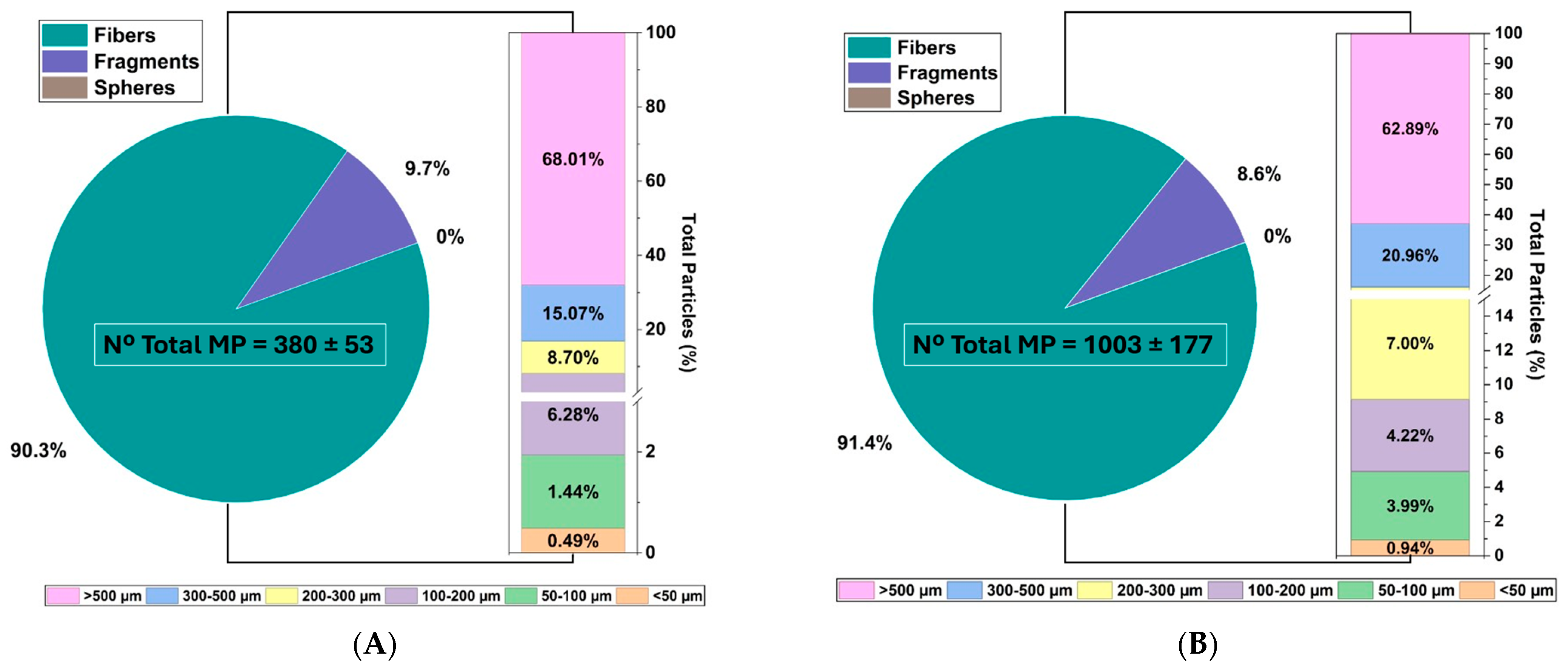
Microscopic analysis of the sludge revealed that the distribution of MPs in both batches of samples was dominated by fibers (Figure 1), which accounted for more than 90% of the total, while fragments constituted about 9%; spheres were not detected. This pattern is consistent with previous findings, in which fibers constituted the predominant type of MPs in WWTP sludge, with proportions close to 93%, relative to 5% for fragments [26].
Significant variability (p < 0.001) between sampling surveys was observed, with concentrations of 380 MP·g−1 in Batch 1 (Figure 1A) and 1003 MP·g−1 in Batch 2 (Figure 1B). This dispersion is consistent with the temporal variability reported in a recent study, in which MP concentrations in sludge were found to fluctuate by up to one order of magnitude at a single WWTP [27].
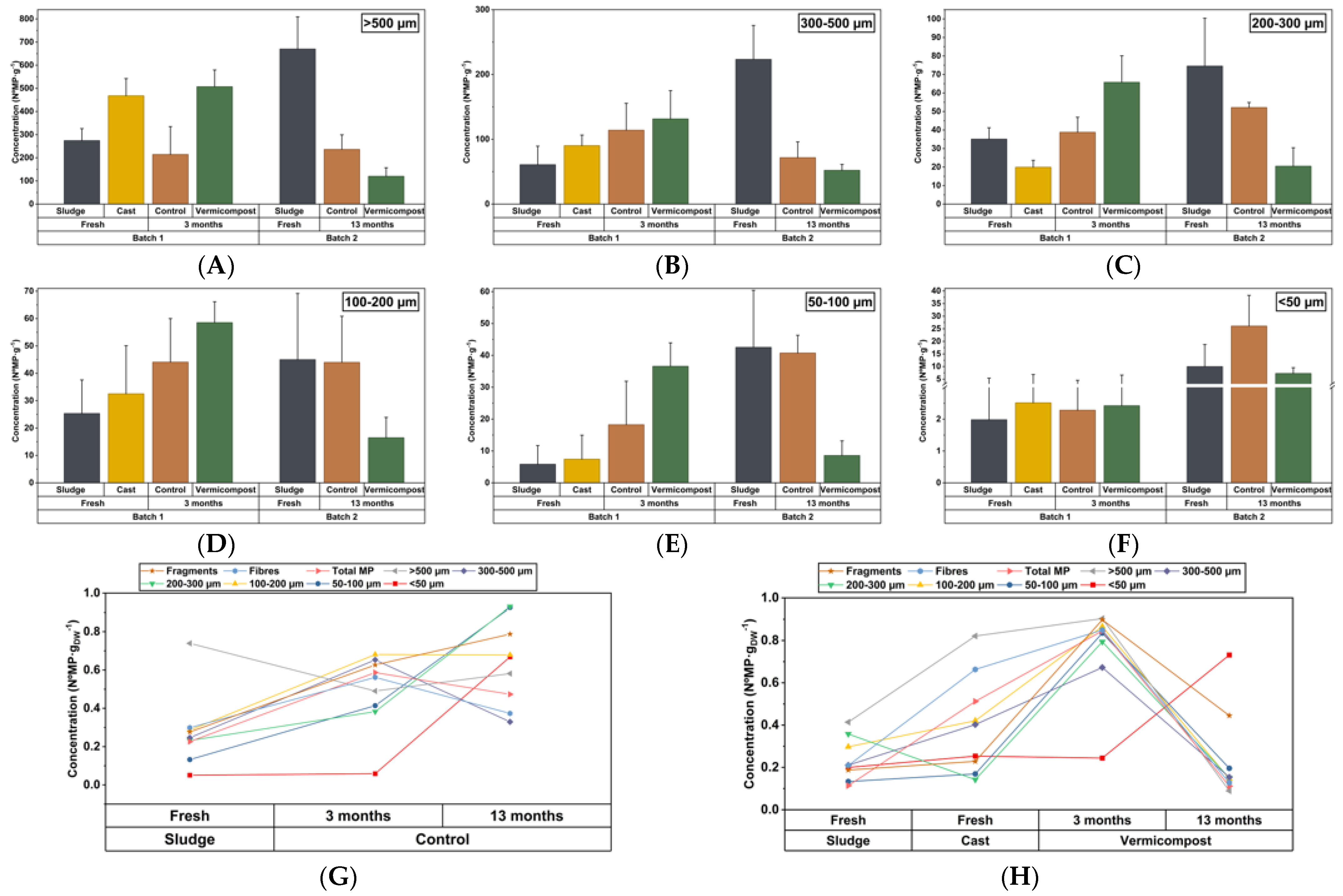
For both sewage sludge batches, the particle size distribution of the microparticles was evaluated across six size ranges: >500 µm, 300–500 µm, 200–300 µm, 100–200 µm, 50–100 µm, and <50 µm. Fresh sewage sludge samples (Batch 1 and Batch 2) exhibited a homogeneous particle size distribution, with the >500 µm fraction clearly predominant, accounting for more than 62% of the total detected particles. The abundance of smaller size fractions decreased progressively, reaching 15–20% for 300–500 µm, 7–8% for 200–300 µm, 4–6% for 100–200 µm, and 1–4% for 50–100 µm, whereas particles < 50 µm represented less than 1% of the total. Overall, this distribution followed an exponential decline, with larger particles constituting the predominant fraction of the detected MPs. This pattern has been reported in diverse sewage sludges, with the larger fractions accounting for more than 68% of the total content [28,29].
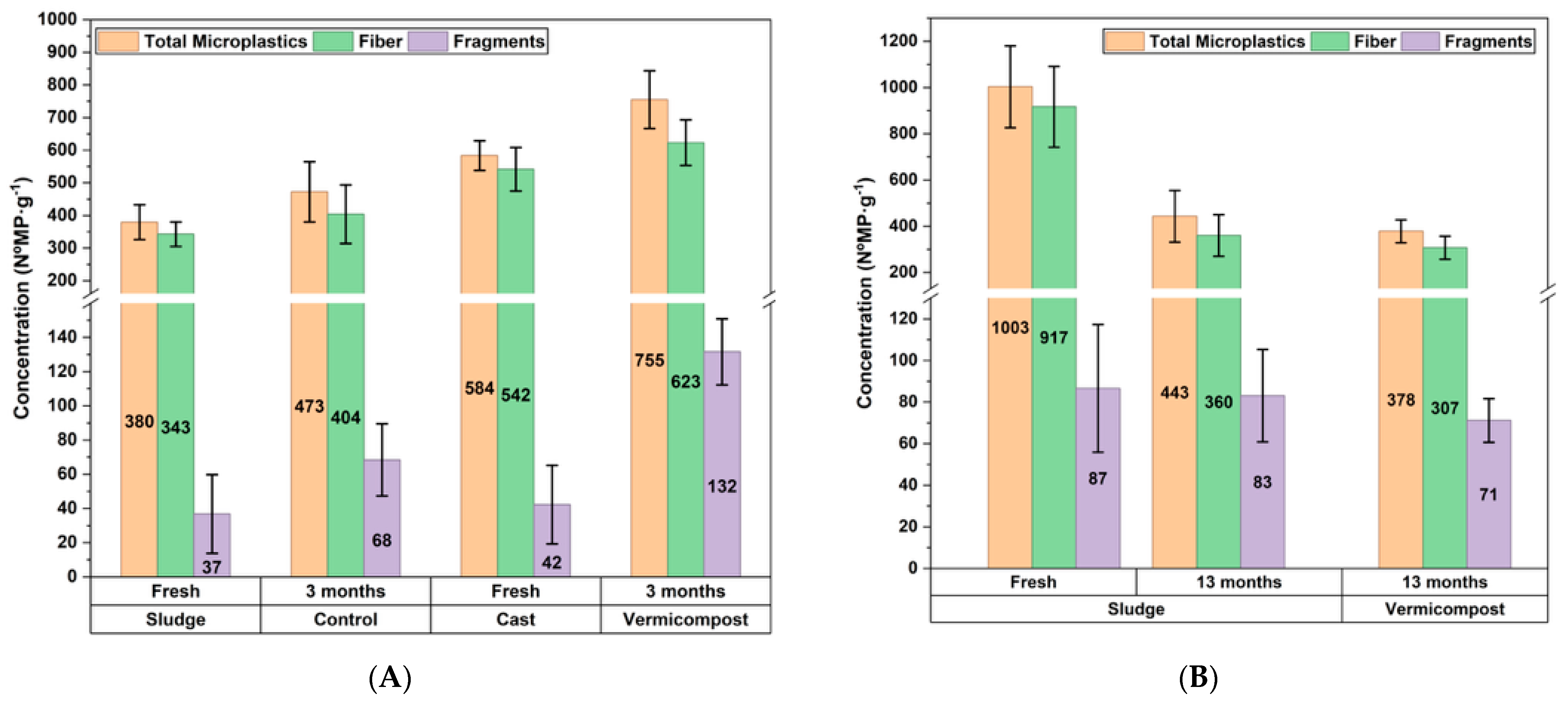
Following this approach, the change in MP distribution from sludge to vermicompost was evaluated. After 3 months, the total MP content of the control compost (produced without worms) was 473 ± 92 MP·g−1 (Figure 2), showing no significant difference from the total MP content in the sludge.
A significantly different pattern was observed in the earthworm casts. From the earliest stages of the vermicomposting process, the total abundance of MPs was significantly higher in the casts (584 ± 45 MP·g−1; p = 0.036), suggesting that the initial fragmentation of polymeric structures during ingestion was potentially more efficient. This interpretation is consistent with previous findings indicating that the ingestion of MPs by earthworms promotes greater fragmentation than that observed during composting without earthworms [30]. Earthworms can ingest relatively large particles (~3 mm), which are subsequently subjected to mechanical and biochemical degradation in the digestive tract [31]. In particular, the grinding action in the gizzard, together with intestinal microbial activity, can promote the fragmentation of polymeric particles, thereby generating more MPs. This process results in a significant increase in the abundance of fragments, exceeding that generated during natural maturation of the sludge without any additional treatment. Accordingly, earthworm casts contained a greater number of particles > 500 µm (467 ± 75 MP·g−1; p = 0.025) (Figure 3A), representing approximately a twofold increase compared with the control compost.
The total MP content of the 3-month-old vermicompost showed no significant changes compared with the fresh casts, although a greater proportion of intermediate particle sizes was observed, particularly in the 50–100 µm (36 ± 7.4 MP·g−1; p < 0.019) and 200–300 µm fractions (65 ± 14 MP·g−1; p < 0.001). This pattern suggests that the combined action of microbial activity in the casts and the physicochemical processes involved in the maturation phase of the vermicomposting process promote the initial fragmentation of the MPs, as well as a subsequent redistribution of the morphological profile, even after their initial ingestion by the worms.
The results of the second experiment, designed to evaluate prolonged maturation, revealed a significant shift in the observed trends. Although the fresh sludge from the second batch initially showed a higher MP concentration (1003 ± 177 MP·g−1), the 13-month-old control compost exhibited a significant reduction in total MP content (444 ± 91 MP·g−1; p = 0.001). In particular, the abundance of particles within the 500–300 µm size fraction decreased significantly (71 ± 24 MP·g−1; p = 0.002), with up to 65% fewer particles > 500 µm (236 ± 63 MP·g−1; p = 0.001) compared with the initial sludge.
Interpretation of these results in the context of the relevant literature is limited due to the scarcity of studies evaluating MP composting periods longer than 90–120 days [32,33,34]. Although no direct comparisons can be made, the observed pattern suggests that prolonged maturation promotes greater fragmentation of polymeric structures and the accumulation of smaller MP particles than observed in the shorter maturation period (3 months).
On the other hand, the long-term vermicompost (13 months) showed a significant 62% reduction in total MP content (378 ± 49 MP·g−1; p = 0.001) compared with fresh sludge. An even greater net effect was observed when considering the initial fragmentation occurring in fresh casts, which temporarily increased the number of MPs. These results suggest that although short-term vermicomposting (3 months) promoted the fragmentation and release of MPs, prolonged maturation processes may further transform them into smaller particles. Importantly, the formation of nanoplastics below the detection limit of the employed techniques cannot be completely ruled out, and this aspect should be addressed in future studies, since these particles could pose an additional environmental risk due to their higher mobility and potential bioavailability. However, this reduction may also facilitate microbial degradation and/or promote their incorporation into humic aggregates, thereby reducing the fraction of detectable MPs. In this sense, the results indicate an overall reduction in detectable MPs, supported by the significant decrease in particles > 500 µm (119 ± 37 MP·g−1; p < 0.001), 300–500 µm (52 ± 9.2 MP·g−1; p = 0.001), 200–300 µm (20 ± 10 MP·g−1; p = 0.010), and 50–100 µm (8.6 ± 4.6 MP·g−1; p = 0.017), together with the unchanged concentration of the <50 µm fraction (Figure 3F) in the 13-month-old vermicompost compared with the fresh sludge.
For overall analysis of the two batches, the normalized response (Figure 3G,H) of the different particle size ranges was evaluated for both the control sludge and the sludge subjected to vermicomposting over the 13-month study period. Vermicomposting resulted in a higher heterogeneity in particle size distribution compared with the control composting process. The >50 µm fraction increased significantly during the first three months of treatment and subsequently decreased during the maturation phase, stabilizing at around 82% of the total MP content. Meanwhile, the abundance of particles < 50 µm remained constant in the sludge and earthworm casts during the first three months of maturation, before increasing significantly at the end of the 13-month maturation period. These results are consistent with the previously observed fragmentation in earthworm casts, which led to a redistribution of larger MPs accompanied by a concomitant increase in smaller particles.

3.2. Colorimetric Distribution of Microplastics in WWTP Sludge and Their Evolution During Composting, Earthworm Cast Production and Vermicomposting

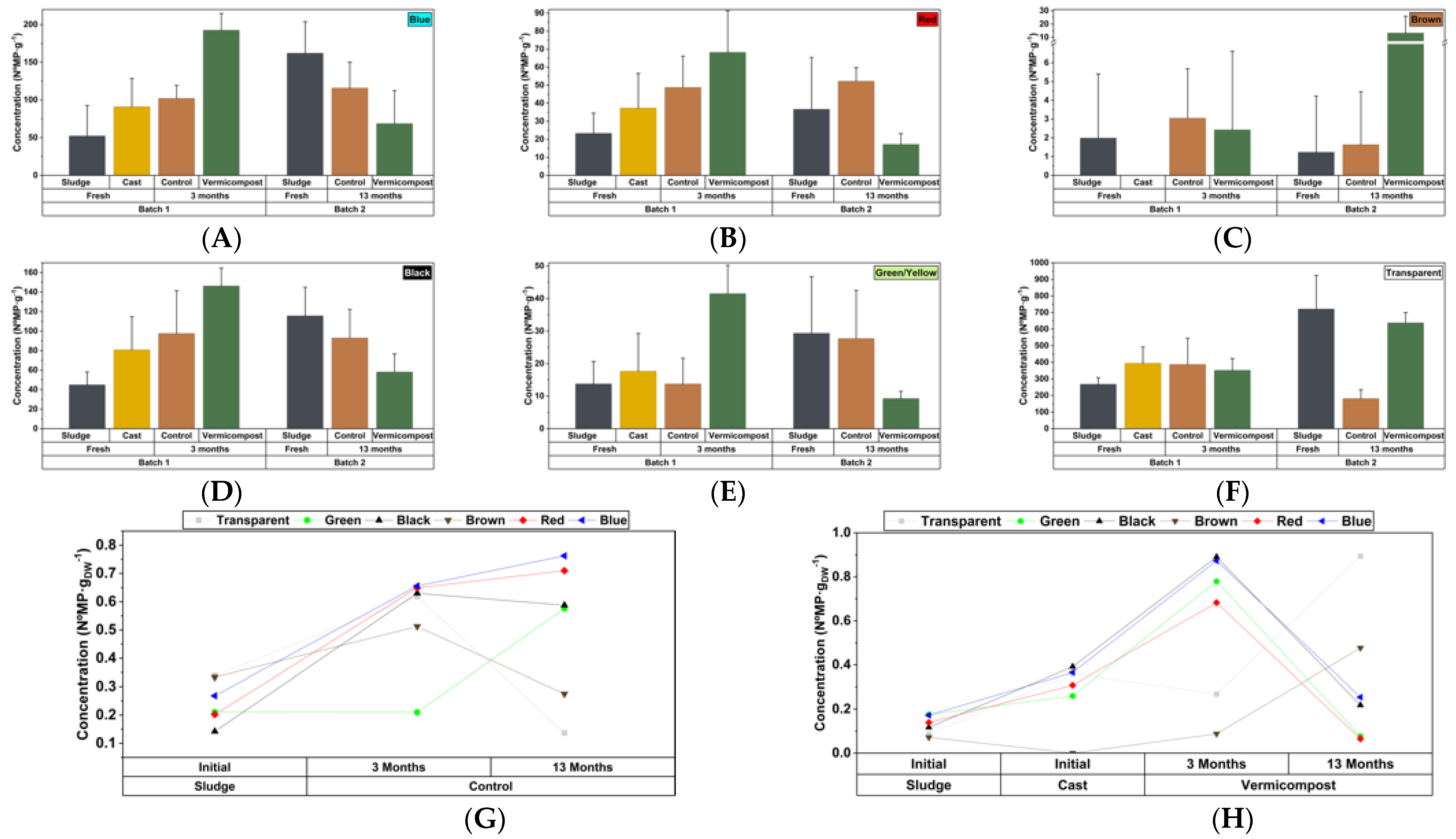
Significant changes occurred in the chromatic distribution of the MPs, in both the control sludge and the fresh and mature vermicompost (Figure 4). In the control sludge, a similar profile was observed across all hues considered (blue, red, brown, black, green, yellow and transparent), with a gradual increase during the first three months of vermicomposting. A similar pattern was observed for fresh casts, except for brown fragments (Figure 4F), the absence of which reflected the high variability associated with their low initial density (<2 MP·g−1).
The overall increase in the diversity of the color of the polymers is consistent with the results of the dimensional analysis, in which the fragmentation of larger polymers increases the number of particles that can be detected in the compost. This process was compounded by degradation dependent on the intrinsic color of the polymers. It has been suggested that degradation of red and blue MPs may be accelerated due to the absorption range of these colors within the visible spectrum (400–700 nm), which offers limited protection against UV radiation [35]. Increased exposure to UV radiation can cause material heating and promote fragmentation. In this context, prior solar exposure before incorporation into composting systems may initiate photo-oxidative degradation. Once initiated, the process may continue via thermo-oxidative mechanisms over time, even under low or absent additional UV exposure [36]. This behavior could help explain the observed increase in the abundance of MPs of these colors.
However, despite their potential susceptibility to photodegradation, no significant changes were observed in the yellow and green MPs in the control compost and cast (Figure 4E). This finding could be attributed, on the one hand, to the discoloration of fine particles that occur concomitantly with the fragmentation of larger particles, with their overall balance maintained. On the other hand, the color of the particles modulates photothermal processes and microbial colonization. It has been demonstrated that biofilms colonizing blue MPs may exhibit greater functional diversity than those formed on transparent or yellow MPs, due to differences in light availability and the type of dyes involved [37]. In contrast, the concentrations of these yellow and green MP fractions changed significantly in the 3-month-old vermicompost compared to sludge, increasing to 41 ± 5.1 MP·g−1 (p = 0.023).
Transparent and black polymers typically exhibit high apparent resistance, either by allowing light to pass through or due to their high absorption capacity [35]. In this study, no significance change in transparent MPs (Figure 4F) was detected in the compost, cast and vermicompost. In contrast, black MPs (Figure 4D) showed a marked increase in the 3-month-old vermicompost compared to the control sludge, reaching 146 ± 11 MP·g−1 (p = 0.014).
The dominant pigment in polymers of these dark shades is carbon black, which has been linked to adverse effects on the integrity of polymer matrices, promoting the formation and propagation of cracks [38]. At advanced stages of aging, carbon black is associated with fewer fibrillar fracture paths. As fibrils help to prevent cracks developing, their loss promotes fragmentation, consistent with the marked increase in black MPs recorded in the vermicompost.
Analysis of the Batch 2 (long-term vermicomposting) samples revealed a gradual reduction in the abundance of black, blue, yellow and green MPs in the following order: fresh sludge > compost (13 months) > vermicompost (13 months).
The brown and transparent fractions revealed the most distinctive degradation profiles. In MPs, degradation pathways commonly begin with yellowing, followed by “browning” (brown hue) [39]. Coloration dynamics can be modulated by multiple factors. In this context, the presence of humic aggregates can alter the visual appearance of particles through surface adsorption, leading to noticeable changes in their coloration [40]. Furthermore, as previously discussed, microbial communities associated with microplastics may be influenced by the initial pigmentation present in these materials and may promote transformations in their surface structure, which in turn results in additional colorimetric changes [41]. Among the most widely studied factors is the alteration of microplastic color under exposure to UV radiation, which drives photo-oxidative processes responsible for their aging.
Analyses conducted on MPs exposed to sunlight in coastal areas indicate that yellowing first occurs in 1-cm-long polymers, followed by browning in already fragmented MPs smaller than 1 mm [42]. This could explain why the mature vermicompost (13 months) showed a significant decrease (p = 0.044) in yellowish tones, accompanied by a 10-fold increase (13 MP·g−1, p = 0.029) in brown-colored MPs compared to the control compost. This finding suggests a temporal acceleration of MP degradation during vermicomposting, where the early stages of chromatic decomposition would lead to a reduction in yellowish hues and the consequent increase in smaller brown MPs. This observation is consistent with the results of the structural analysis, which confirmed a higher prevalence of MPs < 50 μm at the end of vermicompost maturation.

3.3. Origin-Based Distribution of Microplastics in WWTP Sludge and Their Changes During Composting, Earthworm Cast Production and Vermicomposting

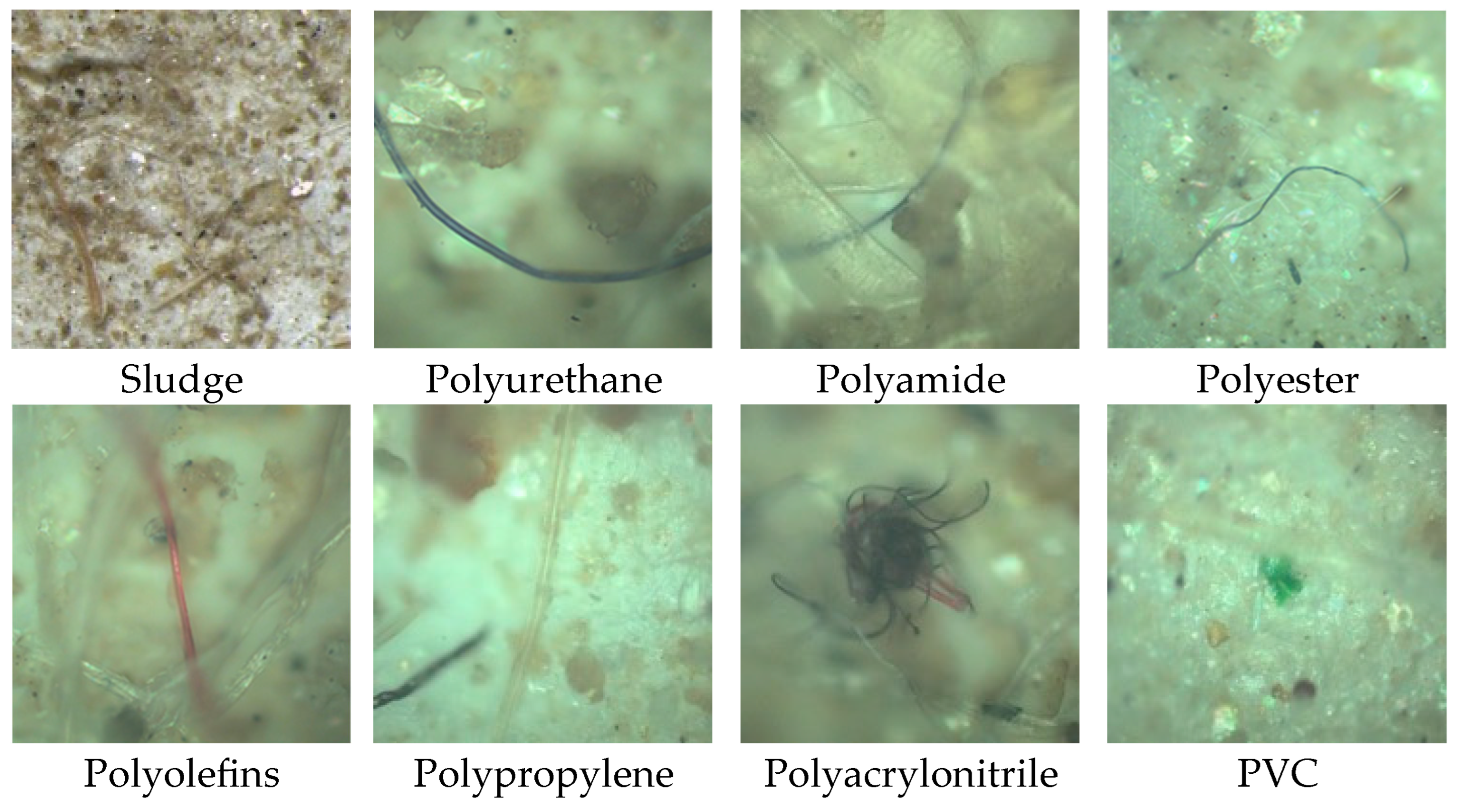
The nature and origin of the MPs are key to understanding how they degrade. Microscopic analysis detected traces of synthetic polymers in the sludge, including polyurethane, polyamide, nylon, polypropylene, polyacrylonitrile, polyolefins, PVC, and PET polyester (Figure 5). Characterization of the MPs by Raman spectroscopy enabled identification of their composition, revealing significant differences after the 13-month maturation period in both vermicomposted and composted sludge (Figure 6).
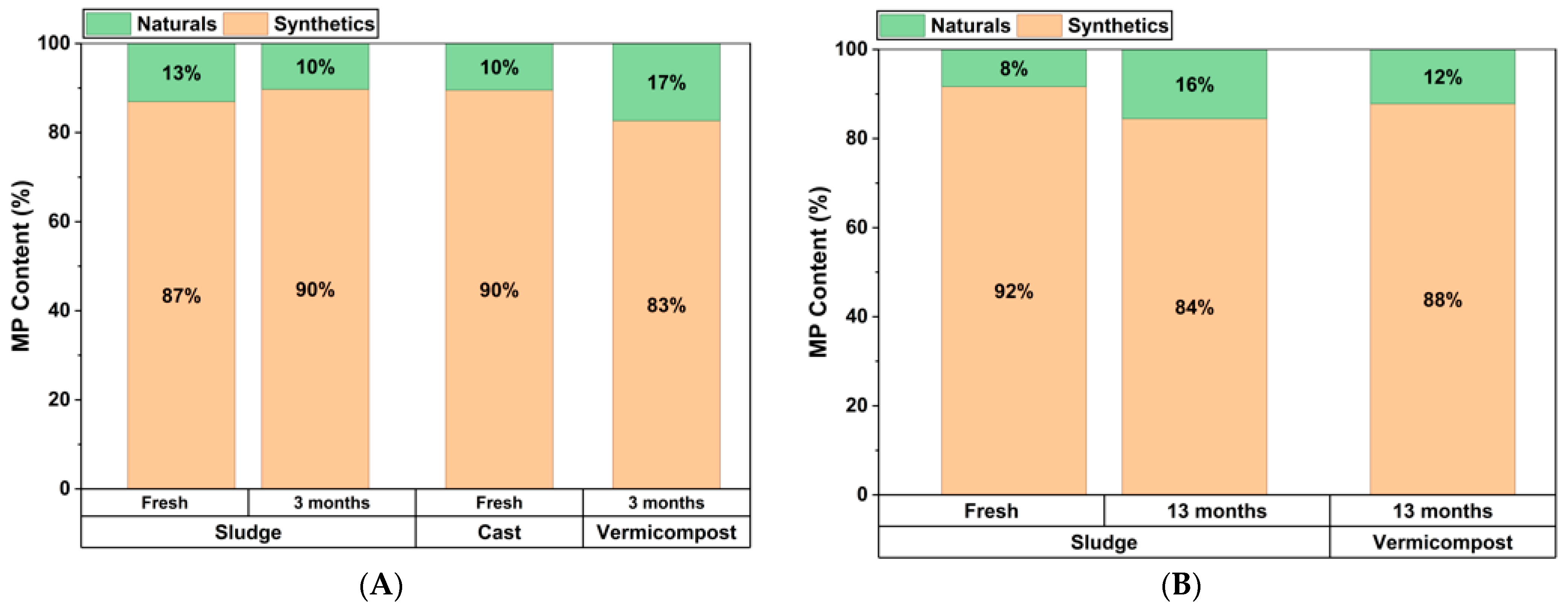
Initially, the fresh sludge contained a higher proportion of synthetic fibers (>85%), consistent with previous findings of approximately 90% synthetic fibers in sludge [43]. This predominance is related to the high global fiber production, 73% of which are synthetic, with polyester being the most abundant [44]. Furthermore, because synthetic fibers degrade more slowly than natural ones, they are commonly considered indicators of pollution.
In contrast, natural fibers are produced in smaller quantities, and their complete biodegradation in textile waste has been reported after approximately two months of vermicomposting [45]. Despite the subtle differences in the content of synthetic fibers between the initial sludge and the worm casts, the 3% decrease observed in the worm casts could be attributed to the greater degradation of natural fibers mediated by the action of earthworms than in the control composting process. On the other hand, after the 3-month maturation period, the profile of the control compost was similar to that of the casts. This similarity could indicate equivalent action by the casts in a shorter time, suggesting a chronological lag, with degradation being evident first in the casts and vermicompost, and manifesting at later stages in the untreated sludge.
After the 13-month maturation period, both the Batch 2 compost and vermicompost contained a higher proportion of natural fibers (16% and 12%, respectively) than the fresh sludge (8%), suggesting relative enrichment of this fraction. This finding could be associated with the gradual fragmentation of synthetic polymers to sizes below the detection limit, as well as their possible incorporation into humic aggregates during the process. However, the synthetic fraction remained dominant (>80%), demonstrating its strong persistence even under prolonged treatment conditions. The vermicompost contained a higher relative proportion of synthetic fibers, 4% more than the compost, along with a greater reduction in total microplastic content. This pattern could be explained by the time lag in degradation dynamics between the two systems, as previously mentioned. Thus, the activity of the vermicompost would accelerate the degradation of the more labile fractions, especially the natural ones [46], which would favor an earlier reduction in the total microplastic load and a relative enrichment of the more resistant fractions.

4. Conclusions

Vermicomposting by Eisenia andrei is an effective bioremediation strategy that is superior to conventional composting for reducing microplastics (MPs) in wastewater treatment plant (WWTP) sludge. The use of two independent experimental batches of sewage sludge allowed for the natural variability of MPs to be considered, while the short-term effects of earthworm digestion and the long-term effects of vermicomposting on MP transformation were assessed separately. The results indicate that the effect of E. andrei on MP dynamics is independent of the initial MP content in the sewage sludge. A dynamic two-stage process was observed throughout the 13-month longitudinal study, with the earthworms initially accelerating the mechanical and microbial fragmentation of MPs, increasing the concentrations in fresh casts and immature vermicompost. However, the transformation facilitated further degradation in the long-term, with a 62% reduction in the total MP content in mature vermicompost, significantly higher than the 56% observed in the control compost (produced without earthworms). The morphological and colorimetric changes, characterized by the fragmentation of particles larger than 500 µm and marked browning of the fragments, suggest active degradation and a time lag in which the activity of E. andrei precedes and enhances natural stabilization processes. Future research should delve deeper into the specific enzymatic mechanisms and the potential formation of MPs smaller than those examined in this study, thereby ensuring comprehensive environmental safety.

Author Contributions

Conceptualization, J.D.; methodology, J.D., M.A. and M.L.; software, A.C. and M.A.; validation, A.C. and M.A.; formal analysis, A.C. and M.A.; investigation, A.C., J.D. and M.A.; resources, J.D. and M.A.; data curation, A.C. and M.A.; writing—original draft preparation, A.C., J.D., M.A. and M.L.; writing—review and editing, A.C., J.D., M.A. and M.L.; visualization, J.D. and M.A.; supervision, J.D., M.A. and M.L.; project administration, J.D.; funding acquisition, J.D. All authors have read and agreed to the published version of the manuscript.

Funding

This study was supported by the Spanish Ministerio de Ciencia e Innovación (PID2021-124265OB-100), the Xunta de Galicia (Grant number ED431C 2022/07), and the MCIN/AEI and European Union Next Generation_EU (project TED2021-129437B-100). A. Castillo acknowledges support from the Program and the Ministry of Science, Innovation and Universities, Spain (MCIN) for a contract within the grant DIN2021-011976 funded by MCIN/AEI/10.13039/501100011033.

Institutional Review Board Statement

The ASAB/ABS Guidelines for the Use of Animals in Research were followed and the research complied with current Spanish regulation for the maintenance and use of animals in scientific research (RD53/2013). As an earthworm species was used as the experimental model, ethical committee approval was not required. Throughout the experiment, earthworms did not exhibit any adverse signs as a result of the experimental manipulations.

Informed Consent Statement

Not applicable.

Data Availability Statement

The original contributions presented in this study are included in the article. Further inquiries can be directed to the corresponding author.

Acknowledgments

The authors thank Hugo Martínez and Alberto Da Silva for their help with the vermicomposting process and sample collection.

Conflicts of Interest

Authors Aly Castillo and Marta Lores were employed by i-Grape Laboratory, S.L. The remaining authors declare that the research was conducted in the absence of any commercial or financial relationships that could be construed as potential conflicts of interest.

Abbreviations

The following abbreviations are used in this manuscript:
MPsMicroplastics
WWTPWastewater treatment plant
μ-RamanMicro-Raman spectroscopy
HDPEHigh-density polyethylene
PVCPolyvinyl chloride
PETPolyethylene terephthalate

References

  1. EUR-Lex. 52023SC0158–ES. EUR-Lex. Available online: https://eur-lex.europa.eu (accessed on 5 April 2026).
  2. Lofty, J.; Muhawenimana, V.; Wilson, C.A.M.E.; Ouro, P. Microplastics Removal from a Primary Settler Tank in a Wastewater Treatment Plant and Estimations of Contamination onto European Agricultural Land via Sewage Sludge Recycling. Environ. Pollut. 2022, 304, 119198. [Google Scholar] [CrossRef] [PubMed]
  3. Rasmussen, L.A.; Iordachescu, L.; Tumlin, S.; Vollertsen, J.A. Complete Mass Balance for Plastics in a Wastewater Treatment Plant: Macroplastics Contributes More than Microplastics. Water Res. 2021, 201, 117307. [Google Scholar] [CrossRef]
  4. Iyare, P.U.; Ouki, S.K.; Bond, T. Microplastics Removal in Wastewater Treatment Plants: A Critical Review. Environ. Sci. 2020, 6, 2664–2675. [Google Scholar] [CrossRef]
  5. Cristaldi, A.; Fiore, M.; Zuccarello, P.; Conti, G.O.; Grasso, A.; Nicolosi, I.; Copat, C.; Ferrante, M. Efficiency of Wastewater Treatment Plants (WWTPs) for Microplastic Removal: A Systematic Review. Int. J. Environ. Res. Public Health 2020, 17, 8014. [Google Scholar] [CrossRef]
  6. Huygens, D.; García-Gutierrez, P.; Orveillon, G.; Schillaci, C.; Delre, A.; Orgiazzi, A.; Wojda, P.; Tonini, D.; Egle, L.; Jones, A.; et al. Screening Risk Assessment of Organic Pollutants and Environmental Impacts from Sewage Sludge Management; Publications Office of the European Union: Luxembourg, 2022; pp. 1–152. [Google Scholar] [CrossRef]
  7. Garbounis, G.; Karasali, H.; Komilis, D. Origin, Occurrence and Threats of Microplastics in Agricultural Soils: A Comprehensive Review. Sustainability 2026, 18, 1524. [Google Scholar] [CrossRef]
  8. Dong, Y.; Gao, M.; Qiu, W.; Song, Z. Uptake of Microplastics by Carrots in Presence of As(III): Combined Toxic Effects. J. Hazard. Mater. 2021, 411, 125055. [Google Scholar] [CrossRef]
  9. Faauma, N.I.; Guo, Y.; Li, W.; Wen, W.; Jiang, B. Beyond Removal: A Critical Review of Microplastic Mass Flux, In-Plant Transformation, and Elimination in WWTPs. Molecules 2026, 31, 798. [Google Scholar] [CrossRef] [PubMed]
  10. Obermaier, N.; Pistocchi, A. A Preliminary European-Scale Assessment of Microplastics in Urban Wastewater. Front. Environ. Sci. 2022, 10, 912323. [Google Scholar] [CrossRef]
  11. Jiao, H.; Xiong, M.; Al-Tohamy, R.; Schagerl, M.; Kornaros, M.; Ali, S.S. Rethinking Plastics through Microbial Biodegradation and Circular Economy Innovation—A Review. Environ. Chem. Ecotoxicol. 2026, 8, 195–224. [Google Scholar] [CrossRef]
  12. Ragoobur, D.; Huerta-Lwanga, E.; Somaroo, G.D. Reduction of Microplastics in Sewage Sludge by Vermicomposting. Chem. Eng. J. 2022, 450, 138231. [Google Scholar] [CrossRef]
  13. Domínguez, J.; Aira, M.; Gómez-Brandón, M. Vermicomposting: Earthworms Enhance the Work of Microbes. In Microbes at Work: From Wastes to Resources; Springer: Berlin/Heidelberg, Germany, 2010; pp. 93–114. [Google Scholar] [CrossRef]
  14. Domínguez, J.; Edwards, C.A. Biology and ecology of earthworm species used for vermicomposting. In Vermiculture Technology: Earthworms, Organic Wastes, and Environmental Management; Edwards, C.A., Arancon, N.Q., Sherman, R., Eds.; CRC Press: Boca Raton, FL, USA, 2011; pp. 27–40. [Google Scholar]
  15. Gómez-Brandón, M.; Lores, M.; Domínguez, J. Recycling and Valorization of Distilled Grape Marc through Vermicomposting: A Pilot-Scale Study. J. Mater. Cycles Waste Manag. 2023, 25, 1509–1518. [Google Scholar] [CrossRef]
  16. Domínguez, J.; Gómez-Brandón, M. The Influence of Earthworms on Nutrient Dynamics during the Process of Vermicomposting. Waste Manag. Res. 2013, 31, 859–868. [Google Scholar] [CrossRef]
  17. Domínguez, J.; Gómez-Brandón, M. Vermicomposting: Composting with Earthworms to Recycle Organic Wastes. In Management of Organic Waste; IntechOpen: London, UK, 2012. [Google Scholar] [CrossRef]
  18. Domínguez, J.; Aira, M.; Crandall, K.A.; Pérez-Losada, M. Earthworms Drastically Change Fungal and Bacterial Communities during Vermicomposting of Sewage Sludge. Sci. Rep. 2021, 11, 15556. [Google Scholar] [CrossRef]
  19. Marhan, S.; Scheu, S. Effects of Sand and Litter Availability on Organic Matter Decomposition in Soil and in Casts of Lumbricus terrestris L. Geoderma 2005, 128, 155–166. [Google Scholar] [CrossRef]
  20. Wang, J.; Tian, Y.; Yang, Y.; Wang, J.; Zhang, L.; Zhang, X.; Wu, J.; Zhao, K. Earthworm–Microplastic Interactions: Revealing the Feasibility and Obstacles of Utilizing Earthworms to Maintain the Health of Microplastic-Contaminated Soils. J. Agric. Food Chem. 2026, 74, 7301–7321. [Google Scholar] [CrossRef]
  21. Meng, K.; Harkes, P.; Huerta Lwanga, E.; Geissen, V. Microplastics Exert Minor Influence on Bacterial Community Succession during the Aging of Earthworm (Lumbricus terrestris) Casts. Soil Biol. Biochem. 2024, 195, 109480. [Google Scholar] [CrossRef]
  22. Prata, J.C.; da Costa, J.P.; Girão, A.V.; Lopes, I.; Duarte, A.C.; Rocha-Santos, T. Identifying a Quick and Efficient Method of Removing Organic Matter without Damaging Microplastic Samples. Sci. Total Environ. 2019, 686, 131–139. [Google Scholar] [CrossRef]
  23. Schneider, C.A.; Rasband, W.S.; Eliceiri, K.W. NIH Image to ImageJ: 25 Years of Image Analysis. Nat. Methods 2012, 9, 671–675. [Google Scholar] [CrossRef] [PubMed]
  24. Paiva, B.O.; de Souza, A.K.M.; Soares, P.L.; Palma, A.R.T.; Vendel, A.L. How to Control the Airborne Contamination in Laboratory Analyses of Microplastics? Braz. Arch. Biol. Technol. 2022, 65, e21903. [Google Scholar] [CrossRef]
  25. Carnevale Miino, M.; Galafassi, S.; Zullo, R.; Torretta, V.; Rada, E.C. Microplastics Removal in Wastewater Treatment Plants: A Review of the Different Approaches to Limit Their Release in the Environment. Sci. Total Environ. 2024, 930, 172675. [Google Scholar] [CrossRef] [PubMed]
  26. Cui, G.; Lü, F.; Hu, T.; Zhang, H.; Shao, L.; He, P. Vermicomposting Leads to More Abundant Microplastics in the Municipal Excess Sludge. Chemosphere 2022, 307, 136042. [Google Scholar] [CrossRef] [PubMed]
  27. Witzig, C.S.; Fiener, P.; Zumbülte, N. Long-Term Investigation on the Daily Variability of Microplastic Concentration and Composition–Monitoring in the Effluent of a Wastewater Treatment Plant. Sci. Total Environ. 2024, 955, 177067. [Google Scholar] [CrossRef] [PubMed]
  28. Casella, C.; Sol, D.; Laca, A.; Díaz, M. Microplastic Retention in Secondary Sewage Sludge: Characterization and Influence of Solid Concentration. Appl. Sci. 2025, 15, 3557. [Google Scholar] [CrossRef]
  29. Wei, F.; Xu, C.; Chen, C.; Wang, Y.; Lan, Y.; Long, L.; Xu, M.; Wu, J.; Shen, F.; Zhang, Y.; et al. Distribution of Microplastics in the Sludge of Wastewater Treatment Plants in Chengdu, China. Chemosphere 2022, 287, 132357. [Google Scholar] [CrossRef] [PubMed]
  30. Meng, K.; Lwanga, E.H.; van der Zee, M.; Munhoz, D.R.; Geissen, V. Fragmentation and Depolymerization of Microplastics in the Earthworm Gut: A Potential for Microplastic Bioremediation? J. Hazard. Mater. 2023, 447, 130765. [Google Scholar] [CrossRef]
  31. Gutiérrez-Rial, D.; Lagoa, A.; Villar, I.; Feijoo, P.; Mariño, F.; Garrido, J.; Soto, B.; Mato, S. Short- and Medium-Term Effects of Biodegradable Microplastics (PLA and PHB) on Earthworm Development and Reproduction. Ecotoxicology 2025, 34, 701. [Google Scholar] [CrossRef]
  32. Afshar, S.V.; Boldrin, A.; Christensen, T.H.; Corami, F.; Daugaard, A.E.; Rosso, B.; Hartmann, N.B. Disintegration of Commercial Biodegradable Plastic Products under Simulated Industrial Composting Conditions. Sci. Rep. 2025, 15, 8569. [Google Scholar] [CrossRef]
  33. Hernandez-Charpak, Y.D.; Kansara, H.J.; Lodge, J.S.; Eddingsaas, N.C.; Lewis, C.L.; Trabold, T.A.; Diaz, C.A. Quantitative Methodology for Poly(Butylene Adipate-Co-Terephthalate) (PBAT) Microplastic Detection in Soil and Compost. Environ. Sci. Pollut. Res. 2025, 33, 1755–1764. [Google Scholar] [CrossRef]
  34. Bai, Y.; Xu, Y.; Wu, D.; Su, Y.; Zhan, M.; Xie, B. The Polymer-Plastisphere-Function Nexus Links to Divergent Biodegradation of Microplastics during Composting. Environ. Microbiol. 2026, 28, e70278. [Google Scholar] [CrossRef]
  35. Key, S.; Ryan, P.G.; Gabbott, S.E.; Allen, J.; Abbott, A.P. Influence of Colourants on Environmental Degradation of Plastic Litter. Environ. Pollut. 2024, 347, 123701. [Google Scholar] [CrossRef]
  36. Andrady, A.L. Microplastics in the Marine Environment. Mar. Pollut. Bull. 2011, 62, 1596–1605. [Google Scholar] [CrossRef]
  37. Zhao, X.; Wang, J.; Yee Leung, K.M.; Wu, F. Color: An Important but Overlooked Factor for Plastic Photoaging and Microplastic Formation. Environ. Sci. Technol. 2022, 56, 9161–9163. [Google Scholar] [CrossRef] [PubMed]
  38. Sarafpour, A.; Pircheraghi, G. The Effect of Carbon Black on Degradation of Pipe Grade Black Polyethylene in High Concentration Chlorine Dioxide Solutions. Polym. Degrad. Stab. 2024, 230, 111031. [Google Scholar] [CrossRef]
  39. Abaroa-Pérez, B.; Ortiz-Montosa, S.; Hernández-Brito, J.J.; Vega-Moreno, D. Yellowing, Weathering and Degradation of Marine Pellets and Their Influence on the Adsorption of Chemical Pollutants. Polymers 2022, 14, 1305. [Google Scholar] [CrossRef]
  40. Matijakovic Mlinaric, N.; Marušic, K.; Brkic, A.L.; Marciuš, M.; Fabijanic, T.A.; Tomašic, N.; Selmani, A.; Roblegg, E.; Kralj, D.; Stanic, I.; et al. Microplastics Encapsulation in Aragonite: Efficiency, Detection and Insight into Potential Environmental Impacts. Environ. Sci. Process. Impacts 2024, 26, 1116–1129. [Google Scholar] [CrossRef]
  41. Marsay, K.S.; Ambrosino, A.C.; Koucherov, Y.; Davidov, K.; Figueiredo, N.; Yakovenko, I.; Itzahri, S.; Martins, M.; Sobral, P.; Oren, M. The Geographical and Seasonal Effects on the Composition of Marine Microplastic and Its Microbial Communities: The Case Study of Israel and Portugal. Front. Microbiol. 2023, 14, 1089926. [Google Scholar] [CrossRef]
  42. Martí, E.; Martin, C.; Galli, M.; Echevarría, F.; Duarte, C.M.; Cózar, A. The Colors of the Ocean Plastics. Environ. Sci. Technol. 2020, 54, 6594–6601. [Google Scholar] [CrossRef]
  43. Hongprasith, N.; Kittimethawong, C.; Lertluksanaporn, R.; Eamchotchawalit, T.; Kittipongvises, S.; Lohwacharin, J. IR Microspectroscopic Identification of Microplastics in Municipal Wastewater Treatment Plants. Environ. Sci. Pollut. Res. 2020, 27, 18557–18564. [Google Scholar] [CrossRef]
  44. Stefan, D.S.; Bosomoiu, M.; Stefan, M. Methods for Natural and Synthetic Polymers Recovery from Textile Waste. Polymers 2022, 14, 3939. [Google Scholar] [CrossRef] [PubMed]
  45. Hanc, A.; Hrebeckova, T.; Michal, P.; Hleibieh, M.; Peskova, T.; Koronovska, D. Biodegradability of Textiles Made from Natural Fibers During Composting and Vermicomposting. Agronomy 2025, 15, 2700. [Google Scholar] [CrossRef]
  46. Skilbeck, O.J.; Blackburn, R.S.; Kay, P. A review on the biodegradation of textiles in the environment. Environ. Toxicol. Chem. 2025Online ahead of print. [CrossRef] [PubMed]
Figure 1. Morphological (fibers, fragments and spheres) and dimensional distribution of microplastics (MPs) in sewage sludge obtained at two different times: (A) Batch 1 (used for short-term vermicomposting); (B) Batch 2 (used for long-term vermicomposting).
Microplastics 05 00118 g001
Figure 2. Changes in the concentration of total microplastics (MPs), fibers, and fragments in fresh wastewater sludge during its transformation by earthworms into casts and vermicompost, relative to control compost produced without earthworms, over a 13-month period, for sludge samples collected at different times: (A) Batch 1 (short-term vermicomposting); (B) Batch 2 (long-term vermicomposting).
Microplastics 05 00118 g002
Figure 3. Temporal variation in the size distribution of microplastics (MPs) ((A) >500 µm; (B) 300–500 µm; (C) 200–300 µm; (D) 100–200 µm; (E) 50–100 µm; and (F) <50 µm) and changes during the composting, casts, and vermicomposting processes of sludge at different stages of maturation, and the normalized response during the processing and analysis of samples collected at two different times: (G) Batch 1 (short-term vermicomposting); (H) Batch 2 (long-term vermicomposting).
Microplastics 05 00118 g003
Figure 4. Temporal variation in the coloration of microplastics (MPs) ((A) blue; (B) red; (C) brown; (D) black; (E) green/yellow; and (F) transparent) and changes during the composting, casts, and vermicomposting processes of sludge at different stages of maturation, and the normalized response during the processing and analysis of samples collected at two different times: (G) Batch 1 (short-term vermicomposting); (H) Batch 2 (long-term vermicomposting).
Microplastics 05 00118 g004
Figure 5. Distribution of the different types of microplastics (MPs) identified by MP analysis throughout the vermicomposting process (sludge, earthworm casts and vermicompost).
Microplastics 05 00118 g005
Figure 6. Relative distribution of microplastics (MPs) by type (synthetic and natural fibers) and their evolution during the composting and vermicomposting processes in sludge, casts, and vermicompost after different periods of maturation: (A) Batch 1 (short-term vermicomposting); (B) Batch 2 (long-term vermicomposting).
Microplastics 05 00118 g006
Table 1. Physicochemical and microbiological properties of fresh sewage sludge (Batches 1 and 2).
ParameterBatch 1 ( X ¯ ± σ) *Batch 2 ( X ¯ ± σ) *Units
pH7.70 ± 0.048.39 ± 0.07
Electrical conductivity381 ± 23663 ± 21µS cm−1
Moisture content83.47 ± 0.0284.9 ± 0.2%
Organic matter66.7 ± 0.175 ± 1%
Microbial respiration2364 ± 1033508 ± 226µg CO2 g−1 h−1
* Values expressed as mean ± standard deviation; the corresponding values are reported on a dry matter basis.
Disclaimer/Publisher’s Note: The statements, opinions and data contained in all publications are solely those of the individual author(s) and contributor(s) and not of MDPI and/or the editor(s). MDPI and/or the editor(s) disclaim responsibility for any injury to people or property resulting from any ideas, methods, instructions or products referred to in the content.