1. Introduction
Plastic pollution has become a persistent global environmental concern because of the continued growth in plastic production and the durability of plastic materials in natural systems [
1,
2]. Through physical, chemical, and biological weathering, larger plastic debris progressively breaks down into microplastics (MPs), commonly defined as plastic particles smaller than 5 mm [
3]. Although early microplastic research focused mainly on aquatic and marine environments, MPs are now recognized as contaminants occurring across aquatic, terrestrial, and atmospheric compartments [
4,
5].
In recent years, the atmosphere has gained increasing attention as an important environmental compartment for microplastic occurrence, transport, and redistribution. Atmospheric microplastics have been documented in urban and industrial air, where they may be suspended, deposited locally, and redistributed over varying spatial scales [
5,
6]. Proposed sources of airborne MPs include fragmentation of plastic litter, synthetic textiles, urban material weathering, vehicular activity, and the resuspension of contaminated road dust [
5,
7,
8]. Among urban environments, roadside settings are especially relevant because they represent zones where traffic-related disturbance, deposited dust, and human activity may favor the accumulation and suspension of particles in immediately road-adjacent air [
5,
8].
Airborne MPs are also important from an exposure perspective because they occur within the near-surface air layer most relevant to human inhalation. Available evidence indicates that inhalable airborne microplastics may penetrate the respiratory tract and are increasingly being examined for their potential roles in oxidative stress, inflammation, and other adverse respiratory effects [
9]. Recent indoor–outdoor studies further suggest that atmospheric MPs constitute a measurable inhalation exposure route, with estimated inhaled dose varying across age groups in exposed populations [
10]. In urban roadside environments, such particles may be encountered within the breathing zone of pedestrians, commuters, vendors, and roadside workers, making atmospheric MPs relevant not only as environmental contaminants but also as potentially inhalable particulate matter. This exposure relevance strengthens the need to investigate roadside atmospheric MPs not only in terms of occurrence, but also in terms of particle characteristics that may influence environmental behavior and human exposure.
In the Philippines, microplastic pollution is increasingly recognized as a multi-compartment environmental issue. Recent studies have documented MPs in Philippine riverine, coastal, and road-associated environments, indicating that plastic contamination is already present across multiple environmental compartments in the country [
7,
11,
12]. In Northern Mindanao, microplastic contamination has been reported along the urban coast of Cagayan de Oro in Macajalar Bay [
12], in the Cagayan de Oro River [
11], and in road dust from the National Coastal Highway, including Cagayan de Oro, Iligan, and Ozamiz [
7]. More directly relevant to the present study, atmospheric microplastics have also been documented in nearby Iligan City, including roadside and non-roadside environments [
13]. Together, these studies suggest that urban landscapes in Northern Mindanao may function as reservoirs and pathways of plastic particles across terrestrial, aquatic, road-associated, and atmospheric environments.
Despite this growing body of evidence, polymer-confirmed information on suspended airborne microplastics in roadside environments remains limited in Philippine cities outside the few locations already studied, including Metro Manila and Iligan City [
8,
13].Accordingly, this study aimed to assess suspended airborne microplastics across four urban roadside environments in Cagayan de Oro City, Philippines, by quantifying abundance and characterizing particle shape, color, size class, diversity, and polymer composition. The study is presented as an initial polymer-confirmed roadside baseline for a secondary Philippine city and as a preliminary within-city comparison of roadside environments under a standardized dry-season midday sampling design. In particular, it examines whether roadside environments are more clearly differentiated by particle composition than by overall confirmed abundance under the sampled conditions.
2. Materials and Methods
2.1. Study Area and Sampling Stations
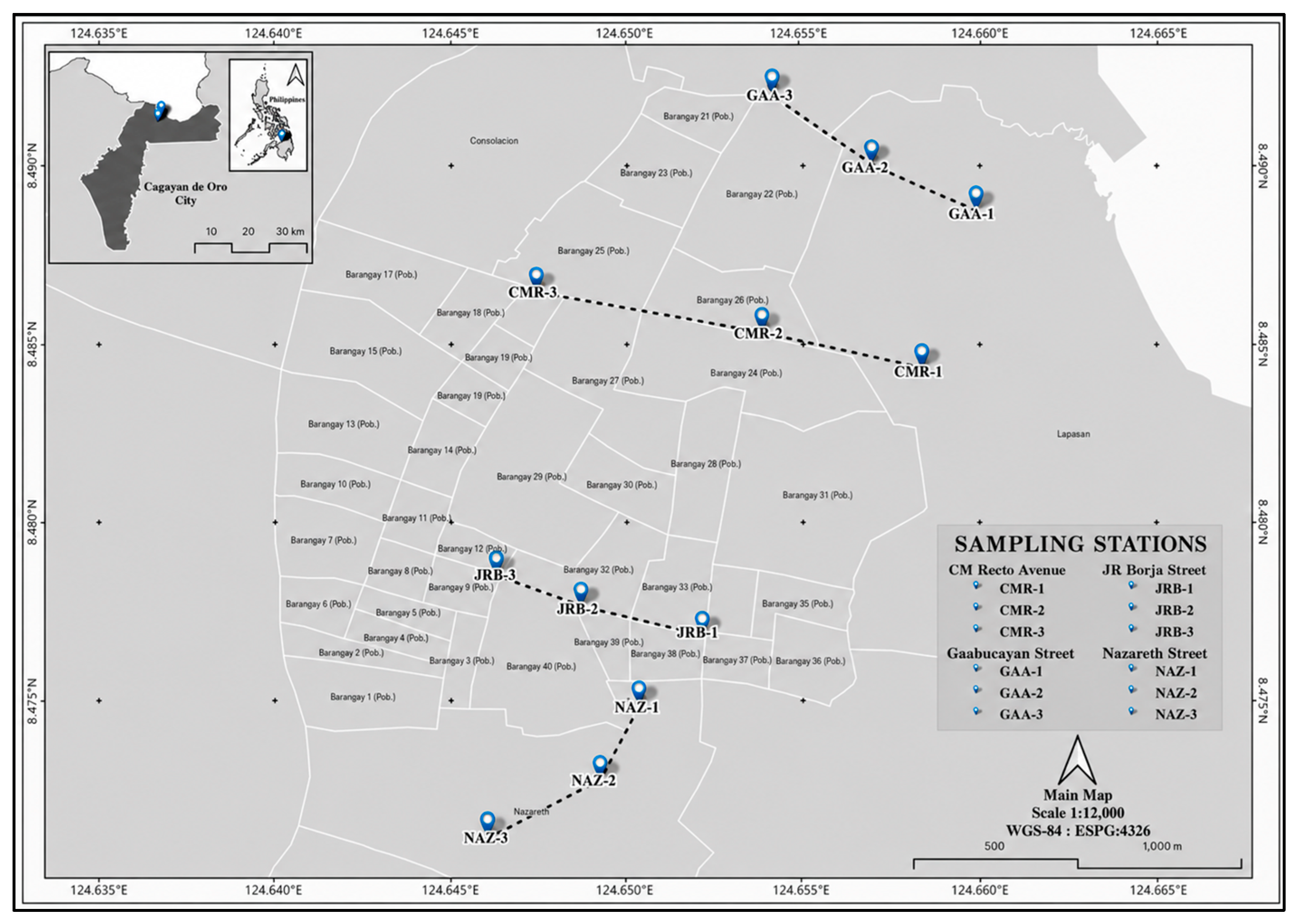
This study was conducted in Cagayan de Oro City, Northern Mindanao, Philippines. Four urban roadside environments were selected for the baseline assessment of suspended airborne microplastics: C.M. Recto Avenue, J.R. Borja Street, Gaabucayan Street, and Nazareth Street (
Figure 1;
Table 1). These roads were selected to represent contrasting roadside urban settings within the city, including primary and secondary roads with mixed commercial, mixed residential, and residential roadside characteristics.
A total of 12 sampling stations were established, with three stations per road. Stations were distributed along adjacent or sequential road segments to capture within-road variability under a common roadside framework. Sampling points were positioned approximately 1 m from the roadside edge to provide a consistent near-road deployment across all roads, while the 1.5 m sampling height was selected to approximate the human breathing zone. This configuration was used to improve the relevance of the measurements to roadside atmospheric exposure under the sampled conditions.
2.2. Field Sampling of Suspended Airborne Microplastics
Field sampling was conducted from 2 to 13 December 2025 during the dry season. Sampling was restricted to the midday period (1100–1400 H) to provide a standardized 3 h collection window across all stations. Each of the 12 stations was sampled once, yielding a total of 12 field samples. Because the study was based on a single dry-season campaign and one standardized midday sampling period per station, the dataset was intended as a preliminary roadside baseline under the sampled conditions rather than as a temporally comprehensive assessment of roadside variation.
Atmospheric particles were collected using an APM 460 respirable dust sampler (Envirotech Instruments Pvt. Ltd., New Delhi, India) fitted with a pre-cleaned Whatman™ Grade GF/A and GF/C glass microfiber filters (Cytiva, Marlborough, MA, USA). (200 × 285 mm; 1.6 µm pore size). The field sampling configuration, including roadside deployment, breathing-zone sampling height, and air-volume-based concentration approach, was informed by previous atmospheric microplastic studies conducted in the Philippines, with minor modifications [
13].
The respirable dust sampler was calibrated prior to sampling as part of routine instrument maintenance, and the operating flow rate used for field collection was confirmed at 1.4 m3 min−1. Based on a 3 h sampling duration, each run represented a total sampled air volume of 252 m3.
The concentration of AMPs was calculated as
where C is the concentration of atmospheric microplastics (items m
−3), N is the number of polymer-confirmed particles, and V is the total sampled air volume (m
−3).
2.3. Laboratory Processing of Field Filters
All 12 field filters were processed using an established procedure adapted from previous Philippine atmospheric microplastic studies, with minor modifications [
13]. Briefly, each Whatman GF/A sampling filter was carefully cut into smaller pieces and subjected to alkaline digestion using 250 mL of 10% KOH in covered glass beakers. Digestion was conducted at 40 °C for 48 h, following a modified procedure adapted from earlier atmospheric microplastic studies [
13]. Beakers were covered with aluminum foil during digestion to minimize contamination.
After digestion, each sample was stirred at 700 rpm for 10 min using a magnetic stirrer to facilitate particle suspension and separation from the filter matrix. The resulting supernatant was then vacuum-filtered through Whatman GF/C glass-fiber filters (1.2 µm pore size; 60 mm diameter) using a Büchner funnel setup. The filters were dried at room temperature for approximately 4 h, transferred to clean glass Petri dishes, and stored in a desiccator until analysis.
2.4. Microscopic Screening and Selection of Candidate Particles
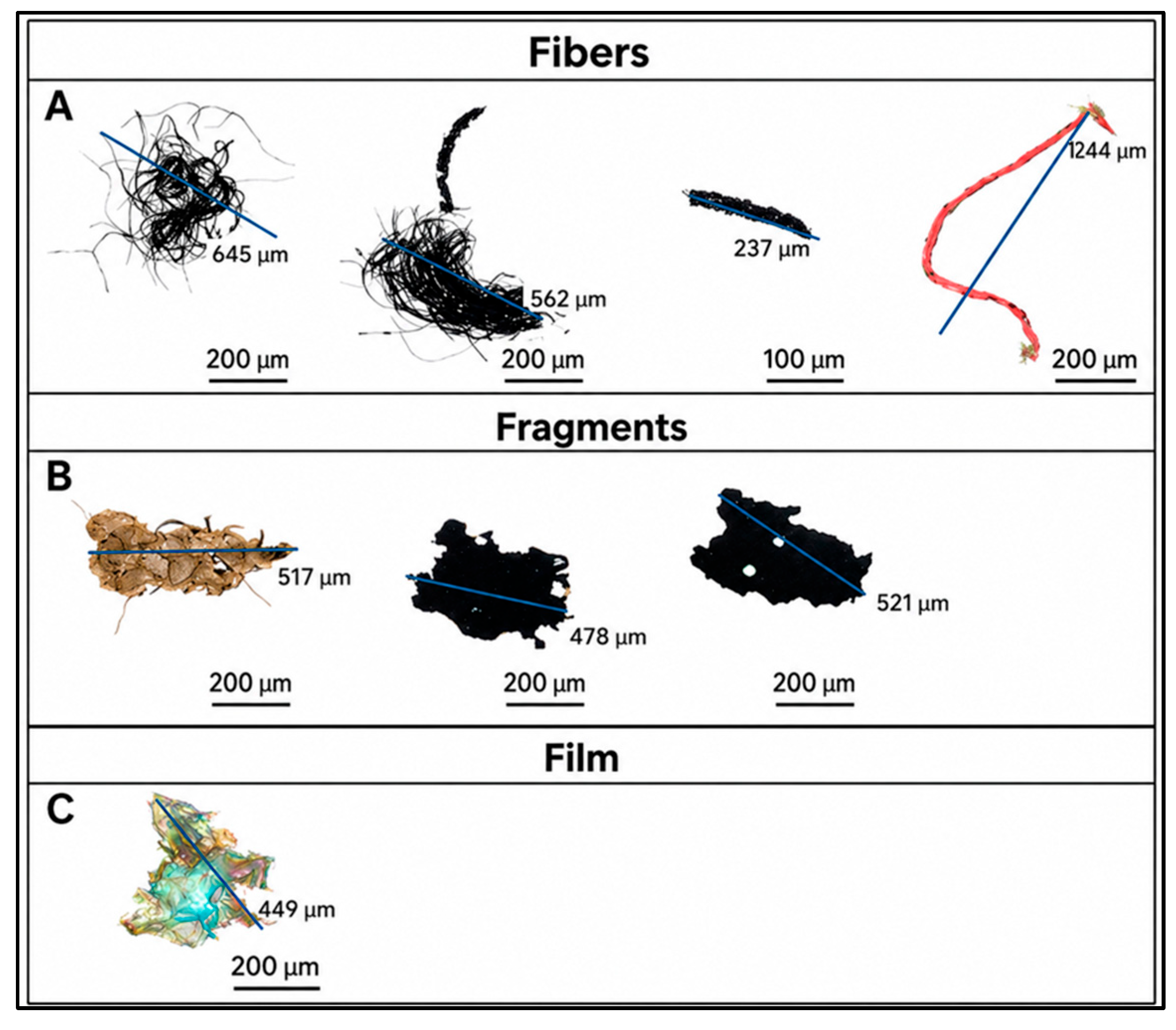
Visual examination of the dried laboratory filters was performed using a binocular microscope (Model XSZ-107BN, Sinher, China). Microscopic screening was conducted at variable magnification depending on particle size, and particle-size measurements were calibrated using a stage micrometer. Candidate particles were manually isolated using stainless-steel tweezers and documented by digital imaging.
Visual screening was used as a practical step to isolate candidate particles for polymer confirmation rather than to identify plastics conclusively. Candidate particles were selected on the basis of morphology considered potentially consistent with synthetic debris, including fibers, fragments, and films lacking obvious biological structures. Because this pre-screening step relied on visual judgment, highly weathered, irregular, or visually ambiguous plastic particles may have been overlooked. Accordingly, the final confirmed dataset should be interpreted as a conservative polymer-confirmed subset derived from visually suspected particles rather than as a complete inventory of confirmed dataset recovered under the present workflow on the filters.
Particle size was measured as the maximum visible dimension (longest length), and only particles within the microplastic size range (≤5 mm) were considered. Particles smaller than 200 µm were observed during microscopic screening; however, the smallest particle subsequently confirmed as a synthetic polymer by ATR-FTIR measured 200 µm. Therefore, 200 µm is treated here as the effective lower bound of the confirmed dataset under the present workflow.
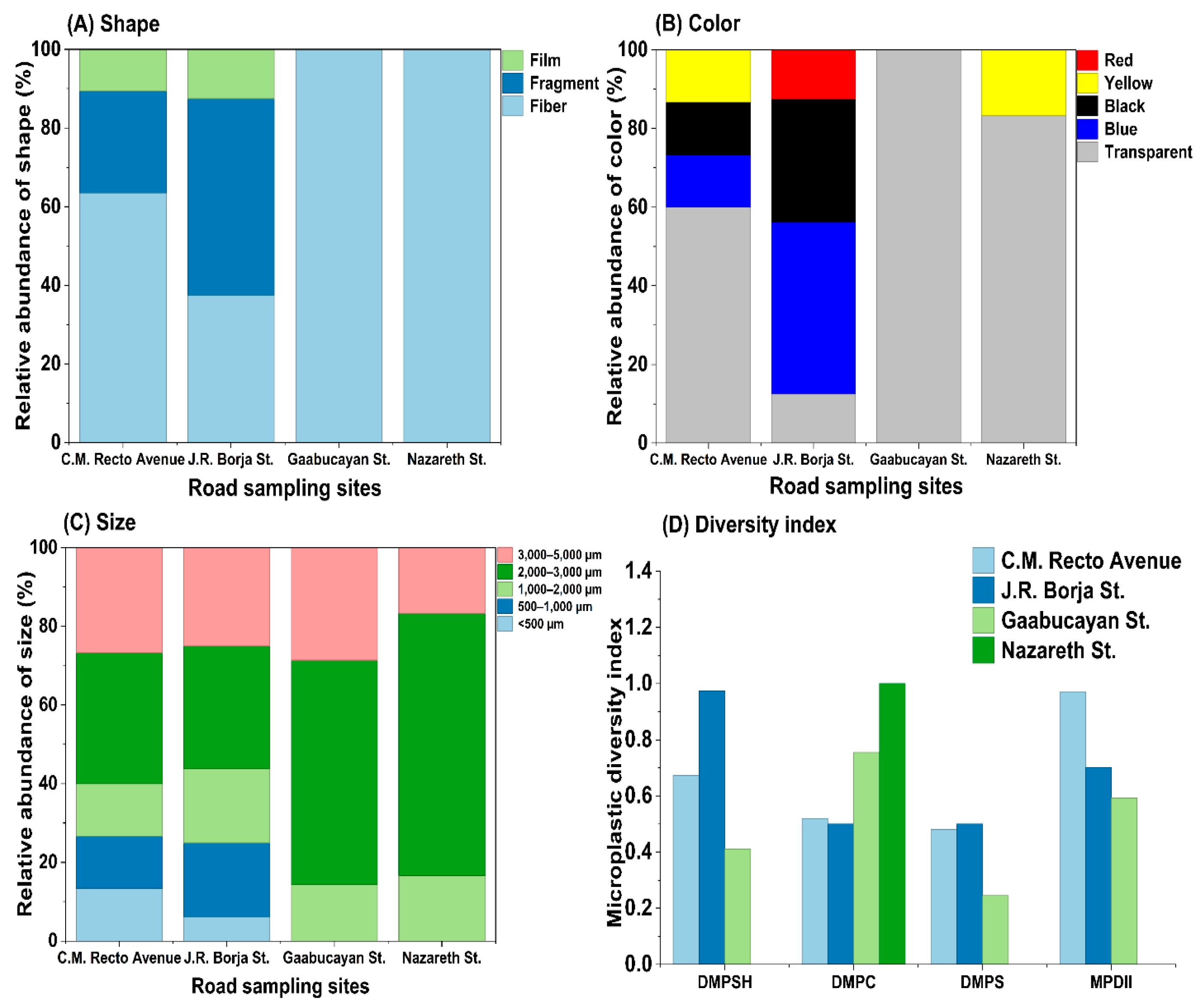
Polymer-confirmed particles were classified according to shape, color, and size class. Final shape categories used in this study were fiber, fragment, and film. Color categories used for statistical analysis were transparent, blue, black, yellow, and red, with low-frequency colors consolidated as follows: brown was grouped with yellow, and orange was grouped with red. Particle size was grouped into five classes: <500 µm, 500–1000 µm, 1000–2000 µm, 2000–3000 µm, and 3000–5000 µm.
2.5. Polymer Confirmation by ATR-FTIR
All isolated suspected particles (n = 99) were subjected to polymer confirmation using attenuated total reflectance Fourier-transform infrared spectroscopy (ATR-FTIR) with a PerkinElmer FTIR spectrometer Spotlight 400 operated using Spectrum IR software (Version 10.7.2; PerkinElmer Inc., Shelton, CT, USA). Spectra were recorded in the mid-infrared region of 4000–400 cm−1 and interpreted as % transmittance (%T) versus wavenumber (cm−1) spectra. The obtained spectra were compared with the PerkinElmer spectral reference library for polymer identification.
Polymer types were assigned using a minimum library match threshold of ≥85%. This threshold was applied as an operational cutoff within the range reported in FTIR-based microplastic studies and was not used as the sole decision rule. Spectra near the threshold were retained only when the proposed assignment was supported by characteristic diagnostic absorption bands. Spectra with poor signal quality, low signal-to-noise ratio, ambiguous assignments, or insufficient interpretability were excluded from the confirmed dataset. Fiber-like particles were subjected to the same confirmation criteria as other morphologies and were retained only when their spectra were interpretable.
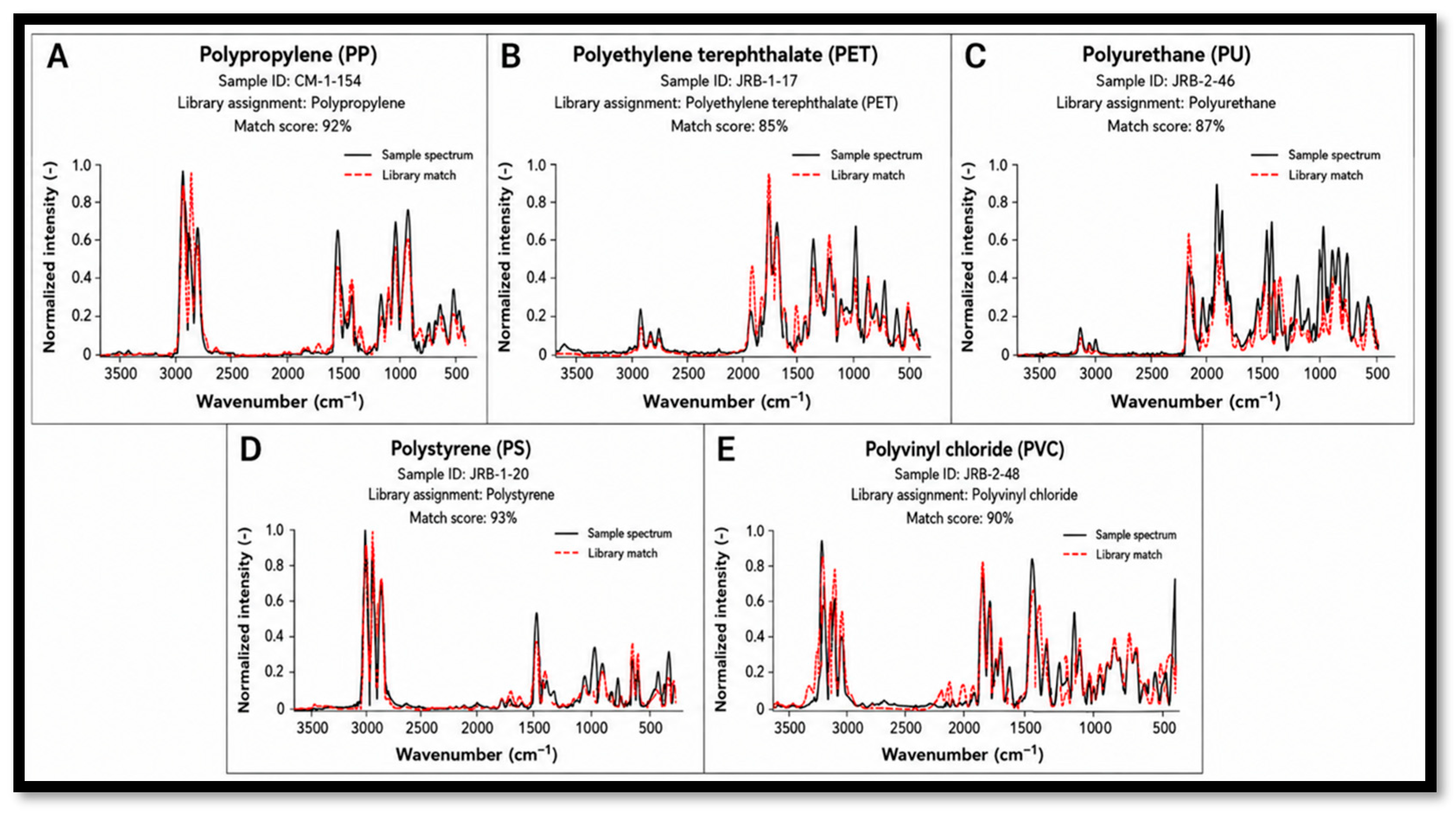
Only ATR-FTIR-confirmed synthetic polymers were retained in the final dataset. Of the 99 visually suspected candidate particles analyzed, 44 particles were confirmed as synthetic polymers and included in all subsequent analyses. Thus, the difference between suspected and confirmed counts reflects the conservative two-step workflow used in the study, in which visually suspected particles were retained only after ATR-FTIR confirmation. Representative ATR-FTIR spectra and corresponding library matches of selected retained particles in Figure 5.
2.6. Quality Assurance, Contamination Control, and Blanks
Quality assurance and quality control measures were implemented during both field sampling and laboratory analysis to minimize contamination. Before field deployment, each sampling filter was examined microscopically to confirm the absence of visible particles, wrapped in aluminum foil, and sealed in a brown paper envelope until use. After each sampling period, the filter samples were rewrapped, sealed in new brown paper envelopes, and transported to the laboratory in sealed containers for further analysis.
During field and laboratory work, researchers wore cotton clothing and non-powdered gloves to reduce contamination from synthetic fibers. Laboratory procedures were conducted on clean working surfaces covered with aluminum foil, and all glassware and filtration equipment were thoroughly rinsed with ultrapure water prior to use. Samples, filters, and digestion vessels were kept covered with aluminum foil or clean glass containers except during necessary handling and microscopic examination. Microscopic examination and particle picking were performed inside a dedicated enclosed isolation chamber to reduce airborne contamination during analysis. Isolated suspected particles were transferred to clean glass slides, covered with coverslips, and their positions were marked to facilitate relocation while minimizing repeated handling.
To assess possible contamination, 12 field blanks and 12 laboratory blanks were included. Field blanks consisted of clean filters placed adjacent to the respirable dust sampler inlet at the same sampling height during the 1100–1400 H field exposure period, without active suction, to assess passive deposition and field-handling contamination. After exposure, the blanks were covered with aluminum foil, transferred to paper envelopes, and processed using the same digestion, filtration, and microscopic procedures as the environmental samples. Laboratory blanks were likewise subjected to the same analytical workflow.
During microscopic examination, non-plastic particulate matter was observed in some blanks. However, no particles meeting both the study’s suspected-particle screening criteria and ATR-FTIR confirmation criteria were identified in the blanks. Accordingly, no blank correction was applied.
2.7. Statistical Analysis
Data were analyzed using Microsoft Excel 2021 and Origin software Origin 2022b (9.95). Descriptive statistics (mean ± standard deviation) were used to summarize the abundance and characteristics of polymer-confirmed atmospheric microplastics. Differences in atmospheric microplastic abundance across roadside environments were evaluated using the Kruskal–Wallis test because the data were non-normally distributed.
Differences in the distribution of microplastic characteristics (shape, color, size class, and polymer type) among roads were assessed using the Fisher–Freeman–Halton exact test. This test was selected because the data consisted of categorical variables arranged in multi-category contingency tables (road × particle characteristics) with several cells containing low frequencies or zero counts due to the limited number of polymer-confirmed particles (n = 44). Under such conditions, the assumptions of the chi-square test are violated, particularly the requirement for expected frequencies ≥ 5.
The Fisher–Freeman–Halton test provides exact probability estimates for sparse r × c contingency tables and is therefore appropriate for small categorical environmental datasets. Similar exact-test approaches have also been used in ecological and environmental studies and appropriate for small categorical environmental datasets [
14,
15]. Statistical significance was set at
p < 0.05.
where
represents the marginal row totals,
represents the marginal column totals,
represents the observed frequency in each cell, and
is the total sample size. In this study, the Fisher–Freeman–Halton exact test was used as an exact contingency-table approach appropriate for sparse categorical environmental datasets, following the framework originally described by Freeman and Halton [
14].
To describe compositional heterogeneity among roadside environments, diversity indices were calculated for microplastic shape (DMPSH), color (DMPC), and size class (DMPS) using Simpson-based diversity:
where
is the proportion of particles in category i. An integrated microplastic diversity index (MPDII) was then calculated as
These diversity indices were used for descriptive comparison only and were not subjected to inferential statistical testing.
4. Discussion
The present findings are contextualized using
Table 3, which compares selected international and Philippine studies on atmospheric microplastics with respect to dominant particle shape, polymer type, and abundance. Atmospheric microplastics reported from urban environments are commonly dominated by fibers and by polymers such as PP, PE, PET, and polyester, although clear site-specific differences remain across cities and sampling designs [
6,
13,
16,
17,
18]. In the present study, Cagayan de Oro City likewise showed fiber dominance, but with PP as the dominant polymer and a relatively low suspended concentration. This pattern suggests that while atmospheric microplastic occurrence is already evident across urban settings, local roadside conditions may influence polymer composition and particle characteristics at the city scale [
13].
The present study provides baseline evidence that suspended airborne microplastics are already present across urban roadside environments in Cagayan de Oro City. However, the clearest pattern emerging from the dataset is not simply occurrence, but the contrast between relatively similar abundance and stronger compositional differences among roads. Atmospheric microplastic abundance differed numerically among roads but did not vary significantly, whereas shape, color, and polymer composition did, while size-class distribution did not. Taken together, these results indicate that the four roadside environments may have shared a broadly comparable roadside atmospheric microplastic burden during the standardized dry-season midday sampling window, while differing more clearly in the types of particles contributing to that burden under the sampled conditions. This interpretation is consistent with the broader urban atmospheric microplastic literature showing that local context and sampling design may influence compositional heterogeneity even when concentration differences are not clearly separated [
5,
19].
One plausible process-level interpretation is that roadside environments function as near-road interfaces where plastic particles deposited from surrounding urban air or released from road-influenced surfaces are temporarily retained in roadside dust and then re-enter immediately road-adjacent air through local disturbance. This interpretation is consistent with the broader road-dust resuspension literature identifying vehicle-induced resuspension as an important particulate-emission process in road environments [
20], with field evidence showing that concentrations of traffic-derived non-exhaust microplastic particles in airborne particulate matter decrease with increasing distance from roads [
21], with passive roadside observations reporting higher putative tire-wear-particle deposition closer to highways and under stronger braking and traffic intensity [
22], and with near-road measurements showing vertical declines in microplastic and microrubber accumulation up to 177 cm above road level that were attributed to resuspension from road surfaces by wind and passing traffic [
23]. Within that framework, roadside dust may be viewed as a temporary reservoir and potential secondary source of atmospheric microplastics rather than as a passive sink alone, which is also consistent with recent roadside deposition work [
24]. However, this remains a plausible interpretation rather than a demonstrated source pathway. The present study was not designed to directly apportion or verify specific sources, and the observed contrasts should therefore be interpreted as being consistent with local roadside deposition and resuspension processes rather than as direct proof of source-specific mechanisms.
The overall dominance of fibers in the confirmed dataset is broadly consistent with previous atmospheric microplastic studies, including Philippine urban-air datasets, in which elongated particles frequently comprise an important fraction of suspended material [
13]. Observed road-level morphology patterns were nevertheless not uniform. C.M. Recto Avenue showed a stronger contribution of films, J.R. Borja Street showed a greater fragment contribution, and both Gaabucayan Street and Nazareth Street were entirely fiber-dominated. One plausible interpretation is that even within one city, roadside environments may differ in the local mixture of particles available for suspension. Film-rich profiles may be consistent with degraded thin plastic materials, whereas fragment-rich profiles may reflect more brittle or mechanically broken particles. However, these possibilities should not be treated as direct source assignments. Given the limited number of confirmed particles, the morphology results are better interpreted as preliminary evidence of compositional heterogeneity than as proof of distinct source categories.
A similar three-level interpretation applies to particle color. Observed color composition differed among roads, with transparent particles dominating most sites, whereas J.R. Borja Street showed a broader blue–black–transparent profile. One plausible interpretation is that J.R. Borja Street contained a more compositionally mixed roadside particle assemblage under the sampled conditions. In atmospheric microplastic research, transparent, blue, and black particles are common descriptive color classes, but color alone is a weak source tracer because multiple products can share similar pigmentation and environmental weathering can alter apparent color over time [
19]. Accordingly, the observed color differences should not be interpreted as direct evidence of specific material origins, but rather as descriptive support for road-level heterogeneity in the confirmed dataset.
The confirmed size distribution also requires explicit separation between observation and interpretation. Observed size-class composition did not differ significantly among roads, and most polymer-confirmed particles belonged to the 2000–3000 µm and 3000–5000 µm classes. One plausible interpretation is that the particles recovered and confirmed under the present active roadside sampling and analytical workflow were weighted toward the coarse fraction. This may reflect both environmental and methodological factors. Environmentally, the study targeted immediately roadside air during a standardized dry-season midday window, a setting that may favor the temporary accumulation and episodic suspension of coarse particles deposited on road-adjacent surfaces. Methodologically, the workflow may also have favored the recovery and confirmation of larger particles, because active air sampling, alkaline digestion, refiltration, visual screening, and ATR-FTIR confirmation are more likely to retain and verify particles that are larger and more morphologically distinct than finer or more ambiguous particles [
8,
19]. However, this pattern should not be interpreted to mean that finer airborne microplastics were absent from Cagayan de Oro, only that they were not strongly represented in the final confirmed dataset under the present workflow.
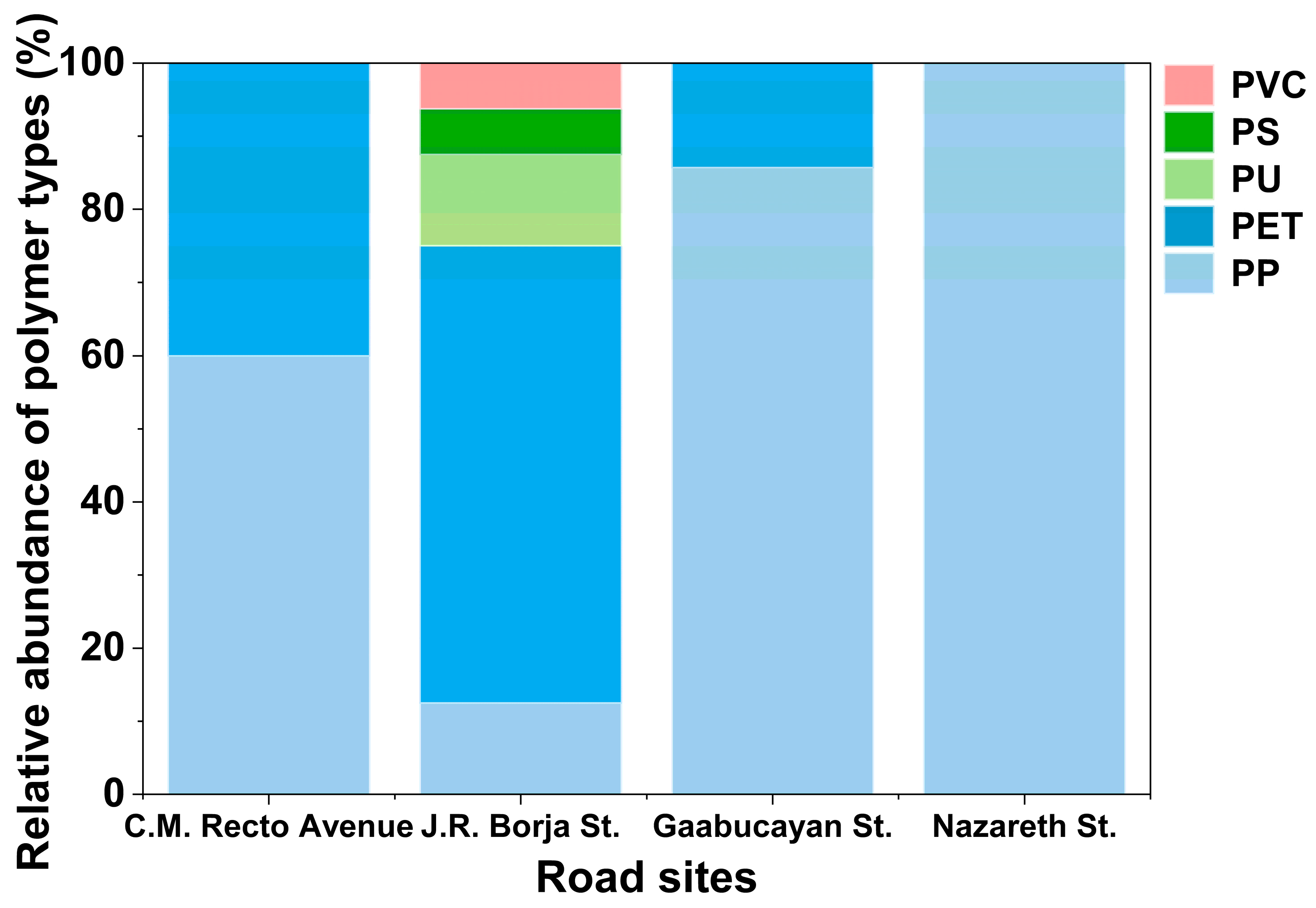
The polymer results provide one of the clearest points of comparison with previous Philippine atmospheric studies. Observed polymer composition in Cagayan de Oro was dominated overall by polypropylene and polyethylene terephthalate, although their proportions varied among roads. This partly overlaps with previous Philippine atmospheric datasets in which PET and related polymers were prominent, while also aligning with regional urban-air studies in which PP, PET, and PVC were detected among confirmed airborne particles [
13]. One plausible interpretation is that polymer composition may shift with local roadside context and surrounding material use, particularly because the more PP-rich pattern was most evident at Gaabucayan Street and Nazareth Street. However, polymer identity alone cannot resolve exact source pathways. These results are therefore better interpreted as preliminary evidence of road-level compositional heterogeneity than as proof of specific material sources.
Taken together, the observed results indicate that the four roadside environments in Cagayan de Oro City differed more clearly in particle composition than in overall confirmed abundance under the sampled conditions. One plausible interpretation is that these roads were influenced by a shared near-road atmospheric context within which local roadside deposition, retention, and possible resuspension processes contributed to differences in the particles entering immediately road-adjacent air. However, these inferences should remain bounded by the study design. The dataset was derived from a single dry-season campaign, one standardized midday sampling period per station, and only 44 ATR-FTIR-confirmed particles. Accordingly, the observed contrasts are best interpreted as preliminary baseline patterns under the sampled conditions, rather than as direct evidence of distinct source pathways, stable roadside source regimes, or temporally persistent road-level differences.
5. Conclusions and Future Perspectives
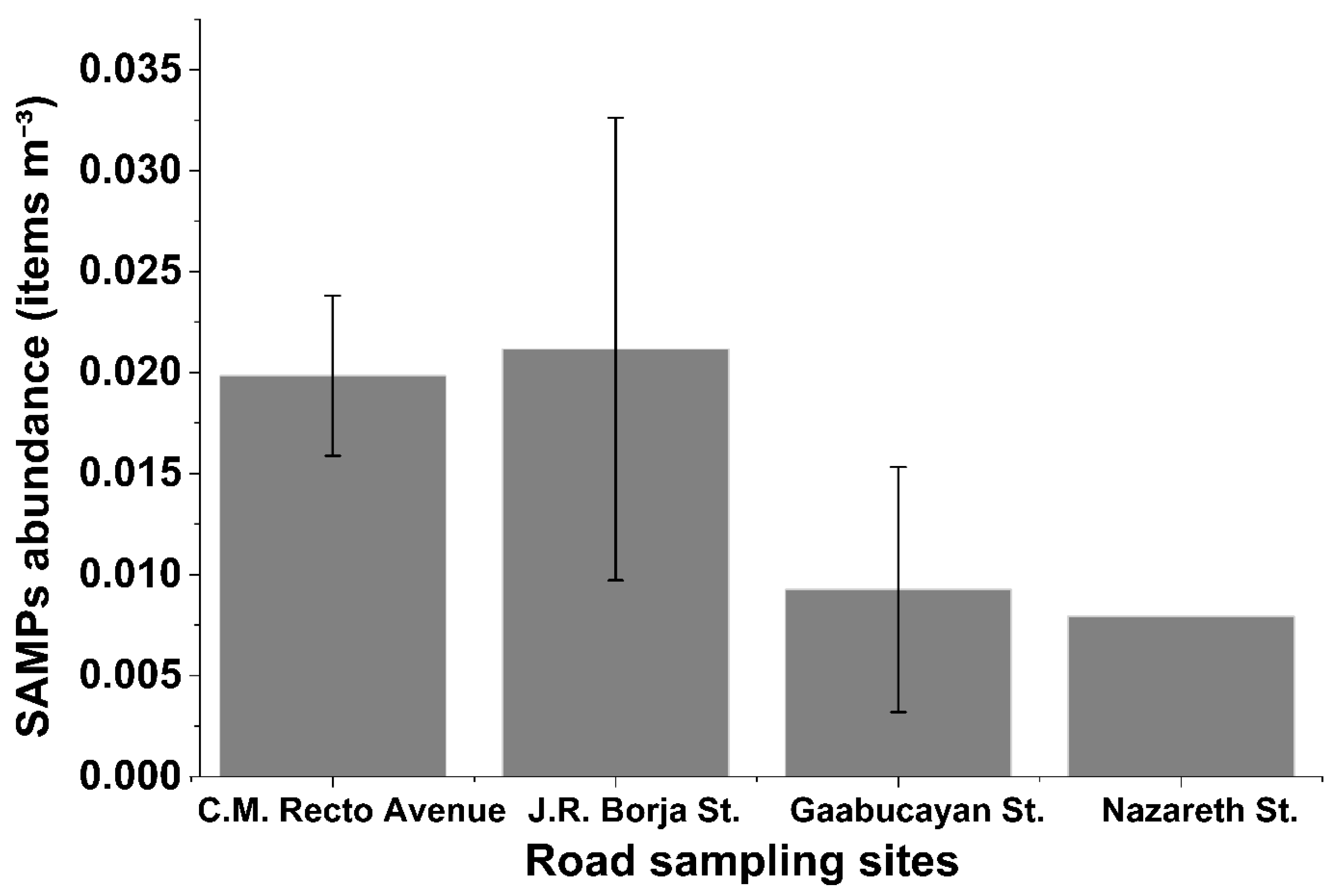
This study provides initial baseline evidence that polymer-confirmed airborne microplastics are already present across urban roadside environments in Cagayan de Oro City, Philippines. Confirmed particles were detected at all sampled roads. Although J.R. Borja Street and C.M. Recto Avenue showed higher mean concentrations than Gaabucayan Street and Nazareth Street, atmospheric microplastic abundance did not differ significantly among roadside environments.
In contrast, particle shape, color, and polymer composition varied significantly, whereas size-class distribution did not. Fibers were the dominant morphology overall, transparent particles were the most abundant color class, coarse particles in the 2000–5000 µm range comprised most of the confirmed dataset, and polypropylene and polyethylene terephthalate were the dominant polymers. Taken together, these findings indicate that the roadside environments sampled in Cagayan de Oro City may contain broadly comparable levels of atmospheric microplastics while differing in particle composition under the sampled conditions.
The main contribution of this study is therefore not geographic reporting alone, but an initial polymer-confirmed roadside dataset showing that within-city roadside heterogeneity was more evident in particle composition than in overall confirmed abundance under the sampled conditions. This suggests that roadside atmospheric microplastic monitoring may benefit from considering factors beyond concentration when evaluating local urban heterogeneity. However, the scope of this interpretation remains limited because the dataset was based on a single dry-season campaign, one standardized midday sampling period per station, and only 44 ATR-FTIR-confirmed particles. Accordingly, the results should be treated as preliminary baseline patterns rather than as robust evidence of persistent roadside source regimes or temporally stable spatial differences.
Future work should incorporate repeated temporal sampling, broader roadside and non-roadside comparisons, and paired analyses of roadside dust and air to test more directly whether local dust reservoirs influence near-road atmospheric microplastic composition. Studies specifically designed for source apportionment, distance-from-road assessment, and finer-particle recovery would also help clarify the environmental processes that could not be resolved by the present design.




 ,
,