
Biodegradation of Microplastics by Filamentous Fungi: A Novel Approach for Polymer Remediation



Abstract
1. Introduction
2. Methods
3. Microplastics: Definition and Environmental Impacts
4. Filamentous Fungi as Biodegrading Agents of Plastics and Microplastics
5. Mechanisms of Biodegradation
5.1. Microplastic Adsorption by Fungal Biomass
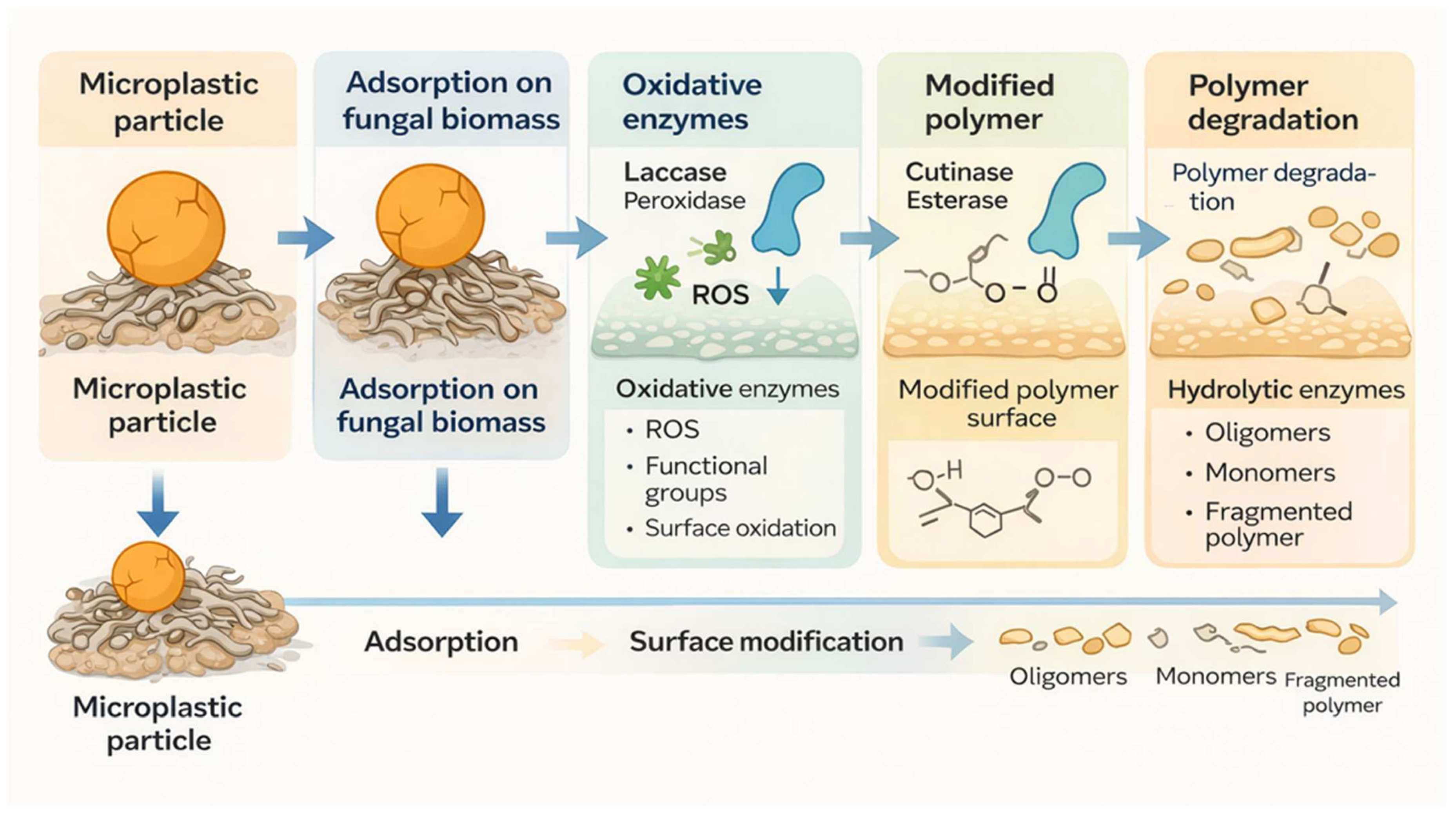
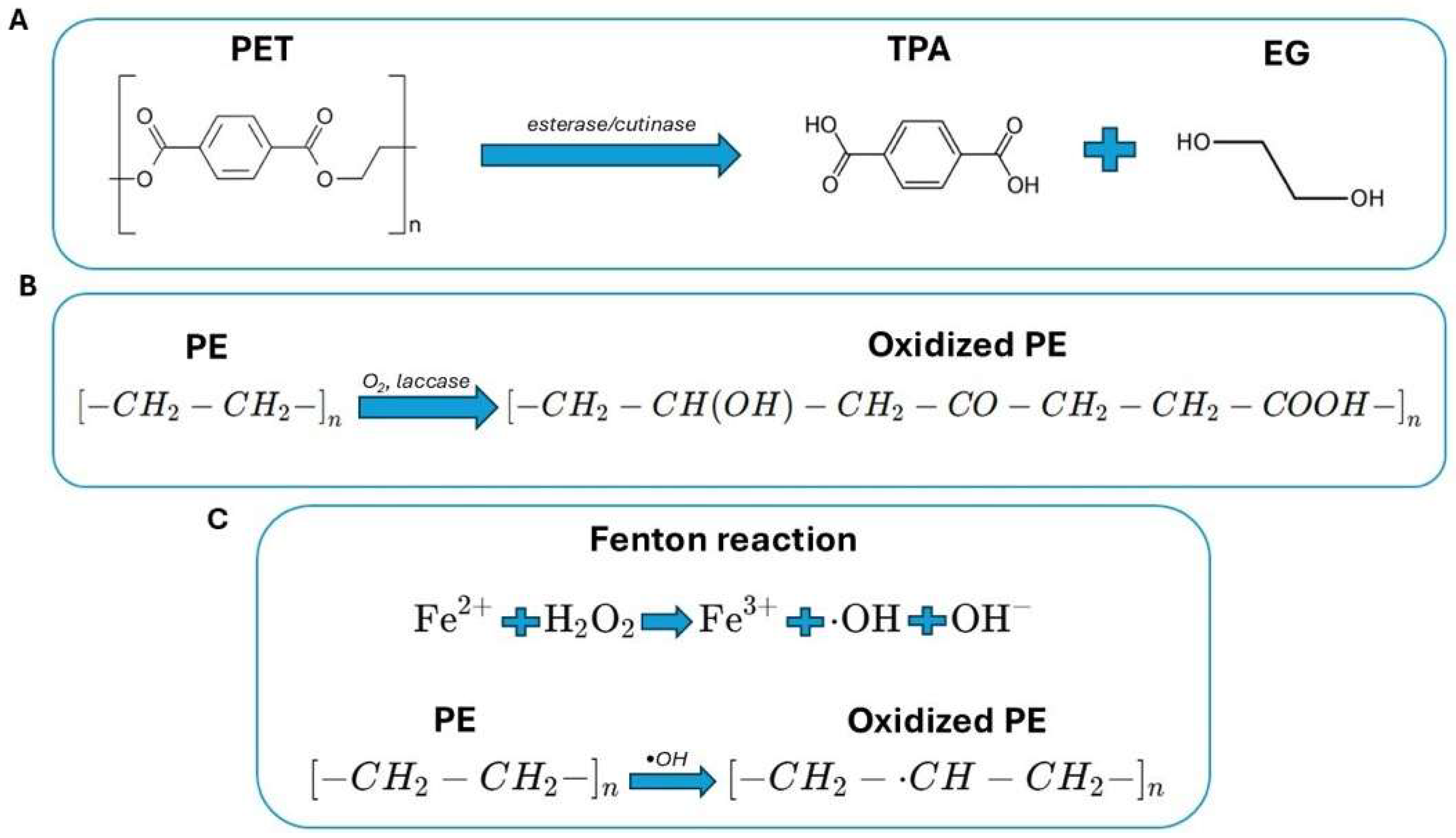
5.2. Role of Hydrolytic and Oxidative Enzymes
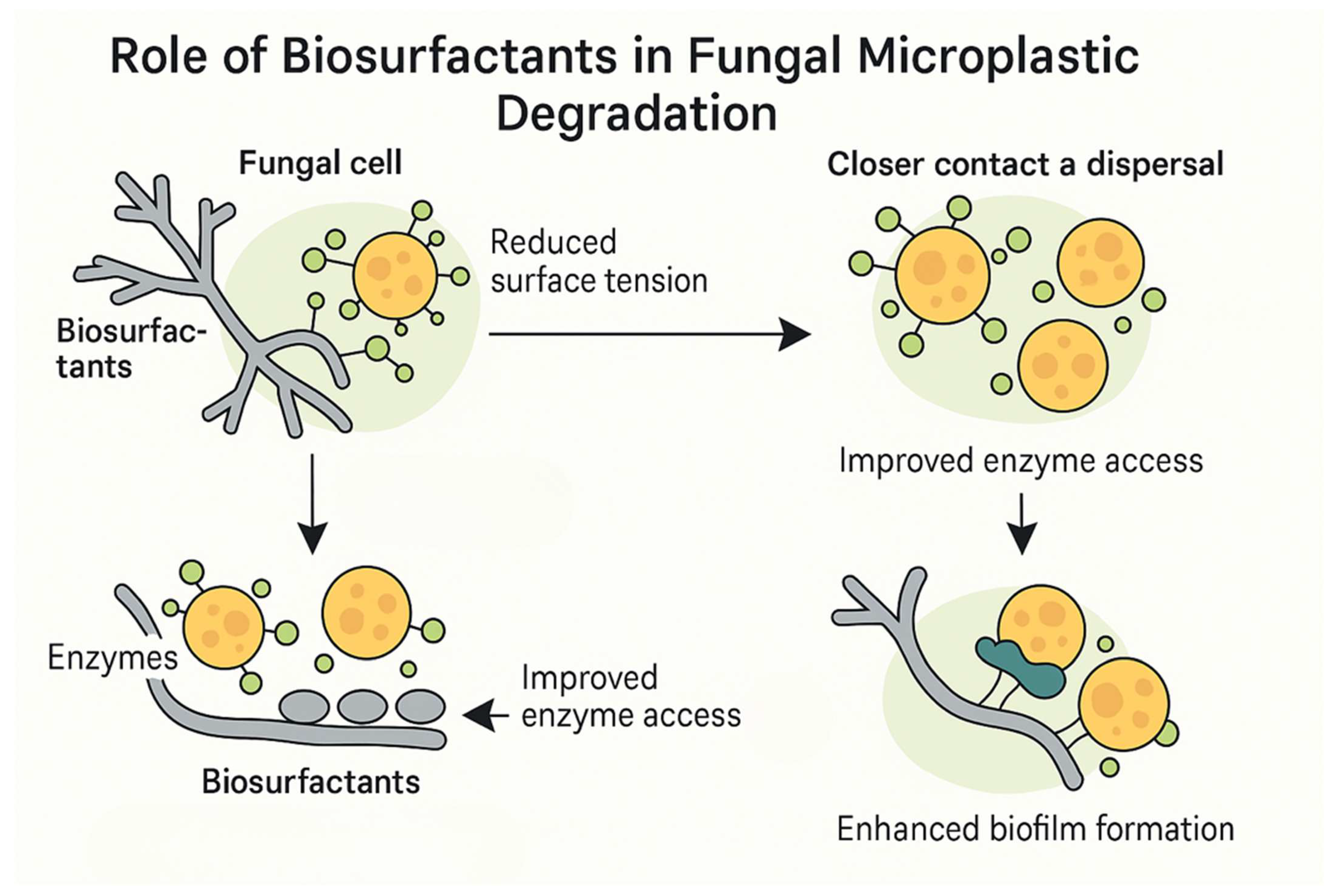
5.3. Role of Biosurfactants
5.4. Mineralization and Metabolic Pathways
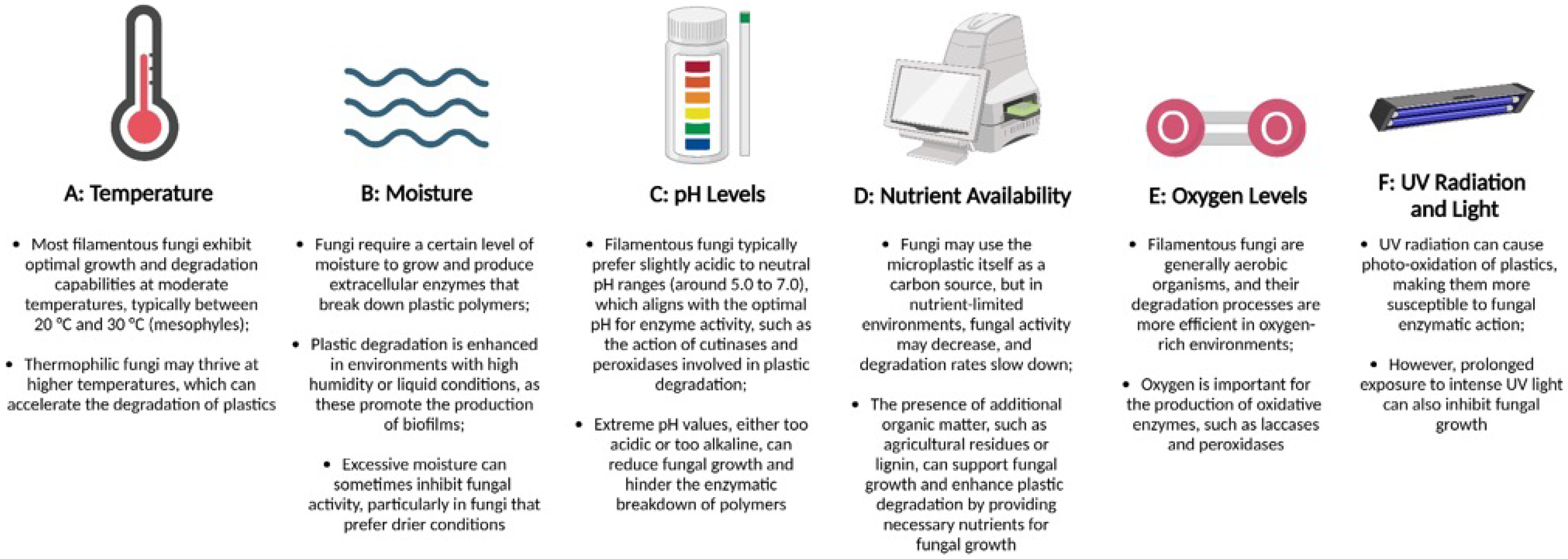
6. Factors Affecting Plastic Degradation by Filamentous Fungi
7. Methods for Studying Biodegradation by Filamentous Fungi
8. Challenges and Future Perspectives
9. Conclusions
Author Contributions
Funding
Institutional Review Board Statement
Data Availability Statement
Conflicts of Interest
References
- Singh, A.; Mishra, B.K. Microplastic in personal care products: An overlooked environmental concern. J. Clean. Prod. 2023, 427, 139082. [Google Scholar] [CrossRef]
- Wang, J.; Dong, J.; Tang, M.; Yao, J.; Li, X.; Kong, D.; Zhao, K. Identification and detection of microplastic particles in marine environment by using improved faster R–CNN model. J. Environ. Manag. 2023, 345, 118802. [Google Scholar] [CrossRef]
- Kukkola, A.; Chetwynd, A.J.; Krause, S.; Lynch, I. Beyond microbeads: Examining the role of cosmetics in microplastic pollution and spotlighting unanswered questions. J. Hazard. Mater. 2024, 476, 135053. [Google Scholar] [CrossRef] [PubMed]
- Chang, X.; Fang, Y.; Wang, Y.; Wang, F.; Shang, L.; Zhong, R. Microplastic pollution in soils, plants, and animals: A review of distributions, effects and potential mechanisms. Sci. Total Environ. 2022, 850, 157857. [Google Scholar] [CrossRef] [PubMed]
- Efremenko, E.; Stepanov, N.; Senko, O.; Aslanli, A.; Maslova, O.; Lyagin, I. Using fungi in artificial microbial consortia to solve bioremediation problems. Microorganisms 2024, 12, 470. [Google Scholar] [CrossRef]
- Tang, K.H.D.; Hadibarata, T. The application of bioremediation in wastewater treatment plants for microplastics removal: A practical perspective. Bioprocess Biosyst. Eng. 2022, 45, 1865–1878. [Google Scholar] [CrossRef]
- Huang, Z.; Weng, Y.; Shen, Q.; Zhao, Y.; Jin, Y. Microplastic: A potential threat to human and animal health by interfering with the intestinal barrier function and changing the intestinal microenvironment. Sci. Total Environ. 2021, 785, 147365. [Google Scholar] [CrossRef] [PubMed]
- OECD. Global Plastics Outlook: Policy Scenarios to 2060; OECD Publishing: Paris, France, 2022. [Google Scholar]
- UNEP. Turning Off the Tap: How the World Can End Plastic Pollution and Create a Circular Economy; UNEP: Nairobi, Kenya, 2024. [Google Scholar]
- Abbasi, S.; Rezaei, M.; Ahmadi, F.; Turner, A. Atmospheric transport of microplastics during a dust storm. Chemosphere 2022, 292, 133456. [Google Scholar] [CrossRef]
- Zhao, S.; Zettler, E.R.; Bos, R.P.; Lin, P.; Amaral-Zettler, L.A.; Mincer, T.J. Large quantities of small microplastics permeate the surface ocean to abyssal depths in the South Atlantic Gyre. Glob. Change Biol. 2022, 28, 2991–3006. [Google Scholar] [CrossRef]
- Huang, L.; Zhang, S.; Li, L.; Zhang, S.; Wang, J.; Liu, X.; Zhang, W. Research progress on microplastics pollution in polar oceans. Polar Sci. 2023, 36, 100946. [Google Scholar] [CrossRef]
- Lasota, J.; Błońska, E.; Piaszczyk, W.; Tabor, S. Microplastic on mountain trails—A case study from the Carpathian and Sudetes Mountains in Poland. Water Air Soil Pollut. 2023, 234, 612. [Google Scholar] [CrossRef]
- Salerno, M.; Berlino, M.; Mangano, M.C.; Sarà, G. Microplastics and the functional traits of fishes: A global meta-analysis. Glob. Change Biol. 2021, 27, 2645–2655. [Google Scholar] [CrossRef]
- Hossain, M.A.; Olden, J.D. Global meta-analysis reveals diverse effects of microplastics on freshwater and marine fishes. Fish Fish. 2022, 23, 1439–1454. [Google Scholar] [CrossRef]
- Mason, V.G.; Skov, M.W.; Hiddink, J.G.; Walton, M. Microplastics alter multiple biological processes of marine benthic fauna. Sci. Total Environ. 2022, 845, 157362. [Google Scholar] [CrossRef]
- Makhdoumi, P.; Pirsaheb, M.; Amin, A.A.; Kianpour, S.; Hossini, H. Microplastic pollution in table salt and sugar: Occurrence, qualification and quantification and risk assessment. J. Food Compos. Anal. 2023, 119, 105261. [Google Scholar] [CrossRef]
- Sun, H.; Su, X.; Mao, J.; Liu, Y.; Li, G.; Du, Q. Microplastics in maternal blood, fetal appendages, and umbilical vein blood. Ecotoxicol. Environ. Saf. 2024, 287, 117300. [Google Scholar] [CrossRef]
- Yang, L.; Kang, S.; Luo, X.; Wang, Z. Microplastics in drinking water: A review on methods, occurrence, sources, and potential risks assessment. Environ. Pollut. 2024, 348, 123857. [Google Scholar] [CrossRef]
- Zurier, H.S.; Goddard, J.M. Biodegradation of microplastics in food and agriculture. Curr. Opin. Food Sci. 2021, 37, 37–44. [Google Scholar] [CrossRef]
- Miri, S.; Saini, R.; Davoodi, S.M.; Pulicharla, R.; Brar, S.K.; Magdouli, S. Biodegradation of microplastics: Better late than never. Chemosphere 2022, 286, 131670. [Google Scholar] [CrossRef]
- Bao, R.; Cheng, Z.; Hou, Y.; Xie, C.; Pu, J.; Peng, L.; Gao, L.; Chen, W.; Su, Y. Secondary microplastics formation and colonized microorganisms on the surface of conventional and degradable plastic granules during long-term UV aging in various environmental media. J. Hazard. Mater. 2022, 439, 129686. [Google Scholar] [CrossRef]
- Jain, R.; Gaur, A.; Suravajhala, R.; Chauhan, U.; Pant, M.; Tripathi, V.; Pant, G. Microplastic pollution: Understanding microbial degradation and strategies for pollutant reduction. Sci. Total Environ. 2023, 905, 167098. [Google Scholar] [CrossRef]
- Ferreira, J.A.; Varjani, S.; Taherzadeh, M.J. A critical review on the ubiquitous role of filamentous fungi in pollution mitigation. Curr. Pollut. Rep. 2020, 6, 295–309. [Google Scholar] [CrossRef]
- Sánchez, C. Fungal potential for the degradation of petroleum-based polymers: An overview of macro-and microplastics biodegradation. Biotechnol. Adv. 2020, 40, 107501. [Google Scholar] [CrossRef]
- Liu, F.; Wang, T.; Liu, X.H.; Xu, N.; Pan, X.L. Efficient biodegradation and upcycling of polyethylene terephthalate mediated by cell-factories. Front. Microbiol. 2025, 16, 1599470. [Google Scholar] [CrossRef] [PubMed]
- Nasrabadi, A.E.; Ramavandi, B.; Bonyadi, Z. Recent progress in biodegradation of microplastics by Aspergillus sp. in aquatic environments. Colloid Interface Sci. Commun. 2023, 57, 100754. [Google Scholar] [CrossRef]
- Ferreira-Filipe, D.A.; Oliveira, L.; Paço, A.; Fernandes, A.J.S.; Costa, F.M.; Duarte, A.C.; Rocha-Santos, T.; Silva, A.L.P. Biodegradation of e-waste microplastics by Penicillium brevicompactum. Sci. Total Environ. 2024, 935, 173334. [Google Scholar] [CrossRef] [PubMed]
- Rusetskaya, V.; Różalska, S.; Słaba, M.; Bernat, P. Degradation ability of Trichoderma spp. in the presence of poly (butylene adipate-co-terephthalate) microparticles. Int. Biodeterior. Biodegrad. 2024, 193, 105829. [Google Scholar] [CrossRef]
- Tang, M.; Zhou, S.; Huang, J.; Sun, L.; Lu, H. Stress responses of sulfate-reducing bacteria sludge upon exposure to polyethylene microplastics. Water Res. 2022, 220, 118646. [Google Scholar] [CrossRef]
- Song, L.; Liu, Y.; Xiao, S.; Li, Y.; Yu, H.; Zeng, Y.; Han, X. Exploring the adsorption potential of different Ganoderma lucidum mycelium morphologies for microplastic removal. Colloids Surf. A-Physicochem. Eng. Asp. 2025, 720, 137173. [Google Scholar] [CrossRef]
- Ortolan, G.G.; Contato, A.G.; Aranha, G.M.; Salgado, J.C.S.; Alnoch, R.C.; Polizeli, M.L.T.M. Enhancing laccase production by Trametes hirsuta GMA-01 using response surface methodology and orange waste: A novel breakthrough in sugarcane bagasse saccharification and synthetic dye decolorization. Reactions 2024, 5, 635–650. [Google Scholar] [CrossRef]
- Contato, A.G.; Vici, A.C.; Pinheiro, V.E.; de Oliveira, T.B.; Ortolan, G.G.; de Freitas, E.N.; Buckeridge, M.S.; Polizeli, M.L.T.M. Thermothelomyces thermophilus cultivated with residues from the fruit pulp industry: Enzyme immobilization on ionic supports of a crude cocktail with enhanced production of lichenase. Folia Microbiol. 2025, 70, 619–629. [Google Scholar] [CrossRef] [PubMed]
- Contato, A.G.; Conte-Junior, C.A. Lion’s Mane mushroom (Hericium erinaceus): A neuroprotective fungus with antioxidant, anti-inflammatory, and antimicrobial potential—A narrative review. Nutrients 2025, 17, 1307. [Google Scholar] [CrossRef] [PubMed]
- Vivekanand, A.C.; Mohapatra, S.; Tyagi, V.K. Microplastics in aquatic environment: Challenges and perspectives. Chemosphere 2021, 282, 131151. [Google Scholar] [CrossRef]
- Gong, J.; Xie, P. Research progress in sources, analytical methods, eco-environmental effects, and control measures of microplastics. Chemosphere 2020, 254, 126790. [Google Scholar] [CrossRef] [PubMed]
- Hamidian, A.H.; Ozumchelouei, E.J.; Feizi, F.; Wu, C.; Zhang, Y.; Yang, M. A review on the characteristics of microplastics in wastewater treatment plants: A source for toxic chemicals. J. Clean. Prod. 2021, 295, 126480. [Google Scholar] [CrossRef]
- Kurniawan, S.B.; Said, N.S.M.; Imron, M.F.; Abdullah, S.R.S. Microplastic pollution in the environment: Insights into emerging sources and potential threats. Environ. Technol. Innov. 2021, 23, 101790. [Google Scholar] [CrossRef]
- Kato, L.S.; Conte-Junior, C.A. Safety of plastic food packaging: The challenges about non-intentionally added substances (NIAS) discovery, identification and risk assessment. Polymers 2021, 13, 2077. [Google Scholar] [CrossRef]
- Ghatge, S.; Yang, Y.; Ahn, J.H.; Hur, H.G. Biodegradation of polyethylene: A brief review. Appl. Biol. Chem. 2020, 63, 27. [Google Scholar] [CrossRef]
- Tziourrou, P.; Golia, E.E. Plastics in agricultural and urban soils: Interactions with plants, micro-organisms, inorganic and organic pollutants: An overview of polyethylene (PE) litter. Soil Syst. 2024, 8, 23. [Google Scholar] [CrossRef]
- Alsabri, A.; Tahir, F.; Al-Ghamdi, S.G. Environmental impacts of polypropylene (PP) production and prospects of its recycling in the GCC region. Mater. Today Proc. 2022, 56, 2245–2251. [Google Scholar] [CrossRef]
- Hossain, M.T.; Shahid, M.A.; Mahmud, N.; Habib, A.; Rana, M.M.; Khan, S.A.; Hossain, M.D. Research and application of polypropylene: A review. Discov. Nano 2024, 19, 2. [Google Scholar] [CrossRef]
- Liu, R.; Zhao, S.; Zhang, B.; Li, G.; Fu, X.; Yan, P.; Shao, Z. Biodegradation of polystyrene (PS) by marine bacteria in mangrove ecosystem. J. Hazard. Mater. 2023, 442, 130056. [Google Scholar] [CrossRef] [PubMed]
- Dong, D.; Guo, Z.; Yang, X.; Dai, Y. Comprehensive understanding of the aging and biodegradation of polystyrene-based plastics. Environ. Pollut. 2024, 342, 123034. [Google Scholar] [CrossRef] [PubMed]
- Ates, M.; Karadag, S.; Eker, A.A.; Eker, B. Polyurethane foam materials and their industrial applications. Polym. Int. 2022, 71, 1157–1163. [Google Scholar] [CrossRef]
- Sikdar, P.; Dip, T.M.; Dhar, A.K.; Bhattacharjee, M.; Hoque, M.S.; Ali, S.B. Polyurethane (PU) based multifunctional materials: Emerging paradigm for functional textiles, smart, and biomedical applications. J. Appl. Polym. Sci. 2022, 139, e52832. [Google Scholar] [CrossRef]
- Puiggalí, J. Aliphatic polyamides (nylons): Interplay between hydrogen bonds and crystalline structures, polymorphic transitions and crystallization. Polym. Cryst. 2021, 4, e10199. [Google Scholar] [CrossRef]
- Hirschberg, V.; Rodrigue, D. Recycling of polyamides: Processes and conditions. J. Polym. Sci. 2023, 61, 1937–1958. [Google Scholar] [CrossRef]
- Thomsen, T.B.; Hunt, C.J.; Meyer, A.S. Influence of substrate crystallinity and glass transition temperature on enzymatic degradation of polyethylene terephthalate (PET). Nat. Biotechnol. 2022, 69, 28–35. [Google Scholar] [CrossRef]
- Lieberzeit, P.; Bekchanov, D.; Mukhamediev, M. Polyvinyl chloride modifications, properties, and applications. Polym. Adv. Technol. 2022, 33, 1809–1820. [Google Scholar] [CrossRef]
- Issac, M.N.; Kandasubramanian, B. Effect of microplastics in water and aquatic systems. Environ. Sci. Pollut. Res. Int. 2021, 28, 19544–19562. [Google Scholar] [CrossRef]
- Nisticò, R. Polyethylene terephthalate (PET) in the packaging industry. Polym. Test. 2020, 90, 106707. [Google Scholar] [CrossRef]
- Mohtaram, F.; Fojan, P. From waste to value: Advances in recycling Textile-Based PET fabrics. Textiles 2025, 5, 24. [Google Scholar] [CrossRef]
- Fauser, P.; Vorkamp, K.; Strand, J. Residual additives in marine microplastics and their risk assessment—A critical review. Mar. Pollut. Bull. 2022, 177, 113467. [Google Scholar] [CrossRef]
- Ma, H.; Pu, S.; Liu, S.; Bai, Y.; Mandal, S.; Xing, B. Microplastics in aquatic environments: Toxicity to trigger ecological consequences. Environ. Pollut. 2020, 261, 114089. [Google Scholar] [CrossRef] [PubMed]
- Ajith, N.; Arumugam, S.; Parthasarathy, S.; Manupoori, S.; Janakiraman, S. Global distribution of microplastics and its impact on marine environment—A review. Environ. Sci. Pollut. Res. Int. 2020, 27, 25970–25986. [Google Scholar] [CrossRef] [PubMed]
- Prabhu, K.; Ghosh, S.; Sethulekshmi, S.; Shriwastav, A. In vitro digestion of microplastics in human digestive system: Insights into particle morphological changes and chemical leaching. Sci. Total Environ. 2024, 934, 173173. [Google Scholar] [CrossRef]
- Wu, L.; Dong, J.; Shen, Z.; Zhou, Y. Microplastics as vectors for antibiotic resistance: Role of pathogens, heavy metals, and pharmaceuticals and personal care products. J. Water Process Eng. 2024, 67, 106124. [Google Scholar] [CrossRef]
- Grgić, I.; Cetinić, K.A.; Karačić, Z.; Previšić, A.; Rožman, M. Fate and effects of microplastics in combination with pharmaceuticals and endocrine disruptors in freshwaters: Insights from a microcosm experiment. Sci. Total Environ. 2023, 859, 160387. [Google Scholar] [CrossRef]
- Costa, J.M.; Kato, L.S.; Galvan, D.; Lelis, C.A.; Saraiva, T.; Conte-Junior, C.A. Occurrence of phthalates in different food matrices: A systematic review of the main sources of contamination and potential risks. Compr. Rev. Food Sci. Food Saf. 2023, 22, 2043–2080. [Google Scholar] [CrossRef]
- Brugnari, T.; Contato, A.G.; Pereira, M.G.; de Freitas, E.N.; Bubna, G.A.; Aranha, G.M.; Bracht, A.; Polizeli, M.L.T.M.; Peralta, R.M. Characterisation of free and immobilised laccases from Ganoderma lucidum: Application on bisphenol a degradation. Biocatal. Biotransformation 2021, 39, 71–80. [Google Scholar] [CrossRef]
- Uber, T.M.; Pateis, V.O.; Cheute, V.M.S.; dos Santos, L.F.O.; Trindade, A.R.F.; Contato, A.G.; dos Santos Filho, J.R.; Corrêa, R.C.G.; Castoldi, R.; de Souza, C.G.M.; et al. Immobilization of Trametes versicolor laccase by interlinked enzyme aggregates with improved pH stability and its application in the degradation of bisphenol A. Reactions 2025, 6, 9. [Google Scholar] [CrossRef]
- Qiu, S.Q.; Huang, G.Y.; Li, X.P.; Lei, D.Q.; Wang, C.S.; Ying, G.G. A comparative study on endocrine disrupting effects of leachates from virgin and aged plastics under simulated media in marine medaka larvae (Oryzias melastigma). J. Hazard. Mater. 2023, 446, 130700. [Google Scholar] [CrossRef]
- Yang, X.; Man, Y.B.; Wong, M.H.; Owen, R.B.; Chow, K.L. Environmental health impacts of microplastics exposure on structural organization levels in the human body. Sci. Total Environ. 2022, 825, 154025. [Google Scholar] [CrossRef]
- Dong, X.; Liu, X.; Hou, Q.; Wang, Z. From natural environment to animal tissues: A review of microplastics (nanoplastics) translocation and hazards studies. Sci. Total Environ. 2023, 855, 158686. [Google Scholar] [CrossRef]
- Wu, Q.; Cao, J.; Liu, X.; Zhu, X.; Huang, C.; Wang, X.; Song, Y. Micro (nano)-plastics exposure induced programmed cell death and corresponding influence factors. Sci. Total Environ. 2024, 921, 171230. [Google Scholar] [CrossRef]
- Beans, C. Are microplastics spreading infectious disease? Proc. Natl. Acad. Sci. USA 2023, 120, e2311253120. [Google Scholar] [CrossRef]
- Amesho, K.T.; Chinglenthoiba, C.; Samsudin, M.S.A.B.; Lani, M.N.; Pandey, A.P.; Desa, M.N.M.; Suresh, V. Microplastics in the environment: An urgent need for coordinated waste management policies and strategies. J. Environ. Manag. 2023, 344, 118713. [Google Scholar] [CrossRef]
- Grande-Tovar, C.D.; Carrascal-Hernández, D.C.; Trilleras, J.; Mora, K.; Arana, V.A. Microplastics’ and nanoplastics’ interactions with microorganisms: A bibliometric study. Sustainability 2022, 14, 14761. [Google Scholar] [CrossRef]
- Owowenu, E.K.; Nnadozie, C.F.; Akamagwuna, F.; Noundou, X.S.; Uku, J.E.; Odume, O.N. A critical review of environmental factors influencing the transport dynamics of microplastics in riverine systems: Implications for ecological studies. Aquat. Ecol. 2023, 57, 557–570. [Google Scholar] [CrossRef]
- Stanley, J.; John, A.; Črešnar, K.P.; Zemljič, L.F.; Lambropoulou, D.A.; Bikiaris, D.N. Active agents incorporated in polymeric substrates to enhance antibacterial and antioxidant properties in food packaging applications. Macromol 2022, 3, 1–27. [Google Scholar] [CrossRef]
- Guo, R.T.; Li, X.; Yang, Y.; Huang, J.W.; Shen, P.; Liew, R.K.; Chen, C.C. Natural and engineered enzymes for polyester degradation: A review. Environ. Chem. Lett. 2024, 22, 1275–1296. [Google Scholar] [CrossRef]
- Bher, A.; Mayekar, P.C.; Auras, R.A.; Schvezov, C.E. Biodegradation of biodegradable polymers in mesophilic aerobic environments. Int. J. Mol. Sci. 2022, 23, 12165. [Google Scholar] [CrossRef]
- Hale, R.C.; King, A.E.; Ramirez, J.M.; La Guardia, M.; Nidel, C. Durable plastic goods: A source of microplastics and chemical additives in the built and natural environments. Environ. Sci. Technol. Lett. 2022, 9, 798–807. [Google Scholar] [CrossRef]
- Jo, C.; Zhang, J.; Tam, J.M.; Church, G.M.; Khalil, A.S.; Segrè, D.; Tang, T.C. Unlocking the magic in mycelium: Using synthetic biology to optimize filamentous fungi for biomanufacturing and sustainability. Mater. Today Bio 2023, 19, 100560. [Google Scholar] [CrossRef]
- Hurdeal, V.G.; Gentekaki, E.; Hyde, K.D.; Jeewon, R. Where are the basal fungi? Current status on diversity, ecology, evolution, and taxonomy. Biologia 2021, 76, 421–440. [Google Scholar] [CrossRef]
- Bahram, M.; Netherway, T. Fungi as mediators linking organisms and ecosystems. FEMS Microbiol. Rev. 2022, 46, fuab058. [Google Scholar] [CrossRef]
- Lamża, Ł. Diversity of ‘simple’multicellular eukaryotes: 45 independent cases and six types of multicellularity. Biol. Rev. 2023, 98, 2188–2209. [Google Scholar] [CrossRef]
- Moreno-Ruiz, D.; Salzmann, L.; Fricker, M.D.; Zeilinger, S.; Lichius, A. Stress-activated protein kinase signalling regulates mycoparasitic hyphal-hyphal interactions in Trichoderma atroviride. J. Fungi 2021, 7, 365. [Google Scholar] [CrossRef]
- Backes, E.; Alnoch, R.C.; Contato, A.G.; Castoldi, R.; de Souza, C.G.M.; Kato, C.G.; Peralta, R.A.; Muniz-Moreira, R.F.P.; Polizeli, M.L.T.M.; Bracht, A.; et al. Properties and kinetic behavior of free and immobilized laccase from Oudemansiella canarii: Emphasis on the effects of NaCl and Na2SO4 on catalytic activities. Int. J. Biol. Macromol. 2024, 281, 136565. [Google Scholar] [CrossRef]
- Contato, A.G.; Pasin, T.M.; Polizeli, M.L.T.M. Microbial enzymes for biomass conversion. Ann. Rev. Microbiol. 2025, 79, 663–683. [Google Scholar] [CrossRef]
- Elsacker, E.; Vandelook, S.; van Wylick, A.; Ruytinx, J.; De Laet, L.; Peeters, E. A comprehensive framework for the production of mycelium-based lignocellulosic composites. Sci. Total Environ. 2020, 725, 138431. [Google Scholar] [CrossRef]
- Contato, A.G.; Inácio, F.B.; Bueno, P.S.A.; Nolli, M.M.; Janeiro, V.; Peralta, R.M.; de Souza, C.G.M. Pleurotus pulmonarius: A protease-producing white rot fungus in lignocellulosic residues. Int. Microbiol. 2023, 26, 43–50. [Google Scholar] [CrossRef]
- Scarcella, A.S.A.; Pasin, T.M.; de Lucas, R.C.; Ferreira-Nozawa, M.S.; de Oliveira, T.B.; Contato, A.G.; Grandis, A.; Buckeridge, M.S.; Polizeli, M.L.T.M. Holocellulase production by filamentous fungi: Potential in the hydrolysis of energy cane and other sugarcane varieties. Biomass Convers. Bioref. 2023, 13, 1163–1174. [Google Scholar] [CrossRef]
- Sybuia, P.A.; Contato, A.G.; de Araújo, C.A.V.; Zanzarin, D.M.; Maciel, G.M.; Pilau, E.J.; Peralta, R.M.; de Souza, C.G.M. Application of the white-rot fungus Trametes sp. (C3) laccase in the removal of acetaminophen from aqueous solutions. J. Water Process Eng. 2024, 57, 104677. [Google Scholar] [CrossRef]
- Contato, A.G.; Inácio, F.D.; Brugnari, T.; de Araújo, C.A.V.; Maciel, G.M.; Haminiuk, C.W.I.; Peralta, R.M.; de Souza, C.G.M. Solid-state fermentation with orange waste: Optimization of laccase production from Pleurotus pulmonarius CCB-20 and decolorization of synthetic dyes. Acta Sci. Biol. Sci. 2020, 42, e52699. [Google Scholar] [CrossRef]
- Araújo, C.A.V.; Contato, A.G.; Aranha, G.M.; Maciel, G.M.; Haminiuk, C.W.I.; Inácio, F.D.; Rodrigues, J.H.S.; Peralta, R.M.; de Souza, C.G.M. Biodiscoloration, detoxification and biosorption of Reactive Blue 268 by Trametes sp. M3: A strategy for the treatment of textile effluents. Water Air Soil Pollut. 2020, 231, 349. [Google Scholar] [CrossRef]
- Gong, Z.; Zhang, S.; Liu, J. Recent advances in chitin biosynthesis associated with the morphology and secondary metabolite synthesis of filamentous fungi in submerged fermentation. J. Fungi 2023, 9, 205. [Google Scholar] [CrossRef]
- Brück, S.A.; Contato, A.G.; Gamboa-Trujillo, P.; de Oliveira, T.B.; Cereia, M.; Polizeli, M.L.T.M. Prospection of psychrotrophic filamentous fungi isolated from the High Andean Paramo Region of Northern Ecuador: Enzymatic activity and molecular identification. Microorganisms 2022, 10, 282. [Google Scholar] [CrossRef]
- Gostinčar, C.; Zalar, P.; Gunde-Cimerman, N. No need for speed: Slow development of fungi in extreme environments. Fungal Biol. Rev. 2022, 39, 1–14. [Google Scholar] [CrossRef]
- Roudbary, M.; Vahedi-Shahandashti, R.; dos Santos, A.L.S.; Mohammadi, S.R.; Aslani, P.; Lass-Flörl, C.; Rodrigues, C.F. Biofilm formation in clinically relevant filamentous fungi: A therapeutic challenge. Crit. Rev. Microbiol. 2022, 48, 197–221. [Google Scholar] [CrossRef]
- Segers, F.J.; Dijksterhuis, J.; Giesbers, M.; Debets, A.J. Natural folding of airborne fungal spores: A mechanism for dispersal and long-term survival? Fungal Biol. Rev. 2023, 44, 100292. [Google Scholar] [CrossRef]
- Poveda, J.; Eugui, D.; Abril-Urías, P.; Velasco, P. Endophytic fungi as direct plant growth promoters for sustainable agricultural production. Symbiosis 2021, 85, 1–19. [Google Scholar] [CrossRef]
- Benguenab, A.; Chibani, A. Biodegradation of petroleum hydrocarbons by filamentous fungi (Aspergillus ustus and Purpureocillium lilacinum) isolated from used engine oil contaminated soil. Acta Ecol. Sin. 2021, 41, 416–423. [Google Scholar] [CrossRef]
- Fallahi, M.; Sarempour, M.; Gohari, A.M. Potential biodegradation of polycyclic aromatic hydrocarbons (PAHs) and petroleum hydrocarbons by indigenous fungi recovered from crude oil-contaminated soil in Iran. Sci. Rep. 2023, 13, 22153. [Google Scholar] [CrossRef]
- Dell’Anno, F.; Rastelli, E.; Buschi, E.; Barone, G.; Beolchini, F.; Dell’Anno, A. Fungi can be more effective than bacteria for the bioremediation of marine sediments highly contaminated with heavy metals. Microorganisms 2022, 10, 993. [Google Scholar] [CrossRef]
- Dusengemungu, L.; Gwanama, C.; Simuchimba, G.; Mubemba, B. Potential of bioaugmentation of heavy metal contaminated soils in the Zambian Copperbelt using autochthonous filamentous fungi. Front. Microbiol. 2022, 13, 1045671. [Google Scholar] [CrossRef]
- Śliżewska, W.; Struszczyk-Świta, K.; Marchut-Mikołajczyk, O. Metabolic potential of halophilic filamentous fungi—Current perspective. Int. J. Mol. Sci. 2022, 23, 4189. [Google Scholar] [CrossRef]
- Ferreira, A.C.B.; Tavares, Y.V.; Fontana, N.R.; Pasin, T.M.; Conte-Junior, C.A.; Contato, A.G. Bioremediation of synthetic dyes by white-rot fungi: Enzymatic mechanisms, biosorption, and environmental applications. Molecules 2026, 31, 1085. [Google Scholar] [CrossRef]
- Bertolacci, L.; Goldoni, L.; Zych, A.; Athanassiou, A. Biocatalytic oxidation of polyethylene by Agrocybe aegerita mycelium. Polym. Degrad. Stab. 2022, 199, 109911. [Google Scholar] [CrossRef]
- Gao, R.; Liu, R.; Sun, C. A marine fungus Alternaria alternata FB1 efficiently degrades polyethylene. J. Hazard. Mater. 2022, 431, 128617. [Google Scholar] [CrossRef]
- Yang, W.K.; Gong, Z.; Wang, B.T.; Hu, S.; Zhuo, Y.; Jin, C.Z.; Jin, L.; Lee, H.G.; Jin, F.J. Biodegradation of low-density polyethylene by mixed fungi composed of Alternaria sp. and Trametes sp. isolated from landfill sites. BMC Microbiol. 2024, 24, 321. [Google Scholar] [CrossRef] [PubMed]
- Zhang, J.; Gao, D.; Li, Q.; Zhao, Y.; Li, L.; Lin, H.; Bi, Q.; Zhao, Y. Biodegradation of polyethylene microplastic particles by the fungus Aspergillus flavus from the guts of wax moth Galleria mellonella. Sci. Total Environ. 2020, 704, 135931. [Google Scholar] [CrossRef] [PubMed]
- Safdar, A.; Ismail, F.; Imran, M. Biodegradation of synthetic plastics by the extracellular lipase of Aspergillus niger. Environ. Adv. 2024, 17, 100563. [Google Scholar] [CrossRef]
- Puspitasari, N.; Tsai, S.L.; Lee, C.K. Fungal hydrophobin RolA enhanced PETase hydrolysis of polyethylene terephthalate. Appl. Biochem. Biotechnol. 2021, 193, 1284–1295. [Google Scholar] [CrossRef]
- Kang, B.R.; Kim, S.B.; Song, H.A.; Lee, T.K. Accelerating the biodegradation of high-density polyethylene (HDPE) using Bjerkandera adusta TBB-03 and lignocellulose substrates. Microorganisms 2019, 7, 304. [Google Scholar] [CrossRef]
- Vivi, V.K.; Martins-Franchetti, S.M.; Attili-Angelis, D. Biodegradation of PCL and PVC: Chaetomium globosum (ATCC 16021) activity. Folia Microbiol. 2019, 64, 1–7. [Google Scholar] [CrossRef]
- Puliga, F.; Zuffi, V.; Baldo, D.; Cavatorta, D.; Zambonelli, A.; Francioso, O.; Sanchez-Cortes, S. Cladosporium cladosporioides (strain Clc/1): A candidate for low-density polyethylene degradation. Chem. Biol. Technol. Agric. 2023, 10, 50. [Google Scholar] [CrossRef]
- Sumathi, T.; Viswanath, B.; Sri Lakshmi, S.; SaiGopal, D.R.V. Production of laccase by Cochliobolus sp. isolated from plastic dumped soils and their ability to degrade low molecular weight PVC. Biochem. Res. Int. 2016, 2016, 9519527. [Google Scholar] [CrossRef]
- Lin, W.; Zhao, Y.; Su, T.; Wang, Z. Enzymatic hydrolysis of poly (butylene adipate-co-terephthalate) by Fusarium solani cutinase. Polym. Degrad. Stab. 2023, 211, 110335. [Google Scholar] [CrossRef]
- Eugenio, E.D.Q.; Campisano, I.S.P.; de Castro, A.M.; Coelho, M.A.S.; Langone, M.A.P. Kinetic modeling of the post-consumer poly (ethylene terephthalate) hydrolysis catalyzed by cutinase from Humicola insolens. J. Polym. Environ. 2022, 30, 1627–1637. [Google Scholar] [CrossRef]
- Sheik, S.; Chandrashekar, K.R.; Swaroop, K.; Somashekarappa, H.M. Biodegradation of gamma irradiated low density polyethylene and polypropylene by endophytic fungi. Int. Biodeterior. Biodegrad. 2015, 105, 21–29. [Google Scholar] [CrossRef]
- El-Sayed, M.T.; Rabie, G.H.; Hamed, E.A. Biodegradation of low-density polyethylene (LDPE) using the mixed culture of Aspergillus carbonarius and A. fumigates. Environ. Dev. Sustain. 2021, 23, 14556–14584. [Google Scholar] [CrossRef]
- Nowak, B.; Rusinowski, S.; Korytkowska-Wałach, A.; Chmielnicki, B. The composition of poly (vinyl chloride) with polylactide/poly (butylene terephthalate-co-butylene sebacate) and its biodegradation by Phanerochaete chrysosporium. Int. Biodeterior. Biodegrad. 2021, 157, 105153. [Google Scholar] [CrossRef]
- Khan, S.; Al, S.A.; Ali, A.S. Biodegradation of low density polyethylene (LDPE) by mesophilic fungus ‘Penicillium citrinum’ isolated from soils of plastic waste dump yard, Bhopal, India. Environ. Technol. 2023, 44, 2300–2314. [Google Scholar] [CrossRef] [PubMed]
- Moreno-Bayona, D.A.; Gómez-Méndez, L.D.; Blanco-Vargas, A.; Castillo-Toro, A.; Herrera-Carlosama, L.; Poutou-Piñales, R.A.; Salcedo-Reyes, J.C.; Díaz-Ariza, L.A.; Castillo-Carvajal, L.C.; Rojas-Higuera, N.S.; et al. Simultaneous bioconversion of lignocellulosic residues and oxodegradable polyethylene by Pleurotus ostreatus for biochar production, enriched with phosphate solubilizing bacteria for agricultural use. PLoS ONE 2019, 14, e0217100. [Google Scholar] [CrossRef]
- González-Márquez, A.; Andrade-Alvarado, A.D.; González-Mota, R.; Sánchez, C. Enhanced degradation of phototreated recycled and unused low-density polyethylene films by Pleurotus ostreatus. World J. Microbiol. Biotechnol. 2024, 40, 309. [Google Scholar] [CrossRef]
- Harrat, R.; Bourzama, G.; Sadrati, N.; Zerroug, A.; Burgaud, G.; Ouled-Haddar, H.; Soumati, B. A comparative study on biodegradation of low density polyethylene bags by a Rhizopus arrhizus SLNEA1 strain in batch and continuous cultures. Braz. J. Microbiol. 2024, 55, 3449–3463. [Google Scholar] [CrossRef]
- Perera, P.; Deraniyagala, A.S.; Piumi, M.; Mahawaththage, S.; Herath, H.; Rajapakse, C.S.K.; Wijesinghe, P.; Attanayake, R.N. Decaying hardwood associated fungi showing signatures of polyethylene degradation. BioResources 2021, 16, 7056. [Google Scholar] [CrossRef]
- Liu, L.; Xu, M.; Ye, Y.; Zhang, B. On the degradation of (micro) plastics: Degradation methods, influencing factors, environmental impacts. Sci. Total Environ. 2022, 806, 151312. [Google Scholar] [CrossRef]
- Thakur, B.; Singh, J.; Singh, J.; Angmo, D.; Vig, A.P. Biodegradation of different types of microplastics: Molecular mechanism and degradation efficiency. Sci. Total Environ. 2023, 877, 162912. [Google Scholar] [CrossRef] [PubMed]
- Salinas, J.; Martinez-Gallardo, M.R.; Jurado, M.M.; Suarez-Estrella, F.; Lopez-Gonzales, J.A.; Estrella-Gonzalez, M.J.; Toribio, A.J.; Carpena-Istan, V.; Lopez, M.J. Construction of versatile plastic-degrading microbial consortia based on ligninolytic microorganisms associated with agricultural waste composting. Environ. Pollut. 2025, 366, 125333. [Google Scholar] [CrossRef]
- Gow, N.A.; Lenardon, M.D. Architecture of the dynamic fungal cell wall. Nat. Rev. Microbiol. 2023, 21, 248–259. [Google Scholar] [CrossRef] [PubMed]
- Rojas-Osnaya, J.; Quintana-Quirino, M.; Espinosa-Valencia, A.; Bravo, A.L.; Nájera, H. Hydrophobins: Multitask proteins. Front. Phys. 2024, 12, 1393340. [Google Scholar] [CrossRef]
- Klauer, R.R.; Silvestri, R.; White, H.; Das, M.; Hayes, R.D.; Riley, R.; Lipzen, A.; Barry, K.; Grigoriev, I.V.; Talag, J.; et al. Hydrophobins from Aspergillus mediate fungal interactions with microplastics. Environ. Sci. Technol. 2025, 59, 14528–14539. [Google Scholar] [CrossRef] [PubMed]
- Okal, E.J.; Heng, G.; Magige, E.A.; Khan, S.; Wu, S.; Ge, Z.; Zhang, T.; Mortimer, P.E.; Xu, J. Insights into the mechanisms involved in the fungal degradation of plastics. Ecotoxicol. Environ. Saf. 2023, 262, 115202. [Google Scholar] [CrossRef] [PubMed]
- Liu, X.; Fang, L.; Yan, X.; Gardea-Torresdey, J.L.; Gao, Y.; Zhou, X.; Yan, B. Surface functional groups and biofilm formation on microplastics: Environmental implications. Sci. Total Environ. 2023, 903, 166585. [Google Scholar] [CrossRef]
- Temporiti, M.E.E.; Nicola, L.; Nielsen, E.; Tosi, S. Fungal enzymes involved in plastics biodegradation. Microorganisms 2022, 10, 1180. [Google Scholar] [CrossRef]
- Fu, X.; Zhang, S.; Zhang, X.; Zhang, Y.; Li, B.; Jin, K.; Feng, X.; Hong, J.; Huang, X.; Cao, H.; et al. Sustainable microplastic remediation with record capacity unleashed via surface engineering of natural fungal mycelium framework. Adv. Funct. Mater. 2023, 33, 2212570. [Google Scholar] [CrossRef]
- Cai, Z.; Li, M.; Zhu, Z.; Wang, X.; Huang, Y.; Li, T.; Gong, H.; Yan, M. Biological degradation of plastics and microplastics: A recent perspective on associated mechanisms and influencing factors. Microorganisms 2023, 11, 1661. [Google Scholar] [CrossRef]
- Solanki, S.; Sinha, S.; Singh, R. Myco-degradation of microplastics: An account of identified pathways and analytical methods for their determination. Biodegradation 2022, 33, 529–556. [Google Scholar] [CrossRef]
- Li, Q.; Dou, Y.; Chen, Y.; Qiao, Y.; He, H.; Zeng, Y. Enzymes involved in the manipulation of polyethylene degradation: Oxidative attack by invertebrates, microorganisms and algae on microplastics. Environ. Sci. Process. Impacts 2026, 28, 684–698. [Google Scholar] [CrossRef]
- Janusz, G.; Skwarek, E.; Pawlik, A. Potential of laccase as a tool for biodegradation of wastewater micropollutants. Water 2023, 15, 3770. [Google Scholar] [CrossRef]
- Ramamurthy, K.; Thomas, N.P.; Gopi, S.; Sudhakaran, G.; Haridevamuthu, B.; Namasivayan, K.R.; Arockiaraj, J. Is laccase derived from Pleurotus ostreatus effective in microplastic degradation? A critical review of current progress, challenges, and future prospects. Int. J. Biol. Macromol. 2024, 276, 133971. [Google Scholar] [CrossRef] [PubMed]
- Adıgüzel, A.O.; Sen, F.; Könen-Adigüzel, S.; Kideys, A.E.; Karahan, A.; Doruk, T.; Tunçer, M. Identification of cutinolytic esterase from microplastic-associated microbiota using functional metagenomics and its plastic degrading potential. Mol. Biotechnol. 2024, 66, 2995–3012. [Google Scholar] [CrossRef] [PubMed]
- Sahu, S.; Kaur, A.M.; Singh, G.; Arya, S.K. A review on cutinases enzyme in degradation of microplastics. J. Environ. Manag. 2023, 347, 119193. [Google Scholar] [CrossRef] [PubMed]
- Gaur, V.K.; Gupta, S.; Sharma, P.; Gupta, P.; Varjani, S.; Srivastana, J.K.; Chang, J.S.; Bui, X.T. Metabolic cascade for remediation of plastic waste: A case study on microplastic degradation. Curr. Pollut. Rep. 2022, 8, 30–50. [Google Scholar] [CrossRef]
- De Jesus, R.; Alkendi, R. A minireview on the bioremediative potential of microbial enzymes as solution to emerging microplastic pollution. Front. Microbiol. 2023, 13, 1066133. [Google Scholar] [CrossRef]
- Wang, F.; Pei, L.; Zhang, S.; Sun, J.; Han, L. Microplastics affect ecosystem multifunctionality: Increasing evidence from soil enzyme activities. Land Degrad. Dev. 2024, 35, 4379–4405. [Google Scholar] [CrossRef]
- Kumar, R.S.; Sheela, A.M. Microplastics alter dehydrogenase, urease, and cellulase activities in soil. Natl. Acad. Sci. Lett. 2023, 46, 325–328. [Google Scholar] [CrossRef]
- Tournier, V.; Duquesne, S.; Guillamot, F.; Cramail, H.; Taton, D.; Marty, A.; André, I. Enzymes’ power for plastics degradation. Chem. Rev. 2023, 123, 5612–5701. [Google Scholar] [CrossRef]
- Contato, A.G.; Vici, A.C.; Pinheiro, V.E.; de Oliveira, T.B.; de Freitas, E.N.; Aranha, G.M.; Valvassora Junior, A.L.A.; Vargas-Rechia, C.G.; Buckeridge, M.S.; Polizeli, M.L.T.M. Comparison of Trichoderma longibrachiatum xyloglucanase production using tamarind (Tamarindus indica) and jatoba (Hymenaea courbaril) seeds: Factorial design and immobilization on ionic supports. Fermentation 2022, 8, 510. [Google Scholar] [CrossRef]
- Gupta, A.; Khan, F.; Pandey, P.; Tripathi, M.; Pathak, N. A comprehensive review on the role of biosurfactants in remediation of heavy metals from contaminated environment. Bioremediat. J. 2024, 30, 290–316. [Google Scholar] [CrossRef]
- Elumalai, P.; Parthipan, P.; Huang, M.; Muthukumar, B.; Cheng, L.; Govarthanan, M.; Rajasekar, A. Enhanced biodegradation of hydrophobic organic pollutants by the bacterial consortium: Impact of enzymes and biosurfactants. Environ. Pollut. 2021, 289, 117956. [Google Scholar] [CrossRef]
- Silva, A.F.; Banat, I.M.; Giachini, A.J.; Robl, D. Fungal biosurfactants, from nature to biotechnological product: Bioprospection, production and potential applications. Bioprocess Biosyst. Eng. 2021, 44, 2003–2034. [Google Scholar] [CrossRef] [PubMed]
- Cho, W.Y.; Ng, J.F.; Yap, W.H.; Goh, B.H. Sophorolipids—Bio-based antimicrobial formulating agents for applications in food and health. Molecules 2022, 27, 5556. [Google Scholar] [CrossRef] [PubMed]
- Ai, J.; Wang, B.; Gao, X.; Yuan, Y.; Zhou, S.; Yin, X.; Wang, J.; Jia, H.; Sun, H. Effect of biosurfactants on the transport of polyethylene microplastics in saturated porous media. Sci. Total Environ. 2024, 954, 176636. [Google Scholar] [CrossRef] [PubMed]
- Becker, J.; Liebal, U.W.; Phan, A.N.; Ullmann, L.; Blank, L.M. Renewable carbon sources to biochemicals and-fuels: Contributions of the smut fungi Ustilaginaceae. Curr. Opin. Biotechnol. 2023, 79, 102849. [Google Scholar] [CrossRef]
- Singh, V.; Pandit, C.; Ray, S.; Pandit, S.; Ranjan, N.; Sharma, D.; Sarma, H.; Makkar, G.S.J.R.; Rustagi, S.; Malik, S.; et al. Rhamnolipids: Green surfactant for environmental bioremediation of polycyclic aromatic hydrocarbons (PAHs). Environ. Qual. Manag. 2024, 34, e22282. [Google Scholar] [CrossRef]
- Stabnikova, O.; Stabnikov, V.; Marinin, A.; Klavins, M.; Vaseashta, A. The role of microplastics biofilm in accumulation of trace metals in aquatic environments. World J. Microbiol. Biotechnol. 2022, 38, 117. [Google Scholar] [CrossRef]
- Helmy, N.M.; Parang, K. Cyclic peptides with antifungal properties derived from bacteria, fungi, plants, and synthetic sources. Pharmaceuticals 2023, 16, 892. [Google Scholar] [CrossRef]
- Liu, Y.; Yu, Z.; Wang, B.; Li, P.; Zhu, J.; Ma, S. Closed-loop chemical recycling of thermosetting polymers and their applications: A review. Green Chem. 2022, 24, 5691–5708. [Google Scholar] [CrossRef]
- Ermis, H.; Collins, C.; Saha, S.K.P. Beyond visibility: Microorganisms for tackling plastic and microplastic problems for cleaner future. Chem. Eng. J. 2024, 497, 154585. [Google Scholar] [CrossRef]
- Brito, J.; Andrianov, A.K.; Sukhishvili, S.A. Factors controlling degradation of biologically relevant synthetic polymers in solution and solid state. ACS Appl. Bio Mater. 2022, 5, 5057–5076. [Google Scholar] [CrossRef]
- Dilsad, A.M.; Ahuja, A.; Gupta, N.; Bachala, S.K.; Rastogi, V.K. Analysing the impact of nanomaterials on the degradation behaviour of biopolymers: A comprehensive review. Eur. Polym. J. 2024, 214, 113189. [Google Scholar] [CrossRef]
- Nguyen, T.; Merna, J.; Kysor, E.; Kohlmann, O.; Levin, D.B. Bacterial degradation of low-density polyethylene preferentially targets the amorphous regions of the polymer. Polymers 2024, 16, 2865. [Google Scholar] [CrossRef]
- Peng, Z.; Ye, L.; Ade, H. Understanding, quantifying, and controlling the molecular ordering of semiconducting polymers: From novices to experts and amorphous to perfect crystals. Mater. Horiz. 2022, 9, 577–606. [Google Scholar] [CrossRef]
- Janus, K.; Chlebosz, D.; Janke, A.; Goldeman, W.; Kiersnowski, A. Contributions of polymer chain length, aggregation and crystallinity degrees in a model of charge carrier transport in ultrathin polymer films. Macromolecules 2023, 56, 964–973. [Google Scholar] [CrossRef]
- Xu, J.; Hadjichristidis, N. Heteroatom-containing degradable polymers by ring-opening metathesis polymerization. Prog. Polym. Sci. 2023, 139, 101656. [Google Scholar] [CrossRef]
- Elfaleh, I.; Abassi, F.; Habibi, M.; Ahmad, F.; Guedri, M.; Nasri, M.; Garnier, C. A comprehensive review of natural fibers and their composites: An eco-friendly alternative to conventional materials. Results Eng. 2023, 19, 101271. [Google Scholar] [CrossRef]
- Qiu, C.; Jiang, L.; Gao, Y.; Sheng, L. Effects of oxygen-containing functional groups on carbon materials in supercapacitors: A review. Mater. Des. 2023, 230, 111952. [Google Scholar] [CrossRef]
- Maddock, R.M.; Pollard, G.J.; Moreau, N.G.; Perry, J.J.; Race, P.R. Enzyme-catalysed polymer cross-linking: Biocatalytic tools for chemical biology, materials science and beyond. Biopolymers 2020, 111, e23390. [Google Scholar] [CrossRef]
- Ahmaditabatabaei, S.; Kyazze, G.; Iqbal, H.M.; Keshavarz, T. Fungal enzymes as catalytic tools for polyethylene terephthalate (PET) degradation. J. Fungi 2021, 7, 931. [Google Scholar] [CrossRef]
- Ciuffi, B.; Fratini, E.; Rosi, L. Plastic pretreatment: The key for efficient enzymatic and biodegradation processes. Polym. Degrad. Stab. 2024, 222, 110698. [Google Scholar] [CrossRef]
- Yang, S.; Xu, H.; Yan, Q.; Liu, Y.; Zhou, P.; Jiang, Z. A low molecular mass cutinase of Thielavia terrestris efficiently hydrolyzes poly (esters). J. Ind. Microbiol. Biotechnol. 2013, 40, 217–226. [Google Scholar] [CrossRef]
- Vipotnik, Z.; Michelin, M.; Tavares, T. Ligninolytic enzymes production during polycyclic aromatic hydrocarbons degradation: Effect of soil pH, soil amendments and fungal co-cultivation. Biodegradation 2021, 32, 193–215. [Google Scholar] [CrossRef]
- Salazar-Alekseyeva, K.; Herndl, G.J.; Baltar, F. Influence of salinity on the extracellular enzymatic activities of marine pelagic fungi. J. Fungi 2024, 10, 152. [Google Scholar] [CrossRef]
- Dildar, T.; Cui, W.; Ikhwanuddin, M.; Ma, H. Aquatic organisms in response to salinity stress: Ecological impacts, adaptive mechanisms, and resilience strategies. Biology 2025, 14, 667. [Google Scholar] [CrossRef]
- Qi, X.; Xiong, J.Q.; Zhao, C.Y.; Ru, S. Unraveling the key driving factors involved in cometabolism enhanced aerobic degradation of tetracycline in wastewater. Water Res. 2022, 226, 119285. [Google Scholar] [CrossRef]
- Lyu, B.; Manna, B.; Zhou, X.; Leung, I.K.; Singhal, N. Microbial metabolic enzymes, pathways and microbial hosts for co-metabolic degradation of organic micropollutants in wastewater. Water Res. 2025, 276, 123229. [Google Scholar] [CrossRef]
- Debroy, A.; George, N.; Mukherjee, G. Role of biofilms in the degradation of microplastics in aquatic environments. J. Chem. Technol. Biotechnol. 2022, 97, 3271–3282. [Google Scholar] [CrossRef]
- West, R.R.; MacDonald, M.T.; Emenike, C.U. Fungal degradation of microplastics—An environmental need. Toxics 2026, 14, 70. [Google Scholar] [CrossRef]
- Sridharan, S.; Kumar, M.; Saha, M.; Kirkham, M.B.; Singh, L.; Bolan, N.S. The polymers and their additives in particulate plastics: What makes them hazardous to the fauna? Sci. Total Environ. 2022, 824, 153828. [Google Scholar] [CrossRef]
- Ataeian, P.; Trinh, B.M.; Mekonnen, T.H. Effect of pro-oxidants on the aerobic biodegradation, disintegration, and physio-mechanical properties of compostable polymers. J. Appl. Polym. Sci. 2024, 141, e54970. [Google Scholar] [CrossRef]
- Miller, C.E.; Edwards, J.; Matsumura, C.; Schneider, M.M.; Eley, S.; Mathaudhu, S.N.; Hildreth, O.J. Combinatorial printing of iron and cobalt reactive inks to produce magnetic amorphous and nanocrystalline metals. ACS Appl. Nano Mater. 2024, 7, 27052–27063. [Google Scholar] [CrossRef]
- Ge, D.; Dong, Y.; Zhang, W.H.; Zhu, N. A novel Fe2+/persulfate/tannic acid process with strengthened efficacy on enhancing waste activated sludge dewaterability and mechanism insight. Sci. Total Environ. 2020, 733, 139146. [Google Scholar] [CrossRef]
- Andrady, A.L.; Barnes, P.W.; Bornman, J.F.; Gouin, T.; Madronich, S.; White, C.C.; Zepp, R.G.; Jansen, M.A.K. Oxidation and fragmentation of plastics in a changing environment; from UV-radiation to biological degradation. Sci. Total Environ. 2022, 851, 158022. [Google Scholar] [CrossRef]
- Najjarzadeh, N.; Matsakas, L.; Rova, U.; Christakopoulos, P. How carbon source and degree of oligosaccharide polymerization affect production of cellulase-degrading enzymes by Fusarium oxysporum f. sp. lycopersici. Front. Microbiol. 2021, 12, 652655. [Google Scholar] [CrossRef]
- Gaizauskaite, Z.; Zvirdauskiene, R.; Svazas, M.; Basinskiene, L.; Zadeike, D. Optimised degradation of lignocelluloses by edible filamentous fungi for the efficient biorefinery of sugar beet pulp. Polymers 2024, 16, 1178. [Google Scholar] [CrossRef]
- Mattoo, A.J.; Nonzom, S. Investigating diverse methods for inducing sporulation in endophytic fungi. Stud. Fungi 2022, 7, 16. [Google Scholar] [CrossRef]
- Alidoosti, F.; Giyahchi, M.; Moghimi, H. Synergistic bioremediation: Fungal-bacterial partnership degrades LDPE microplastics twice as fast. Curr. Res. Microb. Sci. 2025, 9, 100450. [Google Scholar] [CrossRef]
- Chandel, R.; Singh, L.; Khan, N.A.; Thakur, S. Microbial remediation of microplastic-contaminated soil, focusing on mechanisms, benefits, and research gaps. npj Emerg. Contam. 2025, 1, 14. [Google Scholar] [CrossRef]
- Dey, S.; Rout, A.K.; Ghosh, K.; Behera, B.K. Advancing plastic waste remediation: Microbial enzyme-based degradation of micro-and nanoplastics (MNPs) for environmental sustainability. Biocatal. Biotransformation 2025, 43, 535–568. [Google Scholar] [CrossRef]
- Blum, F.D.; Krisanangkura, P. Comparison of differential scanning calorimetry, FTIR, and NMR to measurements of adsorbed polymers. Thermochim. Acta 2009, 492, 55–60. [Google Scholar] [CrossRef]
- Hayes, E.; Rots, V. Documenting scarce and fragmented residues on stone tools: An experimental approach using optical microscopy and SEM-EDS. Archaeol. Anthropol. Sci. 2019, 11, 3065–3099. [Google Scholar] [CrossRef]
- Prime, R.B.; Bair, H.E.; Vyazovkin, S.; Gallagher, P.K.; Riga, A. Thermogravimetric analysis (TGA). In Thermal Analysis of Polymers: Fundamentals and Applications; John Wiley & Sons, Inc.: Hoboken, NJ, USA, 2009; pp. 241–317. [Google Scholar]
- Ali, A.; Chiang, Y.W.; Santos, R.M. X-ray diffraction techniques for mineral characterization: A review for engineers of the fundamentals, applications, and research directions. Minerals 2022, 12, 205. [Google Scholar] [CrossRef]
- Hernández-Fernández, J.; Cano, H.; Guerra, Y.; Puello-Polo, E.; Ríos-Rojas, J.F.; Vivas-Reyes, R.; Oviedo, J. Identification and quantification of microplastics in effluents of wastewater treatment plant by differential scanning calorimetry (DSC). Sustainability 2022, 14, 4920. [Google Scholar] [CrossRef]
- Ismail, M.F.; Islam, M.A.; Khorshidi, B.; Tehrani-Bagha, A.; Sadrzadeh, M. Surface characterization of thin-film composite membranes using contact angle technique: Review of quantification strategies and applications. Adv. Colloid. Interface Sci. 2022, 299, 102524. [Google Scholar] [CrossRef]
- Serrano-Lotina, A.; Portela, R.; Baeza, P.; Alcolea-Rodríguez, V.; Villarroel, M.; Ávila, P.J.C.T. Zeta potential as a tool for functional materials development. Catal. Today 2023, 423, 113862. [Google Scholar] [CrossRef]
- Kamal, M.R.; Tang, Z.; Huang, T. Morphological characterization of PE blown films by atomic force microscopy. Int. Polym. Process. 2022, 16, 376–387. [Google Scholar] [CrossRef]
- Bergman, M.E.; González-Cabanelas, D.; Wright, L.P.; Walker, B.J.; Phillips, M.A. Isotope ratio-based quantification of carbon assimilation highlights the role of plastidial isoprenoid precursor availability in photosynthesis. Plant Methods 2021, 17, 32. [Google Scholar] [CrossRef] [PubMed]
- Srikanth, M.; Sandeep, T.S.R.S.; Sucharitha, K.; Godi, S. Biodegradation of plastic polymers by fungi: A brief review. Bioresour. Bioprocess. 2022, 9, 42. [Google Scholar] [CrossRef]
- Belibel, R.; Avramoglou, T.; Garcia, A.; Barbaud, C.; Mora, L. Effect of chemical heterogeneity of biodegradable polymers on surface energy: A static contact angle analysis of polyester model films. Mater. Sci. Eng. C 2016, 59, 998–1006. [Google Scholar] [CrossRef]
- Rede, D.; Delerue-Matos, C.; Fernandes, V.C. The microplastics iceberg: Filling gaps in our understanding. Polymers 2023, 15, 3356. [Google Scholar] [CrossRef] [PubMed]
- Sun, L.; Liu, Y.; Cheng, Z.; Jiang, L.; Lv, P.; Song, Y. Review on multiscale CO2 mineralization and geological storage: Mechanisms, characterization, modeling, applications and perspectives. Energy Fuels 2023, 37, 14512–14537. [Google Scholar] [CrossRef]
- Messmer, D.; Bertran, O.; Kissner, R.; Alemán, C.; Schlüter, A.D. Main-chain scission of individual macromolecules induced by solvent swelling. Chem. Sci. 2019, 10, 6125–6139. [Google Scholar] [CrossRef] [PubMed]
- Tantawi, O.; Joo, W.; Martin, E.E.; Av-Ron, S.H.; Bannister, K.Y.R.; Prather, K.L.; Olsen, B.D.; Plata, D.L. Designing for degradation: The importance of considering biotic and abiotic polymer degradation. Environ. Sci. Process. Impacts 2025, 27, 1303–1316. [Google Scholar] [CrossRef]
- Elseblani, R. Study of metal and organic contaminants transported by microplastics in the Lebanese coastal environment using ICP MS, GC-MS, and LC-MS. Sci. Total Environ. 2023, 887, 164111. [Google Scholar] [CrossRef]
- Rowan, D.D. Volatile metabolites. Metabolites 2011, 1, 41–63. [Google Scholar] [CrossRef]
- Kaal, E.; Janssen, H.G. Extending the molecular application range of gas chromatography. J. Chromatogr. A 2008, 1184, 43–60. [Google Scholar] [CrossRef]
- Bhatt, P.; Pathak, V.M.; Bagheri, A.R.; Bilal, M. Microplastic contaminants in the aqueous environment, fate, toxicity consequences, and remediation strategies. Environ. Res. 2021, 200, 111762. [Google Scholar] [CrossRef] [PubMed]
- Palaniappan, S.; Sadacharan, C.M.; Rostama, B. Polystyrene and polyethylene microplastics decrease cell viability and dysregulate inflammatory and oxidative stress markers of MDCK and L929 cells in vitro. Expo. Health 2022, 14, 75–85. [Google Scholar] [CrossRef]
- Zhang, Y.; Yin, K.; Wang, D.; Wang, Y.; Lu, H.; Zhao, H.; Xing, M. Polystyrene microplastics-induced cardiotoxicity in chickens via the ROS-driven NF-κB-NLRP3-GSDMD and AMPK-PGC-1α axes. Sci. Total Environ. 2022, 840, 156727. [Google Scholar] [CrossRef]
- Wang, H.; Zhou, Q. Electric stimulation mitigated the mixed microplastic inhibition to anaerobic digestion during wastewater treatment. Environ. Pollut. 2024, 359, 124753. [Google Scholar] [CrossRef] [PubMed]
- Varet, J.; Barranger, A.; Crochet, C.; Huet, S.; Hogeveen, K.; Le Hégarat, L.; Fessard, V. New methodological developments for testing the in vitro genotoxicity of nanomaterials: Comparison of 2D and 3D HepaRG liver cell models and classical and high throughput comet assay formats. Chemosphere 2024, 350, 140975. [Google Scholar] [CrossRef] [PubMed]
- Kittilukkana, A.; Sanit, J.; Pilapong, C. Reproposing neutral red as a colorimetric probe for quantitative assessment of lysosomal clearance in neuroblastoma cell line. ChemistrySelect 2024, 9, e202303856. [Google Scholar] [CrossRef]
- Cabrejos-Cardeña, U.; de-la-Torre, G.E.; Dobaradaran, S.; Rangabhashiyam, S. An ecotoxicological perspective of microplastics released by face masks. J. Hazard. Mater. 2023, 443, 130273. [Google Scholar] [CrossRef]
- Liu, Z.; You, X.Y. Recent progress of microplastic toxicity on human exposure base on in vitro and in vivo studies. Sci. Total Environ. 2023, 903, 166766. [Google Scholar] [CrossRef]
- Fu, L.; Xi, M.; Nicholaus, R.; Wang, Z.; Wang, X.; Kong, F.; Yu, Z. Behaviors and biochemical responses of macroinvertebrate Corbicula fluminea to polystyrene microplastics. Sci. Total Environ. 2022, 813, 152617. [Google Scholar] [CrossRef] [PubMed]
- Kadac-Czapska, K.; Ośko, J.; Knez, E.; Grembecka, M. Microplastics and oxidative stress—Current problems and prospects. Antioxidants 2024, 13, 579. [Google Scholar] [CrossRef]
- Akpasi, S.O.; Anekwe, I.M.S.; Tetteh, E.K.; Amune, U.O.; Shoyiga, H.O.; Mahlangu, T.P.; Kiambi, S.L. Mycoremediation as a potentially promising technology: Current status and prospects—A review. Appl. Sci. 2023, 13, 4978. [Google Scholar] [CrossRef]
- Dinakarkumar, Y.; Ramakrishnan, G.; Gujjula, K.R.; Vasu, V.; Balamurugan, P.; Murali, G. Fungal bioremediation: An overview of the mechanisms, applications and future perspectives. Environ. Chem. Ecotoxicol. 2024, 6, 293–302. [Google Scholar] [CrossRef]
- Gangwar, A.; Rawat, S.; Rautela, A.; Yadav, I.; Singh, A.; Kumar, S. Current advances in produced water treatment technologies: A perspective of techno-economic analysis and life cycle assessment. Environ. Dev. Sustain. 2025, 27, 15077–15111. [Google Scholar] [CrossRef]
- Vafa, H.J.; Pourbabaee, A.A.; Alikhani, H.A.; Yazdanfar, N.; Khanali, M. A comparative life cycle analysis of bioremediation approaches for old-aged petroleum pollution in hypersaline soil. Chemosphere 2025, 373, 144150. [Google Scholar] [CrossRef] [PubMed]
- Contato, A.G.; Conte-Junior, C.A. Fungal lytic polysaccharide monooxygenases (LPMOs): Functional adaptation and biotechnological perspectives. Eng 2025, 6, 177. [Google Scholar] [CrossRef]
- Roohi, K.B.; Kuddus, M.; Zaheer, M.R.; Zia, Q.; Khan, M.F.; Ashraf, M.D.; Gupta, A.; Aliev, G. Microbial enzymatic degradation of biodegradable plastics. Curr. Pharm. Biotechnol. 2017, 18, 429–440. [Google Scholar] [CrossRef]
- Daly, P.; Cai, F.; Kubicek, C.P.; Jiang, S.; Grujic, M.; Rahimi, M.J.; Sheteiwy, M.S.; Giles, R.; Riaz, A.; de Vries, R.P.; et al. From lignocellulose to plastics: Knowledge transfer on the degradation approaches by fungi. Biotechnol. Adv. 2021, 50, 107770. [Google Scholar] [CrossRef]
- Andler, R.; Tiso, T.; Blank, L.; AndreeBen, C.; Zampolli, J.; D’Afonseca, V.; Guajardo, C.; Díaz-Barrera, A. Current progress on the biodegradation of synthetic plastics: From fundamentals to biotechnological applications. Rev. Environ. Sci. Biotechnol. 2022, 21, 829–850. [Google Scholar] [CrossRef]
- Quintero-García, O.J.; Pérez-Soler, H.; Amezcua-Allieri, M.A. Enzymatic treatments for biosolids: An outlook and recent trends. Int. J. Environ. Res. Public Health 2023, 20, 4804. [Google Scholar] [CrossRef]
- Wang, D.; Zeng, N.; Li, C.; Li, Z.; Zhang, N.; Li, B. Fungal biofilm formation and its regulatory mechanism. Heliyon 2024, 10, e32766. [Google Scholar] [CrossRef]
- Weiland-Bräuer, N. Friends or foes—Microbial interactions in nature. Biology 2021, 10, 496. [Google Scholar] [CrossRef] [PubMed]
- Espinosa-Ortiz, E.J.; Rene, E.R.; Gerlach, R. Potential use of fungal-bacterial co-cultures for the removal of organic pollutants. Crit. Rev. Biotechnol. 2022, 42, 361–383. [Google Scholar] [CrossRef]
- Rezaei, Z.; Moghimi, H. Fungal-bacterial consortia: A promising strategy for the removal of petroleum hydrocarbons. Ecotoxicol. Environ. Saf. 2024, 280, 116543. [Google Scholar] [CrossRef]
- Wang, Y.; Zhou, B.; Chen, H.; Yuan, R.; Wang, F. Distribution, biological effects and biofilms of microplastics in freshwater systems—A review. Chemosphere 2022, 299, 134370. [Google Scholar] [CrossRef]
- Surette, M.C.; Mitrano, D.M.; Rogers, K.R. Extraction and concentration of nanoplastic particles from aqueous suspensions using functionalized magnetic nanoparticles and a magnetic flow cell. Microplast. Nanoplast. 2023, 3, 2. [Google Scholar] [CrossRef]
- Chen, S.; Hu, Y.H. Advancements and future directions in waste plastics recycling: From mechanical methods to innovative chemical processes. Chem. Eng. J. 2024, 493, 152727. [Google Scholar] [CrossRef]
- Tamoor, M.; Samak, N.A.; Jia, Y.; Mushtaq, M.U.; Sher, H.; Bibi, M.; Xing, J. Potential use of microbial enzymes for the conversion of plastic waste into value-added products: A viable solution. Front. Microbiol. 2021, 12, 777727. [Google Scholar] [CrossRef]
- Rabot, C.; Chen, Y.; Lin, S.Y.; Miller, B.; Chiang, Y.M.; Oakley, C.E.; Wang, C.C.C.; Williams, T.J. Polystyrene upcycling into fungal natural products and a biocontrol agent. J. Am. Chem. Soc. 2023, 145, 5222–5230. [Google Scholar] [CrossRef] [PubMed]
- Nji, Q.N.; Babalola, O.O.; Mwanza, M. Soil Aspergillus species, pathogenicity and control perspectives. J. Fungi 2023, 9, 766. [Google Scholar] [CrossRef] [PubMed]
- Elhalis, H. Exploring fungal mycelium for sustainable food solutions: From biomass utilization to byproduct innovation. Food Rev. Int. 2026, 42, 632–644. [Google Scholar] [CrossRef]
- Tiwari, P.; Dufossé, L. Focus and insights into the synthetic biology-mediated chassis of economically important fungi for the production of high-value metabolites. Microorganisms 2023, 11, 1141. [Google Scholar] [CrossRef]
- Contato, A.G.; Nogueira, K.M.V.; Buckeridge, M.S.; Silva, R.N.; Polizeli, M.L.T.M. Trichoderma longibrachiatum and Thermothelomyces thermophilus co-culture: Improvement the saccharification profile of different sugarcane bagasse varieties. Biotechnol. Lett. 2023, 45, 1093–1102. [Google Scholar] [CrossRef]
- Thakur, B.; Kaur, S.; Rani, N.; Kaur, R.; Upadhyay, S.K.; Tripathi, M. Exploring microbial contributions to nutraceutical production: From natural to designed foods. Mol. Biotechnol. 2023, 67, 2946–2961. [Google Scholar] [CrossRef]
- Vázquez-Alcántara, L.; Oliart-Ros, R.M.; García-Bórquez, A.; Peña-Montes, C. Expression of a cutinase of Moniliophthora roreri with polyester and PET-plastic residues degradation activity. Microbiol. Spectr. 2021, 9, e00976-21. [Google Scholar] [CrossRef]
- Yan, S.; Xu, Y.; Yu, X.W. Rational engineering of xylanase hyper-producing system in Trichoderma reesei for efficient biomass degradation. Biotechnol. Biofuels Bioprod. 2021, 14, 90. [Google Scholar] [CrossRef]
- Deng, B.; Yue, Y.; Yang, J.; Yang, M.; Xing, Q.; Peng, H.; Wang, F.; Li, M.; Ma, L.; Zhai, C. Improving the activity and thermostability of PETase from Ideonella sakaiensis through modulating its post-translational glycan modification. Commun. Biol. 2023, 6, 39. [Google Scholar] [CrossRef]
- Rybarczyk, A.; Smułek, W.; Grzywaczyk, A.; Kaczorek, E.; Jesionowski, T.; Nghiem, L.D.; Zdarta, J. 3D printed polylactide scaffolding for laccase immobilization to improve enzyme stability and estrogen removal from wastewater. Bioresour. Technol. 2023, 381, 129144. [Google Scholar] [CrossRef]
- Hermann, K.L.; Costa, T.M.; Helm, C.V.; Marconatto, L.; Borges, L.G.A.; Vegini, A.A.; Giongo, A.; Tavares, L.B.B. Discoloration of rhodamine b dye by white-rot fungi in solid bleached sulfate paperboard coated with polyethylene terephthalate: Scale-up into non-sterile packed-bed bioreactor. J. Environ. Chem. Eng. 2020, 8, 103685. [Google Scholar] [CrossRef]
- Pozdnyakova, N.; Muratova, A.; Bondarenkova, A.; Turkovskaya, O. Degradation of a model mixture of PAHs by bacterial–fungal co-cultures. Front. Biosci. 2023, 15, 26. [Google Scholar] [CrossRef]
- Sánchez-Vargas, J.; Rivera-Hernández, T.; Ortega-de-la-Rosa, N.D.; Hernández-Olivares, D.; López-Macías, C. From shake flask to bioreactor: Production of Salmonella Typhi porins as a typhoid vaccine candidate. Biochem. Eng. J. 2023, 200, 109091. [Google Scholar] [CrossRef]
- Cerrone, F.; O’Connor, K.E. Cultivation of filamentous fungi in airlift bioreactors: Advantages and disadvantages. Appl. Microbiol. Biotechnol. 2025, 109, 41. [Google Scholar] [CrossRef]
- Lee, A.; Liew, M.S. Tertiary recycling of plastics waste: An analysis of feedstock, chemical and biological degradation methods. J. Mater. Cycle Waste Manag. 2021, 23, 32–43. [Google Scholar] [CrossRef]
- Xia, Y.; Deng, M.; Zhang, T.; Yuan, N.; Lin, X. Insights into a photo-driven laccase coupling system for enhanced photocatalytic oxidation and biodegradation. Chem. Eng. J. 2024, 501, 157658. [Google Scholar] [CrossRef]



| Synthetic Polymer | Chemical Structure | Common Use | Density (g/cm3) | Thermal Resistance (°C) | Chemical Properties | References |
|---|---|---|---|---|---|---|
| Polyethylene (PE) |  | Plastic bags, films, containers, pipes | 0.91–0.96 (Low) | 80–120 | Hydrophobic, chemically inert, resistant to most acids and bases, degrades under UV. Classified into four types: High-Density Polyethylene (HDPE), Low-Density Polyethylene (LDPE), Linear Low-Density Polyethylene (LLDPE), and Ultra High Molecular Weight Polyethylene (UHMWPE) | [40,41] |
| Polypropylene (PP) |  | Food containers, caps, textiles, packaging | 0.90–0.92 (Low) | 130–170 | Low density, hydrophobic, resistant to chemicals and fatigue, susceptible to UV damage | [42,43] |
| Polystyrene (PS) |  | Disposable cups, insulation, packaging materials | 1.04–1.07 (Intermediate) | 100–120 | Brittle, hydrophobic, can leach styrene monomers, degraded by strong acids and bases | [44,45] |
| Polyurethane (PU) |  | Foams, coatings, adhesives, elastomers | 1.20–1.30 (Intermediate) | 150–200 | Highly versatile, resistant to abrasion and oil, chemically complex, partly biodegradable | [46,47] |
| Polyamides (Nylon) |  | Textiles, fishing nets, carpets | 1.13–1.15 (Intermediate) | 160–260 | High strength, hydrophilic, chemically resistant to oils and solvents, absorbs water | [48,49] |
| Polyethylene Terephthalate (PET) |  | Bottles, food packaging, films, synthetic textiles (polyester fabrics), clothing fibers | 1.34–1.39 (High) | 120–150 | Transparent, resistant to moisture, chemical degradation, can adsorb organic pollutants | [50] |
| Polyvinyl Chloride (PVC) |  | Pipes, toys, construction materials, coatings | 1.30–1.45 (High) | 70–100 | High density, resistant to fire, chemically stable, releases toxins when incinerated | [51] |
| Filamentous Fungus | Microplastic Degraded | Degradation Mechanism | % Mass Loss or CO2 Evolution * | Additional Information | Reference |
|---|---|---|---|---|---|
| Agrocybe aegerita and Ganoderma lucidum | LDPE | Evidence of mycelium penetrating the polymer and evidence of oxidation | - | Pre-treatment by blending the plastic with fatty acids | [101] |
| Alternaria alternata | PE | Colonization/erosion, depolymerization, assimilation and mineralization | - | PE polymer was degraded into small fragments and converted to energy and carbon source | [102] |
| Alternaria sp. and Trametes sp. | LDPE | Formation of alcohols, ethers, acids, and esters during the degradation process | - | The combined fungal treatment is more effective at degrading LDPE than the single strain treatment | [103] |
| Aspergillus flavus | HDPE | Two laccase-like multicopper oxidase (LMCOs) genes displayed up-regulated expression during the degradation process, which may be the candidate PE-degrading enzymes | 3.9025 ± 1.18% | HDPE was degraded after 28 days incubation | [104] |
| Aspergillus niger | PE, PET, PS | Surface disintegration, biocatalytic degradation, and physical and chemical modification of treated polymers by lipase | - | Application of wheat bran made the procedure economical | [105] |
| Aspergillus oryzae | PET | The hydrophobin RolA enhanced PET hydrolysis in the presence of the recombinant PETase | - | The hydrolysis of PET bottle by RolA-PETase achieved the highest weight loss of 26% in 4 days | [106] |
| Bjerkandera adusta | HDPE | Secretes laccases | - | Performs better under lignocellulose substrate treatment | [107] |
| Chaetomium globosum | PVC | Changes in color and significant mass loss | 9% | Biodegradation of the samples subjected to biotreatments was dependent on the contact and adhesion of the fungus to the surface of the polymer | [108] |
| Cladosporium cladosporioides | LDPE | Small cavities and depressed areas of circular shape were visible in the treated samples | - | Significant decrease in the relative intensity of the methylene group bands | [109] |
| Cochliobolus sp. | PVC | Degrades low molecular weight polyvinyl chloride (PVC) by the enzyme laccase | - | Fungal treatment technology has the potential to be used in the full-scale biodegradation of plastic contaminated sites | [110] |
| Fusarium solani | PBAT | Produces cutinases and biofilms, enhancing adhesion and enzymatic degradation | - | Effectively degraded the amorphous and crystalline regions of PBAT, and the crystalline regions were transformed into amorphous regions with the increase in degradation time | [111] |
| Humicola insolens | PET | Produces cutinases specific to polyesters | - | Cutinases not to be inhibited by any of the main PET hydrolysis products such as terephthalic acid (TPA), mono-(2-hydroxyethyl) terephthalate (MHET), and bis-(2-hydroxyethyl) terephthalate (BHET) | [112] |
| Lasiodiplodia theobromae | PP | Produces laccases | - | Higher doses of Gamma rays can increase the sensitivity of plastics toward microorganisms | [113] |
| Mixed culture of Aspergillus carbonarius and Aspergillus fumigatus | LDPE | Produces oxidase enzymes targeting polymer backbones | ~5% | Performs better with thermal pretreatment | [114] |
| Phanerochaete chrysosporium | PVC | Higher activity of hydrolases (esterases, lipases, and proteases) in the presence of PVC | - | Blending of recycled polylactide/poly(butylene terephthalate-co-butylene sebacate) (rPLA/PBTSe) with PVC resulted in a change in the profile of enzymes secreted by fungi | [115] |
| Penicillium citrinum | LDPE | Produces laccase, lipase, esterase, and manganese peroxidase | 38.82 ± 1.08% before nitric acid pretreatment 47.22 ± 2.04% after nitric acid pretreatment | Nitric acid pretreatment was performed to improve the degradation capacity | [116] |
| Pleurotus ostreatus | LDPE | Produces laccases and peroxidases; catalyzes oxidative and enzymatic degradation of complex polymers | CO2 production of 2323 mg Kg−1 | Commonly studied for plastic and lignin breakdown | [117] |
| Pleurotus ostreatus | LDPE | LDPE degradation is initiated by laccase (Lac) followed by lignin peroxidase (LiP), whereas manganese peroxidase (MnP) and unspecific peroxygenase (UP) are involved in the final degradation process | - | The biodegradation of LDPE proceeded faster in recycled than in unused samples, which can be enhanced by exposing LDPE to UV radiation | [118] |
| Rhizopus arrhizus | LDPE | Highlight alterations of LDPE films through cracks, veins, and holes | 23.77% | Utilize LDPE as a sole carbon source in batch (α-LDPE) and continuous (γ-LDPE) cultures | [119] |
| Schizophyllum commune | LDPE | Produces laccases; accelerates bond oxidation in polymer backbones | 9.65 ± 1.52% | Promising results in degrading LDPE sheets under in vitro conditions | [120] |
| Enzyme | Description | Mechanism of Action | Application in Microplastic Biodegradation | References |
|---|---|---|---|---|
| Laccases | Multicopper oxidases produced by fungi, particularly white-rot fungi. | Oxidize phenolic and non-phenolic compounds using oxygen as an electron acceptor, generating reactive radicals. Mediators such as ABTS or HBT extend the activity to non-phenolic substrates | Modify and destabilize polymer surfaces, especially aromatic-based plastics like PS and PET. Effective in breaking down additives and dyes in plastics, enhancing susceptibility to further enzymatic or environmental degradation | [134,135] |
| Peroxidases | Oxidative enzymes such as manganese peroxidase (MnP) and lignin peroxidase (LiP). | Catalyze the oxidation of polymers through H2O2-dependent reactions, cleaving C-C and C-H bonds | Target aromatic polymers and modify surface properties of plastics like PET and PS, introducing hydrophilic groups that promote fragmentation and biodegradation | [27,135] |
| Esterases | Hydrolytic enzymes that cleave ester bonds in synthetic and natural polymers. | Hydrolyze ester linkages, breaking down polyesters into oligomers and monomers (e.g., terephthalic acid and ethylene glycol in PET) | Highly effective for polyesters such as PET and PU, contributing to depolymerization and enabling further microbial or chemical degradation | [27,136] |
| Cutinases | A subclass of esterases with broader substrate specificity produced by thermophilic fungi. | Hydrolyze ester bonds in polyesters, including both crystalline and amorphous regions | Break down PET and PU microplastics into smaller, more biodegradable molecules | [137] |
| Proteases | Enzymes that hydrolyze peptide bonds in proteins. | Hydrolyze protein-based additives in plastics, reducing polymer integrity and promoting depolymerization | Useful for addressing microplastics with protein-based components or additives, such as certain composites and coatings, enhancing their overall biodegradability | [21,138] |
| Lipases | Enzymes that hydrolyze ester bonds in lipids but show activity against specific polymers. | Target ester bonds in polyesters and lipid-based coatings on plastics, breaking down hydrophobic barriers | Contribute to the degradation of PU and lipid-coated microplastics, facilitating microbial colonization and further enzymatic breakdown | [27,139] |
| Cellulases | Enzymes that degrade cellulose but can aid in biofilm formation on microplastics. | Hydrolyze glycosidic bonds in cellulose, aiding fungi in adhering to microplastic surfaces and creating pathways for other enzymes | Indirectly enhance biodegradation by improving fungal attachment and colonization, enabling a coordinated attack on the plastic material | [131,140] |
| Ureases | Enzymes that hydrolyze urea, impacting PU-based plastics. | Catalyze the breakdown of urea linkages in PU polymers, destabilizing their structure | Specific for PU degradation, breaking down key structural elements of the polymer and enhancing its fragmentation for microbial consumption | [27,141] |
| Biosurfactant | Producing Fungi | Mechanisms of Action in Microplastic Adsorption | References |
|---|---|---|---|
| Sophorolipids | Candida bombicola, Candida apicola | Reduces surface tension, enhances emulsification of hydrophobic microplastics, improves polymer wettability, and facilitates fungal adhesion to plastic surfaces | [147,148] |
| Mannosylerythritol Lipids (MELs) | Ustilago maydis, Ustilago scitaminea | Creates stable emulsions, disperses plastic particles in aqueous media, and improves fungal colonization by modifying hydrophobic plastic surfaces | [21,149] |
| Rhamnolipids | Aspergillus niger Rhizopus oryzae | Reduces surface tension, increases polymer wettability, emulsifies microplastics, and desorbs surface contaminants/additives from plastic particles | [148,150] |
| Lipopeptides | Trichoderma harzianum, Penicillium italicum | Improves the hydrophobic interaction between fungal biomass and plastics, enhances fungal biofilm formation on the microplastic surface, and facilitates enzymatic degradation | [151,152] |
Disclaimer/Publisher’s Note: The statements, opinions and data contained in all publications are solely those of the individual author(s) and contributor(s) and not of MDPI and/or the editor(s). MDPI and/or the editor(s) disclaim responsibility for any injury to people or property resulting from any ideas, methods, instructions or products referred to in the content. |
© 2026 by the authors. Licensee MDPI, Basel, Switzerland. This article is an open access article distributed under the terms and conditions of the Creative Commons Attribution (CC BY) license.
Share and Cite
Contato, A.G.; Conte-Junior, C.A. Biodegradation of Microplastics by Filamentous Fungi: A Novel Approach for Polymer Remediation. Microplastics 2026, 5, 109. https://doi.org/10.3390/microplastics5020109
Contato AG, Conte-Junior CA. Biodegradation of Microplastics by Filamentous Fungi: A Novel Approach for Polymer Remediation. Microplastics. 2026; 5(2):109. https://doi.org/10.3390/microplastics5020109
Chicago/Turabian StyleContato, Alex Graça, and Carlos Adam Conte-Junior. 2026. "Biodegradation of Microplastics by Filamentous Fungi: A Novel Approach for Polymer Remediation" Microplastics 5, no. 2: 109. https://doi.org/10.3390/microplastics5020109
APA StyleContato, A. G., & Conte-Junior, C. A. (2026). Biodegradation of Microplastics by Filamentous Fungi: A Novel Approach for Polymer Remediation. Microplastics, 5(2), 109. https://doi.org/10.3390/microplastics5020109