


Abstract
The transition towards a circular bioeconomy in developing regions is frequently hindered by operational failures caused by feedstock discontinuity. Whilst biochemical potential is traditionally the primary selection criterion, this study postulates that logistic reliability serves as the governing constraint. To validate this strategic reorientation, a decision-making framework was developed and applied to a representative tropical agro-industrial region. A sensitivity analysis comparing objective, subjective and neutral weighting scenarios identified annual residue production as the dominant factor. Results established cattle manure as the universal baseload substrate essential for mitigating seasonality, outweighing higher-yielding but intermittent agricultural residues. Spatial analysis revealed distinct territorial vocations, identifying a high-availability rice–livestock cluster in the south suitable for centralised industrial plants and dispersed cassava–livestock nodes in the centre favourable for decentralised digestion. Furthermore, the assessment of energy autonomy demonstrated that the prioritised co-digestion scenarios could cover local residential electricity demand between 1.5 times and 81 times. Crucially, residues favoured by expert judgement proved logistically unfeasible despite superior theoretical yields. This data-driven approach demonstrates that successful substrate selection must transcend theoretical yield maximisation to prioritise supply chain reliability, providing a robust roadmap for de-risking bioenergy investments and ensuring regional energy autonomy.
1. Introduction
Globally, the transition towards sustainable energy systems constitutes one of the most pressing challenges of the 21st century [1]. The agricultural sector plays a paradoxical role in this scenario, since while it is responsible for feeding a growing population, it generates approximately 180 billion tonnes (Gt) of lignocellulosic waste annually worldwide [2]. Despite the immense potential of these residues, it is estimated that only 1.6% to 2.2% of the global biogas potential is currently exploited, representing a missed opportunity to mitigate between 3.29 Gt and 4.36 Gt of CO2 equivalent emissions per year accounting for 10% to 13% of Greenhouse Gas (GHG) emissions worldwide [3,4].
In Latin America, a region that serves as a global food basket, the disparity between biomass availability and energetic valorisation is stark [5]. Colombia, for instance, generates an estimated 71.9 Mt/year of agricultural residues and 105 Mt/year of livestock waste [6]. However, waste management infrastructure often lags behind production capacity, leading to open-air disposal and environmental degradation [7]. The Caribbean region of Colombia, and specifically the department of Sucre, epitomises this scenario. This territory is characterised by a vigorous agro-industrial vocation, contributing significantly to the national starch supply. Sucre produces over 576 kt/year of agricultural products, including cassava, rice and maize, accounting for approximately 10.8%, 4.6% and 3.5% of the national production area, respectively [8]. Simultaneously, the region sustains a consolidated livestock sector with an inventory that supports the local dairy industry but generates over 3.6 Mt of livestock manure [6].
This high productivity brings an intrinsic challenge for the department of Sucre regarding the management of these organic streams. In rural areas of Sucre, crop residues like cassava stems and rice straw are typically left to decompose in open fields or burned [9,10,11]. Additionally, the improper handling and direct discharge of livestock manure into wetlands has accelerated nutrient pollution [12,13], leading to eutrophication, harmful cyanobacteria growth, and the release of GHGs [14], which severely compromise local food security and water supplies. Consequently, there is an urgent need to transition from a linear waste disposal model to a circular bioeconomy approach, transforming these thousands of tonnes of waste, for instance, into renewable energy vectors [15].
Anaerobic digestion (AD) stands out as a mature technology for treating organic waste while producing biogas and digestate [16]. However, the mono-digestion of single substrates often faces biochemical limitations that hinder process stability. For instance, cattle manure, despite its high buffering capacity [17], typically presents low Carbon-to-Nitrogen (C/N) ratio and modest methane yields [18]. Conversely, lignocellulosic residues, such as cassava stems and rice straw, possess significant biochemical methane potential (BMP) but are hindered by their complex structural composition. Their high lignin content acts as a recalcitrant barrier, leading to slow hydrolysis rates and incomplete degradation [19]. Furthermore, these substrates often exhibit rapid acidification and nutritional imbalances, particularly high C/N ratios and low buffering capacity, which can lead to process instability and even failure in standalone digestion systems [20].
Anaerobic co-digestion (AcoD), defined as the simultaneous digestion of two or more substrates, emerges as a potential solution to these constraints [21]. By blending complementary substrates, AcoD balances the C/N ratio, dilutes potential inhibitors (such as ammonia or volatile fatty acids), and optimises the moisture content [22]. The synergistic effect achieved in AcoD not only enhances methane production kinetics but also improves the rheological properties of the digestate [23], potentially making the process more techno-economically feasible for regional implementation.
While the synergistic effects of AcoD offer clear metabolic advantages, the successful deployment of this technology requires transitioning from theoretical potential to territorial feasibility. Maximising methane yields becomes irrelevant if the substrates suffer from seasonal scarcity [24], prohibitive logistic-associated costs [25] or high competition from existing local markets [26]. Consequently, the selection process must transcend purely biochemical parameters to evaluate the specific bioenergy vocation of each territory grounding the assessments on relevant multidimensional criteria [27,28]. To address this complexity, Multi-Criteria Decision Analysis (MCDA) coupled with Geospatial Information Systems (GISs) has become a standard approach for bioenergy planning focusing on identifying optimal locations for centralised facilities based on aggregated regional availability [29,30,31,32].
For instance, studies by Soha et al. [29] and Shi et al. [30] utilise GIS-MCDA to optimise supply areas and spatio-temporal stability for large-scale plants, while others like Akther et al. [31] and Venier & Yabar [32] focus on suitability analysis for single-site infrastructure in metropolitan or provincial contexts. Furthermore, contemporary research highlights the necessity of systematic methodologies to quantify trade-offs in dual-use agricultural systems [33] and the integration of cluster analysis to identify optimal residue concentrations [34]. This spatial logic is increasingly complemented by sophisticated weighting and ranking techniques to manage the uncertainty inherent in rural waste management [35] and ensure robust decision-making processes regarding biomass valorisation.
However, a critical gap persists in these assessments as they predominantly treat territories as homogeneous supply basins. By evaluating feedstock availability based on regional aggregates [36,37] or prioritising purely biochemical synergies determined in laboratory settings [38,39], current frameworks often overlook the local spatial co-existence of substrates. This oversight results in a significant divergence between theoretical potential and operational viability where blends identified as biochemically optimal are presumed feasible without verifying their coexistence within an economically sustainable collection radius. Consequently, the prevailing focus on facility siting tends to obscure the necessity for a prior substrate prioritisation framework that accounts for the intra-regional heterogeneity of agro-ecological systems.
To bridge this gap, the determination of criteria importance must be rigorously defined. The Shannon Entropy method offers an objective perspective by deriving weights solely from the data dispersion mitigating human bias, whereas the Analytic Hierarchy Process (AHP) incorporates expert knowledge yet may struggle with the ambiguity of human judgement. To overcome this, extensions such as Stratified AHP [40] and Fuzzy AHP [41] allow for structured decomposition and the management of expert vagueness, respectively. Recognising that no single weighting method is universally superior, this study evaluates four scenarios including Entropy, Stratified AHP, Stratified Fuzzy AHP and Equal Weights to demonstrate how method selection adapts to data availability and specific study objectives.
Subsequently, the Technique for Order of Preference by Similarity to Ideal Solution (TOPSIS) is selected to rank the alternatives. Unlike utility-based methods like VIKOR that seek a maximum group consensus [41] or outranking methods such as PROMETHEE that rely on complex pairwise comparisons of preference flows [42], TOPSIS identifies the alternative geometrically closest to the positive ideal solution and farthest from the negative ideal [43]. This mathematical logic effectively handles the trade-offs between physicochemical and logistic properties ensuring that the selected substrate mixtures represent the most balanced compromise between yield potential and operational feasibility.
This study addresses the methodological gap by establishing a spatial decision-making framework that prioritises anaerobic co-digestion mixtures prior to defining plant locations. By implementing a comparative sensitivity analysis across Entropy, Stratified AHP, Stratified Fuzzy AHP and Equal Weights scenarios coupled with the TOPSIS method, this research moves beyond generic regional assessments to rank specific residue combinations across twenty-six municipalities in a representative tropical region. Unlike traditional studies seeking a universal optimal substrate, this work assesses the hypothesis that territorial heterogeneity dictates the formation of distinct bioenergy clusters where feasibility depends on local dominant crops rather than theoretical yield maximisation. The primary objective is to provide a data-driven roadmap shifting the selection paradigm from biochemical potential to logistic feasibility serving as a risk mitigation strategy for policymakers and investors.
2. Materials and Methods
The research methodology followed a structured, multi-stage decision-making framework designed to address the complexity of bioenergy planning in tropical agro-industrial contexts. As illustrated in Figure 1, the workflow was organised into five sequential phases to ensure a robust and data-driven substrate prioritisation process.
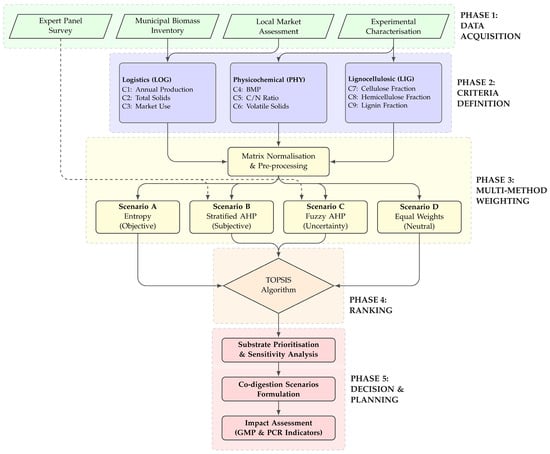
Figure 1.
General methodological workflow of the spatial multi-criteria framework.
In Phase 1, the study focused on data acquisition by compiling a comprehensive dataset from primary and secondary sources. This included a municipal inventory of biomass availability derived from official agricultural statistics, an experimental characterisation of the physicochemical properties of local residues, and a local market assessment to quantify the existing competition for each substrate based on current uses.
Subsequently, Phase 2 established the decision criteria to capture the multidimensional nature of the problem. A set of nine conflicting criteria (C1 to C9) was defined and categorised into three functional domains. The Logistics domain focused on supply chain viability, evaluating parameters such as annual production volume and total solids content. The Physicochemical domain addressed energy efficiency and process stability, incorporating indicators like BMP and the C/N ratio. The Lignocellulosic domain assessed the biodegradability of the biomass based on its structural composition, specifically the fractions of cellulose, hemicellulose, and lignin.
During Phase 3, a sensitivity analysis was integrated into the weighting process to mitigate the bias inherent in single-method approaches. The framework implemented four distinct weighting scenarios. Scenario A utilised Shannon Entropy to derive objective weights based solely on data dispersion. Scenario B applied a Stratified AHP to incorporate subjective expert judgement. Scenario C employed Stratified Fuzzy AHP to account for uncertainty and vagueness in human decision-making. Finally, Scenario D assumed equal weights for all criteria to serve as a neutral baseline for comparison.
Phase 4 executed the prioritisation of substrates using the TOPSIS method. This algorithm ranked the alternatives by calculating their geometric distance to the positive ideal solution (best possible performance) and the negative ideal solution (worst possible performance). To ensure a realistic selection suited to local production capabilities, the ranking process was applied independently to the agricultural and livestock subsets within each municipality.
Finally, at Phase 5, the results were translated into actionable bioenergy strategies. Using the prioritised substrates, anaerobic co-digestion scenarios were developed for each municipality by combining the highest-ranked agricultural residue the highest-ranked livestock waste. The potential impact of these scenarios was then quantified using two key indicators such as the Global Methane Potential (GMP), estimating theoretical energy yield, and the Potential Demand Coverage Ratio (PCR), assessing the capacity to meet local residential electricity demand.
2.1. Study Area and Identification of Alternatives
2.1.1. Agro-Industrial Profile of the Department of Sucre
The study focuses on the Department of Sucre, Colombia, comprising twenty-six municipalities distributed across five natural sub-regions, each characterised by distinct agro-ecological conditions and residue generation profiles. The Montes de María sub-region includes the municipalities of Chalán, Colosó, Morroa, Ovejas, and Sincelejo, known for their tuber and avocado production. The Mojana region, a major agricultural hub for rice, comprises Majagual, Sucre, and Guaranda. The San Jorge sub-region includes San Marcos, Caimito, La Unión, and San Benito Abad, balancing agriculture with livestock. The central Sabanas sub-region, the epicentre of intensive cattle ranching, encompasses Corozal, San Luis de Sincé, El Roble, Sampués, San Pedro, Los Palmitos, Buenavista, Galeras, and San Juan de Betulia. Finally, the Golfo de Morrosquillo sub-region covers the coastal municipalities of Coveñas, Santiago de Tolú, San Onofre, Toluviejo, and San Antonio de Palmito. This spatial subdivision is critical as the availability of biomass varies significantly. The analysis treats each municipality as a distinct spatial unit for residue quantification.
This spatial heterogeneity is illustrated in Figure 2, which presents the localised density of agricultural production and livestock inventory across the department. Figure 2a highlights agricultural production, which is primarily concentrated in the Mojana sub-region (e.g., Majagual and Guaranda) and specific areas of Montes de María (e.g., Ovejas), driven by intensive rice and tuber farming. In contrast, Figure 2b reveals the livestock inventory density, showing a high concentration in the central Sabanas sub-region (e.g., Corozal and Sampués) and ranching hubs in San Jorge sub-region (e.g., La Unión). This spatial distribution of primary production and livestock is a key determinant for estimating the biomass potential and the logistic feasibility of implementing anaerobic digestion plants.
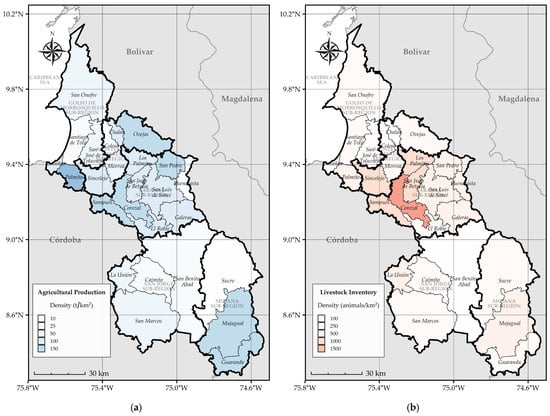
Figure 2.
Spatial distribution of agricultural production density (t/km2) and livestock inventory density (animals/km2) in the Department of Sucre: (a) Agricultural production; (b) Livestock inventory. Source: own elaboration with data from: [8].
2.1.2. Selection of Substrates and Residue Generation Factors
The selection of substrates for this study was driven by the predominant agro-economic activities in the Department of Sucre, ensuring that the proposed co-digestion scenarios are regionally relevant and logistically feasible. Consequently, the analysis focuses on the most abundant lignocellulosic residues from staple crops (e.g., cassava, yam, maize, and rice) and organic effluents from the livestock sector (i.e., cattle, poultry, and porcine manure).
Theoretical availability of these substrates at the municipal level was quantified by adopting specific Residue Generation Factors (RGF) from specialised literature. These factors, presented in Table 1, represent the ratio of residue generated per unit of main product harvested or per animal head, enabling the conversion of agricultural statistical data into biomass potential. Specifically, these factors serve as the primary input coefficient for calculating the Annual Residue Production (ARP) as defined in Equation (1) (Section 2.3.1).

Table 1.
Residue generation factors. Source: own elaboration with data from: [6,44,45,46,47,48,49,50,51,52,53,54].
2.2. Definition of Decision Criteria
A holistic assessment of substrate suitability for anaerobic co-digestion was achieved by establishing a set of nine conflicting criteria. These criteria were selected to address the multidimensional nature of bioenergy projects, encompassing supply chain reliability, bio-energy efficiency, and biochemical stability. As detailed in Table 2, the criteria are categorised into three domains:
Table 2.
Definition of decision criteria for the multi-criteria decision-making framework. Source: own elaboration based on: [55,56,57,58,59,60,61].
- Availability and Logistics (C1 to C3): These criteria assess the feasibility of the supply chain. High annual production and total solids content are desirable for reducing collection and transport costs; while competing local uses (e.g., animal feed) represent a barrier to energy valorisation.
- Physicochemical Properties (C4 to C6): These parameters determine the theoretical energy yield and process stability. Special attention is given to the C/N ratio and the content of volatile solids, which indicate the organic fraction available for conversion.
- Lignocellulosic Composition (C7 to C9): Reflecting the complexity of tropical biomass, these criteria evaluate the biodegradability kinetics. High cellulose and hemicellulose fractions are preferred for rapid conversion, whereas lignin acts as a recalcitrant barrier limiting hydrolysis.
2.3. Data Acquisition and Matrix Construction
2.3.1. Municipal Biomass Inventory and Data Collection
Data for estimating agricultural residue production were based on the main product values of the evaluated crops reported by the Agronet database (Colombian Ministry of Agriculture and Rural Development) [8]. Similarly, data required for livestock residue calculations were obtained from the same source, determining the reported annual animal inventory for each of the twenty-six municipalities.
The Annual Residue Production (ARP) for each specific residue in municipality was calculated individually to serve as a criterion for that specific alternative. This calculation follows Equation (1).
where is the estimated annual production of residue in municipality (t/year); is the reported annual production of the main crop or the animal inventory associated with residue in municipality ; and is the Residue Generation Factor for residue , as defined in Table 1. The APR represents the criterion C1 in decision matrix.
2.3.2. Experimental Characterisation
The thermal and physical properties of the substrates were determined through proximate analysis in accordance with international standards. Specifically, total solids (TS) were evaluated following NREL/TP-510-42621, while ash content was assessed using NREL/TP-510-42622. Volatile Solids (VS) was estimated by difference. The ultimate analysis was performed to quantify the elemental composition, employing a Velp EMA 502 elemental analyser and following the protocols outlined in ASTM D 5373 [62].
The lignocellulosic composition was analysed to determine the structural carbohydrate fractions essential for methane yield estimation. The content of cellulose (), hemicellulose (), lignin () and extractives () were quantified using the gravimetric Van Soest method according to AOAC 973.18 standard. To estimate the BMP (C4), a theoretical model based on the macromolecular composition of the volatile solids was employed. Equations (2) and (3) define the calculation of the potential and its associated uncertainty. In this model, represents the BMP (L of CH4/kg of VS), while , , and represent the fractions of cellulose, hemicellulose, lignin and extractives (non-structural components like soluble sugars, proteins, waxes, etc.) on dry ash free basis, respectively. The uncertainty associated with the BMP estimates (presented as ± standard deviation in Table 3) was calculated utilising error propagation theory based on the experimental standard deviations of the macromolecular fractions, as shown in Equation (3), where represents the propagated standard deviation of the BMP derived from the experimental standard deviations () of the respective biomass components. It is important to note that BMP values are reported on a VS basis (on dry basis) to reflect the energy potential of the organic fraction.
Table 3.
Physicochemical characterisation of selected substrates.
2.3.3. Assessment of Local Market Utilisation and Competition
Operational risk associated with feedstock accessibility was quantified through a semi-quantitative assessment of Local Market Utilisation (C3). Unlike physicochemical properties, this criterion evaluates the opportunity cost of diverting a residue from its current application to energy generation. An elevated level of existing competition implies a lower availability for AD or AcoD projects, categorising C3 as a Cost-type criterion.
The market scores were ascertained through a comprehensive review and triangulation of official public policy documents and environmental reports. Primary sources included the Development Plans of the Department of Sucre and its constituent municipalities, reports from Regional Environmental Control Entities, and the Macro-environmental Report of the General Departmental Comptroller [6,9,10,11,12,13,63,64,65,66,67,68,69,70,71,72,73,74,75,76,77,78,79,80,81,82,83,84]. Based on this evidence, and with the objective to minimise the human subjectivity, a five-point market competition scale was established to translate qualitative logistics data into numerical inputs for the TOPSIS algorithm. The scoring rubric was defined as follows:
- Score 1 (Negligible Competition): Residues currently treated as a disposal liability. There is no established market; the producer incurs costs for removal or burning. These are the most favourable for AcoD.
- Score 2 (Low Competition): Residues with minimal economic value, limited to sporadic on-farm nutrient cycling or inefficient uses with high perishability constraints.
- Score 3 (Moderate/Seasonal Competition): Residues with an established but fluctuating market. Competition arises during specific seasons (e.g., dry periods) for uses such as animal ensilage or bedding.
- Score 4 (High/Captive Competition): Residues integrated into mature commercial supply chains or possessing high captive use value for internal energy generation within industrial facilities.
- Score 5 (Prohibitive Competition): Commodities with a high market price where energy valorisation is economically unfeasible due to the implicit cost of acquisition.
Each alternative (A1 to A16) was assigned a discrete integer value based on its predominant management practice in the Department of Sucre.
2.4. Integrated Multi-Method Framework for Weighting and Ranking
The robustness of substrate prioritisation was assessed, and the potential dominance of specific criterion types addressed, by integrating a comparative sensitivity analysis into the framework. This involved the implementation of four distinct weighting scenarios, ranging from purely objective data-driven methods to expert-based subjective assessments under uncertainty. The ranking of alternatives was subsequently performed using the TOPSIS algorithm for each scenario.
2.4.1. Pre-Processing and Normalisation
Before determining weights, criteria that are neither strictly Benefit nor Cost types were converted. Integration into the TOPSIS framework was facilitated by converting values to a benefit type using the transformation described in Equation (4), where is the raw value, is the transformed value used in subsequent steps, and and represent the lower and upper values of the optimal range, respectively. Following this transformation, the decision matrix was vector-normalised to allow comparison across dimensions with different units using Equation (5), where represents the normalised value.
2.4.2. Shannon Entropy (Scenario A)
This method derives objective weights solely from the statistical dispersion of the data. The probability of the -th criterion for alternative (), the entropy value () and the degree of divergence () are calculated using Equations (6), (7) and (8), respectively, where represents the number of alternatives. The final objective weight is then determined by the divergence of each criterion by the sum of divergences across all criteria, as shown in Equation (9).
2.4.3. Stratified AHP (Scenario B)
Comparison matrices for the subjective weighting scenarios (B and C) were populated by consulting a panel of 15 experts in bioenergy and anaerobic digestion via a structured digital survey. The panel demonstrated a geographically and institutionally diverse profile, comprising representatives from local, regional, and national entities within Colombia, as well as an international collaborator from Spain. In terms of academic attainment, the composition was stratified into four distinct tiers: 40% of the experts held a PhD or postdoctoral qualification, 20% were doctoral candidates holding a Master’s degree, 20% possessed a Master’s degree as their highest qualification, and the remaining 20% were advanced Master’s students holding a specialisation or bachelor’s degree. Regarding domain expertise, the panel showed a balanced distribution of seniority: 47% reported between one and three years of experience, 27% between three and five years, 6% between five and ten years, and 20% exceeding ten years in the field. The expert survey form used as the data collection instrument and the anonymised expert responses and the resulting aggregated judgement matrices used for the calculations are provided in Supplementary Materials.
Expert domain knowledge was incorporated by employing the AHP with a stratified approach. Experts compared criteria pairwise within three dimensions (Logistics, Physicochemical, Lignocellulosic) and then compared the dimensions themselves, using Saaty’s scale. A pairwise comparison matrix () was constructed for each level, where elements represent the preference of criterion over . The weights () were derived by calculating the principal eigenvector of the matrix as defined in Equation (10), where is the maximum eigenvalue. Consistency was verified by ensuring the Consistency Ratio () was less than 0.1. The is calculated using the Consistency Index () and the Random Index (), which depends on the matrix size , as shown in Equations (11) and (12). Global weights were obtained by multiplying local weights by their respective dimension weights. Finally, the global weight for each criterion () was determined by multiplying its local weight () by the weight of its corresponding dimension (), as expressed in Equation (13).
2.4.4. Stratified Fuzzy AHP (Scenario C)
The vagueness inherent in human judgement was addressed by implementing Stratified Fuzzy AHP using Buckley’s Geometric Mean method. Expert preferences were treated as Triangular Fuzzy Numbers (), defined by the triplet representing lower, middle, and upper values. The fuzzy geometric mean value for each criterion was calculated according to Equation (14), where represents the number of related criteria. The fuzzy weight was then determined through the normalisation operation presented in Equation (15). Finally, the fuzzy weights were defuzzified into crisp weights using the Centre of Area method defined in Equation (16), utilising the components , , and of the fuzzy weight vector. Finally, to obtain the global weights for the ranking ), the defuzzified local weights () were multiplied by the defuzzified weights of their corresponding dimensions (), preserving the stratified structure of the analysis as shown in Equation (17).
2.4.5. Equal Weights (Scenario D)
As a baseline for neutrality, a scenario was simulated where all ten criteria were assigned equal importance, assuming no prior preference for logistics or efficiency, as shown Equation (18).
2.4.6. Ranking via TOPSIS Method
The TOPSIS method was applied to rank alternatives for each weighting scenario. The weighted normalised decision matrix () was calculated for each scenario using the respective weights () as shown in Equation (19). The Positive Ideal Solution () and Negative Ideal Solution () were then defined in Equations (20) and (21), respectively. Subsequently, the Euclidean distances to the ideal solutions ( and ) were computed using Equations (22) and (23). Finally, the ranking score () was determined by the relative closeness coefficient described in Equation (24).
2.5. Formulation of Anaerobic Co-Digestion Scenarios Based on Local Availability
Theoretical energy potential of implementing circular economy strategies at the local level was evaluated by defining specific AcoD scenarios for each municipality. These scenarios were constructed using a binary mixture approach, pairing the single highest-ranked agricultural residue with the single highest-ranked livestock residue obtained from the assessment for each specific location. This approach ensures that the proposed mixtures are logistically optimised by focusing on the most dominant waste streams.
The scenarios were characterised by four key indicators derived from the mass balance of the available substrates. First, the Total Gross Availability () for municipality was calculated as the sum of the annual generation of the two selected substrates, as presented in Equation (25).
where and are the annual quantities (t/year) of the best agricultural and livestock residues in municipality , respectively.
The physico-chemical properties of the substrate mixture were estimated assuming a complete mixing model based on the availability ratio. The Weighted BMP () and the Weighted VS () were determined according to Equations (26) and (27), respectively.
where and represent the BMP of the individual residues, and and represent VS content of the individual residues. It is crucial to note that these weighted estimations assume ideal mixing conditions based solely on mass balance. Consequently, the resulting values serve as a theoretical baseline for screening purposes and do not account for potential synergistic biochemical effects or inhibitory interactions (e.g., ammonia toxicity) that may arise in an operational reactor.
These variables were integrated to calculate the Global Methane Potential () in Equation (28), representing the theoretical maximum energy recovery capacity for the municipality per year.
This variable serves as a proxy for the scalability of biogas projects in each territory. Finally, to provide a tangible social impact metric, the Potential Demand Coverage Ratio () was calculated using Equation (29). This indicator measures the proportion of the annual residential electricity demand that could be covered by the estimated bioenergy surplus, assuming standard energy conversion efficiency.
where is the lower heating value of methane (35.8 MJ/m3), is the electrical efficiency of the generation system (assumed as 35%), is the capacity factor of the plant (0.85), represents parasitic losses (assumed as 15%), and is the total annual residential electricity consumption in municipality (MWh/year), obtained from the Colombian Superintendency of Residential Public Services (SSPD) [85], as detailed in Table A1 (see Appendix A). The constant 3600 converts the energy units from MJ to MWh.
3. Results
3.1. Municipal-Level Waste Generation Inventory
The municipal inventory, summarised in Figure 3, presents the total annual residue generation across the twenty-six municipalities. Majagual recorded the highest total biomass potential in the department, accumulating approximately 478.4 kt/year. This figure comprised 118.8 kt of agricultural residues—the maximum value observed for this category among all municipalities—and 359.6 kt of livestock residues. San Luis de Sincé and San Marcos followed as the subsequent largest producers, with total generation values of roughly 407.6 kt and 388.5 kt, respectively. In San Luis de Sincé, livestock waste constituted the predominant fraction (388.7 kt), whilst agricultural residues contributed 18.9 kt to the total mass.
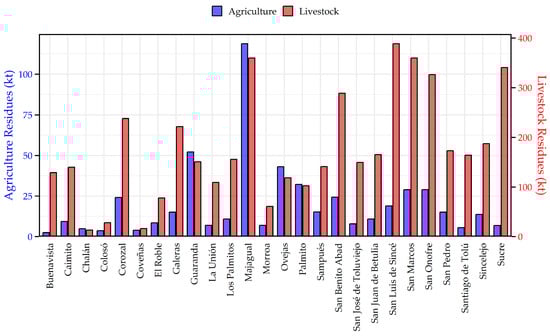
Figure 3.
Total annual residue generation (kt/y) by municipality in the Department of Sucre, categorised by sector (Agricultural vs. Livestock).
In contrast, the municipalities of Chalán, Coveñas, and Colosó exhibited the lowest generation rates, with total combined residues remaining below 32 kt/year in each location. Regarding the composition of the waste streams, livestock residues exceeded agricultural residues in all evaluated territories. For instance, in Sucre and San Onofre, livestock waste accounted for over 90% of the locally generated biomass. Apart from Majagual, significant quantities of agricultural residues were recorded in Guaranda (52.1 kt) and Ovejas (43.0 kt), although these values remained lower than their respective livestock residue counterparts (150.8 kt and 118.6 kt, respectively).
3.2. Physicochemical Characterisation of Residues
The physicochemical characterisation of the sixteen selected substrates is detailed in Table 3. The C/N ratio exhibited a wide variation across the alternatives, ranging from a minimum of 6.68 in Poultry Manure (A16) to a maximum of 52.61 in Plantain Pseudostem (A10). High ratios were also observed in Coconut Prunings (A5) at 48.48, whereas Maize Stover (A6) presented a low ratio of 9.17. Regarding solids content, TS varied considerably, with Mango Prunings (A7) recording the highest value at 53.86%, while Plantain Pseudostem (A10) showed the lowest at 6.89%, indicating high moisture content. VS ranged from 71.13% in Poultry Manure (A16) to 94.55% in Cassava Stems (A3).
Lignocellulosic composition analysis revealed distinct structural profiles. Cellulose content was highest in Coconut Prunings (A5) at 38.88% and Oil Palm Prunings (A8) at 38.04%, whereas Cassava Stems (A3) recorded the lowest fraction at 10.57%. Hemicellulose content was particularly high in Cassava Stump (A4) and Avocado Prunings (A1), reaching 51.59% and 48.18%, respectively. Regarding lignin, the highest concentrations were observed in Pig Manure (A15) at 28.26% and Cassava Stems (A3) at 28.14%, whilst Avocado Prunings (A1) presented the lowest value at 6.86%. Extractives were most abundant in Watermelon Stubble (A12), accounting for 53.63% of the ash-free dry mass.
The BMP assays demonstrated significant variability across the evaluated residues. Avocado Prunings (A1) yielded the highest theoretical potential at 315.22 L CH4/kg VS, followed by Maize Stover (A6) at 310.19 L CH4/kg VS. Conversely, the lowest methane yields were recorded for Pig Manure (A15) and Cassava Leaves (A2), with 187.82 L CH4/kg VS and 196.22 L CH4/kg VS, respectively.
3.3. Local Market Utilisation and Competition Assessment
The assessment of local market utilisation, detailed in Table 4, categorised the sixteen substrates based on their existing competition levels. A total of six residues received the lowest market score of 1, indicating negligible competition. This group included Avocado Prunings (A1), Cassava Stump (A4), Mango Prunings (A7), Plantain Pseudostem (A10), Watermelon Stubble (A12), and Yam Stubble (A13). The primary drivers associated with this score were disposal costs, land clearance requirements, and on-field nutrient cycling.
Table 4.
Assessment of local market utilisation and competition for selected residues in Sucre. Source: own elaboration with data from [6,9,10,11,12,13,63,64,65,66,67,68,69,70,71,72,73,74,75,76,77,78,79,80,81,82,83,84].
Five substrates were assigned a market score of 2, comprising Cassava Leaves (A2), Cassava Stems (A3), Coconut Prunings (A5), Plantain Leaves (A9), and Cattle Manure (A14). The competition factors identified for these residues included high perishability, specific agricultural applications such as vegetative propagation, and logistical constraints related to collection. Intermediate competition (market score 3) was recorded for three substrates including Maize Stover (A6), Rice Straw (A11), and Pig Manure (A15), where the determining factors were seasonal fluctuations, animal feed demand, and environmental management risks.
The highest competition level observed in the study corresponded to a market score of 4, assigned to Oil Palm Prunings (A8) and Poultry Manure (A16). For these residues, the key drivers limiting availability were internal energy valorisation within extraction mills and established commercial value as organic fertiliser, respectively. No residues were assigned a market score of 5.
3.4. Sensitivity Analysis of Weighting Scenarios
The sensitivity analysis of the weighting scenarios, presented in Figure 4, revealed significant variations in criteria importance across the four methods evaluated. In the objective Entropy method (Scenario A), the C1: ARP criterion was the most influential, receiving a median weight of 0.515. This was followed by C5: C/N Ratio, with a weight of 0.220. Other criteria such as C6: VS and C4: BMP showed negligible influence in this scenario, with weights of 0.001 and 0.025, respectively.
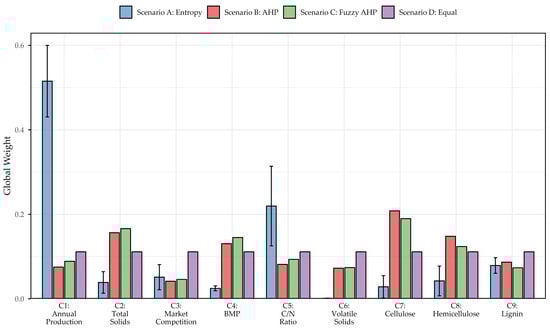
Figure 4.
Comparative distribution of criteria weights across the four evaluated weighting scenarios.
Conversely, the subjective scenarios involving expert consultation (B and C) demonstrated a more distributed weight allocation, favouring physicochemical properties. In Scenario B (Stratified AHP), the highest weights were assigned to C7: Cellulose (0.208), C2: TS (0.156), and C8: Hemicellulose (0.148). Similarly, Scenario C (Stratified Fuzzy AHP) prioritised C7: Cellulose (0.190) and C2: TS (0.166), but also placed greater emphasis on C4: BMP (0.145) compared to Scenario B. In both subjective scenarios, the logistical criterion C1: ARP received substantially lower weights (0.075 and 0.089, respectively) than in the Entropy method. Scenario D maintained a constant weight of 0.111 for all nine criteria, serving as the neutral baseline.
3.5. Multi-Criteria Prioritisation of Substrates
The top-ranked substrates selected for each municipality under the four weighting scenarios are presented in Table 5. Across all municipalities and scenarios, A14 (Cattle Manure) was consistently identified as the preferred livestock substrate. For the agricultural residues, Scenario A (Entropy) primarily selected A3 (Cassava Stems) in 15 municipalities and A11 (Rice Straw) in 5 municipalities, with minor occurrences of A6 (Maize Stover) and A10 (Plantain Pseudostem).
Table 5.
Comparison of the top-ranked agricultural and livestock substrates selected for each municipality under the four weighting scenarios.
Conversely, Scenarios B (Stratified AHP) and C (Stratified Fuzzy AHP) showed a strong preference for A4 (Cassava Stump), which was selected in 12 and 10 municipalities, respectively. A6 (Maize Stover) was the second most frequent choice in these scenarios, appearing in 9 instances for Scenario B and 8 for Scenario C. A11 (Rice Straw) were selected in 5 locations in both Scenario A and B. Scenario D (Equal Weights) presented a mixed distribution, favouring A3 (Cassava Stems) in 11 municipalities and A4 (Cassava Stump) in 6, aligning partially with both the objective and subjective scenarios.
3.6. Estimation of Global Methane Potential and Electrical Coverage
The theoretical energy potential for the prioritised co-digestion scenarios under the Entropy Method (Scenario A) is detailed in Table 6. Majagual exhibited the highest Total Gross Availability (TA) with 430.51 kt and the highest GMP of 100.15 million m3, resulting in an Electrical Power Potential (EPP) of 28.75 MW. San Luis de Sincé followed with a GMP of 86.46 million m3 and an EPP of 24.82 MW. Conversely, municipalities like Chalán and Coveñas recorded the lowest potential, with GMP values of 3.25 million m3 and 3.41 million m3, respectively.
Table 6.
Theoretical energy potential and electrical demand coverage for the prioritised co-digestion scenarios (Entropy-TOPSIS Method) across the twenty-six municipalities.
The mixtures were predominantly composed of Cattle Manure (A14), with shares exceeding 90% in municipalities such as Buenavista (99.1%), La Unión (98.0%), and Sucre (98.6%). Agricultural residues like Rice Straw (A11) had a notable contribution in Guaranda (25.7%) and Majagual (21.2%), while Maize Stover (A6) contributed 16.4% in Chalán. The C/N ratios of the mixtures generally ranged between 28 and 29, with lower values observed in Chalán (19.68) and Ovejas (22.97).
Regarding the PCR, San Benito Abad achieved the highest coverage at 8101.63%, followed by Sucre with 7645.96% and Buenavista with 6892.08%. Even in municipalities with significant urban demand like Sincelejo, the PCR was 173.36%, indicating a theoretical surplus. The lowest PCR was observed in Coveñas (151.2%), which still suggests full coverage of the local residential demand.
The spatial projection of these results, visualised in Figure 5, delineates clear territorial vocations for bioenergy development. The southern sub-regions of Mojana and San Jorge form a cohesive Rice Straw (A11) cluster, characterised by high GMP intensity in municipalities such as Majagual and Guaranda. A central corridor defined by Cassava Stems (A3) spans the Sabanas and parts of the Golfo de Morrosquillo sub-regions, connecting high-yield nodes like San Luis de Sincé with lower-density areas. In the north, Plantain Pseudostem (A10) dominates the coastal municipality of San Onofre and the montane zone of Colosó, while Maize Stover (A6) is prioritised in geographically dispersed pockets including Caimito and Ovejas. The gradation in colour intensity visually correlates with the estimated GMP, highlighting the strategic relevance of specific municipalities as potential nuclei for sub-regional biogas infrastructure.
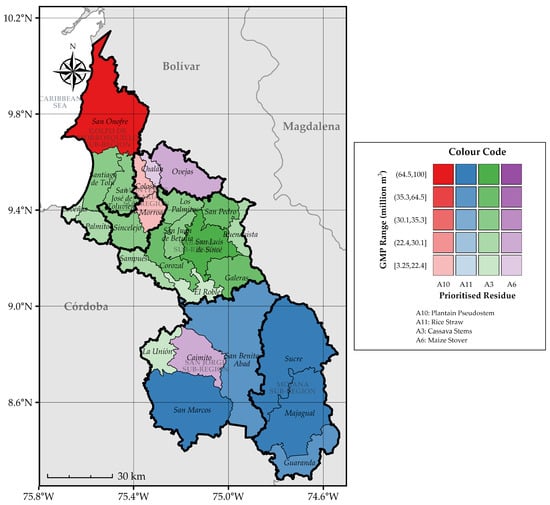
Figure 5.
Spatial distribution of prioritised agricultural residues for co-digestion in the Department of Sucre.
4. Discussion
4.1. Trade-Offs Between Feedstock Availability and Physicochemical Quality
The comparative analysis of weighting scenarios exposed a fundamental divergence between data-driven objectivity and expert subjectivity regarding the critical success factors for bioenergy implementation. Whilst the Shannon Entropy method identified ARP as the governing constraint by assigning it a dominant weight exceeding half of the total importance, the expert-based methodologies consistently undervalued this logistical parameter in favour of physicochemical properties such as cellulose content and BMP. This discrepancy suggests that academic and technical expertise tends to prioritise theoretical conversion efficiency over the supply chain robustness required for continuous industrial operation [25].
This weighting conflict directly influenced the prioritisation of substrates where the objective scenario selected residues with established high-volume generation such as rice straw and cassava stems while subjective scenarios favoured materials with superior lignocellulosic profiles but limited availability compared to those prioritised by Scenario A. Relying solely on expert judgement creates a risk of designing facilities around substrates that are biochemically ideal but logistically scarce or highly dispersed, potentially leading to operational failures due to feedstock discontinuity [24]. Consequently, the data-driven approach proves more adept at capturing the territorial reality where biomass density serves as the primary feasibility threshold.
The distinct preference of the Entropy method for the C/N ratio as the second most influential criterion underscores the necessity of balancing the nutritional profile of the mixture alongside mass availability. By prioritising substrates that complement the nitrogen-rich livestock waste, the objective framework naturally converged towards co-digestion strategies that enhance process stability without sacrificing the scale of operation. This contrasts with the expert scenarios which diluted the importance of stability parameters to maximise theoretical methane yields, overlooking the synergistic benefits of chemically balanced mixtures in real-world reactor performance.
Validating the proposed framework requires acknowledging that the most sustainable bioenergy solution is not necessarily the one with the highest energy density but rather the one with the lowest supply risk. The prioritisation of cattle manure as a universal baseload reinforced by high-availability agricultural residues aligns with the need to minimise collection and transport costs [29,30]. Therefore, the adoption of the Entropy-based results provides a conservative yet robust roadmap for infrastructure planning, ensuring that bioenergy hubs are sited in locations with guaranteed material flow rather than a maximum BMP.
4.2. Feasibility of Mono-Digestion vs. Co-Digestion Strategies in Tropical Regions
Analysis of the prioritised mixtures reveals a stark dichotomy in the operational feasibility of AcoD across the department as indicated by the proportion of agricultural residues in the blend. In municipalities such as Buenavista, La Unión, and Sucre, the agricultural fraction constitutes less than 2% of the total biomass despite being selected as the optimal complement by the multi-criteria framework. This negligible contribution implies that while co-digestion is theoretically preferable, the logistical reality imposes a de facto mono-digestion scenario where the technical complexity of sourcing and pre-treating a secondary substrate may outweigh the marginal metabolic benefits [18]. Consequently, infrastructure planning in these zones must focus on optimising the mono-digestion of cattle manure, acknowledging its inherent limitations such as low methane yield and potential ammonia inhibition [17].
The biochemical impact of these disparate mixtures further challenges the universal applicability of co-digestion strategies in the region. For the majority of municipalities where the agricultural input remains below the 5% threshold, the C/N ratio of the mixture barely deviates from that of pure manure, remaining close to 28. This suggests that the expected synergistic effects, such as the dilution of toxic compounds or the optimisation of rheological properties [23], would be practically non-existent in these specific locations. Implementing a dual-feedstock system under these conditions would incur unnecessary capital expenditure for storage and dosing units without delivering the process stability enhancements typically associated with multi-substrate digestion [22].
Furthermore, the spatial projection of the results delineates clear territorial vocations that support the establishment of regional bioenergy clusters. The southern sub-regions of Mojana and San Jorge form a cohesive and continuous belt of high-yield municipalities dominated by the Rice Straw-Cattle Manure mixture, creating a genuine opportunity for centralised industrial infrastructure that benefits from economies of scale and cross-border supply chains. In contrast, the central corridor, defined by the Cassava Stems–Cattle Manure mixture, presents a more fragmented landscape, where the feasibility of co-digestion is contingent on the specific logistical density of each municipality. This spatial clustering suggests that technology transfer efforts should be regionalised, standardising reactor designs for rice residues in the south while adapting systems for tuber residues in the central Sabana sub-region [21].
Therefore, a tiered technological roadmap is required to address this territorial heterogeneity rather than a standardised solution for the entire department. The findings advocate for a strategic bifurcation regarding deploying simplified, robust reactor configurations optimised for manure mono-digestion in the predominantly livestock-dependent central and coastal sub-regions, while reserving complex co-digestion facilities for the agricultural strongholds in the south and Montes de María sub-region. This tailored approach aligns with the principles of the circular bioeconomy by ensuring that technological sophistication matches the specific availability and composition of local waste streams, thereby potentially mitigating the risk of project failure due to operational over-design [15].
4.3. Potential Impact on Local Energy Autonomy and Circular Economy
The estimated PCR demonstrates that the Department of Sucre possesses a latent capacity to decouple its residential energy sector from the national grid through the valorisation of locally available biomass. Notably, in municipalities like San Benito Abad and Sucre, where the theoretical coverage exceeds 7000%, the bioenergy surplus is sufficient to not only meet domestic needs but also to power agro-industrial processing facilities or export electricity to neighbouring zones. The spatial analysis (Figure 5) reinforces this potential by revealing a contiguous ‘Bioenergy Hub’ in the Mojana sub-region, where the aggregation of high-yield municipalities creates a stable regional energy basin. This clustering effect facilitates the implementation of industrial symbiosis networks, where the energy surplus from the agricultural hinterland can reliably power the energy-intensive rice milling operations concentrated in this district, effectively insulating the local economy from national grid volatility.
Even in densely populated urban centres such as Sincelejo, the capital, the model predicts a coverage ratio of 173%, indicating that the metabolic waste of the city and its immediate rural hinterland is enough to sustain its residential electricity consumption. These findings suggest that the establishment of peri-urban bioenergy plants—which reduce transmission losses and enhance local energy security against grid fluctuations—is a compelling case worthy of further feasibility studies. Such decentralised infrastructure would address the stark disparity between biomass availability and energetic valorisation currently observed across Latin American economies [5].
Beyond energy security, the implementation of these co-digestion scenarios addresses the critical deficit in waste management infrastructure that currently plagues the region. By diverting massive volumes of cattle manure and crop residues from open-air decomposition, the proposed framework directly contributes to mitigating the environmental drivers of eutrophication and uncontrolled GHGs emissions [7]. This transition from uncontrolled disposal to contained anaerobic digestion represents a quantifiable environmental service, transforming a source of sanitary risk into a controllable renewable fuel [14].
The circularity of the proposed model is further reinforced by the potential production of digestate, a nutrient-rich by-product of the anaerobic process. For agricultural strongholds like Majagual and Guaranda, the return of stabilised digestate to the soil would close the nutrient loop, reducing reliance on synthetic fertilisers and restoring soil organic carbon. This integration of energy generation with agronomic recycling exemplifies the mature application of anaerobic digestion technologies within a regenerative bioeconomy framework [16].
Ultimately, the data validates that the primary barrier to bioenergy adoption in Sucre is not a lack of resource availability but rather the absence of strategic planning tools to quantify and locate this potential. By demonstrating that every evaluated municipality can theoretically cover its residential demand, this study provides the empirical evidence required to de-risk investments in the sector. Shifting the focus from theoretical yield maximisation to logistical reliability creates a stable foundation for developing local bioenergy markets that compete effectively with existing linear disposal practices [26].
4.4. Limitations and Future Perspectives
The primary limitation of this spatial framework lies in the resolution of the biomass inventory which relies on aggregated municipal statistics rather than precise geolocated crop data. Whilst the model successfully identifies municipalities with high potential like Majagual and San Luis de Sincé, it assumes a homogeneous distribution of residues within these administrative boundaries, potentially underestimating the collection costs in geographically extensive territories where feedstock might be dispersed [36,37]. This differentiation implies that whilst clusters identified in Figure 5 benefit from redundant supply sources across borders, projects located in isolated high-yield zones like San Onofre lack this buffer, necessitating stricter individual supply guarantees and potentially higher contingency storage capacities to mitigate isolation risks [34].
Another constraint involves the temporal dimension of the assessment which utilises annual production totals to estimate energy potential, implicitly assuming a constant supply of feedstock throughout the year. Agricultural residues such as rice straw and maize stover are inherently seasonal, meaning that the theoretical continuous power output calculated for municipalities like Guaranda could face significant fluctuations or storage requirements to bridge supply gaps [20]. To address this, dynamic modelling of crop calendars must be incorporated to dimension storage facilities accurately and design complementary planting schedules that ensure a steady flow of organic matter to the digesters [33].
The biochemical methane potential values used to estimate the energy output represent the maximum theoretical yield achievable under controlled laboratory conditions, which often exceeds the performance of full-scale industrial reactors. Factors such as imperfect mixing, temperature fluctuations, and the accumulation of inhibitory metabolites in continuous operation can reduce actual methane production, suggesting that the reported GMP values should be interpreted as an upper bound rather than a guaranteed baseline [19]. Subsequent pilot-scale studies are essential to determine the specific hydraulic retention times and organic loading rates required to approach these theoretical limits with the prioritised substrate mixtures [38,39].
While the study establishes the technical and logistical priority of specific substrate mixtures, it does not encompass a full techno-economic analysis to determine the Levelised Cost of Energy for the proposed facilities. The high capital expenditure associated with biogas infrastructure, particularly for co-digestion systems requiring advanced pre-treatment for lignocellulosic materials, constitutes a significant barrier to entry in developing economies [2]. Future research must couple these spatial findings with detailed financial models that account for local electricity tariffs, potential digestate sales, and carbon credit revenues to validate the commercial viability of the projects [3,4].
The successful deployment of these bioenergy strategies is contingent not only on technical parameters but also on the social acceptance and regulatory framework governing waste management in the region. The current model assumes that all identified residues are available for energy valorisation, yet informal competitive uses or cultural practices such as field burning may restrict access to these resources in practice. Engaging local stakeholders and establishing clear policy incentives for agricultural waste diversion are critical steps to transform the theoretical availability identified in this study into a securable supply chain.
Finally, the broad categorisation of co-digestion scenarios does not prescribe specific reactor configurations, which must be tailored to the rheological properties of the selected mixtures. The high TS content observed in mixtures dominated by cattle manure and fibrous residues suggests that traditional wet digestion systems might encounter mixing difficulties, potentially necessitating the adoption of high-solids or dry digestion technologies [35]. Detailed engineering designs focusing on the viscosity and pumping requirements of the specific binary mixtures proposed for each municipality will be required to ensure operational reliability and maximise energy recovery.
5. Conclusions
The study successfully validated the hypothesis that logistic reliability constitutes the primary constraint for bioenergy implementation in tropical agro-industrial regions, superseding theoretical biochemical potential. The application of the spatial multi-criteria framework revealed that objective weighting methods correctly identified ARP as the dominant decision factor, whereas expert-based approaches tended to overestimate the importance of physicochemical properties such as cellulose content. This data-driven prioritisation mitigates the risk of feedstock discontinuity by ensuring that the selected substrate mixtures rely on established and high-volume waste streams rather than chemically ideal but logistically scarce materials.
Cattle manure emerged as the unequivocal baseload substrate across all twenty-six municipalities, providing the necessary buffering capacity and supply stability required for continuous reactor operation. The complementary agricultural residues exhibited significant spatial heterogeneity, with rice straw and cassava stems identified as the optimal co-substrates in the southern and central sub-regions of the study area, respectively. In contrast, the theoretical preference for plantain pseudostem observed in subjective scenarios was proven logistically unfeasible for industrial-scale applications due to its dispersed generation patterns, underscoring the necessity of anchoring bioenergy projects to the dominant local agricultural vocation rather than generic laboratory yields.
The spatial projection of these results dictates a bifurcated technological strategy for the department, distinguishing between robust bioenergy hubs and isolated energy islands. The identification of a continuous high-yield cluster in the Mojana sub-region would justify the capital investment in centralised industrial infrastructure capable of serving cross-border supply chains and powering regional agro-industrial nodes. Conversely, the fragmented landscape of the central savannahs requires a decentralised approach focused on smaller reactor configurations optimised for local self-sufficiency, thereby adapting the technological complexity to the specific logistical density of each territory.
The estimated energy potential confirms that the transition to a circular bioeconomy is a viable pathway for enhancing regional energy autonomy, with every municipality demonstrating the theoretical capacity to meet its residential electricity demand, and in multiple cases exceeding it until between 10 and 81 times. By transforming environmental liabilities into renewable power vectors, the proposed framework not only addresses the urgent deficit in waste management infrastructure but also provides policymakers with a spatial roadmap to de-risk investments. Ultimately, this study demonstrates that aligning bioenergy infrastructure with the logistic and spatial realities of the territory is the most effective mechanism to guarantee the long-term sustainability of the sector in developing economies.
Supplementary Materials
The following supporting information can be downloaded at: https://www.mdpi.com/article/10.3390/biomass6020025/s1. File S1: Agriculture and livestock data; File S2: Survey form; File S3: Survey responses; File S4: Residue_Generation_Results; File S5: Vector-Normalized_Matrix; File S6: Scenario_Comparison_Sucre.
Author Contributions
Conceptualisation, J.E.H.R., J.J.C.E. and D.D.O.M.; methodology, J.E.H.R., D.D.O.M. and J.J.C.E.; software, D.D.O.M. and C.A.N.P.; validation, J.E.H.R. and E.D.A.D.; formal analysis, J.J.C.E.; investigation, J.E.H.R., M.J.L.P., K.J.S.A., L.C.T.R., C.A.M.S. and C.A.N.P.; resources, J.G.S.M.; data curation, E.D.A.D., C.A.M.S., M.J.L.P., K.J.S.A. and L.C.T.R.; writing—original draft preparation, J.E.H.R. and D.D.O.M.; writing—review and editing, J.J.C.E., E.D.A.D., K.J.S.A., L.C.T.R., M.J.L.P., C.A.M.S., C.A.N.P. and J.G.S.M.; visualisation, J.E.H.R., D.D.O.M. and C.A.N.P.; supervision, J.J.C.E. and J.G.S.M.; project administration, J.G.S.M.; funding acquisition, J.E.H.R., J.G.S.M. and D.D.O.M. All authors have read and agreed to the published version of the manuscript.
Funding
This research was funded by the Colombian General System of Royalties (Sistema General de Regalías de Colombia), grant number BPIN 2020000100189. The APC was funded by Sistema General de Regalías de Colombia.
Institutional Review Board Statement
Not applicable.
Informed Consent Statement
Not applicable.
Data Availability Statement
The original contributions presented in this study are included in the article/Supplementary Materials. Further inquiries can be directed to the corresponding authors.
Acknowledgments
This work represents a partial result of the doctoral studies conducted by J.E. Hernández Ruydíaz in Energy Engineering at the University of the Coast (Universidad de la Costa), Colombia.
Conflicts of Interest
Authors declare no conflicts of interest. The funders had no role in the design of the study; in the collection, analyses, or interpretation of data; in the writing of the manuscript; or in the decision to publish the results.
Appendix A
Table A1.
Annual electricity consumption (MWh) by socioeconomic level for municipalities in the Department of Sucre (2025). Source: own elaboration with data from SSPD [85].
Table A1.
Annual electricity consumption (MWh) by socioeconomic level for municipalities in the Department of Sucre (2025). Source: own elaboration with data from SSPD [85].
| Municipality | Annual Electricity Consumption (MWh) |
|---|---|
| Buenavista | 995.2 |
| Caimito | 1650.1 |
| Chalán | 409.8 |
| Colosó | 944.8 |
| Corozal | 9604.7 |
| Coveñas | 5667.6 |
| El Roble | 964.2 |
| Galeras | 2424.3 |
| Guaranda | 1910.7 |
| La Unión | 1187.4 |
| Los Palmitos | 2307.9 |
| Majagual | 4791.0 |
| Morroa | 2197.6 |
| Ovejas | 2494.5 |
| Palmito | 1270.9 |
| Sampués | 5490.1 |
| San Benito Abad | 2001.8 |
| San José de Toluviejo | 2734.3 |
| San Juan de Betulia | 1457.1 |
| San Luis de Sincé | 3475.5 |
| San Marcos | 7380.3 |
| San Onofre | 6437.2 |
| San Pedro | 2221.4 |
| Santiago de Tolú | 6660.4 |
| Sincelejo | 47,684.5 |
| Sucre | 2372.4 |
References
- Bogdanov, D.; Ram, M.; Aghahosseini, A.; Gulagi, A.; Oyewo, A.S.; Child, M.; Caldera, U.; Sadovskaia, K.; Farfan, J.; Barbosa, D.S.N.S.; et al. Low-Cost Renewable Electricity as the Key Driver of the Global Energy Transition towards Sustainability. Energy 2021, 227, 120467. [Google Scholar] [CrossRef]
- Bhatia, T.; Sindhu, S.S. Sustainable Management of Organic Agricultural Wastes: Contributions in Nutrients Availability, Pollution Mitigation and Crop Production. Discov. Agric. 2024, 2, 130. [Google Scholar] [CrossRef]
- Farghali, M.; Osman, A.I.; Umetsu, K.; Rooney, D.W. Integration of Biogas Systems into a Carbon Zero and Hydrogen Economy: A Review. Environ. Chem. Lett. 2022, 20, 2853–2927. [Google Scholar] [CrossRef]
- World Biogas Association. Global Potential of Biogas; World Biogas Association: London, UK, 2019. [Google Scholar]
- Sampaolesi, S.; Briand, L.E.; Saparrat, M.C.N.; Toledo, M.V. Potentials of Biomass Waste Valorization: Case of South America. Sustainability 2023, 15, 8343. [Google Scholar] [CrossRef]
- Escalante Hernández, H.; Orduz Prada, J.; Zapata Lesmes, H.J.; Cardona Ruiz, M.C.; Duarte Ortega, M. Atlas Del Potencial Energético de La Biomasa Residual En Colombia; Unidad de Planeación Minero Energética (UPME): Bogotá, Colombia, 2010.
- Alean, J.; Bastidas, M.; Boom-Cárcamo, E.; Maya, J.C.; Chejne, F.; Ramírez, S.; Nieto, D.; Ceballos, C.; Saurith, A.; Córdoba-Ramirez, M. Design of a Technical Decision-Making Strategy to Collect Biomass Waste from the Palm Oil Industry as a Renewable Energy Source: Case Study in Colombia. Environments 2025, 12, 165. [Google Scholar] [CrossRef]
- Agronet Evaluaciones Agropecuarias—EVA y Anuario Estadístico Del Sector Agropecuario. Available online: https://www.agronet.gov.co/estadistica/paginas/home.aspx?cod=59 (accessed on 25 August 2025).
- Alcaldía de Sincé Plan de Desarrollo Municipal 2024–2027 “Unidos Avanzamos”. Available online: http://www.since-sucre.gov.co/planes/plan-de-desarrollo-municipal-since-sucre-unidos-avanzamos (accessed on 29 January 2026).
- Alcaldía Municipal de Los Palmitos Plan de Desarrollo Territorial 2024–2027 “Al Servicio de La Gente”. Available online: http://www.lospalmitos-sucre.gov.co/planes/plan-de-desarrollo-municipal-de-los-palmitos-sucre-20242027 (accessed on 29 January 2026).
- Alcaldía de Galeras Plan de Desarrollo 2024–2027 “Compromiso Social Ahora Le Toca al Pueblo”. Available online: https://www.galeras-sucre.gov.co/planes/plan-de-desarrollo-20242027-compromiso-social-ahora (accessed on 29 January 2026).
- CARSUCRE Plan de Acción Institucional 2020–2023. Available online: https://carsucre.gov.co/wp-content/uploads/2016/05/PAI-CARSUCRE-2020-2023.pdf (accessed on 29 January 2026).
- CARSUCRE. Plan de Acción Institucional 2024–2027; Corporación Autónoma Regional de Sucre (CARSUCRE): Sincelejo, Colombia, 2024. Available online: https://carsucre.gov.co/wp-content/uploads/2025/10/PAI-2024-2027_VF_DEFINITIVO_c.pdf (accessed on 29 January 2026).
- Ijaz, M.U.; Akbar, A.; Eman, R.; Hayat, M.F.; Naz, H.; Ashraf, A. Mitigating Nutrient Pollution from Livestock Manure: Strategies for Sustainable Management. In Agricultural Nutrient Pollution and Climate Change; Springer Nature: Cham, Switzerland, 2025; pp. 165–187. [Google Scholar]
- Kapoor, R.; Ghosh, P.; Kumar, M.; Sengupta, S.; Gupta, A.; Kumar, S.S.; Vijay, V.; Kumar, V.; Kumar Vijay, V.; Pant, D. Valorization of Agricultural Waste for Biogas Based Circular Economy in India: A Research Outlook. Bioresour. Technol. 2020, 304, 123036. [Google Scholar] [CrossRef] [PubMed]
- Antoniou, N.; Monlau, F.; Sambusiti, C.; Ficara, E.; Barakat, A.; Zabaniotou, A. Contribution to Circular Economy Options of Mixed Agricultural Wastes Management: Coupling Anaerobic Digestion with Gasification for Enhanced Energy and Material Recovery. J. Clean. Prod. 2019, 209, 505–514. [Google Scholar] [CrossRef]
- Teixeira Franco, R.; Buffière, P.; Bayard, R. Cattle Manure for Biogas Production. Does Ensiling and Wheat Straw Addition Enhance Preservation of Biomass and Methane Potential? Biofuels 2020, 11, 671–682. [Google Scholar] [CrossRef]
- Jasińska, A.; Grosser, A.; Meers, E. Possibilities and Limitations of Anaerobic Co-Digestion of Animal Manure—A Critical Review. Energies 2023, 16, 3885. [Google Scholar] [CrossRef]
- Manasa, P.; Doriya, K.; Saroj, P.; Gunasekaran, S.; Hemalatha, M.; Habibullah, S.; Mallick, S.P. Advancements and Challenges in Biogas Technology: A Comprehensive Review on Sustainable Approach to Waste Management and Renewable Energy. Bioenergy Res. 2025, 19, 7. [Google Scholar] [CrossRef]
- Ismail, N.; Fauzi, N.F.; Salehabadi, A.; Latif, S.; Awiszus, S.; Müller, J. A Study on Biogas Production from Cassava Peel and Stem in Anaerobic Digestion Reactor. Int. J. Environ. Sci. Technol. 2022, 19, 1695–1704. [Google Scholar] [CrossRef]
- Karki, R.; Chuenchart, W.; Surendra, K.C.; Shrestha, S.; Raskin, L.; Sung, S.; Hashimoto, A.; Kumar Khanal, S. Anaerobic Co-Digestion: Current Status and Perspectives. Bioresour. Technol. 2021, 330, 125001. [Google Scholar] [CrossRef]
- Rocamora, I.; Wagland, S.T.; Rivas Casado, M.; Hassard, F.; Villa, R.; Peces, M.; Simpson, E.W.; Fernández, O.; Bajón-Fernández, Y. Managing Full-Scale Dry Anaerobic Digestion: Semi-Continuous and Batch Operation. J. Environ. Chem. Eng. 2022, 10, 108154. [Google Scholar] [CrossRef]
- Cao, X.; Jia, M.; Tian, Y. Rheological Properties and Dewaterability of Anaerobic Co-Digestion with Sewage Sludge and Food Waste: Effect of Thermal Hydrolysis Pretreatment and Mixing Ratios. Water Sci. Technol. 2023, 87, 2441–2456. [Google Scholar] [CrossRef] [PubMed]
- Wardle, J.M.; Fischer, A.; Tesfaye, Y.; Smith, J. Seasonal Variability of Resources: The Unexplored Adversary of Biogas Use in Rural Ethiopia. Curr. Res. Environ. Sustain. 2021, 3, 100072. [Google Scholar] [CrossRef] [PubMed]
- Tucho, G.; Moll, H.; Schoot Uiterkamp, A.; Nonhebel, S. Problems with Biogas Implementation in Developing Countries from the Perspective of Labor Requirements. Energies 2016, 9, 750. [Google Scholar] [CrossRef]
- Nigussie, A.; Kuyper, T.W.; de Neergaard, A. Agricultural Waste Utilisation Strategies and Demand for Urban Waste Compost: Evidence from Smallholder Farmers in Ethiopia. Waste Manag. 2015, 44, 82–93. [Google Scholar] [CrossRef]
- Feiz, R.; Ammenberg, J. Assessment of Feedstocks for Biogas Production, Part I—A Multi-Criteria Approach. Resour. Conserv. Recycl. 2017, 122, 373–387. [Google Scholar] [CrossRef]
- Parajuli, R.; Knudsen, M.T.; Dalgaard, T. Multi-criteria Assessment of Yellow, Green, and Woody Biomasses: Pre-screening of Potential Biomasses as Feedstocks for Biorefineries. Biofuels Bioprod. Biorefin. 2015, 9, 545–566. [Google Scholar] [CrossRef]
- Soha, T.; Papp, L.; Csontos, C.; Munkácsy, B. The Importance of High Crop Residue Demand on Biogas Plant Site Selection, Scaling and Feedstock Allocation—A Regional Scale Concept in a Hungarian Study Area. Renew. Sustain. Energy Rev. 2021, 141, 110822. [Google Scholar] [CrossRef]
- Shi, Z.; Marinello, F.; Ai, P.; Pezzuolo, A. Assessment of Bioenergy Plant Locations Using a GIS-MCDA Approach Based on Spatio-Temporal Stability Maps of Agricultural and Livestock Byproducts: A Case Study. Sci. Total Environ. 2024, 947, 174665. [Google Scholar] [CrossRef] [PubMed]
- Akther, A.; Ahamed, T.; Noguchi, R.; Genkawa, T.; Takigawa, T. Site Suitability Analysis of Biogas Digester Plant for Municipal Waste Using GIS and Multi-Criteria Analysis. Asia-Pac. J. Reg. Sci. 2019, 3, 61–93. [Google Scholar] [CrossRef]
- Venier, F.; Yabar, H. Renewable Energy Recovery Potential towards Sustainable Cattle Manure Management in Buenos Aires Province: Site Selection Based on GIS Spatial Analysis and Statistics. J. Clean. Prod. 2017, 162, 1317–1333. [Google Scholar] [CrossRef]
- Mehta, K.; Zörner, W. Optimizing Agri-PV System: Systematic Methodology to Assess Key Design Parameters. Energies 2025, 18, 3877. [Google Scholar] [CrossRef]
- Min Htoo, T.; Yabar, H.; Mizunoya, T. GIS-Based Cluster and Suitability Analysis of Crop Residues: A Case Study in Yangon Region, Myanmar. Appl. Sci. 2022, 12, 11822. [Google Scholar] [CrossRef]
- Yadav, P.; Yadav, S.; Singh, D.; Giri, B.S. Sustainable Rural Waste Management Using Biogas Technology: An Analytical Hierarchy Process Decision Framework. Chemosphere 2022, 301, 134737. [Google Scholar] [CrossRef]
- Escalante, H.; Castro, L.; Gauthier-Maradei, P.; Rodríguez De La Vega, R. Spatial Decision Support System to Evaluate Crop Residue Energy Potential by Anaerobic Digestion. Bioresour. Technol. 2016, 219, 80–90. [Google Scholar] [CrossRef]
- Siegrist, A.; Bowman, G.; Burg, V. Energy Generation Potentials from Agricultural Residues: The Influence of Techno-Spatial Restrictions on Biomethane, Electricity, and Heat Production. Appl. Energy 2022, 327, 120075. [Google Scholar] [CrossRef]
- Ruiz, L.M.; Fernández, M.; Genaro, A.; Martín-Pascual, J.; Zamorano, M. Multi-Parametric Analysis Based on Physico-Chemical Characterization and Biochemical Methane Potential Estimation for the Selection of Industrial Wastes as Co-Substrates in Anaerobic Digestion. Energies 2023, 16, 5444. [Google Scholar] [CrossRef]
- González, R.; Peña, D.C.; Gómez, X. Anaerobic Co-Digestion of Wastes: Reviewing Current Status and Approaches for Enhancing Biogas Production. Appl. Sci. 2022, 12, 8884. [Google Scholar] [CrossRef]
- Manirathinam, T.; Narayanamoorthy, S.; Geetha, S.; Othman, M.F.I.; Alotaibi, B.S.; Ahmadian, A.; Kang, D. Sustainable Renewable Energy System Selection for Self-Sufficient Households Using Integrated Fermatean Neutrosophic Fuzzy Stratified AHP-MARCOS Approach. Renew. Energy 2023, 218, 119292. [Google Scholar] [CrossRef]
- Wang, B.; Song, J.; Ren, J.; Li, K.; Duan, H.; Wang, X. Selecting Sustainable Energy Conversion Technologies for Agricultural Residues: A Fuzzy AHP-VIKOR Based Prioritization from Life Cycle Perspective. Resour. Conserv. Recycl. 2019, 142, 78–87. [Google Scholar] [CrossRef]
- Sayın, F.E.; Özbay, B.; Çalli, B.; Göktaş, R.K.; Özbay, İ. A Realistic Performance Assessment for Pilot-Scale Biodrying Application: AHP-PROMETHEE Approach. Energy Sources Part A Recovery Util. Environ. Eff. 2025, 47, 2558164. [Google Scholar] [CrossRef]
- Lim, J.Y.; How, B.S.; Teng, S.Y.; Leong, W.D.; Tang, J.P.; Lam, H.L.; Yoo, C.K. Multi-Objective Lifecycle Optimization for Oil Palm Fertilizer Formulation: A Hybrid P-Graph and TOPSIS Approach. Resour. Conserv. Recycl. 2021, 166, 105357. [Google Scholar] [CrossRef]
- Binod, P.; Sindhu, R.; Singhania, R.R.; Vikram, S.; Devi, L.; Nagalakshmi, S.; Kurien, N.; Sukumaran, R.K.; Pandey, A. Bioethanol Production from Rice Straw: An Overview. Bioresour. Technol. 2010, 101, 4767–4774. [Google Scholar] [CrossRef]
- Idris, S.; Rosnah, S.; Nor, M.Z.M.; Mokhtar, M.N.; Abdul Gani, S.S. Physicochemical Composition of Different Parts of Cassava (Manihot Esculenta Crantz) Plant. Food Res. 2020, 4, 78–84. [Google Scholar] [CrossRef]
- Sivamani, S.; Chandrasekaran, A.P.; Balajii, M.; Shanmugaprakash, M.; Hosseini-Bandegharaei, A.; Baskar, R. Evaluation of the Potential of Cassava-Based Residues for Biofuels Production. Rev. Environ. Sci. Biotechnol. 2018, 17, 553–570. [Google Scholar] [CrossRef]
- Tippayawong, N.; Rerkkriangkrai, P.; Aggarangsi, P.; Pattiya, A. Biochar Production from Cassava Rhizome in a Semi-Continuous Carbonization System. Energy Procedia 2017, 141, 109–113. [Google Scholar] [CrossRef]
- Murgueitio-Manzanares, E.; Campo-Fernández, M.; Nirchio-Tursellino, M.; Cuesta-Rubio, O.; Tocto-León, J. Composición Química Y Actividad Biológica Del Pseudotallo De Musa X Paradisiaca L (Banano). Cienc. Unemi 2019, 12, 19–29. [Google Scholar] [CrossRef]
- Patiño, F.G.B.; Araque, J.A.; Kafarov, D.V. Assessment of the Energy Potential of Agricultural Residues in Non-Interconnected Zones of Colombia: Case Study of Chocó and Putumayo Katherine Rodríguez Cáceres. Chem. Eng. Trans. 2016, 50, 349–354. [Google Scholar] [CrossRef]
- Mboumboue, E.; Njomo, D. Biomass Resources Assessment and Bioenergy Generation for a Clean and Sustainable Development in Cameroon. Biomass Bioenergy 2018, 118, 16–23. [Google Scholar] [CrossRef]
- Samsuri; Amanda, S.; Zaitunah, A.; Utomo, B.; Widyastuti, D.E. Aboveground Biomass of Forest and Oil Palm Land Cover Mapping Using Sentinel 2A Imagery, Asahan-Indonesia. IOP Conf. Ser. Earth Environ. Sci. 2023, 1239, 012040. [Google Scholar] [CrossRef]
- Williams, C.M. Gestión de Residuos de Aves de Corral En Los Países En Desarrollo. In Revisión del Desarrollo Avícola; Food and Agriculture Organization of the United Nations (FAO): Rome, Italy, 2013; pp. 48–52. Available online: https://www.fao.org/4/i3531s/i3531s.pdf (accessed on 13 January 2026).
- Vera-Romero, I.; Martínez-Reyes, J.; Estrada-Jaramillo, M.; Ortiz-Soriano, A. Potencial de Generación de Biogás y Energía Eléctrica Parte I: Excretas de Ganado Bovino y Porcino. Ing. Investig. Tecnol. 2014, 15, 429–436. [Google Scholar] [CrossRef][Green Version]
- Venegas Sepúlveda, A.; Carrasco Jiménez, J.; Aguirre Aguilera, C. Manejo de Rastrojos Del Cultivo de Maíz. In Rastrojos del Cultivo del Maíz: Elementos a Considerar para su Manejo; Carrasco Jiménez, J., Aguirre Aguilera, C., Eds.; Boletín INIA; Instituto de Investigaciones Agropecuarias (INIA): Rengo, Chile, 2018; pp. 5–28. [Google Scholar]
- Kraiphanont, A.; Nunes, B.; Bennett, D. The Main Criteria of Biomass Selection for Energy Generation in Brazil. In Proceedings of the 25th International Association for Management of Technology Conference Proceedings; Pretorius, Y., Hosni, Y., Thopil, G., Eds.; IAMOT & the Graduate School of Technology Management, University of Pretoria: Orlando, FL, USA, 2016; pp. 759–774. [Google Scholar]
- Fernandes, T.C.; Mangerino, I.; Klarosk, J.; Zemiani, A.; Aparecido, M.; Fernandes, F.; Kiyomi, E. Valorization of Fruit and Vegetable Waste by Anaerobic Digestion: Definition of Co-Substrates and Inoculum Statement of Novelty. Waste Biomass Valoriz. 2022, 1, 3. [Google Scholar] [CrossRef]
- Zhong, Y.; Chen, R.; Rojas-Sossa, J.P.; Isaguirre, C.; Mashburn, A.; Marsh, T.; Liu, Y.; Liao, W. Anaerobic Co-Digestion of Energy Crop and Agricultural Wastes to Prepare Uniform-Format Cellulosic Feedstock for Biorefining. Renew. Energy 2020, 147, 1358–1370. [Google Scholar] [CrossRef]
- Ahlberg-Eliasson, K.; Westerholm, M.; Isaksson, S.; Schnürer, A. Anaerobic Digestion of Animal Manure and Influence of Organic Loading Rate and Temperature on Process Performance, Microbiology, and Methane Emission From Digestates. Front. Energy Res. 2021, 9, 740314. [Google Scholar] [CrossRef]
- Meng, L.; Jin, K.; Yi, R.; Chen, M.; Peng, J.; Pan, Y. Enhancement of Bioenergy Recovery from Agricultural Wastes through Recycling of Cellulosic Alcoholic Fermentation Vinasse for Anaerobic Co-Digestion. Bioresour. Technol. 2020, 311, 123511. [Google Scholar] [CrossRef] [PubMed]
- Giraldo Ramírez, D.P.; Arango Aramburo, S.; Martínez Jaramillo, J.E. Effects of Biofuels on Food Security in Colombia: A Systemic Approach. Rev. Fac. Nac. Agron. Medellin 2014, 67, 7375–7385. [Google Scholar] [CrossRef]
- Howari, H.; Parvez, M.; Khan, O.; Alhodaib, A.; Mallah, A.; Yahya, Z. Multi-Objective Optimization for Ranking Waste Biomass Materials Based on Performance and Emission Parameters in a Pyrolysis Process—An AHP–TOPSIS Approach. Sustainability 2023, 15, 3690. [Google Scholar] [CrossRef]
- ASTM D5373-21; Standard Test Methods for Determination of Carbon, Hydrogen and Nitrogen in Analysis Samples of Coal and Carbon in Analysis Samples of Coal and Coke. ASTM International: West Conshohocken, PA, USA, 2021. [CrossRef]
- CORPOMOJANA. Plan de Gestión Ambiental Regional 2016–2026. Available online: http://www.corpomojana.gov.co/download/pgar/plan-de-gestion-ambiental-regional-corpomojana.pdf (accessed on 29 January 2026).
- Contraloría General del Departamento de Sucre Informe Sobre el Estado de los Recursos Naturales y del Medio Ambiente Vigencia 2018. Available online: http://www.contraloriasucre.gov.co/admin/transparencia/20201110110120.pdf (accessed on 29 January 2026).
- Alcaldía Municipal de Sincelejo Plan de Desarrollo Municipio de Sincelejo 2024–2027 “Pa’lante Sincelejo”. Available online: https://www.alcaldiadesincelejo.gov.co/Transparencia/Normatividad/ACUERDO%20No%20346%20DE%202024.pdf (accessed on 29 January 2026).
- Alcaldía Municipal de Corozal Plan de Desarrollo Territorial 2024–2027 “Juntos Construimos Oportunidades”. Available online: https://www.corozal-sucre.gov.co/planes/plan-de-desarrollo-corozalpdf (accessed on 29 January 2026).
- Alcaldía Municipal de Morroa Plan de Desarrollo Municipal 2024–2027 “Morroa, Tierra de Esperanza y Paz”. Available online: http://www.morroa-sucre.gov.co/planes/plan-de-desarrollo-municipal-20242027 (accessed on 29 January 2026).
- Alcaldía de Sampués Plan de Desarrollo Territorial 2024–2027 “En Equipo Todo Es Posible”. Available online: https://sampuessucre.micolombiadigital.gov.co/planes/plan-de-desarrollo-territorial-2024-2027-sampues-sucre (accessed on 29 January 2026).
- Alcaldía de Coveñas Plan de Desarrollo Municipal 2024–2027 “Coveñas, + Social”. Available online: https://www.covenas-sucre.gov.co/planes/plan-de-desarrollo-covenas-2024-2027-covenas-mas-social (accessed on 29 January 2026).
- Alcaldía Municipal de El Roble Plan de Desarrollo Territorial 2024–2027 “De La Mano Con El Pueblo”. Available online: https://www.elroble-sucre.gov.co/planes/plan-de-desarrollo-territorial-el-roble-sucre-20242027 (accessed on 29 January 2026).
- Alcaldía Municipal de Guaranda Plan Municipal de Desarrollo 2024–2027 “Liderazgo y Gestión”. Available online: https://www.guaranda-sucre.gov.co/planes/plan-de-desarrollo-2024–2027 (accessed on 29 January 2026).
- Alcaldía Municipal de La Unión Plan Municipal de Desarrollo 2024–2027 “Siempre Con La Gente”. Available online: http://www.launion-sucre.gov.co/planes/plan-municipal-de-desarrollo-2024-2027-siempre-con-la (accessed on 29 January 2026).
- Alcaldía Municipal de Majagual Plan de Desarrollo Municipal de Majagual Sucre 2024–2027. Available online: http://www.majagual-sucre.gov.co/planes/plan-de-desarrollo-municipal-de-majagual-sucre-2024 (accessed on 29 January 2026).
- Alcaldía de San Benito Abad Plan de Desarrollo Municipal 2024–2027 “Familias Firmes”. Available online: http://www.sanbenitoabad-sucre.gov.co/planes/plan-de-desarrollo-20242027-774874 (accessed on 29 January 2026).
- Alcaldía Municipal de Toluviejo Plan de Desarrollo Territorial 2024–2027 “¡Unidos Toluviejo Avanza!”. Available online: https://www.toluviejo-sucre.gov.co/planes/plan-de-desarrollo-territorial–20242027 (accessed on 29 January 2026).
- Alcaldía Municipal de San Marcos Plan de Desarrollo 2024–2027 “De Corazón Por San Marcos”. Available online: https://www.sanmarcos-sucre.gov.co/normatividad/acuerdo-no-004-mayo-30-de-2024 (accessed on 29 January 2026).
- Alcaldía Municipal de San Onofre Plan de Desarrollo Territorial 2024–2027 “Lo Hacemos Con El Corazón”. Available online: http://www.sanonofre-sucre.gov.co/planes/plan-de-desarrollo-territorial-en-el-municipio-de-san (accessed on 29 January 2026).
- Alcaldía de Santiago de Tolú Plan de Desarrollo Territorial 2024–2027 “El Gobierno Del Pueblo”. Available online: https://www.santiagodetolu-sucre.gov.co/documentos/90/plan-de-desarrollo/ (accessed on 29 January 2026).
- Alcaldía de Colosó Plan de Desarrollo Municipal 2024–2027 “Colosó—Sucre Haciendo Historia”. Available online: https://www.coloso-sucre.gov.co/planes/plan-de-desarrollo-20242027 (accessed on 29 January 2026).
- Alcaldía Municipal de Chalán Plan de Desarrollo 2024–2027 “La Esperanza Hecha Gobierno”. Available online: https://www.chalan-sucre.gov.co/planes/plan-de-desarrollo-de-chalan-sucre-20242027la-esperanza (accessed on 29 January 2026).
- Alcaldía de Caimito Plan de Desarrollo Territorial 2024–2027 “Caimito Más Social”. Available online: https://www.caimito-sucre.gov.co/planes/plan-de-desarrollo-territorial-2024-2027-caimito-mas (accessed on 29 January 2026).
- Alcaldía Municipal de Buenavista Plan de Desarrollo 2024–2027 “El Progreso Lo Construimos Todos”. Available online: https://www.buenavista-sucre.gov.co/planes/plan-de-desarrollo-de-buenavista-20242027-el-progreso (accessed on 29 January 2026).
- Alcaldía del Municipio de Sucre Plan de Desarrollo Municipal 2024–2027. Available online: https://www.sucre-sucre.gov.co/normatividad/plan-de-desarrollo-del-municipio-de-sucre-sucre-2024 (accessed on 29 January 2026).
- Gobernación de Sucre Plan de Desarrollo Departamental 2024–2027 “Sucre Tierra de Oportunidades”. Available online: https://www.sucre.gov.co/planes/plan-de-desarrollo-sucre-tierra-de-oportunidades-2024 (accessed on 29 January 2026).
- SSPD Indicadores Sobre El Servicio, Reportes Comerciales, Financieros, Administrativos y Técnico Operativos, Acceso a la Bodega de Datos y Cadena de Prestación Del Servicio de Energía. Available online: https://sui.superservicios.gov.co/Reportes-del-Sector/Energia (accessed on 26 January 2026).
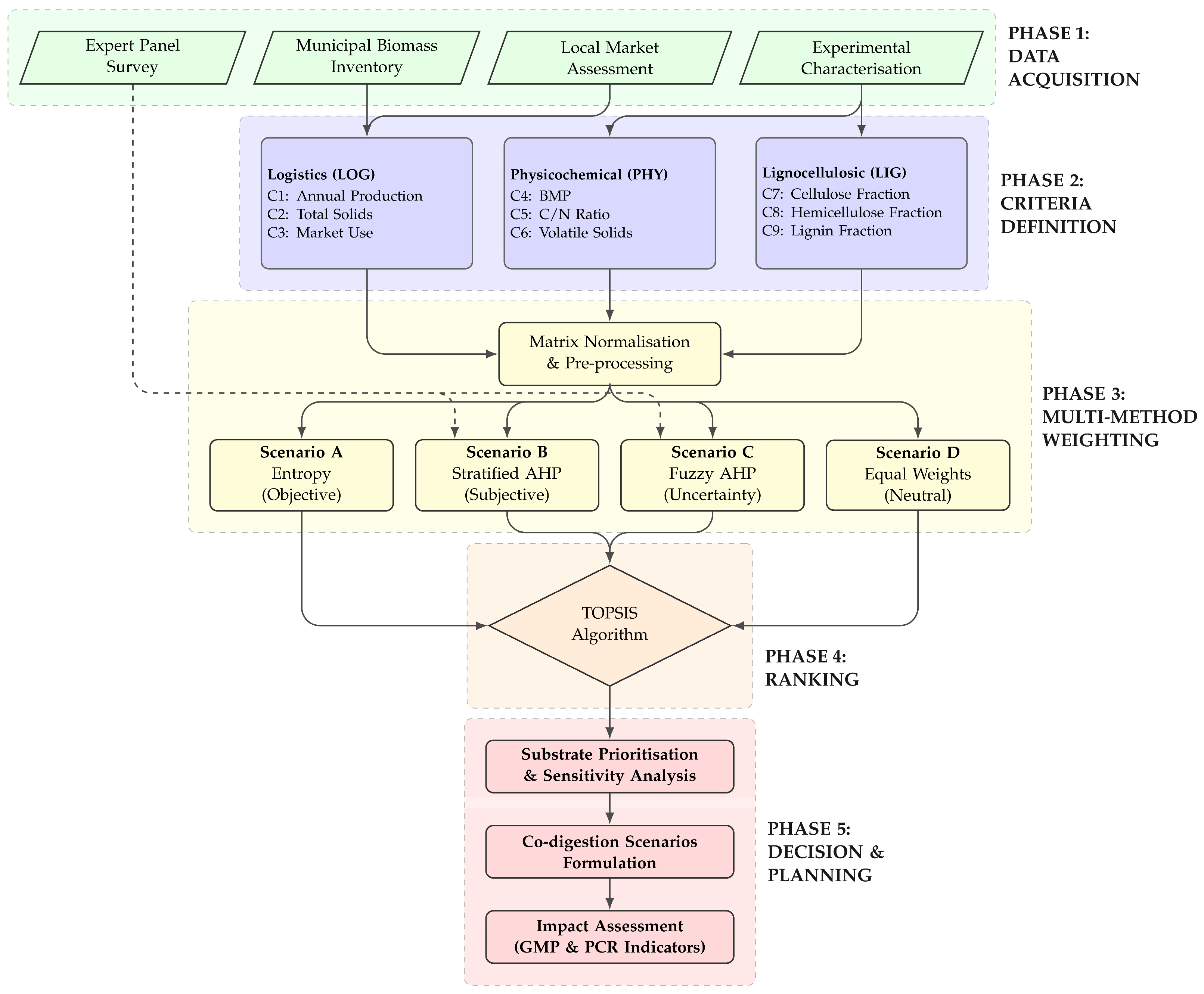
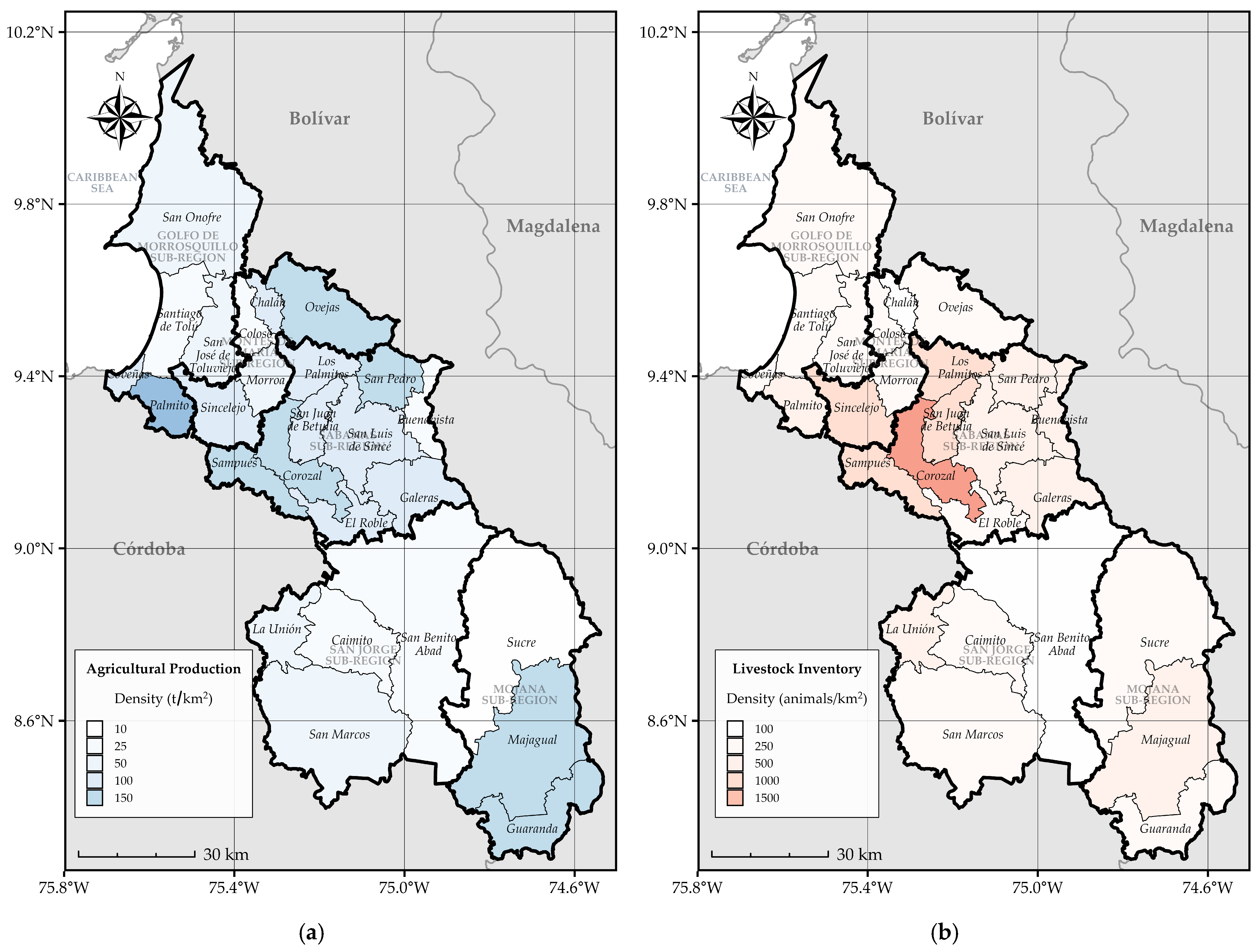
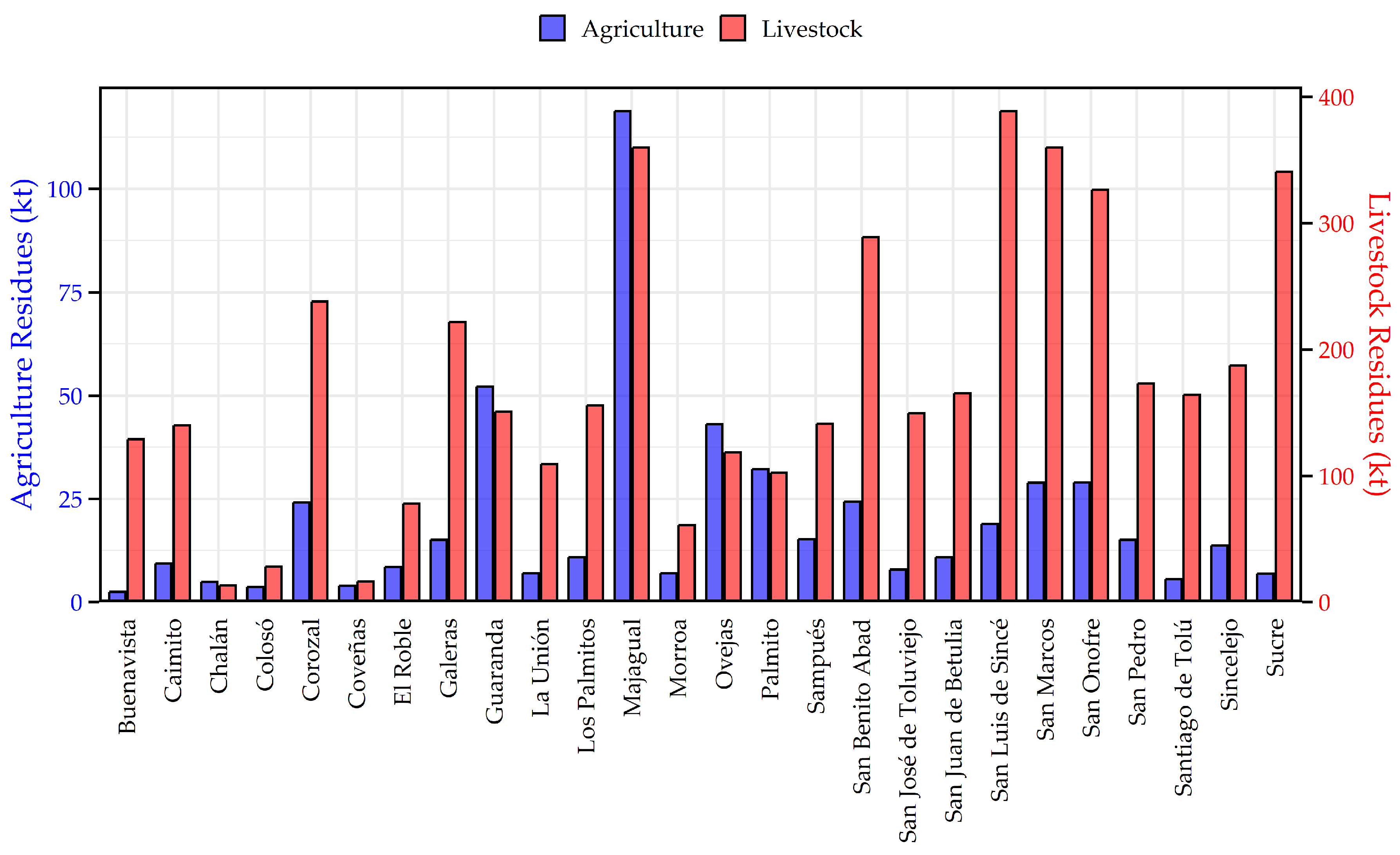
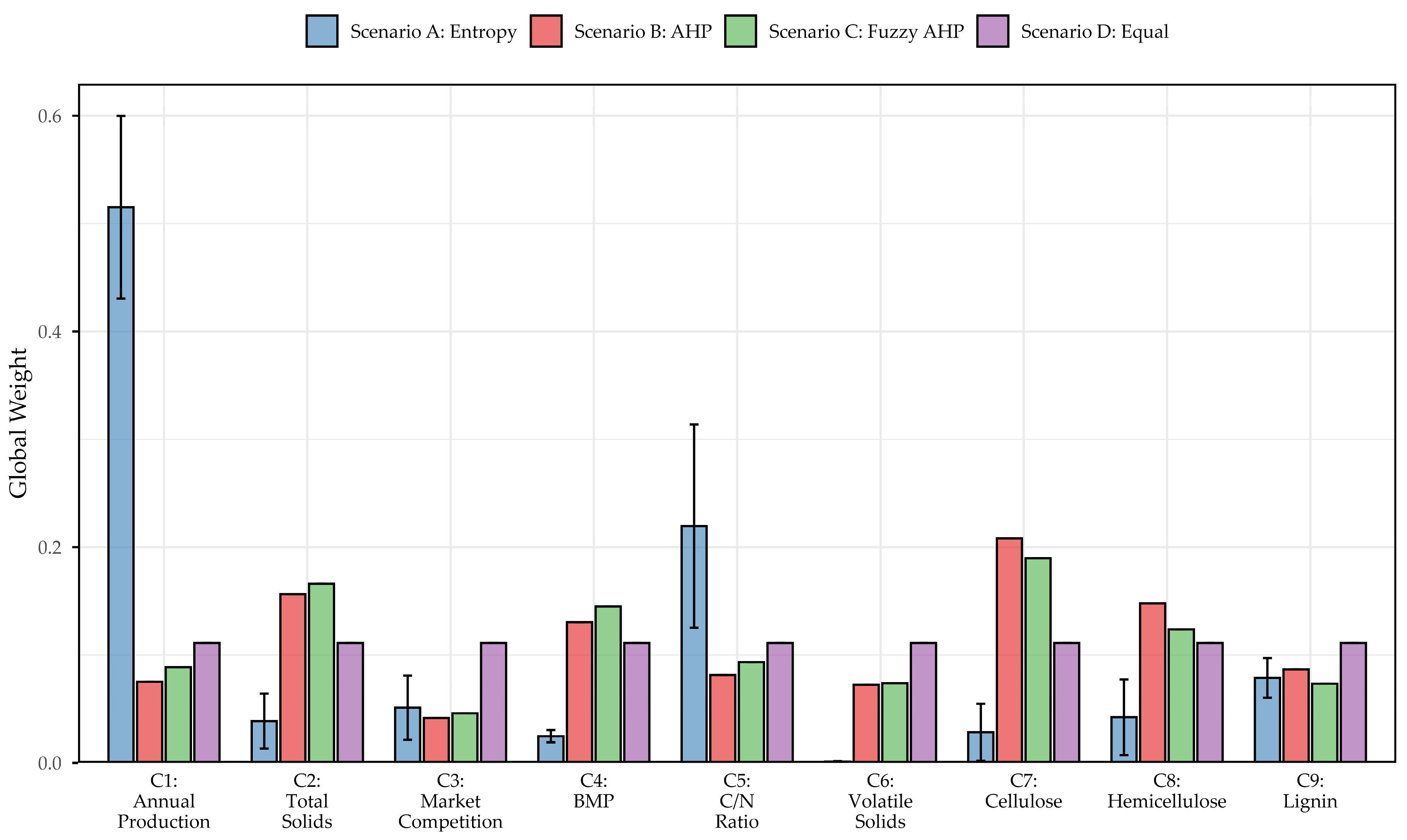
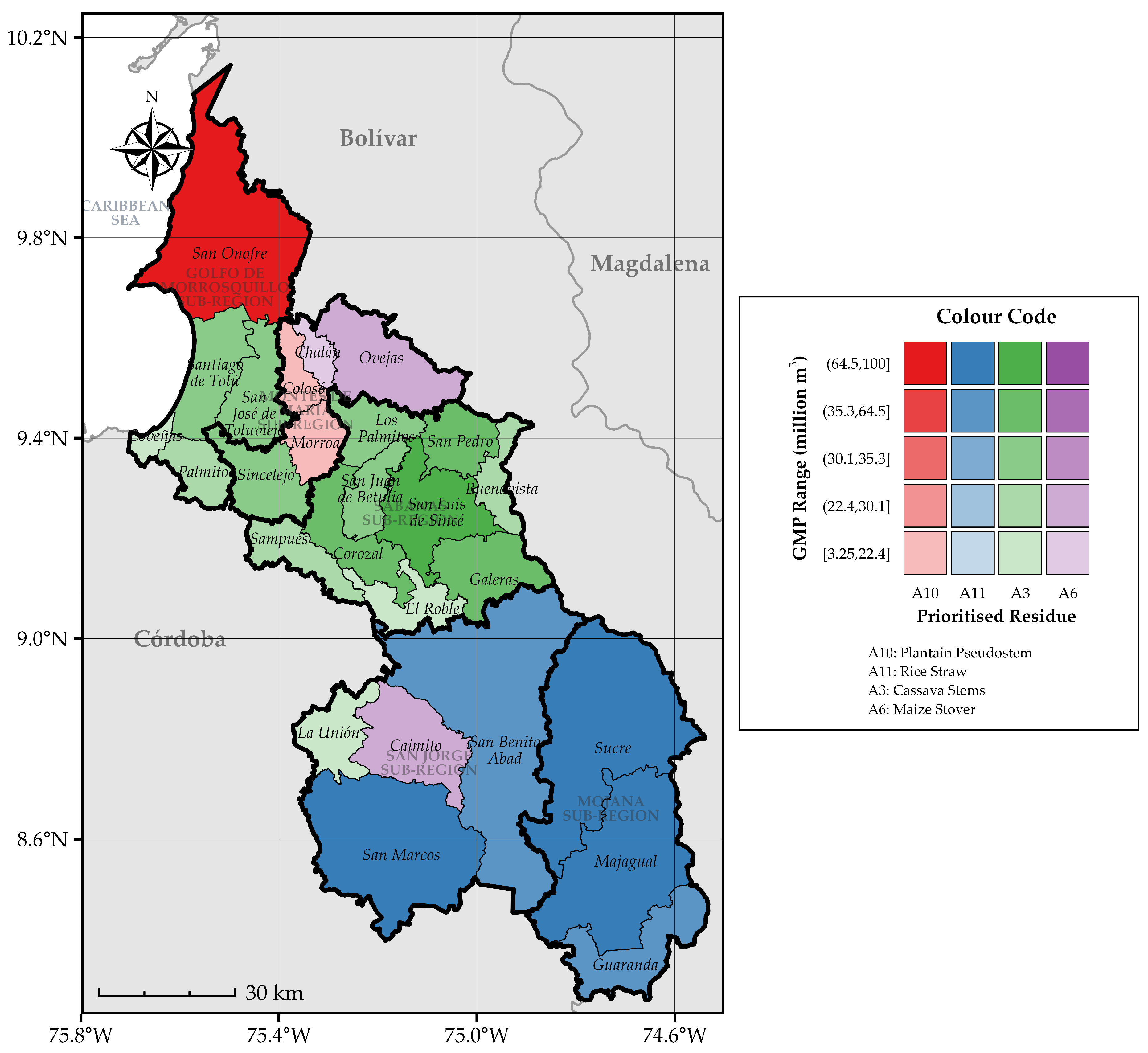
Disclaimer/Publisher’s Note: The statements, opinions and data contained in all publications are solely those of the individual author(s) and contributor(s) and not of MDPI and/or the editor(s). MDPI and/or the editor(s) disclaim responsibility for any injury to people or property resulting from any ideas, methods, instructions or products referred to in the content. |
© 2026 by the authors. Licensee MDPI, Basel, Switzerland. This article is an open access article distributed under the terms and conditions of the Creative Commons Attribution (CC BY) license.