


Abstract
The growing global demand for sustainable energy has intensified interest in biomass residues as viable feedstocks for biofuels and bio-based production. This review systematically examines advances in the utilization of biomass residues, spanning upstream assessment through downstream conversion pathways. Using the PRISMA framework, 543 peer-reviewed articles published between 1990 and 2025 were analyzed from the Scopus and Web of Science databases. The review reveals a clear methodological evolution from early residue characterization and physicochemical analyses toward integrated techno-economic, environmental, and system-level assessments. Upstream research increasingly addresses feedstock identification, spatial dispersion, logistics optimization, and pretreatment efficiency, while downstream advances focus on biochemical, thermochemical, and hybrid conversion technologies. Although artificial intelligence and machine learning constitute approximately 2.5–3% of the total historical literature, they account for nearly 18–22% of recent studies in process modeling and yield prediction, achieving predictive accuracies frequently exceeding R2 > 0.95. Despite these advances, persistent challenges remain in biomass logistics, feedstock heterogeneity, and technology scaling. Emerging trends highlight hybrid frameworks that integrate data-driven and mechanistic models to enhance efficiency, circularity, and commercial feasibility in bioenergy systems.
1. Introduction
In the global shift to low-carbon and sustainable energy systems, biomass has become a crucial renewable energy source. Originating from a variety of sources, such as organic municipal trash, forestry byproducts, energy crops, and agricultural residues, biomass provides a versatile and carbon-neutral substitute for fossil fuels [1]. Its contributions to the production of bioenergy include waste valorization, energy security, rural development, and the production of electricity, biofuels, and biochemicals. By facilitating resource recovery and reducing environmental responsibilities, the incorporation of biomass into energy systems is very compatible with the concepts of the circular economy [2]. Unlike energy crops, biomass residues do not require additional land cultivation or compete with food production, making them central to the circular bioeconomy agenda. However, their sustainable utilization is constrained by complex challenges that span the entire biomass value chain, from the accurate assessment of diverse feedstocks to the effective conversion into usable biofuels and co-products [3].
Biomass utilization could be generally classified into upstream and downstream phases within the context of bioenergy supply chains. In the former, identification, assessment, collection, preprocessing, and transportation of feedstocks are basically involved. In the latter, separation, purification, and upgrading of bio-based products as well as their conversion methods, such as thermochemical (such as pyrolysis and gasification) and biochemical (such as fermentation) processes, are involved. As upstream processes are greatly impacted by seasonal and regional variability, downstream processes get impacted with little supply for conversion into bioenergy and biofuels products. Consequently, dynamic and technologically advanced systems are necessary for efficient upstream mobilization in order to manage feedstock heterogeneity and guarantee a steady supply. Where combined, these phases establish the biomass-based energy systems’ overall sustainability, economic feasibility, and environmental impact. Resolving inefficiencies in all stages is crucial to maximizing biomass’s potential as a resilient, scalable energy source.
Recent years have seen a proliferation of review studies addressing various facets of biomass utilization. For example, bibliometric analyses have mapped research trends in biomass and organic waste conversion, identifying key research indicators, publication patterns, and global actors in the field [4], while others provide focused reviews on specific technology domains such as hydrochar production and environmental applications [5], fast pyrolysis life cycle assessment [6], and thermal and biochemical conversion processes [7]. Reviews have also covered the optimization of biodiesel production from waste [8], biomass valorization via chemical looping combustion and gasification [9], and hydrothermal liquefaction strategies within a circular economy framework [10]. While these studies provide valuable insights into individual conversion pathways, sustainability assessment, or niche technologies, they generally treat upstream feedstock assessment, logistics, and downstream conversion in a segmented manner.
Despite the growing literature on biomass-to-energy technologies, most research efforts remain siloed, focusing either on upstream processes (e.g., resource quantification, logistics, and physicochemical characterization) or downstream technologies (e.g., thermochemical and biochemical conversion). There is a lack of integrated reviews that holistically analyze the full utilization pipeline, particularly in terms of aligning upstream residue properties with downstream conversion efficiencies, technology compatibility, and sustainability outcomes. Moreover, although machine learning and computational tools are increasingly discussed, existing work rarely integrates these with mechanistic feedstock-pathway linkages and decision-support frameworks across the entire value chain.
This review is aimed at addressing this gap by providing a comprehensive, system-oriented synthesis of technological advances, methodological challenges, and emerging solutions across the upstream to downstream phases. It aims to critically map the interdependencies between biomass assessment, pretreatment, conversion, and valorization stages, and to offer insight into how innovations in one part of the chain impact the performance and feasibility of others. By doing so, the review not only organizes fragmented knowledge but also supports the design of integrated, flexible, and scalable biomass utilization strategies that can adapt to feedstock variability, improve energy yields, and enhance environmental sustainability. Ultimately, this work serves researchers, engineers, and policymakers seeking to bridge technical innovation with sustainable deployment, and it contributes toward advancing a more cohesive and responsible bioenergy future.
2. Methodology
This review adopts a structured and stepwise methodological framework designed to ensure precision, transparency, and reproducibility in the identification, screening, and synthesis of the relevant literature (Figure 1). The review process follows the principles of the Preferred Reporting Items for Systematic Reviews and Meta-Analyses (PRISMA 2020), ensuring methodological rigor across all stages of data acquisition and analysis. PRISMA checklist is provided as a Supplementary Material.
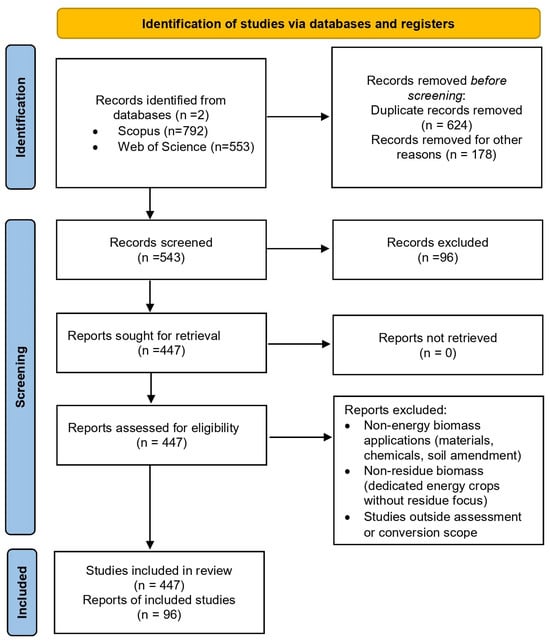
Figure 1.
PRISMA methodological framework.
A targeted literature search was conducted using two internationally recognized academic databases: Scopus and Web of Science (WoS). These databases were selected due to their strict indexing of peer-reviewed and high-impact scholarly publications, thereby minimizing the inclusion of gray or non-refereed literature and enhancing the reliability and replicability of the review. The search was performed on 13 April 2025 using two complementary search strings designed to capture both upstream and downstream dimensions of biomass residue utilization for energy applications. For upstream assessment, the following string was applied: (TITLE-ABS-KEY (“biomass residue” OR “agricultural waste”) AND TITLE-ABS-KEY (“assessment”)). For downstream processes, the search string was: (TITLE-ABS-KEY (“biofuel” OR “bio-energy”) AND TITLE-ABS-KEY (“conversion” OR “pretreatment” OR “valorization”)). Both strings were applied independently across the two databases using Boolean operators to maximize coverage while maintaining thematic relevance.
The review specifically targeted peer-reviewed journal articles published between 1990 and 2025. This timeframe was selected to capture the long-term evolution of biomass residue assessment and bioenergy conversion technologies while emphasizing contemporary methodological and technological advances. The initial search yielded a total of 1345 records, comprising 792 articles from Scopus and 553 articles from WoS.
A rigorous data cleaning and quality assurance procedure was subsequently implemented. Duplicate records were identified and removed using unique identifiers, including titles, Digital Object Identifiers (DOIs), and author metadata. In addition, records were excluded due to incomplete bibliographic information or non-article document types such as editorials and conference summaries. Through this process, 802 records were removed prior to screening, resulting in 543 records being retained for title and abstract screening.
Title and abstract screening was then conducted to ensure alignment with the scope of energy-oriented biomass residue utilization. At this stage, 96 records were excluded due to a primary focus on non-energy biomass applications (e.g., materials or soil amendments), non-residue feedstocks, or thematic misalignment with assessment and conversion objectives. The remaining 447 articles were subjected to full-text eligibility assessment. To enhance coverage and mitigate potential database indexing bias, backward reference checking was performed, through which an additional 96 relevant studies were identified and included. This resulted in a final dataset of 543 eligible studies retained for qualitative synthesis and analysis. A summary of these studies is provided as a Supplementary Material in this paper.
To facilitate a system-oriented interpretation of biomass utilization research, the retained literature was analyzed within two interconnected domains. The upstream domain focused on biomass residue assessment, characterization, availability, and logistics, while the downstream domain encompassed pretreatment techniques, conversion technologies, and valorization pathways leading to bioenergy production. This upstream–downstream structuring reflects the inherent technical interdependencies across biomass utilization chains and enables an integrated examination of how feedstock properties and logistical constraints influence conversion pathway selection and overall system performance.
3. Research Time Series
The chart provided in Figure 2 presented through the two charts offers critical insights into the development and current status of the biomass residue utilization research landscape.
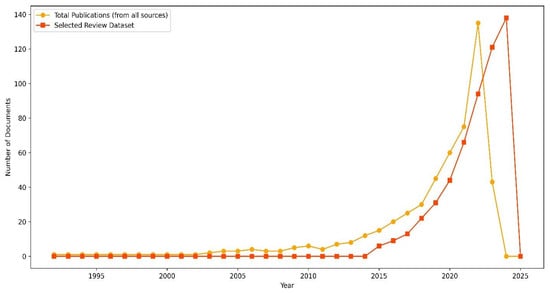
Figure 2.
Research timeline series of published works. Note: The decline observed in 2025 is a result of partial data indexing at the time of the study (April 2025) and does not reflect a decline in research interest.
By mere observation, the chart provides a historical overview of scientific publication trends in the field from 1992 to 2025. There was little to no research produced between the early 1990s and about 2010, which is indicative of a time when biomass use was mainly discussed in passing in the global energy dispute. This stage included preliminary research or evaluations specific to a given location that were not well-integrated into broader energy policy frameworks. The field starts to show some small increase starting in 2010, indicating a growing academic interest that is probably being fueled by growing awareness of sustainable development goals, climate change, and the depletion of fossil fuels.
A notable transformation occurs post-2017, where the publication count rises sharply. This surge aligns with multiple global developments: heightened international climate commitments such as the Paris Agreement, a rapid expansion in renewable energy investments, and growing interest in circular bioeconomy models that prioritize waste valorization. The period between 2018 and 2023 reflects a research boom, suggesting that biomass residue utilization transitioned from a niche topic to a multidisciplinary research domain involving several other branches such as chemistry, engineering, environmental sciences, and policy studies. Conversely, while the chart shows a precipitous decline in 2025, this is identified as an artifact of partial data indexing. Because this study was conducted in April 2025, databases like Scopus and Web of Science had not yet completed the processing and indexing of current-year articles. Therefore, the data for 2025 represents an incomplete snapshot rather than an actual reduction in scientific activity.
In parallel, the comparative chart maps the curated dataset of 543 articles against this broader trend. The visual evidence is compelling; the dataset concentrates heavily in the high-output years (2015–2023), particularly during the exponential growth phase. This temporal alignment indicates that the selection strategy outlined earlier is methodologically justifiable, rigorous, and also strategically focused on capturing the most influential and recent developments in the field.
4. Keywords Analysis
To analyze the relationships between key concepts and reveal the intellectual structure of the research area, a bibliometric keyword co-occurrence analysis was conducted using VOSviewer 1.6.20 software. This analysis offers a powerful lens through which to examne the structural landscape of biomass residue assessment and biofuels production.
4.1. Thematic Cluster Description
The visualization reveals major thematic clusters that correspond to the primary technological and scientific domains underpinning the field:
- Central Discourse (Red and Yellow Clusters): At the center of the network, terms like “biomass,” “biofuels,” and “biofuel” emerge as the most frequently occurring and highly interconnected keywords, confirming that discussions invariably center on the conversion of residues into usable energy.
- Thermochemical Domain (Red): This cluster centers on conversion processes like gasification and pyrolysis, showing strong co-occurrence with “carbon,” “feedstocks,” and “agricultural waste”.
- Biochemical Domain (Blue): Focused on “lignocellulosic biomass,” “hydrolysis,” and “bioethanol,” this cluster emphasizes biological and enzymatic mechanisms to break down plant components.
- Microbial and Algal Systems (Yellow): Keywords such as “metabolism,” “microalgae,” and “biotechnology” highlight growing interest in photosynthetic platforms for high-yield biofuel production.
- Waste and Valorization (Green): This cluster focuses on “biogas,” “anaerobic digestion,” and “wastewater,” integrating energy recovery with waste treatment systems.
- Environmental Context (Purple): Although smaller, this cluster addresses “life cycle assessment,” “carbon emissions,” and “climate change,” providing the necessary context for evaluating environmental viability.
4.2. Strategic Gap Analysis
By critically evaluating the density and interconnections of the thematic clusters in Figure 3, several structurally significant research gaps become evident. A notable lack of strong links between feedstock mobilization and conversion efficiency indicates that upstream and downstream research efforts remain largely siloed. This disconnect suggests an unmet need for studies that explicitly relate raw residue properties, such as moisture, ash, and compositional variability, to specific conversion performance metrics.
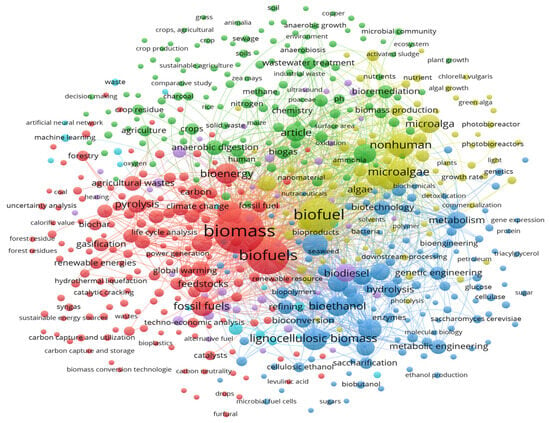
Figure 3.
Keywords co-occurrence analysis.
Although technical domains dominate the network, sustainability-oriented themes, particularly life cycle assessment (LCA), remain peripheral. This positioning implies that LCA is frequently applied as a post hoc evaluation tool rather than serving as a design driver for emerging biomass conversion pathways. Similarly, despite the growing visibility of artificial intelligence and machine learning, these approaches show limited connectivity to field-scale biomass assessment, pretreatment, and logistics, highlighting their underutilization in optimizing upstream decision-making.
From a strategic perspective, this cluster structure reflects a broader imbalance in the literature: While technical feasibility is extensively addressed within mature thermochemical and biochemical domains, the cross-cutting integration required to achieve techno-economic competitiveness remains insufficiently developed. Addressing these gaps will require hybrid frameworks that couple feedstock characterization, digital optimization tools, and sustainability metrics directly with conversion system design, thereby advancing biomass utilization toward industrially viable and system-level solutions.
5. Upstream Discourse: Biomass Residue Assessment and Mobilization
The literature contains discourse on several aspects related to biomass supply chain, ranging from feedstock assessments and mobilization to conversion, storage and distribution. However, the dataset of this study mainly focuses on the identification, assessment, and preparation of biomass resources for subsequent conversion processes. Accordingly, the following subsections will discuss the advances involved and embedding challenges.
5.1. Availability and Types of Biomass Resources
Key biomass and biomaterials observed over the years are provided and analyzed in Table 1. These have been identified and repeatedly emphasized in large part due to their availability, energy potential, and conversion feasibility. As could be observed, agricultural residues, such as maize stalks, olive prunings, and processing wastes, dominate the biomass feedstock studies because of their abundance, seasonal reliability, and geographic dispersion [11,12]. These residues are byproducts of food and commodity production and are often underutilized. As agricultural activities are widespread and predictable, their residues offer a low-cost, easily collectible, and scalable source of biomass for energy conversion [13]. In addition, policy incentives to reduce field burning (which contributes to smog and carbon emissions) have further increased interest in using these materials for energy production [14]. Their compositional variability also enhances their research appeal by providing opportunities to test different biochemical and thermochemical pathways [15].
One of the critical parameters influencing which conversion pathway is most suitable for a given biomass type is its moisture content [16]. Anaerobic digestion, for example, requires biomass with high moisture content, as microbial metabolism increases in wet environments and yields high levels of biogas [17]. Conversely, to maintain combustion efficiency and avoid energy losses due to water vaporization, combustion and gasification processes demand low-moisture feedstocks [18,19]. The decision to route a biomass residue toward anaerobic digestion or combustion is therefore directly tied to its natural water content and the feasibility of drying. This distinction is particularly important in agricultural residues like food waste contrasted with cereal straw or woody biomass (low-moisture, combustion-suited).
Forest residues, particularly branches, bark, and sawdust, emerge as significant in regions like Southern Europe and India due to strong forest governance, existing management infrastructure, and policies that enable community-level energy projects [20,21,22]. These residues are often generated during thinning operations, logging, or sawmill processing, and they offer high calorific value and low ash content. Local energy production using forest biomass is both technically feasible and economically appealing due to the decentralized nature of many forest-rich rural areas [23,24]. Moreover, the food-versus-fuel controversy surrounding certain crop-based biofuels is avoided by using forest wastes for energy conversion [25].
Lately, recent studies have started focusing on non-traditional residues like soil-integrated residues (e.g., linked to earthworm biomass) and engineered microbial biomass used in biocatalytic systems [26,27,28]. These pathways do not contribute energy directly in combustion terms but are vital in enhancing soil carbon retention, accelerating biodegradation, or enabling co-product extraction in advanced biorefineries. Earthworm-linked studies help model how biomass is processed within soils under different tillage practices, while microbial platforms allow tailored biofuel production (e.g., ethanol, lipids) with the benefit of genetically enhanced specificity and co-product yields [29,30].
It should be noted that the residues listed in Table 1 are characterized by their frequency of occurrence in the reviewed literature, reflecting research focus and reported availability relevance, rather than absolute global production volumes.

Table 1.
Predominant biomass residues identified in the reviewed literature and their relative prominence based on mention frequency within the analyzed dataset (1990–2025).
Table 1.
Predominant biomass residues identified in the reviewed literature and their relative prominence based on mention frequency within the analyzed dataset (1990–2025).
| Residue Type | Source Crop/Process | Key Features/Notes | Mention Frequency (Dataset) | Representative Studies |
|---|---|---|---|---|
| Maize Roots and Shoots | Maize (Zea mays L.) | Studied for root biomass ratios and belowground carbon inputs; used for estimating net primary productivity and rhizodeposition. | 10 (Corn/maize); +36 (Agric residues) | [31] |
| Food and Processing Waste | California agro-industrial produce | Includes fruit/vegetable peels, pulp, and leftover organic matter; partially pretreated and used in anaerobic digestion. | 4 (Food waste); +36 (Agric-food residues) | [18] |
| Olive Pruning Residues and Husks | Olive oil production (Apulia, Italy) | Assessed for energy conversion potential through combustion and gasification; moisture content challenges noted. | 5 (Olive residues/ pruning) | [3] |
| Forest Residues (Branches, Bark, Sawdust) | Managed forestry operations (Spain, India) | Mapped via GIS for heating and CHP systems; spatially analyzed for sustainable extraction logistics. | 21 (Forest residues/ woody biomass) | [32,33] |
| High-Moisture Residues | Fruit processing, pulp industry | Proposed for biogas production using anaerobic digestion; seasonal availability considered a constraint. | 4 (Food waste); 34 (Wastes general) | [18] |
| Low-Moisture Residues | Grain husks, woody chips, shells | Suitable for combustion and pellet-based energy production; already in partial commercial use. | 36 (Agric residues, woody chips) | [34] |
| Crude Olive Husk | Olive milling process | High moisture and lignin-rich; potential feedstock for slow pyrolysis and palletization. | 5 (Olive milling byproducts) | [3] |
| Waste from Refinery Contaminated Sites | Oil refinery sludge | Evaluated for natural attenuation potential in contaminated zones; studied for microbiota capable of hydrocarbon degradation. | Environmental only (Refinery bioremediation) | [35] |
| Earthworm-linked Soil Residues | Soil amended with surface biomass | Earthworm biomass studied as a proxy for soil incorporation and decomposition of residues under different tillage regimes. | Soil process modeling (1–2 mentions) | [36] |
| Microbial Biomass Derivatives | Engineered fermentation systems | Yeast and bacterial cell mass used as catalytic platforms for ethanol, lipids, and biodiesel co-products. | 33 (Microalgae/ microbial biomass) | [37,38] |
5.2. Preprocessing and Preparation
Preprocessing plays a critical role in biomass mobilization as it improves the feedstock’s quality, enhances energy density, and increases the efficiency of subsequent conversion processes. This phase is particularly essential for lignocellulosic biomass, which is characterized by a highly recalcitrant structure composed of cellulose, hemicellulose, and lignin [12,39]. As such, preprocessing establishes a decisive bottleneck or enabler in the biomass-to-energy chain.
Pretreatment is essential to disrupt the complex architecture of the biomass cell wall, which otherwise hinders enzymatic hydrolysis and microbial accessibility. According to Takara and Khanal [40], effective pretreatment significantly enhances the bioavailability of fermentable sugars by breaking down lignocellulosic barriers. This is especially relevant in woody biomass systems, where the recalcitrant nature of lignin and crystalline cellulose impedes microbial conversion. The authors in [41] affirm that pretreatment increases cellulose accessibility, which is vital for high-yield sugar production through biochemical routes.
In terms of classification, pretreatment techniques are diverse and can be roughly categorized into physical, chemical, physicochemical, and biological methods. Notable examples include:
- Steam explosion (SE): High-pressure steam followed by rapid decompression to disrupt lignocellulose.
- Liquid hot water (LHW): Using pressurized water at high temperatures to solubilize hemicellulose.
- Dilute acid (DA): Chemical hydrolysis to break down biomass crystallinity.
- Organosolv (OS): Use of organic solvents to extract lignin.
These methods function to loosen the lignin matrix, solubilize hemicellulose, or rather increase surface area for enzymatic access [42,43,44]. Among these, chemical and thermochemical processes like alkali treatment and acid hydrolysis are the most common due to their effectiveness in reducing biomass crystallinity and enhancing porosity. However, some chemical pretreatments produce inhibitors that affect downstream microbial fermentation, while others are energy-intensive or require hazardous reagents. Consequently, the selection of an optimal pretreatment pathway is feedstock-specific and often depends on conversion goals, environmental considerations, and economic feasibility.
In addition to chemical pretreatments, physical preprocessing technologies are becoming more and more popular. For example, air classification has been shown to be a successful technique for lowering the amount of ash and sulfur in biomass feedstocks, which is particularly important for applications involving combustion and cofiring [45]. Air classification is a physical separation technique that sorts biomass based on particle size, shape, and density, effectively removing mineral-rich fractions (such as bark, dust, or fines) that carry high ash and sulfur content, an advantage confirmed by studies on straw, wheat residues, and forestry waste, thereby reducing inorganic contaminants and improving combustion and cofiring performance by lowering equipment corrosion and harmful emissions like SO2 and particulates. In thermochemical systems, this method decreases the corrosive and fouling effects of ash while improving fuel quality. Equally, to increase transportability and storage stability, size reduction, drying, and densification (such as pelletizing, briquetting, and torrefaction) are frequently employed. For biomass meant for thermochemical conversion, torrefaction under mild pyrolysis temperatures improves hydrophobicity, decreases moisture, and boosts energy density [46].
One important aspect to note is scrutinizing the assumptions underpinning waste biomass valorization. The widely used “zero-burden” assumption, where wastes like waste cooking oil (WCO) are considered to have no upstream impacts, has been questioned in recent studies. For example, ref. [47], as well as [48], argue that WCO has competing applications in other industries like soap manufacturing and animal feeds, which must be factored into life cycle assessments. Overlooking such competing uses may cause a significant level of bias in defining the true environmental and economic costs of utilizing such feedstocks in biofuels production.
5.3. Biomass Mobilization and Logistics
Biomass mobilization plays a central role in the establishment of a sustainable bioenergy and biofuel sector. It involves the processes of sourcing, gathering, transporting, and preparing biomass feedstocks for downstream conversion, often within complex and resource-intensive supply chains. As the transition to sustainable energy intensifies, the ability to efficiently mobilize diverse biomass types has, accordingly, become increasingly important. However, a substantial body of literature emphasizes that logistical barriers, supply chain inconsistencies, and infrastructural inadequacies significantly hinder the scalability and economic viability of biomass-based energy systems.
One of the most persistent challenges is the uncertainty surrounding the availability, quality, and composition of biomass, particularly forest residues. The authors in [49] highlight that forest biomass suffers from unpredictability in logging waste characteristics, complicating efforts to reliably integrate it into commercial fuel streams. Equally, the authors in [50] underscore the complexity of biomass mobilization for forest feedstocks, noting that supply chains are frequently fragmented and poorly optimized. Thus, a crucial precondition for the sustainability of the biofuel sector is guaranteeing a steady and dependable supply of biomass. According to [51,52], ensuring feedstock availability is fundamental and closely related to logistical planning. These issues are exacerbated in areas with inadequate infrastructure, such as the sub-Saharan African continent. For example, Benti et al. [53] point out that, although, Ethiopia has a large amount of biomass potential, the country’s usage of contemporary bioenergy is still restricted because of inadequate access to dependable supply networks and sustainable technology. This could be a reflection of major developing countries, particularly in sub-Saharan Africa.
As a consequence of structural inefficiencies in the agro-industrial supply chain, agricultural and food processing residue represents yet another untapped resource. A logistical misalignment that hinders effective resource recovery is the current food production systems’ inability to channel residues into bioenergy applications [54,55]. This is also indicative of a larger problem of market weakness, as some works contend that, in order to facilitate trade and mobility, and actions that rely on highly developed logistics and transport infrastructure, biomass residue markets should be strengthened [56].
From a technological standpoint, biomass pretreatment and processing complexities also intersect with its logistics (Figure 4). According to Abdul Rahim et al. [57] and Agrawal et al. [58], the deployment of lignocellulosic biorefineries is hampered by ineffective pretreatment and saccharification technologies as well as costly scale-up issues. These problems are exacerbated by inadequate logistics, particularly in rural or decentralized areas where feedstock must be carried over long distances, occasionally from diverse sources with different specifications [59]. Thus, the need for efficient logistical systems in facilitating the deployment of bioenergy is becoming more widely acknowledged. Improvements in biomass handling, transit routing, and storage can open up new possibilities, according to [60,61]. This is especially true for decentralized energy systems that are located closer to rural biomass sources. Moreover, to demonstrate a logistics–information nexus, the works of [62,63] emphasize the significance of data availability and quality, especially for novel feedstocks, thus contending that insufficient inventory data can jeopardize life cycle assessments and investment decisions.
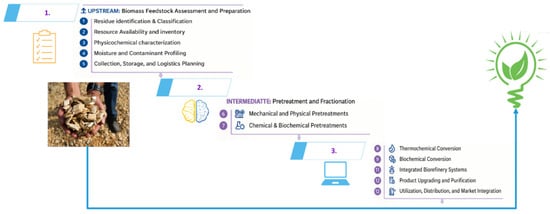
Figure 4.
Upstream to downstream basic illustration.
In essence, the mobilization of biomass is not merely a question of resource availability but rather one of integrated logistics, infrastructure, data systems, and market mechanisms. Addressing these interconnected elements is vital for realizing the full potential of biomass in the global energy transition.
5.4. Methodological Developments in Biomass Residue Assessments
In the evaluation of biomass residues, methodological development has progressed gradually from basic inventory-based assessments toward more integrated and data-supported frameworks. However, the literature analyzed in this study indicates that upstream biomass assessment remains predominantly grounded in conventional statistical, physicochemical, and spatial modeling approaches, with data-driven and AI-based methods emerging only recently and within a limited subset of studies. Methodological evolution in this domain has therefore been largely incremental, driven by improvements in measurement resolution, spatial explicitness, and sustainability integration rather than by wholesale methodological replacement.
To reflect this progression accurately, the upstream methodological journey is presented chronologically below, highlighting dominant approaches in each period while situating AI and machine learning as complementary tools rather than prevailing paradigms. To provide a structured overview of the technological maturity and methodological status of biomass utilization pathways, the reviewed technologies were categorized according to their development stage and analytical approach (see Appendix A, Table A1).
5.4.1. Pre-2010: Foundational Assessments and Characterization
Early-stage biomass resource assessments employed source classification combined with mass-balance estimation techniques to determine the spatial and sectoral availability of residues. Studies such as Matteson & Jenkins [18] adopted inventory-based accounting of agro-industrial byproducts, integrating gross calorific value (GCV) calculations to estimate regional bioenergy potentials [3]. Data was often drawn from agricultural census reports and processing industry outputs, with conversion coefficients applied to translate raw residue volumes into energy-equivalent quantities. These assessments, though foundational, were constrained by static yield factors and lacked dynamic feedback on temporal variability.
To approximate total biomass, including belowground carbon pools, early studies incorporated root: shoot ratios, a method rooted in allometric scaling laws. For example, Amos & Walters [31] applied these ratios within maize agroecosystems to infer belowground biomass from observable aboveground yields. Although they were limited by species-specific variability and environmental dependence, these methods contributed to early estimations of rhizodeposition and root exudates. The approach laid the groundwork for later integration with remote sensing-based NPP models and carbon flux estimations. Further studies inquired into soil–biomass interaction modeling to examine biomass–soil feedback mechanisms. Ouellet et al. [36], for instance, utilized regression-based ecological modeling linking soil fauna—specifically earthworm biomass density—to residue input levels and decomposition dynamics. By offering early insights into belowground ecosystem services, these models treated biotic indicators as proxies for carbon turnover and incorporation efficiency. Nevertheless, the reliance on limited spatial datasets and the exclusion of microbial interactions posed challenges for generalizability.
The integration of Geographic Information Systems (GISs) with biomass resource analysis marked a pivotal shift toward spatially explicit modeling within this phase. Studies like Lopez-Rodriguez et al. [32] employed multi-layer raster and vector datasets to estimate biomass residue availability from forested landscapes in Spain. The methodology often combined land-use classification, slope constraints, and transportation networks to assess technical harvestability. Scenario analysis for logistics optimization and supply chain design were enabled by spatial interpolation techniques and geostatistical tools utilization. Despite their strength in regional planning, these models were often static and sensitive to input resolution and classification errors.
5.4.2. 2010–2020: Development and Technical Diversifications
The upstream methodological developments in biomass residue assessment reflect a progressive refinement of how biomass resources are identified, characterized, and prepared for conversion. One of the earliest innovations within this phase was the integration of agroforestry residues into energy systems, which marked a pivotal methodological shift. These studies, notably from the U.S. and Southern Europe [3,33], involved evaluating the feasibility of using agricultural and forestry residues in gasification and anaerobic digestion systems. They not only broadened the scope of feedstock types but also introduced region-specific resource assessments, laying the groundwork for localized bioenergy planning. Closely tied to this was the development of tools for assessing uncertainties in forest biomass supply chains, such as those highlighted by Woo et al. [49]. Particularly in managed forests, these efforts addressed the critical gaps in understanding the quantity, composition, and spatial distribution of logging residues. Such methodological advances could be marked essential for improving biomass inventory accuracy, which is a foundational step for downstream process optimization. Furthermore, the incorporation of greenhouse gas (GHG) emission modeling into residue production assessments was realized. There was a focus on the impact of biomass harvesting on soil carbon dynamics and nitrous oxide emissions, particularly for large-scale operations [64,65]. These assessments introduced new methodological frameworks that combined environmental monitoring with carbon accounting, thus linking biomass utilization to broader climate implications and consequent environmental concerns.
At the logistical level, techno-economic models began to account for variables such as residue moisture content, bulk density, storage stability, and preprocessing costs. This development enabled more precise planning for the collection, transportation, and siting of decentralized biorefineries. These models were critical in converting abstract biomass availability into tangible supply chain scenarios, thereby reducing risk and increasing economic feasibility. Meanwhile, novel characterization techniques, such as the color-lightness indexing of combustion residues using a standard gray scale [66], provided a fast and consistent way to assess combustion performance and ash content. Indirect evaluations like this introduced visual metrics into residue analysis, which in turn potentially supports faster classification and quality control in fuel preparation.
Furthermore, the exploration of hydrothermal processing (HTP) technologies [67,68] opened new pathways for valorizing wet, low-grade, and mixed biogenic waste streams that conventional thermochemical methods could not handle efficiently. The methodological review and experimental validation of HTP highlighted its potential in diversifying pretreatment strategies for biomass residues. Lastly, the recognition of lignocellulosic recalcitrance and the resistance of plant cell walls to enzymatic breakdown spurred fundamental studies into cell wall composition and structure [69]. These investigations paved the way for pretreatment innovations by identifying the need to disrupt lignin–cellulose linkages, thus improving sugar release efficiency. This frame of upstream methodological efforts collectively enhanced the scientific rigor and practical applicability of biomass residue assessments, creating a more reliable foundation for downstream bioenergy conversion technologies.
5.4.3. 2020–2025: Data-Driven and Sustainable Assessments
Observing the literature from the year 2020 onwards, biomass residue assessment has entered a highly integrative phase, characterized by the convergence of thermochemical analysis, spatial modeling, sustainability assessment, and selective data-driven techniques [11,47,63,70]. This era marks a significant departure from siloed assessments, embracing multi-scalar and multi-criteria methodologies for a comprehensive understanding of biomass potential and utilization [71,72]. Despite increased visibility, AI and machine learning (ML) methods remain a minority within upstream biomass assessment, accounting for less than a few percent of total studies in the dataset and approximately 20–25% of modeling-focused contributions.
Within this subset, AI and ML approaches are primarily employed to support parameter prediction, uncertainty handling, and the optimization of specific assessment tasks, rather than to replace conventional inventory-based, physicochemical, or GIS-driven frameworks. Techniques like Response Surface Methodology (RSM) [73,74], Artificial Neural Networks (ANNs) [34,75], and Adaptive Neuro-Fuzzy Inference Systems (ANFISs) [76,77] are therefore best understood as enhancement layers applied to well-established upstream assessment pipelines.
Complementary to lab-scale optimization, remote sensing technologies (e.g., SAR-based satellite imaging) [78] and Material Flow Analysis (MFA) [64,79] now inform large-scale residue availability and logistics. These spatially explicit assessments are further supported by Techno-Economic Analysis (TEA) [80,81] and discrete event simulation models [82], allowing researchers and decision makers to facilitate the modeling of supply chains, capital costs, and return on investment across various biomass valorization routes. Notably, conventional software platforms and mechanistic models continue to dominate large-scale residue quantification and logistics planning, while AI-driven methods are most often applied at localized or experimental scales where high-resolution datasets are available.
Although interest in AI and ML for upstream biomass assessment is increasing, their application remains constrained by intrinsic data and system-level limitations. Biomass residues exhibit strong heterogeneity in moisture, ash, nitrogen, and trace elements that vary spatially and temporally, limiting the robustness and transferability of data-driven models [34]. While ML algorithms can reliably predict bulk properties such as moisture content or heating value, their performance deteriorates for trace constituents that critically affect corrosion, emissions, and conversion efficiency due to sparse and inconsistent datasets [78]. In addition, AI-based logistics optimization is hindered by the limited availability of high-resolution, real-time data on residue generation, harvesting intensity, storage, and transportation flows. Recent attempts to integrate machine learning with remote sensing for biomass availability assessment show promise but remain constrained by sensor resolution, insufficient ground-truth data, and weak generalizability across regions [83]. Moreover, rapid non-destructive sensing techniques required for real-time AI deployment, such as near-infrared spectroscopy and image-based methods, are still maturing and struggle to capture complex biomass states under field conditions. Consequently, AI currently functions as a complementary decision-support tool rather than a replacement for established inventory-based, physicochemical, and GIS-driven upstream assessment frameworks.
An overview of biomass residue assessment methods can be seen in Table 2.
Table 2.
Overview of biomass residue assessment methods.
5.5. Upstream Challenges in Biomass Utilization
One of the principal challenges in biomass utilization from an upstream perspective is ensuring a sustainable and consistent feedstock supply, which remains critical for the viability of bioenergy systems. Biomass gasifier plants, for instance, often suffer from inconsistent feedstock quantity and quality, hampering operational efficiency and scalability [94]. Equally, irregularity in the biomass supply chain poses logistical difficulties, especially in the case of lignocellulosic biomass, hence disrupting the development of commercial biorefineries [95,96,97]. This challenge is observed to be further compounded by the uncertainty surrounding the quantity, nature, and seasonal availability of feedstocks like forest residues and agricultural byproducts [98]. Moreover, for microalgal biomass, large-scale production is constrained by the need for substantial water and nutrient inputs, as well as the challenge of selecting suitable strains that can withstand environmental variations [99,100].
Beyond availability and temporal irregularity, the literature—for instance, the authors in [32,98]—consistently identify geographical dispersion and collection logistics as central upstream bottlenecks in biomass utilization systems. Unlike point-source fossil resources, biomass residues are spatially scattered across agricultural fields, forest stands, and agro-industrial sites, resulting in low bulk density and fragmented supply chains. Numerous studies explicitly treat biomass dispersion as a techno-economic constraint, demonstrating that transportation distance [71], collection radius [49], and the spatial clustering of residues [101] often determine project feasibility more strongly than theoretical feedstock availability. GIS-based spatial analyses and clustering techniques are widely used to quantify residue distribution and locate processing facilities within economically viable collection zones. To mitigate dispersion-driven costs, the literature increasingly proposes decentralized or modular production systems, intermediate biomass logistics centers [102], and densification strategies (e.g., baling, briquetting, pelletization) implemented close to the point of origin [23]. Collectively, these findings confirm that biomass collection from geographically dispersed sources is not only acknowledged but is treated as a defining design parameter governing logistics optimization, infrastructure siting, and overall system viability.
A further critical challenge lies in the heterogeneity and recalcitrance of biomass, which introduces significant complexity in its conversion. Biomass feedstocks inherently differ in physical, chemical, and elemental composition, leading to uneven performance during processing and conversion processes [103,104]. Feedstocks with complex structure, such as lignocellulosic biomass, poses significant challenges, as they are largely dominated by lignin, cellulose, and hemicellulose [105]. The tightly bound polymeric matrix requires intensive pretreatment to become amenable to enzymatic or microbial degradation [106]. High moisture and oxygen content, mineral impurities, and variability across biomass types also undermine process efficiency and increase the energy and cost demands of downstream conversion [107,108,109].
Moreover, the economic and infrastructural burden of harvesting and transporting low-density materials like corn stover or forest residues is another pending issue [110,111]. The dispersed and bulky nature of these feedstocks often leads to high transportation costs and carbon footprints [112]. Methodological uncertainties in estimating biomass availability and optimizing collection areas add further complications [74,113]. Accordingly, improving feedstock densification methods and logistics planning through advanced technologies is crucial to ensure economic feasibility and supply stability [46,114].
The pretreatment phase of biomass utilization is another critical upstream hurdle, as most available pretreatment methods, principally for lignocellulosic biomass, are energy-intensive, expensive, and often generate inhibitors that may affect the proceeding phase of downstream enzymatic activity and fermentation [115,116]. Even though it is widely utilized, the conventional wet chemical pretreatment method tends to be environmentally unfriendly and resource consuming, e.g., it consumes a large volume of water and energy [39,117]. In addition, the effectiveness of enzymatic hydrolysis is significantly reduced if pretreatment is suboptimal, highlighting the importance of developing more efficient, sustainable, and tailored pretreatment technologies [118,119].
To conclude, feedstock-specific challenges, such as the harvesting of microalgae, present daunting obstacles. Algae harvesting and dewatering must be energy-efficient and cost-effective to make algal biofuels viable [120,121]; however, current technologies struggle to achieve this balance. The energy return on investment remains marginal, and innovations in low-cost harvesting and biomass concentration are still required to unlock their full potential [122].
5.6. Upstream–Downstream Transition
While upstream mobilization focuses on residue availability and logistics, the ultimate viability of the bioenergy chain depends on the compatibility between feedstock properties and conversion pathways. Table 3 provides a decision-support framework that explicitly links key physicochemical characteristics identified in upstream assessments with the most efficient downstream conversion routes. The table emphasizes that AI-based methods are employed as decision-support tools for managing non-linear variability in heterogeneous feedstocks, rather than as standalone conversion pathways.
Table 3.
Integrated upstream–downstream decision and mechanistic compatibility matrix for biomass utilization.
The economic and operational viability of the bioenergy chain is dictated by a critical trade-off between logistical mobilization, preprocessing intensity, and conversion technology selection. As shown in the integrated decision matrix (Table 3), low-density feedstocks, such as agricultural residues, require high-intensity preprocessing, such as baling or pelletization, to overcome the logistics barrier of high transport costs, which can account for high delivery costs. However, this increased energy expenditure in the upstream phase is often offset by the ability to utilize more efficient, large-scale downstream conversion pathways, such as centralized gasification. Conversely, high-moisture feedstocks (>50%) favor immediate conversion via anaerobic digestion or hydrothermal liquefaction (HTL) to avoid the prohibitive energy penalties of thermal drying, effectively trading off higher moisture handling for reduced preprocessing energy. Balancing these variables requires a system-level approach, often aided by AI-based decision-support tools, to determine the “break-even” point where preprocessing costs align with the thermodynamic requirements of the chosen technology.
6. Downstream Discourse: Biomass Conversion
The current aspects in the literature involve significant discussions regarding various aspects of biomass conversion into other biofuels, focusing on various technologies, catalysts, and biological agents involved accordingly.
6.1. Biomass Conversion Methods
Thermochemical conversion methods offer meaningfully shorter reaction times, and higher versatility toward feedstocks compared to biological paths for biofuel production [16]. These methods include torrefaction, pyrolysis, transesterification, hydrothermal processing, and gasification. Pyrolysis involves thermochemical decomposition of biomass feedstocks under oxygen-limited conditions and is used to produce bio-oil, syngas, and biochar as biofuels. Slow pyrolysis, also known as carbonization, favors the production of biochar [123]. As microwave-assisted pyrolysis (MAP) is distinguished for its energy efficiency, the catalytic pyrolysis of microalgae is, meanwhile, being explored for biofuel generation [124,125]. On the other hand, gasification is another thermochemical process that converts organic substances into syngas, mainly carbon monoxide (CO), carbon dioxide (CO2), methane (CH4), and hydrogen (H2). While catalytic gasification, including supercritical water catalytic gasification, is being researched to improve yields, syngas have the potential to produce ethanol through further fermentation [126,127].
Where wet biomass comes into consideration, hydrothermal liquefaction (HTL) is a promising thermochemical method for converting it into liquid biofuel at moderate temperatures and pressures. In addition, it can directly utilize the moisture in feedstocks like food waste [128,129]. More recently, catalytic HTL has been explored to improve biofuel yields [130]. Even though torrefaction is a thermochemical pretreatment method, it can also be considered to be a mild conversion step to improve the constituent fuel properties of the biomass in question [131].
Another method for biomass conversion is biochemical conversion. This utilizes microorganisms and enzymes to alter biomass into liquid or gaseous fuels [46]. Its subsets include fermentation, for bioethanol, and anaerobic digestion, for biogas production, respectively. Typically, in bioethanol production, the hydrolysis of biomass (to release sugars) followed by the fermentation of these sugars by microorganisms, primarily yeast like Saccharomyces cerevisiae, is entailed by utilizing several feedstocks like starchy and lignocellulosic biomass to accomplish the process [39,121,132].
For breaking down the complex carbohydrates in lignocellulosic biomass into fermentable sugars, enzymatic hydrolysis is crucial [133]. Cellulases and hemicellulases are key enzymes, according to the literature [39,134]. Developing efficient and cost-effective enzyme cocktails, which involve mixtures of enzymes that can enhance catalytic performance, is crucial for the future of biomass conversion technologies [132,135]. As a strategy to improve bioethanol production and as an active area of modern engineering research, enzyme production, hydrolysis, and fermentation can occur in a single step, popularly referred to as consolidated bioprocessing (CBP) [136]. Likewise, anaerobic digestion (AD) is a biochemical process used to produce biogas (mainly methane and carbon dioxide) from various biomass sources, including agricultural manure, food waste, and lignocellulosic biomass [137,138]. In addition, biohydrogen can be produced through processes such as dark fermentation and the anaerobic digestion of pretreated woody biomass [41]. Hydrogenogenic acidogenic fermentation is also mentioned as a promising method for biohydrogen production [139].
6.2. Catalysis in Biomass Conversion
Recent advancements in heterogeneous and bio-derived catalysts focus on enhancing selectivity and extending lifespan in harsh thermochemical environments. In the case of biomass conversion processes, catalysts play a crucial role in enhancing their efficiency and selectivity. Over the years, both heterogeneous and homogeneous catalysts are used in thermochemical and biochemical conversions [123,140]. The literature highlights metal-based catalysts as gaining attention for applications in upgrading lignocellulosic, algal, and waste biomass into platform chemicals and biofuels. Examples include catalysts used in Fischer–Tropsch synthesis, aqueous-phase reforming, and catalytic cracking [141,142].
Conventionally, enzymes act as biocatalysts in biochemical conversion, particularly in the hydrolysis of carbohydrates [48]. Modern research is eyeing the development of more efficient and thermostable enzymes for wider utilization [136,143]. For its multiple utilization potentials, biochar derived from biomass can also be used as a catalyst in various conversion processes [144].
6.3. Biorefinery Concepts
The biorefinery concept primarily aims to integrate various biomass conversion processes to produce a range of biofuels and other value-added bioproducts from different biomass feedstocks [145]. This approach enhances the economic viability and sustainability of biomass utilization. Cellulose, hemicellulose, lignin and other forms of biomass can be utilized for various products through the biorefinery idea. For example, lignin can be a source of valuable aromatic molecules [146].
One other key concept highlighted by the literature is circular bioeconomy. This involves the valorization of waste biomass into biofuels and other products, minimizing waste and maximizing resource utilization [147]. Biorefineries are usually itemized as key enablers or an integral component of the circular bioeconomy, as they promote the synergy, interconnectivity, and resource optimization of the systems involved [148]. According to Marzban et al. [149], the biorefinery and circular bioeconomy concepts significantly shape the downstream discourse on biomass utilization by shifting the focus from simple, single-product conversion to complex, integrated systems aimed at maximizing value, minimizing environmental impact, and achieving overall sustainability.
6.4. Downstream Challenges in Biomass Utilization
Despite the observed significant advancements, the scientific discourse emphasizes some considerable challenges persisting in achieving cost-effective and larger scale biomass conversion processes. These challenges involve overcoming high capital and operating expenditures, bridging the gap between laboratory-scale exploration and industrial implementation, and enabling bio-based products to compete economically with established fossil fuel technologies. TEA is frequently utilized to evaluate the commercial viability of different biorefinery pathways and highlight areas requiring further cost reduction [150].
Due to the complex structure and strong linkages between cellulose, hemicellulose, and lignin in the plant cell wall, lignocellulosic biomass’ resistance presents one of the primary technical hurdles that significantly hampers their efficiency in enzymatic hydrolysis [115,135]. This necessitates pretreatment as a major step to break down the structure and make the valuable carbohydrates accessible for conversion; however, it could be energy-intensive [151].
Furthermore, the formation of inhibitory compounds is a significant challenge during biomass conversion [152]. These inhibitors can arise from the breakdown products during biomass pretreatment or from side reactions during fermentation, and they can lead to lower biofuel yields and higher processing costs by severely restricting the microbial growth and active capacity [91,152]. Consequently, a promising research area will involve the development of a robust microbial strain that possess high tolerance to these inhibitors, utilizing strategies such as tolerance engineering and metabolic engineering [153].
In thermochemical conversion processes, catalyst deactivation presents an additional key challenge. According to the authors in [154], catalysts are essential for improving reaction efficiency and product quality, but their stability and lifespan are often limited by the harsh operating conditions and contaminants inherent in biomass feedstocks. Research efforts are concentrated on understanding deactivation mechanisms, developing more stable and recyclable catalysts, and implementing strategies for catalyst mitigation and regeneration to enhance the viability of these processes [141].
Following further developments, novel and advanced technologies across the entire process chain are under scientific consideration. This includes intensive research into improved pretreatment techniques utilizing innovative solvents like Deep Eutectic Solvents (DESs) and Ionic Liquids (ILs), as well as exploring unconventional methods [155,156]. Moreover, there are significant efforts through genetic engineering, metabolic engineering, and synthetic biology for engineering more efficient enzymes and microorganisms in an attempt to enhance conversion yields, rates, and tolerance to inhibitory environments [30,157,158]. Simultaneously, for optimizing thermochemical pathways, improving selectivity, and extending catalyst lifespan, the development of advanced catalysts, such as heterogeneous, nano, and biochar catalysts, is crucial [77,159,160].
From an economic perspective, costs associated with complex or inefficient pretreatment and saccharification technologies, as well as scale-up difficulties, contribute significantly to high capital and operating expenditures for lignocellulosic biorefineries [161]. Furthermore, the cost associated with pretreatment and hydrolysis steps for feedstocks like sugarcane bagasse adds challenges for large-scale production [162]. Microalgae-based biofuels face high economic costs stemming from cultivation, processing, and fuel separation [60].
The transition from biomass assessment to energy generation requires a strategic selection of conversion pathways based on the physical and chemical constraints of the feedstock. To facilitate a system-level understanding of these choices, Table 4 summarizes the operational merits and technical limitations of the primary conversion methods discussed in the preceding sections, providing a decision-support framework for identifying optimal utilization routes.
Table 4.
Summary of operational characters in conversion methods.
6.5. Methodological Advancements in Biomass Conversion Processes
6.5.1. Pre-2010: Indirect Interactions and Potentials
Even though the dataset preprocessed before the final version was used to conduct this study, the cleaned results indicated an insignificant level of research conducted specific to the downstream path (conversion stage) in a pronounced quantity. While the published sources before 2010 mention thermochemical conversion routes like direct combustion and gasification [163] as existing practices or being evaluated for economic feasibility, they do not typically delve into the methodological advancements of these conversion processes themselves in detail within the provided excerpts from this period. The focus in these specific sources tends to be more on resource assessment, economic feasibility, or environmental impact assessment related to these technologies. As an important reservoir of nitrogen, phosphorus, and sulfur, and its function in regulating the cycling of organic matter and nutrients derived from biomass, research focused on understanding the role of soil microbial biomass. Methodological advancements in this area included the use of the fumigation–incubation technique to assess soil microbial activity and biomass, along with measurements of soil respiration and substrate-induced respiration (SIR) [164]. Stable isotope probing techniques, such as using C-13-labeling combined with fatty acid methyl ester (FAME-SIP) analysis, were employed to study microorganisms involved in the biodegradation of xenobiotic compounds in soil, thus providing insights into how carbon from these sources was metabolized and incorporated into microbial biomass [37].
6.5.2. 2010–2020: Biochemical Process and Optimization
The downstream methodological developments in biomass utilization center around the conversion of biomass into biofuels and high-value bioproducts, with a focus on biochemical innovation, process integration, and performance optimization. A significant rise in this domain came from insect-derived enzyme research, where insects were recognized as natural decomposers of lignocellulosic material. Studies like those by Willis et al. [69] utilized proteomics and genomic tools to analyze the enzymatic systems of xylophagous insects, unveiling novel enzyme mechanisms that could outperform conventional industrial cellulases. This methodological progress marked a new bio-inspiration avenue in enzyme discovery and design. Concurrently, metabolic engineering and synthetic biology began to reshape microbial platforms such as Escherichia coli for biofuel production. Researchers like Clomburg & Gonzalez [165] developed genetically modified microbial strains capable of producing diverse fuels from a wide range of biomass-derived substrates. These innovations allowed for flexible feedstock input and enhanced metabolic flux toward target products, thus setting the stage for precision bioconversion. These engineered microbes found their place in the early integration of biorefineries, where multifunctional strains, often referred to as engineered ethanologens, were used to process mixed sugar streams derived from lignocellulosic biomass. This integration was a methodological advancement that linked upstream biomass heterogeneity with downstream process robustness. The ability of these strains to co-ferment hexoses and pentoses, while simultaneously producing high-value co-products, enhanced both conversion efficiency and economic viability [39,87].
Moreover, significant efforts were directed at refining biomass hydrolysis techniques. Acid hydrolysis, although effective at breaking down biomass, was found to generate fermentation inhibitors such as furfural and hydroxymethylfurfural, which negatively impacted yeast performance [85,166]. In turn, this spurred a transition toward enzymatic hydrolysis, which offered milder reaction conditions and better integration with microbial fermentation, though at a higher enzyme cost. This methodological balance between yield and process compatibility became a central consideration in downstream biofuel production [86].
In biodiesel production, alkali catalysis was initially preferred for its high conversion efficiency. Nevertheless, issues with soap formation and difficulty in separating glycerol led to a methodological pivot toward enzyme-based catalysis, particularly using lipases and immobilized whole-cell biocatalysts [167]. These systems not only improved reaction selectivity but also allowed for repeated use of catalysts, reducing operational costs and environmental burdens. A related innovation involved cell surface engineering in yeast, wherein hydrolytic enzymes were genetically tethered to the microbial surface [39,153]. This approach enabled direct saccharification and fermentation (SSF) in a single bioreactor, significantly simplifying the downstream process chain and reducing the need for enzyme recovery [168,169].
6.5.3. 2020 and Beyond: Real Depth
Within this range, a central trend is the enhancement of thermochemical conversion techniques such as pyrolysis, gasification, torrefaction, and hydrothermal liquefaction (HTL) [128,170,171]. More recently, these methods are optimized for a wide array of feedstocks, including wet and heterogeneous biomass, offering faster conversion and higher flexibility compared to traditional biological processes [172]. Simultaneously, biochar production has emerged as a co-benefit of pyrolysis and torrefaction, supporting energy generation, soil enhancement, and carbon sequestration.
Furthermore, pretreatment technologies, generally considered within the study as an intermediate between the upstream and downstream phases, have undergone rapid development within these years. Conventional acid and steam explosion methods, for example, are now complemented by emerging “green solvents” such as Ionic Liquids and Deep Eutectic Solvents [173,174], which offer enhanced delignification while reducing toxicity and environmental burden. In addition, these are often evaluated using life cycle assessment methods to determine technological viability and sustainability trade-offs [175,176].
In terms of biochemical pathways, enzymatic hydrolysis remains foundational [29], but recent approaches have leveraged genetic and metabolic engineering to enhance cellulase yields and enzymatic efficiency [155]. Advances in synthetic biology have enabled microbial chassis such as E. coli, yeast, and cyanobacteria to be metabolically rewired for higher conversion of lignocellulosic sugars and lipids into next-generation biofuels like butanol, isoprenoids, and drop-in fuels, including bio-jet fuel [17,177].
Prominently, the notion of biorefineries has matured into a system-level approach where multiple conversion technologies operate in tandem to maximize product diversity and resource utilization [58]. The integration of co-pyrolysis with plastic waste, the valorization of diverse agro-industrial byproducts, and the production of value-added chemicals are reflections of a circular economy framework [178].
6.6. Conversion Pathways and Product Distribution Dynamics
The final distribution of biomass into solid, liquid, and gaseous energy carriers is governed by the interplay between feedstock composition and conversion pathway-specific reaction mechanisms. The analysis of the compiled database indicates that temperature regime, residence time, oxidizing environment, and moisture content act as dominant control variables that systematically steer reaction pathways and, consequently, product slates. Table 5 synthesizes these relationships by linking commonly reported operating windows to mechanistically consistent product distributions, thereby translating pathway selection into expected energy and material outputs.
Table 5.
Mechanistic Product Distribution by Conversion Pathway.
Thermochemical routes exhibit clear fractionation behavior driven by devolatilization kinetics and secondary cracking reactions. Slow pyrolysis favors char formation due to extended solid-phase reactions, whereas fast pyrolysis suppresses secondary char formation and promotes liquid condensates through rapid heating and short vapor residence times. Gasification, operating under oxidizing or partially oxidizing conditions at elevated temperatures, shifts reaction equilibria toward permanent gases, minimizing liquid intermediates. In contrast, hydrothermal liquefaction (HTL) exploits subcritical or near-critical water to solubilize wet biomass and promote depolymerization reactions, yielding energy-dense biocrude without prior drying.
Recent high-impact mechanistic studies [179] have further demonstrated that pathway-resolved modeling can quantitatively predict product distributions by tracking reaction networks and intermediate species, reinforcing the deterministic link between conversion conditions and product outcomes. Such insights support the transition from qualitative pathway selection toward predictive, yield-oriented process design, particularly when integrated with process simulation and decision-support frameworks.
7. Modeling and Analytical Frameworks in Biomass Utilization
The methodological landscape in biomass utilization research involves a variety of computational and analytical frameworks aimed at addressing the complexities of sourcing, logistics and mobilization stages, conversion processes, environmental impacts, and biosystem optimization. These approaches can broadly be categorized and compared, hence revealing their distinct natures, applications, strengths, and limitations (wider syhnthesis is provided in Appendix B, Table A2). From the dataset analyzed in this study, two paradigms, viz., mathematical modeling and artificial intelligence (AI)-based modeling, have emerged as prevailing concepts, each offering distinct advantages and limitations.
Quantitative analysis of the constructed dataset indicates that AI- and ML-related studies currently represent a minority within biomass utilization research. Keywords associated with AI and machine learning, such as ANN, ML, Deep Learning, and digital twins, appear in 2.5–3% of the total reviewed literature. When the analysis is restricted to studies explicitly focused on process modeling, optimization, and simulation, AI-based approaches account for approximately 18–22% of publications, while conventional mechanistic modeling and commercial process simulation tools remain dominant. This shift is driven by the superior predictive performance of AI-based models (often achieving R2 > 0.95) relative to conventional linear approaches, as well as their accelerating adoption rate across cultivation, logistics, and conversion phases.
Traditional mathematical models, rooted in physical laws and empirical observations, offer critical mechanistic insights into phenomena like biomass degradation, heat transfer, and reaction kinetics [80,180,181]. They are theory-based and essential for understanding fundamental process behavior, enabling tasks such as reactor design, validating experimental setups, and scaling up laboratory findings. Common techniques include kinetic and thermodynamic modeling, often expressed through differential equations [2,88,182]. In addition, these models have the capacity to foster a foundational understanding of the physical laws governing biomass systems [183], thus supporting simulations that can extrapolate lab-scale findings to industrial applications, particularly where clear causal relationships exist, such as in pretreatment kinetics, pyrolysis mechanisms, or gasification thermodynamics [184,185].
From a temporal perspective, the methodological landscape exhibits a clear evolution, with conventional modeling approaches dominating between 2010 and 2018, followed by a transitional phase (2019–2021) in which statistical and hybrid methods gained prominence, and a more recent surge (2022–2025) in AI- and ML-assisted studies focused on prediction and optimization.
In contrast, modern AI-based approaches, such as ANNs, Random Forests, support vector machines (SVMs), and Deep Learning, are data-driven and empirical. They are flexible in handling complex and non-linear relationships and excel in prediction, optimization, and classification tasks, as the case may be. For instance, AI has been effectively used for predicting effective biomass type for biofuel production [186], optimizing anaerobic digestion parameters [187]. In addition, AI models can extract patterns from complex and high-dimensional datasets without requiring explicit modeling assumptions [188]. The capabilities of the AI algorithms utilized over the course of the utilized dataset are described in summary in Table 6.
Table 6.
Summary of utilized AI-based models.
Despite their strengths, both approaches have notable limitations. Mathematical models are often constrained by their sole reliance on known parameters and certain assumptions, thus opening a gap that may potentially limit accuracy when dealing with heterogeneous and dynamic biomass feedstocks [182,183]. On the other hand, AI models often suffer from a “black-box” nature, i.e., the lack of transparency in how they might have arrived at certain results or decisions, which can lead to skepticism in high-stakes scenarios like excessively complex designs or policy decisions. In addition, AI is a data-hungry system, thus requiring a large amount of qualitative datasets, which are not always available or are rather difficult to compile, especially for novel biomass systems [189]. While training and testing the AI models, overfitting or lack of generalizability are major bottlenecks. Thus, the use criteria and basic nature of both frameworks were strictly observed and summarized, as in Table 7.
Table 7.
AI vs. conventional mathematic models.
Even though the subject of smart agricultural cultivation has been widely appreciated in general terms, the literature analysis within the course of this study indicates that AI models are underutilized in upstream processes like biomass cultivation and preprocessing [177], and traditional models often fail to incorporate essential environmental variables such as microbial diversity and climate conditions that influence bioconversion efficiency [2,190]. Moreover, one critical challenge identified in AI-based modeling is the lack of standardized and high-quality datasets in abundance, thus hindering the necessary training and validation of robust AI models [189]. This bottleneck could be mitigated through coordinated data-sharing initiatives and the establishment of standardization protocols.
Recent studies emphasize the promising potential of hybrid modeling frameworks that integrate the empirical adaptability of AI with the theoretical rigor of mathematical models. For example, the complexity of biohydrogen production systems and the limitations of developing precise prediction models are based exclusively on experience or traditional theories, thus highlighting the potential for machine learning to open new possibilities [188]. However, such integrative efforts are currently underexplored. In addition, machine learning techniques such as ANN, k-Nearest Neighbors (k-NNs), and Support Vector Regression (SVR) have been used to predict parameters like dry cell weight in microalgae cultivation, which, in turn, has led to the development of hybrid models that can be used to evaluate, predict, and control uncertainties in microalgal biorefineries for sustainable biofuel production [119]. This demonstrates the potentials of using ML for prediction based on statistical analysis of given data. Ardo et al. [92] modeled data they collected on microalgae performance in wastewater treatment and hydrogen production into an enhanced Monod equation aided by Python [92] (software for running machine learning applications), which, in turn, predicted microalgae performances with high accuracy, hence demonstrating the potential of ML in enhancing a traditional mathematical model. In addition, the integration of ML with remote sensing techs has also been suggested for real-time quality monitoring for wood chips [34]. Likewise, Yize et al. [191] reviewed data-driven modeling techniques alongside cost–benefit analysis and life cycle assessment in biochar production. Their work highlighted a notable trend in biofuel production while appreciating the integration of ML with NIRS data analysis. Lastly, to enhance resource efficiency and adapt to market demands, the integration of ML alongside digital twins and decision-support systems is highlighted in smart integrated biorefineries [149]. In essence, these instances show a clear description and pattern towards the use of AI and ML techniques in conjunction with, or to enhance, traditional mathematical models or even other computational frameworks for a more comprehensive exploration and exploitation of bioresources processes and sustainable energy systems.
From an industrial perspective, conventional simulation and assessment platforms remain the primary tools for technology selection, scale-up, and feasibility analysis in biomass utilization systems. Software such as Aspen Plus (version 32.0.0.29) is the industry standard for simulating whole-plant thermodynamics and material flows in gasification and pyrolysis systems, while ANSYS-Fluent (version 2026 R1) and OpenFOAM (v2512) are the dominant platforms for Computational Fluid Dynamics (CFD) to model reactor-level heat and mass transfer. For sustainability assessments, established LCA tools like SimaPro (version 10.3) and GaBi (version 10.6.1) are routinely employed to conduct detailed life cycle assessments. In contrast, AI-based methods are predominantly applied at the subsystem level to manage non-linear variability in feedstock characterization or as surrogate models that approximate the outputs of complex CFD simulations at a fraction of the computational expense. Thus, AI is currently acting as a complementary optimization layer that enhances the speed and predictive accuracy of traditional software rather than replacing these fundamental design tools.
Beyond this core comparison, the analysis of the source dataset highlights the prevalence of several other modeling tools in biomass utilization research. On the forefront, LCA and sustainability models were identified as the most widely used approaches, as shown in Figure 5. This reflects the inherent demand for evaluating the environmental, economic, and social trade-offs of biomass utilization [192]. LCA is critical for identifying environmental hotspots and quantifying greenhouse gas emissions, energy balances, and environmental footprints from upstream to downstream phases of biomass utilization. Current studies employing LCA often highlight the potential for significant reductions in CO2 or GHG emissions for instances where biofuels or biomaterials displace the conventional fossil fuels [193]. Some systems, like the supercritical water gasification of fermentation residue [184], have even shown negative global warming potential. Moreover, the environmental performance from LCA tech can be highly dependent on the specific biomass residue utilized and the subsequent conversion technology. For instance, liquid hot water pretreatment showed significantly reduced carbon emissions and higher product yields for corn stover compared to other methods [42]. Also, different agricultural residues can have varying environmental impacts, hence the continuous need for LCA [194]. While environmentally promising, achieving economic feasibility often remains a challenge for biomass conversion technologies, as shown by combined LCA and TEA studies [195]. In essence, LCA provides valuable insights for both the upstream and downstream aspects of biomass utilization while equipping stakeholders with a lens through the overall sustainability in bioresources utilization.
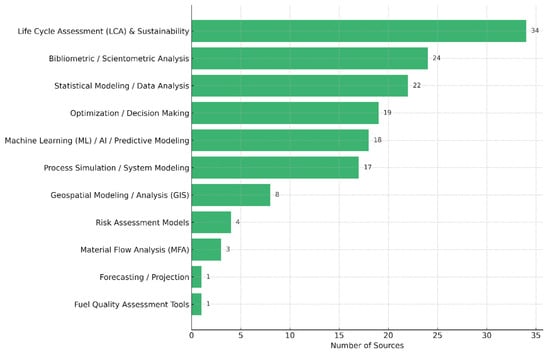
Figure 5.
Observed modeling and analytical frameworks in biomass utilization research.
Following LCA, bibliometric/scientometric analyses are frequently used to map research trends and identify gaps. Fundamentally, bibliometric and scientometric analyses are utilized in biomass research to systematically review and map the scientific output and trends in specific research areas, providing valuable context on the evolution of research, key players, and promising directions for future work, often drawing upon large academic databases and specialized software [72]. Theoretically, these analyses reveal significant growth in publications in specific biomass research areas over time and even identify leading countries, institutions, and authors. They have the capacity to further analyze common keywords and provide insights to emerging research clusters or topics (e.g., process monitoring, quality control, feedstock analysis in NIRS, lignocellulosic biomass, pyrolysis, biofuels). Some studies such as Casau et al. [11] and Nogueira et al. [196] noted that, despite the increased scientific research activities, the number of publications in hydrothermal gasification might still be low, hence the need for further research. According to Pessoa et al. [197], bibliometric studies on patents can reveal technological gaps and emerging technologies. They can also emphasize the need for integrated sustainability assessment studies to close the gap between theoretical research and practical application.
Statistical modeling, data analysis, and optimization models are fundamental tools for resource allocation, process improvement, and economic analysis. Widely applied in sensitivity analysis, regression forecasting, and multi-criteria decision-making (MCDM), these methods help navigate uncertainties in feedstock supply, conversion efficiency, and market dynamics [198,199,200,201]. As described earlier, machine Learning (ML), AI, and predictive modeling are increasingly transformative, supporting energy yield prediction, product quality assessment, and supply chain optimization.
To offer mechanistic insights into energy and material flows while also aiding in the feasibility and scalability evaluations of conversion routes, process simulation and system modeling have been utilized [202]. These models are valuable in testing the feasibility and scalability of different biomass conversion routes—thermal, biochemical, or hybrid—and they allow researchers to predict and analyze the performance, efficiency, and impacts of different biomass pathways without needing extensive experimental setups for every scenario. The following are examples of process simulation and system modeling efforts over the course of biomass utilization research:
- Aspen Plus has been used to simulate specific conversion processes (e.g., supercritical water gasification) by analyzing parameters like temperature and concentration and their impact on yield and thermodynamic performance [184].
- Numerical models were developed to optimize experimental gasification parameters (e.g., oxygen content, equivalence ratio, fluidization velocity) to enhance syngas quality [203].
- Integrated simulation and assessment tools support the modeling and scale-up of biomass conversion plants [204].
- Computational Fluid Dynamics (CFD) models gasification processes, predicting optimal operating conditions and syngas heating value [182].
- Hydrothermal process simulation is applied to wet bio-waste conversion, helping identify viable technological pathways [67].
- Fermentation process modeling supports biofuel production through the simulation of microbial and process dynamics [92].
Geospatial modeling and GIS are essential for resource mapping, land suitability, and logistics, especially for decentralized systems. Since earlier studies, GIS has been crucial for quantifying and mapping the bioenergy potential of forest residues [32]. It is used to assess the spatial distribution of agricultural residues and identify areas with larger amounts available [71]. A spatially explicit assessment can be performed for specific resources like crop residues over defined regions for bioenergy facilities. Integrated GIS and Multi-Criteria Analysis (GIS-MCA) techniques are used to identify suitable decentralized sites for bioethanol production and determine production scales based on collectable biomass and transportation distances [71]. These techs are also suitable for applications in forest and land management, where, for instance, remote sensing is explored for estimating the mass of harvesting residues, contributing to improved monitoring and management of residues for sustainable forestry practices and subsequent bioenergy utilization [78]. Even in environmental monitoring and assessments, remote sensing data has been used in models to estimate ecosystem respiration [205]. Similarly, spatial analysis using GIS and regression analysis were applied to study the correlation between soil contamination and health impacts [36]. While spatial soil properties and variability are assessable using geospatial techniques, remote sensing models have the potential to support the prediction of carbon sequestration [206]. Furthermore, high-throughput pipelines using sensor-based platforms and spatial analysis (like RGB or hyperspectral data) are explored for assessing plant (biomass) characteristics [83]. Techniques like Weighted Potential Source Contribution Function (WPSCF) analysis, given in the works of Tiwari et al. [207], support deeper studies of biomass burning through spatial data. The values of such approaches are countless, indicating their relevance as standard frameworks with great potential in support of biomass utilization and modeling.
Though less common, risk assessment and Material Flow Analysis are gaining relevance [64,208]. Crucially, LCA and TEA complement these approaches by evaluating environmental and economic feasibility, guiding sustainable biomass utilization strategies [195,209]. Table 1 shows the methodological status of biomass utilization techs. Table 2 shows mathematics-based models utilized in biomass research.
Overall, the reviewed literature indicates that near-term industrial impact is most likely to arise from hybrid AI–mechanistic frameworks, in which data-driven models enhance, rather than replace, established simulation and assessment tools.
8. Cross-Cutting and Systemic Challenges in Biomass Utilization
Across the past sections, the general challenges within the technicalities of upstream and downstream phases have been realized. Despite the difficulties highlighted, some few other cross-cutting concerns encompassing economics, politics, environmental sustainability, and system-level integration have been raised, as they have a significant impact on biomass utilization systems. A primary issue is the absence of coherent and helpful policy frameworks. Projects involving biomass energy frequently encounter uncertainty because of shifting incentives, erratic renewable energy goals, and a lack of public–private investment channels. Existing policies might not encourage innovation in advanced biofuels and biochemicals or unfairly favor subsidies for fossil fuels [210]. Moreover, Techno-Economic Analyses reveal that, while biomass technologies may be technically viable, they often struggle to compete with fossil-based alternatives due to higher capital and operating costs, especially when economies of scale are lacking [209,211]. A particular concern is the absence of cost-efficient logistics networks for biomass collection, transportation, and distribution [161]. Consequently, unless subsidized by carbon credits or green procurement laws, the final cost of biofuels and other biomass-derived products will rise, discouraging industry adoption.
One other noted issue is the life cycle environmental performance of biomass systems. While biomass is often seen as carbon-neutral, the reality is more complex. Land-use changes, energy-intensive processing steps, and emissions during transport and conversion can significantly offset the climate benefits of bio-based systems if not properly managed [48,212]. In this regard, comprehensive life cycle assessments become necessary in evaluating the possible trade-offs across emissions, water use, soil degradation, and energy return on investment. In essence, there is a risk of promoting unsustainable biomass pathways under the guise of green energy, without informed strategies achievable through the LCA. To conclude, socioeconomic and sustainability considerations such as food-versus-fuel conflicts [213], land tenure issues [91], and community acceptance [214] also play crucial roles. For instance, the cultivation of energy crops on arable land could threaten food security and biodiversity if not balanced through integrated system approaches. According to the FAO of the United Nations, social inclusivity, especially the involvement of smallholder farmers and rural cooperatives in biomass supply chains, is essential to ensure equitable benefits and the long-term sustainability of biomass initiatives [215].
9. Recommendations and Mitigation Strategies
To overcome the multifaceted challenges in the current biomass utilization and tech advancements, a system-level transformation that combines more recent technological innovations and sustainability-driven planning across the biomass value chain is crucial.
With respect to biomass collection for energy applications, future strategies must explicitly prioritize logistics and supply chain optimization as core design variables rather than secondary operational concerns. Given the spatial dispersion and low bulk density of most biomass residues, economically viable systems should favor decentralized or hub-and-spoke collection models supported by intermediate biomass logistics centers for drying, densification, and quality control near the origin point. The integration of GIS-based spatial planning, multi-criteria decision analysis, and techno-economic optimization can significantly reduce transportation distances, fuel consumption, and overall supply costs. Furthermore, investments in modular, mobile, or regionally scaled preprocessing units can enhance feedstock reliability while strengthening rural participation in bioenergy value chains.
In the upstream mobilization phase, for instance, integrating geospatial technologies such as GIS, remote sensing, and aerial-based imagery through UAVs (or rather drones) with artificial intelligence (AI) models might offer a data-rich approach capable of optimizing feedstock mapping, estimating its yield, and harvesting schedules adaptive to geographies. Potentially, these systems not only improve planning efficiency under spatial and seasonal variability but also enable dynamic decision-making for biomass collection and mobilization, especially in rural economies, which are usually decentralized and have region-specific contexts worthy of consideration. Moreover, pretreatment remains a major technical bottleneck in biomass valorization, particularly for lignocellulosic feedstocks [216]. Emerging low-energy, ecofriendly techniques like supercritical CO2 processing, Ionic Liquid extraction, and biological delignification using engineered microbes, present viable alternatives to conventional thermal or acid-based methods. While minimizing the generation of fermentation inhibitors, these approaches can enhance the accessibility of cellulose to enzymes by disrupting lignin–carbohydrate linkages [217,218,219]. Their integration into preprocessing systems could drastically improve throughput and energy efficiency.
From the downstream utilization perspective, synthetic biology [153] and nanotechnology [220] are redefining biocatalytic processes in the conversion phase. Engineered microbial strains now exhibit improved resistance to inhibitors, utilize multiple sugar streams, and perform under varied environmental conditions [221]. Additionally, the use of nano-structured and bio-derived catalysts improves catalytic selectivity and lowers reaction temperatures, thereby reducing process energy demands and catalyst deactivation risks. These advancements could collectively enhance biofuel and biochemical yields from complex biomass inputs. Process intensification strategies are also recommended, as they offers streamlining advancements in biomass conversion. Technologies like simultaneous saccharification and fermentation (SSF) [63], membrane bioreactors [140], and in situ product recovery [222] offer multi-step integration from individual units, thereby reducing processing time, equipment footprint, and energy inputs. When deployed in modular or mobile biorefinery setups, especially near feedstock sources, these systems also lower logistics costs and facilitate more inclusive rural bioeconomies. Furthermore, advanced materials and smart sensing technologies, when employed, could optimize the downstream separation and purification processes, as they are both money- and energy-intensive.
From a systems perspective, it is well-known that valorizing conversion byproducts through circular economy principles enhances both sustainability and profitability [194]. Technologies like anaerobic digestion, microbial electrolysis cells, and integrated wastewater biorefineries can transform waste streams into bioenergy, fertilizers, or industrial inputs. When aligned with nutrient recovery systems, particularly from algal or fermentation effluents, such strategies close the loop and reduce the environmental footprint of biomass operations.
Policy and market mechanisms play a critical enabling role. The adoption of AI-enabled sustainability metrics, blockchain-based traceability, and regionally adapted biomass certification frameworks can support transparent, performance-based bioenergy markets. Financial incentives, like feed-in tariffs and carbon credits [64], should be directed towards demonstration-scale projects that integrate advanced logistics, digital optimization, and sustainability tracking.
As a final recommendation point, integrating life cycle thinking into biomass project design is indispensable. Decision-support systems that combine LCA, TEA, and AI-powered forecasting can guide technology selection, regional deployment, and long-term impact assessment. These tools have the potential to offer stakeholders a structured way to balance economic viability, environmental impact, and social benefits.
10. Conclusions
The sustainable utilization of biomass remains a cornerstone of the global transition toward renewable energy and bio-based economies; however, this review demonstrates that large-scale deployment is constrained by a hierarchy of interlinked bottlenecks across the biomass value chain. At the upstream level, the most critical constraints for near-term scale-up are feedstock spatial dispersion, heterogeneity in moisture and ash content, and logistics intensity, which collectively drive high transport costs and supply instability. These factors consistently emerge as stronger limiting variables than resource availability itself. At the downstream level, conversion inefficiencies, catalyst deactivation, and energy-intensive separation steps remain dominant technical barriers, while at the system-level, techno-economic uncertainty, fragmented supply chains, and policy misalignment continue to suppress industrial confidence.
Despite these challenges, the literature reveals a clear differentiation between short-term feasible improvements and long-term transformative pathways. In the short term, the most impactful strategies include decentralized or modular biorefinery deployment near feedstock sources, targeted densification and preprocessing to reduce logistics penalties, and process intensification approaches such as SSF, HTL for wet residues, and modular gasification systems. In contrast, long-term transformation will depend on breakthroughs in low-energy pretreatment technologies, advanced biocatalysts, synthetic biology, and fully integrated circular biorefineries capable of valorizing both primary products and side streams.
Within this landscape, artificial intelligence and machine learning occupy a clearly defined but non-uniform role. Quantitative analysis of the reviewed database shows that AI/ML methods currently account for only 2.5–3% of the total historical biomass literature, yet their influence within targeted sub-domains, particularly process modeling, optimization, and yield prediction, has expanded to approximately 18–22% of the recent research output. Their value is most evident where non-linear interactions dominate, with predictive accuracies frequently exceeding R2 > 0.95, significantly outperforming traditional linear models. However, the review also demonstrates that AI remains largely exploratory in upstream logistics and feedstock assessment due to data scarcity, sensing limitations, and biomass heterogeneity. Thus, AI should be viewed not as a universal solution, but as a decision-support and integration tool whose impact is maximized when coupled with mechanistic models, LCA, and Techno-Economic Analysis rather than applied in isolation.
From a policy and industry perspective, the findings underscore the need to shift from technology-centric development toward system-level optimization. Policymakers should prioritize incentives for demonstration-scale projects that integrate advanced logistics planning, decentralized processing, and life cycle-based performance metrics, while industry stakeholders should focus investment on feedstock-conversion compatibility, modular system design, and digital decision-support frameworks that reduce risk across supply chains. Finally, future research should prioritize bridging methodologies, specifically hybrid modeling frameworks that link upstream feedstock characteristics to downstream conversion performance, ensuring that biomass utilization evolves from fragmented innovation toward scalable, economically competitive, and environmentally robust energy systems capable of contributing meaningfully to sustainability, energy security, and circular economy objectives.
Supplementary Materials
The following supporting information can be downloaded at: https://osf.io/7rqav/overview?view_only=4682da99041f4717b9083e7206945609 (accessed on 23 December 2025).
Author Contributions
M.K. performed the conceptualization, methodology, validation, formal analysis, investigation and writing—original draft preparation, writing—review and editing and funding acquisition. C.F.-G. performed the formal analysis and funding acquisition. I.L.-C. performed the methodology, formal analysis, and validation. D.-D.M.-V. performed the methodology and validation. B.V.-M. performed the conceptualization, methodology, validation, formal analysis, investigation, writing—original draft preparation, writing—review and editing and funding acquisition. All authors have read and agreed to the published version of the manuscript.
Funding
This work was carried out within the framework of the IBEROMASA Network (719RT0586) of the Ibero-American Program of Science and Technology for Development (CYTED). Funding for open access charge: CRUE-Universitat Politècnica de València.
Data Availability Statement
The data generated and analyzed during this study is available upon reasonable request to the corresponding author.
Conflicts of Interest
The authors declare no conflicts of interest that could have influenced the design, execution, or interpretation of this study. No financial or personal benefits have been received that could compromise the objectivity of the research.
Abbreviations
| AI | Artificial Intelligence |
| ANN | Artificial Neural Network |
| BD | Bulk Density |
| BTEX | Benzene, Toluene, Ethylbenzene, Xylene |
| CFD | Computational Fluid Dynamics |
| CHP | Combined Heat and Power |
| C/N Ratio | Carbon-to-Nitrogen Ratio |
| DAEs | Days After Emergence |
| DOI | Digital Object Identifier |
| FAME | Fatty Acid Methyl Ester |
| FQL | Fuel Quality Label |
| FQI | Fuel Quality Index |
| GIS | Geographic Information System |
| GHG | Greenhouse Gas |
| LCA | Life Cycle Assessment |
| LCB | Lignocellulosic Biomass |
| MAAD | Methane-Arrested Anaerobic Digestion |
| ML | Machine Learning |
| MFA | Material Flow Analysis |
| MSW | Municipal Solid Waste |
| NIR | Near-Infrared Spectroscopy |
| PAH | Polycyclic Aromatic Hydrocarbon |
| PRISMA | Preferred Reporting Items for Systematic Reviews and Meta-Analyses |
| R/S | Root-to-Shoot Ratio |
| SAR | Synthetic Aperture Radar |
| SCOPUS | Elsevier Scopus Database |
| SEM | Scanning Electron Microscopy |
| TEA | Techno-Economic Analysis |
| TGA | Thermogravimetric Analysis |
| VOSviewer | Visualization of Similarities Viewer |
| WOS | Web of Science |
Appendix A
Table A1.
Methodological Status of Biomass Utilization Techs.
Table A1.
Methodological Status of Biomass Utilization Techs.
| Process Stage | Method/Technology | Status | Technologies Involved | Key Applications | Remarks/Comments |
|---|---|---|---|---|---|
| Biomass Assessment and Feedstock Evaluation | Assessment of Biomass Characteristics | Established | Proximate/Ultimate Analysis, HHV Estimation | Biomass potential, transport/storage suitability | Essential for determining feedstock usability. |
| Near-Infrared Spectroscopy (NIRS) | Emerging | NIRS Instruments | Non-destructive biomass quality analysis | Speeds up chemical characterization. | |
| Multi-Criteria Decision-Making (MCDM) | Emerging | TOPSIS, COPRAS | Comparative evaluation of feedstocks | Objective decision-making for gasification feedstocks. | |
| Bibliometric Analysis | Emerging | VOSviewer, Scopus/WoS | Trend tracking in biomass types and regions | Identifies research gaps and innovation hotspots. | |
| Metagenomics for Microbial Discovery | Emerging | High-throughput Sequencing | Identifying microbes for biomass biodegradation | Accelerates enzyme discovery for lignocellulose conversion. | |
| Deep Eutectic Solvents (DESs) | Emerging | Green Solvents | Pretreatment of lignocellulosic biomass | Boosts enzymatic hydrolysis efficiency. | |
| Focus on Diverse Feedstocks and Regional Specificity | Mixed | GIS, Surveys | Customizing feedstock strategy per region | Supports localized energy system planning. | |
| Analysis of Multi-Feedstock Supply Chains | Mixed | Supply Chain Models | Blended feedstock logistics | Enhances system resilience and flexibility. | |
| Biomass Logistics, Collection and Mobilization | GIS for Spatial Analysis | Established | GIS Tools, Mapping Software | Collection area planning, facility siting | Core to spatially aware biomass strategies. |
| Mathematical Modeling for Supply Chain Optimization | Established | Optimization Algorithms, Network Models | Efficient routing and cost minimization | Applicable to multi-biomass scenarios. | |
| Dynamic and Real-Time Data Integration | Emerging | Real-time GIS, Sensors | Seasonally adaptive logistics planning | Improves temporal decision-making. | |
| Integration of AI and Machine Learning | Emerging | ML, ANN, Predictive Models | Supply chain optimization, facility siting | Supports adaptive, data-driven decision-making. | |
| Biomass Conversion Tech (BCT) in CBRO | Established | Forest Logistics Systems | Integrating logistics with recovery operations | Enhances centralization and efficiency. | |
| Biomass Conversion and Energy Generation | Techno-Economic Analysis (TEA) | Emerging | Process Simulation, Economic Modeling | Evaluating bioconversion feasibility | Aids in investment and scaling decisions. |
| Life Cycle Assessment (LCA) | Emerging | GIS-LCA, Environmental Indicators | Environmental performance modeling | Identifies GHG and ecological impacts. | |
| Simulation Techniques | Emerging | Discrete Event Simulation, CFD | Process design and uncertainty modeling | Supports optimization under various scenarios. | |
| Hydrothermal Processing (HTP) | Emerging | HTL, MA-HTL | Converting wet biomass to bio-oil | Offers valorization of high-moisture waste. | |
| Plasma Gasification | Emerging | Plasma Reactors | Clean conversion of residues to energy | Promising for waste-to-energy applications. | |
| Electrochemical Methods for Microalgae Harvesting | Emerging | Electro-flocculation, Conductivity Sensors | Biomass harvesting | Enhances microalgae process efficiency. | |
| Sustainability, Certification and Policy Evaluation | Sustainability Assessments Using Standards | Established | Certification Protocols | Compliance analysis for bioenergy | Addresses stakeholder trust and market access. |
| Life Cycle Assessment (LCA) | Emerging | Sustainability Metrics | Long-term environmental impact evaluations | Often policy-driven evaluations for biomass systems. |
Appendix B
Table A2.
Mathematics-based models utilized in biomass research.
Table A2.
Mathematics-based models utilized in biomass research.
| Model/Technique | Capabilities/Merits | Limitations/Demerits | Remarks |
|---|---|---|---|
| Hydrothermal Carbonization (HTC) | Treats high-moisture bio-waste; produces valuable products; reduces waste volume | Lacks standardized assessment; immature in developing countries; process complexity | Can be catalytic/non-catalytic; research needed on modeling |
| Multi-Criteria Decision-Making (MCDM) | Optimal selection of biomass, locations, and working conditions | Sensitive to factor weighting; different techniques yield different results | Includes TOPSIS, AHP, etc., often integrated with GIS |
| Life Cycle Assessment (LCA) | Assesses environmental impacts, GHG, resource use | Data inadequacy; variable assumptions across studies | Combined with TEA/LCC; software includes SimaPro, GaBi |
| Techno-Economic Analysis (TEA) | Economic feasibility and viability assessment | Data variability and assumption sensitivity | Applied to ethanol, electricity, algae, etc. |
| Life Cycle Costing (LCC) | Evaluates cost over life cycle; complements LCA | High data requirements; scenario-specific | Used in waste-to-energy and forestry systems |
| AI/Machine Learning | Predicts, optimizes, classifies with high accuracy | Needs large datasets; computational cost; standardization needed | Includes ANN, SVM, RF, XGBoost; rapid growth area |
| Multivariate Statistical Analysis | Classifies, quantifies, and predicts complex data patterns | Interpretation may be complex | PCA, PLS used for biomass, soil, and sludge analyses |
| Regression Analysis | Finds relationships, trends, and predictions | Variable accuracy depending on data | Linear/logarithmic fits applied to soil, biomass |
| Correlation Analysis | Relates variables and outcomes | Does not imply causation | Pearson and Spearman used for multiple analyses |
| Kinetic Modeling | Explains reaction kinetics and reactor design | Needs accurate models and data | Includes KAS, FWO, Coats–Redfern |
| Thermodynamic Analysis | Evaluates system energy and stability | Complex with multi-phase systems | Includes enthalpy, entropy, Gibbs free energy |
| GIS/Spatial Analysis | Maps and assesses bioenergy potential | Needs accurate, updated spatial data | Supports planning, often with MCA |
| Suitability Analysis | Identifies best locations based on criteria | Criteria selection influences outcomes | GIS + AHP-based; used in bioethanol facility planning |
| Location–Allocation Model | Optimizes biomass facility locations | Needs spatial resource and transport data | Supports logistics and facility planning |
| Predictive Modeling (General) | Predicts yields, HHV, ecosystem responses | Depends on data quality; generalizability limited | Combines statistical and ML approaches |
| NIRS + ML/Multivariate | Fast, cheap, and non-destructive analysis | Accuracy varies by parameter | Used for quality control in biomass analysis |
| Continuum Particle Distribution Model | Simulates multi-stage processes | Complexity increases with stages | Applied to corn stover fermentation |
| Quantitative Image Analysis (QIA) | Assesses biomass features without chemicals | Needs good image processing | Combined with PLS for EPS/biomass monitoring |
| Analytical cumulants (PAT) | Assesses technical constraints in power systems | Economically driven ranking limits scope | Used in multi-objective optimization |
| Material Flow Analysis (MFA) | Tracks material flows and sustainability | Conventional MFA lacks detail | Integrated with MCDM, LCA for better insight |
| Monte Carlo Simulation | Accounts for uncertainty in analysis | Computational cost; depends on distribution accuracy | Applied in LCA, risk assessments |
| Remote Sensing Models | Estimate ecological/biophysical parameters | May need local calibration | Uses MODIS, GLM, RF, etc. |
| Exergy-based Methods | Evaluate sustainability and efficiency | Not elaborated in detail | Used for biomass process assessment |
| Multi-trait Stability Index | Selects genotypes with desired traits | Depends on trait selection method | Applied in biofuel/dairy crop optimization |
| Product Space Model (PSM) | Evaluates bio-waste income potential | May show low income potential | Assists in policy formulation |
| Faustmann Model | Economic evaluation of forestry systems | Structural details not discussed | Used in ethanol production profitability |
References
- Tanyi, R.J.; Adaramola, M.S. Bioenergy potential of agricultural crop residues and municipal solid waste in Cameroon. AIMS Energy 2023, 11, 31–46. [Google Scholar] [CrossRef]
- Vasileiadou, A. Sustainable energy production from grape marc: From thermo-analytical and chemical analysis to kinetic modeling and environmental impact assessment. Energy Ecol. Environ. 2023, 8, 471–484. [Google Scholar] [CrossRef]
- Pantaleo, A.; Carone, M.T.; Pellerano, A. Olive Residues To Energy Chains in the Apulia Region Part I: Biomass Potentials and Costs. J. Agric. Eng. 2009, 40, 37. [Google Scholar] [CrossRef]
- Alao, K.T.; Gilani, S.I.U.H.; Sopian, K.; Alao, T.O.; Oyebamiji, D.S.; Oladosu, T.L. Biomass and organic waste conversion for sustainable bioenergy: A comprehensive bibliometric analysis of current research trends and future directions. Int. J. Renew. Energy Dev. 2024, 13, 750–782. [Google Scholar] [CrossRef]
- Huang, J.; Feng, Y.; Xie, H.; Wu, P.; Wang, M.; Wang, B.; Zhang, Q.; Zhang, S.; Liu, Z. A bibliographic study reviewing the last decade of hydrochar in environmental application: History, status quo, and trending research paths. Biochar 2023, 5, 12. [Google Scholar] [CrossRef]
- Elfallah, S.; Benzaouak, A.; Bayssi, O.; Hirt, A.; Mouaky, A.; El Fadili, H.; Rachidi, S.; Lotfi, E.M.; Touach, N.; El Mahi, M. Life cycle assessment of biomass conversion through fast pyrolysis: A systematic review on technical potential and drawbacks. Bioresour. Technol. Rep. 2024, 26, 101832. [Google Scholar] [CrossRef]
- Chang, J.H.; Selvaraj, S.; Manikandan, S.; Nagarani, S.; Senthilkumar, A.; Samuel, M.S.; Selvarajan, E.; John, A.J.; Kumar, M. A comprehensive review of biomass utilization for sustainable biofuel and biocomponent development. Biomass Bioenergy 2025, 202, 108167. [Google Scholar] [CrossRef]
- Osman, A.I.; Nasr, M.; Farghali, M.; Rashwan, A.K.; Abdelkader, A.; Al-Muhtaseb, A.H.; Ihara, I.; Rooney, D.W. Optimizing biodiesel production from waste with computational chemistry, machine learning and policy insights: A review. Environ. Chem. Lett. 2024, 22, 1005–1071. [Google Scholar] [CrossRef]
- Güleç, F.; Okolie, J.A. Decarbonising bioenergy through biomass utilisation in chemical looping combustion and gasification: A review. Environ. Chem. Lett. 2023, 22, 121–147. [Google Scholar] [CrossRef]
- Gugliucci, W.; Pepe, O.; Ventorino, V. Biomass conversion strategies and wastewater reuse: A deep focus on hydrothermal liquefaction as a circular economy approach. Chem. Biol. Technol. Agric. 2024, 11, 177. [Google Scholar] [CrossRef]
- Casau, M.; Dias, M.F.; Matias, J.C.O.; Nunes, L.J.R. Residual Biomass: A Comprehensive Review on the Importance, Uses and Potential in a Circular Bioeconomy Approach. Resources 2022, 11, 35. [Google Scholar] [CrossRef]
- Sarangi, P.K.; Subudhi, S.; Bhatia, L.; Saha, K.; Mudgil, D.; Shadangi, K.P.; Srivastava, R.K.; Pattnaik, B.; Arya, R.K. Utilization of agricultural waste biomass and recycling toward circular bioeconomy. Environ. Sci. Pollut. Res. 2023, 30, 8526–8539. [Google Scholar] [CrossRef]
- Tesfay, A.G.; Tesfay, A.H.; Adaramola, M.S. Quantifying Agricultural Residues Biomass Resources and the Energy Potentials with Characterization of Their Nature and Ethiopian Case Consumption Inference. Energies 2024, 17, 4736. [Google Scholar] [CrossRef]
- Machhirake, N.P.; Vanapalli, K.R.; Kumar, S.; Mohanty, B. Biohydrogen from waste feedstocks: An energy opportunity for decarbonization in developing countries. Environ. Res. 2024, 252, 119028. [Google Scholar] [CrossRef]
- Go, A.W.; Conag, A.T.; Igdon, R.M.B.; Toledo, A.S.; Malila, J.S. Potentials of agricultural and agro-industrial crop residues for the displacement of fossil fuels: A Philippine context. Energy Strateg. Rev. 2019, 23, 100–113. [Google Scholar] [CrossRef]
- Alazaiza, M.Y.D.; Ahmad, Z.; Albahnasawi, A.; Nassani, D.E.; Alenezi, R.A. Biomass processing technologies for bioenergy production: Factors for future global market. Int. J. Environ. Sci. Technol. 2024, 21, 2307–2324. [Google Scholar] [CrossRef]
- Rachbauer, L.; Granda, C.B.; Shrestha, S.; Fuchs, W.; Gabauer, W.; Singer, S.W.; Simmons, B.A.; Urgun-Demirtas, M. Energy and nutrient recovery from municipal and industrial waste and wastewater—A perspective. J. Ind. Microbiol. Biotechnol. 2024, 51, kuae040. [Google Scholar] [CrossRef]
- Matteson, G.C.; Jenkins, B.M. Food and processing residues in California: Resource assessment and potential for power generation. Bioresour. Technol. 2007, 98, 3098–3105. [Google Scholar] [CrossRef] [PubMed]
- Rout, P.R.; Goel, M.; Pandey, D.S.; Briggs, C.; Sundramurthy, V.P.; Halder, N.; Mohanty, A.; Mukherjee, S.; Varjani, S. Technological advancements in valorisation of industrial effluents employing hydrothermal liquefaction of biomass: Strategic innovations, barriers and perspectives. Environ. Pollut. 2023, 316, 120667. [Google Scholar] [CrossRef]
- Puig-Sirera, À.; Acutis, M.; Bancheri, M.; Bonfante, A.; Botta, M.; De Mascellis, R.; Orefice, N.; Perego, A.; Russo, M.; Tedeschi, A.; et al. Zero-Tillage Effects on Durum Wheat Productivity and Soil-Related Variables in Future Climate Scenarios: A Modeling Analysis. Agronomy 2022, 12, 331. [Google Scholar] [CrossRef]
- Saha, S.; Biswas, S.; Pal, S. Survey analysis, scope and application of biomass energy in India. In 2014 1st International Conference on Non Conventional Energy (ICONCE 2014); Ray, P., Mitra, S.K., Eds.; IEEE: New York, NY, USA, 2014; pp. 136–141. [Google Scholar] [CrossRef]
- Little, D.I.; Holtzmann, K.; Gundlach, E.R.; Galperin, Y. Sediment hydrocarbons in former mangrove areas, southern ogoniland, eastern niger delta, nigeria. In Threats to Mangrove Forests; Makowski, C., Finkl, C.W., Eds.; Coastal Research Library; Springer: Cham, Switzerland, 2018; pp. 323–342. [Google Scholar] [CrossRef]
- Roman, K.; Grzegorzewska, E. Biomass Briquetting Technology for Sustainable Energy Solutions: Innovations in Forest Biomass Utilization. Energies 2024, 17, 6392. [Google Scholar] [CrossRef]
- Patel, S.; Patidar, N.P. Optimal Forecasting and credibility based Assessment of a standalone system to comprehend Biomass/Wind/Solar in contextual of rural India. Sci. Technol. Energy Transit. 2025, 80, 31. [Google Scholar] [CrossRef]
- Thompson, P.B. The agricultural ethics of biofuels: The food vs. fuel debate. Agriculture 2012, 2, 339–358. [Google Scholar] [CrossRef]
- Shan, J.; Corvini, P.F.X.; Schäffer, A.; Chee-Sanford, J.C.; Yan, X.; Ji, R. Influence of the geophagous earthworm Aporrectodea sp. on fate of bisphenol A and a branched 4-nonylphenol isomer in soil. Sci. Total Environ. 2019, 693, 133574. [Google Scholar] [CrossRef]
- Saravanan, P.; Palanisamy, K.; Kulandaivelu, S. Spectroscopic Assessment of Sugarcane Bagasse Mediated Vermicompost for Qualitative Enrichment of Animal Wastes Elephus maximus and Bos taurus. Waste Biomass Valorization 2023, 14, 2133–2149. [Google Scholar] [CrossRef]
- Ratnaparkhe, S.; Ratnaparkhe, M.B.; Jaiswal, A.K.; Kumar, A. Strain Engineering for Improved Bio-Fuel Production. Curr. Metabolomics 2015, 4, 38–48. [Google Scholar] [CrossRef]
- Love, J. Microbial pathways for advanced biofuel production. Biochem. Soc. Trans. 2022, 50, 987–1001. [Google Scholar] [CrossRef]
- Costa, G.D.S.; Martinez-Burgos, W.J.; Reis, G.A.D.; Puche, Y.P.; Vega, F.R.; Rodrigues, C.; Serra, J.L.; Campos, S.d.M.; Soccol, C.R. Advances in Biomass and Microbial Lipids Production: Trends and Prospects. Processes 2024, 12, 2903. [Google Scholar] [CrossRef]
- Amos, B.; Walters, D.T. Maize Root Biomass and Net Rhizodeposited Carbon. Soil Sci. Soc. Am. J. 2006, 70, 1489–1503. [Google Scholar] [CrossRef]
- López-Rodríguez, F.; Atanet, C.P.; Blázquez, F.C.; Celma, A.R. Spatial assessment of the bioenergy potential of forest residues in the western province of Spain, Caceres. Biomass Bioenergy 2009, 33, 1358–1366. [Google Scholar] [CrossRef]
- Nesbit, T.S.; Alavalapati, J.R.R.; Dwivedi, P.; Marinescu, M.V. Economics of ethanol production using feedstock from slash pine (Pinus elliottii) plantations in the southern United States. South. J. Appl. For. 2011, 35, 61–66. [Google Scholar] [CrossRef]
- Gasperini, T.; Yeşil, V.; Toscano, G. Machine learning and woody biomasses: Assessing wood chip quality for sustainable energy production. Biomass Bioenergy 2025, 193, 107527. [Google Scholar] [CrossRef]
- Schneider, R.P.; Morano, S.C.; Gigena, M.A.C.; Missawa, S.K.; Rocha, R.C.S.; Da Silva, L.R.; Ellert, N.; Kataoka, S.; Katsuragi, C.; Da Silva Rosa, C.; et al. Contamination levels and preliminary assessment of the technical feasibility of employing natural attenuation in 5 priority areas of presidente Bernardes Refinery in Cubatão, São Paulo, Brazil. Environ. Monit. Assess. 2006, 116, 21–52. [Google Scholar] [CrossRef]
- Ouellet, G.; Lapen, D.R.; Topp, E.; Sawada, M.; Edwards, M. A heuristic model to predict earthworm biomass in agroecosystems based on selected management and soil properties. Appl. Soil Ecol. 2008, 39, 35–45. [Google Scholar] [CrossRef]
- Lerch, T.Z.; Dignac, M.-F.; Barriuso, E.; Bardoux, G.; Mariotti, A. Tracing 2,4-D metabolism in Cupriavidus necator JMP134 with 13C-labelling technique and fatty acid profiling. J. Microbiol. Methods 2007, 71, 162–174. [Google Scholar] [CrossRef]
- Inyang, V.; Laseinde, O.T.; Kanakana, G.M. Techniques and applications of lignocellulose biomass sources as transport fuels and other bioproducts. Int. J. Low-Carbon Technol. 2022, 17, 900–909. [Google Scholar] [CrossRef]
- Menon, V.; Rao, M. Trends in bioconversion of lignocellulose: Biofuels, platform chemicals & biorefinery concept. Prog. Energy Combust. Sci. 2012, 38, 522–550. [Google Scholar] [CrossRef]
- Takara, D.; Khanal, S.K. Biomass Pretreatment for Biofuel Production. Green Energy Technol. 2012, 62, 59–70. [Google Scholar] [CrossRef]
- Wijeyekoon, S.L.J.; Vaidya, A.A. Woody biomass as a potential feedstock for fermentative gaseous biofuel production. World J. Microbiol. Biotechnol. 2021, 37, 134. [Google Scholar] [CrossRef] [PubMed]
- Prasad, A.; Sotenko, M.; Blenkinsopp, T.; Coles, S.R. Life cycle assessment of lignocellulosic biomass pretreatment methods in biofuel production. Int. J. Life Cycle Assess. 2016, 21, 44–50. [Google Scholar] [CrossRef]
- Shabbirahmed, A.M.; Haldar, D.; Dey, P.; Patel, A.K.; Singhania, R.R.; Di Dong, C.; Purkait, M.K. Sugarcane bagasse into value-added products: A review. Environ. Sci. Pollut. Res. 2022, 29, 62785–62806. [Google Scholar] [CrossRef] [PubMed]
- Jamil, F.; Inayat, A.; Hussain, M.; Akhter, P.; Abideen, Z.; Ghenai, C.; Shanableh, A.; Abdellatief, T.M.M. Valorization of Waste Biomass to Biofuels for Power Production and Transportation in Optimized Way: A Comprehensive Review. Adv. Energy Sustain. Res. 2024, 5, 2400104. [Google Scholar] [CrossRef]
- Edmonson, A.; Lin, Y.; Mba-Wright, M.; Byrne, D.; Ding, L.; Shi, J. Comparative life cycle assessment of woody biomass processing: Air classification, drying, and size reduction powered by bioelectricity versus grid electricity. Biomass Convers. Biorefin. 2024, 15, 11793–11802. [Google Scholar] [CrossRef]
- Gnanasekaran, L.; Priya, A.K.; Thanigaivel, S.; Hoang, T.K.A.; Soto-Moscoso, M. The conversion of biomass to fuels via cutting-edge technologies: Explorations from natural utilization systems. Fuel 2023, 331, 125668. [Google Scholar] [CrossRef]
- Dang, N.M.; Lee, K. Recycling of Lipid-extracted Algae Cell Residue for Microorganisms Cultivation and Bioenergy Production. Appl. Chem. Eng. 2021, 32, 487–496. [Google Scholar] [CrossRef]
- Hosseinzadeh-Bandbafha, H.; Nizami, A.S.; Kalogirou, S.A.; Gupta, V.K.; Park, Y.K.; Fallahi, A.; Sulaiman, A.; Ranjbari, M.; Rahnama, H.; Aghbashlo, M.; et al. Environmental life cycle assessment of biodiesel production from waste cooking oil: A systematic review. Renew. Sustain. Energy Rev. 2022, 161, 112411. [Google Scholar] [CrossRef]
- Woo, H.; Acuna, M.; Cho, S.; Park, J. Assessment techniques in forest biomass along the timber supply chain. Forests 2019, 10, 1018. [Google Scholar] [CrossRef]
- Koutek, B.; Šturala, J.; Štejfa, V.; Fulem, M.; Vítek, O.; Macek, J.; Růžička, K. The Current Development and Outlook for the Use of Low Environmental Impact Diesel Fuels/Additives. Chem. List. 2025, 119, 137–147. [Google Scholar] [CrossRef]
- An, Q.; Sun, J.; Yang, J.; Yuetikuer, A.; Zhang, S.; Leng, L.; Zhan, H. Thermochemical valorization of tobacco wastes into biofuels and carbon materials: A comprehensive review. Chem. Eng. J. 2025, 505, 159544. [Google Scholar] [CrossRef]
- Goyal, S.; Dhanker, R.; Hussain, T.; Ferreira, A.; Gouveia, L.; Kumar, K.; Mohamed, H.I. Modern Advancement in Biotechnological Applications for Wastewater Treatment through Microalgae: A Review. Water Air Soil Pollut. 2023, 234, 417. [Google Scholar] [CrossRef]
- Benti, N.E.; Gurmesa, G.S.; Argaw, T.; Aneseyee, A.B.; Gunta, S.; Kassahun, G.B.; Aga, G.S.; Asfaw, A.A. The current status, challenges and prospects of using biomass energy in Ethiopia. Biotechnol. Biofuels 2021, 14, 209. [Google Scholar] [CrossRef]
- Aboagye, D.; Banadda, N.; Kiggundu, N.; Kabenge, I. Assessment of orange peel waste availability in ghana and potential bio-oil yield using fast pyrolysis. Renew. Sustain. Energy Rev. 2017, 70, 814–821. [Google Scholar] [CrossRef]
- Chimphango, A.F.A.; Görgens, J.F. Postharvest technology for advancing sustainable bioenergy production for food processing. Br. Food J. 2015, 117, 2850–2862. [Google Scholar] [CrossRef]
- Padder, S.A.; Khan, R.; Rather, R.A. Biofuel generations: New insights into challenges and opportunities in their microbe-derived industrial production. Biomass Bioenergy 2024, 185, 107220. [Google Scholar] [CrossRef]
- binti Abdul Rahim, K.S.; binti Samsuri, A.; binti Jamal, S.H.; binti Mohd Nor, S.A.; binti Rusly, S.N.A.; binti Ariff, H.; binti Abdul Latif, N.S. Redefining biofuels: Investigating oil palm biomass as a promising cellulose feedstock for nitrocellulose-based propellant production. Def. Technol. 2024, 37, 111–132. [Google Scholar] [CrossRef]
- Agrawal, D.; Tripathi, A.; Pal, P.; Hoque, M.; Bharathi, S.D.; Jacob, S. Sustainable Extraction Strategy for Lignin from Coconut Coir Using Organosolv and Deep Eutectic Solvents (DES). Waste Biomass Valorization 2025, 16, 1599–1608. [Google Scholar] [CrossRef]
- Kaur, P.; Bohidar, H.B.; Pfeffer, F.M.; Williams, R.; Agrawal, R. A comparative assessment of biomass pretreatment methods for the sustainable industrial upscaling of rice straw into cellulose. Cellulose 2023, 30, 4247–4261. [Google Scholar] [CrossRef]
- Agarwalla, A.; Mohanty, K. A critical review on the application of membrane technology in microalgal harvesting and extraction of value-added products. Sep. Purif. Technol. 2024, 344, 127180. [Google Scholar] [CrossRef]
- Blay-Roger, R.; Saif, M.; Bobadilla, L.F.; Ramirez-Reina, T.; Nawaz, M.A.; Odriozola, J.A. Embracing the sustainable horizons through bioenergy innovations: A path to a sustainable energy future. Front. Chem. 2024, 12, 1416102. [Google Scholar] [CrossRef] [PubMed]
- Silva, D.A.L.; Filleti, R.A.P.; Musule, R.; Matheus, T.T.; Freire, F. A systematic review and life cycle assessment of biomass pellets and briquettes production in Latin America. Renew. Sustain. Energy Rev. 2022, 157, 112042. [Google Scholar] [CrossRef]
- Yaverino-Gutiérrez, M.A.; Wong, A.Y.C.H.; Ibarra-Muñoz, L.A.; Chávez, A.C.F.; Sosa-Martínez, J.D.; Tagle-Pedroza, A.S.; Hernández-Beltran, J.U.; Sánchez-Muñoz, S.; Santos, J.C.D.; da Silva, S.S.; et al. Perspectives and Progress in Bioethanol Processing and Social Economic Impacts. Sustainability 2024, 16, 608. [Google Scholar] [CrossRef]
- Jakrawatana, N.; Gheewala, S.H.; Towprayoon, S. Carbon flow and management in regional rice production in Thailand. Carbon Manag. 2019, 10, 93–103. [Google Scholar] [CrossRef]
- Jin, V.L.; Baker, J.M.; Johnson, J.M.F.; Karlen, D.L.; Lehman, R.M.; Osborne, S.L.; Sauer, T.J.; Stott, D.E.; Varvel, G.E.; Venterea, R.T.; et al. Soil Greenhouse Gas Emissions in Response to Corn Stover Removal and Tillage Management Across the US Corn Belt. Bioenergy Res. 2014, 7, 517–527. [Google Scholar] [CrossRef]
- Roy, D.P.; Boschetti, L.; Maier, S.W.; Smith, A.M.S. Field estimation of ash and char colour-lightness using a standard grey scale. Int. J. Wildl. Fire 2010, 19, 698–704. [Google Scholar] [CrossRef]
- Reißmann, D.; Thrän, D.; Bezama, A. Is there a best way for the hydrothermal treatment of moist bio-waste? First experiences from a multi-criteria decision-making approach. In European Biomass Conference; Persson, M., Scarlat, N., Grassi, A., Helm, P., Eds.; FAO: Rome, Italy, 2018; pp. 1039–1043. [Google Scholar]
- Reißmann, D.; Thrän, D.; Bezama, A. How to identify suitable ways for the hydrothermal treatment of wet bio-waste? A critical review and methods proposal. Waste Manag. Res. 2018, 36, 912–923. [Google Scholar] [CrossRef]
- Willis, J.D.; Oppert, C.; Jurat-Fuentes, J.L. Methods for discovery and characterization of cellulolytic enzymes from insects. Insect Sci. 2010, 17, 184–198. [Google Scholar] [CrossRef]
- Behera, B.; Unpaprom, Y.; Ramaraj, R.; Maniam, G.P.; Govindan, N.; Paramasivan, B. Integrated biomolecular and bioprocess engineering strategies for enhancing the lipid yield from microalgae. Renew. Sustain. Energy Rev. 2021, 148, 111270. [Google Scholar] [CrossRef]
- Jusakulvijit, P.; Bezama, A.; Thrän, D. An Integrated Assessment of GIS-MCA with Logistics Analysis for an Assessment of a Potential Decentralized Bioethanol Production System Using Distributed Agricultural Residues in Thailand. Sustainability 2022, 14, 9885. [Google Scholar] [CrossRef]
- Odoi-Yorke, F.; Kaburi, S.A.; Sanful, R.E.; Otoo, G.S.; Lamptey, F.P.; Abbey, A.A.; Agyekum, E.B.; Darko, R.O. A review of recent trends, advancements, and future directions in near-infrared spectroscopy applications in biofuel production and analysis. Infrared Phys. Technol. 2025, 145, 105692. [Google Scholar] [CrossRef]
- Wang, Z.; Yang, B.; Chen, X.; Huang, P.; Chen, K.; Ma, Y.; Agarry, I.E.; Kan, J. Optimization and comparison of nonconventional extraction techniques for soluble phenolic compounds from brocade orange (Citrus sinensis) peels. J. Food Sci. 2022, 87, 4917–4929. [Google Scholar] [CrossRef]
- Asaad, S.M.; Inayat, A.; Rocha-Meneses, L.; Jamil, F.; Ghenai, C.; Shanableh, A. Prospective of Response Surface Methodology as an Optimization Tool for Biomass Gasification Process. Energies 2023, 16, 40. [Google Scholar] [CrossRef]
- Ramandani, A.A.; Chong, J.W.R.; Srinuanpan, S.; Lim, J.W.; Jiang, J.J.; Khoo, K.S. Artificial intelligence-driven prediction models for the cultivation of Chlorella vulgaris FSP-E in food waste culture medium: A comparative analysis and validation of models. Algal Res. 2025, 86, 103935. [Google Scholar] [CrossRef]
- Dashti, A.; Noushabadi, A.S.; Raji, M.; Razmi, A.; Ceylan, S.; Mohammadi, A.H. Estimation of biomass higher heating value (HHV) based on the proximate analysis: Smart modeling and correlation. Fuel 2019, 257, 115931. [Google Scholar] [CrossRef]
- Ogunkunle, O.; Olusanya, M.O. Biotechnological trends and optimization of Arachis hypogaea residues valorization: A bibliometric analysis and comprehensive review. Bioresour. Technol. 2024, 414, 131585. [Google Scholar] [CrossRef] [PubMed]
- Udali, A.; Persson, H.J.; Talbot, B.; Grigolato, S. SAR Data and Harvesting Residues: An Initial Assessment of Estimation Potential. Earth 2024, 5, 945–962. [Google Scholar] [CrossRef]
- Islam, S.; Jameel, H.; Cullen, J.M. Multi-stage MFA for evaluating sustainable waste potential for bioplastics conversion in the circular economy: An examination of UK wastes to produce cellulose nanofiber. J. Clean. Prod. 2024, 482, 144166. [Google Scholar] [CrossRef]
- Dudek, K.; Mokarrari, K.R.; Aghamohamadi-Bosjin, S.; Valdez-Vazquez, I.; Sowlati, T. Techno-economic analysis and strategic optimization of biobutanol production from lignocellulosic biomass in Mexico. Biomass Convers. Biorefin. 2024, 15, 217–241. [Google Scholar] [CrossRef]
- Alqahtani, A.M. Sweet sorghum and bagasse: A comprehensive review of feedstock traits, conversion processes, and economic viability for bioethanol and biogas production. Biofuels 2024, 15, 575–585. [Google Scholar] [CrossRef]
- Kishita, Y.; Nakatsuka, N.; Akamatsu, F. Scenario analysis for sustainable woody biomass energy businesses: The case study of a Japanese rural community. J. Clean. Prod. 2017, 142, 1471–1485. [Google Scholar] [CrossRef]
- Jayasinghe, C.; Badenhorst, P.; Jacobs, J.; Spangenberg, G.; Smith, K. High-throughput ground cover classification of perennial ryegrass (Lolium perenne L.) for the estimation of persistence in pasture breeding. Agronomy 2020, 10, 1206. [Google Scholar] [CrossRef]
- Farrell, A.E.; Gopal, A.R. Bioenergy Research Needs for Heat, Electricity, and Liquid Fuels. MRS Bull. 2008, 33, 373–380. [Google Scholar] [CrossRef]
- Tang, X.; Sousa, L.D.C.; Jin, M.; Chundawat, S.P.S.; Chambliss, C.K.; Lau, M.W.; Xiao, Z.; Dale, B.E.; Balan, V. Designer synthetic media for studying microbialcatalyzed biofuel production. Biotechnol. Biofuels 2015, 8, 1. [Google Scholar] [CrossRef]
- Adsul, M.G.; Singhvi, M.S.; Gaikaiwari, S.A.; Gokhale, D.V. Development of biocatalysts for production of commodity chemicals from lignocellulosic biomass. Bioresour. Technol. 2011, 102, 4304–4312. [Google Scholar] [CrossRef]
- Gibbons, W.; Hughes, S. Integrated biorefineries with engineered microbes and high-value co-products for profitable biofuels production. In Biofuels: Global Impact on Renewable Energy, Production Agriculture, and Technological Advancements; Tomes, D., Lakshmanan, P., Songstad, D., Eds.; Springer: New York, NY, USA, 2011; pp. 265–283. [Google Scholar] [CrossRef]
- Vasileiadou, A.; Zoras, S.; Iordanidis, A. Fuel Quality Index and Fuel Quality Label: Two versatile tools for the objective evaluation of biomass/wastes with application in sustainable energy practices. Environ. Technol. Innov. 2021, 23, 101739. [Google Scholar] [CrossRef]
- Sánchez, J.M.; Jiménez, J.A.P.; Villanueva, M.J.D.; Serrano, A.; Núñez, N.; Giménez, J.L. Assessment of near infrared spectroscopy for energetic characterization of olive byproducts. Renew. Energy 2015, 74, 599–605. [Google Scholar] [CrossRef]
- Martins, A.H.; Rouboa, A.; Monteiro, E. On the green hydrogen production through gasification processes: A techno-economic approach. J. Clean. Prod. 2023, 383, 135476. [Google Scholar] [CrossRef]
- El-Araby, R. Biofuel production: Exploring renewable energy solutions for a greener future. Biotechnol. Biofuels Bioprod. 2024, 17, 129. [Google Scholar] [CrossRef] [PubMed]
- Ardo, F.M.; Khoo, K.S.; Sobri, M.Z.A.; Suparmaniam, U.; Ethiraj, B.; Anwar, A.F.; Lam, S.M.; Sin, J.C.; Shahid, M.K.; Ansar, S.; et al. Modelling photoperiod in enhancing hydrogen production from Chlorella vulgaris sp. while bioremediating ammonium and organic pollutants in municipal wastewater. Environ. Pollut. 2024, 346, 123648. [Google Scholar] [CrossRef]
- Laouidi, K.; Habchi, S.; Fanezoune, C.K.; Sallek, B.; Kussul, N.; El Bari, H. Advancements in artificial neural networks and fast pyrolysis of biomass processing: A comprehensive review and a bibliometric analysis. J. Anal. Appl. Pyrolysis 2025, 189, 107098. [Google Scholar] [CrossRef]
- Babadi, A.A.; Rahmati, S.; Fakhlaei, R.; Barati, B.; Wang, S.; Doherty, W.; Ostrikov, K. Emerging technologies for biodiesel production: Processes, challenges, and opportunities. Biomass Bioenergy 2022, 163, 106521. [Google Scholar] [CrossRef]
- Kim, Y.; Kim, S. Optimization and Simulation in Biofuel Supply Chain. Energies 2025, 18, 1194. [Google Scholar] [CrossRef]
- Chandel, A.K.; Garlapati, V.K.; Kumar, S.P.J.; Hans, M.; Singh, A.K.; Kumar, S. The role of renewable chemicals and biofuels in building a bioeconomy. Biofuels Bioprod. Biorefin. 2020, 14, 830–844. [Google Scholar] [CrossRef]
- Lim, H.Y.; Rashidi, N.A.; Othman, M.F.H.; Ismail, I.S.; Saadon, S.Z.A.H.; Chin, B.L.F.; Yusup, S.; Rahman, M.N. Recent advancement in thermochemical conversion of biomass to biofuel. Biofuels 2024, 15, 587–604. [Google Scholar] [CrossRef]
- Honorato-Salazar, J.A.; Sadhukhan, J. Annual biomass variation of agriculture crops and forestry residues, and seasonality of crop residues for energy production in Mexico. Food Bioprod. Process. 2020, 119, 1–19. [Google Scholar] [CrossRef]
- El-Malek, F.A.; Rofeal, M.; Zabed, H.M.; Nizami, A.S.; Rehan, M.; Qi, X. Microorganism-mediated algal biomass processing for clean products manufacturing: Current status, challenges and future outlook. Fuel 2022, 311, 122612. [Google Scholar] [CrossRef]
- Gamal, R.; Shreadah, M.A. Marine microalgae and their industrial biotechnological applications: A review. J. Genet. Eng. Biotechnol. 2024, 22, 100407. [Google Scholar] [CrossRef] [PubMed]
- Htoo, T.M.; Yabar, H.; Mizunoya, T. GIS-Based Cluster and Suitability Analysis of Crop Residues: A Case Study in Yangon Region, Myanmar. Appl. Sci. 2022, 12, 1822. [Google Scholar] [CrossRef]
- Salleh, S.F.; Gunawan, M.F.; Zulkarnain, M.F.B.; Shamsuddin, A.H.; Abdullah, T.A.R.T. Modelling and Optimization of Biomass Supply Chain for Bioenergy Production. J. Environ. Treat. Tech. 2019, 7, 689–695. Available online: https://www.researchgate.net/profile/Muhammad-Fikri-Zulkornain/publication/345471219_Modelling_and_Optimization_of_Biomass_Supply_Chain_for_Bioenergy_Production/links/5fa75e1e92851cc286a01ff8/Modelling-and-Optimization-of-Biomass-Supply-Chain-for-Bioenerg (accessed on 29 January 2025).
- Natalio, A.I.M.; Back, M.A.; Richards, A.; Jeffery, S. Field-scale heterogeneity overrides management impacts following conversion to no-till within an arable system. Appl. Soil Ecol. 2024, 193, 105104. [Google Scholar] [CrossRef]
- Pattnaik, F.; Patra, B.R.; Nanda, S.; Mohanty, M.K.; Dalai, A.K.; Rawat, J. Drivers and Barriers in the Production and Utilization of Second-Generation Bioethanol in India. Recycling 2024, 9, 19. [Google Scholar] [CrossRef]
- Fajardo, C.; Blánquez, A.; Domínguez, G.; Borrero-López, A.M.; Valencia, C.; Hernández, M.; Arias, M.E.; Rodríguez, J. Assessment of sustainability of bio treated lignocellulose-based oleogels. Polymers 2021, 13, 267. [Google Scholar] [CrossRef]
- da Silva Pereira, M.; Alcantara, L.M.; de Freitas, L.M.; de Oliveira Ferreira, A.L.; Leal, P.L. Microbial Rumen proteome analysis suggests Firmicutes and Bacteroidetes as key producers of lignocellulolytic enzymes and carbohydrate-binding modules. Braz. J. Microbiol. 2025, 56, 817–833. [Google Scholar] [CrossRef]
- Xia, C.; Pathy, A.; Paramasivan, B.; Ganeshan, P.; Dhamodharan, K.; Juneja, A.; Kumar, D.; Brindhadevi, K.; Kim, S.H.; Rajendran, K. Comparative study of pyrolysis and hydrothermal liquefaction of microalgal species: Analysis of product yields with reaction temperature. Fuel 2022, 311, 121932. [Google Scholar] [CrossRef]
- Usman, M.; Cheng, S.; Boonyubol, S.; Cross, J.S. From biomass to biocrude: Innovations in hydrothermal liquefaction and upgrading. Energy Convers. Manag. 2024, 302, 118093. [Google Scholar] [CrossRef]
- Sharma, T.; Hakeem, I.G.; Gupta, A.B.; Joshi, J.; Shah, K.; Vuppaladadiyam, A.K.; Sharma, A. Parametric influence of process conditions on thermochemical techniques for biochar production: A state-of-the-art review. J. Energy Inst. 2024, 113, 101559. [Google Scholar] [CrossRef]
- Abelha, P.; Cieplik, M.K. Evaluation of Steam-Exploded Wood Pellets Storage and Handling Safety in a Coal-Designed Power Plant. Energy Fuels 2021, 35, 2357–2367. [Google Scholar] [CrossRef]
- Patel, K.; Singh, S.K. Environmental sustainability, energy efficiency and uncertainty analysis of agricultural residue-based bioethanol production: A comprehensive life cycle assessment study. Biomass Bioenergy 2024, 191, 107439. [Google Scholar] [CrossRef]
- Karpan, B.; Raman, A.A.A.; Rahim, R.; Aroua, M.K.T.; Buthiyappan, A. Carbon Footprint Evaluation of Industrial Wastes Based Solid Fuel in the Context of Its Use in a Cement Plant. Waste Biomass Valorization 2022, 13, 3723–3735. [Google Scholar] [CrossRef]
- Atim, J.; Kaweesi, T.; Hutmacher, R.B.; Putnam, D.H.; Pedraza, J.; de Ben, C.M.; Schramm, T.; Angeles, J.; Clark, N.E.; Dahlberg, J.A. Optimizing Sorghum for California: A Multi-Location Evaluation of Biomass Yield, Feed Quality, and Biofuel Feedstock Potential. Agronomy 2024, 14, 2866. [Google Scholar] [CrossRef]
- Manandhar, A.; Shah, A. Life cycle assessment of feedstock supply systems for cellulosic biorefineries using corn stover transported in conventional bale and densified pellet formats. J. Clean. Prod. 2017, 166, 601–614. [Google Scholar] [CrossRef]
- Haldar, D.; Purkait, M.K. Lignocellulosic conversion into value-added products: A review. Process Biochem. 2020, 89, 110–133. [Google Scholar] [CrossRef]
- Faizan, M.; Song, H. Critical review on catalytic biomass gasification: State-of-Art progress, technical challenges, and perspectives in future development. J. Clean. Prod. 2023, 408, 137224. [Google Scholar] [CrossRef]
- Kambo, H.S.; Dutta, A. A comparative review of biochar and hydrochar in terms of production, physico-chemical properties and applications. Renew. Sustain. Energy Rev. 2015, 45, 359–378. [Google Scholar] [CrossRef]
- Emisha, L.; Prince, D.; Vijay, S.J.; Bhagavathsingh, J.; Somu, P.; Basavegowda, N.; Haldar, D. Technological advancement in the production of biohydrogen from lignocellulosic biomass: A review. J. Environ. Chem. Eng. 2024, 12, 113084. [Google Scholar] [CrossRef]
- Dutta, N.; Usman, M.; Ashraf, M.A.; Luo, G.; El-Din, M.G.; Zhang, S. Methods to convert lignocellulosic waste into biohydrogen, biogas, bioethanol, biodiesel and value-added chemicals: A review. Environ. Chem. Lett. 2023, 21, 803–820. [Google Scholar] [CrossRef]
- Tomar, S.; Agarwal, S.; Singh, H.; Kumar, R.; Qureshi, K.A.; Jaremko, M.; Emwas, A.H.; Rai, P.K. Microalgae: A promising source for biofuel production. Biocatal. Agric. Biotechnol. 2023, 53, 102877. [Google Scholar] [CrossRef]
- Javed, M.U.; Nazeer, I.; Mukhtar, H.; Rashid, U.; Sabater, M.J.; Alharthi, F.A. Production and optimization of biofuels from locally isolated algal biomass: Strategies for circular economy integration. Biocatal. Agric. Biotechnol. 2024, 61, 103383. [Google Scholar] [CrossRef]
- Shingare, S.P.; Kanfade, L.B.; Mane, V.B.; Kumbhar, G.B.; Suryawanshi, M.A. Sun-powered Wastewater Treatment with a Hydrogen Bonus: Unveiling the Potential of Zno-Tio2 Nanoparticles. Waste Biomass Valorization 2024, 15, 6281–6291. [Google Scholar] [CrossRef]
- Kumar, S.; Soomro, S.A.; Harijan, K.; Uqaili, M.A.; Kumar, L. Advancements of Biochar-Based Catalyst for Improved Production of Biodiesel: A Comprehensive Review. Energies 2023, 16, 644. [Google Scholar] [CrossRef]
- Vignesh, N.S.; Soosai, M.R.; Chia, W.Y.; Wahid, S.N.; Varalakshmi, P.; Moorthy, I.M.G.; Ashokkumar, B.; Arumugasamy, S.K.; Selvarajoo, A.; Chew, K.W. Microwave-assisted pyrolysis for carbon catalyst, nanomaterials and biofuel production. Fuel 2022, 313, 123023. [Google Scholar] [CrossRef]
- Samuel, M.S.; Sudhakar, M.P.; Santhappan, J.S.; Ravikumar, M.; Kalaiselvan, N.; Mathimani, T. Ammonia production from microalgal biosystem: Present scenario, cultivation systems, production technologies, and way forward. Fuel 2024, 368, 131643. [Google Scholar] [CrossRef]
- Din, M.I.; Ameen, S.; Hussain, Z.; Khalid, R. Advancements, Challenges, and Pathways to Sustainable Biofuel Production. Chem. Eng. Technol. 2024, 47, 614–623. [Google Scholar] [CrossRef]
- Liu, Z.; Yang, Y.; Chen, Y.; Yi, L.; Guo, L.; Chao, Y.; Chen, H. A review on catalytic hydrogen production from supercritical water gasification of biomass. Biomass Bioenergy 2024, 190, 107422. [Google Scholar] [CrossRef]
- Deepika, C.; Mrinal; Pohrmen, C.B.; Jaiswal, K.S.; Sangmesh, B.; Jaiswal, K.K.; Ramasamy, A.P.; Jaiswal, A.K. Hydrothermal liquefaction of wet microalgal biomass for biofuels and platform chemicals: Advances and future prospects. Discov. Appl. Sci. 2024, 6, 245. [Google Scholar] [CrossRef]
- Wu, S.; Wang, Q.; Fang, M.; Wu, D.; Cui, D.; Pan, S.; Bai, J.; Xu, F.; Wang, Z. Hydrothermal carbonization of food waste for sustainable biofuel production: Advancements, challenges, and future prospects. Sci. Total Environ. 2023, 897, 165327. [Google Scholar] [CrossRef] [PubMed]
- Le, T.H.; Wang, S.; Kim, B.S.; Nam, H.; Lee, D. Advancements and challenges in catalytic hydrothermal liquefaction of lignocellulosic biomass: A comprehensive review. Chem. Eng. J. 2024, 498, 155559. [Google Scholar] [CrossRef]
- Lin, S.L.; Zhang, H.; Chen, W.H.; Song, M.; Kwon, E.E. Low-temperature biochar production from torrefaction for wastewater treatment: A review. Bioresour. Technol. 2023, 387, 129588. [Google Scholar] [CrossRef]
- Punia, P.; Kumar, S. A critical review on enhanced bioethanol production from sweet sorghum using nanotechnology. Energy Nexus 2025, 17, 100339. [Google Scholar] [CrossRef]
- Chavan, S.; Mitra, D.; Ray, A. Harnessing rice husks: Bioethanol production for sustainable future. Curr. Res. Microb. Sci. 2024, 7, 100298. [Google Scholar] [CrossRef]
- Singhania, R.R.; Patel, A.K.; Kumar, P.; Perumal, P.K.; Chen, C.W.; Di Dong, C. Bioprospecting of cellulases from marine fungi for macro-algal biomass degradation for biofuel application. Int. J. Biol. Macromol. 2025, 307, 141935. [Google Scholar] [CrossRef] [PubMed]
- Wang, J.; Ma, D.; Lou, Y.; Ma, J.; Xing, D. Optimization of biogas production from straw wastes by different pretreatments: Progress, challenges, and prospects. Sci. Total Environ. 2023, 905, 166992. [Google Scholar] [CrossRef]
- Periyasamy, S.; Isabel, J.B.; Kavitha, S.; Karthik, V.; Mohamed, B.A.; Gizaw, D.G.; Sivashanmugam, P.; Aminabhavi, T.M. Recent advances in consolidated bioprocessing for conversion of lignocellulosic biomass into bioethanol—A review. Chem. Eng. J. 2023, 453, 139783. [Google Scholar] [CrossRef]
- Makepa, D.C.; Chihobo, C.H. Sustainable pathways for biomass production and utilization in carbon capture and storage—A review. Biomass Convers. Biorefin. 2024, 15, 11397–11419. [Google Scholar] [CrossRef]
- Ischia, G.; Berge, N.D.; Bae, S.; Marzban, N.; Román, S.; Farru, G.; Wilk, M.; Kulli, B.; Fiori, L. Advances in Research and Technology of Hydrothermal Carbonization: Achievements and Future Directions. Agronomy 2024, 14, 955. [Google Scholar] [CrossRef]
- Saha, S.; Mondal, A.; Kurade, M.B.; Ahn, Y.; Banerjee, P.; Park, H.K.; Pandey, A.; Kim, T.H.; Jeon, B.H. Cutting-edge technological advancements in biomass-derived hydrogen production. Rev. Environ. Sci. Biotechnol. 2023, 22, 397–426. [Google Scholar] [CrossRef]
- Yadav, M.; Sharma, Y.C. Approach to microalgal biodiesel production: Insight review on recent advancements and future outlook. Biofuels Bioprod. Biorefin. 2023, 17, 242–260. [Google Scholar] [CrossRef]
- Akhtar, M.S.; Naseem, M.T.; Ali, S.; Zaman, W. Metal-Based Catalysts in Biomass Transformation: From Plant Feedstocks to Renewable Fuels and Chemicals. Catalysts 2025, 15, 40. [Google Scholar] [CrossRef]
- Awogbemi, O.; Ojo, A.A.; Adeleye, S.A. Advancements in the application of metal oxide nanocatalysts for sustainable biodiesel production. Discov. Appl. Sci. 2024, 6, 250. [Google Scholar] [CrossRef]
- Ajeje, S.B.; Hu, Y.; Song, G.; Peter, S.B.; Afful, R.G.; Sun, F.; Asadollahi, M.A.; Amiri, H.; Abdulkhani, A.; Sun, H. Thermostable Cellulases/Xylanases From Thermophilic and Hyperthermophilic Microorganisms: Current Perspective. Front. Bioeng. Biotechnol. 2021, 9, 794304. [Google Scholar] [CrossRef]
- Li, H.; Hou, C.; Zhai, Y.; Tan, M.; Huang, Z.; Wang, Z.; Leng, L.; Liu, P.; Lei, T.; Li, C. Selective preparation for biofuels and high value chemicals based on biochar catalysts. Front. Energy 2023, 17, 635–653. [Google Scholar] [CrossRef]
- Mahari, W.A.W.; Waiho, K.; Azwar, E.; Fazhan, H.; Peng, W.; Ishak, S.D.; Tabatabaei, M.; Yek, P.N.Y.; Almomani, F.; Aghbashlo, M.; et al. A state-of-the-art review on producing engineered biochar from shellfish waste and its application in aquaculture wastewater treatment. Chemosphere 2022, 288, 132559. [Google Scholar] [CrossRef]
- Syed, M.W.; Kazmi, W.W.; Hussain, A.; Shah, S.F.A.; Kariim, I.; Mehdi, A.M.; Omer, A.; Bhatti, A.H.; Eze, F.; Bhatti, U.H. Lignin Liquefaction: Unraveling the effect of process conditions and sustainable pathways for biofuel production—A comprehensive review. Energy Convers. Manag. 2024, 313, 118615. [Google Scholar] [CrossRef]
- Htoo, N.Y.M.; Pumas, C.; Srinuanpan, S.; Kee, P.E.; Lan, J.C.W.; Lim, J.W.; Upadhyay, S.K.; Khoo, K.S. Advancements in Valorization of Food Waste Resources by Microalgae for Sustainable Biorefinery Production. Bioenergy Res. 2024, 17, 2062–2081. [Google Scholar] [CrossRef]
- Rathour, R.K.; Behl, M.; Dhashmana, K.; Sakhuja, D.; Ghai, H.; Sharma, N.; Meena, K.R.; Bhatt, A.K.; Bhatia, R.K. Non-food crops derived lignocellulose biorefinery for sustainable production of biomaterials, biochemicals and bioenergy: A review on trends and techniques. Ind. Crops Prod. 2023, 204, 117220. [Google Scholar] [CrossRef]
- Marzban, N.; Psarianos, M.; Herrmann, C.; Schulz-Nielsen, L.; Olszewska-Widdrat, A.; Arefi, A.; Pecenka, R.; Grundmann, P.; Schlüter, O.K.; Hoffmann, T.; et al. Smart integrated biorefineries in bioeconomy: A concept toward zero-waste, emission reduction, and self-sufficient energy production. Biofuel Res. J. 2025, 12, 2319–2349. [Google Scholar] [CrossRef]
- Veličković, A.V.; Rajković, D.D.; Avramović, J.M.; Jeromela, A.M.M.; Krstić, M.S.; Veljković, V.B. Advancements in biodiesel production from castor oil: A comprehensive review. Energy Convers. Manag. 2025, 330, 119622. [Google Scholar] [CrossRef]
- Chang, K.L.; Lin, Y.C.; Shangdiar, S.; Chen, S.C.; Hsiao, Y.H. Hydrogen production from dry spirulina algae with downstream feeding in microwave plasma reactor assisted under atmospheric pressure. J. Energy Inst. 2020, 93, 1597–1601. [Google Scholar] [CrossRef]
- Wang, S.; Sun, X.; Yuan, Q. Strategies for enhancing microbial tolerance to inhibitors for biofuel production: A review. Bioresour. Technol. 2018, 258, 302–309. [Google Scholar] [CrossRef] [PubMed]
- Gavrilescu, M. From pollutants to products: Microbial cell factories driving sustainable biomanufacturing and environmental conservation. Chem. Eng. J. 2024, 500, 157152. [Google Scholar] [CrossRef]
- Lin, F.; Xu, M.; Ramasamy, K.K.; Li, Z.; Klinger, J.L.; Schaidle, J.A.; Wang, H. Catalyst Deactivation and Its Mitigation during Catalytic Conversions of Biomass. ACS Catal. 2022, 12, 13555–13599. [Google Scholar] [CrossRef]
- Jose, D.; Vasudevan, S.; Venkatachalam, P.; Maity, S.K.; Septevani, A.A.; Gupta, M.; Tantayotai, P.; El Bari, H.; Sriaryanun, M. Effective deep eutectic solvent pretreatment in one-pot lignocellulose biorefinery for ethanol production. Ind. Crops Prod. 2024, 222, 119626. [Google Scholar] [CrossRef]
- Brar, K.K.; Raheja, Y.; Chadha, B.S.; Magdouli, S.; Brar, S.K.; Yang, Y.-H.; Bhatia, S.K.; Koubaa, A. A paradigm shift towards production of sustainable bioenergy and advanced products from Cannabis/hemp biomass in Canada. Biomass Convers. Biorefin. 2024, 14, 3161–3182. [Google Scholar] [CrossRef]
- Joyia, M.A.K.; Ahmad, M.; Chen, Y.F.; Mustaqeem, M.; Ali, A.; Abbas, A.; Gondal, M.A. Trends and advances in sustainable bioethanol production technologies from first to fourth generation: A critical review. Energy Convers. Manag. 2024, 321, 119037. [Google Scholar] [CrossRef]
- Singh, H.; Janiyani, K.; Gangawane, A.; Pandya, S.; Jasani, S. Engineering cellulolytic fungi for efficient lignocellulosic biomass hydrolysis: Advances in mutagenesis, gene editing, and nanotechnology with CRISPR-Cas innovations. Discov. Appl. Sci. 2024, 6, 665. [Google Scholar] [CrossRef]
- Jain, S.; Kassaye, S. Efficient Production of Platform Chemicals from Lignocellulosic Biomass by Using Nanocatalysts: A Review. Reactions 2024, 5, 842–859. [Google Scholar] [CrossRef]
- Krishnasamy, K.; Asmadi, M.; Zainol, M.M.; Amin, N.A.S.; Zakaria, Z.Y.; Abdullah, S.B. Dual-Acidity Catalysts for Alkyl Levulinate Synthesis from Biomass Carbohydrates: A Review. Bioenergy Res. 2024, 17, 790–815. [Google Scholar] [CrossRef]
- Arora, R.; Reis, C.E.R.; Chandel, A.K. Key Takeaways on the Cost-Effective Production of Cellulosic Sugars at Large Scale. Processes 2024, 12, 1496. [Google Scholar] [CrossRef]
- El-Gendi, H.; El-Fakharany, E.M.; El-Sayed, M.H.; Alenazi, D.A.K.; Jame, R.; Alkhathami, N.D.; Abdelaziz, M.A.; Saleh, A.K. A comprehensive overview of lignocellulosic biomass exploiting for sustainable bioethanol production: Recent advances and emerging challenges towards commercial implementation. Egypt. J. Chem. 2024, 67, 2053–2072. [Google Scholar] [CrossRef]
- Goldhammer, B.P.; Blume, A.M.; Yeung, T.W. Gasification/IGCC to improve refinery operations. Pet. Technol. Q. 2008, 13, 25–26. [Google Scholar]
- Wardle, D.A.; Yeates, G.W.; Watson, R.N.; Nicholson, K.S. Response of soil microbial biomass and plant litter decomposition to weed management strategies in maize and asparagus cropping systems. Soil Biol. Biochem. 1993, 25, 857–868. [Google Scholar] [CrossRef]
- Clomburg, J.M.; Gonzalez, R. Biofuel production in Escherichia coli: The role of metabolic engineering and synthetic biology. Appl. Microbiol. Biotechnol. 2010, 86, 419–434. [Google Scholar] [CrossRef]
- Alipour, S.; Omidvarborna, H.; Kim, D.S. A review on synthesis of alkoxymethyl furfural, a biofuel candidate. Renew. Sustain. Energy Rev. 2017, 71, 908–926. [Google Scholar] [CrossRef]
- Tran, N.A.T.; Padula, M.P.; Evenhuis, C.R.; Commault, A.S.; Ralph, P.J.; Tamburic, B. Proteomic and biophysical analyses reveal a metabolic shift in nitrogen deprived Nannochloropsis oculate. Algal Res. 2016, 19, 1–11. [Google Scholar] [CrossRef]
- Bhushan, I.; Kour, M.; Kour, G. Strategies to Improve Enzymes via Solid-State Fermentation. In Sustainable Approaches for Biofuels Production Technologies: From Current Status to Practical Implementation; Srivastava, N., Srivastava, M., Mishra, P.K., Upadhyay, S.N., Ramteke, P.W., Gupta, V.K., Eds.; Springer: Cham, Switzerland, 2019; pp. 111–119. [Google Scholar] [CrossRef]
- Devarapalli, M.; Atiyeh, H.K. A review of conversion processes for bioethanol production with a focus on syngas fermentation. Biofuel Res. J. 2015, 2, 268–280. [Google Scholar] [CrossRef]
- Mendonça, I.F.; Vale, G.S.D.; Evaristo, R.B.W.; Dutra, R.C.; de Oliveira Rodrigues, P.P.; Silveira, E.A.; Ghesti, G. Optimizing torrefaction of banana waste (peels and rachis) for sustainable biocoal production in rural communities. Biomass Bioenergy 2025, 196, 107726. [Google Scholar] [CrossRef]
- Siwal, S.S.; Sheoran, K.; Saini, A.K.; Vo, D.V.N.; Wang, Q.; Thakur, V.K. Advanced thermochemical conversion technologies used for energy generation: Advancement and prospects. Fuel 2022, 321, 124107. [Google Scholar] [CrossRef]
- Cheng, H.H.; Whang, L.M. Resource recovery from lignocellulosic wastes via biological technologies: Advancements and prospects. Bioresour. Technol. 2022, 343, 126097. [Google Scholar] [CrossRef]
- Ocreto, J.B.; Chen, W.H.; Rollon, A.P.; Ong, H.C.; Pétrissans, A.; Pétrissans, M.; De Luna, M.D.G. Ionic liquid dissolution utilized for biomass conversion into biofuels, value-added chemicals and advanced materials: A comprehensive review. Chem. Eng. J. 2022, 445, 136733. [Google Scholar] [CrossRef]
- Quraishi, R.; Haldar, D. Technological Advancement in Product Valorization of Agricultural Wastes Treated with Deep Eutectic Solvents: A Review. ChemBioEng Rev. 2025, 12, e202400054. [Google Scholar] [CrossRef]
- Araújo, D.; Castro, M.C.R.; Figueiredo, A.; Vilarinho, M.; Machado, A. Green synthesis of cellulose acetate from corncob: Physicochemical properties and assessment of environmental impacts. J. Clean. Prod. 2020, 260, 120865. [Google Scholar] [CrossRef]
- Begum, Y.A.; Kumari, S.; Jain, S.K.; Garg, M.C. A review on waste biomass-to-energy: Integrated thermochemical and biochemical conversion for resource recovery. Environ. Sci. Adv. 2024, 3, 1197–1216. [Google Scholar] [CrossRef]
- Sharmila, V.G.; Shanmugavel, S.P.; Banu, J.R. A review on emerging technologies and machine learning approaches for sustainable production of biofuel from biomass waste. Biomass Bioenergy 2024, 180, 106997. [Google Scholar] [CrossRef]
- Nawaz, A.; Razzak, S.A. Co-pyrolysis of biomass and different plastic waste to reduce hazardous waste and subsequent production of energy products: A review on advancement, synergies, and future prospects. Renew. Energy 2024, 224, 120103. [Google Scholar] [CrossRef]
- Guo, R.; Zeng, Y.; Lin, L.; Hu, D.; Lu, C.; Conroy, S.; Zhang, S.; Zeng, C.; Luo, H.; Jiang, Z.; et al. CO2-Assisted Controllable Synthesis of PdNi Nanoalloys for Highly Selective Hydrogenation of Biomass-Derived 5-Hydroxymethylfurfural. Angew. Chemie Int. Ed. 2025, 64, e202418234. [Google Scholar] [CrossRef]
- Alherbawi, M.; AlNouss, A.; Mckay, G.; Al-Ansari, T. Optimum Utilization of Jatropha Seedcake Considering the Energy, Water and Food Nexus. Comput. Aided Chem. Eng. 2020, 48, 229–234. [Google Scholar] [CrossRef]
- Ubene, M.; Heidari, M.; Dutta, A. Computational Modeling Approaches of Hydrothermal Carbonization: A Critical Review. Energies 2022, 15, 2209. [Google Scholar] [CrossRef]
- Ramos, A.; Monteiro, E.; Rouboa, A. Numerical approaches and comprehensive models for gasification process: A review. Renew. Sustain. Energy Rev. 2019, 110, 188–206. [Google Scholar] [CrossRef]
- Hao, B.; Xu, D.; Wei, Y.; Diao, Y.; Yang, L.; Fan, L.; Guo, Y. Mathematical models application in optimization of hydrothermal liquefaction of biomass. Fuel Process. Technol. 2023, 243, 107673. [Google Scholar] [CrossRef]
- Chen, J.; Liu, Y.; Wu, X.; E, J.; Leng, E.; Zhang, F.; Liao, G. Thermodynamic, environmental analysis and comprehensive evaluation of supercritical water gasification of biomass fermentation residue. J. Clean. Prod. 2022, 361, 132126. [Google Scholar] [CrossRef]
- Zamri, M.F.M.A.; Hassan, S.H.A.; Tiong, S.K.; Milano, J.; Bahru, R.; Fattah, I.M.R.; Mahlia, T.M.I. Progress and challenges of mesoporous catalysts in upgraded pyrolysis of biomass for biofuel production. J. Anal. Appl. Pyrolysis 2024, 182, 106651. [Google Scholar] [CrossRef]
- Khan, F.; Khan, O.; Parvez, M.; Almujibah, H.; Pachauri, P.; Yahya, Z.; Ahamad, T.; Yadav, A.K.; Ağbulut, Ü. Innovative hydrogen production from waste bio-oil via steam methane reforming: An advanced ANN-AHP-k-means modelling approach using extreme machine learning weighted clustering. Int. J. Hydrogen Energy 2025, 105, 1080–1091. [Google Scholar] [CrossRef]
- Sharma, V.; Tsai, M.L.; Chen, C.W.; Sun, P.P.; Nargotra, P.; Di Dong, C. Advances in machine learning technology for sustainable biofuel production systems in lignocellulosic biorefineries. Sci. Total Environ. 2023, 886, 163972. [Google Scholar] [CrossRef]
- S, K.; Ravi, Y.K.; Kumar, G.; Nandabalan, Y.K.; J, R.B. Microalgal biorefineries: Advancement in machine learning tools for sustainable biofuel production and value-added products recovery. J. Environ. Manag. 2024, 353, 120135. [Google Scholar] [CrossRef]
- Khan, M.; Chuenchart, W.; Surendra, K.C.; Khanal, S.K. Applications of artificial intelligence in anaerobic co-digestion: Recent advances and prospects. Bioresour. Technol. 2023, 370, 128501. [Google Scholar] [CrossRef]
- Qyyum, M.A.; Shah, S.F.A.; Qadeer, K.; Naquash, A.; Yasin, M.; Rehan, M.; Tabatabaei, M.; Aghbashlo, M.; Lee, M.; Nizami, A.S. Biowaste to bioenergy options for sustainable economic growth opportunities in developing countries: Product space model analysis and policy map development. Renew. Sustain. Energy Rev. 2022, 169, 112832. [Google Scholar] [CrossRef]
- Li, Y.; Gupta, R.; Zhang, Q.; You, S. Review of biochar production via crop residue pyrolysis: Development and perspectives. Bioresour. Technol. 2023, 369, 128423. [Google Scholar] [CrossRef]
- Kim, J.; Ko, J.; Lee, Y.; Lee, H.; Jeong, S.; Yoo, J.; Lee, S.A.; Gong, G.; Suh, Y.W.; Lee, S.M.; et al. High-yield oleic acid production through glucose-xylose co-fermentation process from lignocellulosic biomass: Techno-economic analysis and environmental evaluation on a large-scale case study. Chem. Eng. J. 2025, 510, 161171. [Google Scholar] [CrossRef]
- Abdullah, M.; Ali, Z.; Yasin, M.T.; Amanat, K.; Sarwar, F.; Khan, J.; Ahmad, K. Advancements in sustainable production of biofuel by microalgae: Recent insights and future directions. Environ. Res. 2024, 262, 119902. [Google Scholar] [CrossRef] [PubMed]
- Sikiru, S.; Abioye, K.J.; Adedayo, H.B.; Adebukola, S.Y.; Soleimani, H.; Anar, M. Technology projection in biofuel production using agricultural waste materials as a source of energy sustainability: A comprehensive review. Renew. Sustain. Energy Rev. 2024, 200, 114535. [Google Scholar] [CrossRef]
- Shah, J.B.; Valaki, J.B. A Comprehensive Review on Feasibility of Different Agro Residues for Production of Bio-Oil, Bio-Char and Pyro-Gas. J. Kejuruter. 2023, 35, 77–93. [Google Scholar] [CrossRef]
- Nogueira, R.C.; Neto, F.S.; de Sousa Junior, P.G.; Valério, R.B.R.; de Sousa Junior, J.; da Silva Lima, A.M.; de Souza, M.C.M.; de Lima, R.K.C.; Lopes, A.A.S.; Guimarães, A.P.; et al. Research trends and perspectives on hydrothermal gasification in producing biofuels. Energy Nexus 2023, 10, 100199. [Google Scholar] [CrossRef]
- Pessôa, L.C.; Deamici, K.M.; Pontes, L.A.M.; Druzian, J.I.; de Jesus Assis, D. Technological prospection of microalgae-based biorefinery approach for effluent treatment. Algal Res. 2021, 60, 102504. [Google Scholar] [CrossRef]
- Osei, I.; Addo, A.; Kemausuor, F. Optimal evaluation of crop residues for gasification in Ghana using integrated multi-criterial decision making techniques. Heliyon 2023, 9, e20553. [Google Scholar] [CrossRef]
- Morshed, S.M.; Shakur, M.S.; Rahman, R.; Mahin, M.M.I.; Debnath, B.; Apu, A.H.; Al Nafiz, F.; Bari, A.B.M.M. An interval-valued type 2 intuitionistic fuzzy theory-based approach to assess the biofuel production and adoption drivers in emerging economies: Implications for sustainability. Energy Nexus 2025, 17, 100369. [Google Scholar] [CrossRef]
- Pizzi, A.; Toscano, G.; Pedretti, E.F.; Duca, D.; Rossini, G.; Mengarelli, C.; Ilari, A.; Renzi, A.; Mancini, M. Energy characteristics assessment of olive pomace by means of FT-NIR spectroscopy. Energy 2018, 147, 51–58. [Google Scholar] [CrossRef]
- Ianda, T.F.; de Araujo Kalid, R.; Rocha, L.B.; Padula, A.D.; Zimmerman, W.B. Techno-economic modeling to produce biodiesel from marine microalgae in sub-Saharan countries: An exploratory study in Guinea-Bissau. Biomass Bioenergy 2022, 158, 106369. [Google Scholar] [CrossRef]
- Sharma, B.; Larroche, C.; Dussap, C.G. Comprehensive assessment of 2G bioethanol production. Bioresour. Technol. 2020, 313, 123630. [Google Scholar] [CrossRef] [PubMed]
- Ismail, T.M.; Ramos, A.; Monteiro, E.; El-Salam, M.A.; Rouboa, A. Parametric studies in the gasification agent and fluidization velocity during oxygen-enriched gasification of biomass in a pilot-scale fluidized bed: Experimental and numerical assessment. Renew. Energy 2020, 147, 2429–2439. [Google Scholar] [CrossRef]
- Jayasundara, P.M.; Jayasinghe, T.K.; Rathnayake, M. Process Simulation Integrated Life Cycle Net Energy Analysis and GHG Assessment of Fuel-Grade Bioethanol Production from Unutilized Rice Straw. Waste Biomass Valorization 2022, 13, 3689–3705. [Google Scholar] [CrossRef]
- Gao, Y.; Yu, G.; Li, S.; Yan, H.; Zhu, X.; Wang, Q.; Shi, P.; Zhao, L.; Li, Y.; Zhang, F.; et al. A remote sensing model to estimate ecosystem respiration in Northern China and the Tibetan Plateau. Ecol. Modell. 2015, 304, 34–43. [Google Scholar] [CrossRef]
- Pascual, A.; Giardina, C.P.; Selmants, P.C.; Laramee, L.J.; Asner, G.P. A new remote sensing-based carbon sequestration potential index (CSPI): A tool to support land carbon management. For. Ecol. Manag. 2021, 494, 119343. [Google Scholar] [CrossRef]
- Tiwari, S.; Kaskaoutis, D.; Soni, V.K.; Attri, S.D.; Singh, A.K. Aerosol columnar characteristics and their heterogeneous nature over Varanasi, in the central Ganges valley. Environ. Sci. Pollut. Res. 2018, 25, 24726–24745. [Google Scholar] [CrossRef]
- Baptista, I.; Irvine, B.; Fleskens, L.; Geissen, V.; Ritsema, C. Assessing the Biophysical Impact and Financial Viability of Soil Management Technologies Under Variable Climate in Cabo Verde Drylands: The PESERA-DESMICE Approach. Land Degrad. Dev. 2016, 27, 1679–1690. [Google Scholar] [CrossRef]
- Ramos, A.; Rouboa, A. Life cycle thinking of plasma gasification as a waste-to-energy tool: Review on environmental, economic and social aspects. Renew. Sustain. Energy Rev. 2022, 153, 111762. [Google Scholar] [CrossRef]
- Sadhukhan, J.; Martinez-Hernandez, E.; Allieri, M.A.A.; Eguía-Lis, J.A.Z.; Castillo, A.; Dominguillo, D.; Torres-García, E.; Aburto, J. Strategic navigation of world-leading biorefineries and Mexico’s policy landscape: A gateway to a sustainable circular bioeconomy. J. Clean. Prod. 2024, 434, 140386. [Google Scholar] [CrossRef]
- Nie, Y.; Bi, X.T. Techno-economic assessment of transportation biofuels from hydrothermal liquefaction of forest residues in British Columbia. Energy 2018, 153, 464–475. [Google Scholar] [CrossRef]
- Errera, M.R.; Dias, T.A.D.C.; Maya, D.M.Y.; Lora, E.E.S. Global bioenergy potentials projections for 2050. Biomass Bioenergy 2023, 170, 106721. [Google Scholar] [CrossRef]
- Mahmood, T.; Hussain, N.; Shahbaz, A.; Mulla, S.I.; Iqbal, H.M.N.; Bilal, M. Sustainable production of biofuels from the algae-derived biomass. Bioprocess Biosyst. Eng. 2023, 46, 1077–1097. [Google Scholar] [CrossRef]
- Capaccioli, S.; Uggè, C.; Michel, J.B.; McCormick, M.; Maguire, J.; Aragno, M.; Mahrer, F.R.; Magnolfi, V.; Salimbeni, A.; Ivancic, A. Socio-economic benefits of small anaerobic digestion systems. In Proceedings of the 24th European Biomass Conference and Exhibition, Amsterdam, The Netherlands, 6–9 June 2016; pp. 1530–1534. [Google Scholar]
- Beall, E. Smallholders in Global Bioenergy Value Chains and Certification; FAO: Rome, Italy, 2012. [Google Scholar]
- Woźniak, A.; Kuligowski, K.; Świerczek, L.; Cenian, A. Review of Lignocellulosic Biomass Pretreatment Using Physical, Thermal and Chemical Methods for Higher Yields in Bioethanol Production. Sustainability 2025, 17, 287. [Google Scholar] [CrossRef]
- White, D.C.; Peacock, A.M.; Geyer, R.; Chang, Y.-J.; Gan, Y.-D.M.; Lytle, C.A. Rapid Detection/Identification of Microbes, Bacterial Spores, Microbial Communities, and Metabolic Activities in Environmental Matrices. In The Utilization of Bioremediation to Reduce Soil Contamination: Problems and Solutions; Sasek, V., Glaser, J.A., Baveye, P., Eds.; Springer: Dordrecht, The Netherlands, 2003; pp. 3–19. [Google Scholar] [CrossRef]
- Shukla, A.; Kumar, D.; Girdhar, M.; Kumar, A.; Goyal, A.; Malik, T.; Mohan, A. Strategies of pretreatment of feedstocks for optimized bioethanol production: Distinct and integrated approaches. Biotechnol. Biofuels Bioprod. 2023, 16, 44. [Google Scholar] [CrossRef]
- Parveen, F.; Saxena, A.; Hussain, A.; Giri, B.S.; Ashfaque, M. Facile fractionation of lignocellulosic biomass: A review on promising green technology of deep eutectic solvent for bioethanol production. Biomass Convers. Biorefin. 2024, 15, 13303–13322. [Google Scholar] [CrossRef]
- El-Sheekh, M.M.; El-Kassas, H.Y.; Ali, S.S. Microalgae-based bioremediation of refractory pollutants: An approach towards environmental sustainability. Microb. Cell Factories 2025, 24, 19. [Google Scholar] [CrossRef]
- Joshi, A.; Verma, K.K.; Rajput, V.D.; Minkina, T.; Arora, J. Recent advances in metabolic engineering of microorganisms for advancing lignocellulose-derived biofuels. Bioengineered 2022, 13, 8135–8163. [Google Scholar] [CrossRef] [PubMed]
- Krishna, K.V.; Bharathi, N.; Shiju, S.G.; Paari, K.A.; Malaviya, A. An updated review on advancement in fermentative production strategies for biobutanol using Clostridium spp. Environ. Sci. Pollut. Res. 2022, 29, 47988–48019. [Google Scholar] [CrossRef] [PubMed]
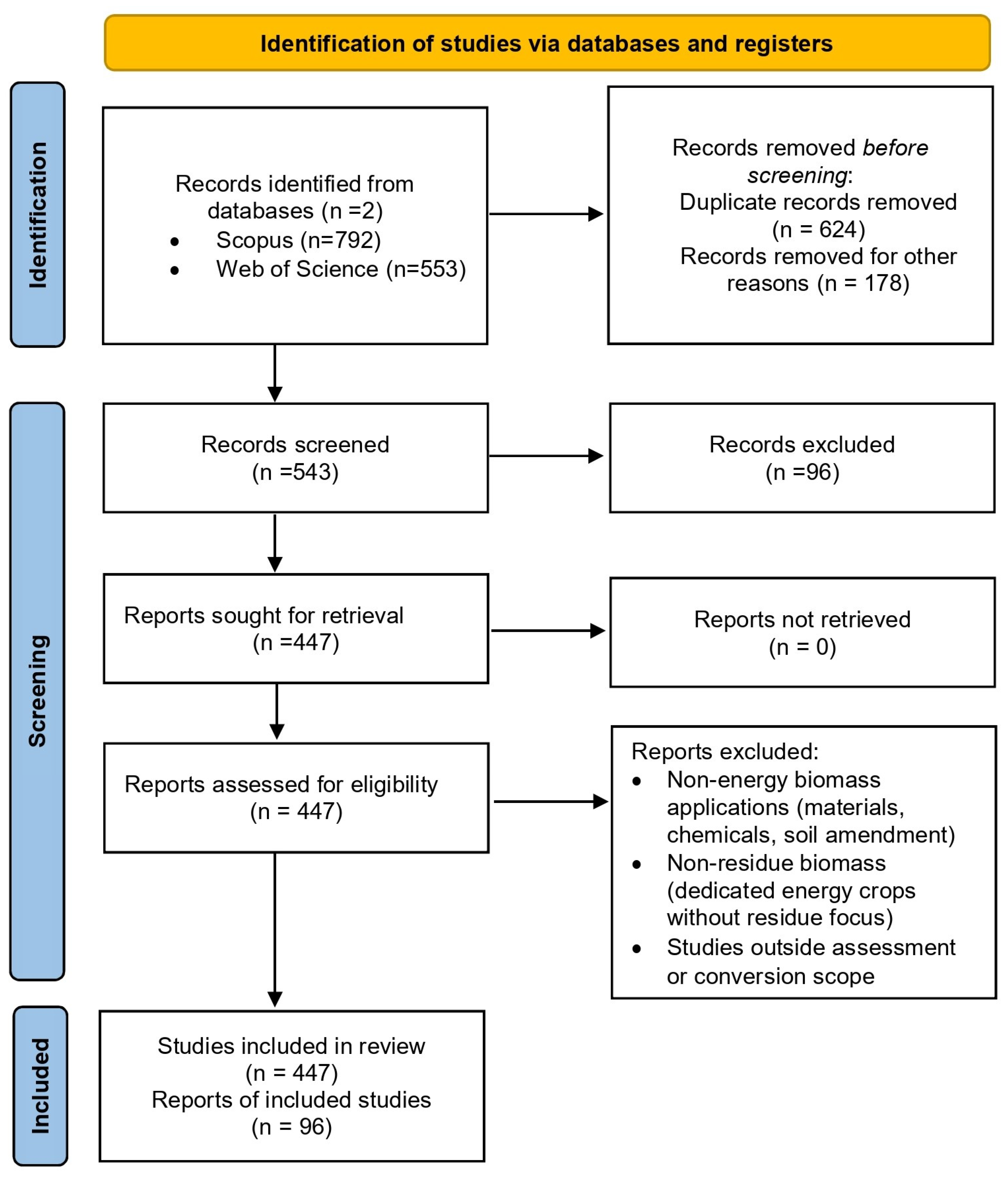
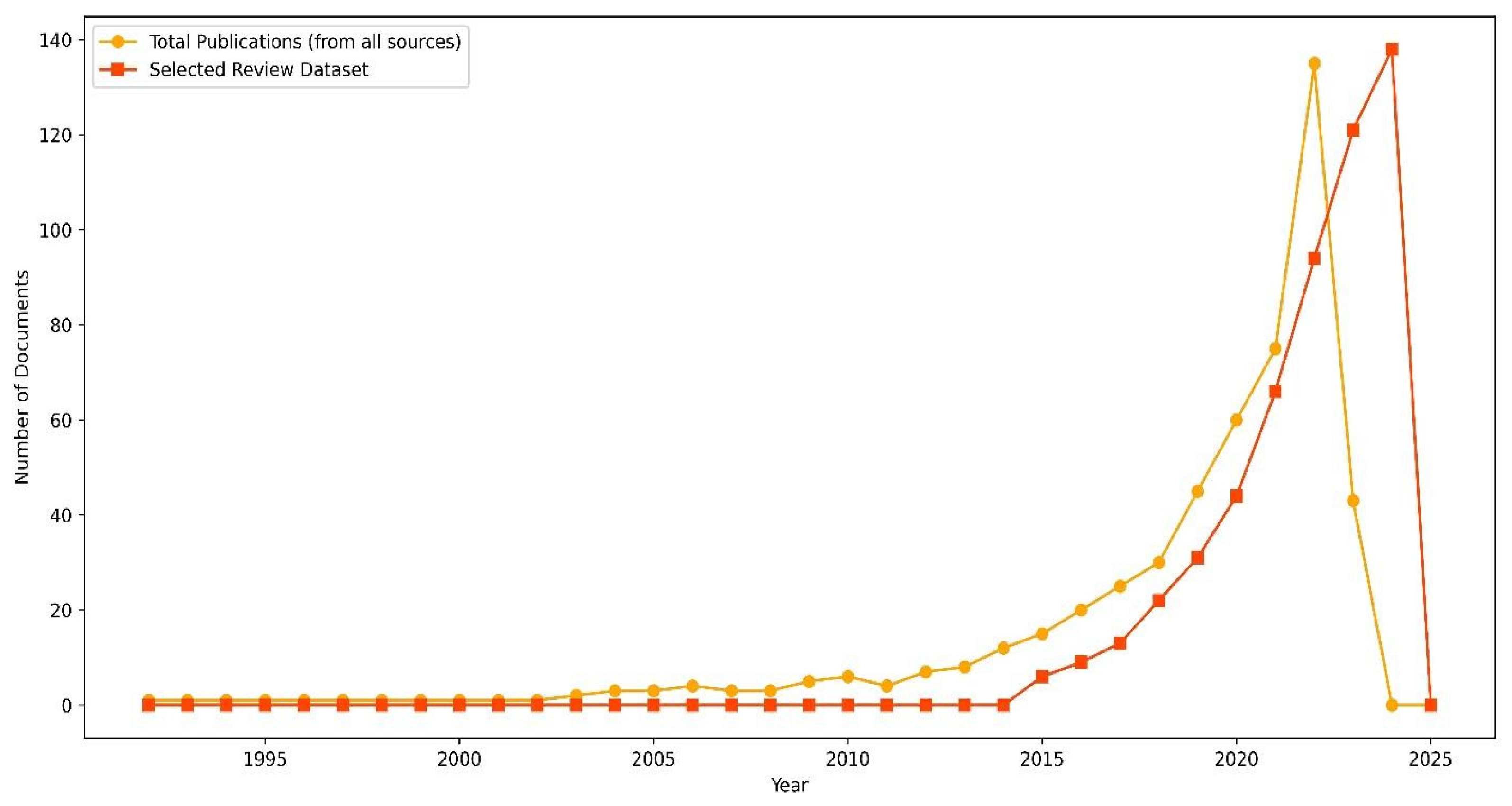
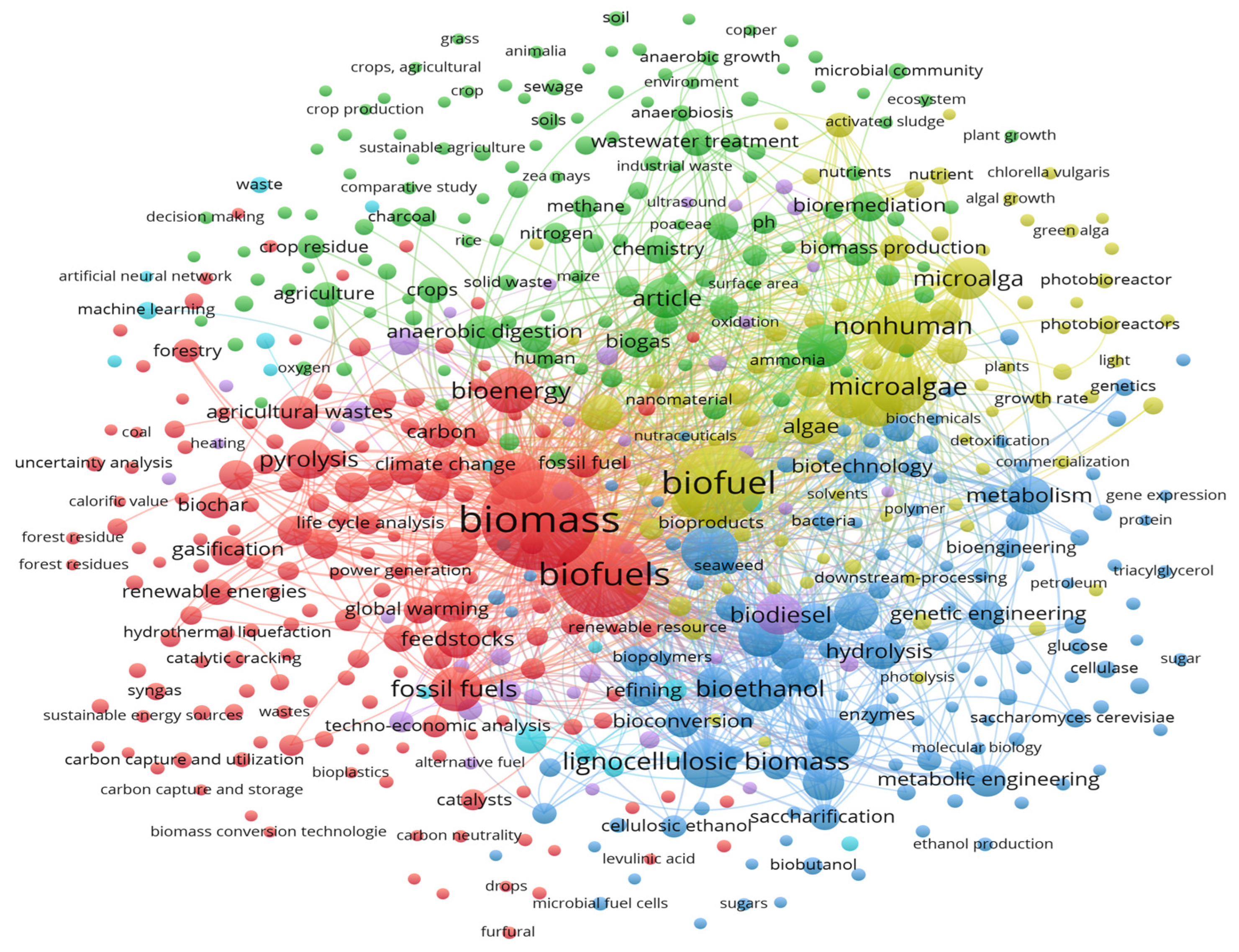
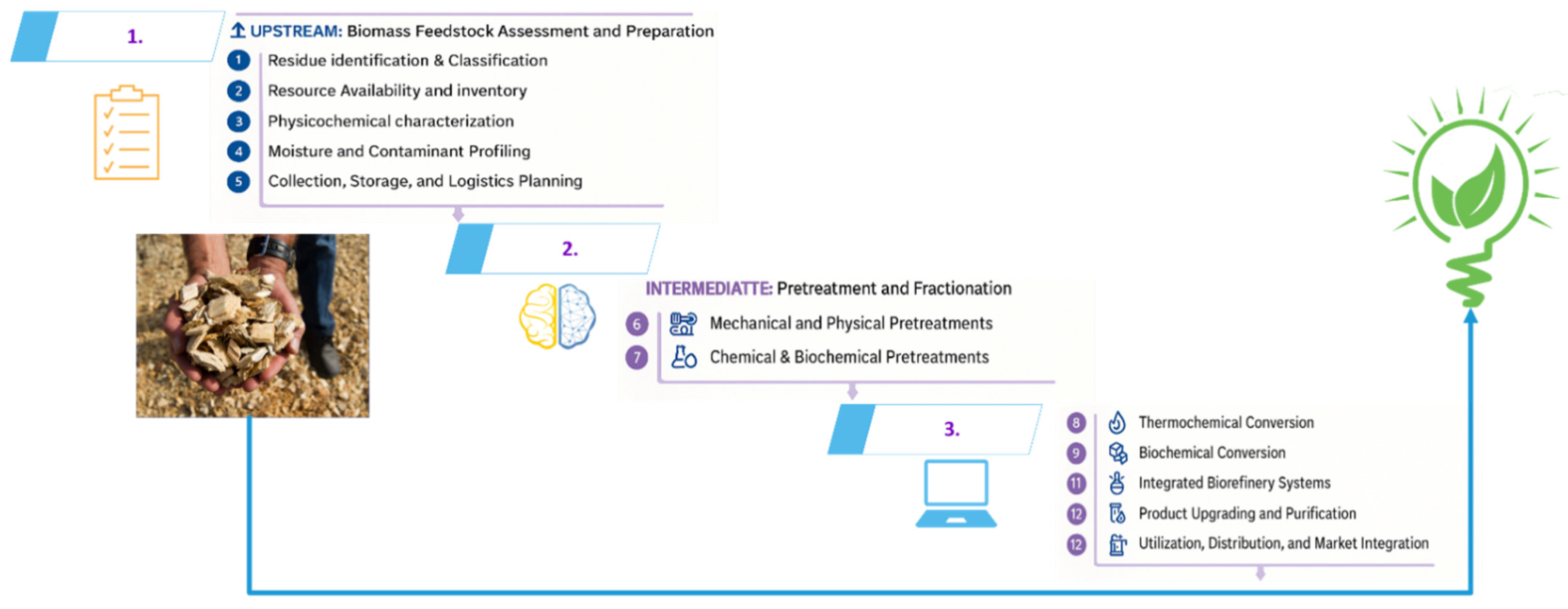
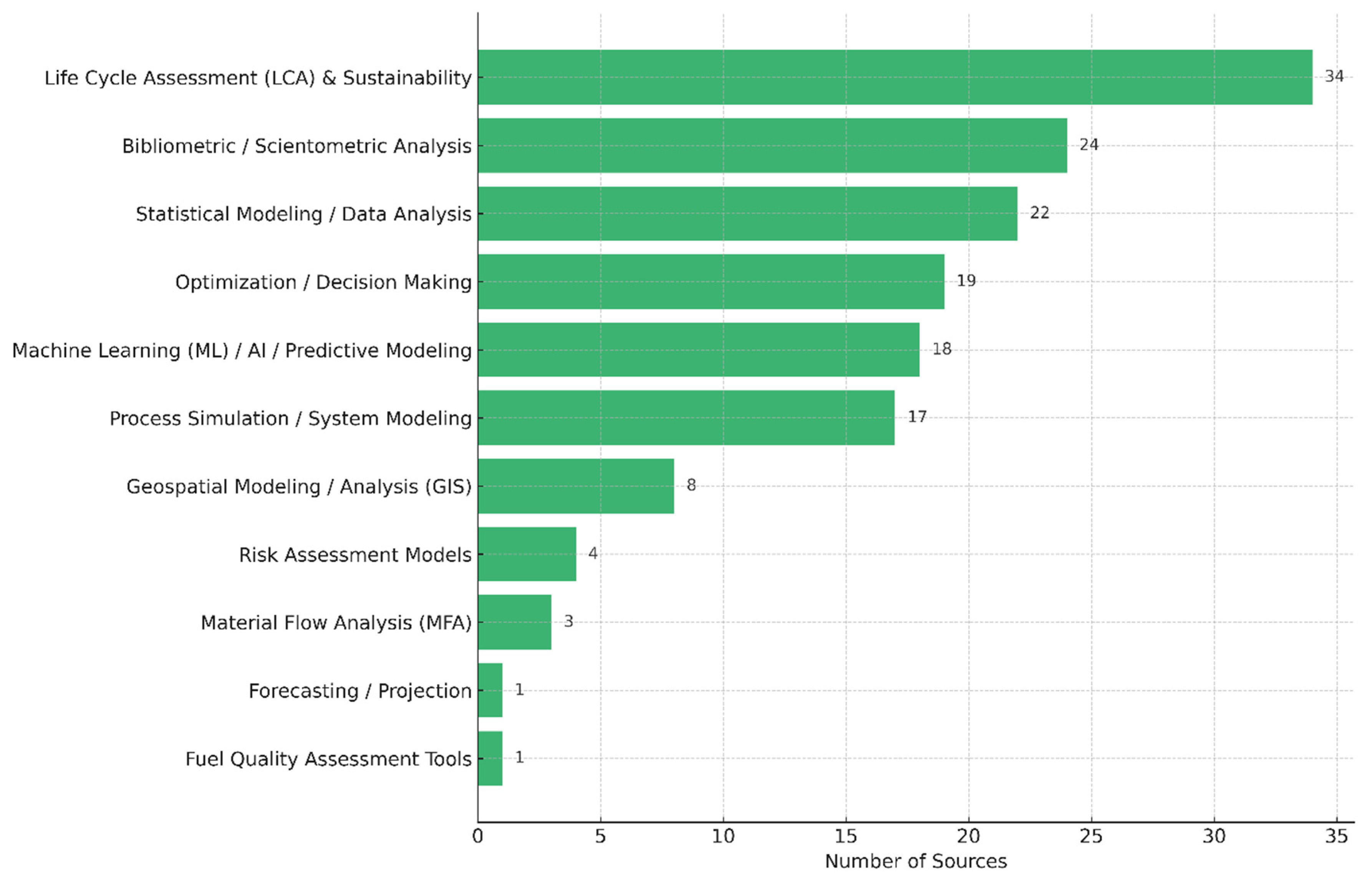
Disclaimer/Publisher’s Note: The statements, opinions and data contained in all publications are solely those of the individual author(s) and contributor(s) and not of MDPI and/or the editor(s). MDPI and/or the editor(s) disclaim responsibility for any injury to people or property resulting from any ideas, methods, instructions or products referred to in the content. |
© 2026 by the authors. Licensee MDPI, Basel, Switzerland. This article is an open access article distributed under the terms and conditions of the Creative Commons Attribution (CC BY) license.