


Definition
NOOR is the Kingdom of Saudi Arabia’s national Educational Management Information System (EMIS), developed by the Ministry of Education to digitize and streamline academic and administrative processes across public schools. Through its unified digital infrastructure, the platform enables essential functions such as student enrolment, grade and attendance management, curriculum administration, and communication with families. Beyond its operational role, NOOR is regarded as a flexible digital foundation, with a predictive architecture, modular integration, and distributed infrastructure which position it as a potential model for broader public-service domains, including healthcare and digital governance. NOOR’s design supports equitable access, facilitates cooperation between educational organizations, and provides real-time data to inform evidence-based decision making. These capabilities contribute to improving learning processes, though their impact depends on wider institutional and pedagogical environments. The system has already demonstrated progress in areas such as data accuracy, academic monitoring, family engagement, and reporting efficiency. Aligned with Saudi Arabia’s Vision 2030 and the Tanweer educational reform program, NOOR reflects the national shift toward centralized, data-driven management of public education. With more than 12 million users, it is one of the largest EMIS platforms in the Middle East and contributes to global discussions on how integrated digital infrastructures can support impactful educational reform.
1. Origin and Policy Context
Education is still largely perceived as a major source of the economy’s success, as well as a fundamental factor in the growth of human potential in a knowledge society [1]. In response to this, educational management systems have slowly transitioned to be digital platforms that not only improve operations but also make data-driven decision making easier [2]. Digital education has been turned into a major tool for achieving fairness and widening access, especially for the most marginalized groups, in line with the United Nations’ Sustainable Development Goals for 2030 [3].
The invention of artificial intelligence and the spread of ubiquitous computing have, once again, made scholars wonder about the importance of the ‘digital traces’ or data generated from interactions with digital platforms, which are the key resources in analysis and planning at the institutional level. In the education sector, such data open a door to the discovery of patterns, the prediction of trends, and the use of intelligent decision-support systems [4]. These advancements point to the increasing demand of powerful, unified platforms that can help institutional coordination, system-wide monitoring, and quick reaction to policies.
By the help of NOOR, a nationwide Educational Management Information System (EMIS) initiative, Saudi Arabia made itself the pioneer of the digital education sector in the region. The platform integrates several administrative, academic, and analytical functions into a secure and unified area, which makes it quite simple to manage grades, attendance, class schedules, and curriculum data [5].
NOOR’s importance as the foundation of the nation’s educational system is evidenced by its technical attributes, characterized by high concurrency, low latency, and scalability. The system complies with the fundamental principles of service-oriented architecture, encompassing distributed resource management, containerized deployment, and modular services. These intentional design decisions align seamlessly with the ambitious objectives outlined in Saudi Arabia’s Vision 2030 [6]. Extensive, government-funded programs such as Tatweer and the King Abdullah Development Project accelerated this digital transformation and defined explicit objectives for system resilience and nationwide accessibility [7,8]. These programs illustrate the importance of universities as hubs of innovation and generators of public benefit [9,10]. NOOR and its peer platforms show how educational data may be used on a large scale. They also highlight an essential policy question: how can timely information and powerful analytics be turned into real action?
Institutions are increasingly reliant on interactive dashboards and decision-support systems to convert analytical signals into actionable decisions and prompt interventions [11,12]. Institutions can also use methods of causal inference for time series analysis [13] in concert with adaptive feedback systems to significantly enhance their forecasting ability, as exemplified by the MADRASATI platform.
NOOR, apart from being an instrument, is also a multi-dimensional and tactical project. The system and its mode of operation, by serving as a model for digital transformations in education and probably other areas of public services, is instrumental in driving these changes. The reforms that it starts in the delivery of public services in large, proof-driven shifts contribute to international debates about the potential role of centralisation online.
2. Functional Scope and Strategic Role
2.1. System Architecture
NOOR is designed to be a national-level educational platform, serving the full scope of academic, administrative, and analytical needs across all tiers of the public education system. It is designed using a service-orientated architecture with modular components and multilayer container orchestration, with distributed computational resources. This architecture allows for high scalability, supports many concurrent users, and provides low latency, which are critical for serving a country of over 12 million users [5].
The NOOR system architecture had to be specifically extended in purpose and design to be continuously available to be allowed to evolve. It includes relational databases, Kubernetes for orchestration containers, and Representational State Transfer Application Programming Interface (RESTful API). Utilizing asynchronous messaging broker (RabbitMQ), the system is designed to perform consistently under heavy load. These technologies effectively guarantee data integrity among institutions. This platform also has service-oriented middle-ware that supports essential educational duties like taking attendance, grading students, sending reports to parents, and school–parent communications.
The NOOR system is built on a three-layered architecture, comprising the user interface, the application logic that executes the programme, and the way it communicates with other government systems. Such division of labour enhances modularity, interoperability, and system reliability by a considerable extent. The system architecture, including the data flow, the user interactions, and the way in which API-based connections are set up with institutional services, is illustrated in Figure 1.
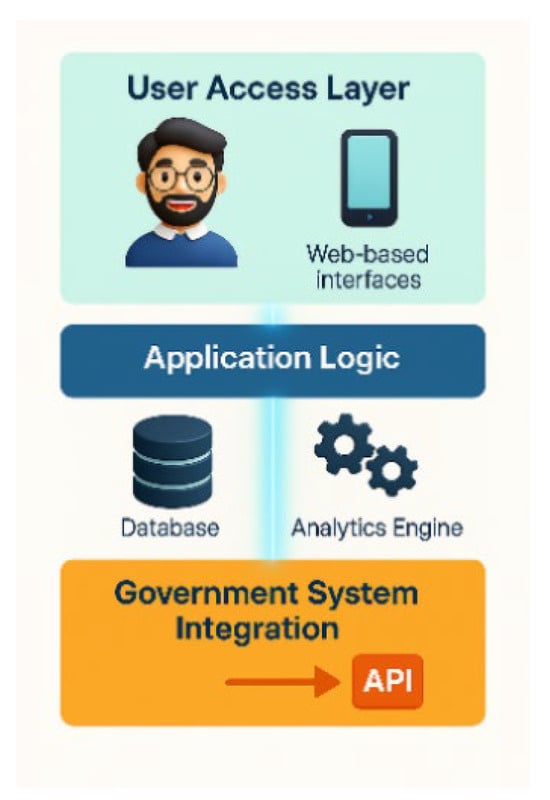
Figure 1.
Architecture of the NOOR platform: user access, application logic, and API integration.
NOOR is a platform that is intentionally created to work smoothly with different platforms through open standards, which is in line with the national digital governance policy. This also applies to its interactions with other platforms apart from its internal operations. The Ministry of Education manages a central repository where schools, families, and administrators can send data in a secure manner. This repository is equipped with interactive dashboards and alarm systems that are meant to aid people in making better decisions and promoting openness in institutions.
In sum, NOOR combines technological sophistication with functional depth to provide a robust, nationwide backbone for education management. Its real-time data ingestion, analytics, and visualization pipelines equip schools and universities to run more efficiently, ground their decisions in evidence, and, ultimately, advance the Kingdom’s progress toward its educational goals.
2.2. Institutional Architecture
Initially, NOOR was only a tool to help the transition from the old Maaref system, but it has subsequently evolved into a comprehensive digital platform that functions at the ministerial, regional, and school levels. It now provides more than 400 different services, is compatible with 67 subsystems, and 49 digital technologies are used for the automation and simplification of educational tasks. At present, it enjoys a wide user base of over 12 million people, of which approximately 6.5 million are students and 500,000 are professors. It is equipped to perform a variety of functions, such as recording academic achievements, scheduling classes, coordinating transportation, and offering complete administrative support. User rights have been set very rigorously according to the role of each person.
NOOR serves as a national digital platform that serves as one of the main mechanisms of strategic oversight of public schooling in Saudi Arabia. The institutional design of NOOR enables transparency, efficiency, and accountability through streamlining administrative activities and real-time data reporting in every tier of the education system [5,6]. The system functions are able to display data separately by demographic characteristics, including gender, geography, and school type, with the aim of encouraging targeted policy action—especially closing the gaps in educational outcomes. Using customisable dashboards, regional offices can also check their own areas, enabling them to explore area-specific methods and contributing to equitable governance [9].
The NOOR platform offers students, parents, teachers, and school administration with comprehensive digital services that enhance communication, support better school management, and offer the ability to track student learning in Saudi Arabia.
Students have access to their academic records and notifications, and the ability to send administrative requests. The platform allows participants to make requests for compensation, take part in assessments, access learning resources, and request transportation savings. By giving students access to their performance reports, attendance records, and grades, NOOR encourages transparency.
Parents can view their child’s planners, schoolwork, and applications for special education and transportation assistance. Along with being informed of student events and performances, they can also register new students. These features facilitate real-time participation in instructional activities by individuals in various roles and assemblies.
School administrators use NOOR to manage academic and administrative responsibilities, such as tracking student attendance, approving transfers, establishing teacher evaluations, and compiling reports that meet national standards.
A range of performance data are gathered by NOOR, facilitating open and knowledgeable decision making.
Teachers benefit from the platform when carrying out numerous tasks, such as sending detailed evaluations, meeting professional development requirements, recording grades, and keeping track of how well their students are learning and making progress. They may communicate with students and their families in a concise and successful way, give numerous types of tests, and conduct vital admin duties like filling out license and regulatory paperwork. These features are particularly important at special and private schools, where compliance rules are often stricter.
NOOR’s modular access control permissions framework seamlessly integrates with different types of schools and institutions. The platform is just as vital to regional and central administration as it is for these frontline users: Even beyond these frontline users, the platform is equally important for regional and central administration. They have been given extra permissions that are meant for high-level oversight, coordinating technical support, and enforcing policies. RESTful APIs also make it easier to connect safely with government and educational systems beyond your own organization, which assists with technology integration and creates a strong, adaptive governance layer which makes it quicker for all systems to coordinate together.
As demonstrated in Figure 2, NOOR’s institutional architecture allows it to serve as a multi-level data-management system that connects schools to central authorities and contributes to the creation of feedback loops, as well as performance and predictive analytics. The result is continuous feedback, performance monitoring, and predictive analytics that support prompt interventions. In this way, the platform is positioned as both a management system and a mechanism for systemic coherence and strategic planning.
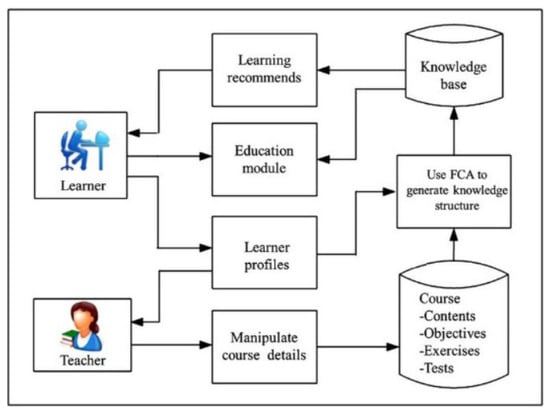
Figure 2.
Functional and institutional architecture of the NOOR system.
Thanks to the strong structure of the system, enabling fast and reliable data sharing, these innovations are accessible. Its real-time synchronising substantially cuts down the time taken for grades to be publish and lesson to be prepared. This gives immediate information to both students and parents and allows teachers to adjust their lessons based on the most recent performance data. Additionally, the reliability of the platform, especially with significant school times, has contributed to trust being built in digital tools for learning and assessment.
The authorisation logic provides differentiated role access (Figure 3), and the platform’s modular growth over time is shown (Figure 4). The integration of dashboards, feedback loops, and predictive analytics allows informed decision-making and targeted interventions, positioning NOOR as both a management tool and an engine for institutional learning and innovation.
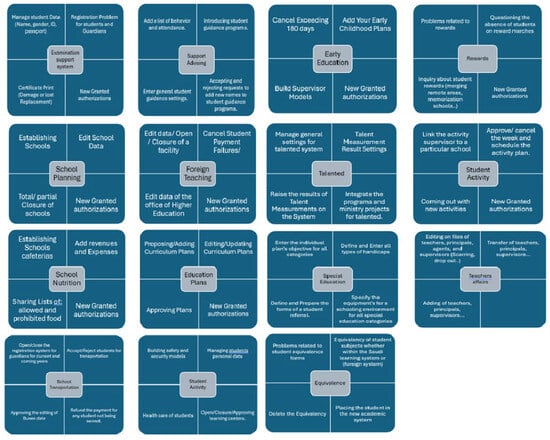
Figure 3.
Authorisation given to the school principal.
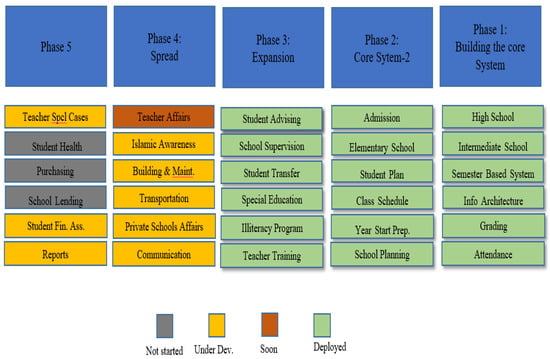
Figure 4.
Integration of the service phase.
2.3. User-Centred Services
NOOR became the centre of the government’s larger project, proving how technology may be used in schools and raising the level of education. NOOR offers a wide range of digital services that focus on the needs of children, families, teachers, and institutional leaders. There are four main functional areas on which these services are based: academic management, administrative operations, analytical capabilities, and user governance. Table 1 shows the primary areas of service that comprise NOOR’s work.

Table 1.
Functional dimensions of the NOOR platform.
In addition, this platform means that users can develop flexible plans for when their priorities are shifting. During the COVID-19 pandemic, for example, the NOOR infrastructure supported the real-time tracking of the academic continuity, showed schools that may have needed additional support, and quickly adapted resource allocation. This ability to respond showed that NOOR is more than a management tool: it is also a robust infrastructure that supports educational equity, operational readiness, and resources.
The NOOR platform has evolved into one of the forefront educational management systems in the world by enabling the Saudi Arabian learning and education industry to use a digital educational solution, making administrative tasks effortless and streamlined.
Through fully digitalised educational processes, NOOR adequately uses digital traces in various academic and administrative domains, including:
- Student and teacher management: The platform enables efficient grade entry, attendance tracking, and real-time monitoring of overall academic progress. In fact, recently, the NOOR system has been authorized to enable a notifications feature, sending a warning to parents whose children have been absent for more than 5 consecutive days in a no-vacation period.
- Curriculum management: The NOOR platform supports the national curriculum set by the Ministry, ensuring that various lesson plans, assessments, and digital educational content are provided, thus promoting a standardised but flexible approach for educators.
- Administrative automation: The system is optimised for various administrative processes in terms of issuing all types of reports, certificates, and academic records. In addition, school managers support the academic calendar and all related exam schedules and dates.
- Parental engagement: The platform is known as a leading service provider for parents, enabling them to engage in their children’s education by tracking their behaviours and attendance while also providing a channel of communication with their schools to keep track of their children. As a side note, the ministry has been sending surveys to parents about preferred vacation and semester partitions in the last couple of years.
- Assessment and evaluation: NOOR provides the tools to evaluate students through their quizzes, exams, and assignments while constantly tracking their performance to inform their assessments over time and provide assessments specific to each student.
- Integration with other educational tools: NOOR creates a digital learning ecosystem by ensuring a comprehensive platform that supports interoperability among digital education platforms, making life easier for students, parents, and administrators.
- Data security and privacy: The platform follows strict and binding privacy regulations, ensuring compliance with privacy standards and data protection at the national and international levels.
- Continuous updates: NOOR guarantees the satisfaction of parents and students as users and enhances the features that are available to supervisors to increase the system’s capabilities. This is supported through regular updates and a commitment to integrating the latest educational technology advances.
3. Operational Impact and Performance Outcomes of the NOOR Platform
NOOR has evolved into one of the leading modern educational management platforms in the world and is a vital part of Saudi Arabia’s larger digital education plan. NOOR helps to optimise workflows and ensures that digital traces are used strategically in key areas of public education by digitising all academic and administrative tasks.
According to user feedback and system checks, there has been an overall increase in satisfaction and better access to educational services across multiple types of schools. The findings all convey that NOOR, as a system, is a significant part of Saudi Arabia’s overarching digital transformation strategy and is a foundational framework for the real-time governance of education. This integration of components is necessary for synchronising micro-level implementation with macro-level education planning and for improving institutional responsiveness to national priorities [12,14].
The integration of the NOOR educational system in the Saudi education sector has proven that the common error rate in manual health/education administration systems ranged from 8% to 20%, depending on the process (data entry, student records, scheduling, exam registration, etc.). It has been reported that inferred error rates often dropped by 1–5%, due to automation, real-time validation, and centralised databases.
NOOR can be applied to more than merely overseeing education; it can also be used for specific tasks in engineering education, such as virtual labs, analytics, and multimedia material. Reviewing attendance and performance data helps teachers to strengthen their strategies, especially in in Science, Technology, Engineering and Mathematics (STEM) subjects.
NOOR illustrates how a single platform can help all those involved, including students, families, teachers, and administrators, by providing real-time data services, powerful analytics, and a solid infrastructure. NOOR thus becomes a strategic instrument that allows Saudi Arabia to fulfil its commitment to modernising its educational system.
Consistent national investment in its digital infrastructure has enabled the NOOR platform to offer integrated solutions across the entire educational system. This initiative goes beyond a technical enhancement by actively transforming structured data into valuable insights for institutional and broad policy decision making. By making it easier to develop advanced analytics and predictive models within an open governance framework, this well-established data framework directly supports the country’s broader goals for digital transformation.
These indicators translate into concrete decision-making practices at different levels of the education system. At the micro-level, automated absenteeism alerts allow schools and families to intervene early when students miss more than five consecutive days during non-vacation periods. At the meso-level, national surveys on parents’ preferences regarding semester breaks and school calendars are analysed through NOOR to adjust term structures and support educational continuity. At the macro-level, aggregated dashboards help regional and central authorities to reallocate support and resources towards schools and districts that display higher risk indicators, such as persistent absenteeism or low assessment performance.
In practice, the Ministry of Education can track important performance indicators in real-time and conduct in-depth statistical analyses using NOOR’s sophisticated reporting and querying capabilities. This capability makes it easier to conduct in-depth evaluations of the effectiveness of curricula, identify emerging trends in education early on, and create strategic plans based on the most recent information on student performance, engagement, and family involvement.
The ensuing gains are significant and quantifiable. Grade processing now takes nearly 70% less time. Administrative errors have dropped by roughly 45%, and the amount of time needed for crucial interdepartmental information exchange has dropped by almost 60%. The system maintains consistently low latency by using a distributed architecture, which ensures reliable services. Platform availability has been reported to be 99.5%, even during periods of high demand.
Recent analytical data from the Ministry of Education [10,12] demonstrate the dynamic success of the NOOR platform as a central element of Saudi Arabia’s educational digitalization. Since its nationwide implementation, the number of active users has increased by over 60% between 2018 and 2024, encompassing more than 12 million students, teachers, and parents [12]. System efficiency indicators reveal a reduction in administrative processing time by 65% and a decline in data-entry errors from 15% to below 3%, reflecting enhanced workflow automation and reliability [14]. Platform performance reports confirm 99.5% system uptime and consistent scalability during peak periods, such as national examination cycles [15].
Above all, these technological advancements have a direct effect on the classroom experience. Evaluations are more equitable, accessible, and manageable for all stakeholders when standardised assessment processes and centralised student records are used. Teachers are now spending much less time on administrative tasks, freeing up more time for curriculum planning and instructional activities. Families and students have easy access to timetables, grades, and comprehensive progress reports. The three fundamental principles of the Saudi educational system—accountability, equality of access, and transparency—are strengthened by this modification, which has a major impact.
4. Applications of NOOR
4.1. Centralised Digital Governance
The COVID-19 pandemic made it extremely evident that education systems rely on a strong and flexible infrastructure. As extensively documented in the literature, nations addressed this challenge through various digital methods, the implementation of which was influenced by particular policy directives, institutional readiness, and existing technology expertise [3,15]. The NOOR platform has already been used to set up a basic framework for digital continuity in Saudi Arabia. This shows how important centralised Education Management Information Systems (EMISs) are to the country’s strategy. Saudi Arabia implemented a different, more centralised, and policy-driven strategy than countries like China, India, Germany, and Spain (as shown in Table 2), which established large initiatives that often used decentralised platforms and Open Educational Resources.
Table 2.
Similar EMISs applied for data governance.
NOOR is a great example of such an approach being compared to such benchmarks in developed nations, given that it applies predictive analytics, partners with other institutions, and aggregates all the data into one national framework [10,15,20].
This centralised strategy has demonstrated its value during times of crisis. During the COVID-19 pandemic, NOOR played a key role in providing regular assessments of how well-prepared educational institutions were and making sure that actions were tailored to each area’s needs. Educational leaders can be supported in minimizing disruptions, maintaining learning environments, and quickly pinpointing problem areas, given that they are provided with immediate access to real-time attendance and performance data [15]. But this kind of development requires special oversight. Systems must guarantee institutional accountability, formulate strategies for enduring, sustainable development, and meticulously protect data privacy [13]. The extent and detail of today’s databases always raise moral and legal issues that need careful handling. The country’s Vision 2030 [14] is an important set of rules for finding a balance between new ideas and the needs of the law and society.
Beyond crisis management, NOOR’s analytical capabilities are essential for long-term strategic planning. Its comprehensive dashboards, feedback loops, and data visualisation tools allow the Ministry of Education to monitor key performance indicators in real time and to adjust policies accordingly [10,12]. The platform also contributes to narrowing the digital divide by making online services accessible to schools in remote and low-resource contexts, enabling students to study from home and follow their own learning paths when needed [21]. Compared with more decentralised arrangements, this centralised model improves coordination across the system and ensures consistent reporting at all levels, a benefit that can also be observed in systems such as those in Germany and Spain. Both centralised and decentralised EMIS models nonetheless share core principles of transparency, continuous evaluation, and institutional accountability, aligned with well-established benchmarks established by the United Nations Educational, Scientific and Cultural Organization (UNESCO), including its Education for all framework, and the learning-environment metrics of the Organisation for Economic Co-operation and Development (OECD) [1,22,23].
4.2. Analytical Performance
Complementing these technical indicators, recent studies on digitalisation and data-driven education [23,24,25] indicate that 83% of teachers and 78% of students perceive NOOR as improving transparency, accessibility, and instructional communication. Parents similarly report increased engagement and trust in the education system, with a 60% rise in portal logins over the same period [26]. Compared with predigital practices and with regional systems such as the UAE’s Madrasa and Singapore’s Smart Nation Education, NOOR exhibits a stronger centralised data-governance model, ensuring consistency, accountability, and policy coherence across all levels of education [27]. Together, these indicators provide empirical evidence of the platform’s effectiveness and its alignment with the Vision 2030 objectives of efficiency, equity, and innovation in public education [14,28]. These longitudinal performance indicators are summarised in Figure 5.
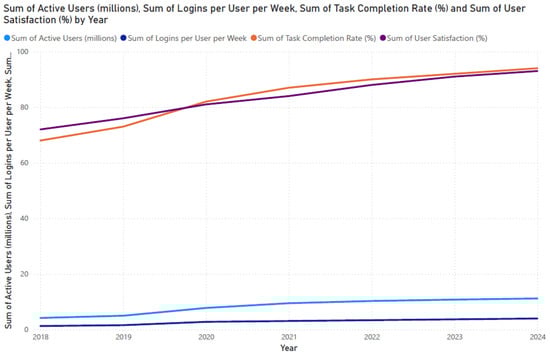
Figure 5.
Comparative performance metrics of the NOOR platform (2018–2024).
Figure 5 illustrates the steady growth and performance improvements of the NOOR educational platform across multiple academic years. Between 2018 and 2024, the number of active users increased substantially, reflecting the platform’s expanding adoption nationwide. Login frequency also rose consistently, indicating higher engagement levels among students, teachers, and administrators. Task completion rates and user satisfaction both improved markedly over the same period, demonstrating enhanced system reliability and a more user-friendly experience. The sharp rise during 2020–2021 corresponds to the COVID-19 period, when NOOR’s digital infrastructure played a crucial role in ensuring educational continuity. Overall, the upward trends across all indicators confirm the platform’s growing efficiency, scalability, and positive impact on educational management in Saudi Arabia.
Taken together, these performance trends reinforce NOOR’s role as a backbone for system-wide improvements in public education and support more systematic, evidence-informed change at the national level [27].
Inequalities continue to exist, even though progress is undeniable. Even though the government has spent a lot of money on rural areas, there are still big differences in internet access and digital literacy. Future strategy improvements must deliberately achieve a balance between innovation and inclusivity to guarantee that new platform features advantage all user groups equitably. NOOR is well-positioned for future growth through close partnership with global educational institutions. The worldwide move toward data-driven public service design fits with the idea of combining digital twins, predictive analytics, and smart learning pathways [11,12,29].
Future versions may use deep, meaningful learning concepts to make people more interested and encourage them to think about what they learn [30]. NOOR actively helps teachers improve their Professional Digital Competence (PDC) as part of this ongoing process. PDC is seen as a dynamic process that is closely related to changes in technology and society [30]. One of the main reasons teachers are spending more time making lessons interesting and useful is that flipped-learning strategies were popular during the pandemic [31]. As educational systems deal with the challenges of digital transformation, platforms like NOOR continue to identify significant concerns about the sustainability and long-term viability of public digital infrastructure. To keep these institutions open to everyone, ethically sound, and always able to change to meet new requirements, we still need to invest in them often and engage in collaborative international efforts.
4.3. Limitations and Sources
While this study provides a comprehensive analysis of the NOOR platform’s functionality, evolution, and performance indicators, several limitations must be acknowledged. Access to detailed system data is highly restricted, as the platform’s databases are managed centrally by the Saudi Ministry of Education. Therefore, the quantitative indicators presented in this paper are derived primarily from officially published statistics, ministry reports, and the secondary literature rather than direct data extraction. Independent academic research using NOOR’s internal datasets remains limited due to confidentiality and authorisation requirements. Centralized educational data infrastructures, while offering significant opportunities for system-wide coordination, also carry inherent risks that warrant careful consideration. Such systems may inadvertently reinforce existing inequalities in access or control, given that decision-making power becomes concentrated among a limited number of institutional actors who have privileged access to comprehensive datasets.
Additionally, sociological insights and user satisfaction metrics rely on surveys conducted by governmental and affiliated research institutions, which may not fully capture the diversity of user experiences across regions. Future studies would benefit from direct access to anonymized datasets and broader, longitudinal sociological assessments to deepen our understanding of how digital transformation affects teaching and learning practices in Saudi Arabia.
Given the descriptive and documentary nature of this study, the associations reported between the NOOR platform and educational outcomes must not be interpreted as causal effects, but rather as indicative of potential contributions and enabling conditions.
5. Conclusions
The NOOR platform is a big step forward for digital education in the Kingdom of Saudi Arabia. It has altered the system in numerous ways. In the future, it is expected that the addition of enhanced advanced analytics and predictive features will boost its adaptability, responsiveness, and focus on significant outcomes. These changes make NOOR a national leader in building a scalable, data-driven, and open educational system. The operation of NOOR in Saudi Arabia shows that digital infrastructure can achieve more than merely make administrative tasks easier. NOOR, which has essential components for assessment, reporting, parental involvement, and partnering jointly between institutions, shows how specialized technology may be employed to achieve fairness with educational excellence. In this study, the platform’s actual functionality was examined. NOOR is not just a technical system; it is also a way to promote fairness, openness, and decisions based on data. It helps schools work together better through minimizing oversights in administration and speeding up processing times, while offering all those involved an accurate understanding of how processes work. This makes sure that every student has equal opportunities to study.
Taken together, the descriptive evidence presented in this study suggests that NOOR encourages continuous improvement through regular monitoring, early problem identification, and prompt adjustment implementation, even though the available data do not allow us to establish causal effects on learning outcomes. From a data-driven governance perspective, a key contribution of the platform is its capacity to monitor learning indicators in daily operations and to support timelier, evidence-informed decisions. Additionally, its inherent design is well positioned to accommodate future enhancements such as feedback analysis, learning analytics, and more sophisticated technology-assisted personalization.
As other countries are planning to modernise their education systems, the case of NOOR shows that digital transformation has the best effectiveness when it is driven by educational aims; moreover, we find that centralising systems can provide consistent channels of data and can empower educators and engage families, serving as a stronger basis for the implementation of national education strategies. In summary, NOOR can be viewed as a positive case of aligning technology with the broader purpose of creating meaningful and fair learning opportunities.
Author Contributions
D.E.K.: Conceptualisation, methodology, investigation, resources, data curation, writing—original draft preparation, and writing—review and validation. N.N.: Conceptualisation, validation, writing—review and editing, visualisation, and supervision. J.A.G.: Validation, supervision. W.R.: Formal analysis. All authors have read and agreed to the published version of the manuscript.
Funding
This research received no external funding.
Institutional Review Board Statement
Not applicable.
Informed Consent Statement
Not applicable.
Data Availability Statement
The data belongs to the owner of NOOR and is strategic data and can be requested from the Government of Saudi Arabia.
Acknowledgments
The authors would like to thank the Ministry of Education of Saudi Arabia for providing documentation and technical information on the NOOR system.
Conflicts of Interest
The authors declare no conflicts of interest.
Abbreviations
The following abbreviations are used in this manuscript:
| EMIS | Educational Management Information System |
| KSA | Kingdom of Saudi Arabia |
| OECD | Organisation for Economic Co-operation and Development |
| SDGs | Sustainable Development Goals |
| AI | Artificial Intelligence |
| NOOR | National Online Operational Registry |
References
- United Nations. Transforming Our World: The 2030 Agenda for Sustainable Development; United Nations: New York, NY, USA, 2015. [Google Scholar]
- Garcia, E.; Weiss, E. Education as the Great Equaliser: What the Research Says; Economic Policy Institute: Washington, DC, USA, 2017. [Google Scholar]
- UNESCO. ICT in Education: Digital Learning for All; United Nations Educational, Scientific and Cultural Organization: Paris, France, 2021. [Google Scholar]
- Williamson, B.; Eynon, R.; Potter, J. Pandemic politics, pedagogies and practices: Digital technologies and distance education during the coronavirus emergency. Learn. Media Technol. 2020, 45, 107–114. [Google Scholar] [CrossRef]
- Ministry of Education (KSA). NOOR System Overview; Ministry of Education (KSA): Riyadh, Saudi Arabia, 2018. [Google Scholar]
- Vision 2030. Kingdom of Saudi Arabia Vision 2030; Council of Economic and Development Affairs: Riyadh, Saudi Arabia, 2016.
- Tatweer. Tatweer Education Holding Company: Annual Strategic Report; Ministry of Education: Riyadh, Saudi Arabia, 2019. [Google Scholar]
- OECD. Review of Evaluation and Assessment in Education: Brazil; OECD Publishing: Paris, France, 2020. [Google Scholar]
- Alsmadi, M.K.; Al-Marashdeh, I.; Alzaqebah, M.; Jaradat, G.; Alghamdi, F.A.; A Mohammad, R.M.; Alshabanah, M.; Alrajhi, D.; Alkhaldi, H.; Aldhafferi, N.; et al. Digitalization of learning in Saudi Arabia during the COVID-19 outbreak: A survey. Inform. Med. Unlocked 2021, 25, 100632. [Google Scholar] [CrossRef] [PubMed]
- Chankseliani, M.; Qoraboyev, I.; Gimranova, D. Higher education contributing to local, national, and global development: New empirical and conceptual insights. High. Educ. 2021, 81, 109–127. [Google Scholar] [CrossRef]
- Dobrica, V.; Duško, L.; Lj, V.S. Use of information technologies in higher education from the aspect of management. Int. J. Cogn. Res. Sci. Eng. Educ. 2023, 11, 143–151. [Google Scholar] [CrossRef]
- Hakimi, L.; Eynon, R.; Murphy, V.A. The ethics of using digital trace data in education: A thematic review of the research landscape. Rev. Educ. Res. 2021, 91, 671–717. [Google Scholar] [CrossRef]
- Micheli, M.; Lutz, C.; Büchi, M. Digital footprints: An emerging dimension of digital inequality. J. Inf. Commun. Ethics Soc. 2018, 16, 242–251. [Google Scholar] [CrossRef]
- Council of Economic and Development Affairs. Digital Transformation Strategy Under Vision 2030; Council of Economic and Development Affairs.: Riyadh, Saudi Arabia, 2020. [Google Scholar]
- Timotheou, S.; Miliou, O.; Dimitriadis, Y.; Sobrino, S.V.; Giannoutsou, N.; Cachia, R.; Monés, A.M.; Ioannou, A. Impacts of Digital Technologies on Education and Factors Affecting Schools’ Digital Capacity and transformation: A literature review. Educ. Inf. Technol. 2023, 28, 6695–6726. [Google Scholar] [CrossRef] [PubMed]
- Von Zastrow, C. The Statewide Longitudinal Data System Landscape; Policy Guide; Education Commission of the States: Denver, Colorado, 2024. [Google Scholar]
- Jay, M.A.; McGrath-Lone, L.; Gilbert, R. Data resource: The National pupil database (NPD). Int. J. Popul. Data Sci. 2019, 4, 1101. [Google Scholar] [CrossRef] [PubMed]
- CIOL Bureau. S’pore School Cockpit System Checks in Accenture. CIOL. 21 April 2010. Available online: https://www.ciol.com/spore-school-cockpit-checks-accenture/ (accessed on 10 November 2025).
- Thrupp, M.; Seppänen, P.; Kauko, J.; Kosunen, S. Finland’s Famous Education System: Unvarnished Insights into Finnish Schooling; Springer Nature: Singapore, 2023; p. 466. [Google Scholar] [CrossRef]
- Gouëdard, P. Developing Indicators to Support the Implementation of Education Policies. In OECD Education Working Papers; OECD Publishing: Paris, France. [CrossRef]
- Hannan, B.; Eynon, R. Widening the Digital Divide: The Mediating Role of Intelligent Tutoring Systems in the Relationship Between Rurality, Socioeducational Advantage, and Mathematics Learning Outcomes. Comput. Educ. 2025, 233, 105312. [Google Scholar] [CrossRef]
- van de Werfhorst, H.G.; Wen, T. The Digital Divide in Online Education: Inequality in Readiness of Students and Schools. Int. J. Educ. Res. Open 2022, 3, 100100. [Google Scholar] [CrossRef] [PubMed]
- Vaccari, V.; Gardinier, M.P. Toward One World or Many? A Comparative Analysis of OECD and UNESCO Global Education Policy Documents. Int. J. Dev. Educ. Glob. Learn. 2019, 11, 68–86. [Google Scholar] [CrossRef]
- Bañeres, D.; Rodríguez, M.E.; Guerrero-Roldán, A.E.; Karadeniz, A. An Early Warning System to Detect At-Risk Students in Online Higher Education. Appl. Sci. 2020, 10, 4427. [Google Scholar] [CrossRef]
- Strielkowski, W.; Grebennikova, V.; Lisovskiy, A.; Rakhimova, G.; Vasileva, T. AI-driven adaptive learning for sustainable educational transformation. Sustain. Dev. 2025, 33, 1921–1947. [Google Scholar] [CrossRef]
- Mao, Y.; Liu, Q.; Zhang, Y. Sentiment Analysis Methods, Applications, and Challenges: A Systematic Literature Review. J. King Saud. Univ. Comput. Inf. Sci. 2024, 36, 102048. [Google Scholar] [CrossRef]
- Al-Dmour, H.; Al Hasan, R.; Thneibat, M.; Masa’deh, R.; Alkhadra, W.; Al-Dmour, R.; Alalwan, A. Integrated model for the factors determining the academic’s remote working productivity and engagement: Empirical study. Sage Open 2023, 13, 21582440231194393. [Google Scholar] [CrossRef]
- Allmnakrah, A.; Evers, C. The need for a fundamental shift in the Saudi education system: Implementing the Saudi Arabian economic vision 2030. Res. Educ. 2020, 106, 22–40. [Google Scholar] [CrossRef]
- Mystakidis, S. Deep and Meaningful Learning. Encyclopedia 2021, 1, 988–997. [Google Scholar] [CrossRef]
- Nagel, I.; Amdam, S.H. Teachers’ Professional Digital Competence. Encyclopedia 2025, 5, 148. [Google Scholar] [CrossRef]
- Aidoo, B.; Gyampoh, A.O.; Chebure, A. Navigating the Flipped Learning Approach: Opportunities, Challenges, and Implications in Teacher Education. Encyclopedia 2025, 5, 145. [Google Scholar] [CrossRef]
Disclaimer/Publisher’s Note: The statements, opinions and data contained in all publications are solely those of the individual author(s) and contributor(s) and not of MDPI and/or the editor(s). MDPI and/or the editor(s) disclaim responsibility for any injury to people or property resulting from any ideas, methods, instructions or products referred to in the content. |
© 2025 by the authors. Licensee MDPI, Basel, Switzerland. This article is an open access article distributed under the terms and conditions of the Creative Commons Attribution (CC BY) license (https://creativecommons.org/licenses/by/4.0/).