



Crops, Volume 2, Issue 4 (December 2022) – 11 articles
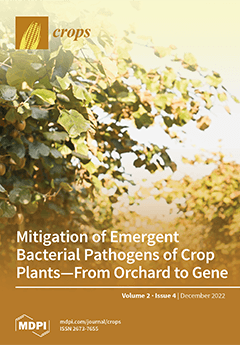
Cover Story (view full-size image):
The globalization of the agricultural sector has led to the constant movement of plants worldwide, propelling pathogen dissemination outside their natural ecosystems. Emergent pathogens are constantly arising, imposing a relentless need for research efforts that prevent them from becoming serious global threats. This was the case of Pseudomonas syringae pv. actinidiae (Psa), which evolved from an emerging pathogen to a quarantine pandemic organism, hindering the kiwifruit industry. Despite the multiplicity of factors involved in plant–pathogen interactions, the scientific knowledge already available regarding key pathosystems facilitates the focus on emergent phytosanitary issues. Thus, using Psa as a case study, this review highlights key mitigation strategies, from orchard management to genome analysis, aiming to foster the sustainability of agroecosystems. View this paper
- Issues are regarded as officially published after their release is announced to the table of contents alert mailing list.
- You may sign up for e-mail alerts to receive table of contents of newly released issues.
- PDF is the official format for papers published in both, html and pdf forms. To view the papers in pdf format, click on the "PDF Full-text" link, and use the free Adobe Reader to open them.
Previous Issue
Next Issue
