


Abstract
Background/Objectives: Forensic anthropological analyses and reports include diverse information that may help in establishing identifications, cause or manner of death determinations, taphonomic alterations, or other circumstances involving decedents. However, within forensic anthropology in the United States, there remains no unifying standardization for analyzing cases or writing reports that can be used independent of work environment, education, or case circumstance, which is potentially problematic for a field with 32.4% of practitioners being sole practitioners, as reported here. While some broad “best practice” guidelines exist, they do not provide a significant, nuanced, or unifying set of methodological, terminology, or reporting standards. Methods: In order to explore whether a lack of standardization is problematic in forensic anthropology, a survey was conducted to explore reporting practices, followed standards, and personal experiences regarding overall practices that lead to case reports. Results: Among the 106 respondents, there were multiple areas of agreement, which suggests that unofficial reporting standardization exists within the field. Further, 71.3% agreed that standardization in case reporting is important, and 60.3% supported the adoption of universal standards. However, other areas, such as cognitive bias, terminology, education, and training experiences, varied among respondents. Standardization is important, as 23.2% reported that their laboratory lacks a Standard Operating Procedure; 28.0% reported that their laboratory lacks reporting guidelines; and 24.4% reported that their casework was not peer reviewed. Discussion/Conclusions: The findings from this study suggest that overarching standardization for report writing, terminology, and methodology should be created to provide a baseline reference for all forensic anthropologists, regardless of work context and educational background.
1. Introduction
Forensic anthropologists apply bioanthropological principles to forensic investigations and they are often employed by diverse entities, including academic institutions, medical examiner/coroner offices, humanitarian agencies, federal laboratories, and other localities that require analyses of decomposed remains [1]. Typically, a forensic anthropologist offers a myriad of services, including human remains search and recovery efforts, determination of human versus non-human remains, determination of osseous versus non-osseous materials, biological profile assessment (i.e., osteological sex, age, ancestry/population affinity, stature), trauma and pathological analyses, and personal identification, often with medical imaging analysis [2].
Case reports are produced by forensic anthropologists when asked to consult for law enforcement or medical examiner/coroners as a means of presenting information collected through careful recovery and/or analyses of human remains. They can be used for multiple purposes, including narrowing possible identifications, aiding medical examiners in determining cause and manner of death, or providing more information in cases where the circumstances of death or recovery are unknown [3]. Throughout the field, case reports often appear in different formats and include various components depending on the institution or author, the allowances of judicial rulings utilized in the forensic anthropologist’s area, or how they are being used in an investigation [4]. Beyond general sections that are often included (i.e., inventory, osteological sex, age, ancestry/population affinity, stature, trauma, pathology), there is variability in the way the information is presented and in the other aspects of a case report (e.g., use of references, explanations of human skeletal variation, inclusion of specific methods) because there are no generally accepted standards across the field as to what exactly should be included.
Attempts at standardization can be classified into two main categories: standards and best practice guidelines. In general, standards are documents that provide extensive requirements for what to include in reports, methods to use, formatting, and other structural elements. They are also typically enforced by the organizations that created them. For example, standard operating procedures (SOPs) from individual laboratories provide requirements to be followed by all forensic anthropologists at that specific laboratory. Alternatively, best practice guidelines provide suggestions on how to complete certain aspects of casework, without being enforceable or having distinct requirements or recommendations. For example, while the documents published by the Organization of Scientific Area Committees (OSAC) for Forensic Science are called standards in name, they function as best practice guidelines and are available to all practitioners.
Currently, there exist several guiding structures that attempt to provide broad best practice guidelines for forensic anthropology. These include legal standards such as the Daubert Standard; published online “standards” from the Scientific Working Group for Anthropology (SWGANTH) and the OSAC; and expectations of those certified by the American Board of Forensic Anthropology (ABFA). However, each has limitations that prevent them from providing overarching standards for forensic anthropology practitioners working in diverse contexts.
The Daubert Standard is a grouping of legal cases that act as a standard for expert witness testimony in criminal proceedings [5]. It applies the ruling of Daubert v. Merrell Dow Pharmaceuticals, Inc. 509 U.S. 579, along with the modifications introduced by the rulings of General Electric Co. v. Joiner, 522 U.S. 136 and Kumho Tire Co. v Carmichael, 526 U.S. 137 [6,7,8]. Overall, these rulings present minimum expectations for all expert witness testimony, including the qualifications of the expert, the content of their testimony, and the role of the judge in accepting that testimony [9]. Specifically, judges using the Daubert criteria evaluate expert witnesses and their testimony by looking at whether their methods are widely accepted and have known error rates, the presence of a maintaining standard, whether the method has been tested, and whether the method is peer reviewed and published [5]. Because of the nature of forensic anthropological case reports, the findings and their authors must keep the Daubert Standard in mind when completing their analyses. However, it has been shown that the minimum expectations outlined by the courts following this standard are not comprehensive enough to stand alone. For example, methods used in forensic anthropology are frequently limited by the experience of the practitioner; if the method is followed incorrectly, despite being widely used, the testimony provided would be inaccurate [5]. Variability in applying methods depending on experience has been noted in several studies, including Adams and Byrd [10] and Smith and Boaks [11], who discussed various issues in osteometrics, and Bailey and Vidoli [12], who discussed practitioner experiences’ impact on the accuracy and reliability of sex estimation methods. However, Daubert does not provide a framework for the presentation of how these methods are to be used and how the conclusions should be achieved [5]. They focus solely on the credibility of the method, not necessarily its implementation on every case. Additionally, judges—who act as the scientific gatekeepers—and juries are not experts in forensic anthropological methods and techniques, and thus, their rulings do not necessarily mean that the methods used are standardized and reliable [13]. It is additionally important to recognize that forensic anthropologists infrequently testify, with much of forensic anthropological analysis being inapplicable to a case, especially when identification is already established [14]. When they are asked to testify, 40% of forensic anthropological testimony is related to trauma analysis [9]. Therefore, relying on testimony-related expectations is not a widespread nor frequently applicable source of standardization.
Unlike the testimonial regulations provided by the Daubert Standard, the SWGANTH and the OSAC are organizations that create/d and publish/ed best practice guidelines specifically for forensic anthropologists. The SWGANTH was a joint task sponsored by the Defense POW/MIA Accounting Agency (DPAA) and the Federal Bureau of Investigation (FBI) [15]. Their standards varied from “ancestry” estimation, proficiency testing, documentation and testimony, and qualifications [16,17,18,19]. While SWGANTH was disbanded, many of their standards were adopted and reformed by the OSAC starting in 2014 [20]. OSAC is a board comprising forensic anthropologists who release consensus standards under the umbrella of the American Academy of Forensic Sciences (AAFS). Topics covered in these guidelines include stature estimation, sex estimation, and how to resolve commingled remains [21,22,23]. The newest standards, all released in 2024, provide standards for age estimation, trauma analysis, and personal identification [24,25,26]. In general, the SWGANTH and OSAC “standards” actively avoid providing recommendations on specific methods but rather outline the expectations of how all methods are to be used collectively. There are often no recommended sources of literature in the guidelines, and the guidelines discuss nothing of the limitations of these methods when literature is cited. Instead, they outline very general ways the methods should be applied and used. For example, the OSAC’s Standard for Sex Estimation in Forensic Anthropology [22] guidelines state that “metric and morphological variables shall be measured or scored and recorded according to generally accepted procedures” without providing a “generally accepted” procedure to follow, and without citing a source to take said measurements/scores. As such, these “standards” provide a generic guide for forensic anthropologists, which makes them easy to follow, but it remains to be seen if they have a significant role in providing meaningful standardization due to their superficiality.
When literature sources are provided within the best practice guidelines, they include examples of how others have implemented methods, not necessarily the methods themselves. Some of these even include highly problematic and outdated language, such as in the American National Standards Institute/Academy Standards Board’s (ANSI/ASB) Standard 045: Standard for Stature Estimation in Forensic Anthropology [21]. A source cited within this standard includes the term “Negroes” in its title, a term no longer used or acceptable within the field of forensic anthropology or modern society [21]. Notably, the authoring consensus body chose to include outdated and offensive sources when it was published in 2019 on a publicly available document without a discussion of appropriate language and expectations of updated and accepted terminology in forensic anthropology—especially at a time when the field is grappling with its racialized, typological, and essentialist past [14,27,28,29,30,31].
Also, within forensic anthropology, the ABFA provides the only source of official certification for forensic anthropologists in the United States, allowing them to become certified as a Diplomate or Analyst. Until 2025, a PhD was required to apply to the ABFA, with this still being required for Diplomate status; however, those with a Master’s degree can now apply to be certified as an Analyst [32]. Since the rollout of the new certification system, including the Analyst level, the ABFA has dramatically changed its application requirements. Previously, when applying to the ABFA, forensic anthropologists had to provide examples of their case reports, which had to include specific criteria/reporting sections released by the board [33]. Presently, case reports themselves are not required, but rather a log of cases must be provided to demonstrate the number of cases of medicolegal significance the applicant has been involved in and what type of case it was (i.e., trauma, biological profile, etc.) [32]. This is an interesting pivot because it no longer requires specific reporting components to be checked against ABFA requirements, but it also presents a loss of opportunity for the ABFA to provide a source of methodological and reporting standardization. Additionally, this log is only requested of those applying for Diplomate status, but the reason for this is unique. Forensic anthropologists may only apply for Diplomate status once they have already received Analyst status [32]. Therefore, to reach the highest level of certification, applicants are now required to complete two application processes, two exams, and pay a combined $400 examination fee. While this increases inclusion for those working with a Master’s degree, this update presents new challenges and no enforceable standards for both those who are and those who are not certified.
Further highlighting the lack of an enforceable standard, nothing in current broadly available standards requires or provides a guideline to complete a check of findings or peer review. While Daubert includes the requirement of methods to be peer reviewed, the content that anthropologists testify to (i.e., their application of methods and conclusions drawn from them) is not required to be peer reviewed. Peer review of case reports is also not a standardized aspect of forensic anthropological practice, and outside of judicial rulings, forensic anthropology-specific best practice guidelines do not require or outline a means of report peer review [34]. Other attempts at standardization exist within individual laboratories, such as through SOPs or other lab practices [35,36]. However, the pool of practitioners to whom these apply, and their similarity to standards at other places of employment, is likely small, as many forensic anthropologists are sole practitioners. Sole practitioners often work in environments where there is no SOP (e.g., university professors or small police departments, or coroner’s offices). While the total number of sole practitioners in the field is unknown, Passalacqua and Pilloud [34] reported that 31% of respondents to a survey question related to peer review stated they did not receive peer review due to being a sole practitioner.
Despite existing attempts at providing a standardization from these entities, there remains a significant disconnect between not only forensic anthropologists but also law enforcement officials. All areas, including terminology usage, the use of citations, method choice, peer review, education and training, and cognitive bias, come together in a medicolegal context, resulting in forensic anthropologists who have different skillsets and have variable understandings of key concepts. While some may argue the variability in the field is part of its strength and uniqueness, there is little understanding of how variable these differences are, nor how they impact the outcomes of cases.
The goal of this study was to evaluate if a lack of standardization in the field of forensic anthropology is problematic, resulting in case reports and their contents—to include terminology, citations, presentation styles, organization, peer review, and methods—that vary in specificity across the United States. By comparing reporting approaches from practicing forensic anthropologists who represent diverse professional settings, education, and experience, it is hypothesized that there is little standardization of case reporting practices, which presents a significant problem for forensic anthropological case reports and their validity. How this may endanger the validity of the field, its methods, and its practitioners will also be explored.
2. Materials and Methods
The experimental design of this project centered on understanding the variation in reporting practices among practicing forensic anthropologists using a survey-based approach. This was determined to be the most amenable source of data collection for several reasons. It allowed the researchers the ability to reach different practitioners across the United States, making the sample size and data diverse. Further, it allowed for easy dispersal of the survey medium. The survey was distributed to a listserv of forensic anthropologists from across the United States, as well as through social media associated with the Forensic and Bioanthropology Laboratory Group at the Boston University Chobanian & Avedisian School of Medicine. Finally, a survey approach allowed for the collection of data regarding case reporting practices without access to highly restricted or redacted physical case reports.
The Qualtrics Survey Suite provided through Boston University was used to create a survey as well as to collect and organize the data. The survey consisted of 66 questions, which can be seen in Table 1, Table 2, Table 3, Table 4, Table 5 and Table 6 (in Section 3). It included questions from a wide range of topics, directly connected or contributory to case reporting practices in forensic anthropology, including sections on respondent demographics, report preparation, peer review, thoughts on existing standards, cognitive biasability, and education and training. The survey was reviewed and approved as “exempt” by Boston University’s Institutional Review Board (IRB) (IRB #H-43507 on 25 April 2023). This survey was open to all forensic anthropologists of varying backgrounds and levels of experience, including students. However, considering the subject of the survey, it was designed to be taken by those who have experience creating case reports in some fashion.
The data from this survey was qualitatively and quantitatively analyzed using the Qualtrics Survey Suite and Microsoft Excel. Eight responses written in Spanish were translated using Google Translate. The use of an online translation tool may present a possible limitation when analyzing these responses, as they may be slightly inaccurate in their interpretation.
3. Results
3.1. Participant Demographics
In total, 106 individuals participated in the survey. However, the number of participants per question varied due to missing data, as some participants did not answer every question. Table 1 presents the demographic questions and response options included in the survey, in addition to the sample sizes and results. Of respondents, most had a PhD (63.2%), were women/female (76.5%/81.7%), were not certified by the ABFA (69.8%), worked in academia (51.9%), and the average age was 39 years. Work environments not included in the survey response options were reported as humanitarian organizations and emergency deployments in the open response section. Most relevant to the present study, 32.4% were sole practitioners, and 39.0% did not work in team-based work environments with other forensic anthropologists.

Table 1.
Demographic survey questions and response options with sample sizes and results in bold (where applicable).
Table 1.
Demographic survey questions and response options with sample sizes and results in bold (where applicable).
| Question | Responses/Results |
|---|---|
| What is your highest degree obtained? | n = 106 High school (0.0%) Associates (AA/AS) (0.0%) Bachelors (BS/BA) (7.5%; n = 8) Master’s (MS/MA) (27.4%; n = 29) PhD (63.2%; n = 67) MD (1.9%; n = 2) |
| How many years of experience do you have? | n = 106 1–2 (9.4%; n = 10) 3–4 (12.3%; n = 13) 5–7 (14.2%; n = 15) 8–10 (12.3%; n = 13) 11–15 (15.1%; n = 16) 16–20 (11.3%; n = 12) 21–25 (12.3%; n = 13) 26–30 (6.6%; n = 7) 31–35 (4.7%; n = 5) 36–40 (0.0%) 41–45 (0.0%) 46–50 (0.9%; n = 1) 51+ (0.9%; n = 1) |
| What is your gender? | Open response (n = 102): Woman (76.5%; n = 78) Man (17.6%; n = 18) Non-binary, agender, or genderqueer (5.9%; n = 6) |
| What is your sex? | Open response (n = 104): Female (81.7%; n = 85) Male (18.3%; n = 19) |
| What is your age? | Open response (n = 99): 23–75 years; 39 years average |
| In what type of context do you work? (Select all that apply) | n = 106 Laboratory (Federal) (10.4%; n = 11) Laboratory (State) (5.7%; n = 6) Medical Examiner’s/Coroner’s office (17.0%; n = 18) Contracting company (3.8%; n = 4) Academia (51.9%; n = 55) Freelance (7.5%; n = 8) Postdoctoral fellow (2.8%; n = 3) Museum (1.9%; n = 2) Other (15.1%; n = 16) N/A—student (18.9%; n = 20) |
| Are you a sole practitioner? | n = 105 Yes (32.4%; n = 34) No (67.6%; n = 71) |
| Do you work in a team-based work environment with other forensic anthropologists? | n = 105 Yes (61.0%; n = 64) No (39.0%; n = 41) |
| Are you certified by the American Board of Forensic Anthropology? | n = 106 Yes (30.2%; n = 32) No (69.8%; n = 74) |
| Is there anything else you would like to mention about demographics? | Open response |
3.2. Report Preparation
The report preparation section was included in this survey to understand how practitioners create their case reports and what information they include in them. This includes actual content (i.e., terminology, definitions, and postmortem interval estimations) and practices surrounding the creation of the case report and its accuracy (i.e., peer review, direct referencing of published methods, and use of specific types of sources). More specialized forensic analyses and applications, including facial approximation and age estimation of the living, are not routinely included in forensic anthropology casework in the United States; thus, they were not discussed in this survey. Table 2 presents the report preparation questions and response options included in the survey, in addition to the sample sizes and results.
Table 2.
Report preparation survey questions and response options with sample sizes and results in bold (where applicable).
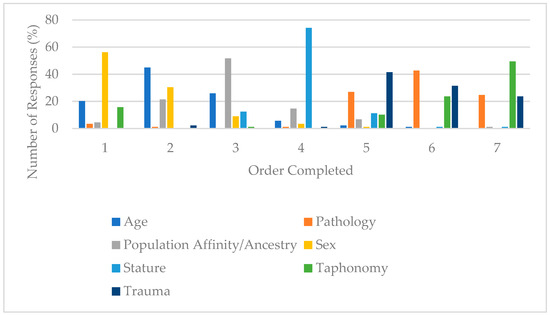
Figure 2.
Responses to the question “In what order do you organize your case report?”
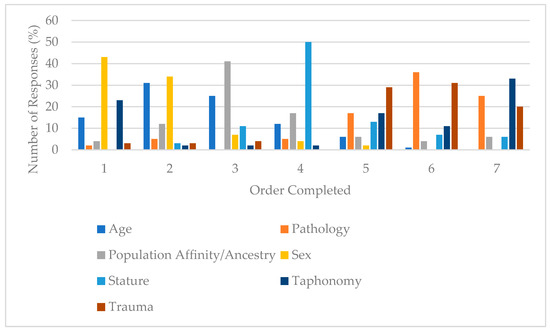
Figure 1.
Responses to the question “In what order do you complete the biological profile?”
Table 2.
Report preparation survey questions and response options with sample sizes and results in bold (where applicable).
| Question | Responses/Results |
|---|---|
| In what order do you complete the biological profile? | Arrange in order 1–7: Age Pathological analysis Population affinity/ancestry Sex Stature Taphonomic analysis Trauma analysis (see Figure 1) |
| In what order do you organize your case report? | Arrange in order 1–7: Age Pathological analysis Population affinity/ancestry Sex Stature Taphonomic analysis Trauma analysis (see Figure 2) |
| Which of the following terms do you use to refer to the subject of a case report? (Select all that apply) | n = 89 “Individual” (87.6%; n = 78) “Decedent” (56.2%; n = 50) “Specimen” (6.7%; n = 6) “Person” (14.6%; n = 13) “Case” (28.1%; n = 25) Other (fill in) |
| Do you include a skeletal inventory in your case reports? | n = 90 Yes (94.4%; n = 85) No (5.6%; n = 5) |
| Do you include a skeletal homunculus to demonstrate the completeness of remains? | n = 88 Yes (73.9%; n = 65) No (26.1%; n = 23) |
| Do you quantify the completeness of the remains in a case report (using percentages or other numerical representations)? | n = 88 Yes (31.8%; n = 28) No (68.2%; n = 60) Explain |
| How many pages is your typical case report? | n = 86 1–2 (1.2%; n = 1) 3–4 (24.4%; n = 21) 4–5 (27.9%; n = 24) 5–6 (18.6%; n = 16) 6–7 (0.0%) 8–9 (9.3%; n = 8) 10+ (18.6%; n = 16) |
| Do you usually cite peer-reviewed literature in your case reports? | n = 89 Yes (91.0%; n = 81) No (9.0%; n = 8) |
| When conducting skeletal analyses for the biological profile, how often do you have the published methods in front of you? | n = 88 Always (59.1%; n = 52) Frequently (33.0%; n = 29) Sometimes (8.0%; n = 7) Rarely (0.0%) Never (0.0%) |
| Would you cite a book chapter in a case report? | n = 88 Yes (79.5%; n = 70) No (20.5%; n = 18) Explain |
| Would you cite a presentation from a professional meeting in a case report? | n = 88 Yes (28.4%; n = 25) No (71.6%; n = 63) Explain |
| Would you cite an unvalidated method in a case report? | n = 88 Yes (22.7%; n = 20) No (77.3%; n = 68) Explain |
| Do you include an estimation of postmortem interval in your case reports? | n = 88 Yes (55.7%; n = 49) No (44.3%; n = 39) Other (explain) |
| Do you estimate and report on ancestry/population affinity? | n = 88 Yes (80.7%; n = 71) No (1.1%; n = 1) Other (explain) (18.2%; n = 16) |
| Which term do you use for ancestry/population affinity estimation? | n = 89 “Ancestry” (38.2%; n = 34) “Population affinity” (43.8%; n = 39) “Population affiliation” (1.1%; n = 1) “Race” (2.2%; n = 2) N/A (don’t report/discuss) (1.1%; n = 1) Other (explain) (13.5%; n = 12) |
| Do you provide definitions for the above terms? | n = 85 Yes (42.4%; n = 36) No (57.6%; n = 49) |
| Do you use pronouns in case reports to refer to the analyzed individual (e.g., “she/her,” “he/him,” “they/them”?) | n = 87 Yes (10.3%; n = 9) No (89.7%; n = 78) |
| Do you use the terms “feminine” and “masculine” to describe skeletal features for sex estimation? | n = 87 Yes (21.8%; n = 19) No (78.2%; n = 68) |
| Is there anything else you would like to mention about report preparation? | Open response |
Participants were asked to rank in what order they complete the biological profile, including age, pathological analysis, population affinity/ancestry, sex, stature, taphonomic analysis, and trauma analysis (Figure 1). Sex was most commonly completed first, followed by taphonomy, age, population affinity/ancestry, trauma, and pathology. Stature was never completed first. Most likely to be completed second was, again, sex, followed by age, population affinity/ancestry, pathology, trauma, and stature, and taphonomy. Population affinity/ancestry was most likely to be completed third, followed by age, stature, sex, trauma, and taphonomy. Stature was estimated fourth, followed by population affinity/ancestry, age, pathology, sex, and taphonomy. Trauma was completed fifth, followed by taphonomy and pathology, stature, age, population affinity/ancestry, and sex. Pathology was completed sixth, followed by trauma, taphonomy, stature, population affinity/ancestry, and age. Finally, taphonomy was completed last, followed by pathology, trauma, stature, and population affinity/ancestry.
Similarly, participants were asked to rank in what order they organize their case reports, and sex was placed first in a case report (Figure 2). This was followed by age, taphonomy, population affinity/ancestry, and pathology. Age was placed second, followed by sex, population affinity/ancestry, trauma, and pathology. Population affinity/ancestry was placed third, followed by age, stature, sex, and taphonomy. Stature was placed fourth, followed by population affinity/ancestry, age, sex, pathology, and trauma. Trauma was placed fifth, followed by pathology, stature, taphonomy, population affinity/ancestry, age, and sex. Pathology was placed sixth, followed by trauma, taphonomy, age, and stature. Finally, taphonomy was placed last, followed by pathology, trauma, population affinity/ancestry, and stature.
Most (94.4%) individuals stated that they include a skeletal inventory in their case reports and a skeletal homunculus (73.9%), but they do not quantify the completeness of a case using percentages or numerical representations (68.2%) (Table 2). Many stated that quantifying completeness is too difficult and/or subjective. Rather, those respondents provide a general overview of what is missing/complete or refer to a skeletal diagram or homunculus. For those who reported that they do quantify the completeness of skeletal remains (31.8%), many stated that they include percentages, describe what is present, or provide an approximation. A slight majority (55.7%) reported they include an estimation of postmortem interval (PMI) in their reports. Both those who include and exclude PMI in their reports stated that this typically depended on what law enforcement wanted. When asked about ancestry/population affinity, the vast majority (80.7%) of respondents reported that they include it in case reports. However, 18.2% selected “other,” stating that they only complete it when it is needed for other aspects of the biological profile (i.e., stature) or that they use it with immense caution. Nearly all (91.0%) cite peer-reviewed research in their case reports. The inclusion of peer-reviewed literature was correlated with the length of case reports to determine if report length was linked to this. However, a chi-square test indicated that there was no correlation between report length and the inclusion of peer-reviewed literature, when comparing the lengths of 1–5 pages (n = 39/79) and 6–10+ pages (n = 40/79), with a resulting p-value of 0.91042. Most “always” (59.1%) or “frequently” (33.0%) have a published method in front of them when completing a case report, and no respondents indicated they “rarely” or “never” have the published method in front of them when completing a case report.
When asked about specific sources, most (79.5%) reported they would cite a book chapter, while 71.6% would not cite a presentation from a professional meeting in a case report (Table 2). Most (77.3%) reported they would not cite an unvalidated method in a case report. Further, many stated they would frequently use textbooks when completing taphonomic and pathological analyses, including trauma analysis, as most of the sources of diagnosis for those areas have not been published as journal articles. Relating to the use of presentations at conferences, some stated that these reports are peer reviewed and thus they would be comfortable using them: “If it were an observation, or something that was not a test, this would be ok.” Others maintained the perspective: “I choose not to include conference presentations because they are not peer-reviewed, and commonly, the abstracts do not contain the complete information that was presented.” In terms of using unvalidated methods, some stated their informal use of these methods or use of the method following an internal (i.e., in-house) validation, while others stated that this would not be appropriate for a case report and would violate Daubert. Still others questioned validation: “‘Validated’ is a bit loaded. Who decides how something is validated? If a study is methodologically robust, has a good sample size, and the interpretation is logical and reasonable, then I would cite it”; and: “Lots of methods are unvalidated in anthropology. What does it mean to be validated anyway—on which population should it be tested? What threshold of performance should it be held to?”
The most used terminology reported by respondents to refer to the subject of a case report was “individual” (87.6%) (Table 2). Some individuals also included other terminology, including “remains,” “human remains,” “assigned ID number,” “deceased,” “skeletal remains,” and “service member,” with one individual stating that what terminology they used depended upon the type of report. When compared to work context, those in academia (n = 48/89) and applied contexts (n = 40/89) (medical examiner/coroner’s office, laboratory (federal), and laboratory (state) were more likely to use “individual” than any other terminology; however, a chi-square test indicated that these results were due to chance, with a p-value of 0.4346. The most common terms used for ancestry/population affinity estimation were “population affinity” (43.8%) and “ancestry” (38.2%). Some also selected “other” (13.5%), stating they used terms such as “geographic ancestry,” “ancestry/population affinity,” or stating that they indicate both “population affinity” and “social race” in their case reports. Most (57.6%) reported that they do not provide definitions of the terms used for ancestry/population affinity. Most (89.7%) indicated they do not use pronouns, such as “she/her,” “he/him,” or “they/them” to refer to the analyzed individuals. Similarly, most (78.2%) reported they do not use the gendered terms “feminine” and “masculine” to describe skeletal features for sex estimation.
3.3. Peer Review
The peer review section of the survey was included to ask participants about their specific practices regarding peer review and whether it was mandated by their place of work. The responses were expected to show whether there was a widespread consensus on the practice of peer review and whether most practitioners are receiving peer review from an in-house source or externally. Table 3 presents the peer review questions and response options included in the survey, in addition to the sample sizes and results.
Table 3.
Peer review questions and response options with sample sizes and results in bold (where applicable).
Table 3.
Peer review questions and response options with sample sizes and results in bold (where applicable).
| Question | Responses/Results |
|---|---|
| Are all your case reports peer reviewed? | n = 82 Yes (75.6%; n = 62) No (24.4%; n = 20) |
| Do you use in-house (internal) peer reviewers for your case reports? | n = 82 Yes (74.4%; n = 61) No (12.2%; n = 10) N/A (13.4%; n = 11) |
| Do you use external peer reviewers (if not at a lab with other anthropologists)? | n = 82 Yes (28.0%; n = 23) No (41.5%; n = 34) N/A (30.5%; n = 25) |
| Do you provide peer reviews for forensic anthropologists at institutions other than your own? | n = 82 Yes (51.2%; n = 42) No (48.8%; n = 40) |
| If you peer review externally (i.e., not in traditional job description), do you charge a fee? | n = 71 Yes (1.4%; n = 1) No (98.6%; n = 70) If yes, how much? |
| Is there anything else you would like to mention about peer review? | Open response |
Most relevant to the present study, one-fourth indicated that their reports are not peer reviewed, and when reports are peer reviewed, they are conducted by in-house colleagues (74.4%) (Table 3). About half (51.2%) reported they do provide peer reviews to forensic anthropologists outside their institution, while half do not (48.8%). Only one respondent stated that they charge a fee, with the amount being an hourly charge that is kept confidential by their employer. In the comment section, a few respondents stated that the organization they work for has a Memorandum of Understanding with an outside entity for peer review, while some stated they peer review on certain cases but not all, and not consistently.
3.4. Cognitive Biasability
The cognitive biasability section was included in this survey because there is little research into what forensic anthropologists think of objectivity and bias mitigation as it relates to cases. This section also included questions to gauge current practices in bias mitigation and the receipt of contextual information prior to case analysis to understand how widespread cognitive bias may be within forensic anthropology. Table 4 presents the cognitive biasabilty questions and response options included in the survey, in addition to the sample sizes and results.
Table 4.
Cognitive biasability survey questions and response options with sample sizes and results in bold (where applicable).
Table 4.
Cognitive biasability survey questions and response options with sample sizes and results in bold (where applicable).
| Question | Responses/Results |
|---|---|
| Do you believe that forensic anthropologists are objective? | n = 76 Yes (55.3%; n = 42) No (44.7%; n = 34) Explain |
| How objective do you think forensic anthropological reports are? | n = 76 Very objective (18.4%; n = 14) Somewhat objective (48.7%; n = 37) Moderately objective (28.9%; n = 22) Not very objective (3.9%; n = 3) Not objective at all (0.0%) |
| How often do you receive contextual information on a case prior to starting your analysis? | n = 78 Always (14.1%; n = 11) Frequently (30.8%; n = 24) Sometimes (32.1%; n = 25) Rarely (12.8%; n = 10) Never (10.3%; n = 8) |
| Does your place of employment have any bias mitigating procedures? | n = 76 Yes (47.4%; n = 36) No (52.6%; n = 40) Explain |
| Is there anything else you would like to mention about cognitive biasability? | Open response |
A near 50/50 split reported that they think forensic anthropologists are and are not objective, and several elaborated on this response (Table 4). Those who indicated they believe forensic anthropologists are objective stated that forensic anthropologists generally try to be objective, but that it is impossible to be completely objective as human beings. Those who indicated they do not believe forensic anthropologists are objective had something similar to say; however, many emphasized that some forensic anthropologists lack a self-awareness of the innate objectivity in every person. Whether respondents believe that forensic anthropologists are objective was compared to their reported work context. Those working in academia more often indicated that forensic anthropologists are not objective than those working in applied contexts (medical examiner/coroner’s office, laboratory (federal), laboratory (state). However, a chi-square test using applied and academic respondents that answered “yes” indicated that these results were due to chance, resulting in a p-value of 0.43488.
Most believe that forensic anthropological reports are “somewhat objective” (48.7%) or “moderately objective” (28.9%) (Table 4). However, it is difficult to remain objective and unbiased when most reported that they receive contextual information prior to starting their analysis “frequently” (30.8%) and “sometimes” (32.1%). Additionally, nearly half reported that their place of employment does not have bias-mitigation procedures. Those who indicated “yes” described various bias-mitigating procedures, to include blind analysis, controlling of information provided to the analyst, and specific quality assurance programs. Those who indicated “no” stated that they generally want to receive contextual information because it will likely help with their case. For example, one stated, “Our goal is identification; we will use whatever information we have to assist.”
The open responses included a combination of opinions stating the need for contextual information, even more so compared to other fields, while some stated that bias is something every forensic anthropologist needs to be aware and cautious of. For example, one participant wrote: “I think there are aspects of the methods we commonly use that can be objective, but the vast majority of methods and the types of evaluation common to the practice do have some level of subjectivity and are informed by individual experience. This is also important for practitioners to acknowledge, so in my opinion, it is naive to say practitioners are wholly objective.”
3.5. Existing Standards
The existing standards section was included in this survey to understand respondents’ familiarity with the standards available to them and how often they are referenced when creating a case report. Additionally, this section gauged the opinions of respondents regarding the need for standardization in the field, along with the use of a universal standard. Table 5 presents the existing standards questions and response options included in the survey, in addition to the sample sizes and results.
Table 5.
Existing standards survey questions and response options with sample sizes and results in bold (where applicable).
Table 5.
Existing standards survey questions and response options with sample sizes and results in bold (where applicable).
| Question | Responses/Results |
|---|---|
| Are you familiar with the Academy Standards Board’s Organization of Scientific Area Committees for Forensic Sciences (ASB OSAC) standards for best practice? | n = 83 Yes (88.0%; n = 73) No (12.0%; n = 10) |
| Are you familiar with the Scientific Working Group for Forensic Anthropology (SWGANTH) guidelines? | n = 83 Yes (94.0%; n = 78) No (6.0%; n = 5) |
| How often do you look at and follow the ASB OSAC standards for best practice when completing a case report? | n = 82 Always (14.6%; n = 12) Frequently (26.8%; n = 22) Sometimes (31.7%; n = 26) Rarely (9.8%; n = 8) Never (17.1%; n = 14) |
| How important are the Daubert and Kumho standards in what methods you choose to use? | n = 82 Extremely important (17.1%; n = 14) Very important (40.2%; n = 33) Moderately important (24.4%; n = 20) Slightly important (3.7%; n = 3) Not important at all (14.6%; n = 12) |
| How important are the OSAC and SWGANTH standards in what methods you choose to use? | n = 82 Extremely important (19.5%; n = 16) Very important (34.1%; n = 28) Moderately important (25.6%; n = 21) Slightly important (11.0%; n = 9) Not important at all (9.8%; n = 8) |
| Do you feel that the OSAC standards for best practice provide beneficial standards when completing case reports? | n = 79 Yes (77.2%; n = 61) No (22.8%; n = 18) |
| Does your lab have a Standard Operating Procedure (SOP)? | n = 82 Yes (76.8%; n = 63) No (23.2%; n = 19) |
| Do you think that standardization of case reporting across the field of forensic anthropology is important? | n = 80 Yes (71.3%; n = 57) No (28.8%; n = 23) Explain |
| Does your place of work provide standard case reporting guidelines (e.g., report templates, suggested methods)? | n = 82 Yes (72.0%; n = 59) No (28.0%; n = 23) |
| Who do you believe has the responsibility to ensure standardization in the field of forensic anthropology? | n = 80 Professional organizations (e.g., AAFS, ABFA, etc.) (35.0%; n = 28) Individual labs (7.5%; n = 6) Individual practitioners (5.0%; n = 4) ASB/OSAC (26.3%; n = 21) Other (explain) (26.3%; n = 21) |
| The following definition should be considered when answering the next two questions. A universal standard can be defined as something that is followed by and applied to all in a particular group. | No response required |
| Do you believe it is necessary to create a universal standardization in methods and reporting for the field of forensic anthropology? | n = 78 Yes (60.3%; n = 47) No (39.7%; n = 31) |
| If provided a universal standard, would you follow it? | n = 77 Yes (74.0%; n = 57) No (26.0%; n = 20) |
| Is there anything else you would like to mention about existing standards? | Open response |
Most respondents were familiar with both OSCAC and SWGANTH standards and thought they were both “very important” or “moderately important” in selecting methods for case reports (Table 5). Further, the OSAC standards were largely considered beneficial for the field. Similarly, most respondents thought the Kumho and Daubert standards were “very important” or “moderately important” in method selection. Additionally, most laboratories have SOPs and/or reporting guidelines. Generally, respondents favored standardization across the discipline as well as the development of universal standards. For the purposes of this survey, a universal standard was defined as something that is followed by and applied to all in a particular group. Accordingly, a universal standard relates to something applicable only to forensic anthropologists within the United States. In particular, respondents stated that standards provide important aspects of practice, including terminology and reporting procedures. For example, one respondent wrote: “I think it is essential to standardize reporting. It can be difficult to communicate with scientists if there is a lack of standardization and explanation of methodology.” Conversely, fewer reported that they do not believe standardization of case reports is important, mentioning that different employers have different needs and that the variation of work in the field could never be encompassed by standardization: “Every jurisdiction asks different outcomes and interpretations of their anthropologists.” Respondents thought that professional organizations or ASB/OSAC should be responsible for providing standards, with many writing that believe it should be a combination of the previously mentioned institutions; for example, a collaboration between OSAC and individual laboratories.
Throughout the open responses, individuals generally stated they would like to see standardization, but that the execution of that would be difficult given the diverse nature of forensic anthropology. The variability in context, populations, and institution would provide little room for unification that applies to every practitioner. One participant provided their perspective on the idea of a universal standard in the field: “I think the last question is intriguing. Yes, I’d like to see standardization, but what if I disagreed with the standard? Would I follow it? Likely not. For example, FORDISC is highly controversial. What if the standard required its use in cases where it could be applied? Would there be the ability to not use it based on some provided rationale? Could it be used with a disclaimer from the practitioner? What would the consequences of that be, and what would the enforcement be for standardization?”
3.6. Education and Training
The education and training section was included in the survey to understand trends and opinions relating to the standardization of forensic anthropology education and training. More specifically, questions in this section aimed to understand if formal education alone prepared participants for their jobs and what other factors contributed to their education that are not standardized or required. Additionally, participants were asked about their opinions of the ABFA to fully understand if the ABFA could be a viable path towards standardization. Table 6 presents the education and training questions and response options included in the survey, in addition to the sample sizes and results.
Table 6.
Education and training survey questions and response options with sample sizes and results in bold (where applicable).
Table 6.
Education and training survey questions and response options with sample sizes and results in bold (where applicable).
| Question | Responses/Results |
|---|---|
| Have you ever taken the ABFA certification exam? | n = 81 Yes (37.0%; n = 30) No (63.0%; n = 51) |
| If you have not taken the ABFA exam, why have you not taken it? Select all that apply. | n = 51 Financial constraints (15.7%; n = 8) Time restraints (13.7%; n = 7) Not required for current position (27.5%; n = 14) not interested in joining (7.8%; n = 4) Do not qualify to complete the exam (35.3%; n = 18) Other (please specify) (43.1%; n = 22) |
| Do you think that ABFA certification should be required to be a forensic anthropologist? | n = 79 Yes (50.6%; n = 40) No (49.4%; n = 39) |
| Do you think a PhD should be required to work as a forensic anthropologist? | n = 78 Yes (29.5%; n = 23) No (70.5%; n = 55) |
| What, outside of formal education, did you do to gain experience in forensic anthropology? | Open response |
| How often are you asked to complete a task that you were not taught in traditional educational contexts (e.g., in classroom, laboratory, or field trainings during degree programs or postdoctoral work)? | n = 79 Frequently (24.1%; n = 19) Sometimes (36.7%; n = 29) Rarely (26.6%; n = 21) Never (12.7%; n = 10) |
| Can you provide an example of this task (e.g., postmortem interval estimation, facial approximation, photo superimposition, forensic archaeology)? | Open response |
| How important is archaeological excavation (e.g., body recovery via forensic archaeology) in your current position? | n = 80 Extremely important (31.3%; n = 25) Very important (18.8%; n = 15) Moderately important (22.5%; n = 18) Slightly important (13.8%; n = 11) Not important at all (13.8%; n = 11) |
| In your formal education, were you directly taught how to take osteometric measurements for the biological profile? | n = 79 Yes (93.7%; n = 74) No (6.3%; n = 5) |
| Have you ever mentored an individual wanting to become a forensic anthropologist (formally or informally)? Select all that apply. | n = 80 Yes, formally (65.0%; n = 52) Yes, informally (66.3%; n = 53) No (10.0%; n = 8) |
| Were you mentored in forensic anthropology? Select all that apply. | n = 80 Yes, formally (72.5%; n = 58) Yes, informally (17.5%; n = 14) No (11.3%; n = 9) |
| Do you believe that forensic anthropology education should be formally standardized (e.g., regulated/overseen by a regulatory body)? | n = 76 Yes (67.1%; n = 51) No (32.9%; n = 25) |
| Is there anything else you would like to mention about education and training? | Open response |
While most had not taken the ABFA exam, many stated that they will be sitting for the exams this year, while some stated that previous experiences with the ABFA made them no longer interested in joining (Table 6). When asked whether ABFA certification should be required to work as a forensic anthropologist, a 50/50 split agreed and disagreed. However, most thought a PhD should not be required to work as a forensic anthropologist. Participants were asked how they gained experience in forensic anthropology outside of formal education, and the results included internships, volunteering, mentorship, and working in the field on cases. Many respondents reported that they are asked to complete tasks that were not included in traditional education contexts, such as radiographic comparison, analyzing burnt or highly fragmented remains, and the estimation of the PMI. One comment, taken from the “existing standards” section, provided this quote to sum up problems seen in education and training: “There is so much variability in training and knowledge, even among practitioners who are board certified. For example, we had a workshop given here by someone who was board-certified and a full tenured professor in [redacted state] who told us that [they] never examined classic metaphyseal lesions in infants because [they] didn’t believe they existed. This is a person who is supposed to be a child abuse expert.”
4. Discussion
The goal of this study was to evaluate whether the lack of effective standards within forensic anthropology was problematic and whether this impacts the practices of forensic anthropologists working within various contexts in the United States. Overall, the results indicate a fair amount of unstandardized uniformity in the field; however, there exist areas of disagreement and some problematic practices. As such, continued efforts to standardize aspects of the field will help to constrain problematic practices and help to further professionalize the field.
4.1. Participant Demographics
In terms of respondent demographics, there was a much larger percentage of females (81.7%) with a very limited representation from male, agender, non-binary, or genderqueer individuals. This aligns with results from Tallman and Bird [28], who found that 76.8% of their survey respondents self-identified as female or woman. Both this study and Tallman and Bird’s [28] affirm the sentiment of Pilloud and Passalacqua [37], who discussed the important increase in women in the field of forensic anthropology and other forensic science fields. Despite the positive trend of more women having access to applied STEM fields, such as forensic anthropology, Tallman and Bird [28] and Tallman et al. [38] discussed the lack of diversity within forensic science and the problems that persist and prevent increasing diversity. Examples of this are observed throughout the current survey, especially in the comments that mention the barriers to joining the ABFA and the limitations of educational programs. For example, one participant explained the exclusionary practices they experienced when wanting to sit for the ABFA exam: “The accommodations statement on the ABFA website is alarming and exclusionary; you are required to ask for accommodations by the May prior to the year you take the exam-this is before you even know if you are accepted to take the exam if it is your first time. I received a condescending email after asking if I would be able to use my [medical device] and use the restroom while taking the multiple-choice portion, and was told that this was a professional examination and that I should learn to use the bathroom ahead of time. I’ve never been so offended by someone in our field in my life, and it makes me want to not take it and not be a part of that organization.”
In addition to most forensic anthropologists being female/women, most respondents hold a PhD (63.2%) and are not certified by the ABFA (69.8%). Moreover, most (51.9%) work in an academic context, which is comparable to the findings of Passalacqua and Pilloud [34], who completed a survey on the beliefs of forensic anthropologists relating to education and training. They found that 59% of their respondents worked in academia or were students. This is important in that individuals working in these contexts may be more likely to be a sole practitioner and thus represent individuals who are more likely to need a universal or widespread source of standardization. This is highlighted by one respondent: “For Academics, who work under no quality assurance program or lab accreditation program, this standardization is very important.” Indeed, the current study found that 32.4% of respondents work as sole practitioners, either within or outside of academia. As the OSAC draft for quality assurance [39] states, standards are intended to help sole practitioners who do “not have the necessary infrastructure to meet an accrediting body’s requirements or international standards” (p.5). This reinforces the idea that sole practitioners, in particular, need flexible standards that provide a substantial set of guidelines.
4.2. Report Preparation
Multiple areas of agreement exist for report preparation, suggesting that unofficial standards guide the practice, as no broad/“best practice” standards speak specifically to the way in which forensic anthropologists should conduct or convey their analyses. This is seen with the order that forensic anthropologists perform analyses for the biological profile and the order in which they report their results. For example, both analysis and reporting follow the same order for most forensic anthropologists: (1) osteological/assigned sex; (2) age; (3) ancestry/population affinity; (4) stature; (5) trauma; (6) pathology; and (7) taphonomy (Figure 1 and Figure 2). Further, most forensic anthropologists: use “individual” (87.6%) or “decedent” (56.2%); include a skeletal inventory (94.4%) and homunculus (73.9%); cite peer reviewed literature (91.0%); cite book chapters (79.5%); frequently or always have a method (i.e., journal article) available during analysis (92.1%); include ancestry/population affinity in their analyses (80.7%); and use “ancestry” (38.2%) or “population affinity” (43.8%) over “race” (2.2%) or other terminology (13.5%). Additionally, most forensic anthropologists do not: quantify skeletal completeness (68.2%); cite professional presentations (71.6%); cite unvalidated methods (77.3%); use pronouns for decedents (89.7%); or use the gendered terms “feminine” or “masculine” to describe skeletal variation attributed to sex differences (78.2%).
Some of this shared practice may be attributable to the role that the Defense POW/MIA Accounting Agency (DPAA; formerly the Joint POW/MIA Accounting Command’s Central Identification Laboratory and the Central Identification Laboratory, Hawaii) has played in employing a large proportion of forensic anthropologists in the United States., despite only 10.4% of survey respondents working in a federal lab. The DPAA is currently the largest employer of forensic anthropologists, and many former DPAA anthropologists have moved to medical examiner’s offices, academia, or other state and federal agencies. The DPAA has developed robust SOPs, and the procedures therein have likely been incorporated into casework beyond the DPAA and in training students.
Several questions discussed the use of different types of sources and their citations within case reports. While many respondents stated they always refer to the published methods they are utilizing and referred to them while completing an analysis, this was not the case for all respondents. The application of forensic anthropological methods, including taking measurements, is one of the problems that creates the most significant error [10]. This can be exacerbated by practitioners not directly referencing texts and relying on their memory and experience to apply a method, which was noted in Garvin and Passalacqua’s [40] study on age estimation methods used in forensic anthropology. Some methods require the comparison of skeletal elements to casts, photographs, or diagrams to analyze the specific appearance of a character state found on the bone, e.g., [41,42,43,44,45,46,47,48], or to complete specific measurements of the skeleton, e.g., [49,50]. Relying on one’s memory can lead to error and incorrect estimations, biasing the practitioner and supporting the idea that one can estimate an aspect of the biological profile without directly referencing a source, which goes against the traceability of knowledge—a vital aspect in the forensic sciences. Additionally, relying on one’s memory violates the rules outlined by the Daubert Standard and the standards set forth for all expert witnesses. All methods used must be reproducible and widely accepted [5]. Thus, any testimony given following a method that does not meet these criteria could be considered questionable or inadmissible.
Along with the direct referencing of sources, the use of specific types of sources was discussed during the survey, including book chapters, professional meeting presentations, and “unvalidated” methods. Book chapters are frequently cited within case reports as they often represent the only sources available for areas such as trauma and pathology. Common textbooks, such as Wedel and Galloway’s [51] and Ortner’s [52], represent commonly used sources for skeletal blunt force trauma and pathological conditions, respectively. These books and chapters therein are subject to extensive editing; however, books are not typically subject to highly scrutinized peer assessment that is characteristic of traditionally peer reviewed journal articles. For this reason, some respondents indicated they do not refer to these sources, as only peer reviewed literature is appropriate to be included in reports. Presentations from professional meetings are similarly not intensely peer reviewed, as they are typically presented before being published. Both would be considered “unvalidated” as they are not technically peer reviewed, yet they are used by some forensic anthropologists, especially in areas such as trauma, pathology, and taphonomy. This can be likened to the results of Garvin and Passalacqua’s [40] survey, who noted participants utilized their “own raw data” and consulted collected volumes when completing age estimations. Further, according to one respondent of the current survey, “unvalidated” methods are often included on the ABFA certification exam, which is consistent with claims that some of the methods on the exam are “fundamentally flawed” [34].
Throughout the survey, many asked what it means for a method to be “validated,” while others stated that the use of a method is not reliant on “validation” but rather on whether the individual analyst deems it reputable. According to the current standards in place from OSAC, estimations need to “follow methods that are published in peer-reviewed sources and validated” [21] (p. 1). However, the OSAC does not define what validation means or what needs to be done to make methods “valid” within forensic anthropology. Like many other areas, such as terminology usage, the OSAC guideline falls short of providing a clear standard for practitioners. If the field cannot define “validated,” how are we to know what research has been validated and is appropriate for casework? This ambiguity leaves the interpretation up to the practitioner, which can expose them to critique by opposing counsel or other anthropologists.
When discussing terminology as it relates to method use, most respondents utilized words such as “individual” or “decedent,” with far fewer indicating their use of problematic language such as “specimen.” However, the finding that 6.7% use the term “specimen” is concerning, as it—along with other problematic words—has been shown to demean and devalue deceased people in forensic contexts [53]. While it may not be the intention of forensic anthropologists to disparage individuals with these terms, practitioners must think about their terminology usage and their place within the greater medicolegal and societal spheres. As defined in Merriam-Webster dictionary, the term “specimen” relates to an object, something of a specific group, and can be tied to scientific study [54]. Not only does this term imbue the idea of objectification, but that a “specimen” is something that exists purely for scientific study. This harkens back to the early days of physical anthropology, where unwilling, marginalized individuals were utilized for racialized scientific study and collections [55,56]. The use of this terminology objectifies an individual in the medicolegal system and has been shown to lead to a cycle of devaluation [53]. Individuals analyzed in forensic cases continue to be human in death and should be treated with respect and dignity, and terminology plays an important part in (re)humanizing. Forensic anthropologists must remember they are anthropologists first; using their skills in a medicolegal context does not excuse them from their ethical obligations [27,57].
Similarly, few participants indicated their use of pronouns (10.3%) when describing a decedent; yet, the use of pronouns conflates sex and gender and speaks to a decedent’s self-identity, which we cannot ascertain from the skeleton alone. Perhaps more problematic, 21.8% use “feminine” or “masculine” to describe variation attributed to sex differences. While several older methods still utilized within forensic anthropology include this language, e.g., [42,48], a skeleton and the associated morphology cannot be “feminine” or “masculine.” These terms insinuate that an individual must fall into one of these categories or along the spectrum of masculine and feminine [58,59]. The classification of “feminine” or “masculine” does not exist in human biological variation but is instead culturally constructed through cis heteronormativity [60]. Further, methods that continue the use of these categories exclude intersex or gender diverse individuals and those who have undergone non-binary social or surgical gender affirmation [58,61]. The use of methods built on this dichotomy perpetuates the antiquated ideas of physical anthropology and classification without attempting to fully capture the full extent of human variation.
As with sex estimation, population affinity/ancestry estimation has problematic terminology rooted deep within the practice. In recent years, this topic has been heavily discussed, and the terminology usage around this topic has been especially contentious [29,31,62,63,64,65]. In the past, “race” estimation dominated the field, with individuals being classified into social race categories, even though race itself is not biological and does not impact the skeleton without racism [62]. Ancestry evolved from this concept in an attempt by practitioners to move away from social race, while still utilizing the race-based methods. Population affinity is the most recent terminological change, but is still met with the same critique of reusing the same methods associated with race estimation [29]. The problem with these terms is the lack of understanding of what is meant by them and the continued reliance and extrapolation to race. This is demonstrated in the current study, whereby 57.6% of respondents indicated that they do not provide definitions in their reports for terms used to describe clinal population variation (i.e., “ancestry” and “population affinity”). When terminology lacks definitions, especially in conjunction with case reports being turned over to parties outside of forensic anthropology, there is an opportunity to utilize this information in a negative manner or misinterpret findings [53]. Even though law enforcement and others within the medicolegal sphere want a social/bureaucratic race category for missing persons, this is not something practitioners should feel obligated to provide [65]. However, certain laboratories, including the DPAA, require that analysts include ancestry/population affinity in their analyses and reports.
4.3. Peer Review
Promising was the finding that 75.6% of respondents reported that their casework is peer reviewed, either by in-house (74.4%) or external (28.0%) colleagues. While there are no accepted standards or templates for how or if peer review should be conducted, several publications in forensic anthropology affirm its importance within the field. Passalacqua and Pilloud [34] also showed the trend that most forensic anthropologists have their case reports peer reviewed. The importance of peer review of forensic anthropological case reports is noted both by Passalacqua and Pilloud [34] and Hartnett-McCann et al. [66], with the latter emphasizing that peer review is the only way to hold authors accountable for their report findings and to minimize inherent bias in all analysts.
4.4. Cognitive Biasability
Objectivity has long been the cornerstone of forensic science testimony in a courtroom setting, with the Daubert criteria providing the only guideline this testimony is held to. The findings in case reports are what eventually become this testimony, meaning that all case reporting practices are also subject to the guidelines Daubert imposes [15]. As outlined by the Daubert criteria, methods used need to be well accepted within the field, and standards need to be in place to control the operation of the technique [5]. Expert witnesses are expected to be objective observers, providing the facts of the case interpreted in an objective, method-based manner [67]. This section of the survey demonstrates that objectivity, through the lack of standard application of bias-mitigation procedures and contextual information, is wholly unstandardized, which compromises the integrity of case reports and thus expert witness testimony.
One of the most significant findings from this survey was the nearly fifty-fifty split between those who consider forensic anthropologists to be objective (55.3%) versus not (44.7%). Objectivity is impacted by our views of the world and the information we receive through our senses, creating varying understandings and viewpoints for every person [67,68]. True objectivity would require all individuals to have the exact same viewpoint and exact same experiences in life, which is impossible. Yet, current expectations and beliefs in educational programs teach forensic anthropologists, and forensic scientists alike, that they are—or should be—objective [69]. Science is expected to be objective, not impacted in any way by the opinions and beliefs of the observer [67]. Thus, there is a disparity between reality and the illusion of objectivity, created for the purpose of pleasing juries, courts, and to appease the Daubert Standard. It is not beneficial when methods become more “standardized” (e.g., the inclusion of error rates, statistics, and probabilities) when the foundation of the report itself, the analyses, are not standardized. As it stands, current expectations of forensic anthropological analysis are not objective and do not follow any sort of discipline-wide standard [70]. As analyses conducted are the basis for testimony, it could be argued that the lack of widespread bias-mitigation processes and the lack of control over the application of techniques (i.e., the use of contextual information) may make much of forensic anthropological testimony questionable for trial in its current state.
The lack of standardized practices related to cognitive bias is demonstrated by the responses concerning the means of applying contextual information and bias mitigation. Throughout all sections of the survey, respondents indicated their use of contextual information during cases, with few discussing the problems associated with it. Many stated that receiving contextual information related to a case was essential, as it provided important information about the deceased that could help with their analysis. It is important to note that the receipt of contextual information is not a problem; it is the receipt of it prior to analysis that can create a bias in the practitioner. In fact, contextual information can be helpful for investigators, but it should not be the basis for a forensic anthropological analysis [68]. Whether intentional or not, receiving information related to a case is something that can influence the opinion of a practitioner [68]. This is clearly demonstrated in the results of Nakhaeizadeh et al.’s [71,72] studies. In these studies, participants were influenced by what contextual information they were provided, in estimating both the biological profile [71] and analyzing trauma [72]. In both studies, participants were more likely to analyze the remains to align with the contextual information provided to them before their analysis.
Throughout the current study, participants included many comments stating that contextual information was important for the case. For example, “Well-trained forensic anthropologists know what they need to know. Information about the scene and the decedent is very important information about the suspect and theories from the police or not. It is very black-and-white in my mind what I need to know and what I do not need to know I have no problem filtering out. The information that I do not need to know this is based on many years’ experience.” This comment begs the question, what constitutes a well-trained forensic anthropologist? Is being well-trained contingent on years of experience? If so, how can this information be infused into educational programs to ensure that new graduates are well-trained from the onset? Also, how does one know what they must filter out?
Another respondent stated their use of contextual information specifically, as related to their medicolegal casework: “We would like to think that we are not influenced by contextual information; however, I have not worked one single case where contextual information was not brought to my attention in advance. There’s a huge disconnect between the world of academia and the practitioner’s world, and the idea that you are not going to have any information about the case before working it is delusional. Furthermore, I don’t always think it is a bad thing. Sure, you don’t want to have the decedent’s driver’s license in front of you when doing the bio profile, but understanding the depositional environment from where the decedent was recovered (for example) can be extremely helpful in understanding taphonomy and PMI. Furthermore, the depositional environment is extremely important to know when testifying about the likelihood of certain activities that a suspect may have engaged in to dispose/conceal the body. So, I’d like for us as a discipline to have deeper and honest discussions about bias, what it actually means, and how it affects casework…for better or worse.”
As discussed by Dror [68], contextual information taken into the brain is processed, stored, and goes on to influence the way that person processes information in the future. Thus comes the term cognitive biasability, which presents the idea that errors in work can be created through the information retained by that individual [72]. Within the current survey responses, there are many mentions of “egos” and “experiences” impacting objectivity, but that practitioners try to remain objective. One participant stated, “I know our egos can get involved. I also know that some anthropologists read the report of death ahead of developing a profile, and I do not think that is good practice.” When contextual information is learned, it cannot be simply ignored; it is forever woven into how an individual understands and interprets what they can see [72]. Thus, while contextual information can be helpful, it automatically biases the observer and adds another layer to the impossibility of an objective interpretation.
One possible solution to solving the error introduced by contextual information is the creation of standardized bias-mitigation procedures. Bias mitigation in forensic anthropology could provide a structure through which the flow of contextual and case information could be taken in, without it impacting the analyst. Such designs are frequently included in SOPs [73]. Included in the survey responses were those that do have bias-mitigation in place, including the use of peer review and masked analyses. However, many also indicated that information was still overheard, and that the system implemented was not formalized and was dependent on the practitioner. Further, more than half of the respondents indicated their place of work had no enforced bias mitigation procedures. Peer review and other bias-mitigating procedures may be difficult for many to attain, as they may be sole practitioners or may have no resources to implement these procedures [74]. However, given the demonstrated impacts of cognitive bias on casework performance [71,72], standards that can be followed in diverse employment contexts are necessary.
As is demonstrated through the results of this survey, cognitive bias can impact all areas of forensic science. If the goal of forensic anthropology is to attain mitigated objectivity, as outlined by Winburn and Clemmons [67] and Winburn [70], this cannot occur without standardization that is enforceable and applicable to multiple contexts.
4.5. Existing Standards
An essential objective of this survey was to gauge the understanding and knowledge of forensic anthropologists as it relates to current standardization within the field, especially the importance and applicability of OSAC standards. While the knowledge of these standards is present, with many respondents stating their familiarity, there was significant variation in the applicability of those standards. Some respondents indicated they always refer to them (14.6%), a larger percentage indicated that they only sometimes refer to these guidelines (31.7%), while some respondents (17.1%) indicated they never look at or refer to the OSAC standards. These results demonstrate that practitioners typically consult OSAC standards and the Daubert Standard when determining which methods to use, most likely to ensure they comply with the expectations set by these bodies.
Most respondents (77.2%) indicated that they believe the standards provided by the OSAC are beneficial. Though the OSAC standards vary from person to person in importance, most currently refer to them; the OSAC standards are not entirely ignored by practitioners and have a part to play in the current efforts of standardization. This represents a willingness to apply a standardization, which was mirrored in the responses in this survey. For example, 71.3% of forensic anthropologists agree that standardization is important. However, a portion of respondents (22.8%) indicated that they do not find the OSAC standards beneficial, indicating that while they are accepted and used by some, they are by no means universal and fall significantly short in providing a useful guideline for practitioners. For example, one participant stated, “I think the work of OSAC and ASB are important steps in the right direction, but the content is very general, and these groups have no way to mandate compliance. At this point, internal lab SOPs and external accreditation are the best option to make sure labs are following appropriate procedures. This is not happening in many anthropology labs.”
While many respondents indicated that their place of work provides an SOP (76.8%), many respondents indicated that the responsibility of standardization should fall to professional organizations. However, it is important to note that many respondents indicated that professional organizations should work with other entities within forensic anthropology to create a more unified standardization that is applicable to all. This is in line with the idea of a universal standard, which was also received positively by respondents, with a majority (60.3%) indicating a universal standard would be beneficial. Further, this indicates a desire to see a standard that applies to all, with most respondents (74.0%) indicating their willingness to follow a universal standard if one were provided. Those without the resources of an SOP (23.2%) showed a desire to remain flexible, with many indicating they would follow the standard if it were possible with their case. This is likely why the use of the OSAC standards is so widespread: they provide general guidelines—not standards—that can be flexibly applied. No specific methods, templates, or criteria are included. However, overgeneralization in standards risks them being inert.
It must also be noted that there may be systemic, bigger picture forces that hinder or prevent standardization in certain jurisdictions, including economic, logistical, and procedural restrictions that go beyond a willingness for standardization by practitioners. For example, the sharing of case information or materials between organizations or individuals within or between countries for peer review may be impossible due to local mandates by the medical examiner or coroner’s office. Standardization that strongly recommends or requires peer review may present financial, time, and/or logistical burdens to organizations, thereby slowing down case resolution. Additionally, current organizations/entities that could theoretically oversee and manage more robust standardization in the United States (e.g., OSAC, AAFS) would likely need to be restructured to do so, which likewise presents financial, time, and logistical issues. Therefore, even if the field strives for universal standardization, the realities and complexities of forensic casework may hinder their implementation across the United States and globally.
4.6. Education and Training
Education and training are arguably two of the least standardized aspects of forensic anthropology [57]. In 2013, SWGANTH published a document, “Education and Training,” highlighting possible areas for inclusion in educational programs [75]. Despite educational programs being the basis for training new practitioners, and the presence of this document, no enforceable standardization exists on what is expected of every forensic anthropology program [34,76]. However, most (67.1%) think that forensic anthropology education should be standardized. While it is not expected that every person has the same qualifications, as different experiences are available to different individuals, there is an overall lack of minimum expectations beyond osteology training [76]. This results in forensic anthropologists working today being faced with types of analyses they have not previously experienced. This was seen throughout the survey results in this section, beginning with the level of education expected for practitioners.
According to Passalacqua and Pilloud [34], 45% of their survey respondents stated that a PhD was not necessary to be a forensic anthropologist, as compared to 70.5% in the current study. While the results of the present survey may be skewed due to the smaller sample size, they do represent a growing belief that a PhD is not necessary to be an effective forensic anthropologist. This is echoed in the updated ABFA certification pathway, wherein a master’s degree now marks the minimum educational qualification to be certified [32].
These variable skillsets were explored through asking respondents about types of tasks they were requested to complete that were not formally taught to them in a classroom setting. The results provided by some respondents were notable, including trauma, pathology, photo superimposition, maceration, radiographic identifications, statistics, taphonomy, and archaeological techniques. Many of these, specifically trauma, pathology, radiographic comparisons, and taphonomy, are frequently requested aspects of case reports and presented in courtroom testimony. Radiographic identifications and trauma analysis alone make up nearly 20% of case reports completed [77]. Another frequently cited answer to this question was the estimation of a PMI. Forensic anthropologists are commonly asked to estimate this by law enforcement officials, with some respondents stating they are sometimes only asked to report on PMI. According to Pilloud et al. [77], 2.7% of cases completed by forensic anthropologists in their sample were purely PMI estimation. Because PMI estimation is usually not taught in the classroom, the approaches to these may differ by practitioner and are expected to be learned in other experiences, such as through mentoring, fieldwork experience, or participation in longitudinal thesis or dissertation studies. Much of this requires access to a decomposition facility, of which there are only nine in the United States [78].
When discussing variable experience, participants were also asked about whether they experienced mentorship during their formal or informal education. In this survey, 72.5% stated that they had been formally mentored, and 17.5% stated that they had been informally mentored during their educational experience. Winburn et al. [79] presented similar survey results from students and practitioners when asked about whether they had received mentorship. Of 103 respondents, 84% had received mentorship from their senior thesis/dissertation advisor, while many (68%) also reported being mentored by peers [79]. Given the importance of mentorship relationships demonstrated in this survey and that of Winburn et al. [79], along with the number of skills learned during these interactions, this is an encouraging finding. These sentiments are also echoed by Pink et al. [76], who argued that forensic anthropologists need further access to training opportunities, such as their suggested Forensic Anthropology Postdoctoral Fellowship. While mentorship currently presents one of the few ways critical skills may be gained, expansion of education and training programs may present another opportunity.
Recently, the ABFA announced it would be implementing a tiered program for certification starting in 2026 [32], solving the problem of PhD-only certification. However, other issues, such as exam content and accessibility, the use of outdated or “unvalidated” methods, and the content of the exam itself, persist. Critiques of the ABFA and the exam are not new [34,38]. In their survey, Passalacqua and Pilloud [34] noted the concerns and critiques of participants concerning the content and structure of the exam. Boyd et al. [33] outlined various aspects required of applicants to the ABFA, including case reports that use “appropriate and currently accepted standards, methodology, references, and supporting documentation” along with specifics regarding case content and errors (p. 115). However, many of the respondents to this survey indicated that their case reports were rejected for many reasons, even though their workplace does not share the reporting requirements previously outlined by the ABFA. With the new changes to the ABFA application, case reports themselves are no longer required and have been replaced with providing a case log [32]. While this solves the possibility of applicants being denied for their case report formatting and content, it removes the idea that the ABFA provides a means of standardization and qualification, as a large part of forensic anthropological work (i.e., cases) is no longer being reviewed. Consequently, the field struggles with the role of certification, with 50.6% claiming that certification should be required for forensic anthropologists, which is opposed by 49.4%.
Further, the ABFA expects practitioners to possess highly specific skills to pass their exams despite a lack of standardization in forensic anthropology education, leading applicants to allot significant time, money, time off from work, and resources to prepare for the exam. Also impacting this is the variability in standardization in means of competency testing of individuals applying to become a Diplomate [33]. This process does not factor in variation and barriers that exist in the field [38]. There remains a disconnect between the expectations of knowledge of certifying bodies, such as the ABFA, and the reality of what is available to students in their degree programs and recent graduates [34]. Until there is standardized education and training, certification by the ABFA cannot be an expectation of practitioners and cannot be expected to stand as a viable form of standardization. Although created with the intention to professionalize the discipline and promote accepted standards, certifying bodies like the ABFA have not demonstrated a correlation with quality forensic anthropological practice. That is, ABFA certification does not ensure competency, proficiency, or sound practice beyond initially taking and passing written and practical exams, and non-certified forensic anthropologists can provide equally competent levels of service. Therefore, certification models should not be presented as universal or inherently reliable indicators of professional excellence.
4.7. Areas of Opportunity
The results of this research indicate that there are many areas of forensic anthropology where standardization does exist unofficially. However, in more areas than not, there is a fundamental lack of agreement on how things should be standardized, or whether aspects of the field should be standardized at all. It is important to note that due to the limited sample size in this study, the results may be biased. Despite the potential biases, practitioners in this study are beginning to transition their terminology usage, especially as it relates to ancestry/population affinity estimation and osteological/assigned sex estimation. However, much of this terminology change is ill-defined and does not follow the logical progression of methodological change, which has not occurred. Similarly, there is a misunderstanding as to what methods should be used within the field. The current OSAC standards provide minimal direction when it comes to terminology and methodology—and they do not provide specific methodological or terminology endorsements—the inclusion of a reference that has “Negroes” in the title supports this [21]. However, what it does provide is not always followed. Rather, individuals or institutions determine what language and methods are valid and should be used for their casework. This creates an environment of confusion, which creates a further lack of standardization.
We contend that a universal, open-access, and evolving standard that provides useful information, consensus-approved methods, and expectations for peer review would significantly benefit the field. Further, standardization that will impact all areas will rely on the unification of many institutions and practitioners and will require the creation of new ways to keep individuals, no matter their location, degree, or work context, informed and accountable. However, it must be noted that the results of this study are only applicable to practitioners within the United States, and we realize that global standardization may be impossible due to local regulations. It may be beneficial for future research to consider comparing worldwide standards and the variations that exist between countries.
Standardization, within the United States, should begin by providing a unified template for reports, which can be adapted to any extent of remains and circumstances. Sections could be included or omitted depending on the presence of certain elements or the type of report needed. One such standard was proposed by Bunch and Stoppacher [80], who outlined case report formats based on the guidelines that exist from the National Association of Medical Examiners (NAME). This proposed standard discusses format and layout. These include ways to present information that would not only be the same to forensic anthropologists once adopted, but also to medical examiners working with forensic anthropologists in a medicolegal setting. These reports may also be more familiar to law enforcement partners, as they are frequently in contact with medical examiner/coroner’s offices in their jurisdiction. It would also allow for standardized language to be used throughout the field. Notably, this would be separate from methods and standards for the receipt of contextual information, involving enforceable rules and ethics.
The standardization of bias-mitigating procedures in forensic anthropology would be a much more complicated process. Bias-mitigation must involve practices that control the flow of information from investigators to forensic anthropologists, which will be especially difficult for sole practitioners. Creating a standard that applies to information flow in larger and smaller institutions must involve a policy that can be implemented by one individual or that creates a network of individuals. One example, from Hartley and Winburn [81], involves the implementation of a Forensic Anthropology-Hierarchy of Expert Performance (FA-HEP). The concept aims to illuminate areas of interobserver and intraobserver error by comparing conclusions and the observations they come from. Every conclusion must be qualified by observations made, which could also introduce an area to include citations of peer reviewed literature. This would also allow conclusions that are formed by the knowledge of contextual information to be made apparent to peer reviewers or for other quality assurance measures. This would be a helpful system in the workplaces of sole practitioners, as they would be able to receive the contextual information and declare areas that may impact their analysis. This would, however, still require the use of external peer review services to ensure conclusions are not solely based on context. This is only one example of a solution, which would require widespread support and enforcement, but it shows that it is possible to create systems that allow practitioners to identify biases.
Finally, this study suggests that the overall lack of standardization in United States forensic anthropological practice may originate from the unstandardized educational pathways to become a forensic anthropologist, as there are no specific training requirements that are universally accepted and overseen by governing or credentialing bodies. The standardization of education and training in formal education programs will require extensive cooperation between universities and forensic anthropology professional organizations. One example could be the ABFA coursework recommendations outlined on their website, which can be followed by students. However, as has been mentioned, many of these areas may not be available to all students due to barriers such as money or time [38]. The preferable means of standardization must be the structuring of graduate-level coursework to include all necessary aspects of forensic anthropology. Langley and Tersigni-Tarrant [82] outlined a competency-based learning approach that would involve the goal of obtaining skills, rather than checking boxes of coursework. Each competency would be completed by the demonstration of each skill, acting both as a means of teaching and certification. Universities would be tasked with ensuring that graduates can meet the competencies outlined, much like medical schools must ensure their graduates meet requirements before graduation. However, pedagogical overhauls at universities may prove glacial or impossible.
5. Conclusions
Due to the bioculturally patterned and idiosyncratic nature of human skeletal variation and the methods used to understand and report that variation, along with highly diverse forensic contexts, there is considerable ambiguity in the field of forensic anthropology. One way to constrain that ambiguity is to further standardize the field, and this study illustrates the areas of forensic anthropology that remain un/under standardized following the currently published guidelines. As can be seen through the results of this survey, there is much work to be done in all aspects of case reporting practices and the factors that impact them. This is especially applicable in areas that provide the foundations for reporting practices, such as practitioner objectivity, terminology usage, and educational expectations. There is also much disagreement within the field as to whether standardization is realistically achievable or even needed, though most support further standardization. As with other medicolegal fields, it must be the goal of forensic anthropology practitioners to provide the highest quality of work, which is challenging given the current state of standardization. Standardization is a monumental task, especially when discussing topics like implementing bias mitigation and revamping how forensic anthropology is taught, including the integration of education on the reality of objectivity. However, without tangible and enforceable systems that ensure unified approaches, the field’s practices are highly susceptible to the status quo and critique.
Author Contributions
Conceptualization, A.L.P. and S.D.T.; methodology, A.L.P. and S.D.T.; software, A.L.P.; formal analysis, A.L.P.; investigation, A.L.P.; resources, A.L.P.; data curation, A.L.P.; writing—original draft preparation, A.L.P. and S.D.T.; writing—review and editing, A.L.P. and S.D.T.; visualization, A.L.P.; supervision, S.D.T.; project administration, A.L.P. and S.D.T. All authors have read and agreed to the published version of the manuscript.
Funding
This research received no external funding.
Institutional Review Board Statement
The survey was reviewed and approved as “exempt” by Boston University’s Institutional Review Board (IRB) (IRB #H-43507 on 25 April 2023).
Informed Consent Statement
Informed consent was obtained from all subjects involved in the study.
Data Availability Statement
All data collected from this study are kept by the first author.
Acknowledgments
The authors would like to thank the study’s survey respondents and the Program in Forensic Anthropology at the Boston University Chobanian and Avedisian School of Medicine.
Conflicts of Interest
The authors declare no conflicts of interest.
Abbreviations
The following abbreviations are used in this manuscript:
| AAFS | American Academy of Forensic Sciences |
| ABFA | American of Forensic Anthropology |
| ANSI/ASB | American National Standards Institute/Academy Standards Board |
| DPAA | Defense POW/MIA Accounting Agency |
| FBI | Federal Bureau of Investigation |
| NAME | National Association of Medical Examiners |
| OSAC | Organization of Scientific Area Committees |
| PMI | Postmortem Interval |
| SOP | Standard Operating Procedure |
| SWGANTH | Scientific Working Group for Forensic Anthropology |
References
- Winburn, A.P.; Tallman, S.D. Forensic Anthropology. In Encyclopedia of Forensic Sciences; Elsevier: Amsterdam, The Netherlands, 2023; Volume 3, pp. 482–492. [Google Scholar] [CrossRef]
- Christensen, A.M.; Passalacqua, N.V.; Schmunk, G.A.; Fudenberg, J.; Hartnett, K.; Mitchell, R.A., Jr.; Love, J.C.; DeJong, J.; Petaros, A. The value and availability of forensic anthropological consultation in medicolegal death investigations. Forensic Sci. Med. Pathol. 2015, 11, 438–441. [Google Scholar] [CrossRef] [PubMed]
- Ubelaker, D.H.; Shamlou, A.; Kunkle, A. Contributions of forensic anthropology to positive scientific identification: A critical review. Forensic Sci. Res. 2019, 4, 45–50. [Google Scholar] [CrossRef]
- Zephro, L.; Galloway, A. Report writing and case documentation in forensic anthropology. In Forensic Anthropology and the United States Judicial System, 1st ed.; John Wiley & Sons Ltd.: Hoboken, NJ, USA, 2019; pp. 89–108. [Google Scholar]
- Christensen, A.M.; Crowder, C.M. Evidentiary Standards for Forensic Anthropology. J. Forensic Sci. 2009, 54, 1211–1216. [Google Scholar] [CrossRef]
- Daubert v. Merrell Dow Pharmaceuticals, Inc., 509 U.S. 579. 1993. Available online: https://supreme.justia.com/cases/federal/us/509/579/ (accessed on 16 October 2025).
- General Electric Co. v. Joiner, 522 U.S. 136. 1997. Available online: https://supreme.justia.com/cases/federal/us/522/136/ (accessed on 16 October 2025).
- Kumho Tire Co. v. Carmichael, 526 U.S. 137. 1999. Available online: https://supreme.justia.com/cases/federal/us/526/137/ (accessed on 16 October 2025).
- Lesciotto, K.M. The Impact of Daubert on the Admissibility of Forensic Anthropology Expert Testimony. J. Forensic Sci. 2015, 60, 549–555. [Google Scholar] [CrossRef] [PubMed]
- Adams, B.J.; Byrd, J.E. Interobserver Variation of Selected Postcranial Skeletal Measurements. J. Forensic Sci. 2002, 47, 1193–1202. [Google Scholar] [CrossRef]
- Smith, A.C.; Boaks, A. How “Standardized” is Standardized? A Validation of Postcranial Landmark Locations. J. Forensic Sci. 2014, 59, 1457–1465. [Google Scholar] [CrossRef]
- Bailey, C.; Vidoli, G. Age-at-Death Estimation: Accuracy and Reliability of Common Age-Reporting Strategies in Forensic Anthropology. Forensic Sci. 2023, 3, 179–191. [Google Scholar] [CrossRef]
- Grivas, C.R.; Komar, D.A. Kumho, Daubert, and the Nature of Scientific Inquiry: Implications for Forensic Anthropology. J. Forensic Sci. 2008, 53, 771–776. [Google Scholar] [CrossRef]
- Bethard, J.D.; DiGangi, E.A. Letter to the Editor—Moving Beyond a Lost Cause: Forensic Anthropology and Ancestry Estimates in the United States. J. Forensic Sci. 2020, 65, 1791–1792. [Google Scholar] [CrossRef] [PubMed]
- Holland, T.; Crowder, C. “Somewhere in this twilight”: The circumstances leading to the National Academy of Sciences’ report. In Forensic Anthropology and the United States Judicial System, 1st ed.; John Wiley & Sons Ltd.: Hoboken, NJ, USA, 2019; pp. 19–40. [Google Scholar]
- SWGANTH. Ancestry Assessment. 2013. Available online: https://www.nist.gov/system/files/documents/2018/03/13/swganth_ancestry_assessment.pdf (accessed on 16 October 2025).
- SWGANTH. Proficiency Testing. 2012. Available online: https://www.nist.gov/system/files/documents/2018/03/13/swganth_proficiency_testing.pdf (accessed on 16 October 2025).
- SWGANTH. Documentation, Reporting, and Testimony. 2012. Available online: https://www.nist.gov/system/files/documents/2018/03/13/swganth_documentation_reporting_and_testimony.pdf (accessed on 16 October 2025).
- SWGANTH. Qualifications. 2010. Available online: https://www.nist.gov/system/files/documents/2018/03/13/swganth_qualifications.pdf (accessed on 16 October 2025).
- Forensic Anthropology Subcommittee. National Institute of Standards and Technology (NIST). The Organization of Scientific Area Committees for Forensic Science. 2023. Available online: https://www.nist.gov/organization-scientific-area-committees-forensic-science/forensic-anthropology-subcommittee (accessed on 12 December 2022).
- ANSI/ASB Standard 045; Standard for Stature Estimation in Forensic Anthropology. 1–10. AAFS Standards Board: Colorado Springs, CO, USA, 2019.
- ANSI/ASB Standard 090; Standard for Sex Estimation in Forensic Anthropology. 1–9. AAFS Standards Board: Colorado Springs, CO, USA, 2019.
- ANSI/ASB Standard 146; Standard for Resolving Commingled Remains in Forensic Anthropology. 1–11. AAFS Standards Board: Colorado Springs, CO, USA, 2021.
- ANSI/ASB Standard 133; Standard for Age Estimation in Forensic Anthropology. 1–9. AAFS Standards Board: Colorado Springs, CO, USA, 2024.
- ANSI/ASB Standard 147; Standard for Analyzing Skeletal Trauma in Forensic Anthropology. 1–11. AAFS Standards Board: Colorado Springs, CO, USA, 2024.
- ANSI/ASB Standard 148; Standard for Personal Identification in Forensic Anthropology. 1–10. AAFS Standards Board: Colorado Springs, CO, USA, 2024.
- Adams, D.M.; Goldstein, J.Z.; Isa, M.; Kim, J.; Moore, M.K.; Pilloud, M.A.; Tallman, S.D.; Winburn, A.P. A conversation on redefining ethics considerations in forensic anthropology. Am. Anthropol. 2022, 124, 597–612. [Google Scholar] [CrossRef]
- Tallman, S.D.; Bird, C.E. Diversity and Inclusion in Forensic Anthropology Where We Stand and Prospects for the Future. Forensic Anthropol. 2022, 5, 84–101. [Google Scholar] [CrossRef]
- Tallman, S.D.; Parr, N.M.; Winburn, A.P. Assumed differences, unquestioned typologies: The oversimplification of race and ancestry in forensic anthropology. Forensic Anthropol. 2021, 4, 1–24. [Google Scholar] [CrossRef]
- DiGangi, E.A.; Bethard, J.D. Uncloaking a Lost Cause: Decolonizing ancestry estimation in the United States. American. J. Physiol. Anthropol. 2021, 175, 422–436. [Google Scholar] [CrossRef]
- Ross, A.H.; Williams, S.E. Ancestry studies in forensic anthropology: Back on the frontier of racism. Biology 2021, 10, 602. [Google Scholar] [CrossRef] [PubMed]
- American Board of Forensic Anthropology Website. 2025. Available online: https://www.theabfa.org/ (accessed on 16 June 2025).
- Boyd, D.C.; Bartelink, E.J.; Passalacqua, N.V.; Pokines, J.T.; Tersigni-Tarrant, M. The American Board of Forensic Anthropology’s Certification Program. Forensic Anthropol. 2020, 3, 112–119. [Google Scholar] [CrossRef]
- Passalacqua, N.V.; Pilloud, M.A. Education and Training in Forensic Anthropology. Forensic Anthropol. 2020, 3, 65–74. [Google Scholar] [CrossRef]
- New York City Office of the Chief Medical Examiner’s Forensic Anthropology Division. Available online: https://www.nyc.gov/site/ocme/services/forensic-anthropology-unit-technical-manuals.page (accessed on 27 January 2024).
- Belcher, W.R.; Shiroma, C.Y.; Chesson, L.A.; Berg, G.E.; Jans, M. The role of forensic anthropological techniques in identifying America’s war dead from past conflicts. WIREs Forensic Sci. 2021, 4, e1446. [Google Scholar] [CrossRef]
- Pilloud, M.A.; Passalacqua, N.V. “Why Are There So Many Women in Forensic Anthropology?”: An Evaluation of Gendered Experiences in Forensic Anthropology. Forensic Anthropol. 2022, 5, 102–114. [Google Scholar] [CrossRef]
- Tallman, S.D.; George, R.L.; Baide, A.J.; Bouderdaben, F.A.; Craig, A.E.; Garcia, S.S.; Go, M.C.; Goliath, J.R.; Miller, E.; Pilloud, M.A. Barriers to entry and success in forensic anthropology. Am. Anthropol. 2022, 124, 580–596. [Google Scholar] [CrossRef]
- OSAC 2024-S-0001; Guidance Document for Understandings and Implementing the Minimal Components of a Quality Assurance Program in Forensic Anthropology Draft. 1–19. AAFS Standards Board: Colorado Springs, CO, USA, 2024.
- Garvin, H.M.; Passalacqua, N.V. Current practices by forensic anthropologists in adult skeletal age estimation. J. Forensic Sci. 2012, 57, 427–433. [Google Scholar] [CrossRef]
- Brooks, S.; Suchey, J.M. Skeletal age determination based on the os pubis: A comparison of the Acsádi-Nemeskéri and Suchey-Brooks methods. Hum. Evol. 1990, 5, 227–238. [Google Scholar] [CrossRef]
- Buikstra, J.E.; Ubelaker, D.H. Standards for Data Collection from Human Skeletal Remains, 3rd ed.; Arkansas Archaeological Survey: Fayetteville, AR, USA, 1994. [Google Scholar]
- Hefner, J.T. Cranial Nonmetric Variation and Estimating Ancestry. J. Forensic Sci. 2009, 54, 985–995. [Google Scholar] [CrossRef]
- Hefner, J.T.; Linde, K.C. Atlas of Human Cranial Macromorphoscopic Traits; Academic Press: Cambridge, MA, USA, 2018; ISBN 012814386X, 9780128143865. [Google Scholar]
- Işcan, M.Y.; Loth, S.R.; Wright, R.K. Age Estimation from the Rib by Phase Analysis: White Males. J. Forensic Sci. 1984, 29, 1094–1104. [Google Scholar] [CrossRef]
- Işcan, M.Y.; Loth, S.R.; Wright, R.K. Age Estimation from the Rib by Phase Analysis: White Females. J. Forensic Sci. 1985, 30, 853–863. [Google Scholar] [CrossRef]
- Lovejoy, C.O.; Meindl, R.S.; Pryzbeck, T.R.; Mensforth, R.P. Chronological Metamorphosis of the Auricular Surface of the Ilium: A New Method for the Determination of Adult Skeletal Age at Death. Am. J. Phys. Anthropol. 1985, 68, 15–28. [Google Scholar] [CrossRef] [PubMed]
- Phenice, T.W. Newly Developed Visual Method of Sexing the Os Pubis. Am. J. Phys. Anthropol. 1969, 30, 297–302. [Google Scholar] [CrossRef]
- Langley, N.R.; Jantz, L.M.; Ousley, S.D.; Jantz, R.L.; Milner, G. Data Collection Procedures for Forensic Skeletal Material 2.0.; The University of Tennessee: Knoxville, TN, USA, 2016. [Google Scholar]
- Jantz, R.; Ousley, S. FORDISC 3.1; University of Tennessee Press: Knoxville, TN, USA, 2005. [Google Scholar]
- Wedel, V.L.; Galloway, A. Broken Bones: Anthropological Analysis of Blunt Force Trauma, 2nd ed.; Charles C. Thomas Publishing: Springfield, IL, USA, 2014. [Google Scholar]
- Ortner, D.J. Identification of Pathological Conditions in Human Skeletal Remains, 2nd ed.; Academic Press: Cambridge, MA, USA, 2003. [Google Scholar]
- Bird, C.E.; Bird, J.D.P. Devaluing the Dead: The Role of Stigma in Medicolegal Death Investigations of Long-Term Missing and Unidentified Persons in the United States. In The Marginalized in Death: A Forensic Anthropology of Intersectional Identity in the Modern Era; Byrnes, J.F., Sandoval-Cervantes, I., Eds.; Lexington Books: Lanham, MD, USA, 2022; pp. 94–117. [Google Scholar]
- Merriam-Webster. Specimen Definition and Meaning. 2024. Available online: https://www.merriam-webster.com/dictionary/specimen (accessed on 4 June 2024).
- Agarwal, S.C. The bioethics of skeletal anatomy collections from India. Nat. Commun. 2024, 15, 1692. [Google Scholar] [CrossRef]
- Campanacho, V.; Cardoso, F.A.; Ubelaker, D.H. Documented Skeletal Collections and Their Importance in Forensic Anthropology in the United States. Forensic Sci. 2021, 1, 228–239. [Google Scholar] [CrossRef]
- Passalacqua, N.V.; Pilloud, M.A. The need to professionalize forensic anthropology. Eur. J. Anat. 2021, 25, 35–47. [Google Scholar]
- Tallman, S.D.; Kincer, C.D.; Plemons, E.D. Centering Transgender Individuals in Forensic Anthropology and Expanding Binary Sex Estimation in Casework and Research. Forensic Anthropol. 2022, 5, 1–20. [Google Scholar] [CrossRef]
- Adams, D.M.; Blatt, S.H.; Flaherty, T.M.; Haug, J.D.; Isa, M.I.; Michael, A.R.; Smith, A.C. Shifting the Forensic Anthropological Paradigm to Incorporate the Transgender and Gender Diverse Community. Humans 2023, 3, 142–165. [Google Scholar] [CrossRef]
- Geller, P.L.; Stockett, M.K. Feminist Anthropology Past, Present, and Future; University of Pennsylvania Press: Philadelphia, PA, USA, 2007; ISBN 0812220056, 9780812220056. [Google Scholar]
- Meloro, R.; Tallman, S.D.; Streed, C.G., Jr.; Stowell, J.T.; Delgado, T.A.; Haug, J.D.; Redgrave, A.; Winburn, A.P. A Framework for Incorporating Diverse Gender Identities into Forensic Anthropology Casework and Theory. Curr. Anthropol. 2025, 66, 1–27. [Google Scholar] [CrossRef]
- Ross, A.H.; Pilloud, M. The need to incorporate human variation and evolutionary theory in forensic anthropology: A call for reform. Am. J. Phys. Anthropol. 2021, 176, 672–683. [Google Scholar] [CrossRef]
- Pilloud, M.A.; Skipper, C.E.; Horsley, S.L.; Craig, A.; Latham, K.; Clemmons, C.M.J.; Zejdlik, K.; Boehm, D.A.; Philbin, C.S. Terminology Used to Describe Human Variation in Forensic Anthropology. Forensic Anthropol. 2021, 4, 119. [Google Scholar] [CrossRef]
- Maier, C.; Craig, A.; Adams, D.M. Language use in ancestry research and estimation. J. Forensic Sci. 2020, 66, 11–24. [Google Scholar] [CrossRef]
- Parsons, H.R. Ancestry Estimation in Practice: An Evaluation of Forensic Anthropology Reports in the United States. Forensic Anthropol. 2022, 4, 192–202. [Google Scholar] [CrossRef]
- Hartnett-McCann, K.; Fulginiti, L.C.; Galloway, A.; Taylor, K.M. The peer review process: Expectations and responsibilities. In Forensic Anthropology and the United States Judicial System, 1st ed.; John Wiley & Sons Ltd.: Hoboken, NJ, USA, 2019; pp. 123–140. [Google Scholar]
- Winburn, A.P.; Clemmons, C.M.J. Objectivity is a myth that harms the practice and diversity of forensic science. Forensic Sci. Int. Synerg. 2021, 3, 100196. [Google Scholar] [CrossRef] [PubMed]
- Dror, I.E. Cognitive neuroscience in forensic science: Understanding and utilizing the human element. Philos. Trans. B 2015, 370, 20140255. [Google Scholar] [CrossRef] [PubMed]
- Fulginiti, L.C. Standing up for forensic science. J. Forensic Sci. 2023, 68, 5–8. [Google Scholar] [CrossRef]
- Winburn, A.P. Subjective with a capital S? Issues of objectivity in forensic anthropology. In Forensic Anthropology: Theoretical Framework and Scientific Basis, 1st ed.; John Wiley & Sons Ltd.: Hoboken, NJ, USA, 2018; pp. 21–37. [Google Scholar]
- Nakhaeizadeh, S.; Dror, I.E.; Morgan, R.M. Cognitive bias in forensic anthropology: Visual assessment of skeletal remains is susceptible to confirmation bias. Sci. Justice 2014, 54, 208–214. [Google Scholar] [CrossRef]
- Nakhaeizadeh, S.; Hanson, I.; Dozzi, N. The power of contextual effects in forensic anthropology: A study of biasability in the visual interpretations of trauma analysis on skeletal remains. J. Forensic Sci. 2014, 59, 1177–1183. [Google Scholar] [CrossRef] [PubMed]
- Holland, T.D.; Tersigni-Tarrant, M.A. Joint POW/MIA Accounting Agency Command/Central Identification Laboratory (JPAC/CIL) History. In Forensic Anthropology: An Introduction, 1st ed.; CRC Press LLC.: Boca Raton, FL, USA, 2012; pp. 17–23. [Google Scholar]
- Warren, M.W.; Friend, A.W.; Stock, M.K. Navigating cognitive bias in forensic anthropology. In Forensic Anthropology: Theoretical Framework and Scientific Basis, 1st ed.; John Wiley & Sons Ltd.: Hoboken, NJ, USA, 2018; pp. 21–37. [Google Scholar]
- SWGANTH. Education and Training. 2013. Available online: https://www.nist.gov/system/files/documents/2018/03/13/swganth_education_and_training.pdf (accessed on 16 October 2025).
- Pink, C.M.; Cornelison, J.B.; Juarez, J.K. Standardizing Advanced Training in Forensic Anthropology: Defining a Clear Path to Achieve Forensic Specialization in Biological Anthropology. Am. J. Biol. Anthropol. 2025, 186, e70055. [Google Scholar] [CrossRef] [PubMed]
- Pilloud, M.A.; Passalacqua, N.V.; Philbin, C.S. Caseloads in forensic anthropology. Am. J. Biol. Anthropol. 2022, 177, 556–565. [Google Scholar] [CrossRef]
- Weisensee, K.E.; Atwell, M. Human decomposition and time since death: Persistent challenges and future directions of postmortem interval estimation in forensic anthropology. Yearb. Biol. Anthropol. 2025, 186 (Suppl. 78), e70011. [Google Scholar] [CrossRef]
- Winburn, A.P.; Tallman, S.D.; Scott, A.L.; Bird, C.E. Changing the Mentorship Paradigm Survey Data and Interpretations from Forensic Anthropology Practitioners. Forensic Anthropol. 2022, 5, 115–132. [Google Scholar] [CrossRef]
- Bunch, A.; Stoppacher, R. The Forensic Anthropology Report: A Proposed Format Based on the National Association of Medical Examiners Performance Standards. Med. Res. Arch. 2015, 1–6. [Google Scholar] [CrossRef]
- Hartley, S.; Winburn, A.P. A hierarchy of expert performance as applied to forensic anthropology. J. Forensic Sci. 2021, 66, 1617–1626. [Google Scholar] [CrossRef]
- Langley, N.R.; Tersigni-Tarrant, M. Core Competencies in Forensic Anthropology A Framework for Education, Training, and Practice. Forensic Anthropol. 2020, 3, 76–81. [Google Scholar] [CrossRef]
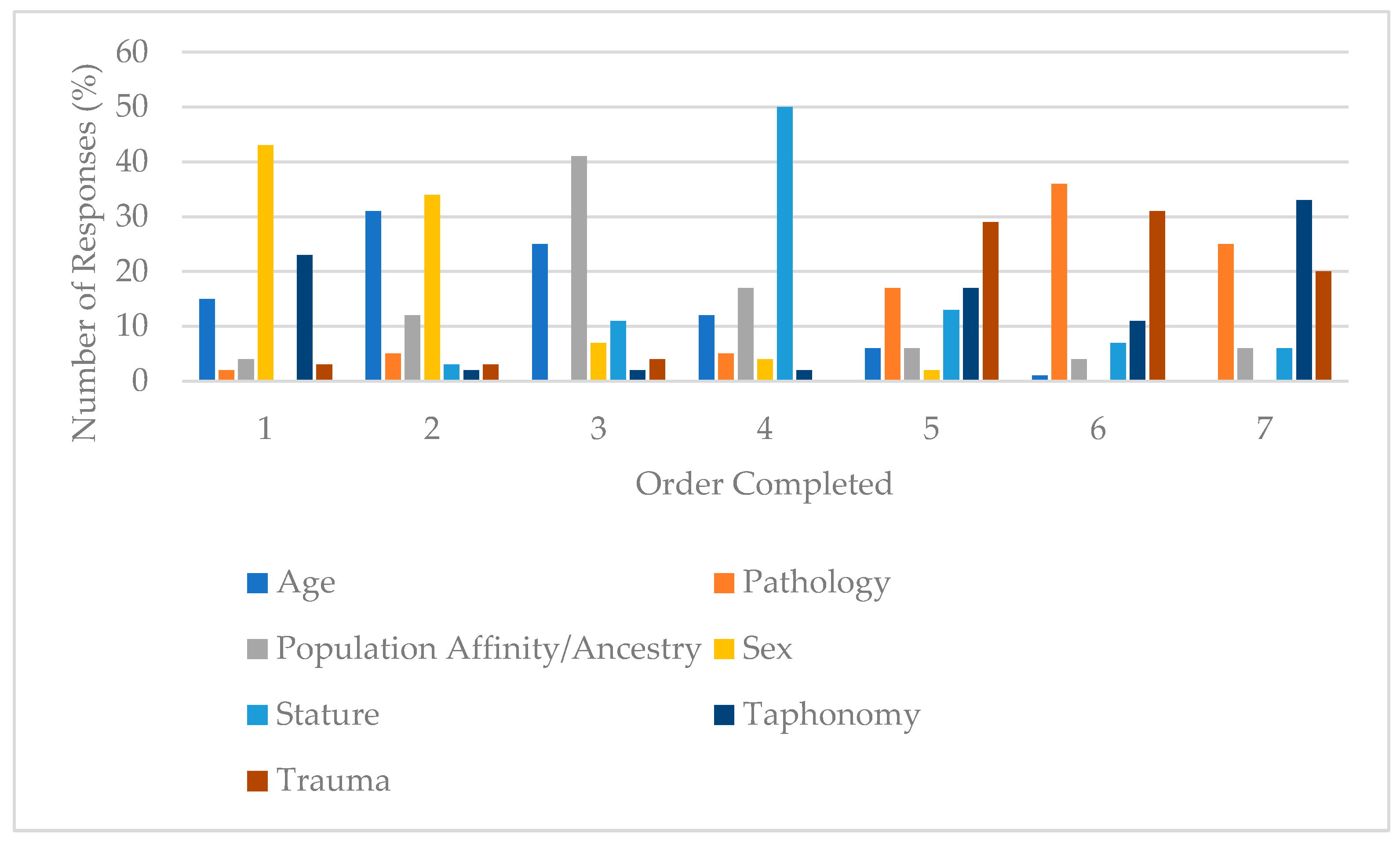
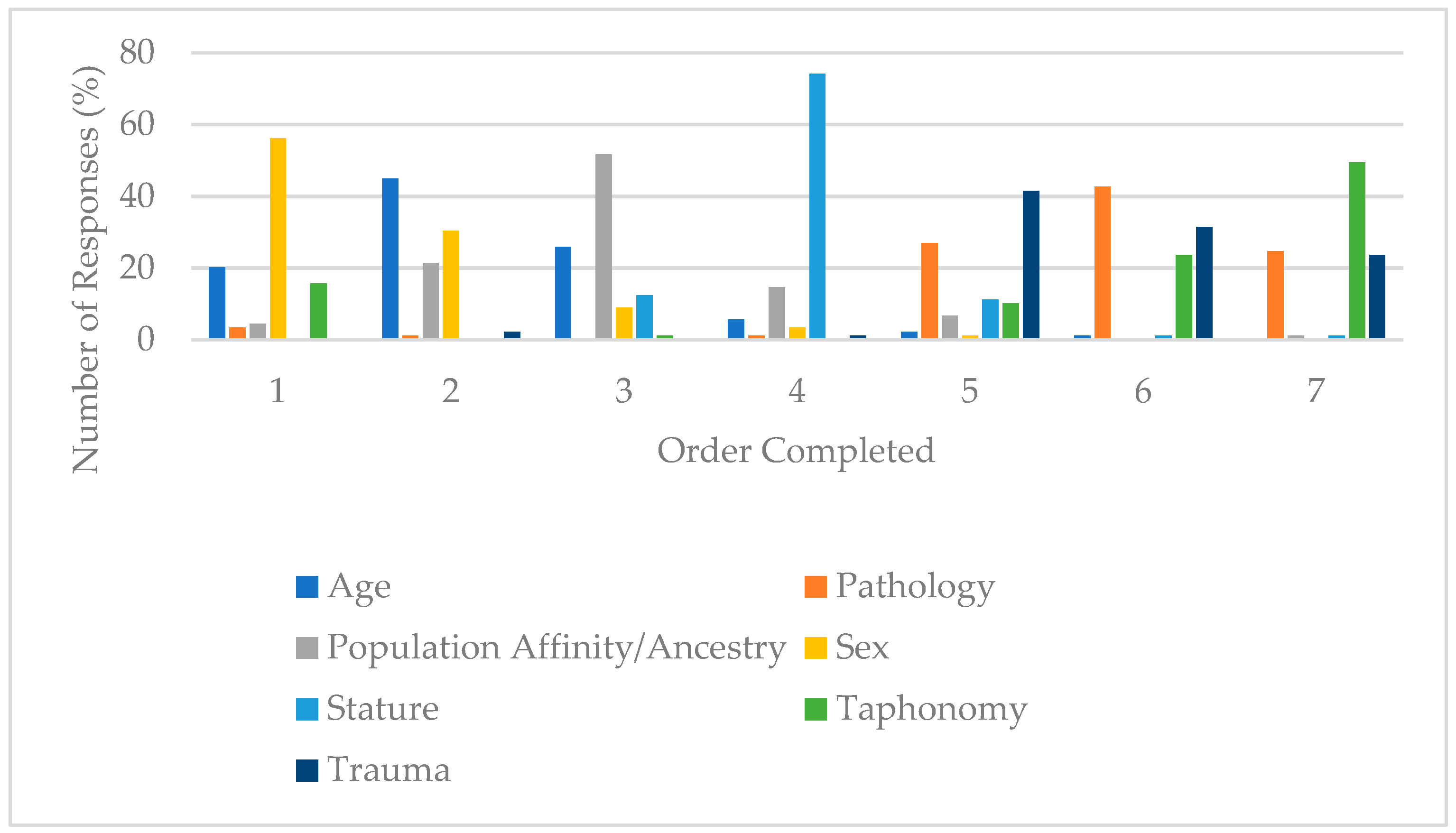
Disclaimer/Publisher’s Note: The statements, opinions and data contained in all publications are solely those of the individual author(s) and contributor(s) and not of MDPI and/or the editor(s). MDPI and/or the editor(s) disclaim responsibility for any injury to people or property resulting from any ideas, methods, instructions or products referred to in the content. |
© 2025 by the authors. Licensee MDPI, Basel, Switzerland. This article is an open access article distributed under the terms and conditions of the Creative Commons Attribution (CC BY) license (https://creativecommons.org/licenses/by/4.0/).