




Next Issue
Volume 15, June
Previous Issue
Volume 14, December


BioTech, Volume 15, Issue 1 (March 2026) – 25 articles
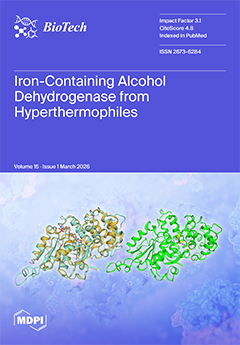
Cover Story (view full-size image): Iron-containing alcohol dehydrogenases from hyperthermophiles represent a distinct oxidoreductases class with exceptional thermostability, catalytic versatility, and unique metal-dependent properties. Despite considerable sequence diversity, they share conserved motifs and a two-domain fold for iron coordination and NAD(P)H cofactor binding. Physiologically, they are predicted to mediate aldehyde detoxification and redox homeostasis, with some also participating in fermentative alcohol production. Their robustness and efficiency make them strong candidates for high-temperature bioprocessing. A comparative analysis of their biophysical, biochemical, and kinetic properties is provided, focusing on their thermostability, catalytic mechanisms, and potential for industrial applications. View this paper
  • Issues are regarded as officially published after their release is announced to the table of contents alert mailing list.
  • You may sign up for e-mail alerts to receive table of contents of newly released issues.
  • PDF is the official format for papers published in both, html and pdf forms. To view the papers in pdf format, click on the "PDF Full-text" link, and use the free Adobe Reader to open them.
Order results
Result details
Section
Select all
Export citation of selected articles as:
26 pages, 3881 KB  
Article
Characterization and Biological Activity of Rutin Extracted from Filipendula ulmaria (L.) Maxim
by Anna Vesnina, Violeta Le, Svetlana Ivanova, Anna Frolova, Irina Milentyeva, Victor Atuchin and Alexander Prosekov
BioTech 2026, 15(1), 25; https://doi.org/10.3390/biotech15010025 - 23 Mar 2026
Viewed by 1150
Abstract
In this work, Filipendula ulmaria (L.) Maxim, a perennial herbaceous plant from the Rosaceae family, was considered a novel source of obtaining rutin for pharmaceutical purposes. Rutin was extracted from the plant parts collected in the flowering summer period and dried at 40 [...] Read more.
In this work, Filipendula ulmaria (L.) Maxim, a perennial herbaceous plant from the Rosaceae family, was considered a novel source of obtaining rutin for pharmaceutical purposes. Rutin was extracted from the plant parts collected in the flowering summer period and dried at 40 ± 3 °C. The process was carried out using the ethanol extraction and fractionation of extracted compounds, and it yields the 95 wt% purity crystalline product. The phase composition of the extracted rutin was verified by the XRD analysis and NMR measurements. It was found that 2.85% of rutin could be extracted from Filipendula ulmaria, which is 1.2 times higher than the results of similar studies. The biological activity of the isolated rutin was tested on rats. It was established in vivo that the extracted rutin normalizes blood glucose levels (glucose and glycosylated hemoglobin), insulin resistance (HOMA-IR index) and reduces the severity of dystrophic changes in the liver caused by high-fat and high-carbohydrate diets. The introduction of rutin corrects lipid profile indicators (triglycerides, cholesterol, cholesterol fractions in lipoproteins and atherogenic indices), cytolysis indicators of hepatocytes, and liver steatosis (ALT, AST/ALT, triglycerides). Thus, the novel source of rutin opens the possibility for a wide use of this flavonoid in the food technology and pharmaceutical industry. Full article
(This article belongs to the Section Medical Biotechnology)
Show Figures

Figure 1

11 pages, 1224 KB  
Article
Automation of Polysaccharide Quantification: A Rapid High-Throughput Assay Enabled by Liquid Handling Technology
by Samuel Nicacio, Winston Umakanth Balasundaram, Aboli Bhingarkar, Daniel Cho, Rashmi Ghayal, Anup Datta and Subhash V. Kapre
BioTech 2026, 15(1), 24; https://doi.org/10.3390/biotech15010024 - 20 Mar 2026
Viewed by 564
Abstract
Different methods are used today for polysaccharide quantitation, including HPLC and various colorimetric assays. Among these, the anthrone-sulfuric acid assay (anthrone assay) is popular when the sample matrix is suitable, such as in purified polysaccharides and monovalent bulk conjugate components of glycoconjugate vaccines. [...] Read more.
Different methods are used today for polysaccharide quantitation, including HPLC and various colorimetric assays. Among these, the anthrone-sulfuric acid assay (anthrone assay) is popular when the sample matrix is suitable, such as in purified polysaccharides and monovalent bulk conjugate components of glycoconjugate vaccines. While relatively safe, quick, and affordable, the anthrone assay requires significant operator time to complete and is not suited to high-throughput processing. Furthermore, the anthrone-sulfuric acid reagent presents a unique challenge to automation efforts due to its corrosive properties. Reported here is an automated anthrone assay via a liquid handling system (LHS). Twenty-three serotypes of pneumococcal (PNU) polysaccharide were quantified with the traditional anthrone assay and subsequently analyzed using the anthrone LHS method. The anthrone LHS method was evaluated for accuracy compared to the manual method and later validated according to ICH Q2 (R2) guidelines. To our knowledge, this is the first fully unattended and corrosion-mitigated anthrone assay validated under ICH Q2 (R2), capable of overnight batch operation. The developed assay can quantify polysaccharides with an accuracy of 81–115%, is precise to a coefficient of variation of <7.0%, and is linear between 30 and 650 µg/mL range (R2 ≥ 0.993). The assay can process eight samples per hour, can be utilized in overnight operation, and completes all pipetting, incubation, and data export steps automatically. Full article
Show Figures

Figure 1

24 pages, 1344 KB  
Article
Co-Transfected Plasmids Enhance Transient Expression of Reporter Genes
by Shih-Yen Lo, Chee-Hing Yang, Yu-Ru Chan, Yi-Tzu Chao, Meng-Jiun Lai and Hui-Chun Li
BioTech 2026, 15(1), 23; https://doi.org/10.3390/biotech15010023 - 4 Mar 2026
Viewed by 764
Abstract
Transient DNA transfection is routinely used to study gene function and elucidate the regulation of biological pathways, and it is also widely applied in biotechnology for large-scale recombinant protein production. The results of recent studies involving mammalian cells have highlighted that competition for [...] Read more.
Transient DNA transfection is routinely used to study gene function and elucidate the regulation of biological pathways, and it is also widely applied in biotechnology for large-scale recombinant protein production. The results of recent studies involving mammalian cells have highlighted that competition for cellular resources during gene expression can bias data interpretation, directly affecting co-transfection experiments. In this study, our results showed that co-transfected plasmids markedly enhance transient—but not stable—expression of various reporter genes across different cell types. The enhancement of transient reporter gene expression by additional plasmid DNA occurs when these DNAs are co-delivered simultaneously and is unlikely to be mediated by cytokine induction. Furthermore, co-transfected plasmids were shown to upregulate transcription, but not translation, of the reporter gene during transient expression. Thus, the observed enhancement may result from competition between co-transfected plasmids and reporter constructs for cellular proteins that interact with transfected DNA, such as histones. Indeed, Pracinostat (SB939), an inhibitor of histone deacetylase, was able to enhance the transient expression of the reporter gene dose-dependently. Overall, this study provides insights that may facilitate improved transient expression of recombinant genes in biotechnological applications. Full article
(This article belongs to the Section Medical Biotechnology)
Show Figures

Figure 1

17 pages, 7794 KB  
Review
Artificial Intelligence and Digital Technology in Cardiovascular Imaging: A Narrative Review
by Constantinos H. Papadopoulos, Dimitris Karelas, Christina Floropoulou, Konstantina Tzavida, Dimitrios Oikonomidis, Athanasios Tasoulis, Evangelos Tatsis, Ioannis Kouloulias and Nikolaos P. E. Kadoglou
BioTech 2026, 15(1), 22; https://doi.org/10.3390/biotech15010022 - 3 Mar 2026
Viewed by 836
Abstract
The rapid expansion of digital technologies and artificial intelligence (AI) has profoundly transformed cardiovascular imaging, enabling more precise, efficient, and reproducible assessment of cardiac structure and function. This narrative review summarizes recent advances in AI-driven methods across echocardiography, cardiac computed tomography, cardiac magnetic [...] Read more.
The rapid expansion of digital technologies and artificial intelligence (AI) has profoundly transformed cardiovascular imaging, enabling more precise, efficient, and reproducible assessment of cardiac structure and function. This narrative review summarizes recent advances in AI-driven methods across echocardiography, cardiac computed tomography, cardiac magnetic resonance, and nuclear imaging, with emphasis on image acquisition, automated quantification, and diagnostic and prognostic interpretation. We reviewed contemporary literature describing machine-learning and deep-learning applications for image reconstruction, segmentation, radiomics, and multimodal data integration. Current evidence demonstrates that AI improves image quality, reduces acquisition and analysis time, and enables automated, highly reproducible measurements of chamber volumes, function, tissue characterization, coronary anatomy, and myocardial perfusion, while facilitating advanced pattern recognition for differential diagnosis and risk stratification. Furthermore, digital platforms support remote acquisition, tele-echocardiography, and AI-assisted training of non-expert operators. Despite these advances, challenges remain regarding external validation, generalizability across vendors and populations, explainability, data governance, and regulatory compliance. In conclusion, AI and digital technologies are reshaping cardiovascular imaging by enhancing accuracy, efficiency, and accessibility, but their safe and effective clinical integration requires robust multicenter validation, transparent reporting, and ethical-legal frameworks that ensure trust, equity, and accountability. Full article
(This article belongs to the Special Issue Advances in Bioimaging Technology)
Show Figures

Figure 1

18 pages, 3194 KB  
Article
Engineering of Extracellular Vesicles for Targeted Delivery of Prodigiosin
by Ivan Guryanov, Sirina Sabirova, Svetlana Batasheva, Svetlana Konnova, Arthur Khannanov, Marianna Kutyreva and Ekaterina Naumenko
BioTech 2026, 15(1), 21; https://doi.org/10.3390/biotech15010021 - 1 Mar 2026
Viewed by 805
Abstract
The therapeutic potential of prodigiosin as a hydrophobic anticancer agent can be enhanced by various approaches, one of which is the loading of PG into extracellular vesicles. Drug distribution and stability in aqueous media play a crucial role in targeting and accumulation, thereby [...] Read more.
The therapeutic potential of prodigiosin as a hydrophobic anticancer agent can be enhanced by various approaches, one of which is the loading of PG into extracellular vesicles. Drug distribution and stability in aqueous media play a crucial role in targeting and accumulation, thereby enabling the attainment of therapeutically effective drug concentrations. Extracellular vesicles are nano-sized, cell-derived vesicles with a lipid bilayer membrane. Extracellular vesicles can be utilized as drug carriers for both water-soluble and non-water-soluble therapeutic agents. We hypothesized that microvesicles could effectively address the current challenges of prodigiosin delivery. Several different techniques have been developed for fabricating extracellular vesicles. These include microvesicles induction by cytochalasin B treatment as well as cell cultivation in serum depleted media. In our study, prodigiosin, like cytochalasin B, demonstrated efficacy in microvesicles formation based on protein quantification and Nanoparticle Tracking Analysis. In addition, Nanoparticle Tracking Analysis showed that vesicles from mesenchymal stem cells are more stable under ultrasound exposure. Microvesicles encapsulating prodigiosin, compared to unmodified naïve ones, demonstrated slightly increased zeta potentials and hydrodynamic diameters, which probably contributed to better stability. We demonstrated that ultrasonic treatment for the loading of prodigiosin does not significantly increase the proportion of prodigiosin-positive microvesicles in comparison with microvesicles induced with prodigiosin; moreover, this method cannot be considered as optimal due to its disadvantages, such as particle aggregation. Prodigiosin-induced and prodigiosin-loaded microvesicles from mesenchymal stem cells were significantly smaller and less polydisperse in size. Overall, prodigiosin encapsulated in extracellular vesicles might be more suitable for medical and clinical applications compared to pure forms of PG due to their cell membrane compatibility. Full article
(This article belongs to the Section Medical Biotechnology)
Show Figures

Figure 1

28 pages, 5433 KB  
Article
Predicting Protein–Protein Interactions by Convolutional Neural Network Model
by Shuaibo Shi, Ting Xiong, Dong Wang, Lingling Wei, Lin Li, Zhixin Li and Yanfen Lyu
BioTech 2026, 15(1), 20; https://doi.org/10.3390/biotech15010020 - 16 Feb 2026
Viewed by 645
Abstract
The study of protein–protein interactions (PPIs) is of significant importance for elucidating biological processes, clarifying pathological mechanisms, and promoting drug development. In this study, we proposed a method to predict PPIs based on protein sequence and gene sequence information, combined with convolutional neural [...] Read more.
The study of protein–protein interactions (PPIs) is of significant importance for elucidating biological processes, clarifying pathological mechanisms, and promoting drug development. In this study, we proposed a method to predict PPIs based on protein sequence and gene sequence information, combined with convolutional neural networks (CNNs). First, we extracted three types of features from protein sequence: global physicochemical properties features of the protein sequence, local same type of amino acid position variation features, and protein evolutionary conservation features; simultaneously, we extracted single nucleotide frequency and positional features, dinucleotide frequency features, and trinucleotide frequency features from the corresponding gene sequence. During the feature extraction process, we employed the amphiphilic pseudo amino acid composition (APAAC) method to extract the global hydrophobicity and hydrophilicity features of the protein sequence; we defined a new mathematical descriptor—θ interval deviation product factor—to extract protein evolutionary conservation features from Position Specific Scoring Matrix (PSSM); we also defined a mapping function to map all nucleotides in the gene sequence onto a unit circle, and then extracted nucleotide positional features from the mapped points. Second, based on extracted features, we constructed a 36 × 32 sample feature grayscale map to represent a protein pair sample. Finally, we developed a CNN model to predict PPIs. Our method achieved superior results on four species test sets: an accuracy of 99.28% on the Saccharomyces cerevisiae dataset, 98.15% on the Drosophila melanogaster dataset, 98.62% on the Homo sapiens dataset, and 96.84% on the Mus musculus dataset, outperforming existing computational methods. Furthermore, we extended the application of this method to the prediction of protein–protein interaction networks and non-interaction networks, and also achieved promising results. Full article
(This article belongs to the Section Computational Biology)
Show Figures

Figure 1

13 pages, 885 KB  
Article
Post-Inoculation Drying and Storage Effects on HAB Viability and Nutrient Retention in Biochar
by Christiana Bitrus, Ademola Hammed, Tawakalt Ayodele and Niloy Chandra Sarker
BioTech 2026, 15(1), 19; https://doi.org/10.3390/biotech15010019 - 12 Feb 2026
Viewed by 647
Abstract
Background/Objectives: The effects of thermal drying on the viability of beneficial microorganisms immobilized in biochar, as well as on biochar nutrient retention, remain insufficiently understood. This study aimed to evaluate how drying temperature influences the survival of hyper-ammonia-producing bacteria (HAB) immobilized on pine [...] Read more.
Background/Objectives: The effects of thermal drying on the viability of beneficial microorganisms immobilized in biochar, as well as on biochar nutrient retention, remain insufficiently understood. This study aimed to evaluate how drying temperature influences the survival of hyper-ammonia-producing bacteria (HAB) immobilized on pine wood biochar and to assess the impact of subsequent storage on bacterial recovery and nutrient stability. Methods: Biochar was inoculated with HAB and subjected to drying at temperatures ranging from 40 to 60 °C. Following drying, samples were characterized and stored for 30 days. Microbial revival was assessed through reculturing, while changes in surface functional groups were analyzed using FTIR spectroscopy. Nutrient retention, particularly nitrogen content, was also evaluated. Results: Higher drying temperatures resulted in reduced immediate microbial revival during reculturing. However, samples exhibiting limited immediate recovery demonstrated enhanced revival after the 30-day storage period. FTIR analysis revealed that drying temperature modified the availability of surface functional groups associated with microbial attachment and activity. Nutrient analysis indicated only minor reductions in nitrogen retention in biochar dried at temperatures above 55 °C. Conclusions: Drying temperature significantly affects both the short-term survival and post-storage recovery of beneficial microorganisms immobilized in biochar. While elevated temperatures may initially suppress microbial activity, recovery potential during storage remains substantial. Optimizing drying conditions is therefore essential to balance microbial viability with nutrient retention in biochar-based formulations. Full article
Show Figures

Figure 1

20 pages, 5618 KB  
Article
Transcriptomic Analysis Reveals an NRF2-Mediated Redox and Metabolic Reprogramming in Sorafenib-Resistant Hepatocellular Carcinoma Cells
by Angelo Michilli, Cristian Bassi, Farzaneh Moshiri, Bruno De Siena, Rosaria Marinaro, Elisa Callegari, Massimo Negrini and Silvia Sabbioni
BioTech 2026, 15(1), 18; https://doi.org/10.3390/biotech15010018 - 11 Feb 2026
Viewed by 905
Abstract
Despite the advent of immune checkpoint inhibitor-based regimens, sorafenib remains an important therapeutic option for patients with advanced hepatocellular carcinoma (HCC) who are ineligible for immunotherapy. However, its clinical efficacy is limited by the emergence of drug resistance, whose underlying molecular mechanisms remain [...] Read more.
Despite the advent of immune checkpoint inhibitor-based regimens, sorafenib remains an important therapeutic option for patients with advanced hepatocellular carcinoma (HCC) who are ineligible for immunotherapy. However, its clinical efficacy is limited by the emergence of drug resistance, whose underlying molecular mechanisms remain incompletely understood. To investigate these mechanisms, we established a murine model of acquired sorafenib resistance and performed comparative RNA sequencing of sorafenib-sensitive versus -resistant Hep55.1C hepatoma cells. Transcriptomic profiling revealed a distinct resistance-associated signature comprising 1264 significantly deregulated genes (adjusted p < 0.03, fold change > 3.0). Pathway analysis and Gene Set Enrichment Analyses (GSEA) indicated a coordinated downregulation of metabolic and intercellular signaling pathways, accompanied by marked upregulation of redox-regulatory, mitochondrial and cellular stress-response programs. Genes transcriptionally regulated by nuclear factor erythroid 2-related factor 2 (NRF2) including Gpx4, Txn1, Txnrd1, Hmox1, Fth1, Taldo1, Phgdh, and MafG, involved in antioxidant defense, ferroptosis suppression and metabolic rewiring, were all upregulated in resistant cells. Pharmacological inhibition of NRF2 activity using brusatol restored sensitivity to sorafenib, functionally implicating NRF2-dependent pathways in the maintenance of the resistant phenotype. These findings demonstrate that acquired sorafenib resistance in HCC is associated with a stable NRF2-driven transcriptional and metabolic reprogramming that enhances antioxidant capacity, suppresses ferroptosis and promotes tumor cell survival. Targeting NRF2-regulated redox metabolism may therefore represent a promising strategy to overcome therapeutic resistance in HCC. Full article
(This article belongs to the Special Issue BioTech: 5th Anniversary)
Show Figures

Figure 1

32 pages, 3612 KB  
Review
Catching the Elusive Phytophthora: A Review of Methods and Applications for Pathogen Detection and Identification Across Agricultural, Horticultural, Forestry and Ornamental Settings
by Viola Papini, Alessandra Benigno, Domenico Rizzo and Salvatore Moricca
BioTech 2026, 15(1), 17; https://doi.org/10.3390/biotech15010017 - 9 Feb 2026
Viewed by 1087
Abstract
Species of the genus Phytophthora are among the most detrimental plant pathogens globally, representing a significant threat to global agriculture, horticulture, and forestry. These zoosporic oomycetes have historically caused devastating outbreaks, including, just to mention a few, late blight of potato in Ireland; [...] Read more.
Species of the genus Phytophthora are among the most detrimental plant pathogens globally, representing a significant threat to global agriculture, horticulture, and forestry. These zoosporic oomycetes have historically caused devastating outbreaks, including, just to mention a few, late blight of potato in Ireland; jarrah dieback of eucalyptus in Western Australia; ink disease of chestnut in Europe; sudden oak death and sudden larch death of coast live oak and tanoak in the Western US, and of Japanese larch in the UK. The environmental and ecological impacts of the diseases they cause result in significant economic costs that often have social repercussions. With the acceleration of globalization, enhancing the movement of plant material, in particular with the global live plant trade, the spread of Phytophthora to new, uncontaminated territories has intensified. Nurseries play a key role in the movement of these pathogens, the trade of contaminated stocks representing their major dissemination route. However valuable, conventional detection techniques, including baiting and direct isolation, are too slow and labour-intensive to meet current diagnostic requirements, particularly given the huge volumes of plants traded globally. This problem becomes even more acute when large volumes of potentially infectious plant material need to be processed in a short time frame, as it is often necessary to provide accurate and timely responses to interested parties. Early and precise detection is thus vital to avert outbreaks and mitigate long-term consequences. This review evaluates and contrasts the efficacy of novel detection methods against traditional approaches, emphasizing their significance in managing the escalating threat posed by Phytophthora spp. worldwide. Despite technological advances, critical challenges remain that limit the reliability and large-scale adoption of new diagnostic methods. Research still needs to bridge the gap between the laboratory and the field in terms of accuracy, sensitivity and diagnostic costs. Recent innovations focus on sensor technology and point-of-care (POC) devices for faster, more sensitive, and low-cost specific detection of Phytophthora spp. in plant matrices, water and soil. Enhancing diagnostic capabilities through these tools is crucial for protecting agricultural productivity, local economies, and natural ecosystems. Full article
(This article belongs to the Section Industry, Agriculture and Food Biotechnology)
Show Figures

Figure 1

34 pages, 3681 KB  
Review
Carboxylic Acid Production from Organic Waste: Integrating Substrate Composition, Reactor Configuration, Inoculum, and Future Perspectives
by Ajay Thapa, Shiyu Fu, Joseph Sebastian, Onita Basu, Farah Hosseinian, Utsav Sharma, Dayanand Sharma and Abid Hussain
BioTech 2026, 15(1), 16; https://doi.org/10.3390/biotech15010016 - 9 Feb 2026
Viewed by 792
Abstract
Acidogenic fermentation is a promising biotechnology for converting organic wastes into carboxylic acid (CA), which has significant commercial value and diverse applications in the food, chemical, pharmaceutical, and cosmetic industries. However, major challenges such as limited substrate hydrolysis and lower CA production hinder [...] Read more.
Acidogenic fermentation is a promising biotechnology for converting organic wastes into carboxylic acid (CA), which has significant commercial value and diverse applications in the food, chemical, pharmaceutical, and cosmetic industries. However, major challenges such as limited substrate hydrolysis and lower CA production hinder further development of this biotechnology towards full-scale implementation. This review provides a comprehensive overview of the current status of acidogenic fermentation, focusing on substrate composition, inoculum, and reactor design, along with potential strategies to overcome reactor-specific limitations and enhance CA production. It was found that the substrate composition, particularly its carbohydrate, protein, and lipid contents, strongly influences both CA production and yield. Specifically, carbohydrate-rich substrates yield higher CA production compared to protein- and lipid-rich substrates. These substrates have been investigated in different reactor configurations for CA production. Among them, the leachate bed reactor and anaerobic membrane bioreactor have demonstrated superior performance, achieving higher CA production with acetic and butyric acids as the dominant CA composition. These reactors are generally operated using three types of inocula: aerobic and anaerobic inoculum, enriched inoculum, and rumen microorganisms. Interestingly, rumen microorganisms are effective in degrading complex substrates, whereas enriched inoculum accelerates hydrolysis and acidogenesis processes within a shorter fermentation time. The findings presented herein will provide valuable information for addressing the challenges associated with acidogenic fermentation and lay the foundation for future research aimed at upscaling this biotechnology to a commercial scale. Full article
(This article belongs to the Section Environmental Biotechnology)
Show Figures

Figure 1

14 pages, 1679 KB  
Article
Functional Analysis of the NinaB-like Gene in Body Color Regulation of Neocaridina denticulata sinensis
by Haifan Li, Lili Zhang, Guodong Wang and Tanjun Zhao
BioTech 2026, 15(1), 15; https://doi.org/10.3390/biotech15010015 - 5 Feb 2026
Viewed by 532
Abstract
Carotenoid-based pigmentation is crucial for the ornamental and commercial value of the cherry shrimp (Neocaridina denticulata sinensis). While several genes are known to influence carotenoid metabolism, the genetic basis for specific color strains remains largely unexplored. Here, we functionally characterized NinaB-like [...] Read more.
Carotenoid-based pigmentation is crucial for the ornamental and commercial value of the cherry shrimp (Neocaridina denticulata sinensis). While several genes are known to influence carotenoid metabolism, the genetic basis for specific color strains remains largely unexplored. Here, we functionally characterized NinaB-like, a homolog of a carotenoid oxygenase, in cherry shrimp pigmentation. We employed qPCR to gain gene expression profiles, utilized RNAi technology to analysize the relation between its expression level and carotenoid accumulation, and performed GT-seq to identify genotypes of different color strains. Significant differential expression of NinaB-like was observed not only across distinct color strains but also during embryonic development of cherry shrimp (p < 0.05), peaking at the red strain and post-larval stage of cherry shrimp. RNA interference-mediated knockdown of NinaB-like resulted in a marked increase in red pigment deposition at the metanauplius and pre-zoea stages, confirming its role as a negative regulator of carotenoid accumulation. Importantly, we identified two tightly linked, non-synonymous SNPs (927C > A and 935A > C) within the NinaB-like coding region that exhibited a strong association with body color. Our study provides the first functional evidence that NinaB-like is a negative regulator of carotenoid degradation and a major genetic determinant for body color in cherry shrimp, providing new insights for genetic breeding and biological research. Full article
(This article belongs to the Section Biotechnology Regulation)
Show Figures

Figure 1

10 pages, 1874 KB  
Article
Plant-Derived Hydrolysates Are a Suitable Replacement for Tryptone N1 in Recombinant Protein Expression Using Human Embryonic Kidney (HEK293-6E) Cells
by Shafqat Shabir, Md. Shahadat Hossain, Lucie Egly, Gizem Yalkin and Franco H. Falcone
BioTech 2026, 15(1), 14; https://doi.org/10.3390/biotech15010014 - 5 Feb 2026
Viewed by 720
Abstract
Human embryonic kidney (HEK293) cells are a widespread choice for recombinant protein expression. To optimise yields, the hydrolysate Tryptone N1 (TN1) is commonly added post-transfection. TN1 is obtained by controlled enzymatic digestion of casein. As an animal by-product, TN1 faces stricter regulations during [...] Read more.
Human embryonic kidney (HEK293) cells are a widespread choice for recombinant protein expression. To optimise yields, the hydrolysate Tryptone N1 (TN1) is commonly added post-transfection. TN1 is obtained by controlled enzymatic digestion of casein. As an animal by-product, TN1 faces stricter regulations during cross-country shipments than plant-based products. This raises the question of whether plant-derived peptides are a suitable alternative to TN1. Using polyethyleneimine (PEI) as a cationic polymer, we transfected HEK293-6E cells grown in suspension in serum-free medium and divided the transfectants into four groups (each in triplicate). Two plant-based hydrolysates each derived from pea and broad bean were compared with TN1 and a no-hydrolysate control group. We monitored the cultures for total cell numbers and viability at days 1, 4, and 5 post-transfection. Both plant-based hydrolysates and TN1 showed similar live cell percentages, in contrast to the no-hydrolysate control, which showed lower viability. Five days post-transfection, the expressed His-tagged protein, a tegumental antigen from the eukaryotic parasite Echinococcus granulosus, was retrieved from the serum-free culture supernatant, and the expressed recombinant protein was quantified. The linear ranges for the protein load on the stain-free blot and for the use of the fluorescent anti-His-Tag Alexa488 antibody were determined. Using these parameters, stain-free Western blotting and total protein normalization were performed. The plant-derived pea and broad bean hydrolysates reproducibly resulted in similar expression levels as animal-derived TN1; all three hydrolysates were better than no hydrolysate. We conclude that plant-derived hydrolysates are a suitable, more sustainable replacement for TN1. Full article
(This article belongs to the Section Medical Biotechnology)
Show Figures

Figure 1

17 pages, 1665 KB  
Article
CRISPR/Cas9-Mediated Knockout of OsHSBP1 Confers Heat Tolerance to Bacthom 7 Elite Rice Cultivar
by Phuong Duy Nguyen, Van Thi Pham, Ha Thanh Nguyen, Khoa Dang Dang, Tu Tuan Tran, Dai Lan Tran, Thanh Duc Nguyen, Thao Duc Le, Xuan Hoi Pham, Xuan Dang Tran and Quyen Le Cao
BioTech 2026, 15(1), 13; https://doi.org/10.3390/biotech15010013 - 4 Feb 2026
Viewed by 858
Abstract
This study investigates the functional role of OsHSBP1, a heat shock factor-binding protein, in regulating abiotic stress tolerance in rice, with the aim of enhancing climate resilience in the elite indica cultivar Bacthom 7 (BT7). Using Clustered Regularly Interspaced Short Palindromic Repeats/CRISPR-associated [...] Read more.
This study investigates the functional role of OsHSBP1, a heat shock factor-binding protein, in regulating abiotic stress tolerance in rice, with the aim of enhancing climate resilience in the elite indica cultivar Bacthom 7 (BT7). Using Clustered Regularly Interspaced Short Palindromic Repeats/CRISPR-associated protein 9 (CRISPR/Cas9) genome editing, we generated transgene-free homozygous knockout lines targeting OsHSBP1 and evaluated their physiological, biochemical, and agronomic responses under heat stress. Mutant lines exhibited markedly improved tolerance to both stresses, with survival rates reaching 43–46% under heat stress, compared to near-zero in wildtype plants. Enhanced tolerance was associated with significantly increased catalase and peroxidase activities and reduced oxidative damage, including lower malondialdehyde content and decreased superoxide accumulation. Despite these stress-related advantages, the knockout lines showed minimal differences in key agronomic traits under normal growing conditions, with comparable plant height, tillering ability, grain yield, and amylose content relative to the wildtype. These results demonstrate that OsHSBP1 functions as a negative regulator of abiotic stress tolerance in rice, and its knockout enhances resilience without compromising yield potential. The study highlights OsHSBP1 as a promising target for precision breeding of climate-resilient rice cultivars. Full article
(This article belongs to the Section Industry, Agriculture and Food Biotechnology)
Show Figures

Figure 1

22 pages, 7755 KB  
Article
Transcriptomic Insights into lncRNA–miRNA–mRNA Networks Regulating Angiogenesis and Metastasis in Prostate Cancer
by Jonathan Puente-Rivera, Stephanie I. Nuñez Olvera, Ameyatzin Ereth Robles-Chávez, Nayeli Goreti Nieto-Velázquez and María Elizbeth Alvarez-Sánchez
BioTech 2026, 15(1), 12; https://doi.org/10.3390/biotech15010012 - 1 Feb 2026
Viewed by 775
Abstract
Prostate cancer (PCa) is a leading cause of cancer-related mortality in men and is often characterized by aggressive growth and bone metastasis. Angiogenesis plays a central role in tumor progression and dissemination. This study aimed to explore the regulatory roles of long non-coding [...] Read more.
Prostate cancer (PCa) is a leading cause of cancer-related mortality in men and is often characterized by aggressive growth and bone metastasis. Angiogenesis plays a central role in tumor progression and dissemination. This study aimed to explore the regulatory roles of long non-coding RNAs (lncRNAs) and microRNAs (miRNAs) in angiogenesis and metastasis during PCa progression. Publicly available RNA-seq datasets were analyzed to identify differentially expressed miRNAs between metastatic (N1) and nonmetastatic (N0) PCa. Bioinformatic tools were used to reconstruct co-regulatory networks involving miRNAs, lncRNAs, and angiogenesis-related mRNAs. RT-qPCR was performed on serum-derived liquid biopsies from N0 and N1 patients and healthy controls to validate the key regulatory axes. Transcriptomic analysis revealed that miRNAs such as hsa-miR-183-5p and hsa-miR-216a-5p were upregulated in N1 PCa and associated with pro-angiogenic signaling, whereas hsa-miR-206 and hsa-miR-184, known for their anti-angiogenic functions, were downregulated. Network analysis identified the LINC00261–miR-206–HIF1A axis as the central regulatory module. RT-qPCR validation confirmed the significant downregulation of LINC00261 and miR-206, along with HIF1A overexpression in N1 samples compared to N0 and controls (p < 0.001), supporting in silico predictions. These findings highlight the role of ncRNA-mediated regulation of PCa angiogenesis and metastasis. The LINC00261–miR-206–HIF1A axis may serve as a promising noninvasive biomarker and potential therapeutic target. The integration of computational and experimental data provides a strong rationale for the further functional validation of advanced PCa. Full article
Show Figures

Figure 1

25 pages, 2186 KB  
Review
Bio-Oil from Phototrophic Microorganisms: Innovative Technologies and Strategies
by Kenzhegul Bolatkhan, Ardak B. Kakimova, Bolatkhan K. Zayadan, Akbota Kabayeva, Sandugash K. Sandybayeva, Aliyam A. Dauletova and Tatsuya Tomo
BioTech 2026, 15(1), 11; https://doi.org/10.3390/biotech15010011 - 26 Jan 2026
Viewed by 775
Abstract
The transition to low-carbon energy systems requires scalable and energy-efficient routes for producing liquid biofuels that are compatible with existing fuel infrastructures. This review focuses on bio-oil production from phototrophic microorganisms, highlighting their high biomass productivity, rapid growth, and inherent capacity for carbon [...] Read more.
The transition to low-carbon energy systems requires scalable and energy-efficient routes for producing liquid biofuels that are compatible with existing fuel infrastructures. This review focuses on bio-oil production from phototrophic microorganisms, highlighting their high biomass productivity, rapid growth, and inherent capacity for carbon dioxide fixation as key advantages over conventional biofuel feedstocks. Recent progress in thermochemical conversion technologies, particularly hydrothermal liquefaction (HTL) and fast pyrolysis, is critically assessed with respect to their suitability for wet and dry algal biomass, respectively. HTL enables direct processing of high-moisture biomass while avoiding energy-intensive drying, whereas fast pyrolysis offers high bio-oil yields from lipid-rich feedstocks. In parallel, catalytic upgrading strategies, including hydrodeoxygenation and related hydroprocessing routes, are discussed as essential steps for improving bio-oil stability, heating value, and fuel compatibility. Beyond conversion technologies, innovative biological and biotechnological strategies, such as strain optimization, stress induction, co-cultivation, and synthetic biology approaches, are examined for their role in tailoring biomass composition and enhancing bio-oil precursors. The integration of microalgal cultivation with wastewater utilization is briefly considered as a supporting strategy to reduce production costs and improve overall sustainability. Overall, this review emphasizes that the effective coupling of advanced thermochemical conversion with targeted biological optimization represents the most promising pathway for scalable bio-oil production from phototrophic microorganisms, positioning algal bio-oil as a viable contributor to future low-carbon energy systems. Full article
Show Figures

Figure 1

3 pages, 130 KB  
Editorial
Natural Antioxidants: Determination in Food and Nutraceuticals and Implications on Human Health
by Gregorio Peron
BioTech 2026, 15(1), 10; https://doi.org/10.3390/biotech15010010 - 21 Jan 2026
Viewed by 397
Abstract
Oxidative processes influence several aspects of biology, from the subtle balance of redox signaling to the destructive cascade of oxidative damage associated with chronic disease and aging [...] Full article
19 pages, 1018 KB  
Review
TG221: An Experimental Model for Liver Cancer Prevention and Treatment Approaches
by Elisa Callegari, Angelo Michilli, Farzaneh Moshiri, Bruno De Siena, Laura Gramantieri, Massimo Negrini and Silvia Sabbioni
BioTech 2026, 15(1), 9; https://doi.org/10.3390/biotech15010009 - 19 Jan 2026
Viewed by 747
Abstract
Hepatocellular carcinoma (HCC) is a leading cause of cancer mortality. It usually arises in cirrhotic liver, where chronic inflammation and fibrosis create a tumor-permissive microenvironment. Dysregulation of microRNAs (miRNAs), particularly upregulation of the oncomiR miR-221 and loss of the tumor suppressor miR-199a-3p represent [...] Read more.
Hepatocellular carcinoma (HCC) is a leading cause of cancer mortality. It usually arises in cirrhotic liver, where chronic inflammation and fibrosis create a tumor-permissive microenvironment. Dysregulation of microRNAs (miRNAs), particularly upregulation of the oncomiR miR-221 and loss of the tumor suppressor miR-199a-3p represent key drivers of liver carcinogenesis. The TG221 transgenic mouse, designed to overexpress miR-221 in hepatocytes, provides a relevant in vivo platform for mechanistic studies and for testing preventive and therapeutic approaches. The TG221 model recapitulates miR-221-driven tumorigenesis, including suppression of p27, p57 and Bmf. It is characterized by steatohepatitic injury and accelerated tumor formation after genotoxic challenge. In the cirrhotic CCl4-induced background, TG221 mice develop fibrosis and cirrhosis followed by dysplastic and malignant lesions, mirroring the natural history of human HCC. Metformin administered during early fibrosis prevented macroscopic tumor formation and suppressed PI3K/AKT/mTOR signaling. Anti-miR-221 and miR-199a-3p mimics reduced tumor burden, restored tumor-suppressive pathways and improved liver integrity, thus indicating feasible chemopreventive strategies. From a therapeutic point of view, miR-199a-3p replacement synergized with palbociclib and overcame sorafenib resistance. A miR-199a-3p-responsive oncolytic adenovirus achieved tumor-selective replication with minimal toxicity. This review highlights the importance of the TG221 transgenic mouse as a powerful model for studying miRNA-driven hepatocarcinogenesis and enables preclinical evaluation of RNA-based chemopreventive and therapeutic approaches. Metformin, miRNA inhibition, miRNA replacement and miRNA-guided viral therapies emerge as promising approaches for advancing precision prevention and treatment strategies in HCC. Full article
(This article belongs to the Special Issue BioTech: 5th Anniversary)
Show Figures

Figure 1

13 pages, 238 KB  
Review
Microbial Landscape of Pharmaceutical Failures: A 21-Year Review of FDA Enforcement Reports
by Luis Jimenez
BioTech 2026, 15(1), 8; https://doi.org/10.3390/biotech15010008 - 18 Jan 2026
Cited by 3 | Viewed by 1312
Abstract
By analyzing Food and Drug Administration (FDA) enforcement reports from 2004 to 2025, we can determine the incidence of microbial contamination in non-sterile and sterile drugs in the United States of America and, at the same time, compare the trends and patterns over [...] Read more.
By analyzing Food and Drug Administration (FDA) enforcement reports from 2004 to 2025, we can determine the incidence of microbial contamination in non-sterile and sterile drugs in the United States of America and, at the same time, compare the trends and patterns over a period of 21 years to determine the distribution and frequency of microbial contaminants. The most common microorganisms detected from 2019 to 2025 were the mold Aspergillus penicilloides, with 17 citations for sterile products, followed by 16 citations for non-sterile products of Burkholderia cepacia complex (BCC) bacteria. Analysis from the last 21 years revealed the dominant microbial contaminants belong to the BCC, reaching a maximum level between 2012 and 2019. Some of the previous microbial contaminants, such as Salmonella and Clostridium, decline in the 2019–2025 period, with no notifications issued. S. aureus and Pseudomonas contamination persisted through the years but at very low levels. Gram-negative bacteria contaminated non-sterile drugs more frequently than Gram-positive. A worrisome trend continued with unacceptable levels of enforcement reports not providing any information on the identity of the microbial contaminant. New species of Bacillus and Acetobacter nitrogenifigens were responsible for a significant increase in non-sterile drug recalls. The main driver for sterile product recalls over a 21-year period is the lack of assurance of sterility (LAS) where major failures in process design, control, and operational execution were not conducive to the control of microbial proliferation and destruction. Enforcement data analysis identified the problematic trends and patterns regarding microbial contamination of drugs, providing important information to optimize process control and provide a framework for optimizing risk mitigation. Although the 21-year landscape demonstrated that some microbial contaminants have been successfully mitigated, others remain resilient. The emergence of new contaminants highlights the evolving nature of microbial risk. The consistent problem with LAS is not only a major regulatory violation but also a potential catalyst for the next major healthcare-associated outbreak. Full article
(This article belongs to the Special Issue BioTech: 5th Anniversary)
26 pages, 2722 KB  
Review
Multi-Scale Transcriptomics Redefining the Tumor Immune Microenvironment
by Jing Sun, Yingxue Xiao, Lingling Xie, Dan Qin, Yue Zou, Yingying Liu, Yitong Zhai, Minyi Zhang, Tong Li, Youjin Hao and Bo Li
BioTech 2026, 15(1), 7; https://doi.org/10.3390/biotech15010007 - 15 Jan 2026
Cited by 1 | Viewed by 1203
Abstract
The tumor immune microenvironment (TIME) is closely involved in tumor initiation, malignant progression, immune escape, and response to immunotherapy. With the continued development of high-throughput sequencing technologies, transcriptomic approaches have become essential for examining the cellular and molecular features of the TIME. Bulk [...] Read more.
The tumor immune microenvironment (TIME) is closely involved in tumor initiation, malignant progression, immune escape, and response to immunotherapy. With the continued development of high-throughput sequencing technologies, transcriptomic approaches have become essential for examining the cellular and molecular features of the TIME. Bulk RNA sequencing offers tissue-level gene expression profiles and allows the estimation of immune cell composition through computational deconvolution. Single-cell RNA sequencing provides finer resolution, revealing cellular heterogeneity, lineage relationships, and functional states. Spatial transcriptomics (ST) retains the native anatomical context, making it possible to localize gene expression patterns and cell–cell interactions within intact tissues. These approaches, when considered together, have shifted TIME research from averaged measurements toward a more detailed and mechanistic understanding. This review summarizes the principles, applications and limitations of bulk, single-cell and spatial transcriptomic methods, highlighting emerging strategies for integrative analysis. Such multi-scale frameworks are increasingly important for studying immune dynamics and may contribute to the development of more precise biotechnological and immunotherapeutic strategies. Full article
Show Figures

Figure 1

20 pages, 1372 KB  
Review
Iron-Containing Alcohol Dehydrogenase from Hyperthermophiles
by Ching Tse and Kesen Ma
BioTech 2026, 15(1), 6; https://doi.org/10.3390/biotech15010006 - 15 Jan 2026
Cited by 1 | Viewed by 763
Abstract
Iron-containing alcohol dehydrogenases (Fe-ADHs) from hyperthermophiles represent a distinct class of oxidoreductases characterized by exceptional thermostability, catalytic versatility, and unique metal-dependent properties. Despite considerable sequence diversity, Fe-ADHs share conserved motifs and a two-domain architecture essential for iron coordination and NAD(P)H cofactor binding. Physiologically, [...] Read more.
Iron-containing alcohol dehydrogenases (Fe-ADHs) from hyperthermophiles represent a distinct class of oxidoreductases characterized by exceptional thermostability, catalytic versatility, and unique metal-dependent properties. Despite considerable sequence diversity, Fe-ADHs share conserved motifs and a two-domain architecture essential for iron coordination and NAD(P)H cofactor binding. Physiologically, these enzymes are predicted to function primarily in aldehyde detoxification and redox homeostasis, with some also participating in fermentative alcohol production. Their remarkable stability and catalytic efficiency highlight their potential as robust biocatalysts for high-temperature industrial bioprocesses. This review presents a comprehensive comparative analysis of the biophysical, biochemical, and kinetic properties of Fe-ADHs, focusing on their thermostability, metal ion specificity, and catalytic mechanisms, as well as highlighting their potential for industrial biocatalytic applications. Full article
Show Figures

Figure 1

27 pages, 1790 KB  
Review
Medicinal Honeys from Oceania: An Updated Review on Their Bioactive Constituents and Health Applications
by Maryna Lutsenko, Michela Ravelli and Gregorio Peron
BioTech 2026, 15(1), 5; https://doi.org/10.3390/biotech15010005 - 12 Jan 2026
Viewed by 1081
Abstract
Medicinal honeys from Oceania have gained considerable attention due to their peculiar bioactive constituents and potential health applications. Apart from small molecules such as methylglyoxal and hydrogen peroxide, these honeys are rich in phenolic compounds, volatile terpenes, and other bioactive molecules, which collectively [...] Read more.
Medicinal honeys from Oceania have gained considerable attention due to their peculiar bioactive constituents and potential health applications. Apart from small molecules such as methylglyoxal and hydrogen peroxide, these honeys are rich in phenolic compounds, volatile terpenes, and other bioactive molecules, which collectively contribute to their antioxidant, antimicrobial, anti-inflammatory, and wound-healing properties. Recent studies have highlighted the distinctive composition of Oceania honeys such as Manuka (Leptospermum scoparium), Jarrah (Eucalyptus marginata), and Agastache (Agastache rugosa) from New Zealand and Australia, demonstrating variability in bioactivity depending on floral source, geographical origin, and processing methods. This review synthesizes the current knowledge on the chemical profiles of these honeys with a particular focus on bioactive compounds and distinctive markers, and evaluates their therapeutic potential. Emphasis is placed on the mechanisms underlying their bioactivities, as well as emerging clinical and preclinical evidence supporting their medicinal use. By consolidating recent findings, this work provides an updated perspective on the functional properties of Oceania honeys, underscoring their relevance as natural products with significant health-promoting potential. Full article
Show Figures

Figure 1

27 pages, 5839 KB  
Article
Lipopeptides from Bacillus Probiotics Can Target Transmembrane Receptors NOX4, EGFR, PDGFR, and OCTN2 Involved in Oxidative Stress and Oncogenesis
by Evgeniya Prazdnova, Fadi Amirdzhanov, Anuj Ranjan and Radomir Skripnichenko
BioTech 2026, 15(1), 4; https://doi.org/10.3390/biotech15010004 - 6 Jan 2026
Viewed by 800
Abstract
Bacillus-derived lipopeptides are known to possess diverse biological activities, including antimicrobial and anticancer properties, though the mechanisms of such effects at the molecular level remain incompletely understood. We investigated whether non-ribosomal peptide metabolites from Bacillus can directly interact with transmembrane receptors implicated [...] Read more.
Bacillus-derived lipopeptides are known to possess diverse biological activities, including antimicrobial and anticancer properties, though the mechanisms of such effects at the molecular level remain incompletely understood. We investigated whether non-ribosomal peptide metabolites from Bacillus can directly interact with transmembrane receptors implicated in oxidative stress regulation and cancer progression (NOX4, EGFR, PDGFR, and OCTN2) using molecular docking and 200 ns molecular dynamics simulations of 11 lipopeptide metabolites. Molecular docking revealed several strong ligand–protein interactions, with plipastatin and fengycin emerging as lead compounds demonstrating the highest binding affinities to multiple receptors. For NOX4, iturin D showed the strongest docking score of −7.85 kcal/mol. Fengycin demonstrated a high docking score of −7.38 kcal/mol for PDGFR and −8.1 kcal/mol for EGFR. Plipastatin showed the strongest docking scores of −11.12 kcal/mol for EGFR and −8.7 kcal/mol for OCTN2. Molecular dynamics simulations confirmed complex stability for these lead compounds, with protein RMSD remaining stable at ~1.5 Å and ligand RMSD between 1.9 and 6 Å over 200 ns. Our findings suggest that plipastatin and fengycin may act as modulators of key receptors involved in oxidative stress and cancer-related signaling. However, those in silico predictions require experimental validation. This work provides the first computational evidence of potential lipopeptide–receptor interactions and establishes a foundation for future experimental investigation of probiotic-derived therapeutics. Full article
(This article belongs to the Topic Computational Intelligence and Bioinformatics (CIB))
Show Figures

Figure 1

13 pages, 1270 KB  
Article
Heterologous Production of Torularhodin, the Monocyclic Carotenoid with a Terminal Carboxyl Group, in Escherichia coli
by Miho Takemura, Takashi Maoka and Norihiko Misawa
BioTech 2026, 15(1), 3; https://doi.org/10.3390/biotech15010003 - 5 Jan 2026
Viewed by 864
Abstract
Torularhodin is the monocyclic C40 carotenoid with the β-ring and a terminal carboxyl group at the acyclic part, with long conjugated double bonds, only synthesized in fungi called red (oleaginous) yeasts, e.g., the genera Rhodotorula and Sporobolomyces. This unique red pigment with [...] Read more.
Torularhodin is the monocyclic C40 carotenoid with the β-ring and a terminal carboxyl group at the acyclic part, with long conjugated double bonds, only synthesized in fungi called red (oleaginous) yeasts, e.g., the genera Rhodotorula and Sporobolomyces. This unique red pigment with strong antioxidant properties is promising for use in food additives, nutritional supplements, and cosmetics. We aimed to produce torularhodin in Escherichia coli through the identification of the biosynthesis genes needed for its heterologous production, while no genes oxidizing torulene to torularhodin had been reported. The Rhodotorula toruloides crtI (CAR1) and crtYB (CAR2) genes, which were chemically synthesized, proved to lead to the complete conversion of phytoene into torulene when they were introduced into an E. coli cell that carried the Pantoea ananatis crtE and Haematococcus pluvialis IDI genes. We found that the Planococcus maritimus genes coding for C30 carotenoid terminal oxidase (crtP/crtNb/cruO) and aldehyde dehydrogenase (aldH/crtNc), through their introduction into the E. coli transformant synthesizing torulene, mediated the efficient oxidations of torulene to torularhodin, and resulted in the production of torularhodin as the dominant carotenoid. This is the first report of torularhodin production in a heterologous host. We also identified the aldH/crtNc gene in R. toruloides. Full article
(This article belongs to the Section Industry, Agriculture and Food Biotechnology)
Show Figures

Figure 1

23 pages, 2535 KB  
Article
Corundum Particles as Trypsin Carrier for Efficient Protein Digestion
by Sarah Döring, Birte S. Wulfes, Aleksandra Atanasova, Carsten Jaeger, Leopold Walzel, Georg Tscheuschner, Sabine Flemig, Kornelia Gawlitza, Ines Feldmann, Zoltán Konthur and Michael G. Weller
BioTech 2026, 15(1), 2; https://doi.org/10.3390/biotech15010002 - 30 Dec 2025
Cited by 1 | Viewed by 820
Abstract
Reusable enzyme carriers are valuable for proteomic workflows, yet many supports are expensive or lack robustness. This study describes the covalent immobilization of recombinant trypsin on micrometer-sized corundum particles and assesses their performance in protein digestion and antibody analysis. The corundum surface was [...] Read more.
Reusable enzyme carriers are valuable for proteomic workflows, yet many supports are expensive or lack robustness. This study describes the covalent immobilization of recombinant trypsin on micrometer-sized corundum particles and assesses their performance in protein digestion and antibody analysis. The corundum surface was cleaned with potassium hydroxide, silanized with 3-aminopropyltriethoxysilane and activated with glutaraldehyde. Recombinant trypsin was then attached, and the resulting imines were reduced with sodium cyanoborohydride. Aromatic amino acid analysis (AAAA) estimated an enzyme loading of approximately 1 µg/mg. Non-specific adsorption of human plasma proteins was suppressed by blocking residual aldehydes with a Tris-glycine-lysine buffer. Compared with free trypsin, immobilization shifted the temperature optimum from 50 to 60 °C and greatly improved stability in 1 M guanidinium hydrochloride. Activity remained above 80% across several reuse cycles, and storage at 4 °C preserved functionality for weeks. When applied to digesting the NISTmAb, immobilized trypsin provided peptide yields and sequence coverage comparable to soluble enzyme and outperformed it at elevated temperatures. MALDI-TOF MS analysis of Herceptin digests yielded fingerprint spectra that correctly identified the antibody and achieved >60% sequence coverage. The combination of low cost, robustness and analytical performance makes corundum-immobilized trypsin an attractive option for research and routine proteomic workflows. Full article
Show Figures

Figure 1

15 pages, 1877 KB  
Article
Energy Recovery from Biowaste and Biomass via Gasification: A Modelling Approach
by Shabnam Ghanbarzadeh, Yi Yuan and Ehssan H. Koupaie
BioTech 2026, 15(1), 1; https://doi.org/10.3390/biotech15010001 - 19 Dec 2025
Cited by 1 | Viewed by 756
Abstract
The transition toward a circular bioeconomy requires efficient conversion of biogenic wastes and biomass into renewable fuels. This study explores the gasification potential of wastewater sludge (WWS) and food waste (FW), representing high moisture-content biowastes, compared with softwood (SW), a lignocellulosic biomass reference. [...] Read more.
The transition toward a circular bioeconomy requires efficient conversion of biogenic wastes and biomass into renewable fuels. This study explores the gasification potential of wastewater sludge (WWS) and food waste (FW), representing high moisture-content biowastes, compared with softwood (SW), a lignocellulosic biomass reference. An Aspen Plus equilibrium model incorporating the drying stage was developed to evaluate the performance of air and steam gasification. The effects of temperature (400–1200 °C), equivalence ratio (ER = 0.1–1), and steam-to-biomass ratio (S/B = 0.1–1) on gas composition and energy efficiency (EE) were examined. Increasing temperature enhanced H2 and CO generation but reduced CH4, resulting in a maximum EE at intermediate temperatures, after which it declined due to the lower heating value of the gases. Although EE followed the order SW > FW > WWS, both biowastes maintained robust efficiencies (60–80%) despite high drying energy requirements. Steam gasification increased H2 content up to 53% (WWS), 54% (FW), and 51% (SW) near S/B = 0.5–0.6, while air gasification achieved 23–27% H2 and 70–80% EE at ER ≈ 0.1–0.2. The results confirm that wet bio-wastes such as WWS and FW can achieve performance comparable to lignocellulosic biomass, highlighting their suitability as sustainable feedstocks for waste-to-syngas conversion and supporting bioenergy integration into waste management systems. Full article
(This article belongs to the Section Industry, Agriculture and Food Biotechnology)
Show Figures

Figure 1

Previous Issue
Next Issue
Back to TopTop
