
Carboxylic Acid Production from Organic Waste: Integrating Substrate Composition, Reactor Configuration, Inoculum, and Future Perspectives
 ,
, 
Abstract
1. Introduction
2. Substrate Composition, Metabolic Pathways, and Their Impact on CA Production
2.1. Carbohydrate-Rich Substrate
2.1.1. Readily Degradable Carbohydrate
2.1.2. Complex Carbohydrates
2.2. Protein-Rich Substrate
2.3. Lipid-Rich Substrate
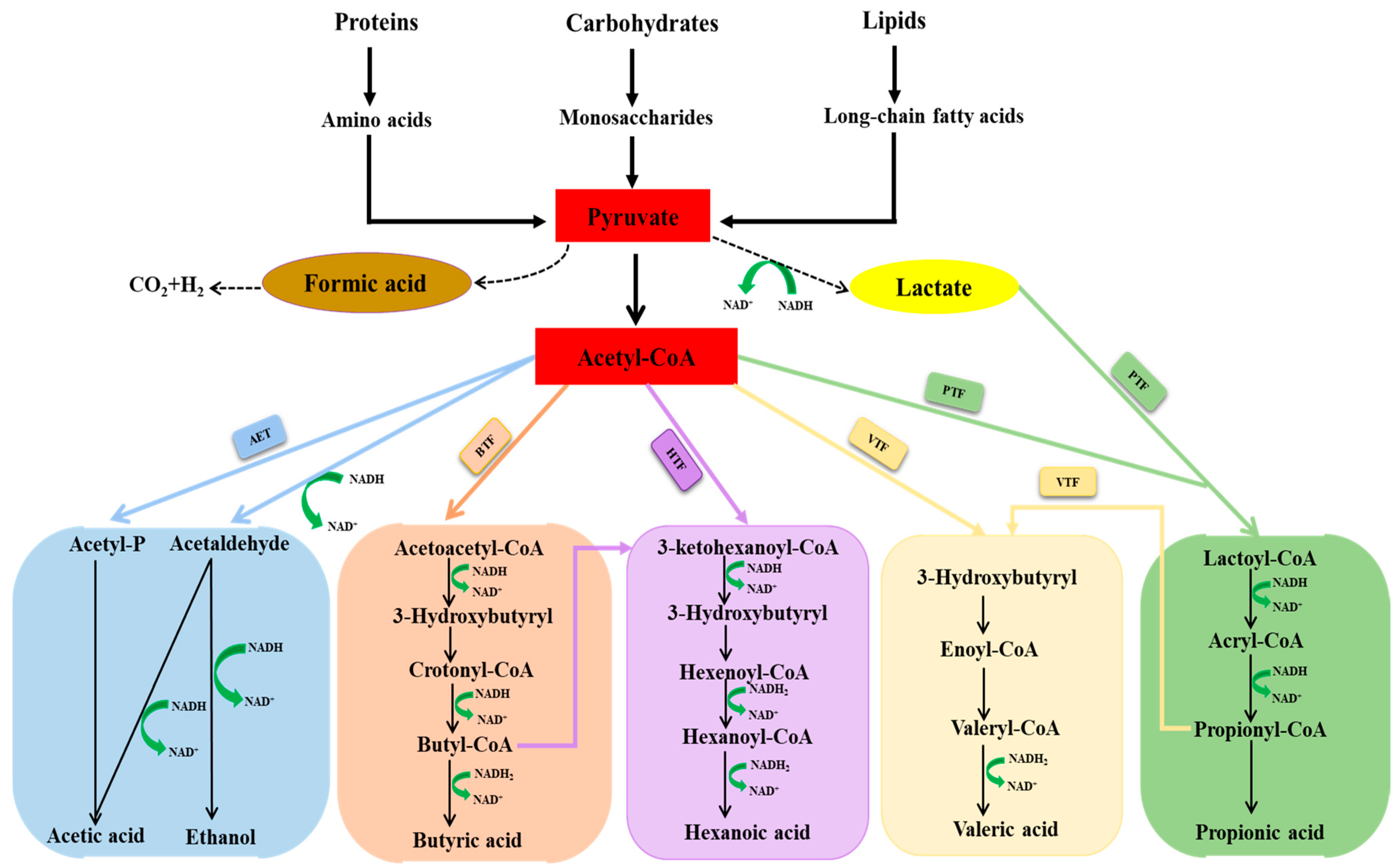
2.4. Metabolic Pathways in Acidogenic Fermentation for CA Production
3. Reactor Configurations Applied for Acidogenic Fermentation
3.1. Continuous Stirred Tank Reactor (CSTR)
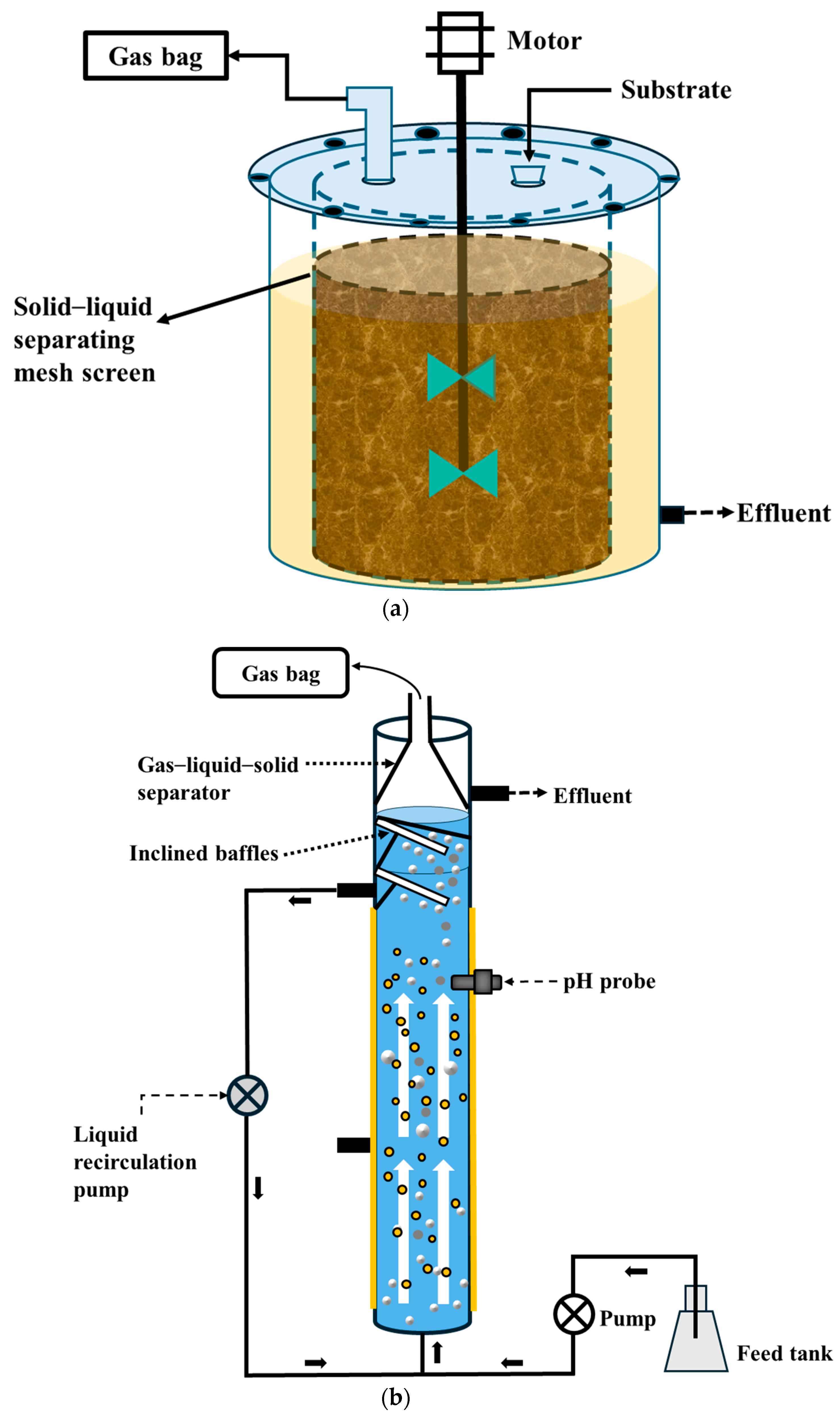
- Microbial biomass washout in conventional CSTR can be mitigated by incorporating a cylindrical perforated mesh screen inside the reactor to enable solid–liquid separation. Karthikeyan et al. [60] developed a novel reactor configuration termed the solid–liquid separating CSTR (SLR-CSTR), in which a non-corrosive cylindrical perforated mesh screen (diameter: 6.5 cm, height: 28 cm, and pore size: 0.5 mm) was installed inside the reactor as a solid–liquid separator, as shown in Figure 3a. The reactor was loaded with carbohydrate- and protein-rich food waste (2 kg), anaerobic sludge (0.5 L), and water (1 L), and continuously mixed using a mechanical stirrer. With this reactor configuration, they successfully retained active biomass and unhydrolyzed solids, while achieving the maximum CA production of 25 g COD/L corresponding to an acidification degree of 89%. As a result, this design allowed for solids retention time (SRT) and hydraulic retention time (HRT) to be decoupled and prevented biomass washout.
- In CSTR, mixing is essential to maintain uniform substrate distribution, prevent solid settling, and increase contact between microbes and substrates [61,62]. The reactor can be operated under two main mixing modes: continuous (at low or high mixing intensity) and intermittent. Low mixing intensity can cause accumulation of solids at the bottom of the reactor, formation of dead zones, and reduce mass transfer. On the other hand, high mixing intensity can generate strong shear forces that damage bacterial flocs, cause foam and scum formation, and increase energy consumption [58,61]. Both of these mixing intensities negatively affect hydrolysis and acidogenesis, ultimately leading to reactor failure. Intermittent mixing refers to a mode in which mixing is alternately turned on and off according to predetermined time intervals, ranging from seconds to hours [63]. Therefore, optimizing mixing mode is vital to maintain homogeneity, improve mass transfer, and minimize energy demand and operating costs. In this context, intermittent mixing is a promising approach to address these imitations and has already shown its effectiveness in improving biogas production in various studies [64,65,66]. Recently, Ma et al. [41] applied an intermittent mixing strategy in a CSTR fed with protein-rich sewage sludge and achieved the highest CA production of 3.88 g COD/L, which was significantly higher (p < 0.05) than that obtained under continuous mixing. Furthermore, intermittent mixing promoted the conversion of complex dissolved organic matter into CA and increased the relative abundance of Tissierella and Bacillus, both of which contributed to higher CA production.

| Reactor Configuration | Substrate | Main Component of Substrate | Inoculum Source | Mode | Working Volume (L) | Temperature (°C) | Fermentation Time (d) | Organic Loading Rate | Mixing Speed (rpm) | pH | SCOD (g/L) | CA (g COD/L) | CA Composition | Main CA Produced | References |
|---|---|---|---|---|---|---|---|---|---|---|---|---|---|---|---|
| CSTR | Food waste | Carbohydrate & protein | Anaerobic sludge from WWTP and biogas plant | Semi-continuous | 1 | 25 | 110 | 3 g VS/L.d | ng | 6 | 86.2 | 27.3 | Acetic acid: 3% | Butyric acid | [53] |
| Propionic acid: 2% | |||||||||||||||
| Butyric acid: 58% | |||||||||||||||
| Valeric acid: 2% | |||||||||||||||
| Caproic acid: 35% | |||||||||||||||
| WAS & food waste | Protein & carbohydrate | Activated sludge from WWTP | Semi-continuous | 4 | 55 | 28 | 8 g VS/L.d | ng | 4.5–6 | 12 | 6 | Acetic acid: 75% | Acetic | [52] | |
| Propionic acid: 8% | |||||||||||||||
| Butyric acid: 17% | |||||||||||||||
| Food waste | Carbohydrate & protein | Digested sludge from biogas plant | Semi-continuous | 10 | 37 | 40 | 15 g VS/L.d | 80 | 6 | ng | 50.05 | ng | ng | [56] | |
| Pretreated macroalgae Ulva | Carbohydrate & protein | Anaerobic granular sludge from UASB reactor | Fed-batch | 1.2 | 37 | 32 | 40 g VS/L | ng | 7 | ng | 2.17 | Acetic acid: 50% | Acetic and butyric | [67] | |
| Propionic acid: 5% | |||||||||||||||
| Butyric acid: 45% | |||||||||||||||
| Food waste | Carbohydrate & protein | Digested sludge from biogas plant | Semi-continuous | 1 | 35 | 150 | 45 g VS/L.d | ng | Uncontrolled | ng | 22.4 | Acetic acid: 5% | - | [57] | |
| Propionic acid: 8% | |||||||||||||||
| * Lactic acid: 38% | |||||||||||||||
| * Ethanol: 49% | |||||||||||||||
| Kitchen waste | Carbohydrate & protein | Digested sludge from WWTP | Semi-continuous | 8 | 37 | 30 | 5 g VS/L.d | 100 | 7 | ng | 22.3 | Acetic acid: 35% | Acetic and butyric | [62] | |
| Propionic acid: 21% | |||||||||||||||
| Butyric acid: 24% | |||||||||||||||
| Valeric acid: 3% | |||||||||||||||
| Caproic acid: 17% | |||||||||||||||
| Potato peel waste | Carbohydrate | AD sludge | Batch | 5 | 37 | 6 | 71.5 g VS/L | 300 | Uncontrolled | 24 | 18 | Acetic acid: 37% | Butyric and acetic | [51] | |
| Propionic acid: 2% | |||||||||||||||
| Butyric acid: 61% | |||||||||||||||
| Potato peel waste | Carbohydrate | AD sludge | Batch | 5 | 37 | 6 | 91.3 g VS/L | 300 | Uncontrolled | 32 | 22 | Acetic acid: 41% | Butyric and acetic | [51] | |
| Propionic acid: 9% | |||||||||||||||
| Butyric acid: 50% | |||||||||||||||
| Food waste & sewage sludge | Carbohydrate & protein | Sewage sludge from WWTP | Semi-continuous | 200 | 55 | 60 | 4.8 kg VS/m3.d | ng | 5.2 | 23 | 17 | Acetic acid: 15% | Butyric | [54] | |
| Propionic acid: 7% | |||||||||||||||
| Butyric acid: 67% | |||||||||||||||
| Valeric acid: 5% | |||||||||||||||
| Caproic acid: 6% | |||||||||||||||
| Sewage sludge & municipal waste | Protein & carbohydrate | Anaerobic digested sludge from WWTP | Continuous | 80 | 55 | 30 | 13.66 kg VS/m3.d | ng | 9 | ng | 14.25 | Acetic acid: 57% | Acetic and butyric | [44] | |
| Propionic acid: 12% | |||||||||||||||
| Butyric acid: 23% | |||||||||||||||
| Valeric acid: 8% | |||||||||||||||
| UASB | Cheese whey | Carbohydrate | Acidogenic sludge from brewery WWTP | Continuous | 1 | 30 | 60 | 15.1 g COD/L.d | 0.16 d | 5 | ng | 3.66 | Acetic acid: 47% | Acetic | [68] |
| Propionic acid: 24% | |||||||||||||||
| Butyric acid: 12% | |||||||||||||||
| Valeric acid: 17% | |||||||||||||||
| Pretreated waste-activated sludge liquid | Protein | Anaerobic granular sludge from UASB reactor | Continuous | 5 | 37 | 60 | 8 kg COD/m3.d | 12 d | Uncontrolled | ng | 6.54 | Acetic acid: 62% | Acetic | [69] | |
| Propionic acid: 21% | |||||||||||||||
| Butyric acid: 17% | |||||||||||||||
| Kraft foul condensate | Carbohydrate | Anaerobic granular sludge from UASB reactor | Continuous | 0.5 | 55 | 25 | 8.6 g COD/L.d | ng | Uncontrolled | ng | 3.14 | Acetic acid: 54% | Acetic | [46] | |
| Propionic acid: 13% | |||||||||||||||
| Butyric acid: 22% | |||||||||||||||
| Valeric acid: 11% | |||||||||||||||
| AnMBR | Apple pomace & potato protein liquor | Protein & carbohydrate | Rumen fluid | Semi-continuous | 350 | 37 | 105 | 2 g VS/L.d | ng | Self-sustained 6–6.9 | ng | 10 | Acetic acid: 21% | Butyric | [70] |
| Propionic acid: 2% | |||||||||||||||
| Butyric acid: 42% | |||||||||||||||
| Valeric acid: 3% | |||||||||||||||
| Caproic acid: 32% | |||||||||||||||
| Kitchen waste slurry | Carbohydrate & protein | Digested sludge from biogas plant | Semi-continuous | 45 | 38 | 120 | 15 kg COD/m3.d | ng | 5 | ng | 34.4 | Acetic acid: 38% | Butyric and acetic | [71] | |
| Propionic acid: 5% | |||||||||||||||
| Butyric acid: 42% | |||||||||||||||
| Valeric acid: 5% | |||||||||||||||
| Caproic acid: 10% | |||||||||||||||
| Kitchen waste slurry | Carbohydrate & protein | Digested sludge from biogas plant | Semi-continuous | 45 | 38 | 120 | 15 kg COD/m3.d | ng | 6 | ng | 42 | Acetic acid: 50% | Acetic | [71] | |
| Propionic acid: 20% | |||||||||||||||
| Butyric acid: 15% | |||||||||||||||
| Valeric acid: 3% | |||||||||||||||
| Caproic acid: 12% | |||||||||||||||
| Cow manure | Carbohydrate & protein | Digested sludge from biogas plant | Semi-continuous | 2 | 37 | 114 | 4.7 g VS/L.d | ng | Uncontrolled | 17.5 | 6.93 | Acetic acid: 65% | Acetic | [72] | |
| Propionic acid: 4% | |||||||||||||||
| Butyric acid: 16% | |||||||||||||||
| Valeric acid: 13% | |||||||||||||||
| Caproic acid: 2% | |||||||||||||||
| Excess sewage sludge | Protein | Granular sludge from UASB reactor | Semi-continuous | 2 | 37 | 30 | 3 g VS/L.d | 100 | 12 | ng | 9.8 | Acetic acid: 54% | Acetic | [73] | |
| Propionic acid: 15% | |||||||||||||||
| Butyric acid: 15% | |||||||||||||||
| Valeric acid: 16% | |||||||||||||||
| Kitchen waste slurry | Carbohydrate & protein | Digested sludge from biogas plant | Semi-continuous | 50 | 38 | 120 | 12.7 kg COD/m3.d | 1 c | 9 | ng | 60.3 | Acetic acid: 60% | Acetic | [74] | |
| Propionic acid: 24% | |||||||||||||||
| Butyric acid: 13% | |||||||||||||||
| Valeric acid: 3% | |||||||||||||||
| Food waste | Carbohydrate, protein & lipid | Digested sludge from AD reactor | Semi-continuous | 2 | 37 | 34 | 10 g VS/L.d | 150 | 5.5 | ng | 37 | Acetic acid: 26% | Butyric | [48] | |
| Propionic acid: 9% | |||||||||||||||
| Butyric acid: 37% | |||||||||||||||
| Valeric acid: 15% | |||||||||||||||
| Caproic acid: 13% | |||||||||||||||
| LBR | Food waste | Carbohydrate | Digested sludge from biogas plant | Semi-continuous | 4 | 35 | 45 | 22 g VS/L.d | ng | 7 | ng | 11.8 | Acetic acid: 34% | Mixed CAs (near equal proportions) | [75] |
| Propionic acid: 34% | |||||||||||||||
| Butyric acid: 32% | |||||||||||||||
| Food waste | Carbohydrate & protein | AD sludge | Batch | 10 | 50 | 14 | 17 g VS/L | 0.37 d | 7 | 82 | 36.5 | Acetic acid: 27% | Butyric | [50] | |
| Propionic acid: 8% | |||||||||||||||
| Butyric acid: 57% | |||||||||||||||
| Valeric acid: 4% | |||||||||||||||
| Caproic acid: 4% | |||||||||||||||
| Food waste | Carbohydrate & protein | AD sludge | Batch | 7.5 | 22 | 14 | 21.7 g VS/L | 72 d | 6 | 33.33 | 28 | Acetic acid: 25% | Butyric | [76] | |
| Propionic acid: 4% | |||||||||||||||
| Butyric acid: 71% | |||||||||||||||
| Vegetable waste | Carbohydrate | Anaerobic sludge from WWTP | Batch | 5 | 35 | 10 | 6.7 g VS/L | ng | 8 | 29.1 | 27.91 | Acetic acid: 55% | Acetic | [20] | |
| Propionic acid: 3% | |||||||||||||||
| Butyric acid: 34% | |||||||||||||||
| Valeric acid: 8% | |||||||||||||||
| Food waste | Carbohydrate & protein | Anaerobic sludge from WWTP | Batch | 12 | 22 | 14 | 17.3 g VS/L | 72 d | 7 | ng | 18 | Acetic acid: 35% | Butyric | [77] | |
| Propionic acid: 16% | |||||||||||||||
| Butyric acid: 46% | |||||||||||||||
| Valeric acid: 3% | |||||||||||||||
| Food waste | Carbohydrate & protein | Anaerobic sludge from WWTP | Batch | 7.5 | 22 | 14 | 21.7 g VS/L | 72 d | 6 | 33 | 24 | Acetic acid: 29% | Butyric | [78] | |
| Propionic acid: 4% | |||||||||||||||
| Butyric acid: 67% | |||||||||||||||
| Food waste | Carbohydrate & protein | Anaerobic sludge from WWTP | Batch | 7.5 | 22 | 14 | 21.7 g VS/L | 72 d | 8 | 35 | 27 | Acetic acid: 52% | Acetic | [78] | |
| Propionic acid: 18% | |||||||||||||||
| Butyric acid: 30% |
3.2. Up-Flow Anaerobic Sludge Blanket (UASB) Reactor
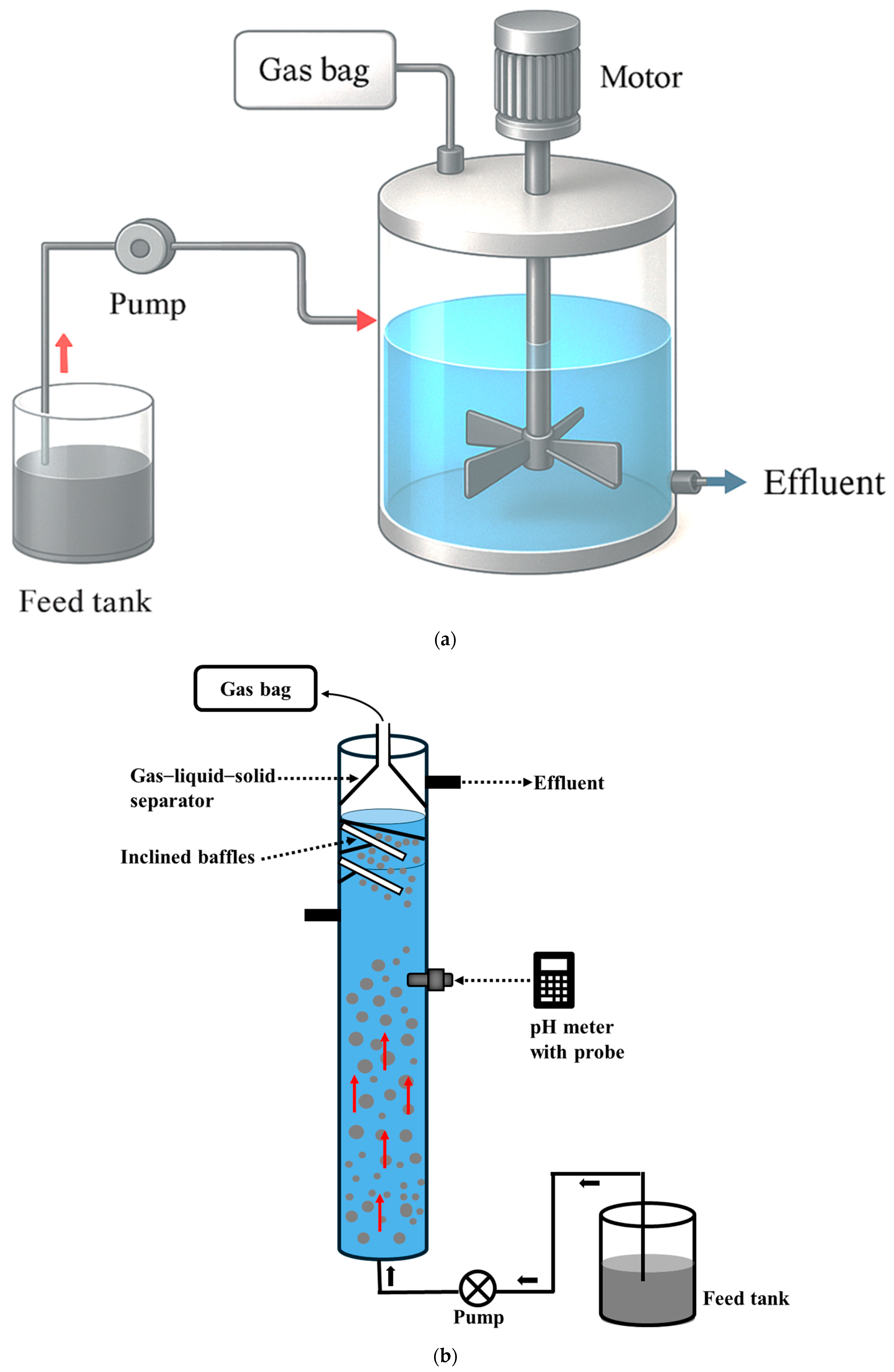
- Increasing up-flow velocity in the anaerobic sludge bed reactor can effectively address several limitations associated with the conventional UASB reactor [80]. Operating the reactor at higher hydraulic velocity improves hydrodynamic mixing and increases contact between biomass and wastewater, resulting in better substrate utilization [80,81]. For instance, Archilla et al. [82] operated an expanded granular sludge bed (EGSB) reactor (as shown in Figure 3b), which is an advanced configuration derived from the UASB concept, using leachate derived from the thermally diluted acid hydrolysis of carbohydrate-abundant BSG and reported the highest CA production of 120 mmol/L at 24 HRT, corresponding to an acidification level of 83%.
- Incorporating packing materials into the UASB reactor can improve process performance by retaining microbial biomass and providing a larger surface area for biofilm development [80]. This improves contact between biomass and substrate, thereby accelerating substrate degradation and increasing CA production. Various packing materials used for biogas production and CO2 biomethanation have shown promising results. These materials can be categorized into three main categories: (i) natural packing materials, such as vermiculite shales, loofah, and crushed clay; (ii) commercial packing materials, such as Raschig rings, Hel-X, polyurethane foam, glass rings, and Hiflow rings; and (iii) carbonaceous materials, such as biochar, pyrochar, magnetite, and graphene [58,81]. For instance, Kougias et al. [83] investigated the effect of packing materials in up-flow reactors fed with biogas for (methane) CH4 upgrading and found that the reactor containing packing material achieved an 81% CH4 content, compared to only 60% CH4 content in the reactor without packing material. Similarly, Wambugu et al. [84] operated a biochar-amended UASB reactor treating diluted food waste and reported a 77% increase in biogas yield compared to a reactor operated without the biochar addition. However, the use of these packing materials in a UASB reactor, especially for CA production, has yet to be reported. Therefore, future research focused on investigating the feasibility and effectiveness of incorporating packing materials in the UASB reactor for CA production is worth exploring.
- The accumulation of CA production in the reactor is detrimental to microorganisms because undissociated CAs can penetrate the cell membrane and disrupt microbial processes. Furthermore, the CA accumulation leads to a drop in pH, which inhibits intracellular enzyme activities and consequently impedes acidogenic fermentation [85]. Therefore, the timely extraction of CAs from the fermentation broth is essential to maintain stable reactor performance and enhance CA production [4,85]. Various conventional methods for CA recovery have been studied, including crystallization, precipitation, distillation, and solvent extraction [4,86]. However, these methods are energy-intensive and expensive, accounting for around 35% of the total process cost [47,86]. As a result, there is growing interest in in situ CA recovery methods, such as electrodialysis, gas stripping, membrane separation, and electrochemical cells systems. These recovery methods enable continuous CA separation directly from the reactor without interrupting the fermentation process, unlike conventional methods where CAs are first produced and then recovered [4,86]. Recently, Castilla-Archilla et al. [47] demonstrated the successful coupling of electrochemical cells with a UASB reactor for in-situ CA recovery from fermentation broth treating carbohydrate-rich glucose and achieved the highest CA recovery of 29.09 g COD/L.
3.3. Anaerobic Membrane Bioreactor (AnMBR)
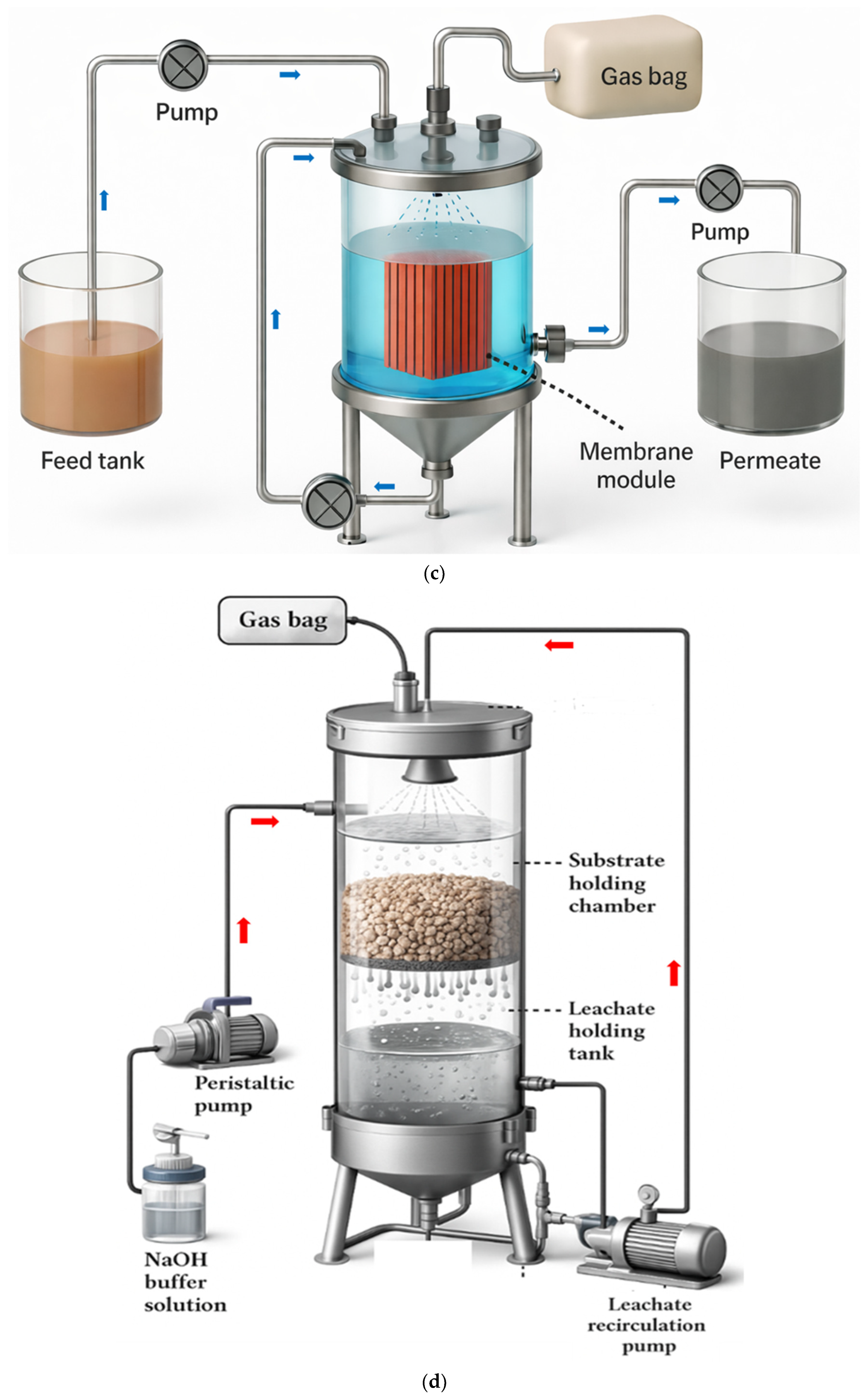
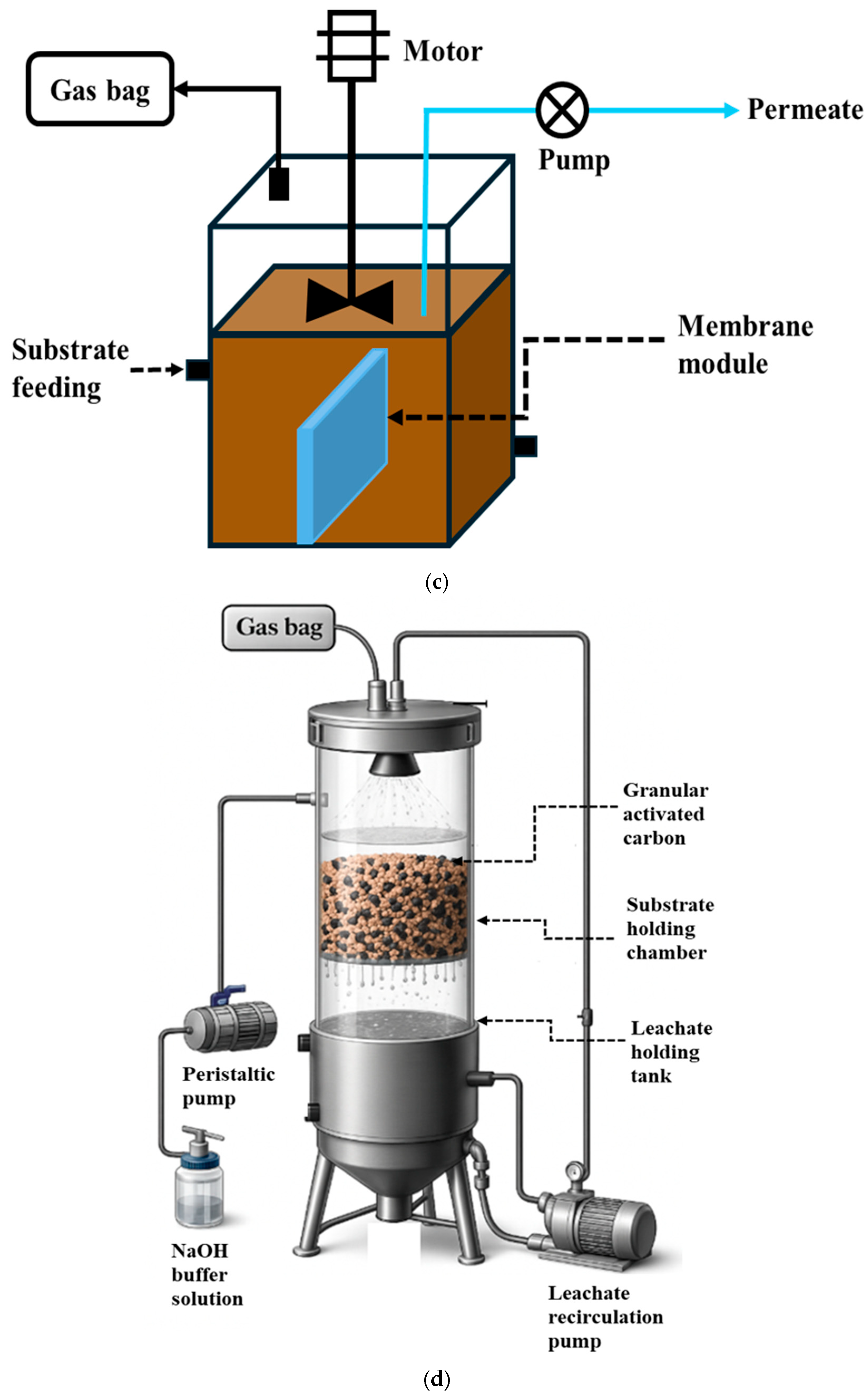
- The anaerobic dynamic membrane bioreactor (AnDMBR) is an anaerobic membrane system that operates on a similar principle to conventional AnMBR, but it incorporates the in-situ formation of a biological cake layer, referred to as the dynamic membrane, on the surface of a support material, as shown in Figure 3c. This dynamic membrane provides effective filtration and addresses several limitations associated with AnMBR [87,88]. Materials such as stainless steel meshes and fabrics with macropores are commonly used as support surfaces to facilitate the formation of the dynamic membrane [87,89]. Once the dynamic membrane becomes fully fouled, the cake layer can be easily removed, cleaned, and replaced by a newly formed layer [87]. Furthermore, dynamic membranes have a smaller pore size than the supporting material, thereby enhancing filtration performance and producing permeate with total suspended solids concentrations below 10 mg/L [89]. Lower operational cost, higher membrane flux, and ease of fouling control are the major advantages of the AnDMBR [89,90]. Liu et al. [91] utilized the supernatant derived from thermally pretreated protein-abundant sewage sludge in an AnDMBR and achieved a maximum CA yield of 380 g CODCA/kgVSadded and a CA production of 60 g COD/L. The dynamic membrane remained stable for 70 days, during which the membrane flux increased from 6.25 to 25 L/m2.d. Likewise, Fonoll et al. [92] operated an AnDMBR fed with carbohydrate- and protein-rich food waste for 110 days without any disruption and achieved a CA yield of 550 g CODCA/kgVSadded along with removal rates of 58.9% and 69% for neutral detergent fiber and acid detergent fiber, respectively, present in the food waste.
- Reduction in operational costs and improvement in reactor performance can be achieved by integrating AnMBR with a forward osmosis (FO) membrane [87]. FO allows for water to pass through a semi-permeable membrane from a low-osmotic-pressure feed solution to a high-osmotic-pressure draw solution [87]. Integrating FO with AnMBR significantly reduces energy consumption by eliminating the need for energy-intensive filtration processes compared to conventional AnMBR [87]. Chen et al. [93] operated an AnMBR coupled with a two-stage FO process to simultaneously recover organic matter in the form of CAs, nitrogen, and phosphorus from low-strength protein-dominant municipal wastewater. In this system, the first FO membrane was used to concentrate municipal wastewater, which was then fed into the AnMBR for CA production. Subsequently, the AnMBR effluent was further concentrated using a second FO membrane to recover ammonia nitrogen (NH4+-N) and total phosphorus (TP) through the struvite precipitation method, while residual CAs were directly recovered. With this reactor configuration, the first FO membrane concentrated the municipal wastewater to 1/10th of the initial volume, increasing the concentrations of COD, NH4+-N, and TP to 2.80 g/L, 0.20 g/L, and 0.03 g/L, respectively. Feeding this concentrated wastewater into the AnMBR resulted in a CA production of 1.78 g COD/L, primarily consisting of acetic and propionic acids. The subsequent FO stage further concentrated NH4+-N and TP in the AnMBR effluent to 0.17 g/L and 0.04 g/L, respectively. The struvite precipitation method led to recovery efficiencies of 94.53% for NH4+-N, and 98.59% for TP, while the CA concentration of 2.9 g COD/L was obtained from the residual solution. Although the CA concentration was relatively lower due to the use of low-strength municipal wastewater, this reactor configuration demonstrates a promising approach for the simultaneous recovery of organic matter (in the form of CAs) and nutrients. Therefore, further research is needed to enhance the overall resource recovery efficiency from the integrated system.
3.4. Leachate Bed Reactor (LBR)
- Substrate bed clogging in the LBR can be mitigated by adding materials that help maintain bed permeability. These include organic materials (e.g., woodchips and sawdust), inorganic materials (e.g., plastic particles and plastic hollow spheres), and carbonaceous materials (e.g., granular activated carbon, GAC) in the substrate holding chamber [43,94]. Recently, Radadiya et al. [43] operated an LBR fed with carbohydrate- and protein-abundant food waste supplemented with GAC (Figure 3d) at a loading of 0.51 g GAC/gVSfood waste and achieved a VFA yield of 507 g CODCA/kgVSadded, which was 35% higher than that of an LBR without GAC loading (375 g CODCA/kgVSadded).
- Theoretically, gas–liquid mass transfer limitations in the LBR can be alleviated by increasing the gas–liquid mass transfer coefficient and mass transfer driving force, both of which are influenced by factors such as stirring and pressure [58]. Since stirring is absent in the LBR, controlling pressure becomes an effective way to overcome mass transfer limitations. The LBR can be operated under pressurized conditions by applying either exogenous pressure (e.g., flushing headspace with external gases) or endogenous pressure (e.g., autogenerated pressure resulting from the accumulation of H2 and CO2 produced during acidogenic fermentation) [42,95,96]. Various previous studies reported 24–61% improvement in CA production when the reactor was operated under pressurized conditions during acidogenic fermentation [96,97,98]. Recently, Luo et al. [99] investigated the effect of autogenerated pressure in an LBR fed with carbohydrate- and protein-rich food waste and reported a CA yield of 407 g CODCA/kgVSadded, which was significantly higher (p < 0.05) than that of an LBR operated without autogenerated pressure (365 g CODCA/kgVSadded).
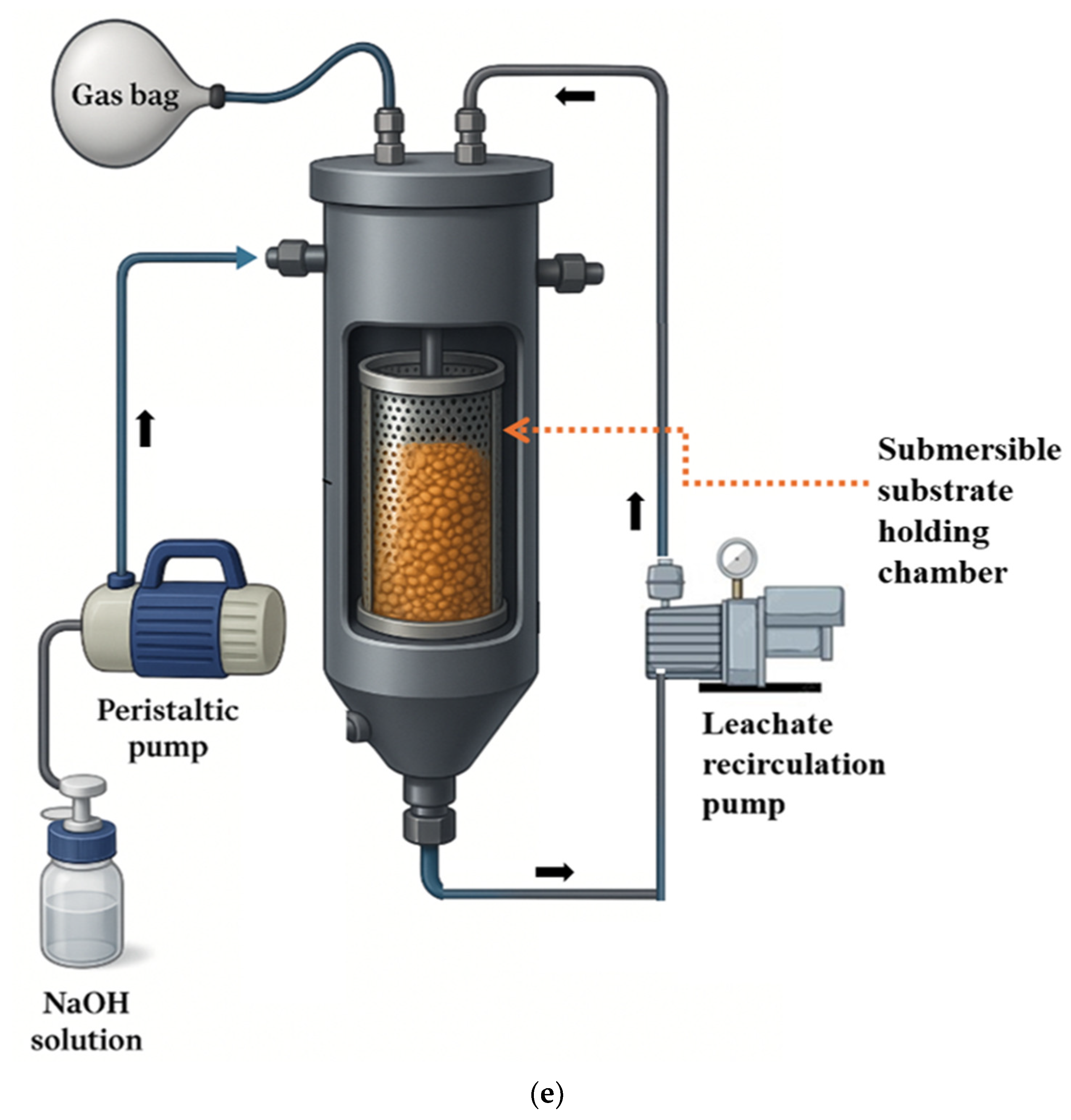
- Submerging the substrate holding chamber in the leachate, combined with intermittent leachate recirculation, can help overcome mass transfer limitations and substrate bed clogging in the LBR [59]. This configuration enhances contact between the substrate and microorganisms, improves diffusion of soluble organics and metabolites, and increases enzyme accessibility for substrate hydrolysis. Furthermore, the intermittent leachate recirculation maintains a uniform distribution of nutrients and prevents preferential flow channeling within the reactor [2]. Recently, Singh et al. [59] applied this approach (Figure 3e) and obtained a high hydrolysis yield of 628 g SCOD/kgVSadded and a CA yield of 517 g CODCA/kgVSadded from carbohydrate- and protein-rich food waste at a high volumetric organic loading of 55 gVS/Lreactor without any operational issues. These promising results indicate that future studies should explore the applicability of this strategy for the bioconversion of various organic wastes into CAs.
4. Inoculum Selection
4.1. Aerobic and Anaerobic Inocula
4.2. Enriched Inoculum
4.3. Rumen Microorganisms
5. Challenges and Future Perspectives
- Hydrolysis is the rate-limiting step in acidogenic fermentation because of the substrate’s rigid and complex structure [1]. The hydrolysis products are essential components needed for CA production. In this regard, various biological pretreatment methods, such as enzymatic, fungi, and bacterial, can be applied to improve substrate hydrolysis and CA production [1]. These biological pretreatments rely on the activity of microorganisms or enzymes under mild operational conditions to break down the complex structure of substrate without generating inhibitory compounds, thereby reducing energy demand and costs for downstream processing [1]. For example, X. Yang et al. [119] pre-treated carbohydrate- and protein-rich kitchen waste with an enzymatic cocktail (cellulase and hemicellulase) and obtained a maximum CA production of 50.73 g COD/L, which was 63% higher than that obtained from unpretreated kitchen waste. Future studies should focus on investigating the feasibility of applying these biological pretreatments to substrates rich in carbohydrates, proteins, and lipids to enhance hydrolysis and acidogenesis efficiency.
- Although several studies have reported that operational parameters such as pH, organic loading rate, and temperature affect acidogenesis, the influence of substrate composition has often been overlooked [2,4,9]. The substrate composition, mainly the proportions of carbohydrates, proteins, and lipids, strongly influences CA production and composition, in spite of the concurrent effects of operational parameters, as illustrated in Table 1 [8]. Therefore, future research should place greater emphasis on substrate composition by systematically characterizing and quantifying carbohydrate, protein, and lipid contents, elucidating associated metabolic pathways, and evaluating their impacts on hydrolysis and acidogenesis processes.
- Reactor configurations such as CSTR, UASB, AnMBR, and LBR have been extensively studied for acidogenic fermentation. Although various potential strategies have been proposed to address reactor-specific limitations and enhance CA production, their applicability remains mostly limited to the laboratory scale. Future research should focus on validating these strategies in pilot-scale studies and scaling them up for full-scale implementation. Furthermore, integrating different reactor configurations, such as LBR-AnMBR and CSTR-UASB, could provide synergistic benefits by enabling the treatment of various substrates, improving mass transfer, increasing substrate degradation, and enhancing CA production. Likewise, coupling acidogenic fermentation with in situ CA recovery techniques, such as electrodialysis, membrane separation, and electrochemical cell-assisted systems, could enable continuous CA production and removal, thereby maintaining stable reactor performance during long-term operation.
- Co-fermentation, which involves the simultaneous digestion of two or more substrates, has the potential to enhance CA production by providing additional carbon sources and essential nutrients for microbial growth [1,38]. For instance, Feng et al. [120] achieved a CA yield of 0.59 gSCOD/gVS from the co-fermentation of carbohydrate- and protein-abundant mushroom champost and sewage sludge, which was around 37% and 14% greater than fermentation of champost and sludge, respectively. However, further studies are required to determine the optimum substrate mixing ratio and identify suitable complementary substrates for co-fermentation.
- An efficient and robust acidogenic fermentation depends on the inoculum, as it contains functional hydrolytic and acidogenic bacteria [43,86]. An imbalance between these bacterial groups can hinder the fermentation processes, resulting in lower SCOD and CA production. In this context, employing enriched inocula that are functionally active and rapidly acclimatize to reactor operating conditions could be a promising strategy to improve hydrolysis and CA production within a shorter fermentation time [43]. The positive outcomes of the enriched inoculum have already been demonstrated in LBRs treating carbohydrate- and protein-dominant food waste at very high organic loading rates [43,59]. Thus, future research should investigate the use of enriched inoculum for treating various organic wastes in different reactor configurations and evaluate their performance in terms of hydrolysis and CA production. Similarly, rumen microorganisms represent an excellent source of hydrolytic bacteria for degrading recalcitrant components of lignocellulosic biomass. Most studies using rumen microbes for CA production have been conducted in AnMBR, but continuous operation remains limited, and the method is still in its infancy [113]. Hence, future research should focus on developing rumen-driven AnMBR for the treatment of diverse organic wastes to facilitate continuous CA production and removal.
6. Conclusions
Author Contributions
Funding
Institutional Review Board Statement
Informed Consent Statement
Data Availability Statement
Conflicts of Interest
References
- Thapa, A.; Basu, O.D.; Fei, X.; Venkiteshwaran, K.; Hussain, A. Biological Pretreatment of Organic Waste for Short-Chain Fatty Acids Production: State-of-the-Art, Advances, Challenges and Prospectives. Chem. Eng. J. 2024, 500, 157018. [Google Scholar] [CrossRef]
- Singh, V.; Ormeci, B.; Radadiya, P.; Ranjan Dhar, B.; Sangal, A.; Hussain, A. Leach Bed Reactors for Production of Short-Chain Fatty Acids: A Review of Critical Operating Parameters, Current Limitations and Challenges, and Prospects. Chem. Eng. J. 2023, 456, 141044. [Google Scholar] [CrossRef]
- Harirchi, S.; Wainaina, S.; Sar, T.; Nojoumi, S.A.; Parchami, M.; Parchami, M.; Varjani, S.; Khanal, S.K.; Wong, J.; Awasthi, M.K.; et al. Microbiological Insights into Anaerobic Digestion for Biogas, Hydrogen or Volatile Fatty Acids (VFAs): A Review. Bioengineered 2022, 13, 6521–6557. [Google Scholar] [CrossRef]
- Varghese, V.K.; Poddar, B.J.; Shah, M.P.; Purohit, H.J.; Khardenavis, A.A. A Comprehensive Review on Current Status and Future Perspectives of Microbial Volatile Fatty Acids Production as Platform Chemicals. Sci. Total Environ. 2022, 815, 152500. [Google Scholar] [CrossRef]
- Gomes, D.P.P.; Santos, T.; Motteran, F.; Kato, M.T.; Florencio, L.; Santos, S.M.; Menezes, O.; Gavazza, S. Biological Production of N-Caproic Acid by Different Anaerobic Inocula: Chain Elongation Performance, Kinetics, and Changes in Microbial Community Composition. Biomass Bioenergy 2025, 200, 108044. [Google Scholar] [CrossRef]
- Dong, W.; Yang, Y.; Liu, C.; Zhang, J.; Pan, J.; Luo, L.; Wu, G.; Awasthi, M.K.; Yan, B. Caproic Acid Production from Anaerobic Fermentation of Organic Waste—Pathways and Microbial Perspective. Renew. Sustain. Energy Rev. 2023, 175, 113181. [Google Scholar] [CrossRef]
- Agnihotri, S.; Yin, D.M.; Mahboubi, A.; Sapmaz, T.; Varjani, S.; Qiao, W.; Koseoglu-Imer, D.Y.; Taherzadeh, M.J. A Glimpse of the World of Volatile Fatty Acids Production and Application: A Review. Bioengineered 2022, 13, 1249–1275. [Google Scholar] [CrossRef]
- Vázquez-Fernández, A.; Suárez-Ojeda, M.E.; Carrera, J. Review about Bioproduction of Volatile Fatty Acids from Wastes and Wastewaters: Influence of Operating Conditions and Organic Composition of the Substrate. J. Environ. Chem. Eng. 2022, 10, 107917. [Google Scholar] [CrossRef]
- Ramos-Suarez, M.; Zhang, Y.; Outram, V. Current Perspectives on Acidogenic Fermentation to Produce Volatile Fatty Acids from Waste. Rev. Environ. Sci. Biotechnol. 2021, 20, 439–478. [Google Scholar] [CrossRef]
- Atasoy, M.; Eyice, O.; Schnürer, A.; Cetecioglu, Z. Volatile Fatty Acids Production via Mixed Culture Fermentation: Revealing the Link between PH, Inoculum Type and Bacterial Composition. Bioresour. Technol. 2019, 292, 121889. [Google Scholar] [CrossRef]
- Bengtsson, S.; Hallquist, J.; Werker, A.; Welander, T. Acidogenic Fermentation of Industrial Wastewaters: Effects of Chemostat Retention Time and PH on Volatile Fatty Acids Production. Biochem. Eng. J. 2008, 40, 492–499. [Google Scholar] [CrossRef]
- Jankowska, E.; Chwialkowska, J.; Stodolny, M.; Oleskowicz-Popiel, P. Volatile Fatty Acids Production during Mixed Culture Fermentation—The Impact of Substrate Complexity and PH. Chem. Eng. J. 2017, 326, 901–910. [Google Scholar] [CrossRef]
- Zhang, Q.; Lu, Y.; Zhou, X.; Wang, X.; Zhu, J. Effect of Different Vegetable Wastes on the Performance of Volatile Fatty Acids Production by Anaerobic Fermentation. Sci. Total Environ. 2020, 748, 142390. [Google Scholar] [CrossRef]
- Sun, J.; Zhang, L.; Loh, K.C. Review and Perspectives of Enhanced Volatile Fatty Acids Production from Acidogenic Fermentation of Lignocellulosic Biomass Wastes. Bioresour. Bioprocess. 2021, 8, 68. [Google Scholar] [CrossRef]
- Guarda, E.C.; Oliveira, A.C.; Antunes, S.; Freitas, F.; Castro, P.M.L.; Duque, A.F.; Reis, M.A.M. A Two-Stage Process for Conversion of Brewer’s Spent Grain into Volatile Fatty Acids through Acidogenic Fermentation. Appl. Sci. 2021, 11, 3222. [Google Scholar] [CrossRef]
- Castilla-Archilla, J.; Papirio, S.; Lens, P.N.L. Two Step Process for Volatile Fatty Acid Production from Brewery Spent Grain: Hydrolysis and Direct Acidogenic Fermentation Using Anaerobic Granular Sludge. Process Biochem. 2021, 100, 272–283. [Google Scholar] [CrossRef]
- Ribau Teixeira, M.; Guarda, E.C.; Freitas, E.B.; Galinha, C.F.; Duque, A.F.; Reis, M.A.M. Valorization of Raw Brewers’ Spent Grain through the Production of Volatile Fatty Acids. New Biotechnol. 2020, 57, 4–10. [Google Scholar] [CrossRef]
- Murali, N.; Fernandez, S.; Ahring, B.K. Fermentation of Wet-Exploded Corn Stover for the Production of Volatile Fatty Acids. Bioresour. Technol. 2017, 227, 197–204. [Google Scholar] [CrossRef]
- Song, X.; Wachemo, A.C.; Zhang, L.; Bai, T.; Li, X.; Zuo, X.; Yuan, H. Effect of Hydrothermal Pretreatment Severity on the Pretreatment Characteristics and Anaerobic Digestion Performance of Corn Stover. Bioresour. Technol. 2019, 289, 121646. [Google Scholar] [CrossRef]
- Li, Y.; Zhang, X.; Xu, H.; Mu, H.; Hua, D.; Jin, F.; Meng, G. Acidogenic Properties of Carbohydrate-Rich Wasted Potato and Microbial Community Analysis: Effect of PH. J. Biosci. Bioeng. 2019, 128, 50–55. [Google Scholar] [CrossRef] [PubMed]
- Liang, J.; Fang, W.; Chang, J.; Zhang, G.; Ma, W.; Nabi, M.; Zubair, M.; Zhang, R.; Chen, L.; Huang, J.; et al. Long-Term Rumen Microorganism Fermentation of Corn Stover in Vitro for Volatile Fatty Acid Production. Bioresour. Technol. 2022, 358, 127447. [Google Scholar] [CrossRef]
- Nguyen, A.Q.; Nguyen, L.N.; Johir, M.A.H.; Ngo, H.H.; Chaves, A.V.; Nghiem, L.D. Derivation of Volatile Fatty Acid from Crop Residues Digestion Using a Rumen Membrane Bioreactor: A Feasibility Study. Bioresour. Technol. 2020, 312, 123571. [Google Scholar] [CrossRef] [PubMed]
- Garcia-Aguirre, J.; Aymerich, E.; González-Mtnez. de Goñi, J.; Esteban-Gutiérrez, M. Selective VFA Production Potential from Organic Waste Streams: Assessing Temperature and PH Influence. Bioresour. Technol. 2017, 244, 1081–1088. [Google Scholar] [CrossRef] [PubMed]
- Bermúdez-Penabad, N.; Kennes, C.; Veiga, M.C. Anaerobic Digestion of Tuna Waste for the Production of Volatile Fatty Acids. Waste Manag. 2017, 68, 96–102. [Google Scholar] [CrossRef] [PubMed]
- Shen, D.; Yin, J.; Yu, X.; Wang, M.; Long, Y.; Shentu, J.; Chen, T. Acidogenic Fermentation Characteristics of Different Types of Protein-Rich Substrates in Food Waste to Produce Volatile Fatty Acids. Bioresour. Technol. 2017, 227, 125–132. [Google Scholar] [CrossRef]
- Cabrera, F.; Serrano, A.; Torres, Á.; Rodriguez-Gutierrez, G.; Jeison, D.; Fermoso, F.G. The Accumulation of Volatile Fatty Acids and Phenols through a PH-Controlled Fermentation of Olive Mill Solid Waste. Sci. Total Environ. 2019, 657, 1501–1507. [Google Scholar] [CrossRef]
- Yu, H.Q.; Fang, H.H.P. Acidogenesis of Gelatin-Rich Wastewater in an Upflow Anaerobic Reactor: Influence of PH and Temperature. Water Res. 2003, 37, 55–66. [Google Scholar] [CrossRef]
- Beccari, M.; Bertin, L.; Dionisi, D.; Fava, F.; Lampis, S.; Majone, M.; Valentino, F.; Vallini, G.; Villano, M. Exploiting Olive Oil Mill Effluents as a Renewable Resource for Production of Biodegradable Polymers through a Combined Anaerobic-Aerobic Process. J. Chem. Technol. Biotechnol. 2009, 84, 901–908. [Google Scholar] [CrossRef]
- Dionisi, D.; Carucci, G.; Petrangeli Papini, M.; Riccardi, C.; Majone, M.; Carrasco, F. Olive Oil Mill Effluents as a Feedstock for Production of Biodegradable Polymers. Water Res. 2005, 39, 2076–2084. [Google Scholar] [CrossRef]
- Duong, T.H.; Grolle, K.; Nga, T.T.V.; Zeeman, G.; Temmink, H.; Van Eekert, M. Protein Hydrolysis and Fermentation under Methanogenic and Acidifying Conditions. Biotechnol. Biofuels 2019, 12, 254. [Google Scholar] [CrossRef]
- Wan, J.; Zhang, L.; Jia, B.; Yang, B.; Luo, Z.; Yang, J.; Boguta, P.; Su, X. Effects of Enzymes on Organic Matter Conversion in Anaerobic Fermentation of Sludge to Produce Volatile Fatty Acids. Bioresour. Technol. 2022, 366, 128227. [Google Scholar] [CrossRef]
- Yin, B.; Liu, H.; Wang, Y.; Bai, J.; Liu, H.; Fu, B. Improving Volatile Fatty Acids Production by Exploiting the Residual Substrates in Post-Fermented Sludge: Protease Catalysis of Refractory Protein. Bioresour. Technol. 2016, 203, 124–131. [Google Scholar] [CrossRef] [PubMed]
- Pang, H.; Pan, X.; Li, L.; He, J.; Zheng, Y.; Qu, F.; Ma, Y.; Cui, B.; Nan, J.; Liu, Y. An Innovative Alkaline Protease-Based Pretreatment Approach for Enhanced Short-Chain Fatty Acids Production via a Short-Term Anaerobic Fermentation of Waste Activated Sludge. Bioresour. Technol. 2020, 312, 123397. [Google Scholar] [CrossRef]
- Liu, G.; Li, X.; Zhang, R.; Ma, X.; Xie, H. Enhancing the Decomposition and Volatile Fatty Acids Production of Excess Sludge: Synergistic Pretreatment by Endogenous Lysozyme and Rhamnolipid. Fuel 2022, 323, 124233. [Google Scholar] [CrossRef]
- Pan, X.; Zou, X.; He, J.; Pang, H.; Zhang, P.; Zhong, Y.; Ding, J. Enhancing Short-Chain Fatty Acids Recovery through Anaerobic Fermentation of Waste Activated Sludge with Cation Exchange Resin Assisted Lysozyme Pretreatment: Performance and Mechanism. Sep. Purif. Technol. 2023, 310, 123231. [Google Scholar] [CrossRef]
- Saha, S.; Jeon, B.H.; Kurade, M.B.; Chatterjee, P.K.; Chang, S.W.; Markkandan, K.; Salama, E.S.; Govindwar, S.P.; Roh, H.S. Microbial Acclimatization to Lipidic-Waste Facilitates the Efficacy of Acidogenic Fermentation. Chem. Eng. J. 2019, 358, 188–196. [Google Scholar] [CrossRef]
- Alibardi, L.; Cossu, R. Effects of Carbohydrate, Protein and Lipid Content of Organic Waste on Hydrogen Production and Fermentation Products. Waste Manag. 2016, 47, 69–77. [Google Scholar] [CrossRef] [PubMed]
- Wang, Z.; Li, X.; Liu, H.; Zhou, T.; Qin, Z.; Mou, J.; Sun, J.; Huang, S.; Chaves, A.V.; Gao, L.; et al. Bioproduction and Applications of Short-Chain Fatty Acids from Secondary Sludge Anaerobic Fermentation: A Critical Review. Renew. Sustain. Energy Rev. 2023, 183, 113502. [Google Scholar] [CrossRef]
- Zhang, X.; Wang, Y.; Jiao, P.; Zhang, M.; Deng, Y.; Jiang, C.; Liu, X.W.; Lou, L.; Li, Y.; Zhang, X.X.; et al. Microbiome-Functionality in Anaerobic Digesters: A Critical Review. Water Res. 2024, 249, 120891. [Google Scholar] [CrossRef] [PubMed]
- Zhou, M.; Yan, B.; Wong, J.W.C.; Zhang, Y. Enhanced Volatile Fatty Acids Production from Anaerobic Fermentation of Food Waste: A Mini-Review Focusing on Acidogenic Metabolic Pathways. Bioresour. Technol. 2018, 248, 68–78. [Google Scholar] [CrossRef]
- Ma, S.; Xu, K.; Ren, H. Effect of Mixing Intensity on Volatile Fatty Acids Production in Sludge Alkaline Fermentation: Insights from Dissolved Organic Matter Characteristics and Functional Microorganisms. J. Environ. Manag. 2023, 345, 118801. [Google Scholar] [CrossRef]
- Zhao, J.; Li, Y.; Marandola, C.; Krooneman, J.; Euverink, G.J.W. Comparison of the Microbial Communities in Anaerobic Digesters Treating High Alkalinity Synthetic Wastewater at Atmospheric and High-Pressure (11 Bar). Bioresour. Technol. 2020, 318, 124101. [Google Scholar] [CrossRef]
- Radadiya, P.; Lee, J.; Venkateshwaran, K.; Benn, N.; Lee, H.S.; Hussain, A. Acidogenic Fermentation of Food Waste in a Leachate Bed Reactor (LBR) at High Volumetric Organic Loading: Effect of Granular Activated Carbon (GAC) and Sequential Enrichment of Inoculum. Bioresour. Technol. 2022, 361, 127705. [Google Scholar] [CrossRef] [PubMed]
- Garcia-Aguirre, J.; Esteban-Gutiérrez, M.; Irizar, I.; González-Mtnez de Goñi, J.; Aymerich, E. Continuous Acidogenic Fermentation: Narrowing the Gap between Laboratory Testing and Industrial Application. Bioresour. Technol. 2019, 282, 407–416. [Google Scholar] [CrossRef]
- Rovira-Cal, E.; Besga, L.; Pérez-Lorenzo, E.; Fernández-Arévalo, T.; Aymerich, E. Cheese Whey Fermentation for Selective VFA Production: Operational Parameters Assessment and Scale-Up. J. Environ. Chem. Eng. 2025, 13, 116839. [Google Scholar] [CrossRef]
- Eregowda, T.; Kokko, M.E.; Rene, E.R.; Rintala, J.; Lens, P.N.L. Volatile Fatty Acid Production from Kraft Mill Foul Condensate in Upflow Anaerobic Sludge Blanket Reactors. Environ. Technol. 2021, 42, 2447–2460. [Google Scholar] [CrossRef]
- Castilla-Archilla, J.; Zeng, D.; Zhang, Y.; Lens, P.N.L. Simultaneous Production and Recovery of Volatile Fatty Acids from Fermentation Process Using an Electrochemically Assisted Up-Flow Granular Sludge Bed Reactor. J. Environ. Chem. Eng. 2023, 11, 109568. [Google Scholar] [CrossRef]
- Wainaina, S.; Awasthi, M.K.; Horváth, I.S.; Taherzadeh, M.J. Anaerobic Digestion of Food Waste to Volatile Fatty Acids and Hydrogen at High Organic Loading Rates in Immersed Membrane Bioreactors. Renew. Energy 2020, 152, 1140–1148. [Google Scholar] [CrossRef]
- Khan, M.A.; Ngo, H.H.; Guo, W.; Chang, S.W.; Nguyen, D.D.; Varjani, S.; Liu, Y.; Deng, L.; Cheng, C. Selective Production of Volatile Fatty Acids at Different PH in an Anaerobic Membrane Bioreactor. Bioresour. Technol. 2019, 283, 120–128. [Google Scholar] [CrossRef] [PubMed]
- Hussain, A.; Filiatrault, M.; Guiot, S.R. Acidogenic Digestion of Food Waste in a Thermophilic Leach Bed Reactor: Effect of PH and Leachate Recirculation Rate on Hydrolysis and Volatile Fatty Acid Production. Bioresour. Technol. 2017, 245, 1–9. [Google Scholar] [CrossRef] [PubMed]
- Lu, Y.; Chen, R.; Huang, L.; Wang, X.; Chou, S.; Zhu, J. Acidogenic Fermentation of Potato Peel Waste for Volatile Fatty Acids Production: Effect of Initial Organic Load. J. Biotechnol. 2023, 374, 114–121. [Google Scholar] [CrossRef]
- Perez-Esteban, N.; Tully, R.; Peces, M.; Dosta, J.; Astals, S. Consistent Acidogenic Co-Fermentation of Waste Activated Sludge and Food Waste under Thermophilic Conditions. Water Res. 2025, 271, 122970. [Google Scholar] [CrossRef]
- Greses, S.; Tomás-Pejó, E.; González-Fernández, C. Short-Chain Fatty Acids and Hydrogen Production in One Single Anaerobic Fermentation Stage Using Carbohydrate-Rich Food Waste. J. Clean. Prod. 2021, 284, 124727. [Google Scholar] [CrossRef]
- Gottardo, M.; Dosta, J.; Cavinato, C.; Crognale, S.; Tonanzi, B.; Rossetti, S.; Bolzonella, D.; Pavan, P.; Valentino, F. Boosting Butyrate and Hydrogen Production in Acidogenic Fermentation of Food Waste and Sewage Sludge Mixture: A Pilot Scale Demonstration. J. Clean. Prod. 2023, 404, 136919. [Google Scholar] [CrossRef]
- Rusmanis, D.; O’Shea, R.; Wall, D.M.; Murphy, J.D. Biological Hydrogen Methanation Systems–an Overview of Design and Efficiency. Bioengineered 2019, 10, 604–634. [Google Scholar] [CrossRef]
- Zheng, Y.; Chen, P.; Wang, E.; Ren, Y.; Ran, X.; Li, B.; Dong, R.; Guo, J. Key Enzymatic Activities and Metabolic Pathway Dynamics in Acidogenic Fermentation of Food Waste: Impact of PH and Organic Loading Rate. J. Environ. Manag. 2025, 373, 123983. [Google Scholar] [CrossRef] [PubMed]
- Yuan, Q.; Lou, Y.; Wu, J.; Sun, Y. Long-Term Semi-Continuous Acidogenic Fermentation for Food Wastes Treatment: Effect of High Organic Loading Rates at Low Hydraulic Retention Times and Uncontrolled PH Conditions. Bioresour. Technol. 2022, 357, 127356. [Google Scholar] [CrossRef] [PubMed]
- Thapa, A.; Jo, H.; Han, U.; Cho, S.K. Ex-Situ Biomethanation for CO2 Valorization: State of the Art, Recent Advances, Challenges, and Future Prospective. Biotechnol. Adv. 2023, 68, 108218. [Google Scholar] [CrossRef]
- Singh, V.; Örmeci, B.; Singh, A.; Saha, S.; Hussain, A. A Novel Solid-State Submerged Fermenter (3SF) for Acidogenic Fermentation of Food Waste at High Volumetric Loading: Effect of Inoculum to Substrate Ratio, Design Optimization, and Inoculum Enrichment. Chem. Eng. J. 2023, 475, 146173. [Google Scholar] [CrossRef]
- Karthikeyan, O.P.; Selvam, A.; Wong, J.W.C. Hydrolysis-Acidogenesis of Food Waste in Solid-Liquid-Separating Continuous Stirred Tank Reactor (SLS-CSTR) for Volatile Organic Acid Production. Bioresour. Technol. 2016, 200, 366–373. [Google Scholar] [CrossRef]
- Singh, B.; Kovács, K.L.; Bagi, Z.; Petrik, M.; Szepesi, G.L.; Siménfalvi, Z.; Szamosi, Z. Significance of Intermittent Mixing in Mesophilic Anaerobic Digester. Fermentation 2022, 8, 518. [Google Scholar] [CrossRef]
- Swiatkiewicz, J.; Slezak, R.; Krzystek, L.; Ledakowicz, S. Production of Volatile Fatty Acids in a Semi-continuous Dark Fermentation of Kitchen Waste: Impact of Organic Loading Rate and Hydraulic Retention Time. Energies 2021, 14, 2993. [Google Scholar] [CrossRef]
- Lindmark, J.; Thorin, E.; Bel Fdhila, R.; Dahlquist, E. Effects of Mixing on the Result of Anaerobic Digestion: Review. Renew. Sustain. Energy Rev. 2014, 40, 1030–1047. [Google Scholar] [CrossRef]
- Li, L.; Gao, Q.; Wang, K.; Zhao, Q.; Zhou, H.; Jiang, J.; Mei, W. Intermittent Mixing Facilitates Energy Recovery and Low Carbon Emissions from High-Solids Anaerobic Co-Digestion of Food Waste and Sewage Sludge. Environ. Technol. Innov. 2023, 32, 103339. [Google Scholar] [CrossRef]
- Li, L.; Wang, K.; Sun, Z.; Zhao, Q.; Zhou, H.; Gao, Q.; Jiang, J.; Mei, W. Effect of Optimized Intermittent Mixing during High-Solids Anaerobic Co-Digestion of Food Waste and Sewage Sludge: Simulation, Performance, and Mechanisms. Sci. Total Environ. 2022, 842, 156882. [Google Scholar] [CrossRef]
- Latha, K.; Velraj, R.; Shanmugam, P.; Sivanesan, S. Mixing Strategies of High Solids Anaerobic Co-Digestion Using Food Waste with Sewage Sludge for Enhanced Biogas Production. J. Clean. Prod. 2019, 210, 388–400. [Google Scholar] [CrossRef]
- Lawrence, J.; Oliva, A.; Murphy, J.D.; Lens, P.N.L. Acidogenic Fermentation of Ulva in a Fed-Batch Reactor System: Tubular versus Foliose Biomass. Enzym. Microb. Technol. 2025, 184, 110580. [Google Scholar] [CrossRef]
- Calero, R.; Iglesias-Iglesias, R.; Kennes, C.; Veiga, M.C. Organic Loading Rate Effect on the Acidogenesis of Cheese Whey: A Comparison between UASB and SBR Reactors. Environ. Technol. 2018, 39, 3046–3054. [Google Scholar] [CrossRef] [PubMed]
- Zhang, L.; Liu, H.; Zheng, Z.; Ma, H.; Yang, M.; Liu, H. Continuous Liquid Fermentation of Pretreated Waste Activated Sludge for High Rate Volatile Fatty Acids Production and Online Nutrients Recovery. Bioresour. Technol. 2018, 249, 962–968. [Google Scholar] [CrossRef]
- Parchami, M.; De Wever, H.; Taherzadeh, M.J.; Mahboubi, A. Production of Volatile Fatty Acids from Agro-Food Residues for Ruminant Feed Inclusion Using Pilot-Scale Membrane Bioreactor. Environ. Technol. Innov. 2025, 38, 104193. [Google Scholar] [CrossRef]
- Xiao, X.; Shan, Z.; Pan, T.; Huang, Z.; Ruan, W. Characteristics of Volatile Fatty Acids Production and Microbial Succession under Acid Fermentation via Anaerobic Membrane Bioreactor Treating Kitchen Waste Slurry. Bioresour. Technol. 2025, 429, 132502. [Google Scholar] [CrossRef] [PubMed]
- Jomnonkhaow, U.; Uwineza, C.; Mahboubi, A.; Wainaina, S.; Reungsang, A.; Taherzadeh, M.J. Membrane Bioreactor-Assisted Volatile Fatty Acids Production and in Situ Recovery from Cow Manure. Bioresour. Technol. 2021, 321, 124456. [Google Scholar] [CrossRef]
- Parchami, M.; Wainaina, S.; Mahboubi, A.; I’Ons, D.; Taherzadeh, M.J. MBR-Assisted VFAs Production from Excess Sewage Sludge and Food Waste Slurry for Sustainable Wastewater Treatment. Appl. Sci. 2020, 10, 2921. [Google Scholar] [CrossRef]
- Xiao, X.; Hu, H.; Meng, X.; Huang, Z.; Feng, Y.; Gao, Q.; Ruan, W. Volatile Fatty Acids Production from Kitchen Waste Slurry Using Anaerobic Membrane Bioreactor via Alkaline Fermentation with High Salinity: Evaluation on Process Performance and Microbial Succession. Bioresour. Technol. 2024, 399, 130576. [Google Scholar] [CrossRef]
- Zhang, L.; Loh, K.C.; Dai, Y.; Tong, Y.W. Acidogenic Fermentation of Food Waste for Production of Volatile Fatty Acids: Bacterial Community Analysis and Semi-Continuous Operation. Waste Manag. 2020, 109, 75–84. [Google Scholar] [CrossRef]
- Xiong, Z.; Hussain, A.; Lee, H.S. Food Waste Treatment with a Leachate Bed Reactor: Effects of Inoculum to Substrate Ratio and Reactor Design. Bioresour. Technol. 2019, 285, 121350. [Google Scholar] [CrossRef]
- Shewa, W.A.; Hussain, A.; Chandra, R.; Lee, J.; Saha, S.; Lee, H.S. Valorization of Food Waste and Economical Treatment: Effect of Inoculation Methods. J. Clean. Prod. 2020, 261, 121170. [Google Scholar] [CrossRef]
- Xiong, Z.; Hussain, A.; Lee, J.; Lee, H.S. Food Waste Fermentation in a Leach Bed Reactor: Reactor Performance, and Microbial Ecology and Dynamics. Bioresour. Technol. 2019, 274, 153–161. [Google Scholar] [CrossRef]
- Daud, M.K.; Rizvi, H.; Akram, M.F.; Ali, S.; Rizwan, M.; Nafees, M.; Jin, Z.S. Review of Upflow Anaerobic Sludge Blanket Reactor Technology: Effect of Different Parameters and Developments for Domestic Wastewater Treatment. J. Chem. 2018, 2018, 1596319. [Google Scholar] [CrossRef]
- Mariraj Mohan, S.; Swathi, T. A Review on Upflow Anaerobic Sludge Blanket Reactor: Factors Affecting Performance, Modification of Configuration and Its Derivatives. Water Environ. Res. 2022, 94, e1665. [Google Scholar] [CrossRef] [PubMed]
- Mainardis, M.; Buttazzoni, M.; Goi, D. Up-Flow Anaerobic Sludge Blanket (Uasb) Technology for Energy Recovery: A Review on State-of-the-Art and Recent Technological Advances. Bioengineering 2020, 7, 43. [Google Scholar] [CrossRef]
- Castilla-Archilla, J.; Heiberger, J.; Mills, S.; Hilbig, J.; Collins, G.; Lens, P.N.L. Continuous Volatile Fatty Acid Production From Acid Brewery Spent Grain Leachate in Expanded Granular Sludge Bed Reactors. Front. Sustain. Food Syst. 2021, 5, 664944. [Google Scholar] [CrossRef]
- Kougias, P.G.; Tsapekos, P.; Treu, L.; Kostoula, M.; Campanaro, S.; Lyberatos, G.; Angelidaki, I. Biological CO2 Fixation in Up-Flow Reactors via Exogenous H2 Addition. J. Biotechnol. 2020, 319, 1–7. [Google Scholar] [CrossRef] [PubMed]
- Wambugu, C.W.; Rene, E.R.; van de Vossenberg, J.; Dupont, C.; van Hullebusch, E.D. Role of Biochar in Anaerobic Digestion Based Biorefinery for Food Waste. Front. Energy Res. 2019, 7, 14. [Google Scholar] [CrossRef]
- Parchami, M.; Uwineza, C.; Ibeabuchi, O.H.; Rustas, B.O.; Taherzadeh, M.J.; Mahboubi, A. Membrane Bioreactor Assisted Volatile Fatty Acids Production from Agro-Industrial Residues for Ruminant Feed Application. Waste Manag. 2023, 170, 62–74. [Google Scholar] [CrossRef]
- Atasoy, M.; Owusu-Agyeman, I.; Plaza, E.; Cetecioglu, Z. Bio-Based Volatile Fatty Acid Production and Recovery from Waste Streams: Current Status and Future Challenges. Bioresour. Technol. 2018, 268, 773–786. [Google Scholar] [CrossRef]
- Maaz, M.; Yasin, M.; Aslam, M.; Kumar, G.; Atabani, A.E.; Idrees, M.; Anjum, F.; Jamil, F.; Ahmad, R.; Khan, A.L.; et al. Anaerobic Membrane Bioreactors for Wastewater Treatment: Novel Configurations, Fouling Control and Energy Considerations. Bioresour. Technol. 2019, 283, 358–372. [Google Scholar] [CrossRef] [PubMed]
- Aslam, A.; Khan, S.J.; Shahzad, H.M.A. Anaerobic Membrane Bioreactors (AnMBRs) for Municipal Wastewater Treatment- Potential Benefits, Constraints, and Future Perspectives: An Updated Review. Sci. Total Environ. 2022, 802, 149612. [Google Scholar] [CrossRef] [PubMed]
- Shrestha, S.; Xue, S.; Kitt, D.; Song, H.; Truyers, C.; Muermans, M.; Smets, I.; Raskin, L. Anaerobic Dynamic Membrane Bioreactor Development to Facilitate Organic Waste Conversion to Medium-Chain Carboxylic Acids and Their Downstream Recovery. ACS ES T Eng. 2022, 2, 169–180. [Google Scholar] [CrossRef]
- Chen, K.; Yang, L.; Zhang, J.; Rene, E.R.; Wang, D.; Chen, W.; Li, Z.; Zhu, H. Coupling of Biocarriers and Dynamic Membrane for an Enhanced Volatile Fatty Acids Production from Sludge Anaerobic Fermentation. Bioresour. Technol. 2025, 415, 131725. [Google Scholar] [CrossRef]
- Liu, H.; Wang, L.; Zhang, X.; Fu, B.; Liu, H.; Li, Y.; Lu, X. A Viable Approach for Commercial VFAs Production from Sludge: Liquid Fermentation in Anaerobic Dynamic Membrane Reactor. J. Hazard. Mater. 2019, 365, 912–920. [Google Scholar] [CrossRef]
- Fonoll, X.; Zhu, K.; Aley, L.; Shrestha, S.; Raskin, L. Simulating Rumen Conditions Using an Anaerobic Dynamic Membrane Bioreactor to Enhance Hydrolysis of Lignocellulosic Biomass. Environ. Sci. Technol. 2024, 58, 1741–1751. [Google Scholar] [CrossRef]
- Chen, S.; Habib, Z.; Wang, Z.; Zhao, P.; Song, W.; Wang, X. Integrating Anaerobic Acidification with Two-Stage Forward Osmosis Concentration for Simultaneously Recovering Organic Matter, Nitrogen and Phosphorus from Municipal Wastewater. Water Res. 2023, 245, 120595. [Google Scholar] [CrossRef] [PubMed]
- Chakraborty, D.; Karthikeyan, O.P.; Selvam, A.; Palani, S.G.; Ghangrekar, M.M.; Wong, J.W.C. Two-Phase Anaerobic Digestion of Food Waste: Effect of Semi-Continuous Feeding on Acidogenesis and Methane Production. Bioresour. Technol. 2022, 346, 126396. [Google Scholar] [CrossRef]
- Thapa, A.; Park, J.H.; Shin, S.G.; Jo, H.M.; Kim, M.S.; Park, Y.; Han, U.; Cho, S.K. Elucidation of Microbial Interactions, Dynamics, and Keystone Microbes in High Pressure Anaerobic Digestion. Sci. Total Environ. 2023, 858, 159718. [Google Scholar] [CrossRef]
- Zhou, M.; Yan, B.; Lang, Q.; Zhang, Y. Elevated Volatile Fatty Acids Production through Reuse of Acidogenic Off-Gases during Electro-Fermentation. Sci. Total Environ. 2019, 668, 295–302. [Google Scholar] [CrossRef]
- Ge, S.; Wu, Y.; Peng, W.; Xia, C.; Mei, C.; Cai, L.; Shi, S.Q.; Sonne, C.; Lam, S.S.; Tsang, Y.F. High-Pressure CO2 Hydrothermal Pretreatment of Peanut Shells for Enzymatic Hydrolysis Conversion into Glucose. Chem. Eng. J. 2020, 385, 123949. [Google Scholar] [CrossRef]
- Liu, Y.; Wang, Y. Directional Enhancement of Fermentative Coproduction of Hydrogen and Acetic Acid from Glucose via Control of Headspace Pressure. Int. J. Hydrogen Energy 2017, 42, 4095–4101. [Google Scholar] [CrossRef]
- Luo, L.; Wong, J.W.C.; Yan, B.; Xu, S.; Rabaey, K. Mechanistic Insights into Fermentative Pathway Control during Solid-State Food Waste Acidogenesis under Autogenic Pressure. Water Res. 2026, 288, 124679. [Google Scholar] [CrossRef] [PubMed]
- Arras, W.; Hussain, A.; Hausler, R.; Guiot, S.R. Mesophilic, Thermophilic and Hyperthermophilic Acidogenic Fermentation of Food Waste in Batch: Effect of Inoculum Source. Waste Manag. 2019, 87, 279–287. [Google Scholar] [CrossRef] [PubMed]
- Blasco, L.; Kahala, M.; Tampio, E.; Vainio, M.; Ervasti, S.; Rasi, S. Effect of Inoculum Pretreatment on the Composition of Microbial Communities in Anaerobic Digesters Producing Volatile Fatty Acids. Microorganisms 2020, 8, 581. [Google Scholar] [CrossRef] [PubMed]
- Slezak, R.; Grzelak, J.; Krzystek, L.; Ledakowicz, S. The Effect of Initial Organic Load of the Kitchen Waste on the Production of VFA and H2 in Dark Fermentation. Waste Manag. 2017, 68, 610–617. [Google Scholar] [CrossRef] [PubMed]
- Appels, L.; Baeyens, J.; Degrève, J.; Dewil, R. Principles and Potential of the Anaerobic Digestion of Waste-Activated Sludge. Prog. Energy Combust. Sci. 2008, 34, 755–781. [Google Scholar] [CrossRef]
- Chen, C.C.; Chuang, Y.S.; Lin, C.Y.; Lay, C.H.; Sen, B. Thermophilic Dark Fermentation of Untreated Rice Straw Using Mixed Cultures for Hydrogen Production. Int. J. Hydrogen Energy 2012, 37, 15540–15546. [Google Scholar] [CrossRef]
- Ghimire, A.; Sposito, F.; Frunzo, L.; Trably, E.; Escudié, R.; Pirozzi, F.; Lens, P.N.L.; Esposito, G. Effects of Operational Parameters on Dark Fermentative Hydrogen Production from Biodegradable Complex Waste Biomass. Waste Manag. 2016, 50, 55–64. [Google Scholar] [CrossRef]
- Min, K.S.; Khan, A.R.; Kwon, M.K.; Jung, Y.J.; Yun, Z.; Kiso, Y. Acidogenic Fermentation of Blended Food-Waste in Combination with Primary Sludge for the Production of Volatile Fatty Acids. J. Chem. Technol. Biotechnol. 2005, 80, 909–915. [Google Scholar] [CrossRef]
- Cappai, G.; De Gioannis, G.; Friargiu, M.; Massi, E.; Muntoni, A.; Polettini, A.; Pomi, R.; Spiga, D. An Experimental Study on Fermentative H2 Production from Food Waste as Affected by PH. Waste Manag. 2014, 34, 1510–1519. [Google Scholar] [CrossRef]
- Jodhani, S.; Sebastian, J.; Lee, J.; Venkiteshwaran, K.; Lee, H.S.; Singh, V.; Ormeci, B.; Hussain, A. Acidogenic Fermentation of Food Waste for the Production of Short-Chain Fatty Acids: The Impact of Inoculum Type and Inoculum Heat Pretreatment. Fermentation 2024, 10, 162. [Google Scholar] [CrossRef]
- Tang, J.; Wang, X.C.; Hu, Y.; Zhang, Y.; Li, Y. Effect of PH on Lactic Acid Production from Acidogenic Fermentation of Food Waste with Different Types of Inocula. Bioresour. Technol. 2017, 224, 544–552. [Google Scholar] [CrossRef]
- Yin, J.; Yu, X.; Zhang, Y.; Shen, D.; Wang, M.; Long, Y.; Chen, T. Enhancement of Acidogenic Fermentation for Volatile Fatty Acid Production from Food Waste: Effect of Redox Potential and Inoculum. Bioresour. Technol. 2016, 216, 996–1003. [Google Scholar] [CrossRef]
- Hussain, A.; Lee, J.; Xiong, Z.; Wang, Y.; Lee, H.S. Butyrate Production and Purification by Combining Dry Fermentation of Food Waste with a Microbial Fuel Cell. J. Environ. Manag. 2021, 300, 113827. [Google Scholar] [CrossRef]
- Bhujbal, S.K.; Ghosh, P.; Vijay, V.K.; Rathour, R.; Kumar, M.; Singh, L.; Kapley, A. Biotechnological Potential of Rumen Microbiota for Sustainable Bioconversion of Lignocellulosic Waste to Biofuels and Value-Added Products. Sci. Total Environ. 2022, 814, 152773. [Google Scholar] [CrossRef]
- Zhang, G.; Li, J.; Liu, S.; Hou, P.; Tao, X.; Gao, W.; Sun, L.; Lv, L.; Liang, J. Recent Advances in Bioconversion of Lignocellulosic Biomass for Volatile Fatty Acid Production with Rumen Microorganisms. Biotechnol. Adv. 2025, 83, 108654. [Google Scholar] [CrossRef] [PubMed]
- Liang, J.; Zhang, P.; Zhang, R.; Chang, J.; Chen, L.; Wang, G.; Tian, Y.; Zhang, G. Response of Rumen Microorganisms to PH during Anaerobic Hydrolysis and Acidogenesis of Lignocellulose Biomass. Waste Manag. 2024, 174, 476–486. [Google Scholar] [CrossRef]
- Agematu, H.; Takahashi, T.; Hamano, Y. Continuous Volatile Fatty Acid Production from Lignocellulosic Biomass by a Novel Rumen-Mimetic Bioprocess. J. Biosci. Bioeng. 2017, 124, 528–533. [Google Scholar] [CrossRef] [PubMed]
- Liang, J.; Zhang, P.; Chen, L.; Chang, J.; Zhang, R.; Zhang, G.; Tian, Y. Effect of High Corn Straw Loads on Short-Chain Fatty Acid Production in Semi-Continuous Rumen Reactor. Bioresour. Technol. 2024, 395, 130396. [Google Scholar] [CrossRef]
- Wang, S.; Zhang, G.; Zhang, P.; Ma, X.; Li, F.; Zhang, H.; Tao, X.; Ye, J.; Nabi, M. Rumen Fluid Fermentation for Enhancement of Hydrolysis and Acidification of Grass Clipping. J. Environ. Manag. 2018, 220, 142–148. [Google Scholar] [CrossRef]
- Fonoll, X.; Shrestha, S.; Khanal, S.K.; Dosta, J.; Mata-Alvarez, J.; Raskin, L. Understanding the Anaerobic Digestibility of Lignocellulosic Substrates Using Rumen Content as a Cosubstrate and an Inoculum. ACS ES T Eng. 2021, 1, 424–435. [Google Scholar] [CrossRef]
- Yang, X.; Zhao, L.; Zhao, X.; Wang, P.; Zheng, Y.; Ren, L. Effect and Mechanism Analysis of Dual Enzyme Pretreatment on Enhancement of Volatile Fatty Acids Production in Kitchen Waste Anaerobic Acidification. J. Environ. Chem. Eng. 2023, 11, 110109. [Google Scholar] [CrossRef]
- Fang, W.; Zhang, P.; Zhang, T.; Requeson, D.C.; Poser, M. Upgrading Volatile Fatty Acids Production through Anaerobic Co-Fermentation of Mushroom Residue and Sewage Sludge: Performance Evaluation and Kinetic Analysis. J. Environ. Manag. 2019, 241, 612–618. [Google Scholar] [CrossRef]


| Substrate | Main Component of Substrate | Inoculum Source | CA (g COD/L) | CA Productivity (g COD/L/d) | CA Yield | CA Composition | Main CA Produced | References |
|---|---|---|---|---|---|---|---|---|
| Glucose | Carbohydrate | Anaerobic granular sludge from UASB reactor | 2.95 | 0.59 | 0.97 gCODCA/g SCOD | Acetic acid: 37% | Butyric and acetic | [10] |
| Propionic acid: 3% | ||||||||
| Butyric acid: 60% | ||||||||
| Cheese whey permeate | Carbohydrate | Acidogenic biomass | 2.27 | 0.13 | 0.60 gCODCA/g SCOD | Acetic acid: 43% | Acetic and butyric | [11] |
| Propionic acid: 15% | ||||||||
| Butyric acid: 42% | ||||||||
| Papermill effluent | Carbohydrate | Acidogenic biomass | 3.96 | 0.23 | 0.59 gCODCA/g SCOD | Acetic acid: 9% | Butyric | [11] |
| Propionic acid: 13% | ||||||||
| Butyric acid: 78% | ||||||||
| Maize silage | Carbohydrate | Anaerobic sludge from biogas plant | ng | ng | 0.78 gCODCA/g SCOD | Acetic acid: 77% | Acetic | [12] |
| Propionic acid: 10% | ||||||||
| Butyric acid: 9% | ||||||||
| Valeric acid: 4% | ||||||||
| Cheese whey | Carbohydrate | Anaerobic sludge from biogas plant | ng | ng | 0.71 gCODCA/g SCOD | Acetic acid: 82% | Acetic | [12] |
| Propionic acid: 4% | ||||||||
| Butyric acid: 8% | ||||||||
| Valeric acid: 6% | ||||||||
| BSG | Carbohydrate | Anaerobic granular sludge from UASB reactor | 16.9 | 5.63 | ng | Acetic acid: 40% | Butyric and acetic | [16] |
| Propionic acid: 1% | ||||||||
| Butyric acid: 55% | ||||||||
| BSG | Carbohydrate | Anaerobic sludge from WWTP | 35.5 | 2.21 | ng | Acetic acid: 28% | Propionic | [17] |
| Propionic acid: 41% | ||||||||
| Butyric acid: 18% | ||||||||
| Valeric acid: 13% | ||||||||
| Corn stover | Carbohydrate | AD sludge | 10.53 | ng | ng | Acetic acid: 94% | Acetic | [19] |
| Propionic acid: 1% | ||||||||
| Butyric acid: 4% | ||||||||
| Valeric acid: 1% | ||||||||
| Potato peels | Carbohydrate | Anaerobic sludge from WWTP | 27.92 | 4.65 | 0.46 gCODCA/g VS | Acetic acid: 53% | Acetic and butyric | [20] |
| Propionic acid: 13% | ||||||||
| Butyric acid: 34% | ||||||||
| Corn stover | Carbohydrate | Rumen fluid | 32.61 | 0.52 | ng | Acetic acid: 67% | Acetic | [18] |
| Propionic acid: 22% | ||||||||
| Butyric acid: 9% | ||||||||
| Valeric acid: 2% | ||||||||
| Corn stover | Carbohydrate | Rumen fluid | 8.48 | 0.07 | ng | Acetic acid: 58% | Acetic | [21] |
| Propionic acid: 32% | ||||||||
| Butyric acid: 10% | ||||||||
| Maize silage | Carbohydrate | Rumen fluid | ng | ng | 0.44 gCODCA/g VS | Acetic acid: 59% | Acetic | [22] |
| Propionic acid: 25% | ||||||||
| Butyric acid: 16% | ||||||||
| Potato peels | Carbohydrate | AD sludge | 16 | 3.33 | 0.45 gCODCA/g VS | Acetic acid: 30% | Propionic, acetic, and butyric | [13] |
| Propionic acid: 32% | ||||||||
| Butyric acid: 27% | ||||||||
| Valeric acid: 6% | ||||||||
| Hexanoic acid: 5% | ||||||||
| Slaughterhouse wastewater | Protein | AD sludge | 1.50 | 0.15 | 0.35 gCODCA/g SCOD | Acetic acid: 74% | Acetic | [23] |
| Propionic acid: 3% | ||||||||
| Butyric acid: 10% | ||||||||
| Valeric acid: 13% | ||||||||
| Sewage sludge | Protein | AD sludge | 4 | 0.40 | 0.33 gCODCA/g SCOD | Acetic acid: 62% | Acetic | [23] |
| Propionic acid: 10% | ||||||||
| Butyric acid: 16% | ||||||||
| Valeric acid: 12% | ||||||||
| Meat and bone meal | Protein | AD sludge | 8 | 0.80 | 0.46 gCODCA/g SCOD | Acetic acid: 50% | Acetic | [23] |
| Propionic acid: 15% | ||||||||
| Butyric acid: 13% | ||||||||
| Valeric acid: 22% | ||||||||
| Tuna waste | Protein | AD sludge | 25 | 0.62 | 0.73 gCODCA/g SCOD | Acetic acid: 52% | Acetic | [24] |
| Propionic acid: 11% | ||||||||
| Butyric acid: 34% | ||||||||
| Valeric acid: 3% | ||||||||
| Egg white | Protein | Anaerobic granular sludge from UASB reactor | 7 | 0.28 | 0.26 gCODCA/g VS | Acetic acid: 25% | Mixed CAs (equal proportions) | [25] |
| Propionic acid: 25% | ||||||||
| Butyric acid: 25% | ||||||||
| Valeric acid: 25% | ||||||||
| Tofu | Protein | Anaerobic granular sludge from UASB reactor | 12 | 0.48 | 0.46 gCODCA/g VS | Acetic acid: 56% | Acetic | [25] |
| Propionic acid: 16% | ||||||||
| Butyric acid: 10% | ||||||||
| Valeric acid: 18% | ||||||||
| Crude glycerol | Lipid | AD sludge | 2.1 | 0.21 | 0.22 gCODCA/g SCOD | Acetic acid: 15% | Propionic | [23] |
| Propionic acid: 74% | ||||||||
| Butyric acid: 6% | ||||||||
| Valeric acid: 5% | ||||||||
| Olive mill solid waste | Lipid | AD sludge | 3.69 | 0.09 | ng | Acetic acid: 60% | Acetic | [26] |
| Propionic acid: 23% | ||||||||
| Butyric acid: 17% | ||||||||
| Gelatin-rich wastewater | Lipid | AD sludge | 1.56 | 0.04 | ng | Acetic acid: 35% | Acetic and butyric | [27] |
| Propionic acid: 10% | ||||||||
| Butyric acid: 30% | ||||||||
| Valeric acid: 19% | ||||||||
| Caproic acid: 6% | ||||||||
| Olive oil mill effluent | Lipid | AD sludge | 10.7 | 0.35 | 0.28 gCODCA/g SCOD | Acetic acid: 62% | Acetic | [28] |
| Propionic acid: 12% | ||||||||
| Butyric acid: 22% | ||||||||
| Olive oil mill effluent | Lipid | Digested sludge from biogas plant | 7.1 | 0.15 | 0.25 gCODCA/g SCOD | Acetic acid: 53% | Acetic | [29] |
| Propionic acid: 15% | ||||||||
| Butyric acid: 28% | ||||||||
| Valeric acid: 4% |
Disclaimer/Publisher’s Note: The statements, opinions and data contained in all publications are solely those of the individual author(s) and contributor(s) and not of MDPI and/or the editor(s). MDPI and/or the editor(s) disclaim responsibility for any injury to people or property resulting from any ideas, methods, instructions or products referred to in the content. |
© 2026 by the authors. Licensee MDPI, Basel, Switzerland. This article is an open access article distributed under the terms and conditions of the Creative Commons Attribution (CC BY) license.
Share and Cite
Thapa, A.; Fu, S.; Sebastian, J.; Basu, O.; Hosseinian, F.; Sharma, U.; Sharma, D.; Hussain, A. Carboxylic Acid Production from Organic Waste: Integrating Substrate Composition, Reactor Configuration, Inoculum, and Future Perspectives. BioTech 2026, 15, 16. https://doi.org/10.3390/biotech15010016
Thapa A, Fu S, Sebastian J, Basu O, Hosseinian F, Sharma U, Sharma D, Hussain A. Carboxylic Acid Production from Organic Waste: Integrating Substrate Composition, Reactor Configuration, Inoculum, and Future Perspectives. BioTech. 2026; 15(1):16. https://doi.org/10.3390/biotech15010016
Chicago/Turabian StyleThapa, Ajay, Shiyu Fu, Joseph Sebastian, Onita Basu, Farah Hosseinian, Utsav Sharma, Dayanand Sharma, and Abid Hussain. 2026. "Carboxylic Acid Production from Organic Waste: Integrating Substrate Composition, Reactor Configuration, Inoculum, and Future Perspectives" BioTech 15, no. 1: 16. https://doi.org/10.3390/biotech15010016
APA StyleThapa, A., Fu, S., Sebastian, J., Basu, O., Hosseinian, F., Sharma, U., Sharma, D., & Hussain, A. (2026). Carboxylic Acid Production from Organic Waste: Integrating Substrate Composition, Reactor Configuration, Inoculum, and Future Perspectives. BioTech, 15(1), 16. https://doi.org/10.3390/biotech15010016