


Abstract
The Rio de Janeiro Botanical Garden (JBRJ) holds one of the most diverse ex situ palm collections among tropical botanical gardens. This study describes the current composition of the collection, its taxonomic breadth, and its relevance for conservation. In 2025, this inventory documented 1648 individuals from 71 genera and 153 species. About 21% of these specimens are native to Brazil and 76% are exotic, reflecting both historic introductions and the garden’s long tradition in palm acclimatization. The collection includes 17 individuals of 8 native threatened species and 57 individuals of 13 exotic threatened species. Accuracy at the species level improved from 84.2% to 93.3% after identification work, taxonomic revision, correcting misidentifications and standardizing nomenclature. The results reveal gaps in provenance information and a limited representation of native taxa, underscoring the need for targeted additions. Strengthening national partnerships, developing metacollections, and improving provenance records are proposed as key strategies to enhance the conservation value of this living collection. Overall, the JBRJ palm collection serves as an important scientific, educational, and conservation resource and plays a central role in advancing the ex situ preservation of Brazil’s palm diversity.
1. Introduction
Palms of the family Arecaceae exhibit a broad geographic distribution, with the highest species richness in tropical regions. They play a crucial ecological role due to their productivity and diverse uses, including food, wax production, raw materials for hygiene products, cosmetics, and medicinal applications, as well as socio-cultural and economic significance for local communities [1,2]. The family comprises 190 genera and 2715 species globally [3]. Unfortunately, habitat destruction, climate change, and commercial exploitation have placed more than 1000 palm species at varying levels of extinction risk [4]. In Brazil, 37 genera and approximately 300 species are considered native, with 19 species considered threatened [5,6].
Historically, palms have symbolized the richness of Brazilian landscapes, their grandeur and stature reflecting fertile soils and adding vitality to forests [7]. This prominence likely inspired the Tupi–Guarani name “Pindorama”, meaning “Land of Palms”, for the territory now known as Brazil [8]. Palms are distributed across all Brazilian phytogeographic domains and form part of the megadiversity of Brazil’s flora, which comprises around 34,500 native vascular plant species and includes two biodiversity hotspots, the Atlantic Forest and the Cerrado [5,9].
Botanical gardens are essential for ex situ plant conservation, preventing species extinction while enabling research, education, and public engagement. Strategic actions such as germplasm and seed banking, propagation of living collections, tissue culture, environmental education, and interinstitutional collaboration are critical for preserving plant diversity [10,11]. Beyond their cultural, recreational, historical, and scientific value, botanical gardens maintain living plant collections that support taxonomic studies and provide materials for medicinal, nutritional, and industrial applications [12,13,14].
Although most botanical gardens are located in the Northern Hemisphere, many of the largest and most diverse palm collections occur in tropical and Southern Hemisphere regions, reflecting in situ species richness patterns. Palm collections ex situ are particularly valuable for conservation, with 1380 of the world’s 2566 recognized wild palm taxa held in 178 of 184 genera at 477 unique sites globally [15]. Slightly over half (54%) of palm species are currently in ex situ collections, highlighting the potential to increase diversity, as nearly 1200 species are not yet included. Among six palm genera reportedly absent from botanical gardens globally, two occur in Brazil, including the endemic Barcella and the native Iriartella, demonstrating the strategic role of Brazilian gardens in conserving native palms [15]. The robust and diverse holdings of botanical gardens also facilitate studies in functional ecology [16] among other forms of scientific research [17].
Through ex situ collections, botanical gardens contribute directly to biodiversity knowledge and conservation for present and future generations, aligning with the Global Strategy for Plant Conservation, of which Brazil is a signatory [18]. The Rio de Janeiro Botanical Garden (JBRJ), in particular, also supports the Ministry of the Environment and Climate Change in meeting national commitments, particularly those aimed at halting species extinctions and genetic diversity loss [19,20].
Located within the Atlantic Forest phytogeographic domain, the JBRJ encompasses 38.8 hectares of landscaped gardens, organized into 41 sections comprising 215 beds, with Arecaceae representing the second most species-rich family in the institution’s arboretum [21]. Historically, palms have been central to the living collection, with the royal palm (Roystonea oleracea (Jacq.) O.F.Cook), native to Colombia, Venezuela, and the Caribbean, cultivated since the institution’s second year, now over two centuries ago, and remains the symbolic plant of the garden [22]. Significant collection expansion occurred under Barbosa Rodrigues (director, 1892–1909), who described multiple genera and more than 160 Arecaceae species and published Sertum Palmarum Brasiliensium, a foundational work in South American palm taxonomy [23,24]. Between 1930 and 1960, historical data show that approximately 400 specimens were introduced from countries such as the USA, Chile, Mexico, Cuba, Italy, and Costa Rica.
This study aims to document the current composition, taxonomic diversity, and conservation relevance of the JBRJ palm collection, and to propose strategies for enhancing species representation in order to optimize conservation, research, and educational outcomes.
2. Materials and Methods
The JBRJ arboretum is located in the Atlantic Forest phytogeographic domain in Rio de Janeiro, Brazil (22°57′–22°59′ S, 43°13′–43°15′ W), within a humid tropical climate. The Macacos River runs through the garden, supplying streams and lakes. Average annual precipitation is 1278 mm, with summer mean temperature of 26.1 °C and winter mean of 20.6 °C [25].
From January to April 2025, all Arecaceae specimens in cultivation were inventoried through a complete inspection of the arboretum planting beds and verification of each plant’s living status. The institutional registry system, Jabot [26,27], was used to confirm specimen presence and location in the JBRJ arboretum, and records were updated accordingly. Field observations were cross-checked with the Jabot database and mapping system to ensure that the information on living plants matched the actual collection. Species identification was conducted through literature review, expert consultation, and plant labeling. Scientific names were standardized according to Flora e Funga do Brasil [5] for native species and Plants of the World Online [3] for exotics, resolving synonyms and ensuring current nomenclature, avoiding inconsistencies that could affect subsequent analyses. Geographic distribution, origin (native, exotic, naturalized, hybrid), and endemism status were determined from these sources. Threatened species data were obtained from the Brazilian list of endangered flora [28] and the IUCN Red List [29] for exotic species. In addition, provenance records of threatened species were reviewed in the Jabot database to evaluate the conservation relevance of these ex situ holdings.
Based on spreadsheets compiled from field data, we assessed the number of cultivated taxa, the level of taxonomic determination of the collection, the representation of native versus exotic species, and the distribution of Brazilian phytogeographic domains among the cultivated specimens. We also examined the representation of threatened species cultivated at JBRJ in other botanical gardens using the PlantSearch database [30], in order to infer their rarity in ex situ collections.
3. Results
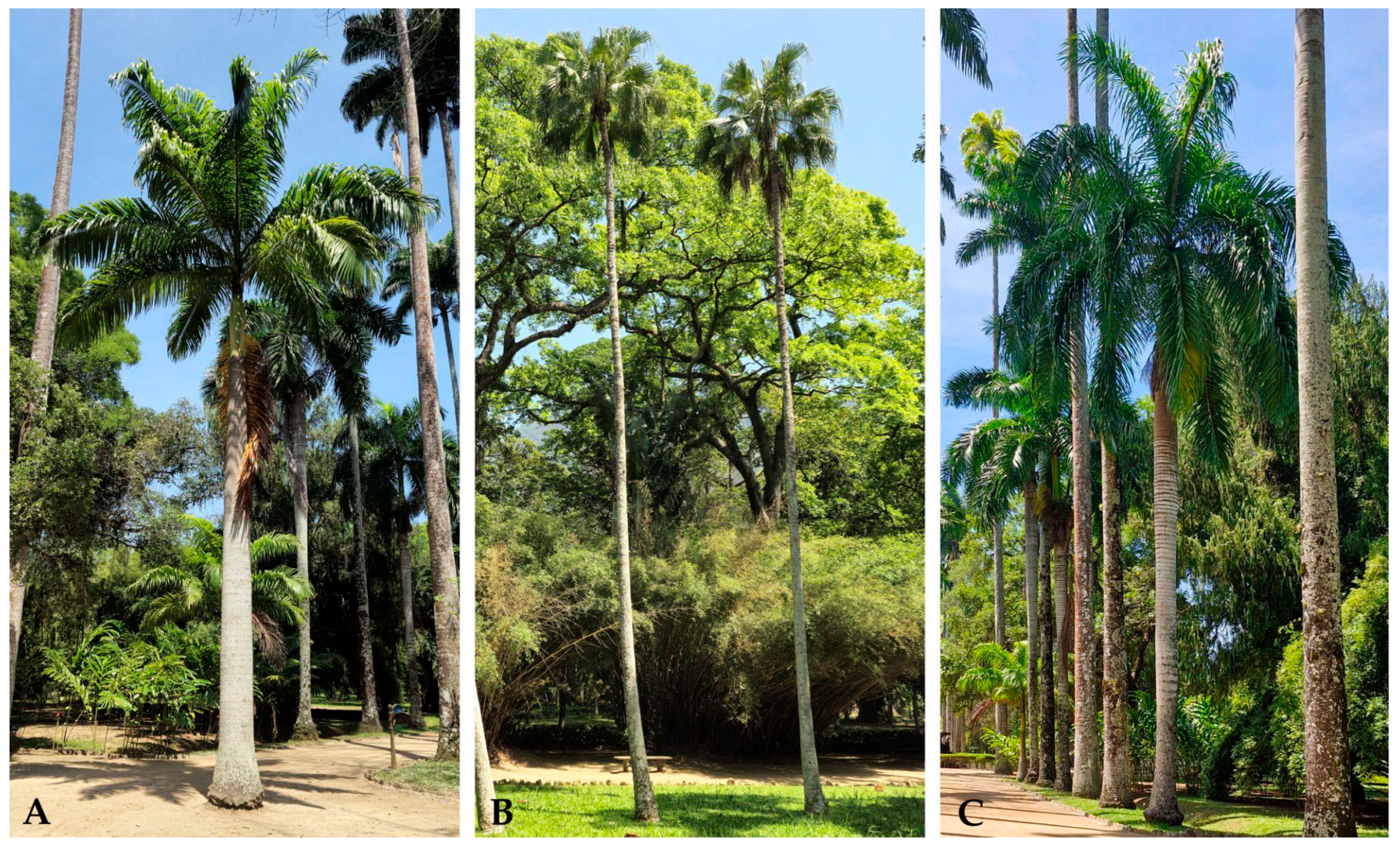
The Arecaceae collection at JBRJ comprises 1648 specimens, representing 71 genera and 160 taxa, including 153 species, two varieties, two natural hybrids, and three identified only to the genus level (Appendix A). The most abundant species are Roystonea oleracea (Jacq.) O.F.Cook (477 specimens), Livistona chinensis (Jacq.) R.Br. ex Mart. (107), and Roystonea borinquena O.F.Cook (63) (Figure 1), all exotics.
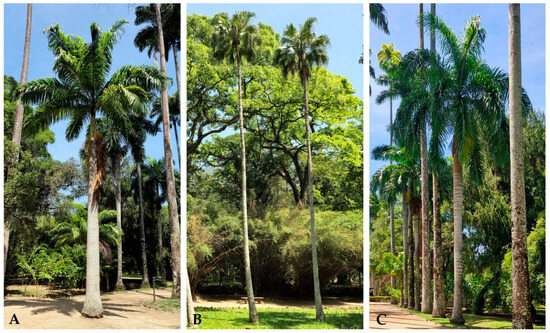
Figure 1.
Top three species by number of individuals: (A). Roystonea oleracea (Jacq.) O.F.Cook. (B). Livistona chinensis (Jacq.) R.Br. ex Mart. (C). Roystonea borinquena O.F.Cook. Photos: Alexandre Machado.
Despite the overall size of the collection, 49 of the 153 cultivated species are represented by a single specimen, indicating that a notable portion of the collection has very limited representation.
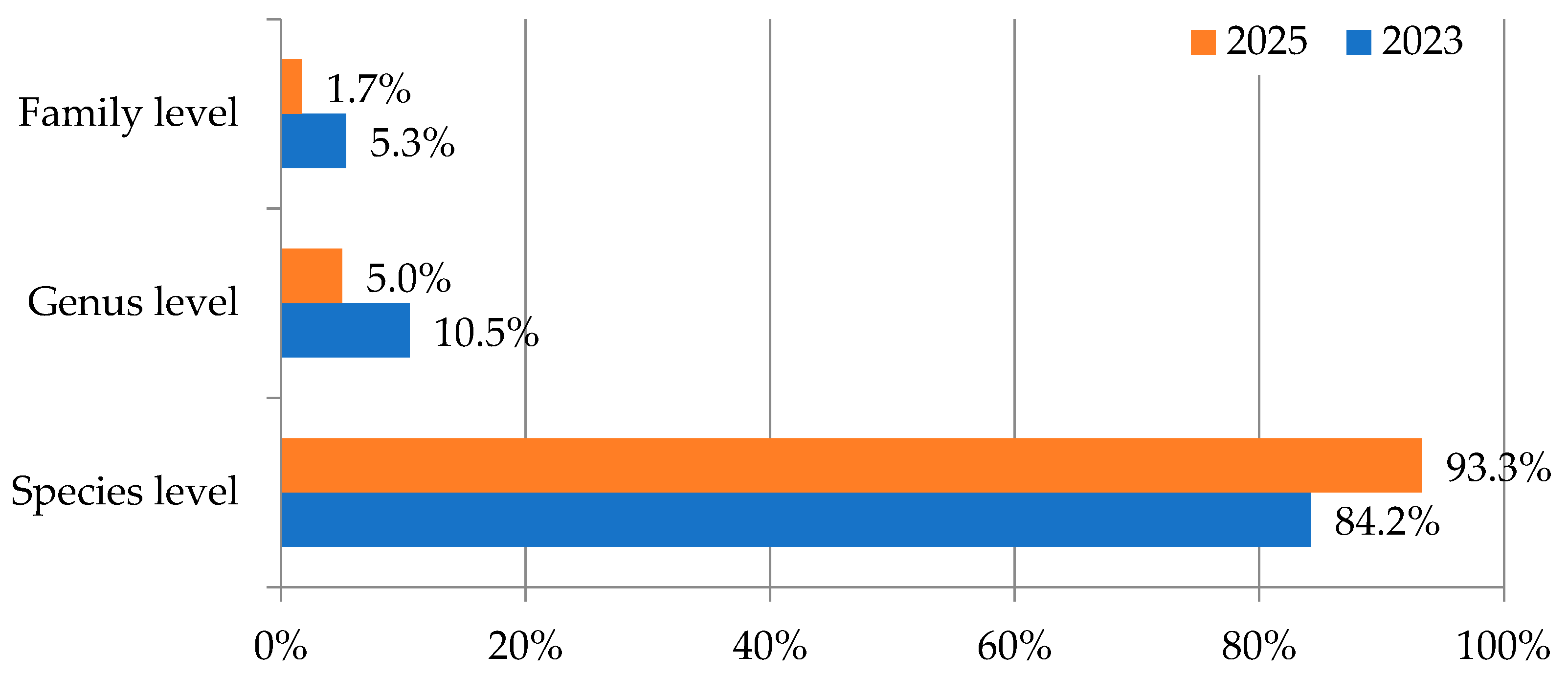
In the 2023 arboretum inventory, considering only the palms cultivated there, 84.2% of the specimens were identified to the species level [21]; following updated identifications, this increased to 93.3%, with 285 specimens receiving improved taxonomic classification (Figure 2).
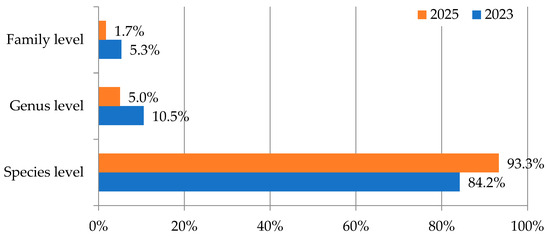
Figure 2.
Comparison of taxonomic identification levels in the Arecaceae collection before and after this study.
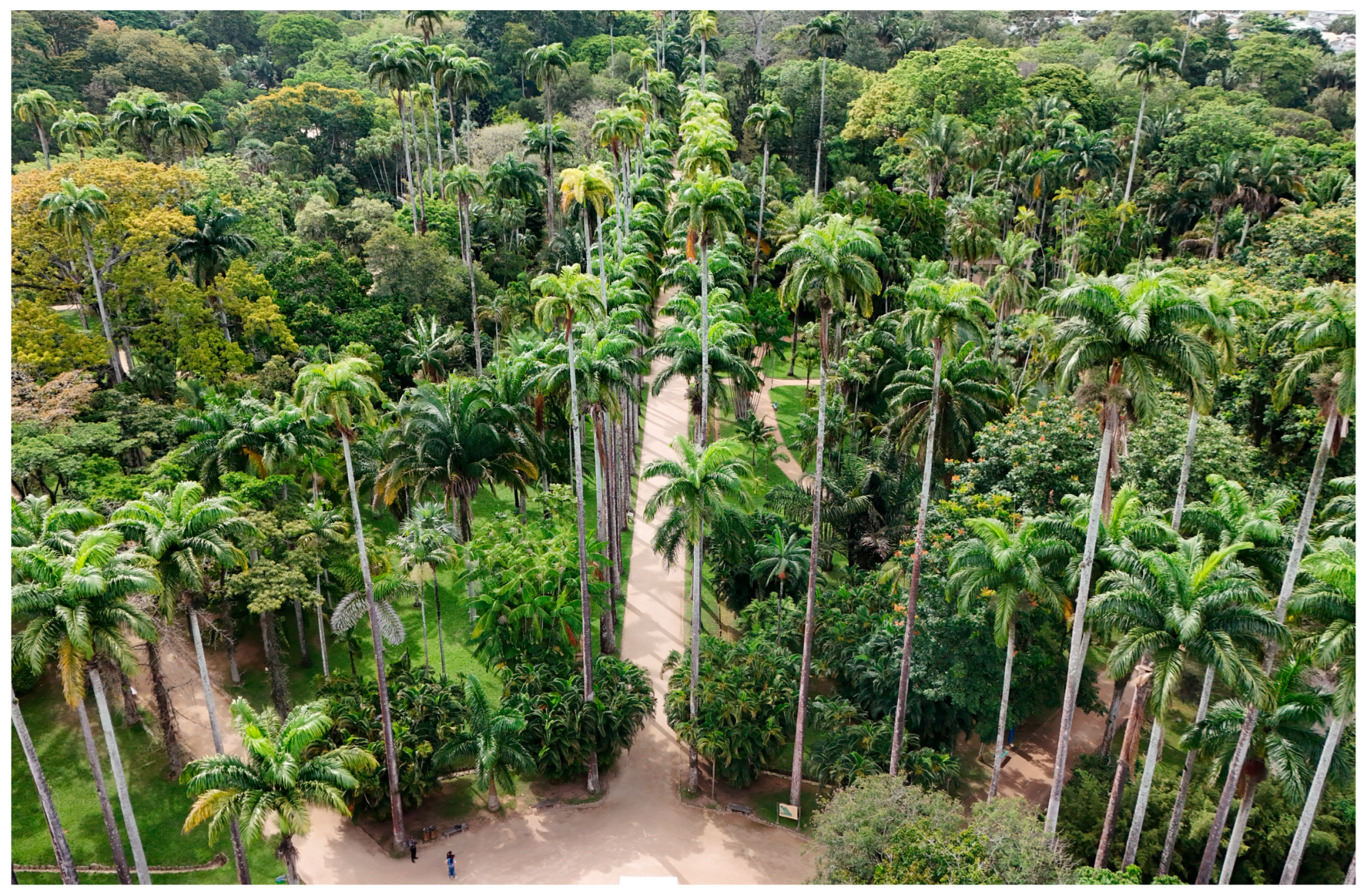
Palms are concentrated in 10 beds within Section 3 and Section 4, but are present across 164 of the 215 arboretum beds (Figure 3). Historical planting records revealed misidentified individuals: 56 palms planted in 2008 as R. oleracea were actually R. borinquena [31], resulting in mixed-species alleys that were originally intended to be monospecific royal palm alleys (R. oleracea), and the most characteristic landscape feature of the JBRJ arboretum.
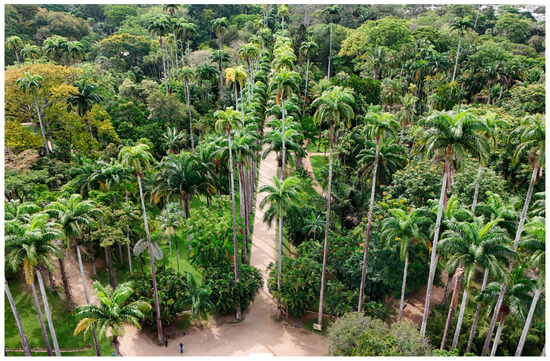
Figure 3.
Aerial view of part of the palm collection at JBRJ. Photo: Rafael da Silva Ribeiro.
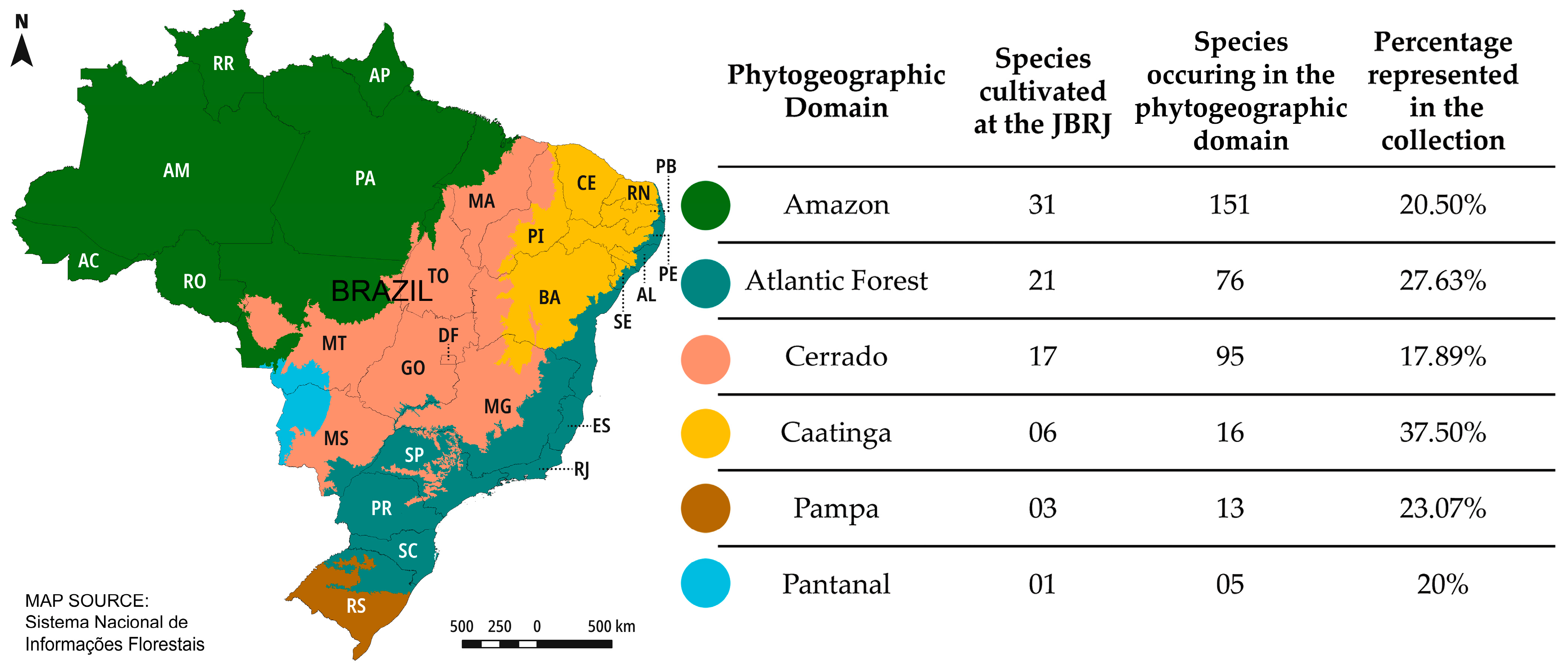
Of the total collection, 1249 individuals (76%) are exotic, 354 (21%) native, and 45 (3%) unclassified. The collection comprises 57 native species, two native natural hybrids and 96 exotic species, two varieties and three identified only to exotic genus level. Native species occur across all Brazilian phytogeographic domains, though with variable proportional representation. Although the highest number of cultivated species occur naturally in the Amazon (31 spp.), its representativeness in the collection is not the greatest due to its high overall diversity. At the opposite extreme, the Caatinga is the most represented phytogeographic domain in the collection, not because of a large number of cultivated species (six), but due to the relatively low diversity of palms naturally occurring there. The Cerrado, which harbors considerable palm diversity but fewer species under cultivation, ranked lowest in representativeness among Brazilian phytogeographic domains [5] (Figure 4).
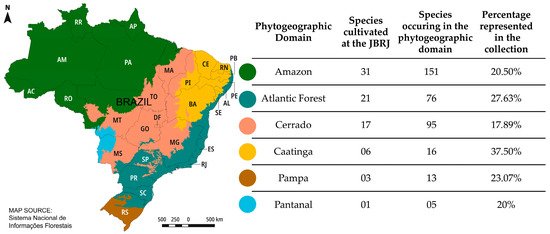
Figure 4.
Diversity of native palm species cultivated in the collection at the JBRJ, their phytogeographic domains of occurrence, and the percentage represented in the collection [5,32].
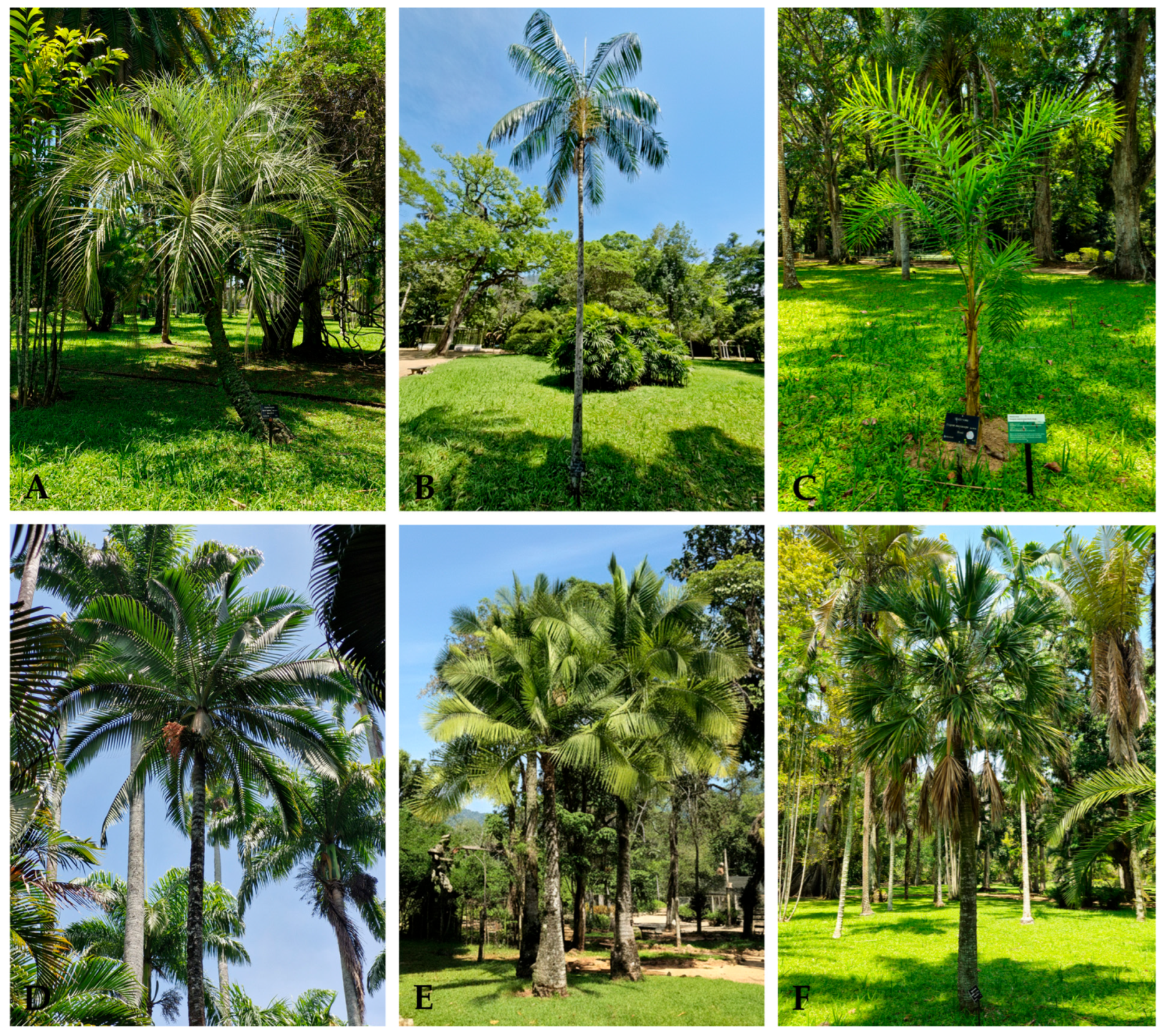
Threatened species are also part of the collection. Currently, 17 specimens representing eight native threatened species [28] and 57 individuals of 13 exotic threatened species (14 taxa) [29] are cultivated. According to PlantSearch data [30], all threatened palm species at JBRJ are also held in the collections of other botanical gardens in Brazil and worldwide (Table 1; Figure 5).

Table 1.
Threatened species cultivated in the collection (CR: Critically Endangered, EN: Endangered, VU: Vulnerable). * Native species: [28], exotic species: [29]. ** Data from PlantSearch [30].
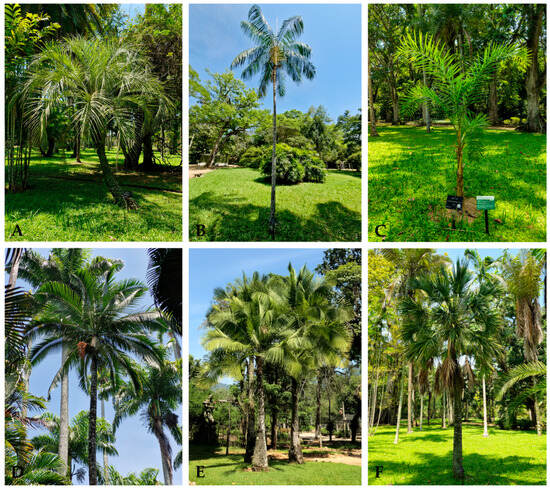
Figure 5.
Some of the threatened native species cultivated at JBRJ: (A). Butia capitata (Mart.) Becc., (B). Euterpe edulis Mart., (C). Syagrus macrocarpa Barb.Rodr., and some of the threatened exotic species cultivated: (D). Dictyosperma album var. conjugatum H.E.Moore & Guého, (E). Ravenea rivularis Jum. & H. Perrier, (F). Sabal bermudana L.H.Bailey. Photos: Alexandre Machado.
From a conservation perspective, only five native threatened species have known provenance; none of the exotic threatened species have provenance data. Among natives, six are endemic, four occur in the Atlantic Forest (S. botryophora, S. kellyana, S. macrocarpa, and S. picrophylla) and two occur in the Cerrado (B. capitata, and B. purpurascens). The two non-endemic natives are B. yatay (from the Atlantic Forest and Pampa) and E. edulis (Cerrado and Atlantic Forest) [5] (Table 2).
Table 2.
Number of individuals of native threatened species with known provenance data in cultivation, along with their endemism and threat status in Brazil (CR: Critically Endangered, EN: Endangered, VU: Vulnerable) [5,27,28].
4. Discussion
The JBRJ palm collection was initially established to acclimatize exotic species [33]. Expeditions to enhance cultivation of native species began in 1891, reflecting early recognition of the value of native flora [21,34]. Currently, native palms species represent roughly one-third of the collection, lower than the institution-wide average of 60.6% native species [21]. In a country with such remarkable palm diversity, the representation of native flora still has significant potential to expand, especially given the GSPC targets that encourage cultivation of species in their countries of origin to enhance the availability of material for reintroduction programs [18].
The presence of threatened species in the collection makes it even more valuable, but knowing the origin of each specimen is essential to strengthen its conservation significance. Unfortunately, among the native threatened species, two have no recorded provenance, as they have been in the collection for so long that it is no longer possible to trace a clear link between the surviving specimens and the historical records held by the institution. Among the remaining species, only one, Euterpe edulis Mart., is represented by multiple cultivated specimens with documented provenance, a key condition for achieving meaningful ex situ conservation [35].
Global data show that botanical gardens with palms collection have an average of 31 species, though large tropical gardens often hold many more [15]. With 153 species, JBRJ stands well above this average and aligns with expectations for tropical institutions. Some species in the JBRJ collection are not yet listed as such in PlantSearch [30], and updating this information would help strengthen connections with other gardens. Keeping cultivation records current makes it easier to share knowledge and collaborate effectively [15]. Because living plant collections change over time, both in composition and nomenclature, regularly updating networked databases helps ensure that the shared data remain accurate and useful [15,36].
In addition, the broad diversity of the palm collection creates a valuable opportunity to strengthen our understanding of palm seed biology, a topic that remains understudied for many Brazilian native species. Key information on dormancy, desiccation sensitivity, germination requirements, and storage behavior is still missing for most wild palms, even though these factors are essential for planning conservation and restoration efforts [37]. Experiments using material from the JBRJ collection can help clarify how long seeds remain viable and how they respond to different storage conditions, making it possible to improve ex situ conservation strategies and strengthen future restoration efforts.
The number of botanical gardens cultivating the same palm species found at JBRJ varies widely. Dictyosperma album var. conjugatum H.E. Moore & Guého, for instance, is grown in only one other garden, while the Brazilian species Butia capitata (Mart.) Becc. stands out as the most widely represented, recorded in 114 botanical gardens besides JBRJ. The PlantSearch tool [30] can also be a valuable resource for planning new acquisitions, helping identify which species are underrepresented across botanical garden collections.
Palm species from all Brazilian phytogeographic domains can grow under the JBRJ current conditions, giving special attention to those from the Atlantic Forest while still representing others. Living collections are invaluable for research, as only living plants make it possible to study species biology in depth [38,39]. In the past, these collections often resembled “stamp collections,” with just one individual per species [35]. Today, however, ex situ conservation focuses on maintaining genetic diversity, supporting species recovery, and enabling future reintroductions. Consequently, cultivating several individuals per species increases conservation value by capturing greater genetic diversity [40,41].
In this context, the relatively large number of species represented by a single individual in the JBRJ palm collection points to a limitation, as such holdings are more vulnerable to loss and do not fully meet current recommendations for genetically representative ex situ conservation [40,41], highlighting the importance of gradually increasing redundancy while remaining mindful of space and resource constraints.
Moreover, a collections policy is essential for guiding the proper management of living collections. When deciding which species to prioritize, botanical gardens must consider factors such as available resources, local expertise, climate, habitat, and community interests [35]. Beyond these factors, JBRJ’s collections policy, for example, has prioritized native Brazilian species, particularly those that are rare, endemic, or threatened.
Our results highlight the value of forming cooperative partnerships with other botanical gardens and institutions in Brazil to jointly enhance the diversity and representation of native species, especially those that are globally underrepresented. Given the space and resource limitations faced by most institutions, developing metacollections—collaborative living collections coordinated across institutions to maximize genetic representation and reduce the risk of loss [42]—and promoting inter-institutional exchanges are practical and impactful strategies, and ones that JBRJ should actively pursue to strengthen the conservation of Brazil’s flora.
5. Conclusions
This assessment of the palm collection at the Rio de Janeiro Botanical Garden shows just how important the garden is in advancing knowledge and conserving both native and exotic palms outside their natural habitats. The collection includes 1648 palm specimens from 160 different taxa, 22 of which are threatened in Brazil or around the world. By maintaining this diversity, the garden helps conserve valuable genetic resources and supplies important material for research, education, and habitat restoration.
The study highlights that, even though there might be limits on space and resources, palms from all Brazilian phytogeographic domains can thrive under the arboretum’s conditions, which indicates the potential to purposely enhance the collection with native species that have a lower representation. The identification of misidentified specimens and gaps in provenance data emphasizes the importance of careful curation and the continuous updating of institutional records, both locally and in global networks such as PlantSearch [30].
Looking forward, working closely with other national institutions and building larger, metacollections will help better protect Brazil’s palm species outside their natural environments. By combining scientific management with outreach, education, and responsible ways to propagate plants, the Rio de Janeiro Botanical Garden’s collection serves as a living resource for today and tomorrow. This shows how botanical gardens can play an active role in conservation that reaches far beyond their own walls.
Author Contributions
Conceptualization, C.M.F.B., C.M.M. and T.M.H.d.A.; methodology, T.M.H.d.A.; investigation, D.R.G., T.F., M.A.N.C. and T.M.H.d.A.; data curation, T.M.H.d.A.; writing—original draft preparation, C.M.F.B. and T.M.H.d.A.; writing—review and editing, D.R.G., T.F., C.M.M. and M.A.N.C. All authors have read and agreed to the published version of the manuscript.
Funding
This research received no external funding.
Institutional Review Board Statement
Not applicable.
Data Availability Statement
Supporting data can be found in the JBRJ collection’s management system, Jabot—http://rb.jbrj.gov.br/v2/consulta.php (accessed on 12 November 2025).
Acknowledgments
The authors thank Alexandre Machado and Rafael da Silva Ribeiro for the photographs that illustrate this paper; Carlos Alex Lima Guimarães, Leng Guan Saw and Ricardo de Assis for the identification of Arecaceae species. During the preparation of this manuscript, the authors used ChatGPT (GPT-5.2) to assist with the final English review. The authors have reviewed and edited the output and take full responsibility for the content of this publication.
Conflicts of Interest
The authors declare no conflicts of interest.
Appendix A
Table A1.
Complete list of Arecaceae taxa cultivated at the Rio de Janeiro Botanical Garden in 2025. Details on the number of specimens and the provenance of each accession are publicly available through the Jabot institutional database [27].
Table A1.
Complete list of Arecaceae taxa cultivated at the Rio de Janeiro Botanical Garden in 2025. Details on the number of specimens and the provenance of each accession are publicly available through the Jabot institutional database [27].
| Taxa |
|---|
| Acanthophoenix rubra (Bory) H.Wendl. |
| Acoelorraphe wrightii (Griseb. & H.Wendl.) H.Wendl. ex Becc. |
| Acrocomia aculeata (Jacq.) Lodd. ex Mart. |
| Acrocomia intumescens Drude |
| Adonidia merrillii (Becc.) Becc. |
| Aiphanes hirsuta Burret |
| Aiphanes horrida (Jacq.) Burret |
| Aiphanes minima (Gaertn.) Burret |
| Allagoptera arenaria (Gomes) Kuntze |
| Allagoptera caudescens (Mart.) Kuntze |
| Archontophoenix alexandrae (F.Muell.) H.Wendl. & Drude |
| Archontophoenix cunninghamiana (H.Wendl.) H.Wendl. & Drude |
| Archontophoenix maxima Dowe |
| Areca catechu L. |
| Areca triandra Roxb. ex Buch.-Ham. |
| Areca vestiaria Giseke |
| Arenga engleri Becc. |
| Arenga undulatifolia Becc. |
| Astrocaryum aculeatissimum (Schott) Burret |
| Astrocaryum jauari Mart. |
| Astrocaryum murumuru Mart. |
| Attalea butyracea (Mutis ex L.f.) Wess.Boer |
| Attalea funifera Mart. |
| Attalea humilis Mart. |
| Attalea maripa (Aubl.) Mart. |
| Attalea oleifera Barb.Rodr. |
| Attalea phalerata Mart. ex Spreng. |
| Attalea speciosa Mart. ex Spreng. |
| Bactris concinna Mart. |
| Bactris gasipaes Kunth |
| Bactris major Jacq. |
| Bactris maraja Mart. |
| Bactris setosa Mart. |
| Bentinckia nicobarica (Kurz.) Becc. |
| Borassus aethiopum Mart. |
| Borassus flabellifer L. |
| Burretiokentia hapala H.E.Moore |
| Butia capitata (Mart.) Becc. |
| Butia purpurascens Glassman |
| Butia yatay (Mart.) Becc. |
| Calamus ciliaris Blume |
| Calamus flagellum Griff. ex Walp. |
| Calyptrocalyx forbesii (Ridl.) Dowe & M.D.Ferrero |
| Calyptrocalyx spicatus (Lam.) Blume |
| Carpentaria acuminata (H.Wendl. & Drude) Becc. |
| Caryota mitis Lour. |
| Caryota urens L. |
| Chamaedorea metallica O.F.Cook ex H.E.Moore |
| Chamaerops humilis L. |
| Chambeyronia macrocarpa (Brongn.) Vieill. ex Becc. |
| Chrysalidocarpus madagascariensis (D.T.Fish) Becc. |
| Cocos nucifera L. |
| Copernicia alba Morong |
| Copernicia macroglossa H.Wendl |
| Corypha umbraculifera L. |
| Corypha utan Lam. |
| Cryosophila nana (Kunth) Blume |
| Cyrtostachys renda Blume |
| Desmoncus orthacanthos Mart. |
| Dictyosperma album (Bory) H.Wendl. & Drude ex Scheff. |
| Dictyosperma album var. aureum Balf.f. |
| Dictyosperma album var. conjugatum H.E.Moore & Guého |
| Dypsis decaryi (Jum.) Beentje & J.Dransf. |
| Dypsis lutescens (H.Wendl.) Beentje & J.Dransf. |
| Elaeis guineensis Jacq. |
| Elaeis oleifera (Kunth) Cortés |
| Euterpe edulis Mart. |
| Euterpe longibracteata Barb.Rodr. |
| Euterpe oleracea Mart. |
| Euterpe precatoria Mart. |
| Hyophorbe lagenicaulis (L.H.Bailey) H.E.Moore |
| Hyophorbe verschaffeltii H.Wendl. |
| Iriartea deltoidea Ruiz & Pav. |
| Latania lontaroides (Gaertn.) H.E.Moore |
| Leopoldinia piassaba Wallace |
| Leucothrinax morrisii (H.Wendl.) C.Lewis & Zona |
| Licuala grandis H.Wendl. ex Linden |
| Licuala peltata Roxb. ex Buch.-Ham. |
| Licuala rumphii Blume |
| Licuala spinosa Wurmb |
| Livistona australis (R.Br.) Mart. |
| Livistona chinensis (Jacq.) R.Br. ex Mart. |
| Livistona decora (W.Bull) Dowe |
| Livistona saribus (Lour.) Merr. ex A.Chev. |
| Manicaria saccifera Gaertn. |
| Mauritia flexuosa L.f. |
| Mauritiella aculeata (Kunth) Burret |
| Mauritiella armata (Mart.) Burret |
| Nypa fruticans Wurmb |
| Oenocarpus bacaba Mart. |
| Oenocarpus distichus Mart. |
| Oenocarpus mapora H.Karst. |
| Oenocarpus minor Mart. |
| Oncosperma fasciculatum Thwaites |
| Oncosperma tigillarium (Jack) Ridl. |
| Orania palindan (Blanco) Merr. |
| Phoenicophorium borsigianum (K.Koch) Stuntz |
| Phoenix canariensis H.Wildpret |
| Phoenix dactylifera L. |
| Phoenix loureiroi Kunth var. loureiroi |
| Phoenix pusilla Gaertn. |
| Phoenix reclinata Jacq. |
| Phoenix roebelenii O’Brien |
| Phoenix rupicola T.Anderson |
| Phoenix sylvestris (L.) Roxb. |
| Phytelephas macrocarpa Ruiz & Pav. |
| Pinanga coronata (Blume ex Mart.) Blume |
| Pinanga patula Blume |
| Plectocomia elongata Mart. ex Blume |
| Pritchardia pacifica Seem. & H.Wendl. |
| Ptychosperma elegans (R.Br.) Blume |
| Ptychosperma macarthurii (H.Wendl. ex H.J.Veitch) H.Wendl. ex Hook.f. |
| Ptychosperma propinquum (Becc.) Becc. ex Martelli |
| Ptychosperma salomonense Burret |
| Ptychosperma sanderianum Ridl. |
| Raphia farinifera (Gaertn.) Hyl. |
| Raphia taedigera (Mart.) Mart. |
| Ravenea rivularis Jum. & H. Perrier |
| Rhapis excelsa (Thunb.) A.Henry |
| Rhopaloblaste ceramica (Miq.) Burret |
| Roystonea borinquena O.F.Cook |
| Roystonea oleracea (Jacq.) O.F.Cook |
| Roystonea regia (Kunth) O.F.Cook |
| Sabal bermudana L.H.Bailey |
| Sabal causiarum (O.F.Cook) Becc. |
| Sabal mauritiiformis (H.Karst.) Griseb. & H.Wendl. |
| Sabal mexicana Mart. |
| Sabal minor (Jacq.) Pers. |
| Sabal palmetto (Walter) Lodd. ex Schult. & Schult.f. |
| Salacca affinis Griff. |
| Salacca zalacca (Gaertn.) Voss |
| Saribus rotundifolius (Lam.) Blume |
| Socratea exorrhiza (Mart.) H.Wendl. |
| Syagrus botryophora (Mart.) Mart. |
| Syagrus cearensis Noblick |
| Syagrus cocoides Mart. |
| Syagrus coronata (Mart.) Becc. |
| Syagrus duartei Glassman |
| Syagrus kellyana Noblick & Lorenzi |
| Syagrus macrocarpa Barb.Rodr. |
| Syagrus oleracea (Mart.) Becc. |
| Syagrus picrophylla Barb.Rodr. |
| Syagrus pseudococos (Raddi) Glassman |
| Syagrus romanzoffiana (Cham.) Glassman |
| Syagrus schizophylla (Mart.) Glassman |
| Syagrus vagans (Bondar) A.D.Hawkes |
| Syagrus x camposportoana (Bondar) Glassman |
| Syagrus x matafome (Bondar) A.D.Hawkes |
| Tahina spectabilis J. Dransf. & Rakotoarin. |
| Thrinax parviflora Sw. |
| Thrinax radiata Lodd. ex Schult. & Schult.f. |
| Veitchia joannis H.Wendl. |
| Veitchia subdisticha (H.E.Moore) C.Lewis & Zona |
| Verschaffeltia splendida H.Wendl. |
| Wallichia oblongifolia Griff. |
| Washingtonia robusta H.Wendl. |
| Wodyetia bifurcata A.K.Irvine |
References
- Zambrana, N.Y.P.; Anja, B.; Svenning, J.C.; Moraes, M.; Grandez, C.; Balslev, H. Diversity of palm uses in the western Amazon. Biodivers. Conserv. 2007, 16, 2771–2787. [Google Scholar] [CrossRef]
- Soares, K.P.; Longhi, S.J.; Witeck Neto, L.; Assis, L.C. Palmeiras (Arecaceae) no Rio Grande do Sul, Brasil. Rodriguésia 2014, 65, 113–139. [Google Scholar] [CrossRef]
- Plants of the World Online (POWO). Available online: https://powo.science.kew.org/ (accessed on 13 November 2025).
- Bellot, S.; Lu, Y.; Antonelli, A.; Baker, W.J.; Dransfield, J.; Forest, F.; Kissling, W.D.; Leitch, I.J.; Nic Lughadha, E.; Ondo, I.; et al. The likely extinction of hundreds of palm species threatens their contributions to people and ecosystems. Nat. Ecol. Evol. 2022, 6, 1710–1722. [Google Scholar] [CrossRef] [PubMed]
- Flora e Funga do Brasil. Jardim Botânico do Rio de Janeiro. Available online: http://floradobrasil.jbrj.gov.br/ (accessed on 13 November 2025).
- Brasil. Ministério do Meio Ambiente. Portaria n. 148, de 7 de Junho de 2022. Available online: https://in.gov.br/en/web/dou/-/portaria-mma-n-148-de-7-de-junho-de-2022-406272733 (accessed on 13 November 2025).
- Barbosa Rodrigues, J. Palmae Mattogrossenses Novae vel Minus Cognitae; Leuzinger: Rio de Janeiro, Brazil, 1898; p. 13. Available online: http://www2.senado.leg.br/bdsf/handle/id/242527 (accessed on 13 November 2025).
- Santos, A.B. Colonização, Quilombos: Modos e Significações; Editora UnB e INCTI: Brasília, Brazil, 2015. [Google Scholar]
- Myers, N.; Mittermeier, R.A.; Mittermeier, C.G.; Fonseca, G.A.B.; Kent, J. Biodiversity hotspots for conservation priorities. Nature 2000, 403, 853–858. [Google Scholar] [CrossRef] [PubMed]
- Barstow, M.; Dobai, N.; Cowell, C. The Importance of Botanic Gardens in Tackling the Illegal Plant Trade; BGCI: Richmond, UK, 2024; Available online: https://www.bgci.org/wp/wp-content/uploads/2024/08/2-FINAL_Illegal-Plant-Trade.pdf (accessed on 13 November 2025).
- Kitching, M.; Sharrock, S.; Smith, P. Purpose and Trends in Exchange of Plant Material Between Botanic Gardens; BGCI: Richmond, UK, 2023; Available online: https://www.bgci.org/wp/wp-content/uploads/2023/10/PlantexchangeMRReduced-1.pdf (accessed on 13 November 2025).
- Oldfield, S.F. Botanic gardens and the conservation of tree species. Trends Plant Sci. 2009, 14, 581–583. [Google Scholar] [CrossRef] [PubMed]
- Ogawa, N.; Cunha, T.S.; Pereira, R.C.; Turini, L.R.; Barbosa, O.R.; Almeida, J.R. Gestão de jardins botânicos. Rev. Int. Ciênc. 2023, 13, 60–67. [Google Scholar] [CrossRef]
- Cavender, N.; Donnelly, G. Intersecting Urban Forestry and Botanical Gardens to Address Big Challenges for Healthier Trees, People, and Cities. Plants People Planet 2019, 1, 315–322. [Google Scholar] [CrossRef]
- Griffith, M.P.; Meyer, A.; Grinage, A. Global ex situ conservation of palms: Living treasures for research and education. Front. For. Glob. Change 2021, 4, 711414. [Google Scholar] [CrossRef]
- Perez, T.M.; Valverde-Barrantes, O.; Bravo, C.; Taylor, T.C.; Fadrique, B.; Hogan, J.A.; Pardo, C.J.; Stroud, J.T.; Baraloto, C.; Feeley, K.J. Botanic gardens are an untapped resource for studying the functional ecology of tropical plants. Philos. Trans. R. Soc. B 2019, 374, 20170390. [Google Scholar] [CrossRef] [PubMed]
- Dosmann, M.; Groover, A.C. The importance of living botanical collections for plant biology and the “next generation” of evo-devo research. Front. Plant Sci. 2012, 3, 137. [Google Scholar] [CrossRef] [PubMed]
- Global Partnership for Plant Conservation. The Global Strategy for Plant Conservation 2020–2030; Botanic Gardens Conservation International: London, UK, 2025. [Google Scholar]
- Brasil, Lei n. 10.316, de 6 de Dezembro de 2001. Available online: https://www.planalto.gov.br/ccivil_03/leis/leis_2001/l10316.htm (accessed on 13 November 2025).
- Brasil. Ministry of the Environment and Climate Change. Resolução CONABIO n. 9, de 28 de Novembro de 2024. Available online: https://www.in.gov.br/en/web/dou/-/resolucao-conabio-n-9-de-28-de-novembro-de-2024-613697262 (accessed on 13 November 2025).
- Almeida, T.M.H.; Coelho, M.A.N.; Peixoto, A.L. Rio de Janeiro Botanical Garden: Biodiversity Conservation in a Tropical Arboretum. J. Zool. Bot. Gard. 2024, 5, 378–394. [Google Scholar] [CrossRef]
- Gonzalez, M. Allegory of the palma mater: An invented tradition. Rodriguésia 2022, 73, e00142022. [Google Scholar] [CrossRef]
- Barbosa Rodrigues, J. Sertum Palmarum Brasiliensium; Typographique Veuve Monnom: Brussels, Belgium, 1903; Available online: https://www2.senado.leg.br/bdsf/handle/id/242529 (accessed on 13 November 2025).
- Marcolin, N. A glória de um botânico: Há 110 anos João Barbosa Rodrigues publicava livro clássico sobre palmeiras. Rev. Pesqui. FAPESP 2013, 210, 88–89. Available online: https://revistapesquisa.fapesp.br/a-gloria-do-botanico/ (accessed on 13 November 2025).
- PCRJ (Prefeitura da Cidade do Rio de Janeiro). Revisão do Plano Municipal de Saneamento Básico para os Serviços de Abastecimento de Água e Esgotamento Sanitário; DRZ Geotecnologia e Consultoria LTDA: Rio de Janeiro, Brazil, 2020. Available online: https://rio.rj.gov.br/dlstatic/10112/12401025/4313006/ETAPA1CaracterizacaodoMunicipioPMSBRJ.pdf (accessed on 13 November 2025).
- Silva, L.A.E.; Fraga, C.N.; Almeida, T.M.H.; Gonzalez, M.; Lima, R.O.; Rocha, M.S.; Bellon, E.; Ribeiro, R.S.; Oliveira, F.A.; Clemente, L.S.; et al. Jabot—Sistema de gerenciamento de coleções botânicas: A experiência de uma década de desenvolvimento e avanços. Rodriguésia 2017, 68, 391–410. [Google Scholar] [CrossRef]
- Instituto de Pesquisas Jardim Botânico do Rio de Janeiro. Jabot (Scientific Collections Management Software); Version 3.0; Instituto de Pesquisas Jardim Botânico do Rio de Janeiro: Rio de Janeiro, Brazil, 2025. Available online: http://rb.jbrj.gov.br/v2/consulta.php (accessed on 13 November 2025).
- CNCFlora—Centro Nacional de Conservação da Flora. Instituto de Pesquisas Jardim Botânico do Rio de Janeiro, Rio de Janeiro. Brazil. Available online: https://cncflora.jbrj.gov.br/ (accessed on 13 November 2025).
- IUCN—International Union for Conservation of Nature. Red List of Threatened Species. Available online: https://www.iucnredlist.org/ (accessed on 13 November 2025).
- BGCI. PlantSearch Online Database. Botanic Gardens Conservation International. Richmond, UK. Available online: https://plantsearch.bgci.org/ (accessed on 13 November 2025).
- Oliveira, A.R.; Teixeira, M.L.F.; Reis, R. As Palmeiras-Imperiais do Jardim Botânico; Editora Dantes: Rio de Janeiro, Brazil, 2009; 112p. [Google Scholar]
- Brasil. Sistema Nacional de Informações Florestais (SNIF). Brasília, DF: Serviço Florestal Brasileiro (SFB). Available online: https://snif.florestal.gov.br/ (accessed on 2 December 2025).
- Bediaga, B.; Lima, H.C.L.; Morim, M.P.; Barros, C.F. As atividades científicas durante dois séculos. In Jardim Botânico do Rio de Janeiro: 1808–2008; Instituto de Pesquisas Jardim Botânico do Rio de Janeiro: Rio de Janeiro, Brazil, 2008; pp. 33–43. [Google Scholar]
- Brazil. Relatório do Ministério da Agricultura, Comércio e Obras Públicas (RJ) do Ano de 1891; Imprensa Nacional: Rio de Janeiro, Brazil, 1891; pp. 25–26. Available online: https://memoria.bn.br/docreader/DocReader.aspx?bib=873730&Pesq&pagfis=1 (accessed on 13 November 2025).
- Cavender, N.; Westwood, M.; Bechtoldt, C.; Donnelly, G.; Oldfield, S.; Gardner, M.; Rae, D.; McNamara, W. Strengthening the conservation value of ex situ tree collections. Oryx 2015, 49, 416–424. [Google Scholar] [CrossRef]
- Griffith, M.P.; Barber, G.; Lima, J.T.; Barros, M.; Calonje, C.; Magellan, T.; Dosmann, M.; Thibault, T.; Gerlowski, N. Plant Collection “Half-life”: Can Botanic Gardens Weather the Climate? Curator Mus. J. 2017, 60, 395–410. [Google Scholar] [CrossRef]
- Soares, V.C.; Daibes, L.F.; Damasceno-Junior, G.A.; Lima, L.B. Water immersion and one-year storage influence the germination of the pyrenes of Copernicia alba Morong, a palm tree from a neotropical wetland. Hoehnea 2022, 49, e782021. [Google Scholar] [CrossRef]
- Arnold Arboretum. Developing an Exemplary Collection. Available online: http://arboretum.harvard.edu/stories/developingan-exemplary-collection-a-vision-for-the-next-century-at-the-arnold-arboretum-of-harvard-university/ (accessed on 13 November 2025).
- Frugeri, G.C.; Nogueira, G.F.; Souza, A.L.X.; Scherwinski-Pereira, J.E. Designing ex situ conservation strategies for Butia capitata [Mart. (Becc.) Arecaceae], a threatened palm tree from the Brazilian savannah biome, through zygotic embryo cryopreservation. Int. J. Plant Biol. 2023, 14, 612–624. [Google Scholar] [CrossRef]
- Namoff, S.; Francisco-Ortega, J.; Lewis, C.E.; Zona, S.; Vamosi, J.C.; Griffith, M.P. How well does a botanical garden collection of a rare palm capture the genetic variation in a wild population? Biol. Conserv. 2010, 143, 1110–1117. [Google Scholar] [CrossRef]
- Griffith, M.P.; Noblick, L.R.; Dowe, J.L.; Husby, C.E.; Calonje, M. Can a botanic garden cycad collection capture the genetic diversity in a wild population? Int. J. Plant Sci. 2008, 169, 444–453. [Google Scholar] [CrossRef]
- Griffith, M.P.; Beckman, E.; Callicrate, T.; Clark, J.; Clase, T.; Deans, S.; Dosmann, M.; Fant, J.; Gratacos, X.; Havens, K.; et al. Toward the Metacollection: Safeguarding Plant Diversity and Coordinating Conservation Collections; Botanic Gardens Conservation International–US: San Marino, CA, USA, 2019; Available online: https://www.bgci.org/wp/wp-content/uploads/2019/09/Toward-the-Metacollection-Coordinating-conservation-collections-to-safeguard-plant-diversity.pdf (accessed on 13 November 2025).
Disclaimer/Publisher’s Note: The statements, opinions and data contained in all publications are solely those of the individual author(s) and contributor(s) and not of MDPI and/or the editor(s). MDPI and/or the editor(s) disclaim responsibility for any injury to people or property resulting from any ideas, methods, instructions or products referred to in the content. |
© 2025 by the authors. Licensee MDPI, Basel, Switzerland. This article is an open access article distributed under the terms and conditions of the Creative Commons Attribution (CC BY) license.