


Abstract
This study examines the longitudinal evolution of media framing of TikTok in South Korean news coverage from 2020 to 2024. As a global digital platform increasingly embedded in geopolitical and regulatory controversies, TikTok provides an instructive case for understanding how media frames shift over time in response to external political pressures. Moving beyond static framing analyses and Western-centric perspectives, this study conceptualizes framing as a dynamic process shaped by both short-term events and longer-term structural change. Using 5660 TikTok-related news articles from the BIGKinds database, we apply large language model-assisted frame classification and construct a frame shift index (FSI) to measure temporal changes in dominant frames. Interrupted time series (ITS) analysis is employed to test short-term framing responses to discrete international political and policy events, while the Bai–Perron breakpoint test (BPT) is used to identify long-term structural breaks. The results show that significant frame shifts are closely associated with transnational policy disputes and international political conflicts. While ITS reveals clear event-driven short-term framing adjustments, BPT identifies a statistically significant structural breakpoint in late 2022, indicating a longer-term reorganization of media narratives under sustained geopolitical and regulatory pressures.
1. Introduction
In the context of the global expansion of digital platforms, TikTok has emerged as a focal point of both academic inquiry and public controversy. As a short-video platform owned by ByteDance, TikTok has reshaped modes of content production and consumption while intervening in transnational cultural circulation and geopolitical competition (Li, 2025). Driven by an algorithmic recommendation system optimized for user engagement, the platform has achieved rapid adoption among younger users and has become one of the most influential social media platforms worldwide (Cao, 2025). At the same time, TikTok’s growth has generated persistent controversies surrounding data security, national sovereignty, and cultural power (Finkelstein et al., 2025).
At the international level, multiple governments have framed TikTok as a potential security risk, leading to ongoing policy disputes over platform bans, data localization, and corporate ownership (Che et al., 2023). Yet these policy and security conflicts are not encountered by the public in their technical or institutional form. Instead, they are primarily mediated through news coverage, which serves as a key channel through which audiences interpret the meaning and implications of such disputes (Huang et al., 2021). Media portrayals of TikTok therefore matter not only for informing audiences but also for shaping public evaluations of platform-related risks and legitimizing particular policy responses (Tran & Diep, 2025). For example, coverage that foregrounds national security concerns may encourage public support for restrictive measures, whereas narratives emphasizing innovation or expressive freedom may foster skepticism toward regulatory intervention.
These dynamics underscore that news reporting does more than transmit information; it actively structures how platform governance controversies are understood and debated. Framing theory offers a useful analytical lens for examining this process by focusing on how media texts define problems, assign responsibility, and evaluate normative stakes (Pan & Kosicki, 1993). Applying this perspective allows for a systematic analysis of how news coverage constructs the risks and meanings associated with TikTok and, in doing so, shapes public perceptions and policy discourse.
Despite growing scholarly attention to TikTok, the existing literature leaves several important gaps. First, empirical research has concentrated predominantly on Western contexts, particularly the United States and the United Kingdom, while systematic analyses of how East Asian media construct narratives about TikTok remain limited. Second, most studies adopt static analytical approaches that capture dominant frames at a single point in time, offering limited insight into how media framing evolves in response to major political, regulatory, or platform-related events. Third, at the methodological level, relatively few studies combine computational communication methods with event-centered or causal inference approaches capable of modeling framing shifts over time.
South Korea offers a theoretically and empirically valuable context for addressing these gaps. The country features a highly digitalized media environment and an active news consumption culture in which news coverage plays a central role in shaping public understandings of digital platforms (Dwyer & Hutchinson, 2019). At the same time, South Korea occupies a distinctive position in global cultural and geopolitical dynamics. As a major exporter of cultural products, the close integration of K-pop and TikTok highlights the platform’s role in contemporary cultural circulation and soft power (Abidin & Lee, 2023). Simultaneously, South Korea is embedded in the strategic tensions surrounding U.S.-China technological competition, rendering media discourse about global platforms particularly sensitive to security and geopolitical considerations (Moon & Yeon, 2024). Taken together, these conditions make South Korean media a productive site for examining how global platform controversies are framed within local journalistic contexts. Analyzing TikTok coverage in this setting allows for a closer understanding of the localization of platform politics and the operation of media discourse within transnational public spheres.
Building on these gaps and contextual considerations, this study examines mainstream South Korean news coverage of TikTok between 2020 and 2024 and addresses the following research questions (RQs):
RQ1: What dominant frames characterize South Korean media coverage of TikTok from 2020 to 2024, and how are these frames distributed across the overall news corpus?
RQ2: Did the framing of TikTok in South Korean media change over time during this period? If so, were these changes associated with identifiable external events, such as international political conflicts or transnational policy disputes?
RQ3: Did TikTok-related media framing in South Korea exhibit statistically significant structural breaks? If so, how do the timing and characteristics of these breakpoints reflect stage-based transformations in media narratives?
By addressing these questions, this study extends research on digital platforms beyond Western contexts and provides empirical evidence relevant to debates on global platform governance and media discourse.
2. Literature Review
2.1. Digital Platform Politics and Media Framing
Recent scholarship has increasingly examined TikTok as a case through which broader dynamics of digital platform politics can be observed (Su & Tang, 2023). A growing body of research conceptualizes global digital platforms not merely as channels of cultural exchange but as sites where state interests, regulatory power, and geopolitical competition intersect (Liu & Yang, 2022). In Western contexts, empirical studies have documented how controversies surrounding TikTok, particularly those related to data security, content governance, and ownership, are deeply entangled with national security discourses and debates over platform regulation (Etulain & Guanaes, 2025; Zeng & Kaye, 2022; Ahmed et al., 2019; Flew & Su, 2023).
Within this line of inquiry, media framing research offers a theoretically grounded approach to understanding how platform politics are rendered meaningful in public discourse. Frames shape how news coverage organizes events, assigns responsibility, and evaluates the social and political implications of digital platforms, thereby influencing public interpretations of their roles and risks (Civila & Lugo-Ocando, 2024). Prior studies indicate that media framing of TikTok varies substantially across national contexts. In the United States and parts of Europe, coverage frequently foregrounds frames related to national security, surveillance, and privacy risk (Tran et al., 2025). By contrast, research focusing on East Asian contexts has highlighted alternative frames that emphasize cultural circulation, platform enabled soft power, or resistance to Western cultural dominance (Tang, 2024). These differences suggest that news frames do not simply reflect editorial preferences but are closely tied to how media systems negotiate the relationship between platform power and state interests within specific political and cultural environments.
Despite these insights, existing research displays a pronounced regional imbalance. Studies of TikTok related media framing remain heavily concentrated in Western settings, leaving comparatively limited understanding of how platforms are framed in countries occupying intermediary or strategically ambivalent positions in the global order. South Korea represents one such case. It is deeply embedded in the global digital economy (Grover et al., 2024) while simultaneously situated within the strategic tensions of United States and China technological competition (Lee, 2024). These conditions suggest that South Korean media may employ framing logics that differ from those identified in either Western security centered narratives or East Asian cultural nationalist accounts. Although prior research has examined South Korean media in relation to cultural industries and digital governance more broadly (Li, 2025), systematic analyses of how TikTok is framed across news coverage remain scarce.
Addressing this gap requires first identifying the dominant frames through which TikTok is represented in South Korean media and assessing their relative prevalence. Accordingly, this study poses the following research question:
RQ1: What dominant frames characterize South Korean media coverage of TikTok from 2020 to 2024, and how are these frames distributed across the overall news corpus?
2.2. Middle-Positioned Countries and Media Framing Logics
An expanding body of scholarship highlights the analytical significance of middle-positioned countries, often discussed in the literature as middle powers, for understanding global media and communication processes. These states are typically characterized by deep integration into global economic and technological systems alongside limited structural capacity to set international agendas. As a result, they tend to operate simultaneously as norm takers and norm mediators, selectively adapting and translating global discourses in ways that resonate with domestic political priorities and cultural contexts (Kim, 2022; Zubair, 2023; Wang, 2025).
Within media framing research, this positional duality is associated with heightened sensitivity to competing global and local logics. Prior studies suggest that media systems in middle-positioned countries such as South Korea, Australia, and Japan are particularly responsive to shifts in international political discourse, while embedding those narratives within national policy debates and industrial strategies (Gray, 2021). Rather than simply reproducing dominant Western frames, these media outlets actively negotiate among multiple sources of influence, producing hybrid framing patterns shaped by both transnational norms and localized political and economic concerns (Mirrlees, 2024; Xie & Jiang, 2025).
South Korea constitutes a salient case of a middle-positioned actor in the context of digital platform politics. The country maintains close alignment with United States led frameworks of technological governance while simultaneously sustaining extensive economic and cultural interdependence with China and the broader East Asian region (Jin, 2024). Existing research indicates that this strategic condition informs South Korean media coverage across a range of issues, including trade relations, cultural industries, and the governance of global digital platforms. TikTok, situated at the intersection of cultural circulation and geopolitical competition, has become a particularly visible object of such discursive negotiation within South Korean news coverage.
Despite TikTok’s prominence in global policy debates, systematic analyses of how South Korean media frame the platform within this geopolitical environment remain scarce. Situating South Korea as a middle-positioned country therefore provides a theoretically grounded framework for examining how global platform politics are filtered through nationally specific media logics and framing practices.
2.3. Event-Driven Shifts in Media Framing
Media frames are not fixed representations. Instead, they tend to adjust in response to external shocks such as political crises, policy interventions, or high salience public events. Prior research has shown that news coverage frequently undergoes discernible framing changes following major political developments or regulatory actions (Speer, 2017). This pattern is commonly described as event driven framing change, emphasizing the role of discrete events in reorganizing journalistic narratives and interpretive emphases.
In studies of digital platforms, this dynamic is particularly evident. Research on social media and technology-related issues suggests that certain frames remain relatively stable over time, while others emerge primarily in response to specific triggering events. For instance, analyses of climate change coverage on Twitter indicate that policy and economic frames dominate routine reporting, whereas alternative frames appear largely in connection with episodic public events or political interventions (Chen et al., 2022). These findings highlight the contingent nature of framing processes in digitally mediated issue domains.
A similar pattern has been observed in global news coverage of TikTok. Sudden policy actions, such as proposed bans by the United States government (Tran et al., 2025) or India’s prohibition of the platform on national security grounds (Kumar, 2023; Mazumdar, 2022), have been associated with rapid shifts in journalistic attention and framing emphasis. Such cases suggest that external political events do not merely influence the salience of platform-related issues but also shape how risks, responsibilities, and normative stakes are framed in media discourse.
Despite these insights, the existing literature reveals notable limitations. First, empirical studies of event-driven framing shifts have focused predominantly on English language media systems, leaving non-English-speaking contexts comparatively underexamined. Second, much of the research relies on qualitative observation or descriptive comparison, with fewer studies employing systematic quantitative approaches to identify framing shifts and assess their temporal alignment with external events. In the context of South Korea, media framing of TikTok is likely shaped by the intersection of international geopolitical tensions involving the United States and China (Sohn, 2019) and domestic policy debates and social controversies related to digital platforms and cultural industries (Abidin & Lee, 2023). These overlapping influences suggest that event-driven framing processes may be particularly complex and difficult to capture through static analytical designs.
To address this gap, the present study examines whether and how media framing of TikTok in South Korea changes over time in response to major external events. This leads to the following research question:
RQ2: Did the framing of TikTok in South Korean media change over time during this period? If so, were these changes associated with identifiable external events, such as international political conflicts or transnational policy disputes?
2.4. Platform Localization Process
Early research on digital platforms tended to focus on regulatory outcomes and formal governance arrangements. More recent scholarship, however, has increasingly conceptualized platform localization as a dynamic and process-oriented phenomenon. Rather than treating localization as a static form of institutional compliance, this line of research emphasizes the gradual rearticulation of global platforms within domestic cultural, political, and media environments (Plantin et al., 2018).
From a media framing perspective, localization unfolds through ongoing discursive and representational practices. National media systems play a constitutive role in shaping how platforms are publicly understood, framing them either as drivers of innovation and cultural influence or as sources of surveillance risk, technological dependency, and geopolitical vulnerability (Gray, 2021). These framing processes rarely follow a linear trajectory. Instead, they develop through repeated cycles of contestation that are shaped by regulatory debates, market dynamics, and shifts in international relations (Helmond, 2015).
Platform localization operates across distinct temporal horizons. In the short term, disruptive events such as data privacy controversies, government regulatory actions, or diplomatic disputes can prompt rapid changes in how a platform is framed within public discourse (Gorwa, 2019). Over longer periods, sustained exposure to geopolitical narratives and prolonged regulatory discussion can gradually transform the discursive construction of platforms. Through this cumulative process, platforms may come to be understood less as cultural intermediaries or economic infrastructures and more as politicized and securitized actors within national communication systems (Poell et al., 2017).
Conceptualizing localization as a process rather than a fixed condition carries important analytical implications. First, it underscores the value of longitudinal media analysis for capturing both abrupt shifts and cumulative transformations in framing over time. Second, it provides a theoretical rationale for examining localization through the combined lenses of event-related framing change and longer-term narrative reconstruction.
When applied to a middle-positioned country such as South Korea, this process-oriented perspective integrates platform politics, media framing, and geopolitical communication into a unified analytical framework. It enables a systematic examination of how global digital platforms are reconstituted within national media discourse under conditions of strategic ambiguity and ongoing international contestation.
2.5. Long-Term Structural Breaks and Media Narrative Reconstruction
Beyond short-term fluctuations associated with discrete events, the evolution of media framing often reflects deeper and more durable structural transformations. Prior research suggests that media narratives are not shaped solely by episodic political developments but may undergo stage-based reconstruction under the influence of sustained geopolitical conditions and national governance logics (Hinck, 2022; Xin & Matheson, 2018). Such transformations indicate shifts not only in the emphasis of particular frames but also in the underlying narrative structures through which issues are interpreted over time.
Despite this recognition, studies of digital platforms have largely concentrated on isolated events or short-term framing dynamics, leaving the question of long-term structural change relatively underexplored (Ahmed et al., 2019; Deng & Ahmed, 2025). In the context of South Korea, which has been described as a middle-positioned country within global political and technological systems (Sohn, 2019), media narratives are likely shaped by the interaction of international pressures and domestic policy agendas (Jo, 2024). This interaction suggests that framing trajectories may unfold through multiple stages rather than through linear or incremental change.
To date, however, few studies have applied rigorous statistical approaches to identify whether such stage-based transformations manifest as statistically significant structural breaks in media framing over time, or to examine the longer-term forces that drive these transitions. Addressing this limitation requires moving beyond descriptive temporal trends to systematically detect breakpoints that signal qualitative changes in narrative organization.
Building on this perspective, the present study examines whether media framing of TikTok in South Korea exhibits long-term structural breaks and how these breaks relate to broader processes of narrative reconstruction. This leads to the following research question:
RQ3: Did TikTok-related media framing in South Korea exhibit statistically significant structural breaks? If so, how do the timing and characteristics of these breakpoints reflect stage-based transformations in media narratives?
2.6. Event-Driven Framing and Stage-Based Narrative Reconstruction
A substantial body of research in communication studies has long recognized that media framing is responsive to external events, particularly policy interventions, political crises, and geopolitical conflicts (Gong & Billon, 2014). Much of this literature, however, conceptualizes events primarily as exogenous shocks that generate temporary shifts in media attention. As a result, events are often treated as short-term disturbances rather than as mechanisms capable of reorganizing the deeper interpretive structures of media discourse.
Drawing on research in political communication and agenda setting, event-driven framing can instead be understood as a process through which discrete events, such as regulatory actions, diplomatic disputes, or security-related controversies, redefine the dominant interpretive frames through which digital platforms are understood (Speer, 2017). These events do more than alter issue salience. They activate new evaluative criteria, introduce authoritative actors, and reshape causal narratives, thereby repositioning platforms within broader political and normative debates. Prior studies further suggest that events invoking state authority, sovereignty, or national security concerns are more likely to produce durable changes in framing than routine developments related to markets or culture (Dooremalen & Uitermark, 2021).
Beyond the effects of individual events, an emerging strand of scholarship emphasizes that media narratives often evolve through stage-based processes rather than through continuous and incremental change (Boyd et al., 2020). From this perspective, framing dynamics reflect the cumulative influence of multiple events, institutional responses, and shifting geopolitical conditions. These forces contribute to relatively stable narrative phases that are occasionally disrupted by moments of structural reconfiguration.
In the context of digital platforms, sustained geopolitical tensions and changes in national governance priorities can gradually transform platforms from cultural or economic infrastructures into politicized or securitized objects of public discourse (Faden, 2024). Structural breaks in media narratives therefore indicate theoretically meaningful transitions between distinct framing stages, rather than isolated reactions to singular events. Identifying such breakpoints makes it possible to examine how media discourse is reorganized over time under enduring regulatory and geopolitical pressures.
This integrated perspective provides the theoretical foundation for the analytical strategy adopted in this study. Framing dynamics are conceptualized as both responsive to discrete events and embedded within longer-term stage-based narrative processes. Empirically, this approach is operationalized through the combination of computational frame classification and time series breakpoint analysis.
3. Methodology
This section describes the data sources, collection procedures, and analytical strategies employed to examine media framing of TikTok in South Korean news coverage. The methodological design is intended to support both the identification of dominant frames and the analysis of their temporal dynamics, including event responsive changes and longer-term structural transformations.
3.1. Data Retrieval
The data for this study were obtained from BIGKinds, the Korean Integrated News Database System, which constitutes the most comprehensive repository of news content in South Korea. BIGKinds aggregates coverage from 104 national level newspapers and major news agencies, including Chosun Ilbo, JoongAng Ilbo, and Seoul Shinmun. Owing to its broad institutional coverage and standardized archival practices, the database is widely regarded as an authoritative and representative source for empirical research on Korean news media (Park et al., 2025).
To ensure comprehensive retrieval of TikTok-related news content, the search query included both the Korean term and the English platform name, specified as “틱톡 OR TikTok.” The Korean term “틱톡” represents the commonly used local designation of the platform, while “TikTok” corresponds to its internationally recognized name. Including both terms allows for the capture of language mixed references that frequently appear in Korean news reporting, thereby reducing the risk of systematic omission.
The temporal scope of the data collection extended from 1 January 2020, to 31 December 2024. This period encompasses the phase during which TikTok became a sustained object of public and policy attention in South Korea. The search was conducted across both news headlines and full text content to ensure that retrieved articles were substantively focused on TikTok rather than containing only incidental mentions. Applying these criteria yielded an initial corpus of 41,992 news articles.
3.2. Inclusion and Exclusion Criteria
The initial retrieval included a substantial number of news items that were only weakly related to the research focus, such as reports that merely mentioned TikTok without substantive discussion. To refine the dataset and ensure analytical relevance, the study implemented a two-stage screening procedure that combined automated classification with human verification. An overview of this screening process is presented in Figure 1.
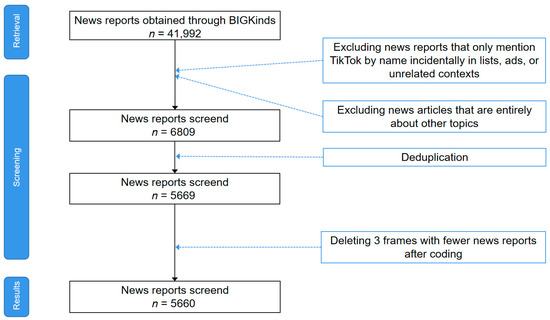
Figure 1.
Flowchart of retrieval, inclusion, and exclusion of TikTok-related media coverage.
3.2.1. First Stage Screening: Model Assisted Filtering and Human Verification
The first stage of screening was designed to remove clearly irrelevant reports, including false positives in which neither the headline nor the full text substantively engaged with TikTok-related issues. This stage adopted a combined approach consisting of large language model assisted preliminary screening followed by dual human coder verification.
3.2.2. Large Language Model Assisted Preliminary Screening
An initial relevance classification was conducted using GPT 5 Nano, which was selected for its suitability for large-scale text classification tasks. Screening criteria were defined in advance to exclude reports that mentioned TikTok only incidentally, such as in lists, advertisements, or unrelated comparisons, as well as reports whose substantive focus concerned other platforms or companies. The model performed semantic analysis of both headlines and full texts and produced a binary classification of relevant or not relevant. Based on this procedure, 6809 reports were retained for further examination. Detailed information on prompt design, classification rules, and the screening workflow is provided in Appendix A to facilitate transparency and replicability.
3.2.3. Dual Human Coder Verification
To evaluate the validity of the model-based screening, a dual human coder verification procedure was conducted. Two trained coders with familiarity in TikTok-related issues and the study’s analytical objectives independently reviewed a stratified random sample of the model’s classification results. Specifically, 20 percent of the reports classified as relevant by the model, amounting to 1362 articles, and 10 percent of those classified as not relevant, amounting to 3519 articles, were randomly selected. This resulted in a total verification sample of 4881 reports. Each coder independently reassessed the sampled articles according to the predefined screening criteria. Disagreements were resolved through discussion and, when necessary, adjudication by a third senior researcher.
3.2.4. Validity Assessment
Agreement between the model generated classifications and human judgments was calculated to assess screening validity. The results indicate a precision rate of 91.3 percent, defined as the proportion of model classified relevant reports confirmed as relevant by human coders, and a recall rate of 89.7 percent, defined as the proportion of human identified relevant reports successfully captured by the model. These results suggest that the model assisted screening achieved an acceptable level of validity and reliability for large-scale data refinement. Detailed statistics are reported in Table 1.

Table 1.
Human dual coder validation metrics for large language model classification of media coverage.
3.2.5. Deduplication
News databases frequently contain duplicate entries or minimally modified versions of the same article, which can distort descriptive statistics and subsequent analyses if not properly addressed. To mitigate this issue, an automated deduplication procedure based on textual similarity was applied. Natural language processing techniques were used to compute cosine similarity scores between article texts. When the similarity score between two reports exceeded a predefined threshold of 0.95, one version was retained while the others were removed. This procedure effectively eliminated highly overlapping content and reduced redundancy within the dataset. After deduplication, the number of retained news articles decreased from 6809 to 5669.
3.3. Frame Coding Scheme and Single-Label Assignment
This study employed a combined deductive and inductive coding strategy to identify dominant frames in TikTok-related news coverage. The topical categories provided by the BIGKinds database were used as an initial point of reference rather than as a fixed analytical framework. Building on these categories, the research team conducted open coding of the news corpus and iteratively refined the classification scheme in alignment with the study’s focus on framing dynamics and temporal change.
Through this iterative process, five analytically distinct frames were identified: politics, economy, security, culture, and society. Each frame was defined with explicit conceptual boundaries and corresponding operational criteria to ensure consistency in classification (see Table 2). The coding scheme was designed to capture differences in how TikTok was framed across news reports, rather than to enumerate all thematic elements present within individual articles.
Table 2.
Coding rules for frames.
Some news reports addressed multiple issues simultaneously, such as political regulation accompanied by economic implications. In these cases, classification followed a dominant frame principle. Each article was assigned to the frame that functioned as its primary interpretive lens, as indicated by the central problem definition, causal attribution, or evaluative emphasis articulated in the report. Ambiguous cases were resolved through careful assessment of which frame most strongly structured the overall narrative logic of the article.
Each news article was assigned to a single primary frame based on the principle of mutual exclusivity. This single label design does not negate the multidimensional nature of news discourse. Instead, it represents an analytical abstraction intended to capture the dominant framing orientation at a given point in time. This approach is consistent with the study’s emphasis on longitudinal analysis, as it facilitates temporal comparability and interpretability when examining shifts in framing patterns across the study period.
Although multi-label coding can offer greater sensitivity to within article complexity, a single label approach is more appropriate for identifying dominant frame transitions over time. It also reduces additional variance in the time series structure, thereby supporting the construction of the frame shift index and subsequent statistical analyses.
In this process, a very small number of news categories that were deemed analytically irrelevant were also removed, including copyright with four articles, health with three articles, and trends with two articles, resulting in the exclusion of nine articles in total. After this removal, the final effective sample consisted of 5660 news articles, which served as the core dataset for the subsequent analyses in this study.
To ensure the reliability of the coding results, a strict dual coder reliability test was implemented. First, both coders underwent specialized training that included jointly reviewing the operational definitions for each frame, conducting trial coding on 100 sample articles, and discussing any discrepancies in order to standardize coding criteria. Following this training phase, 15 percent of the full dataset, corresponding to 849 articles, was randomly selected as a reliability test sample and independently coded by the two coders.
Coding consistency was assessed using the Holsti coefficient. After multiple rounds of test coding and discussion, the Holsti coefficient reached 0.89, which exceeds the commonly accepted threshold of 0.80 in social science research and indicates a high level of inter coder reliability. In summary, through rigorous classification procedures and reliability testing, this study retained 5660 validated news articles as the core dataset for analyzing the distributional characteristics and longitudinal evolution of TikTok-related media framing.
3.4. Construction of the Frame Shift Index and Statistical Testing
This study adopted an integrated analytical strategy that combined the construction and normalization of the frame shift index (FSI), threshold-based identification, interrupted time series (ITS) analysis, and the Bai–Perron test (BPT) to systematically identify and validate significant shifts in news framing and their potential external drivers. The analytical procedure proceeded in three steps. First, potential changes in reporting orientation were quantified using the FSI. Second, predefined thresholds were applied to identify periods of pronounced framing change, followed by qualitative comparison of news texts before and after these periods to infer plausible triggering events. Third, the effects of identified events were statistically tested using ITS analysis, and longer-term structural changes in framing trajectories were further examined using the BPT.
3.4.1. Formula for the Frame Shift Index
To quantify longitudinal changes in media framing, this study constructs a FSI. The FSI is designed as a time-series indicator that captures shifts in the relative prominence of different framing orientations within TikTok-related news coverage over time. Specifically, it operationalizes changes in the balance between political and security frames and economic, cultural, and social frames within a given time period .
Formally, the FSI for time period is defined as follows:
The numerator consists of the number of articles coded under the political frame () and the security frame (), which together represent media attention to regulation, state authority, national interest, and geopolitical risk. The denominator consists of the number of articles coded under the economic (), cultural (), and social () frames, reflecting coverage that treats TikTok primarily as a market actor, cultural platform, or social space. By taking the logarithmic ratio between these two components, the FSI captures the relative dominance of political and security-oriented framing versus economic, cultural, and social (ECS)-oriented framing.
When > 0, political and security frames dominate the coverage during that period. When < 0, economic, cultural, and social frames are more prominent. When = 0, the two orientations are balanced. Rather than measuring absolute attention, the FSI therefore captures shifts in the orientation of media discourse.
The construction of the FSI is theoretically grounded in scholarship on securitization and the politicization of digital platforms (Wæver, 1995; Buzan et al., 1998; Gillespie, 2018; Dijck et al., 2018). Securitization theory posits that issues become securitized when they are discursively elevated from the realm of routine governance into matters of existential threat that justify exceptional political intervention (Wæver, 1995; Buzan et al., 1998). In studies of digital platforms, this process is increasingly evident as platforms such as TikTok are framed not only as cultural or economic infrastructures but also as objects of political contestation and national security concern, particularly in relation to data sovereignty, foreign influence, and geopolitical rivalry (Plantin et al., 2018; Gorwa, 2019; Roberts, 2019).
Consistent with this literature, the numerator of the FSI aggregates political and security frames to capture moments when media discourse emphasizes regulation, surveillance, national interest, or geopolitical conflict. These frames indicate a shift toward the exceptionalization of the platform as a political and security issue. In contrast, the denominator aggregates economic, cultural, and social frames, which correspond to a more routine mode of coverage that situates the platform within everyday market dynamics, cultural production, and social practice. This distinction aligns with classic and contemporary work on media framing, which conceptualizes frames as organizing principles that define problems, assign causality, and shape evaluative judgments (Entman, 1993; Devreese, 2005).
This dichotomization does not suggest that economic, cultural, or social frames are apolitical. Rather, it functions as an analytic heuristic that enables the tracing of longitudinal shifts in dominant framing orientations. Specifically, it allows the analysis to capture transitions from coverage that treats TikTok as an ordinary platform embedded in economic and cultural life to coverage that constructs it as a politicized or securitized object of public discourse. Similar analytic distinctions have been employed in prior research on issue escalation, framing transitions, and the politicization of technology and communication infrastructures (Karpf, 2016).
By formalizing this distinction into a ratio-based index, the FSI enables a dynamic assessment of how media attention rebalances between routine and exceptionalized frames over time, without presupposing rigid categorical boundaries. In line with computational approaches to the study of media discourse and social change, the index captures directional shifts in framing emphasis rather than fixed classifications (DiMaggio et al., 2013).
To facilitate comparison across time periods and reduce bias arising from scale differences, the FSI is normalized after calculation using Min-Max normalization, mapping the original values onto the [0, 1] interval. The normalized FSI provides a unified metric for subsequent threshold-based identification of framing shifts. For example, when the threshold is set at γ = 0.6, values of greater than 0.6 indicate periods characterized by pronounced shifts toward political and security framing. This normalization procedure enhances the interpretability of the index and supports the visual and statistical identification of temporal patterns in framing dynamics.
3.4.2. Sensitivity Analysis
To assess the robustness of the threshold used to identify significant frame shifts, this study conducted a sensitivity analysis using four alternative cutoff values: 0.6, 0.7, 0.8, and 0.9. These thresholds represent increasingly conservative criteria for defining periods dominated by political and security framing. For each cutoff value, a corresponding set of candidate shift points was generated based on the normalized FSI series.
Detected shift points were not treated as substantively meaningful by default. Instead, for each threshold level, a qualitative validation procedure was applied to evaluate the interpretive plausibility of the identified shifts. Specifically, news coverage immediately preceding and following each candidate shift point was examined through close reading. This process focused on identifying whether the shift corresponded to a coherent reorganization of dominant framing orientations, rather than reflecting short-term volatility or incidental changes in topic emphasis.
A shift point was retained for further analysis only when it was associated with a consistent and interpretable transition in media framing logic across adjacent periods. This combined quantitative and qualitative validation strategy ensured that identified frame shifts reflected meaningful changes in media discourse, rather than artifacts of threshold selection or transient fluctuations in coverage patterns.
3.4.3. Qualitative Identification of Frame Shifts and Key Events
After potential frame shift periods were identified based on the FSI, this study conducted a comparative qualitative analysis of news coverage before and after each shift point to identify external events that may have contributed to changes in dominant framing. This step aimed to situate quantitative indicators of framing change within concrete political, policy, and social contexts.
Researchers systematically examined news articles surrounding each identified shift period to identify event-level drivers, including major policy announcements, international disputes, regulatory interventions, and salient public events. Attention was paid to whether such events introduced new actors, problem definitions, or evaluative criteria into media discourse, thereby reorienting the dominant framing logic.
3.4.4. Interrupted Time Series Analysis
After candidate key events were identified, ITS analysis was employed to examine whether these events were associated with statistically significant changes in news framing. All ITS analyses were conducted at the monthly level, with the monthly mean of the normalized FSI serving as the unit of observation.
ITS analysis was applied to a set of substantively salient international political and policy events identified through qualitative examination of the news corpus and FSI-based frame shift detection. These events were selected because they represented discrete, well-defined interventions with clear temporal boundaries, such as major regulatory actions or geopolitical decisions concerning TikTok.
The core logic of ITS analysis is to compare changes in both level and trend before and after an intervention. Accordingly, segmented regression models were estimated that included three components: a baseline time trend capturing pre event dynamics, a post event indicator capturing an immediate level change, and an interaction term between time and the post event indicator capturing changes in the post event trend. This specification allows for the differentiation between short-term shocks and longer-term adjustments in framing dynamics (see Table 3).
Table 3.
Technical specification of the interrupted time series model.
Compared with simple trend analysis, ITS provides a more rigorous approach by explicitly accounting for temporal dependence in time series data. To address potential autocorrelation in monthly observations, all ITS models were estimated using ordinary least squares with heteroskedasticity and autocorrelation consistent standard errors, implemented via the Newey West procedure with a maximum lag length of 12 months. Model fit was assessed using R2, and statistical significance was evaluated using two-tailed tests.
3.4.5. Bai–Perron Test
While ITS analysis focuses on the short-term framing effects associated with discrete events, the evolution of media framing may also be shaped by longer-term structural transformations that cannot be attributed to any single intervention. To capture such stage-based changes in framing trajectories, this study applies the BPT to the monthly FSI time series.
The BPT identifies structural breakpoints by minimizing the residual sum of squares of a linear trend model and evaluates their statistical significance using sequential F tests. All analyses are conducted at the monthly level. To reduce boundary effects and ensure a sufficient number of observations within each regime, trimming is applied such that the first and last three monthly observations are excluded from breakpoint consideration. The maximum number of allowable breakpoints is set to six, taking into account the length of the time series and standard practice in structural change analysis. Statistical significance is assessed at the 0.05 level (see Table 4).
Table 4.
Technical specification of the Bai–Perron test.
When combined with ITS analysis, BPT enables a multi-scale analytical strategy. ITS focuses on assessing the causal association between specific events and short-term shifts in framing, whereas BPT captures longer-term, stage-based transformations in the underlying structure of media narratives. Together, these methods allow the study not only to test the effects of individual events but also to identify the broader temporal organization through which media framing of TikTok evolves over time.
4. Results
4.1. Distribution of Media Coverage Frames
Figure 2 and Figure 3 present the overall distribution of media frames in South Korean news coverage of TikTok between 2020 and 2024. Political framing was the most prevalent, comprising 2862 articles and accounting for 50.57 percent of the total coverage. Economic framing ranked second, with 1263 articles or 22.31 percent. Cultural framing appeared in 711 articles, representing 12.56 percent of the sample. Security framing accounted for 498 articles or 8.80 percent, while social framing was the least represented category, with 326 articles or 5.76 percent.
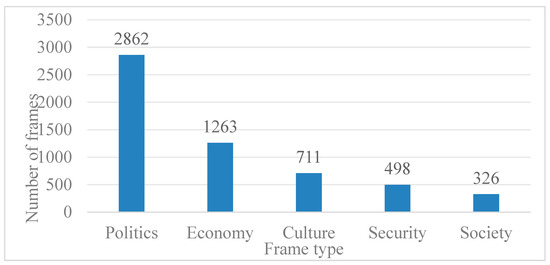
Figure 2.
Distribution of News Frames in South Korean TikTok Coverage from 2020 to 2024.
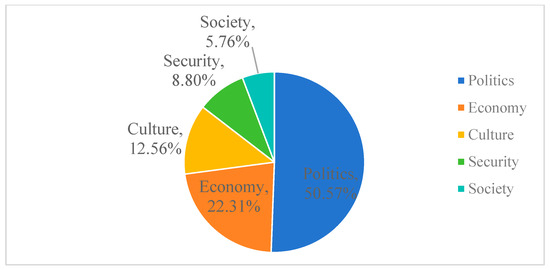
Figure 3.
Proportion of frames in South Korean TikTok-related media coverage from 2020 to 2024.
This distribution indicates that South Korean media coverage of TikTok was overwhelmingly oriented toward political considerations. Political framing not only exceeded all other frames individually but also constituted an absolute majority of the coverage. In contrast, economic and cultural frames occupied secondary positions, while security and social frames received comparatively limited attention.
4.2. Sensitivity Analysis Results
Applying the sensitivity analysis described above, this study compared the number and characteristics of detected frame shifts across four alternative threshold values. The results are summarized in Table 5. When the threshold was set at 0.6, a total of 17 candidate shift points were identified. Qualitative examination of news coverage surrounding these points indicates that several of them corresponded to short-term fluctuations in topic emphasis rather than sustained changes in dominant framing orientations.
Table 5.
Number of detected frame shifts under alternative FSI thresholds.
As the threshold became more conservative, the number of detected shift points declined substantially. At the 0.8 threshold, eight shift points were identified, while only four shifts remained when the threshold was increased to 0.9. Although the shifts detected under these more restrictive specifications tended to be clear and sharply defined, they excluded several moderate yet substantively interpretable framing transitions that were visible in the surrounding news coverage.
The intermediate threshold of 0.7 yielded 13 detected shift points and represented a balance between sensitivity and conservatism. Close reading of news content immediately before and after each breakpoint showed that the majority of these shifts were both temporally stable and substantively interpretable, capturing clear transitions in dominant framing logics. In addition, these shifts could be meaningfully related to broader political or regulatory developments affecting the platform.
On this basis, the threshold value of 0.7 was adopted for subsequent analyses, as it provides the most balanced representation of frame shifts in the data while minimizing sensitivity to short-term volatility and avoiding the exclusion of substantively meaningful transitions.
4.3. Temporal Trends of FSI
Figure 4 presents the monthly standardized FSI trends for South Korean media coverage of TikTok from 2020 to 2024, together with candidate frame shift points that exceed the predefined significant shift threshold. In the figure, the blue line represents the monthly mean FSI, the orange dashed line indicates the threshold for a significant frame shift (FSI > 0.7), and red diamonds mark candidate shift points where the threshold is exceeded. A total of 13 such points were identified.
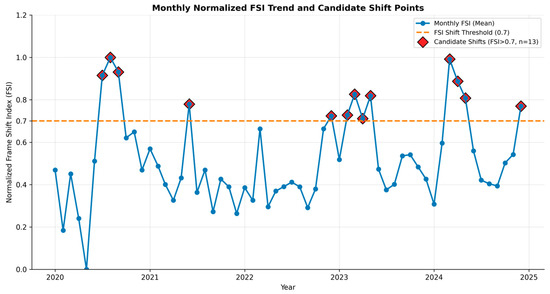
Figure 4.
Temporal dynamics of the FSI in South Korean media coverage of TikTok (2020–2024) and candidate frame shift points.
Overall, the monthly FSI displays substantial temporal variation and frequently exceeds the 0.7 threshold, indicating that South Korean media coverage of TikTok underwent multiple periods of pronounced framing adjustment during the observation period. The distribution of candidate shift points is not uniform over time. Instead, they cluster around several specific periods, including July 2020, June 2021, December 2022, February 2023, March 2024, and December 2024. From the perspective of event-driven framing shifts (RQ2), this temporal clustering suggests that significant adjustments in media framing tend to occur during periods marked by major external developments.
Figure 5 builds on Figure 4 by highlighting key candidate frame shift points with green vertical lines. These points correspond to moments when the FSI moves from a routine fluctuation range below 0.7 to a sustained position above the threshold. Such transitions indicate that media coverage shifted from a relatively stable framing pattern into a phase of substantive narrative reorientation. Rather than reflecting gradual drift, these shifts are characterized by abrupt changes in the dominant framing logic.
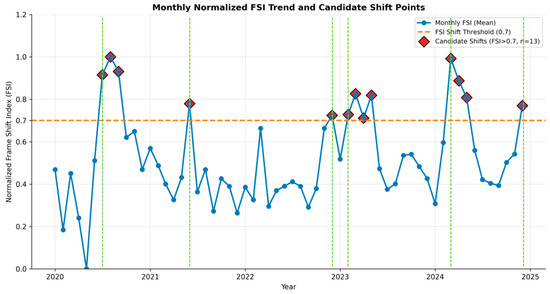
Figure 5.
Identification of key candidate frame shift points.
To further examine the relationship between framing dynamics and external developments, key international political and policy events related to TikTok were identified and annotated through close examination of the news corpus, as summarized in Table 6. As illustrated in Figure 6, candidate frame shift points exceeding the 0.7 threshold exhibit a high degree of temporal alignment with major international political conflicts and transnational policy events. For instance, in July 2020, following announcements by the Trump administration framing TikTok as a national security risk and proposing restrictive measures, the FSI increased sharply and surpassed the threshold, indicating a substantial shift in South Korean media framing. In February 2023, amid intensified restrictions on TikTok across multiple Western countries, the FSI again exceeded the threshold repeatedly, suggesting heightened sensitivity of Korean media narratives to external regulatory pressure. A further pronounced peak occurred in March 2024 after the United States House of Representatives passed legislation concerning the divestiture of TikTok, reinforcing the association between transnational policy actions and framing shifts.
Table 6.
Extraction of TikTok-related time points and event estimation in Korean news coverage.
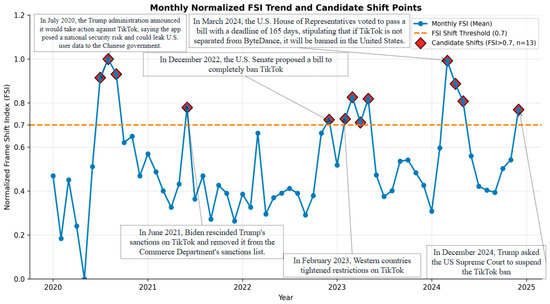
Figure 6.
Identification of key international political and policy events related to TikTok corresponding to FSI > 0.7.
4.4. Interrupted Time Series
ITS analysis was conducted to assess whether major international political and regulatory events were associated with statistically significant short-term changes in framing dynamics. Using monthly FSI data, the ITS models estimated both immediate level changes and post-event trend adjustments following each event (see Table 7 and Figure 7).
Table 7.
ITS result parameters.
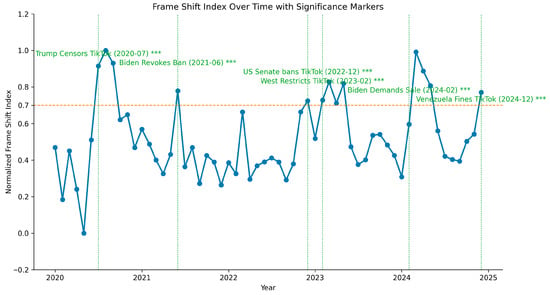
Figure 7.
Testing the correlation between international events and frame shift points using ITS. “***” indicates a statistically significant association between international events and frame shift points (p < 0.001).
The results show that all identified international events are associated with statistically significant changes in framing dynamics. Several events exhibit significant level effects, indicating abrupt shifts in dominant framing immediately following the event. Other events are characterized by significant post event trend changes, suggesting more gradual yet sustained adjustments in media narratives over time.
These results indicate that major geopolitical and regulatory events are systematically linked to changes in the temporal trajectory of media framing. Rather than producing only transient fluctuations, such events are associated with both immediate and longer-term adjustments in how TikTok is framed in South Korean news coverage.
4.5. Bai–Perron Test Results
To examine whether framing dynamics exhibit statistically significant structural changes beyond discrete events, we applied the BPT to the monthly FSI time series. As shown in Figure 8, the analysis identifies a statistically significant breakpoint in November 2022, which is marked by a red diamond.
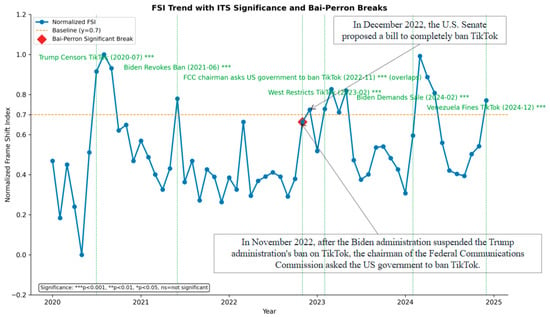
Figure 8.
Multiple breakpoint identification of long-term frame changes based on BPT.
This breakpoint indicates that, in addition to event specific shocks such as the Trump administration’s restrictions on TikTok in 2020, the Biden administration’s rescission of the ban in 2021, the United States push for TikTok divestment in late 2022, and the renewed divestiture demand in 2024, media framing also underwent a broader structural reconfiguration over time. Changes in news frames therefore reflect not only immediate responses to salient political events but also stage-based adjustments in narrative logic shaped by longer-term geopolitical competition and international policy dynamics.
The statistically significant breakpoint identified in November 2022 marks a critical transition in South Korean media narratives surrounding TikTok. Rather than representing a short-lived reaction to a single policy announcement, this breakpoint reflects a deeper reorganization of dominant framing logics. Prior to November 2022, TikTok-related coverage was largely organized around cultural, economic, and platform governance frames, with political or security concerns appearing intermittently and primarily in response to isolated international developments. Following the breakpoint, political and security frames became increasingly central and persistent, indicating a qualitative transformation in how the platform was discursively positioned.
This shift points to a stage-based reconstruction of media narratives under the cumulative influence of long-term geopolitical dynamics and evolving international regulatory pressures. By late 2022, repeated policy debates in the United States and Europe, together with intensifying strategic competition between the United States and China, had gradually stabilized TikTok’s association with national security, sovereignty, and governance concerns. In this context, November 2022 functions as a tipping point at which previously episodic politicized frames were consolidated into a dominant interpretive schema. The breakpoint therefore captures a transition from an earlier phase characterized by fragmented and event contingent framing to a subsequent phase in which TikTok was systematically constructed as an object of political and security relevance.
5. Conclusions and Discussion
This study systematically examined the dynamics of South Korean media coverage of TikTok from 2020 to 2024 by integrating FSI, ITS, and BPT. The findings show that political frames consistently dominated the overall narrative, that frame shifts exhibited clear event-driven characteristics, and that long-term structural breakpoints were present in the framing trajectory.
5.1. Discussion of Results
5.1.1. Platform Political Logic in a Middle-Positioned Country
The analysis shows that political frames accounted for 50.57% of South Korean media coverage of TikTok between 2020 and 2024, substantially exceeding economic, cultural, and other frames. This pattern indicates that TikTok is deeply embedded in platform political struggles within the Korean public sphere. From a regional and geopolitical perspective, this finding is closely related to South Korea’s strategic position as a middle-positioned country (Sohn, 2019). On the one hand, South Korea is deeply integrated into the global digital economy (Grover et al., 2024) and relies on platforms such as TikTok to facilitate cross border business activities and cultural exchange. On the other hand, it occupies a critical node in U.S. China geopolitical competition (Lee, 2024), which makes it difficult to remain insulated from international political disputes surrounding TikTok.
This dual structural position encourages Korean media to foreground political dimensions of the platform, including U.S. proposals to restrict or ban TikTok and broader debates over digital sovereignty involving China. In this sense, political framing in Korean media reflects the country’s need for strategic balancing in global platform politics, as domestic discourse must simultaneously respond to external geopolitical pressure and internal governance concerns.
Although this pattern shares similarities with the highly politicized coverage of TikTok observed in Western media (Brown, 2024; Tran et al., 2025), important differences remain. Western media political frames tend to center on a relatively unified narrative of national security threats (Etulain & Guanaes, 2025). By contrast, Korean media political framing incorporates both international policy tracking, such as the 2024 U.S. House legislation on TikTok divestment, and domestic regulatory developments, including cooperation between Korean prosecutors and TikTok in addressing deepfake-related crimes. This global local dual perspective suggests that political framing in South Korea is not merely an extension of Western security discourse but a hybrid construction shaped by both external pressures and internal policy priorities (Ahmed et al., 2019).
5.1.2. Quantifying Event-Driven Frame Shifts
By integrating FSI and ITS, this study quantitatively confirms the event-driven nature of South Korean media coverage of TikTok. All 13 significant frame shift points identified by the FSI exceeding the 0.7 threshold were closely synchronized with international political conflicts or transnational policy disputes, and all corresponding key events reached statistical significance in the ITS models (p < 0.001). These results indicate a clear and non-random association between external political events and shifts in dominant media framing.
This finding not only supports the generalizability of event-driven media frame theory (Speer, 2017) but also addresses important methodological limitations in prior research. Existing studies of framing dynamics in the context of digital platforms have relied primarily on qualitative interpretation or descriptive temporal comparisons (Kumar, 2023), which makes it difficult to assess the strength, timing, and statistical robustness of the relationship between external events and frame changes. By contrast, the normalized FSI developed in this study enables the systematic, quantifiable, and reproducible identification of frame shifts, offering a methodological template for future research on dynamic framing processes in platform politics.
From a mechanistic perspective, external events trigger frame shifts because classic agenda setting dynamics extend naturally into the domain of platform governance. International policy conflicts, such as U.S. sanctions or regulatory actions targeting TikTok, carry high news value and political salience. As a result, they elevate the priority of political and security dimensions in media coverage, while simultaneously crowding out economic, cultural, and social frames. This reallocation of media attention produces abrupt and measurable changes in framing orientation, which are captured by the FSI and statistically verified through ITS analysis.
5.1.3. Long-Term Structural Shifts in Media Frames
The BPT analysis reveals a statistically significant long-term structural breakpoint in November 2022, indicating that the evolution of media frames is shaped not only by short-term event shocks but also by deeper and more persistent structural adjustments. Contextual analysis surrounding November 2022 suggests that this breakpoint emerged from the convergence of multiple factors. At the international level, the chair of the U.S. Federal Communications Commission publicly called for banning TikTok, further intensifying global debates over the platform’s political and security implications. At the domestic level, South Korea advanced legislation targeting deepfake-related crimes and initiated institutionalized cooperation between prosecutors and TikTok, effectively consolidating platform regulation as a salient security issue across policy domains.
This interaction between global pressure and domestic response altered the narrative logic of Korean media coverage. Rather than merely tracking international policy developments, South Korean media increasingly engaged in the proactive construction of local regulatory agendas surrounding TikTok. As a result, platform governance and security concerns became embedded as stable interpretive anchors in media discourse, marking the transition to a new stage in the evolution of framing.
These findings support Hinck’s (2022) theoretical proposition regarding the structural reconstruction of media narratives, which argues that digital platform frames do not evolve in a linear or incremental fashion but instead undergo stage based transformations under sustained geopolitical and governance pressures. Compared with prior studies that emphasize short-term event-driven fluctuations (Ahmed et al., 2019), the breakpoint analysis presented here provides clearer evidence of path dependence in frame evolution. Even after the immediate intensity of international controversies diminished, political and security-oriented frames remained persistently salient in Korean media coverage of TikTok. This persistence suggests a locking effect generated by long-term structural adjustment, in which once exceptionalized frames become normalized as dominant interpretive schemas.
5.2. Theoretical Contributions
This study contributes to the literature on platform politics and media framing in three interrelated ways.
First, at the conceptual level, this study advances theorization of platform politics by introducing frame shifts as a dynamic process through which digital platforms move between routine and exceptionalized modes of public discourse. Although prior scholarship has examined platforms as sites of regulation, governance, or political contestation, much of this work relies on relatively static distinctions between political and non-political issues (Dijck, 2020). In contrast, this study conceptualizes politicization and securitization as longitudinal framing dynamics. It demonstrates how platforms such as TikTok are discursively reconstituted over time, shifting from cultural or economic infrastructures to objects of political and security concern. By foregrounding temporal movement rather than fixed categories, this approach aligns with and extends securitization scholarship that emphasizes the processual nature of issue transformation (Balzacq et al., 2016).
Second, at the methodological level, this study contributes to media framing research by integrating computational frame classification with time series-based causal inference. The proposed FSI operationalizes framing change as a continuous and relational measure rather than a static categorical outcome, allowing for the identification of both abrupt disruptions and gradual transitions in dominant framing orientations. By combining FSI with interrupted time series analysis and BPT, the study illustrates how computational methods can be theoretically grounded while remaining sensitive to temporal structure, causal sequencing, and longitudinal interpretation. This integrated design offers a replicable framework for examining dynamic framing processes in platform-related media discourse.
Third, at the empirical level, this study extends a predominantly Western focused literature on platform governance and media framing by examining South Korean media discourse. The findings show that frame shifts are not merely reactive responses to isolated policy announcements but unfold through staged and cumulative processes shaped by sustained geopolitical tensions and international regulatory dynamics. As a non-Western case situated at the intersection of major power competition, South Korea provides comparative insight into how platform politicization operates across different media systems and political contexts. This contributes to a more geographically inclusive understanding of platform politics and highlights the contextual contingency of media framing trajectories.
5.3. Implications
This study extends existing TikTok research by offering a regional perspective and by clarifying the dual role of news media in platform politics within a middle-positioned country. The findings show that South Korean media function simultaneously as recipients of global political agendas and as active reconstructors of local narrative logics. Media coverage does not merely transmit external political signals but selectively rearticulates them within domestic regulatory, cultural, and institutional contexts.
From a policy perspective, the results suggest that policymakers should be attentive to the susceptibility of national media agendas to international political developments. Heightened exposure to transnational conflicts and regulatory debates can rapidly reshape domestic media framing, amplifying particular policy concerns while marginalizing others. Strengthening the resilience, reflexivity, and critical capacity of agenda setting processes may therefore be essential for maintaining balanced public discourse in environments characterized by intense geopolitical pressure.
From an academic perspective, this study points to several promising avenues for future research. Comparative studies across political systems could examine whether similar patterns of event-driven and structural frame shifts emerge in countries with different geopolitical positions or media institutions. In addition, future work could investigate how shifts in dominant media frames influence public perception, political attitudes, or downstream policy feedback, thereby connecting media framing dynamics more directly to democratic outcomes.
5.4. Limitations and Future Research
Despite its contributions, this study has several limitations that should be acknowledged and that also point to directions for future research.
First, the analysis focuses on mainstream news coverage drawn from a large-scale news database. Although this corpus provides systematic and longitudinal access to elite media discourse, it does not capture the full diversity of contemporary information environments, including social media platforms (Che et al., 2023), alternative media outlets, or audiovisual formats (Che et al., 2025). As a result, the identified framing dynamics primarily reflect institutional news production rather than the broader hybrid media system. Future research could extend the analytical framework developed here to multi-platform or cross media data in order to assess whether similar frame shifts occur within social media discourse or through interactions between legacy and platform-based media (Che et al., 2024).
Second, although this study adopts an advanced quantitative design that integrates large language model-based frame classification, structural break tests, and interrupted time series analysis, these methods remain sensitive to modeling choices. Decisions related to time aggregation, threshold selection for frame shifts, and breakpoint identification criteria may influence the number and timing of detected changes, even though robustness and sensitivity analyses were conducted. Future studies could explore alternative modeling strategies, such as Bayesian change point models or state space approaches, to more explicitly account for uncertainty and to compare competing specifications of framing dynamics.
Third, the analytical strategy of this study is designed to identify structural shifts and temporal associations in media framing rather than to establish strong causal claims about specific actors or decision making processes. The detected frame shifts should therefore be interpreted as aggregate level transformations in media discourse, not as direct effects of individual policy actions or editorial decisions. Future research could complement this macro level analysis with qualitative approaches, such as newsroom ethnography or in depth interviews, to uncover the micro level mechanisms through which political, regulatory, and geopolitical forces shape-framing practices over time. In addition, large language model-based simulation experiments represent a promising direction for further methodological development in this area (Che et al., 2026).
Author Contributions
Conceptualization, S.C.; methodology, S.C.; software, X.H.; validation, S.C.; formal analysis, S.C.; investigation, J.X.; resources, S.C.; data curation, M.Z.; writing—original draft preparation, S.C.; writing—review and editing, L.M.; visualization, Y.H.; supervision, L.M.; project administration, L.M.; funding acquisition, L.M. All authors have read and agreed to the published version of the manuscript.
Funding
This paper was supported by the Education Science Research Project under the 14th Five-Year Plan of Shaanxi Province (Grant No. SHG25Q478), the Undergraduate and Continuing Education Teaching Reform Research Project of Chang’an University (Grant No. ZG202504), the Teacher Education Reform and Teacher Development Research Project of Shaanxi Province (Grant No. SJS2025ZD010), and the China Transport Education Scientific Research Project (2024–2026, Grant No. JT2024ZD061).
Institutional Review Board Statement
Not applicable.
Informed Consent Statement
Not applicable.
Data Availability Statement
The datasets generated during the current study are available in the Dataverse repository, https://doi.org/10.7910/DVN/4A8W8R.
Conflicts of Interest
The authors declare no conflicts of interest.
Appendix A
This study employed a LLM to assist with the preliminary screening and thematic classification of TikTok-related news articles. To ensure transparency and replicability, this appendix details the model configuration, prompt design, classification rules, and validation workflow.
Large Language Model-Assisted News Screening and Classification Procedure
The initial screening and classification were conducted using GPT-5 Nano, accessed via the OpenAI API. GPT-5 Nano was selected because it is optimized for large-scale text classification tasks and demonstrates high semantic consistency in categorical judgment. The implementation was executed in a Python (3.12.12) environment using a custom batch processing script, with controlled request pacing to ensure computational stability and reproducibility.
The inputs consisted of full text news articles retrieved from the BIGKinds database. All texts were written in Korean, including both headlines and article bodies. Each article was processed independently by the model in order to avoid contextual contamination across items and to preserve article level classification integrity.
A standardized prompt template was used consistently for all news articles during the LLM assisted screening and classification stage. The prompt was written in Korean to match the original language of the news texts and to minimize potential semantic distortion introduced by translation. The prompt explicitly instructed the model to determine whether the article was substantively related to TikTok and, if so, to assign a dominant thematic category based on predefined criteria.
Table A1.
Prompt used for LLM-assisted news classification (Korean–English Comparison).
Table A1.
Prompt used for LLM-assisted news classification (Korean–English Comparison).
| Original Prompt (Korean) | English Translation |
|---|---|
| 당신은 뉴스 분석 전문가입니다. 아래의 한국어 뉴스 내용을 바탕으로 해당 뉴스가 가장 적합한 단 하나의 주제 카테고리에 속하는지 자동으로 판단해 주세요. | You are a news analysis expert. Based on the following Korean news content, please automatically determine the single most appropriate thematic category to which the news belongs. |
| 다음은 참고할 수 있는 분류 범주입니다 (반드시 준수할 필요는 없으며, 필요시 새로운 카테고리를 생성할 수 있습니다): | The following are reference categories that you may consult (you are not required to strictly adhere to them, and you may create a new category if necessary): |
| (1) 문화/엔터테인먼트: 문화 혁신, 트렌드, 문화 교류, 대중문화 | (1) Culture/Entertainment: cultural innovation, trends, cultural exchange, popular culture. |
| (2) 경제/산업: 전자상거래, 광고, 고용, 크리에이터 경제, 산업 발전 | (2) Economy/Industry: e-commerce, advertising, employment, creator economy, industrial development. |
| (3) 사회/청년: 청소년 문제, 중독, 정신 건강, 교육, 사회적 영향 | (3) Society/Youth: youth-related issues, addiction, mental health, education, social impacts. |
| (4) 안전/프라이버시: 데이터 보호, 개인정보, 감시, 콘텐츠 안전 | (4) Security/Privacy: data protection, personal information, surveillance, content safety. |
| (5) 정치: 국가 안보, 정부 규제, 국제 관계, 지정학적 갈등 | (5) Politics: national security, government regulation, international relations, geopolitical conflict. |
| 분류 규칙: | Classification rules: |
| 1. 위 범주는 참고용이며, 뉴스 내용에 가장 적합한 단 하나의 카테고리를 선택하거나 필요 시 새로운 카테고리를 생성할 수 있습니다. | 1. The above categories are for reference only; select the single category that best fits the news content, or create a new category if necessary. |
| 2. 반드시 하나의 카테고리만 반환해야 합니다. | 2. You must return only one category. |
| 3. 카테고리 이름은 최대 5글자 이내로 간결하게 작성하세요. | 3. The category label must be concise, within five characters. |
| 4. 어떠한 추가 설명, 해석, 이유도 포함하지 마세요. | 4. Do not include any additional explanation, interpretation, or justification. |
| 5. 반드시 한국어로만 답변하세요. | 5. Respond only in Korean. |
| 뉴스 내용: | News content: |
| {NEWS_TEXT} | {NEWS_TEXT} |
| 분류 결과 (단 하나의 카테고리만): | Classification result (single category only): |
The model was required to produce a single label categorical judgment for each article. No probabilistic confidence scores or threshold-based decision rules were applied. Instead, the model’s direct categorical output was used, consistent with a forced choice dominant frame classification strategy commonly adopted in large-scale framing analyses.
Each article was submitted individually to the model, and the resulting category label was stored as a preliminary classification. To assess reliability and mitigate potential model bias, a stratified random sample of model labeled articles was independently reviewed by two trained human coders. Any disagreements between coders were resolved through discussion with a third senior researcher.
Model performance was evaluated using precision, recall, and F1 score, calculated by comparing model outputs with human coded results. The validation results indicated that the model assisted screening achieved acceptable levels of accuracy and consistency, supporting its suitability for large-scale preliminary classification.
The classification procedure described above relies on standard API-based model access, explicit prompt instructions, and deterministic decision rules. Researchers seeking to replicate this process may substitute functionally equivalent language models while retaining the same prompt logic, input language, and single label classification constraints.
References
- Abidin, C., & Lee, J. (2023). K-pop TikTok: TikTok’s expansion into South Korea, TikTok Stage, and platformed glocalization. Media International Australia, 188(1), 86–111. [Google Scholar] [CrossRef]
- Ahmed, S., Cho, J., & Jaidka, K. (2019). Framing social conflicts in news coverage and social media: A multicountry comparative study. International Communication Gazette, 81(4), 346–371. [Google Scholar] [CrossRef]
- Balzacq, T., Léonard, S., & Ruzicka, J. (2016). ‘Securitization’ revisited: Theory and cases. International Relations, 30(4), 494–531. [Google Scholar] [CrossRef]
- Boyd, R. L., Blackburn, K. G., & Pennebaker, J. W. (2020). The narrative arc: Revealing core narrative structures through text analysis. Science Advances, 6(32), eaba2196. [Google Scholar] [CrossRef]
- Brown, S. A. (2024). Beyond the great firewall: EU and US responses to the China challenge in the global digital economy. Journal of European Integration, 46(7), 1089–1110. [Google Scholar] [CrossRef]
- Buzan, B., Wæver, O., & De Wilde, J. (1998). Security: A new framework for analysis. Lynne Rienner Publishers. [Google Scholar]
- Cao, H. (2025). Exploring the promotion of musical intangible cultural heritage under TikTok short videos. Scientific Reports, 15(1), 21772. [Google Scholar] [CrossRef] [PubMed]
- Che, S., Kuang, K., Liu, L., & Liu, S. (2025). Communicating climate change to young adults in China: Examining predictors of user engagement on Chinese social media. International Journal of Climate Change Strategies and Management, 17(1), 545–570. [Google Scholar] [CrossRef]
- Che, S., Kuang, K., & Liu, S. (2024). Climate communication with Chinese youth by Chinese nongovernmental organizations: A case study of Chinese weather enthusiasts on Bilibili. Weather, Climate, and Society, 16(3), 467–479. [Google Scholar] [CrossRef]
- Che, S., Zhou, Y., Zhang, S., Nan, D., & Kim, J. H. (2023). Impact of ByteDance crisis communication strategies on different social media users. Humanities and Social Sciences Communications, 10(1), 1–16. [Google Scholar] [CrossRef]
- Che, S., Zhu, M., Zhang, S., Jung, H. S., Lee, H., Wang, Z., & Miller, L. (2026). Simulating the people’s voice: Leveraging algorithmic fidelity to assess ChatGPT’s performance in modeling public opinion on Chinese government policies. Information Processing & Management, 63(3), 104567. [Google Scholar]
- Chen, Y., Thorson, K., & Lavaccare, J. (2022). Convergence and divergence: The evolution of climate change frames within and across public events. International Journal of Communication, 16, 23. [Google Scholar]
- Civila, S., & Lugo-Ocando, J. A. (2024). News framing and platform affordances in social media. Journalism Practice, 20(1), 188–210. [Google Scholar] [CrossRef]
- Deng, R., & Ahmed, S. (2025). Perceptions and paradigms: An analysis of AI framing in trending social media news. Technology in Society, 81, 102858. [Google Scholar] [CrossRef]
- Devreese, C. H. (2005). News framing: Theory and typology. Information Design Journal Document, 13(1), 51–62. [Google Scholar]
- Dijck, J. (2020). Governing digital societies: Private platforms, public values. Computer Law & Security Review, 36, 105377. [Google Scholar] [CrossRef]
- Dijck, J., Poell, T., & Waal, M. (2018). The platform society: Public values in a connective world. Oxford University Press. [Google Scholar]
- DiMaggio, P., Nag, M., & Blei, D. (2013). Exploiting affinities between topic modeling and the sociological perspective on culture: Application to newspaper coverage of US government arts funding. Poetics, 41(6), 570–606. [Google Scholar] [CrossRef]
- Dooremalen, T., & Uitermark, J. (2021). The framing of 9/11 in American, French, and Dutch national newspapers (2001–2015): An inductive approach to studying events. International Sociology, 36(3), 464–488. [Google Scholar] [CrossRef]
- Dwyer, T., & Hutchinson, J. (2019). Through the looking glass: The role of portals in South Korea’s online news media ecology. Journal of Contemporary Eastern Asia, 18(2), 16–32. [Google Scholar]
- Entman, R. M. (1993). Framing: Toward clarification of a fractured paradigm. Journal of Communication, 43(4), 51–58. [Google Scholar] [CrossRef]
- Etulain, C. R., & Guanaes, L. (2025). Data protectionism: A case study relative to the USA’s ban of the social media platform TikTok. The International Journal of Interdisciplinary Civic and Political Studies, 20(2), 53. [Google Scholar] [CrossRef]
- Faden, K. (2024). National economic security and the politics of securitization: A critical examination. International Journal of History and Political Sciences, 4(11), 10–16. [Google Scholar]
- Finkelstein, D., Yanovsky, S., Zucker, J., Jagdeep, A., Vasko, C., Jagdeep, A., Jussim, L., & Finkelstein, J. (2025). Information manipulation on TikTok and its relation to American users’ beliefs about China. Frontiers in Social Psychology, 2, 1497434. [Google Scholar] [CrossRef]
- Flew, T., & Su, C. (2023). Introduction: Sovereignty and the return of governance for digital platforms. Global Media and China, 8(1), 3–5. [Google Scholar] [CrossRef]
- Gillespie, T. (2018). Custodians of the Internet: Platforms, content moderation, and the hidden decisions that shape social media. Yale University Press. [Google Scholar]
- Gong, Q., & Billon, P. (2014). Feeding (on) geopolitical anxieties: Asian appetites, news media framing and the 2007–2008 food crisis. Geopolitics, 19(2), 291–321. [Google Scholar] [CrossRef]
- Gorwa, R. (2019). What is platform governance? Information, Communication & Society, 22(6), 854–871. [Google Scholar] [CrossRef]
- Gray, J. E. (2021). The geopolitics of ‘platforms’: The TikTok challenge. Internet Policy Review, 10(2). [Google Scholar] [CrossRef]
- Grover, R., Jang, K., & Su, L. W. (2024). Beyond digital protection (ism) comparing data governance frameworks in Asia. Journal of Information Policy, 14, 161–193. [Google Scholar] [CrossRef]
- Helmond, A. (2015). The platformization of the web: Making web data platform ready. Social Media + Society, 1(2), 2056305115603080. [Google Scholar] [CrossRef]
- Hinck, R. S. (2022). US hypocrisy and the end of american exceptionalism? narratives of the January 6th Attack on the US capitol from illiberal national media. American Behavioral Scientist, 67(6), 807–836. [Google Scholar] [CrossRef]
- Huang, J., Cook, G. G., & Xie, Y. (2021). Between reality and perception: The mediating effects of mass media on public opinion toward China. Chinese Sociological Review, 53(5), 431–450. [Google Scholar] [CrossRef]
- Jin, D. Y. (2024). The rise of digital platforms as a soft power apparatus in the New Korean Wave era. Communication and the Public, 9(2), 161–177. [Google Scholar] [CrossRef]
- Jo, E. A. (2024). Storytelling elites and the remaking of nationhood in Democratic South Korea and Taiwan. Comparative Political Studies, 1–37. [Google Scholar] [CrossRef]
- Karpf, D. (2016). Analytic activism: Digital listening and the new political strategy. Oxford University Press. [Google Scholar]
- Kim, S. (2022). Emerging powers and a middle power: US-China competition and South Korea in cyberspace. In Korea’s middle power diplomacy: Between power and network (pp. 55–76). Springer International Publishing. [Google Scholar]
- Kumar, A. (2023). State nationalism or popular nationalism? Analysing media coverage of TikTok ban on mainstream Indian TV news channels. Media Asia, 50(4), 616–632. [Google Scholar] [CrossRef]
- Lee, S. (2024). US-China technology competition and the emergence of techno-economic statecraft in East Asia: High technology and economic-security nexus. Journal of Chinese Political Science, 29(3), 397–416. [Google Scholar] [CrossRef]
- Li, H. (2025). Digital geopolitics and globalization: A comparative study of TikTok and K-pop. Journal of Contemporary Art Criticism, 1(1), 58–69. [Google Scholar] [CrossRef]
- Liu, J., & Yang, L. (2022). “Dual-Track” platform governance on content: A comparative study between China and United States. Policy & Internet, 14(2), 304–323. [Google Scholar]
- Mazumdar, S. (2022). Loving the enemy app: Resistance versus professionalism in ‘post-TikTok’ India. Global Media and China, 7(3), 340–356. [Google Scholar] [CrossRef]
- Mirrlees, T. (2024). The US and China’s digital tech war: A new rivalry within and beyond the US empire. Socialist Register, 60, 105–140. [Google Scholar]
- Moon, C. I., & Yeon, W. (2024). Clashes of techno-statecraft: US-China technology rivalry and South Korea’s strategy? Business and Politics, 27(4), 548–568. [Google Scholar] [CrossRef]
- Pan, Z., & Kosicki, G. M. (1993). Framing analysis: An approach to news discourse. Political Communication, 10(1), 55–75. [Google Scholar] [CrossRef]
- Park, D., Lee, H., & Jeong, S. H. (2025). Production and correction of misinformation about fine dust in the Korean news media: A big data analysis of news from 2009 to 2019. American Behavioral Scientist, 69(2), 219–239. [Google Scholar] [CrossRef]
- Plantin, J. C., Lagoze, C., Edwards, P. N., & Sandvig, C. (2018). Infrastructure studies meet platform studies in the age of google and Facebook. New Media & Society, 20(1), 293–310. [Google Scholar]
- Poell, T., Nieborg, D., Duffy, B., Prey, R., & Cunningham, S. (2017). The platformization of cultural production. In Selected papers of AOIR 2017 (pp. 1–19). University of Groninge. [Google Scholar]
- Roberts, S. T. (2019). Behind the screen. Yale University Press. [Google Scholar]
- Sohn, Y. (2019). South Korea under the United States–China rivalry: Dynamics of the economic-security nexus in trade policymaking. The Pacific Review, 32(6), 1019–1040. [Google Scholar] [CrossRef]
- Speer, I. (2017). Reframing the Iraq War: Official sources, dramatic events, and changes in media framing. Journal of Communication, 67(2), 282–302. [Google Scholar] [CrossRef]
- Su, C., & Tang, W. (2023). Data sovereignty and platform neutrality—A comparative study on TikTok’s data policy. Global Media and China, 8(1), 57–71. [Google Scholar] [CrossRef]
- Tang, X. (2024). A comparative study of popular culture and fashion in East Asia: China, South Korea, and Japan. Pakistan Journal of Life & Social Sciences, 22(2), 2824–2837. [Google Scholar]
- Tran, H. D., & Diep, P. P. U. (2025). “Gotta report ‘em all”: How international news diversity impacts public knowledge, perceptions of foreign nations and nationals and fear-based xenophobia. News Research Journal, 46(1), 137–166. [Google Scholar] [CrossRef]
- Tran, H. D., Diep, P. P. U., & Booth, H. (2025). National security versus freedom of speech: How media exposure, personal values, and media framing influence non-users’ support for a national ban on TikTok. New Media & Society. [Google Scholar] [CrossRef]
- Wang, Z. (2025). Data flows meet great power politics: The emerging digital security dilemma between China and the US. Politics and Governance, 13, 10234. [Google Scholar] [CrossRef]
- Wæver, O. (1995). Securitization and desecuritization. Centre for Peace and Conflict Research. [Google Scholar]
- Xie, W., & Jiang, S. (2025). Digital technology races between China and the US: A critical media analysis of US media coverage of China’s rise in technology and globalization. Online Media and Global Communication, 4(2), 216–264. [Google Scholar] [CrossRef]
- Xin, J., & Matheson, D. (2018). One belt, competing metaphors: The struggle over strategic narrative in English-language news media. International Journal of Communication, 12, 21. [Google Scholar]
- Zeng, J., & Kaye, D. B. V. (2022). From content moderation to visibility moderation: A case study of platform governance on TikTok. Policy & Internet, 14(1), 79–95. [Google Scholar] [CrossRef]
- Zubair, B. (2023). China’s mediated public diplomacy in the United States. In Chinese soft power and public diplomacy in the United States (pp. 69–90). Springer Nature Singapore. [Google Scholar]
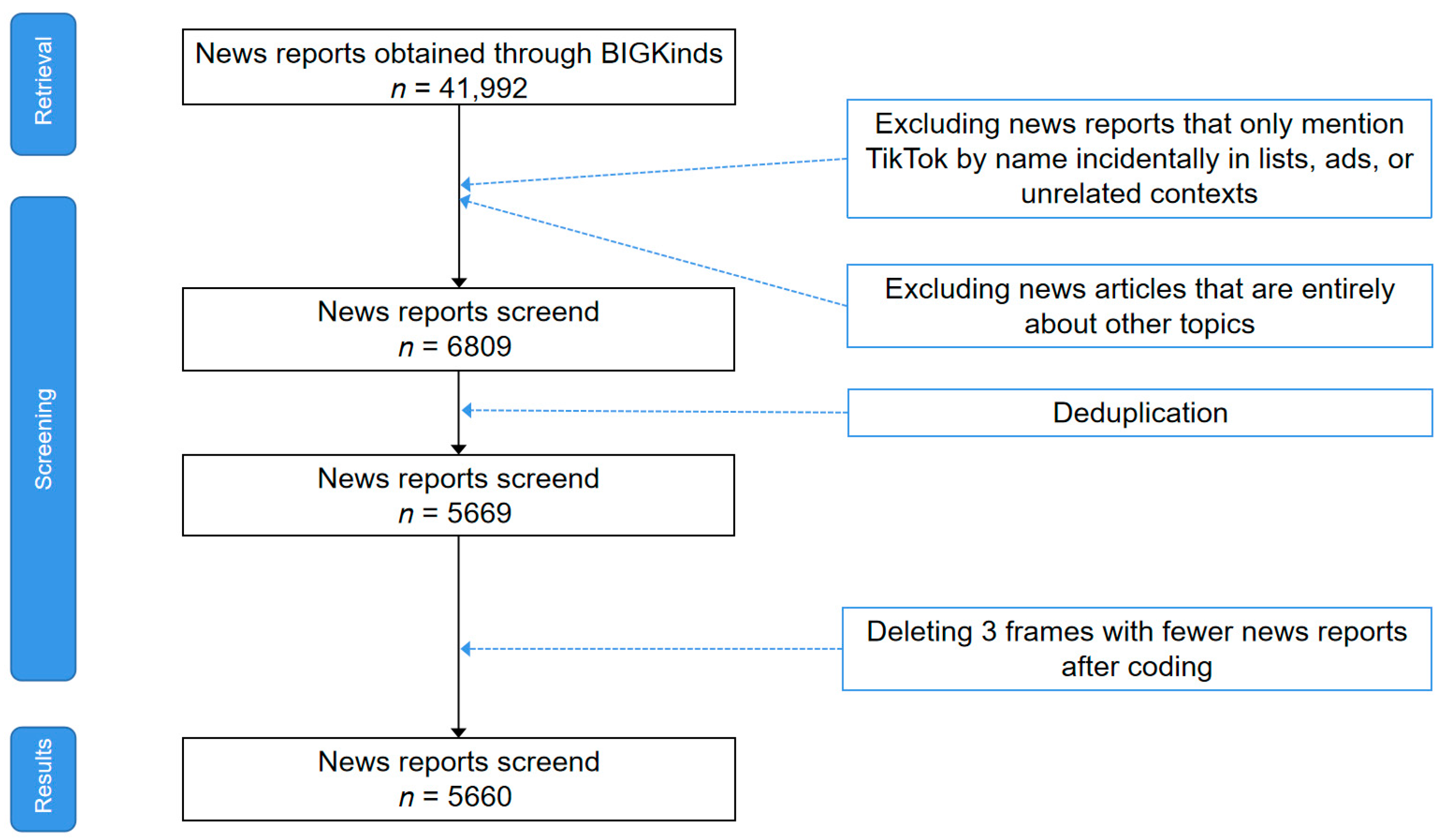
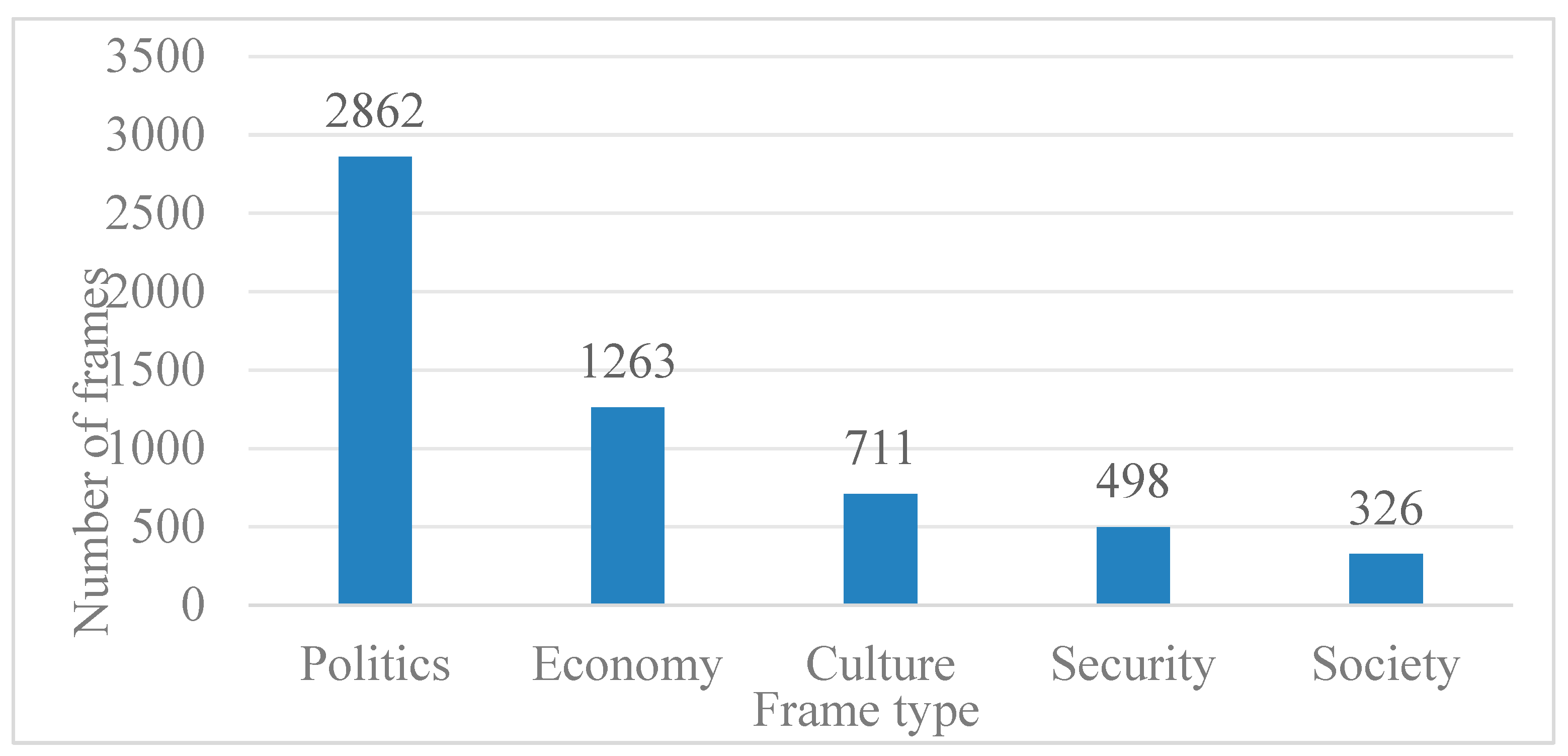
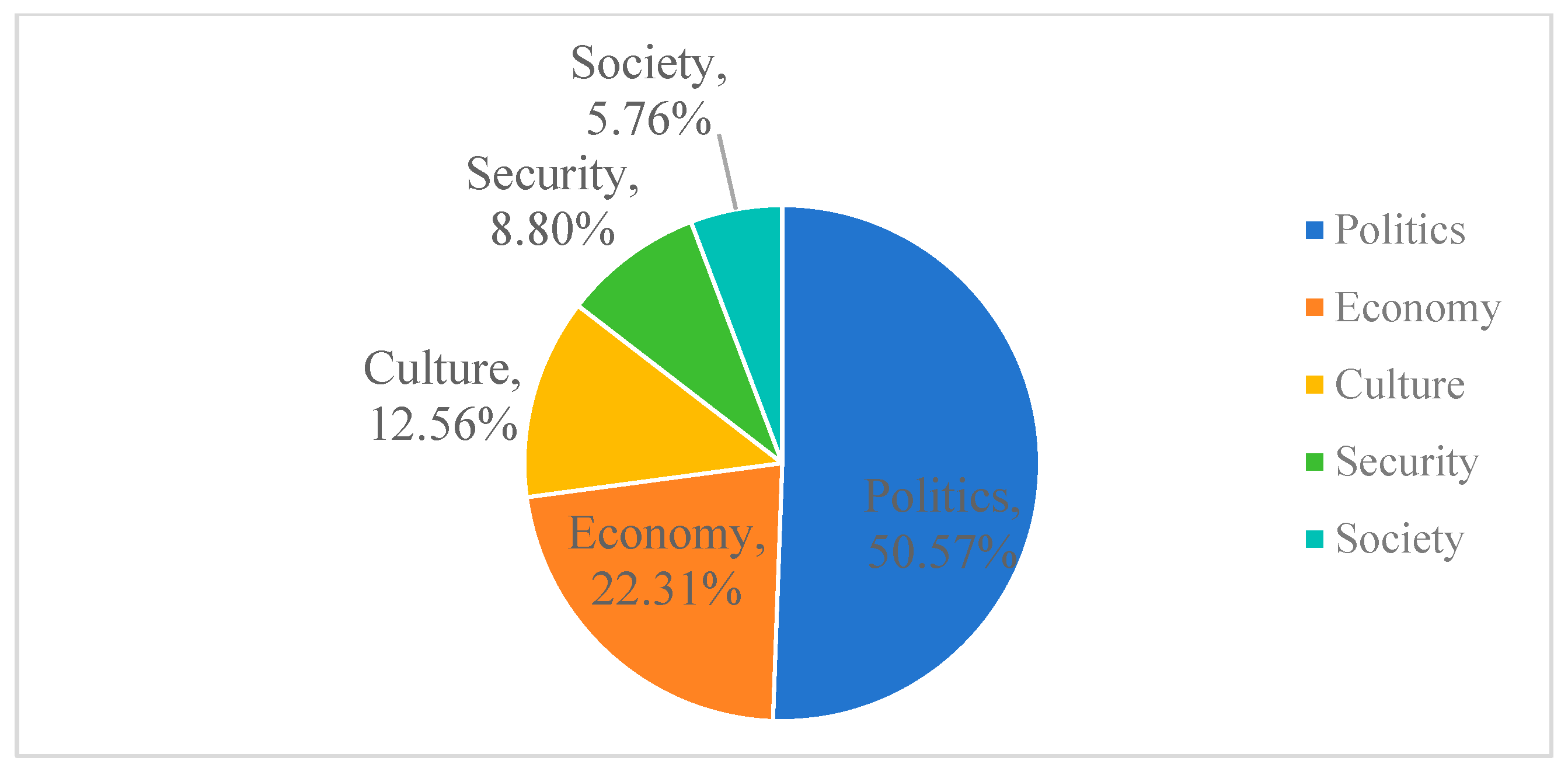
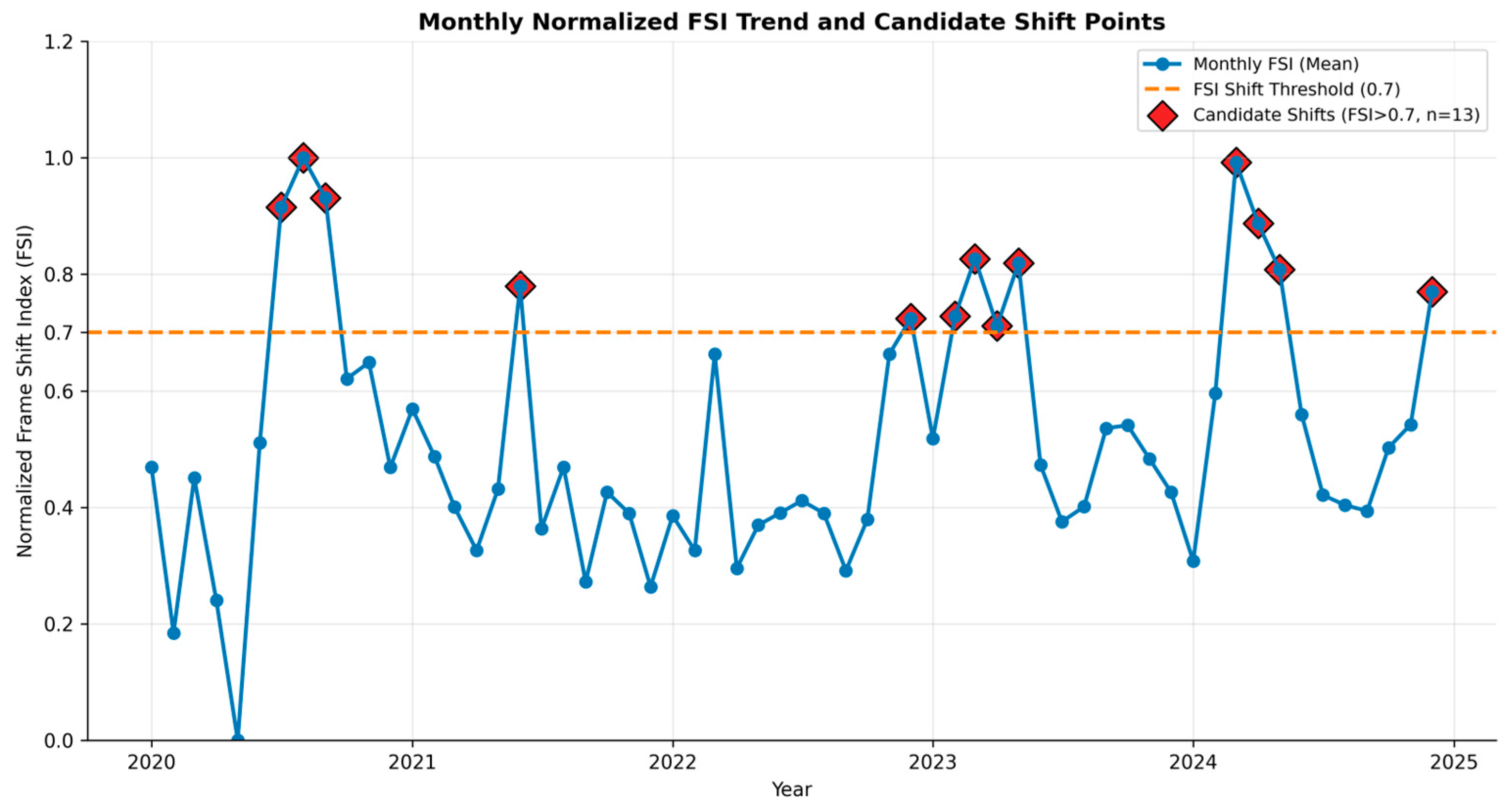
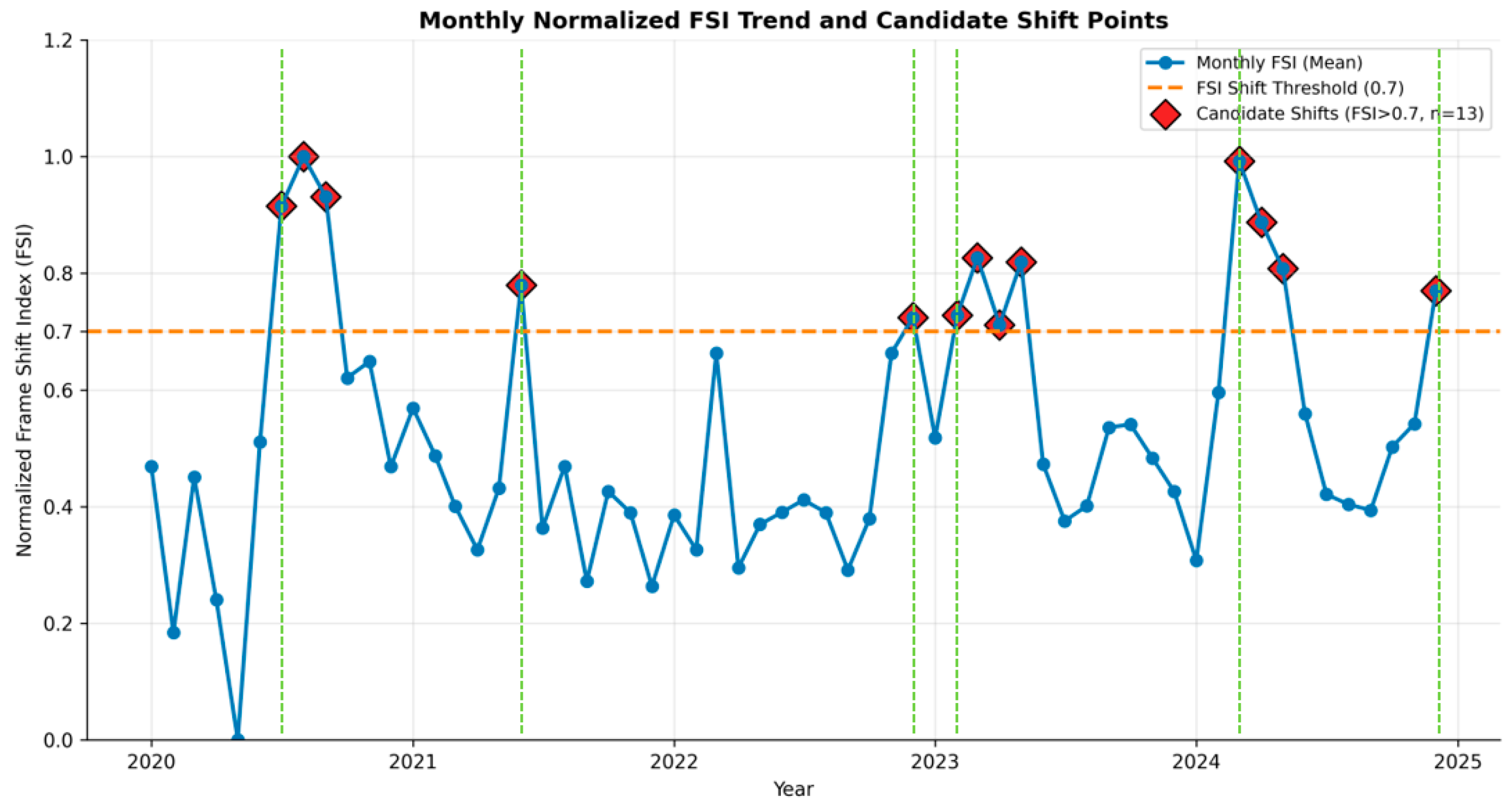
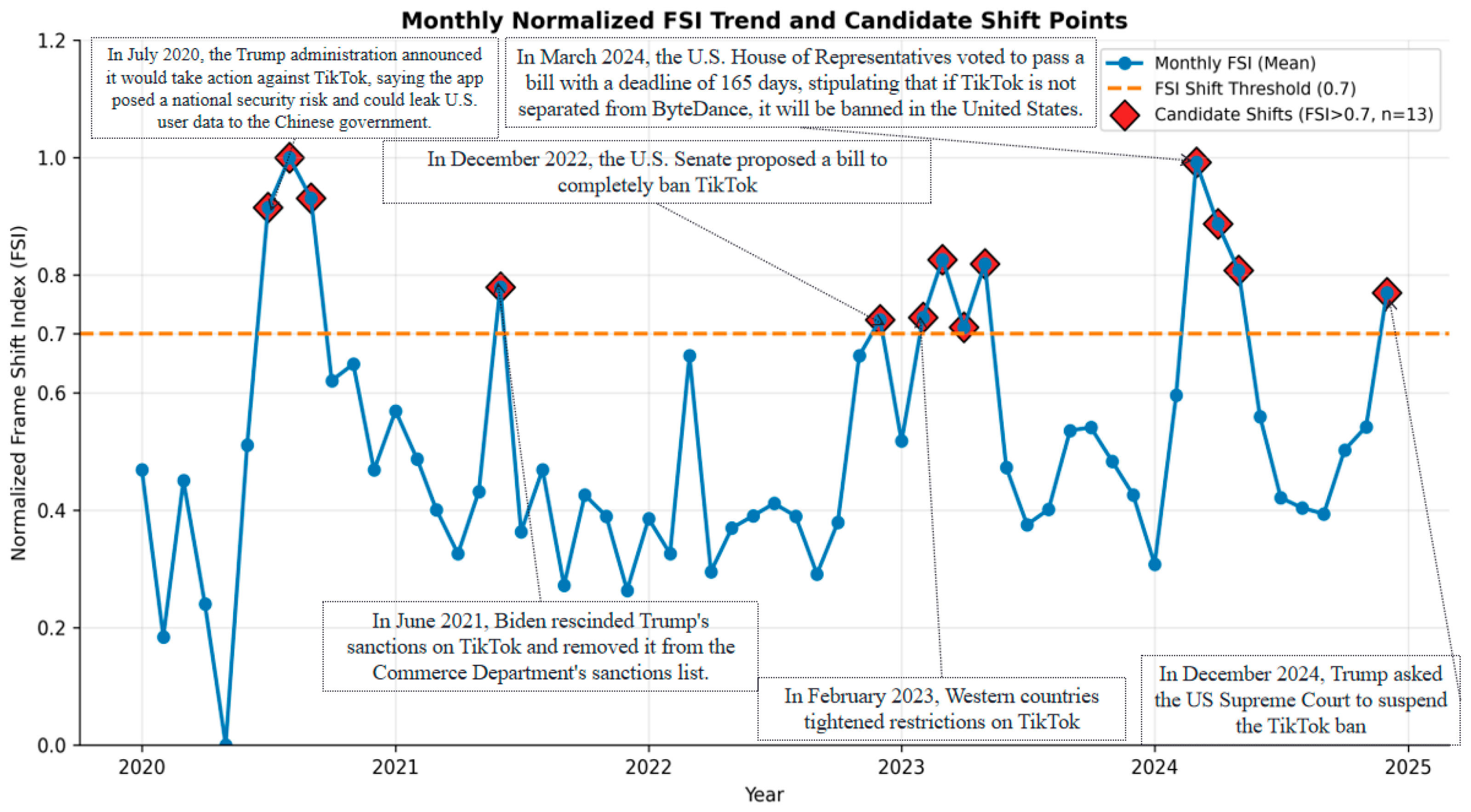
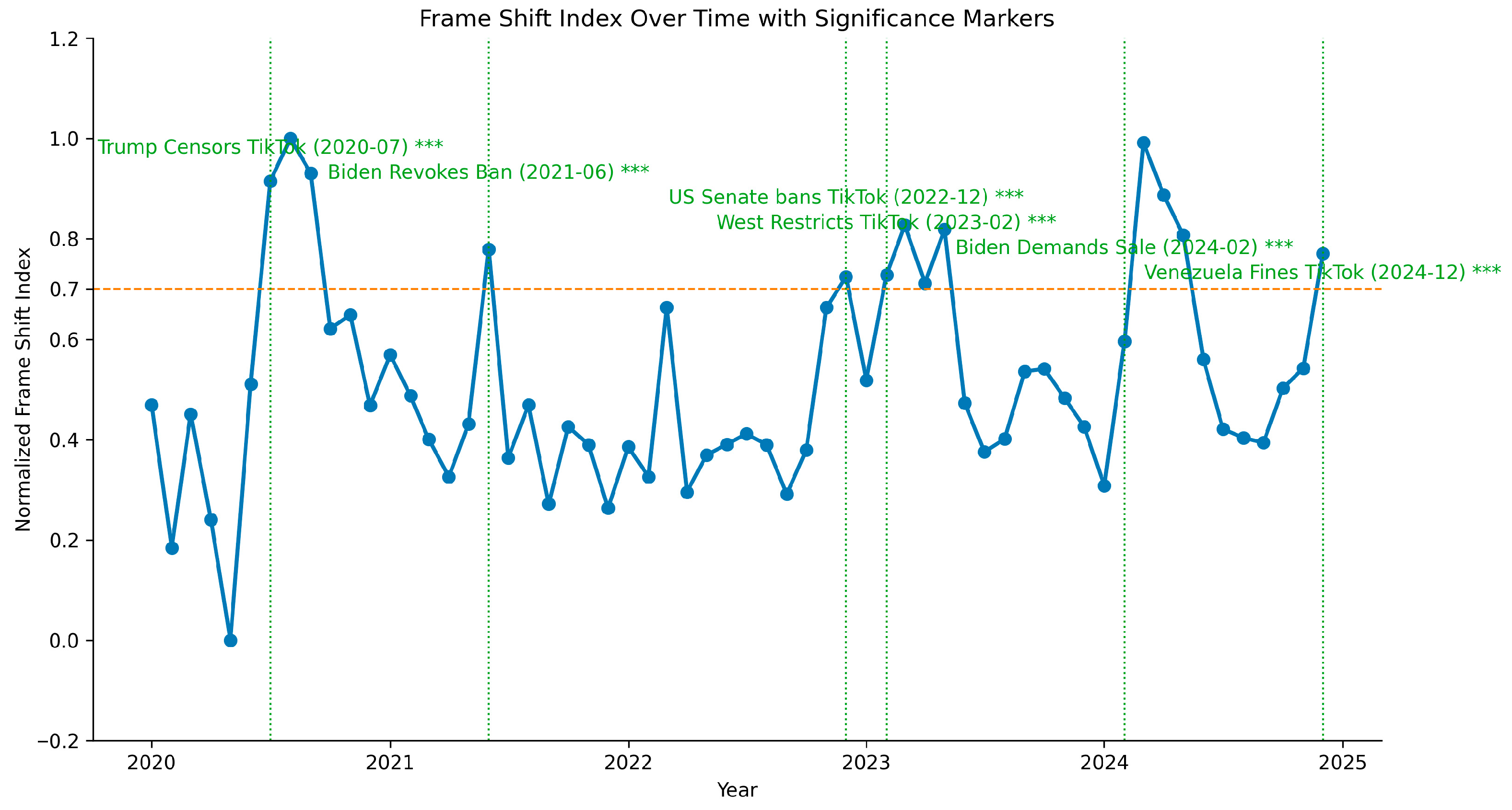
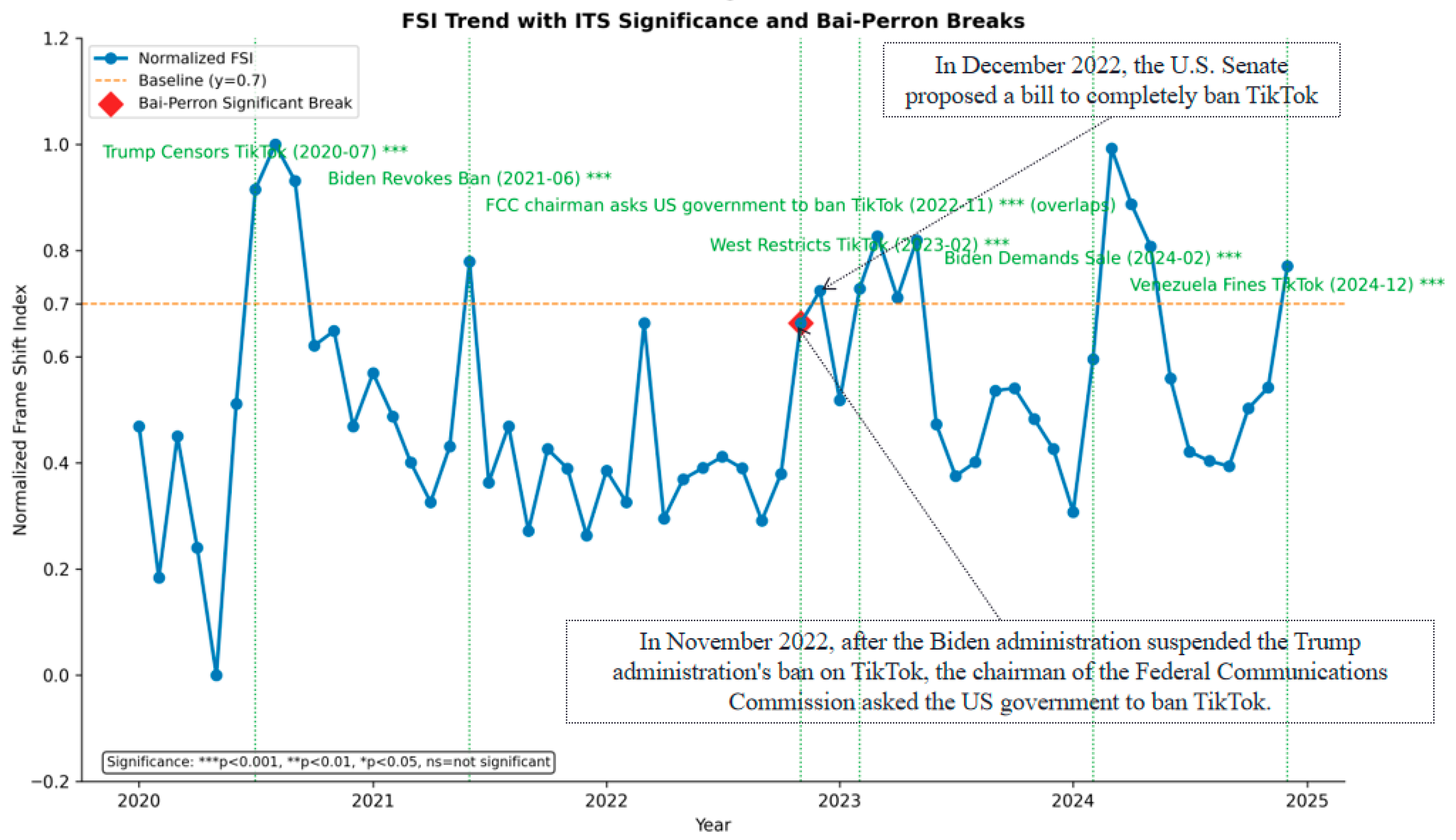
Disclaimer/Publisher’s Note: The statements, opinions and data contained in all publications are solely those of the individual author(s) and contributor(s) and not of MDPI and/or the editor(s). MDPI and/or the editor(s) disclaim responsibility for any injury to people or property resulting from any ideas, methods, instructions or products referred to in the content. |
© 2026 by the authors. Licensee MDPI, Basel, Switzerland. This article is an open access article distributed under the terms and conditions of the Creative Commons Attribution (CC BY) license.