You are currently viewing a new version of our website. To view the old version click .
Journalism and Media
  • Article
  • Open Access

27 November 2025

Polarization and Sentiment Shifts in Reddit Discussion on the US Foreign Aid Freeze

and
College of Journalism and Communications, University of Florida, Gainesville, FL 32611, USA
*
Author to whom correspondence should be addressed.

Abstract

By triangulating sentiment trends, topic models, and ideological variance, this study shows how digital publics respond to significant shifts in US foreign policy. We analyze Reddit discussions of the 20 January 2025 90-day freeze on US foreign assistance, with a focus on USAID, across partisan (r/Democrats and r/Republican) and neutral (r/fednews) subreddits. Using Structural Topic Modeling and sentiment analysis on posts and comments collected via ArcticShift, we find clear polarization in framing and tone. Overall sentiment was predominantly negative, but sources of negativity diverged: Republican forums emphasized fiscal responsibility, government waste, and national sovereignty; Democratic forums emphasized humanitarian harm and institutional erosion; r/fednews foregrounded institutional, legal, and administrative concerns. Topic-prevalence estimates reveal that themes such as executive overreach and aid justification were prominent but framed differently by the community. The findings highlight Reddit’s role as an arena for contesting and reframing policy debates.

1. Introduction

On 20 January 2025, President Donald Trump issued an executive order leading to a 90-day freeze on foreign assistance (Lee, 2025). This freeze disrupted USAID (United States Agency for International Development) operations, prompting furloughs and layoffs, and led to the suspension of thousands of programs that deliver humanitarian, development, and health services worldwide (Lyngaas et al., 2025). This freeze eventually led to the ban of USAID and the programs under its purview. Sub-Saharan Africa is expected to suffer more than any other region, given that the US gave the region more than $6.5 billion in humanitarian assistance in 2024, making the pause especially consequential (Knickmeyer & Kinnard, 2025).
Historically, foreign aid has been a key instrument of US diplomacy and soft power (Milner & Tingley, 2010), yet public opinion remains ambivalent. While most Americans believe that the US foreign aid budget is too generous, there remain polarized views on the propriety of foreign aid, with some advocating for prioritizing “America first” policies and others advocating for “abandoning the world” (Hurst et al., 2017). These tensions have been amplified on digital platforms that amplify ideological differences.
Among these platforms, Reddit stands out as a dynamic arena for political deliberation, offering a distinctive environment for threaded, substantive discussion across partisan and non-partisan communities (Treen et al., 2022). Reddit’s subreddit system allows for the comparison of distinct ideological spaces, making it particularly valuable for observing polarization (Nithyanand et al., 2017). While Reddit users are not a representative sample of US voters, prior research indicates that political discussions on Reddit often align with partisan media narratives and reflect emerging trends in public sentiment (Soliman et al., 2019).
This study, therefore, asks the following questions:
  • How do discussions about the US foreign aid freeze differ between political and non-political subreddits?
  • How does sentiment toward the foreign aid freeze evolve over time on Reddit?
To answer these research questions, this study applies sentiment analysis and Structural Topic Modeling (STM) to Reddit posts and comments, identifying prevailing emotions, thematic emphasis, and justificatory frames that structure online debates. Ultimately, this research offers insights into how digital publics interpret and contest major shifts in US foreign policy, highlighting Reddit as a space where polarization and policy meaning are co-produced through everyday discourse.

2. Literature Review

2.1. Contextualizing USAID

International Foreign aid has long served as a cornerstone of US foreign policy and a key instrument of soft power since the end of World War II. The origins of the modern US foreign assistance program can be traced back to the Marshall Plan of 1948, which was designed to rebuild Europe and secure it as a Cold War ally (Steil & Council on Foreign Relations, 2018). Building on this legacy, President John F. Kennedy established the US Agency for International Development (USAID) in 1961 through Executive Order 10973, which was later codified by Congress under the Foreign Assistance Act of 1961 (McCabe, 2025). Created to consolidate fragmented aid initiatives, USAID became the primary agency for delivering US financial and technical assistance to developing nations. Its mission reflected Cold War imperatives, promoting democratic governance and market-oriented development across newly independent states in Africa, Asia, and Latin America.
USAID embodies the United States’ “three Ds” of international engagement, diplomacy, development, and defense (Roy, 2025). Since the 1960s, it has played a central role in addressing global challenges, including the eradication of diseases, alleviation of poverty, and response to humanitarian crises. The agency contributed to the eradication of smallpox, the fight against polio, and major famine responses in India and Ethiopia (Norris, 2021). It later spearheaded initiatives such as PEPFAR during the HIV/AIDS pandemic and COVID-19 humanitarian relief, reinforcing its dual role as both a development and diplomatic instrument (Roy, 2025). USAID thus represents an institutionalized form of soft power that merges humanitarian aid with strategic statecraft, aligning its programs with broader US geopolitical interests.
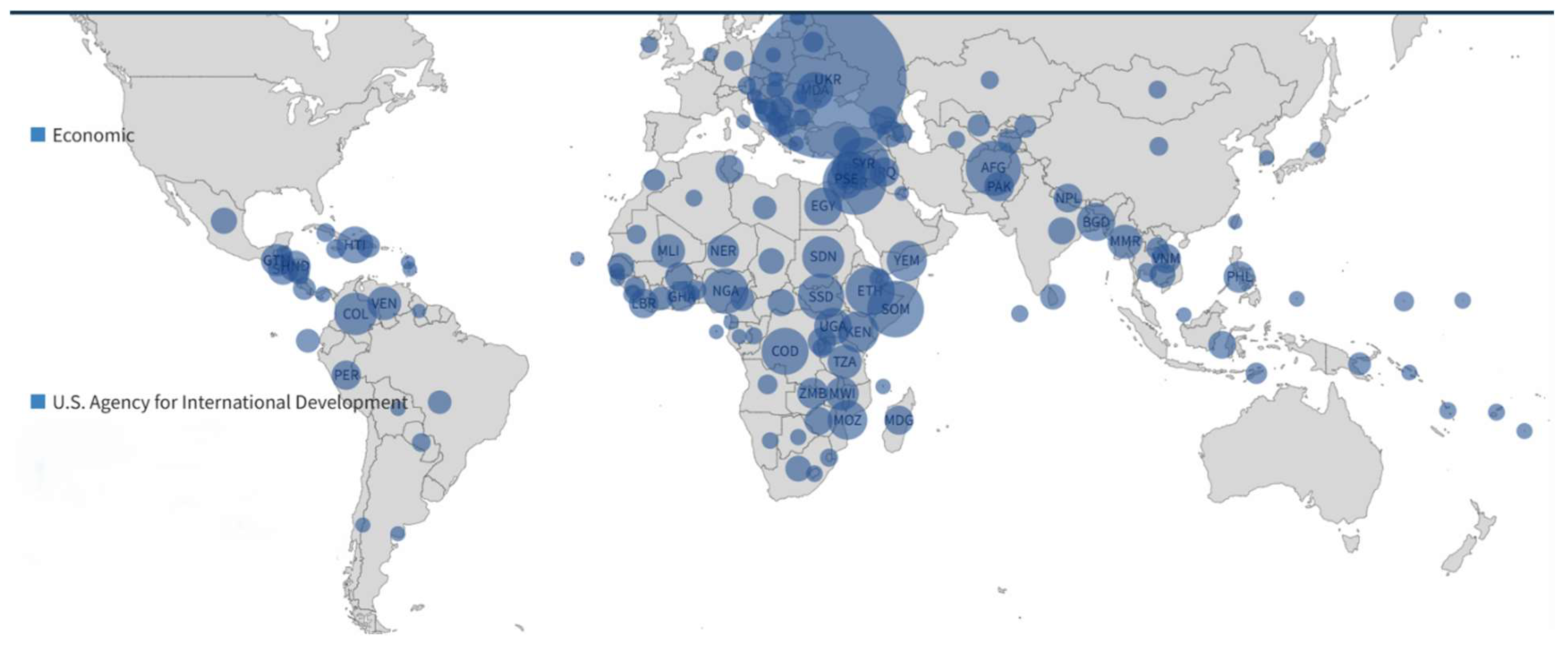
Operationally, USAID partners with local and international organizations, universities, private firms, and other governments to implement its programs (Office of Inspector General, n.d.). As of 2024, it employed about 10,000 staff and maintained missions in over 60 countries, as shown in Figure 1 (McCabe, 2025). Although its budget accounts for less than 1% of US federal expenditures, its 2024 allocation of approximately $35 billion funded programs in global health, education, governance, and human rights (Foreign Assistance.gov, 2025).
Figure 1. A map of countries with USAID’s obligated assistance in fiscal year 2023. The FY 2023 data is the most accurate, as FY 2024 is only partially reported (Foreign Assistance.gov, 2025).
This historical overview underscores the centrality of USAID to both the U.S’s foreign policy and the developmental aspirations of many recipient nations. Against this backdrop, the Trump administration’s decision to ban USAID operations sparked globally engaging debates across traditional and social media platforms. On Reddit, users participated in polarized discussions that reflected broader anxieties over whether the “America First” logic constituted a calculated nationalistic move or a retreat from the United States’ long-standing commitment to global leadership. This study further explores the sentiments surrounding these discussions on Reddit.

2.2. The “America First” Policy

The “America First” is a political and policy framework of Mr. Donald Trump. The policy characterizes Mr. Trump’s presidency, which prioritizes the interests of the United States, especially in foreign policy (The White House, 2017). Under Mr. Trump’s first tenure as the President of the United States (POTUS, the America First policy led to the renegotiation of the North American Free Trade Agreement (NAFTA), which became the United States-Mexico-Canada Agreement (USMCA), a deal meant to extract the best deal for the American worker (The White House, 2020).
President Trump has continued to aggressively pursue the America First policy in his return to office in January 2025. On the first day of his second term, Mr. Trump, who had halted funding for the World Health Organization (WHO) in his first term (Ollstein, 2020), withdrew the US from the activities and under the purview of the global health watchdog (Wingrove et al., 2025). Apart from the dissolution of USAID, the America First policy has significantly manifested in the trade war that emerged from the global tariffs imposed by Trump’s administration on over 180 countries, causing global trade uncertainty and a temporary stock market collapse (Picchi, 2025).
Critics of the policy point to its isolationist bent and the possibility of making America “small” instead of significant in global affairs (Wittes, 2017). The policy also dictated the building of “the great wall” on the southern border between the US and Mexico (Macdonald, 2018). Some scholars argue that America First is inchoate in its application, is concurrently interventionist and isolationist, depending on the sector (Anderson et al., 2017; Ettinger, 2018; Oglesby, 2020).
This study investigates Reddit users’ discussions on the suspension of the USAID’s global activities. America First scholarships have focused on the global trade and economic dimensions (Macdonald, 2018; Park & Stangarone, 2019), local and international health campaigns (Correia et al., 2025), and implications for the Global North (Bukhari et al., 2025). To date, no studies have investigated public online sentiments regarding the suspension of USAID. This study aims to fill the gap in the literature on social media studies, communication, and international affairs by furthering sentiment analysis and topic modeling studies on social media discussions, particularly on Reddit.

Polarization of Foreign Policy

Studies show that polarization is a characteristic component of the United States of America’s democracy. The concept describes a state of widening bimodal attitudes within a group or society (Abramowitz & Webster, 2016). The dominance of a two-party system has led to increasingly divergent opinions among political elites, particularly among members of Congress (McCarty, 2016; Theriault, 2008). Polarization is not limited to the political class; evidence shows that the politically exposed masses are entangled in affective polarization, which influences attitudes toward people with opposing views and parties (Iyengar et al., 2019). Democrats and Republicans often trade words and accuse each other of being the problem with the country. This attitude permeates society at large, and the populace disagrees on many issues along political and ideological lines.
Polarization over the US foreign policy has been very well studied, and the topics range from military or non-military intervention in global affairs (Raunio & Wagner, 2020; Wenzelburger & Böller, 2020), climate change (Chinn et al., 2020; Smeltz, 2024), to the place of foreign aid in the US global extension of power (Borg, 2024; Carcelli, 2024; Friedrichs & Tama, 2022; Norton et al., 2024). These discussions not only take place in traditional media but also on social media. Studies show that social media spreads polarization faster and enables users to silo themselves into echo chambers (Belcastro et al., 2019; Hawdon et al., 2020; Kubin & Von Sikorski, 2021) as they discuss issues of interest.
Particularly, scholars have studied polarization on Reddit. Some have focused on methods and frameworks for capturing polarization on Reddit (Alsinet et al., 2021; Morini et al., 2020). Others focus on specific topics, such as the Israel-Palestine conflict (Ali et al., 2025), abortion (Stanier & Shin, 2024), and other prominent issues, including COVID-19, the US economy, and early voting (Mentzer & Yates, 2025). However, there are no studies yet on the polarization regarding the ban on USAID by the Trump administration. This study contributes to filling this gap by investigating the prevalent topics and sentiments of Reddit users regarding the ban on USAID.

2.3. Sentiment Analysis on Reddit

Reddit has become an influential platform among many social media users who seek an alternative online environment to Facebook and X. The company went public in March 2024 and has over 97 million daily and 365 million weekly users as of the 3rd quarter of 2024 (Backlinko Team, 2025). Apart from the United States, Reddit has a significantly growing user base in other parts of the world, making it an attractive online public sphere for users and researchers (Zandt, 2024). The platform prides itself on its decentralization, allowing for the creation of subcommunities, also known as subreddits, that focus on specific topics. Post visibility on Reddit is determined by voters who “up-vote” or “down-vote” shared content and comments.
The platform’s popularity has attracted significant interest from scholars who explore Reddit’s public nature and free Application Programming Interface (API) for non-commercial research purposes (Proferes et al., 2021). Accordingly, it has enabled researchers to source core data needed for sentiment analysis studies on various topics. Sentiment analysis on Reddit has covered issues on health, especially the controversy regarding vaccines during the COVID-19 pandemic (Melton et al., 2021), weighing sentiments between educators and learners regarding online classes (Li et al., 2023), understanding user sentiments on cybersecurity (Achuthan et al., 2025) and predicting users’ sentiments about climate change (Ray & Senthil Kumar, 2023). Other studies have explored public perception and sentiments regarding electric vehicles (Ruan & Lv, 2022) and measured the sentiments of hope and fear at the onset of the Russian invasion of Ukraine (Guerra & Karakuş, 2023).
Donald Trump’s politics have also garnered attention on Reddit, despite some studies employing methodologies other than sentiment analysis. For instance, Nithyanand et al. (2017) examined the (in)civility and complexity of political discussions on Reddit between January 2007 and May 2017. Scholars have analyzed the linguistic patterns that emerge from users discussing the heated contest between Donald Trump (/r/The_Donald) and Hillary Clinton (/r/hillaryclinton) on Reddit (Jungherr et al., 2021). Combining posts from Reddit and 4chan, Tachaiya et al. (2021) measured the sentiments of online discussants on these platforms regarding the impeachment of Donald Trump. These studies indicate Reddit’s prominent role in online discussions surrounding the presidency of Donald Trump.
Despite the rising influence of Reddit in online political discourse, our literature search reveals that no studies have yet attempted to investigate online discussions on the suspension of USAID global activities. This gap provided a strong impetus for this study to explore prevalent topics and public sentiments surrounding the policy change, which has significant outcomes for US soft-power intentions and global health.
In summary, given the significance of USAID to many aid-dependent countries and its role as a key instrument of US soft power, this study argues that public sentiment surrounding the agency, particularly as expressed on Reddit, warrants a systematic examination. The USAID ban carries far-reaching global implications, making it a salient issue for audiences both within and beyond the United States. We situate our study in the context of social media studies, international and political communication, and shifting paradigms in international relations.

3. Methods and Data Collection

Our research methodology utilizes computational techniques to extract and analyze data.
We identified two ideologically distinct political subreddits (r/Democrats and r/Republicans) and a non-political subreddit (r/fednews) through a manual search using ArcticShift. The dataset comprised Reddit posts and their associated comments from 20 January to 20 April 2025. This was within the first 90 days of the initial ban. After exporting the data in JSON format, we imported and processed the dataset in R for further filtering. To retain only relevant content, posts were filtered based on the presence of key terms associated with US foreign aid, including “USAID,” “foreign aid freeze,” “foreign aid ban,” and “foreign aid.” This filtering step ensured that only content directly relevant to the topic of interest was retained. Only posts that contained at least one of these keywords were retained for further analysis. After this process, a total of 66 posts and 1189 comments for the r/democrats, 72 posts and 681 comments for the r/republican, and 159 posts and 8559 comments for r/fednews were included in the final dataset for analysis.
Each data point included several variables: the full text of the Reddit post and comment, its subreddit of origin (r/democrats, r/republican, or r/fednews), timestamp, upvote score, and author. The subreddit variable served as a key grouping factor for comparative analysis and was treated as a categorical predictor during the topic modeling process. Other metadata, such as post scores and timestamps, were retained to provide context but were not directly modeled in the analysis.

3.1. Measuring Topics

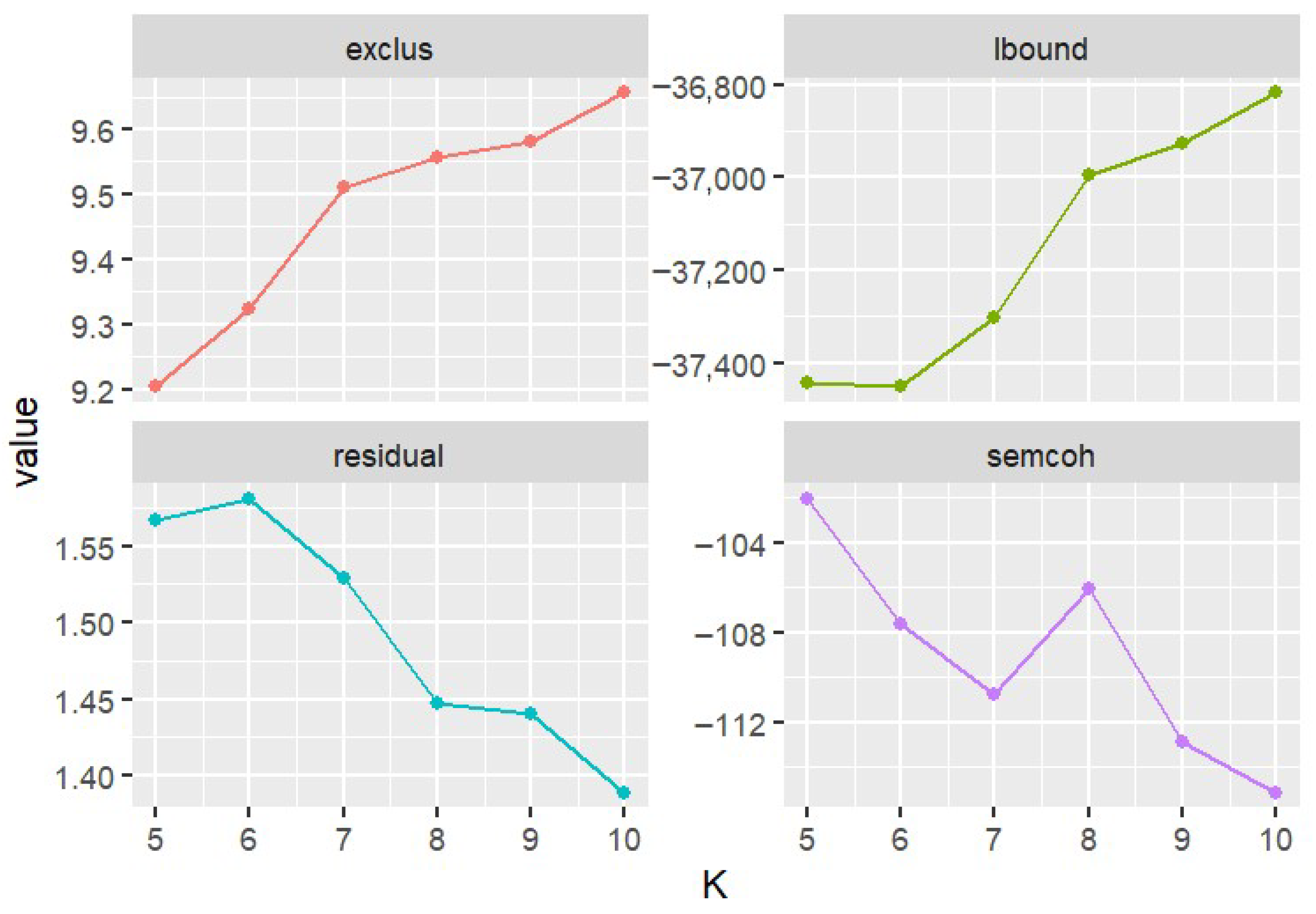
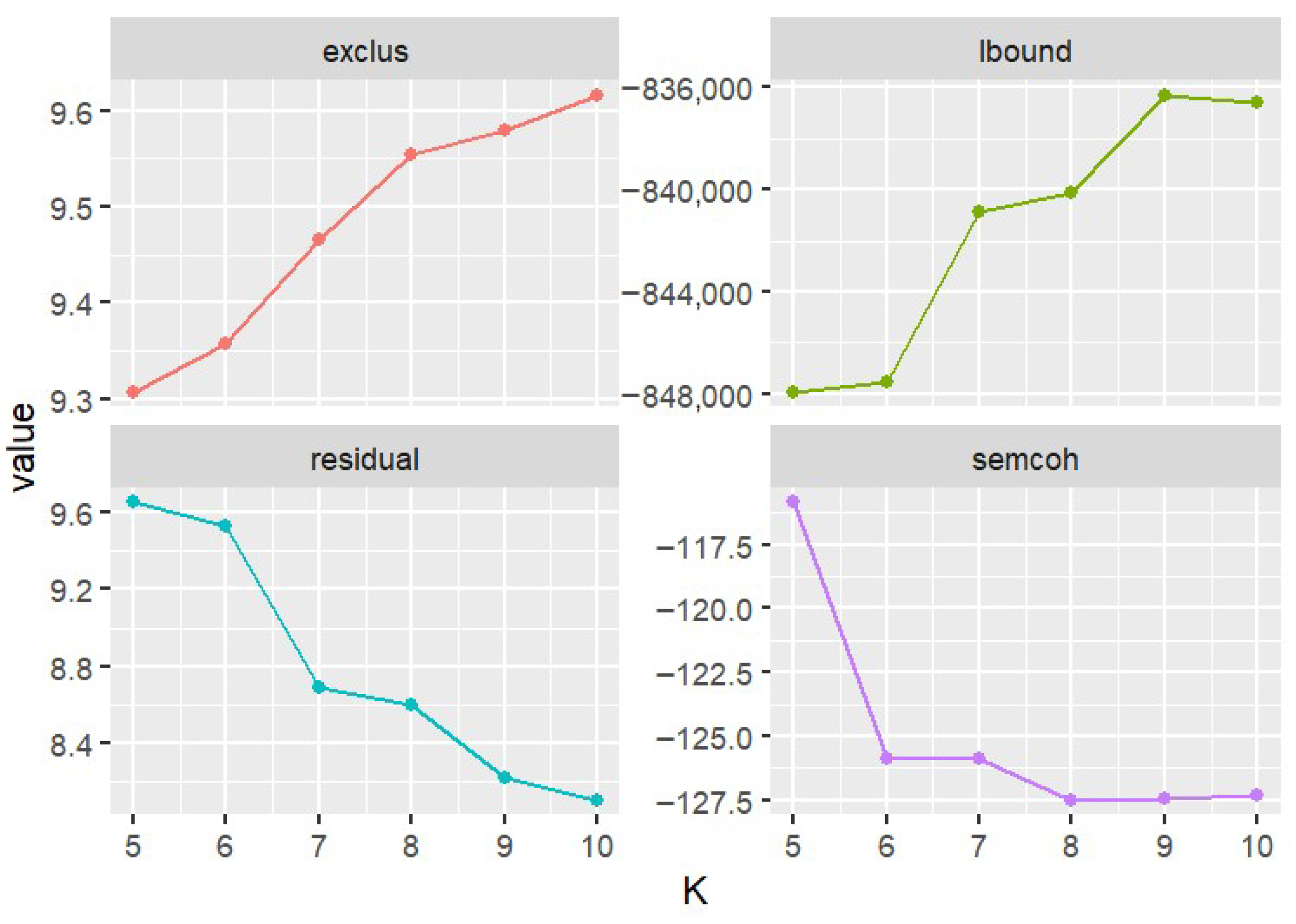
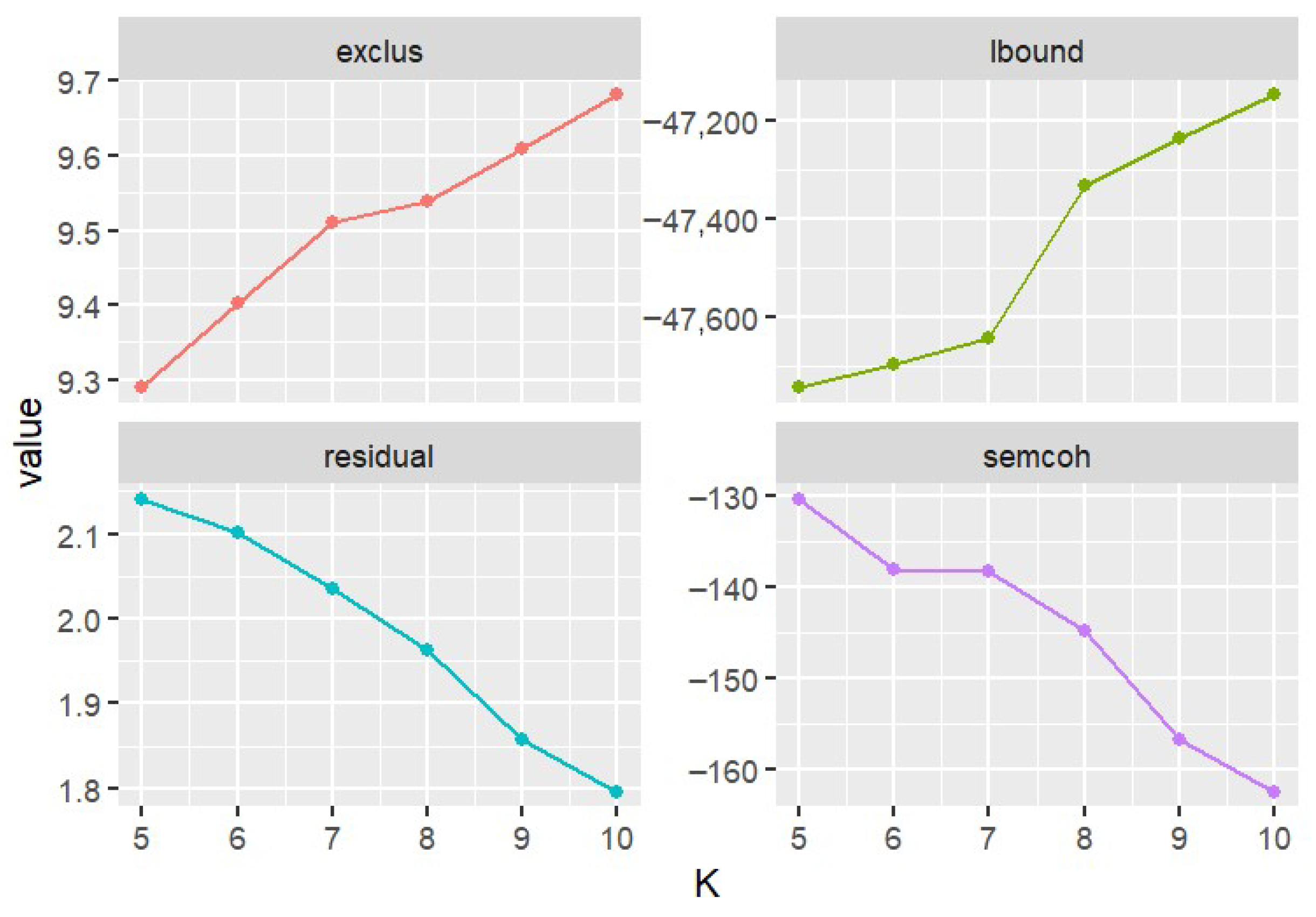
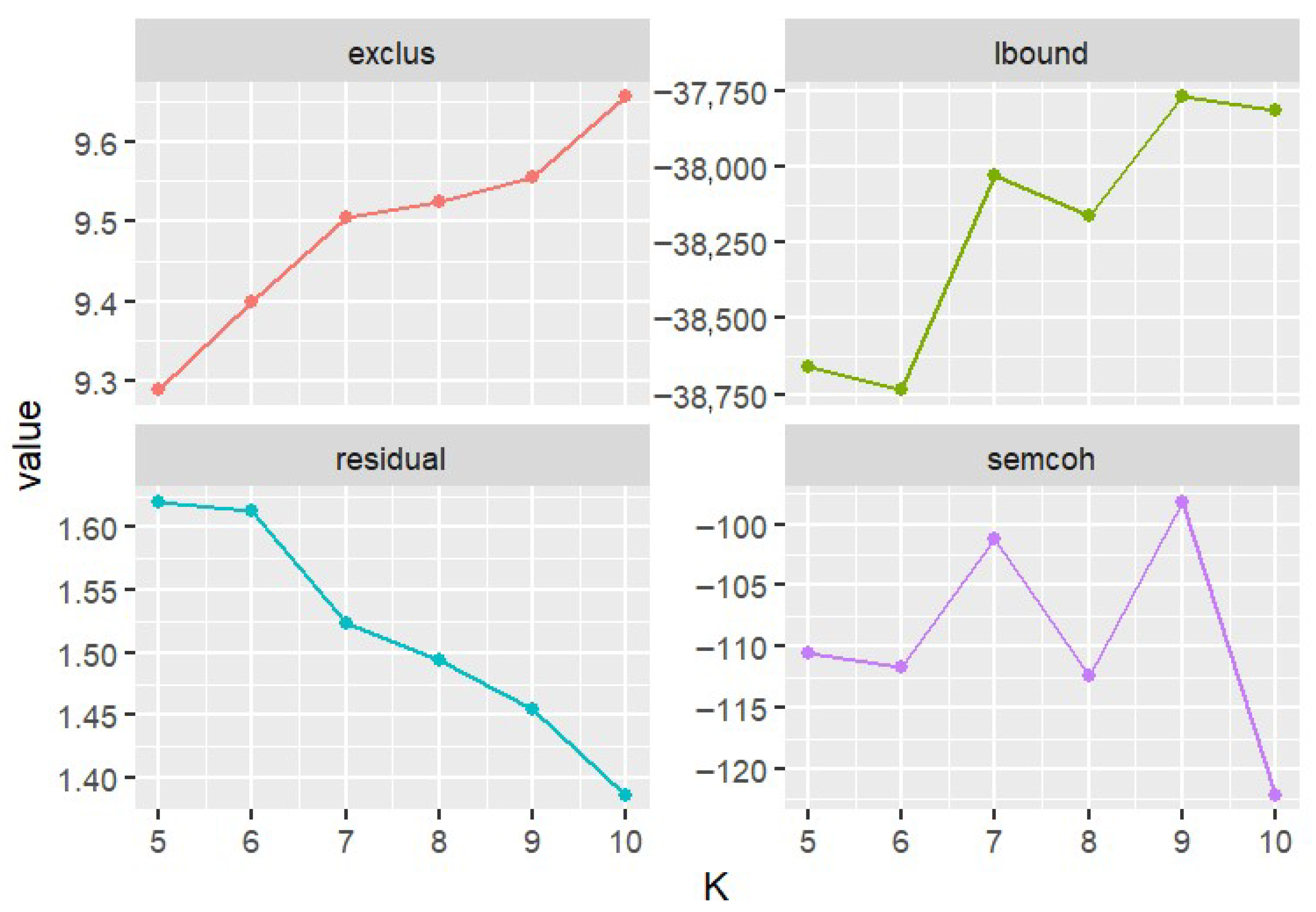
Building on previous scholarship in political communication, we employed a Structural Topic Model (STM), an unsupervised text analysis technique (Roberts et al., 2014). The goal is to identify topics in the posts and comments and compare the distribution of these topics across the three subreddits. Prior to modeling, all text data were preprocessed in R using standard natural language processing (NLP) techniques, including tokenization, lowercasing, removal of stop words (including the creation and application of a custom stopword list tailored to the foreign aid context), and stemming. Given our interest in both ideological divergence and neutral framing, we conducted three separate pairwise STM models (r/Democrats vs. r/Republican, r/Fednews vs. r/Democrats, and r/Fednews vs. r/Republican) and separate STM models for each subreddit. Each model specified K = 5 topics, a decision guided by (a) semantic coherence and exclusivity diagnostics, and (b) interpretability and theoretical alignment of the topics with prior studies (Mimno et al., 2011). Alternative K values (ranging from 4 to 8) were evaluated, but K = 5 produced the best balance between topic coherence and thematic distinctiveness. Each model included a binary subreddit covariate to estimate differences in topic prevalence between subreddit affiliations. The ‘estimateEffect()’ function was used to compute topic prevalence across these covariates, with ‘global uncertainty’ specified.
The separate STM models captured ideological nuance and isolated the specific framing strategies used within each political and neutral camp. This separation enabled the detection of thematic distinctions and priorities unique to each group. All STM analyses were implemented using the STM package in R, with the number of topics determined through semantic coherence and exclusivity metrics, which aligned with best practices (Roberts et al., 2016). Results from both modeling approaches were then triangulated to explore the intersection of ideological orientation and public discourse framing on the foreign aid freeze.

3.2. Sentiment Analysis

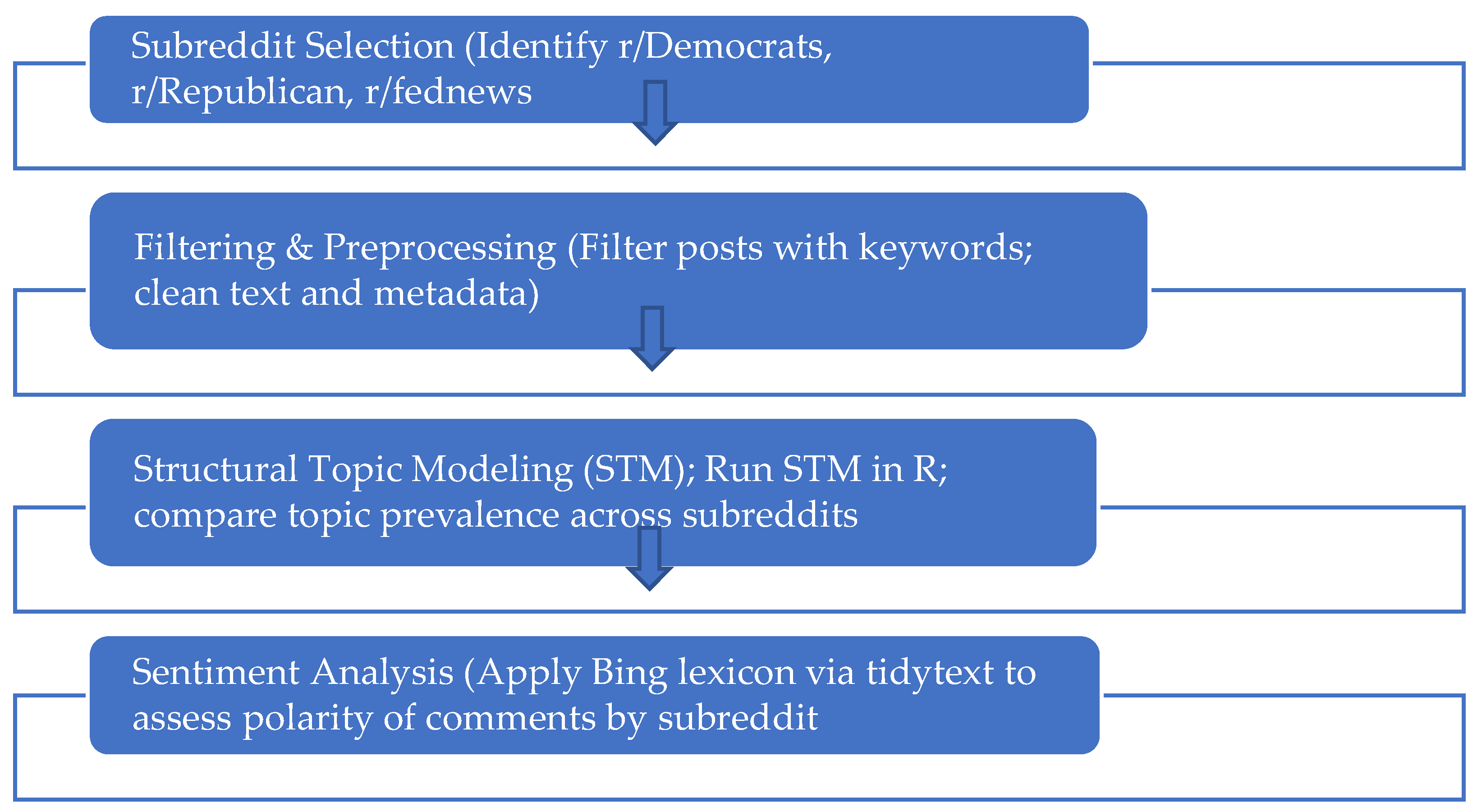
For this analysis, we employed a lexical-based sentiment analysis, which utilizes dictionaries of words with pre-assigned valence scores as a reference for text analysis. We cleaned and removed special characters and hyperlinks from the text using the STM package in R and utilized the built-in Bing lexicon, as well as the “tidytext” package in R (version 0.4.3), for sentiment analysis. Figure 2 shows a detailed data collection process.
Figure 2. Analytical Workflow, showing the four main steps of subreddit selection, filtering, and Preprocessing, Structural Topic Modeling, and Sentiment Analysis.

4. Results

This study examined discourse in both political and non-political subreddits to investigate public sentiment regarding the USAID ban and foreign aid freeze. Topic modeling revealed distinct thematic concerns in each subreddit, reflecting ideological alignments and divergent narrative constructions.
RQ1: 
How do discussions about the US foreign aid freeze differ between political and non-political subreddits?

4.1. Topics of Discussion

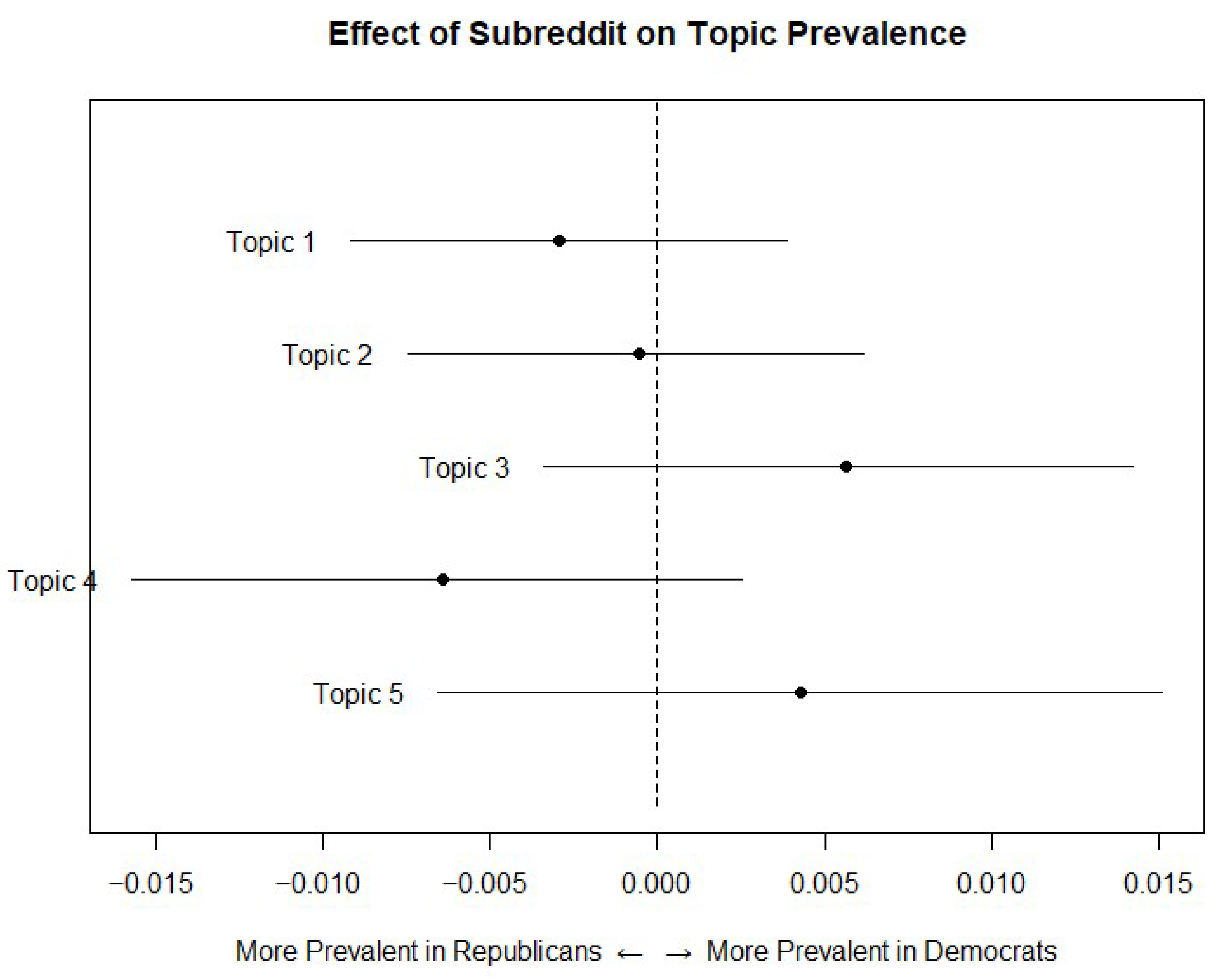
From the Structural Topic Model (STM) conducted across Democratic and Republican subreddit discussions, five dominant topics were selected out of the many topics obtained as seen in the topic selection diagnostic (Figure 3). As shown in Table 1, these topics range from financial concerns to institutional accountability and systemic critique, reflecting a polarized yet multifaceted online conversation. A prevalence plot (Figure 4) of these topics across Democratic and Republican subreddits revealed apparent ideological variations: Topic 1 (Financial Concerns and Skepticism) and Topic 4 (Leadership and Accountability) were more prevalent in Republican-leaning subreddits, reflecting strong concerns over government spending, “America First” rhetoric, and nationalist framing. In contrast, Topic 2 (Humanitarian Impact and Moral Responsibility), Topic 3 (Institutional Accountability and Systemic Critique), and Topic 5 (Ideological Differences and Election Narratives) appeared more frequently in Democratic-leaning subreddits, suggesting greater concern with the humanitarian fallout, critiques of institutional processes, and the erosion of US global leadership.
Figure 3. Topic selection diagnostic for USAID discussion for both r/democrats and r/republican.
Table 1. Dominant Topics in Republicans and Democrats Subreddits.
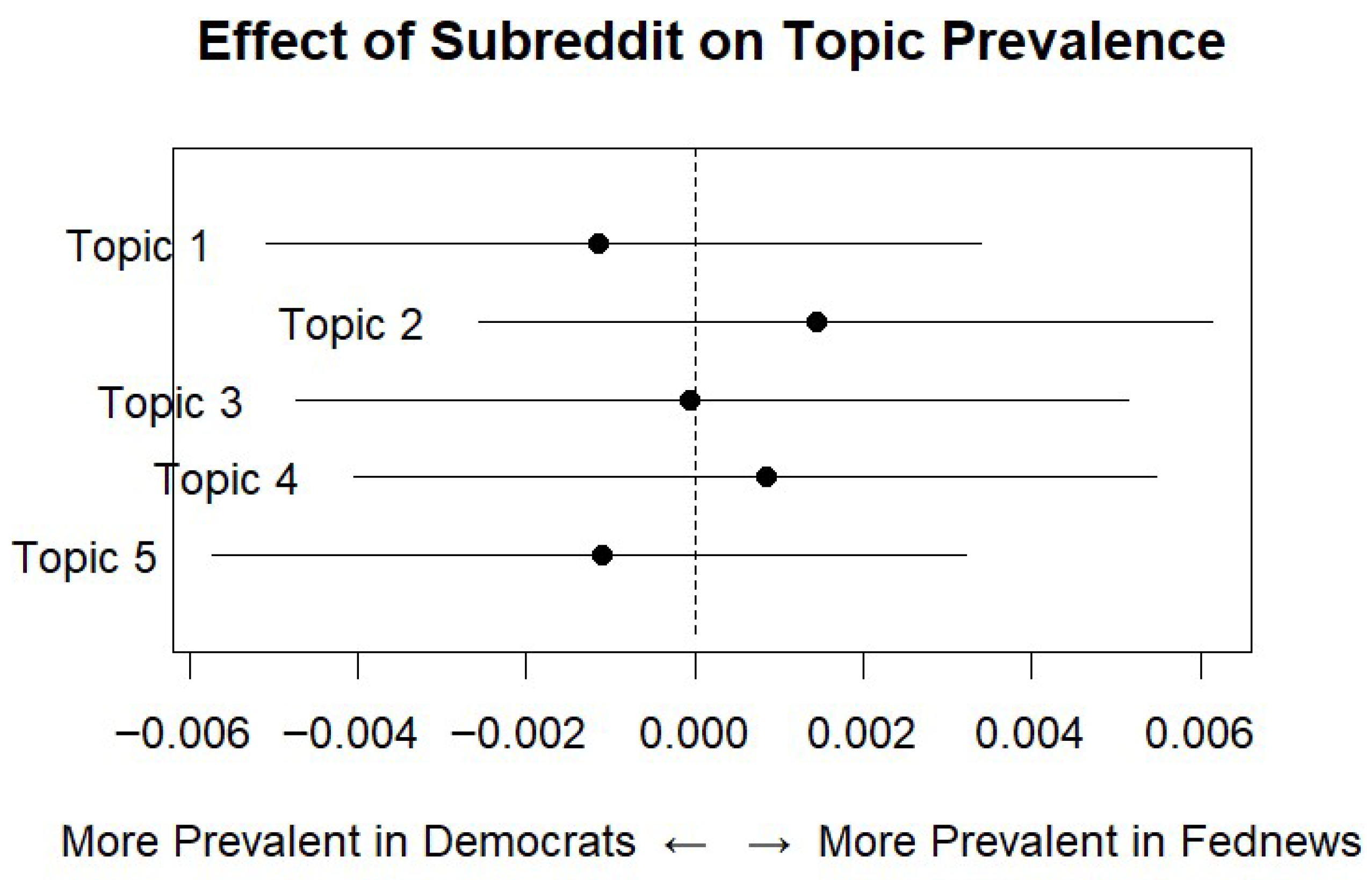
Figure 4. Topic prevalence by subreddit affiliation, showing the higher prominence of ‘Institutional Accountability’ topics in democratic subreddit and ‘Economic Rationality’ in republican subreddit.
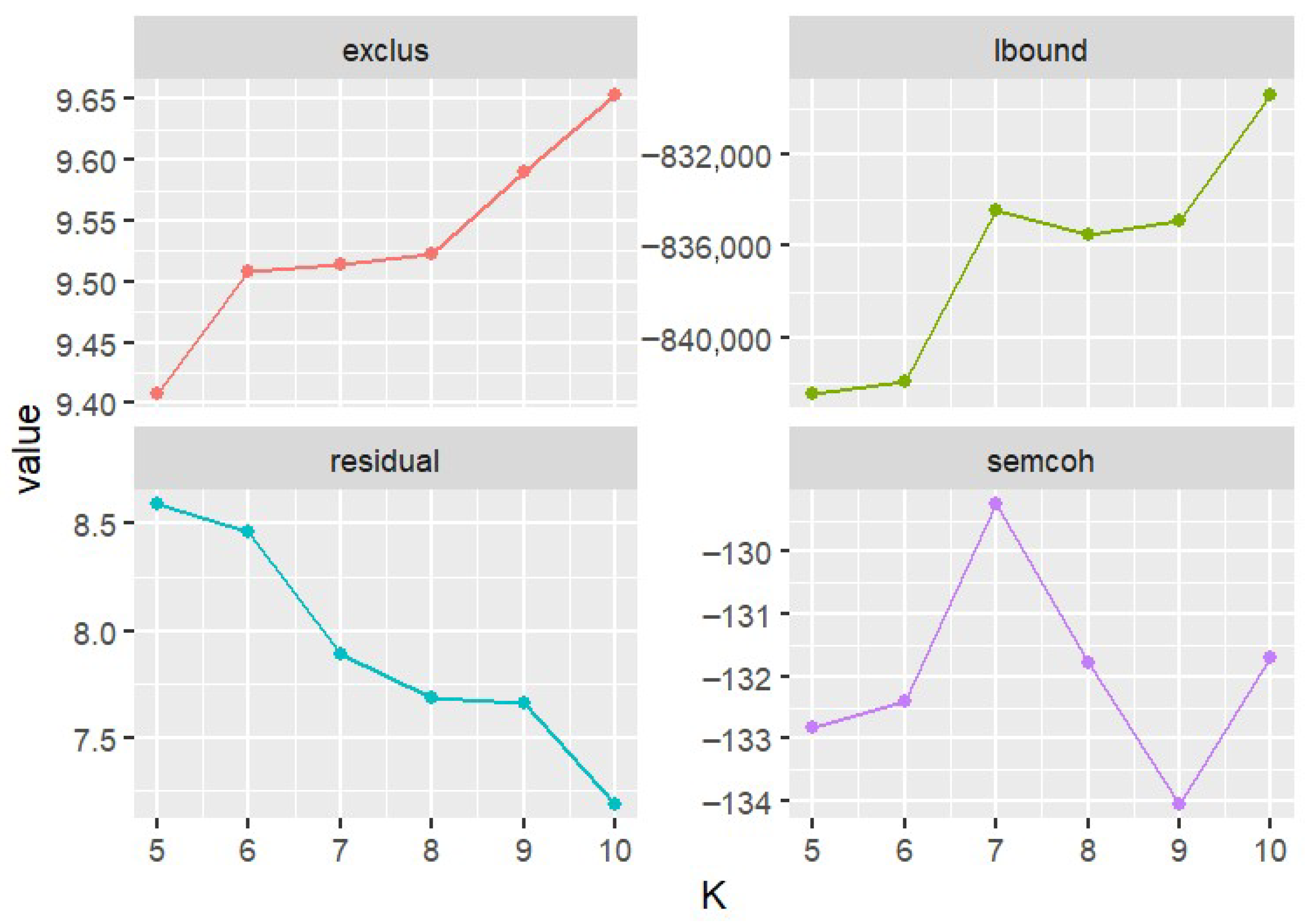
In the STM conducted for Fednews and Democratic subreddits, five dominant topics were selected based on the topic selection diagnostic (see Figure 5). As shown in Table 2, these topics include civic optimism, institutional accountability, and state-level politics. A prevalence plot (Figure 6) of these topics across Fednews and Democratic subreddits revealed ideological variations as presented in Table 2.
Figure 5. Topic selection diagnostic for USAID discussion for both r/democrats and r/fednews.
Table 2. Dominant Topics in Fednews and Democrats Subreddits.
Figure 6. Topic prevalence by subreddit affiliation (r/democrats vs. r/fednews), showing the higher prominence of ‘State level politics’ in the democratic subreddit and ‘Civic optimism’ in the Fednews subreddit.
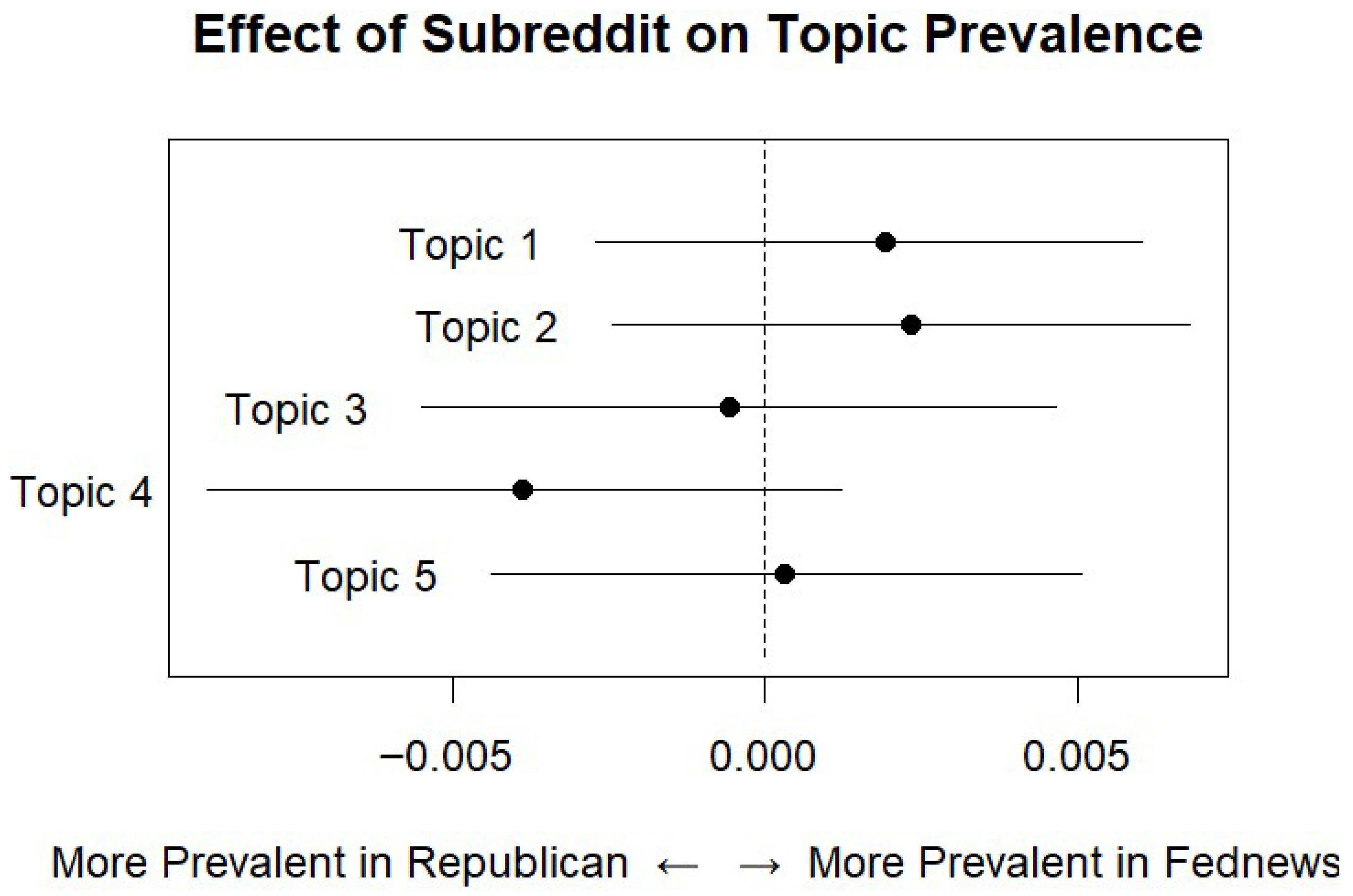
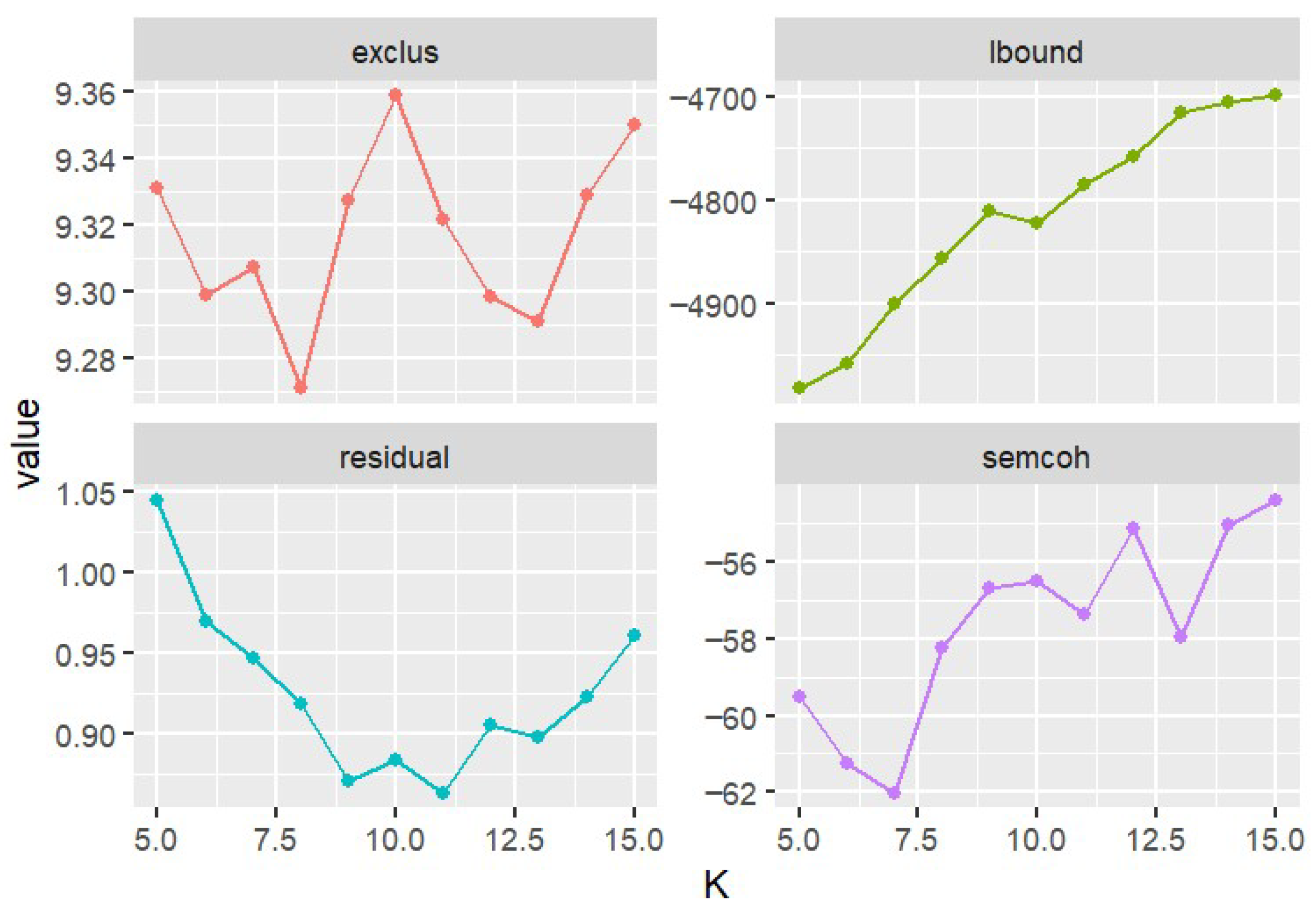
In the STM conducted for both Fednews and Republican subreddits, five topics were also selected using the topic selection diagnostic shown in Figure 7. As seen in Table 3, these topics include ‘Federal Overreach’, ‘Agency Leadership’, and ‘Legal and Political Accountability’, among others. A prevalence plot (Figure 8) of these topics across Fednews and Republican subreddits revealed ideological variations as presented in Table 3.
Figure 7. Topic selection diagnostic for USAID discussion for both r/republican and r/fednews.
Table 3. Dominant Topics in Fednews and Republican Subreddits.
Figure 8. Topic prevalence by subreddit affiliation (r/republican vs. r/fednews), showing the higher prominence of ‘Legal and Political Accountability’ in the republican subreddit and ‘Bureaucratic Critique’ in the fednews subreddit.

4.2. Topics by Subreddit

All documents (posts/comments) for each subreddit were analyzed separately to understand which topics were more important and dominant in each subreddit.
For the non-political (r/fednews) subreddit, the structural topic model revealed many topics, out of which five are recurring and significant (see Figure 9). 1. Access to information topic reflecting concerns about transparency and accessibility to information about government agencies and contracts. This theme was particularly prevalent at the onset of the policy change, as users sought clarity on its implications. 2. Public reactions topic, which captures Redditors’ emotional and moral responses, often centering on the perceived legitimacy of the freezing and its humanitarian impact. 3. Investigations and accountability topic highlighting discourse around funding oversight, personnel decisions, and potential legal challenges. 4. Federal workforce implications reflect concerns among government employees regarding job security and administrative disruptions. 5. The topic of employment and governance revolves around the broader role of federal agencies in implementing foreign aid programs, with users debating the efficiency of governmental decision-making. These findings suggest that while r/fednews is a non-political subreddit, user engagement followed patterns of public interest and workforce-centered discussion.
Figure 9. Topic selection diagnostic for USAID discussion in r/fednews.
In the Democratic subreddit, several key themes emerged having examined the topic selection diagnostic as seen in Figure 10, but five topics were selected for this study. Topic 1 (Elections, Consequences, and Institutional Capture) reflects widespread anxiety about the future of American democracy, with emphasis on unregulated institutional control, electoral manipulation, and systemic decay. This points to the influence of Elon Musk, whom President Trump appointed to head the Department of Government Efficiency (DOGE) and saddled with disbanding the USAID. Some comments are: “Unelected, unsupervised individuals with no clearance now control the treasury… they are also dismantling the federal government” and “We’re going to overhaul the election system... one day voting, voter ID, and paper ballots”. Topic 2 (Elon Musk, the courts, and authoritarian figures) is portrayed as an emblem of unchecked elite power. Users also critiqued the role of courts and “authoritarian” leaders in shaping regressive outcomes. This is likely related to the first topic, where many users discussed the impact of Elon Musk on the foreign aid freeze. Some comments include: “Millions of people will die because of Musk’s action. WTF” and “Supreme Court rejects Trump’s bid to freeze foreign aid”.
Figure 10. Topic selection diagnostic for USAID discussion in r/democrats.
While topic 3 (Trump, misinformation, and moral erosion) revealed strong disapproval of President Trump’s actions and rhetoric, linking them to national division and disinformation, topic 4 (Republican hypocrisy and free speech) was a recurring theme of resistance to bipartisan cooperation, along with criticism of perceived Republican contradictions regarding the law and free speech. Some examples of comments for topic 3 are: “Didn’t Trump make fun of a disabled reporter mocking him?” and “The right-wing government purposely pits citizens against each other… you can’t make change through harm”. For topic 4, users in this subreddit comment include “We do not seek bipartisan comity with fascists” and “An African American criminal has stolen all your info—Republicans.”
Finally, posts in topic 5 (voting, power, and the constitution) expressed concerns about systemic rigging of elections and the misuse of constitutional language by political actors. Some comments are: “Trying to undermine the US voting system is dangerous regardless of who does it” and “It’s freedom of speech if you agree with them; otherwise, you are an enemy of the state”.
In the Republican subreddit (see Figure 11 for topic selection diagnostic), topic 1 (moderation, removal, and Republican identity) reflected frustration with subreddit moderation policies, perceived censorship, and defense of Republican community values. Most posts talked about how many of the posts and comments in this subreddit were removed. Some comments are: “You’re literally deleting comments and threads that ’don’t fit your narrative” and “Reddit mods have gone full Orwell. Everything they don’t like disappears”.
Figure 11. Topic selection diagnostic for USAID discussion in r/republican.
Topic 2 (critique of the left and political rhetoric) focused on mocking the left (democrats), highlighting perceived hypocrisy, and criticizing liberal arguments and behavior. Some comments include: “The left doesn’t care about facts. They just want to feel right” and “Every time they talk about equity, what they really mean is punishment”. Topic 3 (government waste and mistrust in institutions) revealed criticism of federal institutions, particularly USAID, with large-scale spending often being framed as wasteful and corrupt. Some of the comments are: “Why is the government sending billions to Ukraine while Americans can’t afford groceries?” and “USAID is just another slush fund for globalists”.
While topic 4 (government overreach and individual liberties) showed fear of increasing government control and voiced support for limited governance and individual freedoms, topic 5 (Trump support, funding, and policy evaluation) suggests continued support for President Trump. Posts related to this topic are often framed in terms of effective policies, economic outcomes, or opposition to Democratic priorities. For instance, “Trump had the economy running smoothly. Now they just want to reverse everything,” and “DEI programs are a waste of money. Fund something that works.”
Together, the subreddits show how partisan identity shapes discourse on public policy and foreign aid. While the Democratic subreddit often emphasized institutional protection (of USAID), elite accountability, and social justice, the Republican subreddit centered on anti-government sentiment, perceived censorship, and support for the incumbent administration. In the non-political subreddit (r/fednews), user engagement focuses on public interest and workforce-related discussion. In summary, USAID was discussed in the three subreddits, but was valorized or vilified depending on the ideological lens (see Table 4 for summary).
Table 4. Summary table of dominant topics across subreddits.
RQ2: 
How does sentiment toward the foreign aid freeze evolve over time on Reddit?

4.3. Sentiment Analysis of Subreddits

To further understand how USAID and related themes were discussed in the political and non-political subreddits, sentiment analysis was conducted on the collected data. The analysis categorized posts as positive or negative based on textual content in both datasets.
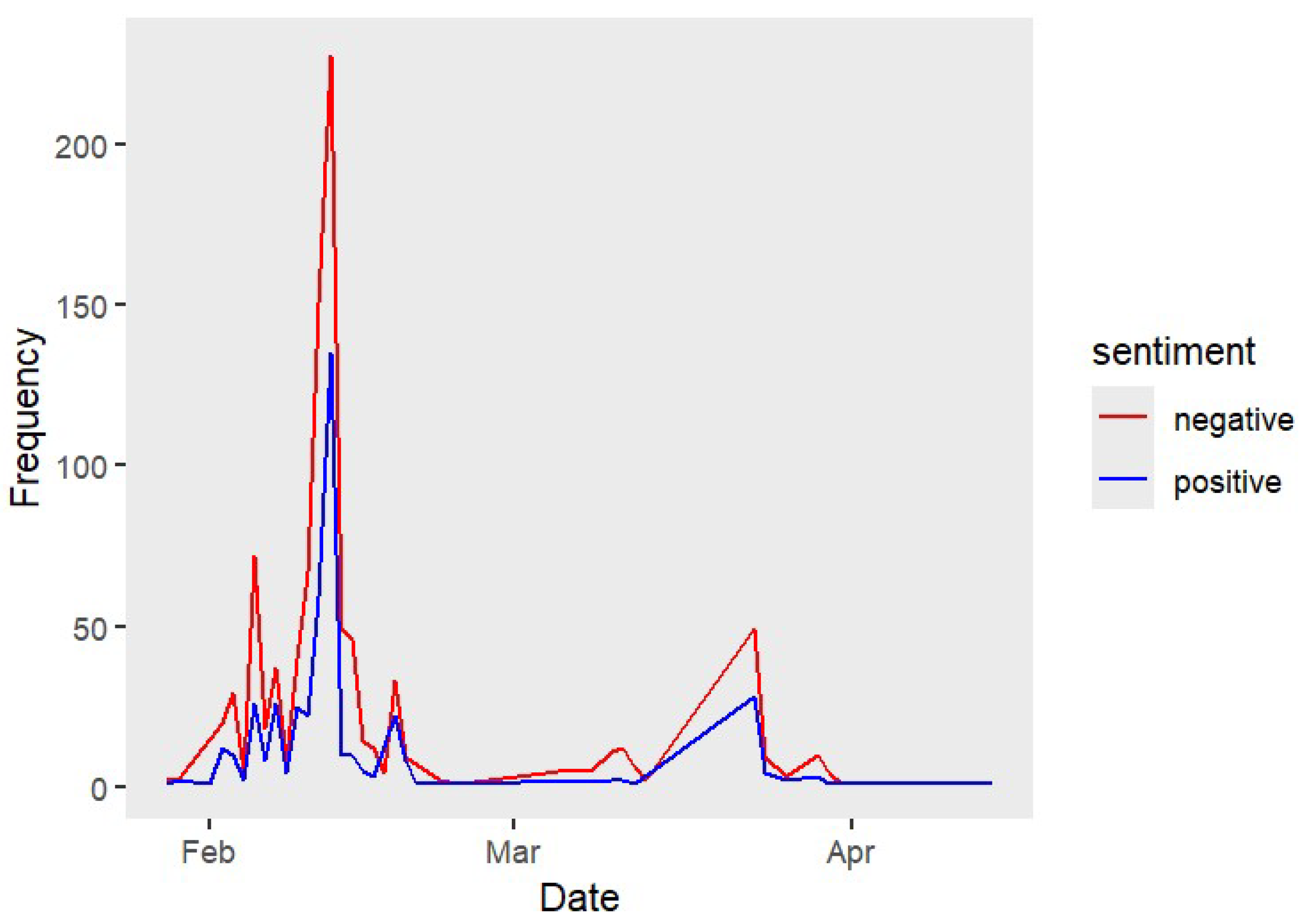
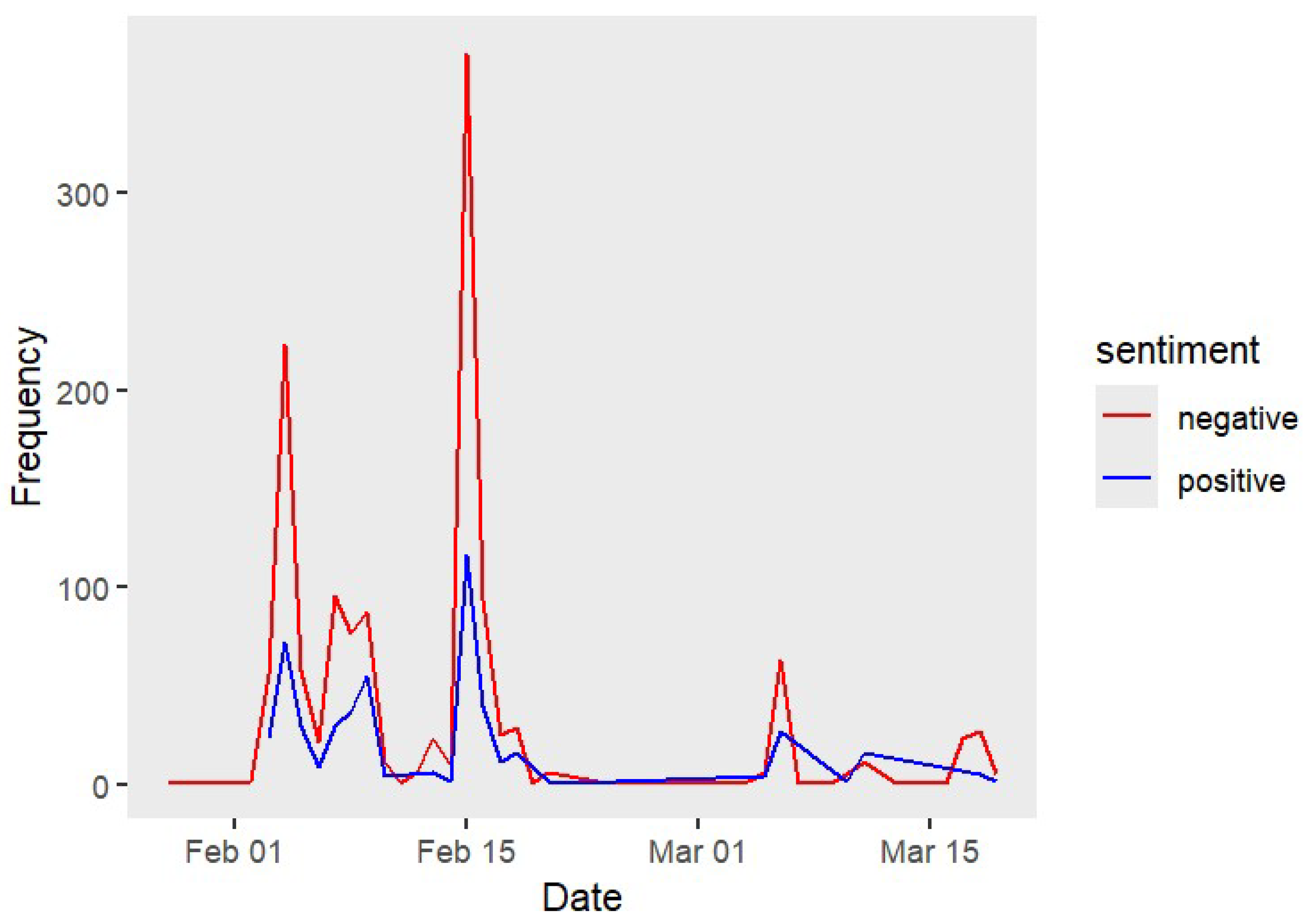
Across all the understudied subreddits, negative sentiment emerged as the dominant tone, reflecting a general atmosphere of skepticism, criticism, and ideological tension surrounding the USAID ban and the broader US foreign aid policy. In the Republican subreddit and as seen in Figure 12, the majority of comments skewed negative, with frequent expressions of disapproval toward previous government spending, mistrust in USAID’s activities, and broader anti-establishment rhetoric. This aligns with the topics extracted during structural topic modeling for this particular subreddit. These topics centered around misuse of funds, inefficiencies, and corruption (e.g., even, million, work, wast, pay, money, trump, fund). The negative sentiment peaked on 15 February, just around the time when President Trump suggested that USAID had a role in election interference in the US in 2020. The negative engagement faded out after this period. Positive sentiment was rare and mostly appeared in ironic or sarcastic tones.
Figure 12. Sentiment analysis of posts in r/republican.
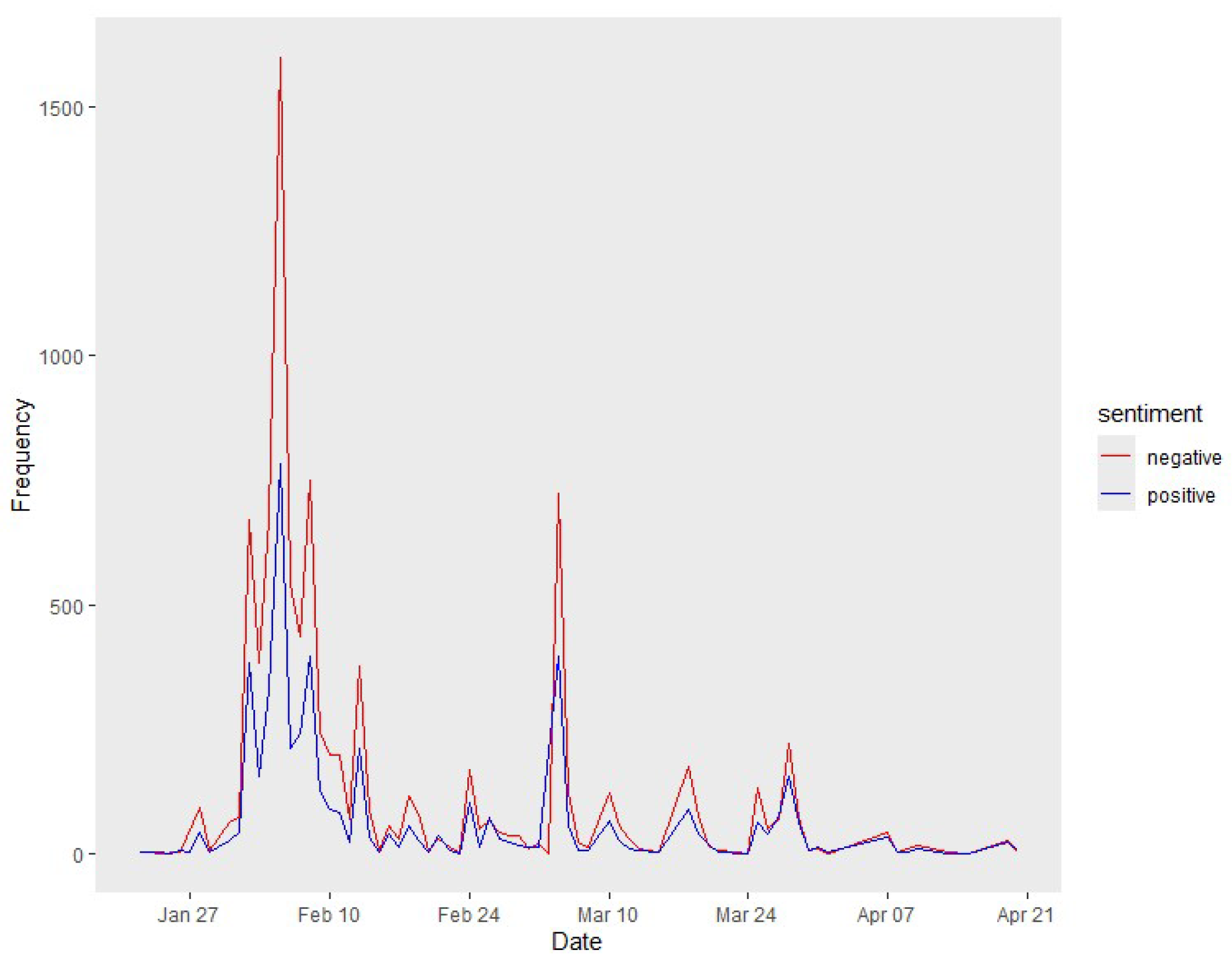
Similarly, the Democratic subreddit exhibited a predominantly negative sentiment profile with a slightly broader range of emotional tones (see Figure 13 for sentiment plot). Many negative comments reflected frustration with political figures, systemic failures, or historical patterns of abuse of power, mirroring topic clusters such as those discussing power, vote, make, govern, law, take, help, and point. These posts tended to critique perceived hypocrisies and failures within government structures and the public leadership of President Trump. There was a spike in negative sentiments in February, which coincided with President Trump’s suggestion that USAID influenced the 2020 US presidential election. The negative sentiment was also evident in the Republican subreddits, but the conversations took different directions.
Figure 13. Sentiment analysis of posts in r/democrats.
In the r/fednews, most posts were negative, with a peak period between February 3 and 10 February 2025 (see Figure 14 for sentiment plot). This period coincided with the government’s announcement that USAID staff would be reduced from more than 10,000 to approximately 290 (Landay et al., 2025). Later, the government announced that only 15 positions will be retained (Demirjian et al., 2025).
Figure 14. Sentiment Analysis of posts in r/fednews.
Overall, the sentiment trends support the thematic findings from topic modeling: discontent, ideological polarization, and cynicism pervade discussions about USAID and related foreign aid programs on both sides of the political divide, though each subreddit frames that discontent in partisan-specific ways.

5. Discussion

The results of this study provide nuanced insight into the ideological polarization, sentiment orientation, and thematic framing of US foreign aid following the 90-day freeze. As past research suggests, public opinion on foreign aid has historically been marked by ambivalence, shaped by both humanitarian ideals and domestic priorities (Milner & Tingley, 2010; Paxton & Knack, 2012). The findings from Reddit discourse align with these tensions, revealing a clear divide between left-leaning and right-leaning communities in how the USAID pause is interpreted, justified, or condemned.
In response to RQ1, our analysis reveals notable distinctions in discourse across subreddit types. In the political subreddits, discussions were deeply ideologically charged. Democratic-leaning users frequently framed the policy as a humanitarian crisis and an abdication of America’s global responsibility. This finding supports prior scholarship noting the progressive framing of aid as a global moral responsibility and a vehicle for soft power projection (Lancaster, 2007; Nye, 2004). Republican-leaning users, by contrast, framed the freeze through a lens of economic prudence, corruption, and misplaced national priorities, aligning with conservative skepticism toward foreign aid and globalism (Bermeo & Leblang, 2015; Easterly, 2006).
In the non-political subreddit (r/fednews), the tone was comparatively less partisan but still critical. STM analysis identified themes such as administrative accountability, federal overreach, and efficiency in public spending. Rather than invoking moral or ideological claims, users in this space focused on governance, legality, and job security of USAID employees, which echoes technocratic and institutional logics more than partisan ones. Our finding supports research that finds non-political digital spaces may still engage in political talk, but with different framing strategies (Graham, 2009).
Addressing RQ2, the sentiment analysis of the understudied subreddits showed an overall predominance of negative sentiment, although the sources and intensity of negativity differed. For the non-political subreddit, the negativity was grounded in institutional inefficiency, technocratic critique, and the impact on workers of USAID. For Democratic-leaning users, negativity stemmed from moral outrage and fears about international harm. Republican negativity, while present, often focused on distrust of institutions, perceived government inefficiency, and corruption within the agency (USAID).
The combined and separate STM models helped to unpack these distinctions further. In the combined model of Republican and Democratic subreddits, five dominant topics emerged, including Financial Concerns and Skepticism, Humanitarian Impact and Moral Responsibility, Institutional Accountability, Leadership and Executive Power, and Ideological and Electoral Narratives. Republican discourse concentrated on themes of financial mismanagement and ideological purity, framing foreign aid as a misallocation of taxpayer dollars. Conversely, Democrats emphasized moral responsibility, legal overreach, and humanitarian obligations, often invoking constitutional norms and democratic ideals.
The comparison between Democratic and Fednews subreddits revealed similar concerns, but with distinct emphases. For instance, discussions in Fednews were more pragmatic and less overtly ideological, focusing on technocratic governance and national efficiency. At the same time, Democratic posts centered on civic identity, legal integrity, and humanitarian ethics. The comparison between Fednews and Republican subreddits further highlighted these ideological contours. Republican discourse once again emphasized legal and political accountability, corruption, and transactional governance, while Fednews emphasized federal overreach, administrative competence, and leadership scrutiny, revealing overlapping but distinct concerns.
The modeling of subreddits separately illuminated specific ideological leanings, such as humanitarian urgency in the Democratic subreddit and a transactional “America First” logic in the Republican subreddit. This approach aligns with prior recommendations in computational communication research to triangulate findings across model specifications, thereby enhancing understanding of discourse complexity (Roberts et al., 2014; Grimmer & Stewart, 2013).
These findings ultimately reinforce the notion that digital platforms like Reddit serve not just as venues for expression but as arenas where political issues are discursively contested, reframed, and legitimized (Papacharissi, 2015). The USAID freeze became a rhetorical battleground, a lens through which users assessed America’s role in the world, weighed humanitarian ethics against national self-interest, and negotiated their identities as citizens within an increasingly polarized political culture.
The novelty of this study lies in applying sentiment analysis to examine polarization on US foreign aid, particularly the USAID ban. No study has been done on this. It is essential for contemporary scholarship to articulate the significance of the USAID ban for many countries and individuals when examining this topic. The USAID ban, a globally significant issue, reveals divisions that cross political and geographic boundaries. As the findings show, the debates extend beyond party ideologies to encompass the ban’s effects on humanitarian relief, healthcare, democracy promotion, employment loss, and global hunger, highlighting the multifaceted nature of public opinion on the USAID ban.
The findings from this study have practical implications for policymakers, international development agencies, and communication strategists seeking to understand and navigate online public opinion on foreign aid and policy. The polarized reactions observed across Reddit communities demonstrate how foreign aid decisions can rapidly evolve into ideological flashpoints online. Again, the predominance of negative sentiment across the subreddits in this study signals an erosion of public trust not only in USAID but also in federal institutions more broadly. To this end, policymakers should be more transparent and accountable. This study suggests integrating social listening tools and sentiment analysis into public affairs strategy. Our study further advances the importance of social media as an informal barometer of public diplomacy.
While this study offers valuable insights into how Americans responded to the foreign aid freeze on Reddit, several limitations should be noted. First, Reddit’s user base tends to skew younger, male, and more politically active or ideologically extreme than the general population (Barthel et al., 2016; Massanari, 2015). As a result, the findings may not be generalizable to broader public opinion across more diverse or mainstream platforms, such as Facebook. Second, the study does not incorporate demographic data, limiting the ability to analyze how factors such as socioeconomic status or education level may mediate opinions.

6. Conclusions

This study aimed to understand how Reddit users responded to the January 2025 executive order freezing US foreign aid, an unprecedented policy move with far-reaching global implications. Having analyzed contents across ideologically distinct online communities, we uncovered a polarized discursive landscape.
Through combined and separate STM models, we found that a non-political subreddit (r/fednews) adopted a more institution-focused lens. Rather than framing the aid freeze in overtly partisan terms, the discussion emphasized themes of bureaucratic efficiency, federal overreach, and the administrative consequences of executive action. The Republican-leaning subreddits emphasized economic pragmatism and ideological loyalty, often justifying the aid freeze as a necessary step toward prioritizing domestic interests and resisting elite-driven globalism. Conversely, Democratic-leaning subreddits framed the policy as a humanitarian failure and an abandonment of America’s moral and diplomatic responsibilities. The presence of institutionally focused and empathy-driven themes in Democratic spaces contrasted sharply with the populist and identity-driven rhetoric found in Republican discussions.
These ideological propensities are not new, but their expression on platforms like Reddit reinforces the notion of social media as both a digital public sphere and a site of political echo chambers (Sunstein, 2001). The framing of foreign aid reflects broader partisan divides and reveals competing visions of America’s role in the world: one centered on global stewardship, the other on self-interest.
In contextualizing the USAID freeze within this broader communicative ecosystem, this research contributes to our understanding of how foreign policy is debated, justified, and resisted in real-time online. Future studies could investigate how these online framings translate into offline political behavior and impact public support for global engagement. Others can also conduct a comparative analysis of discussions on the USAID ban across other social media platforms, such as X and Reddit, to understand how sentiments, content, and context differ. Other methodological approaches, such as interviews and multimodal analysis of the discourse on the USAID ban, could also be explored. Theoretically, theories such as the Network Effect Theory can be used to better understand the salience of Reddit as a growing platform for polarization studies.

Author Contributions

Conceptualization, S.A.; methodology, S.A.; software, S.A.; validation, S.A. and E.M.; formal analysis, S.A.; investigation, S.A.; resources, S.A. and E.M.; data curation, S.A.; writing—original draft preparation, S.A. and E.M.; writing—review and editing, S.A. and E.M.; visualization, S.A. All authors have read and agreed to the published version of the manuscript.

Funding

This research received no external funding.

Institutional Review Board Statement

Not applicable.

Data Availability Statement

The original data presented in the study are openly available through the ArcticShift API at https://arctic-shift.photon-reddit.com/download-tool (accessed on 25 November 2025).

Conflicts of Interest

The authors declare no conflict of interest.

References

  1. Abramowitz, A. I., & Webster, S. (2016). The rise of negative partisanship and the nationalization of US elections in the 21st century. Electoral Studies, 41, 12–22. [Google Scholar] [CrossRef]
  2. Achuthan, K., Khobragade, S., & Kowalski, R. (2025). Public sentiment and engagement on cybersecurity: Insights from reddit discussions. Computers in Human Behavior Reports, 17, 100573. [Google Scholar] [CrossRef]
  3. Ali, H. J., Abrar, A., Hossain, S. M. H., & Mridha, M. F. (2025). Social media polarization during conflict: Insights from an ideological stance dataset on Israel-Palestine reddit comments (version 1). arXiv, arXiv:2502.00414. [Google Scholar] [CrossRef]
  4. Alsinet, T., Argelich, J., Béjar, R., & Martínez, S. (2021). Measuring polarization in online debates. Applied Sciences, 11(24), 11879. [Google Scholar] [CrossRef]
  5. Anderson, S., Biever, J., Desai, S., Downey, K., Gutierrez, A., Hellreich, A., Krantz, S., Launer, Z., Lillie, A., Lilyestrom, J., Ratliff, D., Roma, A., Stenger, D., Sullivan, M. A., Titus, L., & Wickett, J. (2017). The America first energy policy of the trump administration. Journal of Energy & Natural Resources Law, 35(3), 221–270. [Google Scholar] [CrossRef]
  6. Backlinko Team. (2025, January 21). Reddit user and growth stats. Backlinko. Available online: https://backlinko.com/reddit-users (accessed on 5 March 2025).
  7. Barthel, M., Stocking, G., Holcomb, J., & Mitchell, A. (2016, February 25). Reddit news users more likely to be male, young and digital in their news preferences. Available online: https://www.pewresearch.org/journalism/2016/02/25/reddit-news-users-more-likely-to-be-male-young-and-digital-in-their-news-preferences/?gad_source=1&gad_campaignid=22378837192&gbraid=0AAAAA-ddO9FGpwSW1hDk0vLJJWOXUHmUb&gclid=EAIaIQobChMI7aq46P-RkQMVMqRmAh0j1y7aEAAYASAAEgIX__D_BwE (accessed on 6 April 2025).
  8. Belcastro, L., Cantini, R., Marozzo, F., Talia, D., & Trunfio, P. (2019, September 17–18). Discovering political polarization on social media: A case study [Paper presentation]. 2019 15th International Conference on Semantics, Knowledge and Grids (SKG) (pp. 182–189), Guangzhou, China. [Google Scholar] [CrossRef]
  9. Bermeo, S. B., & Leblang, D. (2015). Migration and foreign aid. International Organization, 69(3), 627–657. [Google Scholar] [CrossRef]
  10. Borg, S. (2024). “A battle for the soul of this nation”: How domestic polarization affects US foreign policy in post-trump America. International Journal: Canada’s Journal of Global Policy Analysis, 79(1), 22–39. [Google Scholar] [CrossRef]
  11. Bukhari, S. R. H., Jalal, S. U., Ali, M., Haq, I. U., & Irshad, A. U. R. B. (2025). America first 2.0: Assessing the global implications of Donald trump’s second term. Qlantic Journal of Social Sciences and Humanities, 6(1), 51–63. [Google Scholar] [CrossRef]
  12. Carcelli, S. P. (2024). Congressional polarization and limitation riders in foreign aid appropriations. In G. M. Friedrichs, & J. Tama (Eds.), Polarization and US foreign policy: When politics crosses the water’s edge (pp. 219–258). Springer Nature Switzerland. [Google Scholar] [CrossRef]
  13. Chinn, S., Hart, P. S., & Soroka, S. (2020). Politicization and polarization in climate change news content, 1985–2017. Science Communication, 42(1), 112–129. [Google Scholar] [CrossRef]
  14. Correia, T., Novotny, T. E., & McKee, M. (2025). America’s health at a crossroads: What trump’s second term means for the future. The International Journal of Health Planning and Management, 40(2), 293–296. [Google Scholar] [CrossRef]
  15. Demirjian, K., Nolen, S., Crowley, M., & Dias, E. (2025, March 28). Final cuts will eliminate US aid agency in all but name. New York Times. Available online: https://www.nytimes.com/2025/03/28/us/politics/usaid-trump-doge-cuts.html (accessed on 15 June 2025).
  16. Easterly, W. (2006). The white man’s burden: Why the west’s efforts to aid the rest have done so much ill and so little good. Penguin. [Google Scholar] [CrossRef]
  17. Ettinger, A. (2018). Trump’s national security strategy: “America first” meets the establishment. International Journal: Canada’s Journal of Global Policy Analysis, 73(3), 474–483. [Google Scholar] [CrossRef]
  18. Foreign Assistance.gov. (2025, June 13). US foreign assistance by country. Available online: https://foreignassistance.gov/ (accessed on 25 July 2025).
  19. Friedrichs, G. M., & Tama, J. (2022). Polarization and US foreign policy: Key debates and new findings. International Politics, 59(5), 767–785. [Google Scholar] [CrossRef]
  20. Graham, T. (2009). What’s wife Swap got to do with it?: Talking politics in the net-based public sphere. University of Groningen. [Google Scholar] [CrossRef]
  21. Grimmer, J., & Stewart, B. M. (2013). Text as data: The promise and pitfalls of automatic content analysis methods for political texts. Political Analysis, 21(3), 267–297. [Google Scholar] [CrossRef]
  22. Guerra, A., & Karakuş, O. (2023). Sentiment analysis for measuring hope and fear from reddit posts during the 2022 Russo-Ukrainian conflict. Frontiers in Artificial Intelligence, 6, 1163577. [Google Scholar] [CrossRef]
  23. Hawdon, J., Ranganathan, S., Leman, S., Bookhultz, S., & Mitra, T. (2020, July 19–24). Social media use, political polarization, and social capital: Is social media tearing the US apart? [Paper presentation]. International Conference on Human-Computer Interaction (pp. 243–260), Copenhagen, Denmark. [Google Scholar]
  24. Hurst, R., Tidwell, T., & Hawkins, D. (2017). Down the rathole? Public support for US foreign aid. International Studies Quarterly, 61(2), 442–454. [Google Scholar] [CrossRef]
  25. Iyengar, S., Lelkes, Y., Levendusky, M., Malhotra, N., & Westwood, S. J. (2019). The origins and consequences of affective polarization in the United States. Annual Review of Political Science, 22(1), 129–146. [Google Scholar] [CrossRef]
  26. Jungherr, A., Posegga, O., & An, J. (2021). Populist supporters on Reddit: A comparison of content and behavioral patterns within publics of supporters of Donald Trump and Hillary Clinton. Social Science Computer Review, 1–22. [Google Scholar] [CrossRef]
  27. Knickmeyer, E., & Kinnard, M. (2025, February 3). What USAID does, and why trump and musk want to get rid of it. AP news. Available online: https://apnews.com/article/usaid-foreign-aid-freeze-trump-peter-marocco-8253d7dda766df89e10390c1645e78aa (accessed on 25 February 2025).
  28. Kubin, E., & Von Sikorski, C. (2021). The role of (social) media in political polarization: A systematic review. Annals of the International Communication Association, 45(3), 188–206. [Google Scholar] [CrossRef]
  29. Lancaster, C. (2007). Foreign aid: Diplomacy, development, domestic politics. University of Chicago Press. [Google Scholar]
  30. Landay, J., Zengerle, P., & Banco, E. (2025, February 7). Trump administration to keep only 294 USAID staff out of over 10,000 globally, sources say. Reuters. Available online: https://www.reuters.com/world/us/trump-administration-keeping-only-294-usaid-staff-out-over-10000-globally-2025-02-06/ (accessed on 24 March 2025).
  31. Lee, M. (2025, January 21). Trump suspends US foreign assistance for 90 days pending reviews. AP news. Available online: https://apnews.com/article/trump-foreign-aid-9f5336e84c45a6e782fa95f60a919f47 (accessed on 2 February 2025).
  32. Li, S., Xie, Z., Chiu, D. K. W., & Ho, K. K. W. (2023). Sentiment analysis and topic modeling regarding online classes on the reddit platform: Educators versus learners. Applied Sciences, 13(4), 2250. [Google Scholar] [CrossRef]
  33. Lyngaas, S., Hansler, J., & Kent, L. (2025, February 4). Gutting of USAID could cost thousands of American jobs. CNN. Available online: https://www.cnn.com/2025/02/04/politics/usaid-cuts-thousands-american-jobs (accessed on 2 February 2025).
  34. Macdonald, P. K. (2018). America first? Explaining continuity and change in trump’s foreign policy. Political Science Quarterly, 133(3), 401–434. [Google Scholar] [CrossRef]
  35. Massanari, A. L. (2015). Participatory culture, community, and play: Learning from reddit. Peter Lang. [Google Scholar]
  36. McCabe, E. M. (2025, March 14). US agency for international development: An overview [legislation]. Congress.Gov. Available online: https://www.congress.gov/crs-product/IF10261 (accessed on 5 June 2025).
  37. McCarty, N. (2016). Polarization, congressional dysfunction, and constitutional change. Indiana Law Review, 50(1), 223–246. [Google Scholar] [CrossRef]
  38. Melton, C. A., Olusanya, O. A., Ammar, N., & Shaban-Nejad, A. (2021). Public sentiment analysis and topic modeling regarding COVID-19 vaccines on the reddit social media platform: A call to action for strengthening vaccine confidence. Journal of Infection and Public Health, 14(10), 1505–1512. [Google Scholar] [CrossRef]
  39. Mentzer, K., & Yates, D. (2025). Shifts in political discourse and moderation on reddit during the 2016 and 2020 US presidential elections. AMCIS 2025 Proceedings, 5. Available online: https://aisel.aisnet.org/amcis2025/sig_egov/sig_egov/5 (accessed on 25 November 2025).
  40. Milner, H. V., & Tingley, D. H. (2010). The political economy of US foreign aid: American legislators and the domestic politics of aid. Economics & Politics, 22(2), 200–232. [Google Scholar] [CrossRef]
  41. Mimno, D., Wallach, H. M., Talley, E., Leenders, M., & McCallum, A. (2011, July 27–31). Optimizing semantic coherence in topic models [Paper presentation]. Conference on Empirical Methods in Natural Language Processing (pp. 262–272), Edinburgh, UK. [Google Scholar]
  42. Morini, V., Pollacci, L., & Rossetti, G. (2020, June 21–24). Capturing political polarization of reddit submissions in the trump era [Paper presentation]. Italian Symposium on Advanced Database Systems, Villasimius, Italy. [Google Scholar]
  43. Nithyanand, R., Schaffner, B., & Gill, P. (2017). Online political discourse in the trump era. arXiv, arXiv:1711.05303. [Google Scholar] [CrossRef]
  44. Norris, J. (2021, November). USAID at 60: An enduring purpose, a complex legacy. American Foreign Service Association. Available online: https://afsa.org/usaid-60-enduring-purpose-complex-legacy (accessed on 5 June 2025).
  45. Norton, T., Rodriguez, T., & Kazemi, M. (2024). Politicizing foreign aid: A review of political partisanship’s impact on foreign aid flows. BORDERS, Spring, 2024(2), 77–94. [Google Scholar]
  46. Nye, J. S. (2004). Soft power: The means to success in world politics. Public Affairs. [Google Scholar]
  47. Office of Inspector General. (n.d.). Authority, agencies we oversee. Office of Inspector General, US Agency for International Development. Available online: https://oig.usaid.gov/authority (accessed on 31 March 2025).
  48. Oglesby, K. (2020). The trump doctrine: America first, not American exceptionalism. The Cupola, 908. Available online: https://cupola.gettysburg.edu/student_scholarship/908/ (accessed on 7 May 2025).
  49. Ollstein, A. M. (2020, April 14). Trump halts funding to World Health Organization. POLITICO. Available online: https://www.politico.com/news/2020/04/14/trump-world-health-organization-funding-186786 (accessed on 5 June 2025).
  50. Papacharissi, Z. (2015). Affective publics: Sentiment, technology, and politics. Oxford University Press. [Google Scholar]
  51. Park, J., & Stangarone, T. (2019). Trump’s America first policy in global and historical perspectives: Implications for US–east Asian trade. Asian Perspective, 43(1), 1–34. [Google Scholar] [CrossRef]
  52. Paxton, P., & Knack, S. (2012). Individual and country-level factors affecting support for foreign aid. International Political Science Review, 33(2), 171–192. [Google Scholar] [CrossRef]
  53. Picchi, A. (2025, April 9). See the full list of reciprocal tariffs by country from trump’s “Liberation Day” chart. Moneywatch. Available online: https://www.cbsnews.com/news/trump-reciprocal-tariffs-liberation-day-list/ (accessed on 5 June 2025).
  54. Proferes, N., Jones, N., Gilbert, S., Fiesler, C., & Zimmer, M. (2021). Studying reddit: A systematic overview of disciplines, approaches, methods, and ethics. Social Media + Society, 7(2), 20563051211019004. [Google Scholar] [CrossRef]
  55. Raunio, T., & Wagner, W. (2020). The party politics of foreign and security policy. Foreign Policy Analysis, 16(4), 515–531. [Google Scholar] [CrossRef]
  56. Ray, S., & Senthil Kumar, A. M. (2023, April 5–6). Prediction and analysis of sentiments of reddit users towards the climate change crisis [Paper presentation]. 2023 International Conference on Networking and Communications (ICNWC) (pp. 1–17), Chennai, India. [Google Scholar] [CrossRef]
  57. Roberts, M. E., Stewart, B. M., & Airoldi, E. M. (2016). A model of text for experimentation in the social sciences. Journal of the American Statistical Association, 111(515), 988–1003. [Google Scholar] [CrossRef]
  58. Roberts, M. E., Stewart, B. M., Tingley, D., Lucas, C., Leder-Luis, J., Gadarian, S. K., & Rand, D. G. (2014). Structural topic models for open-ended survey responses. American journal of political science, 58(4), 1064–1082. [Google Scholar] [CrossRef]
  59. Roy, D. (2025, February 7). What is USAID, and why is it at risk? Council on foreign relations. Available online: https://www.cfr.org/article/what-usaid-and-why-it-risk (accessed on 15 February 2025).
  60. Ruan, T., & Lv, Q. (2022). Public perception of electric vehicles on reddit over the past decade. Communications in Transportation Research, 2, 100070. [Google Scholar] [CrossRef]
  61. Smeltz, D. (2024). Are we drowning at the water’s edge? Foreign policy polarization among the US public. In G. M. Friedrichs, & J. Tama (Eds.), Polarization and US foreign policy (pp. 27–46). Springer Nature Switzerland. [Google Scholar] [CrossRef]
  62. Soliman, A., Hafer, J., & Lemmerich, F. (2019, September 17–20). A characterization of political communities on reddit [Paper presentation]. The 30th ACM Conference on Hypertext and Social Media (pp. 259–263), New York, NY, USA. [Google Scholar] [CrossRef]
  63. Stanier, T., & Shin, H. (2024). Polarization and morality: Lexical analysis of abortion discourse on reddit (version 1). arXiv, arXiv:2407.00455. [Google Scholar] [CrossRef]
  64. Steil, B., & Council on Foreign Relations. (2018). The Marshall plan: Dawn of the cold war (1st ed.). Oxford University Press. [Google Scholar]
  65. Sunstein, C. R. (2001). Echo chambers: Bush v. Gore, impeachment, and beyond. Princeton University Press. [Google Scholar]
  66. Tachaiya, J., Gharibshah, J., Esterling, K. E., & Faloutsos, M. (2021). RAFFMAN: Measuring and analyzing sentiment in online political forum discussions with an application to the trump impeachment. Proceedings of the International AAAI Conference on Web and Social Media, 15, 703–713. [Google Scholar] [CrossRef]
  67. Theriault, S. M. (2008). Party polarization in congress. Cambridge University Press. [Google Scholar]
  68. The White House. (2017, September 20). President Donald J. Trump at the united nations general assembly: Outlining an America first foreign policy–foreign policy. Available online: https://trumpwhitehouse.archives.gov/briefings-statements/president-donald-j-trump-united-nations-general-assembly-outlining-america-first-foreign-policy/ (accessed on 5 June 2025).
  69. The White House. (2020, January 29). President Donald J. Trump’s United States-Mexico-Canada agreement delivers a historic win for American workers. Fact Sheets. Available online: https://trumpwhitehouse.archives.gov/briefings-statements/president-donald-j-trumps-united-states-mexico-canada-agreement-delivers-historic-win-american-workers/ (accessed on 6 June 2025).
  70. Treen, K., Williams, H., O’Neill, S., & Coan, T. G. (2022). Discussion of climate change on reddit: Polarized discourse or deliberative debate? Environmental Communication, 16(5), 680–698. [Google Scholar] [CrossRef]
  71. Wenzelburger, G., & Böller, F. (2020). Bomb or build? How party ideologies affect the balance of foreign aid and defence spending. The British Journal of Politics and International Relations, 22(1), 3–23. [Google Scholar] [CrossRef]
  72. Wingrove, P., Rigby, J., Farge, E., Rigby, J., & Farge, E. (2025, January 21). Trump orders US exit from World Health Organization. Reuters. Available online: https://www.reuters.com/world/us/trump-signs-executive-withdrawing-world-health-organization-2025-01-21/ (accessed on 10 February 2025).
  73. Wittes, T. C. (2017, June 2). Trump’s “America first” is America the small. Brookings. Available online: https://www.brookings.edu/articles/trumps-america-first-is-america-the-small/ (accessed on 15 May 2025).
  74. Zandt, F. (2024, May 8). Infographic: How popular is reddit around the world? Statista Daily Data. Available online: https://www.statista.com/chart/26423/percentage-of-regular-reddit-users-by-country (accessed on 5 June 2025).
Disclaimer/Publisher’s Note: The statements, opinions and data contained in all publications are solely those of the individual author(s) and contributor(s) and not of MDPI and/or the editor(s). MDPI and/or the editor(s) disclaim responsibility for any injury to people or property resulting from any ideas, methods, instructions or products referred to in the content.

Article Metrics

Citations

Article Access Statistics

Multiple requests from the same IP address are counted as one view.