Skip to Content
EarthEarth
  • Article
  • Open Access

24 March 2026

Environmental Product Declaration (EPD) Profiles of Ceramic Tiles, Sanitary Ware, Clay Roofing Tiles and Clay Bricks: Insights from One Click LCA and the International EPD System


,
and
Center for Materials, Institute for Testing of Materials, Bulevar vojvode Mišića 43, 11000 Belgrade, Serbia
*
Author to whom correspondence should be addressed.

Abstract

This study presents a comparative evaluation of Environmental Product Declarations (EPDs) within the traditional ceramic industry, emphasizing how differences in data structures, reporting formats, and background databases influence the interpretation of environmental performance. Four product categories—ceramic tiles, sanitary ware, clay bricks, and clay roof tiles—were analyzed using datasets from One Click LCA and the International EPD System. Environmental indicators assessed include fossil-based and total Global Warming Potential (GWP), freshwater consumption, and energy demand, standardized per 1 kg of product. The analysis reveals that discrepancies between platforms arise primarily from the limited level of process-specific information required by current EPD formats, rather than from the platforms themselves. Missing details on raw material composition, firing conditions, and energy sources restrict comparability and hinder the development of robust benchmarks. Furthermore, the study highlights the need for harmonized databases, more transparent PCR requirements, and consistent reporting rules to support meaningful cross-platform comparisons. As the first study to examine EPD data structures for ceramic products across two major reporting systems, it highlights the need to expand product-specific benchmarks and enhance disclosure practices to strengthen the role of EPDs in sustainable market design and climate policy.

1. Introduction

The ceramic industry plays a vital role in the global construction sector, with traditional clay-based products such as bricks, tiles, and sanitary ware accounting for a significant share of the building materials used worldwide. Across Europe, the ceramic industry produces more than 59 million tons of material each year, generating approximately 19 million tons of CO2 emissions. Energy use—primarily for high-temperature firing—can represent as much as 30% of total production costs, making it a major contributor to the sector’s environmental footprint [1,2].
A critical factor influencing the environmental profile of ceramic products is the energy source used during firing. The modern systems include biofuels, biogas, or solar energy. The energy required for a given process is fixed, but the consumption rate varies with the fuel type, technology, and system efficiency. Consequently, the effectiveness of energy conversion and, above all, kiln performance, are key factors shaping overall energy demand [3].
Coal is a relatively high-energy fuel, with a heat value of about 10–25 MJ/kg [4,5]. It can serve for a high-temperature ceramic production process, but coal-fired kilns often operate inefficiently, with considerable energy lost through exhaust gases. Additionally, coal use has significant environmental drawbacks, including emissions of greenhouse gases and particulate matter. Depending on its kind, origin, and pipeline infrastructure, natural gas has a heat value of 42–55 MJ/kg [5]. Natural gas stands out as an efficient choice for firing ceramics in contemporary kilns, delivering significant heat while maintaining comparatively low emission levels. Electric kilns are also widely used in ceramics, especially for smaller-scale operations. These kilns have very high thermodynamic efficiency, as nearly all of the electrical energy is directly converted into heat with minimal loss [6]. However, their environmental impact depends largely on the source of the electricity they use. Electricity from renewable sources such as wind, solar, and hydro reduces carbon footprint. In contrast, electricity generated from fossil fuels increases greenhouse gas emissions and significantly affects the kiln’s overall environmental impact.
Biomass is increasingly used due to its near-zero carbon and pollutant emissions, unlimited reserves, and high reactivity [7]. The carbon dioxide released during the combustion is offset by the carbon absorbed by plants during their growth. Due to its relatively low energy density comparable to that of coal, it is feasible to use it as a fuel in a co-gasification process [4]. Furthermore, its efficiency is influenced by the quality and moisture of the biomass and the kiln’s ability to maintain uniform heat distribution, which then determines the overall environmental impact.
The energy efficiency of ceramic industry kilns depends on their design, the fuel used, and the combustion technology, all of which also impact particulate matter and other air emissions. One of the often-used solutions to reduce energy consumption is heat recovery from the kiln and its usage in the drying process [8].
During the firing of traditional ceramics, various flue gases are emitted, mainly including CO2, CO, SO2, NOx, and particulate matter. These gases result from the combustion of fuels and the chemical reactions occurring within the kiln [9]. The total quantity of gases is usually recalculated to a CO2 equivalent [10].
Despite its industrial importance, the environmental performance of ceramic products remains insufficiently documented and standardized, with publicly available formats [11]. This gap underscores the need for robust and transparent tools such as Environmental Product Declarations (EPDs). EPDs provide standardized, third-party-verified data on the environmental impacts of products throughout their life cycle, making them valuable to a wide range of market and industry actors [12]. Manufacturers can use EPD results to identify hotspots and improve production efficiency, while architects, builders, and consumers benefit from informed decision-making based on verified sustainability metrics. Crucially, EPDs also support eco-design during product development—allowing producers to assess environmental performance before production begins and guiding innovation toward lower-impact solutions [13,14].
EPDs provide standardized, third-party-verified information on the environmental impacts of products throughout their life cycle, but the level of technical detail they contain is limited. In most cases, declarations describe only the general structure of the production process—its main stages, typical raw materials, and energy inputs—without offering factory-specific operational data. As a result, EPDs often present high-level process information that is already broadly known within the industry, while omitting parameters that would enable deeper technical interpretation or cross-factory comparison.
EPDs are based on Life Cycle Assessment (LCA), a method that quantifies environmental impacts from raw material extraction through production, transport, installation, use, and end-of-life stages. While LCA provides detailed datasets for international decision-making, EPDs translate this information into externally verified, standardized formats governed by Product Category Rules (PCRs) and international standards such as EN 15804 [15] and ISO 14025 [16]. These declarations support sustainable procurement, regulatory compliance, and market differentiation by presenting key indicators—such as Global Warming Potential (GWP), acidification, and resource use—transparently and comparably [17,18].
In the EPDs, total GWP includes fossil, biogenic, and land-use and land-use-change (LULUC) emissions. GWP fossil reflects greenhouse gases from burning fossil fuels, while biogenic GWP accounts for emissions from biomass combustion and the carbon absorbed during biomass growth, which can result in negative values when carbon is stored in products. GWP LULUC captures emissions associated with deforestation or land conversion [15].
Although numerous studies address the environmental performance of ceramic products, most existing literature remains descriptive and does not critically examine the methodological inconsistencies that arise from differences in EPD structures, background databases, or PCR requirements. Previous research rarely evaluates how these structural variations influence comparability across platforms, nor does it assess the implications of limited data disclosure on the interpretation of environmental indicators. This gap highlights the need for a more analytical approach that situates EPD results within their methodological context rather than treating them as directly comparable datasets.
This study aimed to evaluate the environmental profiles of various clay-based product sectors—clay bricks, clay roof tiles, ceramic tiles (wall and floor), and sanitary ware—through a comparative analysis of EPDs generated using two platforms: One Click LCA and the International EPD System. The analysis focuses on key impact categories, including GWP fossil, GWP total, freshwater consumption, and energy use, based on a functional unit of 1 kg of final product. While the study does not compare identical products across platforms, it highlights discrepancies in data handling and reporting that affect cross-sector comparability.
Limitations of the study include restricted access to proprietary data such as firing temperatures and energy sources, which are often confidential in published EPDs. Additionally, the evolving nature of standards and databases introduces challenges in maintaining consistency across declarations. Despite these constraints, the findings underscore the need for harmonized methodologies and sector-specific EPD frameworks to improve transparency and reduce confusion in environmental communication [11,12]. The comparison of the findings from the literature review and the relevant platforms reveals a gap in knowledge transfer from science to the market. Based on this, the most sensible approach is to establish sector-specific EPDs. This will enable construction product manufacturers to manage development costs effectively and prevent confusion caused by non-comparable environmental impact data.
The findings of this study show that EPDs primarily serve as standardized frameworks for reporting environmental impacts, offering a structured yet high-level overview of production processes. While they support more informed decision-making across the value chain, their usefulness is constrained by the limited technical detail required under current standards. As a result, EPDs can guide general improvements in production and product development, but they provide only a partial basis for deeper process-level interpretation or cross-factory comparison.

2. Materials and Methods

This study consolidates existing knowledge within the traditional ceramic industry by identifying prevailing environmental trends and outlining potential future directions. The analysis focuses on four representative product categories—clay bricks, roof tiles, ceramic tiles, and sanitary ware—using EPDs sourced from One Click LCA and the International EPD System [19]. All alphanumeric labels used in this study (e.g., DK7, TR, GER2, USA1-20, ITA9-12) refer to individual case-study EPDs from manufacturers in the respective countries. These identifiers serve solely as dataset-specific codes, ensuring traceability, and do not present national averages or country-level production impacts. Because detailed plant locations, production volumes, and other factory-specific parameters are not required under EN 15804+A2 [20], such information was not available across declarations. It thus could not be included in the analysis. To contextualize the findings, relevant scientific and technical literature is also reviewed.

All One Click LCA datasets originate from EPDs issued under the One Click LCA/EPD Hub program and were developed using its internal background database. In contrast, EPDs from the International EPD System may rely on different databases and PCRs, depending on the practitioner. These structural differences are acknowledged as potential contributors to variation in reported results.
The analysis focuses on key environmental indicators, including Global Warming Potential (GWP) from fossil sources and total GWP (expressed in kgCO2e), as well as total fresh water and energy use. These parameters are examined within the cradle-to-gate scope, covering Modules A1 (raw material supply), A2 (transport to the manufacturing site), A3 (production), A4 (transport to the construction site), and A5 (product assembly). Roofing tiles, ceramic tiles, and sanitary ware are assessed using One Click LCA datasets, which apply a consistent internal database, whereas clay bricks are analyzed using EPDs published within the International EPD system, where data sources vary by practitioner. These life cycle stages are prioritized due to their well-documented contribution to the overall environmental footprint of ceramic products, particularly regarding energy consumption and emissions [21]. To ensure comparability across product subgroups, a functional unit of 1 kg is used throughout the analysis.

2.1. Case Selection and Data Availability

The selection of cases in this study was intentionally focused rather than extensive. The aim was not to provide a full market overview but to show how differences in data structures, background databases, and reporting formats between One Click LCA and the International EPD System affect the comparability of ceramic products. Although additional EPDs exist for all four product categories, many lack sufficient disclosure of key process parameters—such as raw material composition, raw materials type, firing temperature, fuel mix, or energy sources—which prevents deeper case-level characterization and limits the establishment of consistent comparison criteria. The limitation is inherent to the publicly available EPD documentation: manufacturers typically disclose only aggregated environmental indicators, while detailed technological data remain confidential. As a result, individual cases cannot be presented with full technical specificity, and the analysis necessarily focuses on the methodological differences between platforms rather than on product-level variability.
This approach supports the study’s aim of showing how inconsistencies in data provenance and reporting frameworks affect the interpretation of environmental performance across ceramic product groups.

2.2. The Importance of Consistent Data Sources and Methodological Alignment

Comparability between EPDs for similar products is essential for enabling informed decision-making on environmental performance [12,22]. However, such comparisons are only valid when all relevant rules, requirements, and methodological instructions are consistently applied [11,23]. A central challenge lies not in the software itself, but in the underlying data sources and assumptions used to generate the declarations. Differences in inventory databases, background datasets, and practitioner-specific modelling choices can significantly influence results, even when the same product is assessed.
Using different platforms for the same product becomes problematic because each platform may rely on distinct background databases, default parameters, and process models. These differences—rather than the software interface—are what hinder integration into LCA calculations. Moreover, newer standards often require extensive datasets that are not uniformly available across platforms, which can introduce additional distortions [17,23,24].
Until 2024, EPD development followed the General Programme Instructions (GPI) and PCRs of the International EPD system. With the emergence of platforms such as One Click LCA, now part of EPD Hub (as of 2025), improvements have been made in data collection, verification, and workflow automation. However, these tools still depend on the quality, completeness, and transparency of the underlying databases rather than the software alone.
International standards such as ISO 14025 and EN 15804 are foundational to ensuring comparability. SRPS ISO 14025 establishes the framework for Type III EPDs, requiring standardized LCA data, independent verification, and consistent reporting [11,12,25]. PCRs define strict criteria for comparing products within the same category, including alignment in functional units, system boundaries (modules considered), data quality, and impact categories. EN 15804, tailored for construction products, now reinforces these requirements and introduces additional impact categories and stricter reporting rules [26]. For modular EPDs (A1-D), comparability is only possible when excluded stages are either negligible or aligned within reasonable uncertainty limits [15,20,26].
Despite these frameworks, comparing EPDs across platforms such as One Click LCA and the International EPD System remains challenging due to differences in scope, methodology, and data transparency. Variations in assumptions, background databases, and missing process-specific details (e.g., raw materials composition, firing temperature, kiln type) can strongly influence results. Geographical and temporal contexts further complicate comparability [14,25].
For these reasons, using the same software and background database is often essential for reliable LCA-based comparisons [27]. Different tools may apply distinct algorithms, impact assessment methods, or boundary definitions, leading to substantial variations even for identical products [22,24]. For example, one platform may include transport emissions while another omits them, resulting in divergent carbon footprints [24,28]. Müller et al. [29] found that software choice alone can cause up to 30% variation in the carbon footprint—primarily due to differences in underlying databases and modelling assumptions.
In this study, the intention was not to identify a superior platform. One Click LCA and the International EPD System rely on the data provided by manufacturers and the background databases available within their respective frameworks. However, the current EPD format does not require detailed disclosure of raw material composition, clay type, firing conditions, or energy sources. As a result, process-specific transparency is inherently limited, regardless of the software used. These constraints restrict the extent to which cross-platform differences can be interpreted as differences in actual environmental performance.
Consequently, the analysis focuses on illustrating how variations in data provenance, background databases, and reporting formats influence comparability, rather than ranking the platforms themselves. The selection of EPDs was guided by the availability of a minimum level of structural information suitable for cross-platform comparison, while acknowledging that certain comparability prerequisites cannot be fully assessed due to the limitations of publicly available EPD documentation. Accordingly, the comparison presented in this study is exploratory in nature and does not constitute direct product benchmarking. Observed differences may reflect variations in production conditions, energy mixes, program operator requirements, or database selection rather than intrinsic product performance.
The summary table (Table 1) consolidates the methodological parameters that define the scope of the comparison, ensuring transparency regarding functional units, system boundaries, impact categories, and data sources. By standardizing these elements, the study establishes a consistent analytical framework while acknowledging that differences in background databases, PCR requirements, and reporting practices may still influence the comparability of individual EPDs.
Table 1. Summary of functional units, system boundaries, impact categories, and data sources used in the comparative assessment.

3. Results and Discussion

3.1. One Click LCA for Traditional Ceramic Product EPDs

3.1.1. Roofing Tiles

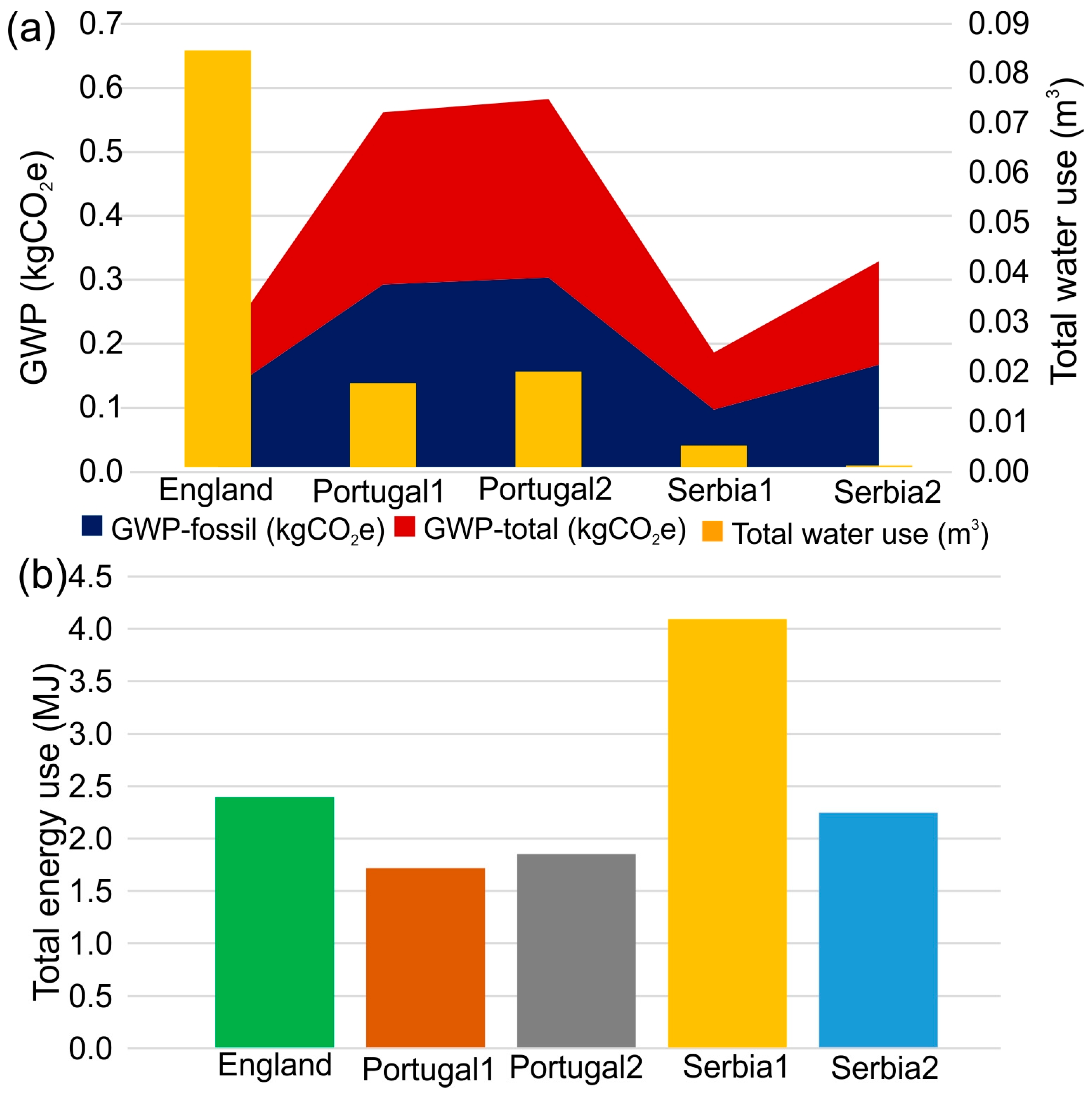
The declarations for clay roof tiles produced in England, Portugal, and Serbia, used here as country-specific case studies and sourced from One Click LCA, were issued in 2024 and are valid until 2029 (Figure 1). Although all products are manufactured from natural clay-based materials, notable differences emerge across the assessed modules (A1–A3). The Portuguese case study shows the highest fossil and total CO2-equivalent emissions (Figure 1a), Serbia 1 involves the most energy-intensive process (Figure 1b), while England reports the greatest water consumption. These variations reflect differences in raw materials, kiln performance, fuel type, and overall process efficiency. Program-operator-related modelling choices may also contribute to these discrepancies [25].
Figure 1. Modules A1–A3 in 1 kg of roofing tile: (a) Equivalent CO2 footprint and water consumption, and (b) Energy use.
A clear linear relationship between GWP, water consumption, and total energy use is observed in the Portuguese dataset. In contrast, the two Serbian facilities illustrate how energy use and GWP can become decoupled: Serbia 2 consumes less energy yet shows higher, whereas Serbia 1 reports lower GWP despite higher non-renewable energy use. This pattern likely reflects differences in fuel carbon intensity (e.g., natural gas vs. mixed fossil fuels [30]), thermal efficiency, and emission-control technologies. Such outcomes highlight the importance of considering not only the quantity but also the quality of energy when interpreting environmental performance-and they reinforce the need for more detailed EPD disclosures to support robust interpretation.
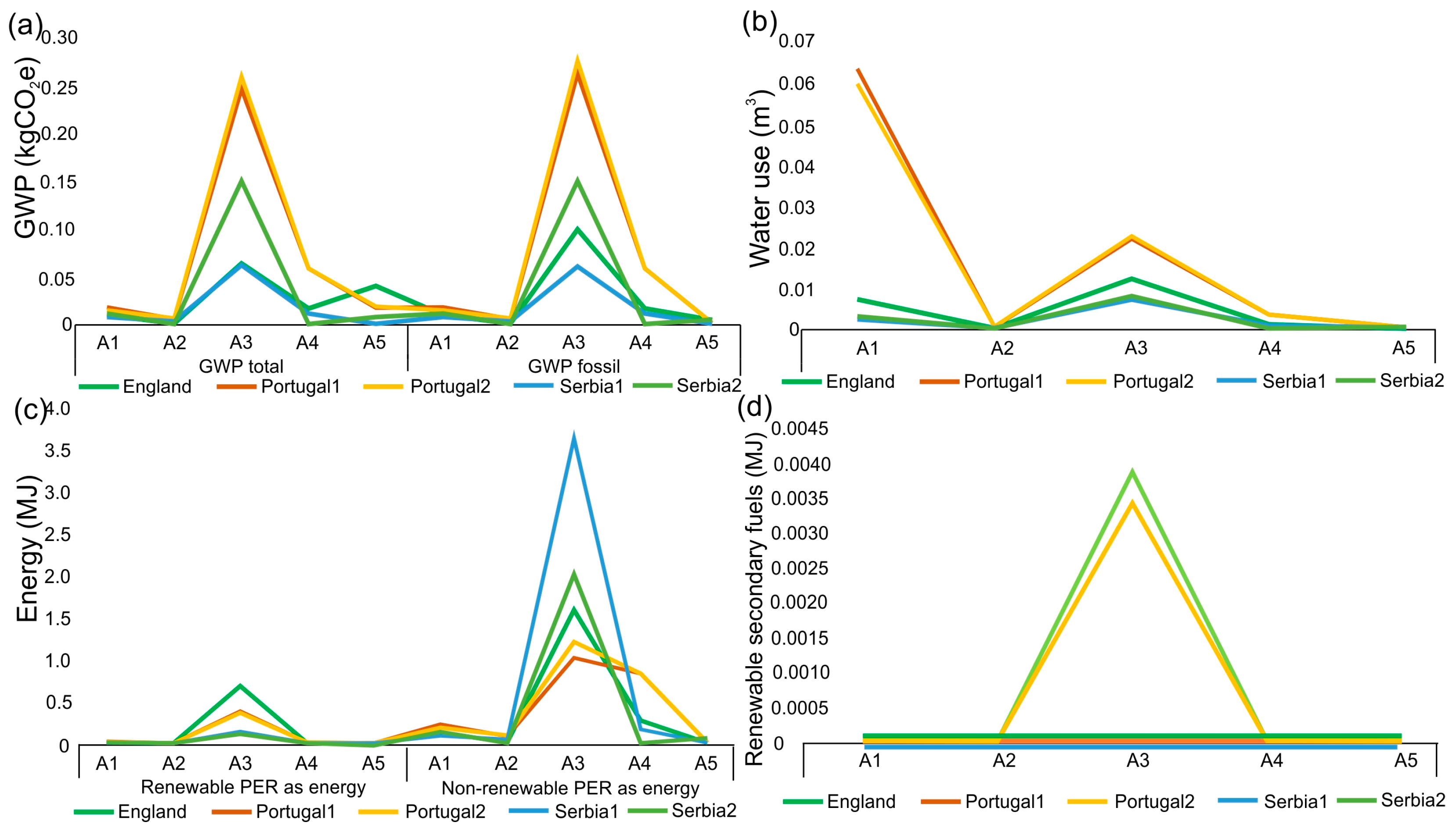
To obtain a broader perspective, energy use, water consumption, and GWP were also examined across modules A1–A5 (Figure 2). The production stage (A3) and gate-to-site transport (A4) dominate GWP contributions. In both Portuguese case studies, A3 emissions are the highest among all regions. At the same time, Serbia 1 reports the lowest (Figure 2a). Transport impacts (A4) further elevate Portugal’s GWP, likely due to longer transport distances or less efficient logistics, whereas Serbia 2 records the lowest transport-related impacts. England displays a notable GWP spike in A5, suggesting installation practices with high carbon intensity.
Figure 2. Modules A1–A5 in the production of 1 kg of roofing tile: (a) Total and fossil GWP, (b) Water use, (c) Renewable and non-renewable PER energy, and (d) Renewable secondary fuels (GWP—Global Warming Potential, PER—Primary Energy Sources).
Water consumption is highest in A1 (raw material extraction and preparation) and A3 (production). Portuguese factories lead in both modules, indicating either water-intensive clay processing or limited water-recycling capacity (Figure 2b). This trend underscores the need for targeted water-efficiency measures across upstream and manufacturing stages.
Non-renewable primary energy use (PER) is highest in Serbia 1, reflecting a fossil-dominated energy mix (Figure 2c). Renewable energy contributions remain marginal across all sites, with England showing the highest relative share, albeit still limited in absolute terms. No non-renewable secondary fuels are reported, suggesting limited integration of waste-derived or industrial by-product fuels. While England reports the highest renewable energy input, its absolute contribution remains low. Serbia 2 and Portugal 1 report the highest renewable secondary energy use (Figure 2d), underscoring the potential for further diversification and decarbonization of energy sources.

3.1.2. Ceramic Tiles

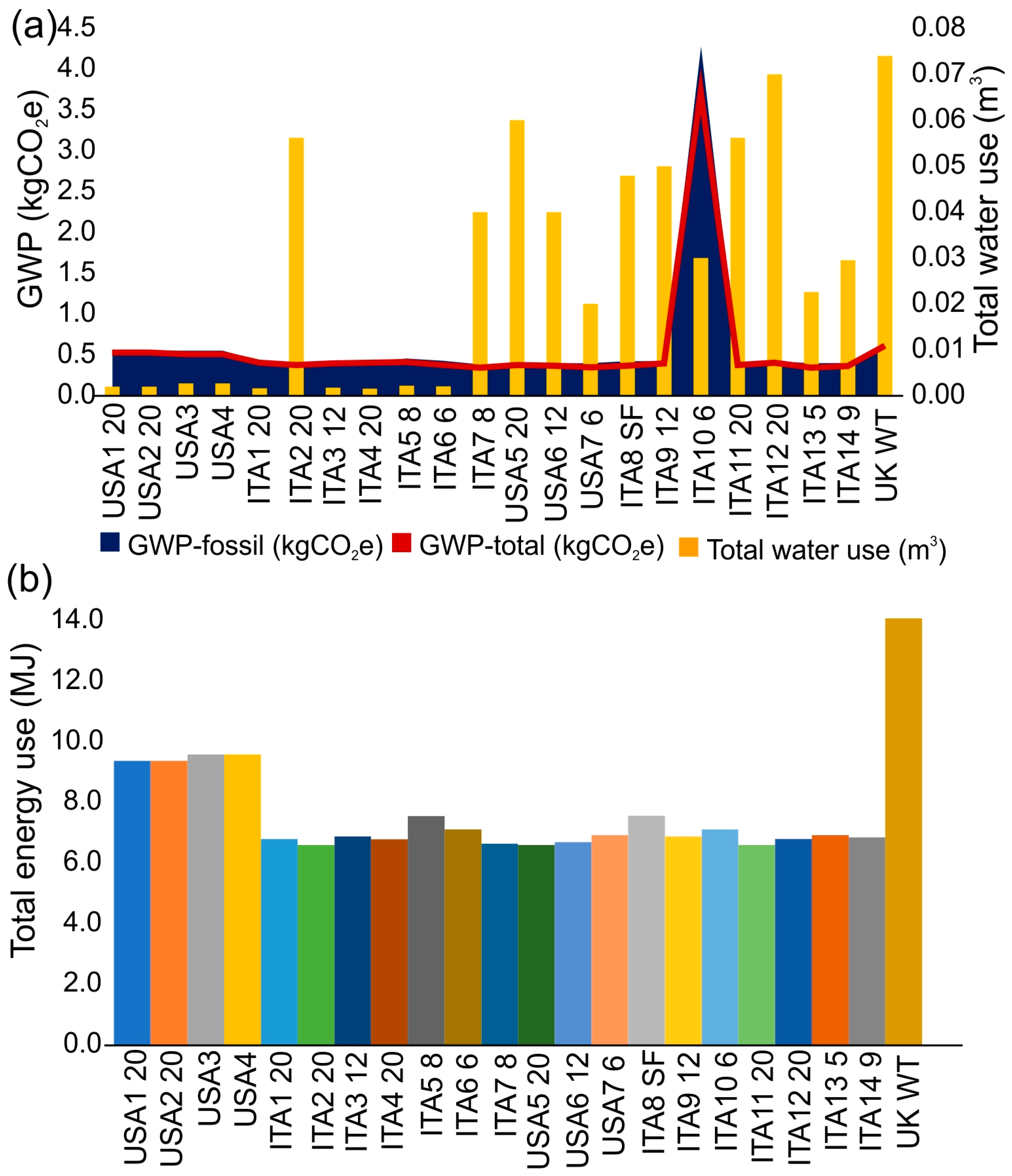
The EPDs for some of the ceramic tiles manufactured in the USA, Italy, and the United Kingdom, used here as country-specific case studies and sourced from One Click LCA, were issued in 2024 and remain valid until 2029. The declarations cover a range of wall and floor ceramic tiles produced entirely from natural raw materials, providing a comparative view of different production systems (Figure 3). Among the A1–A3 modules, the highest GWP footprint is associated with the Italian factory producing engineered surface porcelain tiles of 6 mm thickness (ITA10 6 in Figure 3a), likely reflecting energy-intensive firing cycles and additional surface treatment steps. In contrast, the remaining factories report GWP values close to the EPA benchmark of up to 0.6 kg CO2e/kg tile [10], indicating relatively optimized upstream and manufacturing processes.
Figure 3. Modules A1–A3 in the production of 1 kg of ceramic tile: (a) Equivalent CO2 footprint and water consumption, and (b) Water and energy use (USA—United States of America, ITA—Italy, UK—United Kingdom, SF—single-fired, WT—wall tiles, the numbers 3–20 in the end are for the thickness of tiles in mm).
Water consumption varies significantly across sites and product types, with no clear relationship to tile thickness. This variability likely stems from differences in clay preparation, glazing operations, and water-recycling efficiency. Consistent with previous findings, wall tile production emerges as the most water- and energy-intensive category [31].
Energy consumption profiles reveal pronounced inter-factory differences. Several U.S. products exhibit up to 44% higher total energy use compared to other sites, regardless of tile thickness (Figure 3b). This elevated footprint is primarily driven by modules A4 (transport) and A5 (assembly), suggesting longer supply chains, heavier logistics burdens, or more energy-intensive installation practices.
The average total energy demand across the assessed cases is 7.69 MJ/kg of fired ceramic tile, substantially higher than values reported by Alves et al. [32] and more than double the 3.6 MJ/kg cited in Manrique et al. [33]. These discrepancies underscore the importance of contextualized energy data by production route, regional energy mix, and tile typology rather than relying on generalized benchmarks.
A key limitation in the reviewed EPDs is the absence of information on the milling route (wet vs. dry), a critical determinant of both energy and water intensity in ceramic processing [31,34]. Furthermore, batch composition and raw-material variability strongly influence firing temperature, sintering behavior, and overall resource demand [35]. Without such granularity, cross-factory comparisons risk oversimplification and may obscure actionable insights for process optimization. These gaps reinforce the need for more detailed and standardized reporting practices to support meaningful interpretation of environmental performance.

3.1.3. Sanitary Ware

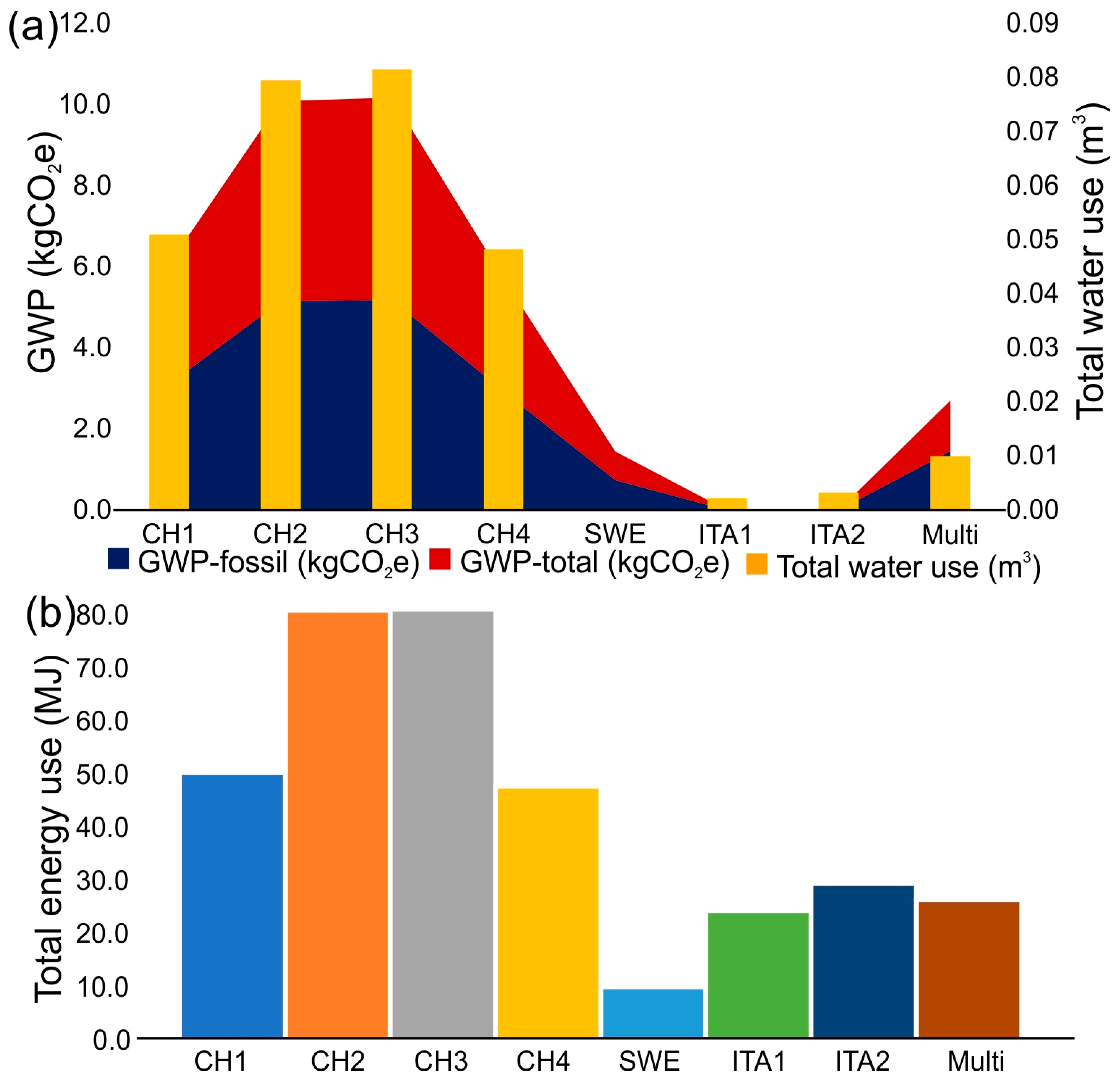
The EPDs obtained via One Click LCA for sanitary ware products (sinks, toilets, bidets, and related items) indicate that the Swiss case study exhibits the highest energy and water consumption, resulting in the most pronounced GWP across the assessed systems (Figure 4). The elevated GWP is particularly evident in modules A1 and A5, suggesting both resource-intensive raw material preparation and carbon-heavy installation practices.
Figure 4. Modules A1–A3 in the production of 1 kg of sanitary ware: (a) Equivalent CO2 footprint and water consumption, and (b) Water and total energy use (CH—Switzerland, SWE—Sweden, ITA—Italy, Multi—multiple countries by the same company).
In module A1, substantial inputs of water, renewable energy, and non-renewable primary energy resources (PER) are recorded, reflecting the upstream burden associated with clay extraction, milling, and slurry preparation. Notably, the total energy demand documented in these EPDs exceeds values reported in the Ecoinvent database for a comparable Italian sanitary-ware system, which relied on a more diversified energy mix—including grid electricity, photovoltaic generation, and natural gas [36]. This discrepancy underscores the influence of regional energy infrastructure, kiln technology, and process configuration on the environmental profile of sanitary-ware production.
These findings highlight the importance of transparent reporting of energy sources and water use, as differences in regional energy mixes and process routes can substantially affect GWP outcomes. The lack of detailed disclosure in current EPDs—particularly regarding firing conditions, kiln efficiency, and batch composition—limits the ability to draw deeper process-level conclusions or identify targeted sustainability interventions. More harmonized and granular reporting would therefore be essential for enabling meaningful cross-country comparisons and supporting evidence-based improvements in sanitary-ware manufacturing.

3.2. International EPD System for Traditional Ceramic Product EPDs

Clay Bricks

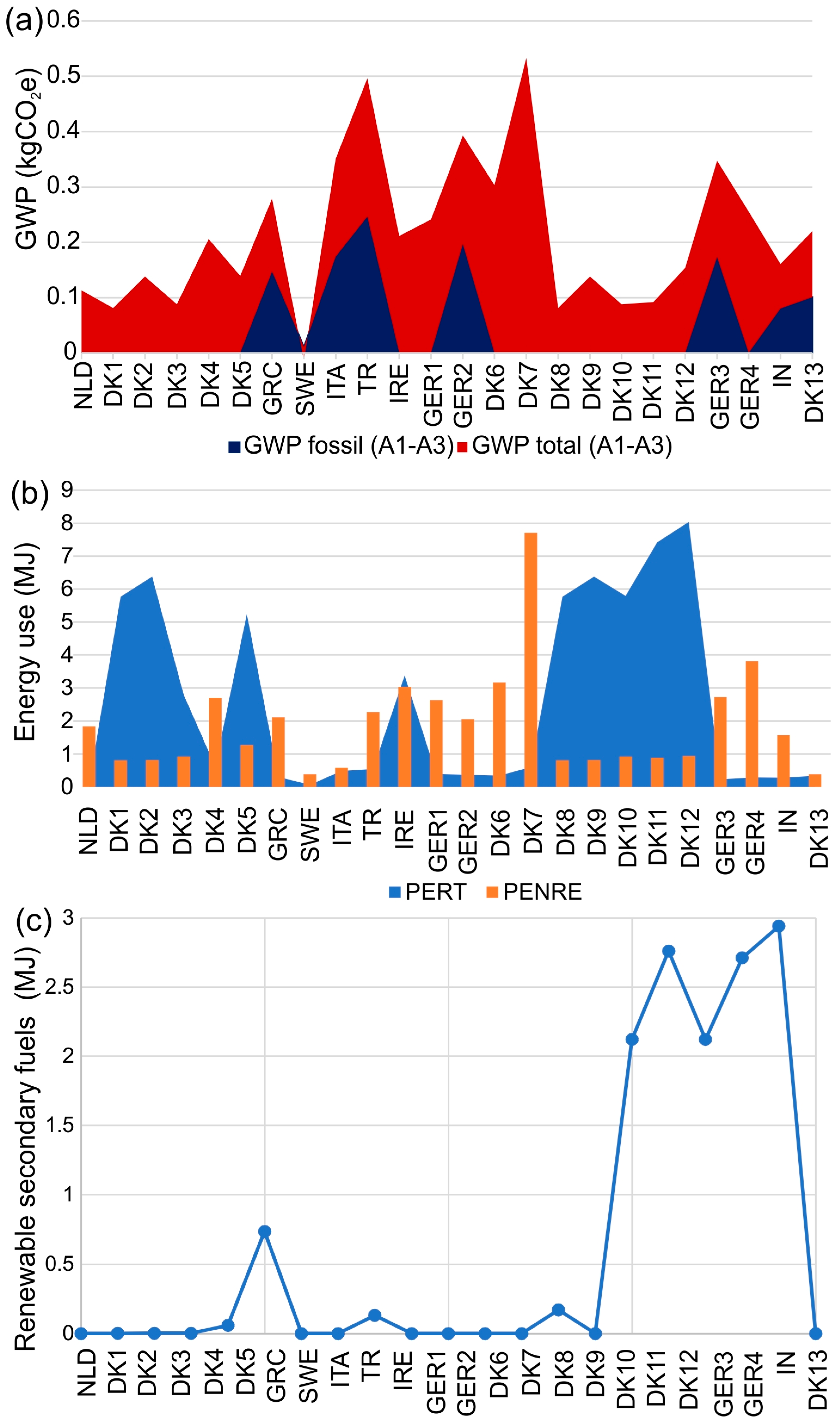
Among the recently analyzed case-study EPDs, the highest GWP is reported for Denmark (DK7), where gas-fired periodic kilns are used. This reflects the carbon intensity of intermittent firing cycles and fossil-based thermal energy inputs (Figure 5). Elevated values were also observed for Turkey (TR), associated with hand-shaped brick production, and Germany (GER2), both likely influenced by traditional forming techniques and fossil-dominant energy mixes.
Figure 5. Modules A1–A3 in the production of 1 kg of clay bricks: (a) Equivalent CO2 footprint (GWP fossil not given for most of the cases), (b) Renewable primary energy resources as energy (PERT) and non-renewable primary energy resources (PENRE), and (c) Renewable secondary fuels (NLD—Nederland, DK—Denmark, GRC—Greece, SWE—Sweden, ITA—Italy, TR—Turkey, IRE—Ireland, GER—Germany, IN—India).
Moderate GWP levels were observed in Denmark (DK6), where bricks are fired in a pet-coke-fueled tunnel kiln, and in India (IN) for hand-molded bricks. These cases suggest partial mitigation through higher kiln efficiency, lower firing temperatures, or regional energy-mix characteristics.
In contrast, Denmark sites DK8, DK9, and DK10, using biogas-fired kilns for solid bricks, show some of the lowest GWP values in the dataset, underscoring the decarbonization potential of renewable thermal energy sources.
A notable limitation in the reviewer EPDs is the inconsistent reporting on GWP-fossil, which impedes precise attribution to fossil fuel combustion. However, cases where high total energy consumption coincides with low GWP—as seen in several biogas-fired systems—suggest substantial integration of clean or renewable energy sources. This reinforces the need for transparent disclosure of energy sources and module-level detail in future EPDs to support robust benchmarking. These results align with broader findings that kiln fuel choice is one of the strongest determinants of GWP in ceramic production.
A notable limitation in the reviewed EPDs is the inconsistent reporting of GWP-fossil, which restricts the precise attribution of emissions to fossil fuel combustion. However, cases where high total energy consumption coincides with low GWP—particularly in biogas-fired systems—indicate substantial integration of renewable or low-carbon energy sources. This reinforces the need for transparent disclosure of energy sources, kiln technologies, and module-level detail to support robust benchmarking.
Patterns in renewable primary energy resources (PERT) and non-renewable primary energy resources (PENRE) vary across countries. Industries with high PERT generally exhibit low PENR. However, several cases, such as Sweden (SWE), Italy (ITA), Ireland (IRE), and Denmark (DK13), show comparable contributions from both renewable and non-renewable sources (Figure 5b). Some Danish facilities have already integrated substantial renewable energy inputs, resulting in significantly lower GWP values.
Compared with literature values of approximately 21.6 MJ per kilogram of clay bricks [33], the current dataset shows substantially lower energy consumption. Notably, India (IN), Denmark (DK11), and Germany (GE4) record the highest use of renewable secondary fuels, highlighting regional differences in fuel availability and waste-to-energy integration.

3.3. Discussion and Summary

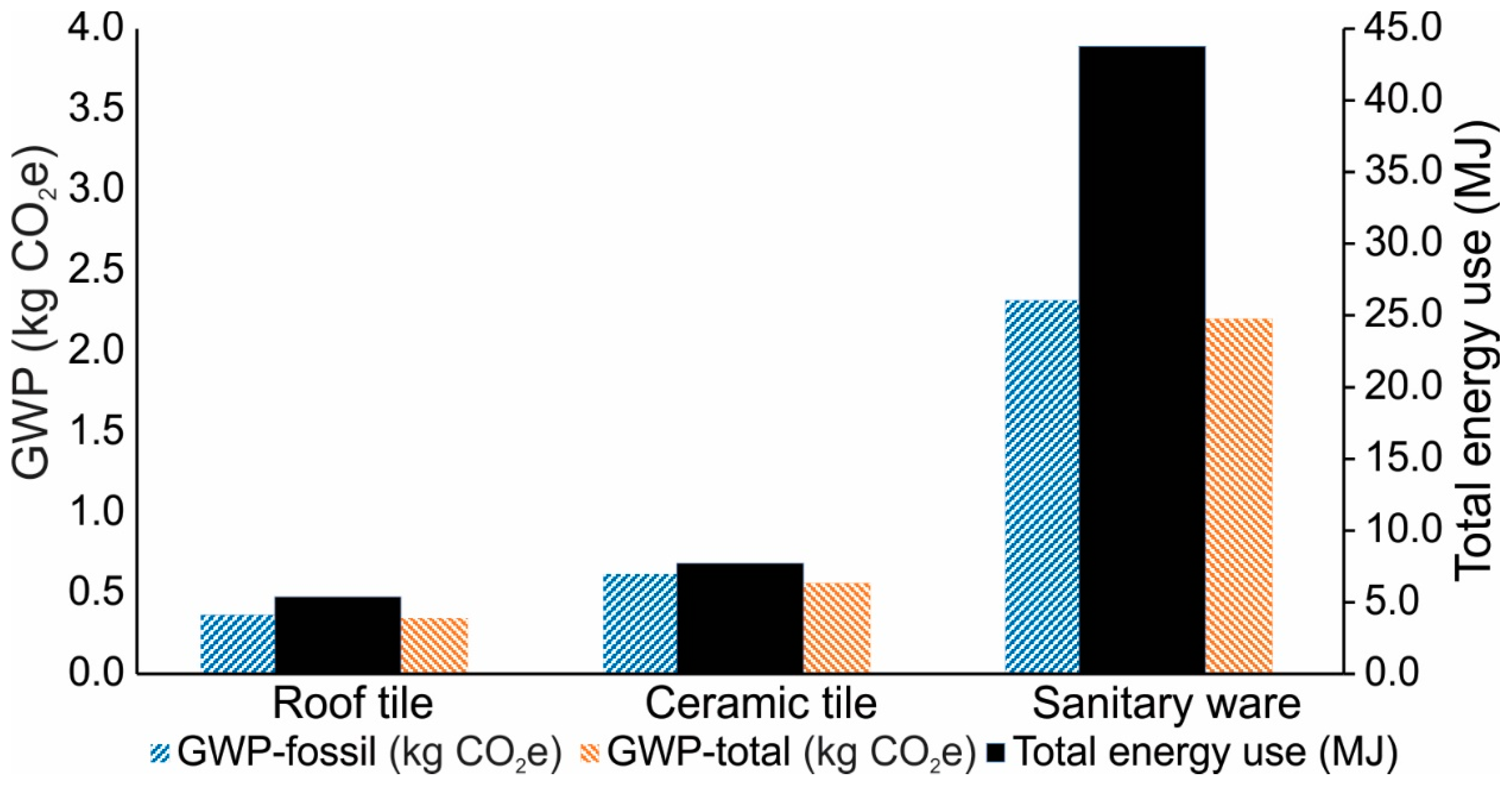
The EPDs analyzed using One Click LCA show clear, well-established trends in fossil GWP, total GWP, and total energy use (Figure 6), supporting the internal consistency of the reported data [31,34]. However, the comparison of EPDs across different program operators remains constrained by the limited level of detail required in current reporting formats. A standardized comparison platform—supported by harmonized background databases and transparent PCR requirements—would substantially improve the comparability and interpretability of EPDs.
Figure 6. One Click LCA average values in clay roof tile, ceramic tile, and sanitary ware production (GWP—Global Warming Potential).
Meaningful cross-platform comparisons require additional process-specific information that is currently absent from most declarations. Key parameters, such as the proportions of organic matter and carbonates in raw material mixtures, firing conditions, kiln efficiency, and precise energy-source breakdowns, are essential for understanding why products with similar energy use may exhibit different GWP values. Renewable energy inputs (e.g., solar, wind, hydro) can significantly reduce GWP even when total energy demand is high, while optimized heat-recovery systems or lean manufacturing practices may offset otherwise energy-intensive processes. Likewise, pre-processed raw materials or low-impact external suppliers can further reduce upstream burdens. Without such granularity, EPD-based comparisons risk oversimplification.
Because the EPDs analyzed in this study do not represent identical products or production systems, some of the observed differences may also reflect variations in manufacturing routes, energy mixes, or background databases. These factors should be considered when interpreting cross-platform differences, which are therefore exploratory rather than direct product-to-product comparisons.
Benchmark ranges provide a useful reference point for evaluating environmental performance. These values, typically derived from aggregated datasets or industry averages, help determine whether a product performs above or below typical expectations. Although relevant data exist in the literature, a broader, more unified benchmark dataset expressed in consistent units is needed to support robust evaluation.
Clay roof tiles typically exhibit a GWP of around 4.4 t CO2e per 100 m2, with production energy ranging from 2.1 to 2.4 MJ/kg depending on kiln efficiency [34,37], Table 2. Clay bricks have a GWP of 0.07–0.34 kg CO2e/kg and energy consumption of 0.5–5.0 MJ/kg, strongly influenced by firing temperature and fuel type [31,38,39,40]. Ceramic tiles generally fall within 1.0–1.5 kg CO2e/m2, with energy intensities of 5–7 MJ/kg and water use of 1.0–2.0 m3/t, particularly elevated for glazed products [34,41,42]. Sanitary-ware items exhibit the highest impacts, with GWP values of 1.15–2.6 kg CO2e/kg, energy consumption of 8.0–30.6 MJ/kg, and water use of around 7.73 L/kg, reflecting complex geometries and multiple firing stages [34,36,43,44]. Although these benchmarks (Table 2) offer valuable context, a more comprehensive and harmonized dataset is needed for sector-wide assessments.
Table 2. Product-Specific Benchmarks.
Overall, the limitations observed in cross-platform comparisons do not stem from the platforms themselves but from the restricted level of detail required in current EPD formats. Harmonization of EPDs depends on standardized background databases, transparent PCR requirements, and consistent reporting rules. This study represents the first comparative examination of EPD data structures for ceramic products and highlights the need for clearer benchmarks and product-specific reference values to support future evaluations.
In addition to the platforms analyzed here, the Embodied Carbon in Construction Calculator (EC3) database provides a large aggregated repository of EPDs from multiple program operators, including ceramic tiles and masonry products [45]. Although EC3 was not used as a primary data source here, its aggregated structure illustrates the potential value of centralized databases for improving comparability and supporting harmonized benchmarks across product categories.

4. Conclusions

This study provides a cross-platform assessment of Environmental Product Declarations (EPDs) for ceramic construction products regulated under the Construction Products Regulation (CPR), including sanitary ware, ceramic tiles, clay bricks, and clay roof tiles. By integrating case-study datasets from various countries, sourced from One Click LCA, the International EPD System, and supporting literature, the analysis reveals systemic disparities in environmental performance across product categories and reporting infrastructures. However, the limited disclosure typical of current EPDs prevents detailed characterization of individual cases; key parameters such as clay type, firing temperature, kiln configuration, fuel mix, and production volume are rarely or never reported. These omissions directly constrain cross-platform comparability and limit the interpretability of results.
Despite these limitations, the study does not identify a superior platform; rather, it demonstrates that meaningful cross-platform comparisons are only possible when raw-material data, process parameters, and background database choices are reported with greater transparency, regardless of the software used.
A key contribution of this work lies in quantifying the elevated environmental burdens of sanitary ware and ceramic tiles, driven by energy-intensive, multi-stage production processes. In contrast, clay bricks and roof tiles exhibit lower impacts due to simpler manufacturing routes and reduced thermal energy demand. These findings underscore the central role of energy sourcing, kiln performance, and process design in shaping the carbon footprint of ceramic products.
Beyond product-level insights, the study highlights structural limitations in current EPD practices, including:
  • Fragmented reporting formats and insufficient process-level detail,
  • Inconsistent disclosure of kiln technologies, firing temperatures, and energy mixes, and
  • Reliance on different background databases and PCRs across platforms, which introduces methodological variability and further complicates comparison.
To enhance the credibility and market relevance of EPDs, the study recommends:
  • Harmonizing reporting requirements to ensure consistent disclosure of energy sources, process parameters, and database choices, and
  • Developing tailored Product Category Rules (PCRs) that reflect ceramic-specific production characteristics and enable meaningful benchmarking.
These measures are essential for improving cross-platform comparability, accelerating low-carbon innovation, and informing policy frameworks that support sustainable market transitions. As the ceramic industry moves toward carbon neutrality, decarbonizing thermal processes and integrating renewable energy emerge as key strategies for reducing environmental impacts.
Despite limitations arising from restricted access to proprietary process data—often withheld for confidentiality—and the use of different background databases across platforms, this study provides a transparent and policy-relevant framework for interpreting EPDs within a fragmented reporting landscape. The ongoing evolution of standards and life-cycle databases further underscores the need for sector-specific harmonization to bridge gaps between academic research, industrial practice, and policy implementation. Future research should focus on developing standardized benchmarks for ceramic products, improving PCR transparency, and encouraging more detailed reporting practices to support meaningful cross-platform comparisons and a clearer understanding of the environmental footprint of ceramic construction materials.
Ultimately, this work contributes to the energy–environment discourse by offering a data-driven critique of current EPD methodologies and outlining actionable pathways to improve environmental communication, market alignment, and decision-making in the ceramic construction sector.

Author Contributions

Conceptualization, M.V.V. and T.S.-Š.; methodology, M.V.V.; formal analysis, M.V.V.; investigation, M.V.V.; resources, M.V.V., T.S.-Š. and Z.R.; data curation, M.V.V. and T.S.-Š.; writing—original draft preparation, M.V.V. and T.S.-Š.; writing—review and editing, M.V.V., T.S.-Š. and Z.R.; visualization, M.V.V.; supervision, Z.R.; funding acquisition, M.V.V. and Z.R. All authors have read and agreed to the published version of the manuscript.

Funding

This research was funded by the Ministry of Science, Technological Development, and Innovation of the Republic of Serbia, grant number 451-03-33/2026-03/200012.

Data Availability Statement

The data are sourced from https://manage.epdhub.com/ (accessed on 18 February 2025) and https://environdec.com/home (accessed on 18 February 2025).

Acknowledgments

The authors gratefully acknowledge the networking support provided by COST Action CA23157 European Network for Multiple View Life Cycle Sustainability Assessment (MultiViewLCSA). Milica Vidak Vasić funded the Article Processing Charge (APC).

Conflicts of Interest

The authors declare no conflicts of interest.

References

  1. Cerame—Unie Activity Report. 2024. Available online: https://www.canva.com/design/DAGYPvvCOUI/15sCuf7vYdE7f2FVnlTgdA/view?utm_content=DAGYPvvCOUI&utm_campaign=designshare&utm_medium=link&utm_source=editor#1 (accessed on 12 February 2026).
  2. Ceramic Roadmap to 2050. 2021. Available online: https://www.ceramicroadmap2050.eu/chapters/continuing-our-path-towards-climate-neutrality/ (accessed on 12 February 2026).
  3. Del Rio, D.D.F.; Sovacool, B.K.; Foley, A.M.; Griffiths, S.; Bazilian, M.; Kim, J.; Rooney, D. Decarbonizing the ceramics industry: A systematic and critical review of policy options, developments and sociotechnical systems. Renew. Sustain. Energy Rev. 2022, 157, 112081. [Google Scholar] [CrossRef]
  4. Wang, R.; Lei, H.; Liu, S.; Ye, X.; Jia, J.; Zhao, Z. The redistribution and migration mechanism of nitrogen in the hydrothermal co-carbonization process of sewage sludge and lignocellulosic wastes. Sci. Total Environ. 2021, 776, 145922. [Google Scholar] [CrossRef]
  5. Heat Values of Various Fuels. Available online: https://world-nuclear.org/information-library/facts-and-figures/heat-values-of-various-fuels (accessed on 12 February 2026).
  6. Dolotovskij, I.V. Energy-efficient vertical kiln for the firing of ceramic. In Proceedings of the 7th International Conference on Industrial Engineering (ICIE 2021). ICIE 2021; Radionov, A.A., Gasiyarov, V.R., Eds.; Lecture Notes in Mechanical Engineering; Springer: Cham, Switzerland, 2022. [Google Scholar] [CrossRef]
  7. Yangin-Gomec, C.; Dalkılıç, K.; Perendeci, A.; Güngörmüşler, M.; Somorin, T.; Roussel, J.; Varol, M.; Ramos, A.; van Hullebusch, E.D.; Trubetskaya, A.; et al. Thermochemical processing of organic wastes for sustainable valorisation and energy recovery: A review of recent contributions to the field. Biomass Bioenerg. 2025, 201, 108122. [Google Scholar] [CrossRef]
  8. Zhou, Y.; Qin, C. Energy efficiency evaluation of a shuttle kiln based on field test. Adv. Mech. Eng. 2017, 9. [Google Scholar] [CrossRef]
  9. Radojević, Z.; Vasić, M.V. Negative impacts of petroleum coke as an energy source in the brick-making industry. Build. Mater. Struct. 2023, 66, 2300010R. [Google Scholar] [CrossRef]
  10. EPA. Understanding Global Warming Potentials, 2025. Available online: https://www.epa.gov/ghgemissions/understanding-global-warming-potentials (accessed on 12 February 2026).
  11. Del Borghi, A.; Moreschi, L.; Gallo, M. Communication through ecolabels: How discrepancies between the EU PEF and EPD schemes could affect outcome consistency. Int. J. Life Cycle Assess. 2020, 25, 905–920. [Google Scholar] [CrossRef]
  12. Del Borghi, A. LCA and communication: Environmental Product Declaration. Int. J. Life Cycle Assess. 2013, 18, 293–295. [Google Scholar] [CrossRef]
  13. Arellano-Vazquez, D.A.; Moreschi, L.; Del Borghi, A.; Gallo, M.; Islas Valverde, G.; Mayorga Rojas, M.; Romero-Salazar, L.; Arteaga-Arcos, J.C. Use of EPD System for Designing New Building Materials: The Case Study of a Bio-Based Thermal Insulation Panel from the Pineapple Industry By-Product. Sustainability 2020, 12, 6864. [Google Scholar] [CrossRef]
  14. Carvalho, J.G.R.O.; Cecchin, D.; de Azevedo, A.R.G.; do Carmo, D.F.; Paes, J.L.; Ferraz, P.F.P.; Hamacher, L.S.; Costa, K.A.; Rossi, G.; Bambi, G. Life cycle assessment (LCA) in construction materials–Review. Agron. Res. 2025, 23, 293–321. [Google Scholar] [CrossRef]
  15. SRPS EN 15804:2020; Sustainability of Construction Works—Environmental Product Declarations—Core Rules for the Product Category of Construction Products. Institute for Standardization of Serbia: Belgrade, Serbia, 2020. Available online: https://iss.rs/sr_Cyrl/project/show/iss:proj:71094 (accessed on 12 February 2026).
  16. SRPS ISO 14025:2007; Environmental Labels and Declarations—Type III Environmental Declarations—Principles and Procedures (ISO 14025:2006). Institute for Standardization of Serbia: Belgrade, Serbia, 2007.
  17. Bovea, M.D.; Ibáñez-Forés, V.; Agustí-Juan, I. Chapter 7: Environmental product declaration (EPD) labelling of construction and building materials. In Eco-Efficient Construction and Building Materials; Pacheco-Torgal, F., Cabeza, L.F., Labrincha, J., de Magalhães, A., Eds.; Woodhead Publishing: Sawston, UK, 2014; pp. 125–150. [Google Scholar] [CrossRef]
  18. Andersen, S.C.; Larsen, H.F.; Raffnsøe, L.; Melvang, C. Environmental Product Declarations (EPDs) as a competitive parameter within sustainable buildings and building materials. IOP Conf. Ser. Earth Environ. Sci. 2019, 323, 012145. [Google Scholar] [CrossRef]
  19. Eco Platform. Available online: https://www.environdec.com/home (accessed on 12 February 2026).
  20. EN 15804:2012+A2:2019; Sustainability of Construction Works—Environmental Product Declarations—Core Rules for the Product Category of Construction Products. 2019. Available online: https://oneclicklca.com/en/resources/articles/en-15804-changes-epds?form=MG0AV3&form=MG0AV3 (accessed on 12 February 2026).
  21. Drpić, A.; Spasojević Šantić, T.; Radojević, Z. Environmental Product Declaration (EPD) for clay roof tiles-case study: Production Plant of Clay Roof Tiles in Republic of Serbia. IOP Conf. Ser. Mater. Sci. Eng. 2021, 1196, 012031. [Google Scholar] [CrossRef]
  22. Fnais, A.; Rezgui, Y.; Petri, I.; Beach, T.; Yeung, J.; Ghoroghi, A.; Kubicki, S. The application of life cycle assessment in buildings: Challenges, and directions for future research. Int. J. Life Cycle Assess. 2022, 27, 627–654. [Google Scholar] [CrossRef]
  23. Michalak, J. Environmental assessment of construction products- challenges, priorities, and needs from producers’ perspective. A Review. Cement Wapno Beton 2024, 29, 16–39. [Google Scholar] [CrossRef]
  24. Otero, M.S.; Garnica, T.; Montilla, S.; Conde, M.; Tenorio, J.A. Analysis of sectoral Environmental Product Declarations as a data source for Life Cycle Assessment. Buildings 2023, 13, 3032. [Google Scholar] [CrossRef]
  25. Olamewaju, O.I.; Enegbuma, W.I.; Donn, M.; Oyefusi, O.N. Assessment of environmental product declaration and databases: Towards ensuring data quality assurance practices. Environ. Impact Assess. Rev. 2025, 112, 107803. [Google Scholar] [CrossRef]
  26. ISO 21930:2017; Sustainability in Buildings and Civil Engineering Works—Core Rules for Environmental Product Declarations of Construction Products and Services. ISO: Geneva, Switzerland, 2017.
  27. Martfnez-Rocamora, A.; Rivera-Gómez, C.; Galan-Marfn, C.; Marrero, M. Environmental benchmarking of building typologies through BIM-based combinatorial case studies. Autom. Constr. 2021, 132, 103980. [Google Scholar] [CrossRef]
  28. Konradsen, F.; Hansen, K.S.H.; Ghose, A.; Pizzol, M. Same product, different score: How methodological differences affect EPD results. Int. J. Life Cycle Assess. 2024, 29, 291–307. [Google Scholar] [CrossRef]
  29. Müller, A.; Harpprecht, C.; Sacchi, R.; Maes, B.; van Sluisveld, M.; Daioglou, V.; Šavija, B.; Steubing, B. Decarbonizing the cement industry: Findings from coupling prospective life cycle assessment of clinker with integrated assessment model scenarios. J. Clean. Prod. 2024, 450, 141884. [Google Scholar] [CrossRef]
  30. Gürsan, C.; de Gooyert, V. The systemic impact of a transition fuel: Does natural gas help or hinder the energy transition? Renew. Sustain. Energy Rev. 2021, 138, 110552. [Google Scholar] [CrossRef]
  31. Vasić, M.V. Techno-economic analysis in the service of traditional ceramic industry. The first review. Struct. Integr. Life 2024, 24, 199–205. [Google Scholar] [CrossRef]
  32. Alves, C.L.; Miiller, J.O.M.; de Noni, A., Jr.; Heinrich, S. Challenges and opportunities for increase sustainability and energy efficiency in ceramic tile industry. Int. J. Appl. Ceram. Technol. 2025, 22, el5097. [Google Scholar] [CrossRef]
  33. Manrique, R.; Vásquez, D.; Vallejo, G.; Chejne, F.; Amell, A.A.; Herrera, B. Analysis of barriers to the implementation of energy efficiency actions in the production of ceramics in Colombia. Energy 2018, 143, 575–584. [Google Scholar] [CrossRef]
  34. European Commission. Reference Document on Best Available Techniques in the Ceramic Manufacturing Industry. BREF, 2007. Available online: https://eippcb.jrc.ec.europa.eu/sites/default/files/2019-11/cer_bref_0807.pdf (accessed on 16 June 2025).
  35. Bačkalić, Z.; Vasić, M.V.; Barta Holló, B.; Jovanović, D.; Sremac, S.; Awoyera, P. From lab to industry: Analysing the performance of ceramic batch modified with sodium silicate and phosphoric acid-based additive in ceramic floor tile production. Next Mater. 2025, 8, 100891. [Google Scholar] [CrossRef]
  36. Silvestri, L.; Forcina, A.; Silvestri, C.; Ioppolo, G. Life cycle assessment of sanitaryware production: A case study in Italy. J. Clean. Prod. 2020, 251, 119708. [Google Scholar] [CrossRef]
  37. Le, A.; Whyte, A.; Biswas, W.K. Carbon footprint and embodied energy assessment of roof-covering materials. Clean. Technol. Environ. Policy 2019, 21, 1913–1923. [Google Scholar] [CrossRef]
  38. Olsson, J.A.; Hafez, H.; Miller, S.A.; Scrivener, K.L. Greenhouse gas emissions and decarbonization potential of global fired clay brick production. Environ. Sci. Technol. 2025, 59, 1909−1920. [Google Scholar] [CrossRef]
  39. Bureau of Energy Efficiency, 2022. Available online: https://beeindia.gov.in/sites/default/files/Brick_sector_Energy_Mapping.pdf?form=MG0AV3&form=MG0AV3 (accessed on 16 June 2025).
  40. Akinshipe, O.; Kornelius, G. Quantification of atmospheric emissions and energy metrics from simulated clamp kiln technology in the clay brick industry. Environ. Pollut. 2018, 236, 580−590. [Google Scholar] [CrossRef]
  41. Ferrari, A.M.; Volpi, L.; Pini, M.; Siligardi, C.; García-Muiña, F.E.; Settembre-Blundo, D. Building a sustainability benchmarking framework of ceramic tiles based on Life Cycle Sustainability Assessment (LCSA). Resources 2019, 8, 11. [Google Scholar] [CrossRef]
  42. Dalsaniya, H.A.; Bhatt, N.J. Water footprint analysis of ceramic tiles industry. Int. Adv. Res. J. Sci. Eng. Technol. 2024, 11, 313–320. [Google Scholar] [CrossRef]
  43. Desole, M.P.; Fedele Gisario, A.; Barletta, M. Life Cycle Assessment (LCA) of ceramic sanitaryware: Focus on the production process and analysis of scenario. Int. J. Environ. Sci. Technol. 2024, 21, 1649–1670. [Google Scholar] [CrossRef]
  44. Buonomo, B.; Manca, O.; Nardini, S.; Plomitallo, R.E.; Gobio-Thomas, L.; Stojceska, V. Life cycle assessment of implementation of an innovative solar thermal technology in Italian ceramic industry. Therm. Sci. Eng. Prog. 2025, 61, 103517. [Google Scholar] [CrossRef]
  45. EC3. Available online: https://www.buildingtransparency.org/tools/ec3/ (accessed on 10 March 2026).
Disclaimer/Publisher’s Note: The statements, opinions and data contained in all publications are solely those of the individual author(s) and contributor(s) and not of MDPI and/or the editor(s). MDPI and/or the editor(s) disclaim responsibility for any injury to people or property resulting from any ideas, methods, instructions or products referred to in the content.

Article Metrics

Citations

Article Access Statistics

Article metric data becomes available approximately 24 hours after publication online.