


Abstract
This study investigated the accuracy of a near-infrared spectroscopic sensing system for predicting milk quality indicators in cow milk. The system determined three major milk quality indicators (milk fat, protein, and lactose), milk urea nitrogen (MUN), and somatic cell count (SCC) of two Holstein cows at the Hokkaido University dairy farm. The results showed excellent accuracy for milk fat and protein contents, while sufficient accuracy was found for lactose, MUN, and SCC. This suggests that the NIR spectroscopic sensing system could be used for online real-time milk quality determination, aiding dairy farmers in effective individual cow management and smart dairy farming.
1. Introduction
Smart dairy farming technologies are used to continually and in real time determine cattle milk and health quality indicators in order to maximize nutrition and productivity and to discover health problems at an early stage [1,2,3,4]. The ability to determine the three major milk quality indicators, such as milk fat, protein, and lactose; milk urea nitrogen (MUN), which is the nutritional indicator; and somatic cell count (SCC), which is the mastitis disease indicator, from milk samples taken during milking using near-infrared spectroscopy (NIRS) has grown in popularity [5,6,7].
NIRS is an appropriate technology for assessing milk quality during the milking process due to its non-invasive, quick, user-friendly, time-saving, and pretreatment-free characteristics [8]. NIRS has been utilized to determine agricultural items such as rice, wheat, pomegranate, and other vegetables and to offer qualitative and quantitative information [9,10,11,12]. In Japan, NIRS has been used to determine rice quality [9].
Numerous studies have been carried out on the development of online near-infrared (NIR) sensing systems that could help dairy farmers navigate the challenges that come with individual cow management, but there has been difficulty in developing an efficient and sustainable NIR sensing system [13,14,15,16]. According to Iweka et al. [17,18], the developed NIR spectroscopic sensing system might be utilized to accurately and precisely measure the quality of the milk of individual cows while milking in real-time. Nevertheless, the actual application of the NIR sensing system for real-time online identification of each cow’s milk quality while milking has yet to be realized. One of the major reasons is the measurement accuracy of the sensing system [19].
Therefore, we developed an experimental online NIR spectroscopic sensing system for milk quality determination of individual cows during milking. The goal of this study was to assess both the precision and accuracy of the developed novel NIR spectroscopic sensing system in our study for individual cow milk quality determination every 20 s during milking.
2. Materials and Methods
2.1. Description of the Near-Infrared Spectroscopic Sensing System
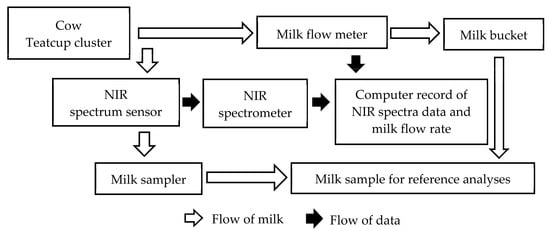
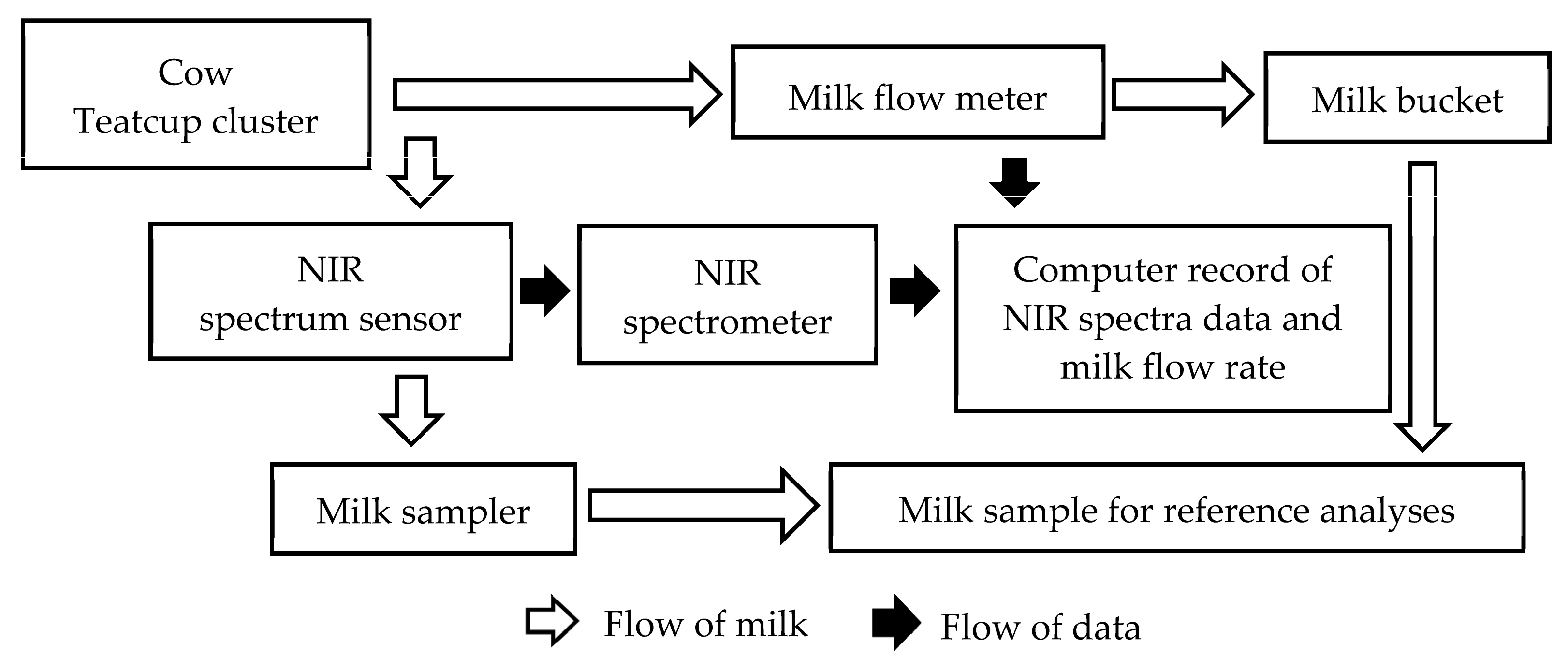
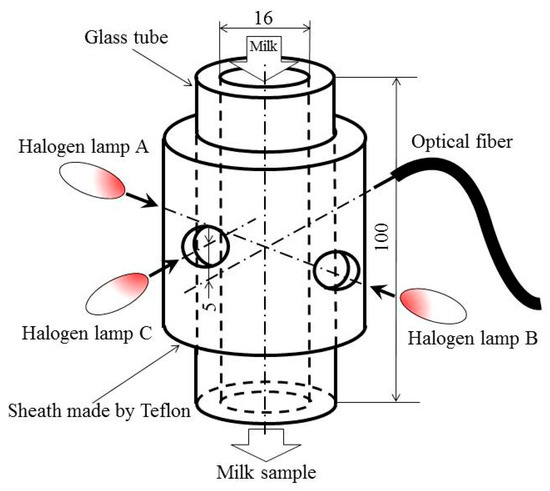
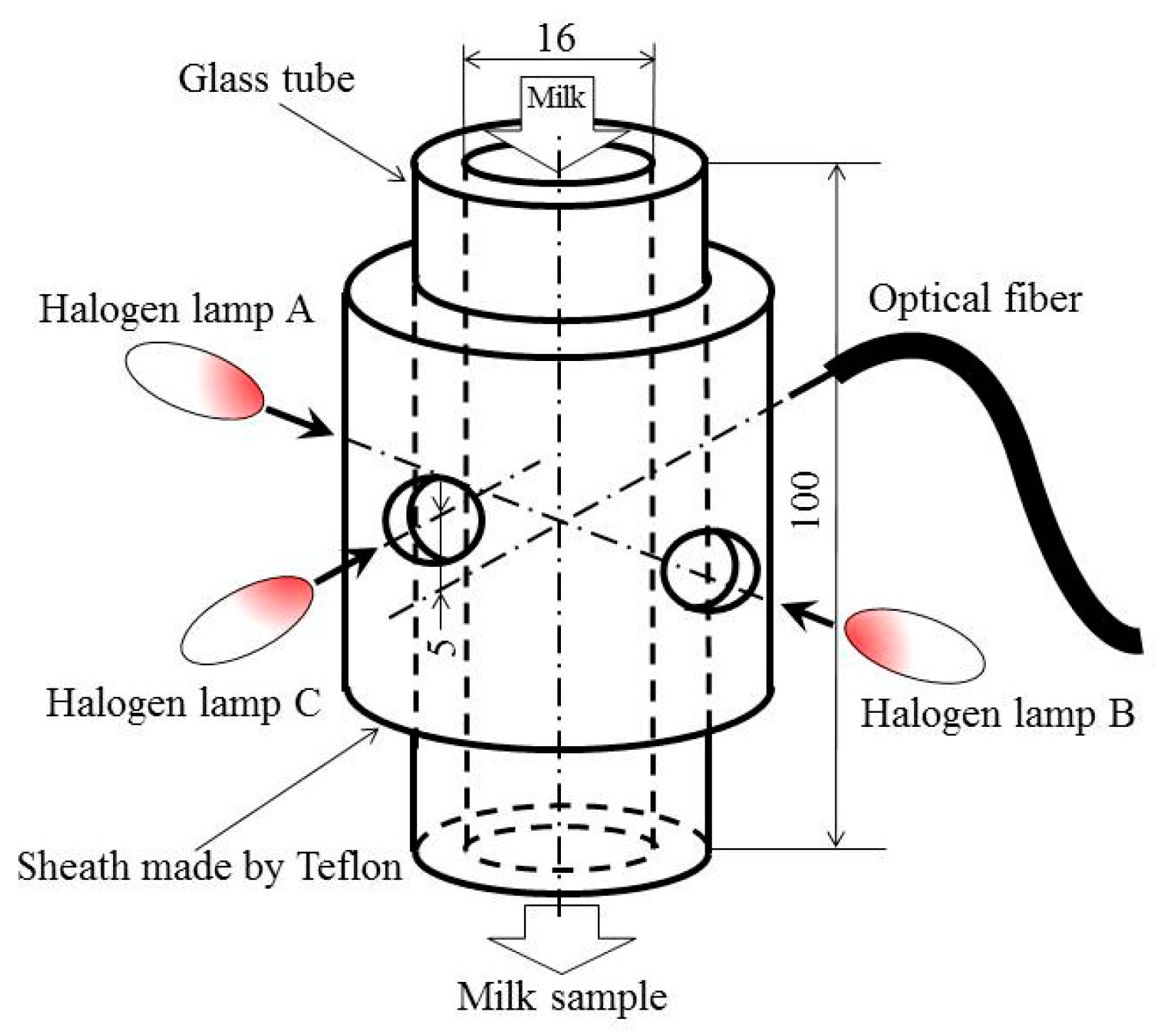
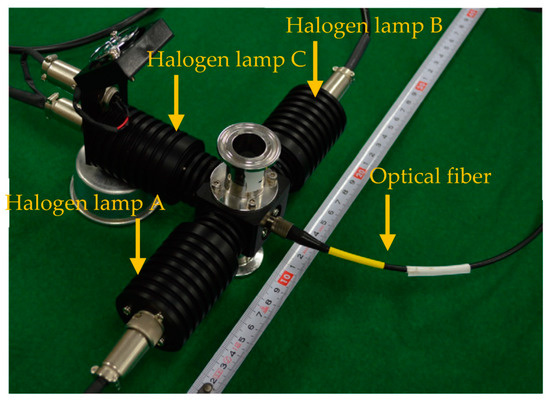
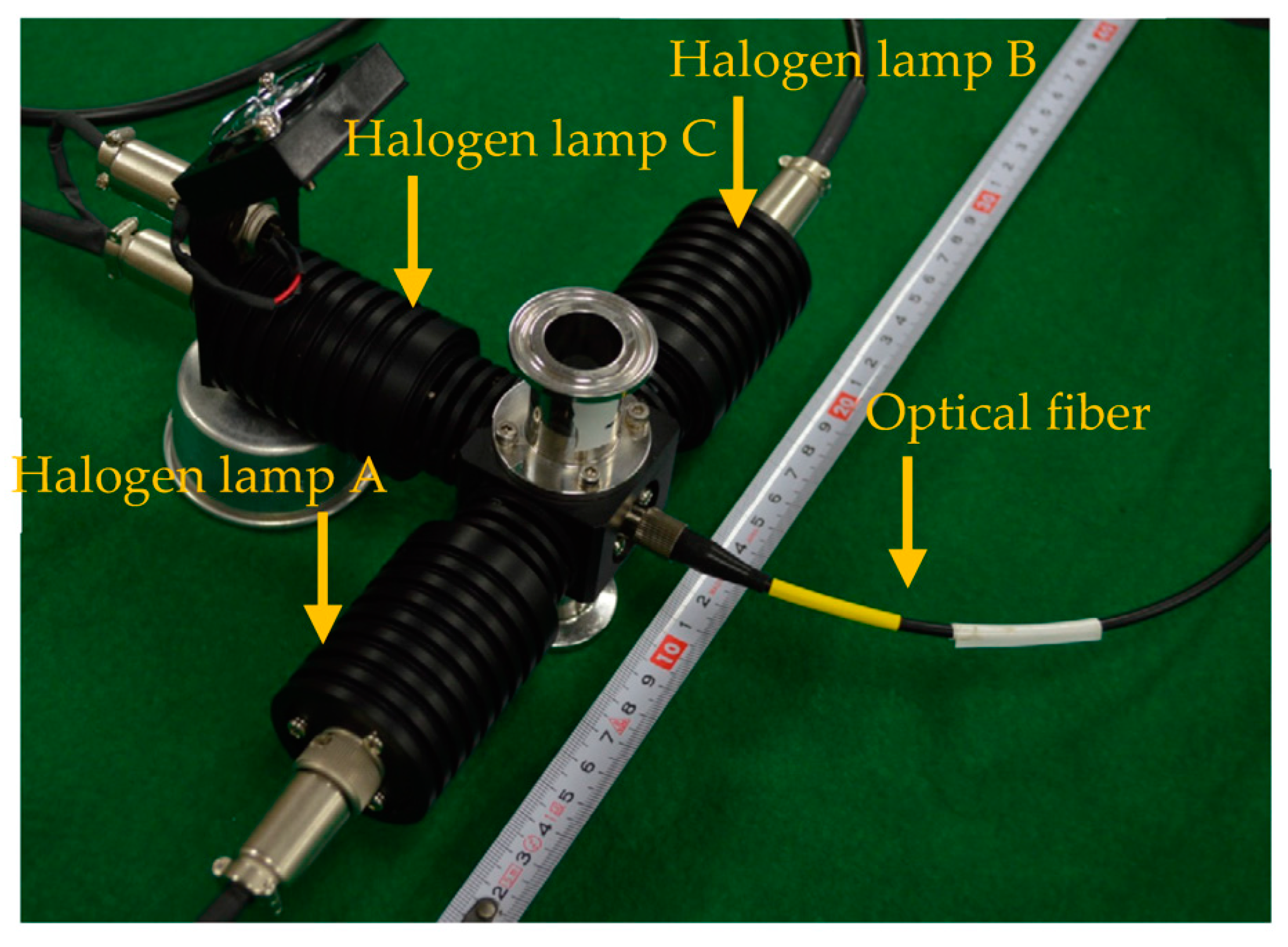
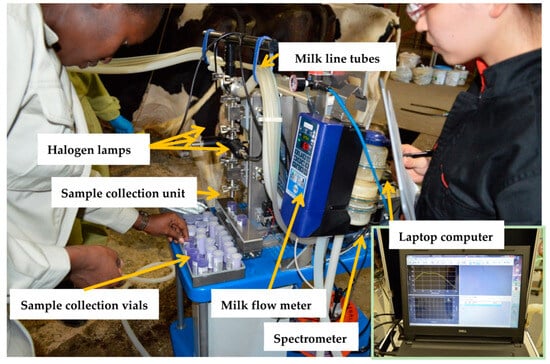
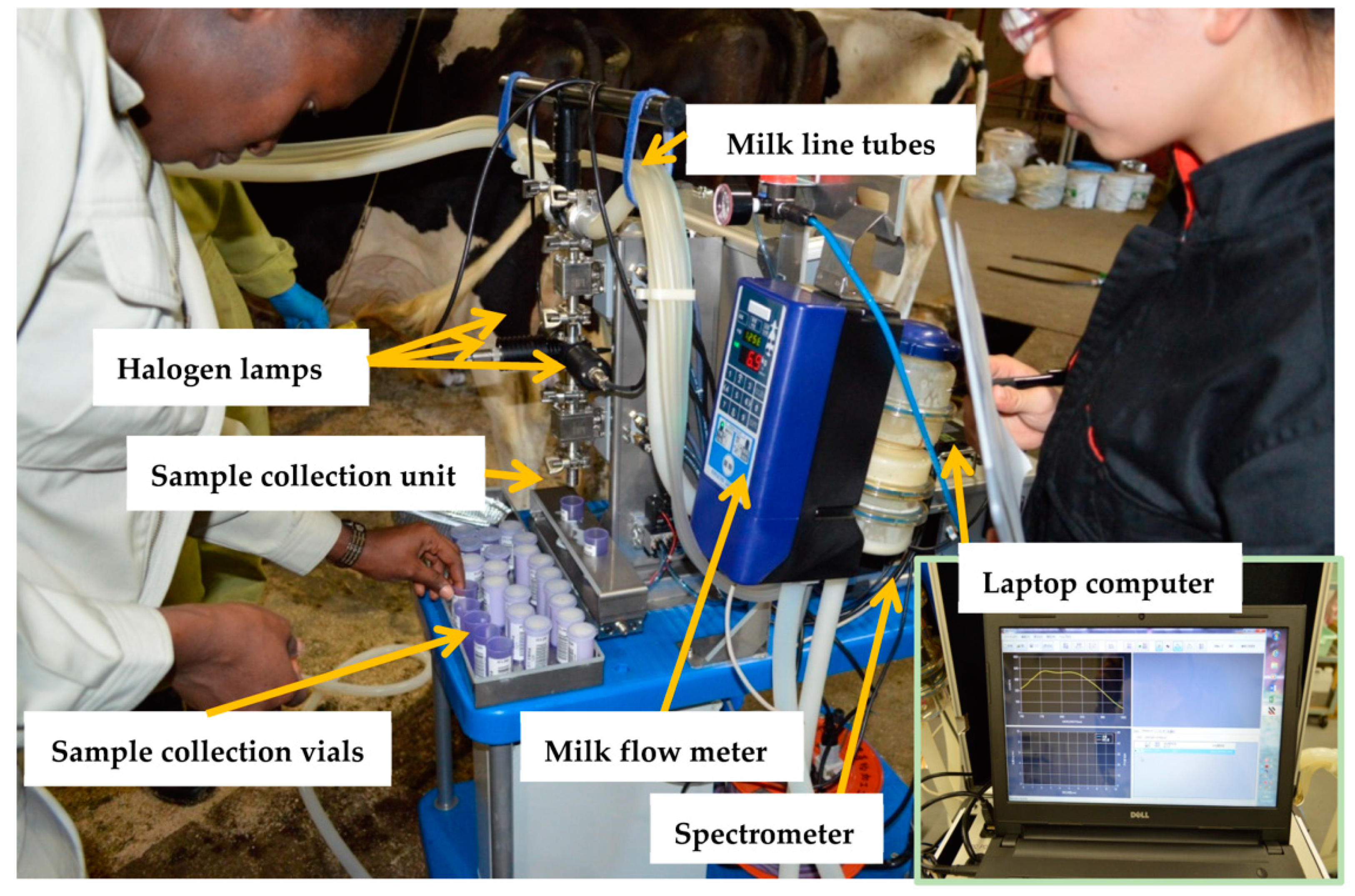
To determine the quality of each cow’s milk during milking, an experimentally based online NIR spectroscopic sensing system was created. The system included an NIR spectrum sensor, an NIR spectrometer, a milk flowmeter, a sampler, and a laptop computer (Figure 1). The system was linked between a teatcup cluster and the milking system’s milking bucket. Through a bypass, raw milk from the teatcup cluster was constantly flowing into the milk chamber (sample cell) of the NIR spectrum sensor. The extra milk flowed down a line tube past the milk flowmeter and into the bucket (Figure 1). The volume of the milk in the NIR milk chamber is about 30 mL (Table 1). The optical axes of halogen lamps A and B were positioned at the same height as the optical fiber, whereas the optical axes of halogen lamp C were set 5 mm higher (Figure 2, Figure 3 and Figure 4). The milk chamber of the NIR spectrum sensor has a path length of 100 mm and a diameter of 16 mm (Figure 2). The NIR spectrum sensor collected absorbance spectra via the milk. During milking, the spectra were taken at 1 nm intervals every 20 s in the 700 nm to 1050 nm range. The milk flow rate was also recorded on the laptop computer.
Figure 1.
Flow chart of an on-line real-time near-infrared spectroscopic sensing system for determining milk quality indicators during milking. Adapted from [18] with permission from Environmental Control in Biology, 2020.
Table 1.
Specifications of the near-infrared (NIR) spectroscopic instrument.
Figure 2.
Schematic of the optical system of the NIR spectrum sensor’s milk chamber. Adapted from [20] with permission from MDPI, 2023.
Figure 3.
Original NIR spectrum sensor.
Figure 4.
Overview of the NIR spectroscopic sensing system.
2.2. Holstein Cows and Milk Samples
In this study, we used two Holstein cows belonging to the Hokkaido University dairy barn in Japan. The lactation phases of these cows varied. During the experiment, the measurements were taken during two consecutive milkings, one in the evening and one in the morning. On the Hokkaido University dairy farm, cows were milked using a pipeline milking system. Milk spectra and flow data were collected, and raw milk samples were drawn from the milk sampler every 20 s during milking.
2.3. Reference Analysis
The MilkoScan device was used to determine the three primary milk quality indices and MUN, while the Fossomatic device was utilized for estimating SCC. The two devices are from Foss Electric, Hillerod, Denmark. The reference analyses involved 142 milk samples.
2.4. Chemometric Analysis
Statistical investigations were conducted to generate calibration models for each milk quality indicator and to validate the model’s accuracy as well as precision. The analyses were carried out utilizing the spectra data analysis technique, the Unscrambler ver. 10.3 from Camo AS Trondheim, Norway. The total data from the reference analyses were used to develop calibration using the full cross-validation method. The calibration models were built using the partial least squares regression (PLSR) method from the absorbance spectra and reference data. No data pretreatment method was used for this analysis.
3. Results and Discussion
3.1. Near-Infrared Spectra
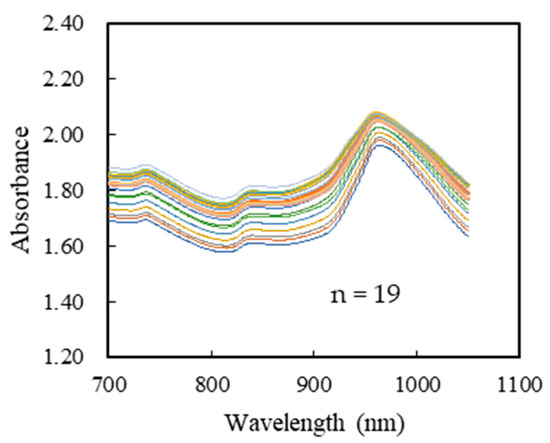
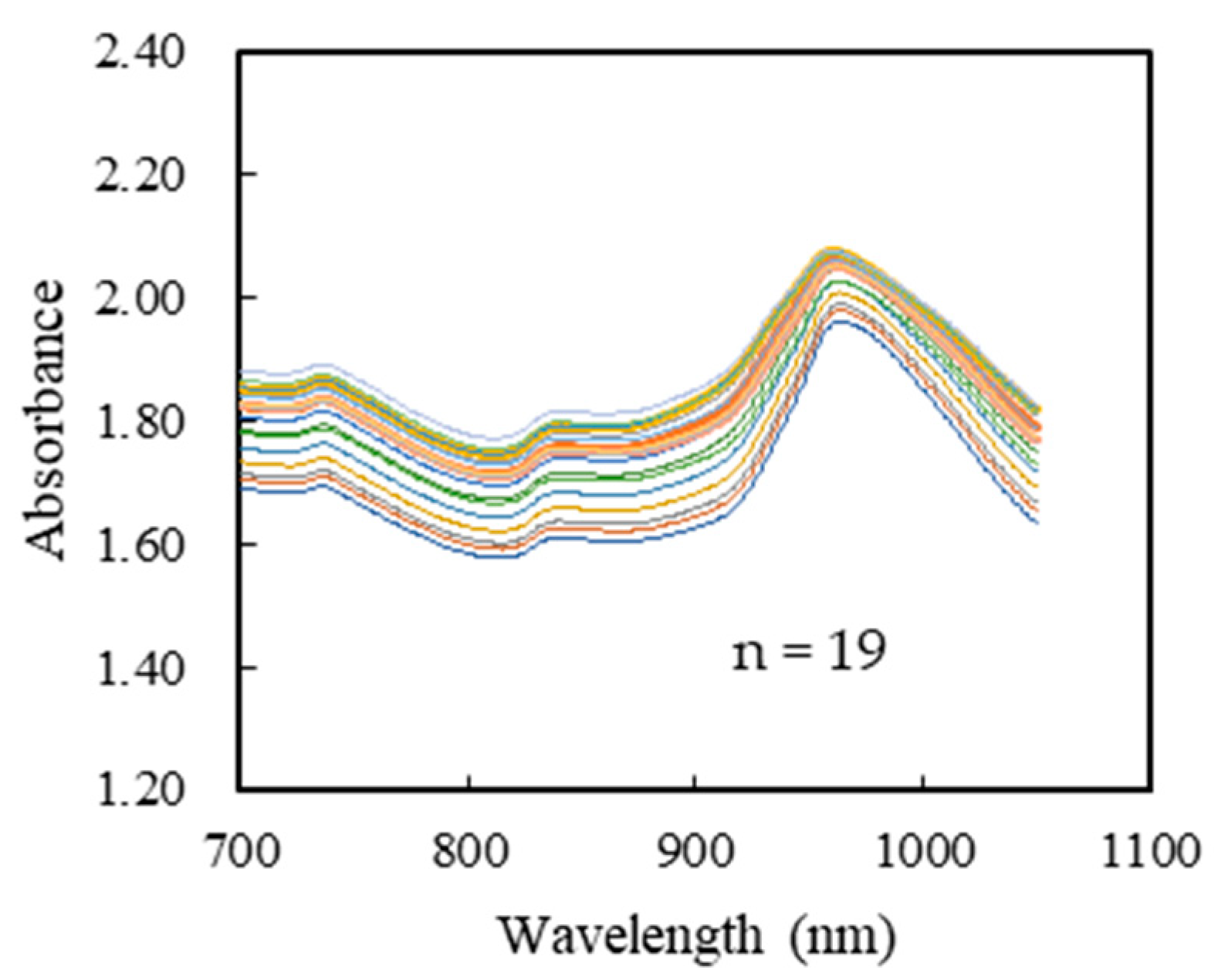
Figure 5 shows the original raw milk spectra. The NIR spectra indicated a pair of bands, having peaks at 740 and 840 nm, respectively. These peaks represent overtone absorptions by the C-H and C-C bands, which are associated with the different absorption bands of milk components such as fat, protein, and lactose. The O-H functional groups found in water exhibited an elevated absorption peak, distinguishing the spectra band at about 960 nm [15].
Figure 5.
The original spectra of raw milk from cow number 1256 during milking.
3.2. Calibration Models’ Precision and Accuracy
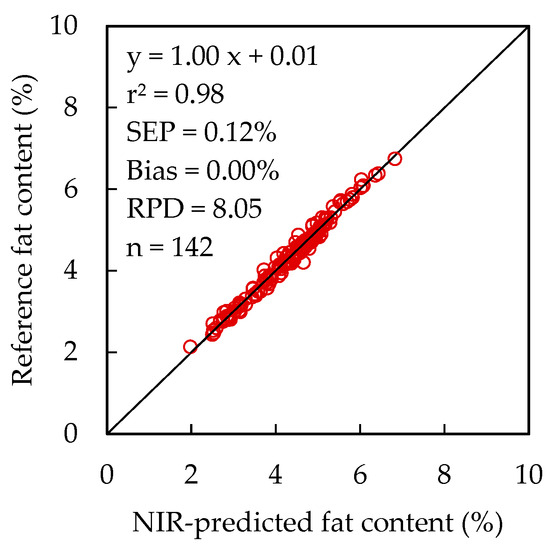
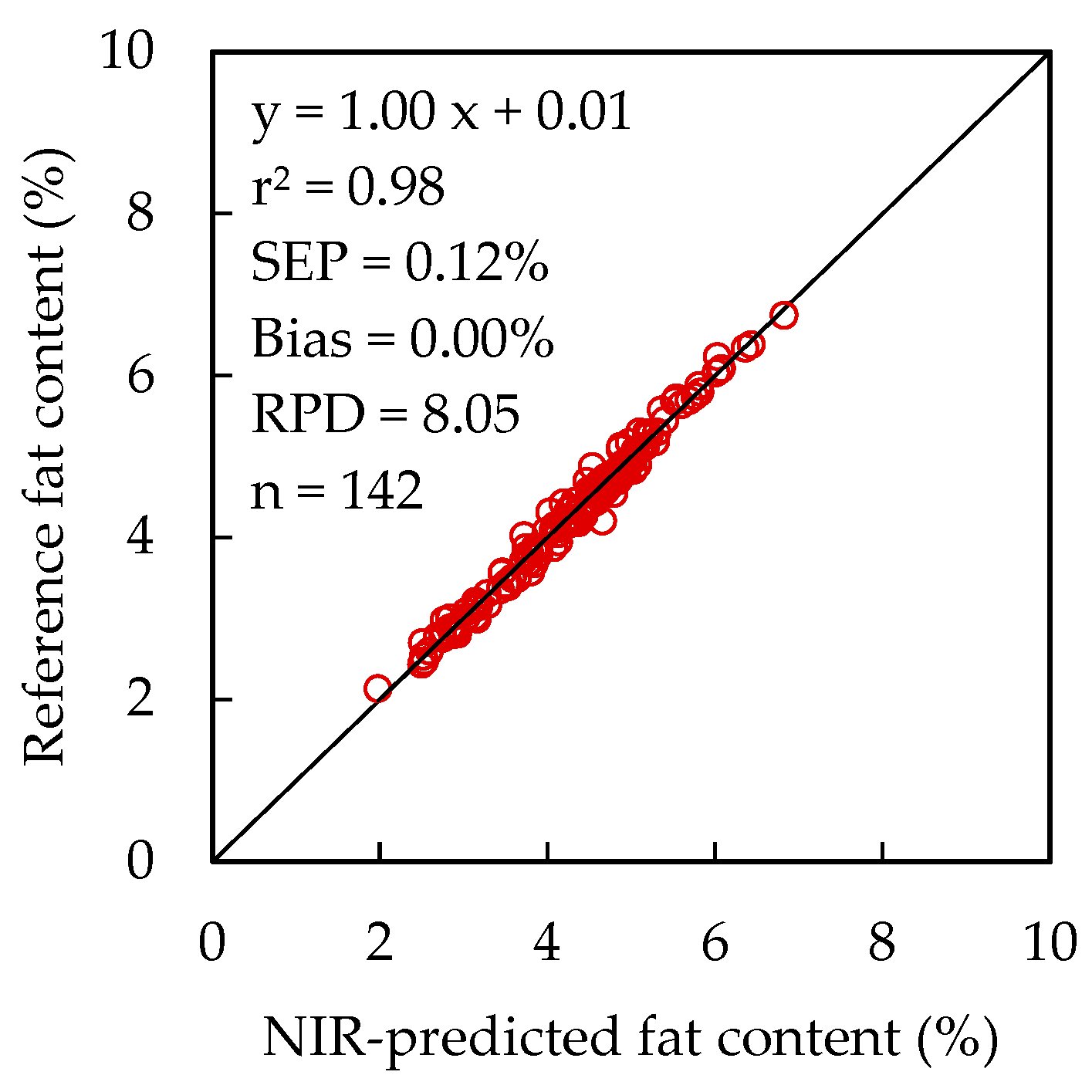
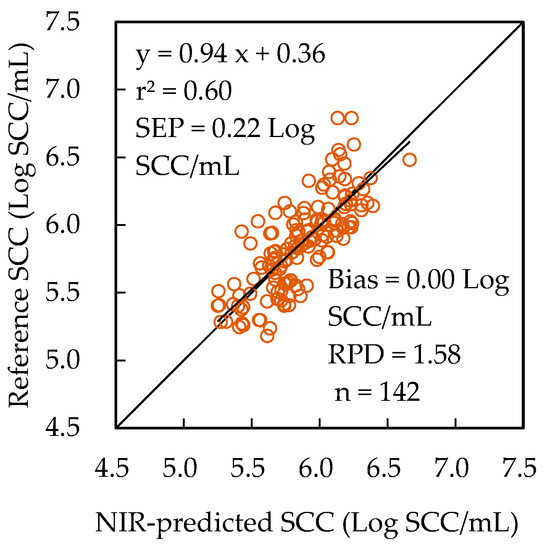
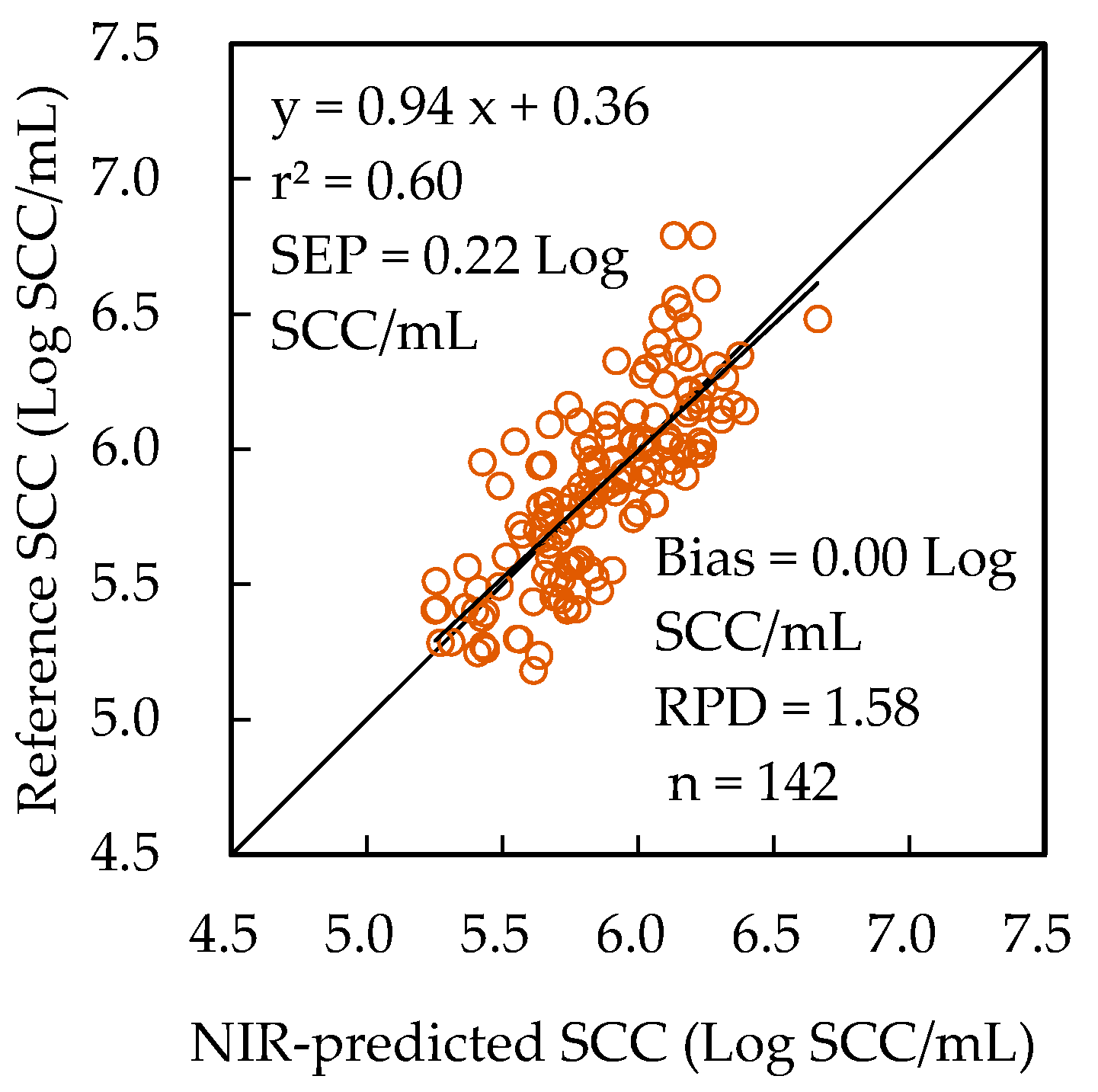
Table 2 summarizes the validation results of the NIR spectroscopic sensing system utilized to determine milk quality indicators. The relationships between the reference and NIR-predicted values of the milk fat content and SCC are shown in Figure 6 and Figure 7, respectively.
Table 2.
Validation statistics of the near-infrared sensing system for milk quality determination.
Figure 6.
Correlation between reference fat content and NIRS-predicted fat content.
Figure 7.
Correlation between reference SCC and NIRS-predicted SCC.
For predicting milk fat, protein, lactose, MUN, and SCC, the coefficient of determination (r2), standard error prediction (SEP), and bias were 0.98, 0.12%, and 0.00% for milk fat content; 0.92, 0.03%, and 0.00% for milk protein content; 0.70, 0.03%, and 0.00% for milk lactose; 0.45, 0.60%, and 0.00 mg/dL for MUN; and 0.60, 0.22 log SCC/mL, and 0.00 log SCC/mL, respectively. The high r2 values and low SEP and bias values were indicative of high levels of precision and accuracy. The calibration model for milk fat worked quite well. The carbon–hydrogen strings of triacylglycerol were adequately represented in the NIR spectra, allowing for extraordinarily high precision. These findings suggested that the NIR could be used to determine the three major milk quality indicators of raw milk and the MUN and SCC of each cow during milking. The level of precision and accuracy for predicting SCC was adequate. SCC is a globally recognized indicator of cow subclinical mastitis disease, and the calibration model created for SCC could be used to diagnose subclinical mastitis.
3.3. Near-Infrared Sensing System
The accuracy for determining the three major milk quality indicators, MUN, and SCC was very good, especially for milk fat and protein, as compared to the accuracy of the previous NIR sensing system [6]. The cylindrical structure of the NIR spectrum sensor contributed to its high accuracy by reducing the effect of air bubbles and fluctuations in milk flow. Another explanation is that the NIR spectroscopic sensing system used in our work has three halogen lamps that were used as near-infrared light sources to irradiate the milk samples from three directions with an exposure length of 200 ms, which was repeated ten times in one experimental run. It was discovered that our NIR sensor, which is comprised of three halogen lamps, accurately collected the near-infrared light by fat content, as opposed to the prior study’s single halogen lamp [6]. As a result, a strong signal was produced. The exposure time ensured that the important bright part of the captured spectra was not lost, resulting in a reduction in various random and fixed pattern noises.
This indicates that the NIR sensing system might provide dairy farmers and vets with useful information on each cow’s physiological state and milk quality, providing evaluation control for better dairy farm management. By deploying the data from each cow, dairy farm management might proceed to the next step of smart dairy farming by using this NIR sensing technology.
4. Conclusions
The NIR spectroscopic sensing system created in this study might be utilized to determine the three major milk quality indices, MUN and SCC, of each cow during milking in real time. Further research should be undertaken to improve the precision and accuracy of the proposed calibration models, allowing for the practical implementation of this NIR sensing technology, resulting in smart dairy farming.
Author Contributions
Conceptualization, S.K. and P.I.; methodology, S.K., P.I., T.M., and T.K.; software, S.K. and P.I.; validation, P.I. and S.K.; formal analysis, P.I., S.K., and T.M.; investigation, P.I., S.K., T.M., and T.K.; data curation, P.I. and S.K.; writing—original draft preparation, P.I., writing—review and editing, S.K., T.M., and P.I. All authors have read and agreed to the published version of the manuscript.
Funding
This study was funded by a grant from the National Agriculture and Food Research Organization (NARO) of Japan named Project for Development of New Practical Technology.
Institutional Review Board Statement
Not applicable.
Informed Consent Statement
Not applicable.
Data Availability Statement
The content of this paper summarizes all the new data obtained in this study.
Conflicts of Interest
The author Takashi Kawaguchi works for Orion Company in Nagano, Japan. He worked in collaboration with the authors from Hokkaido University, Japan. The remaining authors declare that the research was conducted in the absence of any commercial or financial relationships that could be construed as a potential conflict of interest.
References
- Evangelista, C.; Basirico, L.; Bernabucci, U. An Overview on the Use of Near Infrared Spectroscopy (NIRS) on Farms for the Management of Dairy Cows. Agriculture 2021, 11, 296. [Google Scholar] [CrossRef] [Scilit]
- Diaz-Olivares, J.A.; Adriaens, I.; Stevens, E.; Saeys, W.; Aernouts, B. Online Milk Composition Analysis with an On-farm Near-infrared Sensor. Comput. Electron. Agric. 2020, 178, 105734. [Google Scholar] [CrossRef] [Scilit]
- Zhu, Z.; Lin, B.; Zhu, X.; Guo, W. A Rapid Method of Identifying Mastitis Degree of Bovines Based on Dielectric Spectra of Raw milk. Food Qual. Saf. 2023, 7, fyad014. [Google Scholar] [CrossRef] [Scilit]
- Iweka, P.; Kawamura, S.; Mitani, T.; Yamaguchi, T.; Koseki, S. Near-infrared Spectroscopic Sensing System for Online Real-time Milk Quality Evaluation in an Automatic Milking System. In Proceedings of the Seventh Asian NIR Symposium (ANS 2020), Khonkaen, Thailand, 12–15 February 2020. [Google Scholar]
- Tsenkova, R.; Atanassova, S.; Morita, H.; Ikuta, K.; Toyoda, K.; Iordanova, K.I.; Hakogi, E. Near Infrared Spectra of Cows’ Milk for Milk Quality Evaluation: Disease Diagnosis and Pathogen Identification. J. Near Infrared Spectrosc. 2006, 14, 363–370. [Google Scholar] [CrossRef] [Scilit]
- Kawasaki, M.; Kawamura, S.; Tsukahara, M.; Morita, S.; Komiya, M.; Natsuga, M. Near-infrared spectroscopic sensing system for on-line milk quality assessment in a milking robot. Comput. Electron. Agric. 2008, 63, 22–27. [Google Scholar] [CrossRef] [Scilit]
- Iweka, P.; Kawamura, S.; Mitani, T.; Yokoe, M.; Okatani, T. Effect of Milking Season on the Accuracy of Calibration Models for Milk Quality Determination using Near-infrared Spectroscopic Sensing System during Milking. In Proceedings of the 5th Asian NIR Symposium, Kagoshima, Japan, 30 November–3 December 2016. [Google Scholar]
- Iweka, P.N. Development of Near-Infrared Spectroscopic Sensing System for Online Real-Time Monitoring of Milk Quality during Milking. Ph.D. Thesis, Hokkaido University, Sapporo, Japan, 25 September 2019. Available online: https://eprints.lib.hokudai.ac.jp/dspace/bitstream/2115/75864/1/Iweka_Patricia_Nneka. (accessed on 15 October 2023).
- Ohtsubo, K.; Kobayashi, A.; Shimizu, H. Quality evaluation of rice in Japan. JARQ 1993, 27, 95–101. [Google Scholar]
- Du, Z.; Tian, W.; Tilley, M.; Wang, D.; Zhang, G.; Li, Y. Quantitative assessment of wheat quality using near-infrared spectroscopy: A comprehensive review. Compr. Rev. Food Sci Food Saf. 2022, 21, 2956–3009. [Google Scholar] [CrossRef] [Scilit] [PubMed]
- Opara, U.L.; Arendse, E. Near-Infrared Spectroscopy for Pomegranate Quality Measurement and Prediction. In Nondestructive Quality Assessment Techniques for Fresh Fruits and Vegetables; Pathare, P.B., Rahman, M.S., Eds.; Springer: Singapore, 2022; pp. 211–232. [Google Scholar] [CrossRef] [Scilit]
- Nicolaï, B.M.; Defraeye, T.; Ketelaere, B.; Herremans, E.; Hertog, M.L.; Saeys, W.; Torricelli, A.; Vandendriessche, T.; Verboven, P. Nondestructive measurement of fruit and vegetable quality. Annu. Rev. Food. Sci. Technol. 2014, 5, 285–312. [Google Scholar] [CrossRef] [Scilit] [PubMed]
- Tsenkova, R.; Atanassova, S.; Kawano, S.; Toyoda, K. Somatic cell count determination in cow’s milk by near-infrared spectroscopy: A new diagnostic tool. J. Anim Sci. 2001, 79, 2550–2557. [Google Scholar] [CrossRef] [Scilit] [PubMed]
- Iweka, P.; Kawamura, S.; Mitani, T.; Koseki, S. Non-destructive determination of bovine milk progesterone concentration during milking using near-infrared spectroscopy. CIGR J. 2020, 22, 171–178. [Google Scholar]
- Ozaki, Y.; McClure, W.F.; Christy, A.A. Near-Infrared Spectroscopy in Food Science and Technology, 1st ed.; Wiley: Hoboken, NJ, USA, 2006. [Google Scholar] [CrossRef] [Scilit]
- Sato, T.; Yoshino, M.; Furukawa, S.; Someya, Y.; Yano, N.; Uozumi, J.; Iwamoto, M. Analysis of Near Infrared Milk Constituents by the Spectrophotometric Method. Jpn. J. Zootech. Sci. 1987, 58, 698–706. [Google Scholar]
- Iweka, P.; Kawamura, S.; Mitani, T.; Kawaguchi, T.; Koseki, S. Cow Milk Progesterone Concentration Assessment during Milking Using Near-infrared Spectroscopy. EAEF 2021, 14, 30–36. [Google Scholar] [CrossRef] [Scilit] [PubMed]
- Iweka, P.; Kawamura, S.; Mitani, T.; Kawaguchi, T.; Koseki, S. Online Milk Quality Assessment during Milking Using Near-infrared Spectroscopic Sensing System. Environ. Control Biol. 2020, 58, 1–6. [Google Scholar] [CrossRef] [Scilit]
- Iweka, P.; Kawamura, S.; Mitani, T.; Koseki, S. Effect of cow individuality and calving times on accuracy of near-infrared spectroscopic sensing system for milk quality determination during milking. In Proceedings of the 33rd NIR Forum JCNIR, Tsukuba, Japan, 15–17 November 2017; p. 83. [Google Scholar]
- Iweka, P.; Kawamura, S.; Mitani, T.; Kawaguchi, T. Online near-infrared spectroscopy for the measurement of cow milk quality in an automatic milking system. Eng. Proc. 2023, 56, 145. [Google Scholar] [CrossRef] [Scilit]

Disclaimer/Publisher’s Note: The statements, opinions and data contained in all publications are solely those of the individual author(s) and contributor(s) and not of MDPI and/or the editor(s). MDPI and/or the editor(s) disclaim responsibility for any injury to people or property resulting from any ideas, methods, instructions or products referred to in the content. |
© 2023 by the authors. Licensee MDPI, Basel, Switzerland. This article is an open access article distributed under the terms and conditions of the Creative Commons Attribution (CC BY) license (https://creativecommons.org/licenses/by/4.0/).