


Abstract
At temperatures higher than 5 °C in the cooling chambers of refrigeration systems, bacteria multiply rapidly on fresh fishes, thereby leading to an increased risk of foodborne diseases. Maintaining the storage temperature within the recommended bounds of 0 °C and 5 °C is needed to maintain food safety and quality. This study presents model predictive control of a data-driven medium-temperature cold storage system using subspace system identification techniques. The identified linear model presents a holistic view of the whole system, with each subsystem cohesively linked together. The data-driven model was developed from synthetic data derived from a high-fidelity simulation benchmark model of a supermarket refrigeration system from Aalborg University, Denmark. The benchmark model consists of a medium-temperature closed display case, the suction manifold, and the compressor rack. The data of the expansion valve, suction pressure, compressor capacity, heat transfer rate, and ambient temperature were taken as inputs, while the data of the air and goods temperatures were taken as outputs based on expert knowledge. A linear model predictive controller was designed to control the temperature outputs of the identified linear model, and the outputs were compared with the proportional–integral dead band control used in the benchmark. Simulation results for 24 h showed that the model predictive controller was able to achieve an air temperature and a goods temperature within the recommended temperature range of 0 °C and 5 °C that guarantees safe storage of fresh fishes. These results imply that a reduced-order model of a commercial refrigeration system that is robust, reliable, and stable can be developed and controlled to achieve the goal of food safety, thereby guaranteeing food security and reducing costs.
1. Introduction
A cold storage system is a kind of commercial facility that uses temperature control to preserve perishable items like meat, vegetables, and fish for a longer period of time [1]. The medium-temperature (MT) cold storage system has been given particular attention in this study. This is because they are extremely vulnerable to disturbances such as external heat loads. Additionally, because the MT system has more compressors, it uses more electricity. Thus, MT systems have greater potential for energy savings than low-temperature systems [2]. This research primarily concentrates on the simulation and regulation of medium-temperature shelf-type display cases, which are considered to exemplify the worst-case scenario for thermal storage potential. The vapor compression cycle (VCC) is the foundation of the technology utilized in this study. This is due to the fact that the most efficient type of refrigeration cycle is the VCC. This system has the highest average coefficient of performance (COP) and energy input demand [3].
Physics-based modeling [4,5] and data-driven modeling [6,7,8] are two methods that have been used for mathematical system model creation. Various models of the refrigeration system have been created in the literature using a physics-based modeling method; however, these models have the disadvantage of not precisely predicting food temperatures and not being able to accomplish efficient compressor operations [9,10,11,12]. In contrast, the data-driven technique can handle complex, unpredictable, or nonlinear systems, such as refrigeration systems, which can be difficult to represent analytically or numerically [13,14,15]. Additionally, data-driven systems can quickly adapt to changing conditions, disruptions, or interruptions by learning from fresh data. They can improve the system’s performance and reliability while reducing the time and cost of modeling and control design [16]. Consequently, this work used data-driven modeling with subspace system identification.
Refrigeration systems have been controlled using a variety of techniques, including simple feedback control techniques like proportional–integral–derivative control [17], optimal control techniques like Linear Quadratic Gaussian (LQG) [18], and conventional control techniques like on/off control and refrigerant bypass [19]. However, the aforementioned techniques frequently result in product temperature violations, which are harmful to food safety. For this study, model predictive control (MPC) was used because it may serve as an anticipatory controller instead of a remedial controller, which is a preferred choice for controlling cold storage systems [20]. By integrating constraint handling, slow dynamics, and disturbance rejection into the control architecture, it offers several advantages [21].
In order to accomplish the goal of food safety and quality, this research proposes using the model predictive control technique on a reduced-order model of a commercial refrigeration system. The system identification toolbox of MATLAB 2024a and Simulink 2024a software is used to estimate and validate a linear state space model utilizing subspace system identification. A modified high-fidelity simulation benchmark model of a supermarket refrigeration system from Aalborg University, Denmark, provided the synthetic data used to create the data-driven model [22]. The compressor rack, the suction manifold, and a closed display case make up the benchmark model. According to expert knowledge, the suction pressure, the expansion valve, heat transfer rate, compressor capacity, and ambient temperature data were used as inputs, and the air and product’s temperature data were used as outputs. The ambient temperature was determined using a fourteen-day outside temperature range of 8.9 °C to 32.8 °C, which represents a tropical environment.
This paper’s outline is as follows: Section 2 describes the commercial refrigeration system benchmark, the subspace system identification technique, and the model predictive control concept. The simulation results and relevant comments are presented in Section 3. The paper is ultimately concluded in Section 4.
2. Materials and Methods
2.1. System Description
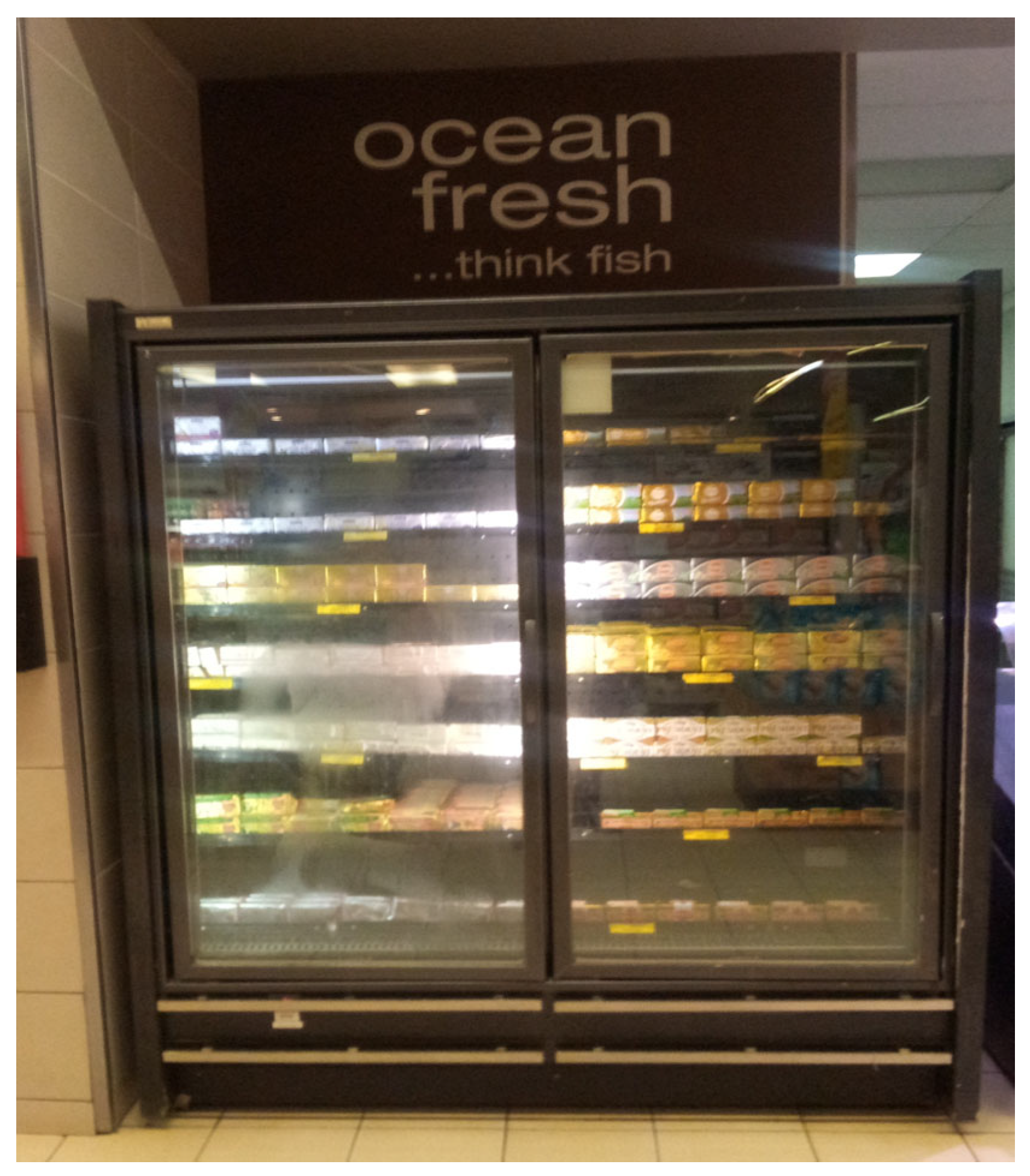
The refrigeration system has a maximum compressor power of 2975 kW, a suction manifold capacity of 4 m3, and suction pressure references of 1.4 bar and 1.1 bar when the store is closed and open, respectively. Since the refrigerant mass flow measurement is not practical, it is ignored. The medium-temperature closed display case model utilized in this study is depicted in Figure 1.
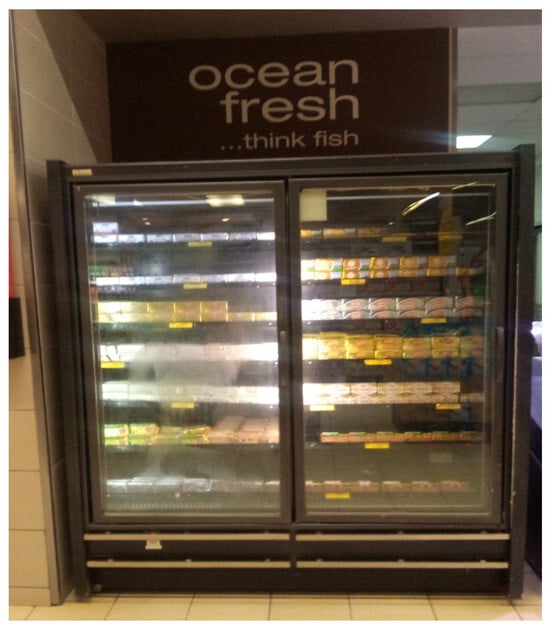
Figure 1.
A medium-temperature cold storage system [23].
2.2. Subspace System Identification Procedure
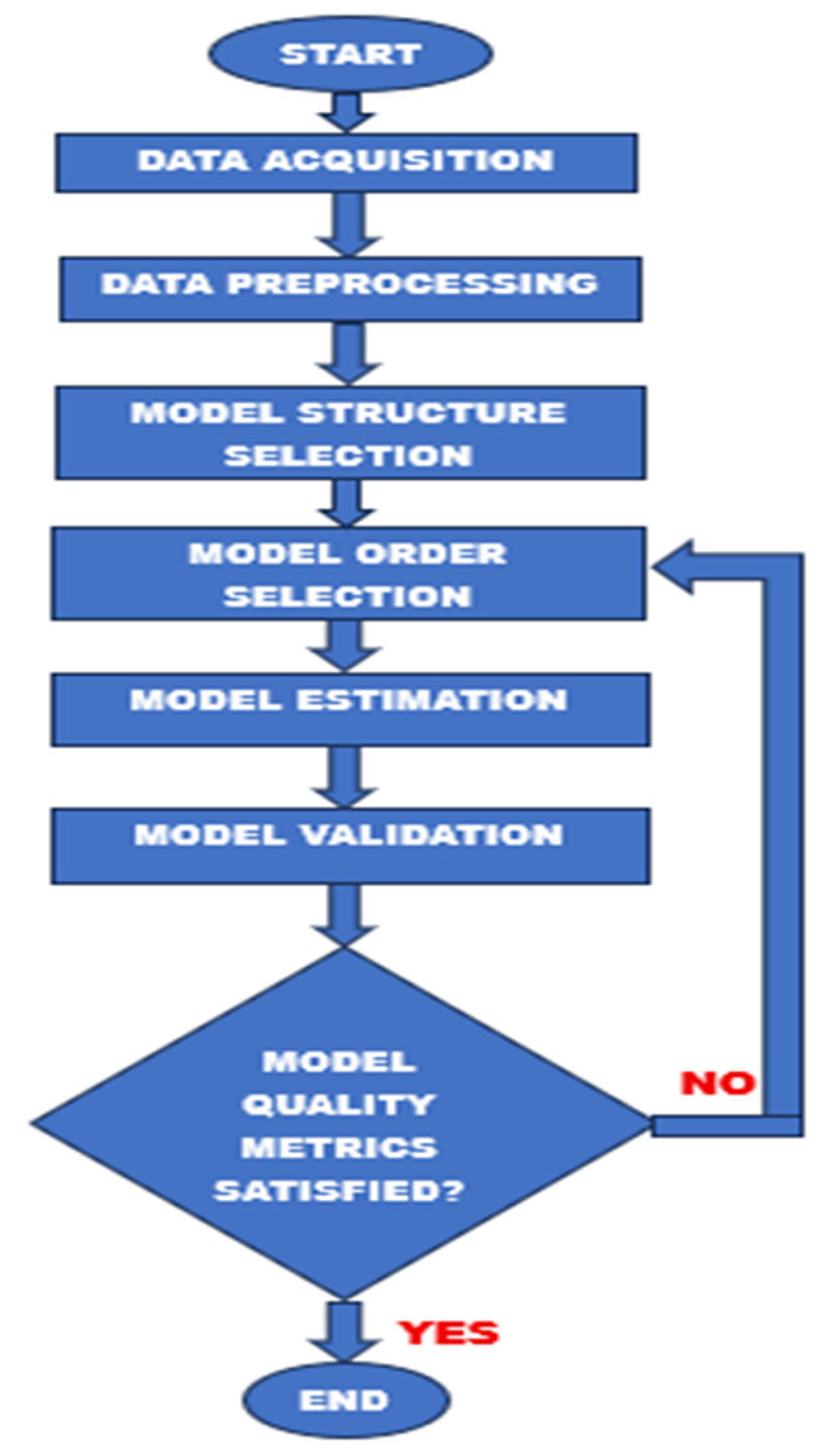
In order to identify a system, input and output data must accurately reflect the key dynamics of the system. The system identification toolbox aids in the creation of models that can as easily replicate the measured data as feasible. The model structure of state-space was selected due to its efficiency in managing systems with numerous inputs and multiple outputs [24]. Using the model order, the model structure may then be set up. The number of states in a state-space representation is correlated with the model order. By reducing the discrepancy between the observed response and the model output, the system identification toolbox program calculates model parameters. A flow diagram of the system identification procedure is presented in Figure 2.
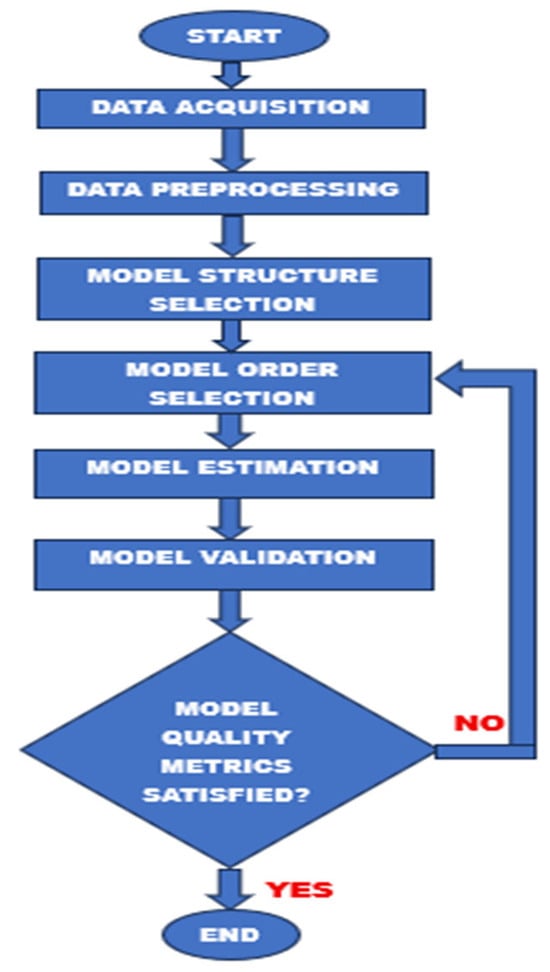
Figure 2.
Flow chart for system identification [23].
The following qualities must be included in the best identified linear model:
- The model that has the best fit-to-estimation (goodness of fit) percentage
- The model that has the lowest final prediction error (FPE)
- The model that has the lowest mean square error (MSE) [25].
2.3. Model Predictive Control Concept
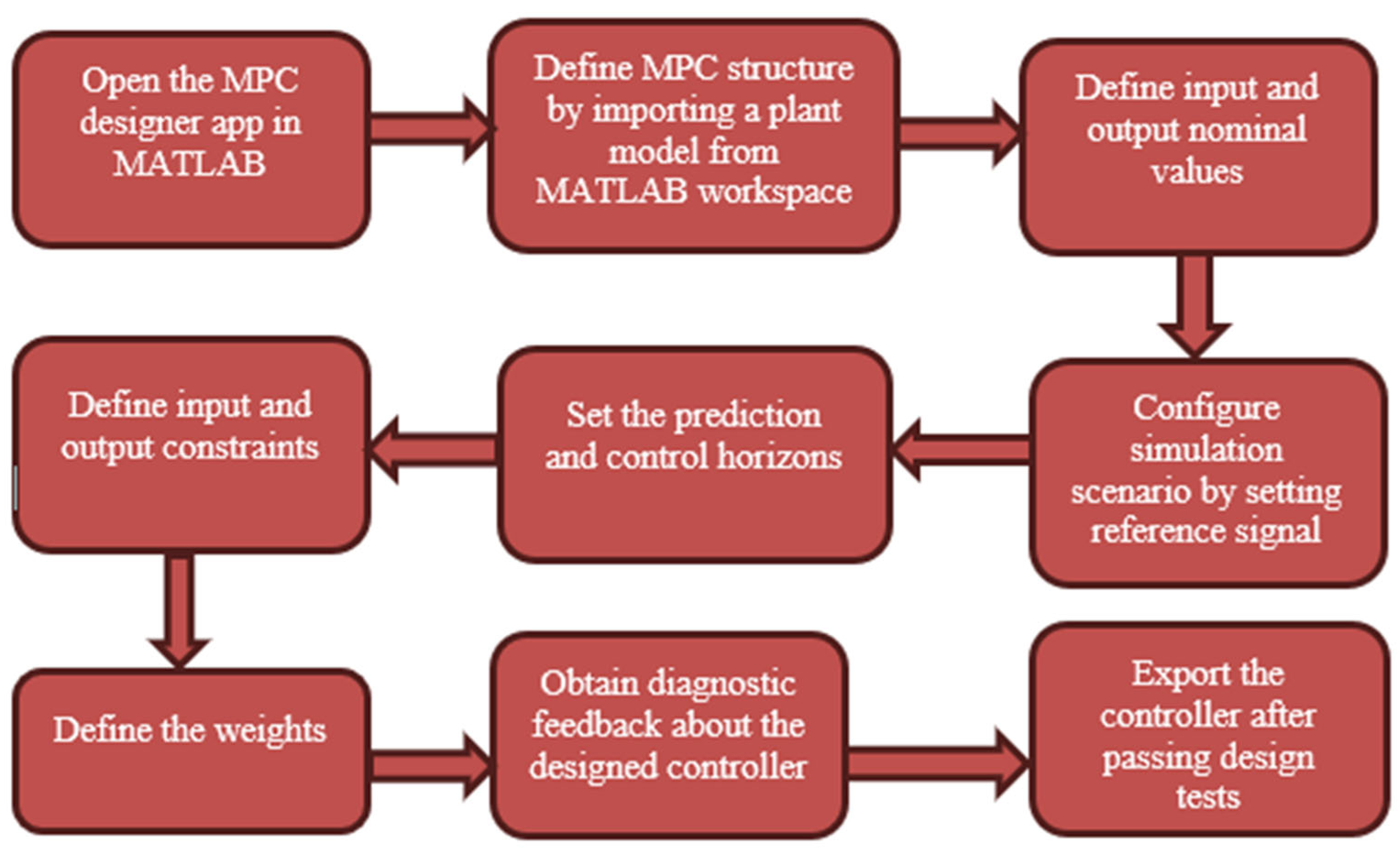
The controller in the basic MPC loop employs an internal prediction plant model to estimate the state and compute a series of control actions that minimize a cost function over a specified horizon after receiving the plant’s observed outputs and disturbances. Generally speaking, decreasing the cost function entails lowering the error between a reference trajectory and future plant outputs. The model predictive control design workflow that shows the process of designing a linear model predictive controller using MPC toolbox in MATLAB is given in Figure 3.
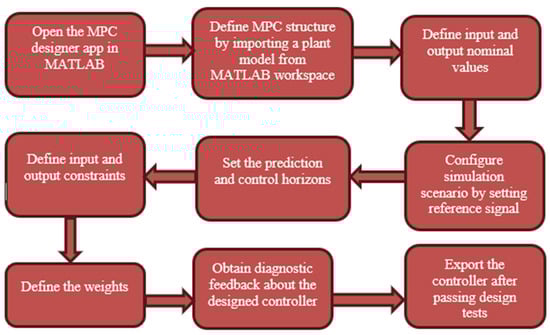
Figure 3.
MPC design workflow [23].
3. Results and Discussions
The modified benchmark model was used to generate synthetic data in a fourteen-day simulation. The input and output data were imported into the MATLAB system identification application after being transformed into iddata object. Detrending was used to eliminate offsets from the data, and state-space model structure was selected for model estimation. The first seven days’ worth of data (120,960 samples collected at 5 s) were utilized for estimation, while the final seven days’ worth of data (120,961 samples sampled at 5 s) were utilized for validation. Model estimate was carried out for various model orders, simulation focus was set to ensure stability, and N4SID was chosen as the subspace identification approach to be applied. The optimal linear time invariant model was selected after model validation. For the simulation, a computer system with an HP Intel Core i7, 8 GB RAM, and 3.00 GHz was utilized. The best identified linear model has the maximum goodness of fit of 98.66% and 90.42% for both outputs. It also has the lowest FPE of 4.11 × 10⁻¹⁵ and MSE of 0.0005660, respectively, indicating a reliable and robust model.
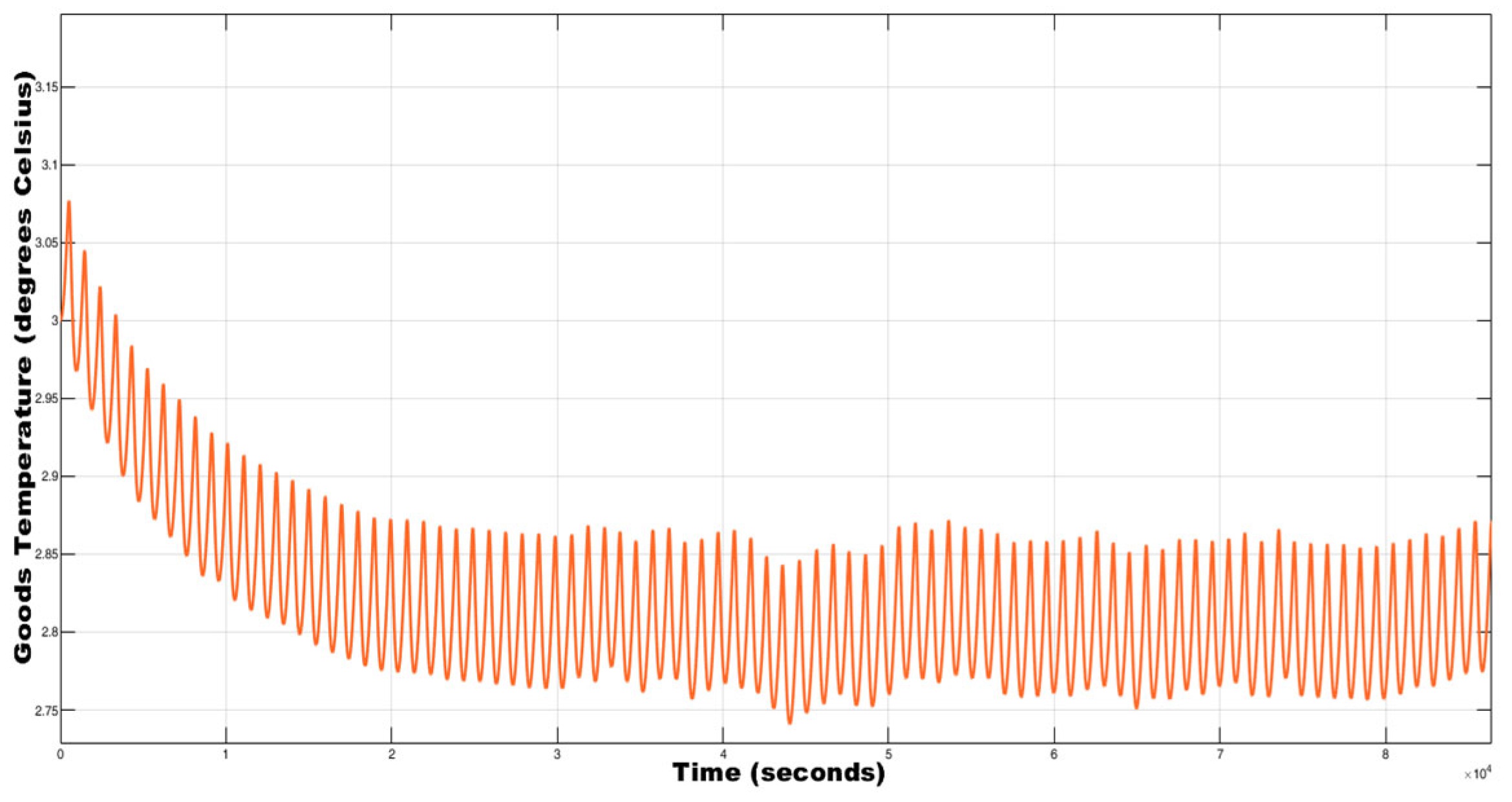
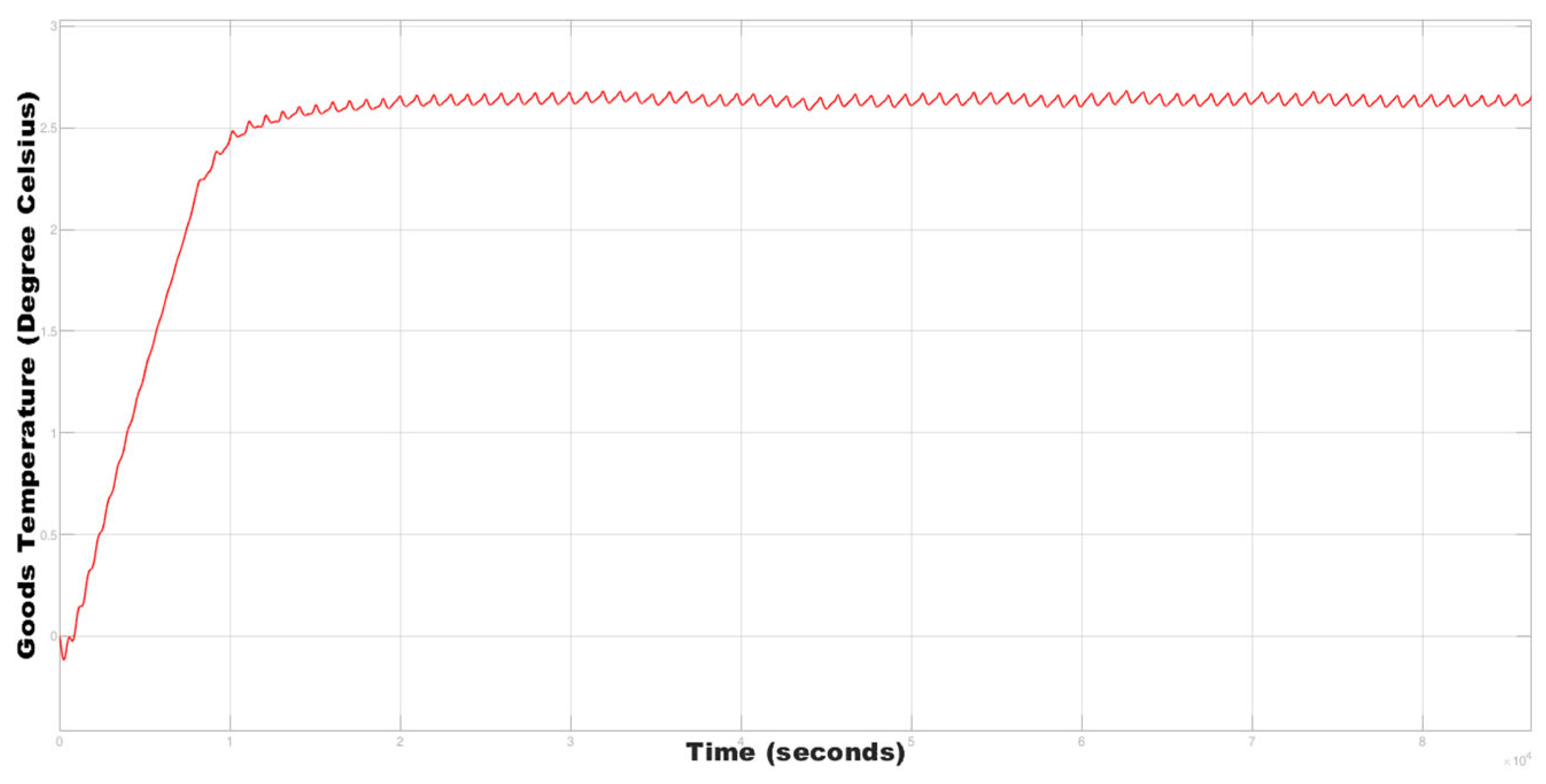
The goods temperature response using proportional–integral (PI) with dead band control and model predictive controller for 86,400 seconds (24 h) is displayed in Figure 4 and Figure 5. The goods temperature of the data-driven model utilizing model predictive controller climbed initially and stabilized at 2.7 °C, whereas the benchmark model using PI with dead band had the greatest temperature of 3.08 °C. This suggests that despite varying external temperatures, the designed data-driven MPC system can ensure food safety and quality for the preservation of fresh fish.
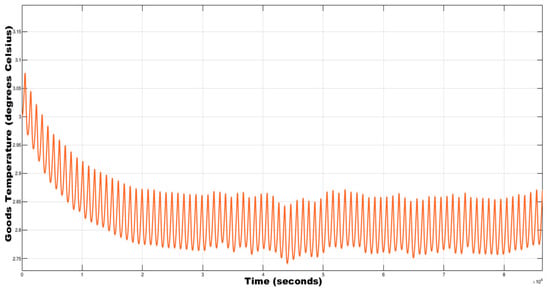
Figure 4.
Goods temperature response of the benchmark model.
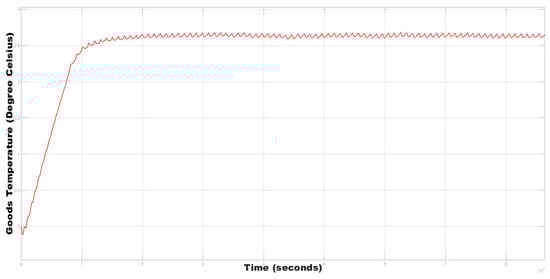
Figure 5.
Goods temperature response of the data-driven MPC system.
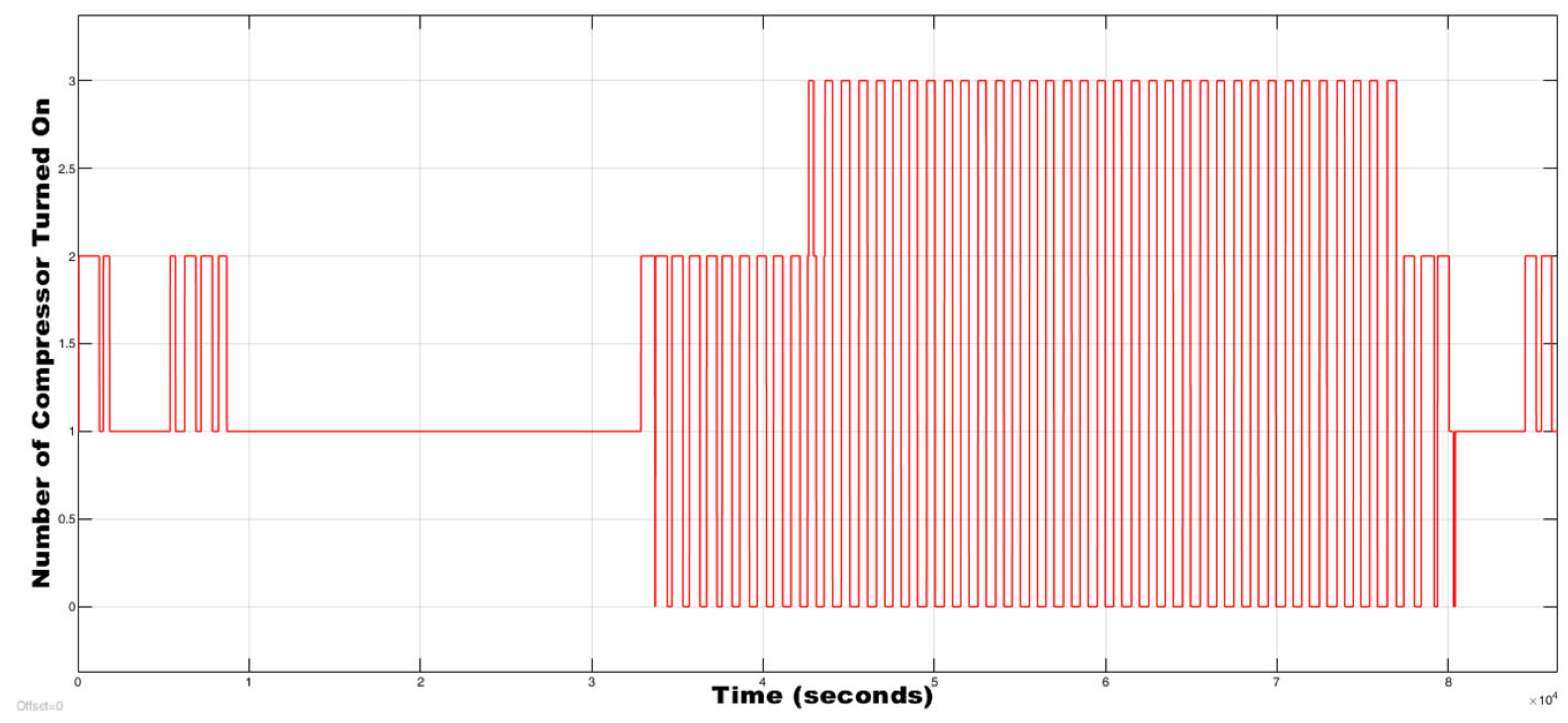
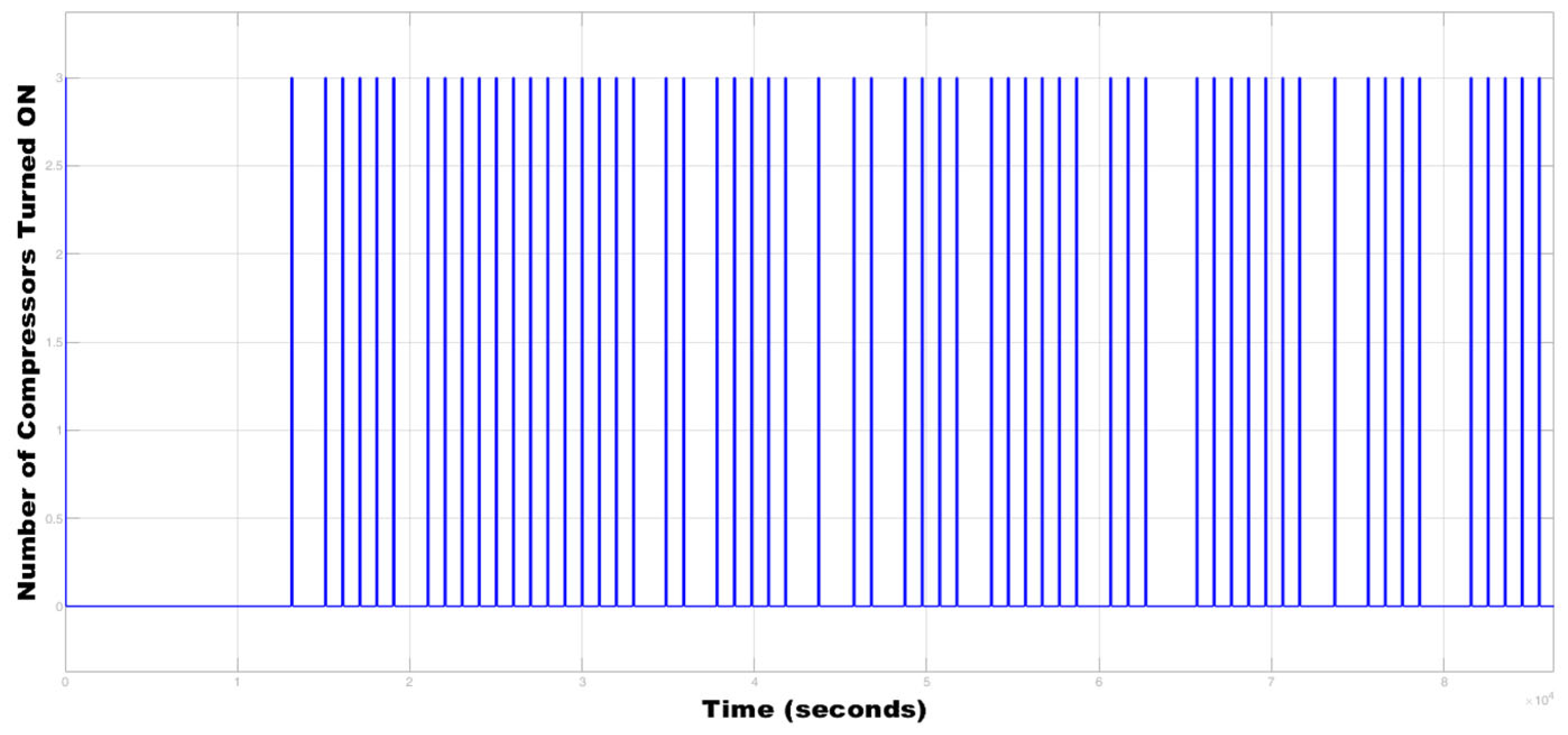
It is evident from Figure 6 and Figure 7 that PI with dead band control has 117 compressor switches, whereas the MPC has 119. In comparison to the nonlinear benchmark model, the reduced order linear model can be stated to perform satisfactorily with very low variation in compressor switching frequency. This means the effect of wear and tear on the compressor’s components using MPC is moderate and can be easily handed through proactive maintenence. The data-driven MPC model’s capacity to better regulate the goods temperature more steadily, in spite of outside temperature fluctuations, justifies its disturbance handling capability. This will in turn further increase the shelf lives of fresh fishes and guarantee high return on investment. Consequently, it can be concluded that the subspace identification technique is appropriate for building complicated systems, such as supermarket refrigeration systems, in order to produce dependable, low-cost data-driven models that are appropriate for control, while the model predictive control technique offers excellent system response with disturbance rejection abilities for identified linear systems.
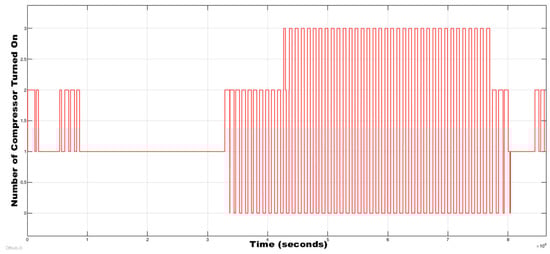
Figure 6.
Compressor switches using PI with dead band (benchmark model).
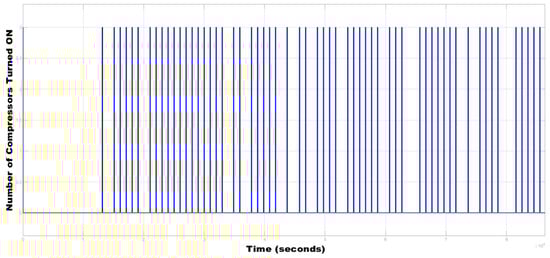
Figure 7.
Compressor switches using data-driven MPC.
4. Conclusions
Using the system identification toolbox and the model predictive control toolbox of MATLAB and Simulink software, a data-driven model of a commercial cold storage system subspace system identification is demonstrated. Simulation focus was enforced in the system identification app to ensure stability and N4SID was utilized to construct a model that accurately captures the dynamics of the system. With a goodness of fit of 98.66% and 90.42% for both outputs, an FPE of 4.11 × 10⁻¹⁵ and MSE of 0.0005660, the identified linear model gave excellent metrics of performance. Using the model predictive control toolbox, a linear model predictive controller was created, and the prediction and control horizons were adjusted by trial and error. By keeping the temperature at 2.7 °C, which is within acceptable parameters and ensures food safety and quality, the data-driven MPC system functioned well while still achieving an acceptable duty cycle of compressors in the compressor rack despite being a reduced-order system. Future research will focus on learning-based techniques for modeling and controlling nonlinear systems.
Author Contributions
Conceptualization, A.T.B.; methodology, A.T.B. and Z.H.; software, A.T.B.; supervision, H.B.-S. and M.B.M. All authors have read and agreed to the published version of the manuscript.
Funding
This research received no external funding.
Institutional Review Board Statement
Not applicable.
Informed Consent Statement
Not applicable.
Data Availability Statement
Data will be made available on request.
Acknowledgments
The constructive criticisms of the computer and control group of Ahmadu Bello University is gratefully acknowledged.
Conflicts of Interest
The authors declare no conflicts of interest.
References
- Wang, Y.-Z.; Fan, Y.-W.; Li, X.-L.; Yang, J.-G.; Zhang, X.-R. Experimental Validation of a Novel CO2 Refrigeration System for Cold Storage: Achieving Energy Efficiency and Carbon Reductions. Energies 2025, 18, 1129. [Google Scholar] [CrossRef]
- Brownbridge, O.; Sully, M.; Noons, J.; Albayati, I.M. Modelling and Simulation of a Retail Commercial Refrigeration System. J. Therm. Sci. Eng. Appl. 2021, 13, 1–27. [Google Scholar] [CrossRef]
- Girip, A.; Calotă, R.; Savaniu, I.M.; Ilie, A.; Ovadiuc, E.; Tonciu, O. Mathematical Modelling and Energy Consumption Evaluation of R600a Refrigeration Systems for Vending Machines Using Efficient Heat Exchangers. Results Eng. 2025, 26, 105208. [Google Scholar] [CrossRef]
- Larsen, L.F.S. Model Based Control of Refrigeration Systems. Ph.D. Thesis, Aalborg University, Aalborg, Denmark, 2006. Available online: https://vbn.aau.dk/en/publications/model-based-control-of-refrigeration-systems (accessed on 17 February 2024).
- Larsen, L.F.S.; Izadi-Zamanabadi, R.; Wisniewski, R. Supermarket refrigeration system—Benchmark for hybrid system control. In Proceedings of the European Control Conference 2007 (ECC), Kos, Greece, 2–5 July 2007. [Google Scholar] [CrossRef]
- Bankole, A.T.; Bello-Salau, H.; Haruna, Z. Nonlinear Identification of the Suction Manifold of a Supermarket Refrigeration System Using Wavelet Networks. Eng. Proc. 2024, 67, 37. [Google Scholar] [CrossRef]
- Leerbeck, K.; Bacher, P.; Heerup, C.; Madsen, H. Grey box modeling of supermarket refrigeration cabinets. Energy AI 2023, 11, 100211. [Google Scholar] [CrossRef]
- Bankole, A.T.; Mu’azu, M.B.; Igbonoba, E.E.C. Trajectory Tracking of a Data-Based Model of a Two-Link Robotic Manipulator Using Model Predictive Controller. Eng. Proc. 2023, 37, 100. [Google Scholar] [CrossRef]
- Vinther, K.; Rasmussen, H.; Izadi-Zamanabadi, R.; Stoustrup, J.; Alleyne, A.G. A learning based precool algorithm for utilization of foodstuff as thermal energy storage. In Proceedings of the 2013 IEEE International Conference on Control Applications (CCA), Hyderabad, India, 28–30 August 2013. [Google Scholar] [CrossRef]
- Vinther, K.; Rasmussen, H.; Izadi-Zamanabadi, R.; Stoustrup, J.; Alleyne, A.G. Learning-Based Precool Algorithms for Exploiting Foodstuff as Thermal Energy Reserve. IEEE Trans. Control Syst. Technol. 2014, 23, 557–569. [Google Scholar] [CrossRef]
- Albayati, I.M.; Postnikov, A.; Pearson, S.; Bickerton, R.; Zolotas, A.; Bingham, C. Power and energy analysis for a commercial retail refrigeration system responding to a static demand side response. Int. J. Electr. Power Energy Syst. 2020, 117, 105645. [Google Scholar] [CrossRef]
- Postnikov, A.; Albayati, I.; Pearson, S.; Bingham, C.; Bickerton, R.; Zolotas, A. Facilitating static firm frequency response with aggregated networks of commercial food refrigeration systems. Appl. Energy 2019, 251, 113357. [Google Scholar] [CrossRef]
- Bird, M.; Acha, S.; Escriva, E.; Shah, N. Data-Driven Modelling of Supermarket Refrigeration Systems for Model Predictive Control Applications. In Proceedings of the 36th International Conference on Efficiency, Cost, Optimization, Simulation and Environmental Impact of Energy Systems (ECOS 2023), Las Palmas de Gran Canaria, Spain, 25–30 June 2023. [Google Scholar] [CrossRef]
- Cirera, J.; Carino, J.A.; Zurita, D.; Ortega, J.A. A Data-Driven-Based Industrial Refrigeration Optimization Method Considering Demand Forecasting. Processes 2020, 8, 617. [Google Scholar] [CrossRef]
- Suchon, M. Leveraging Machine Learning in Digital Twin Models for Advanced System Identification and Predictive Maintenance of Refrigerator Systems. Bachelor’s Thesis, AGH University of Krakow, Krakow, Poland, March 2025. [Google Scholar] [CrossRef]
- Bankole, A.T.; Mu’aZu, M.B.; Bello-Salau, H.; Haruna, Z. Data-driven modelling of a commercial cold storage system using subspace system identification. e-Prime 2025, 12, 101011. [Google Scholar] [CrossRef]
- Bejarano, G.; Alfaya, J.A.; Rodríguez, D.; Morilla, F.; Ortega, M.G. Benchmark for PID control of Refrigeration Systems based on Vapour Compression. IFAC-Pap. 2018, 51, 497–502. [Google Scholar] [CrossRef]
- Schurt, L.C.; Hermes, C.J.; Neto, A.T. A model-driven multivariable controller for vapor compression refrigeration systems. Int. J. Refrig. 2009, 32, 1672–1682. [Google Scholar] [CrossRef]
- Braven, K.D.; Herold, K.; Mei, V.; O Neal, D.; Penoncello, S. Improving Heat Pumps and Air Conditioning. J. Mech. Eng. 1993, 115, 98. [Google Scholar]
- Bankole, A.T.; Bello-Salau, H.; Haruna, Z. Aquila-Based Model Predictive Control of an Adapted Fridge Display Case Model for Vaccine Preservation. Eng. Proc. 2023, 37, 99. [Google Scholar] [CrossRef]
- Bankole, A.T.; Moses, S.O.; Ibitoye, T.Y. Smell Agent Optimization Based Supervisory Model Predictive Control for Energy Efficiency Improvement of a Cold Storage System. In Proceedings of the 2022 IEEE Nigeria 4th International Conference on Disruptive Technologies for Sustainable Development (NIGERCON), Lagos, Nigeria, 5–7 April 2022. [Google Scholar] [CrossRef]
- Wisniewski, R.; Leth, J.; Rasmussen, J.G. Analysis of Synchronization of Supermarket Refrigeration System. Control Theory Technol. 2024, 12, 145–162. [Google Scholar] [CrossRef]
- Bankole, A.T. Development of a Multiple Model Predictive Control Strategy for Improved Energy Efficiency of a Data-Driven Commercial Cold Storage System. Ph.D. Thesis, Ahmadu Bello University, Zaria, Nigeria, 2025. [Google Scholar]
- Kheradmandi, M.; Mhaskar, P. Data Driven Economic Model Predictive Control. Mathematics 2018, 6, 51. [Google Scholar] [CrossRef]
- Ljung, L. System Identification Toolbox User’s Guide; R2014b; The MathWorks, Inc.: Natick, MA, USA, 2014; Available online: https://www.mathworks.com/help/ident/index.html (accessed on 17 February 2024).
Disclaimer/Publisher’s Note: The statements, opinions and data contained in all publications are solely those of the individual author(s) and contributor(s) and not of MDPI and/or the editor(s). MDPI and/or the editor(s) disclaim responsibility for any injury to people or property resulting from any ideas, methods, instructions or products referred to in the content. |
© 2026 by the authors. Licensee MDPI, Basel, Switzerland. This article is an open access article distributed under the terms and conditions of the Creative Commons Attribution (CC BY) license (https://creativecommons.org/licenses/by/4.0/).