


Abstract
Background/Objectives: This study aims to depict trends in Endoscopic Dacryocystorhinostomy research in Asian countries. Methods: A bibliometric analysis was performed in April 2024 utilizing the SCOPUS database. The keywords “Endoscopic Dacryocystorhinostomy” OR “Endo-DCR” OR “Endonasal Endoscopic Dacryocystorhinostomy” were used. Data cleaning was then performed. Microsoft Excel and Vosviewer software were used to analyze data. Results: 730 articles and 37 keywords were yielded after exclusion. Our analysis revealed a notable increase in Endoscopic Dacrycocystorhinostomy publications from the early 2000s, with a significant surge post-2010. India and China were the leading contributors to Endoscopic Dacryocystorhinostomy research in Asia. Keywords such as “endoscopy”, “silicone tube”, and “epiphora” were commonly used. However, keywords like “mitomycin C”, “mucosal flap” and “success rate” were infrequently found. Conclusions: The emergence of Endoscopic Dacryocystorhinostomy publications witnessed a notable increase from 1972 to 2023 with most studies affiliated to India and China. Certain keywords such as “mitomycin C”, “mucosal flap”, “revision”, “laser”, “drill”, and “success rate” were infrequently used.
1. Introduction
Dacryocystorhinostomy (DCR) serves as the primary treatment for complete nasolacrimal duct obstruction (NLDO). There are two techniques: External Dacryocystorhinostomy (Ext-DCR) and Endoscopic Dacryocystorhinostomy (Endo-DCR). Previous studies have indicated that Endo-DCR offers superior esthetic outcomes, shorter surgical times, and lower rates of complications, bleeding, and infections, as well as fewer revisions. Endo-DCR’s success rate is comparable to or higher than that of Ext-DCR [1,2].
Endo-DCR was first described in 1893; however, its popularity rose in the 1990s. A study in Taiwan reported Endo-DCR was performed more often than Ext-DCR in Primary Acquired NDLO patients [3]. Kwok et al. reported that the majority of oculoplastic surgeons in the Asia Pacific region performed both Endo-DCR and Ext-DCR [4]. This reflects Endo-DCR’s prominence in Asia countries. Despite the prominence of Endo-DCR in Asia and its widespread adoption by oculoplastic surgeons in the region, there is a lack of literature that depicts Endo-DCR research trends in Asian countries.
Bibliometric analysis provides valuable insights into research trends within a specific field. In ophthalmology, previous bibliometric studies have examined topics such as articles published between 2012 and 2022 in Arab countries and the application of lasers in ophthalmology [5,6]. Conducting a Bibliometric Analysis could provide valuable insights into the trajectory of research on Endo-DCR, including publication trends, geographic distribution of research output, and provide preliminary overview of potential research areas based on keyword frequency. Therefore, this bibliometric analysis aims to depict trends in Endo-DCR research in Asian countries.
2. Materials and Methods
Metadata retrieval from the SCOPUS database was conducted in April 2024 using a targeted approach that employed keywords such as “Endo-DCR,” “Endoscopic Dacryocystorhinostomy,” and “Endonasal Endoscopic Dacryocystorhinostomy”. Filters were applied to limit the search to research articles categorized under the field of “medicine,” written in English, and published in peer-reviewed journals. Country filters were also utilized. The filters for countries included countries in Asia such as “Bahrain,” “Bangladesh,” “China,” “Egypt,” “Hong Kong,” “India,” “Indonesia,” “Iran,” “Iraq”, “Israel,” “Japan,” “Jordan,” “Kazakhstan,” “Kuwait,” “Lebanon,” “Malaysia,” “Mongolia,” “Nepal,” “Oman,” “Pakistan,” “Philippines,” “Saudi Arabia,” “Singapore,” “South Korea,” “Taiwan,” “Thailand,” “Turkey,” and “United Arab Emirates.” Other Asian countries were not included due to their absence from the available filter options. The search was restricted to articles published from 1972 to 2023; where the earliest publication on Endo-DCR was identified in 1972.
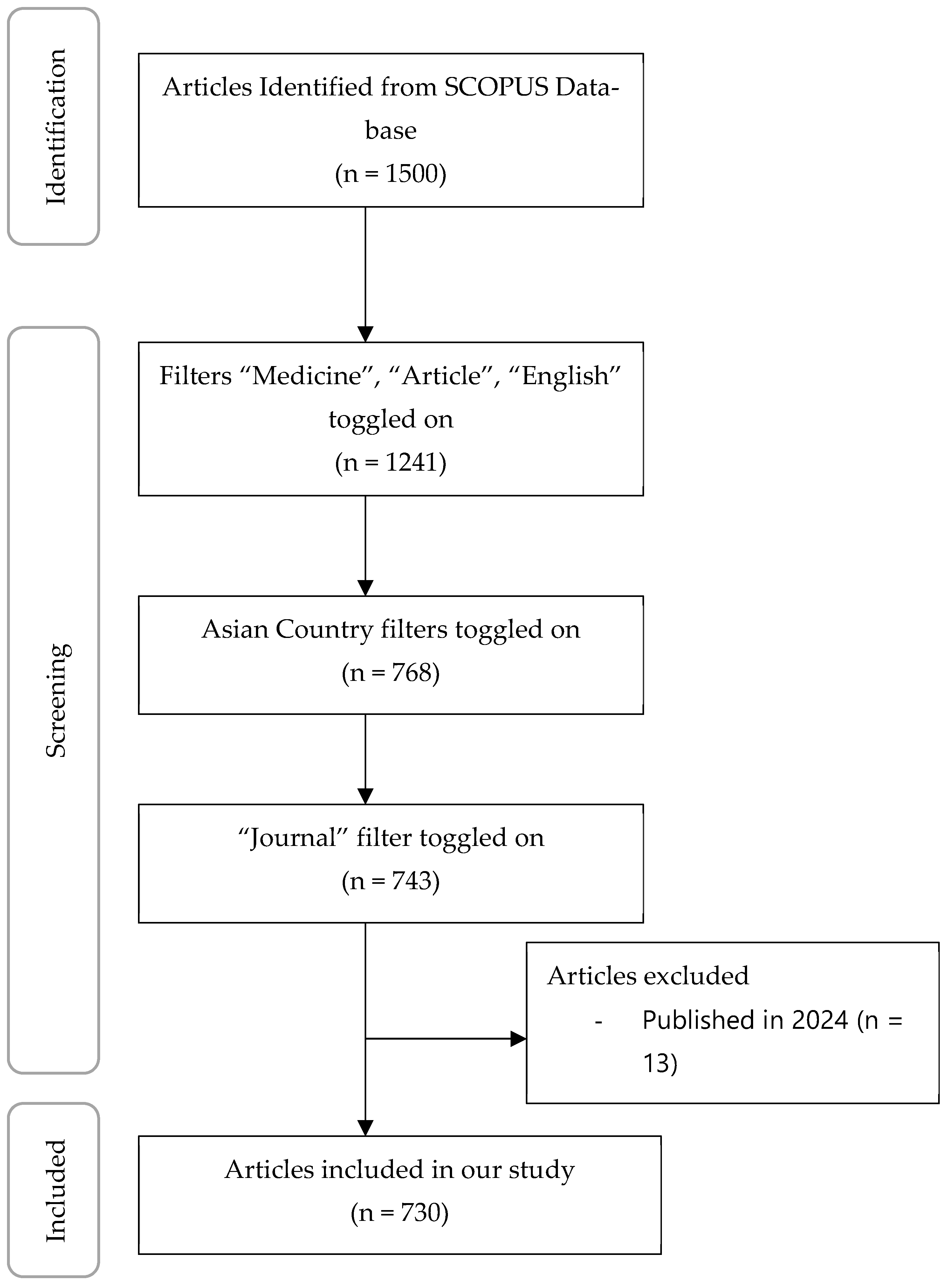
Figure 1 depicts the methodology used in our literature search and the article inclusion process. Initially, a search with the keywords “Endo-DCR,” “Endoscopic Dacryocystorhinostomy,” and “Endonasal Endoscopic Dacryocystorhinostomy” yielded 1500 articles. Applying filters for “medicine,” “article,” and “English” reduced the retrieved articles to 1241. Further refinement with filters targeting Asian countries, as outlined in the Methods section, narrowed the articles down to 768. Subsequently, activating the “journal” filter decreased the count to 743 articles. Excluding 13 articles published in 2024 brought the final count to 730 articles for our bibliometric analysis.
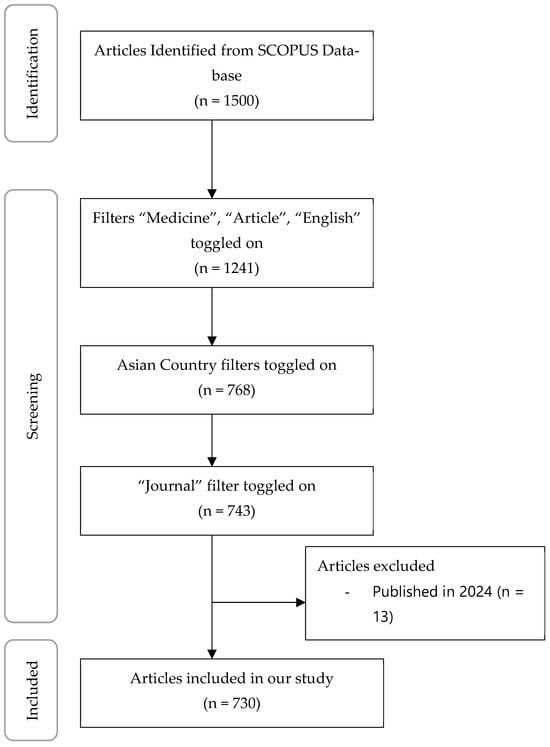
Figure 1.
Process of Articles Inclusion.
After the search was conducted, the metadata from SCOPUS was converted into CSV format. Data cleaning was performed which included exclusion of irrelevant keywords and standardization/homogenization of keywords with the same meaning. Irrelevant keywords were excluded from the CSV file. Keywords excluded were: “dacryocystorhinostomy”, “external dacryocystorhinostomy” and “endoscopic sinus surgery”.
The keywords “Endo-DCR”, “En-DCR”, “Endoscopic Endonasal Dacryocystorhinostomy”, “Intranasal Dacryocystorhinostomy” were standardized into the term “Endoscopic Dacryocystorhinostomy”. The keywords “Intubation”, “Silicone Tubing”, “Silicone Intubation Set”, “Silicone Tube Intubation”, “Lacrimal Intubation”, Nasolacrimal Intubation”, “Lacrimal Stent”, “Silicone Intubation Tube”, “intubation of Lacrimal Ducts”, “Canalicular Intubation”, “Bicanalicular Intubation” and “Silicone Tube Intubation” were standardized to the term “Silicone Tube”. The Term “External” was standardized into “External Dacryocystorhinostomy”.
The CSV was then analyzed using Microsoft Excel to tabulate the number of publications per year and to understand the geographic distribution of the publications.
The software Vosviewer was utilized for co-occurrence analysis, using “author keywords” as the unit of analysis. Co-occurrence analysis provided information regarding the frequency and connection of keywords. A minimum occurrence threshold of five keywords was established. This means only keywords that were used at least five times were included. This provides inclusion of sufficiently relevant terms and filters out “noise-driven” terms that may distort our analysis. Through overlay visualization mapping in Vosviewer, we outlined research-topic trends over time. The density visualization mapping reported the popularity of keywords, which was then used to identify potential areas for future research.
3. Results
3.1. Publications per Country
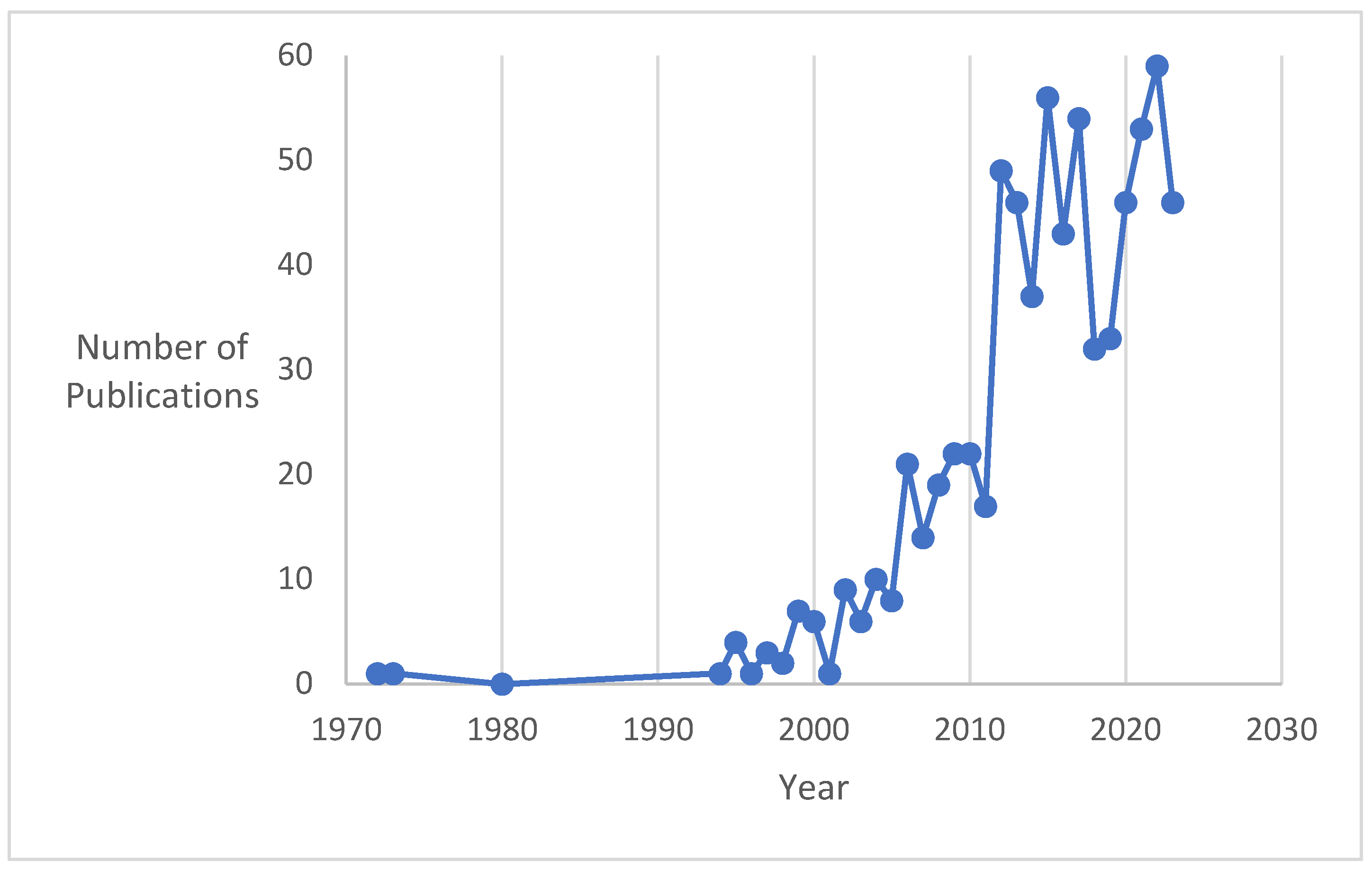
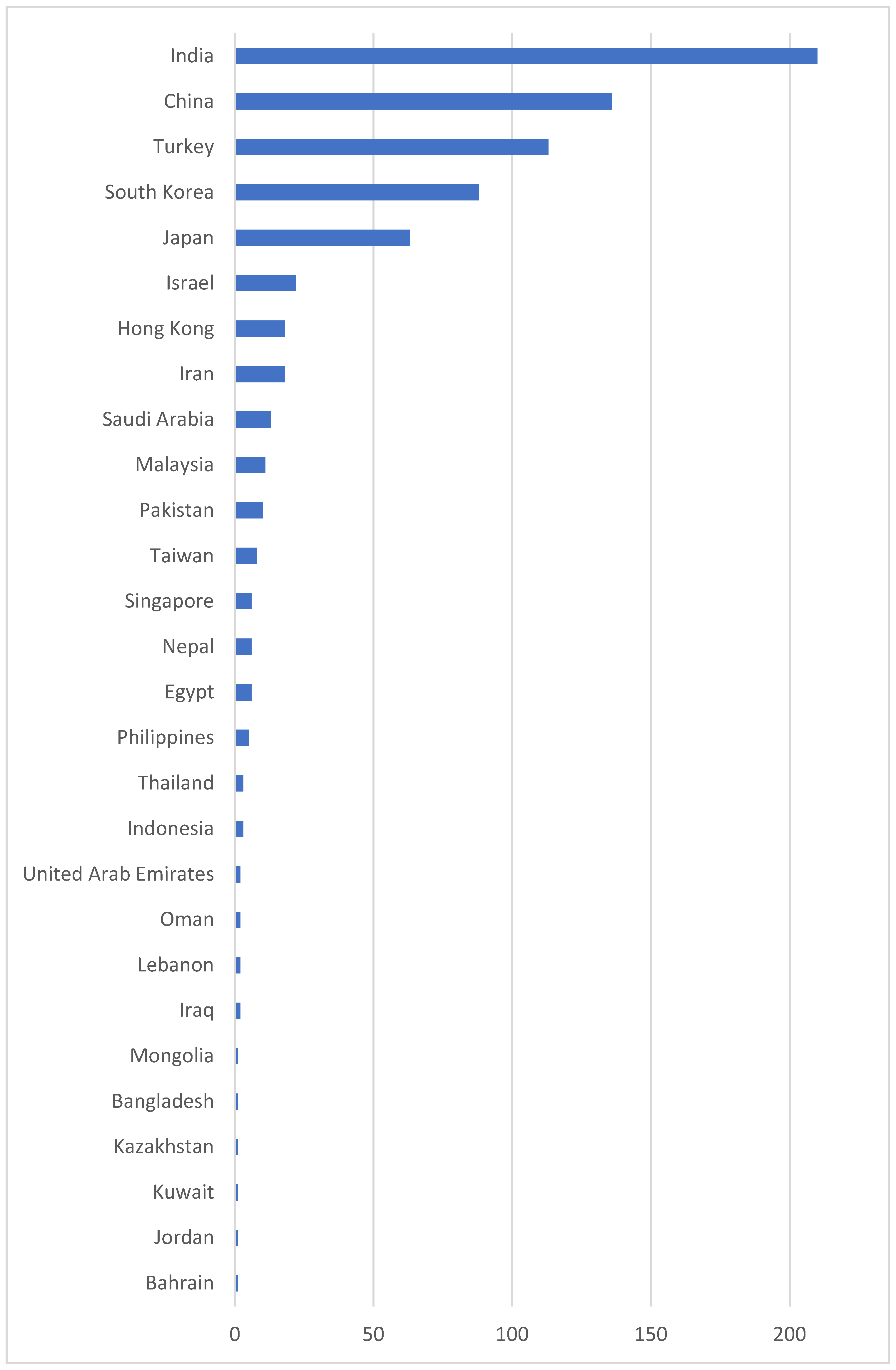
730 articles were produced between the years 1972 and 2023. Although the number of publications fluctuated, it significantly increased from 1972 (one publication) to 2023 (46 publications). Referring to Figure 2, publications related to Endo-DCR were notably limited before the 1990s, ranging from zero to one publication per year. Publication activity became apparent in the 1990s with a range of one to seven publications per year and started to increase from the year 2000, with a significant surge observed from 2010 to 2012. A decline in publication numbers was noted from 2013 to 2019. However, publication numbers rose again starting from the year 2020. A steep constant increment in publication numbers was seen from 2020 to 2022. 2022 was the year with the most publications (59 publications). A slight decline in publication number to 46 was seen in 2023. (Figure 2) Of the total articles studied, from 1972 to 2023, most publications were associated with India (n = 210), followed by China (n = 136) (Figure 3).
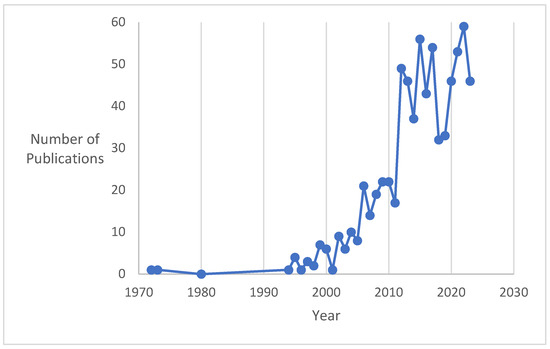
Figure 2.
Number of Publications Per Year.
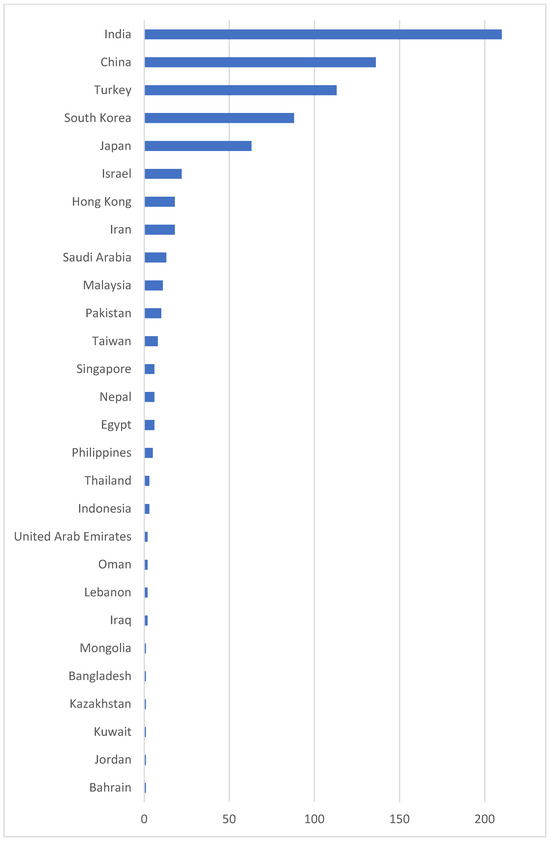
Figure 3.
Number of Publications Based on Affiliated Country from 1972 to 2023.
3.2. Keyword Analysis
Out of the initial 941 keywords identified, only 40 met the predefined threshold of at least five occurrences through co-occurrence analysis. Following the exclusion of irrelevant terms such as “dacryocystorhinostomy”, “external dacryocystorhinostomy”, “endoscopic sinus surgery”, the final count stood at 37 keywords.
“Endoscopic dacryocystorhinostomy”, “endoscopy, “silicone tube”, “nasolacrimal duct intubation” and “epiphora” were keywords commonly used. Further investigation using overlay visualization revealed that in 2014 the keywords “endoscopy”, “nasal endoscope”, “silicone tube”, “epiphora”, “revision” and “mitomycin C” were commonly used. In 2016 the keywords “endoscope”, “mucosal flap”, chronic dacryocystitis”, “lacrimal drainage” and “laser” were commonly used. In 2017, “nasolacrimal duct obstruction”, “success rate”, “balloon dacryoplasty” were commonly used keywords (Table 1). Success rate studies were linked with the Endo-DCR procedure itself and the involvement of laser in Endo-DCR.

Table 1.
Keywords Frequently Used Over the Years.
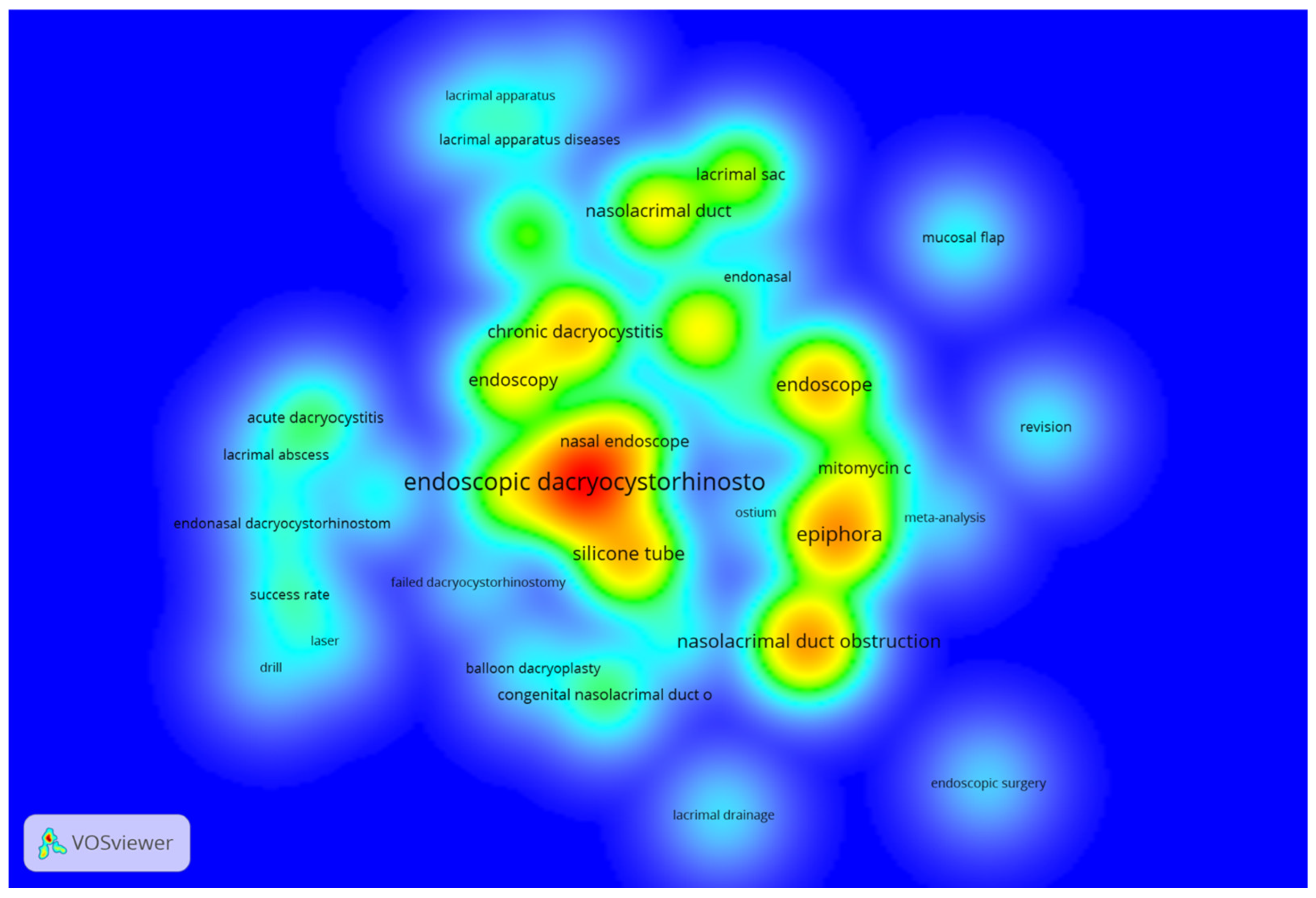
Figure 4 illustrates the density visualization map of these keywords throughout the entire time. This density visualization map shows keywords like “mitomycin C”, “mucosal flap”, “revision”, “laser”, “drill”, and “success rate” were infrequently used keywords.
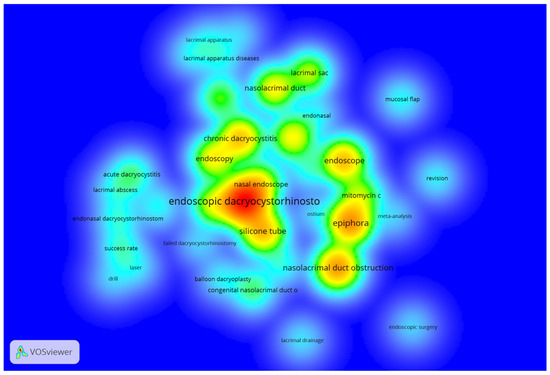
Figure 4.
Density Map depicting “mitomycin C”, “mucosal flap”, “revision”, “laser”, “drill”, and “success rate” were infrequently used keywords.
4. Discussion
Publication regarding Endo-DCR was scarce before the 1990s. Publication activity became apparent, although not much, in the 1990s, in line with the popularity of Endo-DCR, which rose in the 1990s with the arrival of a rigid fiberoptic endoscope [3].
A publication number surge was also seen beginning from 2020 to 2022. In general, an increment in the volume of publications was seen during the COVID-19 era, specifically publications regarding COVID-19 topics across biomedical areas [7]. Interestingly, from 2020 to 2022, the Endo-DCR studies listed in SCOPUS database were not related to COVID-19. This may imply that the COVID-19 era also fueled publication activity of non-COVID-19 topics. The rising amount of published material indicates that Endo-DCR is becoming more popular across Asia as time passes.
Based on Figure 3, most publications were affiliated with India, China and Turkey. Endo-DCR publications affiliated with ASEAN countries and Middle East Asian countries were still limited. A survey by Kwok et al. reported 50.3% out of 163 respondents from the Asia Pacific region performed both Endo-DCR and External DCR in comparison to 20.8% respondents who performed only External DCR [4]. This data shows that Endo-DCR is utilized in Asia Pacific region. However, the study reports that most respondents practiced in India (26.3%), China (25%) and Hong Kong (12.8%). Respondents practicing in ASEAN countries such as Singapore, Philippines, Indonesia and Malaysia were not many [4]. This may explain the reason why most publications were affiliated with India and China as Endo-DCR were utilized mainly in those countries.
A density map shows that the keywords “mitomycin C,” “mucosal flap,” “revision,” “laser,” “drill,” and “success rate” were infrequently used keywords. This implies several things: first, authors may employ alternative keywords or synonymous terms; however, this possibility is considered less likely, as keyword homogenization was performed during the data-cleaning process. Second, the limited number of allowable keywords in journal submissions may result in the omission of certain terms, leading to a lower keyword frequency. Third, it should be noted that a minimum co-occurrence threshold of five was applied, therefore, only keywords appearing at least five times were included in the analysis. Consequently, relevant alternative keywords with lower frequencies may not have been captured. Lastly, keywords are author-provided. This cannot rule out the possibility of the author inappropriately choosing keywords that may not reflect the study.
Despite the high risk of bias, this analysis may offer a preliminary overview of potential directions for future research. In line with findings from overlay visualization, a systematic review in 2016 concluded that mucosal-flap preservation may reduce post-op complications such as ostium granulation [8]. However, preference is starting to shift in several countries, such as Korea and the United Kingdom, where mucosal resection is more preferred. This, therefore, holds a promising field for further evaluation.
Studies evaluating the success rate of Endo-DCR need further exploration. Follow-up studies to determine post-operative outcomes and success rate must be done. There are two types of success rates: anatomical success and functional success. Anatomical success is defined as a patent ostium after Endo-DCR procedure whereas functional success is defined as complete resolution of epiphora or a free flow of dye from the conjunctival cul-de-sac into the ostium [9,10]. Although there is a universal term to define anatomical success and functional success, the length of follow-up varies in studies [9,10,11]. This variation must be homogenized to conclude the functional and anatomical success of Endo-DCR procedure with a standardized follow-up time.
This study has several limitations. The analysis was based on a single database. Al-though Scopus is a comprehensive and widely used source, inclusion of additional equally large databases could have provided a broader and more representative overview. While this bibliometric analysis highlights research topics that are frequently studied based on keyword occurrence, topics with lower keyword representation cannot be interpreted immediately as underexplored. Such findings may reflect variations in terminology or indexing practices rather than a true lack of research focus. Nevertheless, this analysis may still offer a preliminary overview of potential directions for future research.
5. Conclusions
The emergence of Endo-DCR publications witnessed a notable increase from 1972 to 2023. Predominantly affiliated with institutions in India and China, these publications reflect the prevalence of Endo-DCR practices in these regions. “Mitomycin C”, “mucosal flap”, “revision”, “laser”, “drill”, and “success rate” are infrequently used keywords.
Author Contributions
Conceptualization, J.I. and S.A.R.; methodology, J.I. and S.A.R.; formal analysis, J.I. and S.A.R.; investigation, , J.I. and S.A.R.; writing—original draft preparation, J.I. and S.A.R.; writing—review and editing, J.I., A.S.K., A.K., I.I.; visualization, S.A.R.; supervision, A.S.K., A.K., I.I.; project administration, S.A.R.; All authors have read and agreed to the published version of the manuscript.
Funding
This research received no external funding.
Data Availability Statement
All data generated for this research was accessed through the publicly available SCOPUS database.
Conflicts of Interest
The authors declare no conflicts of interest.
Abbreviations
The following abbreviations are used in this manuscript:
| Ext-DCR | External: Dacrocystorhinostomy |
| Endo-DCR | Endoscopic: Dacrocystorhinostomy |
| NLDO | Nasolacrimal Duct Obstruction |
References
- Knisely, A.; Harvey, R.; Sacks, R. Long-term outcomes in endoscopic dacryocystorhinostomy. Curr. Opin. Otolaryngol. Head Neck Surg. 2015, 23, 53–58. [Google Scholar] [CrossRef] [PubMed]
- Simon, G.J.B.; Joseph, J.; Lee, S.; Schwarcz, R.M.; McCann, J.D.; Goldberg, R.A. External versus endoscopic dacryocystorhinostomy for acquired nasolacrimal duct obstruction in a tertiary referral center. Ophthalmology 2005, 112, 1463–1468. [Google Scholar] [CrossRef] [PubMed]
- Su, P.Y. Comparison of endoscopic and external dacryocystorhinostomy for treatment of primary acquired nasolacrimal duct obstruction. Taiwan J. Ophthalmol. 2018, 8, 19–23. [Google Scholar] [CrossRef] [PubMed]
- Kwok, T.; Ali, M.J.; Yuen, H. Preferred practice patterns in endoscopic dacryocystorhinostomy among oculoplastic surgeons in asia–pacific region. Orbit 2017, 37, 248–253. [Google Scholar] [CrossRef] [PubMed]
- Aviv-Reuven, S.; Rosenfeld, A. Publication patterns’ changes due to the COVID-19 pandemic: A longitudinal and short-term scientometric analysis. Scientometrics 2021, 126, 6761–6784. [Google Scholar] [CrossRef] [PubMed]
- Sung, J.Y.; Lee, Y.H.; Kim, K.N.; Kang, T.S.; Lee, S.B. Surgical outcomes of endoscopic dacryocystorhinostomy: Analysis of age effect. Sci. Rep. 2019, 9, 466–470. [Google Scholar] [CrossRef] [PubMed]
- Ali, M.J.; Psaltis, A.J.; Wormald, P.J. Dacryocystorhinostomy ostium: Parameters to evaluate and DCR ostium scoring. Clin. Ophthalmol. 2014, 8, 2491–2499. [Google Scholar] [CrossRef] [PubMed]
- Jawad, A.; Kausar, A.; Iftikhar, S.; Akhtar, N.; Rabbani, Z. Results of endoscopic endonasal dacryocystorhinostomy: A prospective cohort study. J. Pak. Med. Assoc. 2021, 71, 1420–1423. [Google Scholar] [PubMed]
- Ali, M.J.; Psaltis, A.J.; Bassiouni, A.; Wormald, P.J. Long-term outcomes in primary powered endoscopic dacryocystorhinostomy. Br. J. Ophthalmol. 2014, 98, 1678–1680. [Google Scholar] [CrossRef] [PubMed]
- Baek, J.S.; Jeong, S.H.; Lee, J.H.; Choi, H.S.; Kim, S.J.; Jang, J.W. Cause and Management of Patients with Failed Endonasal Dacryocystorhinostomy. Clin. Exp. Otorhinolaryngol. 2017, 10, 85–90. [Google Scholar] [CrossRef] [PubMed]
- Codère, F.; Denton, P.; Corona, J. Endonasal Dacryocystorhinostomy: A Modified Technique with Preservation of the Nasal and Lacrimal Mucosa. Ophthalmic. Plast. Reconstr. Surg. 2010, 26, 161–164. [Google Scholar] [CrossRef] [PubMed]
Disclaimer/Publisher’s Note: The statements, opinions and data contained in all publications are solely those of the individual author(s) and contributor(s) and not of MDPI and/or the editor(s). MDPI and/or the editor(s) disclaim responsibility for any injury to people or property resulting from any ideas, methods, instructions or products referred to in the content. |
© 2026 by the authors. Licensee MDPI, Basel, Switzerland. This article is an open access article distributed under the terms and conditions of the Creative Commons Attribution (CC BY) license.