


Abstract
The European Union (EU) seeks to reduce regional disparities and foster economic growth through substantial financial support to its member states. However, the effectiveness of this support on regional convergence remains ambiguous. This study employs a Systematic Literature Review (SLR) of 33 articles (2012–2024) to evaluate the impact of EU funding on regional convergence and identify gaps in the literature. Findings indicate that convergence effects are often treated as spillovers or conflated with general economic growth. The review highlights the need for more nuanced analyses of specific instruments, such as the European Social Fund (ESF), particularly regarding their effects on unemployment, education, social inclusion, and public services. Research remains concentrated at the NUTS-2 level, neglecting smaller NUTS-3 regions. Future studies should disaggregate fund assessments, incorporate interaction terms between funds and target areas, and focus on specific regional outcomes to better understand the mechanisms driving convergence beyond aggregate spending effects.
1. Introduction
The main goal of the European Union’s Cohesion Policy (also referred to as EU Regional Policy) is to reduce regional disparities, improve living conditions, and support balanced territorial development among its member states. While the European Union pursues multiple objectives through various programmes, Cohesion Policy specifically targets territorial inequalities and regional convergence [1,2]. The overall objectives of the Cohesion Policy for the 2014–2020 period were to prioritize investments in growth and jobs, as well as European territorial cooperation. To achieve these aims, the European Structural and Investment Funds (ESIFs) allocated €731 billion [3] to reduce regional disparities and bring them closer to EU averages [1]. ESIFs appear to be a significant source for enhancing quality of life and advancing the processes of regional convergence in Europe [4]. The EU Cohesion Policy (CP) plays a vital role in promoting regional convergence by fostering economic growth and supporting less developed regions, although challenges such as uneven fund distribution and persistent disparities remain [5,6,7,8]. Efforts remain focused on achieving balanced development to ensure that all regions, including less attractive and lagging ones, can compete economically [2]. In this context, this perspective aligns with the broader debate suggesting that reducing territorial inequalities can resemble “fighting gravity”, as structural forces often reinforce regional disparities despite policy interventions [9].
While prior systematic literature reviews, such as Klarin et al.’s [10] study on convergence processes, have focused on developing a broad taxonomy and typology of convergence across various industries, technologies, and markets, this research takes a more targeted approach by examining the impact of European Union financial support on regional convergence. Unlike the interdisciplinary scope of Klarin et al.’s [10] which analyzes convergence as a global phenomenon influenced by scientific, technological, and market dynamics, this article narrows its focus to evaluate the specific role of EU cohesion policies in addressing regional disparities. Similarly, Sharma, P. and Sharma, N. [11] conducted a bibliometric analysis of the convergence hypothesis using records from Scopus database (2000–2020), emphasizing convergence studies in developed economies and identifying a significant research gap concerning emerging economies. This article contributes to the existing body of literature by providing a more focused synthesis of studies examining the role of EU financial support in regional convergence and aims to complement prior reviews [10,11]. Systematic reviews of the literature, including those of Klarin et al.’s [10] and Sharma, P. and Sharma, N. [11], have analyzed convergence as a process and identified a lack of regional analysis in underdeveloped areas. Moreover, previous studies do not reach a consensus on whether EU financial support has a positive or negative impact on regional convergence. This lack of consensus is largely due to fundamental inconsistencies in how ‘regional convergence’ is defined and measured, often conflating it with broader economic growth, and a notable absence of granular analysis concerning specific fund impacts and regional levels.
Within the empirical literature on regional economics, convergence is typically interpreted through two complementary concepts: β-convergence and σ-convergence. β-convergence refers to the tendency of less developed regions to grow faster than more advanced ones, whereas σ-convergence captures the reduction in dispersion in regional income levels over time. Importantly, higher GDP growth does not automatically imply convergence, as regions may grow at different speeds without reducing structural disparities. Growth indicators dominate the literature partly due to data availability and established econometric traditions, which can obscure the distinction between growth and true convergence outcomes [12].
Considerable uncertainties persist with respect to the efficacy of regional assistance, and some studies show that the influence of structural funds on GDP and employment convergence is negligible or even adverse. A substantial academic debate has also been shaped by influential contributions examining the effectiveness and territorial implications of EU Cohesion Policy, including critical perspectives highlighting its role as both a development instrument and a compensatory mechanism for lagging regions [13,14]. This underscores the need for profound transformations in regional support frameworks [15,16]. Although EU financial support is intended to promote regional convergence, its tangible impact varies due to factors such as institutional quality and project management efficiency [17].
Given the extensive body of literature analyzing the impact of EU financial support on regional convergence and the lack of conclusive evidence regarding its impact, we employed the adopted PRISMA method [18] and the protocol outlined by Tranfield et al.’s [19] to conduct a systematic literature review (SLR). This review seeks to identify research gaps and provide direction for future studies in this area.
The main aim of this study is to identify gaps in the existing literature on the impact of EU financial support on regional convergence and to present the findings of an SLR. To achieve this, three key objectives are addressed. First, it is necessary to determine whether authors explicitly analyze the impact of EU financial support on regional convergence, consider it a spillover effect, or prioritize economic growth as the main outcome. Second, the review examines the research models employed and identifies which specific funds are analyzed. Third, it is essential to understand which regions are not thoroughly examined in the existing literature. This article is intended to support further analysis of European Union funds aimed at fostering regional cohesion by summarising how existing studies assess convergence-related outcomes.
2. Method
This review used a systematic approach, following the PRISMA 2020 [18] guidelines and protocol outlined by Tranfield et al.’s [19]. The PRISMA method defines clear steps from the formulation of research questions to the presentation of results, allowing a structured literature search, selection, and analysis process. PRISMA guides authors in justifying their review process, specifying the techniques applied, and presenting the conclusions reached, which ultimately strengthens the reliability and repeatability of systematic reviews. To mitigate selection bias and ensure reliability, the screening and full-text assessment of articles, as well as subsequent data extraction, were performed independently by two reviewers. Discrepancies were resolved through consensus or consultation with a third reviewer. The method was adopted to ensure the quality of the selected articles, the adherence to inclusion and exclusion criteria, the selection process, and the summarization of results. However, we focused on qualitative information and excluded steps specific to meta-analysis or quantitative measurements. Meanwhile, the Tranfield et al.’s [19] protocol complements the PRISMA method by outlining a three-stage process for article selection: planning the review, conducting a review, and reporting the data. In essence, the SLR framework is based on an exhaustive literature search, a systematic selection process, data collection process, and synthesis of the findings. The main focus is to answer the common question, what is the impact of EU financial support on regional convergence, according to articles from the Scopus (Elsevier B.V., Amsterdam, The Netherlands) or Web of Science (Clarivate, London, United Kingdom) databases? And it is to identify gaps in the literature for future research.
This approach will assist in elucidating the primary question and will seek to elucidate the subsequent objectives:
- To ascertain whether authors explicitly scrutinize the influence of EU financial support on regional convergence, or if it is considered a spillover effect or conflated with broader economic growth.
- Investigate the research frameworks and variables employed, including defining which EU funds are examined and their specific target areas.
- Identify regions that are inadequately addressed in the prevailing literature.
The inclusion and exclusion parameters depend on the subsequent dimensions: the subject matter, the type of publication, the date of publication, the language, and the database. The articles must be relevant to the subject of the impact of the EU’s financial support on regional convergence and must be peer-reviewed journal articles published between 2012 and 2024 in English and cataloged in the Scopus or Web of Science (WoS) database. Articles that do not satisfy these parameters are omitted from the review.
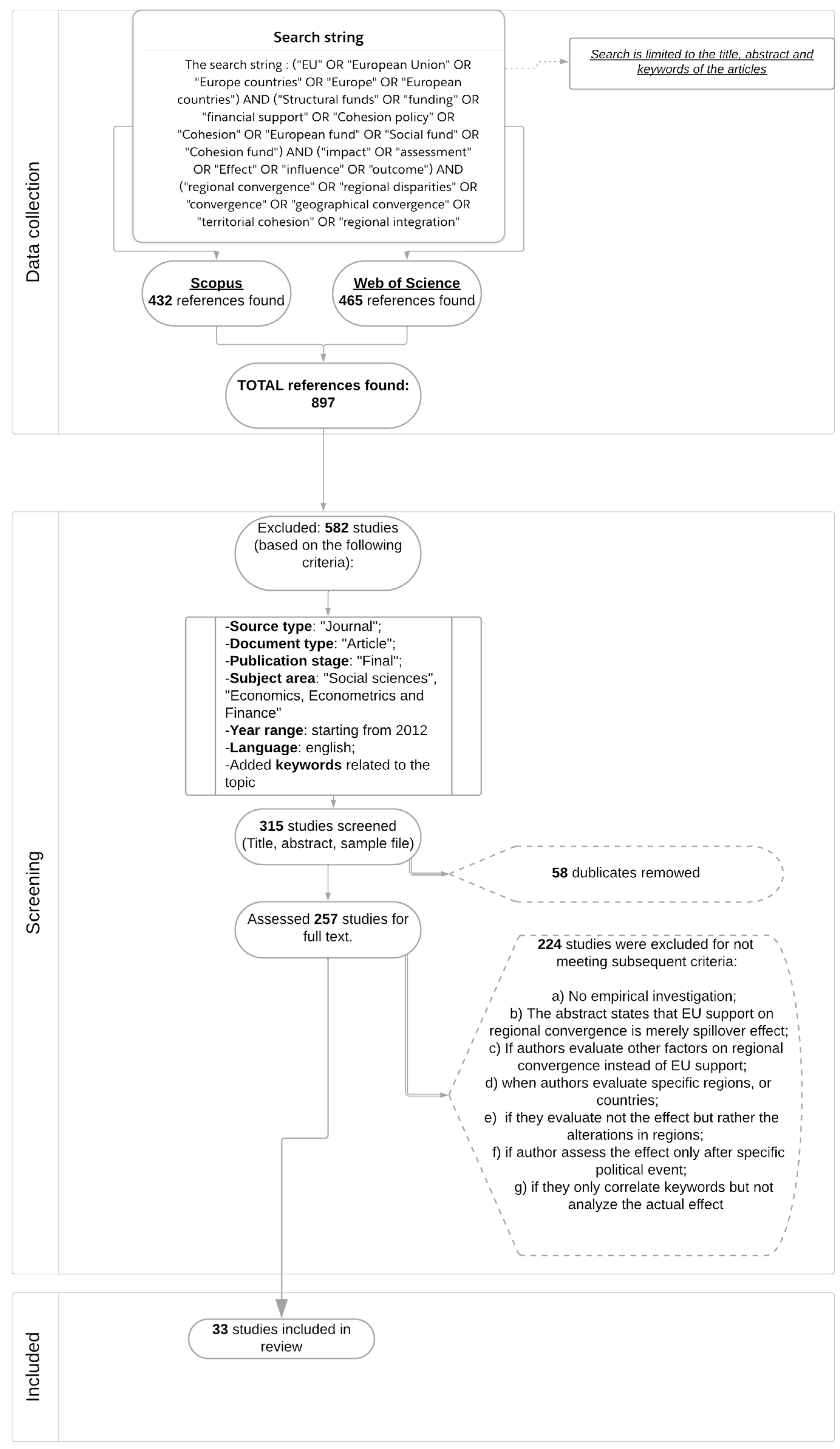
The search strategy uses keywords and Boolean operators to retrieve the relevant articles from the Scopus and WoS databases. The keywords are derived from the research question, and the literature is grouped into three categories: the EU’s financial support, regional convergence, and assessment. The Boolean operators are used to combine the keywords and refine the search results. The search string is as follows: (“EU” OR “European Union” OR “Europe countries” OR “Europe” OR “European countries”) AND (“Structural funds” OR “funding” OR “financial support” OR “Cohesion policy” OR “Cohesion” OR “European fund” OR “Social fund” OR “Cohesion fund”) AND (“impact” OR “assessment” OR “effect” OR “influence” OR “outcome”) AND (“regional convergence” OR “regional disparities” OR “convergence” OR “geographical convergence” OR “territorial cohesion” OR “regional integration”). The search is limited to the articles’ title, abstract, and keywords and was conducted on 28 August 2024-432 documents were received in the Scopus database. To exclude unnecessary articles from the list, we apply limits to source type “Journal”, document type -“Article”, publication stage -“Final”, subject area-“Social sciences” and “Economics, Econometrics and Finance”, with a year range starting from 2012-present and language-English (full database search codes are provided in Appendix A (Scopus) and Appendix B (Web of Science)). After applying these limits, we received 186 documents in the Scopus database and grouped them according to relevance. To assess the effectiveness of EU support, it is necessary to look at the situation before the implementation of the 2014–2020 EU support program and during and after its conclusion. Published articles from 2012 onwards provide sufficient information to understand the situation in earlier periods. At the same time, restricting the time window to studies published from 2012 onwards may limit the inclusion of earlier evaluations related to the 2007–2013 programming period. Consequently, some methodological insights from earlier policy assessments may not be fully captured in this review, which should be considered when interpreting the scope of the findings. An identical inquiry was executed in the WoS database. After the implementation of these constraints, we proceed with 129 articles. Using Zotero software (Corporation for Digital Scholarship, Fairfax, VA, USA, version 7.0.7), we excluded 58 duplicate records from the total (from Scopus: 186; WoS: 129) articles. It should also be noted that a significantly lower number of research articles examines the influence of EU financial assistance on regional convergence compared to its influence on economic growth. Even though the authors mention in the abstract that the research is about the impact on regional convergence, they describe economic growth in the results. If we apply the same search to articles in the Scopus and WoS databases but replace the focus on ‘regional convergence’ with ‘economic growth’ using analogous filtering, we get twice as many articles. To ensure transparency and clarity in our SLR methodology, the complete selection process is illustrated in Figure 1 (the figure created using Lucidchart (Lucid Software Inc., South Jordan, UT, USA, accessed 2024)).
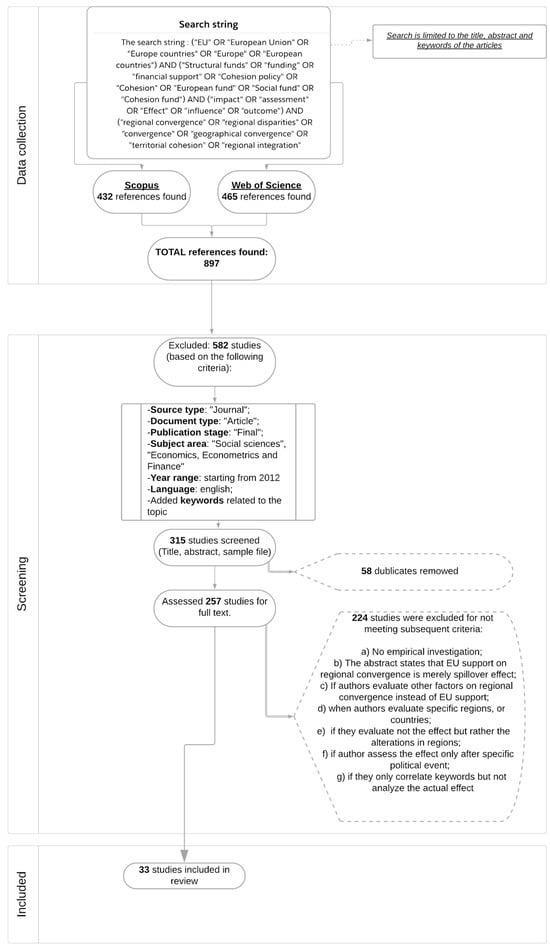
Figure 1.
Articles selection process, created by Authors.
To select suitable articles for SLR, it is essential to assess the criteria by which appropriate articles are included in the analysis. Articles that did not fulfill the research objectives were excluded if they did not satisfy the subsequent criteria: (a) no empirical investigation was performed, (b) the abstract explicitly articulates that the EU support effect on regional convergence is merely a spillover effect, (c) the authors did not evaluate the effect of EU financial assistance but rather examine the influence of other determinants on regional convergence, (d) authors evaluated specific regions or countries outside the context of EU financial support or focused solely on a single, non-EU country, (e) they evaluated not the effect but rather the alterations in regions, (f) they assessed the effect solely after a particular political occurrence, (g) they only correlated keywords but did not analyze the actual effect.
Criterion (b) was applied to keep the review focused on studies where regional convergence is analysed as a primary outcome. Some research examines convergence only indirectly through growth dynamics or broader development processes; including such studies could reduce comparability across empirical designs. At the same time, this decision may have excluded contributions discussing indirect mechanisms, which should be considered a limitation of the review.
To improve clarity regarding the selection process, the exclusion criteria presented in Figure 1 are further explained. Criteria (d), (e) and (f) were introduced to maintain conceptual consistency with the study’s objective, which focuses specifically on the measurable impact of EU financial support on regional convergence. Studies were excluded under criterion (d) when regional analyses were conducted outside the context of EU funding instruments. Criterion (e) removed studies describing regional transformations without empirically estimating policy effects, while criterion (f) excluded research centred solely on post-political events or institutional changes not directly linked to cohesion funding mechanisms. These restrictions inevitably reduced the sample size but were applied to ensure analytical comparability across selected studies.
According to our PRISMA 2020 [18] guidelines and the proposed methodology by Tranfield et al.’s [19], all relevant characteristics from chosen articles should be extracted into a data extraction form (Appendix C). This table should include author characteristics, publication date, research period, type of funding, region, method, outcome variable, and effect on regional convergence.
3. Results
The SLR analyzed 33 publications focusing on the influence of EU financial support on regional convergence. The analysis does not provide a uniform or unequivocal conclusion regarding the impact of EU financial support on regional convergence. Of the 33 articles reviewed, 58% report a positive impact, 21% a negative impact, 18% a mixed impact, and 3% no impact on regional convergence. Various reasons are proposed by the authors to explain these differences. To provide a more systematic explanation of the variation in reported effects, Table 1 presents a comparison matrix linking effect direction with methodological design, spatial scale, funding typology, and temporal scope across the reviewed studies.

Table 1.
Comparison matrix linking effect direction with methodological and contextual characteristics of the reviewed studies.
The matrix suggests that variation in reported effects is associated with methodological choices and the selection of dependent variables, suggesting that differences in research design partly explain the heterogeneity of findings across the literature. Specifically, studies employing beta-convergence and panel regression models tend to report positive effects [4,20,21], while those using sigma-convergence or spatial designs more frequently find negative or limited effects [1,16], suggesting that the choice of econometric approach substantially shapes the conclusions drawn.
For instance, the impact of cohesion investment tends to be lower in more developed regions and may even be negative in some cases, as these regions receive fewer investments relative to their GDP and a smaller share of the budget [7]. Maynou et al. [21] argues that regional disparities have decreased over the last twenty years, but the analysis results heavily depend on the variables used to evaluate the impact. Economically stronger regions tend to utilize EU funding more efficiently, benefiting from advanced technology, human resources, and organizational capacity to manage projects effectively [1]. Bourdin [27] highlights that the effects of the Cohesion Policy vary significantly across regions, reflecting spatial heterogeneity. This suggests that in some areas, the policy may positively influence development, while in others, the impact may be less pronounced or even adverse, depending on regional circumstances and contexts. While certain EU regions are experiencing convergence, significant disparities persist, underscoring the challenges of achieving uniform social cohesion across the union [22].
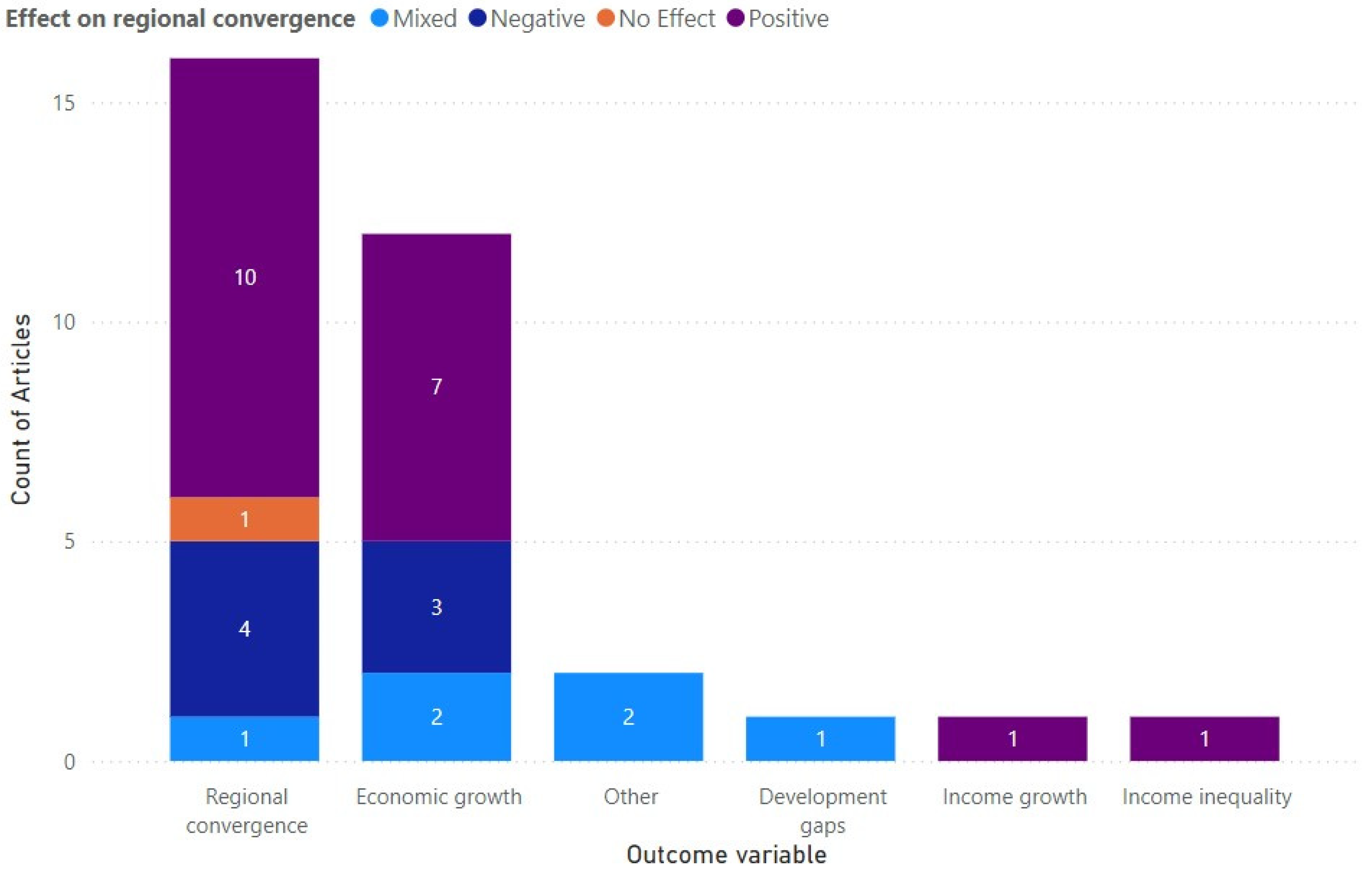
The analysis reveals a strong emphasis on economic growth outcomes in the existing literature, while the specific focus on regional convergence appears less prominent. For instance, almost half (42%) of the reviewed articles examined the impact of EU financial support on regional convergence as a secondary role or spillover effect (Figure 2).
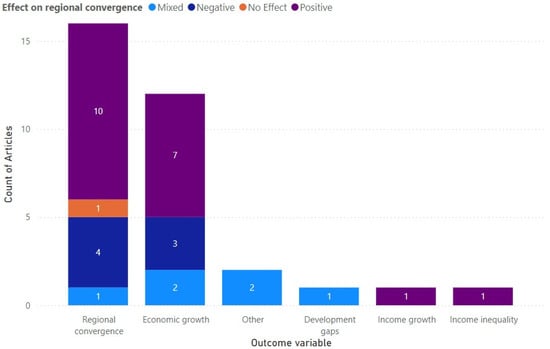
Figure 2.
Count of Articles by Outcome variable and Effect on regional convergence, created by Authors.
To address this conceptual ambiguity, Table 2 categorises all reviewed studies according to the dependent variables used to evaluate EU financial support. The table highlights substantial variation in how outcomes are measured, ranging from GDP growth and GDP per capita dynamics to inequality measures, territorial cohesion indices, and only a limited number of direct convergence metrics. This diversity of dependent variables reflects a deeper conceptual inconsistency within the literature rather than simple methodological diversity. Growth-based indicators capture changes in economic performance, whereas convergence metrics assess the reduction in regional disparities. Similarly, inequality indicators and composite territorial indices represent different analytical dimensions of regional development. As a result, studies relying on heterogeneous dependent variables cannot be directly compared as equivalent tests of regional convergence. Consequently, comparing findings derived from fundamentally different dependent variables undermines the ability to draw robust conclusions about the effectiveness of EU cohesion policy.
Table 2.
Conceptual categorisation of reviewed studies according to the dependent variables used to evaluate EU financial support and regional convergence outcomes.
Articles have examined financial support’s direct impact on economic growth [4,7,20,21,23,27,30,32,36,46,47], income growth [37], income inequality [42] and development gaps [26]. One study employed sigma-convergence metrics to assess the dispersion of income across regions over time, offering a distributional perspective on convergence dynamics distinct from growth-based approaches [37]. Meanwhile, 47% of studies have attempted to measure and evaluate the effectiveness of the EU’s interventions in promoting regional convergence [1,17,24,25,28,33,34,35,39,43,44,45]. Butkus et al. [29] and Bouayad-Agha et al. [20] highlight the spillover implications of EU cohesion policies, often recognizing economic growth as a direct outcome while regional convergence is suggested as a subsequent effect. Investigations utilizing a variety of frameworks, such as spatial dynamic models and general equilibrium models, reveal that growth serves as the principal metric, overshadowing convergence indicators. This significant proportion of articles treating regional convergence as a secondary or spillover effect, coupled with the use of economic growth indicators as proxies for regional cohesion, points to a pervasive tendency in the literature to conflate these distinct concepts.
This dominance of growth-based indicators may be explained by the availability of harmonised GDP datasets and the widespread use of growth regression frameworks in regional economics. However, reliance on growth metrics may obscure spatial inequality dynamics, particularly when convergence is interpreted solely through average income performance rather than distributional changes across regions.
In addition, differences in spatial scale contribute to variations in empirical findings. While many studies rely on NUTS-2 level data, analyses conducted at the NUTS-3 level often reveal stronger internal heterogeneity within regions, which may remain hidden in higher-level aggregations. As a result, conclusions regarding convergence dynamics may vary depending on the regional scale applied, highlighting the importance of methodological choices in spatial analysis.
This methodological approach complicates the direct and precise assessment of EU financial support’s effectiveness in achieving its stated goal of reducing regional disparities. The analysis of Figure 2 therefore emphasises that economic growth is often measured due to data availability and established modelling traditions, which may limit the ability to capture true convergence dynamics. Several studies included in the sample also report mixed or inconclusive effects of EU financial support, particularly in regions characterised by structural disparities and institutional differences. Evidence from Central and Eastern European regions suggests that cohesion funding outcomes may vary depending on regional context and implementation capacity [16,43]. Moreover, findings differ across methodological approaches, as growth-based econometric models sometimes produce different interpretations compared to spatial or quasi-experimental analyses [20,39].
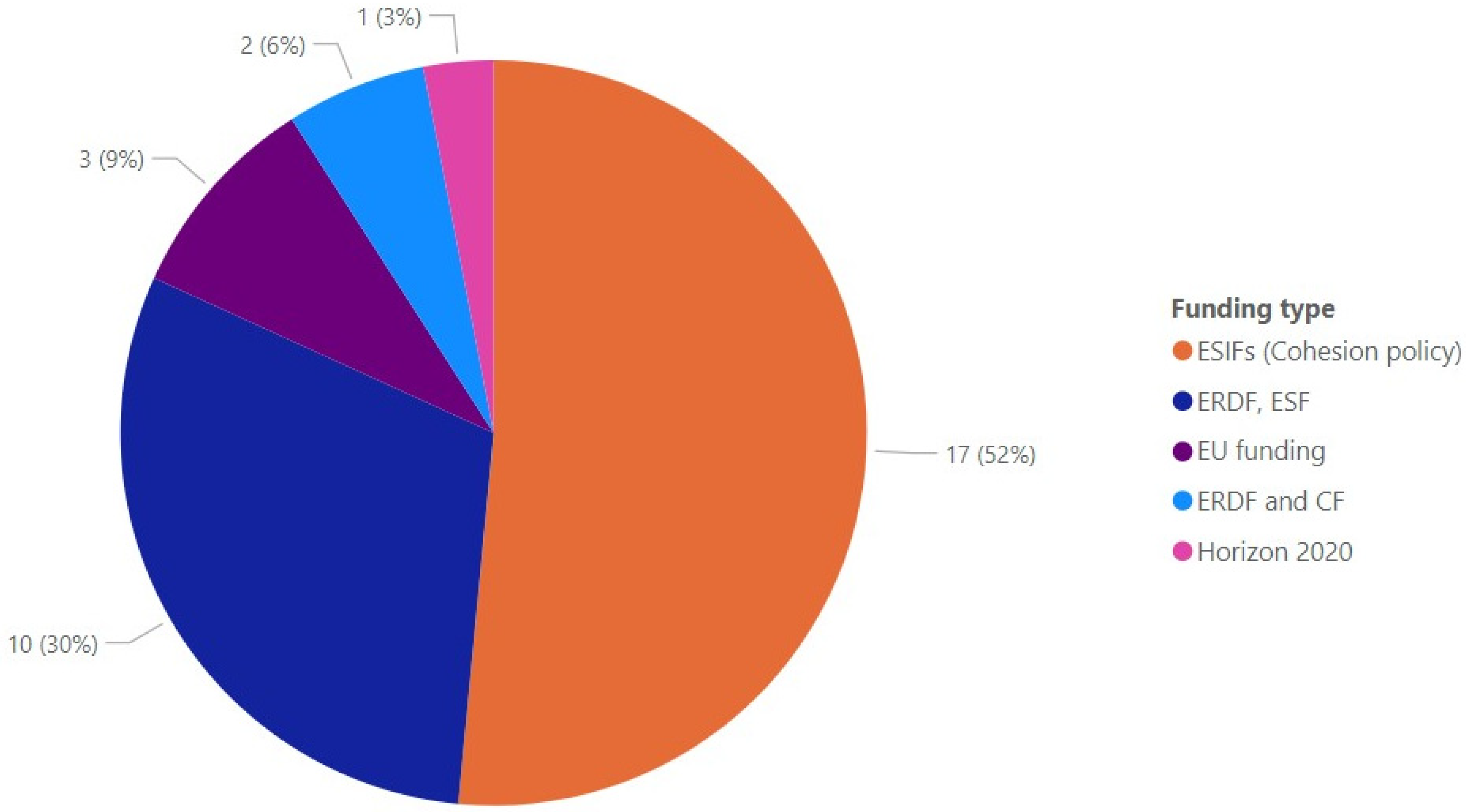
The review also highlights that existing research on the impact of EU financial support on regional convergence often aggregates different funds, such as the Cohesion Fund (CF) and the European Regional Development Fund (ERDF), the European Social Fund (ESF) and the ERDF, or the broader Cohesion Policy (ESIFs) and EU funding. 52% of the articles examined assess the impact of the ESIFs (Figure 3). While these studies provide valuable insights, they lack granular analysis of individual funds, which hinders a comprehensive understanding of their specific contributions.
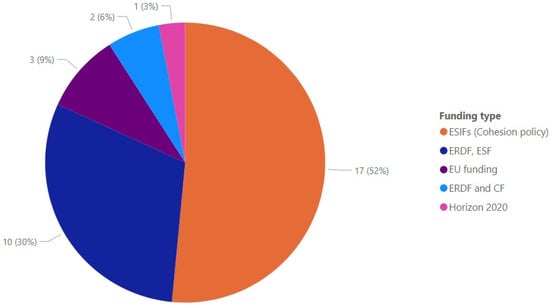
Figure 3.
Count of Articles by Funding type, created by Authors.
Such aggregation may reflect several factors. First, disaggregated fund-level datasets are often incomplete across regions and programming periods, which encourages researchers to rely on aggregate ESIF indicators. Second, many empirical models adopt growth-oriented frameworks where total funding intensity is used as a proxy for policy exposure. Finally, aggregation may also result from established conventions in cohesion policy evaluation literature, where ESIFs are treated as a unified intervention despite differences in thematic objectives.
For example, Savoia [25] indicates that the impact of the Cohesion Policy is multifaceted and shaped by various structural factors, such as human capital, governance quality, and territorial capital, all of which enhance policy effectiveness. As a result, while the overall effect of the Cohesion Policy on convergence is generally positive, its efficacy varies significantly depending on regional characteristics and the socioeconomic context. This underscores the importance of conducting in-depth analyses of targeted funds and specific areas to accurately assess their impact.
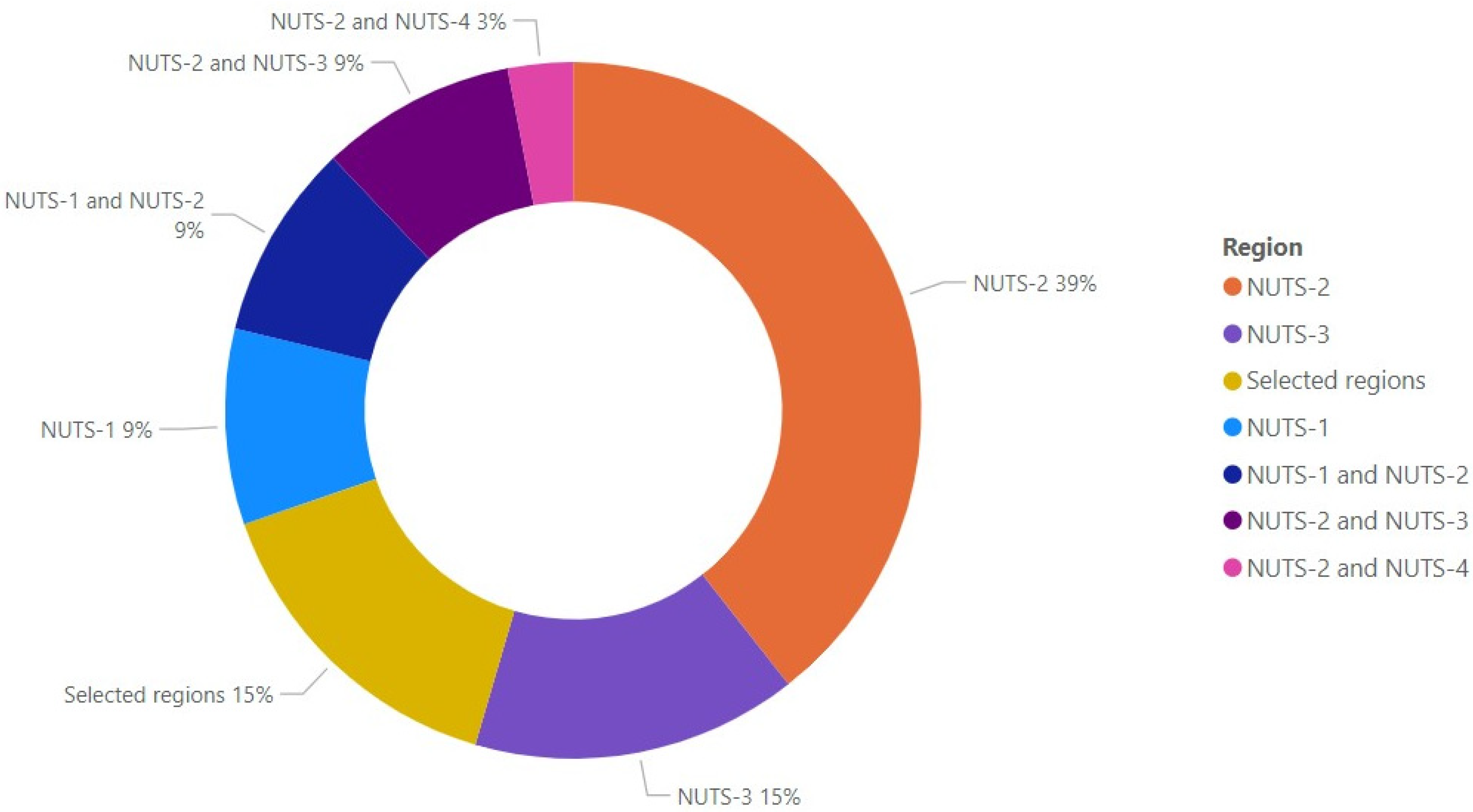
While investigations frequently evaluate regional inequalities at the NUTS-2 level or concentrate on particular areas aligned with research aims, there is a significant deficiency in studies exploring inequalities at the more detailed NUTS-3 level. Given the potential lack of NUTS-3 level information in certain areas, authors may have been obliged to conduct their evaluations at the NUTS-2 level. A major constraint limiting the expansion of NUTS-3 level analyses is the restricted availability of harmonised datasets across several key policy dimensions. While GDP per capita and selected labour market indicators are partially available at finer spatial scales, many variables relevant to cohesion policy evaluation remain incomplete or inconsistently reported at the NUTS-3 level. In particular, detailed ESF expenditure by thematic objective, indicators capturing implementation quality, institutional capacity measures, and multidimensional social inclusion variables are often aggregated at NUTS-2 or national levels. This limits the ability to directly estimate disaggregated policy effects at smaller territorial scales. Moreover, temporal coverage at NUTS-3 is frequently shorter and subject to methodological breaks due to statistical revisions, which complicates longitudinal convergence analysis. These data constraints affect the feasibility of applying advanced econometric strategies, such as dynamic panel models or disaggregated policy interaction frameworks, because missing observations reduce statistical power and may introduce selection bias. As a result, although NUTS-3 analysis offers greater spatial precision, future research must carefully balance methodological ambition with data availability when designing empirical studies of regional convergence. In Figure 4, the authors highlight that the analyses mostly focus on the NUTS-2 regional level. Of the 33 articles reviewed, 13 analyzed NUTS-2 level regions, and only 5 examined NUTS-3 level regions. Butkus et al. [40] emphasize the importance of focusing on smaller territorial units, like NUTS-3 regions, to effectively address regional disparities. This is crucial because significant disparities exist within these smaller regions, which are often overlooked in broader analyses.
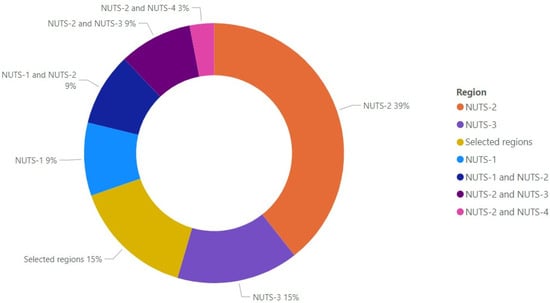
Figure 4.
Count of Articles by Region level, created by Authors.
4. Discussion and Future Directions
Due to the strict inclusion criteria and the qualitative nature of the SLR, this study should be interpreted as a focused article rather than a comprehensive analysis of all cohesion policy literature. The SLR findings suggest that the impact of EU financial support on regional convergence is not uniform. As shown in Table 2, the reviewed studies rely on conceptually different dependent variables, which limits cross-study comparability. This heterogeneity complicates synthesis and may partly explain why conclusions about EU cohesion policy effectiveness remain mixed.
Even authors who have analyzed the impact on regional convergence, upon closer examination, have primarily assessed economic growth dynamics. Crucitti et al. [7] found a positive long-term impact of the European Structural Funds on regional cohesion. However, their calculations explicitly state that the impact is on regional economic growth. They measure the outcome of regional convergence in terms of GDP variation, the standard deviation of regional GDP, GDP per capita distribution ratios, and the “Theil” index. Meanwhile, Mogila et al. [1] argue that, while the Cohesion Policy significantly impacts regional convergence, this effect diminishes in the long term.
The analysed studies rarely identify which specific policy areas or funding mechanisms are most directly associated with improvements in regional convergence. The wide range of factors evaluated across the analysed studies suggests that identifying the precise mechanisms through which funding contributes to regional convergence remains methodologically challenging. For example, López-Villuendas and del Campo [35], in their study, included structural funds in the analysis as eligibility criteria for regions. Eligibility for structural funds is indicated by a dummy variable in the model. This variable is set to 1 when a NUTS-3 region is eligible for funds in a specific year and 0 otherwise. However, it is crucial to acknowledge that this variable reflects only the policy status of regions and not the actual expenditure or the effective funding received by the regions. These observations also highlight important data-related limitations. Detailed information on ESF expenditure disaggregated by policy area at the NUTS-3 level remains limited, which constrains fine-grained spatial analyses of convergence dynamics. Furthermore, empirical strategies based on β-convergence models that incorporate funding variables may face identification challenges, including endogeneity and potential reverse causality, as financial support is often allocated to regions already experiencing structural disadvantages. These factors should be considered when interpreting estimated relationships between ESF investments and regional convergence outcomes.
These limitations also indicate several directions for future research on ESF. More disaggregated analyses distinguishing between policy areas and target groups could help clarify the mechanisms through which ESF interventions influence regional convergence. A methodological precedent for such disaggregated policy impact analysis is provided by Konstantakopoulou [48], who applies dynamic panel Generalised Method of Moments (GMM) estimators to examine how different dimensions of financial development generate heterogeneous effects. This approach illustrates how multidimensional policy variables can be operationalised within a rigorous empirical framework. In addition, combining programme-level indicators with regional datasets and applying methodologies capable of capturing long-term structural effects may provide a more precise understanding of ESF outcomes beyond short-term growth dynamics.
A similar challenge emerges when considering alternative modelling approaches applied in the literature. Mogila et al. [1] employed the Hermin model, which is less common in the analyzed literature and is often used to evaluate the impact of public policies. This model covers general policy and how this policy affects macroeconomic factors and whether this increases or decreases convergence, but it does not specifically identify which areas are most involved or have the most significant impact on improving regional convergence.
Within the selected sample of studies included in this SLR, no articles explicitly evaluate the impact of ESF on regional convergence as a primary research objective. The ESF focuses on improving people’s well-being and was created to enhance social inclusion. The ESF aims to reduce disparities by improving four areas such as unemployment, social inclusion, education, and public services. For the 2014–2020 programming period, the EU allocated €125 billion to the ESF, which is 17% of the ESIF budget. Kersan-Skabic and Tijanic [31] identify unemployment rates and education levels as key determinants of fund utilization, i.e., regions with higher education levels tend to manage funding projects more effectively.
To determine the impact of ESF investments on regional convergence in the future, we propose conducting a study that analyzes how fund investments allocated to specific areas such as unemployment, social inclusion, education, and public services affect convergence. Future ESF research should therefore move beyond aggregate expenditure measures and explicitly disaggregate funding across targeted policy areas, implementation quality, and regional absorption capacity. Such multidimensional disaggregation would allow capturing heterogeneous policy effects that may remain hidden when only total ESF spending is considered. Since the objective of EU cohesion policy is to promote regional convergence, future research could benefit from a more explicit econometric specification linking disaggregated ESF investments to convergence dynamics. In this context, convergence can be analysed within a standard growth regression framework, where the coefficient associated with initial income levels reflects the speed of β-convergence.
To make the functional form explicit, a disaggregated β-convergence specification can be written as:
where i denotes the region, t denotes the time period, and k denotes the specific policy intervention area (education, employment, or social inclusion), with summations taken over all k policy areas. The interaction terms capture whether ESF investments have heterogeneous effects depending on initial regional income levels. δk captures the independent effect of each policy area, while θk captures the heterogeneous effect of ESF investments across policy areas. μi represents region-specific fixed effects, λt captures time effects, and εit is the error term. By explicitly separating ESF investments across policy areas, this specification allows testing whether education-, employment-, or social-inclusion-oriented interventions contribute differently to convergence outcomes.
Dynamic panel estimation using system-GMM could further address potential endogeneity and reverse causality issues, following the empirical strategy adopted by Konstantakopoulou [48].
It would include disaggregated ESF investment variables, targeted policy dimensions, and interaction terms capturing heterogeneous convergence effects across intervention areas.
5. Limitations
Like any other SLR, this one has its limitations. We used the Scopus and Web of Science databases to perform precise keyword searches. While these are the most extensive databases for our topic, this approach inevitably excludes articles published elsewhere. Our analysis was limited to articles published between 2012 and 2024, ensuring relevance to recent policies and developments, but potentially excluding earlier studies that might provide valuable historical context. Our keyword searches yielded varying results, but they accurately reflect our research topic. In addition, we limited our search to English-language articles. This choice excludes studies in other languages, but we believe that this has a minimal impact on our overall findings because the majority of scientific articles are in English.
6. Conclusions
The motivation for conducting the study was the growing body of literature on the impact of EU financial support on reducing regional disparities, but this literature analyzes vastly different areas. It is difficult to assign or classify the articles to a particular group for comparison. Thus, it is essential to understand which areas remain less systematically examined in the existing empirical literature. Of the 33 selected articles, it was found that EU financial support has had a varied impact on regional convergence and there is no unanimous consensus. A positive effect was observed in regions with higher absorptive capacities and a negative effect was observed in those lacking institutional quality and project management. The SLR suggests that evidence remains limited within the selected sample on studies that disaggregate ESF investments in targeted areas, such as unemployment, education levels, social inclusion, and public services. The authors mostly analyze the NUTS-2 regional level, although they argue that focusing on smaller regions, such as the NUTS-3 level, is essential for effectively understanding regional problems. Future research should focus on evaluating the impact of individual funds, such as the ESF, on regional convergence by employing detailed economic models that consider factors such as targeted investment areas, funding, and interactions between them.
Based on the gaps identified in this review, several research questions for future studies can be formulated: (i) How do disaggregated ESF investments across specific policy areas influence regional convergence dynamics? (ii) To what extent do regional institutional capacity and absorption conditions shape the effectiveness of EU financial support? (iii) Does analysis at the NUTS-3 level reveal convergence patterns that remain hidden at higher territorial aggregation levels? (iv) How do different econometric approaches, including dynamic panel and spatial models, affect conclusions regarding cohesion policy effectiveness?
Author Contributions
G.M. conducted the literature review and wrote the manuscript. M.B. reviewed and validated the study in line with PRISMA methodology. Both authors approved the final version. All authors have read and agreed to the published version of the manuscript.
Funding
This research received no external funding.
Institutional Review Board Statement
Not applicable.
Informed Consent Statement
Not applicable.
Data Availability Statement
The original contributions presented in this study are included in the article. Further inquiries can be directed to the corresponding author.
Conflicts of Interest
The authors declare no conflicts of interest.
Appendix A. Full Scopus Database Code
(TITLE-ABS-KEY (“EU” OR “European union” OR “Europe countries” OR “Europe” OR “European countries”) AND TITLE-ABS-KEY (“Structural funds” OR “funding” OR “financial support” OR “Cohesion policy” OR “Cohesion” OR “European fund” OR “Social fund” OR “Cohesion fund”) AND TITLE-ABS-KEY (“impact” OR “assessment” OR “Effect” OR “influence” OR “outcome”) AND TITLE-ABS-KEY (“regional convergence” OR “regional disparities” OR “convergence” OR “geographical convergence” OR “territorial cohesion” OR “regional integration”)) AND PUBYEAR > 2011 AND (LIMIT-TO (SRCTYPE, “j”)) AND (LIMIT-TO (PUBSTAGE, “final”)) AND (LIMIT-TO (SUBJAREA, “SOCI”) OR LIMIT-TO (SUBJAREA, “ECON”)) AND (LIMIT-TO (DOCTYPE, “ar”)) AND (LIMIT-TO (LANGUAGE, “English”)) AND (LIMIT-TO (EXACTKEYWORD, “European Union”) OR LIMIT-TO (EXACTKEYWORD, “Territorial Cohesion”) OR LIMIT-TO (EXACTKEYWORD, “Europe”) OR LIMIT-TO (EXACTKEYWORD, “Convergence”) OR LIMIT-TO (EXACTKEYWORD, “Cohesion Policy”) OR LIMIT-TO (EXACTKEYWORD, “Regional Development”) OR LIMIT-TO (EXACTKEYWORD, “EU Cohesion Policy”) OR LIMIT-TO (EXACTKEYWORD, “Economic Growth”) OR LIMIT-TO (EXACTKEYWORD, “Regional Economy”) OR LIMIT-TO (EXACTKEYWORD, “Regional Disparities”) OR LIMIT-TO (EXACTKEYWORD, “Structural Funds”) OR LIMIT-TO (EXACTKEYWORD, “Economic Development”) OR LIMIT-TO (EXACTKEYWORD, “Regional Integration”) OR LIMIT-TO (EXACTKEYWORD, “Cohesion”) OR LIMIT-TO (EXACTKEYWORD, “Regional Growth”) OR LIMIT-TO (EXACTKEYWORD, “European Funds”) OR LIMIT-TO (EXACTKEYWORD, “Regional Convergence”) OR LIMIT-TO (EXACTKEYWORD, “Territorial Cooperation”) OR LIMIT-TO (EXACTKEYWORD, “EU Funds”) OR LIMIT-TO (EXACTKEYWORD, “Regional Cohesion”) OR LIMIT-TO (EXACTKEYWORD, “Funding”) OR LIMIT-TO (EXACTKEYWORD, “Europe 2020”) OR LIMIT-TO (EXACTKEYWORD, “European Cohesion Policy”) OR LIMIT-TO (EXACTKEYWORD, “EU Structural Funds”) OR LIMIT-TO (EXACTKEYWORD, “Regional Policy”))
Appendix B. Full Web of Science Database Code
TS = (“EU” OR “European Union” OR “Europe countries” OR “Europe” OR “European countries”) AND TS = (“Structural funds” OR “funding” OR “financial support” OR “Cohesion policy” OR “Cohesion” OR “European fund” OR “Social fund” OR “Cohesion fund”) AND TS = (“impact” OR “assessment” OR “effect” OR “influence” OR “outcome”) AND TS = (“regional convergence” OR “regional disparities” OR “convergence” OR “geographical convergence” OR “territorial cohesion” OR “regional integration”) AND PY = (2012–2024) AND LA = (“English”) AND DT = (“Article”) AND (AK = (“European Union” OR “Territorial Cohesion” OR “Europe” OR “Convergence” OR “Cohesion Policy” OR “Regional Development” OR “EU Cohesion Policy” OR “Economic Growth” OR “Regional Economy” OR “Regional Disparities” OR “Structural Funds” OR “Economic Development” OR “Regional Integration” OR “Cohesion” OR “Regional Growth” OR “European Funds” OR “Regional Convergence” OR “Territorial Cooperation” OR “EU Funds” OR “Regional Cohesion” OR “Funding” OR “Europe 2020” OR “European Cohesion Policy” OR “EU Structural Funds” OR “Regional Policy”) OR KP = (“European Union” OR “Territorial Cohesion” OR “Europe” OR “Convergence” OR “Cohesion Policy” OR “Regional Development” OR “EU Cohesion Policy” OR “Economic Growth” OR “Regional Economy” OR “Regional Disparities” OR “Structural Funds” OR “Economic Development” OR “Regional Integration” OR “Cohesion” OR “Regional Growth” OR “European Funds” OR “Regional Convergence” OR “Territorial Cooperation” OR “EU Funds” OR “Regional Cohesion” OR “Funding” OR “Europe 2020” OR “European Cohesion Policy” OR “EU Structural Funds” OR “Regional Policy”)) and Economics (Web of Science Categories)
Appendix C. Summary of Selected Studies
Table A1.
Summary of selected studies on EU financial support and regional convergence (Part I).
Table A1.
Summary of selected studies on EU financial support and regional convergence (Part I).
| Citation | Period | Effect | Region | Funding Type | Method | Outcome Variable |
|---|---|---|---|---|---|---|
| Bolea et al. (2018) [37] | 2000–2014 | Positive | NUTS-1 | ESIFs (Cohesion Policy) | Input-output model | Income growth |
| Bouayad-Agha et al. (2013) [20] | 1980–2005 | Positive | NUTS-1; NUTS-2 | ESIFs (Cohesion Policy) | β-convergence models | Economic growth |
| Bourdin (2019) [27] | 2000–2016 | Positive | NUTS-3 | ESIFs (Cohesion Policy) | Spatial dynamic models | Economic growth |
| Breidenbach et al. (2019) [16] | 1997–2007 | Negative | NUTS-2 | ERDF, ESF | Growth model | Economic growth |
| Butkus et al. (2020c) [17] | 2007–2013 | Positive | NUTS-2; NUTS-3 | ESIFs (Cohesion Policy) | β-convergence models | Regional convergence |
| Butkus et al. (2020d) [40] | 2000–2006 | Positive | NUTS-3 | ERDF, ESF | Quasi-experimental models | Regional convergence |
| Butkus et al. (2020b) [38] | 2000–2013 | Positive | NUTS-2; NUTS-3 | ESIFs (Cohesion Policy) | Quasi-experimental models | Regional convergence |
| Butkus et al. (2019) [39] | 2007–2013 | Positive | NUTS-3 | ERDF, CF | Quasi-experimental models | Regional convergence |
| Butkus et al. (2020a) [29] | 2000–2006 | Negative | NUTS-2; NUTS-4 | ERDF, CF | Quasi-experimental models | Regional convergence |
| Calegari et al. (2023) [44] | 2007–2013 | Positive | Selected regions | ESIFs (Cohesion Policy) | Other | Regional convergence |
| Crucitti et al. (2024) [7] | 2014–2020 | Positive | NUTS-2 | ERDF, ESF | Spatial dynamic models | Economic growth |
Table A2.
Summary of selected studies on EU financial support and regional convergence (Part II).
Table A2.
Summary of selected studies on EU financial support and regional convergence (Part II).
| Citation | Period | Effect | Region | Funding Type | Method | Outcome Variable |
|---|---|---|---|---|---|---|
| Czudec et al. (2019) [26] | 2004–2015 | Mixed | Selected regions | ERDF, ESF | Traditional panel models | Development gaps |
| Dawid et al. (2014) [45] | All data | Positive | Selected regions | ERDF, ESF | Other | Regional convergence |
| Diukanova and López-Rodríguez (2014) [30] | 2014–2020 | Positive | NUTS-2 | ESIFs (Cohesion Policy) | Spatial dynamic models | Economic growth |
| Doran and Jordan (2013) [42] | 1980–2009 | Positive | NUTS-2 | ESIFs (Cohesion Policy) | Σ-convergence models | Income inequality |
| Dotti (2016) [46] | 2000–2006 | Positive | NUTS-1; NUTS-2 | ERDF, ESF | Other | Economic growth |
| Furceri et al. (2022) [43] | 1990–2014 | Positive | Selected regions | EU funding | Traditional panel models | Regional convergence |
| Kersan-Skabic and Tijanic (2017) [31] | 2000–2013 | Mixed | NUTS-2 | EU funding | Traditional panel models | Other |
| Kyriacou and Roca-Sagálés (2012) [24] | 1995–2006 | Positive | NUTS-2 | ESIFs (Cohesion Policy) | Traditional panel models | Regional convergence |
| Koudoumakis et al. (2021) [33] | 1986–2016 | Positive | NUTS-2 | ESIFs (Cohesion Policy) | β- and Σ-convergence models | Regional convergence |
| Lafuente et al. (2020) [22] | 2005–2018 | Mixed | NUTS-1 | ESIFs (Cohesion Policy) | Time-series models | Other |
| López-Villuendas and del Campo (2024) [35] | 2000–2019 | Negative | NUTS-3 | ERDF, ESF | Traditional panel models | Regional convergence |
| Maynou et al. (2016) [21] | 1990–2010 | Positive | NUTS-2 | ESIFs (Cohesion Policy) | β-convergence models | Economic growth |
Table A3.
Summary of selected studies on EU financial support and regional convergence (Part III).
Table A3.
Summary of selected studies on EU financial support and regional convergence (Part III).
| Citation | Period | Effect | Region | Funding Type | Method | Outcome Variable |
|---|---|---|---|---|---|---|
| Medeiros et al. (2023) [36] | 2005–2020 | Negative | NUTS-2; NUTS-3 | ESIFs (Cohesion Policy) | Other | Economic growth |
| Mogila et al. (2022) [1] | 2021–2027 | Negative | Selected regions | EU funding | Σ-convergence models | Regional convergence |
| Morollón and García (2023) [32] | 2008–2019 | Negative | NUTS-2 | Horizon 2020 | β-convergence models | Economic growth |
| Novosak et al. (2015) [34] | 2007–2013 | Mixed | NUTS-1 | ESIFs (Cohesion Policy) | Traditional panel models | Regional convergence |
| Pinho et al. (2015) [23] | 1995–2009 | Mixed | NUTS-1; NUTS-2 | ERDF, ESF | Growth model | Economic growth |
| Savoia (2024) [25] | 1989–2013 | Positive | NUTS-2 | ESIFs (Cohesion Policy) | Traditional panel models | Regional convergence |
| Smetkowski (2013) [28] | 2000–2008 | Negative | NUTS-3 | ESIFs (Cohesion Policy) | Other | Regional convergence |
| Surubaru (2021) [47] | 2007–2017 | Mixed | NUTS-2 | ERDF, ESF | Other | Economic growth |
| Vukasina et al. (2022) [4] | 2008–2016 | Positive | NUTS-2 | ERDF, ESF | β-convergence models | Economic growth |
| Wójcik (2021) [41] | 1990–2017 | No effect | NUTS-2 | ESIFs (Cohesion Policy) | Σ-convergence models | Regional convergence |
References
- Mogila, Z.; Miklosovi, T.; Lichner, I.; Radvansky, M.; Zaleski, J. Does Cohesion Policy help to combat intra-country regional disparities? A perspective on Central European countries. Reg. Stud. 2022, 56, 1783–1795. [Google Scholar] [CrossRef]
- López-Bazo, E. The Impact of Cohesion Policy on Regional Differences in Support for the European Union. J. Common Mark. Stud. 2022, 60, 1219–1236. [Google Scholar] [CrossRef]
- European Commission. 2022 Summary Report of the Programme Annual Implementation Reports Covering Implementation in 2014–2020, 2023. Available online: https://ec.europa.eu/regional_policy/sources/reports/annual_2022/2022_annual_summary_report.pdf (accessed on 15 December 2024).
- Vukasina, M.; Kersan-Skabic, I.; Orlic, E. Impact of European structural and investment funds absorption on the regional development in the EU-12 (new member states). Equilib. Q. J. Econ. Econ. Policy 2022, 17, 857–880. [Google Scholar] [CrossRef]
- Smékalová, L.; Kučera, F. EU Cohesion Policy in the Czech Republic and Poland: Comparison of Intervention Areas Among Regions. Sci. Pap. Univ. Pardubic. Ser. D Fac. Econ. Adm. 2022, 30, 1554. [Google Scholar] [CrossRef]
- Maris, M. Contribution of EU Cohesion Policy to Regional Growth: Evidence from V4 Countries. Prague Econ. Pap. 2024, 33, 164–186. [Google Scholar] [CrossRef]
- Crucitti, F.; Lazarou, N.; Monfort, P.; Salotti, S. The impact of the 2014–2020 European Structural Funds on territorial cohesion. Reg. Stud. 2024, 58, 1568–1582. [Google Scholar] [CrossRef]
- Minarčíková, E. Evaluation of regional development in visegrad four in the context of the EU Cohesion. In Proceedings of the 25th International Business Information Management Association Conference, Amsterdam, The Netherlands, 7–8 May 2015; Soliman, K.S., Ed.; International Business Information Management Association, IBIMA: Norristown, PA, USA, 2015; pp. 924–934. Available online: https://www.researchgate.net/publication/312919321_Evaluation_of_Regional_Development_in_Visegrad_Four_in_the_Context_of_the_EU_Cohesion (accessed on 29 December 2024).
- Camagni, R.; Capello, R.; Cerisola, S.; Fratesi, U. Fighting Gravity: Institutional Changes and Regional Disparities in the EU. Econ. Geogr. 2020, 96, 108–136. [Google Scholar] [CrossRef]
- Klarin, A.; Suseno, Y.; Lajom, J. Systematic Literature Review of Convergence: A Systems Perspective and Re-evaluation of the Convergence Process. IEEE Trans. Eng. Manag. 2023, 70, 1531–1543. [Google Scholar] [CrossRef]
- Sharma, P.; Sharma, N. Convergence hypothesis: A systematic literature review with bibliometric analysis. Int. J. Sustain. Econ. 2023, 15, 447–477. [Google Scholar] [CrossRef]
- Barro, R.J.; Sala-i Martin, X. Economic Growth; MIT Press: Cambridge, MA, USA, 2004. [Google Scholar]
- Rodríguez-Pose, A. Investment or Losers’ Compensation? The Mis-Selling and Re-Selling of EU Cohesion Policy. LSE Public Policy Rev. 2026, 4, 8. [Google Scholar] [CrossRef]
- Fratesi, U.; Perucca, G. Territorial Capital and the Effectiveness of Cohesion Policies: An Assessment for CEE Regions. Investig. Reg. 2014, 29, 165–191. [Google Scholar]
- Dall’erba, S.; Le Gallo, J. The impact of EU regional support on growth and employment. Czech J. Econ. Financ. 2007, 57, 325–340. [Google Scholar]
- Breidenbach, P.; Mitze, T.; Schmidt, C. EU Regional Policy and the Neighbour’s Curse: Analyzing the Income Convergence Effects of ESIF Funding in the Presence of Spatial Spillovers. JCMS J. Common Mark. Stud. 2019, 57, 388–405. [Google Scholar] [CrossRef]
- Butkus, M.; Mačiulyte-Šniukiene, A.; Matuzevičiute, K. Mediating effects of cohesion policy and institutional quality on convergence between EU regions: An examination based on a conditional beta-convergence model with a 3-way multiplicative term. Sustainability 2020, 12, 3025. [Google Scholar] [CrossRef]
- Page, M.; McKenzie, J.; Bossuyt, P.; Boutron, I.; Hoffmann, T.; Mulrow, C.; Shamseer, L.; Tetzlaff, J.; Akl, E.; Brennan, S.; et al. The PRISMA 2020 statement: An updated guideline for reporting systematic reviews. J. Clin. Epidemiol. 2021, 134, 178–189. [Google Scholar] [CrossRef] [PubMed]
- Tranfield, D.; Denyer, D.; Smart, P. Towards a Methodology for Developing Evidence-Informed Management Knowledge by Means of Systematic Review. Br. J. Manag. 2003, 14, 207–222. [Google Scholar] [CrossRef]
- Bouayad-Agha, S.; Turpin, N.; Védrine, L. Fostering the Development of European Regions: A Spatial Dynamic Panel Data Analysis of the Impact of Cohesion Policy. Reg. Stud. 2013, 47, 1573–1593. [Google Scholar] [CrossRef]
- Maynou, L.; Saez, M.; Kyriacou, A.; Bacaria, J. The Impact of Structural and Cohesion Funds on Eurozone Convergence, 1990–2010. Reg. Stud. 2016, 50, 1127–1139. [Google Scholar] [CrossRef]
- Lafuente, J.Á.; Marco, A.; Monfort, M.; Ordóñez, J. Social exclusion and convergence in the eu: An assessment of the europe 2020 strategy. Sustainability 2020, 12, 1843. [Google Scholar] [CrossRef]
- Pinho, C.; Varum, C.; Antunes, M. Under What Conditions Do Structural Funds Play a Significant Role in European Regional Economic Growth? Some Evidence from Recent Panel Data. J. Econ. Issues 2015, 49, 749–771. [Google Scholar] [CrossRef]
- Kyriacou, A.; Roca-Sagalés, O. The impact of EU structural funds on regional disparities within member states. Environ. Plan. C Gov. Policy 2012, 30, 267–281. [Google Scholar] [CrossRef]
- Savoia, F. Income inequality convergence among EU regions. Socio-Econ. Plan. Sci. 2024, 92, 101803. [Google Scholar] [CrossRef]
- Czudec, A.; Kata, R.; Wosiek, M. Reducing the Development Gaps Between Regions in Poland with the Use of European Union Funds. Technol. Econ. Dev. Econ. 2019, 25, 447–471. [Google Scholar] [CrossRef]
- Bourdin, S. Does the Cohesion Policy Have the Same Influence on Growth Everywhere? A Geographically Weighted Regression Approach in Central and Eastern Europe. Econ. Geogr. 2019, 95, 256–287. [Google Scholar] [CrossRef]
- Smetkowski, M. Regional Disparities in Central and Eastern European Countries: Trends, Drivers and Prospects. Eur. Asia Stud. 2013, 65, 1529–1554. [Google Scholar] [CrossRef]
- Butkus, M.; Maciulyte-Sniukiene, A.; Matuzeviciute, K.; Cibulskiene, D. Does Financial Support from the ERDF and CF Contribute to Convergence in the EU? Empirical Evidence at NUTS 3 Level. PRAGUE Econ. Pap. 2020, 29, 315–329. [Google Scholar] [CrossRef]
- Diukanova, O.; López-Rodríguez, J. Regional impacts of non-R&D innovation expenditures across the EU regions: Simulation results using the rhomolo CGE model. Investig. Reg. 2014, 29, 91–111. [Google Scholar]
- Kersan-Skabic, I.; Tijanic, L. Regional absorption capacity of EU funds. Econ. Res.-Ekon. Istraživanja 2017, 30, 1191–1208. [Google Scholar] [CrossRef]
- Morollón, F.; García, T. Spatial Heterogeneity in the Distribution of European Research and Development Funds and its Effects on Territorial Cohesion. Investig. Reg. 2023, 2023, 9–30. [Google Scholar] [CrossRef]
- Koudoumakis, P.; Botzoris, G.; Protopapas, A. The contribution of cohesion policy to the development and convergence of the regions of the European Union. Reg. Sci. Inq. 2021, 13, 277–290. [Google Scholar]
- Novosak, J.; Hajek, O.; Smekalova, L.; Nekolova, J.; Skarka, M. Territorial Cohesion and the Geography of EU Cohesion Policy Funding in the Czech Republic. Transform. Bus. Econ. 2015, 14, 419–432. [Google Scholar]
- López-Villuendas, A.; del Campo, C. The impact of European regional cohesion policy on NUTS 3 disparities. Ann. Reg. Sci. 2024, 73, 1297–1319. [Google Scholar] [CrossRef]
- Medeiros, E.; Zaucha, J.; Ciołek, D. Measuring territorial cohesion trends in Europe: A correlation with EU Cohesion Policy. Eur. Plan. Stud. 2023, 31, 1868–1884. [Google Scholar] [CrossRef]
- Bolea, L.; Duarte, R.; Chóliz, J. From convergence to divergence? Some new insights into the evolution of the European Union. Struct. Change Econ. Dyn. 2018, 47, 82–95. [Google Scholar] [CrossRef]
- Butkus, M.; Maciulyte-Sniukiene, A.; Matuzeviciute, K. Are the Marginal Convergence Outcomes of the Cohesion Policy Diminishing? J. Bus. Econ. Manag. 2020, 21, 1390–1410. [Google Scholar] [CrossRef]
- Butkus, M.; Maciulyte-Sniukiene, A.; Matuzeviciute, K.; Cibulskiene, D. What is the return on investing European Regional Development and Cohesion Funds? Difference-in-differences Estimator Approach. Ekon. Časopis 2019, 67, 647–676. [Google Scholar]
- Butkus, M.; Maeiùlyte-Šniukiene, A.; Matuzevieiùte, K. The role of institutions in shaping geography of development disparities across european union. Geogr. Cas. 2020, 72, 27–49. [Google Scholar] [CrossRef]
- Wójcik, P. Parallel regional convergence in Poland before and after EU accession. Misc. Geogr. 2021, 25, 83–92. [Google Scholar] [CrossRef]
- Doran, J.; Jordan, D. Decomposing European NUTS2 regional inequality from 1980 to 2009: National and European policy implications. J. Econ. Stud. 2013, 40, 22–38. [Google Scholar] [CrossRef]
- Furceri, D.; Mazzola, F.; Pizzuto, P. Regional inequalities, economic crises and policies: An international panel analysis. Appl. Econ. 2022, 54, 484–505. [Google Scholar] [CrossRef]
- Calegari, E.; Ferrara, A.; Freo, M.; Reggiani, A. The heterogeneous effect of European Union Cohesion Policy on regional well-being. Eur. Urban Reg. Stud. 2023, 30, 311–318. [Google Scholar] [CrossRef]
- Dawid, H.; Harting, P.; Neugart, M. Economic convergence: Policy implications from a heterogeneous agent model. J. Econ. Dyn. Control 2014, 44, 54–80. [Google Scholar] [CrossRef]
- Dotti, N. Unwritten Factors Affecting Structural Funds: The Influence of Regional Political Behaviours on the Implementation of EU Cohesion Policy. Eur. Plan. Stud. 2016, 24, 530–550. [Google Scholar] [CrossRef]
- Surubaru, N.C. European funds in Central and Eastern Europe: Drivers of change or mere funding transfers? Evaluating the impact of European aid on national and local development in Bulgaria and Romania. Eur. Politics Soc. 2021, 22, 203–221. [Google Scholar] [CrossRef]
- Konstantakopoulou, I. The multidimensional impact of financial development on tourism: International evidence. Appl. Econ. 2025, 1–16. [Google Scholar] [CrossRef]
Disclaimer/Publisher’s Note: The statements, opinions and data contained in all publications are solely those of the individual author(s) and contributor(s) and not of MDPI and/or the editor(s). MDPI and/or the editor(s) disclaim responsibility for any injury to people or property resulting from any ideas, methods, instructions or products referred to in the content. |
© 2026 by the authors. Licensee MDPI, Basel, Switzerland. This article is an open access article distributed under the terms and conditions of the Creative Commons Attribution (CC BY) license.