You are currently viewing a new version of our website. To view the old version click .
Osteology
  • Brief Report
  • Open Access

3 November 2025

Acute Effects of Whole-Body Electromyostimulation Versus High-Intensity Resistance Training on Markers of Bone Turnover in Young Females—A Randomized Controlled Cross-Over Trial


,
,
,
,
,
and
1
Institute of Radiology, University Hospital Erlangen, Henkestrasse 91, 91052 Erlangen, Germany
2
Institute of Biomedicine of Age, Friedrich-Alexander-University of Erlangen-Nürnberg, 90408 Nürnberg, Germany
3
Department of Health, Medical and Life Sciences, University of Furtwangen, 78056 Schwenningen, Germany
4
Department of Internal Medicine, Division of Endocrinology and Diabetology, Medical University Graz, 8036 Graz, Austria

Abstract

The present study aimed to determine the acute effects of high-intensity dynamic resistance training (HI-DRT) and whole-body electromyostimulation (WB-EMS) on markers of bone formation and resorption in young healthy women. Using a crossover design, 17 students of dentistry (26.5 ± 4.0 years, 21.5 ± 2.5 kg/m2) were randomly assigned to begin either with HI-DRT (five exercises, three sets to repetition maximum) or 20 min of non-superimposed, low-frequency (85 Hz), intermitted (6 s impulse/4 s impulse break) WB-EMS. The study outcome parameters were total Procollagen Type-1 N-Terminal Propeptide (P1NP) and Type-I Collagen Cross-Linked C-Telopeptide (CTX), which were sampled immediately prior to and 15 min post intervention. ANCOVA was applied to determine the main effects, i.e., differences in pre–post changes in CTX and P1NP between the interventions. No participant was lost to follow-up or reported adverse effects related to the exercises. Briefly, we observed significant differences (p = 0.019, d′ = 1.19) for changes in P1NP that were maintained in the HI-DRT (p = 0.446) and decreased in the WB-EMS group (p = 0.002). In contrast, we did not observe differences for HI-DRT- vs. WB-EMS-induced CTX changes (p = 0.509; d′ = 0.134). In summary, while HI-DRT provides significantly more favorable effects on bone formation markers compared to WB-EMS, the clinical significance of this finding in predicting the general effectiveness of an exercise protocol on bone strength remains to be determined. (Clinical trials.gov; registration date: 2025-02-06; ID: NCT06813092.)

1. Introduction

Students in time-consuming degree programs might be a cohort at risk for early bone mass stagnation or even loss related to limited peak bone mass. In a recent 5-year prospective study [1], we observed significant BMD decreases in female dental students, e.g., a period of life in which bone is still being built up [2,3,4]. As a potential reason for this finding, we identified significantly reduced levels of exercise due to limited time resources, as reported by the study participants [1]. Hence, time-efficient exercise methods might be a feasible option to increase exercise participation. Low-volume, high-intensity dynamic resistance exercise training (HI-DRT) has been confirmed as a time-efficient exercise option to favorably affect musculoskeletal outcomes [5,6]. In parallel, there is considerable evidence that whole-body electromyostimulation (WB-EMS), a technology that enables the simultaneous stimulation of all major muscles, is similarly effective (and even more time saving) compared to HI-DRT [6]. This, however, predominately refers to muscle mass, strength, and function [6], while the only study that reliably determines the effect of WB-EMS on bone mineral density (BMD) resulted in borderline significant effects only [7]. In view of the frequently postulated close muscle–bone interaction [8], this finding was unexpected. It could be argued that insufficient axial loading, due to the lack of impact exercises as practiced in standard WB-EMS protocols, might be the main reason for this finding [9]. While this may indeed be a striking argument, a previous study that consistently focused on resistance exercise without any high-impact exercise determined that there were significant effects on lumbar spine and hip BMD in older men with osteosarcopenia [10].
However, apart from reasons related to bone biomechanics, due to some limitations and features, the study of von Stengel et al. [7] is does not clearly indicate the effect of WB-EMS on BMD, particularly in younger cohorts. Apart from the fact that the study focused on osteopenic women who were 70 years and older, its statistical power to address BMD as the primary outcome was borderline, particularly when considering the semi-active control group [7]. Also of importance (but the previous unique selling point of WB-EMS) was the fact that weekly net training frequency was far below the minimum effective dose for exercise (two sessions per week, [11,12]) to trigger positive BMD adaptations. From a pragmatic point of view, a comparative randomized controlled (exercise) trial (RCT) with adequate statistical power that addresses BMD changes after WB-EMS intervention and HIT-RT in this cohort would provide definite evidence as to whether both training methods are equally effective in improving BMD in young cohorts at risk of low peak bone mass. However, RCTs in the area of BMD are time-consuming and elaborate, predominately due to their duration, which should at least exceed the length of a remodeling cycle in humans (≥6 months; [13]). A quick examination of acute exercise-induced bone turnover using the reliable markers of bone resorption and formation might be a more efficient first step in evaluating the general effectiveness on bone strength parameters. So far, several studies have determined the acute effect of various types of exercise on bone formation and resorption markers (review in [14,15]). However, most studies focus on older people or/and cohorts with osteopenia/osteoporosis. Reviewing the results of these studies [14], the effects of acute exercise on bone resorption and formation markers vary considerably within the marginal effect sizes of bone markers. While most studies focus on cycling, studies that determine the effect of DRT or WB-EMS on bone turnover in young women are rare [16,17] or non-existent (WB-EMS).
As a first step to determine suitable time-efficient exercise programs for younger cohorts at risk of reduced peak bone mass, the present study aimed to determine the acute effects of a single bout of HI-DRT versus WB-EMS on markers of bone turnover. Representing this group of young people, we selected a homogeneous group of female dental students who had been confirmed to suffer from early bone loss. In the absence of reliable literature data, our working hypothesis was that due to the higher mechanical strain applied during HI-DRT, effects on (a) bone formation, as determined by Procollagen Type-1 N-Terminal Propeptide (P1NP), and (b) bone resorption, as determined by Type-I Collagen Cross-Linked C-Telopeptide (CTX), were significantly more favorable compared to WB-EMS.

2. Materials and Methods

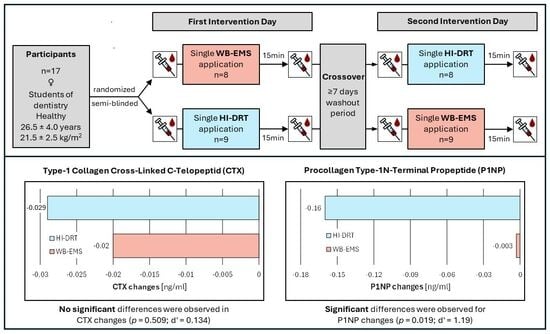
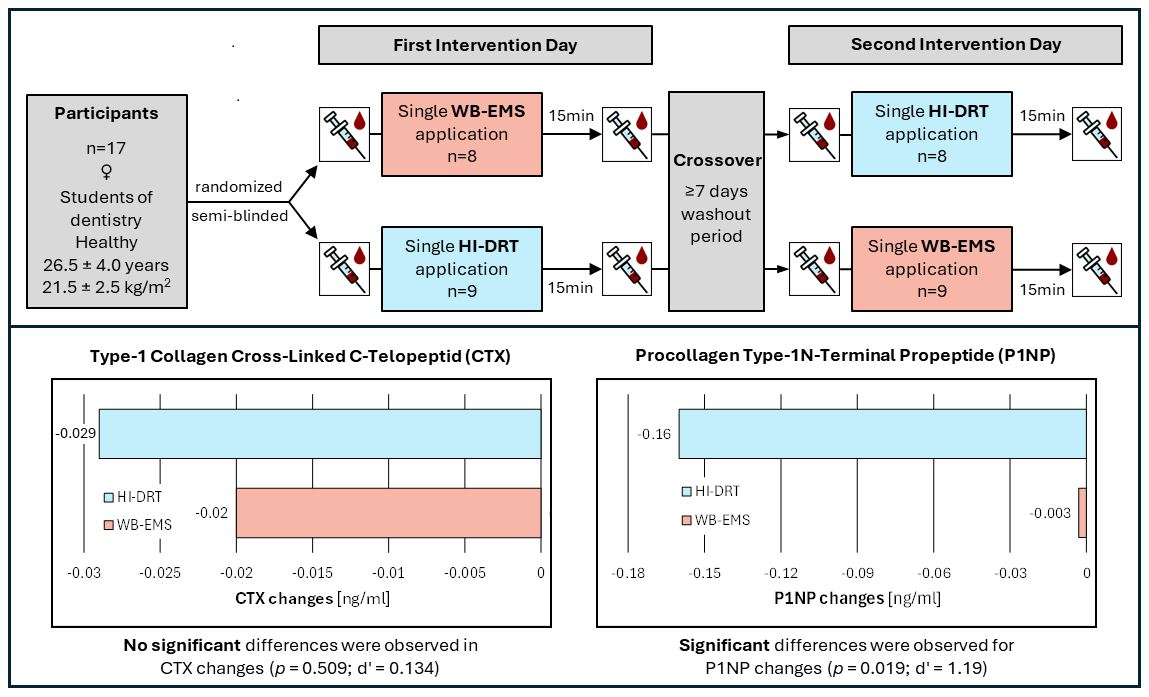
The present semi-blinded, randomized cross-over controlled trial focuses on the acute effects of time-effective exercise methods on bone metabolism. This study was conducted from March to April 2025 at the Institute of Radiology, University Hospital Erlangen, Germany. This study complied with the Declaration of Helsinki’s “Ethical Principles for Medical Research Involving Human Subjects” and was approved by the ethical committee of the FAU (No. 350_19 B; 29 June 2020). After detailed information, all participants gave their written informed consent. This study was fully registered at clinical trials.gov under NCT06813092 (06. February 2025). Importantly, no relevant changes after the start of the trial commencement, including any outcomes or analyses, were conducted. Figure 1 provides an overview of the study protocol with respect to the two study interventions.
Figure 1. Study design with respect to the implementation of the two study interventions. The colors illustrate the cross-over approach of the trial. The colors indicate the cross-over approach of the trial.

2.1. Participants

Participant recruitment was conducted from February to March 2025. Using personal contacts, eligible persons were contacted by the primary investigator (SaS) and informed, in detail, about the project. The following inclusion criteria were applied: (a) healthy women; (b) not older than 35 years; (c) students of dentistry in advanced studies (≥5th semester) or licensed dentists (up to 3 years after graduation); (d) no competitive exercise during the last 2 years; (e) no resistance exercise/weight training more than once a week during the last 6 months; (f) no WB-EMS during the past 6 months; and (g) regular body mass (BMI of 18.5 to 25 kg/m2). Exclusion criteria for participants were (a) acute illness, bacterial infections, inflammatory processes; (b) medication with relevant impact on bone metabolism (e.g., glucocorticoids); (c) pregnancy (d) recent surgery; and (e) (other) contraindications that prevent WB-EMS application according to current guidelines (e.g., atherosclerosis, arterial circulatory disorders, stents and bypasses < 6 months, untreated high blood pressure, electrical implants, cardiac pacemakers, cardiac arrythmia, neuronal diseases, epilepsy, severe sensitivity disorders, abdominal wall, and inguinal hernias, etc.). In summary, 17 young women were eligible willing to participate in this study and instructed by the principal investigator (SaS). They were informed by the principal investigator about the guidelines for conduct during the study in detail.

2.2. Randomization and Blinding

Randomization focused on the order of starting with the WB-EMS application or with the resistance exercise session. Briefly, participants were randomly organized into groups by an online random number generator (ChatGPT Version 3.5 from OpenAI, San Francisco, CA, USA; https://chatgpt.com/; access on 2 March 2025). Neither investigators nor participants were able to affect or know the group assignment in advance of the randomization (allocation concealment). Blinding refers to the research assistant who conducted the blood analyses and the statistician who analyzed the study data.

2.3. Main Outcomes

  • Differences in acute changes in total P1NP from baseline to 15 min post exercise between HI-DRT and WB-EMS.
  • Differences in acute changes in CTX from baseline to 15 min post exercise between HI-DRT and WB-EMS.

2.4. Assessments

We put remarkable emphasis on the standardization of the assessment and the intervention. All participants were requested to refrain from acute intense physical activity, exercise, alcohol, drugs, and other procedures which could potentially affect the testing procedure (e.g., sleep deprivation, severe energy restriction) at least 48 h prior to the intervention. At the same time, we requested that participants maintain the same physical activity, diet, and sleep habits before the two conditions.

2.4.1. Participant Characteristics

Height was determined by a stadiometer (Holtain Ltd., Crymmych, Wales, Great Britain), weight and body composition were assessed via multi-frequent bioelectrical impedance analysis (DSM-BIA, InBody770, BioSpace, Seoul, Korea).
A standardized questionnaire was used to ask for (a) demographic parameters; (b) reproductive health; (c) physical limitations, diseases, operations, pharmacologic therapy, and dietary supplements; and (d) lifestyle, including physical activity, exercise, and diet.

2.4.2. Bone Turnover Markers

Venous blood samples were taken 5 min prior to the interventions and 15 min after the exercise sessions by venipuncture of the antecubital vein into serum separator and EDTA-coated tubes (Sarstedt, Nürnbrecht, Germany). For P1NP measurement (ABIN6574243; sandwich ELISA; antibodies-online GmbH, Aachen, Germany), 100 µL samples were incubated in the ELISA plates at 37 °C for one hour. After discarding the samples, biotin-conjugated antibody was added and incubated for one hour at 37 °C. Unbound antibodies were removed via four washing steps.
For CTX measurement (ABIN6955117; competition ELISA; antibodies-online GmbH, Aachen, Germany), 50 µL samples were mixed with biotin-labeled target and incubated for one hour at 37 °C. Unbound residues were removed through four washes.
In detail, for both assays, Avidin-conjugated Horseradish Peroxidase (HRV) was incubated afterwards for an additional 30 min at 37 °C. After washing the wells, substrate was added, and measurements were conducted with a microplate reader at 450 nm ± 10 nm.

2.5. Study Intervention

The intervention was carried out at the end of March 2025. The participants performed the two conditions (one session of WB-EMS and one session of DRT) at the same time of the day (±30 min) on two days, with a break of 6 days between the tests. While nine participants started with the WB-EMS intervention, eight women started with DRT.

2.5.1. Whole-Body Electromyostimulation

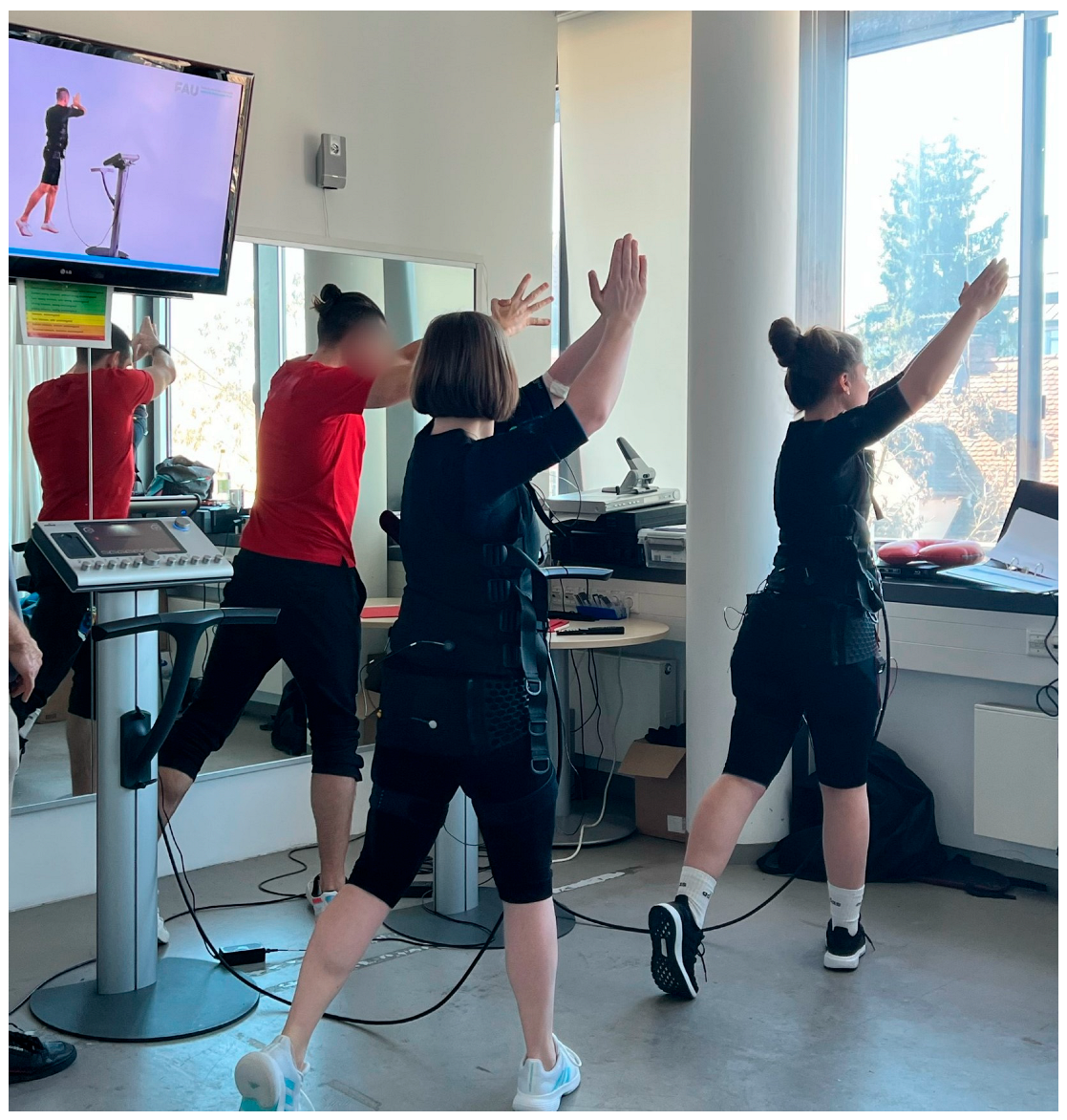
One week prior to the whole-body electromyostimulation intervention, we provided a 15–20 min conditioning session that focused on familiarization and impulse intensity using the same protocol compared to the subsequent WB-EMS intervention. The settings were saved on a chip card of the device (miha bodytec type II medical, Gersthofen, Germany) to enable a quick start at the beginning of the WB-EMS intervention. During the 20 min WB-EMS application, we applied a standard WB-EMS intervention with bipolar (biphasic) impulses, a frequency of 85 Hz, an impulse width of 350 µs, and an intermitted (rectangular) impulse pattern with 6 s of impulse and 4 s of impulse break. During the impulse phase, voluntary exercises were performed. Impulse intensity was individually adapted in close interaction between the participant and the experienced and licensed instructor. After 5 min of impulse familiarization, we aimed to generate a rate of perceived exertion (RPE) of 7 (“very hard”) on the Borg CR (Category Ratio Scale)-10 Scale [18]. Every 3 min impulse intensity was checked and increased (if necessary) to maintain the prescribed RPE during the session. During the impulse phases, six video-guided, low-intensity, low-amplitude exercises (half squat with latissimus pulleys, butterfly reverse, straight pullovers with trunk flexion, standing trunk flexion (crunch), one-legged stand with arm raises, sidestep with weight shift, and biceps curl), structured in 3 sets of 4–8 repetitions, were performed in a standing position (Figure 2). Participants were asked to perform the movements/exercises without relevant effort. After the exercise, the WB-EMS participants were asked to state their overall RPE during the session.
Figure 2. Video-guided WB-EMS-application with two instructors and two applicants.

2.5.2. High-Intensity Resistance Exercise

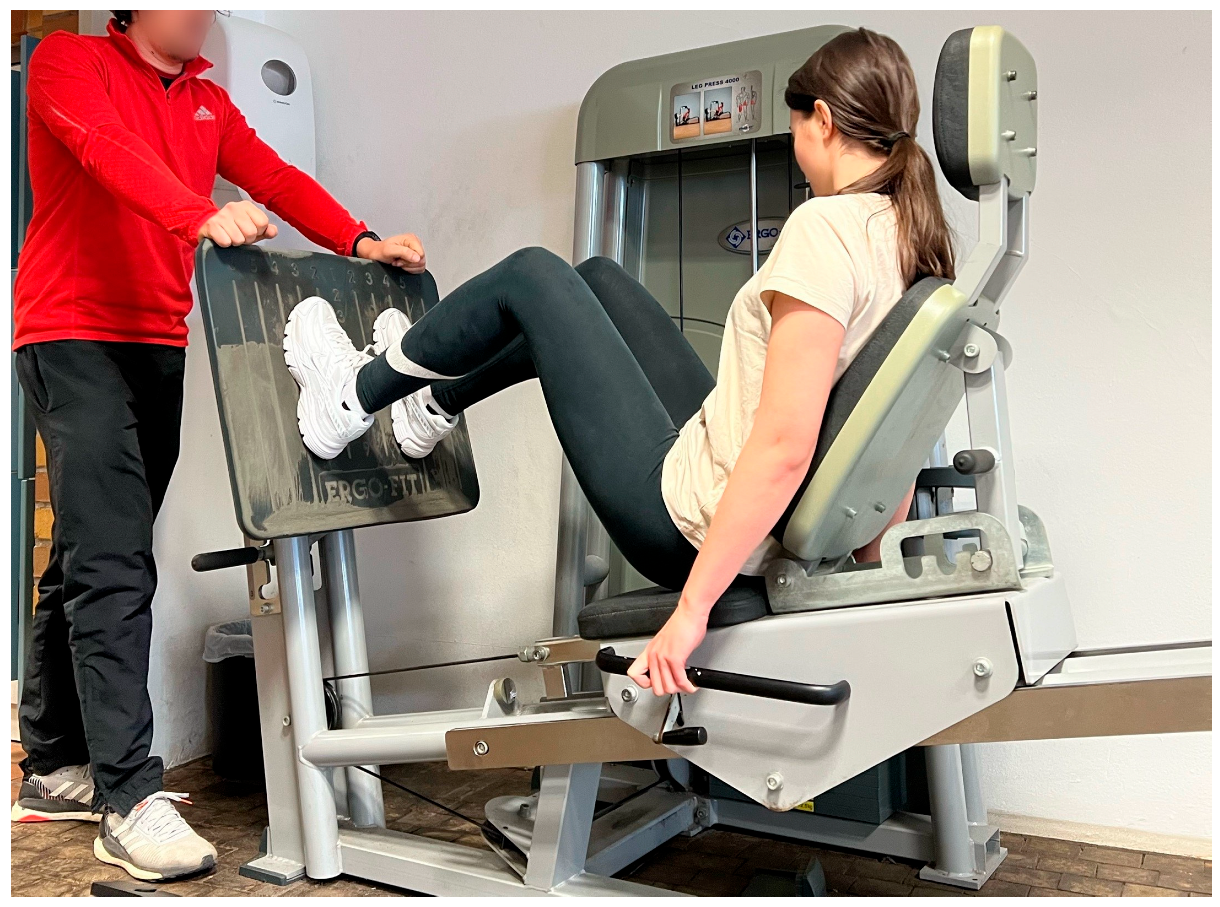
Parallel to WB-EMS, a familiarization session on resistance exercise was performed one week prior to the high-intensity resistance exercise session. Apart from a general introduction to the resistance training devices and instruction in the correct execution of the exercises, the 45 min introduction focuses on the assessment of the 1 repetition maximum (1RM) by repetitions-to-fatigue tests (RTF) in a range of 6–10 repetitions. We applied the KLW prediction equation that adequately predicts 1RM from RTF in this range. In summary, we scheduled five less complex exercises on resistance machines (Technogym, Gambettola, Italy): horizontal leg press (Figure 3), seated butterfly, wide grip latissimus pulleys, trunk flexion/seated trunk curl, and horizontal rowing. After a warm-up set at 70% 1RM to non-RM (e.g., 8–10 reps), two sets with 80% and 85% 1RM to failure were performed for all exercises. The session was closely monitored (1 participant: 1 instructor) by an experienced instructor who carefully guided and supervised the participants to perform to RM [19].Movement velocity was specified as follows: 2 s concentric, 1 s isometric, 2 s eccentric. The break between the sets averaged about 1:30 min. In parallel to WB-EMS, participants were asked immediately after the intervention to state their overall RPE during the resistance exercise session.
Figure 3. Video guided resistance training-application with one instructor and one applicant.
Notably, the same instructor who guided the WB-EMS and DRT familiarization session supported the participants during the study intervention.

2.6. Statistical Analysis

Sample size calculation was based on P1NP differences in exercise-induced intragroup changes. Briefly, 16 participants per condition were needed to determine an “effect” of 20% difference (SD: 20%), considered as clinically relevant in this context, applying a statistical power of 80%, an α-level of 5%, and an ANCOVA approach. We intended to apply an intention to treat approach; however, due to the fact that no participant was lost to follow-up and the full dataset was available in all cases, imputation of missing data was redundant. Data were analyzed using a linear mixed model ANCOVA that adjusted for baseline differences for CTX and P1NP using the statistical software package R [20]. We focused on the adjusted overall main difference between the two conditions (HI-DRT and WB-EMS) as the main outcome parameter. Model assumptions were checked using R package performance (Version 0.13.0, https://joss.theoj.org/papers/10.21105/joss.03139), including qq plots and residual plots. Subordinate within-group changes were analyzed using the t-test. All tests were 2-tailed. Significance was accepted at p < 0.05.

3. Results

3.1. Participant Characteristics

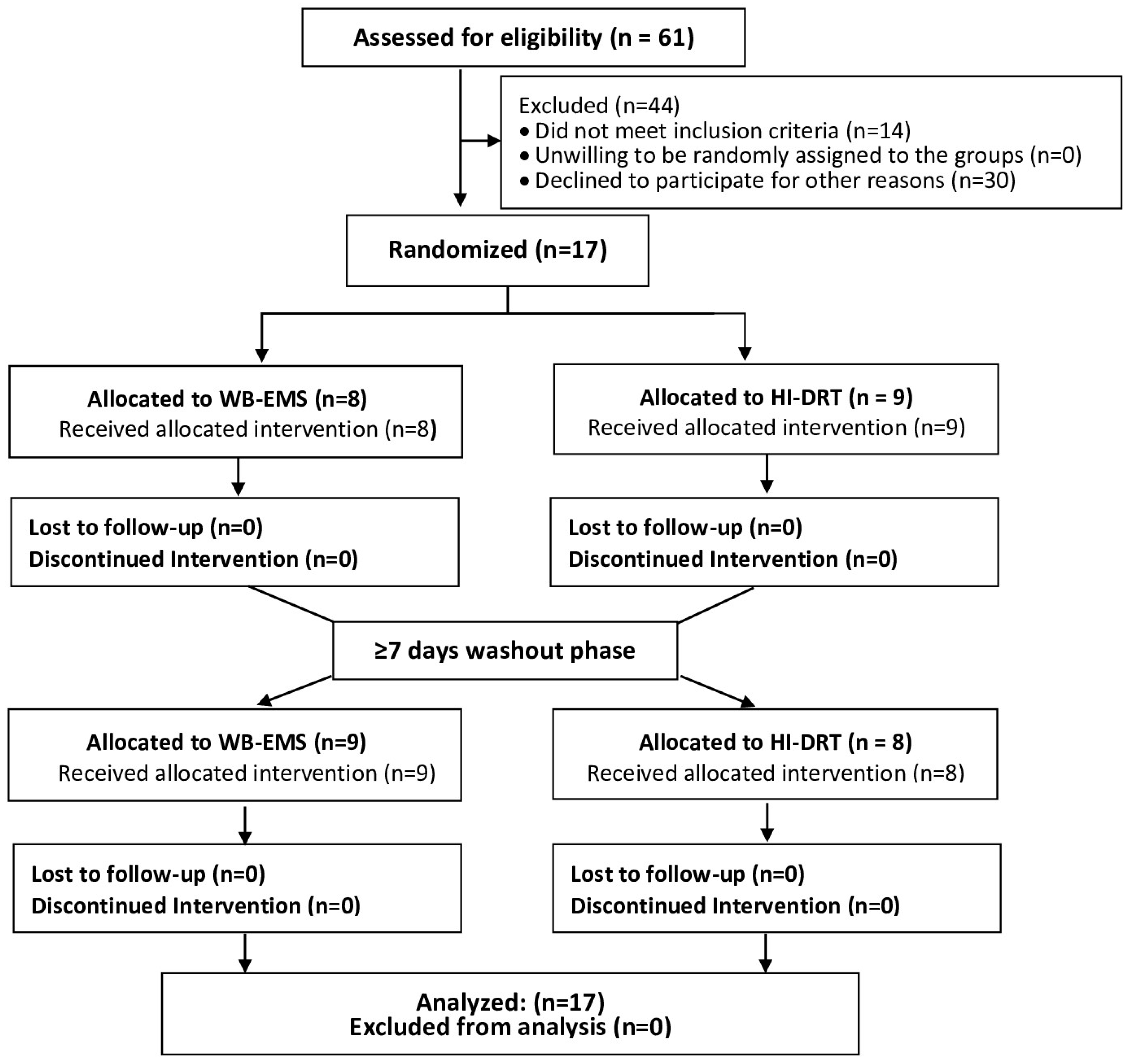
Figure 4 shows the participant flow for the study. In summary, no participant was lost to follow-up or withdrew from the study.
Figure 4. Flow chart of the present project [21].
Participant characteristics are listed in Table 1. Briefly, participant characteristics fully reflected inclusion eligibility criteria. Nevertheless, we observed a wide range particular for age, total body fat, and horizontal leg press performance. Although most of the women reported to exercise somehow, current participation in resistance type exercise was rare. However, most of the participants claimed to be experienced in RT on machines due to corresponding activity in the past. Only three participants reported experience with WB-EMS—albeit years ago. All of the women reported having had regular menstrual cycles over the past six months. One woman had given birth 20 months before the study.
Table 1. Baseline characteristics of the participants.

3.2. Intervention Characteristics

3.2.1. Compliance and Safety Aspects

As reported by the instructors who carefully guided and monitored the WB-EMS and HI-DRT sessions, all participants were fully compliant with the exercise test protocols. Apart from muscular soreness, no participants reported any unintended side effect or injury during or after the training session.

3.2.2. Perceived Exertion, Exercise Intensity

No significant differences (p = 0.311) between the groups were observed for the rate of perceived exertion (RT: 7.1 ± 0.5 vs. WB-EMS: 6.9 ± 0.5 at CR 10 [22]). The number of repetitions for the 80% (e.g., 11.1 ± 1.6 reps for horizontal leg press) and 85% 1RM trials (e.g., 8.8 ± 1.4 reps for horizontal leg press) indicates the successful implementation of a set endpoint at least close to repetition maximum [19].

3.3. Study Outcomes

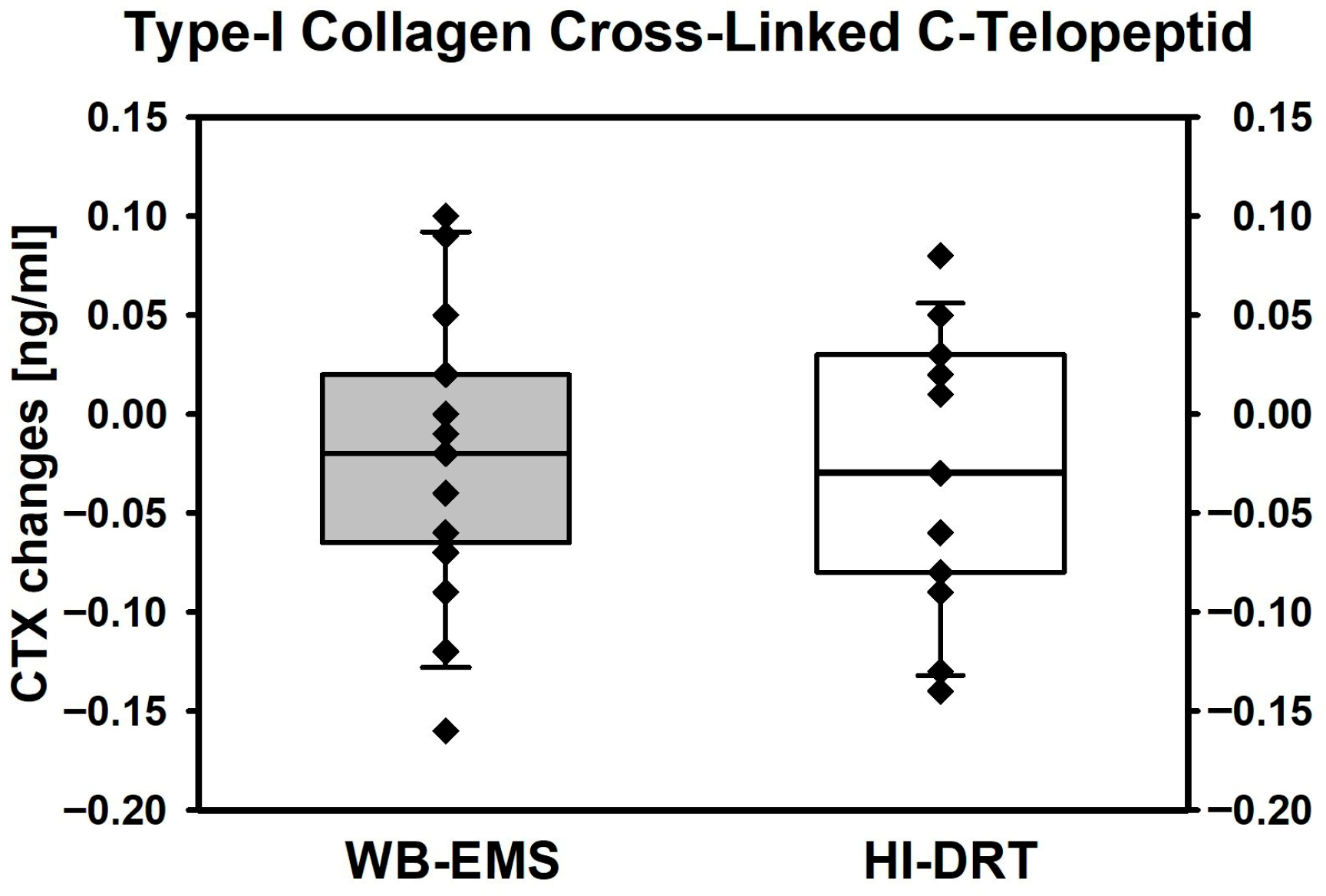
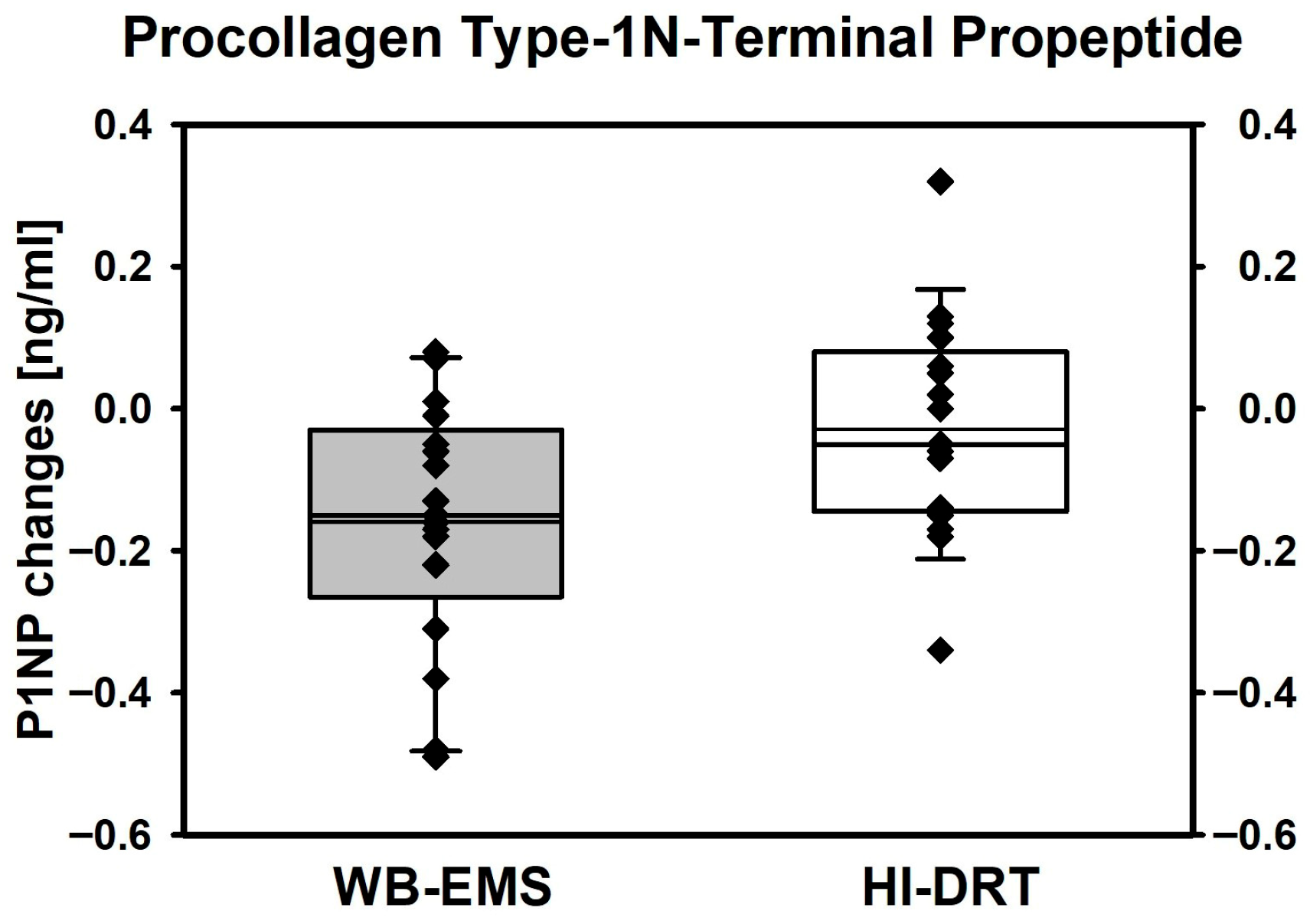
Figure 5 and Figure 6 show individual changes and box plots of acute CTX and P1NP changes in the WB-EMS and HI-DRT group.
Figure 5. Individual changes and box plots of acute CTX changes.
Figure 6. Individual changes and box plots of acute P1NP changes.
Briefly, no significant differences in acute changes in the bone resorption marker CTX between HI-DRT and WB-EMS were observed (p = 0.509; d′ = 0.134) (Figure 5 and Figure 6). In detail, CTX non-significantly decreased in the HI-DRT (p = 0.091) and WB-EMS-group (p = 0.244). By contrast, we observed significant differences (p = 0.019, d′ = 1.19) for acute changes in the bone formation marker P1NP that remained stable in the HI-DRT (p = 0.446) and significantly decreased in the WB-EMS group (p = 0.002) (Figure 5 and Figure 6). Of note, acute changes in P1NP and CTX were homogeneous in both groups (Table 2, Figure 5 and Figure 6).
Table 2. Baseline data and data on acute changes in bone resorption and bone formation markers in the HI-DRT and WB-EMS groups, with corresponding differences between the two groups. MV: mean value; SD: standard deviation; 95%-CI: 95% confidence interval. N = 17 per group for both outcomes.
In summary, we were able to confirm our working hypothesis of more favorable acute effects of HI-DRT vs. WB-EMS on (a) bone formation, as determined by P1NP, but have to reject our working hypothesis (b), which assumed a corresponding effect of superior impacts of HI-DRT on bone resorption surrogates, as determined by CTX.

3.4. Confounders

Upon request, the subjects stated that they kept their activity, nutrition, or sleep pat-tern stable prior to the two tests (WB-EMS, HI-DRT). Other confounders that might have affected our results (e.g., drugs, medication, illness) were not reported.

4. Discussion

This randomized controlled cross-over trial compared the acute effects of two time-effective exercise methods on bone turnover markers with the intention to estimate their potential relevance as surrogates in long-term interventions for BMD increase in young women. Although there has been no comparative study focusing on this issue so far, we expected more favorable results for HI-DRT compared to WB-EMS based on individual study results [7,23,24].
Summarizing our main outcomes, we observed a significantly more favorable acute effect of HI-DRT (vs. WB-EMS) on P1NP (p = 0.019), i.e., bone formation, while no significant differences between HI-DRT and WB-EMS for changes in the bone resorption marker CTX (p = 0.509) were determined. In detail, CTX non-significantly decreased similarly in both groups (Table 2); while in contrast, the bone formation marker P1NP was significantly reduced in the WB-EMS group, whereas no relevant changes were observed in the HI-DRT group (Table 2). Nevertheless, our results widely confirmed our working hypotheses of more favorable effects of HI-DRT vs. WB-EMS on bone turnover markers. However, when taking the direction of changes into account, the interpretation of our findings becomes more challenging. While bone resorption (non-significantly) decreased in both groups, the significant decrease in P1NP in the WB-EMS group was surprising at first. However, the clinical relevance of this −2.4% decrease in P1NP is debatable. Nevertheless, one might argue that both interventions are unable to positively affect bone formation—albeit HI-DRT is the less “harmful” option. However, this view conflicts with clinical studies that observed positive effects on BMD compared to non-training control groups after HI-DRT [24] and WB-EMS [7]. Thus, although these finding do not refer to young women, it is hardly imaginable that WB-EMS-application might result in negative effects on bone turnover. In a study on healthy young participants, Koltun et al. [17] reported effects on CTX kinetics after a single session of HI-DRT that are widely comparable with the present study. In contrast to the present findings, the authors observed positive effects on acute PINP-changes, with significantly higher increases in men compared to women. Of note, after 12 weeks of concurrent resistance and interval training (3 × 60–90 min/week), acute PINP-changes after a single HI-DRT session were less pronounced compared to the initial test.
Reviewing the literature on the acute effects of exercise on bone turnover markers provides conflicting results. After a systematic review and meta-analysis, Dolan et al. [14] summarized that markers of bone resorption and formation seem to be less responsive to high-impact and high-resistance exercise, i.e., training contents with proven osteogenic effects [9,25]. By contrast, in their systematic review (13 RCTs), Smith et al. [15] cited two studies with middle-aged-to-older women reporting significant effects on P1NP or CTX immediately after strength/power training. Prawiradilaga et al. [26] observed increases in P1NP without changes in CTX after power training (i.e., jumping variations vs. inactive controls), while the resistance exercise approach of Gombos et al. [27] resulted in significant reductions in CTX compared to inactive controls or a walking group. Thus, there is at least some evidence for the positive effects of resistance-type exercise on acute changes in bone turnover markers in (older) women. However, following the suggestion of Smith et al. [15] that bone turnover response to acute exercise appears not only to be exercise- and sex-specific but also age-specific, the generalization of the above listed findings on a young female cohort is limited.
The issue of the predictive relevance of acute changes in bone turnover markers induced by exercise for long-term changes in BMD remains challenging, particularly in young, menstruating women. Although not relevant for the present study, but nonetheless representative of the uncertainty of how to interpret acute changes in bone markers, Dolan et al. [14] raised the question of whether acute increases in CTX, i.e., bone resorption, should be considered (a) as an early indicator for a bone remodeling cycle [28,29] that finally triggers the positive adaptation of bone strength or (b) indicates longer periods of bone resorption, resulting in bone loss and reduced bone strength. The authors reviewed several studies that observed very pronounced acute increases in CTX in frequently undertaken cycling exercise [30,31,32], an exercise type known to trigger neutral or rather negative effects on BMD—at least in athletic cohorts [33,34]. In parallel, very pronounced acute decreases in CTX were reported after DRT (though not walking) [27]—a type of exercise usually considered osteoanabolic. Thus, evidence for acute exercise-induced CTX increases as early indicators of remodeling-cycles are weak. Acute postexercise increases in P1NP might be interpreted as an indicator for bone modeling, i.e., bone formation without previous resorption [35]. However, although P1NP is a potent marker of type 1 collagen synthesis and deposition and reflects the rate of new bone formation [36], it is rather unlikely that collagen synthesis and particular deposition already occurred during the short period of exercise-induced raises in P1NP, with their peak immediately after exercise and a rapid return to baseline values [14]. Thus, similarly to CTX, the clinical significance of the acute changes in P1NP after HI-DRT or WB-EMS remains vague.
Some features and study limitations should be addressed to allow the reader to more accurately assess our results. (a) First, we examined the acute effects of two different exercise interventions on reliable markers of bone resorption and formation. It is important to note that the present study did not provide longitudinal exercise-induced changes in bone turnover markers that could be linked to reliable markers of bone accrual (e.g., BMD). (b) We focus on a rather homogeneous cohort of young female students of dentistry and early graduates—a cohort with validated reduction in BMD at the lumbar spine and femoral neck during their third decade of life [1]. Although this cohort is of clinical relevance, the generalizability of our finding to other cohorts is limited [15]. While there is some evidence that these results will be applicable to other young female cohorts experiencing early bone loss due to inadequate exercise, we acknowledge that our findings are not generalizable to male cohorts [17] or other groups of young people with normal bone accrual. (c) Blood was drawn immediately prior to and 15 min after the exercise interventions. This approach is based on data that CTX response peaked within 15 min and 2 h after the exercise bout [14]. The optimal time for P1NP sampling is not definitively established. However, increases were shown within 15 min after cessation of exercise [14]. Nevertheless, longer and more frequent sampling (e.g., each 15 min for 2 h) might have resulted in more pronounced changes, although differences between the groups, as the overall study outcome, should not have been affected. (d) We did not schedule an overnight fast, as recommended for CTX sampling [36,37] due to the international guideline on WB-EMS application that strictly advises against training in a fasting state. According to the guidelines, participants were asked to consume a carbohydrate-rich meal or snack (250–300 kcal) 2–3 h before the intervention and to drink 500 mL of water 1–2 h beforehand. The same procedure was specified prior to the DRT intervention. (e) Apart from variations in fasting/feeding status, one might argue that variations in menstrual cycles or circadian rhythms could have confounded our results [37]. However, first, all women reported regular menstrual cycles for the last 6 months. Furthermore, given the randomized and balanced allocation to begin with either WB-EMS or DRT, and the fact that both tests were conducted within seven days at the same time of day (±30 min), we believe that these two sources of CTX/P1NP variability [37] did not relevantly affect our results. (f) We abstained from a “single set (exercise) to muscular failure approach” usually subsumed under the term “high-intensity resistance exercise training” (HIT-RT, [5]). Due to the less advanced training status of the participants, we focus on a few, safe exercises conducted in a multiple-set mode and used the RM as the set endpoint [19]. Addressing our WB-EMS protocol, we have to admit that our approach to realizing a similarly high exercise intensity compared to HI-DRT was not fully in line with the above-mentioned guideline that advises against high impulse intensity in novice applicants. However, considering that only healthy young women were included, and that all sessions (WB-EMS and HI-DRT) were strictly medically supervised, we assessed the likelihood of adverse effects to be minimal. (g) We did not adjust for multiple testing. Considering within-group pre–post changes as explanatory outcomes that did not necessarily need to be adjusted for multiple testing [38], we agreed that group differences for P1NP and CTX changes—i.e., the two equally ranked main outcomes—should be adjusted for multiple testing to avoid overall type I errors. However, since only two tests were involved, even when applying the “overly conservative” Bonferroni method [38,39], group differences for P1NP remained statistically significant.

5. Conclusions

The present study provides new data on acute bone turnover changes after the application of two different types of exercise, HI-DRT and WB-EMS, in young cohorts at risk of early loss of bone mass. Our results indicate the superiority of HI-DRT over WB-EMS due to significantly more favorable acute changes in bone formation. We think that this finding predominately suggests that the higher mechanical strain induced by voluntary loading during HI-DRT (despite a lack of impact) is a relevant trigger for an adaptive response of bones to exercise. By contrast, the joint-friendly WB-EMS, which is not relevantly superimposed by external loading, is less promising in addressing bone turnover compared to HI-DRT due to the lower mechanical stress. Addressing the clinical significance and practical implications of our findings to identify effective exercise methods remains to be elucidated. This refers, in particular, to the limited evidence of acute biomarker changes successfully predicting long-term BMD changes. Nevertheless, in regarding bone turnover markers as reliable predictors of acute bone formation or resorption, evaluating such markers may at least indicate the general osteoanabolic potential of the given intervention.

Author Contributions

Conceptualization, S.S., R.K., S.v.S. and W.K.; methodology, S.S., R.K., M.K., and W.K.; software, M.K., S.v.S. and W.K.; validation, S.S., R.K., M.K., B.O.-P., M.U. and W.K.; formal analysis, R.K. and M.K.; investigation, S.S., R.K. and W.K.; resources, R.K., M.U. and W.K.; data curation, S.S., R.K. and W.K.; writing—original draft preparation, S.S., R.K., S.v.S., B.O.-P., M.U. and W.K.; writing—review and editing, S.S., R.K., M.K., S.v.S., B.O.-P., M.U. and W.K.; visualization, M.K.; supervision, S.S. and W.K.; project administration, S.S., R.K. and W.K.; funding acquisition, R.K., M.U. and W.K. All authors agreed to be accountable for all aspects of the work in ensuring that questions related to the accuracy or integrity of any part of the work are appropriately investigated and resolved. All authors have read and agreed to the published version of the manuscript.

Funding

This research received no external funding.

Institutional Review Board Statement

This study was conducted in accordance with the Declaration of Helsinki, and approved by the Ethics Committee of the Medical Faculty of the Friedrich-Alexander-University of Erlangen-Nürnberg (No. 350_19 B, 29 June 2020) for studies involving humans.

Data Availability Statement

The original contributions presented in this study are included in the article. Further inquiries can be directed to the corresponding author.

Conflicts of Interest

The authors declare no conflicts of interest.

Abbreviations

The following abbreviations are used in this manuscript:
1RMOne Repetition Maximum
95%-CI95% Confidence Interval
BMDBone Mineral Density
BMIBody Mass Index
CR-10 scaleCategory Ratio Scale 10
CTXType-I Collagen Cross-Linked C-Telopeptide
DSM-BIADirect Segmental Multi-Frequent Bioelectrical Impedance Analysis
EDTAEthylenediamine Tetra-acetic Acid
ELISAEnzyme-Linked Immunosorbent Assay
HI-DRTHigh-Intensity Dynamic Resistance Exercise Training
MVMean Value
P1NPProcollagen Type-1 N-Terminal Propeptide
RCTRandomized Controlled Trial
RMRepetition Maximum
RPERate of Perceived Exertion
RTFRepetitions to Fatigue
SDStandard Deviation
WB-EMSWhole-Body Electromyostimulation

References

  1. Kemmler, W.; Bebenek, M.; von Stengel, S.; Bauer, J. Peak-bone-mass development in young adults: Effects of study program related levels of occupational and leisure time physical activity and exercise. A prospective 5-year study. Osteoporos. Int. 2015, 26, 653–662. [Google Scholar] [CrossRef]
  2. Lin, Y.C.; Lyle, R.M.; Weaver, C.M.; McCabe, L.D.; McCabe, G.P.; Johnston, C.C.; Teegarden, D. Peak spine and femoral neck bone mass in young women. Bone 2003, 32, 546–553. [Google Scholar] [CrossRef] [PubMed]
  3. Berger, C.; Goltzman, D.; Langsetmo, L.; Joseph, L.; Jackson, S.; Kreiger, N.; Tenenhouse, A.; Davison, K.S.; Josse, R.G.; Prior, J.C.; et al. Peak bone mass from longitudinal data: Implications for the prevalence, pathophysiology, and diagnosis of osteoporosis. J. Bone Miner. Res. 2010, 25, 1948–1957. [Google Scholar] [CrossRef]
  4. Hereford, T.; Kellish, A.; Samora, J.B.; Reid Nichols, L. Understanding the importance of peak bone mass. J. Pediatr. Soc. N. Am. 2024, 7, 100031. [Google Scholar] [CrossRef]
  5. Gießing, J. HIT-Hochintensitätstraining; Novagenics-Verlag: Arnsberg, Germany, 2008. [Google Scholar]
  6. Kemmler, W.; Teschler, M.; Weissenfels, A.; Bebenek, M.; Frohlich, M.; Kohl, M.; von Stengel, S. Effects of Whole-Body Electromyostimulation versus High-Intensity Resistance Exercise on Body Composition and Strength: A Randomized Controlled Study. Evid. Based Complement. Alternat Med. 2016, 2016, 9236809. [Google Scholar] [CrossRef]
  7. von Stengel, S.; Bebenek, M.; Engelke, K.; Kemmler, W. Whole-Body Electromyostimulation to Fight Osteopenia in Elderly Females: The Randomized Controlled Training and Electrostimulation Trial (TEST-III). J. Osteoporos. 2015, 2015, 643520. [Google Scholar] [CrossRef] [PubMed]
  8. Qin, Y.X.; Lam, H.; Ferreri, S.; Rubin, C. Dynamic skeletal muscle stimulation and its potential in bone adaptation. J. Musculoskelet. Neuronal Interact. 2010, 10, 12–24. [Google Scholar]
  9. Beck, B.R.; Daly, R.M.; Singh, M.A.; Taaffe, D.R. Exercise and Sports Science Australia (ESSA) position statement on exercise prescription for the prevention and management of osteoporosis. J. Sci. Med. Sport. 2016, 20, 438–445. [Google Scholar] [CrossRef]
  10. Kemmler, W.; Kohl, M.; Jakob, F.; Engelke, K.; von Stengel, S. Effects of High Intensity Dynamic Resistance Exercise and Whey Protein Supplements on Osteosarcopenia in Older Men with Low Bone and Muscle Mass. Final Results of the Randomized Controlled FrOST Study. Nutrients 2020, 12, 2341. [Google Scholar] [CrossRef]
  11. Kemmler, W.; von Stengel, S.; Kohl, M. Exercise frequency and bone mineral density development in exercising postmenopausal osteopenic women. Is there a critical dose of exercise for affecting bone? Results of the Erlangen Fitness and Osteoporosis Prevention Study. Bone 2016, 89, 1–6. [Google Scholar] [CrossRef] [PubMed]
  12. Zitzmann, A.L.; Shojaa, M.; Kast, S.; Kohl, M.; von Stengel, S.; Borucki, D.; Gosch, M.; Jakob, F.; Kerschan-Schindl, K.; Kladny, B.; et al. The effect of different training frequency on bone mineral density in older adults. A comparative systematic review and meta-analysis. Bone 2022, 154, 116230. [Google Scholar] [CrossRef] [PubMed]
  13. Eriksen, E.F. Cellular mechanisms of bone remodeling. Rev. Endocr. Metab. Disord. 2010, 11, 219–227. [Google Scholar] [CrossRef] [PubMed]
  14. Dolan, E.; Dumas, A.; Keane, K.M.; Bestetti, G.; Freitas, L.H.M.; Gualano, B.; Kohrt, W.M.; Kelley, G.A.; Pereira, R.M.R.; Sale, C.; et al. The Bone Biomarker Response to an Acute Bout of Exercise: A Systematic Review with Meta-Analysis. Sports Med. 2022, 52, 2889–2908. [Google Scholar] [CrossRef]
  15. Smith, C.; Tacey, A.; Mesinovic, J.; Scott, D.; Lin, X.; Brennan-Speranza, T.C.; Lewis, J.R.; Duque, G.; Levinger, I. The effects of acute exercise on bone turnover markers in middle-aged and older adults: A systematic review. Bone 2021, 143, 115766. [Google Scholar] [CrossRef]
  16. Kovárová, J.; Hamar, D.; Sedliak, M.; Cvecka, J.; Schickhofer, P.; Bohmerova, L. Acute response of bone metabolism to various resistance exercises in women. Acta Fac. Educ. Phys. Univ. Comen. 2015, 55, 11–19. [Google Scholar] [CrossRef]
  17. Koltun, K.J.; Sterczala, A.J.; Sekel, N.M.; Krajewski, K.T.; Martin, B.J.; Lovalekar, M.; Connaboy, C.; Flanagan, S.D.; Wardle, S.L.; O’Leary, T.J.; et al. Effect of acute resistance exercise on bone turnover in young adults before and after concurrent resistance and interval training. Physiol. Rep. 2024, 12, e15906. [Google Scholar] [CrossRef] [PubMed]
  18. Borg, E.; Kaijser, L. A comparison between three rating scales for perceived exertion and two different work tests. Scand. J. Med. Sci. Sports 2006, 16, 57–69. [Google Scholar] [CrossRef]
  19. Steele, J.; Fisher, J.; Giessing, J.; Gentil, P. Clarity in Reporting Terminology and Definitions of Set End Points in Resistance Training. Muscle Nerve 2017, 10, 368–374. [Google Scholar] [CrossRef]
  20. R_Development_Core_Team. R: A Language and Environment for Statistical Computing; R Foundation for Statistical Computing: Vienna, Austria, 2025. [Google Scholar]
  21. Dwan, K.; Li, T.; Altman, D.G.; Elbourne, D. CONSORT 2010 statement: Extension to randomised crossover trials. BMJ 2019, 366, l4378. [Google Scholar] [CrossRef]
  22. Borg, G. The Borg CR Scales® Folder; Perception, B., Ed.; Hasselby: Stockholm, Sweden, 2010. [Google Scholar]
  23. Kitsuda, Y.; Wada, T.; Noma, H.; Osaki, M.; Hagino, H. Impact of high-load resistance training on bone mineral density in osteoporosis and osteopenia: A meta-analysis. J. Bone Miner. Metab. 2021, 39, 787–803. [Google Scholar] [CrossRef]
  24. Martyn-St. James, M.; Caroll, S. High intensity resistance training and postmenopausal bone loss: A meta-analysis. Osteoporos. Int. 2006, 17, 1225–1240. [Google Scholar]
  25. Daly, R.M.; Dalla Via, J.; Duckham, R.L.; Fraser, S.F.; Helge, E.W. Exercise for the prevention of osteoporosis in postmenopausal women: An evidence-based guide to the optimal prescription. Braz. J. Phys. Ther. 2019, 23, 170–180. [Google Scholar] [CrossRef] [PubMed]
  26. Prawiradilaga, R.S.; Madsen, A.O.; Jorgensen, N.R.; Helge, E.W. Acute response of biochemical bone turnover markers and the associated ground reaction forces to high-impact exercise in postmenopausal women. Biol. Sport. 2020, 37, 41–48. [Google Scholar] [CrossRef]
  27. Gombos, G.C.; Bajsz, V.; Pek, E.; Schmidt, B.; Sio, E.; Molics, B.; Betlehem, J. Direct effects of physical training on markers of bone metabolism and serum sclerostin concentrations in older adults with low bone mass. BMC Musculoskelet. Disord. 2016, 17, 254. [Google Scholar] [CrossRef] [PubMed]
  28. Erben, R.G. Hypothesis: Coupling between Resorption and Formation in Cancellous bone Remodeling is a Mechanically Controlled Event. Front. Endocrinol. 2015, 6, 82. [Google Scholar] [CrossRef]
  29. Robling, A.G.; Turner, C.H. Mechanical signaling for bone modeling and remodeling. Crit. Rev. Eukaryot. Gene Expr. 2009, 19, 319–338. [Google Scholar] [CrossRef]
  30. Sherk, V.D.; Wherry, S.J.; Barry, D.W.; Shea, K.L.; Wolfe, P.; Kohrt, W.M. Calcium Supplementation Attenuates Disruptions in Calcium Homeostasis during Exercise. Med. Sci. Sports Exerc. 2017, 49, 1437–1442. [Google Scholar] [CrossRef] [PubMed]
  31. Kohrt, W.M.; Wolfe, P.; Sherk, V.D.; Wherry, S.J.; Wellington, T.; Melanson, E.L.; Swanson, C.M.; Weaver, C.M.; Boxer, R.S. Dermal Calcium Loss Is Not the Primary Determinant of Parathyroid Hormone Secretion during Exercise. Med. Sci. Sports Exerc. 2019, 51, 2117–2124. [Google Scholar] [CrossRef]
  32. Guillemant, J.; Accarie, C.; Peres, G.; Guillemant, S. Acute effects of an oral calcium load on markers of bone metabolism during endurance cycling exercise in male athletes. Calcif. Tissue Int. 2004, 74, 407–414. [Google Scholar] [CrossRef]
  33. Nagle, K.B.; Brooks, M.A. A Systematic Review of Bone Health in Cyclists. Sports Health 2011, 3, 235–243. [Google Scholar] [CrossRef]
  34. Olmedillas, H.; Gonzalez-Aguero, A.; Moreno, L.A.; Casajus, J.A.; Vicente-Rodriguez, G. Cycling and bone health: A systematic review. BMC Med. 2012, 10, 168. [Google Scholar] [CrossRef]
  35. Seeman, E. Bone modeling and remodeling. Crit. Rev. Eukaryot. Gene Expr. 2009, 19, 219–233. [Google Scholar] [CrossRef]
  36. Szulc, P.; Naylor, K.; Hoyle, N.R.; Eastell, R.; Leary, E.T.; National Bone Health Alliance Bone Turnover Marker Project. Use of CTX-I and PINP as bone turnover markers: National Bone Health Alliance recommendations to standardize sample handling and patient preparation to reduce pre-analytical variability. Osteoporos. Int. 2017, 28, 2541–2556. [Google Scholar] [CrossRef]
  37. Schini, M.; Vilaca, T.; Gossiel, F.; Salam, S.; Eastell, R. Bone Turnover Markers: Basic Biology to Clinical Applications. Endocr. Rev. 2023, 44, 417–473. [Google Scholar] [CrossRef] [PubMed]
  38. Li, G.; Taljaard, M.; Van den Heuvel, E.R.; Levine, M.A.; Cook, D.J.; Wells, G.A.; Devereaux, P.J.; Thabane, L. An introduction to multiplicity issues in clinical trials: The what, why, when and how. Int. J. Epidemiol. 2017, 46, 746–755. [Google Scholar] [CrossRef] [PubMed]
  39. Perneger, T.V. What’s wrong with Bonferroni adjustments. BMJ 1998, 316, 1236–1238. [Google Scholar] [CrossRef] [PubMed]
Disclaimer/Publisher’s Note: The statements, opinions and data contained in all publications are solely those of the individual author(s) and contributor(s) and not of MDPI and/or the editor(s). MDPI and/or the editor(s) disclaim responsibility for any injury to people or property resulting from any ideas, methods, instructions or products referred to in the content.

Article Metrics

Citations

Article Access Statistics

Multiple requests from the same IP address are counted as one view.