



Next Issue
Volume 6, December
Previous Issue
Volume 6, June


Epidemiologia, Volume 6, Issue 3 (September 2025) – 28 articles
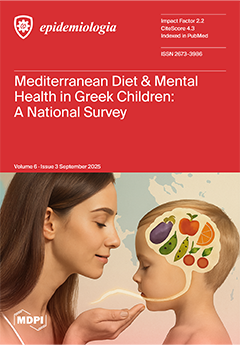
Cover Story (view full-size image): This nationwide survey explores how sociodemographic, maternal, and lifestyle factors influence children's adherence to the Mediterranean diet. Outcomes of this study involving 4851 children aged 6–9 revealed that maternal education, breastfeeding, and physical activity promote healthier eating, while cesarean delivery and higher birth weight are linked to lower adherence. Notably, better diet quality correlates with fewer depressive and anxiety symptoms, underscoring the Mediterranean diet’s potential role in childhood mental health. View this paper
  • Issues are regarded as officially published after their release is announced to the table of contents alert mailing list.
  • You may sign up for e-mail alerts to receive table of contents of newly released issues.
  • PDF is the official format for papers published in both, html and pdf forms. To view the papers in pdf format, click on the "PDF Full-text" link, and use the free Adobe Reader to open them.
Order results
Result details
Section
Select all
Export citation of selected articles as:
37 pages, 8612 KB  
Systematic Review
Social Determinants of Health in Pediatric Asthma and Allergic Diseases: A Systematic Review
by Despoina Koumpagioti, Dafni Moriki, Barbara Boutopoulou, Pantelis Perdikaris and Konstantinos Douros
Epidemiologia 2025, 6(3), 56; https://doi.org/10.3390/epidemiologia6030056 - 11 Sep 2025
Viewed by 2401
Abstract
Objectives: This study aimed to synthesize evidence of the influence of multilevel social determinants of health (SDOHs) on asthma and allergic disease outcomes and healthcare utilization in children and adolescents, with a specific focus on how these determinants generate or widen health inequities, [...] Read more.
Objectives: This study aimed to synthesize evidence of the influence of multilevel social determinants of health (SDOHs) on asthma and allergic disease outcomes and healthcare utilization in children and adolescents, with a specific focus on how these determinants generate or widen health inequities, through a systematic review of the current literature and evidence. Methods: A literature search was performed in the PubMed, EBSCO, and Scopus databases. The search period for all databases was from 1 January 2020 to 15 January 2025. Studies published in English that evaluated the association between at least one SDOH, as a primary exposure or effect modifier, and asthma and/or allergic disease outcomes and healthcare utilization in children and adolescents aged ≤ 18 years were included. A narrative synthesis was conducted to systematically explore and compare findings across studies, grouped by SDOH domains and disease outcomes. The grouping of SDOH domains was based on the framework established by the Healthy People 2030 Initiative. The selected studies underwent a quality assessment. Results: After the eligibility assessment, 44 studies were included in this review. Regarding study design, twenty-one studies were cohort, followed by eighteen cross-sectional, three ecological, and two case-crossover studies. Disease outcomes covered incidence, severity/exacerbations, lung function, and healthcare use in asthma, and analogous measures also reported for atopic dermatitis, allergic rhinitis, and food allergy. The most frequently studied domain of SDOHs was Neighborhood and Built Environment (n = 26), followed by Economic Stability (n = 24), Social and Community Context (n = 21), Healthcare Access and Quality (n = 12), and Education Access and Stability (n = 10). The vast majority of studies (n = 31) found positive associations between the examined SDOH factors and asthma and/or allergic disease outcomes and healthcare utilization. The most frequently evaluated SDOH with positive associations were neighborhood and residential conditions (n = 10), discrimination (n = 8), parental education (n = 7), housing quality (n = 6), air pollution (n = 6), and household income (n = 5). Risk-of-bias appraisal showed that the evidence base was largely at low risk, with most cohort, cross-sectional, ecological and case-crossover studies rated good quality, and only a few cohort studies classified as fair because of limitations in exposure assessment and residual confounding control. Conclusions: These findings highlight the urgent need for coordinated interventions and policies addressing social, environmental, and economic factors to reduce health disparities and improve outcomes for vulnerable children, while stressing the importance of interventional studies to provide stronger evidence. Full article
Show Figures

Figure 1

12 pages, 462 KB  
Article
Prescription Patterns of Sacubitril/Valsartan in an Outpatient Population Diagnosed with Heart Failure with Reduced Ejection Fraction After a Recent Hospitalization
by Dimitri Roustan, Hugo Bothorel and Omar Kherad
Epidemiologia 2025, 6(3), 55; https://doi.org/10.3390/epidemiologia6030055 - 5 Sep 2025
Viewed by 1872
Abstract
Background: Sacubitril/Valsartan is a first-line treatment for heart failure with reduced ejection fraction (HFrEF) according to international guidelines. However, achieving the target doses of guideline-directed medical therapy (GDMT) remains a challenge in clinical practice and its efficacy at suboptimal dose (<200 mg/day) [...] Read more.
Background: Sacubitril/Valsartan is a first-line treatment for heart failure with reduced ejection fraction (HFrEF) according to international guidelines. However, achieving the target doses of guideline-directed medical therapy (GDMT) remains a challenge in clinical practice and its efficacy at suboptimal dose (<200 mg/day) versus angiotensin-converting enzyme (ACE) inhibitors remains debated. Our objective was to evaluate the titration of Sacubitril/Valsartan within 3 months of hospital discharge in patients with HFrEF. Methods: A cross-sectional study was conducted in a secondary care hospital in Geneva, Switzerland. Patients hospitalized between 2020 and 2022 with HFrEF, discharged with Sacubitril/Valsartan, were included. Physicians managing patients discharged with a Sacubitril/Valsartan dose of less than 200 mg/day were contacted and asked to complete a structured 7-item questionnaire regarding dose adjustments within the first 3 months following hospital discharge. The primary outcome was the proportion of patients who did not achieve GDMT doses of Sacubitril/Valsartan, along with reasons for inadequate titration. Results: Overall, 30 patients out of 79 (38%, 95% confidence interval [27–49%]) had not been titrated to an effective dose of Sacubitril/Valsartan 3 months after hospitalization. Of these thirty patients, the primary reason for not titrating cited by their practitioners (n = 27) was that titration was perceived to be within the cardiologist’s scope of responsibility (15/27, 56%). While most physicians (66%) knew the target doses for Sacubitril/Valsartan, 83% of them were unaware that the clinical benefit of sacubitril/valsartan at doses below 50% of the target compared to ACE inhibitors remains uncertain and is not well supported by current evidence. Conclusions: In this cohort, more than a third of patients with HFrEF were not titrated to guideline-recommended target doses of sacubitril/valsartan within 3 months of hospital discharge. This finding raises questions about the clinical and economic value of initiating sacubitril/valsartan without subsequent dose optimization, especially given the uncertainty surrounding the efficacy of suboptimal dosing compared to ACE inhibitors. Full article
Show Figures

Figure 1

15 pages, 232 KB  
Article
Sociodemographic Determinants of Telehealth Visits: A Comparison of Mental Health and Substance Use Disorders with Other Services
by Stanley Nkemjika, Orman Trent Hall, Jeanette Tetrault and Ayana Jordan
Epidemiologia 2025, 6(3), 54; https://doi.org/10.3390/epidemiologia6030054 - 3 Sep 2025
Viewed by 1006
Abstract
Background/Objectives: Discrimination has wide-ranging implications, affecting patients’ trust in healthcare professionals and their intentions to seek care. It can cause barriers that can affect access to care, especially among racial and ethnic minority groups in mental healthcare settings. Hence, we aim to examine [...] Read more.
Background/Objectives: Discrimination has wide-ranging implications, affecting patients’ trust in healthcare professionals and their intentions to seek care. It can cause barriers that can affect access to care, especially among racial and ethnic minority groups in mental healthcare settings. Hence, we aim to examine the relationship between racial discrimination and reasons for using telehealth services. Method: Using the 2022 Health Information National Trends Survey (HINTS-6), we isolated 6017 participants who reported on discrimination inquiry. The primary dependent variable in this study is self-reported discrimination in healthcare, while the main independent variable is the reason for the most recent telehealth visit, and several socio-demographic variables were included as covariates, including age, sex, education, income, and marital status. Descriptive statistics were generated, and multivariable regression analysis was estimated as well, with a p-value < 0.05. Results: Non-Hispanic Black individuals had significantly higher odds of reporting discrimination compared to non-Hispanic White individuals (crude OR: 11.85, 95% CI: 7.67–18.309). Similarly, Hispanic individuals (crude OR: 4.626, 95% CI: 2.899–7.384) and individuals of other racial backgrounds (crude OR: 6.883, 95% CI: 4.04–11.729) had significantly increased odds of experiencing discrimination. Conclusions: The findings of this study offer critical insights into the determinants of perceived discrimination within telehealth services. Given the sustained integration of telehealth into healthcare delivery, it is imperative to develop and implement targeted strategies that provide education and resources to promote health equity among Non-Hispanic Black patients. Full article
19 pages, 2148 KB  
Article
The Relationship Between Socio-Demographic and Behavioral Characteristics and Adherence to the Mediterranean Diet: The UniFoodWaste Study Among University Students in Italy
by Antonio Pinto, Daniele Nucci, Flavia Pennisi, Lorenzo Stacchini, Nicola Veronese, Stefania Maggi, Carlo Signorelli, Vincenzo Baldo and Vincenza Gianfredi
Epidemiologia 2025, 6(3), 53; https://doi.org/10.3390/epidemiologia6030053 - 3 Sep 2025
Cited by 1 | Viewed by 1013
Abstract
Background: Adherence to the Mediterranean diet (MD) is associated with improved health outcomes, however limited evidence exists on the socio-demographic and behavioral determinants of MD adherence among university students, a population at risk of developing unhealthy habits during a critical life stage. Methods: [...] Read more.
Background: Adherence to the Mediterranean diet (MD) is associated with improved health outcomes, however limited evidence exists on the socio-demographic and behavioral determinants of MD adherence among university students, a population at risk of developing unhealthy habits during a critical life stage. Methods: A cross-sectional study was conducted among 2697 students (70.6% female) enrolled at a university in Northern Italy. MD adherence was measured using the validated Medi-Lite score. Multivariable logistic and linear regression models were used to identify socio-demographic and behavioral associations with high adherence to the MD (score ≥12). Principal component analysis was performed to explore multivariate patterns across dietary components and participant characteristics. Results: Overall, 25.6% of participants were classified as having high adherence to the MD. Higher adherence was more frequent among women, non-smokers, older students, and those living with their families. Students in health sciences showed greater adherence compared to those in other fields of study. Conversely, frequent users of mobile food ordering applications and smokers were less likely to adhere to the MD. These associations remained consistent after adjusting for age and sex. Conclusions: Adherence to the MD is suboptimal among university students and influenced by socio-demographic and behavioral factors. Targeted interventions should prioritize younger males, smokers, and convenience food users, while promoting sustainability and social support as facilitators of healthier dietary patterns. Full article
Show Figures

Figure 1

12 pages, 582 KB  
Article
The Prevalence of Various Autoimmune Comorbidities in Patients with Inflammatory Bowel Disease
by Bipneet Singh, Shivam Kalra, Tejasvini Khanna, Isha Kohli, Vikash Kumar, Aalam Sohal and Divyesh Sejpal
Epidemiologia 2025, 6(3), 52; https://doi.org/10.3390/epidemiologia6030052 - 2 Sep 2025
Viewed by 1356
Abstract
Introduction: Patients with inflammatory bowel disease (IBD) are at increased risk of developing other autoimmune disorders due to possible shared genetic, environmental, and immunological mechanisms. While autoimmune diseases are frequently observed in patients with IBD, data quantifying their inpatient prevalence and their association [...] Read more.
Introduction: Patients with inflammatory bowel disease (IBD) are at increased risk of developing other autoimmune disorders due to possible shared genetic, environmental, and immunological mechanisms. While autoimmune diseases are frequently observed in patients with IBD, data quantifying their inpatient prevalence and their association with outcomes such as mortality remain limited. Methods: National Inpatient Sample (NIS) 2016–2020 and International Classification of Diseases 10th Version, Clinical Modification (ICD-10-CM) diagnosis codes were used to identify patients with IBD and autoimmune conditions. A multivariate logistic regression analysis to identify an association between various autoimmune diseases and various IBDs was performed. Results: The study population included 141,478,025 patients. An association was found between 24 autoimmune conditions and IBD. Conclusions: Our study identified autoimmune comorbidities that are more prevalent in IBD patients. We found that polymyositis, AIHA, ITP, and thrombotic microangiopathy are associated with a higher risk of in-hospital mortality. Psoriasis and hypothyroidism are associated with a lower risk of in-hospital mortality. Further studies are needed to explore the mechanisms responsible. Full article
Show Figures

Figure 1

11 pages, 1975 KB  
Article
An Outbreak of Pulmonary Tularemia in Slovenia in Summer 2024
by Irena Grmek Košnik, Kristina Orožen, Monika Ribnikar, Eva Grilc, Barbara Bitežnik, Miša Korva, Irena Zdovc, Jana Avberšek, Gorazd Vengušt and Maja Sočan
Epidemiologia 2025, 6(3), 51; https://doi.org/10.3390/epidemiologia6030051 - 2 Sep 2025
Viewed by 981
Abstract
Background: Tularemia is a rarely identified disease in Slovenia. In summer 2024, we detected a tularemia outbreak in the Kranjsko-Sorško polje, located in North-Western part of Slovenia. Aim: To describe the epidemiological investigations and preventive measures to contain the outbreak. Methods: [...] Read more.
Background: Tularemia is a rarely identified disease in Slovenia. In summer 2024, we detected a tularemia outbreak in the Kranjsko-Sorško polje, located in North-Western part of Slovenia. Aim: To describe the epidemiological investigations and preventive measures to contain the outbreak. Methods: The patients with confirmed tularemia were interviewed. Serology and PCR was used for microbiological confirmation of tularemia and in some patients by isolation from blood or by RT-PCR. Results: The majority of confirmed tularemia cases in 2024 were infected in the geographically limited area in North-Western part of Slovenia (38/46). Tularemia was confirmed in two patients by isolation Francisella tularensis subsp. holarctica from blood or wound, in one by blood PCR, and in the others by serology. Most cases were associated with mowing or harvesting hay with intensive dusting. Twenty-eight (75.7%) out of 37 cases developed pulmonary tularemia. Sixteen cases were hospitalized. After confirming the outbreak, we alerted medical professionals in the region and the general public using the regional and national media and website of National Institute of Public Health. Conclusions: Endemic tularemia in Slovenia is associated with handling wild life and presents in ulceroglandular form. In the localized outbreak in year 2024 there was an extraordinary upsurge of pulmonary tularemia, with many of the cases initially investigated for lung cancer based on the radiology reports. Due to dry weather condition in summer 2024, excessive dusting associated with mowing the grass and handling hay resulted in inhalation of infective aerosols leading to the infection with F. tularensis. Full article
Show Figures

Figure 1

11 pages, 670 KB  
Review
Supporting Primary Care Communication on Vaccination in Multilingual and Culturally Diverse Settings: Lessons from South Tyrol, Italy
by Christian J. Wiedermann, Giuliano Piccoliori and Adolf Engl
Epidemiologia 2025, 6(3), 50; https://doi.org/10.3390/epidemiologia6030050 - 2 Sep 2025
Cited by 1 | Viewed by 1143
Abstract
Background: Vaccine hesitancy is a major threat to public health. As part of efforts to increase vaccine uptake, the focus is on optimizing the quality of communication among healthcare workers. Physician shortages and workloads create time constraints, making communication interventions in primary care [...] Read more.
Background: Vaccine hesitancy is a major threat to public health. As part of efforts to increase vaccine uptake, the focus is on optimizing the quality of communication among healthcare workers. Physician shortages and workloads create time constraints, making communication interventions in primary care challenging. This study aimed to propose strategies to improve communication between general practitioners and vaccine-hesitant individuals. This narrative review addresses the specific needs of general practitioners for effective communication and proposes strategies to combat vaccine hesitancy in culturally and linguistically diverse regions. Methods: Systematic searches of EMBASE and PubMed were performed using terms related to vaccine hesitancy, communication strategies, primary care, and cultural diversity. Additionally, the websites of major health organizations were searched for relevant reports and guidelines. Selection criteria were based on the relevance and quality of the selected studies. Results: The findings highlight the importance of empathy, transparency, and personalized information in communication strategies. The need for communication training and addressing policy and workload barriers for healthcare providers is significant. The proposed strategy includes regular communication skills and cultural competency workshops, language training, the development of multilingual resources, implementation of telemedicine services, and active community engagement. Conclusions: Policy recommendations advocate for increased primary care resources, support from general practitioner unions, and the integration of digital tools. These strategies are essential to improve vaccine uptake and public health outcomes by enhancing the capacity of general practitioners to effectively engage with vaccine-hesitant patients. Full article
Show Figures

Figure 1

11 pages, 252 KB  
Article
Mandatory First-Aid Training in the Workplace: An Epidemiological Assessment of the Use of Acetylsalicylic Acid Therapy
by Elena Maria Ticozzi, Nazzareno Fagoni, Erika Kacerik, Annalisa Bodina, Gabriele Perotti, Massimo Lombardo, Fabrizio Ernesto Pregliasco and Giuseppe Stirparo
Epidemiologia 2025, 6(3), 49; https://doi.org/10.3390/epidemiologia6030049 - 1 Sep 2025
Viewed by 1163
Abstract
Background: In Italy, workplace safety regulations require the training of first-aid officers to manage medical emergencies, including acute coronary syndromes. Although clinical guidelines recommend the early use of acetylsalicylic acid in myocardial infarction, little is known about the implementation of this recommendation [...] Read more.
Background: In Italy, workplace safety regulations require the training of first-aid officers to manage medical emergencies, including acute coronary syndromes. Although clinical guidelines recommend the early use of acetylsalicylic acid in myocardial infarction, little is known about the implementation of this recommendation in practice. This study aims to assess the use of acetylsalicylic acid for ST-elevation myocardial infarction (STEMI) in workplace and non-workplace settings, with a focus on informing the evaluation and improvement of first-aid training programs and emergency response protocols. Methods: We conducted a retrospective, observational cohort study using 2019 data from the Regional Agency for Emergency Urgency. Cases were identified and stratified by event location (workplace vs non-workplace), to analyze patterns of acetylsalicylic acid administration. A logic model has been developed to program a stepwise plan of action for policies development. Results: A total of 2174 STEMI cases were identified, of which 380 (17.5%) occurred in the workplace. Workplace cases were younger and more likely to be male. Acetylsalicylic acid was administered in only 31 cases overall, with no statistically significant difference between settings. This assessment advocates for the implementation of targeted actions, which may include updates to current legislation and policies. Conclusions: These findings highlight an urgent need to systematically evaluate existing workplace first-aid training and emergency protocols. Integrating modules on acetylsalicylic acid administration into training curricula, along with performance monitoring mechanisms, may significantly enhance early STEMI management and patient outcomes. Updating safety programs to align with evidence-based practices should follow a structured approach. Full article
12 pages, 1142 KB  
Article
Development of Novel Symptom Score to Assist in Screening for Exocrine Pancreatic Insufficiency
by Dana M. Lewis and Amanda Landers
Epidemiologia 2025, 6(3), 48; https://doi.org/10.3390/epidemiologia6030048 - 12 Aug 2025
Viewed by 1523
Abstract
Background: Exocrine pancreatic insufficiency (EPI or PEI) often goes undiagnosed or misdiagnosed due to nonspecific symptomatology. Clinicians may focus primarily on symptoms like diarrhea and steatorrhea, potentially overlooking more prevalent symptoms. Methods: Our research describes the development and evaluation of the Exocrine Pancreatic [...] Read more.
Background: Exocrine pancreatic insufficiency (EPI or PEI) often goes undiagnosed or misdiagnosed due to nonspecific symptomatology. Clinicians may focus primarily on symptoms like diarrhea and steatorrhea, potentially overlooking more prevalent symptoms. Methods: Our research describes the development and evaluation of the Exocrine Pancreatic Insufficiency Symptom Score (EPI/PEI-SS), a novel patient-generated symptom score designed to capture a wide range of EPI-related symptoms and quantify symptoms based on frequency and severity (score ranges 0–225). This preliminary real-world study assessed the efficacy of the EPI/PEI-SS in differentiating between individuals with and without EPI. To examine disparities between participants with and without EPI, average symptom frequency, severity, and overall score relationships were assessed, as well as sub-analyses based on other health co-conditions. Results: In total, 324 participants (155 with EPI and 169 without) completed the EPI/PEI-SS online. Individuals with EPI reported significantly higher EPI/PEI-SS scores (98.11, range 1–213) indicating a greater symptom burden compared with those without EPI (38.86, range 0–163). Conclusions: The EPI/PEI-SS appears to effectively differentiate between EPI and non-EPI participants, including non-EPI participants with other GI conditions. The EPI/PEI-SS demonstrates the potential to identify EPI and distinguish symptoms of EPI from other GI conditions, as evaluated with frequency and severity. Future research could replicate the study alongside fecal elastase testing, to determine whether it can be used additionally or alternatively for EPI diagnosis. Full article
Show Figures

Graphical abstract

15 pages, 1249 KB  
Systematic Review
The Prevalence of Helicobacter pylori Infection in the Adult Population of Russia: A Systematic Review and Meta-Analysis
by Dmitrii N. Andreev, Alsu R. Khurmatullina, Igor V. Maev, Dmitry S. Bordin, Sayar R. Abdulkhakov, Yury A. Kucheryavyy, Petr A. Beliy and Filipp S. Sokolov
Epidemiologia 2025, 6(3), 47; https://doi.org/10.3390/epidemiologia6030047 - 12 Aug 2025
Cited by 1 | Viewed by 3098
Abstract
Objective: The objective of this study is to assess the dynamics of Helicobacter pylori infection prevalence among adults in Russia. Methods: A systematic search was conducted in MEDLINE/PubMed, EMBASE, Cochrane, RSCI, and Google Scholar for studies published between 1985 and 27 February 2025, [...] Read more.
Objective: The objective of this study is to assess the dynamics of Helicobacter pylori infection prevalence among adults in Russia. Methods: A systematic search was conducted in MEDLINE/PubMed, EMBASE, Cochrane, RSCI, and Google Scholar for studies published between 1985 and 27 February 2025, following PRISMA guidelines. The meta-analysis was registered in PROSPERO (CRD420251011643). Results: Twenty studies were included (n = 117,841; weighted mean age: 43.71 ± 16.23 years), all using validated diagnostic methods. The pooled prevalence from 1994 to 2024 was 62.847% (95% CI: 55.101–70.274), including 45.143% (95% CI: 41.390–48.923) by the 13C-urea breath test and 75.806% (95% CI: 64.213–85.742) by serology. Prevalence declined over time: it was 79.334% before 2005, 74.074% in 2006–2011, and 66.319% in 2012–2017, and it has been 42.949% since 2018. Meta-regression confirmed a significant decrease (coefficient: −3.773% per year, p < 0.001). Conclusions: A significant decline in the prevalence of H. pylori has been observed, however, it remains relatively high and requires continued efforts aimed at diagnosis and eradication. Full article
Show Figures

Figure 1

15 pages, 1784 KB  
Article
Prevalence and Factors Associated with Infections After Acute Ischemic Stroke: A Single-Center Retrospective Study over Five Years
by Weny Rinawati, Aryati Aryati, Abdulloh Machin, Stefan Kiechl and Gregor Broessner
Epidemiologia 2025, 6(3), 46; https://doi.org/10.3390/epidemiologia6030046 - 11 Aug 2025
Viewed by 1177
Abstract
Background/Objectives: Infections after stroke are a serious medical problem and have a significant impact on the outcome of stroke, but data regarding the Asian population are limited. This study aims to determine the bacterial and fungal profile of pathogenic organisms of infections after [...] Read more.
Background/Objectives: Infections after stroke are a serious medical problem and have a significant impact on the outcome of stroke, but data regarding the Asian population are limited. This study aims to determine the bacterial and fungal profile of pathogenic organisms of infections after acute ischemic stroke (AIS). Methods: This is a retrospective study using the medical records of patients at least 18 years old who were hospitalized with AIS in a tertiary stroke hospital from 1 January 2018 to 31 December 2022. Demographic, patient-related, and other examination data were extracted from hospital medical records. Infections after AIS were defined as any infection that developed during the acute phase of ischemic stroke and was confirmed by microbiologic culture as the gold standard. Factors associated with infection were analyzed using multiple logistic regression. Results: Among 599 AIS patients with infection who underwent microbiologic culture, the prevalence of infection with an isolated pathogen was 21.4%, and most organisms were from sputum. Positive microbiologic culture revealed that bacteria such as K. pneumoniae, E. coli, A. baumannii, and S. aureus were the most common causes of infection, while fungi were rare. During the COVID-19 period, bacteria developed resistance to antimicrobials, including β-lactamase antibiotics for Gram-negative bacteria and methicillin for Gram-positive bacteria. Care in the intensive ward, including the stroke unit, reduced the risk of a positive microbiological culture in the COVID-19 and non-COVID-19 period. Urinary catheters promoted infections in the non-COVID-19 period, whereas steroids, total parenteral nutrition, and tracheostomy were negatively associated with infections after AIS in the COVID-19 period. Conclusions: The prevalence and factors associated with infection after stroke changed during the COVID-19 period. The risk of infection after stroke requires preventive measures such as early dysphagia screening. Full article
Show Figures

Figure 1

17 pages, 783 KB  
Article
Sex Differences in Anxiety and Depression Among Coronary Heart Disease Patients During Cardiac Rehabilitation: A Quasi-Experimental Study
by Janne Grete Myklebust, Lotte Pannekoeke, Irene Lie and Christine Tørris
Epidemiologia 2025, 6(3), 45; https://doi.org/10.3390/epidemiologia6030045 - 7 Aug 2025
Viewed by 1446
Abstract
Background/Objectives: Anxiety and depression are common among individuals with coronary heart disease (CHD) and pose significant barriers to lifestyle modifications. Evidence on sex-related differences in anxiety and depression following cardiac rehabilitation (CR) remains inconclusive. This study aims to assesses the prevalence and [...] Read more.
Background/Objectives: Anxiety and depression are common among individuals with coronary heart disease (CHD) and pose significant barriers to lifestyle modifications. Evidence on sex-related differences in anxiety and depression following cardiac rehabilitation (CR) remains inconclusive. This study aims to assesses the prevalence and changes in anxiety and depression symptoms during CR and explores potential sex differences. Methods: A quasi-experimental one-group pretest–post-test design was employed, measuring self-reported anxiety and depression symptoms utilizing the Hospital Anxiety and Depression Scale (HADS). Results: HADS was reported by 175 patients, 122 men and 53 women, at CR admission and discharge between 1 January 2022 and 30 April 2024. The prevalence of anxiety symptoms (HADS-anxiety score ≥ 8) significantly decreased from 28.2% at admission to 16.9% at discharge, while depression prevalence dropped (HADS-depression score ≥ 8) from 16.3% to 6.2%. Statistically significant sex differences were observed in depression prevalence at discharge, with women exhibiting lower symptom prevalence. Both sexes experienced significant HADS-anxiety and HADS-depression score reductions (p < 0.001) in both the overall sample and the sub-analysis of patients presenting with symptoms at admission. Women initially presented higher HADS-anxiety scores and significantly greater HADS-anxiety score reductions (p = 0.014) than men. No significant sex differences were observed in the reduction in HADS-depression scores. Conclusions: The prevalence of anxiety and depression symptoms significantly decreased among both sexes compared to admission, with women experiencing greater symptom reduction at discharge than men. Further research is needed to determine specific CR components contributing to these improvements. Full article
Show Figures

Figure 1

19 pages, 544 KB  
Review
Epidemiology, Clinical Data, and Management of Aseptic Abscess Syndrome: Review of Published Cases Outside France
by Gerasimos Eleftheriotis, Michaela Fragonikolaki, Chrysi Karelaki, Ergina Syrigou, Spyridon Georgiadis, Kyriaki Georgiadi and Elias Skopelitis
Epidemiologia 2025, 6(3), 44; https://doi.org/10.3390/epidemiologia6030044 - 7 Aug 2025
Viewed by 2069
Abstract
Aseptic abscess syndrome is a clinical entity that is being increasingly documented. Unfortunately, apart from the French registry, there are no other studies presenting collective data. In this review, we sought to analyze clinical and laboratory data from case reports published from the [...] Read more.
Aseptic abscess syndrome is a clinical entity that is being increasingly documented. Unfortunately, apart from the French registry, there are no other studies presenting collective data. In this review, we sought to analyze clinical and laboratory data from case reports published from the rest of the world. A total of 107 articles were found through our literature search in PubMed, Scopus, and Google, which contained 108 patients who met our eligibility criteria, including pediatric cases. The mean age at diagnosis was 39.1 years, and 54.6% of the patients were female. Cases were found affecting almost every organ, but the most common abscess locations were the spleen (51.9%), liver (35.2%), and lung (23.1%); 34.3% of the patients had multiorgan disease at diagnosis. An inflammatory syndrome was evident, with fever (79.6%), pain (66.7%), median white blood cell count of 16,200/μL, median C-reactive protein level of 15.5 mg/dL, and mean erythrocyte sedimentation rate of 79 mm/h. In total, 88.9% had an associated disease, with the most frequent being neutrophilic dermatosis (43.5%) and inflammatory bowel disease (31.5%); associated disease was inactive during abscess diagnosis in approximately one-quarter of patients. Moreover, 93.5% received corticosteroids with or without other agents, while 21.3% underwent excision surgery, which led to relapse if immunosuppressants were not concomitantly administered. No deaths were reported due to the syndrome, but 42.4% of cases that provided relevant data relapsed despite the relatively short follow-up period (median 1 year), either in the same or different organs. Combined immunomodulatory treatment, based on subgroup analysis, appeared protective against relapse in females and patients with splenic abscess or C-reactive protein >12 mg/dL (odds ratio 0.16 [95% CI 0.04–0.59]/p = 0.004, 0.09 [95% CI 0.01–0.62]/p = 0.008 and 0.23 [95% CI 0.06–0.92]/p = 0.03, respectively). Infection should always be the working diagnosis in patients with abscesses. However, if the infectious workup is negative, antimicrobials have failed, and no sepsis is present, then aseptic abscess syndrome should be considered; response to high-dose corticosteroids is a therapeutic criterion in almost all cases. Full article
Show Figures

Figure 1

16 pages, 257 KB  
Article
Oral–Systemic Health Awareness Among Physicians and Dentists in Croatian Primary Healthcare: A Cross-Sectional Study
by Marija Badrov, Martin Miskovic, Ana Glavina and Antonija Tadin
Epidemiologia 2025, 6(3), 43; https://doi.org/10.3390/epidemiologia6030043 - 7 Aug 2025
Cited by 1 | Viewed by 1335
Abstract
Objectives: This study aimed to assess the knowledge, attitudes, and self-confidence of physicians and dentists in Croatia regarding the relationship between oral and systemic health, focusing on periodontal disease and oral manifestations of systemic diseases. Methods: A cross-sectional, web-based survey was conducted among [...] Read more.
Objectives: This study aimed to assess the knowledge, attitudes, and self-confidence of physicians and dentists in Croatia regarding the relationship between oral and systemic health, focusing on periodontal disease and oral manifestations of systemic diseases. Methods: A cross-sectional, web-based survey was conducted among physicians and dentists in Croatian primary healthcare. The questionnaire addressed six thematic domains, including demographic information, knowledge, self-assessment, and clinical practice. Descriptive and comparative statistical analyses were performed. Results: A total of 529 respondents were included (291 physicians and 238 dentists). The mean knowledge score for the association between periodontitis and systemic diseases was 6.8 ± 3.6 out of 15, indicating limited knowledge. For oral manifestations of systemic diseases, the mean score was 10.0 ± 3.8 out of 16, reflecting moderate proficiency. Dentists scored higher than physicians in both domains, though not significantly (p > 0.05). Routine oral mucosal examinations were reported by 89.5% of dentists and 43.0% of physicians (p ≤ 0.001). Only 21.3% of physicians correctly identified the link between periodontitis and adverse pregnancy outcomes, compared to 58.8% of dentists. The primary barriers to effective clinical management were a lack of experience (52.7%) and inadequate education. While 68.3% of dentists felt adequately educated on oral–systemic links, only 22.7% of physicians reported the same. Conclusions: Significant gaps in knowledge and confidence were observed, particularly among physicians. These findings underscore the need to integrate oral–systemic health topics into medical education and to promote interprofessional collaboration to improve patient outcomes. Full article
13 pages, 603 KB  
Article
Adapting Ophthalmology Practices in Puerto Rico During COVID-19: A Cross-Sectional Survey Study
by Surafuale Hailu, Andrea N. Ponce, Juliana Charak, Hiram Jimenez and Luma Al-Attar
Epidemiologia 2025, 6(3), 42; https://doi.org/10.3390/epidemiologia6030042 - 6 Aug 2025
Viewed by 769
Abstract
Background/Objectives: The COVID-19 pandemic caused pronounced disorder in healthcare delivery globally, including ophthalmology. Our study explores how ophthalmologists in Puerto Rico (PR) altered their practices during the pandemic, confronting obstacles such as resource shortages, evolving public health mandates, and unique socio-economic and [...] Read more.
Background/Objectives: The COVID-19 pandemic caused pronounced disorder in healthcare delivery globally, including ophthalmology. Our study explores how ophthalmologists in Puerto Rico (PR) altered their practices during the pandemic, confronting obstacles such as resource shortages, evolving public health mandates, and unique socio-economic and geographic constraints. The study aims to enhance preparedness for future public health crises. Methods: We conducted descriptive analyses on four online surveys distributed at crucial time points of the pandemic (March 2020, May 2020, August 2020, August 2021) to all practicing ophthalmologists in PR (N ≈ 200), capturing data on closures, patient volume, personal protective equipment (PPE) access, telemedicine use, and financial relief. Results: Survey responses ranged from 41% (n = 81) to 56% (n = 111). By March 2020, 22% (24/111) of respondents closed their offices. By May 2020, 20% (19/93) of respondents maintained a closed office, while 89% (64/72) of open offices reported seeing less than 25% of their usual patient volume. Access to PPE was a challenge, with 59% (65/111) reporting difficulty obtaining N95 masks in March 2020. Telemedicine usage increased initially, peaking in May 2020 and declining in July 2020. By August 2021, all respondents were fully vaccinated and most practices returned to pre-pandemic levels. Overall, 86% (70/81) of respondents found the surveys to be useful for navigating practice changes during the pandemic. Conclusions: PR ophthalmologists showed adaptability during the COVID-19 pandemic to maintain care given limited resources. Guidelines from professional organizations and real time surveys play an important role in future crisis preparedness. Full article
Show Figures

Figure 1

25 pages, 1504 KB  
Article
Systemic Sclerosis with Interstitial Lung Disease: Identification of Novel Immunogenetic Markers and Ethnic Specificity in Kazakh Patients
by Lina Zaripova, Abay Baigenzhin, Zhanar Zarkumova, Zhanna Zhabakova, Alyona Boltanova, Maxim Solomadin and Alexey Pak
Epidemiologia 2025, 6(3), 41; https://doi.org/10.3390/epidemiologia6030041 - 6 Aug 2025
Viewed by 1879
Abstract
Systemic sclerosis (SSc) is an autoimmune connective tissue disorder characterized by vascular abnormalities, immune dysfunction, and progressive fibrosis. One of the most common manifestations of SSc is interstitial lung disease (ILD), known by a progressive course leading to significant morbidity and mortality. Aim: [...] Read more.
Systemic sclerosis (SSc) is an autoimmune connective tissue disorder characterized by vascular abnormalities, immune dysfunction, and progressive fibrosis. One of the most common manifestations of SSc is interstitial lung disease (ILD), known by a progressive course leading to significant morbidity and mortality. Aim: to investigate autoantibodies, cytokines, and genetic markers in SSc-ILD through a systematic review and analysis of a Kazakh cohort of SSc-ILD patients. Methods: A PubMed search over the past 10 years was performed with “SSc-ILD”, “autoantibodies”, “cytokines”, and “genes”. Thirty patients with SSc were assessed for lung involvement, EScSG score, and modified Rodnan skin score. IL-6 was measured by ELISA, antinuclear factor on HEp-2 cells by indirect immunofluorescence, and specific autoantibodies by immunoblotting. Genetic analysis was performed using a 120-gene AmpliSeq panel on the Ion Proton platform. Results: The literature review identified 361 articles, 26 addressed autoantibodies, 20 genetic variants, and 12 cytokine profiles. Elevated levels of IL-6, TGF-β, IL-33, and TNF-α were linked to SSc. Based on the results of the systemic review, we created a preliminary immunogenic panel for SSc-ILD with following analysis in Kazakh patients with SSc (n = 30). Fourteen of them (46.7%) demonstrated signs of ILD and/or lung hypertension, with frequent detection of antibodies such as Scl-70, U1-snRNP, SS-A, and genetic variants in SAMD9L, REL, IRAK1, LY96, IL6R, ITGA2B, AIRE, TREX1, and CD40 genes. Conclusions: Current research confirmed the presence of the broad range of autoantibodies and variations in IRAK1, TNFAIP3, SAMD9L, REL, IRAK1, LY96, IL6R, ITGA2B, AIRE, TREX1, CD40 genes in of Kazakhstani cohort of SSc-ILD patients. Full article
Show Figures

Figure 1

12 pages, 278 KB  
Article
A Series of Severe and Critical COVID-19 Cases in Hospitalized, Unvaccinated Children: Clinical Findings and Hospital Care
by Vânia Chagas da Costa, Ulisses Ramos Montarroyos, Katiuscia Araújo de Miranda Lopes and Ana Célia Oliveira dos Santos
Epidemiologia 2025, 6(3), 40; https://doi.org/10.3390/epidemiologia6030040 - 4 Aug 2025
Viewed by 915
Abstract
Background/Objective: The COVID-19 pandemic profoundly transformed social life worldwide, indiscriminately affecting individuals across all age groups. Children have not been exempted from the risk of severe illness and death caused by COVID-19. Objective: This paper sought to describe the clinical findings, laboratory and [...] Read more.
Background/Objective: The COVID-19 pandemic profoundly transformed social life worldwide, indiscriminately affecting individuals across all age groups. Children have not been exempted from the risk of severe illness and death caused by COVID-19. Objective: This paper sought to describe the clinical findings, laboratory and imaging results, and hospital care provided for severe and critical cases of COVID-19 in unvaccinated children, with or without severe asthma, hospitalized in a public referral service for COVID-19 treatment in the Brazilian state of Pernambuco. Methods: This was a case series study of severe and critical COVID-19 in hospitalized, unvaccinated children, with or without severe asthma, conducted in a public referral hospital between March 2020 and June 2021. Results: The case series included 80 children, aged from 1 month to 11 years, with the highest frequency among those under 2 years old (58.8%) and a predominance of males (65%). Respiratory diseases, including severe asthma, were present in 73.8% of the cases. Pediatric multisystem inflammatory syndrome occurred in 15% of the children, some of whom presented with cardiac involvement. Oxygen therapy was required in 65% of the cases, mechanical ventilation in 15%, and 33.7% of the children required intensive care in a pediatric intensive care unit. Pulmonary infiltrates and ground-glass opacities were common findings on chest X-rays and CT scans; inflammatory markers were elevated, and the most commonly used medications were antibiotics, bronchodilators, and corticosteroids. Conclusions: This case series has identified key characteristics of children with severe and critical COVID-19 during a period when vaccines were not yet available in Brazil for the study age group. However, the persistence of low vaccination coverage, largely due to parental vaccine hesitancy, continues to leave children vulnerable to potentially severe illness from COVID-19. These findings may inform the development of public health emergency contingency plans, as well as clinical protocols and care pathways, which can guide decision-making in pediatric care and ensure appropriate clinical management, ultimately improving the quality of care provided. Full article
13 pages, 246 KB  
Article
A Multicentric Analysis of a Pre-Ecographic Score in Pregnancy: Time for a Dedicated Classification System
by Gianluca Campobasso, Fabio Castellana, Annalisa Tempesta, Alice Bottai, Annachiara Scatigno, Elisa Rizzo, Francesca Petrillo, Grazia Cappello, Prisco Piscitelli and Roberta Zupo
Epidemiologia 2025, 6(3), 39; https://doi.org/10.3390/epidemiologia6030039 - 24 Jul 2025
Viewed by 755
Abstract
Objectives: The objectives are to evaluate the influence of different maternal characteristics on ultrasound image quality and operator satisfaction, and to assess, preliminarily, a rating scale to stratify the difficulty level of ultrasound examination in early gestation. Methods: A multicentric observational [...] Read more.
Objectives: The objectives are to evaluate the influence of different maternal characteristics on ultrasound image quality and operator satisfaction, and to assess, preliminarily, a rating scale to stratify the difficulty level of ultrasound examination in early gestation. Methods: A multicentric observational study of ultrasound scans was carried out on singleton pregnant women undergoing routine gestational ultrasound at 11–14 weeks and 19–21 weeks of gestation at two Prenatal Care Centers in the Apulia region (Southern Italy). Inclusion criteria included the presence of one or more limiting features, i.e., obesity, retroverted uterus, myomas, previous abdominal surgery, and limited echo-absorption. Each woman was given an overall pre-echographic limiting score from 0 to 9. The outcome measure was the operator’s satisfaction with the examination, scored on a Likert scale. Nested linear regression models (raw, semi- and fully adjusted) were built for each of the two trimesters on the pre-ecographic limiting score (0–9 points) as dependent variables, with the operator’s satisfaction as the regressor. Results: The whole sample included 445 pregnant women. The two-center samples did not show statistically different baseline features. The operator’s satisfaction with the sonographic examination was significantly (and inversely) related to the pre-echographic limiting score, regardless of the mother’s age, the operator performing the ultrasound, the Hospital Center where the ultrasound examination was performed, and the duration of the sonographic examination. Conclusions: A number of maternal conditions need to be monitored for good ultrasound performance; using a specific rating scale to stratify the level of difficulty of the ultrasound examination at early gestation could represent a potentially useful tool, although it requires further validation. Full article
Show Figures

Graphical abstract

12 pages, 521 KB  
Article
Prevalence of Urinary Incontinence and Overactive Bladder Among Female University Students in Kazakhstan
by Yerzhan Sharapatov, Aluadin Nurberdiev, Nurbol Keulimzhayev, Aigul Botabayeva, Medet Toleubayev, Mariya Dmitriyeva and Rano Zhankina
Epidemiologia 2025, 6(3), 38; https://doi.org/10.3390/epidemiologia6030038 - 15 Jul 2025
Viewed by 1883
Abstract
Background/Objectives: The aim of this research is to study the prevalence of urinary incontinence (UI) and overactive bladder (OAB) among female university students in Kazakhstan and to analyze the risk factors associated with these conditions. Methods: A total of 574 female university students [...] Read more.
Background/Objectives: The aim of this research is to study the prevalence of urinary incontinence (UI) and overactive bladder (OAB) among female university students in Kazakhstan and to analyze the risk factors associated with these conditions. Methods: A total of 574 female university students aged 18 to 40 years participated in this cross-sectional, questionnaire-based study. Self-completed questionnaires including the International Consultation on Urinary Incontinence Questionnaire Short Form (ICIQ-UI-SF), the V8 Overactive Bladder Questionnaire (OAB-V8), and data on demographic and general characteristics of the participants were collected. The frequency, type, and severity of UI, as well as factors associated with these conditions were analyzed. Results: The median age of the participants was 22.00 years (IQR 19.00–24.00). The prevalence of UI among female students was 27.5% (n = 158). The mean ICIQ-SF questionnaire score was 1.00 (IQR 1.00–2.00), while the OAB-V8 questionnaire score was 2.00 (IQR 0.00–4.00). In addition, 10.1% of the respondents reported having OAB. The analysis showed that factors such as childbirth and physical activity level were associated with the presence of UI. In addition, childbirth, the presence of chronic diseases, and physical activity level were associated with OAB. The probability of UI increased by 2.3 times for women who gave birth (OR 2.30, 95% CI 1.16–4.54). The likelihood of developing OAB rose by 3.3 times for women who gave birth (OR 3.36, 95% CI 1.76–6.42). The presence of chronic diseases was associated with a 2.7-fold increase in the probability of developing OAB (OR 2.74, 95% CI 1.51–4.96). Conclusions: This study found that UI and OAB are common problems among female university students in Kazakhstan. The risk factors identified as childbirth and physical activity level emphasize the need to raise awareness of these conditions and their impact on quality of life. The results of the study can serve as a basis for the development of targeted prevention programs and support strategies for young women. Full article
Show Figures

Figure 1

17 pages, 629 KB  
Review
Epidemiological Surveillance of Genetically Determined Microcephaly in Latin America: A Narrative Review
by Melissa Daniella Gonzalez-Fernandez, Karina Jiménez-Gil, Linda Garcés-Ramírez, Alejandro Martínez-Juárez, Elsa Romelia Moreno-Verduzco, Juan Mario Solís-Paredes, Javier Pérez-Durán, Johnatan Torres-Torres and Irma Eloisa Monroy-Muñoz
Epidemiologia 2025, 6(3), 37; https://doi.org/10.3390/epidemiologia6030037 - 14 Jul 2025
Viewed by 1800
Abstract
Background/Objectives: Congenital microcephaly is a clinical manifestation with a heterogeneous etiology, and its epidemiological surveillance relies on the systematic identification of cases and investigation of their underlying causes to inform preventive strategies and improve prognostic assessments. In Latin America, despite the existence of [...] Read more.
Background/Objectives: Congenital microcephaly is a clinical manifestation with a heterogeneous etiology, and its epidemiological surveillance relies on the systematic identification of cases and investigation of their underlying causes to inform preventive strategies and improve prognostic assessments. In Latin America, despite the existence of congenital anomaly reporting programs since 1967, the surveillance of microcephaly only gained substantial attention following the Zika virus (ZIKV) epidemic in 2015. Since then, efforts have predominantly concentrated on cases of infectious origin, often at the expense of recognizing endogenous etiologies, particularly those of genetic nature. This review aims to examine the role of genetic alterations in microcephaly pathogenesis and evaluates the limitations of current surveillance systems. Methods: A literature review centered on syndromic and non-syndromic genetic etiologies, alongside an analysis of Latin American surveillance frameworks (ECLAMC, RyVEMCE, ICBDSR, ReLAMC) was performed. Results: The findings reveal improved case detection and increased reported prevalence; however, the proportion of genetically attributed cases has remained stable. No systematic studies were found identifying the most common genetic causes; instead, genetic investigations were limited to isolated cases with a family history. Conclusions: While epidemiological surveillance systems in Latin America have advanced in the reporting of congenital microcephaly cases, substantial gaps remain in case ascertainment and etiological investigation, particularly concerning genetic contributions Full article
(This article belongs to the Section Molecular Epidemiology)
Show Figures

Figure 1

12 pages, 295 KB  
Article
Implementation of Telemedicine for Patients Referred to Emergency Medical Services
by Francesca Cortellaro, Lucia Taurino, Marzia Delorenzo, Paolo Pausilli, Valeria Ilardo, Andrea Duca, Giuseppe Stirparo, Giorgio Costantino, Filippo Galbiati, Ernesto Contro, Guido Bertolini, Lorenzo Fenech and Giuseppe Maria Sechi
Epidemiologia 2025, 6(3), 36; https://doi.org/10.3390/epidemiologia6030036 - 11 Jul 2025
Viewed by 2371
Abstract
Background: he surge in the use of Pre-hospital Emergency Medical Systems (EMS) and Emergency Departments (ED) has become a pressing issue worldwide after the COVID-19 pandemic. To address this challenge, we developed an experimental and innovative care pathway supported by telemedicine. The aim [...] Read more.
Background: he surge in the use of Pre-hospital Emergency Medical Systems (EMS) and Emergency Departments (ED) has become a pressing issue worldwide after the COVID-19 pandemic. To address this challenge, we developed an experimental and innovative care pathway supported by telemedicine. The aim of this study is to describe the activity of the Integrated Medical Center (CMI): a new telemedicine-based care model for patients referring to the Emergency Medical System. Methods: A prospective observational study was conducted from January 2022 to December 2022. The CMI was established to manage patients referring to the Emergency Medical System. Results: From January to December 2022, a total of 8680 calls were managed by CMI, with an average of 24 calls per day. 6243 patients (71.9%) were managed without ED access of whom 4884 patients (78.2%) were managed through telemedicine evaluation only, and 1359 (21.8%) with telemedicine evaluation and dispatch of the Home Rapid Response Team (HRRT). The population treated by the HRRT exhibited a higher age. The mean satisfaction score was 9.1/10. Conclusions: Telemedicine evaluation allowed for remote assessments, treatment prescriptions, and teleconsultation for HRRT and was associated with high patient satisfaction. This model could be useful in future pandemics for managing patients with non-urgent illnesses at home, preventing hospital admissions for potentially infectious patients, and thereby reducing in-hospital transmission. Full article
Show Figures

Figure 1

16 pages, 1312 KB  
Systematic Review
Measuring Health Inequalities Using the Robin Hood Index: A Systematic Review with Meta-Analysis
by Georgios Farantos, Athanasios Pitis, Maria Diamantopoulou and Fotini Tzavella
Epidemiologia 2025, 6(3), 35; https://doi.org/10.3390/epidemiologia6030035 - 10 Jul 2025
Viewed by 1263
Abstract
Background/Objectives: Although the Robin Hood Index (RHI) is increasingly used to quantify geographic health inequality and guide resource redistribution, empirical evidence on whether higher physician density reduces RHI-measured inequality remains limited. This study systematically reviews and meta-analyzes RHI-based research to assess the association [...] Read more.
Background/Objectives: Although the Robin Hood Index (RHI) is increasingly used to quantify geographic health inequality and guide resource redistribution, empirical evidence on whether higher physician density reduces RHI-measured inequality remains limited. This study systematically reviews and meta-analyzes RHI-based research to assess the association between physician distribution and health inequalities. Methods: We conducted a systematic review and meta-analysis of studies using the RHI to evaluate health inequalities, without restrictions on country or publication date. Following PRISMA 2020 guidelines and registered in PROSPERO (CRD42024496486), we searched PubMed, Scopus, and OpenGrey literature, extracted data on physician density and RHI outcomes, and conducted a meta-analysis. Odds ratios (ORs), ln(OR), and 95% confidence intervals (CIs) were calculated, and risk of bias was assessed using the Robvis tool. Results: Seventeen studies covering 720 regions and 1.07 billion individuals were included. Three clusters emerged: physician redistribution (10 studies), poverty–mortality associations (six studies), and systematic reviews (one study). Physician redistribution was strongly associated with increased inequality and policy attention (r = 0.73; p = 0.0038). Meta-analysis of eight redistribution studies yielded a pooled OR of 1.24 (95% CI: 0.54–2.86), consistent in sensitivity analysis (OR = 1.26; 95% CI: 0.56–2.89). Poverty–mortality studies also showed a correlation with the number of variables considered (r = 0.59; p = 0.022). Conclusions: A greater physician supply is associated with increased health inequalities, with statistical support but limited certainty. Methodological heterogeneity in RHI-based studies constrains comparability. Standardized methodologies and broader analytic models are needed to inform research and guide health policy. Full article
Show Figures

Graphical abstract

12 pages, 205 KB  
Article
Predictors of Recent Alcohol and Substance Use Among Adolescent Girls and Young Women in Namibia
by Enos Moyo, Hadrian Mangwana, Endalkachew Melese, Simon Takawira, Bernadette Harases, Rosalia Indongo, Perseverance Moyo, Kopano Robert and Tafadzwa Dzinamarira
Epidemiologia 2025, 6(3), 34; https://doi.org/10.3390/epidemiologia6030034 - 9 Jul 2025
Cited by 3 | Viewed by 1202
Abstract
Background: Adolescent girls and young women (AGYW) who engage in alcohol and substance abuse face more significant health and social consequences compared to the general population. This study evaluated the prevalence and associated factors of alcohol abuse and substance use among AGYW in [...] Read more.
Background: Adolescent girls and young women (AGYW) who engage in alcohol and substance abuse face more significant health and social consequences compared to the general population. This study evaluated the prevalence and associated factors of alcohol abuse and substance use among AGYW in Namibia. Methods: We conducted a retrospective analysis of programmatic data from AGYW aged 10–24 who participated in the Determined, Resilient, Empowered AIDS-free, Mentored, and Safe (DREAMS) component of the Reducing HIV Vulnerability: Integrated Child and Youth Health (REACH) Project HOPE Namibia from March to December 2024. Data analysis was conducted employing chi-squared tests alongside binomial and multinomial logistic regression. Results: Among the 19,662 participants included in this analysis, 2068 (10.5%) abused alcohol and/or substances in the previous six months. Participants who were HIV-negative or did not know their status (AOR = 1.57, 95% CI (1.15–2.14), and AOR = 1.50, 95% CI (109–2.07), respectively), from outside Windhoek, those who had failed or repeated school in the previous year (COR = 1.77, 95% CI (1.54–2.05)), those not disabled (AOR = 1.27, 95% CI (1.06–1.52)), those who had dropped out of school or had completed their studies, and those with no adult emotional support (AOR = 1.25, 95% CI (1.11–1.40)), were more likely to have abused alcohol and/or substances recently. In contrast, participants who were not depressed were less likely to have recently abused alcohol and substances. Conclusions: The prioritization of strategies to identify AGYW experiencing depression and to provide them with treatment is essential. Moreover, it is important to encourage parents and guardians to provide emotional support to AGYW, as it prevents them from abusing alcohol and substances. Full article
26 pages, 2643 KB  
Article
Systematic Comparison of Different Compartmental Models for Predicting COVID-19 Progression
by Marwan Shams Eddin, Hussein El Hajj, Ramez Zayyat and Gayeon Lee
Epidemiologia 2025, 6(3), 33; https://doi.org/10.3390/epidemiologia6030033 - 8 Jul 2025
Cited by 1 | Viewed by 1638
Abstract
Background/Objectives: The COVID-19 pandemic highlighted the critical need for accurate predictive models to guide public health interventions and optimize healthcare resource allocation. This study evaluates how the complexity of compartmental infectious disease models influences their forecasting accuracy and utility for pandemic resource [...] Read more.
Background/Objectives: The COVID-19 pandemic highlighted the critical need for accurate predictive models to guide public health interventions and optimize healthcare resource allocation. This study evaluates how the complexity of compartmental infectious disease models influences their forecasting accuracy and utility for pandemic resource planning. Methods: We analyzed a range of compartmental models, including simple susceptible-infected-recovered (SIR) models and more complex frameworks incorporating asymptomatic carriers and deaths. These models were calibrated and tested using real-world COVID-19 data from the United States to assess their performance in predicting symptomatic and asymptomatic infection counts, peak infection timing, and resource demands. Both adaptive models (updating parameters with real-time data) and non-adaptive models were evaluated. Results: Numerical results show that while more complex models capture detailed disease dynamics, simpler models often yield better forecast accuracy, especially during early pandemic stages or when predicting peak infection periods. Adaptive models provided the most accurate short-term forecasts but required substantial computational resources, making them less practical for long-term planning. Non-adaptive models produced stable long-term forecasts useful for strategic resource allocation, such as hospital bed and ICU planning. Conclusions: Model selection should align with the pandemic stage and decision-making horizon. Simpler models are effective for rapid early-stage interventions, adaptive models excel in short-term operational forecasting, and non-adaptive models remain valuable for long-term resource planning. These findings can inform policymakers on selecting appropriate modeling approaches to improve pandemic response effectiveness. Full article
Show Figures

Figure 1

17 pages, 520 KB  
Article
Sociodemographic, Mental, and Lifestyle Correlates of Mediterranean Diet Adherence in Children Aged 6–9 Years: Findings from a Large National Survey in Greece
by Georgia-Eirini Deligiannidou, Konstantinos Papadimitriou, Aikaterini Louka, Sousana K. Papadopoulou, Maria Mentzelou, Maria G. Grammatikopoulou, Evmorfia Psara, Christos Kontogiorgis, Olga Alexatou and Constantinos Giaginis
Epidemiologia 2025, 6(3), 32; https://doi.org/10.3390/epidemiologia6030032 - 3 Jul 2025
Cited by 1 | Viewed by 1577
Abstract
Background/Objectives: The Mediterranean diet (MD) is well-studied for its health-promoting effects, while the factors influencing adherence in children remain an important research focus. This study examines the sociodemographic, maternal, perinatal, and lifestyle determinants associated with MD adherence among children aged 6–9 years [...] Read more.
Background/Objectives: The Mediterranean diet (MD) is well-studied for its health-promoting effects, while the factors influencing adherence in children remain an important research focus. This study examines the sociodemographic, maternal, perinatal, and lifestyle determinants associated with MD adherence among children aged 6–9 years in an effort to identify key predictors and their impact on long-term nutritional habits. Methods: This study recruited 4851 children from diverse Greek rural and urban regions. The mothers of the enrolled children completed relevant questionnaires on their children’s sociodemographics, perinatal outcomes, anthropometric parameters, breastfeeding practices, and physical activity status. The enrolled children completed the Children’s Depression Inventory (CDI) and the State–Trait Anxiety Inventory for Children—State (STAIC-S) form to assess the presence of depression and anxiety symptoms, respectively. The KIDMED score was used to assess the MD compliance of the enrolled children. Results: The outcomes demonstrated that higher maternal education and family economic status gravitated toward increased MD adherence (p = 0.0071, p ˂ 0.0001), while exclusive breastfeeding (p ˂ 0.0001) and higher physical activity levels (p = 0.0101) were strong predictive factors for MD adherence, highlighting the role of early-life interventions in shaping dietary habits. In contrast, cesarean delivery (p = 0.0173) and higher birth weight (p ˂ 0.0001) were linked to lower MD adherence, indicating potential metabolic and behavioral predispositions. Notably, higher MD adherence correlated with lower prevalence of depressive and anxiety symptoms (p ˂ 0.0001, p = 0.0001), underscoring its potential protective role in mental health. Conclusions: Our findings highlight a complex interplay between early-life and dietary behaviors, while further longitudinal studies are needed to establish causality and optimize evidence-based nutritional strategies and education for childhood health and well-being. Full article
Show Figures

Figure 1

12 pages, 473 KB  
Article
The Frequent Use of Emergency Departments Among the Pediatric Population: A Retrospective Analysis in Rome, Italy
by Giuseppe Furia, Fabio Ingravalle, Antonio Vinci, Paolo Papini, Andrea Barbara, Patrizia Chierchini, Gianfranco Damiani, Massimo Maurici and Corrado De Vito
Epidemiologia 2025, 6(3), 31; https://doi.org/10.3390/epidemiologia6030031 - 21 Jun 2025
Viewed by 1523
Abstract
Background/Objectives: Inappropriate use of emergency department (ED) services is widely acknowledged to have a negative impact on health systems as a whole. A minor portion of Frequent User (FU) patients are often responsible for the disproportionate use of ED services. Methods: [...] Read more.
Background/Objectives: Inappropriate use of emergency department (ED) services is widely acknowledged to have a negative impact on health systems as a whole. A minor portion of Frequent User (FU) patients are often responsible for the disproportionate use of ED services. Methods: A retrospective population study was conducted on the attendances of pediatric EDs from 1 January 2022 to 31 December 2022 at the Roma 1 Local Health Authority in Rome, a territory served by more than 13 EDs. Nested logistic regression analysis was used to investigate patient characteristics in predicting inappropriate use of EDs. Results: In 2022, 35,691 pediatric ED attendances were recorded, with 24,824 patients distributed among 904 PCP/GPs in the six districts. A total of 71.8% of patients had only one attendance in 2022. A total of 3.5% of the patients were FUs, who were responsible for more than 10% of the attendances. However, most of the attendances were not appropriate. FUs, younger age (<2 yo), and more severe clinical presentations were more likely to be associated with appropriate ED attendance. PCPs/GPs and districts do not have a role in determining a higher number of ED attendances. The single patient’s characteristics have a greater influence on this phenomenon. Conclusions: Frequent use of the ED is not associated with inappropriate use among children, mainly due to the characteristics and needs of specific patients. However, parents’ education for a more rational use of health system resources and the provision of local solutions to children’s health needs may allow for a more appropriate use of health service resources. Full article
Show Figures

Figure 1

14 pages, 285 KB  
Article
Psychological Burden and Coping Strategies Among Pakistani Adults: A Cross-Sectional Survey Study
by Madeeha Malik, Humaira Rehman, Azhar Hussain, Ayisha Hashmi, Khalid Ahmad Al-Sunaidar, Georgina Balogh, Márió Gajdács and Shazia Jamshed
Epidemiologia 2025, 6(3), 30; https://doi.org/10.3390/epidemiologia6030030 - 20 Jun 2025
Viewed by 2966
Abstract
Background/Objectives: Mental health conditions represent a growing global health concern, disproportionately impacting populations in low- and middle-income countries like Pakistan. Limited epidemiological data, coupled with recent socioeconomic and environmental disruptions, has intensified the need for current insights into psychological burden and coping [...] Read more.
Background/Objectives: Mental health conditions represent a growing global health concern, disproportionately impacting populations in low- and middle-income countries like Pakistan. Limited epidemiological data, coupled with recent socioeconomic and environmental disruptions, has intensified the need for current insights into psychological burden and coping capacities in the Pakistani population. Methods: A descriptive, cross-sectional survey was conducted from January to May 2023 among 400 community-dwelling adults attending outpatient departments in Islamabad and Rawalpindi. A structured 75-item questionnaire incorporating validated tools (PHQ-9, GAD-7, WHO-5, CSES, and SRQ-20) was used to assess depression, anxiety, well-being, coping self-efficacy, and mental distress. Descriptive statistics, χ2 and Fisher’s exact tests, and Spearman’s rank correlation (rs) analyses were performed using IBM SPSS 22.0. Results: Most respondents were male (73.0%), aged 25–34 (60.0%), and urban-dwelling (80.0%). Clinically relevant depression and anxiety were observed in 57.0% and 19.5% of participants, respectively; 38.0% reported mental distress. Conversely, 76.5% demonstrated fair-to-good coping efficacy and 51.0% had high well-being scores. Younger age (≤34 years), higher income, urban residence, and male gender were associated with significantly better mental health outcomes. Strong positive correlation was found between PHQ-9 and GAD-7 scores (rs = 0.672), and moderate negative correlations were found between GAD-7 and WHO-5 (rs = −0.496), and PHQ-9 and WHO-5 (rs = −0.310). Conclusions: Our findings highlight the significant psychological burden among urban Pakistani adults, alongside promising levels of resilience and coping self-efficacy. These results emphasize the urgent need for early, culturally adapted mental health screening and intervention programs in outpatient settings. Integrating such strategies into primary care, particularly for vulnerable subgroups like women, older adults, and those with lower income could facilitate timely diagnosis, improve outcomes, and reduce stigma surrounding mental health. Full article
16 pages, 2758 KB  
Article
Herd Immunity to SARS-CoV-2 Among the Armenian Population in the Second Half of 2022
by Anna Yuryevna Popova, Vyacheslav Sergeevich Smirnov, Svetlana Alexandrovna Egorova, Gayane Gurgenovna Melik-Andreasyan, Stepan Armenovich Atoyan, Angelika Marsovna Milichkina, Irina Viktorovna Drozd, Gennady Hovsepovich Palozyan, Valery Andreevich Ivanov, Edward Smith Ramsay, Oyuna Bayarovna Zhimbayeva, Ara Shaenovich Keshishyan, Olga Alexandrovna Petrova, Alexandra Valerievna Gubanova, Alexandra Petrovna Razumovskaya, Anaida Vasilevna Tsakanyan, Armine Varshamovna Margaryan, Tatevik Surenovna Khachatryan and Areg Artemovich Totolian
Epidemiologia 2025, 6(3), 29; https://doi.org/10.3390/epidemiologia6030029 - 20 Jun 2025
Viewed by 962
Abstract
Aim. This study aimed to assess the SARS-CoV-2 herd immunity in the Republic of Armenia (RA) by late 2022. Materials and Methods. A randomized study was conducted from 28 November to 2 December (2022) by the Saint Petersburg Pasteur Institute (Russia) in collaboration [...] Read more.
Aim. This study aimed to assess the SARS-CoV-2 herd immunity in the Republic of Armenia (RA) by late 2022. Materials and Methods. A randomized study was conducted from 28 November to 2 December (2022) by the Saint Petersburg Pasteur Institute (Russia) in collaboration with the National Center for Disease Control and Prevention (Armenia). This study was approved by the ethics committees at both organizations. A volunteer cohort (N = 2974) was formed and grouped by participant age, region, or activity. Antibodies (Abs) to viral nucleocapsid antigen (Nc) and receptor-binding domain (RBD) in plasma were determined by ELISA. The statistical significance of differences was calculated using a p < 0.05 threshold, unless noted. Results. At the end of 2022, estimated SARS-CoV-2 seroprevalence (Nc and/or RBD Abs) among the Armenian population was 99% (95%CI: 98.5–99.3). It was evenly distributed throughout the cohort without any significant differences by age, region, or activity. Volunteers with low (32–124 BAU/mL) or medium (125–332 BAU/mL) anti-Nc Ab levels prevailed: 32.4% (95%CI: 30.7–34.1) and 25.5% (95% CI: 24.0–27.1), respectively. Regarding anti-RBD Abs, maximum levels (>450 BAU/mL) were detected in 40% of children. The share of individuals with high anti-RBD Abs levels increased with age, reaching 65% among those aged 70+ years. The important contribution to the formation of herd immunity to coronavirus infection was made by vaccination in the preceding period (1 April 2021 to 1 May 2022). The contribution from individuals with post-vaccination immunity was estimated to be above 80%. Hybrid immunity, formed after vaccination of those who had earlier experienced COVID-19, was characterized by greater effectiveness than post-vaccination immunity alone. Conclusions. Within the context of mass prophylactic vaccination, effective herd immunity to SARS-CoV-2 was formed, which helped to stop epidemic spread in the Republic. Full article
Show Figures

Figure 1

Previous Issue
Next Issue
Back to TopTop
