
You are currently viewing a new version of our website. To view the old version click .
Chemistry
  • Review
  • Open Access

6 September 2022

Hydrotrifluoromethylation of Styrene and Phenylacetylene Derivatives under Visible-Light Photoredox Conditions


,
,
,
and
1
Institute of Chemistry and Biochemistry (ICBMS–UMR CNRS 5246), University Lyon, Université Lyon 1, CNRS, CPE-Lyon, INSA43 Bd du 11 Novembre 1918, 69622 Villeurbanne, France
2
Organic Chemistry Laboratory (LR17ES08), Faculty of Sciences of Sfax, University of Sfax, Sfax 3029, Tunisia
3
Faculty of Sciences of Gafsa, University of Gafsa, Gafsa 2112, Tunisia
4
Laboratory for the Application of Materials to the Environment, Water and Energy (LR21ES15), Faculty of Sciences of Gafsa, University of Gafsa, Gafsa 2112, Tunisia
This article belongs to the Special Issue Photocatalysis in Circular Economy

Abstract

Photoredox processes have emerged recently as a powerful tool for methodology developments. In this context, the hydrotrifluoromethylation of alkenes and alkynes using visible light photoredox methodologies has proven its efficiency these last years. This micro-review summarizes the latest developments in this field.

1. Introduction

The incorporation of fluorinated motifs has gained widespread interest in the last decade [1]. This is mainly due to the increasing numbers of agrochemicals compounds or drugs that contains at least one fluorine atom [2,3,4]. The unique physico-chemical properties induced by fluorine or fluorinated motifs are the driving force for such interest. On the other hand, the renaissance of photocatalysis has emerged recently as robust tool for the construction of complex molecules through one electron process and turned out to be an interesting alternative to leverage the orthogonality of transition metal catalysis [5,6,7,8,9,10,11]. Regarding the hydrotrifluoromethylation of unsaturated compounds, several methodologies have been developed under photo-redox conditions. In the case of styrene and phenyacetylene derivatives, hydrotrifluoromethylation has turned out to be a more challenging transformation since unproductive polymerization or oxidation of the starting material are favored byproducts. The selective hydrotrifluoromethylation of styrene and arylacetylene derivatives have been addressed recently [12,13,14]. The key to success is controlling the key steps in the photoredox process employed. These developed methodologies allow one-pot access to aliphatic as well as vinylic triflruoromethylated compounds in an attractive and convenient way. Although these methods remain scarce, we highlight in this micro-review the recent general developed methods for the hydrotrifluoromethylation of aromatic alkenes and alkynes under visible-light photoredox processes.

2. Hydrotrifluoromethylation of Styrene Derivatives

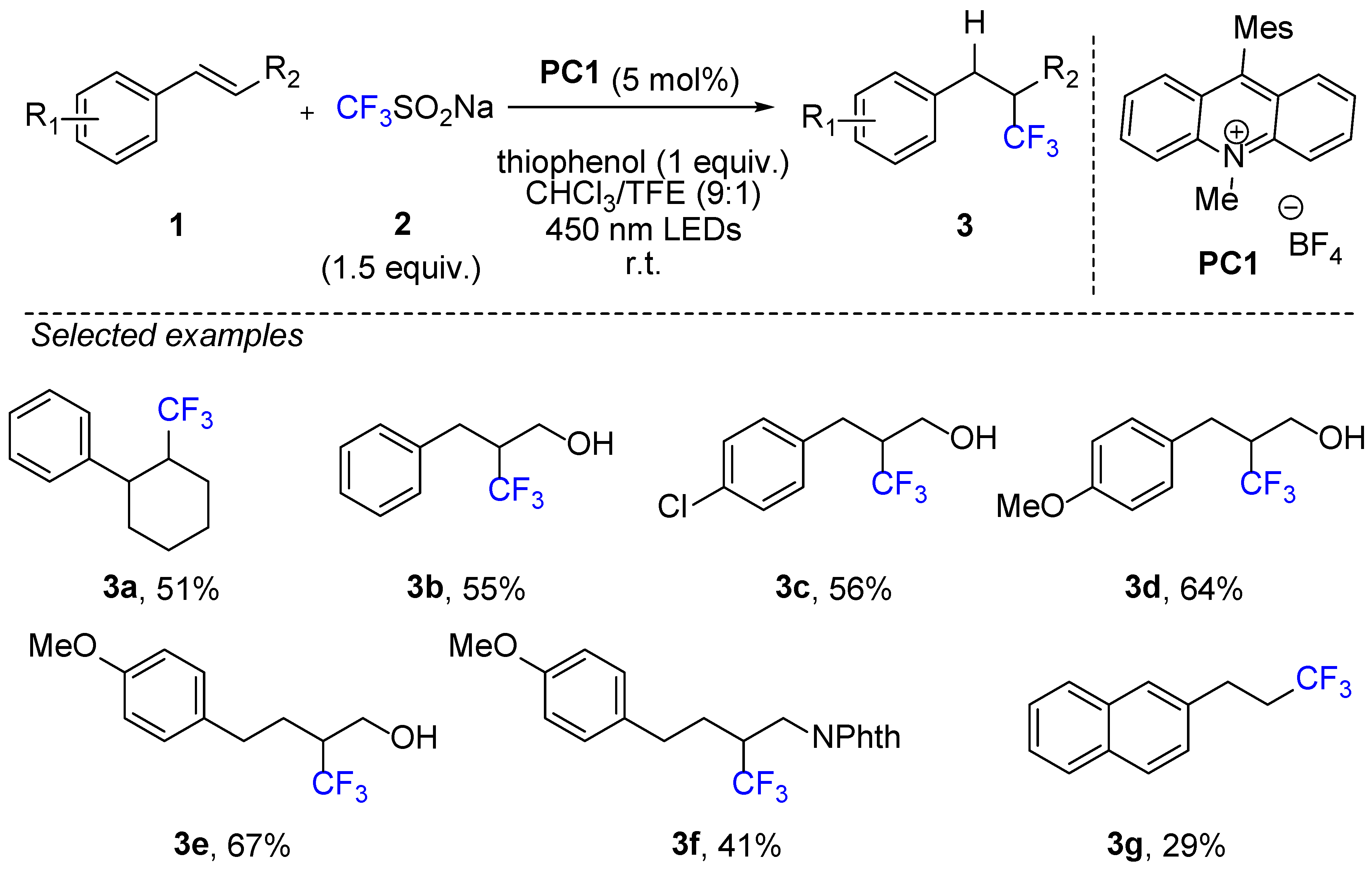
The selective hydrotrifluromethylation of styrenes derivatives has been disclosed by the group of Nicewicz in 2013 [15]. The use of commercially available and easy to handle Langlois’s reagent 2, CF3SO2Na, is highly advantageous. The generation of trifluoromethyl radical relies on the SET of the trifluoromethylating reagent by Fukuzumi organophotocatalyst N-Me-9-mesityl acridinium under blue LEDs irradiation (Figure 1). The reaction was performed in the presence of thiophenol as H-atom donor. The desired products 3ag were obtained in low to very good yields and the reactions tolerate the presence of chlorine, free alcohol (products 3b3e) as well as NPhth (3f) derivatives.
Figure 1. Hydrotrifluoromethylation of styrenes developed by the group of Nicewicz.
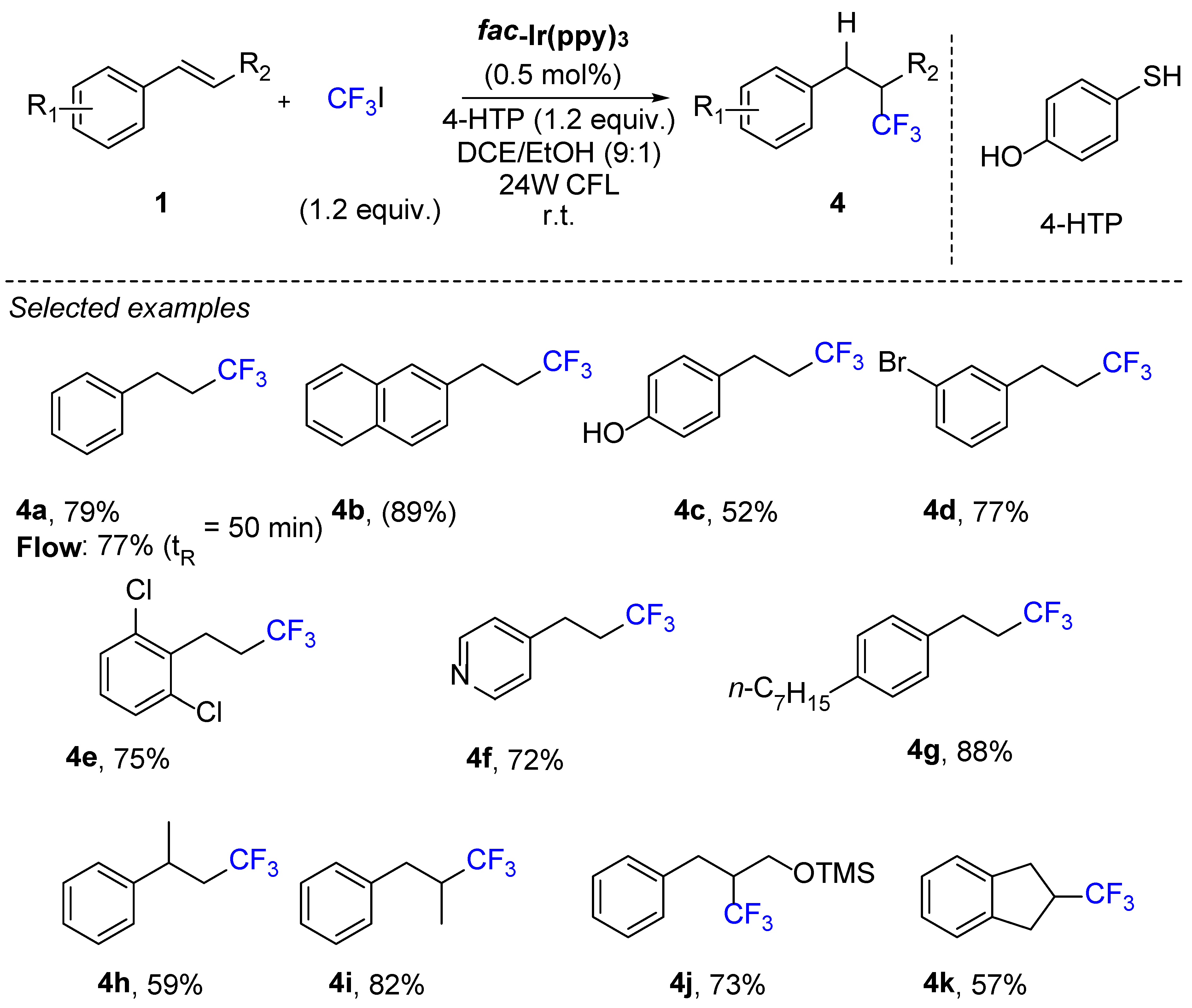
The Noël group developed another strategy for the hydrotrifluoromethylation of styrene derivatives. Their visible light protocol is based on the use of CF3I as a trifluoromethylation reagent in the presence of fac-Ir(ppy)3 photocatalyst upon 24W CFL [16]. Herein, 4-hydroxythiophenol (4-HTP) was used as H-atom donor (Figure 2). The desired compounds were obtained in very good to excellent yields and the reaction conditions tolerated the presence of several functional groups, including free alcohols (4c), halogens bromo (4d) and chloro (4e), as well as heterocyclic starting materials such as 4-vinylpyridine (4f). Interestingly, the authors demonstrated that the hydrotrifluromethylation could be performed using continuous-flow photo-micro-reactors, thus reducing the reaction time from 18 h to 50 min with similar reaction outcome (product 4a obtained in 77% yield).
Figure 2. Hydrofluoroalkylation of styrenes developed by the group of Noel.
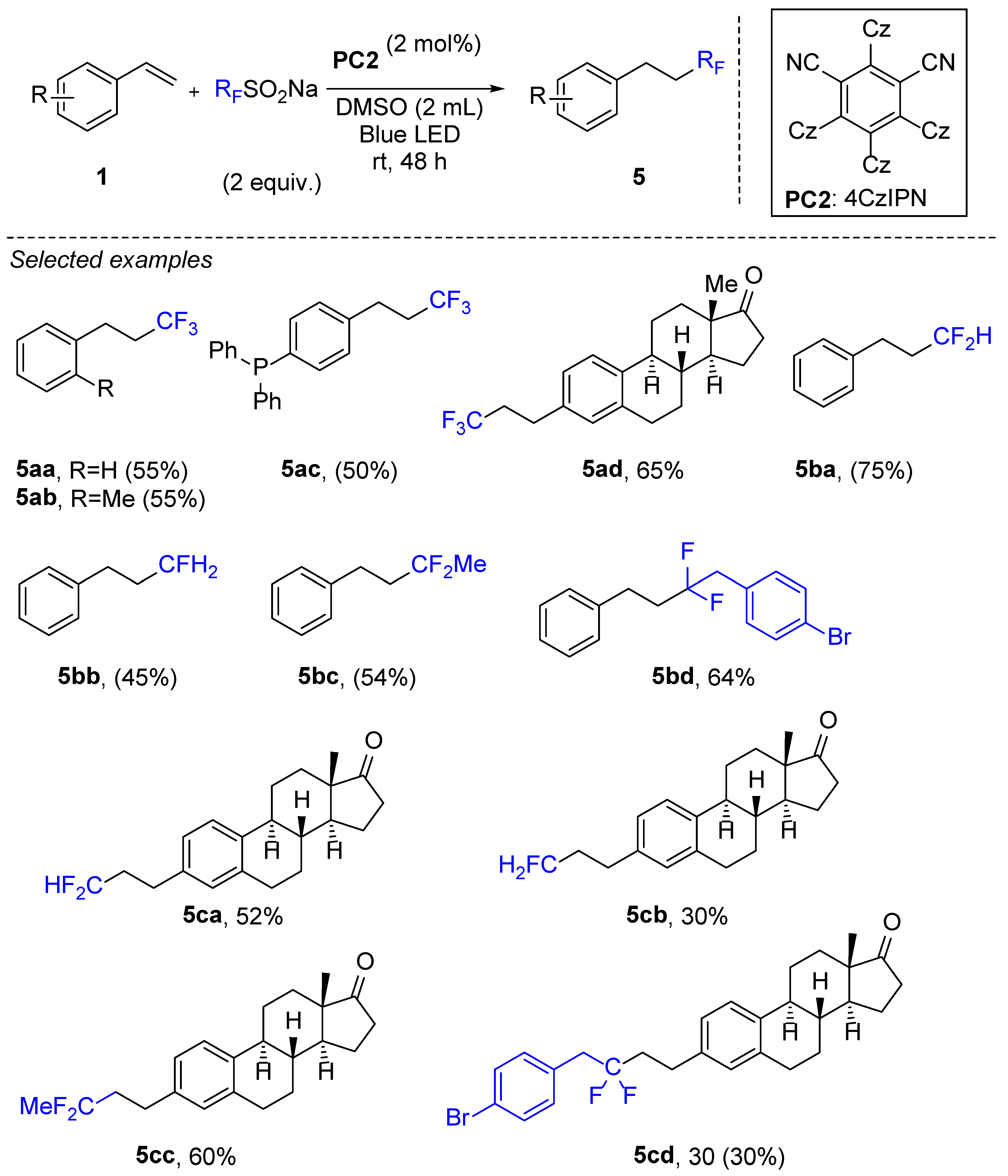
Afterwards, our group developed a direct strategy for the hydrotrifluoromethylation of styrene derivatives [17]. Interestingly, this strategy does not require the additive of thiophenol as HAT donor. The key to success was to perform the reaction in DMSO. The reactions have been conducted with 4-CzIPN as an organophotocatalyst under blue LED irradiation at room temperature for 48 h. Desired products 5aa5cd have been obtained in moderate to excellent yields. Interestingly, several Langlois sulfinate analogues have been successfully used under these conditions including CF2H (products 5ba and 5ca), CFH2 (products 5bb and 5cb), CF2Me (products 5bc and 5cc) and p-BrPhCh2CF2 (products 5bd and 5cd). It should be mentioned that to some extent, the reaction tolerates the presence complex structure of the estrone derivatives (Figure 3).
Figure 3. Hydrofluoroalkylation of styrenes developed by the group of Tlili.
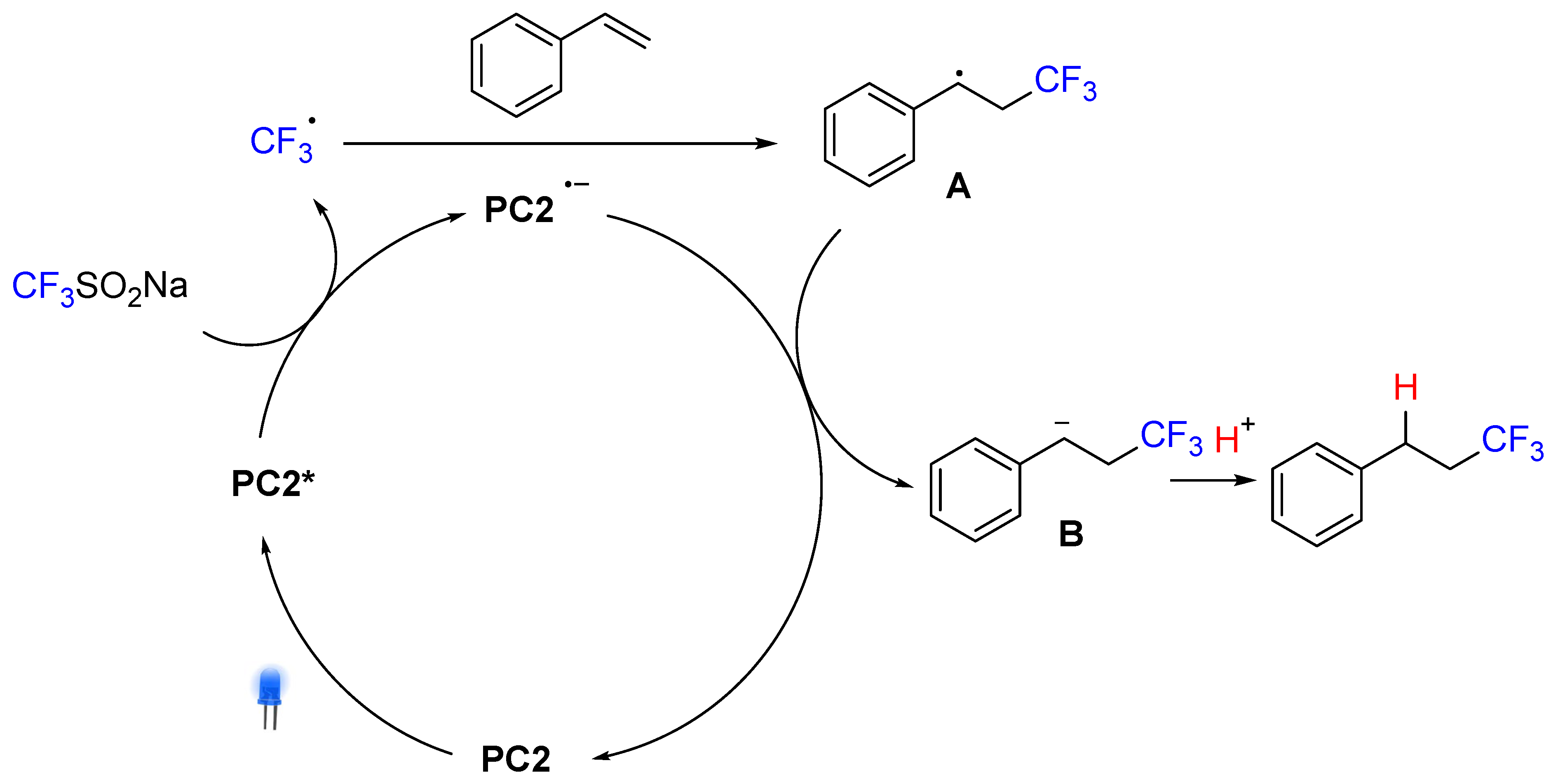
From a mechanistic standpoint, and in contrast to previously described methods, no additive was required. Mechanistic investigation including luminescence, EPR spectroscopy confirmed the SET oxidation of the Langlois reagent with the excited organophotocatalyst 4CzIPN. Afterwards, the formed trifluoromethyl radical collapses to the styrene to afford radical A that could be reduced with radical anion photocatalyst producing anion B and furnishing the organophocatalyst at its ground state. Finally, protonation of the formed anion allows the formation of the desired product. Herein, it should be mentioned that simply adding CO2 allows the carboxylation of anion intermediate B. Moreover, adding deuterated water in the media allows the incorporation of the deuterium atom (Figure 4).
Figure 4. Proposed mechanism for the Hydrofluoroalkylation of styrenes developed by the group of Tlili.

3. Hydrotrifluromethylation of Phenylacetylenes Derivatives

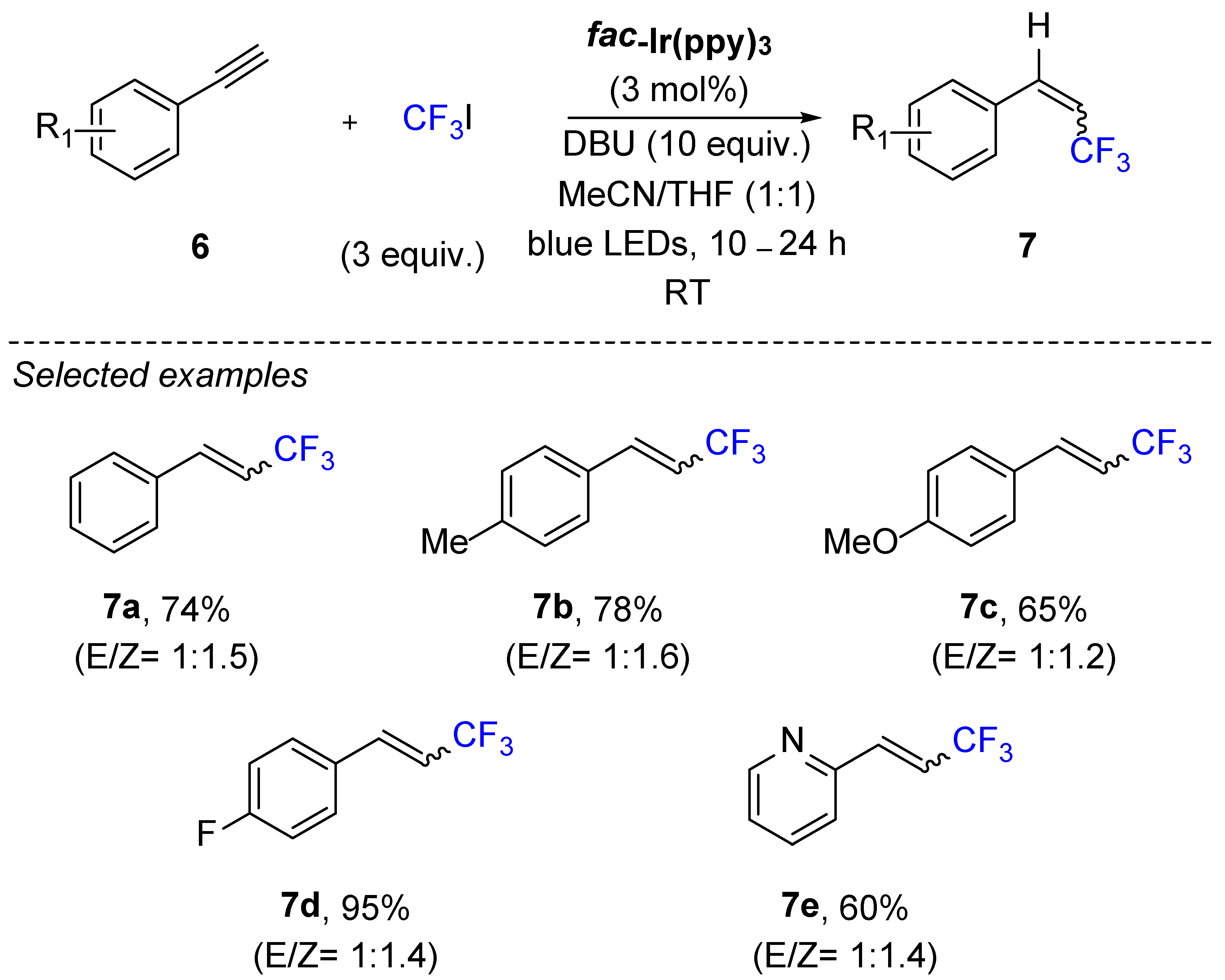
Regarding the hydrotrifluoromethylation of alkynes, Cho’s group disclosed in 2014 a general method to access trifluoromethylated alkenes (products 7a7e) (Figure 5) [18]. Trifluoromethyl iodide was used as trifluoromethylation reagent in conjunction with fac-Ir(ppy)3 under blue LEDs irradiation. The reaction requires the use of 10 equivalents of DBU, providing a mixture of E and Z alkenyl-CF3 compounds in good to excellent yields.
Figure 5. Hydrofluoroalkylation of alkynes developed by Cho’s group.
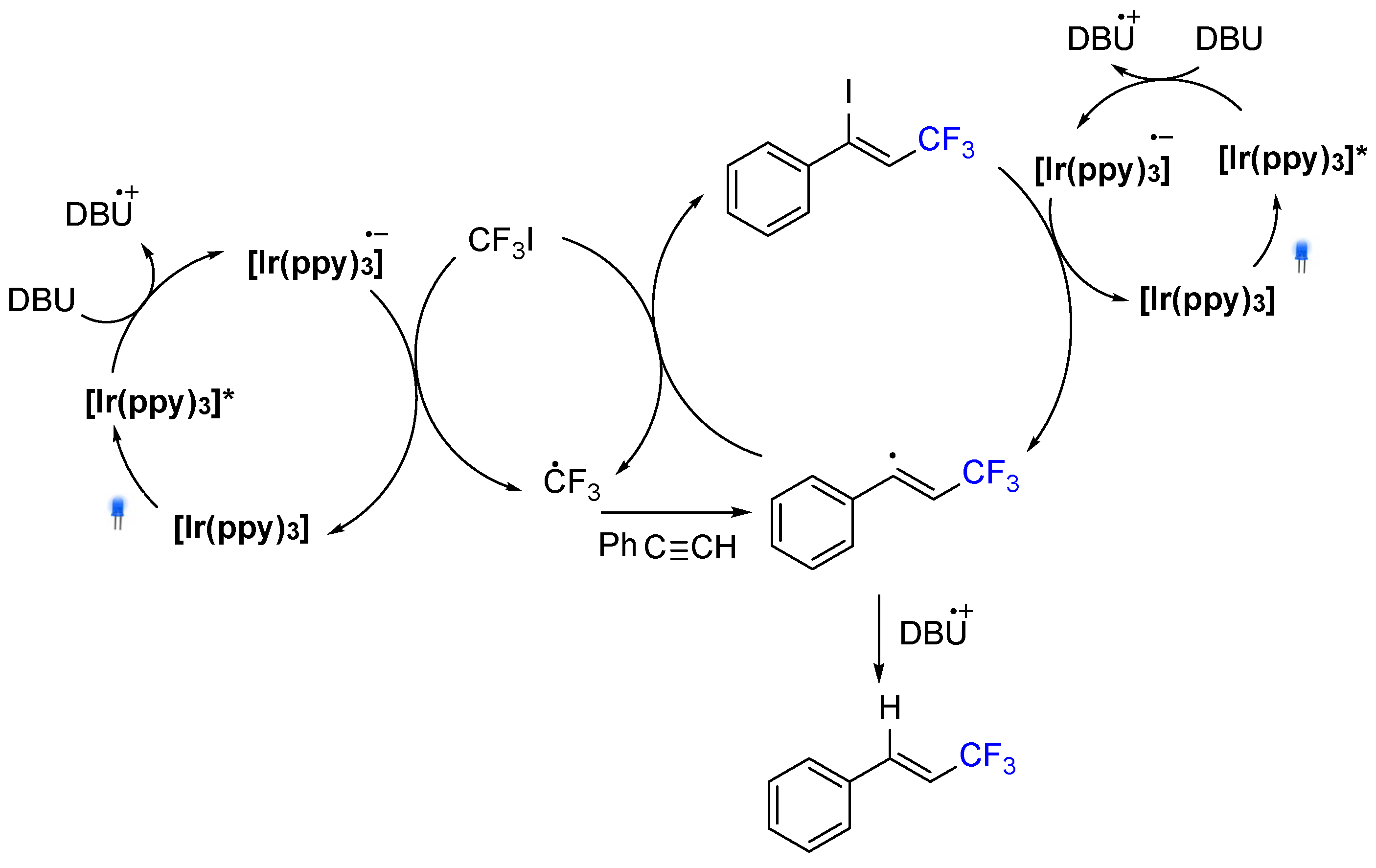
The authors proposed the following mechanism (Figure 6). DBU reduces the excited photocatalyst yielding DBU+ and [Ir(ppy)]. The photocatalyst radical anion reduces the CF3I yielding trifluoromethyl radical that collapses to the phenylacetylene, yielding to a vinyl radical. The desired product could be obtained through radical abstraction from the amine radical cation. It should be mentioned that another plausible mechanism was also disclosed. Indeed, the abstraction of the iodide by the trifluoromethylvinyl radical can also furnish the alkenyl iodide. Herein, deodination would take place by the radical anion [Ir(ppy)] (Figure 6).
Figure 6. Hydrotrifluoromethylation of alkynes developed by Cho’s group.
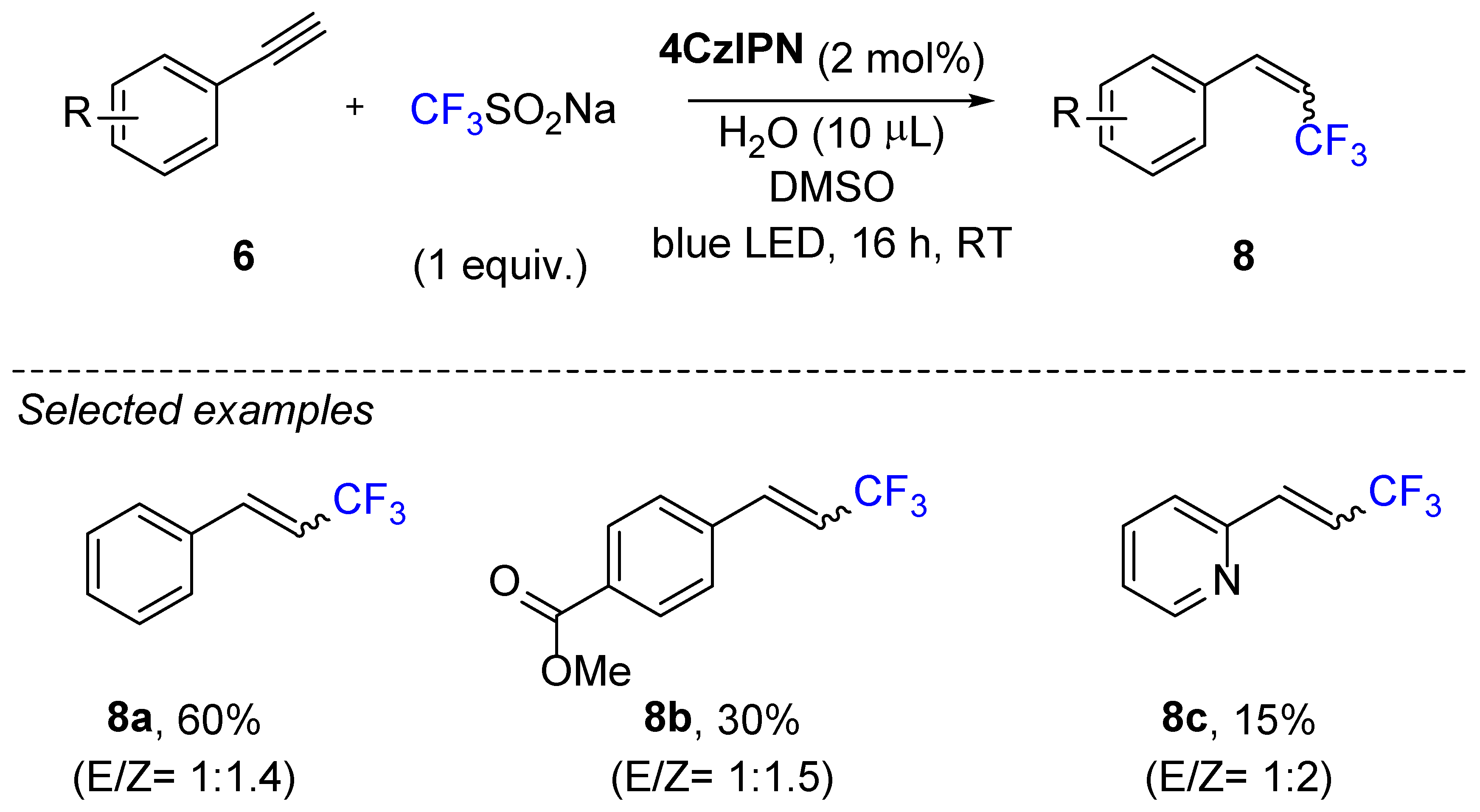
In parallel to the work of Cho’s group, we recently turned our attention to study the effectiveness of the protocol developed based on the use of organophotocatalysts in our laboratory for the hydrotrifluoromethylation of styrene derivatives toward phenylacetylene derivatives (Figure 7) [19]. The hydrotrifluoromethylation of phenylacetylene yields the desired product 8a in 60% with a mixture of E/Z isomers. Herein, adding a few equivalents of water was necessary to obtain the best reaction outcome. Unfortunately, the use of other arylacetylene derivatives 8b and 8c furnished only traces to very low yields.
Figure 7. Hydrofluoroalkylation of styrenes developed by the group of Tlili.

4. Conclusions

In conclusion, the use of visible-light photoredox has demonstrated its robustness for the hydrotrifluoromethylation of styrene and phenyl acetylene derivatives by using commercially available and easily accessible photoredoxcatalysts. The developed protocols are also easy to implement and make use also of easy-to-handle commercially available starting materials. The use of HAT allows us to obtain a better reaction outcome. Future developments should take this important point into consideration and more convenient HAT precursors should be used. Furthermore, the use of a more efficient catalyst, especially with higher TONs, should be considered for future developments. Finally, the use of these methodologies for the synthesis of bio-active compounds will definitely foster the emergence of molecules of interest bearing trifluoromethyl or fluoroalkyl motif.

Author Contributions

The manuscript was written through the contribution of all the co-authors. All authors have read and agreed to the published version of the manuscript.

Funding

Financial support from the CNRS and the Agence Nationale de la Recherche (ANR-JCJC-2020-CDI-DEOX) is gratefully acknowledged. A.S. thanks the Tunisian Ministry of Higher Education and Research for financial support.

Conflicts of Interest

The authors declare no conflict of interest.

References

  1. O’Hagan, D. Understanding organofluorine chemistry. An introduction to the C–F bond. Chem. Soc. Rev. 2008, 37, 308–319. [Google Scholar] [CrossRef] [PubMed]
  2. Fluorine in Life Sciences: Pharmaceuticals, Medicinal Diag-nostics, and Agrochemicals; Haufe, G.; Leroux, F. (Eds.) Elsevier Science: London, UK, 2018; pp. 459–518. [Google Scholar]
  3. Leo, A.; Hansch, C.; Elkins, D. Partition coefficients and their uses. Chem. Rev. 1971, 71, 525–616. [Google Scholar] [CrossRef]
  4. Hagmann, W.K. The Many Roles for Fluorine in Medicinal Chemistry. J. Med. Chem. 2008, 51, 4359–4369. [Google Scholar] [CrossRef] [PubMed]
  5. Tlili, A.; Lakhdar, S. Acridinium Salts and Cyanoarenes as Powerful Photocatalysts: Opportunities in Organic Synthesis. Angew. Chem. Int. Ed. 2021, 60, 19526–19549. [Google Scholar] [CrossRef] [PubMed]
  6. Vega-PeÇaloza, A.; Mateos, J.; Companyó, X.; Escudero-Casao, M.; Dell’Amico, L. A Rational Approach to Organo-Photocatalysis: Novel Designs and Structure-Property Relationships. Angew. Chem. Int. Ed. 2021, 60, 1082–1097. [Google Scholar] [CrossRef] [PubMed]
  7. Marzo, L.; Pagire, S.K.; Reiser, O.; König, B. Visible-Light Photocatalysis: Does It Make a Difference in Organic Synthesis? Angew. Chem. Int. Ed. 2018, 57, 10034–10072. [Google Scholar] [CrossRef] [PubMed]
  8. Shaw, M.H.; Twilton, J.; MacMillan, D.W.C. Photoredox Catalysis in Organic Chemistry. J. Org. Chem. 2016, 81, 6898–6926. [Google Scholar] [CrossRef] [PubMed]
  9. Romero, N.A.; Nicewicz, D.A. Organic Photoredox Catalysis. Chem Rev. 2016, 116, 10075–10166. [Google Scholar] [CrossRef] [PubMed]
  10. Poliakoff, M.; George, M.W. Manufacturing chemicals with light: Anyrole in the circular economy? Phil. Trans. R. Soc. 2020, 378, 20190260. [Google Scholar] [CrossRef] [PubMed]
  11. Yungyeong, L.; Min, S.K. Emerging Organic Photoredox Catalysts for Organic Transformations. Eur. J. Org. Chem. 2020, 2020, 6028–6043. [Google Scholar]
  12. Courant, T.; Masson, G. Recent Progress in Visible-Light Photoredox-Catalyzed Intermolecular 1,2-Difunctionalization of Double Bonds via an ATRA-Type Mechanism. J. Org. Chem. 2016, 81, 6945–6952. [Google Scholar] [CrossRef] [PubMed]
  13. Koike, T.; Akita, M. Fine Design of Photoredox Systems for Catalytic Fluoromethylation of Carbon–Carbon Multiple Bonds. Acc. Chem. Res. 2016, 49, 1937–1945. [Google Scholar] [CrossRef] [PubMed]
  14. Choi, S.; Kim, Y.J.; Kim, S.M.; Yang, J.W.; Kim, S.W.; Cho, E.J. Hydrotrifluoromethylation and iodotrifluoromethylation of alkenes and alkynes using an inorganic electride as a radical generator. Nat. Commun. 2014, 5, 4881. [Google Scholar] [CrossRef] [PubMed]
  15. Wilger, D.J.; Gesmundo, N.J.; Nicewicz, D.A. Catalytic hydrotrifluoromethylation of styrenes and unactivated aliphatic alkenes via an organic photoredox system. Chem. Sci. 2013, 4, 3160. [Google Scholar] [CrossRef]
  16. Straathof, S.N.J.W.; Cramer, E.; Hessel, V.; Noel, T. Practical Photocatalytic Trifluoromethylation and Hydrotrifluoromethylation of Styrenes in Batch and Flow. Angew. Chem. Int. Ed. 2016, 55, 15549–15553. [Google Scholar] [CrossRef] [PubMed]
  17. Louvel, D.; Souibgui, A.; Taponard, A.; Rouillon, J.; ben Mosbah, M.; Moussaoui, Y.; Pilet, G.; Khrouz, L.; Monnereau, C.; Vantourout, J.C.; et al. Tailoring the Reactivity of the Langlois Reagent and Styrenes with Cyanoarenes Organophotocatalysts under Visible-Light. Adv. Synth. Catal. 2022, 364, 139–148. [Google Scholar] [CrossRef]
  18. Iqbal, N.; Jung, J.; Park, S.; Cho, E.J. Controlled Trifluoromethylation Reactions of Alkynes through Visible-Light Photoredox Catalysis. Angew. Chem. Int. Ed. 2014, 53, 539–542. [Google Scholar] [CrossRef] [PubMed]
  19. Souibgui, A.; ben Mosbah, M.; Moussaoui, Y.; Tlili, A. unpublished results.
Publisher’s Note: MDPI stays neutral with regard to jurisdictional claims in published maps and institutional affiliations.

Article Metrics

Citations

Article Access Statistics

Multiple requests from the same IP address are counted as one view.