


Abstract
This work aims to demonstrate the successful, long-term human use of an automatic scheduling-manual operation (AS-MO) precision irrigation tool by farmers on a medium-scale Jordanian farm. Innovation in low-cost, accessible, and water-efficient irrigation technologies is critical as water resources become scarce, especially on resource-constrained farms in the drought-prone Middle East and North Africa (MENA) region. Prior work has shown that a proposed AS-MO decision support tool could bridge the gap between fully manual irrigation—a common practice on many MENA farms—and existing precision agriculture solutions, which are often too expensive or complex for medium-scale farmers to adopt. Recent developments have also demonstrated that the scheduling theory behind the proposed AS-MO tool uses up to 44% less water compared to fully manual irrigation. However, a functional design of the AS-MO tool has not been realized nor has it been demonstrated on a farm with farmer users. This work documents the detailed design of an AS-MO tool’s human–machine interaction (HMI) and validates the human execution of the tool in context. Through an 11-week case study conducted on a Jordanian farm, we show that farmers used a functional prototype of the AS-MO tool as intended. The functional tool prototype was designed to deliver a long-term AS-MO user experience to study participants. The prototype monitored local weather conditions, generated water-efficient schedules using an existing scheduling theory, and notified users’ phones when they should manually open or close valves. The irrigation practices of participants using the AS-MO prototype were measured, and participants demonstrated successful use of the tool. Users correctly confirmed 93% of the scheduled events using the tool’s HMI. Despite manual operation, a majority of confirmed irrigation event durations fell within 15% of the automatically scheduled durations; relative to the length of scheduled irrigation event durations, the medians of confirmed and scheduled durations were 102% and 88%, respectively. These results demonstrate the success of the tool’s decision support ability. Feedback from study participants can support the AS-MO tool’s next design iteration and can inform the development of other decision support systems designed for resource-constrained, medium-scale farms. This work presents an important step towards developing a precision irrigation tool that, if adopted at scale, could increase the adoption of water-efficient irrigation practices on resource-constrained farms that are not served by existing technology, improving sustainable agriculture in MENA.
1. Introduction
This work demonstrates the long-term human use of an automatic scheduling-manual operation (AS-MO) irrigation tool that has the potential to increase water savings compared to fully manual irrigation. Through a case study conducted on one farm in Jordan, where fully manual irrigation is common on resource-constrained farms, we seek to show that farmers use this tool as intended.
The United Nations’ second Sustainable Development Goal (SDG 2) seeks to achieve food security, improve access to nutritious food, and promote sustainable agriculture by 2030 [1]. Addressing this goal is imperative in low- and middle-income regions like the Middle East and North Africa (MENA). With growing populations and high levels of undernourishment, food security can only be realized with increased food production [2,3]. Previous work has shown that small- to medium-scale (2–10 hectares) farms have the potential to feed the expanding populations in MENA [4,5]. Serving the equipment needs of these farmers can help them increase crop cultivation and meet demands.
Introducing irrigation on farms is a successful way to increase food production [6,7,8]. Further, irrigation helps farmers cultivate more nutritious crops [9]. While increasing irrigation adoption in MENA addresses food security and improved nutrition, it has the potential to conflict with SDG 2’s further aim of sustainable agriculture. Irrigation is a water-intensive process that uses 70% of the world’s annual freshwater withdrawals [10]. When regions rapidly increase irrigation without doing so sustainably, severe negative consequences can follow [11,12]. To increase food production while avoiding negative impacts on freshwater sources, farmers must adopt water-efficient technologies and practices.
Drip irrigation—the practice of delivering water directly to crops through a network of pipes and emitters—is an irrigation method that uses up to 50% less water than conventional methods [13]. However, for drip systems to achieve this water-saving benefit, correct operation and control of irrigation systems are crucial. If too much water is delivered, water use efficiency—the ratio of crop produced to water used—decreases. If too little, crops can become stressed and yields can decrease. Further, correct operation enables systems to deliver the ideal amount of water for specific farms’ growing conditions, like weather, soil type, and crop varieties. In practice, achieving this optimal balance is difficult.
Precision irrigation solutions have emerged to address the challenge of optimizing irrigation water use. By collecting detailed farm data, employing advanced algorithms, and interfacing with solenoid valves throughout the hydraulic network, precision irrigation solutions are capable of calculating and implementing optimal irrigation schedules [14,15,16]. These solutions primarily focus on increasing water use efficiency or addressing the difficulty of integrating variable power sources such as solar panels [14,17,18]. Various strategies are employed to achieve this goal, including real-time adjustments based on retroactive agronomy measurements, utilization of predictive modeling for real-time irrigation adjustments, optimization of irrigation schedules to minimize water consumption, and aligning irrigation power requirements with the available solar power profile [19,20,21,22,23].
Unfortunately, many precision irrigation tools rely on arrays of expensive sensors and at least one solenoid valve per irrigation block throughout the field. This equipment can cost up to tens of thousands of dollars, making it inaccessible to the resource-constrained, small- and medium-scale farmers addressed in this work [5]. Precision irrigation equipment is also often complex, requiring advanced training for proper use. These barriers hinder the millions of farmers who do not have access to high-quality extension services [24,25,26].
Prior work has demonstrated that a tool with an AS-MO architecture could help medium-scale, resource-constrained farmers realize the water-saving benefits of precision scheduling to farmers at affordable rates [4]. This prior study proposed an AS-MO tool that could take advantage of the automatic scheduling benefits of precision irrigation algorithms while integrating the familiar, inexpensive hardware of manually operated valves. The tool and its associated human–machine interaction (HMI) were evaluated in a two-stage design process that solicited feedback for improvement from potential users and key market stakeholders in two MENA countries (Jordan and Morocco), as well as in Kenya. It was found that farmers valued the proposed tool because it could lower the cost and expertise barriers of adopting precision irrigation tools. The tool could also allow farmers to remain in the control loop, increasing their trust in the scheduling recommendations as they move from fully manual irrigation practices.
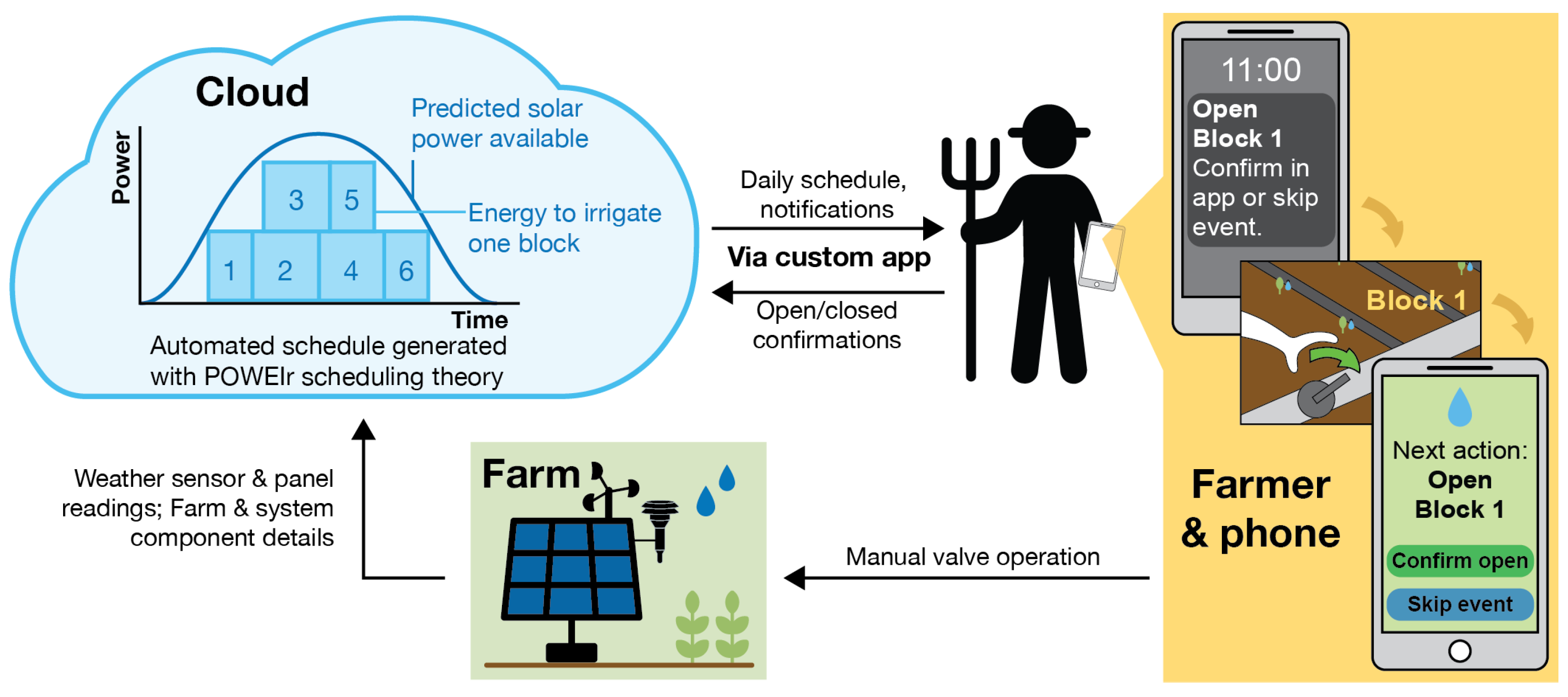
Figure 1 shows the updated design of the proposed AS-MO HMI. The top left shows how the proposed tool coordinates irrigation events using the Predictive Optimal Water and Energy Irrigation (POWEIr) controller theory, a scheduling theory that was demonstrated on a Moroccan farm in 2023 to use 44% less water than conventional scheduling practices for a comparable crop yield [27,28]. Aligning with the user needs of cost-constrained farmers, the POWEIr theory does not rely on expensive soil moisture sensors but instead uses soil water balance calculations [13] and several inputs from the farm to compute soil moisture estimations in the cloud (left-hand side of Figure 1). The right-hand side shows how the AS-MO tool’s HMI communicates an irrigation schedule to users via a custom phone app, which was recommended by participants in the prior study. Daily irrigation schedules and notifications of when to open or close valves are pushed to farmers’ phones. When farmers manually open or close valves and confirm these actions in the app, the full loop between farmer, farm, and cloud scheduling is complete. This loop enables automatic scheduling and manual valve operation in a cohesive irrigation tool and HMI.
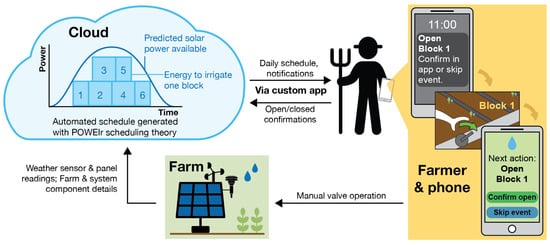
Figure 1.
Overview of the AS-MO tool and HMI. On the left, details about the farm and irrigation system (e.g., solar array capacity, irrigation block areas, and crop types) are fed into the Predictive Optimal Water and Energy Irrigation (POWEIr) scheduling theory, a theory that automatically generates irrigation schedules that can use up to 44% less water than conventional practices [27]. For each upcoming day, the POWEIr theory forecasts available power (represented by the dark blue line) and predicts the pumping energy an irrigation system needs to meet crop water demand (light blue boxes). The theory then schedules irrigation event blocks to utilize the anticipated available power efficiently. On the right, this schedule is communicated to farmers for manual operation via a custom phone app and notifications. Notifications are sent at the start and end of each irrigation event to remind farmers of the manual actions needed to carry out the auto-generated schedule. Prior work that assessed the AS-MO concept found that it was important to give farmers a degree of scheduling flexibility [4]. To provide this, the app gives farmers the option to skip an irrigation event before it begins or add additional time to the end of an event. Depending on their choice, the farmer would then manually open or close valves as advised or choose the alternate option. When farmers confirm actions in the app, they inform the algorithm how much water was delivered to crops, and future schedules update accordingly.
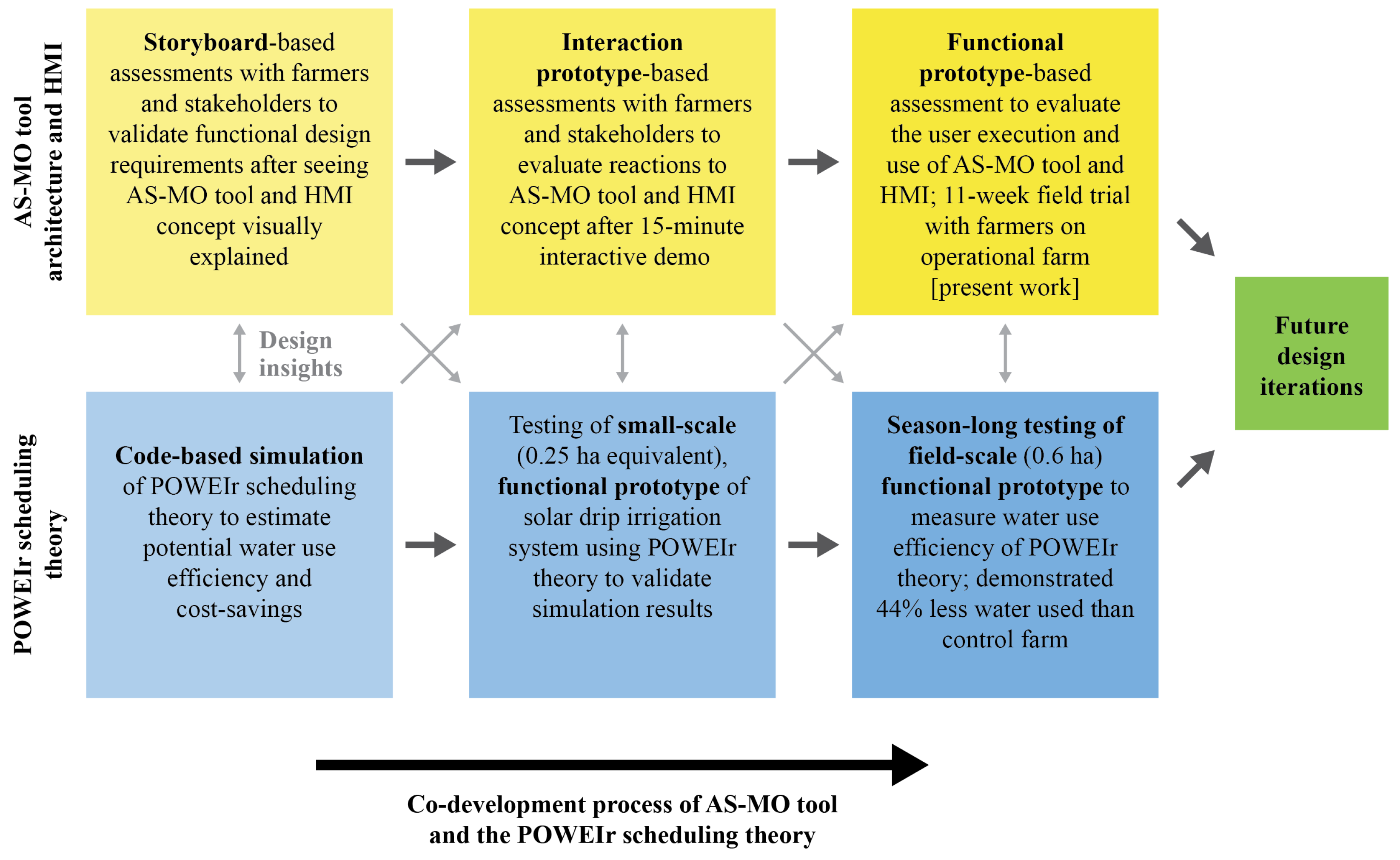
Three prior studies evaluated two separate aspects of this design, but those aspects have not been evaluated together. First, the water-saving aspect of the POWEIr scheduling theory has previously been evaluated from a technical perspective [27,28]. In the aforementioned validation study, the water usage on the experimental, fully automatic farm was compared to the usage on a farm that employed conventional, fully manual irrigation practices. Results from this case study demonstrated that the POWEIr theory used 44% less water compared to conventional irrigation while delivering a comparable crop yield (a 9% decrease), effectively increasing water use efficiency. Second, a separate study assessed how this proposed AS-MO tool architecture could allow for the adoption of water-efficient irrigation practices without the need to install expensive automatic valves or many sensors throughout a field [4]. In these previous studies, the water saving potential and the AS-MO HMI has been shown as promising for MENA farmers. However, the AS-MO tool and HMI have not been validated through long-term user testing, so farmers’ reactions to using this type of HMI on a daily basis remain unknown. To learn how farmers use and perceive the proposed AS-MO tool and its associated HMI, a prototype of the tool was demonstrated over an 11-week period on a farm in Jordan. Figure 2 visualizes how outcomes from these prior studies have motivated and informed the present work.
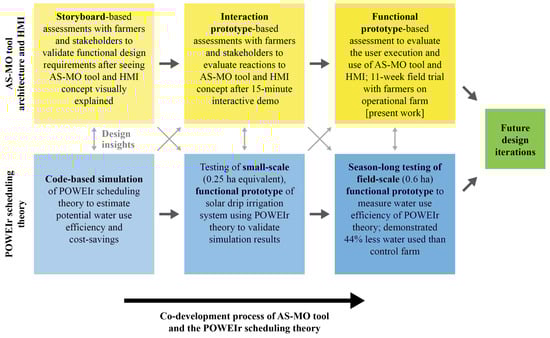
Figure 2.
Co-development process of the AS-MO tool architecture, its HMI, and the POWEIr scheduling theory. The AS-MO tool relies on the POWEIr scheduling theory to automatically generate schedules. The two were developed and researched simultaneously, allowing design insights to be shared. Human-centered research focused on the tool architecture and HMI generated design requirements for the scheduling theory. Research on the POWEIr scheduling theory generated and validated estimations about how much water, energy, and money it could save farmers. The top right box positions the present work in this co-development process [4,27,28].
To validate the user execution and use of the AS-MO tool and HMI, the specific objectives addressed in this paper are to:
- 1.
- Characterize the functional design features of an AS-MO tool’s HMI, by documenting and justifying its key design details;
- 2.
- Demonstrate that the AS-MO user experience is successful and operates as intended, by measuring user actions in a real farm context;
- 3.
- Validate that medium-scale farmers use an AS-MO tool to deliver water in ways consistent with how a fully automatic system would, by comparing scheduled irrigation event durations to measured ones;
- 4.
- Determine the features of an AS-MO tool that farmers find most valuable and establish what added or changed features could increase the adoptability of an AS-MO tool, by synthesizing results from the field trial, user observations, and interviews.
By demonstrating the long-term use of an AS-MO tool in real farm conditions, we show how it could fulfill small- and medium-scale farmers’ irrigation needs. With those needs met, farmers could be more likely to adopt this tool and the sustainable, water-efficient irrigation practices it enables. When adopted at scale, this tool could help address the water scarcity challenges we face with a growing global population.
2. Design of a Functional AS-MO Tool and HMI Prototype
To address the first research objective, a functioning AS-MO tool prototype was designed and built. Automatic scheduling was accomplished by integrating the POWEIr scheduling theory into the tool’s back end. Manual operation was achieved using a custom phone application and physical hardware installed on the farm. This section details how these subsystems were designed to deliver a realistic AS-MO HMI to study participants.
2.1. Automatic Scheduling Achieved Through POWEIr Theory and Physical Hardware
To facilitate automatic scheduling, the prototype implemented the POWEIr scheduling theory to build water-efficient irrigation schedules each day. The POWEIr theory is well-suited for cost-constrained MENA farms because it does not require expensive soil moisture sensors to function. Instead, it calculates a soil water balance calculations using the inputs visualized in Figure 1. The POWEIr validation study described in Section 1 relied on automatic solenoid valves to carry out the theory-generated schedule [27]. The AS-MO prototype evaluated in the present study used the same underlying theory to generate daily irrigation schedules but differs in operation; the solenoid valves are replaced with manual valves and human operators to understand if similar savings could be realized. This difference has been predicted to suit MENA farmers well [4].
The POWEIr theory relies on several weather readings. To gather these inputs, a weather station was one component of the AS-MO prototype. Mounted in a central farm location, the weather station monitored wind speed, wind direction, ambient light, solar irradiance, precipitation, temperature, and humidity (WS-2902C by Ambient Weather, Chandler, AZ, USA). Using one central sensor station, as opposed to sensors throughout the field, is appropriate for MENA farmers, who require minimal complexity when installing and maintaining equipment [4].
A second prototype component, a custom-designed control box, received the weather data and sent them to the cloud. An embedded compute system (Cerbo GX by Victron Energy, Almere, The Netherlands) recorded, buffered, and transmitted data via an LTE router, modem, and antenna (RBSXTR&R11e-LTE and RBD52G-5HacD2HnD-TC by MikroTik, Riga, Latvia). The control box was powered by batteries that were charged via solar panels and regulated by a solar charge controller (SmartSolar MPPT by Victron Energy, Almere, The Netherlands). The control box also acted as a data acquisition unit for collecting experimental data. The types of data collected are described further in Section 3.2. The full technical validation of the POWEIr theory, including details about how it is calibrated on a farm, are available in [27].
2.2. Manual Operation Achieved Through a Custom Phone App
To facilitate manual operation, a functional phone app was developed to communicate the automatic schedule to farmers for manual operation. The app, intended to be installed on study participants’ cell phones, was designed to close the loop between scheduled irrigation events and farmers’ actions on the field. This feedback is critical because the POWEIr theory schedules future irrigation events based on past water delivery. Because of this, the POWEIr theory is well-suited for an AS-MO tool because it can account for past user errors (e.g., delayed actions or missed irrigation events) when it schedules future events.
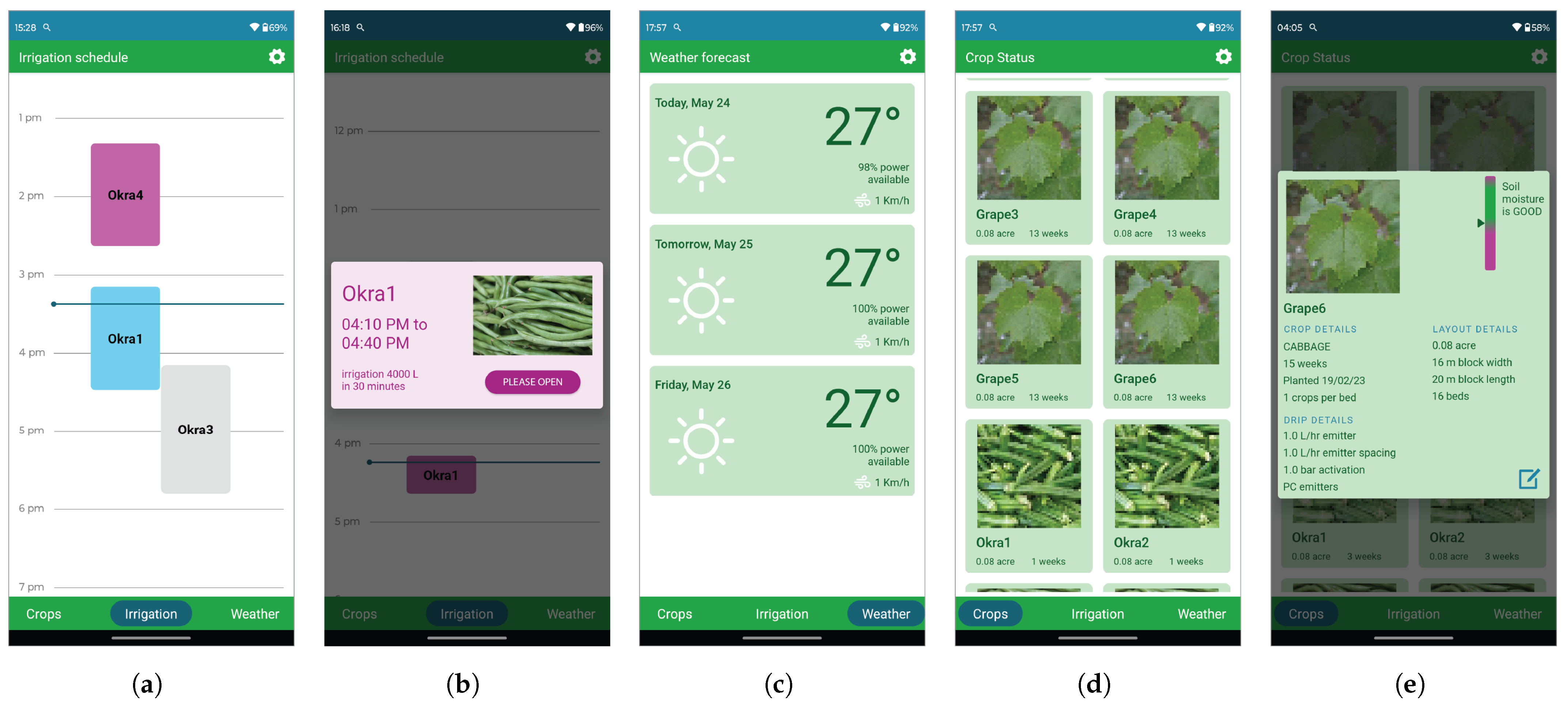
The app’s design was informed by prior work that assessed the AS-MO HMI with potential users and market stakeholders [4]. The app consisted of five key pages (Figure 3): the irrigation schedule page, the action confirmation page, the weather page, the block overview page, and the block details page.
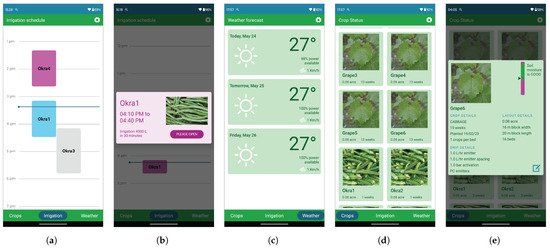
Figure 3.
Key screenshots of the AS-MO app: (a) the daily schedule generated by the POWEIr theory, (b) an action confirmation page asking users to confirm valve-opening or valve-closing action, (c) a three-day forecast, (d) an overview of all irrigation blocks, and (e) details of irrigation blocks in which users could edit block parameters.
The irrigation schedule page displayed the POWEIr-generated daily irrigation schedule (Figure 3a). A horizontal bar representing the current time moved down the schedule as the day progressed. Scheduled irrigation events, visualized as colored rectangles, populated the schedule page. The event color corresponds to the irrigation status: a function of the time of the scheduled irrigation event relative to the current time (current, past, or future) and what the user confirmed the valve state to be (open or closed). Color mappings are provided in Table 1.

Table 1.
Event color and action confirmation window text for possible irrigation statuses.
To reduce cost, an important need of MENA farmers, the AS-MO tool did not use sensors to monitor the irrigation status of the farm. It relied on users to accurately update the valves’ open or closed state in the app. They did this through the action confirmation page (Figure 3b), which appeared if a user clicked an event on the schedule page. The confirmation window text depended on the event’s irrigation status. At this design stage, the app was not designed to give users specific choices to skip irrigation events or add additional time to irrigation blocks. However, study participants were informed that they had these options and could postpone any direction, simulating the flexibility an AS-MO tool could afford.
A third page showed a three-day weather forecast that included temperature, cloud cover, wind speed, and solar irradiance (Figure 3c). Small- and medium-scale farmers interviewed in prior work stressed the importance of knowing weather forecasts [4]. They claimed this information could help them make irrigation and non-irrigation decisions on the farm.
A fourth page showed an overview of the irrigation blocks, displaying information about crop type, area, and growth stage of each block (Figure 3d). At the bottom of this page, there was an option to add new blocks. If a user clicked a block icon, a page showing specific details of that block appeared (Figure 3e): crop type, planting date, block width, block length, number of beds per block, number of crops per bed, and specifications of the drip emitters used in that block (e.g., flow rate, spacing, activation pressure, and pressure-compensating capability). The soil moisture level, estimated with the POWEIr theory, was also displayed on a scale. The scale was designed to be easy for farmers to interpret. The scale had red areas to convey the soil moisture was calculated to be too high or too low. The green range signaled the calculated soil moisture was acceptable. On the block detail pages, users could edit the parameters of existing blocks. These parameters were key inputs to the POWEIr theory, so it was important that users could enter them accurately. Prior work suggested that MENA farmers might find it cumbersome to input or edit these details [4], so the design of these pages attempted to minimize user error and frustration.
Additional pages were a login page and an account settings page where farmers could update their well depth and soil type (important inputs to the POWEIr theory), change the app’s display language, or logout. Due to the remote nature of MENA farms, the network connectivities of the AS-MO tool and participants’ phones were expected to lapse occasionally. In those cases, a red caution sign appeared in the top bar of all app screens, signaling to the participant that the tool was offline and they should proceed with fully manual irrigation. To enable participants to irrigate efficiently during lost connectivity, each daily schedule was downloaded to participants’ phones during the previous night. If participants lost connection during the day, their notifications would lapse, but they could still access the automatically generated irrigation schedule on the offline app.
Throughout all pages, the app was designed with minimal text to enable use by MENA farmers with low literacy. This was accomplished by using colors, numbers, icons, and pictures when possible.
To test the key aspects of an AS-MO HMI, the app’s design enabled four key farmer interactions with the AS-MO tool. Specifically, the type and frequency of notifications, scheduling flexibility, parameter editing, and farm status. The app sent the type and frequency of notifications expected from the AS-MO tool, allowing the research team to elicit feedback on the type of directions study participants found helpful. The app sent three types of notifications:
- Early each morning, a push notification was sent to inform users when the first irrigation event was scheduled to begin or if there were no scheduled events that day.
- Throughout the day, push notifications were sent at the start and end of each scheduled event, advising users which manual values to open or close, respectively. The notification text included the directed action (“Open” or “Close”) and the specific irrigation block to which the action applied (e.g., “Grapes Block 5”).
- Finally, reminder notifications were sent if users ignored any previous notifications. These reminders were pushed every five minutes until the user confirmed an action or until the scheduled event ended.
The app enabled the key scheduling flexibility expected when humans interact with any tool, a feature that was found important during prior user interviews with MENA farmers and market stakeholders [4]. Study participants could ignore any notification but get a reminder five minutes later. This meant that if a user wanted to add ten minutes to the end of an irrigation event, they could wait for the second reminder. If they wanted to skip an irrigation event entirely, for example, users could ignore notifications for the duration of the event. Additionally, the app enabled users to enter and edit key parameters that were necessary inputs into the POWEIr theory. This capability was possible through the block overview and block detail pages.
The app provided users with key information about a farm’s status, allowing the research team to gather feedback on the most useful details for farmers and identify any missing information. In addition to the daily irrigation schedule and the open or closed state of the valves, the app displayed the three-day weather forecast, estimated soil moisture levels for each block, and block parameters.
The app was designed by the research team in Figma (v116.12.2 by Figma, San Francisco, CA, USA), and the front end was built by contractors for use on Android. The research team developed and deployed the backend system that generated the irrigation events, numerical values, and notifications used to populate the app pages. Communication between the app and the backend system was done via Message Queuing Telemetry Transport (MQTT) and Firebase Cloud Messaging (v23.1.1 by Alphabet, Mountain View, CA, USA). All data from the app and backend systems were stored in an InfluxDB (by influxdata, San Francisco, CA, USA) database on the research team’s servers.
3. Methods for Assessing the Human Use of an AS-MO Irrigation Tool
To assess the AS-MO tool and HMI prototype, a process inspired by Lean Startup methodologies [29] was followed. In particular, the Lean Design for Developing World (LDW) Method [30] was used because this process accounts for the constraints of evaluating a product concept in the MENA context, including limited access to potential users and complex, international travel logistics [31]. The LDW Method has been used by other engineers working in similar contexts [32,33]; the early stages of the LDW Method were used to conduct an initial assessment of the AS-MO tool concept and its HMI [4]. Section 3 describes how the continued evaluation of the AS-MO tool and HMI was accomplished using later stages of the LDW Method.
3.1. Recruiting Human Subject Research Participants in a Real Farm Context
The participating farm was recruited for this study because the owners and employees were considered early adopters and had used solar-powered drip irrigation—equipment that is not yet widely adopted in their region—for multiple seasons [25,34]. Early adopters were recruited because these types of potential users are known to provide useful feedback on the design of novel products [35]. The recruited farm was a 4-hectare operational research farm near Irbid in the north of Jordan. This agricultural research organization has been operating since 2007 and frequently tests agriculture innovations, making them early adopters.
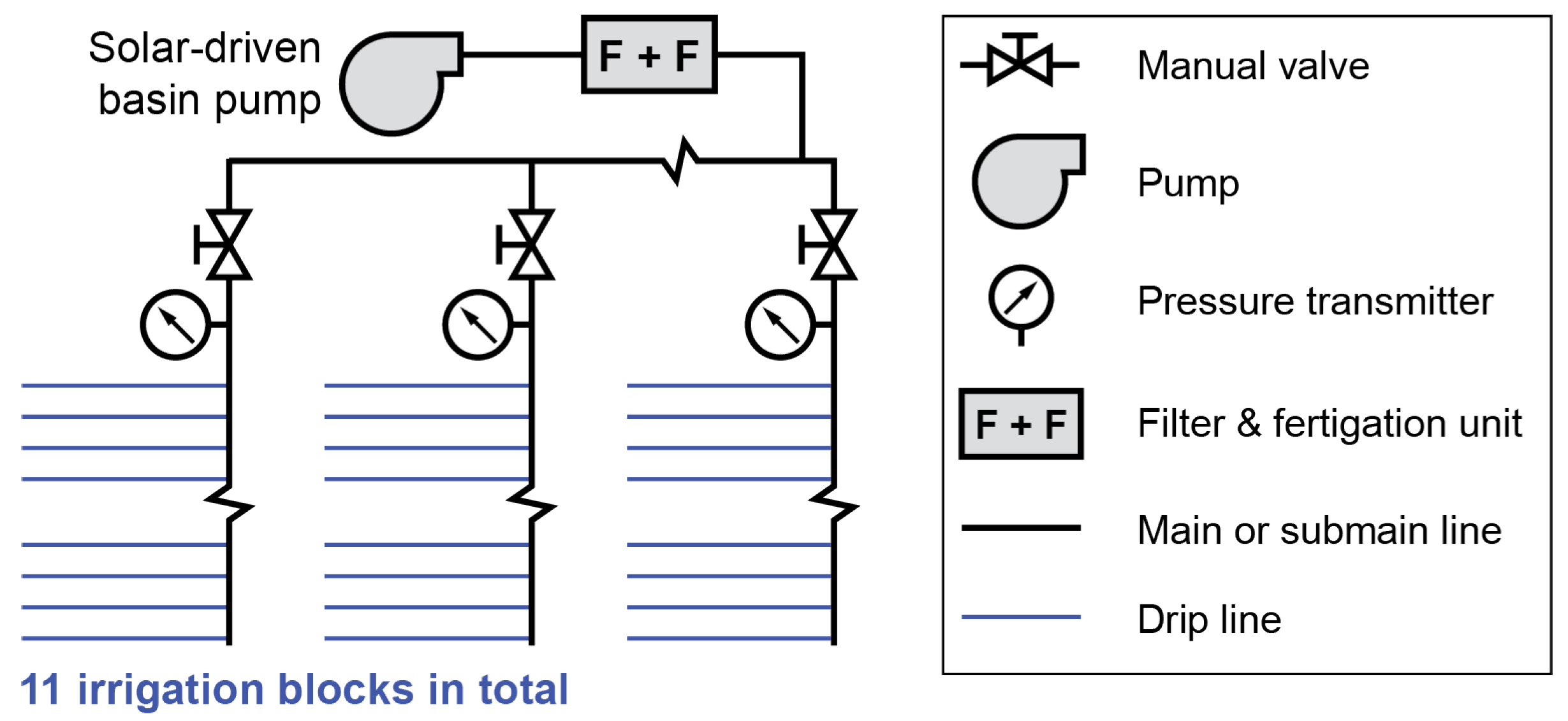
The AS-MO tool prototype was installed on a 0.8 hectare section of the farm that was loam and sandy clay soil. During the study, the farmers were growing common Jordanian crops (young grape vines and okra) under drip irrigation, a standard practice in the country [36,37]. Two employees with significant agricultural experience—an irrigation engineer and a local laborer, hereafter referred to as the participants—used the AS-MO tool prototype on the farm. Participants received auto-generated schedules via the tool’s app interface. The farm’s irrigation system was already outfitted with manual valves to control flow to blocks, enabling manual operation (Figure 4). Participants were not provided with compensation for participating in the study; as employees on a research farm, testing new equipment is common for them. Anonymized participant data were stored on secure, institutional servers. Identifying data (e.g., signed informed consent documents) were stored separately from collected data.
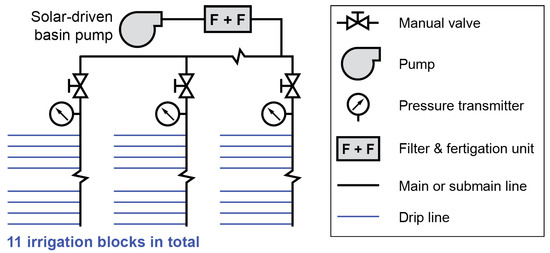
Figure 4.
The key components of the experimental irrigation system. To measure when users opened or closed valves in practice, pressure transmitters were installed after each manual valve. The derivatives of pressure transmitter readings indicated a user’s valve-opening or valve-closing action when they spiked high or low, respectively.
3.2. Monitoring Farmer Practice and Human-Centered Design of the AS-MO Tool
Two specific, user-centered questions were explored. First, “What user behavior explains the water-delivery observations made when participants used the AS-MO tool?” This question is important because there are many reasons why a farmer might use a tool differently than expected. For example, it is expected that farmers will miss irrigation events. What is unknown is why they might miss: because they do not carry phones with them on the field, because they have other agricultural tasks happening during scheduled irrigation events, or other reasons. Understanding these reasons can inform the tool’s next design iteration, ensuring typical user practice is accounted for. Second, “How could the user experience of the AS-MO tool improve?” When developing a tool, it is important to understand if any of its drawbacks can be mitigated with an improved design. Participants’ responses and insights could inform the next iteration of the AS-MO tool’s design.
To answer these questions, farmers were asked to install and use the AS-MO app on their personal devices so they could interact with the prototype. At the beginning of the study, participants were taught by the research team how to use the app over a series of training days using simulated schedules. After training, participants used the app for 11 weeks: from 10 May 2023 to 25 July 2023. It was expected that not all irrigation events would be followed according to the POWEIr-generated schedule. To ensure participants experienced the intended flexibility of the AS-MO tool, they were instructed to skip irrigation events if they were not able to perform the actions for any reason. In these cases, participants were asked to note why irrigation events were missed, so the research team could understand these scenarios.
To monitor how farmers used the tool from a quantitative perspective, data regarding user actions were collected for each irrigation event. Scheduled timestamps were recorded when participants were advised by the AS-MO tool to open () or close () valves. These timestamps came from the POWEIr-generated schedule. Throughout an event, the theory assumes a constant flow rate that was determined as part of a calibration procedure during installation. During the procedure, flow rate measurements were taken for individual sections and for pairs of sections that could be irrigated simultaneously. Confirmed timestamps, and , were collected when a participant confirmed an opening or a closing action, respectively, in the app. These timestamps were recorded in the app’s backend server. Pressure transmitters (SPT25-20-0060A by ProSense, Oosterhout, The Netherlands) were installed just after the manual valves in each irrigation block (Figure 4) and were used to determine measured timestamps, and . The measured timestamps were recorded when the derivative of pressure transmitter readings spiked high or low, indicating a recent valve-opening or valve-closing action, respectively. These spikes could have occurred due to other causes (e.g., pump cycles or leaks), so only the reading closest to a scheduled or confirmed timestamp was recorded.
To analyze these data, confirmed and measured timestamps were compared to the corresponding scheduled timestamps for each scheduled user action in four ways. First, if no confirmed or measured timestamp was recorded for a given scheduled timestamp, this was considered a missed event in the app or on the field, respectively.
Second, for each opening or closing action that was not missed, the differences between scheduled timestamps and the corresponding confirmed ( and , respectively) or measured timestamps ( and , respectively) were calculated using
These differences were binned into 5 min ranges to show the frequency of early or late user actions. The medians, interquartile ranges, and means for these differences were calculated.
Third, to understand how users’ actions impacted the durations of irrigation events, the confirmed and measured durations of all completed irrigation events were compared to the corresponding duration of any scheduled event using
where was the relative duration of a confirmed event, and was the relative duration of a measured event. Each value is presented as a percentage of the duration of a scheduled event. For analysis, the calculated values for each event were binned into 15% ranges to visualize the overall impact on irrigation event durations. The medians, interquartile ranges, and means for all metrics were calculated.
Finally, to understand how users became familiar with the AS-MO tool over time, confirmed and measured event durations were compared to the corresponding scheduled durations for each day of the experiment. For each event, the differences in durations were calculated using
where is the difference between confirmed event duration and scheduled duration, and is the difference between measured event duration and scheduled duration. These values were totaled for all irrigation events on each day of the experiment, and the differences of these summations ( and , respectively) were plotted over time. While the second and third analyses did not include missed events, this final one did.
To understand farmers’ perspectives about the tool’s user experience from a qualitative standpoint, participants were interviewed on the phone several times each week throughout the study. Participants were also contacted via WhatsApp messaging and Facebook Messenger (v2.22.18.76 and v396.0, respectively, both by Meta, Menlo Park, CA, USA). In these interactions, qualitative data about their experiences with the tool were gathered, including why a scheduled irrigation event was not confirmed or measured, why a confirmed or measured action was early or late, if participants had trouble using the tool, and if participants had ideas for design improvements. Text from messages and notes from voice calls were compiled in a single document. They were inductively coded by one researcher for analysis.
4. Results
4.1. Quantitative User Behavior
The AS-MO prototype was found to perform successfully from a human-centered perspective. Over the course of the study, there were 590 scheduled irrigation events (Table 2). For 93% of these scheduled events, users’ confirmations aligned with what was measured on the field (e.g., confirmations and measurements either both indicated action had been taken or both indicated no action had been taken). The POWEIr theory relies on users’ correct reporting of their actions in order to schedule future irrigation events, so it is important that this number be high. The most water-efficient irrigation schedules are realized when farmers follow the POWEIr generated schedules. The 301 “confirmed and measured actions” reported in Table 2 correspond to how frequently farmers used the tool and followed the generated schedule. This was the case over half of the time. Not all events were expected to be confirmed and measured because farms are busy settings. The prior work that initially evaluated the AS-MO tool suggested the need for irrigation schedules to have a degree of flexibility, so this response rate was considered successful. One reason that the POWEIr theory was chosen to achieve automatic scheduling was that it can account for the cases when farmers miss irrigation events, so long as farmers correctly report that no irrigation has taken place. The 249 actions with no confirmations or measured actions represent this scenario. If a farmer misses an event and correctly reports their inaction in the AS-MO app, the POWEIr theory will account for this lack of water in the schedule it generates for the following day [28]. The POWEIr theory cannot correct for instances for when farmers misreport farm actions in the app, so it is important to know how frequently this scenario occurs. There were 40 instances when users likely remembered to perform an action but forgot to confirm it in the app, or vice versa. These scenarios were expected, but the occurrence was low (for 7% of events), meaning the tool’s frequency of use was successful.
Table 2.
Of the 590 scheduled irrigation events, the number of events confirmed by participants with the AS-MO tool and the number of measured events observed on the experimental site.
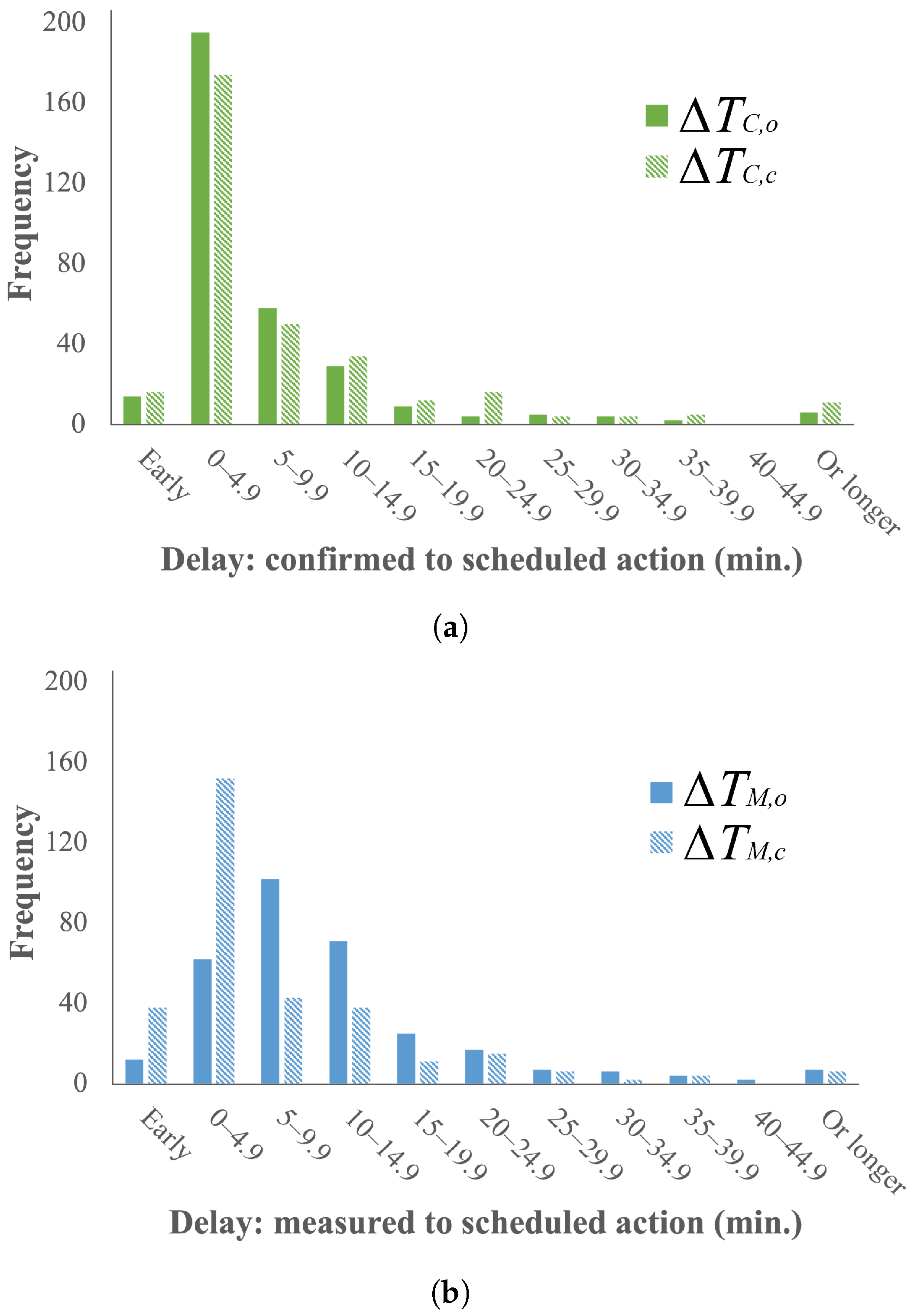
Table 2 only reports how frequently farmers follow the auto-generated schedule; it does not investigate how well they follow it. Comparing confirmed, measured, and scheduled actions, as well as the total event durations, provides insight into how well the schedule was followed. As expected, confirmed and measured opening and closing actions were not observed at exactly the scheduled times (Table 3). These actions were more frequently late than early (Figure 5). However, they often occurred close to the corresponding scheduled times. In Figure 5a, 60% of confirmed opening actions and 53% of confirmed closing actions were recorded within the five minutes after the corresponding scheduled times. Table 3 reports similar numbers, with median values of two and three minutes for and , respectively. This suggests that users responded similarly to both direction types in the app.
Table 3.
Medians, interquartile ranges, and means for key metrics used to evaluate user behavior. Median relative confirmed durations close to 100% suggest participants used the AS-MO tool correctly. Median relative measured values below 100% highlight the need for additional calibration steps when installing the AS-MO tool on a farm. High mean values are skewed by outliers.
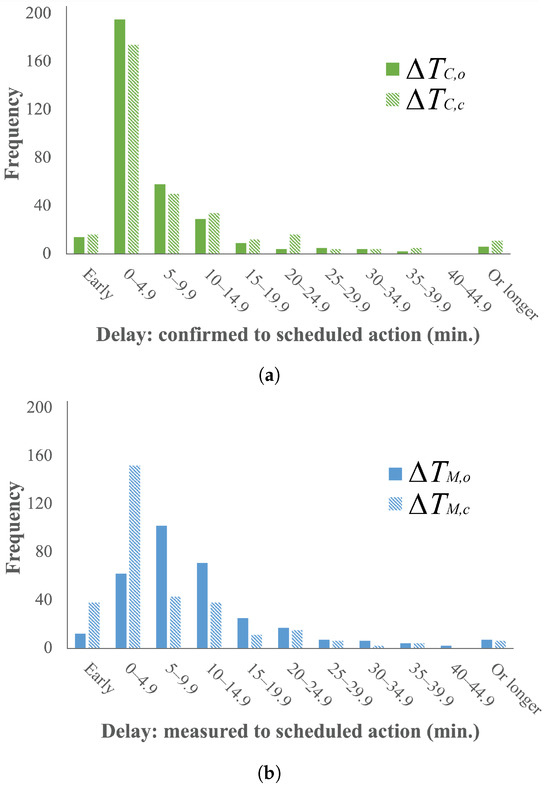
Figure 5.
Frequency of how early or late (a) confirmed actions and (b) measured actions occurred, compared to scheduled actions. Confirmed actions and measured closing actions occurred most frequently within five minutes of the scheduled action. The majority of measured openings occurred within 10 min of the scheduled action.
In contrast to the confirmed actions, there was an observable disparity between the measured opening and measured closing actions. Median values of and were eight and three minutes, respectively. Measured opening actions most frequently fell in the 5–9.9 min bin (32% of all measured opening actions) while 48% of measured closing actions were observed within five minutes of the corresponding scheduled times. There are two possible explanations for this disparity. First, in all irrigation systems, it takes a certain amount of time after a pump is turned on for the hydraulic network to fill. The current iteration of the POWEIr theory does not account for filling delay, so the pressure transmitter readings may not have aligned precisely with the participants’ valve-opening actions. Filling time is a function of the hydraulic network setup, pump, farm grade, and other characteristics, and this value is unique to each section on each farm. To mitigate this effect in the future, the filling time for each section should be measured during system installation and calibration, input into the POWEIr theory, and added to each scheduled event to ensure crop water demand is met.
Second, users are more likely better primed for closing actions than they are for opening actions. For example, if a user is far from the irrigation block when a scheduled event starts, they will have to walk some distance to manually open the valve. When a closing action is scheduled, users have recently completed an opening action, so they are more likely to already be near the valve. A potential mitigation strategy could be to send opening action notifications earlier than is currently designed in the AS-MO app. Earlier notifications could allow users the travel time they may need to reach the manual valve.
For both measured and confirmed actions, there were very few early actions observed. This suggests that push notification reminders to users’ phones, a key feature of the AS-MO tool and HMI, are critical to its success. If users did not have notifications, they would need to continuously check the AS-MO app schedule page for upcoming actions. This could be frustrating for users, and without notifications, the rate of delayed actions would be expected to increase.
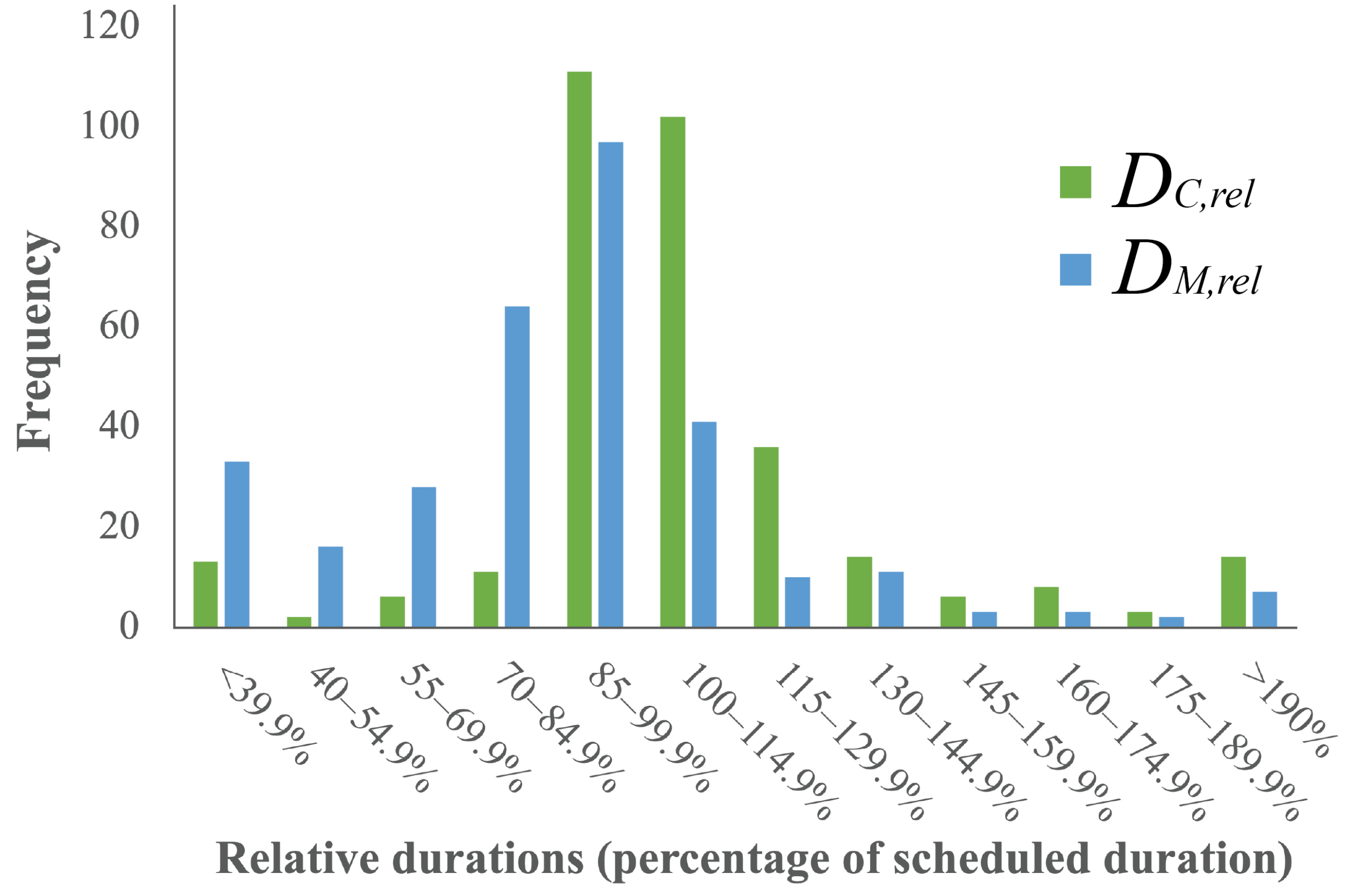
The late and early actions translated to duration differences between confirmed and measured irrigation events and scheduled events (Table 3 and Figure 6). The median value for confirmed durations relative to scheduled durations () was 102% (slightly longer). The median value for measured relative to scheduled durations () was 88% (shorter). Figure 6 shows that these values most frequently within the ±15% bins. These results further demonstrate the success of the AS-MO tool and HMI in this case study because farmers can realize the full efficiency benefits of the POWEIr theory (i.e., 44% water savings [27]) if they irrigate in line with scheduled events. Beyond that, additional user behavior patterns can be observed from these results. First, the mean of falls below 100%, while the mean of is above. This shows that confirmed events were longer on average than scheduled events, while measured events were shorter on average, a result that further supports the user behavior discussed regarding Figure 5b. Measured events may be short in duration because the hydraulic network takes time to fill when valves are first opened or because study participants were more likely ready to close valves than open them. It is unclear why confirmed durations tend to be longer than scheduled events. This is important to mitigate because the POWEIr theory assumed more water was delivered than was the case. If this happens too frequently, crops could become water-stressed. Further investigation into user observations could provide insights into this result.
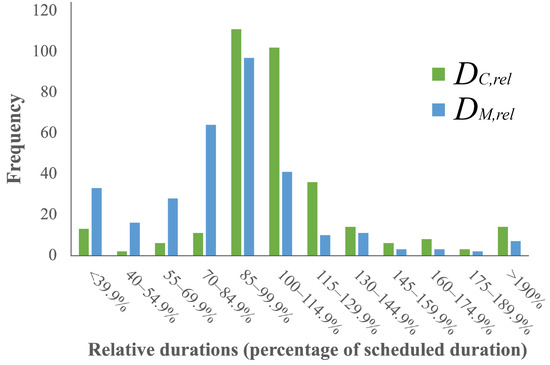
Figure 6.
Frequency of how short or long confirmed durations and measured durations occurred, compared to scheduled durations, reported as percentages of the scheduled duration. Confirmed and measured durations occurred most frequently within 15% of scheduled durations.
Additionally, there were a minimal number of very long irrigation events observed (the rightmost bins in Figure 6). In these cases, participants may have forgotten to confirm a closing action in the app, forgotten to close the manual valve, or forgotten both actions. It was expected that users might forget to confirm closing actions, so the POWEIr scheduling theory was designed to assume no irrigation event would extend until midnight. If a valve was confirmed as open at midnight, the theory assumed no water delivery instead of several hours of water delivery. This solution avoided any potential water stress to the crops. If the opposite scenario occurred and a user confirmed a closing action in the app but forgot to close the valve, the crops would receive more water than expected. This would use more water than necessary, but the crops would not experience as much stress.
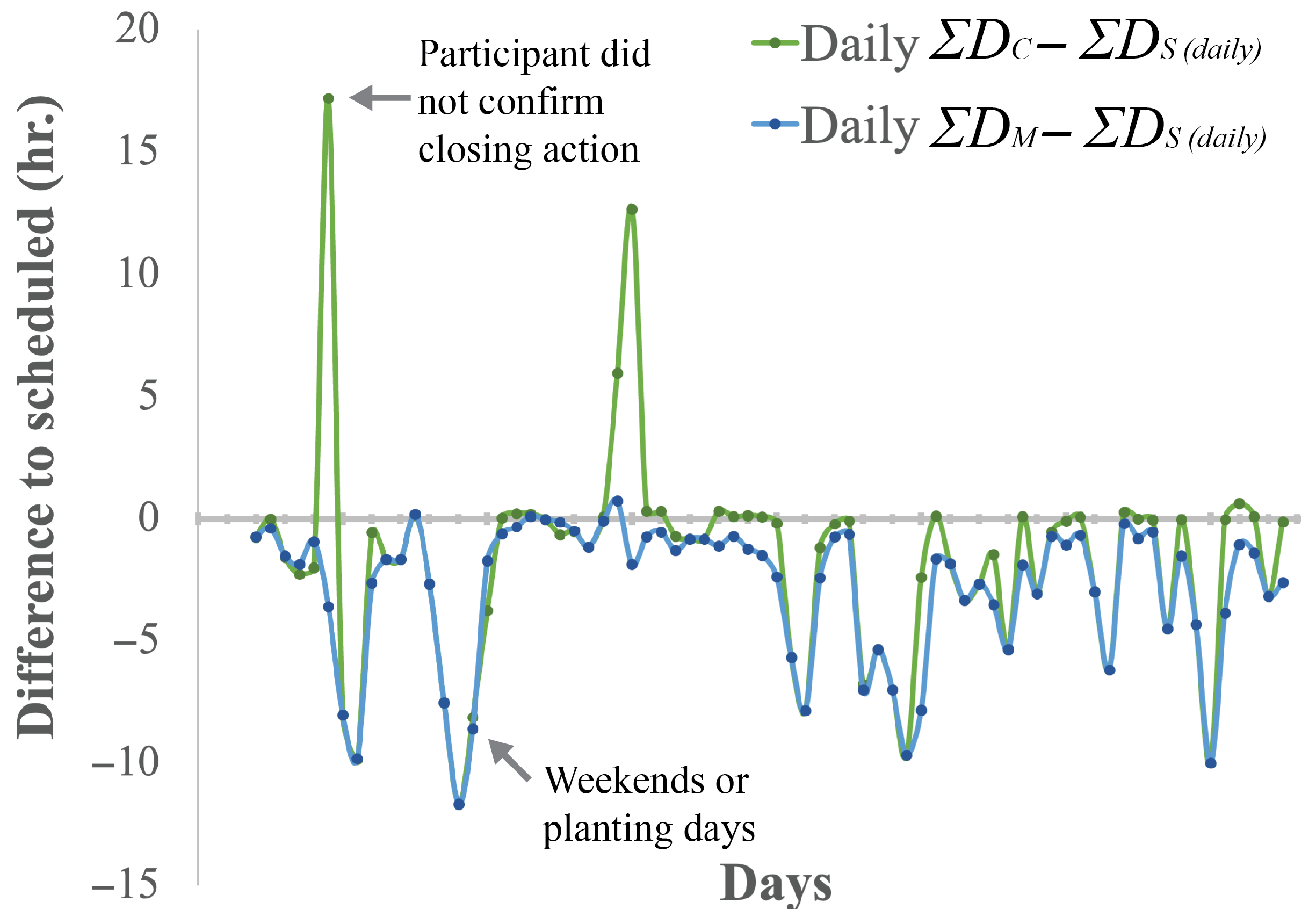
Figure 7 shows how confirmed and measured durations compared to scheduled durations over the course of the experiment. There are two large spikes in the green line in the first half of the experiment. On these days, participants did not confirm closing actions, so the tool recorded that a valve was open for many hours. As mentioned above, the POWEIr theory accounted for this user error by assuming no irrigation rather than assuming many hours. Other than these errors, the two lines track well, with confirmed events often slightly longer than measured events. This result is consistent with previous results. Further, there are many days for which the two lines are near zero, indicating participants implemented an efficient, POWEIr-generated schedule. There are also several days for which both lines are negative by several hours. This occurred on days when farmers could not irrigate because it was a weekend or because other farm activities took laborers away from irrigation (e.g., planting or harvesting), so they missed irrigation events. Even after several days of many missed events, both lines always return to near zero. This observation suggests the AS-MO tool is able to help farmers return to an auto-generated schedule, even if they do not irrigate for several days. Depending on the size of the irrigation system and energy storage, this may not always be possible, so further work should be done to understand how much user error should be expected and designed for when building new irrigation systems.
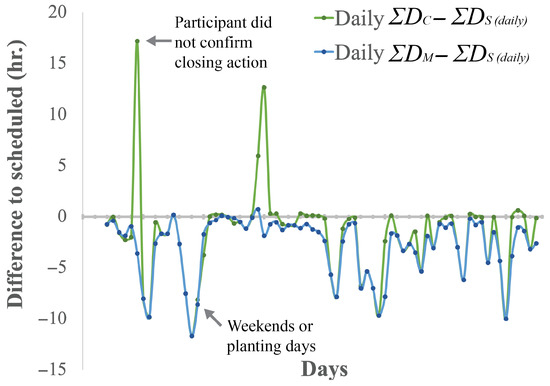
Figure 7.
Daily confirmed (green) and measured (blue) irrigation durations compared to scheduled irrigation durations. Both confirmed and missed irrigation events are included. Figure shows that the AS-MO tool enabled participants to follow the schedule over time even if they missed irrigation events for several days. Outlier data points provide insight into missed events (visualized when both lines are very low) and forgotten confirmations (visualized when the green line is very high).
4.2. Qualitative User Behavior Results and Suggested Design Updates
The inductively coded data led to the codes and example data available in Table A1. In interviews, the participants claimed that their irrigation practices were improved when using this tool. In the middle of the study, one participant noted that the crops on the experimental side were growing just as well as those on other areas of the farm that were not under the experiment and were irrigated using conventional means. This observation meant that the volumes delivered to the experimental blocks were appropriate to not stress crops, confirming the capability of the AS-MO tool and POWEIr theory.
Overall, the two participants claimed that the AS-MO tool and app were easy to learn and use, a result consistent with the trends seen in Figure 7. They mentioned two specific ways the AS-MO tool could be improved. First, one participant said the notifications were helpful, but that they also set their own alarm 15 min before each irrigation event was scheduled to start. They did this at the beginning of the day when they reviewed the schedule for the first time. This result implies that the notifications were useful, but that the timing could be improved. The next iteration of the AS-MO app should ask users to set how early they would like to receive notifications in advance of scheduled actions. This change would likely decrease the frequency of late actions. Second, one participant asked if the app was available for iOS devices, which they preferred. For this iteration, the app was only designed for Android devices, so the next iteration of the AS-MO app should be designed for both platforms to expand its potential reach.
This work sought to understand why farmers might miss actions, so the late, early, or missed actions shown described above were not considered failures of the AS-MO tool. Table 4 summarizes the most common reasons why participants did not follow the automatically generated schedule. For each observation, suggestions for how to address these issues are also provided. Future iterations of the AS-MO tool could be designed with these results in mind, increasing the chance of successful user adoption.
Table 4.
Common reasons why irrigation actions were late, early, or missed and the resulting design suggestion for the next iteration of an AS-MO tool.
5. Discussion
The first objective of this work was to characterize the functional design features of an AS-MO tool and its corresponding HMI. Section 2 documents the detailed design of the AS-MO prototype, and justifications for design details are grounded in the specific needs of medium-scale MENA farmers. These design justifications are useful to other researchers and designers developing irrigation support systems, particularly for resource-constrained farms in the MENA region or elsewhere. The following three research objectives assessed these design choices from a human-centered perspective.
This work’s second research objective sought to demonstrate that medium-scale farmers could successfully use an AS-MO tool as intended in a real farm setting. Overall, the AS-MO tool was used successfully by participants. Participants accurately confirmed actions 51% of the time. Of the remaining events that were not confirmed or measured as scheduled, a majority were missed for valid logistical reasons (e.g., weekends, holidays, planting or harvesting days, or planned maintenance). Several unplanned skips occurred as well. For example, cell service was lost, other work activities took longer than expected, or the participants forgot to check their phones. Still, these unplanned skips were rare. If the changes suggested in Table 4 were implemented, it is expected that the percentage of missed events would significantly decrease. From there, further testing could be done to understand more about the nature and impact of these unplanned skips. This low-cost, easy-to-use tool was designed to be more accessible to resource-constrained farms than conventional precision irrigation solutions. If used in the way demonstrated in this study, such a tool could enable a higher adoption of water-efficient irrigation schedules, while relying on the low-cost manual valve hardware that is already present on many MENA farms.
The third objective of this work was to validate that the AS-MO tool enabled farmers to deliver water in ways consistent with fully automatic systems. Table 3, Figure 6 and Figure 7 show that this objective was achieved. The durations of all confirmed and measured events on the field most frequently fell within 15% of the corresponding scheduled durations, with medians of confirmed and measured durations also in this range. These results mean the farm largely realized the efficiency benefits of automatic scheduling. The differences between measured and confirmed durations compared to scheduled durations could be further improved with updates to the AS-MO tool. For example, the POWEIr scheduling theory does not currently account for the time to pressurize a hydraulic network, a scenario that likely decreased the measured durations observed in this study. Further, the AS-MO tool could allow users to adjust the timing of push notifications. If opening notifications arrived earlier than the start of an event, users might be more primed for these actions on time.
Participants’ confirmed and measured actions tracked well over time, often delivering similar amounts of water as the AS-MO tool scheduled (Figure 7). These results indicate that the AS-MO tool was robust to user error and helped farmers return to an efficient schedule, even after several consecutively missed events. Because farmers are busy, users should not be expected to perform all scheduled irrigation actions as advised by the tool. This was the case in this study, confirming that one benefit of the POWEIr theory is that it is adaptable; it has the ability to compensate for missed events and user errors.
Demonstrating water efficiency, while an important aspect of assessing the tool, was not an objective of this study. Still, these results substantiate the potential water savings the AS-MO tool can afford. A separate validation study of this tool demonstrated its potential to use up to 44% less water than conventional irrigation strategies [27]. When combined with the human-centered validation of the present study, the water-saving potentials of the AS-MO tool and the POWEIr theory increase.
The final objective of this work was to determine which AS-MO tool features farmers found most valuable and to establish what added or changed features should be present in the next design iteration of the tool to increase its adoptability. Both quantitative (Table 3 and Figure 5) and qualitative results suggest that the push notifications were helpful to participants. Because farmers might need advance notice for when to perform tasks, the notifications should be sent before scheduled actions in order to improve users’ ability to accurately follow the auto-generated schedule. Table 4 introduces five suggested design updates to the AS-MO tool that have the potential to improve the HMI and minimize the number of missed scheduled events. These updates were determined from testing on one case study, so further work must be done to understand if additional updates are needed in different contexts.
The results of this study provide value to both engineering practitioners and other researchers in the field. For example, agricultural equipment designers can see the successful demonstration of a semi-manual/semi-automatic design support tool. This architecture could inspire new product concepts to support resource-constrained farmers who cannot easily adopt existing precision agricultural solutions. The proposed AS-MO tool and HMI successfully brought precision irrigation practices to the studied farm. Equipment designers and engineers working in these contexts could implement similar semi-manual/semi-automated approaches for other farm tasks, like fertilizing, planting, harvesting, or pest management. More specifically, the design justifications presented in Section 2 and the proposed design updates listed in Table 4 can be integrated into many future agricultural equipment designed for the contexts studied in this work: farms in the MENA region, medium-scale farms, or resource-constrained farmers in other regions.
Further, researchers who work in resource-constrained contexts could learn from how the AS-MO design process was conducted. Design iterations of the AS-MO tool’s HMI were conducted in parallel to design iterations of the POWEIr scheduling theory (Figure 2). The lessons of these two design cycles informed each other. The researchers developing the HMI elucidated user needs and communicated them to the researchers developing the scheduling theory who, in turn, informed on the theory’s technical capabilities and limitations. All researchers believed their work has a higher potential for impact because of these interactions. A product design process that incorporates both technical development and human-centered understandings in this way is known to be successful [38]. However, this practice is not always followed in scientific research, with users sometimes being addressed only at the end of the process. This can lead to low adoption rates and limited impact of technical innovations. The work described in this study and prior ones referenced throughout demonstrates the value of testing a transformative technology’s user experience in parallel to testing its technical aspects.
Limitations
Limitations of this work highlight the need for further development and assessment of the AS-MO tool. An important objective of evaluating the AS-MO tool is to assess its adoptability and sustained use among target users, but that objective was not addressed in this study. The present participants agreed to use the tool for the course of the experiment and were not given the option to disadopt it. To evaluate the adoptability of this tool, testing with a greater number of farmers for multiple seasons is necessary, and study participants should be given the option to not adopt or to revert to their prior irrigation practices if they believe the tool does not meet their needs. Prior work [4,24,39,40] highlights the importance of using demonstration farms to encourage adoption. An evaluation of the AS-MO tool adoption could incorporate demonstration farms. In this scenario, demonstration farms (on the order of 20) would be equipped with the AS-MO tool. Farmers on the demonstration farms would use the tool in earnest, and neighboring farmers would be invited to see its impact on these farms. These neighboring farmers would then have the opportunity to adopt or not adopt the tool on their own farms. Understanding these farmers’ adoption choices would provide data on the potential adoptability of the AS-MO tool.
This study contains a small sample size: two participants who were experienced farmers, working on one farm of 0.8 hectares. Increasing the number of farmer perspectives evaluated would confirm whether the results found in this work can reflect the majority of users or not. This work assumed that the two participants represented small- to medium-scale MENA farmers. Evaluating the AS-MO tool with more farmers, including those in other MENA countries and with larger farms, would validate this assumption. Because the study participants were early adopters of solar-powered drip irrigation, this work does not provide information on how users who are new to this technology might use an AS-MO tool. Expanding the study to include new users would provide insights into these types of farmers. This limitation impacts the generalizability of the quantitative results presented in Section 4.1 to other MENA farmers.
The AS-MO prototype was experimental and not designed for user installation. Therefore, the research team, and not the study participants, conducted the installation of the AS-MO prototype. This limitation meant that not all aspects of the tool’s use were studied, impacting how comprehensively the fourth research objective was explored. Understanding participants’ experience installing and maintaining the equipment is critical to assessing adoption, so this should be assessed in a future study. Still, it was found that a key difficulty in setting up the AS-MO tool was inputting accurate farm parameters into the POWEIr model. Among other parameters, the POWEIr theory relies on the crop coefficients—crop- and location-specific values that are typically reported as ranges—to calculate water demand. Regional agricultural research institutions often publish empirical crop coefficients, but not all crop species in all regions have been measured. A limitation of automatic scheduling, the calculated irrigation amount is highly dependent on these input crop parameters. Because the proposed AS-MO tool combines automatic scheduling with manual operation, the HMI ensures that a farmer will always be on the field. The scheduling flexibility provided to farmers enables them to verify and address any inaccuracies in the automatic scheduling caused by input errors. As researchers increase the availability and reliability of local crop parameters, the accuracy of the auto-generated schedules will continue to improve, increasing the potential for farmers to realize greater water efficiency with an AS-MO tool.
As expected, participants’ phones and the AS-MO tool lost network connection. Each time a phone lost connectivity during scheduled irrigation events, it decreased the number of confirmed actions reported in Table 2. The following features should be included in the next iteration of the AS-MO tool and HMI to address this limitation. To ensure farmers receive opening and closing notifications when their phone loses connectivity, all notification data for a given day should be stored locally on the device. This storage process can occur in the middle of the night when the POWEIr theory generates the upcoming day’s schedule and sends it to the device. This is when farmers are likely to have a stable connection. If a farmer’s phone loses connectivity during the day, the local app should store their opening and closing confirmations until their device returns online. After returning online, all confirmations should sync with Firebase Cloud Messaging.
An important part of assessing the AS-MO tool is to understand it’s impact on the farm environment (e.g., crop health, yield, soil health). Prior work has studied the impact of the underlying POWEIr scheduling theory on crop yield, finding it to produce a comparable yield [27,28]. However, no studies have analyzed the AS-MO tool or the POWEIr theory’s impact on other environmental factors. This is a critical assessment to conduct before it is disseminated to farms.
6. Conclusions and Future Work
This work aimed to evaluate the farmer execution of an AS-MO tool and its associated HMI in a MENA farm setting. To do this, a functional AS-MO tool prototype was designed to deliver a realistic HMI to study participants. It was installed on a Jordanian farm, and employees used the tool for 11 weeks. To understand how farmers use the tool, participants’ valve-opening and valve-closing actions on the field were compared to the actions scheduled and prompted by the tool. Results showed that participants used the AS-MO tool successfully. For 93% of the 590 scheduled events, farmers correctly confirmed their actions (51% of the events) or inactions (42% of the events) in the AS-MO app. When responding to irrigation actions, participants had a median response time of of three minutes; they confirmed 56.5% of actions within five minutes of the scheduled time. Sensors on the field measured a different behavior. While measured closing actions had a median response time of three minutes, measured opening actions had a median response time of eight minutes. This result indicates there was a difference between opening and closing actions on the field. Further work should seek to incorporate this difference into the AS-MO tool’s design, for example, by sending opening notifications earlier than closing notifications. It was shown that the AS-MO tool was robust to user error; although farmers only followed the automatically generated instructions for 51% of events, they confirmed their actions and inactions correctly for 93% of the events. This allowed for the automatic schedule to accurately account for the actual amount of applied water and adjust its future schedules. Overall, a majority of the confirmed and measured durations fell within 15% of the scheduled durations, demonstrating the successful use of the AS-MO tool.
In qualitative interviews, participants suggested several design updates that could improve the AS-MO HMI. For example, the AS-MO app sent participants notifications as irrigation events started, but one participant set their own alarms to notify them 15 min earlier. Adjusting the app’s notification timing could further improve users’ response time. Additionally, the research team observed issues with the prototype functionality: irrigation events were scheduled when participants were unavailable, participants occasionally forgot to confirm actions on the AS-MO app, participants did not experience all the scheduling flexibility an AS-MO tool could enable, and participants’ devices occasionally lost network connectivity. Finally, by testing the prototype over an extended period of time on an operational farm, hypotheses regarding the challenges of remote contexts (e.g., network connectivity) were confirmed. This work proposes suggestions for how to address these observed concerns in the next iteration of an AS-MO tool.
A separate study assessing the water efficiency of the POWEIr theory demonstrated that this tool can achieve high water-efficiency when used correctly [27]. The results of the present study indicate that the AS-MO tool has the potential to be used correctly by farmers. The combined insights from these two studies suggest that the AS-MO tool and HMI have the potential to be used successfully by farmers on resource-constrained farms to deliver water-efficient irrigation.
Future work should integrate all of these suggestions and continue user testing. This study followed the LDW Method to conduct feasibility and usability tests on one early-adopter site using the minimum viable prototype of a novel tool concept. Additional testing with more farmers could elucidate further insights and verify the ultimate adoptability of an AS-MO tool. The next phase of testing should include a higher number of farms (on the order of 20) for full crop seasons. The farm sites should be selected to ensure geographic and cultural diversity to ensure other areas of Jordan and other MENA countries are represented. With more users, standard usability tests (e.g., NASA-TRX or system usability scales) could be implemented to quantify ease-of-use. As development continues, the existing AS-MO prototype must be translated into a functioning, marketable product. Steps include developing robust cloud processing, minimizing hardware costs, and design for manufacturing.
This work presented a key step in the development of a precision irrigation tool that, if adopted by MENA farmers at scale, has the potential to increase the prevalence of water-efficient irrigation practices on resource-constrained farms, contributing to sustainable agriculture in this region.
7. Patents
The work described in this paper, along with other related efforts, has led to an international patent application (International Application No. PCT/US2023/072178), filed on 14 August 2023. All data were collected, and the majority of the analysis was conducted before the filing date. The authors state that no conflicts of interest exist with the application and the reporting in this article.
Author Contributions
Conceptualization, G.D.V.d.Z., C.S. and A.G.W.V.; methodology, G.D.V.d.Z., C.S. and S.R.P.; software, S.R.P.; formal analysis, G.D.V.d.Z.; investigation, G.D.V.d.Z. and C.S.; data curation, G.D.V.d.Z.; writing—original draft preparation, G.D.V.d.Z.; writing—review and editing, G.D.V.d.Z., C.S., S.R.P. and A.G.W.V.; visualization, G.D.V.d.Z.; funding acquisition, A.G.W.V. All authors have read and agreed to the published version of the manuscript.
Funding
This research was funded by a gift from the Julia Burke Foundation and by USAID Cooperative Agreement Number AID-OAA-A-16-00058.
Institutional Review Board Statement
All research protocols were approved by the Massachusetts Institute of Technology Committee on the Use of Humans as Experimental Subjects (Protocols #E3596 and #E4098).
Informed Consent Statement
Informed consent was obtained from all subjects involved in the study.
Data Availability Statement
The data presented in this study cannot be made publicly available because they are sensitive human subjects data. Details of the data may be available on request from the corresponding author.
Acknowledgments
The authors thank our field partner—MIRRA Jordan, led by Samer Talozi—for connecting us with participants and the participants themselves for sharing their perspectives. Thank you to our colleagues, especially Fiona Grant, Susan Amrose, Aditya Ghodgaonkar, Emily Welsh, and Sam Ingersoll, for supporting the efforts of this study. Thank you to Glen Urban and Maria Yang for providing guidance.
Conflicts of Interest
The authors declare no conflicts of interest.
Abbreviations
The following abbreviations are used in this manuscript:
| Abbreviations | |
| AS-MO | Automatic scheduling-manual operation |
| HMI | Human–machine interaction |
| MENA | Middle East and North Africa |
| POWEIr | Predictive Optimal Water and Energy Irrigation |
| SDG | Sustainable Development Goal |
| Variables | |
| Duration of a confirmed event relative to a scheduled event | |
| Duration of a measured event relative to a scheduled event | |
| Confirmed timestamp when a participant confirmed a closing action | |
| Confirmed timestamp when a participant confirmed an opening action | |
| Measured timestamps when sensors indicated a recent valve-closing action | |
| Measured timestamps when sensors indicated a recent valve-opening action | |
| Scheduled timestamp when the AS-MO tool advised a participant to close a valve | |
| Scheduled timestamp when the AS-MO tool advised a participant to open a valve | |
| Difference between confirmed event duration and scheduled duration | |
| Difference between measured event duration and scheduled duration | |
| Difference between a scheduled closing and corresponding confirmed timestamp | |
| Difference between a scheduled opening and corresponding confirmed timestamp | |
| Difference between a scheduled closing and corresponding measured timestamp | |
| Difference between a scheduled opening and corresponding measured timestamp |
Appendix A. Qualitative Codes
Table A1.
Qualitative codes introduced in Section 3.2.
Table A1.
Qualitative codes introduced in Section 3.2.
| Code | Example Data |
|---|---|
| Consideration relating to AS-MO app design | Participant: “I like the schedule at the morning. I set an alarm 15 min before needing to open each section and then calls [participant name] to open the sections when the alarm goes off.” |
| Irrigation practices | Participant: “Suction pipe from the pond clogged with some debris and couldn’t irrigate…fixed that today” |
| Irrigation scheduling needs | Participant: “From 11:30 to 1:30 on Fridays, we go to mosque.” |
| Experimental procedures/instructions | Researcher: “it’s more important for me to understand why an event was skipped than to make sure every event is followed.” |
| Questions about or debugging of AS-MO app | Participant: “Maybe my phone wasn’t connected to any network, and I will ask laborers again if any one close the valve” |
| Questions about or debugging of irrigation system | Participant: “Most likely the [sensor wire] got lose by accident or wind on the 4th.” |
| Confirming participant actions or inactions that were observed remotely | Participant: “Today we miss [irrigation] section 2 of grape we are have a meeting and I missed to close the valves for [irrigation] section 5 + 6 and missed to irrigate [irrigation] section 2 grape” |
References
- United Nations. The Sustainable Development Goals Report; United Nations: New York, NY, USA, 2020. [Google Scholar]
- Worldometer. Regions in the World by Population, 2022. Available online: https://www.worldometers.info/world-population/population-by-region/ (accessed on 5 July 2023).
- FAO; IFAD; UNICEF; WFP; WHO. The State of Food Security and Nutrition in the World 2020; FAO, IFAD, UNICEF, WFP and WHO: Rome, Italy, 2020. [Google Scholar] [CrossRef]
- Van de Zande, G.D.; Grant, F.; Sheline, C.; Amrose, S.; Costello, J.; Ghodgaonkar, A.; Winter V, A.G. Design and Evaluation of a Precision Irrigation Tool’s Human–Machine Interaction to Bring Water- and Energy-Efficient Irrigation to Resource-Constrained Farmers. Sustainability 2024, 16, 8402. [Google Scholar] [CrossRef]
- Grant, F.; Amrose, S.; Van de Zande, G.D.; Talozi, S.; Winter, A.G. An Energetic Approach to Solar-Powered Drip Irrigation (SPDI) Design for Farmers in the Middle East and North Africa. 2025. Available online: https://ssrn.com/abstract=5683666 (accessed on 28 January 2026).
- Amede, T. Technical and institutional attributes constraining the performance of small-scale irrigation in Ethiopia. Water Resour. Rural Dev. 2015, 6, 78–91. [Google Scholar] [CrossRef]
- Shah, T.; Verma, S.; Pavelic, P. Understanding smallholder irrigation in Sub-Saharan Africa: Results of a sample survey from nine countries. Water Int. 2013, 38, 809–826. [Google Scholar] [CrossRef]
- Ngigi, S.N.; Thome, J.N.; Waweru, D.W.; Blank, H.G. Low-Cost Irrigation for Poverty Reduction: An Evaluation of Low-Head Drip Irrigation Technologies in Kenya; Annual Report; International Water Management Institute (IWMI): Colombo, Sri Lanka, 2001. [Google Scholar]
- Burney, J.; Woltering, L.; Burke, M.; Naylor, R.; Pasternak, D. Solar-powered drip irrigation enhances food security in the Sudano-Sahel. Proc. Natl. Acad. Sci. USA 2010, 107, 1848–1853. [Google Scholar] [CrossRef]
- FAO; IFAD; UNICEF; WFP; WHO (Eds.) The State of Food Security and Nutrition in the World 2017: Building Resilience for Peace and Food Security; Number 2017; FAO: Rome, Italy, 2017. [Google Scholar]
- Wada, Y.; van Beek, L.P.H.; van Kempen, C.M.; Reckman, J.W.T.M.; Vasak, S.; Bierkens, M.F.P. Global depletion of groundwater resources: Global groundwater depletion. Geophys. Res. Lett. 2010, 37, L20402. [Google Scholar] [CrossRef]
- Jain, M.; Fishman, R.; Mondal, P.; Galford, G.L.; Bhattarai, N.; Naeem, S.; Lall, U.; Balwinder-Singh; DeFries, R.S. Groundwater depletion will reduce cropping intensity in India. Sci. Adv. 2021, 7, eabd2849. [Google Scholar] [CrossRef]
- Allen, R.; Pereira, L.S.; Raes, D.; Smith, M. FAO Irrigation and Drainage Paper No. 56; Technical Report; FAO: Rome, Italy, 1998. [Google Scholar]
- Abioye, E.A.; Abidin, M.S.Z.; Mahmud, M.S.A.; Buyamin, S.; Ishak, M.H.I.; Rahman, M.K.I.A.; Otuoze, A.O.; Onotu, P.; Ramli, M.S.A. A review on monitoring and advanced control strategies for precision irrigation. Comput. Electron. Agric. 2020, 173, 105441. [Google Scholar] [CrossRef]
- Srinivasan, A. (Ed.) Handbook of Precision Agriculture: Principles and Applications; The Haworth Press, Inc.: Binghamton, NY, USA, 2006. [Google Scholar]
- Gebbers, R.; Adamchuk, V.I. Precision Agriculture and Food Security. Science 2010, 327, 828–831. [Google Scholar] [CrossRef]
- Ding, Y.; Wang, L.; Li, Y.; Li, D. Model predictive control and its application in agriculture: A review. Comput. Electron. Agric. 2018, 151, 104–117. [Google Scholar] [CrossRef]
- Bwambale, E.; Abagale, F.K.; Anornu, G.K. Smart irrigation monitoring and control strategies for improving water use efficiency in precision agriculture: A review. Agric. Water Manag. 2022, 260, 107324. [Google Scholar] [CrossRef]
- Abioye, E.A.; Abidin, M.S.Z.; Aman, M.N.; Mahmud, M.S.A.; Buyamin, S. A model predictive controller for precision irrigation using discrete lagurre networks. Comput. Electron. Agric. 2021, 181, 105953. [Google Scholar] [CrossRef]
- Delgoda, D.; Malano, H.; Saleem, S.K.; Halgamuge, M.N. Irrigation control based on model predictive control (MPC): Formulation of theory and validation using weather forecast data and AQUACROP model. Environ. Model. Softw. 2016, 78, 40–53. [Google Scholar] [CrossRef]
- Lozoya, C.; Mendoza, C.; Aguilar, A.; Román, A.; Castelló, R. Sensor-Based Model Driven Control Strategy for Precision Irrigation. J. Sens. 2016, 2016, 9784071. [Google Scholar] [CrossRef]
- Zavala, V.; López-Luque, R.; Reca, J.; Martínez, J.; Lao, M. Optimal management of a multisector standalone direct pumping photovoltaic irrigation system. Appl. Energy 2020, 260, 114261. [Google Scholar] [CrossRef]
- Merida Garcia, A.; Fernandez Garcia, I.; Camacho Poyato, E.; Montesinos Barrios, P.; Rodriguez Diaz, J. Coupling irrigation scheduling with solar energy production in a smart irrigation management system. J. Clean. Prod. 2018, 175, 670–682. [Google Scholar] [CrossRef]
- Thinda, K.; Ogundeji, A.; Belle, J.; Ojo, T. Understanding the adoption of climate change adaptation strategies among smallholder farmers: Evidence from land reform beneficiaries in South Africa. Land Use Policy 2020, 99, 104858. [Google Scholar] [CrossRef]
- Nakawuka, P.; Langan, S.; Schmitter, P.; Barron, J. A review of trends, constraints and opportunities of smallholder irrigation in East Africa. Glob. Food Secur. 2018, 17, 196–212. [Google Scholar] [CrossRef]
- Leeuwis, C. Communication for rural innovation: Rethinking agricultural extension. Agric. Syst. 2005, 84, 359–361. [Google Scholar] [CrossRef]
- Sheline, C. Design of an Affordable, Precise Irrigation Controller That Lowers the Barrier to Water- and Energy-Sustainable Agriculture. Doctorate Thesis, Massachusetts Institute of Technology, Cambridge, MA, USA, 2024. [Google Scholar]
- Sheline, C.; Grant, F.; Gelmini, S.; Pratt, S.; Winter V., A.G. Designing a predictive optimal water and energy irrigation (POWEIr) controller for solar-powered drip irrigation systems in resource-constrained contexts. Appl. Energy 2025, 377, 124107. [Google Scholar] [CrossRef]
- Silva, D.S.; Ghezzi, A.; Aguiar, R.B.d.; Cortimiglia, M.N.; ten Caten, C.S. Lean Startup, Agile Methodologies and Customer Development for business model innovation: A systematic review and research agenda. Int. J. Entrep. Behav. Res. 2020, 26, 595–628. [Google Scholar] [CrossRef]
- Pease, J.F.; Dean, J.H.; Van Bossuyt, D.L. Toward a Market-Based Lean Startup Product Design Method for the Developing World. In Proceedings of the Volume 2A: 40th Design Automation Conference, Buffalo, NY, USA, 2014; ASME: New York, NY, USA, 2015; p. V02AT03A045. [Google Scholar] [CrossRef]
- Wood, A.E.; Mattson, C.A. Design for the Developing World: Common Pitfalls and How to Avoid Them. J. Mech. Des. 2016, 138, 031101. [Google Scholar] [CrossRef]
- Reddie, M.; Frey, D. DEVELOPMENT OF A NOVEL DIABETIC FOOT RISK ASSESSMENT FOR LOW-RESOURCE HEALTHCARE SETTINGS: A CASE STUDY OF LEAN DESIGN. Proc. Des. Soc. 2023, 3, 1465–1474. [Google Scholar] [CrossRef]
- Igleski, J.R.; Van Bossuyt, D.L.; Reid, T. The Application of Retrospective Customer Needs Cultural Risk Indicator Method to Soap Dispenser Design for Children in Ethiopia. In Proceedings of the Volume 2A: 42nd Design Automation Conference, Charlotte, NC, USA, 2016; ASME: New York, NY, USA, 2016; p. V02AT03A058. [Google Scholar] [CrossRef]
- Efficiency for Access Coalition. Solar Water Pump Outlook 2019: Global Trends and Market Opportunities; Technical Report; Efficiency for Access Coalition: Washington, DC, USA, 2019. [Google Scholar]
- von Hippel, E. Democratizing Innovation; The MIT Press: Cambridge, MA, USA, 2005. [Google Scholar]
- Abu Nwar, L.; Abu Noqta, R. Okra Value Chain Assessment in Irbid; Technical Report, Grow Economy Project. 2024. Available online: https://www.narc.gov.jo/EBV4.0/Root_Storage/EN/EB_List_Page/_NARC_GE_Value_Chain_Okra.pdf (accessed on 2 January 2026).
- FAO AQUASTAT. Country Profile–Jordan; Technical Report; FAO: Rome, Italy, 2008. [Google Scholar]
- Ulrich, K.T.; Eppinger, S.D.; Yang, M.C. Product Design and Development, 7th ed.; McGraw-Hill Education: New York, NY, USA, 2020. [Google Scholar]
- Mgendi, B.G.; Mao, S.; Qiao, F. Does agricultural training and demonstration matter in technology adoption? The empirical evidence from small rice farmers in Tanzania. Technol. Soc. 2022, 70, 102024. [Google Scholar] [CrossRef]
- Benouniche, M.; Kuper, M.; Hammani, A.; Boesveld, H. Making the user visible: Analysing irrigation practices and farmers’ logic to explain actual drip irrigation performance. Irrig. Sci. 2014, 32, 405–420. [Google Scholar] [CrossRef]
Disclaimer/Publisher’s Note: The statements, opinions and data contained in all publications are solely those of the individual author(s) and contributor(s) and not of MDPI and/or the editor(s). MDPI and/or the editor(s) disclaim responsibility for any injury to people or property resulting from any ideas, methods, instructions or products referred to in the content. |
© 2026 by the authors. Licensee MDPI, Basel, Switzerland. This article is an open access article distributed under the terms and conditions of the Creative Commons Attribution (CC BY) license.