Article

Concept of a Modular Wide-Area Predictive Irrigation System

Institute of Information and Communication Technologies, Bulgarian Academy of Sciences, 1000 Sofia, Bulgaria
*
Author to whom correspondence should be addressed.
AgriEngineering 2025, 7(12), 430; https://doi.org/10.3390/agriengineering7120430
Submission received: 18 October 2025 / Revised: 7 December 2025 / Accepted: 11 December 2025 / Published: 12 December 2025
(This article belongs to the Section Agricultural Irrigation Systems)

Abstract

The article presents a method for determining the irrigation requirements of crops based on soil moisture. The proposed approach enables scheduling irrigation at the most appropriate time of day by combining current soil moisture measurements with forecasts of moisture levels for the following day. A narrow Artificial Intelligence (AI) model is developed and applied to the task of 24 h-ahead soil moisture forecasting. Water loss due to excessive irrigation is minimized through precise soil moisture monitoring, postponement or reduction of irrigation in response to measured precipitation, temperature, and wind speed, as well as meteorological forecasts of future rainfall. The proposed irrigation system is suitable for both drip irrigation and central pivot systems. It is built using cost-effective components and incorporates LoRa connectivity, which facilitates integration in remote areas without the need for internet access. Furthermore, the addition of new irrigation zones does not require physical modifications to the central server. Experimental tests demonstrated that the system effectively controls irrigation timing and achieves the desired soil moisture levels with high accuracy, while accounting for additional external factors that influence soil moisture.

1. Introduction

The global population has more than doubled over the past fifty years [1,2]. This fact has led to increased consumption of various resources, including food, which in turn has resulted in a greater demand for water for agricultural crops [3]. From a production perspective, the agricultural sector contributes the most to regional water scarcity [4]. Worldwide, approximately 70% of freshwater use is applied in crop irrigation [5,6,7]. To achieve sustainable development, it is necessary to minimize the waste of water resources.
There are two main reasons why farmers might reduce irrigation water consumption. The first is the imposition of government regulations, which could have a negative impact on financial performance. The second is the optimization of irrigation in terms of both volume and frequency, which may have a positive effect on crop growth or, at the very least, no detrimental impact. The cost of implementing changes must not exceed the benefits gained from them [8]. Reducing irrigation costs is often associated with increased expenses for monitoring the condition of agricultural crops. This creates a need for automated irrigation optimization systems that are also economically viable.
Irrigation water use represents the largest consumer of freshwater, accounting for more than two-thirds of total consumption. Despite significant advancements in irrigation systems aimed at reducing water losses during the process, there are still no systems capable of unambiguously and objectively assessing the need for irrigation on a specific day, nor determining the exact volume of water required, while considering meteorological conditions. This requires not only monitoring soil moisture and crop condition but also reliably forecasting potential precipitation.
The proposed system aims to reduce water waste from over-irrigation. It can regulate irrigation volume or delay watering within reasonable timeframes that will not harm the targeted crops, providing that data on upcoming rainfall for the specific region is available. Such data can be collected from various online sources, with the system applying weighted coefficients to the forecasts based on the historical accuracy of recorded precipitation for past periods in the given location.
There are several primary methods for determining irrigation needs:
-
Assessing plants based on external visual indicators.
-
By determining their physiological parameters.
-
Measuring soil moisture content.
The first method provides delayed information on irrigation needs, while the second, although the most accurate, often requires laboratory analysis. Soil moisture measurement, however, delivers timely and even predictive data, making it the most suitable method for automated monitoring and irrigation control. For a given soil type, tracking moisture levels can help forecast, for example, the number of days before it reaches pre-irrigation moisture levels, or when it will fall to critically low values for the cultivated crops.
The development of technology nowadays has contributed to the development of various non-professional sensors for environmental and soil monitoring, with high accuracy and reliability, as well as a relatively low level of failures and defects.
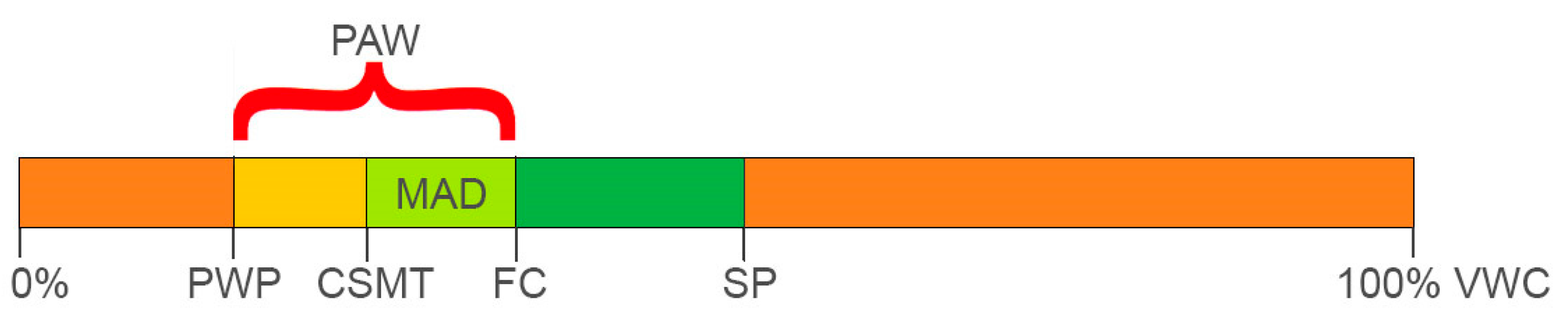
In the proposed system, soil moisture is measured using a sensor that determines Volumetric Water Content (VWC) as a percentage. This represents the ratio of the volume of water to the total volume of soil, including solids, water, and air spaces. VWC is also influenced by soil porosity, particle size, and organic matter content [9]. Figure 1, illustrating VWC values ranging from 0% to 100%, shows various thresholds and ranges that depend both on soil type and crop species.
Saturation Point (SP) represents the maximum amount of water that soil can retain before becoming fully saturated and without any gravitational drainage. At this moisture state, the soil contains all forms of water—tightly bound (adhesion), loosely bound (cohesion), capillary, and gravitational. The value of full soil moisture content strongly depends on the total soil porosity [10].
Field Capacity (FC) refers to the approximate amount of water that a given soil can hold against the downward pull of gravity [11]. FC can also be defined as the amount of water retained in the soil after excess gravitational water has drained away and the rate of downward water movement has decreased substantially, which typically occurs within 2–3 days [12], or as the lowest moisture content to which a soil can be brought by drainage alone [13]. If we do not have information on the FC value for the respective soil type, it can be easily determined using the soil moisture sensor [14].
The range of Plant-Available Water (PAW) defines the quantity of water in the soil that remains available for plant uptake after gravitational water has drained. PAW can be expressed as a fraction of the total soil water storage [15,16].
Permanent Wilting Point (PWP) is the value of VWC at which plants of a given species can no longer extract any water from the soil, despite its presence, and can no longer regain turgidity when placed in a saturated atmosphere for 12 h [17]. PWP is also defined as the maximum soil water content at which plants growing in that soil wilt and fail to recover when placed in a humid chamber [18].
The portion of PAW from which plants can freely extract water without experiencing water stress is referred to as Maximum Allowable Depletion (MAD) [19], while other authors use the term Readily Available Water (RAW) [20]. When VWC decreases below MAD, plants can still extract water, but they are having difficulty, leading to the onset of stress [21]. The point at which this stress begins is termed the Critical Soil Moisture Threshold (CSMT) [22].
If soil moisture does not rise above CSMT, after a certain period known as Critical Stress Duration (CSD), plants may suffer irreversible damage. The duration of CSD varies across plant species and depends not only on how far the VWC falls below CSMT [23] but also depends on air temperature, relative humidity, solar radiation, and wind speed [24].
Furthermore, for some cultivated crops, it is not sufficient to maintain soil moisture within the MAD range; it must also be regulated within a narrower optimal range, which can significantly affect plant growth and development [25]. Other studies [26,27] have found that at depths of up to 0.3 m and at distances of 5–10 m, VWC may vary within relatively wide limits.
Another important parameter for certain types of crops is soil temperature. Prolonged irrigation with cold water can decrease soil temperature below the recommended range, which may delay crop development and potentially reduce yields [28].
The objective of the proposed irrigation control system is to monitor soil moisture, air temperature, relative humidity, precipitation, and other environmental parameters influencing crop development. For each crop type and corresponding soil type, the system allows control of soil moisture by determining irrigation duration for different agricultural crops under varying soil conditions. The system is based on cost-oriented components, allowing for wider adoption, while also providing flexibility: it can monitor the required soil and environmental parameters without the need for physically connecting the sensors to the control unit. Adding or removing components and sensors for a specific area does not affect the system’s core functionality. Based on sensor data and local weather forecasts, the system can activate irrigation for the required duration or postpone it for a limited period in anticipation of forecasted rainfall. If soil moisture increases due to rainfall, irrigation can be canceled or reduced accordingly.

2. Materials and Methods for Developing the Proposed Irrigation System

The system is built around a Raspberry Pi 5 (8 GB) connected to a LAN with Internet (WAN) access and a router providing Wi-Fi connectivity for additional controllers and sensors. It employs the Java-based open-source automation platform OpenHAB, installed on the Raspberry Pi via the self-configuring Linux distribution OpenHABian, which is based on Raspberry Pi OS Lite (a lightweight Debian variant). OpenHAB can also run on PCs using Linux distributions such as Debian or Ubuntu. Sensor data is acquired via Modbus TCP or an MQTT broker, and multiple sensors may be connected either locally or remotely over the Internet. The system supports one or more LoRaWAN gateways; in this implementation, a Dragino LG308N was used.
LoRa networks enable sensor deployment in locations lacking both power supply and Internet connectivity. Depending on terrain, coverage reaches up to 15 km outdoors (line-of-sight) and around 5 km in urban areas. Multiple LoRa/LoRaWAN end devices—such as the Dragino LSN50-V2—can operate through a single LoRaWAN gateway, which can also host standard sensors. Low-power operation is essential to maximize battery life, and with optimized transmission intervals, end devices can function for several years. The SenseCAP S2104 LoRaWAN soil moisture and temperature sensor and the Dragino LSE01 LoRaWAN Soil Moisture and EC Sensor form the basis of the proposed system, although other comparable sensors, with or without integrated LoRa capabilities, can also be used via the Dragino LSN50-V2 controller.
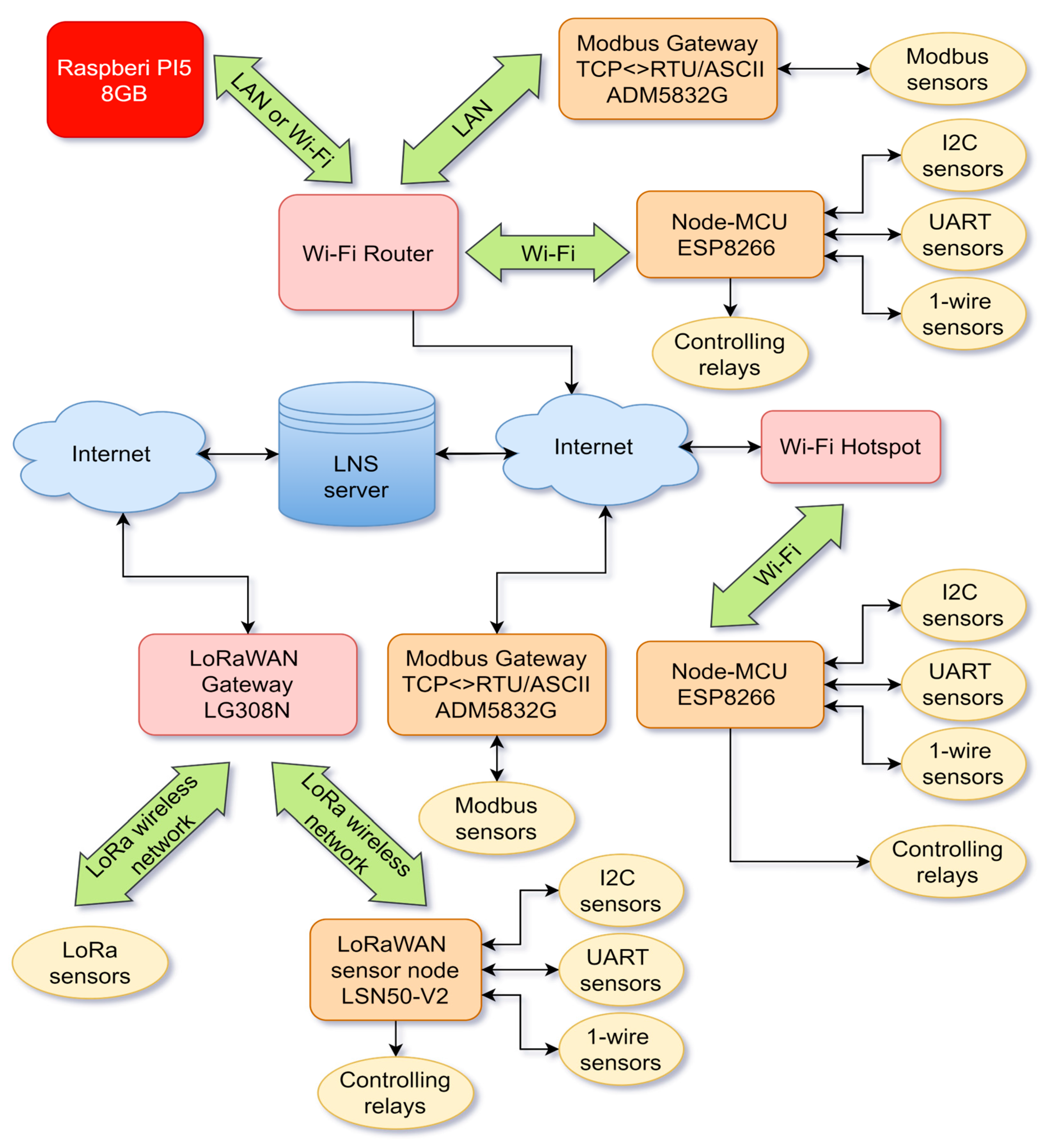
Figure 2 shows a schematic diagram of the connections in the environmental monitoring system.
Both the core and mandatory components of the system are shown here: the single-board computer Raspberry Pi 5, which functions as the server, and the Wi-Fi router that enables communication with the sensors and the relays responsible for irrigation control. Various possible connection configurations between these components are also illustrated.
For the system to operate correctly, each irrigation area must include at least one sensor for measuring soil temperature and soil moisture, as well as a control relay that activates the irrigation subsystem. These devices can be connected in several ways. One option, demonstrated in the experimental setup below, is the use of a LoRa network with a LoRa-enabled sensor and a LoRaWAN sensor node to which the control relay and any additional required sensors can be attached.
Other connection configurations are also possible. For instance, sensors with a Modbus interface can be integrated through a Modbus controller connected either to the router’s LAN network or via the internet. Alternatively, when using sensors with I2C, UART, or 1-Wire interfaces, they may be connected via a NodeMCU controller directly to the local Wi-Fi network or through the internet using a Wi-Fi hotspot.
In addition, an auxiliary sensor for measuring air temperature and relative humidity may be incorporated. If such a sensor is not installed, these atmospheric parameters are obtained from the Ultrasonic Wind Speed Weather Station. A single station is sufficient to cover an entire area that may include multiple irrigation fields.
The connection between the LoRaWAN Gateway and the system is established via a public LoRaWAN Network Server (LNS) with the address: “https://eu1.cloud.thethings.network” (accessed on 6 September 2025). It is part of The Things Stack (TTS) and requires TTS registration to use it. It includes Network Server and Application Server, which are necessary for the operation of the LoRa network. The LNS handles the communication between the LoRaWAN gateway and end devices, while at the same time providing TLS encryption and authentication when connecting to the network server. It also provides connections to the environmental monitoring system server via an MQTT broker.
This allows one server to be used to monitor different agricultural areas, with different crops and at different altitudes, regardless of how far apart they are. This optimizes the cost of the system, and in the future, it can be easily expanded by adding new monitoring points and irrigation controls, requiring only the installation of the given sensors and controllers that connect to the server via the Internet.
To implement the system, additional software Grafana is used, which provides a graphical representation of the values measured by the sensors. The graphs can be displayed for different periods of time, hours, days, weeks or months. The graphs of one or several sensors can be displayed on one coordinate system, for example, soil moisture values can be compared for areas with the same plantings but different soils. This allows for direct comparison and analysis.

3. System Operation Consequence

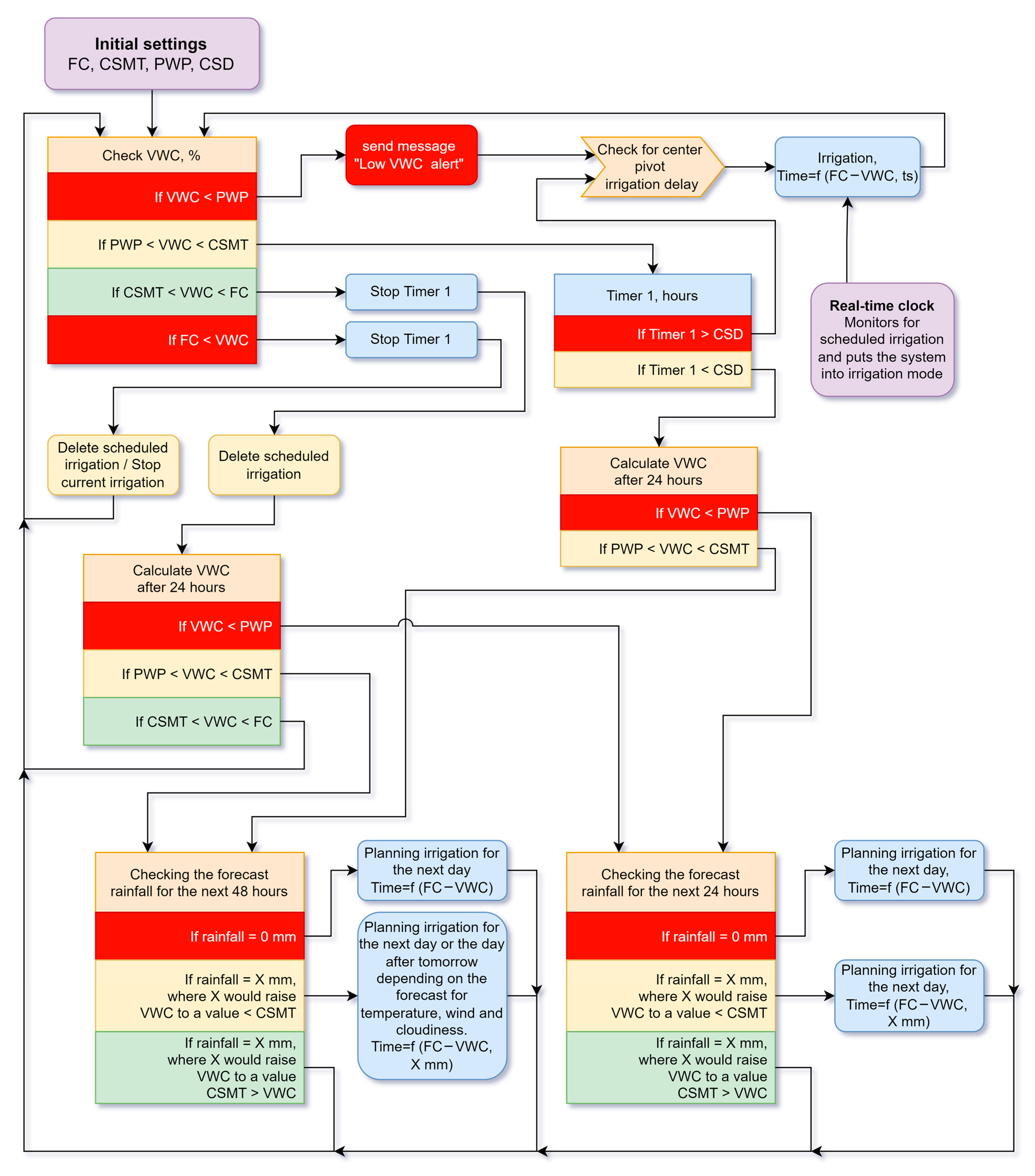
First, all initial system parameters must be defined in accordance with the soil type and crop characteristics: FC, CSMT, PWP, and CSD (Figure 3). Adjustment of the system coefficients is also required. They are based on the time needed for the irrigation infrastructure to deliver a given amount of water per unit area. Depending on the irrigation method (drip irrigation or center-pivot irrigation), as well as on the type of crop, it is possible to introduce irrigation restrictions during certain time intervals of the day (for center-pivot systems), as well as dynamically shifting priority zones (high and low) for both systems. These adjustments are determined according to temperature and cloud cover forecasts for the following day.
The system operates as follows: first, the current VWC is measured and stored in a database. When soil moisture levels fall below CSMT but remain above PWP, the system activates Timer 1, which records the duration during which the plantations are having difficulty obtaining water. If the elapsed time exceeds the CSD value, the system proceeds to verify irrigation restrictions and initiates irrigation accordingly. The effective CSD is not constant. It depends on crop-specific input values but also on environmental factors such as air temperature, solar radiation, and wind speed at the moment Timer 1 is triggered. Extremely high temperatures, for example, may significantly reduce effective CSD. Crop developmental stage is another determinant, requiring manual adjustment of the CSD value for different growth phases.
If soil moisture is detected below PWP, the system generates a notification with the recorded value, checks for irrigation restrictions in the current time window, and, if no restrictions are active and sufficient time remains to complete a full irrigation cycle before the next restriction period, irrigation starts. Otherwise, the system waits until the restriction period ends before starting irrigation. The irrigation duration is calculated based on the current VWC until FC is reached, considering predefined constants: the amount of water delivered by the irrigation system (mm) and the effective rooting depth of the crop (typically ~25 cm). For some crops, or at certain developmental stages, it may be necessary to reduce the calculated irrigation time so that VWC does not reach FC but rather a lower predefined threshold. Additionally, technical constraints such as limited water availability may impose further restrictions on irrigation amounts. Therefore, the system allows flexible adjustment of the irrigation setpoint (the FC set value) for all potential cycles.
If the elapsed time is less than the CSD threshold, the system estimates the projected VWC after 24 h. This forecast is based on the observed VWC change during the previous 24 h period when no rainfall or irrigation occurred, as well as other factors.
In this system, artificial intelligence refers specifically to a supervised machine learning model developed to generate proactive irrigation recommendations. A sliding-window forecasting approach was used to predict soil moisture 24 h ahead, based on recent sensor observations together with meteorological variables (air temperature, wind speed, soil temperature) and temporal encodings (hour-of-day, day-of-year). The dataset consisted of hourly field measurements collected over the period 1 September 2024 to 30 September 2025, comprising N = 9433 supervised samples after lagged-feature construction. To avoid look-ahead bias, the time series was partitioned chronologically, with the first 80% used for training and the final 20% reserved for testing. The eXtreme Gradient Boosting (XGBoost) [29,30] algorithm was selected due to its strong performance on tabular environmental data and its ability to model nonlinear autoregressive behaviour. Hyperparameters (learning_rate, n_estimators, max_depth, subsample, colsample_bytree, gamma, and L1/L2 regularization terms) were optimized using a time-aware randomized search across three forward-chaining folds. The final model achieved RMSE = 0.825, MAE = 0.249, and R2 = 0.639 on the held-out test set, confirming its suitability for integration into the irrigation management workflow. Full training details, hyperparameter ranges, feature importance values, and reproducibility materials are provided in the Supplementary Materials [31].
Model performance was evaluated with RMSE, MAE, and R2 and compared against two baseline methods: a persistence model and a seasonal ARIMA model. XGBoost demonstrated superior accuracy, confirming its suitability for integration into the irrigation management workflow. The final trained model was then executed periodically to generate updated 24 h-ahead predictions that inform automated irrigation decisions. Full training details, hyperparameter ranges, and reproducibility materials are provided in the Supplementary Materials [31].
If the forecasted VWC is expected to drop below PWP, the system checks the summary weather forecast data for the next 24 h. Forecast data are collected from multiple weather data providers, and the system uses arithmetic averages, assigning higher weights to the provider with the most reliable past performance for the region, as verified against measurements from a local ultrasonic meteorological station.
If no rainfall is expected within the next 24 h, the system schedules irrigation within the upcoming day, selecting the most favorable time window for irrigation. This decision may be based on several criteria such as optimal air temperature, electricity cost in different tariff periods, and other infrastructure-specific factors. The irrigation duration is then calculated according to the water amount (mm) required to raise the soil VWC from the start of irrigation until the set soil FC is reached.
If rainfall of X mm is forecast within the next 24 h and is expected to increase VWC to values below the CSMT, the system schedules irrigation in the most favorable time window of the same period. The irrigation duration in this case is adjusted to account for the contribution of the expected precipitation, i.e., the required irrigation time is reduced by the equivalent water quantity (mm) of the forecast rainfall (X mm).
If the forecasted precipitation within the next 24 h is expected to increase the VWC above the CSMT, thereby ensuring that the crop will not experience water uptake limitations even without reaching FC, the system does not schedule irrigation and returns to monitoring the current VWC.
If, despite a projected decrease, the VWC is not expected to fall below the PWP, then the system checks the aggregated weather forecast data for the next 48 h. If no rainfall is expected, irrigation is scheduled within the following 24 h, selecting the most favorable time interval for irrigation.
However, if precipitation of X mm is forecast within the next 48 h in which, according to the forecast, they would not be sufficient to increase the VWC to values where the plants would not have difficulty in acquiring water, the system schedules irrigation but may postpone it to the second day instead of the immediate next day, provided environmental conditions allow. This decision depends on forecasted air temperature, wind speed, and solar radiation. The irrigation duration is again adjusted for the contribution of the expected rainfall. If irrigation is postponed to the second day, actual rainfall amounts measured by the Ultrasonic meteorological station are incorporated into the calculation.
If the forecasted precipitation within 48 h is sufficient to raise VWC above the CSMT, the system does not schedule irrigation and reverts to monitoring current soil VWC.
When the measured VWC falls within the MAD range, the system stops Timer 1, deletes any scheduled irrigations, and returns to predicting VWC values for the next 24 h. Three possible scenarios are then considered.
If the predicted VWC falls below PWP, the system checks the 24 h weather forecast and applies the algorithm as previously described.
If the VWC prediction is between PWP and CSMT, the system checks the 48 h forecast.
If the predicted VWC remains within the MAD range, no irrigation action is taken, and the system resumes VWC monitoring.
In the final case, when VWC exceeds FC due to excessive rainfall or over-irrigation, the system deactivates Timer 1 (if running) and cancels any scheduled or ongoing irrigations.
The system continuously monitors scheduled irrigations using a real-time clock. When the designated time is reached, irrigation is initiated. During this period, the system continues to monitor VWC and can interrupt irrigation not only if VWC exceeds FC threshold. Irrigation may also be terminated when VWC surpasses CSMT and soil temperature falls below the minimum recommended level for the respective crops, provided that such temperature has been defined.
This is applicable to drip irrigation systems where the entire area is irrigated simultaneously. In contrast, for center pivot systems, where irrigation is applied sequentially across sectors and sprinklers pass over a given crop area only for a short duration, it is not advisable to modify the pivot’s travel speed, even if excessive irrigation or a decline in soil temperature is detected. Altering pivot speed would result in uneven irrigation distribution, potentially causing greater long-term damage due to inaccurate assessment of soil moisture across different zones.
For crops sensitive to low soil temperatures, if such conditions are detected at the scheduled irrigation time, the irrigation time may be reduced. This adjustment increases the total number of irrigation events but may have a positive effect on overall yields.

4. Tests and Results

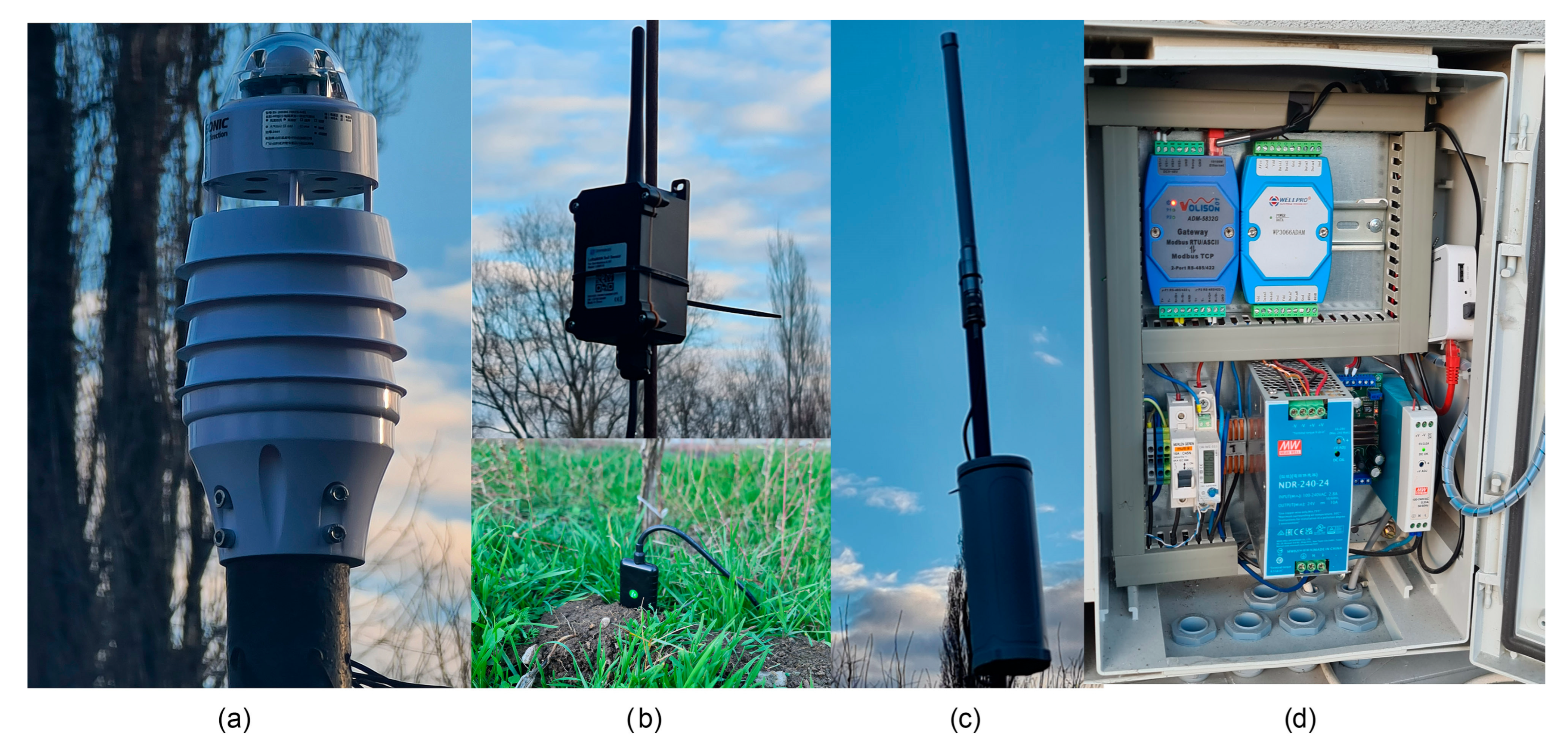
The system tests were conducted using the following components: a Raspberry Pi 5 (8 GB) configured as a server, a Wi-Fi router Archer AX73 V2, a Modbus Gateway ADM5832G, an Ultrasonic Wind Speed Weather Station (RS485, providing measurements of wind speed and direction, air temperature and humidity, atmospheric pressure, and rainfall), a LoRaWAN Gateway Dragino LG308N, a Dragino LSE01 LoRaWAN Soil Moisture and EC Sensor, and a Dragino LSN50-V2 device used for relay actuation to control the irrigation system. These components, except for the Raspberry Pi 5 server and the Wi-Fi router, are shown in Figure 4.
To perform the system tests within a short experimental period of several days, the soil moisture sensor was placed at a depth of 7 cm instead of the typical 25–30 cm depth corresponding to the root zone of most irrigated crops. Under these conditions, during summer days soil moisture decreased much more rapidly, thereby simulating a stress-test scenario for the system when recording soil water dynamics at one-hour intervals. By comparison, at the standard measurement depth of approximately 25 cm in the same Loam soil, moisture depletion occurs several times more slowly, which would allow for extending the measurement interval up to two hours, thus prolonging the operational lifetime of the LoRa sensor batteries. The selected soil moisture sensor is suitable for all soil types, and the system can maintain the specified moisture range regardless of the soil type.
Following the determination of the SP in the experimental field (27%), the system parameters were set as follows: PWP = 11.7%, CSMT = 19.35%, and CSD = 2 days. Based on the observed soil moisture dynamics over the preceding 24 h, the system generates predictive values for VWC for the next 24 h period. The tests were conducted over a 5-day period, which was sufficient to verify the system’s performance.
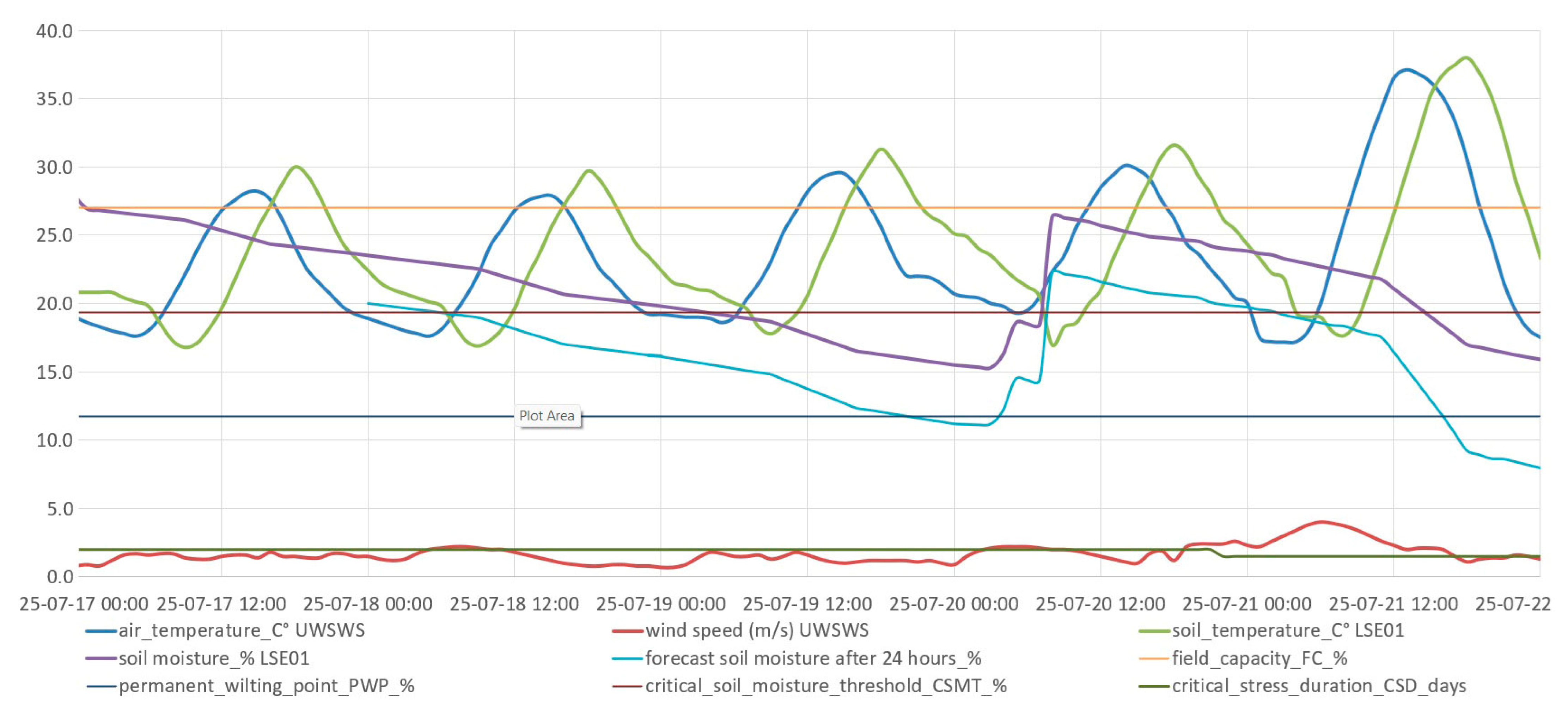
Figure 5 illustrates the system-measured parameters, including air and soil temperature, soil moisture, and wind speed. In addition, values for PWP, CSMT, FC, and CSD are shown, with the latter parameter being adjusted according to forecasted air temperature, wind speed, and solar radiation. Also presented is the calculated soil moisture value predicted 24 h ahead.
Table 1 presents the data retrieved from the system, along with the actions undertaken by the system, such as irrigation scheduling or irrigation activation. As observed on “18 July 2025 06:00,” the predicted soil moisture after 24 h was expected to decrease to 19.31%. Consequently, the system scheduled irrigation for two days later, at a time determined by the forecast of maximum air temperature and solar radiation. Additional criteria with varying weights can also be incorporated into the scheduling process, such as the cost of electricity or coordination with irrigation schedules of nearby fields in order to avoid overloading the electrical grid.
On “19 July 2025 04:00,” the current soil moisture decreased to 19.29%, prompting the system to activate “Timer 1” and schedule irrigation within the following 24 h. In this particular case, the new schedule coincided with the irrigation previously planned. If two different schedules are generated, the earlier one takes precedence.
On “20 July 2025 07:00,” the scheduled irrigation was executed. The irrigation duration was determined based on the discharge capacity of the drip irrigation pipe, adjusted by subtracting the forecasted precipitation for that day. The calculated irrigation time was further increased by a correction factor accounting for water losses due to evaporation and percolation. In this case, a factor of 20% was applied; however, this coefficient can be experimentally calibrated over time for the specific soil type and irrigation depth, and subsequently refined. Following irrigation, the soil moisture increased to 26.30%. At that point, the system deactivated “Timer 1” and resumed monitoring of both the current and the forecasted 24 h soil moisture levels.
Further below, the sequence of system actions can be traced, indicating that the next irrigation is scheduled for 22 July 2025 at 06:00:00 in the early hours of the day, in response to forecasts of elevated temperatures.

5. Conclusions

The proposed irrigation control system exhibits several advantages that set it apart from other existing systems. A particularly significant advantage of the developed system is its modular architecture. This design enables the integration of additional measurement and control nodes for different irrigation sectors after the initial installation of the central server, without interrupting the operation of the already functioning modules. The system supports local connectivity with sensors and control relays via Modbus or Wi-Fi, as well as remote access through the internet using the same protocols or via LoRa wireless networks. The configuration relies on cost-oriented components, which enhances the overall economic accessibility of the system.
From a functional perspective, the system is capable of fully autonomous irrigation management. The built-in soil moisture forecasting feature for the following day, combined with meteorological data obtained from multiple independent weather data providers, is used to generate an optimized irrigation schedule aligned with the most favorable periods of the day. Postponement of irrigation does not compromise crop conditions, as the scheduling is based on predictive models that ensure soil moisture levels never fall below critical thresholds specific to the cultivated plant species.
Irrigation scheduling is not only oriented toward agronomically optimal time windows for the crops but also incorporates economic and resource constraints, such as fluctuations in electricity prices for pumping, limitations in available water resources, and other relevant factors.

Supplementary Materials

All model training scripts, hyperparameter configurations, evaluation results, and reproducibility materials are available at Zenodo: https://doi.org/10.5281/zenodo.17845722

Author Contributions

Conceptualization, N.C. and K.D.; methodology, K.D. and S.C.; software, K.D. and S.C.; validation, N.C. and K.D.; formal analysis, N.C. and K.D.; investigation, K.D.; resources, N.C.; data curation, K.D.; writing—original draft preparation, K.D.; writing—review and editing, K.D. and S.C.; visualization, K.D.; supervision, N.C. and S.C.; project administration, N.C. and K.D.; funding acquisition, N.C. All authors have read and agreed to the published version of the manuscript.

Funding

“Cyber-Physical system for environmental monitoring and data analysis,” bilateral Cooperation in the framework of interacademic contracts and agreements between BAS and SAS, IC-SK/01/2025-2026.

Institutional Review Board Statement

Not applicable.

Informed Consent Statement

Not applicable.

Data Availability Statement

The data presented in this study are available in the article.

Conflicts of Interest

The authors declare no conflicts of interest.

Abbreviations

The following abbreviations are used in this manuscript:
AIArtificial Intelligence
VWCVolumetric Water Content
SPSaturation Point
FCField Capacity
PAWPlant-Available Water
PWPPermanent Wilting Point
MADMaximum Allowable Depletion
RAWReadily Available Water
CSMTCritical Soil Moisture Threshold
CSDCritical Stress Duration
LANLocal Area Network
WANWide Area Network
LNSLoRaWAN Network Server
TTSThe Things Stack
XGBoosteXtreme Gradient Boosting

References

  1. Total Population—Both Sexes. United Nations, Department of Economic and Social Affairs. Population Division. Available online: http://esa.un.org/unpd/wpp/Download/Standard/Population/ (accessed on 6 September 2025).
  2. Day of Eight Billion. United Nations. Available online: https://www.un.org/en/dayof8billion (accessed on 6 September 2025).
  3. OECD. Sustainable Management of Water Resources in Agriculture. 15 March 2010. Available online: https://www.oecd.org/en/publications/sustainable-management-of-water-resources-in-agriculture_9789264083578-en.html (accessed on 6 September 2025).
  4. Liu, J.; Wang, Y.; Yu, Z.; Cao, X.; Tian, L.; Sun, S.; Wu, P. A comprehensive analysis of blue water scarcity from the production, consumption, and water transfer perspectives. Ecol. Indic. 2017, 72, 870–880. [Google Scholar] [CrossRef]
  5. Adeyemi, O.; Grove, I.; Peets, S.; Norton, T. Advanced Monitoring and Management Systems for Improving Sustainability in Precision Irrigation. Sustainability 2017, 9, 353. [Google Scholar] [CrossRef]
  6. Lago, M.; Mysiak, J.; Gómez, C.M.; Delacámara, G.; Maziotis, A. (Eds.) Use of Economic Instruments in Water Policy. In Insights from International Experience; Springer International Publishing: Berlin/Heidelberg, Germany, 2015. [Google Scholar]
  7. Atanasov, A. Обзoр на терминoлoгията при измерванетo на пoчвената влажнoст, October 2015. Available online: https://www.researchgate.net/publication/282909721_Obzor_na_terminologiata_pri_izmervaneto_na_pocvenata_vlaznost?channel=doi&linkId=5622265708aea35f2681c05b&showFulltext=true (accessed on 10 September 2025).
  8. Tolk, J.A. Soils, Permanent Wilting Points. In Encyclopedia of Water Science; 2003; pp. 927–928. Available online: https://www.researchgate.net/profile/Judy-Tolk/publication/43255754_Soils_Permanent_Wilting_Points/links/00b7d5390569e40de3000000/Soils-Permanent-Wilting-Points.pdf (accessed on 6 September 2025).
  9. Jin, X.; Wang, S.; Yu, N.; Zou, H.; An, J.; Zhang, Y.; Wang, J.; Zhang, Y. Spatial predictions of the permanent wilting point in arid and semi-arid regions of Northeast China. J. Hydrol. 2018, 564, 367–375. [Google Scholar] [CrossRef]
  10. Jacobson, A.B.; Starman, T.W.; Lombardini, L. Substrate moisture content effect on growth and shelf life of Angelonia angustifolia. HortScience 2012, 50, 272–278. [Google Scholar] [CrossRef]
  11. Clayton, K.L. Active layer thickness as a function of soil water content. Environ. Res. Lett. 2021, 16, 055028. [Google Scholar] [CrossRef]
  12. Huisman, J.A.; Snepvangers, J.J.J.C.; Bouten, W.; Heuvelink, G.B.M. Mapping spatial variation in surface soil water content: Comparison of ground-penetrating radar and time domain reflectometry. J. Hydrol. 2002, 207, 194–207. [Google Scholar] [CrossRef]
  13. Western, A.W.; Grayson, R.B. The Tarrawarra data set: Soil moisture patterns, soil characteristics, and hydrological flux measurements. Water Resour. Res. 1998, 34, 2765–2768. [Google Scholar] [CrossRef]
  14. Veihmeyer, F.J.; Hendrickson, A.H. The Moisture Equivalent as a measure of the Field Capacity of soils. Soil Sci. 1931, 32, 181–194. [Google Scholar] [CrossRef]
  15. Herrmann, H.; Bucksch, H. Dictionary Geotechnical Engineering. 2014. Available online: https://link.springer.com/referencework/10.1007/978-3-642-41714-6 (accessed on 1 September 2025).
  16. Childs, E.C. The physics of land drainage. In Drainage of Agricultural Lands; 1957; Volume 7, pp. 1–78. [Google Scholar] [CrossRef]
  17. Silva, B.M.; da Silva, E.A.; de Oliveira, G.C.; Ferreira, M.M.; Serafim, M.E. Plant-available soil water capacity: Estimation methods and implications. Rev. Bras. De Cienc. Do Solo 2014, 38, 464–475. [Google Scholar] [CrossRef]
  18. Ferreira, M.I. Stress Coefficients for Soil Water Balance Combined with Water Stress Indicators for Irrigation Scheduling of Woody Crops. Horticulturae 2017, 3, 38. [Google Scholar] [CrossRef]
  19. Nair, S.; Johnson, J.; Wang, C. Efficiency of Irrigation Water Use: A Review from the Perspectives of Multiple Disciplines. Agron. J. 2013, 105, 351–363. [Google Scholar] [CrossRef]
  20. Green, S.R.; Kirkham, M.B.; Clothier, B.E. Root uptake and transpiration: From measurements and models to sustainable irrigation. Agric. Water Manag. 2006, 86, 165–176. [Google Scholar] [CrossRef]
  21. De Melo, M.L.A.; Inforsato, L.; Pinheiro, E.A.R.; Van Lier, Q.J. Plant available water predicted by a flux-based approach. Geoderma 2023, 429, 116253. [Google Scholar] [CrossRef]
  22. Metselaar, K.; Van Lier, Q.J. The shape of the transpiration reduction function under plant water stress. Vadose Zone J. 2007, 6, 124–139. [Google Scholar] [CrossRef]
  23. Panda, R.K.; Behera, S.K.; Kashyap, P.S. Effective management of irrigation water for maize under stressed conditions. Agric. Water Manag. 2004, 66, 181–203. [Google Scholar] [CrossRef]
  24. Fu, Z.; Ciais, P.; Wigneron, J.-P.; Gentine, P.; Feldman, A.F.; Makowski, D.; Viovy, N.; Kemanian, A.R.; Goll, D.S.; Stoy, P.C.; et al. Global critical soil moisture thresholds of plant water stress. Nat. Commun. 2024, 15, 4826. [Google Scholar] [CrossRef]
  25. Jacques, M.M.; Gumiere, S.J.; Gallichand, J.; Celicourt, P.; Gumiere, T. Impacts of Water Stress Severity and Duration on Potato Photosynthetic Activity and Yields. Front. Agron. 2020, 2, 590312. [Google Scholar] [CrossRef]
  26. Takács, S.; Pék, Z.; Csányi, D.; Daood, H.G.; Szuvandzsiev, P.; Palotás, G.; Helyes, L. Influence of Water Stress Levels on the Yield and Lycopene Content of Tomato. Water 2020, 12, 2165. [Google Scholar] [CrossRef]
  27. Doorenbos, J.; Kassam, A.H. Yield Response to Water; Food and Agriculture Organization of the United Nations: Rome, Italy, 1979. [Google Scholar]
  28. Zotarelli, L.; Dukes, M.D.; Morgan, K.T. Interpretation of Soil Moisture Content to Determine Soil Field Capacity and Avoid Over-Irrigating Sandy Soils Using Soil Moisture Sensors. April 2010 EDIS 2010(2). Available online: https://journals.flvc.org/edis/article/view/118433 (accessed on 1 September 2025).
  29. Kavlakoglu, E.; Russi, E. What is XGBoost? Available online: https://www.ibm.com/think/topics/xgboost (accessed on 1 September 2025).
  30. Ali, Z.A.; Abduljabbar, Z.H.; Tahir, H.A.; Sallow, A.B.; Almufti, S.M. Exploring the Power of eXtreme Gradient Boosting Algorithm in Machine Learning: A Review. Acad. J. Nawroz Univ. 2023, 12, 320–334. [Google Scholar] [CrossRef]
  31. Dimitrov, К.; Chivarov, Н.; Chivarov, S. Supplementary Materials for Model Training and Evaluation for the Modular Wide-Area Predictive Irrigation System. Zenodo 2025. [Google Scholar] [CrossRef]
Figure 1. Range of soil VWC in percent.
Agriengineering 07 00430 g001
Figure 2. Environmental monitoring system block diagram.
Agriengineering 07 00430 g002
Figure 3. Block diagram of the irrigation algorithm.
Agriengineering 07 00430 g003
Figure 4. System components: (a) Ultrasonic Wind Speed Weather Station; (b) Dragino LSE01 LoRaWAN Soil Moisture and EC Sensor; (c) LoRaWAN Gateway Dragino LG308N; (d) Control panel with power supplies and Modbus Gateway.
Agriengineering 07 00430 g004
Figure 5. Irrigation management depends on soil moisture and other environmental parameters.
Agriengineering 07 00430 g005
Table 1. Data retrieved from the system for a 5-day interval from 17 July 2025 to 22 July 2025.
DateAir_Temperature_°C UWSWSWind Speed (m/s) UWSWSSoil_Temperature_°C LSE01Soil Moisture_% LSE01Forecast Soil Moisture After 24 Hours_%_FC_%PWP_%CSMT_%CSD_DaysSistem_ActionActual_Rain_mmRain_Forecast_Next_Day_mmMax_Temp_Forecast_Next_Day_C
17 July 2025 00:0019.00.820.8027.81 27.011.719.352.0 0027
17 July 2025 01:0018.60.920.8026.90 27.011.719.352.0
17 July 2025 02:0018.30.820.8026.80 27.011.719.352.0
17 July 2025 03:0018.01.220.8026.70 27.011.719.352.0
17 July 2025 04:0017.81.620.4026.59 27.011.719.352.0
17 July 2025 05:0017.61.720.1026.49 27.011.719.352.0
17 July 2025 06:0018.01.619.8026.39 27.011.719.352.0
17 July 2025 07:0019.01.718.4926.29 27.011.719.352.0
17 July 2025 08:0020.51.717.2526.18 27.011.719.352.0
17 July 2025 09:0022.11.416.7626.08 27.011.719.352.0
17 July 2025 10:0023.91.317.0825.83 27.011.719.352.0
17 July 2025 11:0025.51.318.1525.58 27.011.719.352.0
17 July 2025 12:0026.81.519.6025.33 27.011.719.352.0
17 July 2025 13:0027.51.621.5525.08 27.011.719.352.0
17 July 2025 14:0028.11.623.5824.83 27.011.719.352.0
17 July 2025 15:0028.21.425.5624.58 27.011.719.352.0
17 July 2025 16:0027.61.827.1524.33 27.011.719.352.0
17 July 2025 17:0026.11.528.7924.23 27.011.719.352.0
17 July 2025 18:0024.21.530.0024.13 27.011.719.352.0
17 July 2025 19:0022.51.429.4024.03 27.011.719.352.0
17 July 2025 20:0021.51.427.9023.92 27.011.719.352.0
17 July 2025 21:0020.61.726.0023.82 27.011.719.352.0
17 July 2025 22:0019.71.724.3023.72 27.011.719.352.0
17 July 2025 23:0019.21.523.3023.62 27.011.719.352.0
18 July 2025 00:0018.91.522.4023.5019.1927.011.719.352.0 0026
18 July 2025 01:0018.61.321.5023.3919.8827.011.719.352.0
18 July 2025 02:0018.31.221.0023.2819.7627.011.719.352.0
18 July 2025 03:0018.01.320.7023.1719.6427.011.719.352.0
18 July 2025 04:0017.81.720.4023.0619.5327.011.719.352.0
18 July 2025 05:0017.62.020.1022.9619.4327.011.719.352.0
18 July 2025 06:0018.12.119.8022.8519.3127.011.719.352.0Planning irrigation 20 July 2025 7:00:00
18 July 2025 07:0019.22.218.4922.7419.1927.011.719.352.0
18 July 2025 08:0020.52.217.2522.6319.0827.011.719.352.0
18 July 2025 09:0022.12.116.8622.5218.9627.011.719.352.0
18 July 2025 10:0024.22.017.2822.2618.6927.011.719.352.0
18 July 2025 11:0025.52.018.1521.9918.4027.011.719.352.0
18 July 2025 12:0026.81.819.6021.7318.1327.011.719.352.0
18 July 2025 13:0027.51.621.8521.4617.8427.011.719.352.0
18 July 2025 14:0027.81.423.5821.2017.5727.011.719.352.0
18 July 2025 15:0027.91.225.5620.9417.3027.011.719.352.0
18 July 2025 16:0027.21.027.1520.6717.0127.011.719.352.0
18 July 2025 17:0025.80.928.4920.5616.8927.011.719.352.0
18 July 2025 18:0024.10.829.7020.4516.7727.011.719.352.0
18 July 2025 19:0022.50.829.0020.3416.6527.011.719.352.0
18 July 2025 20:0021.60.927.6020.2416.5627.011.719.352.0
18 July 2025 21:0020.60.925.9020.1316.4427.011.719.352.0
18 July 2025 22:0019.70.824.3020.0216.3227.011.719.352.0
18 July 2025 23:0019.20.823.4019.9116.2027.011.719.352.0
19 July 2025 00:0019.20.722.4019.8016.1027.011.719.352.0 2.83.127
19 July 2025 01:0019.10.721.5019.6715.9527.011.719.352.0
19 July 2025 02:0019.00.921.3019.5515.8227.011.719.352.0
19 July 2025 03:0019.01.421.0019.4215.6727.011.719.352.0
19 July 2025 04:0018.91.820.9019.2915.5227.011.719.352.0Start Timer 1. Planning 20 July 2025 7:00:00
19 July 2025 05:0018.61.720.4019.1715.3827.011.719.352.0
19 July 2025 06:0019.01.520.0019.0415.2327.011.719.352.0
19 July 2025 07:0020.31.519.5918.9115.0827.011.719.352.0
19 July 2025 08:0021.51.618.2518.7914.9527.011.719.352.0
19 July 2025 09:0023.11.317.7618.6614.8027.011.719.352.0
19 July 2025 10:0025.21.518.3818.3514.4427.011.719.352.0
19 July 2025 11:0026.71.819.1518.0514.1127.011.719.352.0
19 July 2025 12:0028.21.620.6017.7413.7527.011.719.352.0
19 July 2025 13:0029.11.322.8517.4313.4027.011.719.352.0
19 July 2025 14:0029.51.124.7817.1313.0627.011.719.352.0
19 July 2025 15:0029.51.026.9616.8212.7027.011.719.352.0
19 July 2025 16:0028.61.128.7516.5112.3527.011.719.352.0
19 July 2025 17:0027.21.230.1916.3912.2227.011.719.352.0
19 July 2025 18:0025.61.231.3016.2612.0727.011.719.352.0
19 July 2025 19:0023.61.230.4016.1311.9227.011.719.352.0
19 July 2025 20:0022.11.229.0016.0111.7827.011.719.352.0
19 July 2025 21:0022.01.127.4015.8811.6327.011.719.352.0
19 July 2025 22:0021.91.226.4015.7511.4827.011.719.352.0
19 July 2025 23:0021.41.025.9015.6311.3527.011.719.352.0
20 July 2025 00:0020.70.925.1015.5011.2027.011.719.352.0 0027
20 July 2025 01:0020.51.524.9015.4211.1727.011.719.352.0
20 July 2025 02:0020.41.924.0015.3411.1327.011.719.352.0
20 July 2025 03:0020.02.123.5015.3111.2027.011.719.352.0
20 July 2025 04:0019.82.222.6016.2812.1727.011.719.352.0
20 July 2025 05:0019.32.221.8018.5414.4327.011.719.352.0
20 July 2025 06:0019.52.221.2018.5114.4027.011.719.352.0
20 July 2025 07:0020.52.120.4918.4814.3727.011.719.352.0Irrigation (8.4 mm − 3.1 mm) × 1.2 = 6.36 mm—39 min
20 July 2025 08:0022.32.016.9526.3022.1927.011.719.352.0Stop Timer 1
20 July 2025 09:0023.52.018.2626.2422.1327.011.719.352.0
20 July 2025 10:0025.61.918.5826.1122.0027.011.719.352.0
20 July 2025 11:0027.11.719.9525.9721.8627.011.719.352.0
20 July 2025 12:0028.51.521.0025.6721.5627.011.719.352.0
20 July 2025 13:0029.41.323.2525.4821.3727.011.719.352.0
20 July 2025 14:0030.11.125.1825.2521.1427.011.719.352.0
20 July 2025 15:0029.81.027.2625.0720.9627.011.719.352.0
20 July 2025 16:0029.11.729.0524.8720.7627.011.719.352.0
20 July 2025 17:0027.51.930.7924.7920.6827.011.719.352.0
20 July 2025 18:0026.21.231.6024.7020.5927.011.719.352.0
20 July 2025 19:0024.42.230.9024.6220.5127.011.719.352.0
20 July 2025 20:0023.62.429.3024.5320.4227.011.719.352.0
20 July 2025 21:0022.52.428.0024.1820.0727.011.719.352.0
20 July 2025 22:0021.52.426.2024.0119.9027.011.719.351.5
20 July 2025 23:0020.42.625.4023.9119.8027.011.719.351.5
21 July 2025 00:0020.02.324.3023.8319.7227.011.719.351.5 0036
21 July 2025 01:0017.52.223.3023.6419.5327.011.719.351.5
21 July 2025 02:0017.22.622.2023.5419.4327.011.719.351.5
21 July 2025 03:0017.23.021.8023.2619.1527.011.719.351.5
21 July 2025 04:0017.23.419.3023.0718.9627.011.719.351.5Planning 22 July 2025 6:00:00
21 July 2025 05:0018.03.819.0022.8818.7727.011.719.351.5
21 July 2025 06:0020.04.018.9722.6918.5827.011.719.351.5
21 July 2025 07:0023.13.917.8922.5018.3927.011.719.351.5
21 July 2025 08:0026.23.717.6522.3118.3227.011.719.351.5
21 July 2025 09:0029.13.418.7622.1218.0027.011.719.351.5
21 July 2025 10:0031.93.021.1821.9317.7527.011.719.351.5
21 July 2025 11:0034.32.623.8521.7417.5127.011.719.351.5
21 July 2025 12:0036.52.326.6021.0616.4527.011.719.351.5
21 July 2025 13:0037.12.029.5520.3815.2827.011.719.351.5
21 July 2025 14:0036.82.132.3819.7014.1527.011.719.351.5
21 July 2025 15:0036.22.135.2619.0212.9727.011.719.351.5Start Timer 1
21 July 2025 16:0035.12.036.7518.3411.8127.011.719.351.5
21 July 2025 17:0033.31.537.4917.6610.5327.011.719.351.5
21 July 2025 18:0030.51.138.0016.989.2627.011.719.351.5
21 July 2025 19:0027.11.336.9016.798.9627.011.719.351.5
21 July 2025 20:0024.51.435.1016.608.6727.011.719.351.5
21 July 2025 21:0021.51.432.3016.418.6427.011.719.351.5
21 July 2025 22:0019.41.628.9016.228.4327.011.719.351.5
21 July 2025 23:0018.11.526.3016.068.2127.011.719.351.5
22 July 2025 00:0017.51.323.3015.917.9927.011.719.351.5 000
Disclaimer/Publisher’s Note: The statements, opinions and data contained in all publications are solely those of the individual author(s) and contributor(s) and not of MDPI and/or the editor(s). MDPI and/or the editor(s) disclaim responsibility for any injury to people or property resulting from any ideas, methods, instructions or products referred to in the content.